


Abstract
The aim of the study was to identify the effect of compensatory mechanisms on the prevalence of sagittal spinal curvature deformity and musculoskeletal pain and to assess the interrelationships between those components in sitting volleyball players. Twenty-one elite Polish sitting volleyball players (age = 34.1 ± 7.5, BM = 77.9 ± 16.0) participated in the study in which direct participatory systematic observation and a non-invasive method were used. Both objective (anthropometric, spinal curvature–Idiag M360) and subjective (musculoskeletal ailments–NMQ = 7) measurements were performed. The Statistica 13.3 software package was used for statistical analyses. The neck, lower back (43%), and upper back (38%) were the most frequently reported painful areas. Of all participants, 76% reported sagittal spinal deformities. In the habitual position, the results indicated moderate correlations (r = 0.5, p < 0.05) between the lumbar concavity of the back and low back pain (LBP) and between thoracic convexity and LBP (r = 0.4, p < 0.05). Internal and external compensation have an effect on the prevalence of spinal curvature deformities in the sagittal plane, with thoracic hyperkyphosis (38%) and lumbar hyperlordosis (33%) being the most common. More severe lower and upper back pain were correlated with greater angles of thoracic kyphosis and lumbar lordosis in the habitual position.
1. Introduction
Body posture is affected by many factors. However, it is mostly determined by the shape of the spine [1], which comprises the opposing curves, i.e., kyphosis and lordosis. In a balanced spine, thoracic kyphosis and lumbar lordosis are intrinsically related, and therefore, one curvature responds to the development or disturbance of the other. Furthermore, the pelvic position strongly interacts with the spinal shape by controlling the sagittal balance between the aforementioned curvatures [2,3].
Since physical activity has been acknowledged to impact spinal curvature, athlete body posture has become an area of interest for numerous scientists [1,4,5]. According to Grabara [4], sport-specific training causes multiple changes in an athlete’s body build and posture, which leads to the use of adaptative strategies, even if they are not necessarily beneficial. According to Paralympic athletes, two interdependent (internal and external) mechanisms are important. Internal compensation is a necessary yet only partly beneficial compensation strategy due to a congenital or acquired impairment. However, it mostly disturbs the proper function of movement in the human body, such as trunk rotation or pelvic flattening. On the other hand, external compensatory mechanisms are developed due to the specificity of the sport practiced, which is known as the body’s adaptation to the sport-specific movements. Despite the fact that the abovementioned compensatory mechanisms are essential for Paralympic athletes to keep the upright position and sagittal balance of the spine (internal strategy) and to meet the requirements of the sport-specific technique (external strategy), there are several disadvantages that need to be addressed. With the focus on sport-specific functional and structural movements and high training loads, athletes develop muscular dystonia and structural changes in the skeletal system; as a consequence, athletes are prone to musculoskeletal ailments [6].
As pain is known to be one of the most common problems in professional sport [7,8], there is a need for studies that address the possibilities to avoid or reduce musculoskeletal pain and the negative effects of body compensation strategies, especially in Paralympic sport. These problems are especially important in sitting volleyball players since the vast majority of them have lower body impairments [9], especially amputations or limb deficiencies. These types of disabilities activate several internal compensatory mechanisms because of the changed position of the center of gravity of the body [10]. Furthermore, in sitting volleyball players, the upper limbs are constantly overloaded because of sport-specific movements, e.g., services or attacks [11], and the necessity of playing in a sitting position. Therefore, external compensatory mechanisms such as muscle imbalance are often observed in this group [11].
It should be noted that a disabled athlete cannot control his or her physiological limitations caused by a congenital or acquired disability. However, the athlete can choose to avoid or manage musculoskeletal pain and attempt to minimize the negative effects of internal and external adaptative strategies.
To the best of our knowledge, no studies in the currently available scientific literature have examined musculoskeletal pain in relation to spinal curvatures. Therefore, the aim of our study was to evaluate the effect of internal and external compensatory mechanisms on the prevalence of spinal curvature deformities in the sagittal plane and musculoskeletal pain and to assess the interrelationships between the aforementioned components. We hypothesized that lower limb disability and sitting volleyball training impact the spinal curvature in the sagittal plane. Furthermore, it was established that spinal deformities are interrelated with the prevalence of musculoskeletal pain. We assumed that the findings of our study would indicate the need for developing an adapted training program with compensatory proprioceptive exercises that could be implemented in the future as an intervention for sitting volleyball players.
2. Materials and Methods
2.1. Participants
The study examined twenty-one elite Polish sitting volleyball players (n = 6 women; n = 15 men) from the Polish national team. The inclusion criteria were (a) at least a minimal disability (MD) according to the World ParaVolley classification and (b) no neuromuscular or musculoskeletal disorders. Table 1 shows a description of the participants.
Table 1.
Characterization of the sitting volleyball players.
The amputee group used prostheses (n = 11) or orthopedic crutches (n = 2) in the activities of daily living and locomotion. Only one athlete had a bilateral amputation above the knees and used a wheelchair in everyday life. The athletes from the Les Autres group used prostheses (n = 3), orthopedic crutches (n = 1), or no supportive equipment (n = 3).
The measurements were carried out during a five-day national team training camp in the Jerzy Kukuczka Academy of Physical Education in Katowice, Poland. The participants were informed about the advantages and disadvantages of the study and provided written informed consent. The research protocol was approved by the Bioethics Committee for Scientific Research at the Academy of Physical Education in Katowice, Poland (No. 9/2012) and met the ethical standards of the Declaration of Helsinki, 2013. The participants were allowed to withdraw from the study at any moment. Furthermore, they were instructed to keep their normal dietary and sleeping habits for 24 h before the study.
2.2. Methods and Measurements
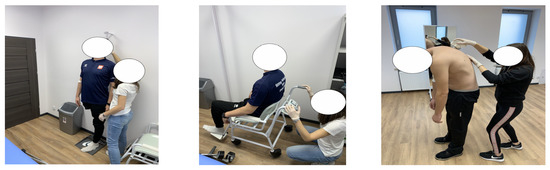
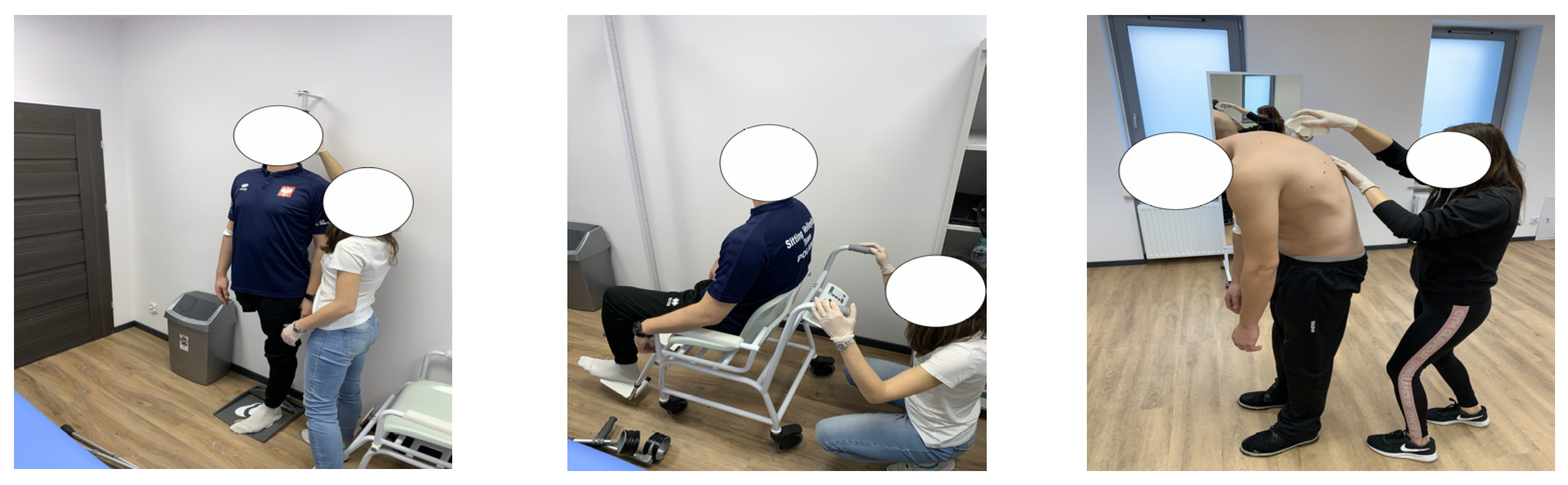
A direct participatory systematic observation method was used in the study, which requires the direct participation of the studied group and the researcher, who directly assesses the participants. The Nordic Musculoskeletal Questionnaire [12] was employed to assess the prevalence and locations of musculoskeletal pain from the last seven days (NMQ = 7) and included the following nine body parts: neck, shoulders, upper back, elbows, wrists, low back, hips/thighs, knees, and ankles/feet. Before completing the questionnaire, the athletes were instructed not to report phantom pain. Next, anthropometric measurements were taken (Figure 1). A wall-mounted stadiometer with a centimeter scale was used for body height (BH) measurements, including the wheelchair user who was able to stand on amputation stumps. Body mass (BM) was evaluated with a chair weight. Hip (HC) and waist (WC) circumferences were measured with the use of anthropometric tape on bare skin, in a lying position and according to the recommended anthropometric techniques, i.e., HC, around the greatest convexity of the gluteal muscles below the iliac ala and WC, at the midpoint between the superior iliac crest and the lowest rib [13]. Spinal curvatures were evaluated using a non-invasive method with a Medi Mouse (Idiag M360) (Figure 1), which ensures producibility, even if two different researchers perform the measurement. The examinations were conducted in three different trunk positions, i.e., sagittal standing (arms in the habitual position), sagittal standing flexion (arms in free stance), and extension (arms crossed at the shoulders, elbows up). Before the measurements, all procedures were demonstrated and explained. The measurements started by putting the Medi Mouse at the C7 level. Next, the device was moved with constant speed up to the S5 level. All measurements were automatically recorded on a computer with Idiag M360 software, which indicates the values from anteroposterior spinal curvatures, physiological values, the differences between them, and the type of sagittal spinal deviation (thoracic hypo/hyperkyphosis, lumbar hypo/hyperlordosis) based on individual BH, BM, gender, age, and the values from anteroposterior spinal curvatures in a habitual position.
Figure 1.
Examples of anthropometric measurements and spinal curvature measurements.
2.3. Statistical Analysis
Statistical analyses were performed with Statistica 13.3 software package (TIBCO Software Inc., Tulsa, OK, USA). Results are presented as means ± SD for normally distributed data and as geometric means with a 95% confidence interval. The prevalence of faulty body posture in the sagittal plane and its relation to symptoms in different parts of the musculoskeletal system in the group of Paralympic athletes was compared using statistic structure index (SSI).
Pearson’s correlation coefficients were computed for the characteristics of NMQ = 7 and the parameters from Medi Mouse, recorded in different positions (sagittal standing upright, sagittal standing flexion, and extension) for the group of Paralympic athletes. The normality of thoracic kyphosis and lumbar lordosis distributions was verified with the Chi-square test. The level of statistical significance was set at 5%.
3. Results
Table 2 presents objective results obtained from the Medi Mouse (thoracic kyphosis and lumbar lordosis angles, physiological values, and differences between actual and physiological values of the aforementioned curvatures in three positions in the sagittal plane) and subjective results of the prevalence and location of musculoskeletal pain based on the NMQ = 7. Table 3 shows the results of statistical correlations between NMQ = 7 and angles of anteroposterior spinal curvatures and differences between physiological norms of thoracic kyphosis and lumbar lordosis (sagittal standing, sagittal standing flexion, sagittal standing extension) based on the Medi Mouse.
Table 2.
Means and standard deviations (SD) of angles of anteroposterior spinal curvatures (°) in three sagittal positions and the prevalence (%) and locations of musculoskeletal pain based on NMQ = 7.
Table 3.
The results of statistical correlations between the prevalence and location of musculoskeletal pain (NMQ = 7) and angles of anteroposterior spinal curvatures and differences between physiological norms of thoracic kyphosis and lumbar lordosis angles (Medi Mouse).
The neck (43%), lower back (43%), and upper back (38%) were the most often reported painful areas, whereas the lowest prevalence of pain was found for shoulders, elbows, and ankles/feet (19%). Furthermore, based on the individual reports obtained from the Idiag M360 software, sagittal spinal deviations were found in the vast majority of sitting volleyball players (76%), i.e., thoracic hyperkyphosis (38%), lumbar hypolordosis (33%), thoracic hypokyphosis (19%), and lumbar hyperlordosis (14%).
In the habitual position, the results indicate moderate correlations (r =0.5, p < 0.05) between the deepening of lumbar lordosis and low back pain (LBP) and between deepening thoracic kyphosis and LBP (r = 0.4, p < 0.05). Similar moderate relationships (r = 0.4, p < 0.05) were found for the sagittal standing extension. Moreover, a correlation between neck pain and the thoracic kyphosis angle was found in both sagittal standing flexion and extension (r = 0.4, p < 0.05). Furthermore, the statistical analysis showed a moderate relationship between the prevalence of upper back pain and physiological norms of thoracic kyphosis (r = 0.4, p < 0.05).
4. Discussion
This study aimed to evaluate the effect of internal and external compensation on the prevalence of musculoskeletal pain and postural defects in elite Polish sitting volleyball players and to assess the interrelation between the aforementioned components. A major finding of this study was that the deeper the thoracic kyphosis and lumbar lordosis angles were, the higher was the prevalence of LBP reported in sagittal standing and sagittal standing extension. Furthermore, neck pain occurred more frequently in athletes with a deeper angle of thoracic kyphosis in both sagittal standing flexion and extension. Moreover, the statistical analysis showed direct proportional associations between upper back pain and physiological norms of the thoracic kyphosis angle.
The results of this study fully support our initial hypothesis and confirm that both lower limb deficiency or disability and sitting volleyball training impact the prevalence of spinal deviations in the sagittal plane. Furthermore, our results point out that anteroposterior spinal curvature deviations are interrelated with musculoskeletal pain, especially in the lower back (43%), neck (43%), and upper back (38%).
Many studies have been carried out to assess the prevalence of musculoskeletal pain in elite able-bodied volleyball players, in whom the lower back was found to be the most common location of pain [14,15,16,17,18]. Moreover, studies by Movahed et al. [19] showed that a greater angle of lumbar lordosis in a habitual position is associated with a higher prevalence of LBP in volleyball athletes. This result corresponds with our findings; however, LBP also contributed to a deepening of lumbar lordosis in sagittal extension and a deepening of thoracic kyphosis in both sagittal standing and extension. These findings may be related to both internal and external compensatory mechanisms that might have impacted muscle imbalance and caused spinal deviations in the sagittal plane, observed in 76% of Paralympic athletes.
It needs to be noted that sagittal balance depends on the angles of thoracic kyphosis and lumbar lordosis, whereas pelvic position strongly interacts with spinal shape by regulating the sagittal balance between the curves [2]. Moreover, the available scientific studies indicate that lower limb/limbs amputation disturbs body biomechanics [10,20]; thus, to maintain balance and upright posture, the human system must activate internal compensatory mechanisms, even if this is not fully beneficial. Unilateral limb amputation/impairment affects the spinal curvature mostly by deepening thoracic kyphosis and flattering lumbar lordosis, as reported in the vast majority of sitting volleyball players.
Furthermore, adaptation to sitting volleyball training, i.e., external compensation strategy, should also be mentioned. In the currently available scientific literature, several studies have analyzed the impact of sport-specific training on the prevalence of anteroposterior spinal curvature deviations in volleyball players [4,21,22]. However, it is difficult to find a study that confirms such effects in Paralympic athletes, especially amputees. Nevertheless, Grabara [4,21] indicated volleyball training as a factor activating the external compensation strategy by deepening thoracic kyphosis and consequently flattening or deepening lumbar lordosis, which is consistent with the results of our study and indicates lumbar hypolordosis (33%) and thoracic hyperkyphosis (38%) as the most common sagittal spinal deformities in sitting volleyball players. Additionally, upper back pain appeared mostly in Paralympic athletes with incorrect values of thoracic kyphosis (38%), which corresponds with the studies of Fett et al. [23] who found the relationships between volleyball training and the high prevalence of upper back pain.
Moreover, a specific sitting position that is taken while playing sitting volleyball should be emphasized. According to the World ParaVolley rules, players can move on the court by sliding or using their upper limbs; however, at least one part of the player’s buttocks must remain on the floor while the ball is in play [24]. Because of the forced sitting position, players have a tendency to overload upper limbs and develop muscular imbalances [11] that might strongly contribute to both a deepening of thoracic kyphosis and pain in an athlete’s upper body, which was found in this study.
To date, plenty of research has analyzed the prevalence of musculoskeletal pain in volleyball players, which was found mostly in the upper and lower back [25,26,27]. However, few studies have indicated neck pain as a significant problem in volleyball players [18,24]. Nevertheless, it is hard to find a study that demonstrates the relationships between neck pain and sagittal spinal deformities. Our results have shown a moderate correlation between neck pain and thoracic hyperkyphosis in the sagittal standing flexion and extension, which might be a consequence of the aforementioned compensation strategies.
The findings of our study may be taken into consideration by sitting volleyball players, who are characterized by the high prevalence of musculoskeletal pain and spinal curvature deformities. Therefore, we recommend, especially for Paralympic athletes, an adapted compensatory training program with proprioceptive exercises (Table A1, Appendix A), which was programmed based on the obtained subjective and objective results to prevent or reduce deformities of spinal curvature and musculoskeletal pain.
Limitations
It should be noted that our study has several limitations that need to be acknowledged. Firstly, even though we explored the entire men’s (n = 15) and women’s (n = 6) Polish sitting volleyball national team, the group of participants consisted in large part of men, which leads to incomplete inference, especially regarding differences in the prevalence of spinal curvature deformities between the two genders. However, it should be noted that the female sitting volleyball national team made its debut twelve years after the male team [28], which may be associated with a smaller number of elite female athletes. Furthermore, we examined athletes only from two disability groups (amputees, Les Autres).
Secondly, the programmed compensatory exercise intervention has not yet been verified. However, it was developed according to the newest trends in kinesitherapy and corrective methodology. Simultaneously, the authors are planning its verification after extending the group of participants to those with other disabilities, e.g., spinal cord injuries. Such studies will provide important information to improve athletic performance through the prevention of musculoskeletal pain and to reduce the negative effects of internal and external compensation strategies.
5. Conclusions
- Internal and external compensation have an effect on the prevalence of deformities of spinal curvature in the sagittal plane, with thoracic hyperkyphosis (38%) and lumbar hyperlordosis (33%) being the most common.
- The neck, lower back (43%), and upper back (38%) were the most frequent painful areas in sitting volleyball players. More severe LBP and upper back pain were correlated with a greater angle of thoracic kyphosis and lumbar lordosis in the habitual position.
- The findings of the study have inspired the programming of an adapted compensatory training program to decrease and prevent the abovementioned spinal deformities and musculoskeletal pain.
Author Contributions
Conceptualization, A.Z.; methodology, A.Z.; validation, A.Z.; formal analysis, E.G. and A.Z.; investigation, E.G.; writing—original draft preparation, E.G.; writing—review and editing, E.G.; supervision, A.Z. All authors have read and agreed to the published version of the manuscript.
Funding
This research was funded by The Jerzy Kukuczka Academy of Physical Education in Katowice, grant number AWF/INS/ZB2/2021.
Institutional Review Board Statement
The study was conducted according to the guidelines of the Declaration of Helsinki, and approved by the Institutional Review Board at the Academy of Physical Education in Katowice, Poland (No. 9/2012).
Informed Consent Statement
Informed consent was obtained from all subjects involved in the study.
Data Availability Statement
The data presented in the study are available on request from the corresponding author.
Acknowledgments
The authors would like to give acknowledgments to the Sitting Volleyball Polish National Team coaches Bożydar Abadżijew and Adam Malik as well as the athletes for support in doing this research. The authors also would like to thank the Student Research Group of Adapted Physical Activity, The Jerzy Kukuczka Academy of Physical Education in Katowice for help during our study.
Conflicts of Interest
The authors declare no conflict of interest.
Appendix A
Table A1.
Adapted training program with compensatory, proprioceptive exercises for sitting volleyball players.
References
- Grabara, M. A comparison of the posture between young female handball players and non-training peers. J. Back Musculoskelet. Rehabil. 2014, 27, 85–92. [Google Scholar] [CrossRef] [Scilit]
- Roussouly, P.; Pinheiro-Franco, J.L. Biomechanical analysis of the spino-pelvic organization and adaptation in pathology. Eur. Spine J. 2011, 20 (Suppl. S5), 609–618. [Google Scholar] [CrossRef] [Scilit]
- Zwierzchowska, A.; Tuz, J. Evaluation of the impact of sagittal spinal curvatures on musculoskeletal disorders in young people. Med. Pr. 2018, 69, 29–36. [Google Scholar] [CrossRef] [Scilit]
- Grabara, M. Comparison of posture among adolescent male volleyball players and non-athletes. Biol. Sport 2015, 32, 79–85. [Google Scholar] [CrossRef] [Scilit] [PubMed]
- Zaina, F.; Donzelli, S.; Lusini, M.; Minnella, S.; Negrini, S. Swimming and spinal deformities: A cross-sectional study. J. Pediatr. 2015, 166, 163–167. [Google Scholar] [CrossRef] [Scilit] [PubMed]
- Challoumas, D.; Artemiou, A.; Dimitrakakis, G. Dominant vs. non-dominant shoulder morphology in volleyball players and associations with shoulder pain and spike speed. J. Sports Sci. 2017, 35, 65–73. [Google Scholar] [CrossRef] [Scilit] [PubMed]
- Hainline, B.; Turner, J.A.; Caneiro, J.P.; Stewart, M.; Lorimer Moseley, G. Pain in elite athletes-neurophysiological, biomechanical and psychosocial considerations: A narrative review. Br. J. Sports Med. 2017, 51, 1259–1264. [Google Scholar] [CrossRef] [Scilit]
- Ortega-Santiago, R.; González-Aguado, Á.J.; Fernández-de-Las-Peñas, C.; Cleland, J.A.; de-la-Llave-Rincón, A.I.; Kobylarz, M.D.; Plaza-Manzano, G. Pressure pain hypersensitivity and referred pain from muscle trigger points in elite male wheelchair basketball players. Braz. J. Phys. Ther. 2020, 24, 333–341. [Google Scholar] [CrossRef] [Scilit]
- Jeoung, B. Relationship between sitting volleyball performance and field fitness of sitting volleyball players in Korea. J. Exerc. Rehabil. 2017, 13, 647–652. [Google Scholar] [CrossRef] [Scilit]
- Hendershot, B.D.; Nussbaum, M.A. Persons with lower-limb amputation have impaired trunk postural control while maintaining seated balance. Gait Posture 2013, 38, 438–442. [Google Scholar] [CrossRef] [Scilit] [PubMed]
- Ahmadi, S.; Gutierrez, G.L.; Uchida, M.C. Asymmetry in glenohumeral muscle strength of sitting volleyball players: An isokinetic profile of shoulder rotations strength. J. Sports Med. Phys. Fit. 2020, 60, 395–401. [Google Scholar] [CrossRef] [Scilit] [PubMed]
- Kuorinka, I.; Jonsson, B.; Kilbom, A.; Vinterberg, H.; Biering-Sørensen, F.; Andersson, G.; Jørgensen, K. Standardised Nordic questionnaires for the analysis of musculoskeletal symptoms. Appl. Ergon. 1987, 18, 233–237. [Google Scholar] [CrossRef] [Scilit]
- Zwierzchowska, A.; Głowacz, M.; Batko-Szwaczka, A.; Dudzińska-Griszek, J.; Mostowik, A.; Drozd, M.; Szewieczek, J. The Body Mass Index and Waist Circumference as Predictors of Body Composition in Post CSCI Wheelchair Rugby Players (Preliminary Investigations). J. Hum. Kinet. 2014, 43, 191–198. [Google Scholar] [CrossRef] [Scilit]
- Külling, F.A.; Florianz, H.; Reepschläger, B.; Gasser, J.; Jost, B.; Lajtai, G. High Prevalence of Disc Degeneration and Spondylolysis in the Lumbar Spine of Professional Beach Volleyball Players. Orthop. J. Sports Med. 2014, 2. [Google Scholar] [CrossRef] [Scilit]
- Triki, M.; Koubaa, A.; Masmoudi, L.; Fellmann, N.; Tabka, Z. Prevalence and risk factors of low back pain among undergraduate students of a sports and physical education institute in Tunisia. Libyan J. Med. 2015, 10, 26802. [Google Scholar] [CrossRef] [Scilit]
- Yang, C.; Lee, E.; Hwang, E.H.; Kwon, O.; Lee, J.H. Management of Sport Injuries with Korean Medicine: A Survey of Korean National Volleyball Team. Evid.-Based Complement. Altern. Med. 2016, 2016, 8639492. [Google Scholar] [CrossRef] [Scilit]
- Noormohammadpour, P.; Rostami, M.; Mansournia, M.A.; Farahbakhsh, F.; Pourgharib Shahi, M.H.; Kordi, R. Low back pain status of female university students in relation to different sport activities. Eur. Spine J. 2016, 25, 1196–1203. [Google Scholar] [CrossRef] [Scilit]
- Farahbakhsh, F.; Akbari-Fakhrabadi, M.; Shariat, A.; Cleland, J.A.; Farahbakhsh, F.; Seif-Barghi, T.; Mansournia, M.A.; Rostami, M.; Kordi, R. Neck pain and low back pain in relation to functional disability in different sport activities. J. Exerc. Rehabil. 2018, 14, 509–515. [Google Scholar] [CrossRef] [Scilit]
- Movahed, M.; Salavati, M.; Sheikhhoseini, R.; Arab, A.M.; O’Sullivan, K. Single leg landing kinematics in volleyball athletes: A comparison between athletes with and without active extension low back pain. J. Bodyw. Mov. Ther. 2019, 23, 924–929. [Google Scholar] [CrossRef] [Scilit]
- Eshraghi, A.; Safaeepour, Z.; Geil, M.D.; Andrysek, J. Walking and balance in children and adolescents with lower-limb amputation: A review of literature. Clin. Biomech. 2018, 59, 181–198. [Google Scholar] [CrossRef] [Scilit] [PubMed]
- Grabara, M. Anteroposterior curvatures of the spine in adolescent athletes. J. Back Musculoskelet. Rehabil. 2014, 27, 513–519. [Google Scholar] [CrossRef] [Scilit]
- Šarčević, Z.; Tepavčević, A. Association between adolescent idiopathic scoliosis and sacroiliac joint dysfunction in young athletes: A case control study. Medicine (Baltimore) 2019, 98, e15161. [Google Scholar] [CrossRef] [Scilit]
- Fett, D.; Trompeter, K.; Platen, P. Prevalence of back pain in a group of elite athletes exposed to repetitive overhead activity. PLoS ONE 2019, 14, e0210429. [Google Scholar] [CrossRef] [Scilit] [PubMed]
- Molik, B.; Morgulec-Adamowicz, N.; Marszałek, J.; Kosmol, A.; Rutkowska, I.; Jakubicka, A.; Kaliszewska, E.; Kozłowski, R.; Kurowska, M.; Ploch, E.; et al. Evaluation of Game Performance in Elite Male Sitting Volleyball Players. Adapt. Phys. Act. Q. 2017, 34, 104–124. [Google Scholar] [CrossRef] [Scilit]
- Forthomme, B.; Wieczorek, V.; Frisch, A.; Crielaard, J.M.; Croisier, J.L. Shoulder pain among high-level volleyball players and preseason features. Med. Sci. Sports Exerc. 2013, 45, 1852–1860. [Google Scholar] [CrossRef] [Scilit] [PubMed]
- Martelli, G.; Ciccarone, G.; Grazzini, G.; Signorini, M.; Urgelli, S. Isometric evaluation of rotator cuff muscles in volleyball athletes. J. Sports Med. Phys. Fit. 2013, 53, 283–288. [Google Scholar]
- Mizoguchi, Y.; Akasaka, K.; Otsudo, T.; Hall, T. Factors associated with low back pain in elite high school volleyball players. J. Phys. Ther. Sci. 2019, 31, 675–681. [Google Scholar] [CrossRef] [Scilit]
- Paravolley Poland. Available online: Paravolleypoland.eu/historia/ (accessed on 20 August 2021).

Publisher’s Note: MDPI stays neutral with regard to jurisdictional claims in published maps and institutional affiliations. |
© 2021 by the authors. Licensee MDPI, Basel, Switzerland. This article is an open access article distributed under the terms and conditions of the Creative Commons Attribution (CC BY) license (https://creativecommons.org/licenses/by/4.0/).