The Effect of Socioeconomic Factors on Spatiotemporal Patterns of PM2.5 Concentration in Beijing–Tianjin–Hebei Region and Surrounding Areas


Abstract
1. Introduction
2. Study Area and Data
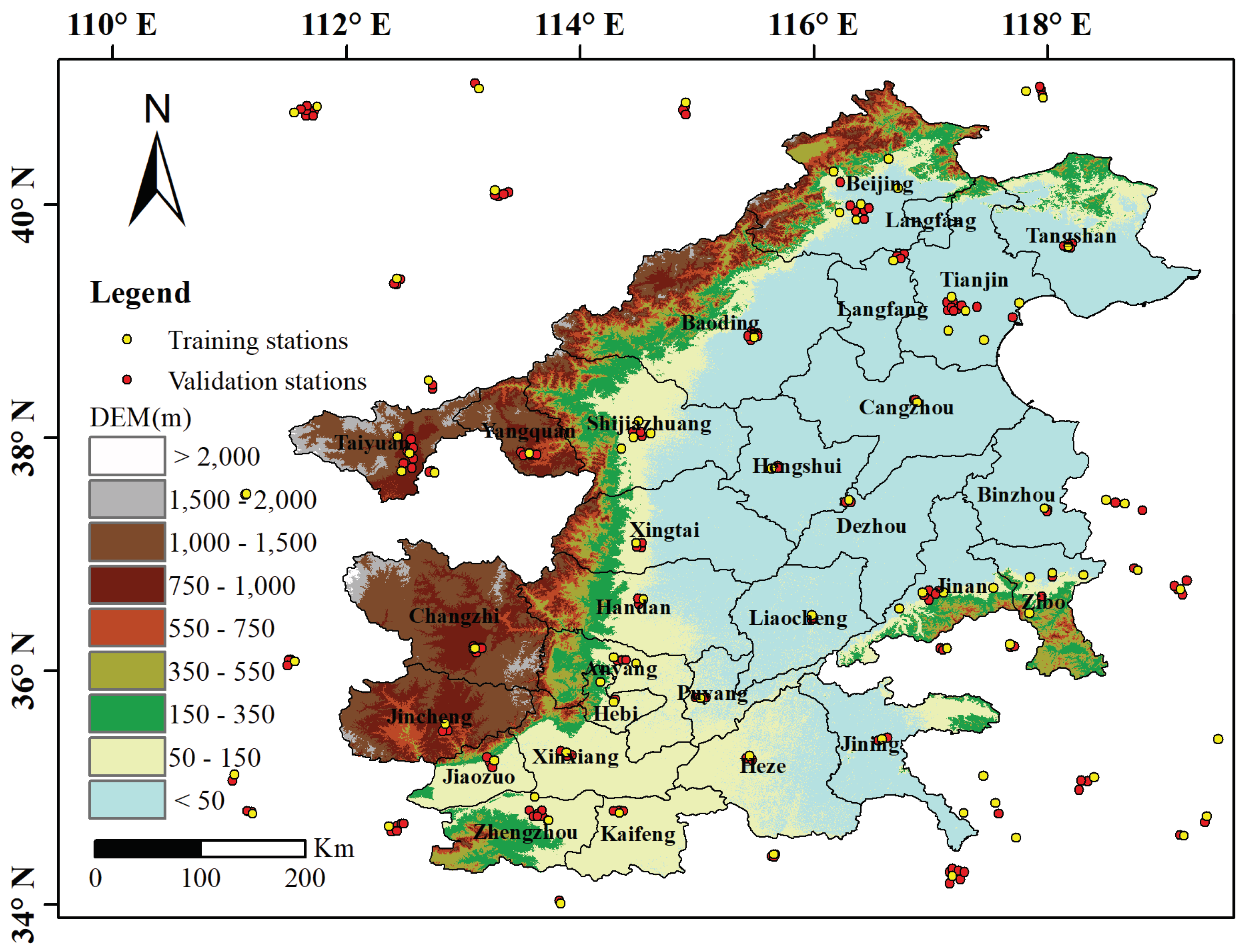
2.1. Study Area
2.2. Data
3. Methodology
3.1. PM2.5 Estimation
3.2. Effect of Economic and Social Factors on PM2.5 Concentration
4. Results and Discussion
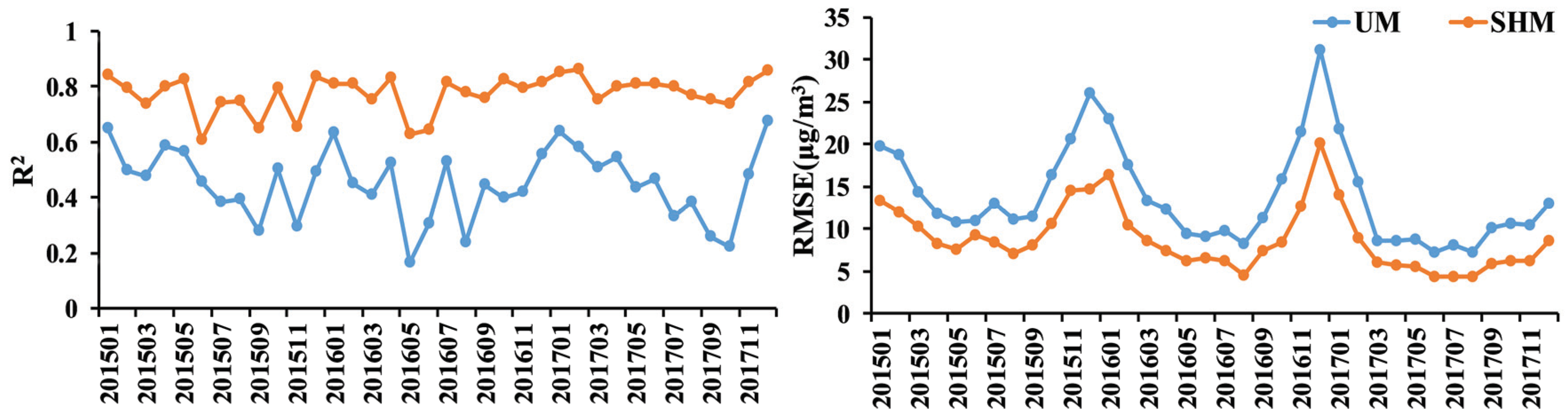
4.1. Construction of the Estimation Model
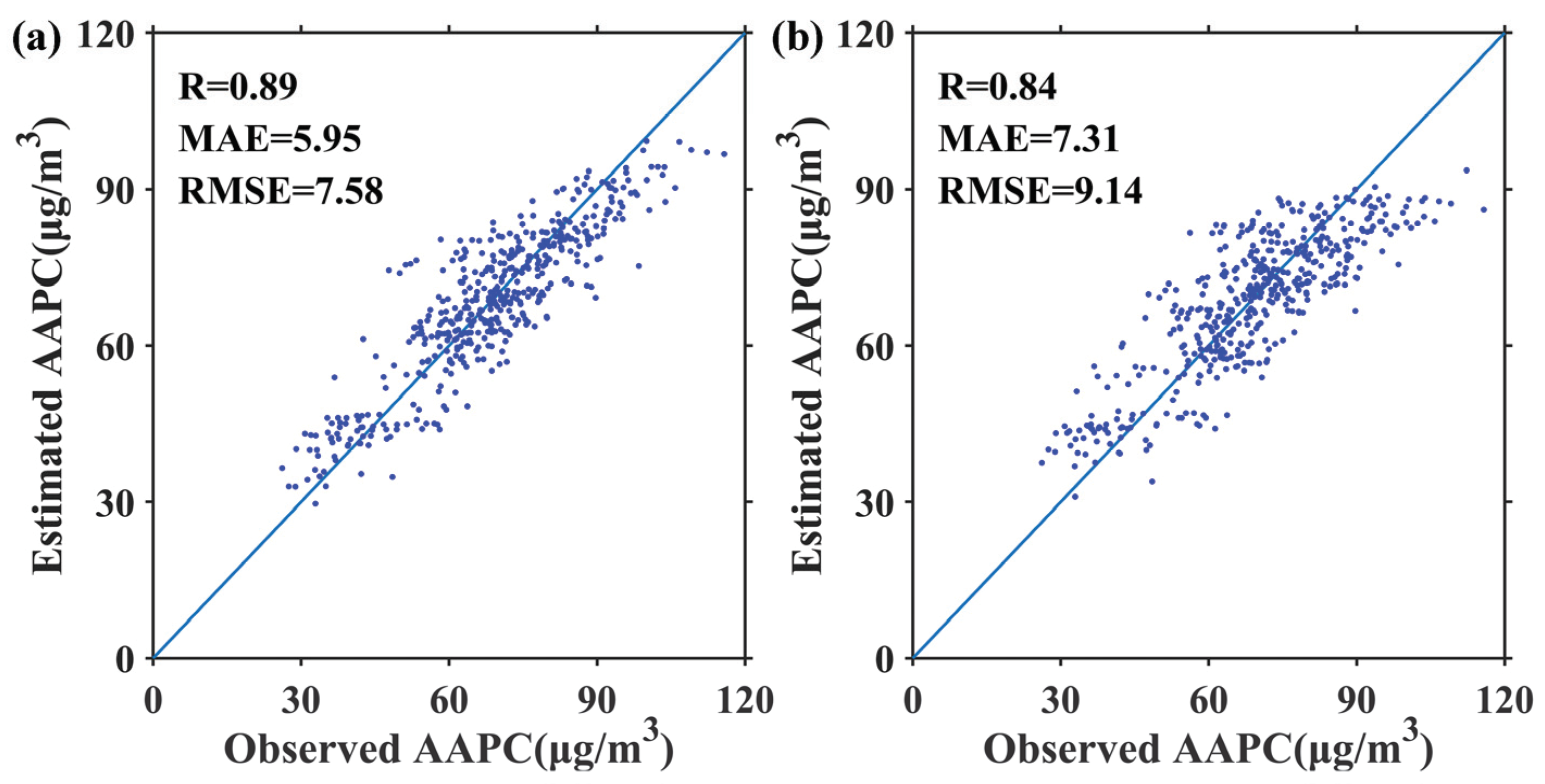
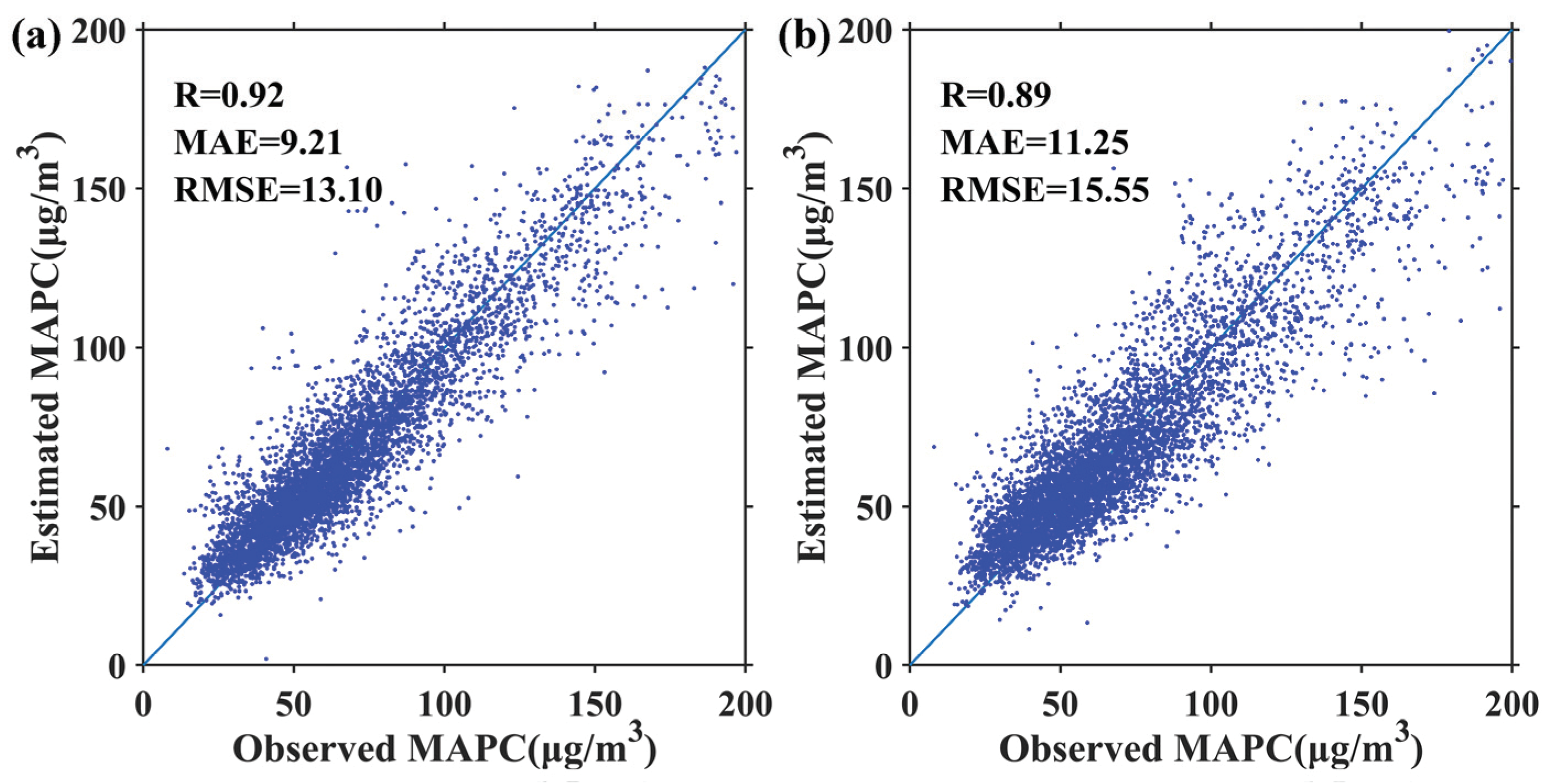
4.2. Accuracy Validation and Estimation Results
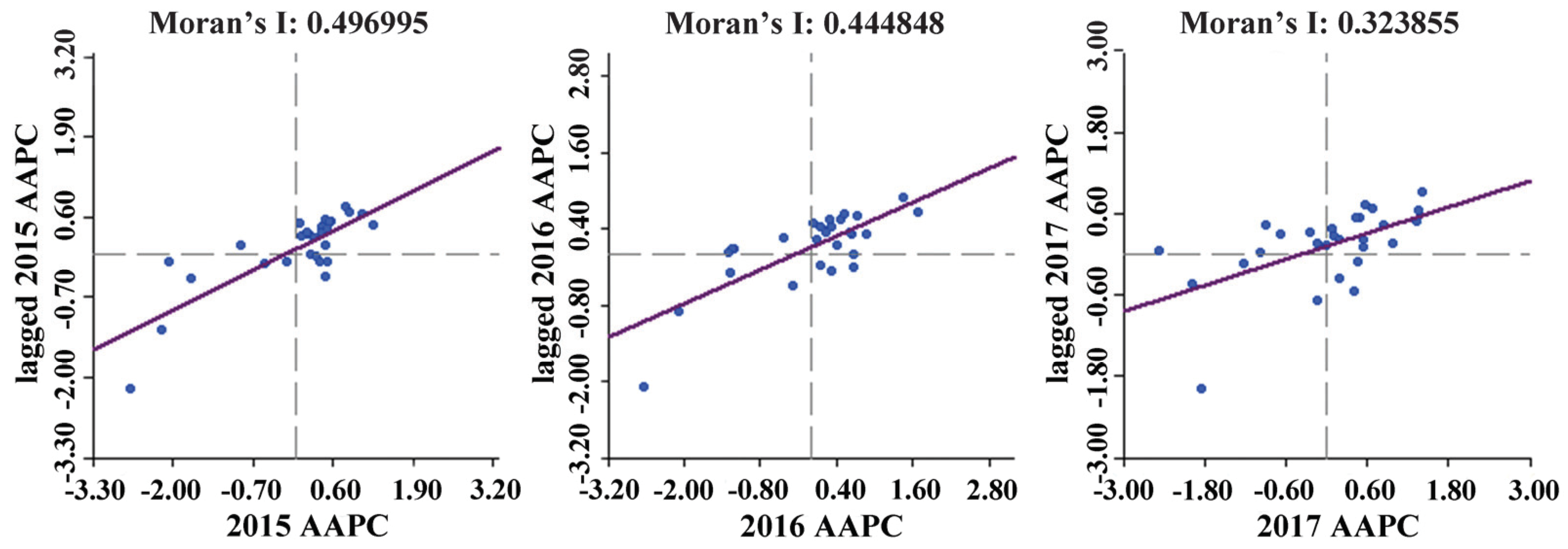
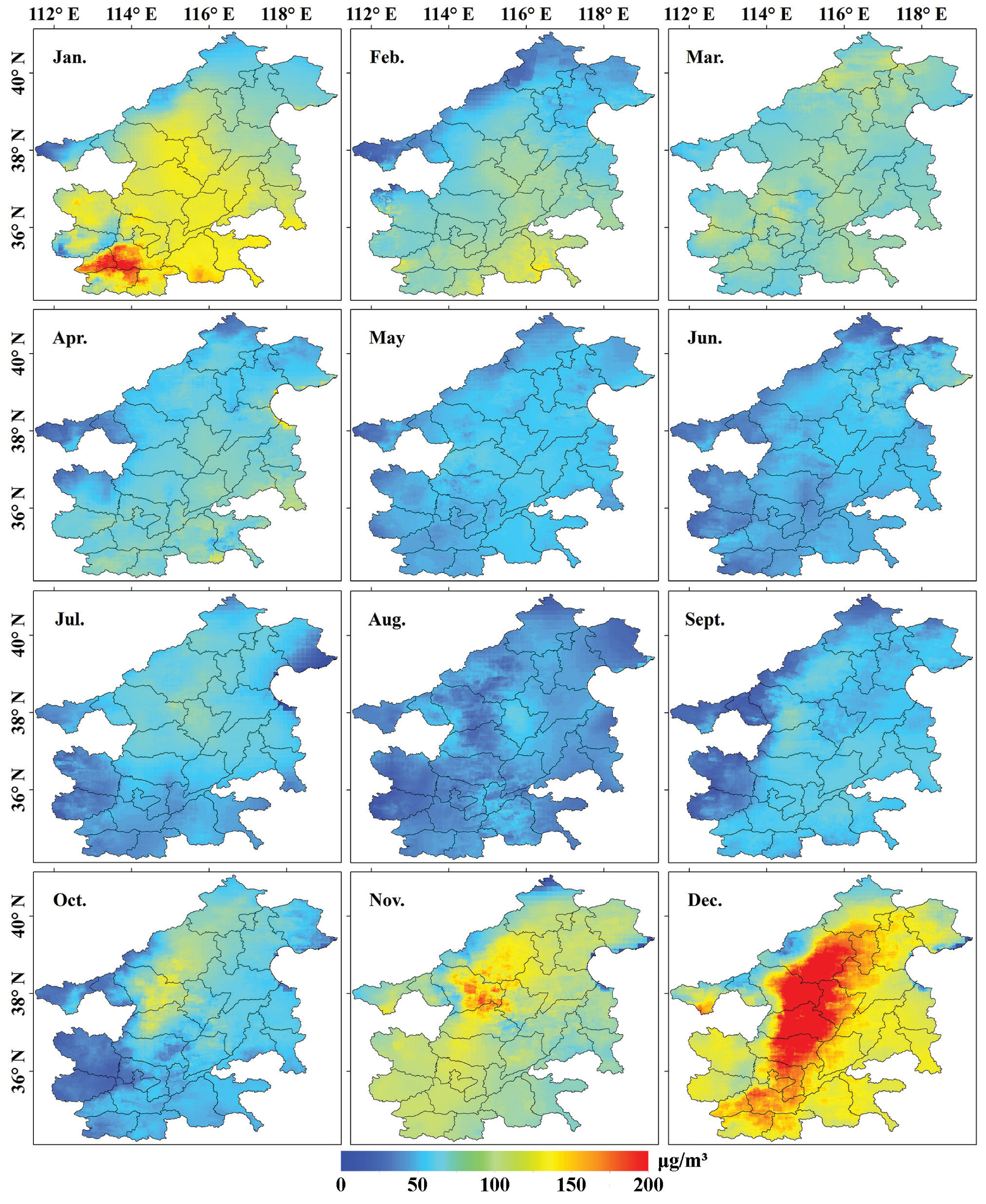
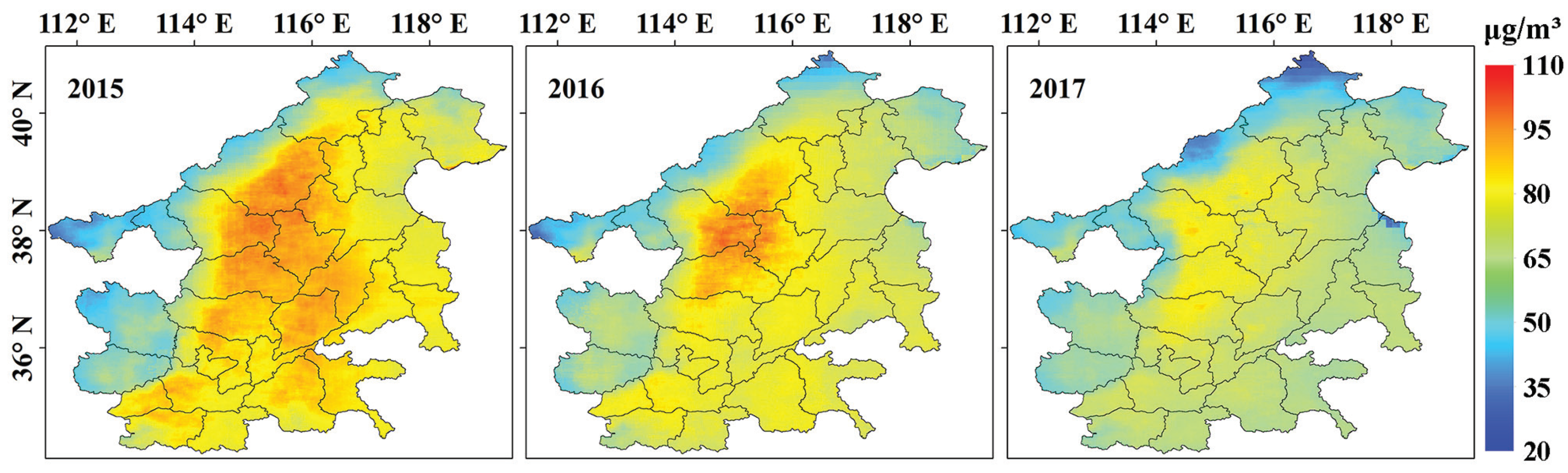
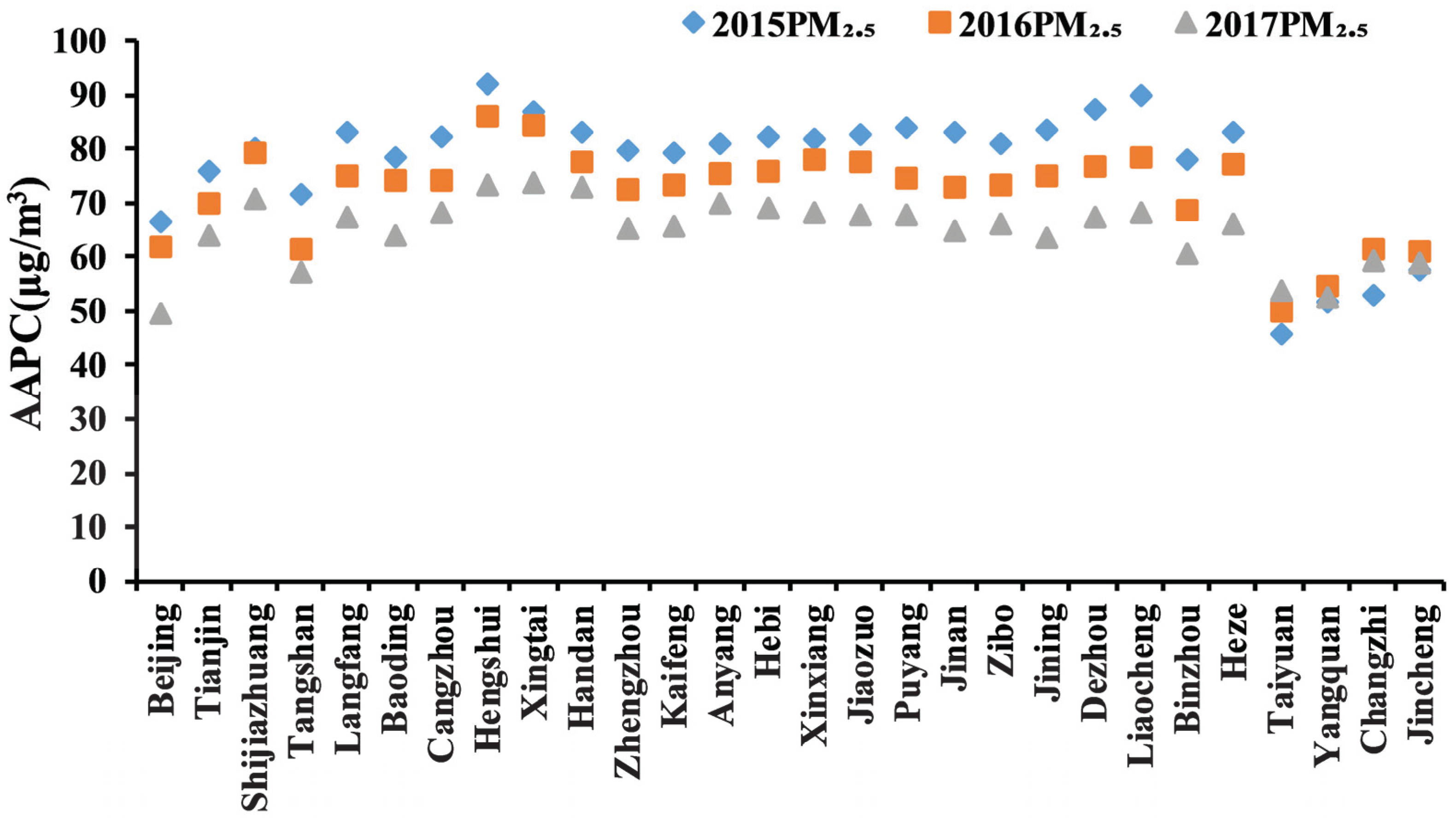
4.3. Spatiotemporal Analysis of City-Scale PM2.5 Concentration
4.4. Effects of Socioeconomic Factors on PM2.5 Concentration
5. Conclusions
- There is a significant spatiotemporal heterogeneous relationship between PM2.5 and the chosen auxiliary variables. The developed model can well estimate the spatial distribution of PM2.5 concentration in the study area, with MAE and RMSE of 9.21 μg/m3 and 13.1 μg/m3, respectively.
- PM2.5 concentration in the study area showed significant spatial and temporal changes. Although PM2.5 concentration has decreased year by year, it was still higher than the national quality standard. Thus, further reduction in PM2.5 concentration remains a huge challenge.
- PGRP, UR, and NIEDS were the key factors influencing the spatiotemporal distribution of PM2.5 concentration in the study area. Specially, there was an inverted U-shaped relationship between PGRP and PM2.5 concentrations. In addition, the increase of UR in a city will reduce PM2.5 concentration not only in its own city but in neighboring cities, while the increase of NIEDS of a city will exacerbate PM2.5 concentration in its own city and neighboring cities.
Author Contributions
Funding
Conflicts of Interest
References
- Xu, Q. Abrupt change of the mid-summer climate in central east China by the influence of atmospheric pollution. Atmos. Environ. 2001, 35, 5029–5040. [Google Scholar] [CrossRef]
- Borrego, C.; Martins, H.; Tchepel, O.; Salmim, L.; Monteiro, A.; Miranda, A. How urban structure can affect city sustainability from an air quality perspective. Environ. Model. Softw. 2006, 21, 461–467. [Google Scholar] [CrossRef]
- Fang, B.; Zhang, L.; Zeng, H.; Liu, J.; Yang, Z.; Wang, H.; Wang, Q.; Wang, M. PM2.5-Bound Polycyclic Aromatic Hydrocarbons: Sources and Health Risk during Non-Heating and Heating Periods (Tangshan, China). Int. J. Environ. Res. Public Health 2020, 17, 483. [Google Scholar] [CrossRef]
- He, L.; Liu, Y.; He, P.; Zhou, H. Relationship between Air Pollution and Urban Forms: Evidence from Prefecture-Level Cities of the Yangtze River Basin. Int. J. Environ. Res. Public Health 2019, 16, 3459. [Google Scholar] [CrossRef]
- Kuehn, B.M. WHO: More Than 7 Million Air Pollution Deaths Each Year. JAMA 2014, 311, 1486. [Google Scholar] [CrossRef] [PubMed]
- Burnett, R.; Chen, H.; Szyszkowicz, M.; Fann, N.; Hubbell, B.; Pope, C.A.; Apte, J.S.; Brauer, M.; Cohen, A.; Weichenthal, S.; et al. Global estimates of mortality associated with long-term exposure to outdoor fine particulate matter. Proc. Natl. Acad. Sci. USA 2018, 115, 9592–9597. [Google Scholar] [CrossRef] [PubMed]
- Wang, Z.; Yang, L. Delinking indicators on regional industry development and carbon emissions: Beijing–Tianjin–Hebei economic band case. Ecol. Indic. 2015, 48, 41–48. [Google Scholar] [CrossRef]
- Janssen, S.; Dumont, G.; Fierens, F.; Mensink, C. Spatial interpolation of air pollution measurements using CORINE land cover data. Atmos. Environ. 2008, 42, 4884–4903. [Google Scholar] [CrossRef]
- Lee, S.-J.; Serre, M.; Van Donkelaar, A.; Martin, R.V.; Burnett, R.T.; Jerrett, M. Comparison of Geostatistical Interpolation and Remote Sensing Techniques for Estimating Long-Term Exposure to Ambient PM2.5 Concentrations across the Continental United States. Environ. Health Perspect. 2012, 120, 1727–1732. [Google Scholar] [CrossRef]
- Van Donkelaar, A.; Martin, R.V.; Park, R. Estimating ground-level PM2.5using aerosol optical depth determined from satellite remote sensing. J. Geophys. Res. Space Phys. 2006, 111, 21201. [Google Scholar] [CrossRef]
- Van Donkelaar, A.; Martin, R.V.; Brauer, M.; Kahn, R.; Levy, R.C.; Verduzco, C.; Villeneuve, P.J. Global Estimates of Ambient Fine Particulate Matter Concentrations from Satellite-Based Aerosol Optical Depth: Development and Application. Environ. Health Perspect. 2010, 118, 847–855. [Google Scholar] [CrossRef] [PubMed]
- Robichaud, A.; Menard, R. Multi-year objective analyses of warm season ground-level ozone and PM2.5 over North America using real-time observations and Canadian operational air quality models. Atmos. Chem. Phys. Discuss. 2014, 14, 1769–1800. [Google Scholar] [CrossRef]
- Liu, Y.; Franklin, M.; Kahn, R.; Koutrakis, P. Using aerosol optical thickness to predict ground-level PM2.5 concentrations in the St. Louis area: A comparison between MISR and MODIS. Remote Sens. Environ. 2007, 107, 33–44. [Google Scholar] [CrossRef]
- Paciorek, C.; Liu, Y.; Moreno-Macias, H.; Kondragunta, S. Spatiotemporal Associations between GOES Aerosol Optical Depth Retrievals and Ground-Level PM2.5. Environ. Sci. Technol. 2008, 42, 5800–5806. [Google Scholar] [CrossRef] [PubMed]
- Liu, Y.; Paciorek, C.; Koutrakis, P. Estimating Regional Spatial and Temporal Variability of PM2.5 Concentrations Using Satellite Data, Meteorology, and Land Use Information. Environ. Health Perspect. 2009, 117, 886–892. [Google Scholar] [CrossRef] [PubMed]
- Lee, H.J.; Liu, Y.; Coull, B.A.; Schwartz, J.; Koutrakis, P. A novel calibration approach of MODIS AOD data to predict PM2.5 concentrations. Atmos. Chem. Phys. Discuss. 2011, 11, 7991–8002. [Google Scholar] [CrossRef]
- Xie, Y.; Wang, Y.; Zhang, K.; Dong, W.; Lv, B.; Bai, Y. Daily Estimation of Ground-Level PM2.5 Concentrations over Beijing Using 3 km Resolution MODIS AOD. Environ. Sci. Technol. 2015, 49, 12280–12288. [Google Scholar] [CrossRef]
- Ma, Z.; Liu, Y.; Zhao, Q.; Liu, M.; Zhou, Y.; Bi, J. Satellite-derived high resolution PM2.5 concentrations in Yangtze River Delta Region of China using improved linear mixed effects model. Atmos. Environ. 2016, 133, 156–164. [Google Scholar] [CrossRef]
- Wang, J.; Ogawa, S. Effects of Meteorological Conditions on PM2.5 Concentrations in Nagasaki, Japan. Int. J. Environ. Res. Public Health 2015, 12, 9089–9101. [Google Scholar] [CrossRef]
- Guo, J.; Xia, F.; Zhang, Y.; Liu, H.; Li, J.; Lou, M.; He, J.; Yan, Y.; Wang, F.; Min, M.; et al. Impact of diurnal variability and meteorological factors on the PM2.5—AOD relationship: Implications for PM2.5 remote sensing. Environ. Pollut. 2017, 221, 94–104. [Google Scholar] [CrossRef]
- DeGaetano, A.T.; Doherty, O.M. Temporal, spatial and meteorological variations in hourly PM2.5 concentration extremes in New York City. Atmos. Environ. 2004, 38, 1547–1558. [Google Scholar] [CrossRef]
- Zhang, Z.; Zhang, X.; Gong, D.; Quan, W.; Zhao, X.; Ma, Z.; Kim, S.-J. Evolution of surface O3 and PM2.5 concentrations and their relationships with meteorological conditions over the last decade in Beijing. Atmos. Environ. 2015, 108, 67–75. [Google Scholar] [CrossRef]
- Hao, Y.; Liu, Y.-M. The influential factors of urban PM2.5 concentrations in China: A spatial econometric analysis. J. Clean. Prod. 2016, 112, 1443–1453. [Google Scholar] [CrossRef]
- Wang, S.; Zhou, C.; Wang, Z.; Feng, K.; Hubacek, K. The characteristics and drivers of fine particulate matter (PM2.5) distribution in China. J. Clean. Prod. 2017, 142, 1800–1809. [Google Scholar] [CrossRef]
- Wang, Z.; Fang, C.-L. Spatial-temporal characteristics and determinants of PM2.5 in the Bohai Rim Urban Agglomeration. Chemosphere 2016, 148, 148–162. [Google Scholar] [CrossRef] [PubMed]
- Liu, Q.; Wang, S.; Zhang, W.; Li, J.; Dong, G. The effect of natural and anthropogenic factors on PM2.5: Empirical evidence from Chinese cities with different income levels. Sci. Total Environ. 2019, 653, 157–167. [Google Scholar] [CrossRef]
- Zhou, C.; Chen, J.; Wang, S. Examining the effects of socioeconomic development on fine particulate matter (PM2.5) in China’s cities using spatial regression and the geographical detector technique. Sci. Total Environ. 2017, 619, 436–445. [Google Scholar] [CrossRef]
- Guan, D.; Su, X.; Zhang, Y.; Peters, G.; Liu, Z.; Lei, Y.; He, K. The socioeconomic drivers of China’s primary PM 2.5 emissions. Environ. Res. Lett. 2014, 9, 024010. [Google Scholar] [CrossRef]
- Lu, D.; Xu, J.; Yang, D.; Zhao, J. Spatio-temporal variation and influence factors of PM 2.5 concentrations in China from 1998 to 2014. Atmos. Pollut. Res. 2017, 8, 1151–1159. [Google Scholar] [CrossRef]
- Cheng, Z.; Li, L.; Liu, J. Identifying the spatial effects and driving factors of urban PM2.5 pollution in China. Ecol. Indic. 2017, 82, 61–75. [Google Scholar] [CrossRef]
- Han, L.; Zhou, W.; Li, W. Fine particulate (PM2.5) dynamics during rapid urbanization in Beijing, 1973–2013. Sci. Rep. 2016, 6, 23604. [Google Scholar] [CrossRef]
- Lin, G.; Fu, J.; Jiang, D.; Hu, W.; Dong, D.; Huang, Y.; Zhao, M. Spatio-Temporal Variation of PM2.5 Concentrations and Their Relationship with Geographic and Socioeconomic Factors in China. Int. J. Environ. Res. Public Health 2013, 11, 173–186. [Google Scholar] [CrossRef] [PubMed]
- Du, Y.; Wan, Q.; Liu, H.; Liu, H.; Kapsar, K.; Peng, J.; Kasper, K. How does urbanization influence PM2.5 concentrations? Perspective of spillover effect of multi-dimensional urbanization impact. J. Clean. Prod. 2019, 220, 974–983. [Google Scholar] [CrossRef]
- Tai, A.P.K.; Mickley, L.J.; Jacob, D.J. Correlations between fine particulate matter (PM2.5) and meteorological variables in the United States: Implications for the sensitivity of PM2.5 to climate change. Atmos. Environ. 2010, 44, 3976–3984. [Google Scholar] [CrossRef]
- Wang, L.; Zhang, N.; Liu, Z.; Sun, Y.; Ji, D.; Wang, Y. The Influence of Climate Factors, Meteorological Conditions, and Boundary-Layer Structure on Severe Haze Pollution in the Beijing-Tianjin-Hebei Region during January 2013. Adv. Meteorol. 2014, 2014, 1–14. [Google Scholar] [CrossRef]
- Brunsdon, C.; Fotheringham, S.; Charlton, M. Geographically Weighted Regression. J. R. Stat. Soc. Ser. D Stat. 1998, 47, 431–443. [Google Scholar] [CrossRef]
- Bivand, R.; Müller, W.; Reder, M. Power calculations for global and local Moran’s. Comput. Stat. Data Anal. 2009, 53, 2859–2872. [Google Scholar] [CrossRef]
- Elhorst, J.P. Specification and Estimation of Spatial Panel Data Models. Int. Reg. Sci. Rev. 2003, 26, 244–268. [Google Scholar] [CrossRef]
- LeSage, J.; Pace, R.K. Introduction to Spatial Econometrics; Chapman and Hall/CRC: London, UK, 2009. [Google Scholar]
- Guo, L.-C.; Zhang, Y.; Lin, H.; Zeng, W.; Liu, T.; Xiao, J.; Rutherford, S.; You, J.; Ma, W. The washout effects of rainfall on atmospheric particulate pollution in two Chinese cities. Environ. Pollut. 2016, 215, 195–202. [Google Scholar] [CrossRef]
- Hu, X.; Waller, L.A.; Al-Hamdan, M.Z.; Crosson, W.L.; Estes, M.G., Jr.; Estes, S.M.; Quattrochi, D.; Sarnat, J.A.; Liu, Y. Estimating ground-level PM2.5 concentrations in the southeastern U.S. using geographically weighted regression. Environ. Res. 2013, 121, 1–10. [Google Scholar] [CrossRef]
- You, W.; Zang, Z.; Zhang, L.; Li, Y.; Pan, X.; Wang, W. National-Scale Estimates of Ground-Level PM2.5 Concentration in China Using Geographically Weighted Regression Based on 3 km Resolution MODIS AOD. Remote. Sens. 2016, 8, 184. [Google Scholar] [CrossRef]
- Jiang, M.; Sun, W.; Yang, G.; Zhang, D. Modelling Seasonal GWR of Daily PM2.5 with Proper Auxiliary Variables for the Yangtze River Delta. Remote. Sens. 2017, 9, 346. [Google Scholar] [CrossRef]
- Huang, K.; Xiao, Q.; Meng, X.; Geng, G.; Wang, Y.; Lyapustin, A.; Gu, D.-F.; Liu, Y. Predicting monthly high-resolution PM2.5 concentrations with random forest model in the North China Plain. Environ. Pollut. 2018, 242, 675–683. [Google Scholar] [CrossRef] [PubMed]
- Ma, Z.; Liu, R.; Liu, Y.; Bi, J. Effects of air pollution control policies on PM2.5 pollution improvement in China from 2005 to 2017: A satellite-based perspective. Atmos. Chem. Phys. Discuss. 2019, 19, 6861–6877. [Google Scholar] [CrossRef]
- Wei, J.; Huang, W.; Li, Z.; Xue, W.; Peng, Y.; Sun, L.; Cribb, M.C. Estimating 1-km-resolution PM2.5 concentrations across China using the space-time random forest approach. Remote. Sens. Environ. 2019, 231, 111221. [Google Scholar] [CrossRef]
- Chai, F.; Gao, J.; Chen, Z.; Wang, S.; Zhang, Y.; Zhang, J.; Zhang, H.; Yun, Y.; Ren, C. Spatial and temporal variation of particulate matter and gaseous pollutants in 26 cities in China. J. Environ. Sci. 2014, 26, 75–82. [Google Scholar] [CrossRef]
- Yang, L.; Cheng, S.; Wang, X.; Nie, W.; Xu, P.; Gao, X.; Yuan, C.; Wang, W. Source identification and health impact of PM2.5 in a heavily polluted urban atmosphere in China. Atmos. Environ. 2013, 75, 265–269. [Google Scholar] [CrossRef]
- Lin, C.; Li, Y.; Yuan, Z.; Lau, A.K.; Li, C.; Fung, J.C.H. Using satellite remote sensing data to estimate the high-resolution distribution of ground-level PM2.5. Remote. Sens. Environ. 2015, 156, 117–128. [Google Scholar] [CrossRef]
- Du, Y.; Sun, T.; Peng, J.; Fang, K.; Liu, Y.; Yang, Y.; Wang, Y. Direct and spillover effects of urbanization on PM2.5 concentrations in China’s top three urban agglomerations. J. Clean. Prod. 2018, 190, 72–83. [Google Scholar] [CrossRef]
- Ma, Y.-R.; Ji, Q.; Fan, Y. Spatial linkage analysis of the impact of regional economic activities on PM 2.5 pollution in China. J. Clean. Prod. 2016, 139, 1157–1167. [Google Scholar] [CrossRef]
- Dong, K.; Sun, R.-J.; Dong, C.; Li, H.; Zeng, X.; Ni, G. Environmental Kuznets curve for PM2.5 emissions in Beijing, China: What role can natural gas consumption play? Ecol. Indic. 2018, 93, 591–601. [Google Scholar] [CrossRef]
- Álvarez-Herranz, A.; Balsalobre-Lorente, D.; Shahbaz, M.; Cantos, J.M. Energy innovation and renewable energy consumption in the correction of air pollution levels. Energy Policy 2017, 105, 386–397. [Google Scholar] [CrossRef]
- Ding, Y.; Zhang, M.; Chen, S.; Wang, W.; Nie, R. The environmental Kuznets curve for PM2.5 pollution in Beijing-Tianjin-Hebei region of China: A spatial panel data approach. J. Clean. Prod. 2019, 220, 984–994. [Google Scholar] [CrossRef]
- Wang, K.; Tian, H.; Hua, S.; Zhu, C.; Gao, J.; Xue, Y.; Hao, J.; Wang, Y.; Zhou, J. A comprehensive emission inventory of multiple air pollutants from iron and steel industry in China: Temporal trends and spatial variation characteristics. Sci. Total Environ. 2016, 559, 7–14. [Google Scholar] [CrossRef]
- Wang, X.; Lang, J.; Cheng, S.; Chen, G.; Liu, X. Study on transportation of PM2.5 in Beijing-Tianjin-Hebei (BTH) and its surrounding area. China Environ. Sci. 2016, 36, 3211–3217. [Google Scholar]



| Variable | Definition | Unit |
|---|---|---|
| AT | Air temperature at 2 m | K |
| WS | Wind speed at 10 m | m/s |
| BLH | Boundary layer height | m |
| SP | Surface pressure | Pa |
| PD | person density | person/km2 |
| PGRP | Per capital gross regional product | yuan |
| UR | Urbanization rate | % |
| PSIGDP | The proportion of secondary industry in GDP | % |
| ISDE | Industrial smoke (dust) emissions | ton/year |
| NIEDS | The number of industrial enterprises above designated size | unit |
| Month | Monthly Average AOD Data (MAOD) | AT | WS | BLH | SP |
|---|---|---|---|---|---|
| 201501 | √ | ||||
| 201502 | √ | √ | |||
| 201503 | √ | √ | |||
| 201504 | √ | √ | |||
| 201505 | √ | √ | |||
| 201506 | √ | √ | |||
| 201507 | √ | √ | √ | √ | |
| 201508 | √ | √ | √ | ||
| 201509 | √ | √ | |||
| 201510 | √ | √ | √ | ||
| 201511 | √ | √ | |||
| 201512 | √ | √ | √ | √ | |
| 201601 | √ | √ | √ | ||
| 201602 | √ | √ | √ | ||
| 201603 | √ | √ | √ | √ | |
| 201604 | √ | √ | √ | √ | |
| 201605 | √ | √ | √ | ||
| 201606 | √ | √ | √ | ||
| 201607 | √ | √ | √ | √ | |
| 201608 | √ | √ | √ | ||
| 201609 | √ | √ | √ | ||
| 201610 | √ | √ | |||
| 201611 | √ | √ | √ | ||
| 201612 | √ | √ | |||
| 201701 | √ | √ | √ | √ | |
| 201702 | √ | √ | √ | ||
| 201703 | √ | √ | √ | ||
| 201704 | √ | √ | √ | ||
| 201705 | √ | √ | √ | ||
| 201706 | √ | √ | √ | ||
| 201707 | √ | √ | |||
| 201708 | √ | √ | |||
| 201709 | √ | √ | |||
| 201710 | √ | √ | √ | ||
| 201711 | √ | √ | √ | ||
| 201712 | √ | √ | √ |
| Diagnostic Tests | No Fixed Effects (FE) | Spatial FE | Time FE | Two-Way FE |
|---|---|---|---|---|
| LM test spatial error | 15.9629 *** | 23.8827 *** | 11.4793 *** | 23.9171 *** |
| RLM test spatial error | 8.4256 *** | 27.7504 *** | 6.4073 ** | 16.7844 *** |
| LM test spatial lag | 7.6638 *** | 5.0589 ** | 5.3875 ** | 13.1293 *** |
| RLM test spatial lag | 0.1265 | 8.9266 *** | 0.3154 | 5.9966 ** |
| LR test | 182.6997 *** | 10.5856 ** |
| Diagnostic Tests | Statistics |
|---|---|
| Hausman test | 148.1871 *** |
| Wald test spatial lag | 27.9485 *** |
| LR spatial lag | 25.0216 *** |
| Wald test spatial error | 35.8282 *** |
| LR spatial error | 29.7859 *** |
| Coefficient | t Value | Coefficient | t Value | ||
|---|---|---|---|---|---|
| lnPD | −0.0141 | −0.5963 | W*lnPD | −0.0243 | −0.5542 |
| lnPGRP | 0.7351 * | 0.8572 | W*lnPGRP | 2.7496 * | 1.7305 |
| (lnPGRP)2 | −0.0332 * | −0.8595 | W*(lnPGRP)2 | −0.1359 * | −1.7796 |
| lnUR | −0.7856 ** | −2.1325 | W*lnUR | −2.2324 *** | −3.0512 |
| lnPSIGDP | −0.1035 | −1.1761 | W* lnPSIGDP | 0.3455 | 1.8127 |
| lnISDE | 0.0095 | 0.7338 | W* lnISDE | 0.0432 * | 1.9087 |
| lnNIEDS | 0.1491 * | 1.7273 | W* lnIEDS | 0.6736 *** | 2.6974 |
| W*dep.var. | 0.6337 *** | 7.6980 |
| Direct Effects | t Value | Indirect Effects | t Value | Total Effects | t Value | |
|---|---|---|---|---|---|---|
| lnPD | −0.0219 | −0.6611 | −0.0798 | −0.6100 | −0.1017 | −0.6452 |
| lnPGRP | 1.6783 * | 1.4878 | 8.2446 * | 1.7204 | 9.9229 * | 1.7623 |
| (lnPGRP)2 | −0.0790 * | −1.5492 | −0.4014 * | −1.8354 | −0.4804 * | −1.8706 |
| lnUR | −1.5655 *** | −3.0675 | −6.8348 *** | −2.9502 | −8.4003 *** | −3.0936 |
| lnPSIGDP | −0.0313 | −0.2692 | 0.6839 | 1.2956 | 0.6527 | 1.0645 |
| lnISDE | 0.0234 | 1.3370 | 0.1248 * | 1.7119 | 0.1482 * | 1.7148 |
| lnNIEDS | 0.3638 ** | 2.1617 | 1.8965 ** | 2.4697 | 2.2603 ** | 2.4722 |
© 2020 by the authors. Licensee MDPI, Basel, Switzerland. This article is an open access article distributed under the terms and conditions of the Creative Commons Attribution (CC BY) license (http://creativecommons.org/licenses/by/4.0/).
Share and Cite
Wang, W.; Zhang, L.; Zhao, J.; Qi, M.; Chen, F. The Effect of Socioeconomic Factors on Spatiotemporal Patterns of PM2.5 Concentration in Beijing–Tianjin–Hebei Region and Surrounding Areas. Int. J. Environ. Res. Public Health 2020, 17, 3014. https://doi.org/10.3390/ijerph17093014
Wang W, Zhang L, Zhao J, Qi M, Chen F. The Effect of Socioeconomic Factors on Spatiotemporal Patterns of PM2.5 Concentration in Beijing–Tianjin–Hebei Region and Surrounding Areas. International Journal of Environmental Research and Public Health. 2020; 17(9):3014. https://doi.org/10.3390/ijerph17093014
Chicago/Turabian StyleWang, Wenting, Lijun Zhang, Jun Zhao, Mengge Qi, and Fengrui Chen. 2020. "The Effect of Socioeconomic Factors on Spatiotemporal Patterns of PM2.5 Concentration in Beijing–Tianjin–Hebei Region and Surrounding Areas" International Journal of Environmental Research and Public Health 17, no. 9: 3014. https://doi.org/10.3390/ijerph17093014
APA StyleWang, W., Zhang, L., Zhao, J., Qi, M., & Chen, F. (2020). The Effect of Socioeconomic Factors on Spatiotemporal Patterns of PM2.5 Concentration in Beijing–Tianjin–Hebei Region and Surrounding Areas. International Journal of Environmental Research and Public Health, 17(9), 3014. https://doi.org/10.3390/ijerph17093014