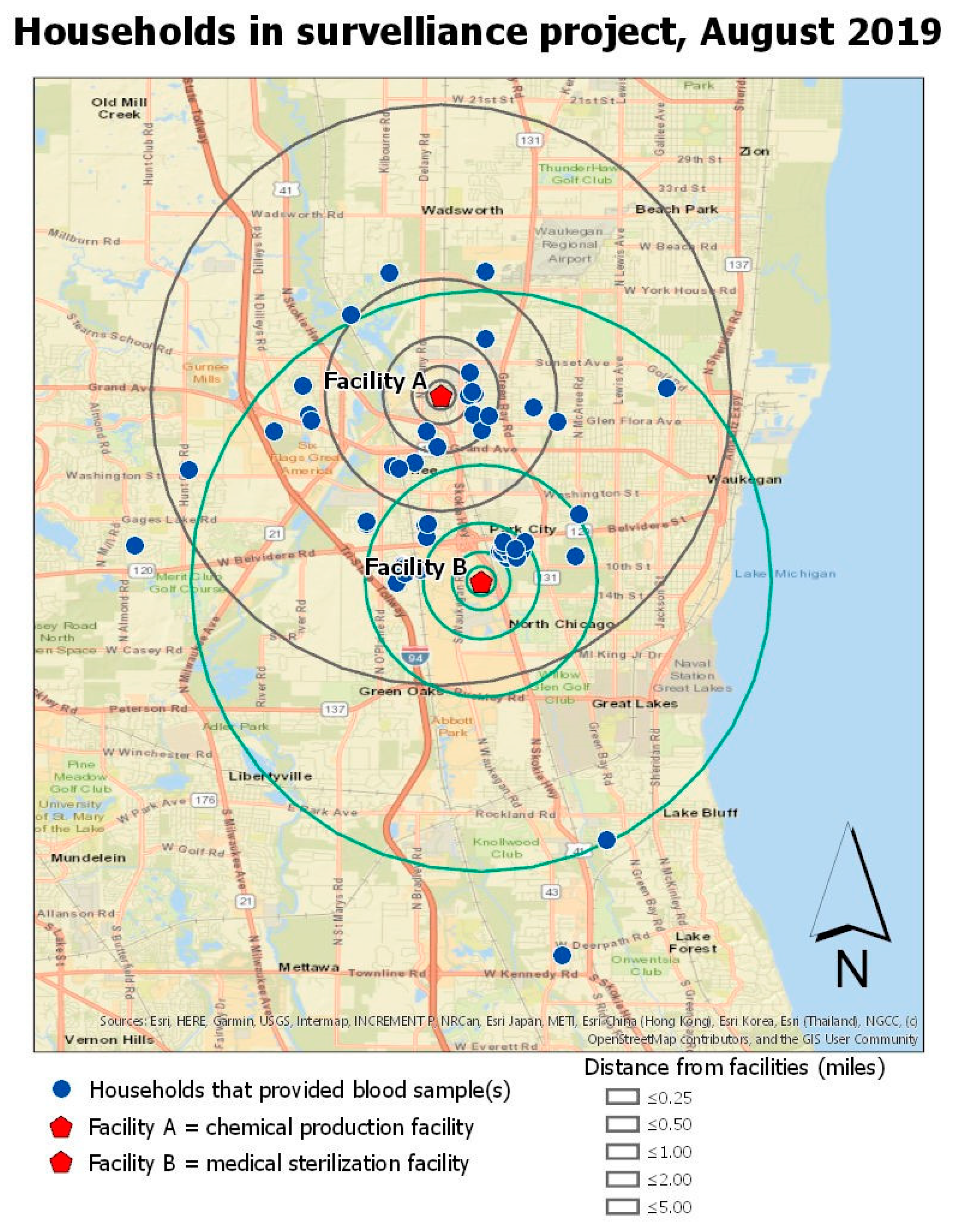
Levels of Ethylene Oxide Biomarker in an Exposed Residential Community

Abstract
Share and Cite
Szwiec, E.; Friedman, L.; Buchanan, S. Levels of Ethylene Oxide Biomarker in an Exposed Residential Community. Int. J. Environ. Res. Public Health 2020, 17, 8646. https://doi.org/10.3390/ijerph17228646
Szwiec E, Friedman L, Buchanan S. Levels of Ethylene Oxide Biomarker in an Exposed Residential Community. International Journal of Environmental Research and Public Health. 2020; 17(22):8646. https://doi.org/10.3390/ijerph17228646
Chicago/Turabian StyleSzwiec, Emily, Lee Friedman, and Susan Buchanan. 2020. "Levels of Ethylene Oxide Biomarker in an Exposed Residential Community" International Journal of Environmental Research and Public Health 17, no. 22: 8646. https://doi.org/10.3390/ijerph17228646
APA StyleSzwiec, E., Friedman, L., & Buchanan, S. (2020). Levels of Ethylene Oxide Biomarker in an Exposed Residential Community. International Journal of Environmental Research and Public Health, 17(22), 8646. https://doi.org/10.3390/ijerph17228646