Article

Research Project Evaluation—Learnings from the PATHWAYS Project Experience


by
Aleksander Galas
1,
Aleksandra Pilat
1,
Matilde Leonardi
2 and
Beata Tobiasz-Adamczyk
1,*
1
Epidemiology and Preventive Medicine, Jagiellonian University Medical College, 31-034 Krakow, Poland
2
Fondazione IRCCS, Neurological Institute Carlo Besta, 20-133 Milano, Italy
*
Author to whom correspondence should be addressed.
Int. J. Environ. Res. Public Health 2018, 15(6), 1071; https://doi.org/10.3390/ijerph15061071

Submission received: 17 May 2018 / Revised: 22 May 2018 / Accepted: 22 May 2018 / Published: 25 May 2018

Abstract

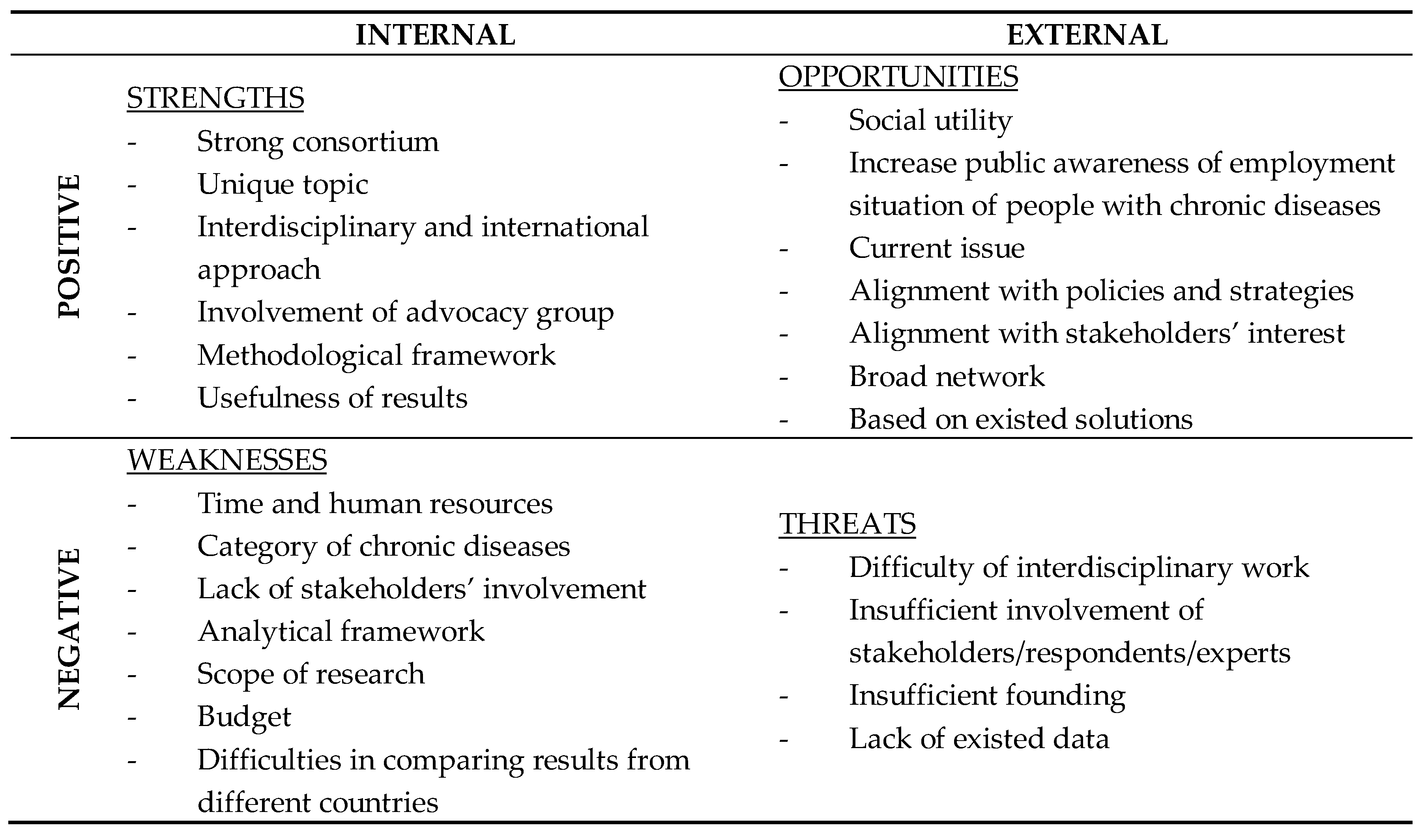
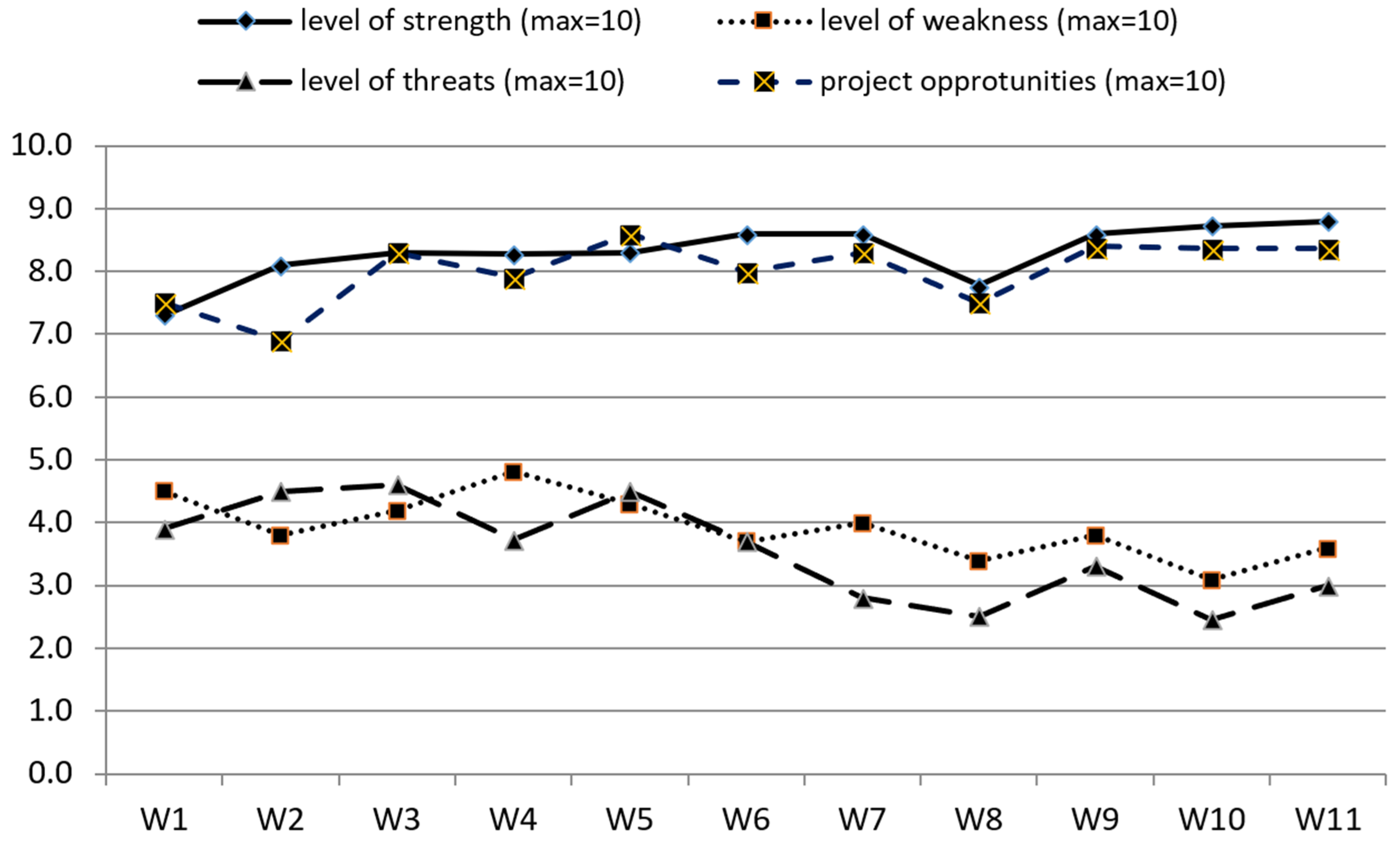
Background: Every research project faces challenges regarding how to achieve its goals in a timely and effective manner. The purpose of this paper is to present a project evaluation methodology gathered during the implementation of the Participation to Healthy Workplaces and Inclusive Strategies in the Work Sector (the EU PATHWAYS Project). The PATHWAYS project involved multiple countries and multi-cultural aspects of re/integrating chronically ill patients into labor markets in different countries. This paper describes key project’s evaluation issues including: (1) purposes, (2) advisability, (3) tools, (4) implementation, and (5) possible benefits and presents the advantages of a continuous monitoring. Methods: Project evaluation tool to assess structure and resources, process, management and communication, achievements, and outcomes. The project used a mixed evaluation approach and included Strengths (S), Weaknesses (W), Opportunities (O), and Threats (SWOT) analysis. Results: A methodology for longitudinal EU projects’ evaluation is described. The evaluation process allowed to highlight strengths and weaknesses and highlighted good coordination and communication between project partners as well as some key issues such as: the need for a shared glossary covering areas investigated by the project, problematic issues related to the involvement of stakeholders from outside the project, and issues with timing. Numerical SWOT analysis showed improvement in project performance over time. The proportion of participating project partners in the evaluation varied from 100% to 83.3%. Conclusions: There is a need for the implementation of a structured evaluation process in multidisciplinary projects involving different stakeholders in diverse socio-environmental and political conditions. Based on the PATHWAYS experience, a clear monitoring methodology is suggested as essential in every multidisciplinary research projects.
Keywords: public health; project process evaluation; internal evaluation; SWOT analysis; project achievements; project management and monitoring public health; project process evaluation; internal evaluation; SWOT analysis; project achievements; project management and monitoring