



C-Type Lectins from Marine Bivalves: Functional Diversity and Structural Insights

Abstract
1. Introduction
2. Biosynthesis and Tissue Distribution
2.1. Tissue-Specific Expression of C-Type Lectins
2.2. Regulation of C-Type Lectin Expression During Immune Response
2.3. Influence of Abiotic Stressors on C-Type Lectin
3. Antibacterial Properties and Immune Functions
4. Other Functions of C-Type Lectins
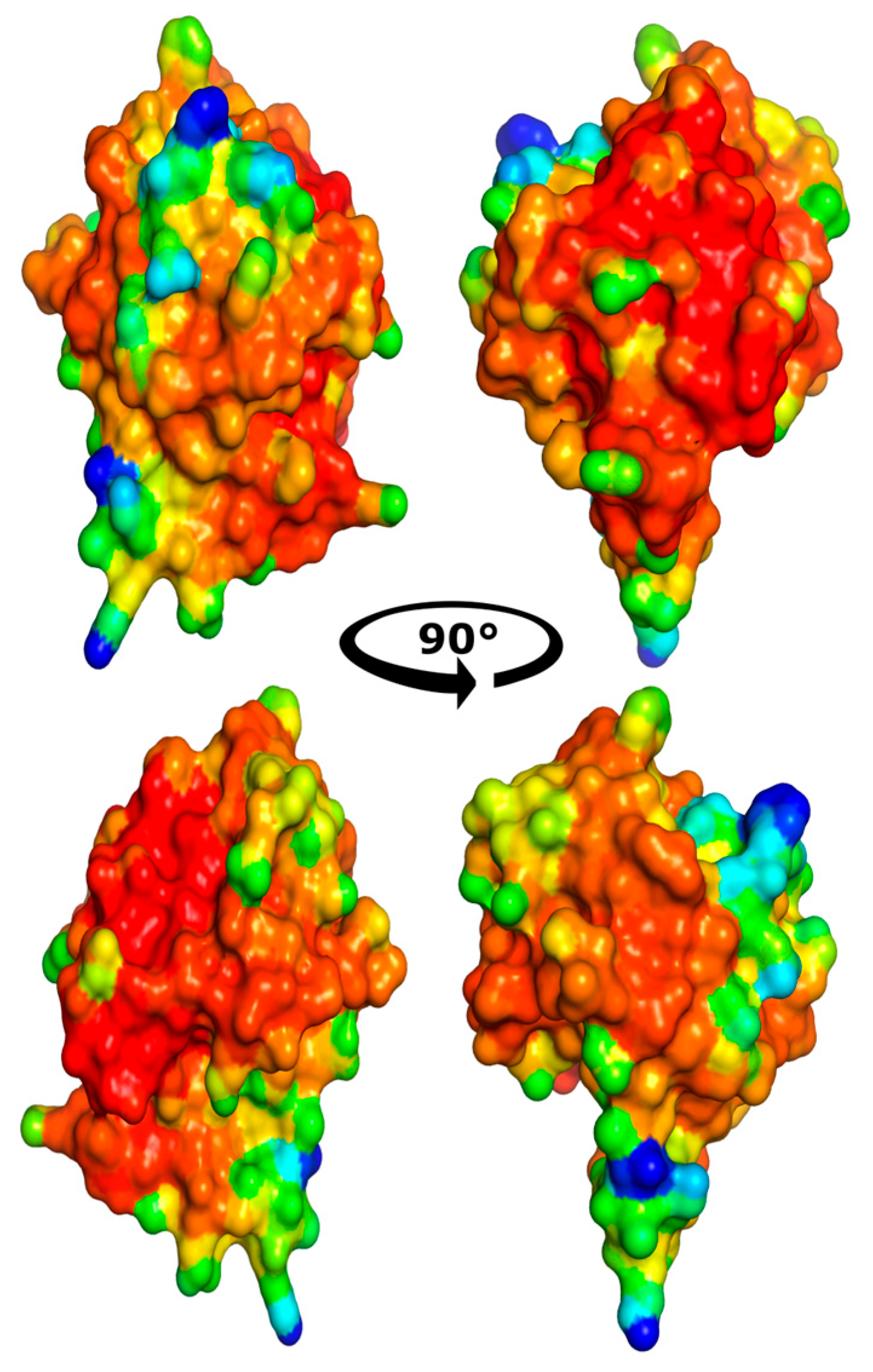
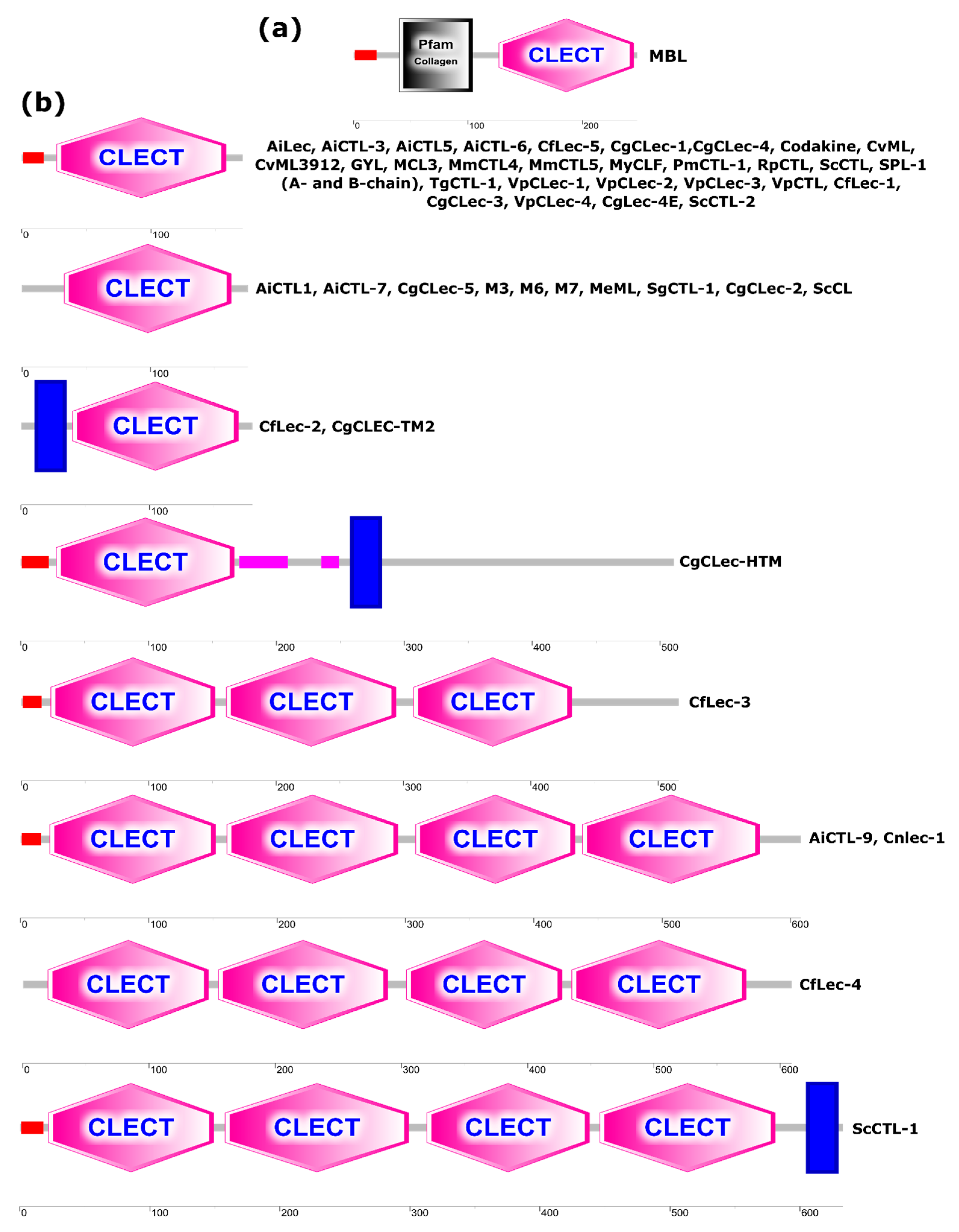
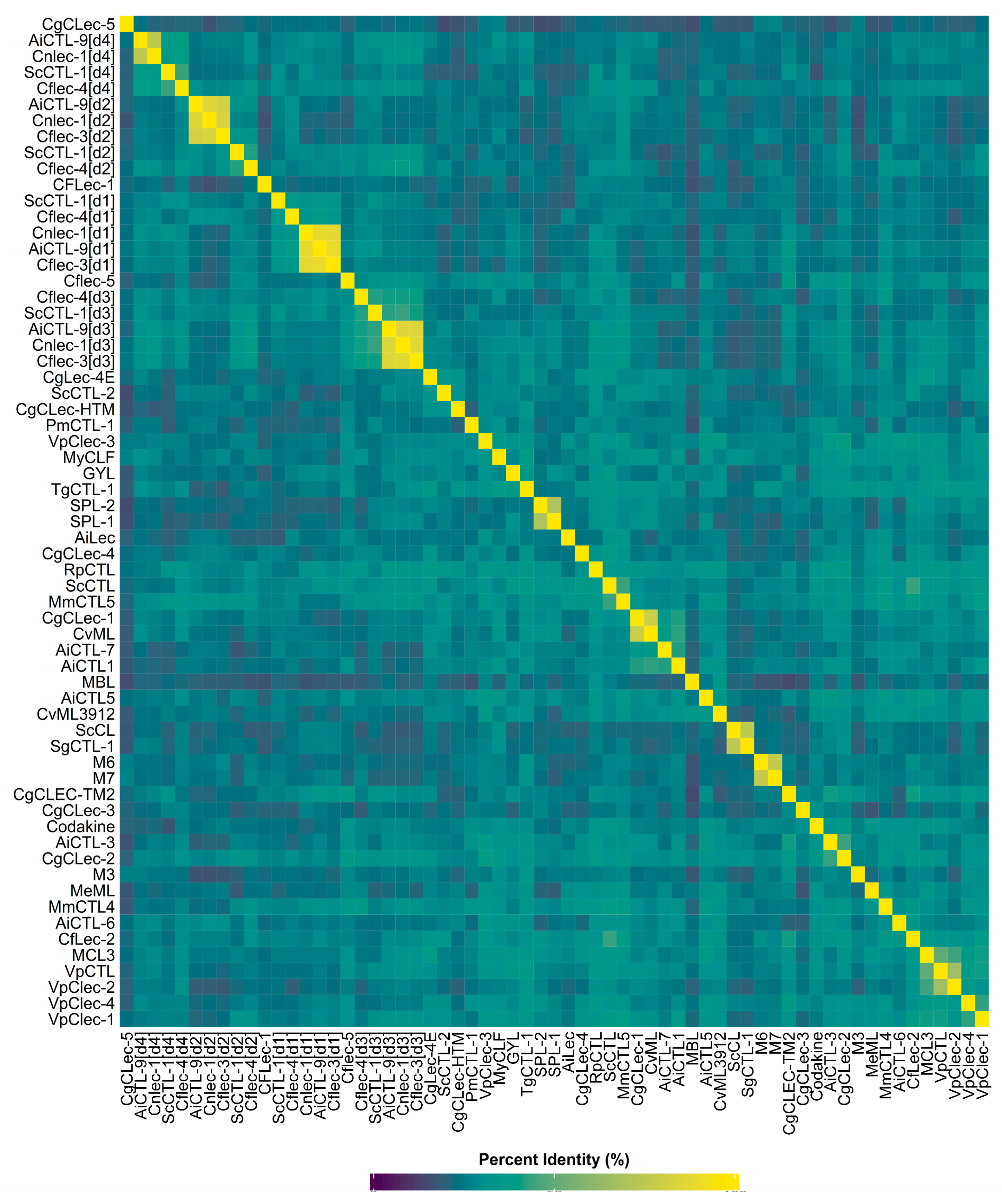
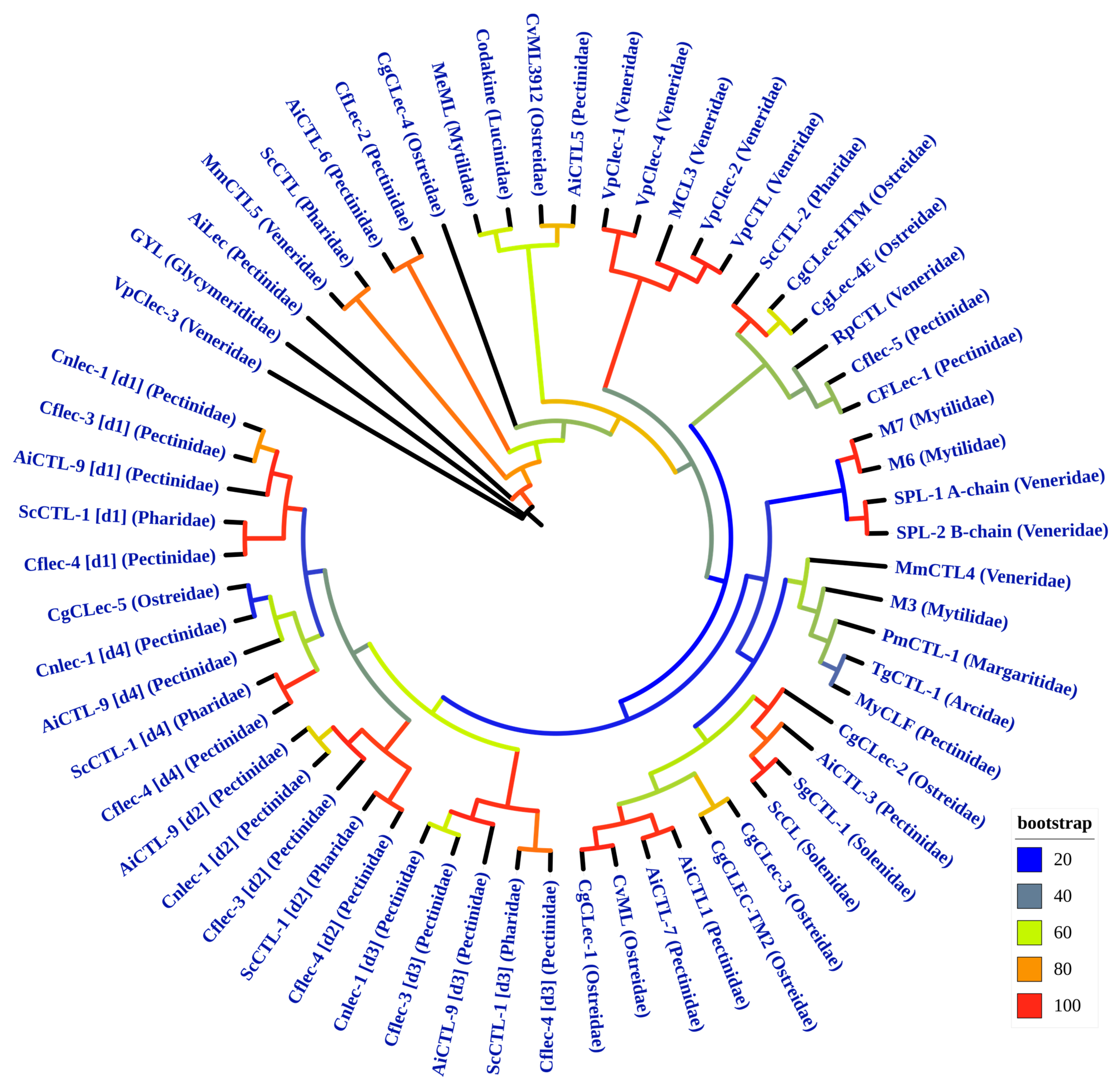
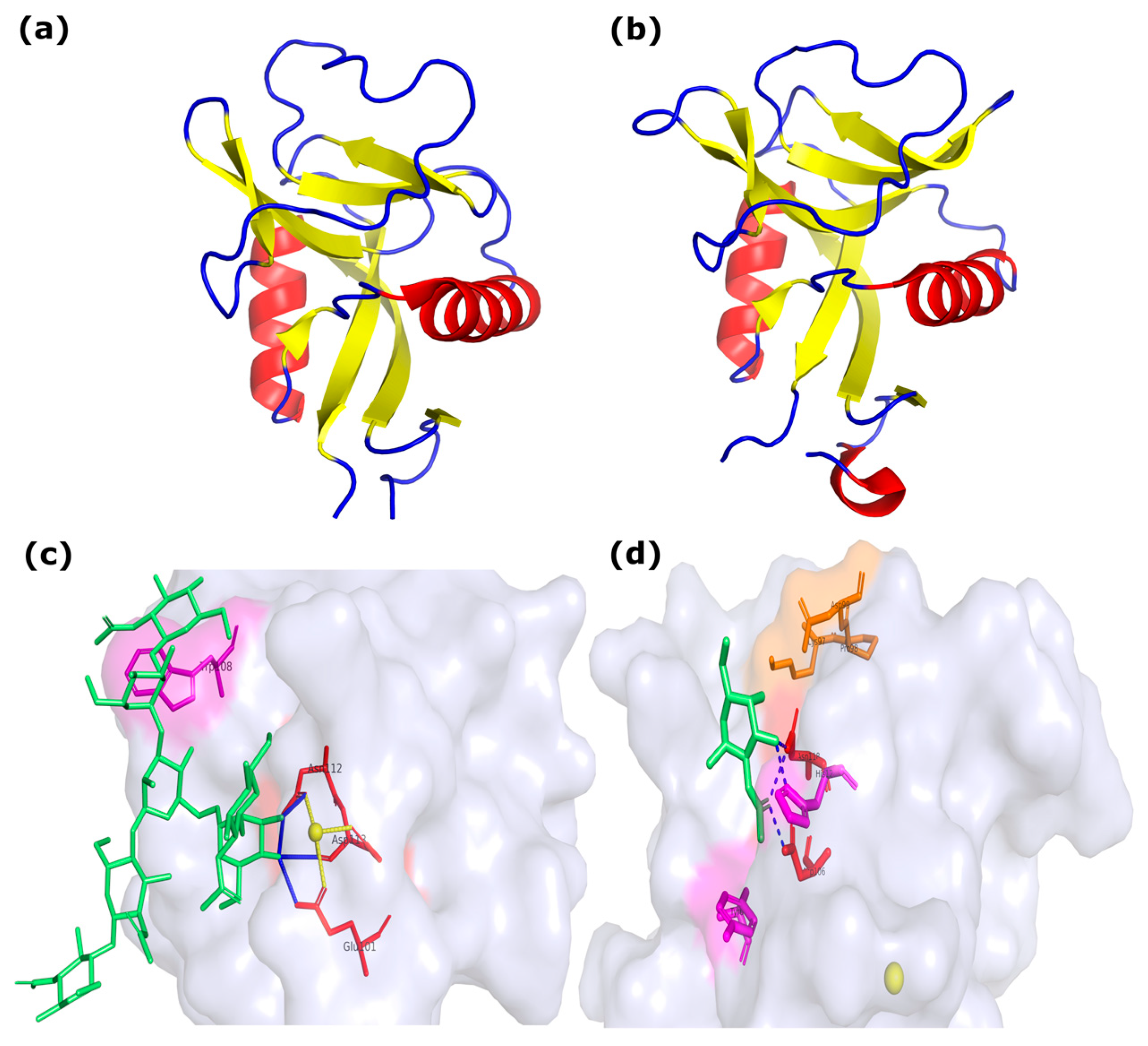
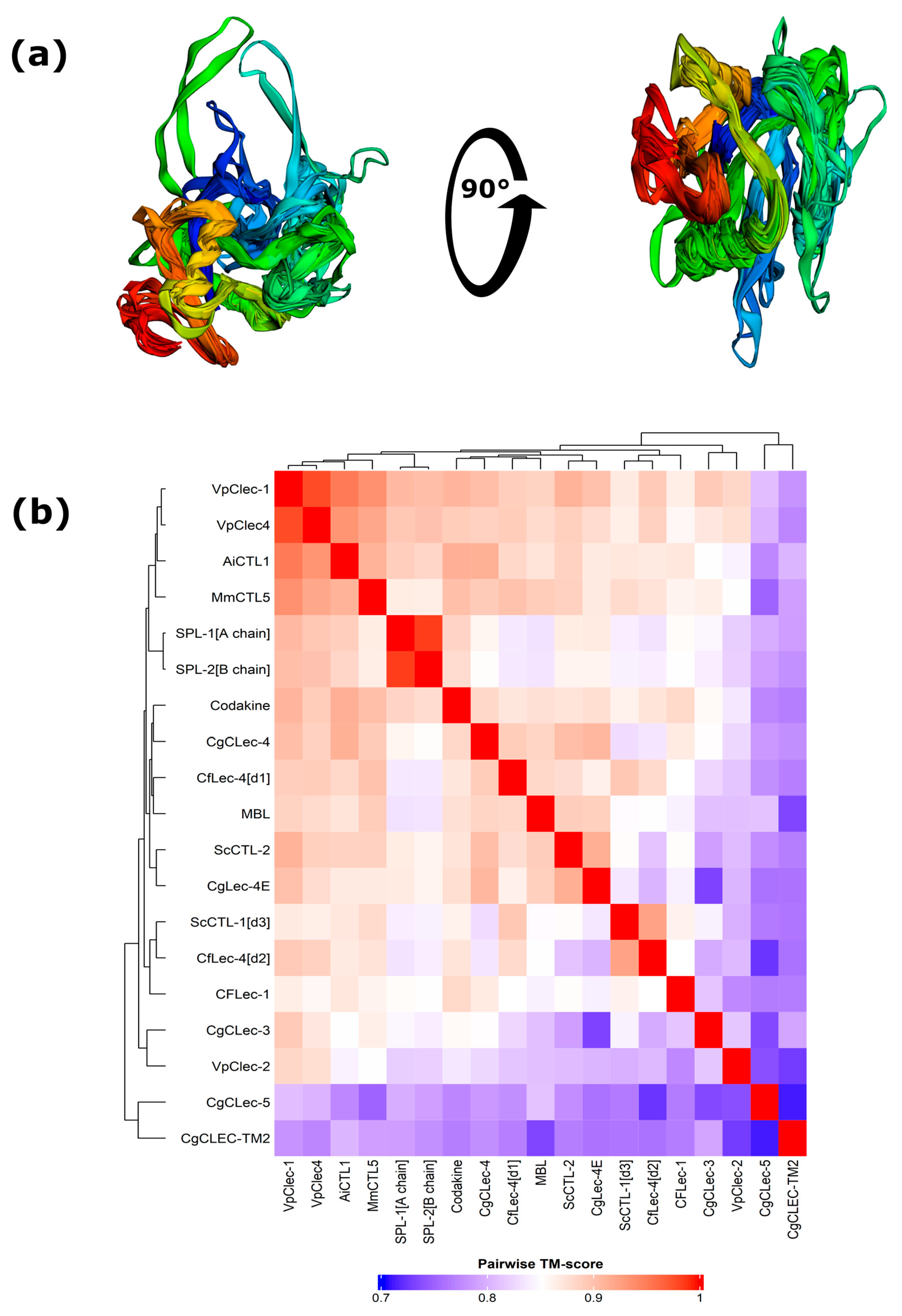
5. C-Type Lectins’ Structures
6. Carbohydrate Specificity of C-Type Lectins
7. Conclusions
Author Contributions
Funding
Institutional Review Board Statement
Data Availability Statement
Acknowledgments
Conflicts of Interest
Abbreviations
| CRD | carbohydrate-recognition domain |
| CTL | C-type lectin |
| CTLD | C-type lectin-like domain |
| IHC | immunohistochemistry |
| ISH | in situ hybridization |
| LPS | lipopolysaccharide |
| PAMP | pathogen-associated molecular pattern |
| PGN | peptidoglycan |
| PIM | percent identity matrix |
| PRR | pattern recognition receptor |
| PSM | porcine submaxillary mucin |
| qPCR | quantitative real-time polymerase chain reaction |
References
- Kilpatrick, D.C. Animal Lectins: A Historical Introduction and Overview. Biochim. Biophys. Acta (BBA)—Gen. Subj. 2002, 1572, 187–197. [Google Scholar] [CrossRef]
- Drickamer, K. Two Distinct Classes of Carbohydrate-Recognition Domains in Animal Lectins. J. Biol. Chem. 1988, 263, 9557–9560. [Google Scholar] [CrossRef]
- Zelensky, A.N.; Gready, J.E. The C-Type Lectin-like Domain Superfamily. FEBS J. 2005, 272, 6179–6217. [Google Scholar] [CrossRef]
- Sharon, N.; Lis, H. Lectins; Springer: Dordrecht, The Netherlands, 2007; ISBN 978-1-4020-6605-4. [Google Scholar]
- Varki, A.; Cummings, R.D.; Esko, J.D.; Stanley, P.; Hart, G.W.; Aebi, M.; Mohnen, D.; Kinoshita, T.; Packer, N.H.; Prestegard, J.H.; et al. (Eds.) Essentials of Glycobiology, 4th ed.; Cold Spring Harbor Laboratory Press: Cold Spring Harbor, NY, USA, 2022; ISBN 978-1-62182-421-3. [Google Scholar]
- Šebestík, J.; Reiniš, M.; Ježek, J. Sugar Code (Glycocode). In Biomedical Applications of Peptide-, Glyco- and Glycopeptide Dendrimers, and Analogous Dendrimeric Structures; Sebestik, J., Reinis, M., Jezek, J., Eds.; Springer: Vienna, Austria, 2012; pp. 23–27. ISBN 978-3-7091-1206-9. [Google Scholar]
- Nagae, M.; Yamaguchi, Y. Structural Aspects of Carbohydrate Recognition Mechanisms of C-Type Lectins. In C-Type Lectins in Immune Homeostasis; Yamasaki, S., Ed.; Springer International Publishing: Cham, Switzerland, 2020; pp. 147–176. ISBN 978-3-030-62237-4. [Google Scholar]
- Gorakshakar, A.C.; Ghosh, K. Use of Lectins in Immunohematology. Asian J. Transfus. Sci. 2016, 10, 12. [Google Scholar] [CrossRef]
- Manning, J.C.; Romero, A.; Habermann, F.A.; García Caballero, G.; Kaltner, H.; Gabius, H.-J. Lectins: A Primer for Histochemists and Cell Biologists. Histochem. Cell Biol. 2017, 147, 199–222. [Google Scholar] [CrossRef]
- Hendrickson, O.D.; Zherdev, A.V. Analytical Application of Lectins. Crit. Rev. Anal. Chem. 2018, 48, 279–292. [Google Scholar] [CrossRef]
- Wu, A.M.; Liu, J.H. Lectins and ELLSA as Powerful Tools for Glycoconjugate Recognition Analyses. Glycoconj. J. 2019, 36, 175–183. [Google Scholar] [CrossRef]
- Devi, R.V.; Basil-Rose, M.R. Lectins as Ligands for Directing Nanostructured Systems. Curr. Drug Deliv. 2018, 15, 448–452. [Google Scholar] [CrossRef] [PubMed]
- Mitchell, C.A.; Ramessar, K.; O’Keefe, B.R. Antiviral Lectins: Selective Inhibitors of Viral Entry. Antivir. Res. 2017, 142, 37–54. [Google Scholar] [CrossRef] [PubMed]
- Mazalovska, M.; Kouokam, J.C. Lectins as Promising Therapeutics for the Prevention and Treatment of HIV and Other Potential Coinfections. Biomed. Res. Int. 2018, 2018, 3750646. [Google Scholar] [CrossRef]
- Breitenbach Barroso Coelho, L.C.; Marcelino Dos Santos Silva, P.; Felix de Oliveira, W.; de Moura, M.C.; Viana Pontual, E.; Soares Gomes, F.; Guedes Paiva, P.M.; Napoleão, T.H.; Dos Santos Correia, M.T. Lectins as Antimicrobial Agents. J. Appl. Microbiol. 2018, 125, 1238–1252. [Google Scholar] [CrossRef]
- Catanzaro, E.; Calcabrini, C.; Bishayee, A.; Fimognari, C. Antitumor Potential of Marine and Freshwater Lectins. Mar. Drugs 2020, 18, 11. [Google Scholar] [CrossRef]
- Višnjar, T.; Romih, R.; Zupančič, D. Lectins as Possible Tools for Improved Urinary Bladder Cancer Management. Glycobiology 2019, 29, 355–365. [Google Scholar] [CrossRef]
- Keller, B.G.; Rademacher, C. Allostery in C-Type Lectins. Curr. Opin. Struct. Biol. 2020, 62, 31–38. [Google Scholar] [CrossRef] [PubMed]
- Lefèbre, J.; Falk, T.; Ning, Y.; Rademacher, C. Secondary Sites of the C-Type Lectin-Like Fold. Chem.—A Eur. J. 2024, 30, e202400660. [Google Scholar] [CrossRef] [PubMed]
- Ming, Z.; Chen, Z.; Tong, H.; Zhou, X.; Feng, T.; Dai, J. Immune Functions of C-Type Lectins in Medical Arthropods. Insect Sci. 2024, 31, 652–662. [Google Scholar] [CrossRef] [PubMed]
- Wang, L.; Huang, M.; Zhang, H.; Song, L. The Immune Role of C-Type Lectins in Molluscs. Invertebr. Surviv. J. 2011, 8, 241–246. [Google Scholar]
- Gerdol, M. Immune-Related Genes in Gastropods and Bivalves: A Comparative Overview. Invertebr. Surviv. J. 2017, 14, 103–118. [Google Scholar] [CrossRef]
- Xia, X.; You, M.; Rao, X.-J.; Yu, X.-Q. Insect C-Type Lectins in Innate Immunity. Dev. Comp. Immunol. 2018, 83, 70–79. [Google Scholar] [CrossRef]
- Tsaneva, M.; Van Damme, E.J.M. 130 Years of Plant Lectin Research. Glycoconj. J. 2020, 37, 533–551. [Google Scholar] [CrossRef]
- Hu, D.; Tateno, H.; Hirabayashi, J. Lectin Engineering, a Molecular Evolutionary Approach to Expanding the Lectin Utilities. Molecules 2015, 20, 7637–7656. [Google Scholar] [CrossRef]
- Hombu, R.; Beatty, L.E.; Neelamegham, S. Editor’s Choice Protein Engineering Strategies to Develop Lectins by Design. Glycobiology 2025, 35, cwaf041. [Google Scholar] [CrossRef] [PubMed]
- Saco, A.; Suárez, H.; Novoa, B.; Figueras, A. A Genomic and Transcriptomic Analysis of the C-Type Lectin Gene Family Reveals Highly Expanded and Diversified Repertoires in Bivalves. Mar. Drugs 2023, 21, 254. [Google Scholar] [CrossRef]
- Wang, L.; Zhang, H.; Wang, M.; Zhou, Z.; Wang, W.; Liu, R.; Huang, M.; Yang, C.; Qiu, L.; Song, L. The Transcriptomic Expression of Pattern Recognition Receptors: Insight into Molecular Recognition of Various Invading Pathogens in Oyster Crassostrea gigas. Dev. Comp. Immunol. 2019, 91, 1–7. [Google Scholar] [CrossRef] [PubMed]
- Venier, P.; Varotto, L.; Rosani, U.; Millino, C.; Celegato, B.; Bernante, F.; Lanfranchi, G.; Novoa, B.; Roch, P.; Figueras, A.; et al. Insights into the Innate Immunity of the Mediterranean Mussel Mytilus Galloprovincialis. BMC Genom. 2011, 12, 69. [Google Scholar] [CrossRef]
- Sun, J.; Wang, L.; Yang, W.; Li, Y.; Jin, Y.; Wang, L.; Song, L. A Novel C-Type Lectin Activates the Complement Cascade in the Primitive Oyster Crassostrea gigas. J. Biol. Chem. 2021, 297, 101352. [Google Scholar] [CrossRef]
- Lin, J.; Ning, J.; Lu, X.; Chen, M.; Cao, W.; Wang, C. Transcriptomic Analysis and Expression of C-Type Lectins in Response to Vibrio parahaemolyticus Challenge in Scapharca subcrenata. Fish Shellfish Immunol. 2020, 106, 365–373. [Google Scholar] [CrossRef]
- Zhu, L.; Song, L.; Xu, W.; Qian, P.-Y. Molecular Cloning and Immune Responsive Expression of a Novel C-Type Lectin Gene from Bay Scallop Argopecten irradians. Fish Shellfish Immunol. 2008, 25, 231–238. [Google Scholar] [CrossRef] [PubMed]
- Huang, M.; Song, X.; Zhao, J.; Mu, C.; Wang, L.; Zhang, H.; Zhou, Z.; Liu, X.; Song, L. A C-Type Lectin (AiCTL-3) from Bay Scallop Argopecten irradians with Mannose/Galactose Binding Ability to Bind Various Bacteria. Gene 2013, 531, 31–38. [Google Scholar] [CrossRef]
- Zhang, H.; Song, X.; Wang, L.; Kong, P.; Yang, J.; Liu, L.; Qiu, L.; Zhang, Y.; Qiu, L.; Song, L. AiCTL-6, a Novel C-Type Lectin from Bay Scallop Argopecten irradians with a Long C-Type Lectin-like Domain. Fish Shellfish Immunol. 2011, 30, 17–26. [Google Scholar] [CrossRef]
- Kong, P.; Wang, L.; Zhang, H.; Song, X.; Zhou, Z.; Yang, J.; Qiu, L.; Wang, L.; Song, L. A Novel C-Type Lectin from Bay Scallop Argopecten irradians (AiCTL-7) Agglutinating Fungi with Mannose Specificity. Fish Shellfish Immunol. 2011, 30, 836–844. [Google Scholar] [CrossRef] [PubMed]
- Wang, L.; Wang, L.; Yang, J.; Zhang, H.; Huang, M.; Kong, P.; Zhou, Z.; Song, L. A Multi-CRD C-Type Lectin with Broad Recognition Spectrum and Cellular Adhesion from Argopecten irradians. Dev. Comp. Immunol. 2012, 36, 591–601. [Google Scholar] [CrossRef]
- Zhu, L.; Song, L.; Xu, W.; Qian, P.-Y. Identification of a C-Type Lectin from the Bay Scallop Argopecten irradians. Mol. Biol. Rep. 2009, 36, 1167–1173. [Google Scholar] [CrossRef]
- Jing, X.; Espinosa, E.P.; Perrigault, M.; Allam, B. Identification, Molecular Characterization and Expression Analysis of a Mucosal C-Type Lectin in the Eastern Oyster, Crassostrea virginica. Fish Shellfish Immunol. 2011, 30, 851–858. [Google Scholar] [CrossRef] [PubMed]
- Yamaura, K.; Takahashi, K.G.; Suzuki, T. Identification and Tissue Expression Analysis of C-Type Lectin and Galectin in the Pacific Oyster, Crassostrea gigas. Comp. Biochem. Physiol. Part B Biochem. Mol. Biol. 2008, 149, 168–175. [Google Scholar] [CrossRef]
- Li, H.; Zhang, H.; Jiang, S.; Wang, W.; Xin, L.; Wang, H.; Wang, L.; Song, L. A Single-CRD C-Type Lectin from Oyster Crassostrea gigas Mediates Immune Recognition and Pathogen Elimination with a Potential Role in the Activation of Complement System. Fish Shellfish Immunol. 2015, 44, 566–575. [Google Scholar] [CrossRef] [PubMed]
- Song, X.; Xin, X.; Wang, H.; Li, H.; Zhang, H.; Jia, Z.; Liu, C.; Jiang, S.; Wang, L.; Song, L. A Single-CRD C-Type Lectin (CgCLec-3) with Novel DIN Motif Exhibits Versatile Immune Functions in Crassostrea gigas. Fish Shellfish Immunol. 2019, 92, 772–781. [Google Scholar] [CrossRef]
- Jia, Z.; Zhang, H.; Jiang, S.; Wang, M.; Wang, L.; Song, L. Comparative Study of Two Single CRD C-Type Lectins, CgCLec-4 and CgCLec-5, from Pacific Oyster Crassostrea gigas. Fish Shellfish Immunol. 2016, 59, 220–232. [Google Scholar] [CrossRef]
- Ma, Y.; Qiao, X.; Dong, M.; Lian, X.; Li, Y.; Jin, Y.; Wang, L.; Song, L. A C-Type Lectin from Crassostrea gigas with Novel EFG/FVN Motif Involved in Recognition of Various PAMPs and Induction of Interleukin Expression. Dev. Comp. Immunol. 2023, 143, 104680. [Google Scholar] [CrossRef]
- Wang, W.; Gong, C.; Han, Z.; Lv, X.; Liu, S.; Wang, L.; Song, L. The Lectin Domain Containing Proteins with Mucosal Immunity and Digestive Functions in Oyster Crassostrea gigas. Fish Shellfish Immunol. 2019, 89, 237–247. [Google Scholar] [CrossRef]
- Chen, H.; Cai, X.; Qiu, H.; Fang, J.; Wu, X. A Novel C-Type Lectin from Crassostrea gigas Involved in the Innate Defense against Vibrio alginolyticus. Biochem. Biophys. Res. Commun. 2021, 566, 155–163. [Google Scholar] [CrossRef]
- Zhang, L.; Wei, C.; Guo, Y.; Hu, J.; Wang, M. Molecular Identification and Functional Characterization of a C-Type Lectin Gene in Meretrix meretrix. Fish Shellfish Immunol. 2024, 153, 109833. [Google Scholar] [CrossRef]
- Zhang, L.; Tao, Y.; Shi, B.; Jia, X.; Xing, Q.; Guo, Y.; Wang, M. A Novel C-Type Lectin Gene with QPS and WND Motifs in Clam Meretrix meretrix. Dev. Comp. Immunol. 2025, 169, 105416. [Google Scholar] [CrossRef]
- Lu, Y.; Zhang, H.; Cheng, D.; Liu, H.; Li, S.; Ma, H.; Zheng, H. A Multi-CRD C-Type Lectin Gene Cnlec-1 Enhance the Immunity Response in Noble Scallop Chlamys Nobilis with Higher Carotenoids Contents through up-Regulating under Different Immunostimulants. Fish Shellfish Immunol. 2018, 83, 37–44. [Google Scholar] [CrossRef]
- Bao, X.B.; He, C.B.; Fu, C.D.; Wang, B.; Zhao, X.M.; Gao, X.G.; Liu, W.D. A C-Type Lectin Fold Gene from Japanese Scallop Mizuhopecten yessoensis, Involved with Immunity and Metamorphosis. Genet. Mol. Res. 2015, 14, 2253–2267. [Google Scholar] [CrossRef] [PubMed]
- Pales Espinosa, E.; Perrigault, M.; Allam, B. Identification and Molecular Characterization of a Mucosal Lectin (MeML) from the Blue Mussel Mytilus edulis and Its Potential Role in Particle Capture. Comp. Biochem. Physiol. Part A Mol. Integr. Physiol. 2010, 156, 495–501. [Google Scholar] [CrossRef] [PubMed]
- He, J.; Shen, C.; Liang, H.; Fang, X.; Lu, J. Antimicrobial Properties and Immune-Related Gene Expression of a C-Type Lectin Isolated from Pinctada fucata martensii. Fish Shellfish Immunol. 2020, 105, 330–340. [Google Scholar] [CrossRef]
- Kim, J.Y.; Adhya, M.; Cho, S.K.; Choi, K.S.; Cho, M. Characterization, Tissue Expression, and Immunohistochemical Localization of MCL3, a C-Type Lectin Produced by Perkinsus olseni-Infected Manila Clams (Ruditapes philippinarum). Fish Shellfish Immunol. 2008, 25, 598–603. [Google Scholar] [CrossRef]
- Li, D.; Nie, H.; Dong, S.; Huo, Z.; Yan, X. Molecular Cloning and Expression Analysis of C-Type Lectin (RpCTL) in Manila Clam Ruditapes philippinarum after Lipopolysaccharide Challenge. Fish Shellfish Immunol. 2019, 86, 981–993. [Google Scholar] [CrossRef]
- Zhang, J.; Zhang, Y.; Chen, L.; Yang, J.; Wei, Q.; Yang, B.; Liu, X.; Yang, D. Two C-Type Lectins from Venerupis philippinarum: Possible Roles in Immune Recognition and Opsonization. Fish Shellfish Immunol. 2019, 94, 230–238. [Google Scholar] [CrossRef] [PubMed]
- Xin, Z.; Yu, D.; Yang, B.; Chen, L.; Hayouka, Z.; Chen, X.; Gong, Y.; Dai, H.; Wang, L.; Zhao, Y.; et al. Molecular Characterization, Expression and Immune Functions of Two C-Type Lectin from Venerupis philippinarum. Fish Shellfish Immunol. 2020, 107, 260–268. [Google Scholar] [CrossRef] [PubMed]
- Mu, C.; Chen, L.; Zhao, J.; Wang, C. Molecular Cloning and Expression of a C-Type Lectin Gene from Venerupis philippinarum. Mol. Biol. Rep. 2014, 41, 139–144. [Google Scholar] [CrossRef] [PubMed]
- Li, D.; Nie, H.; Jahan, K.; Yan, X. Expression Analyses of C-Type Lectins (CTLs) in Manila Clam under Cold Stress Provide Insights for Its Potential Function in Cold Resistance of Ruditapes philippinarum. Comp. Biochem. Physiol. Part C Toxicol. Pharmacol. 2020, 230, 108708. [Google Scholar] [CrossRef]
- Wang, H.; Song, L.; Li, C.; Zhao, J.; Zhang, H.; Ni, D.; Xu, W. Cloning and Characterization of a Novel C-Type Lectin from Zhikong Scallop Chlamys farreri. Mol. Immunol. 2007, 44, 722–731. [Google Scholar] [CrossRef] [PubMed]
- Yang, J.; Wang, L.; Zhang, H.; Qiu, L.; Wang, H.; Song, L. C-Type Lectin in Chlamys farreri (CfLec-1) Mediating Immune Recognition and Opsonization. PLoS ONE 2011, 6, e17089. [Google Scholar] [CrossRef][Green Version]
- Yang, J.; Qiu, L.; Wei, X.; Wang, L.; Wang, L.; Zhou, Z.; Zhang, H.; Liu, L.; Song, L. An Ancient C-Type Lectin in Chlamys farreri (CfLec-2) That Mediate Pathogen Recognition and Cellular Adhesion. Dev. Comp. Immunol. 2010, 34, 1274–1282. [Google Scholar] [CrossRef]
- Zhang, H.; Wang, H.; Wang, L.; Song, X.; Zhao, J.; Qiu, L.; Li, L.; Cong, M.; Song, L. A Novel C-Type Lectin (Cflec-3) from Chlamys farreri with Three Carbohydrate-Recognition Domains. Fish Shellfish Immunol. 2009, 26, 707–715. [Google Scholar] [CrossRef]
- Yang, J.; Huang, M.; Zhang, H.; Wang, L.; Wang, H.; Wang, L.; Qiu, L.; Song, L. CfLec-3 from Scallop: An Entrance to Non-Self Recognition Mechanism of Invertebrate C-Type Lectin. Sci. Rep. 2015, 5, 10068. [Google Scholar] [CrossRef]
- Huang, M.; Wang, L.; Yang, J.; Zhang, H.; Wang, L.; Song, L. A Four-CRD C-Type Lectin from Chlamys farreri Mediating Nonself-Recognition with Broader Spectrum and Opsonization. Dev. Comp. Immunol. 2013, 39, 363–369. [Google Scholar] [CrossRef]
- Zhang, H.; Wang, H.; Wang, L.; Song, L.; Song, X.; Zhao, J.; Li, L.; Qiu, L. Cflec-4, a Multidomain C-Type Lectin Involved in Immune Defense of Zhikong Scallop Chlamys farreri. Dev. Comp. Immunol. 2009, 33, 780–788. [Google Scholar] [CrossRef]
- Zhang, H.; Kong, P.; Wang, L.; Zhou, Z.; Yang, J.; Zhang, Y.; Qiu, L.; Song, L. Cflec-5, a Pattern Recognition Receptor in Scallop Chlamys farreri Agglutinating Yeast Pichia pastoris. Fish Shellfish Immunol. 2010, 29, 149–156. [Google Scholar] [CrossRef]
- Xu, X.; Liao, K.; Shi, P.; Xu, J.; Ran, Z.; Zhou, C.; Zhang, L.; Cao, J.; Yan, X. Involvement of a Novel Ca2+-Independent C-Type Lectin from Sinonovacula constricta in Food Recognition and Innate Immunity. Fish Shellfish Immunol. 2020, 104, 374–382. [Google Scholar] [CrossRef]
- Shen, Y.; Shao, Y.; Cui, Y.; Zhao, X.; Zhang, W.; Li, C. Novel C-Type Lectin from Razor Clam Sinonovacula constricta Agglutinates Bacteria and Erythrocytes in a Ca2+-Dependent Manner. Dev. Comp. Immunol. 2018, 86, 9–16. [Google Scholar] [CrossRef]
- Lan, T.; Li, Z.; Peng, M.; Niu, D.; Li, Y.; Li, J. A Four-CRD C-Type Lectin from Razor Clam Sinonovacula constricta Mediates Agglutination and Phagocytosis. Gene 2020, 728, 144287. [Google Scholar] [CrossRef]
- Shi, Y.; Zhao, X.; Wang, Z.; Shao, Y.; Zhang, W.; Bao, Y.; Li, C. Novel Ca2+-Independent C-Type Lectin Involved in Immune Defense of the Razor Clam Sinonovacula constricta. Fish Shellfish Immunol. 2019, 84, 502–508. [Google Scholar] [CrossRef]
- Wei, X.; Yang, J.; Liu, X.; Yang, D.; Xu, J.; Fang, J.; Wang, W.; Yang, J. Identification and Transcriptional Analysis of Two Types of Lectins (SgCTL-1 and SgGal-1) from Mollusk Solen grandis. Fish Shellfish Immunol. 2012, 33, 204–212. [Google Scholar] [CrossRef] [PubMed]
- Kim, T.; Ri, S.; Ju, K.; Shi, W.; Zhou, W.; Yu, Y.; Ri, S.; Ri, H.; Yun, S.; Ri, J.; et al. A C-Type Lectin with a Single Carbohydrate-Recognition Domain (CRD) Containing Unique QPN/WDD Motifs from Tegillarca granosa Is Involved in the Innate Immune Defense. Fish Shellfish Immunol. 2023, 142, 109093. [Google Scholar] [CrossRef] [PubMed]
- Pales Espinosa, E.; Koller, A.; Allam, B. Proteomic Characterization of Mucosal Secretions in the Eastern Oyster, Crassostrea virginica. J. Proteom. 2016, 132, 63–76. [Google Scholar] [CrossRef] [PubMed]
- Pales Espinosa, E.; Allam, B. Reverse Genetics Demonstrate the Role of Mucosal C-Type Lectins in Food Particle Selection in the Oyster Crassostrea virginica. J. Exp. Biol. 2018, 221, jeb174094. [Google Scholar] [CrossRef]
- Wang, L.; Zhang, H.; Wang, L.; Zhang, D.; Lv, Z.; Liu, Z.; Wang, W.; Zhou, Z.; Qiu, L.; Wang, H.; et al. The RNA-Seq Analysis Suggests a Potential Multi-Component Complement System in Oyster Crassostrea gigas. Dev. Comp. Immunol. 2017, 76, 209–219. [Google Scholar] [CrossRef]
- Wang, J.; Wang, L.; Yang, C.; Jiang, Q.; Zhang, H.; Yue, F.; Huang, M.; Sun, Z.; Song, L. The Response of mRNA Expression upon Secondary Challenge with Vibrio anguillarum Suggests the Involvement of C-lectins in the Immune Priming of Scallop Chlamys farreri. Dev. Comp. Immunol. 2013, 40, 142–147. [Google Scholar] [CrossRef]
- Yin, Z.; Nie, H.; Jiang, K.; Yan, X. Molecular Mechanisms Underlying Vibrio Tolerance in Ruditapes philippinarum Revealed by Comparative Transcriptome Profiling. Front. Immunol. 2022, 13, 879337. [Google Scholar] [CrossRef]
- Ventoso, P.; Pazos, A.J.; Pérez-Parallé, M.L.; Blanco, J.; Triviño, J.C.; Sánchez, J.L. RNA-Seq Transcriptome Profiling of the Queen Scallop (Aequipecten opercularis) Digestive Gland after Exposure to Domoic Acid-Producing Pseudo-Nitzschia. Toxins 2019, 11, 97. [Google Scholar] [CrossRef]
- Chi, C.; Giri, S.S.; Jun, J.W.; Kim, S.W.; Kim, H.J.; Kang, J.W.; Park, S.C. Detoxification- and Immune-Related Transcriptomic Analysis of Gills from Bay Scallops (Argopecten irradians) in Response to Algal Toxin Okadaic Acid. Toxins 2018, 10, 308. [Google Scholar] [CrossRef]
- Li, M.; Kong, L.; Xun, X.; Zhao, L.; Chang, L.; Wang, H.; Bao, Z.; Hu, X.; Liu, P. Accumulation, Biotransformation and Time-Dependent Transcriptomic Responses to PSTs in Scallop Kidneys. Mar. Pollut. Bull. 2025, 219, 118290. [Google Scholar] [CrossRef]
- Astuya, A.; Carrera, C.; Ulloa, V.; Aballay, A.; Núñez-Acuña, G.; Hégaret, H.; Gallardo-Escárate, C. Saxitoxin Modulates Immunological Parameters and Gene Transcription in Mytilus chilensis Hemocytes. Int. J. Mol. Sci. 2015, 16, 15235–15250. [Google Scholar] [CrossRef]
- Zhang, H.; Zhou, Z.; Yue, F.; Wang, L.; Yang, C.; Wang, M.; Song, L. The Modulation of Catecholamines on Immune Response of Scallop Chlamys farreri under Heat Stress. Gen. Comp. Endocrinol. 2014, 195, 116–124. [Google Scholar] [CrossRef] [PubMed]
- Tian, J.; Wang, D.; Wang, H.; Huan, P.; Liu, B. The Combination of High Temperature and Vibrio Infection Worsens Summer Mortality in the Clam Meretrix petechialis by Increasing Apoptosis and Oxidative Stress. Fish Shellfish Immunol. 2024, 149, 109542. [Google Scholar] [CrossRef] [PubMed]
- Nie, H.; Jiang, K.; Zhou, Z.; Guo, B.; Li, D.; Yan, X. Modulated Expression and Activities of Ruditapes philippinarum Enzymes After Oxidative Stress Induced by Aerial Exposure and Reimmersion. Front. Physiol. 2020, 11, 500. [Google Scholar] [CrossRef] [PubMed]
- Castillo, N.; Saavedra, L.M.; Vargas, C.A.; Gallardo-Escárate, C.; Détrée, C. Ocean Acidification and Pathogen Exposure Modulate the Immune Response of the Edible Mussel Mytilus chilensis. Fish Shellfish Immunol. 2017, 70, 149–155. [Google Scholar] [CrossRef]
- Furr, D.; Ketchum, R.N.; Phippen, B.L.; Reitzel, A.M.; Ivanina, A.V. Physiological Variation in Response to Vibrio and Hypoxia by Aquacultured Eastern Oysters in the Southeastern United States. Integr. Comp. Biol. 2021, 61, 1715–1729. [Google Scholar] [CrossRef] [PubMed]
- Zhang, M.; Li, L.; Liu, Y.; Gao, X. Effects of a Sudden Drop in Salinity on Scapharca subcrenata Antioxidant Defenses and Metabolism Determined Using LC-MS Non-Targeted Metabolomics. Sci. Rep. 2020, 10, 7324. [Google Scholar] [CrossRef]
- Meng, X.; Tian, X.; Liu, M.; Nie, G.; Jiang, K.; Wang, B.; Wang, L. The Transcriptomic Response to Copper Exposure by the Gill Tissue of Japanese Scallops (Mizuhopecten yessoensis) Using Deep-Sequencing Technology. Fish Shellfish Immunol. 2014, 38, 287–293. [Google Scholar] [CrossRef]
- Liao, Q.; Lei, F.; Zhang, N.; Miao, J.; Tong, R.; Li, Y.; Pan, L. The Immunotoxicity Mechanism of Hemocytes in Chlamys farreri Incubated with Noradrenaline and Benzo[a]Pyrene-7,8-Dihydrodiol-9,10-Epoxide Alone or in Combination. Fish Shellfish Immunol. 2024, 144, 109278. [Google Scholar] [CrossRef]
- Hart, C.E.; Lauth, M.J.; Hunter, C.S.; Krasny, B.R.; Hardy, K.M. Effect of 4-Nonylphenol on the Immune Response of the Pacific Oyster Crassostrea gigas Following Bacterial Infection with Vibrio campbellii. Fish Shellfish Immunol. 2016, 58, 449–461. [Google Scholar] [CrossRef]
- Song, X.; Wang, H.; Xin, L.; Xu, J.; Jia, Z.; Wang, L.; Song, L. The Immunological Capacity in the Larvae of Pacific Oyster Crassostrea gigas. Fish Shellfish Immunol. 2016, 49, 461–469. [Google Scholar] [CrossRef]
- Xu, T.; Zhao, Z.; Zou, J.; Wu, Z.; Xing, J.; Yu, C.; Bao, L.; Wu, X.; Liu, X.; Li, C.; et al. Transcriptomic Profile of Lutraria sieboldii Larvae: Insights into the Molecular Mechanisms of Attachment and Metamorphosis. Comp. Biochem. Physiol. Part D Genom. Proteom. 2025, 56, 101569. [Google Scholar] [CrossRef] [PubMed]
- Mu, C.; Song, X.; Zhao, J.; Wang, L.; Qiu, L.; Zhang, H.; Zhou, Z.; Wang, M.; Song, L.; Wang, C. A Scallop C-Type Lectin from Argopecten irradians (AiCTL5) with Activities of Lipopolysaccharide Binding and Gram-Negative Bacteria Agglutination. Fish Shellfish Immunol. 2012, 32, 716–723. [Google Scholar] [CrossRef] [PubMed]
- Huang, M.; Zhang, H.; Jiang, S.; Wang, L.; Liu, R.; Yi, Q.; Song, L. An EPD/WSD Motifs Containing C-Type Lectin from Argopectens irradians Recognizes and Binds Microbes with Broad Spectrum. Fish Shellfish Immunol. 2015, 43, 287–293. [Google Scholar] [CrossRef]
- Mizgina, T.O.; Chikalovets, I.V.; Molchanova, V.I.; Ziganshin, R.H.; Chernikov, O.V. Identification and Characterization of a Novel Lectin from the Clam Glycymeris Yessoensis and Its Functional Characterization under Microbial Stimulation and Environmental Stress. Mar. Drugs 2021, 19, 474. [Google Scholar] [CrossRef]
- Sun, J.; Wang, L.; Huang, M.; Li, Y.; Wang, W.; Song, L. CgCLec-HTM-Mediated Signaling Pathway Regulates Lipopolysaccharide-Induced CgIL-17 and CgTNF Production in Oyster. J. Immunol. 2019, 203, 1845–1856. [Google Scholar] [CrossRef]
- Liu, X.; Gao, J.; Wei, X.; Zhang, X.; You, L.; Liu, Y.; Chen, L.; Liu, C.; Sun, C.; Tian, X.; et al. C-Type Lectin (CTL) and Sialic Acid-Binding Lectin (SABL) from Venerupis philippinarum: Function on PAMP Binding and Opsonic Activities in Immune Responses. Fish Shellfish Immunol. 2023, 133, 108554. [Google Scholar] [CrossRef]
- Huang, M.; Wang, L.; Zhang, H.; Yang, C.; Liu, R.; Xu, J.; Jia, Z.; Song, L. The Sequence Variation and Functional Differentiation of CRDs in a Scallop Multiple CRDs Containing Lectin. Dev. Comp. Immunol. 2017, 67, 333–339. [Google Scholar] [CrossRef]
- Zheng, P.; Wang, H.; Zhao, J.; Song, L.; Qiu, L.; Dong, C.; Wang, B.; Gai, Y.; Mu, C.; Li, C.; et al. A Lectin (CfLec-2) Aggregating Staphylococcus haemolyticus from Scallop Chlamys farreri. Fish Shellfish Immunol. 2008, 24, 286–293. [Google Scholar] [CrossRef] [PubMed]
- Ewart, K.V.; Li, Z.; Yang, D.S.C.; Fletcher, G.L.; Hew, C.L. The Ice-Binding Site of Atlantic Herring Antifreeze Protein Corresponds to the Carbohydrate-Binding Site of C-Type Lectins. Biochemistry 1998, 37, 4080–4085. [Google Scholar] [CrossRef] [PubMed]
- Yoo, H.Y.; Iordachescu, M.; Huang, J.; Hennebert, E.; Kim, S.; Rho, S.; Foo, M.; Flammang, P.; Zeng, H.; Hwang, D.; et al. Sugary Interfaces Mitigate Contact Damage Where Stiff Meets Soft. Nat. Commun. 2016, 7, 11923. [Google Scholar] [CrossRef]
- Choi, J.; Hennebert, E.; Flammang, P.; Hwang, D.S. A Sugar–Lectin Rich Interface between Soft Tissue and the Stiff Byssus of Atrina Pectinata. Biomater. Sci. 2020, 8, 3751–3759. [Google Scholar] [CrossRef]
- Wang, S.-T.; Li, L.; Yang, Q.; Wang, W.; Wang, L.-P.; Zhang, S.-D.; Zhang, G.-F. Biomineralization Mechanisms in the Estuarine Oyster (Crassostrea ariakensis): Unveiling the Adaptive Potential of Mollusks in Response to Rapid Climate Change. Environ. Pollut. 2025, 377, 126411. [Google Scholar] [CrossRef]
- Takeuchi, T.; Fujie, M.; Koyanagi, R.; Plasseraud, L.; Ziegler-Devin, I.; Brosse, N.; Broussard, C.; Satoh, N.; Marin, F. The ‘Shellome’ of the Crocus Clam Tridacna Crocea Emphasizes Essential Components of Mollusk Shell Biomineralization. Front. Genet. 2021, 12, 674539. [Google Scholar] [CrossRef]
- Chen, X.; Shen, X.; Liu, S.; Li, W.; Wang, H.; Li, J.; Bai, Z. A C-Type Lectin HcLec1 with Dual Function of Immunology and Mineralization from the Freshwater Oyster (Hyriopsis cumingii Lea). Front. Immunol. 2025, 15, 1530732. [Google Scholar] [CrossRef] [PubMed]
- Letunic, I.; Bork, P. SMART V10: Three Decades of the Protein Domain Annotation Resource. Nucleic Acids Res. 2025, gkaf1023. [Google Scholar] [CrossRef]
- Sievers, F.; Higgins, D.G. Clustal Omega for Making Accurate Alignments of Many Protein Sequences. Protein Sci. 2018, 27, 135–145. [Google Scholar] [CrossRef]
- Nguyen, L.-T.; Schmidt, H.A.; von Haeseler, A.; Minh, B.Q. IQ-TREE: A Fast and Effective Stochastic Algorithm for Estimating Maximum-Likelihood Phylogenies. Mol. Biol. Evol. 2015, 32, 268–274. [Google Scholar] [CrossRef]
- Letunic, I.; Bork, P. Interactive Tree of Life (iTOL) v6: Recent Updates to the Phylogenetic Tree Display and Annotation Tool. Nucleic Acids Res. 2024, 52, W78–W82. [Google Scholar] [CrossRef]
- Takagi, T.; Nakamura, A.; Deguchi, R.; Kyozuka, K. Isolation, Characterization, and Primary Structure of Three Major Proteins Obtained from Mytilus edulis Sperm. J. Biochem. 1994, 116, 598–605. [Google Scholar] [CrossRef] [PubMed]
- Unno, H.; Itakura, S.; Higuchi, S.; Goda, S.; Yamaguchi, K.; Hatakeyama, T. Novel Ca2+-Independent Carbohydrate Recognition of the C-Type Lectins, SPL-1 and SPL-2, from the Bivalve Saxidomus Purpuratus. Protein Sci. 2019, 28, 766–778. [Google Scholar] [CrossRef]
- Gourdine, J.-P.; Smith-Ravin, E.J. Analysis of a cDNA-Derived Sequence of a Novel Mannose-Binding Lectin, Codakine, from the Tropical Clam Codakia orbicularis. Fish Shellfish Immunol. 2007, 22, 498–509. [Google Scholar] [CrossRef] [PubMed]
- Mizgina, T.O.; Baldaev, S.N.; Likhatskaya, G.N.; Molchanova, V.I.; Kokoulin, M.S.; Filshtein, A.P.; Rogozhin, E.A.; Chikalovets, I.V.; Isaeva, M.P.; Chernikov, O.V. Molecular Cloning and Characteristics of a Lectin from the Bivalve Glycymeris Yessoensis. Mar. Drugs 2023, 21, 55. [Google Scholar] [CrossRef]
- Mirdita, M.; Schütze, K.; Moriwaki, Y.; Heo, L.; Ovchinnikov, S.; Steinegger, M. ColabFold: Making Protein Folding Accessible to All. Nat. Methods 2022, 19, 679–682. [Google Scholar] [CrossRef] [PubMed]
- Dong, R.; Peng, Z.; Zhang, Y.; Yang, J. mTM-Align: An Algorithm for Fast and Accurate Multiple Protein Structure Alignment. Bioinformatics 2018, 34, 1719–1725. [Google Scholar] [CrossRef]
- Gourdine, J.-P.; Cioci, G.; Miguet, L.; Unverzagt, C.; Silva, D.V.; Varrot, A.; Gautier, C.; Smith-Ravin, E.J.; Imberty, A. High Affinity Interaction between a Bivalve C-Type Lectin and a Biantennary Complex-Type N-Glycan Revealed by Crystallography and Microcalorimetry. J. Biol. Chem. 2008, 283, 30112–30120. [Google Scholar] [CrossRef]
- Buriak, I.; Kumeiko, V. Marine Lectins and Lectin-like Proteins as Promising Molecules Targeting Aberrant Glycosylation Signatures in Human Brain Tumors. Mar. Drugs 2024, 22, 527. [Google Scholar] [CrossRef] [PubMed]
- Brunetti, J.; Depau, L.; Falciani, C.; Gentile, M.; Mandarini, E.; Riolo, G.; Lupetti, P.; Pini, A.; Bracci, L. Insights into the Role of Sulfated Glycans in Cancer Cell Adhesion and Migration through Use of Branched Peptide Probe. Sci. Rep. 2016, 6, 27174. [Google Scholar] [CrossRef] [PubMed]
- Blanas, A.; Sahasrabudhe, N.M.; Rodríguez, E.; van Kooyk, Y.; van Vliet, S.J. Fucosylated Antigens in Cancer: An Alliance toward Tumor Progression, Metastasis, and Resistance to Chemotherapy. Front. Oncol. 2018, 8, 39. [Google Scholar] [CrossRef]
- Rummel, S.K.; Ellsworth, R.E. The Role of the Histoblood ABO Group in Cancer. Future Sci. OA 2016, 2, FSO107. [Google Scholar] [CrossRef]
- Lin, Y.; Lubman, D.M. The Role of N-Glycosylation in Cancer. Acta Pharm. Sin. B 2024, 14, 1098–1110. [Google Scholar] [CrossRef]
- Chatterjee, S.; Lee, L.Y.; Kawahara, R.; Abrahams, J.L.; Adamczyk, B.; Anugraham, M.; Ashwood, C.; Sumer-Bayraktar, Z.; Briggs, M.T.; Chik, J.H.L.; et al. Protein Paucimannosylation Is an Enriched N-Glycosylation Signature of Human Cancers. Proteomics 2019, 19, 1900010. [Google Scholar] [CrossRef] [PubMed]



| Species | C-Type Lectin | Hm | Hp | Gn | Mn | Gl | Ad | Others | Indicator | Method | Ref. |
|---|---|---|---|---|---|---|---|---|---|---|---|
| Anadara kagoshimensis (=Scapharca subcrenata) | SsCTL1 | 0 | 23 | 1 | 1 | 13 | 70 | foot: 0 | RE (2−ΔΔCt) | RT-qPCR | [31] |
| SsCTL2 | 0 | 2 | 0 | 0 | 0 | 0 | foot: 0 | RE (2−ΔΔCt) | RT-qPCR | [31] | |
| SsCTL3 | 1 | 13 | 9 | 1 | 7 | 2 | foot: 9 | RE (2−ΔΔCt) | RT-qPCR | [31] | |
| SsCTL4 | 0 | 4 | 5 | 0 | 3 | 40 | foot: 65 | RE (2−ΔΔCt) | RT-qPCR | [31] | |
| SsCTL5 | 1 | 1 | 2 | 8 | 27 | 1 | foot: 4 | RE (2−ΔΔCt) | RT-qPCR | [31] | |
| Argopecten irradians | AiCTL1 | strong | 0 | 0 | 0 | weak | 0 | intestine: 0 heart: 0 | RT-PCR | [32] | |
| AiCTL-3 | 1 | 1195 | 10 | 1 | 3 | 4 | heart: 1 | RE vs. Hm | RT-qPCR | [33] | |
| AiCTL-6 | 1 | 546 | 48 | 3 | 143 | 8 | heart: 33 | RE (2−ΔΔCt) vs. Hm | RT-qPCR | [34] | |
| AiCTL-7 | 21 | 551 | 36 | N/D | N/D | 1 | kidney: 44 heart: 11 | RE (2−ΔΔCt) vs. Hm | RT-qPCR | [35] | |
| AiCTL-9 | 1 | 580 | 562 | 64 | 2 | 18 | RE (2−ΔΔCt) vs. Ad | RT-qPCR | [36] | ||
| AiLe | weak | strong | 0 | 0 | 0 | 0 | RT-PCR | [37] | |||
| Crassostrea virginica | CvML | 0 | strong | weak | moderate | moderate | 0 | palp: moderate | RT-PCR, ISH | [38] | |
| Magallana gigas (=Crassostrea gigas) | CgCLec-1 | 0 | moderate | 0 | 0 | 0 | 0 | heart: 0 palp: 0 | RT-PCR | [39] | |
| CgCLec-2 | 3 | 26 | N/D | 210 | 1 | 2 | RE (2−ΔΔCt) vs. Gl | RT-qPCR | [40] | ||
| CgCLec-3 | N/D | 0 | moderate | strong | moderate | 0 | RT-PCR | [41] | |||
| CgCLec-4 | 27 | 1433 | 1 | 110 | 2 | 6 | RE (2−ΔΔCt) vs. Gn | RT-qPCR | [42] | ||
| CgCLec-5 | 104 | 2 | 1 | 2 | 5 | 10 | RE (2−ΔΔCt) vs. Gn | RT-qPCR | [42] | ||
| CgCLec-CCP | 21 | 1 | 12 | 7 | 5 | 1 | RE (2−ΔΔCt) vs. Hp | RT-qPCR | [30] | ||
| CgCLEC-TM2 | 94 | 3 | N/D | 6 | 5 | 1 | palp: 4 | RE (2−ΔΔCt) vs. Ad | RT-qPCR | [43] | |
| Salivary c-type lectin | 0.5 | 1 | N/D | 2 | 9 | 2 | palp: 2 | RE (2−ΔΔCt) | RT-qPCR | [44] | |
| C-type lectin 4 | 1 | 0.5 | N/D | 1 | 5 | 2 | palp: 0 | RE (2−ΔΔCt) | RT-qPCR | [44] | |
| CgLec-4E | 20 | 320 | 15 | 10 | 1 | 1 | RE (2−ΔΔCt) vs. Gl | RT-qPCR | [45] | ||
| Macrophage mannose receptor 1 | 1 | 2 | N/D | 2 | 1 | 0.8 | palp: 6 | RE (2−ΔΔCt) | RT-qPCR | [44] | |
| C-type mannose receptor 2 | 1 | 2 | N/D | 1 | 1 | 0.8 | palp: 9 | RE (2−ΔΔCt) | RT-qPCR | [44] | |
| Meretrix meretrix | MmCTL4 | 6 | 3 | N/D | 3 | 2 | 1 | foot: 1 | RE (2−ΔΔCt) vs. foot | RT-qPCR | [46] |
| MmCTL5 | 4 | 8 | N/D | 3 | 3 | 1 | foot: 2 | RE (2−ΔΔCt) vs. Ad | RT-qPCR | [47] | |
| Mimachlamys crassicostata (=Chlamys nobilis) | Cnlec-1 | 120 | N/D | 55 | 60 | 4 | 1 | intestine: 6 kidney: 12 | RE (2−ΔΔCt) vs. Ad | RT-qPCR | [48] |
| Mizuhopecten yessoensis | MyCLF | 0.1 | 0.04 | N/D | 1.1 | 0.4 | 0.09 | kidney: 0.4 | RE | RT-qPCR | [49] |
| Mytilus edulis | MeML | 0 | N/D | 0 | strong | strong | N/D | intestine: weak palp: strong | ISH | [50] | |
| Pinctada fucata martensii | PmCTL-1 | 1 | 2 | 1 | 33 | 1 | 2 | RE (2−ΔΔCt) | RT-qPCR | [51] | |
| Ruditapes philippinarum (=Venerupis philippinarum) | MCL3 | N/D | N/D | N/D | 1.3 | 1 | 0.4 | foot: 1 palp: 0.3 siphon 3.6 | Normalized fold expression | RT-qPCR | [52] |
| RpCTL | N/D | 49 | N/D | 0.5 | 4 | 0.1 | foot: 1 siphon: 4 | RE (2−ΔΔCt) vs. foot | RT-qPCR | [53] | |
| VpClec-1 | 62 | 105,000 | N/D | 2 | 80 | 1 | RE (2−ΔΔCt) vs. Ad | RT-qPCR | [54] | ||
| VpClec-2 | 25 | 80,000 | N/D | 1 | 48 | 1 | RE (2−ΔΔCt) vs. Ad | RT-qPCR | [54] | ||
| VpClec-3 | 610 | 12,000 | N/D | 1 | 80 | 1 | foot: 1 | RE (2−ΔΔCt) vs. muscle | RT-qPCR | [55] | |
| VpClec-4 | 280 | 50 | N/D | 10 | 2000 | 1 | foot: 1 | RE (2−ΔΔCt) vs. muscle | RT-qPCR | [55] | |
| VpCTL | 1.4 | 1.6 | N/D | 1 | 1.5 | 0.3 | foot: 0.8 | RE (2−ΔΔCt) | RT-qPCR | [56] | |
| CTL-1 | N/D | 9 | 6 | 5 | 12 | 0.6 | foot: 1 siphon: 4 | RE (2−ΔΔCt) vs. foot | RT-qPCR | [57] | |
| CTL-2 | N/D | 115 | 21 | 4 | 51 | 5 | foot: 1 siphon: 28 | RE (2−ΔΔCt) vs. foot | RT-qPCR | [57] | |
| CTL-3 | N/D | 0.078 | 0.083 | 0.005 | 0.76 | 0.001 | foot: 1 siphon: 0.007 | RE (2−ΔΔCt) vs. foot | RT-qPCR | [57] | |
| CTL-4 | N/D | 36 | 11 | 0.6 | 6 | 0.4 | foot: 1 siphon: 0.6 | RE (2−ΔΔCt) vs. foot | RT-qPCR | [57] | |
| CTL-5 | N/D | 18 | 4 | 15 | 50 | 0.5 | foot: 1 siphon: 5 | RE (2−ΔΔCt) vs. foot | RT-qPCR | [57] | |
| CTL-6 | N/D | 106 | 9 | 10 | 79 | 0.9 | foot: 1 siphon: 2 | RE (2−ΔΔCt) vs. foot | RT-qPCR | [57] | |
| Scaeochlamys farreri (=Chlamys farreri) | CFLec-1 | weak | 0 | moderate | weak | strong | 0 | kidney: 0.4 | RT-PCR | [58] | |
| moderate | 0 | 0 | moderate | moderate | 0 | kidney: 0 foot: 0 | IHC | [59] | |||
| CfLec-2 | moderate | 0 | moderate | moderate | 0 | 0 | kidney: moderate foot: 0 | IHC | [60] | ||
| Cflec-3 | 1 | 555 | 32 | 400 | 37 | 419 | RE (2−ΔΔCt) | RT-qPCR | [61] | ||
| moderate | moderate | N/D | moderate | moderate | moderate | kidney: moderate foot: moderate | IHC | [62] | |||
| CfLec-4 | N/D | moderate | moderate | N/D | 0 | 0 | IHC | [63] | |||
| 0 | 71 | 1 | 0 | 0 | 0 | RE (2−ΔΔCt) | RT-qPCR | [64] | |||
| Cflec-5 | 1 | 104 | 358 | 695 | 943 | 17 | RE (2−ΔΔCt) vs. Hm | RT-qPCR | [65] | ||
| Sinonovacula constricta | ScCL | 0.1 | 0.8 | N/D | 1.7 | 1.9 | N/D | intestine: 0.7 foot: 3.4 palp: 2.1 siphon: 1.4 | RE (2−ΔΔCt) | RT-qPCR | [66] |
| ScCTL | 117 | 708 | N/D | N/D | 360 | N/D | foot: 1 siphon: 47 | RE vs. foot | RT-qPCR | [67] | |
| ScCTL-1 | 8 | 19,939 | 42 | 2 | 11 | N/D | foot: 5 siphon: 1 | RE (2−ΔΔCt) vs. siphon | RT-qPCR | [68] | |
| ScCTL-2 | 3 | 1 | N/D | N/D | 4 | N/D | foot: 109 siphon: 27 | RE (2−ΔΔCt) | RT-qPCR | [69] | |
| Solen grandis | SgCTL-1 | 1 | 59 | 17 | 1 | 86 | 3 | RE (2−ΔΔCt) vs. Mn | RT-qPCR | [70] | |
| Tegillarca granosa | TgCTL-1 | 360 | 4000 | N/D | 5 | 200 | 1 | foot: 1 | RE (2−ΔΔCt) vs. muscle | RT-qPCR | [71] |
| Species | C-Type Lectin | Stimulation | Tissue | 0 h | 3 h | 6 h | 12 h | 24 h | 48 h | Ref. |
|---|---|---|---|---|---|---|---|---|---|---|
| A. kagoshimensis | SsCTL1 | Vibrio parahaemolyticus | Hp | 1.4 | 5.8 | 505 | 282 | 134 | 59.5 | [31] |
| SsCTL2 | V. parahaemolyticus | Hp | 1.1 | 2.1 | 149 | 119 | 149 | 64.9 | [31] | |
| SsCTL3 | V. parahaemolyticus | Hp | 1 | 2.6 | 0.6 | 0.5 | 2.4 | 0.1 | [31] | |
| SsCTL4 | V. parahaemolyticus | Hp | 1.1 | 9.6 | 65.6 | 133.3 | 3.4 | 65.6 | [31] | |
| SsCTL5 | V. parahaemolyticus | Hp | 1.4 | −9.5 | −2118 | −1177 | −179 | −2588 | [31] | |
| A. irradians | AiCTL-3 | V. anguillarum | Hm * | 1 | 1.5 | 1.5 | N/D | N/D | 1.5 | [33] |
| M. luteus | Hm * | 1 | 2 | 3 | N/D | N/D | 1 | [33] | ||
| AiCTL-6 | M. luteus | Hm * | 1 | 1.4 | 31.9 | 33.1 | 2.4 | 1.1 | [34] | |
| L. anguillarum | Hm * | 1 | 3.8 | 6.4 | 1 | 1 | 1 | [34] | ||
| AiCTL-7 | P. pastoris | Hm | 1 | 9 | 19 | 95 | 2 | N/D | [35] | |
| Hp | 1 | 4 | 16 | 1 | 2 | N/D | [35] | |||
| L. anguillarum | Hm | 1 | 3 | 9 | 12 | 1 | N/D | [35] | ||
| Hp | 1 | 4 | 8 | 30 | 3 | N/D | [35] | |||
| AiCTL-9 | V. anguillarum | Hm | 1 | 0.5 | 0.3 | 6.2 | 1.2 | N/D | [36] | |
| P. pastoris | Hm | 1 | 0.7 | 3.2 | 2.6 | 1.7 | N/D | [36] | ||
| M. luteus | Hm | 1 | 1.9 | 1.4 | 0.8 | 2.2 | N/D | [36] | ||
| M. gigas | CgCLec-2 | Vibrio splendidus | Hm * | 1 | 1.1 | 4 | 3 | 1.2 | N/D | [40] |
| CgCLec-3 | V. splendidus | Hm * | 1 | 1.2 | 6.7 | 3.6 | 1.2 | N/D | [41] | |
| V. anguillarum | Hm * | 1 | 1.2 | 6.9 | 2.7 | 1.2 | N/D | [41] | ||
| LPS | Hm * | 1 | 1.3 | 3.1 | 1.3 | 1.3 | N/D | [41] | ||
| PGN | Hm * | 1 | 1.2 | 6.2 | 1.6 | 1 | N/D | [41] | ||
| β-glucan | Hm * | 1 | 1.3 | 14 | 1.6 | 1 | N/D | [41] | ||
| CgCLec-4 | LPS | Hm * | 1 | 1.5 | 3.1 | 0.8 | 1 | N/D | [42] | |
| CgCLec-5 | LPS | Hm * | 1 | 0.9 | 1.7 | 2.8 | 1.3 | N/D | [42] | |
| CgCLec-CCP | V. splendidus | Hm * | 1 | 2 | 4.8 | 16 | 7.8 | 7.8 | [30] | |
| CgCLEC-TM2 | V. splendidus | Hm * | 0.9 | N/D | 7.6 | 0.4 | 8 | 1.2 | [43] | |
| CgLec-4E | Vibrio alginolyticus | Hp * | 1 | N/D | 1.7 | 1.2 | 0.7 | 1.1 | [45] | |
| M. meretrix | MmCTL4 | V. splendidus | Hm | 1 | 1.2 | 9.2 | 1.8 | 1.7 | 1 | [46] |
| Hp | 1 | 0.6 | 1.4 | 4.9 | 0.9 | 0.9 | [46] | |||
| MmCTL5 | V. splendidus | Hm | 1 | 1.2 | 1.1 | 6.4 | 2.4 | 1 | [47] | |
| Hp | 1 | 9 | 7.5 | 3.2 | 1 | 1.3 | [47] | |||
| M. yessoensis | MyCLF | V. anguillarum | Hm * | 0.8 | 5.6 | 0.4 | 0.6 | 0.1 | N/D | [49] |
| MCL3 | Vibrio tapetis | Hm * | N/D | N/D | N/D | N/D | 0.5 | 2 | [52] | |
| P. olseni | Hm * | N/D | N/D | N/D | N/D | 0.2 | 0.3 | [52] | ||
| R. philippinarum | VpClec-1 | V. anguillarum | Hm | 0.8 | N/D | 2.3 | 0.3 | 80 | 1.7 | [54] |
| VpClec-2 | V. anguillarum | Hm | 0.9 | N/D | 5 | 16 | 24 | 1.2 | [54] | |
| VpClec-3 | V. anguillarum | Hm | 1 | N/D | 1.9 | 0.2 | 6.1 | 4.3 | [55] | |
| Hp | 1 | N/D | 777 | 693 | 687 | 2.4 | [55] | |||
| Gill | 1 | N/D | 10.2 | 4.5 | 0.9 | 1.1 | [55] | |||
| VpClec-4 | V. anguillarum | Hm | 1 | N/D | 4.7 | 0.1 | 1.4 | 1.4 | [55] | |
| Hp | 1 | N/D | 1.5 | 179 | 1.8 | 1.3 | [55] | |||
| Gill | 1 | N/D | 23.6 | 25.9 | 12.5 | 3.2 | [55] | |||
| VpCTL | L. anguillarum | Hm * | 1 | N/D | 1.7 | 3.3 | 3.6 | 107 | [56] | |
| S. farreri | CfLec-1 | LPS | Hm | 1 | 2 | 2.9 | 5.7 | 4.5 | 3.4 | [59] |
| β-glucan | Hm | 1 | 3.3 | 2.7 | 4.3 | 6 | 2.6 | [59] | ||
| PGN | Hm | 1 | 0.1 | 0.2 | 1.1 | 2.2 | 1 | [59] | ||
| CfLec-2 | LPS | Hm | N/D | 0 | 0 | 70 | 5 | 2 | [60] | |
| PGN | Hm | N/D | 0 | 3 | 24 | 10 | 5 | [60] | ||
| β-glucan | Hm | N/D | 24 | 17 | 43 | 30 | 4 | [60] | ||
| CfLec-3 | LPS | Hm | 1 | 0.9 | 13 | 11 | 3 | 0 | [62] | |
| PGN | Hm | 1 | 3 | 8 | 25 | 12 | 2 | [62] | ||
| β-glucan | Hm | 1 | 28 | 7 | 47 | 10 | 4 | [62] | ||
| Poly I:C | Hm | 1 | 1 | 1.8 | 0.5 | 0.8 | 1 | [62] | ||
| CfLec-4 | PGN | Hm | 1 | 18 | 3 | 36 | 30 | 1 | [63] | |
| β-glucan | Hm | 1 | 33 | 3 | 19 | 2 | 3 | [63] | ||
| LPS | Hm | 1 | 0.5 | 22 | 8 | 2 | 0.5 | [63] | ||
| Cflec-5 | LPS | Hm | 1 | 7 | 12.5 | 3.5 | 4 | 0.8 | [65] | |
| β-glucan | Hm | 1 | 1 | 1.5 | 5.5 | 1.6 | 0.6 | [65] | ||
| PGN | Hm | 1 | 1 | 0.3 | 1.5 | 1.4 | 0.4 | [65] | ||
| Staphylococcus aureus | Gl | N/D | 2.6 | 1 | 10 | N/D | 23 | [66] | ||
| ScCTL | V. parahaemolyticus | Hp | 1 | N/D | N/D | 1.3 | 1.8 | 1.7 | [67] | |
| Gl | 1 | N/D | N/D | 20.4 | 3.3 | 8.8 | [67] | |||
| ScCTL-2 | V. parahaemolyticus | Hp | N/D | 1 | 3.6 | 3.3 | 1.6 | N/D | [69] | |
| Gl | N/D | 1 | 2.6 | 4.4 | 2.5 | N/D | [69] | |||
| S. grandis | SgCTL-1 | LPS | Hm | N/D | 1 | 7.5 | 10 | 1 | 1 | [70] |
| β-glucan | Hm | N/D | 3.5 | 3.3 | 22 | 4.3 | 0.5 | [70] | ||
| PGN | Hm | N/D | 50 | 2200 | 0 | 0 | 0 | [70] | ||
| T. granosa | TgCTL-1 | V. parahaemolyticus | Hm | 1 | 3.7 | 12.4 | 6.9 | 7.8 | 3.9 | [71] |
| Species | C-Type Lectin | Agglutination and Binding Activity | Phagocytic Activity | Hemocytes Encapsulation | Growth Inhibition | PAMPs Binding | Ref. |
|---|---|---|---|---|---|---|---|
| A. irradians | AiCTL-3 | S. aureus (G+), V. anguillarum (G−), Escherichia coli (G−) | 2.08-fold increasing | N/D | N/D | glucan, LPS, PGN | [33] |
| AiCtl5 | E. coli (G−), L. anguillarum (G−) | N/D | N/D | N/D | LPS | [92] | |
| AiCTL-6 | S. aureus (G+), M. luteus (G+), E. coli (G−) | N/D | N/D | N/D | N/D | [34] | |
| AiCTL-7 | S. aureus (G+), V. anguillarum (G−), E. coli (G−), P. pastoris (fungi), Yarrowia lypolytica (fungi) | N/D | N/D | E. coli (G−) | LPS, PGN, β-glucan, poly(I:C), mannan, | [35] | |
| [93] | |||||||
| AiCTL-9 | Bacillus subtilis (G+), E. coli (G−), V. anguillarum (G−), P. pastoris (fungi) | N/D | Increasing up to 97% after 6 h | N/D | LPS, PGN | [36] | |
| Glycymeris yessoensis | GYL | B. subtilis (G+), S. aureus (G+), E. coli (G−), Vibrio proteolyticus (G−) | N/D | N/D | N/D | LPS, PGN, β-glucan | [94] |
| M. gigas | CgCLec | S. aureus (G+), M. luteus (G+), E. coli (G−), Sanopus splendidus (G−) | N/D | N/D | N/D | LPS, PGN, | [30] |
| CgCLec-2 | S. aureus (G+), V. anguillarum (G−), V. splendidus (G−), Y. lypolytica (fungi) | 1.66-fold increasing | N/D | S. aureus (G+) | LPS, PGN, mannan | [40] | |
| CgCLec-3 | S. aureus (G+), M. luteus (G+), V. anguillarum (G−), V. splendidus (G−), E. coli (G−), Y. lypolytica (fungi), P. pastoris (fungi) | 3.64-fold increasing | N/D | S. aureus (G+), E. coli (G−) | LPS, mannan, poly(I:C), lipoteichoic acid | [41] | |
| CgCLec-4 | S. aureus (G+), E. coli (G−), V. anguillarum (G−), Y. lypolytica (fungi) | N/D | N/D | S. aureus (G+), E. coli (G−), V. algynolyticus (G−), Vibrio vulnificus (G−), Pseudomonas aeruginosa (G−), Y. lypolytica (fungi) | LPS, PGN, mannan | [42] | |
| CgLec-4E | V. alginolyticus (G−) | N/D | N/D | V. alginolyticus (G−) | N/D | [45] | |
| CgCLec-5 | S. aureus (G+), E. coli (G−), V. anguillarum (G−), Y. lypolytica (fungi) | N/D | N/D | E. coli (G−) | LPS, PGN, mannan | [42] | |
| CgCLec-HTM | S. aureus (G+), M. luteus (G+), E. coli (G−), V. anguillarum (G−) | N/D | N/D | N/D | LPS, PGN | [95] | |
| CgCLEC-TM2 | B. subtilis (G+), S. aureus (G+), M. luteus (G+), V. anguillarum (G−), E. coli (G−), V. splendidus (G−), P. pastoris (fungi) | 1.3-fold decreasing with anti-CgCLEC-TM2-CRD | N/D | E. coli (G−), V. splendidus (G−) | LPS, PGN, poly(I:C) | [43] | |
| M. meretrix | MmCTL4 | S. aureus (G+), B. subtilis (G+), E. coli (G−), V. parahaemolyticus (G−), P. pastoris (fungi) | N/D | N/D | N/D | LPS | [46] |
| MmCTL5 | V. parahaemolyticus (G−) | N/D | N/D | N/D | N/D | [47] | |
| P. martensii | PmCTL-1 | N/D | N/D | N/D | M. luteus (G+), S. aureus (G+), B. subtilis (G+) | N/D | [51] |
| R. philippinarum | RpCTL | N/D | N/D | N/D | S. aureus (G+), B. subtilis (G+), E. coli (G−), V. anguillarum (G−) | N/D | [53] |
| VpClec-1 | V. splendidus (G−), Vibrio harveyi (G−), V. anguillarum (G−), Enterobacter cloacae (G−), Aeromonas hydrophila (G−) | N/D | Increasing up to 54% after 6 h and up to 90% after 24 h. | N/D | LPS, PGN, glucan, zymosan | [54] | |
| VpClec-2 | V. splendidus (G-), V. harveyi (G-), V. anguillarum (G-), E. cloacae (G-), A. hydrophila (G-) | N/D | Increasing up to 46% after 6 h and up to 90% after 24 h | N/D | LPS, glucan, zymosan | [54] | |
| VpClec-3 | S. aureus (G+), E. coli (G−), V. parahaemolyticus (G−), V. harveyi (G−), Pseudomonas putida (G−), Proteus mirabilis (G−), P. pastoris (fungi) | 1.9-fold increasing | N/D | S. aureus (G+), V. splendidus (G−), V. harveyi (G−), V. anguillarum (G−), E. cloacae (G−), A. hydrophila (G−) | PGN | [55] | |
| VpClec-4 | S. aureus (G+), E. coli (G−), V. parahaemolyticus (G−), V. harveyi (G−) | 1.6-fold increasing | N/D | S. aureus (G+), V. splendidus (G−), V. harveyi (G−), V. anguillarum (G−), E. cloacae (G−), A. hydrophila (G−) | LPS, glucan | [55] | |
| VpCTL | S. aureus (G+), Escherichia. coli (G−), V. parahaemolyticus (G−), V. harveyi (G−), P. pastoris (fungi) | 1.75-fold increasing | Increasing up to 45% after 6 h and up to 90% after 24 h. | N/D | LPS, PGN, glucan, zymosan | [96] | |
| S. farreri | CFLec-1 | E. coli (G−) | N/D | N/D | M. luteus (G+), E. coli (G−) | N/D | [58] |
| CfLec-1 | N/D | 2.5-fold increasing | Increasing up to 62% after 6 h and up to 75.6% after 24 h. | N/D | LPS, PGN, mannan | [59] | |
| CfLec-2 | N/D | N/D | Increasing up to 76% after 6 h. | N/D | mannan, LPS, PGN, zymosan | [60] | |
| CfLec-3 | S. aureus (G+), E. coli (G−), V. anguillarum (G−), Pseudomonas stutzeri (G−), P. pastoris (fungi), Y. lypolytica (fungi) | 2.89-fold increasing | Increasing up to 87.3% after 6 h (against E. coli) | N/D | LPS, PGN, β-glucan, mannan | [62] | |
| [61] | |||||||
| CfLec-4 | S. aureus (G+), M. luteus (G+), E. coli (G−), V. anguillarum (G−), P. pastoris (fungi) | 2.9-fold increasing | N/D | N/D | LPS, PGN, mannan, glucan | [63] | |
| CRD1, CRD2: S. aureus (G+), V. anguillarum (G−). CRD3: S. aureus (G+), M. luteus (G+), E. coli (G−), V. anguillarum (G−), P. pastoris (fungi), Y. lypolytica (fungi). CRD4: S. aureus (G+) | CRD1: 1.59-fold increasing. CRD2: 1.22-fold increasing. CRD3: 1.8-fold increasing. CRD4: 1.4-fold increasing | N/D | N/D | CRD1, CRD2: LPS, mannan. CRD3, CRD4: LPS, PGN, mannan, glucan | [97] | ||
| Cflec-5 | P. pastoris (fungi) | N/D | N/D | N/D | glucan, LPS | [65] | |
| S. constricta | ScCL | S. aureus (G+), V. harveyi (G−) | N/D | N/D | N/D | LPS, lipoteichoic acid | [66] |
| ScCTL | M. luteus (G+), E. coli (G−), V. harveyi (G−), V. anguillarum (G−), V. parahaemolyticus (G−) | N/D | N/D | N/D | N/D | [67] | |
| ScCTL-1 | S. aureus (G+), V. anguillarum (G−) | 1.3-fold increasing | N/D | N/D | N/D | [68] | |
| ScCTL-2 | E. coli (G−), V. anguillarum (G−), V. parahaemolyticus (G−) | N/D | N/D | N/D | N/D | [69] | |
| T. granosa | TgCTL-1 | B. subtilis (G+), S. aureus (G+), E. coli (G−), A. hydrophila (G−), V. parahaemolyticus (G−) | 1.67-fold increasing | N/D | N/D | N/D | [71] |
| Species | C-Type Lectin | Carbohydrate Binding Motif | Coordinating Motif | Carbohydrates and Glycoconjugates (Inhibition Concentration) | Ca2+-Dependent/Ca2+-Independent | Ref. |
|---|---|---|---|---|---|---|
| A. irradians | AiCTL1 | QPD | WRD * | N/D | N/D | [32] |
| AiLec | EPD | WND | N/D | N/D | [37] | |
| AiCTL-6 | EPD | WSD | N/D | Yes | [34] | |
| AiCTL-7 | EPD | WSD | D-mannose (0.035 mM), D-galactose (0.035 mM) | Yes | [35] | |
| AiCTL5 | QPN | WND | N/D | Yes | [92] | |
| AiCTL-3 | EPN | WND | D-mannose (0.035 mM), D-galactose (0.035 mM) | N/D | [33] | |
| AiCTL-9 | CRD1-YPT, CRD2-EPD, CRD3-EPN, CRD4-QPN | CRD1-FQN, CRD2-FSD, CRD3-YND, CRD4-YMV | N/D | Yes | [36] | |
| C. virginica | CvML | YPD | WID | N/D | N/D | [38] |
| CvML3912 | QPN | WGD * | N/D | N/D | [73] | |
| M. gigas | CgCLec-1 | YPD | WID | N/D | N/D | [39] |
| CgClec-2 | EPN | WFD | N/D | Yes | [40] | |
| CgCLec-4 | QPE * | WHD | N/D | Yes | [42] | |
| CgCLec-5 | QYE * | LTS * | N/D | Yes | [42] | |
| CgCLec-3 | DIN* | - | mannose (0.45 mM) | Yes (despite the absence of a coordinating motif) | [41] | |
| CgCLec-HTM | QPS | WHD | N/D | N/D | [95] | |
| CgLec-4E | EPA * | WHD | N/D | Yes | [45] | |
| CgCLEC-TM2 | EFG * | FVN * | N/D | Yes | [43] | |
| M. meretrix | MmCTL4 | QPN | WSD | D-xylose (25 mM), D-mannose (100 mM), D-lactose (100 mM), maltose (100 mM) | Yes | [46] |
| MmCTL5 | QPS | WND | D-xylose (100 mM), D-mannose (200 mM), D-galactose (200 mM), D-lactose (200 mM), D-glucose (200 mM), maltose (200 mM) | Yes | [47] | |
| M. edulis | M3 | QMI * | FHW * | Asialofetuin | Yes | [109] |
| M6 | QPD | FLD | Asialofetuin | Yes | [109] | |
| M7 | QPD | FLD | Asialofetuin | Yes | [109] | |
| MeML | QPS | WND | N/D | N/D | [50] | |
| R. philippinarum | MCL3 | QPD | WND | mucin type II: Galβ1,3GalNAcβ1,6GlcNAc-Ser/Thr (0.67 mM), raffinose (27 mM), N-acetylgalactosamine (27 mM) | Yes | [52] |
| RpCTL | EPN | WND | N/D | N/D | [53] | |
| VpClec-1 | QPD | WLD * | N/D | Yes | [54] | |
| VpClec-2 | EPN | ISG * | N/D | Yes | [54] | |
| VpClec-3 | EPN | WND | N/D | Yes | [55] | |
| VpClec-4 | QPN | WVD * | N/D | Yes | [55] | |
| VpCTL | EPN | WND | N/D | Yes | [56] | |
| S. purpurata | SPL-1 | RPD * (A-chain), KPD * (B-chain) | WND | N-acetylglucosamine (5 mM), N-acetylgalactosamine (25 mM) | Ca2+ cations are not strictly required | [110] |
| SPL-2 | KPD * (B-chain) | WND | N-acetylglucosamine (5 mM), N-acetylgalactosamine (25 mM) | Ca2+ cations are not strictly required * | [110] | |
| S. farreri | Cflec-5 | EPN | WND | D-mannose (200 mM) | N/D | [65] |
| CfLec-2 | EPD | WFD | D-mannose (200 mM) | Yes | [98] | |
| CfLec-1 | EPD | MLD * | N/D | Yes | [58] | |
| CfLec-4 | CRD1-EPD, CRD2-EPN, CRD3-EPN, CRD4-EPN | CRD1-LSD *, CRD2-FAD *, CRD3-LND *, CRD4-YND | N/D | Yes | [64] | |
| CfLec-3 | CRD1-YPT, CRD2-EPD, CRD3-EPN | CRD1-FQN, CRD2-FSD, CRD3-YND | D-mannose (200 mM) | Yes | [61] | |
| S. constricta | ScCTL-2 | - | WHD | N/D | No (Ca2+-independent) | [69] |
| ScCTL | VPD * | WND | N/D | Yes | [67] | |
| ScCL | EPN | WHD | N/D | Yes | [66] | |
| ScCTL-1 | CRD1-HPD *, CRD2-EPD, CRD3-EPN, CRD4-MPT * | CRD1-VSD *, CRD2-FLD, CRD3-FND *, CRD4-YIN * | N/D | Yes | [68] | |
| C. orbicularis | Codakine | EPN | WND | Man3GlcNAc2 (carbohydrate motif), D-mannose (25 mM), L-fucose (25 mM), D-glucose (100 mM), N-acetylglucosamine (100 mM) | Yes | [111] |
| S. grandis | SgCTL-1 | EPN | WHD | N/D | N/D | [70] |
| M. yessoensis | MyCLF | EPN | WDD | N/D | N/D | [49] |
| M. crassicostata | Cnlec-1 | CRD1-YPT, CRD2-EPD, CRD3-EPN, CRD4-EPN | CRD1-FQN, CRD2-FSD, CRD3-YBD, CRD4-YMV | N/D | N/D | [48] |
| P. fucata | PmCTL-1 | QPN | WID | N/D | N/D | [51] |
| T. granosa | TgCTL-1 | QPN | WDD | N/D | Yes | [71] |
| G. yessoensis | GYL | EPN | WND | Galβ1-4GlcNAcβ (carbohydrate motif), L-fucose (0.17 mM), PSM (0.033 mg/mL), asialo-PSM (0.008 mg/mL), fetuin (0.008 mg/mL), asialofetuin (0.004 mg/mL), thyroglobulin (0.004 mg/mL), ovalbumin (0.025 mg/mL) | Yes | [94,112] |
Disclaimer/Publisher’s Note: The statements, opinions and data contained in all publications are solely those of the individual author(s) and contributor(s) and not of MDPI and/or the editor(s). MDPI and/or the editor(s) disclaim responsibility for any injury to people or property resulting from any ideas, methods, instructions or products referred to in the content. |
© 2025 by the authors. Licensee MDPI, Basel, Switzerland. This article is an open access article distributed under the terms and conditions of the Creative Commons Attribution (CC BY) license.
Share and Cite
Buriak, I.; Lanskikh, D.; Baklanov, I.; Kozyrev, D.; Grinchenko, A. C-Type Lectins from Marine Bivalves: Functional Diversity and Structural Insights. Mar. Drugs 2026, 24, 17. https://doi.org/10.3390/md24010017
Buriak I, Lanskikh D, Baklanov I, Kozyrev D, Grinchenko A. C-Type Lectins from Marine Bivalves: Functional Diversity and Structural Insights. Marine Drugs. 2026; 24(1):17. https://doi.org/10.3390/md24010017
Chicago/Turabian StyleBuriak, Ivan, Daria Lanskikh, Ivan Baklanov, Daniil Kozyrev, and Andrei Grinchenko. 2026. "C-Type Lectins from Marine Bivalves: Functional Diversity and Structural Insights" Marine Drugs 24, no. 1: 17. https://doi.org/10.3390/md24010017
APA StyleBuriak, I., Lanskikh, D., Baklanov, I., Kozyrev, D., & Grinchenko, A. (2026). C-Type Lectins from Marine Bivalves: Functional Diversity and Structural Insights. Marine Drugs, 24(1), 17. https://doi.org/10.3390/md24010017