
Article

Multi-Strain Probiotic and Bee Pollen Supplementation Attenuates CCl4-Induced Altered Intestinal Tight Junctions in Rodents


Biochemistry Department, College of Science, King Saud University, Riyadh 11495, Saudi Arabia
*
Authors to whom correspondence should be addressed.
Curr. Issues Mol. Biol. 2026, 48(3), 310; https://doi.org/10.3390/cimb48030310
Submission received: 18 February 2026 / Revised: 5 March 2026 / Accepted: 9 March 2026 / Published: 13 March 2026
(This article belongs to the Section Molecular Microbiology)

Abstract

Environmental toxins can impair gut microbiota and increase intestinal permeability, contributing to various health problems. While many such toxins are known to disrupt tight junctions and compromise barrier function, research specifically examining carbon tetrachloride (CCl4) as a trigger of intestinal epithelial barrier dysfunction remains limited. In this study, 54 young Western albino male rats, weighing 180–200 g, were randomly assigned to nine experimental groups, each comprising six rats. Group 1 received 1 mL of oral saline and served as a control. Groups 2 and 3 received 0.2 g/kg body weight probiotic and prebiotic, respectively, for four weeks. CCl4 (1 mL/kg, i.p.) was administered either at the beginning of day 1 (damage induction; Group 4) or at the end of day 28 (protection assessment; Group 7). Intervention groups received probiotics and prebiotics for 4 weeks after (therapeutic) CCl4 exposure on day 1 in Groups 5 and 6, respectively. Groups 8 and 9 received probiotics and prebiotics for 4 weeks before CCl4 exposure on day 28, respectively. Quantification of gut bacterial populations, serum levels of Occludin and Zonulin, as biomarkers of intestinal permeability, and histopathological analysis of intestinal tissue were conducted. CCl4 induces significant intestinal epithelial barrier dysfunction with marked histopathological alterations. Probiotic treatment was more effective than prebiotics at normalizing serum Zonulin and Occludin levels in CCl4-induced intestinal damage. Probiotics restore microbial balance by suppressing the overgrowth of pathogenic organisms, while prebiotics confer partial protection. CCl4-induced gut barrier disruption is restored through probiotic supplements by restoring gut microbial balance and normalizing tight junction-associated biomarkers.

1. Introduction

The human body contains numerous mucosal epithelial layers that directly interface with the external environment and internal systems [1,2]. Among these, the gastrointestinal (GI) tract has the most extensive surface area exposed to external elements and plays a crucial role in overall health [3,4]. The GI mucosa enables immune sensing and nutrient absorption, while also acting as a selective barrier against harmful pathogens and antigens [5]. This dual function is managed through a complex interaction of structural components and molecular mechanisms that dynamically maintain both barrier integrity and immune balance in the GI. Any delicate structural change or injury to the mucosa disrupts intestinal permeability, which is primarily regulated by epithelial tight junctions [6]. Tight junctions are multi-protein complexes that form seals between neighboring epithelial cells and define the boundary between the apical and basolateral membrane regions [7]. They maintain the intestinal barrier by regulating the permeability of ions, nutrients, and water, thereby sustaining health. Disruption of tight junctions can lead to leaky gut syndrome, a clinical condition associated with increased intestinal permeability, chronic inflammation, and microbial imbalance (dysbiosis) [8,9,10,11]. Managing these conditions primarily involves restoring tight junction integrity, a promising therapeutic approach. However, no clinically approved drugs currently target tight junctions explicitly [12,13]. Numerous studies have shown that a few specific bacterial strains can improve gut barrier integrity, restore microbial diversity, reduce inflammation, and reverse epithelial barrier damage [14,15].
Probiotics play a critical role in various cellular functions, particularly in regulating tight junctions to preserve the integrity of the intestinal barrier [16]. Probiotics alleviate inflammation, reduce obesity and oxidative stress, and improve gut microbiota through colonization and proliferation of beneficial bacterial genera such as Lactobacillus and Bifidobacterium. Bifidobacteria modulate the host immune response by influencing various signaling pathways within intestinal epithelial cells [17]. Lactobacillus strains increase the expression levels of the cannabinoid receptor type 1 (CB1), which is associated with the increased expression of tight junction proteins, such as Occludin and Zonulin [18]. Prebiotics serve as nutrients for these beneficial gut bacteria, which are fermented into short-chain fatty acids (SCFAs), such as acetate, propionate, and butyrate, thereby strengthening the intestinal barrier [19,20].
Studies have mentioned Carbon tetrachloride (CCl4) as a rapid model for inducing tight junction alteration and barrier dysfunction in rodents [21]. In rats, CCl4 can disrupt the tight junction network within 24 h of exposure by disintegrating zonulae and occludens in liver tissue; however, studies have not reported on CCl4 as an inducer of intestinal epithelial barrier dysfunction [22]. CCl4 is well-known for inducing oxidative stress and inflammation [23]. As a toxin, its primary target is the liver, but it can affect the intestinal mucosa and impair its integrity [24]. It can generate reactive free radicals that damage cellular components and disrupt barrier function, causing histological injury in the intestine [25].
Given the relationship between the gut and overall health, the disruption of the intestinal barrier induced by CCl4 in rodent models can provide a valuable framework to investigate the mechanisms underlying gut dysfunction. We hypothesized that CCl4 can be used to explore therapeutic interventions aimed at restoring gut integrity. In this study, our main objective was to establish a CCl4-induced leaky gut model in rodents. Occludin and Zonulin were evaluated as two key markers of intestinal permeability to validate the model. Recovery was monitored through barrier restoration by treatment with commercially available probiotics and prebiotics. We evaluated both the therapeutic and protective potential of probiotics and prebiotics by administering CCl4 at the beginning, followed by treatment to assess recovery after damage, and by providing probiotic and prebiotic supplementation before CCl4 exposure to assess their protective effect.

2. Materials and Methods

2.1. Animals

A total of 54 western albino male rats, approximately ±6 weeks old, weighing 180–200 g were obtained from the Experimental Surgery and Animal Lab at KSU. Animals were randomly placed in ventilated cages each containing 6 rats, under controlled laboratory conditions (temperature 23 °C, humidity 55 ± 5% and day/night 12 h light cycle) with free access to food (AIN-93 G, Grain Silos and Flour Mills organization, Riyadh, Saudi Arabia) and water ad libitum.
All the experimental protocols were duly reviewed and approved by the Institutional Animal Ethics Committee, King Saud University, Riyadh (Ref. No. KSU-SE-2024-14).
All experimental procedures involving animals complied with the applicable laws and regulations in accordance with current guidelines, as well as the principles stated in the National Institutes of Health, USPHS and Guidance for the Care and Use of Laboratory Animals.

2.2. Experimental Design

After one week of acclimatization, animals were randomly assigned to nine experimental groups, with 6 rats assigned as follows: Control, Probiotic, Prebiotic, CCl4 (day 1), CCl4 + Probiotic (therapeutic), CCl4 + Prebiotic (therapeutic), CCl4 (day 28), Probiotic + CCl4 (protective), Prebiotic + CCl4 (protective).
Group description with treatment details
Group 1—Control group received 1 mL of oral saline.
Group 2—Probiotic group was orally administered with 0.2 g/kg body weight probiotic (Commercially available Multi-strain Bifidobacterium and Lactobacillus) daily for four weeks [26].
Group 3—Prebiotic group was orally administered with prebiotic in the form of bee pollen at a dose of 0.2 g/kg daily for four weeks [27]. Bee pollen is recognized for its prebiotic properties, primarily due to high fiber, carbohydrates, and polyphenols which promote the growth of beneficial gut bacteria [28].
Group 4—CCl4 (day 1) group received a single intraperitoneal injection of CCl4 at a dose of 1 mL/kg body weight; diluted 1:1 (v/v) in olive oil on day one of the study [29].
Group 5—CCl4 + Probiotic (therapeutic) group received a single intraperitoneal injection of CCl4 (1 mL/kg body weight; 1:1 v/v diluted in olive oil) followed by daily oral administration of a probiotic (0.2 g/kg body weight) for four weeks.
Group 6—CCl4 + Prebiotic (therapeutic) group rats received a single intraperitoneal injection of CCl4 (1 mL/kg body weight; 1:1 v/v diluted in olive oil), followed by daily oral administration of bee pollen (0.2 g/kg body weight) for four weeks.
Group 7—CCl4 (day 28) group received a single intraperitoneal injection of CCl4 (1 mL/kg body weight; 1:1 v/v diluted in olive oil) on day 28 of the study [29].
Group 8—Probiotic + CCl4 (protective) group received 0.2 g/kg oral dose of probiotic for four weeks and a single intraperitoneal injection of CCl4 (1 mL/kg body weight; 1:1 v/v diluted in olive oil) on day 28.
Group 9—Prebiotic + CCl4 (protective) group received prebiotic in form of bee pollen at a dose of 0.2 g/kg daily for four weeks and a single intraperitoneal injection of CCl4 (1 mL/kg body weight; 1:1 v/v diluted in olive oil) on day 28.
The probiotic used in this study was a commercially available multi-strain formulation from Dr. Formulated Probiotics Fitbiotic®, Garden of Life, Palm Beach Gardens, FL, USA). Descriptions of the probiotic formulation species with colony-forming units are summarized in Table S1. With an average of 200 g, each rat received approximately 0.04 g of probiotic powder per day, corresponding to approximately 4.8 × 10⁸ CFU per rat per day. The prebiotic was a 100% natural bee pollen powder (Nutricost®, Vineyard, UT, USA). At the administered dose of 0.2 g/kg body weight, each rat received approximately 0.04 g (40 mg) per day.
The CCl4 at day 1 group represents a therapeutic design, where probiotics/prebiotics were used to treat CCl4 induced intestinal damage or leaky gut. The CCl4 at day 28 group represents a protective design, where probiotics/prebiotics were given to prevent or reduce the risk of leaky guts.
On day 29, the rats were euthanized by using compressed H2O2 gas in cylinders. Without pre-charging the chamber, the animal(s) were placed in the chamber which was introduced with 100% CO2 at a fill rate of 30–70% displacement of the chamber volume per minute, added to the existing air in the chamber. This achieved rapid unconsciousness with minimal distress to the animals.

2.3. Stool Sample Collection

Stool samples from all the groups were collected on day 28 in sterile tubes to assess microbial changes following CCl4 exposure under both acute and recovery conditions. CCl4 exposure on day 28 showed the acute microbiota response while day 1 exposure reflected changes during the recovery phase over time. Therapeutic and preventive effects were evaluated through treatment and protection groups, respectively, with the control group serving as a baseline reference. All the samples were stored at −20 °C until microbial analysis. Quantitative estimation of aerobic bacteria in the stool cultures of animals from each group was conducted using the method described by Itoh et al. [30].

Microbiota Analysis

Quantitative culture was performed on selective and non-selective media (MacConkey agar (MCA), Sabouraud’s dextrose agar (SDA), Mueller–Hinton agar (MHA) and 5% Sheep blood agar) under aerobic conditions at 37.5 °C for 24–48 h. Colonies were identified by morphology, Gram staining, and biochemical tests. The bacterial and fungal loads were quantified using a semi-quantitative colony-forming unit (CFU) scale for comparative analysis of microbial changes among different experimental groups. (+) = Rare: <103 CFU/g feces, (++) = Few: 103–104 CFU/g feces, (+++) = Moderate: 105–106 CFU/g feces, (++++) = Heavy: >106 CFU/g feces.

2.4. Blood Sample Collection: Intestinal Permeability Biomarkers

Blood samples were collected from the dorsal aorta into sterile dry glass centrifuge tubes and allowed to clot at room temperature. The clotted blood samples were then centrifuged at 3000 rpm for 15 min, and the resulting serum was carefully separated and stored at −20 °C until biochemical analysis. Serum levels of Occludin and Zonulin as biomarkers of intestinal permeability (leaky gut) were measured using enzyme-linked immunosorbent assay (ELISA) kits from MyBioSource (San Diego, CA, USA), following the manufacturer’s instructions.

2.4.1. Measurement of Zonulin Concentration

Zonulin levels in serum were measured using a Double Antibody Sandwich ELISA kit (MyBioSource, USA; Cat. No. MBS2606662). The kit’s detection range was 100 ng/mL to 1.56 ng/mL. Sensitivity of 0.5 ng/mL. Due to the reported limitations in the specificity of some ELISA-based Zonulin assays, the results were interpreted together with other findings in this study.

2.4.2. Measurement of Occludin Concentration

Occludin levels in serum were determined using a Sandwich ELISA kit (MyBioSource, USA; Cat. No. MBS761321). The detection range was from 0.156 to 10 ng/mL, with a sensitivity of 0.094 ng/mL.

2.5. Intestine Sample Collection for Histopathological Analysis

The intestinal samples were collected and immediately immersed in a 10% formalin solution for histological studies, followed by standard dehydration in an ascending series of ethanol, clearing in xylene, and embedding in paraffin wax. Thick sections of 5–7 μm were cut by rotary microtome and mounted on slides, dried, and stained with conventional hematoxylin and eosin (H&E) stain. Photomicrographs were captured using a Nikon 80i light microscope (Nikon Corporation, Tokyo, Japan).

2.6. Statistical Analysis

The results are expressed as the means ± standard deviation (SD). All statistical comparisons between the groups were performed using one-way analysis of variance tests, with the Duncan test for range post hoc test was used for multiple comparisons between groups. Significance was assigned at the level of p < 0.05. The positive and negative correlations between all measured variables were determined using Pearson’s correlations. Zonulin and occluding levels were also accessed through receiver operating characteristic (ROC) curve analysis. The area under the curve (AUC), sensitivity, and specificity were calculated to evaluate discriminations between CCl4-exposed groups and corresponding treatment or protection groups. All statistical calculations were performed using the computer program SPSS (Statistical Package for Social Science) version 11.0.

3. Results

3.1. Microbial Changes and Dysbiosis Induced by CCl4

The change in microbial growth in different treated groups compared to the control is shown in Table 1. Yeast growth was not detected in the control, probiotic, and prebiotic groups (Groups 1–3), but minimal growth was observed in the CCl4 day 1 groups (Group 4). A remarkable increase in yeast colonization was observed in Group 7 (CCl4 day 28) and Group 9 (prebiotic + CCl4 day 28). Notably, Group 8 (probiotic + CCl4 day 28) shows moderate yeast presence, indicating a possible suppressive effect of probiotics on yeast overgrowth. The control group showed moderate growth of Gram-negative and Gram-positive bacteria. Probiotic and prebiotic treatments (Groups 2 and 3) resulted in reduced bacterial loads, while early CCl4 exposure (Group 4) showed strong growth. When combined with probiotics or prebiotics (Groups 5 and 6), bacterial growth was reduced to moderate levels. Groups exposed to CCl4 on day 28 (Groups 7–9) demonstrated significantly higher Gram-negative and Gram-positive bacterial growth compared to other groups, suggesting that CCl4 exposure immediately enhances microbial colonization with increased microbial burden. No growth of lactose-fermenting Enterobacteriaceae was observed in Groups 1–6. However, strong Enterobacteriaceae growth was seen in Groups 7 and 9, while Group 8 (probiotic pre-treatment) remained negative. These results suggest that probiotics may provide partial protection against CCl4-induced Enterobacteriaceae colonization, whereas prebiotics alone do not offer similar benefits.

3.2. Protective Mechanisms of Probiotics and Prebiotics on Intestinal Barrier Markers (Zonulin and Occludin)

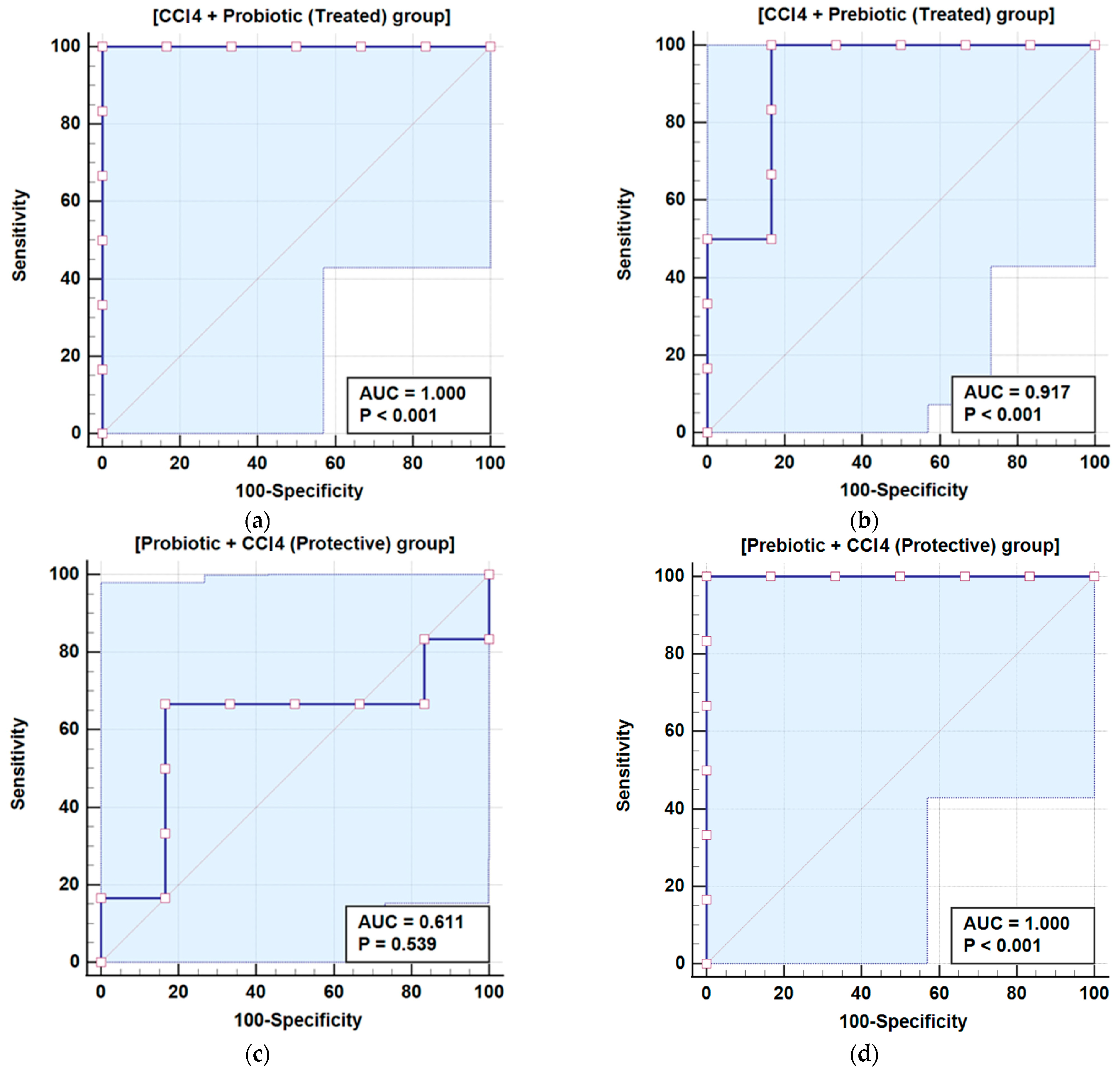
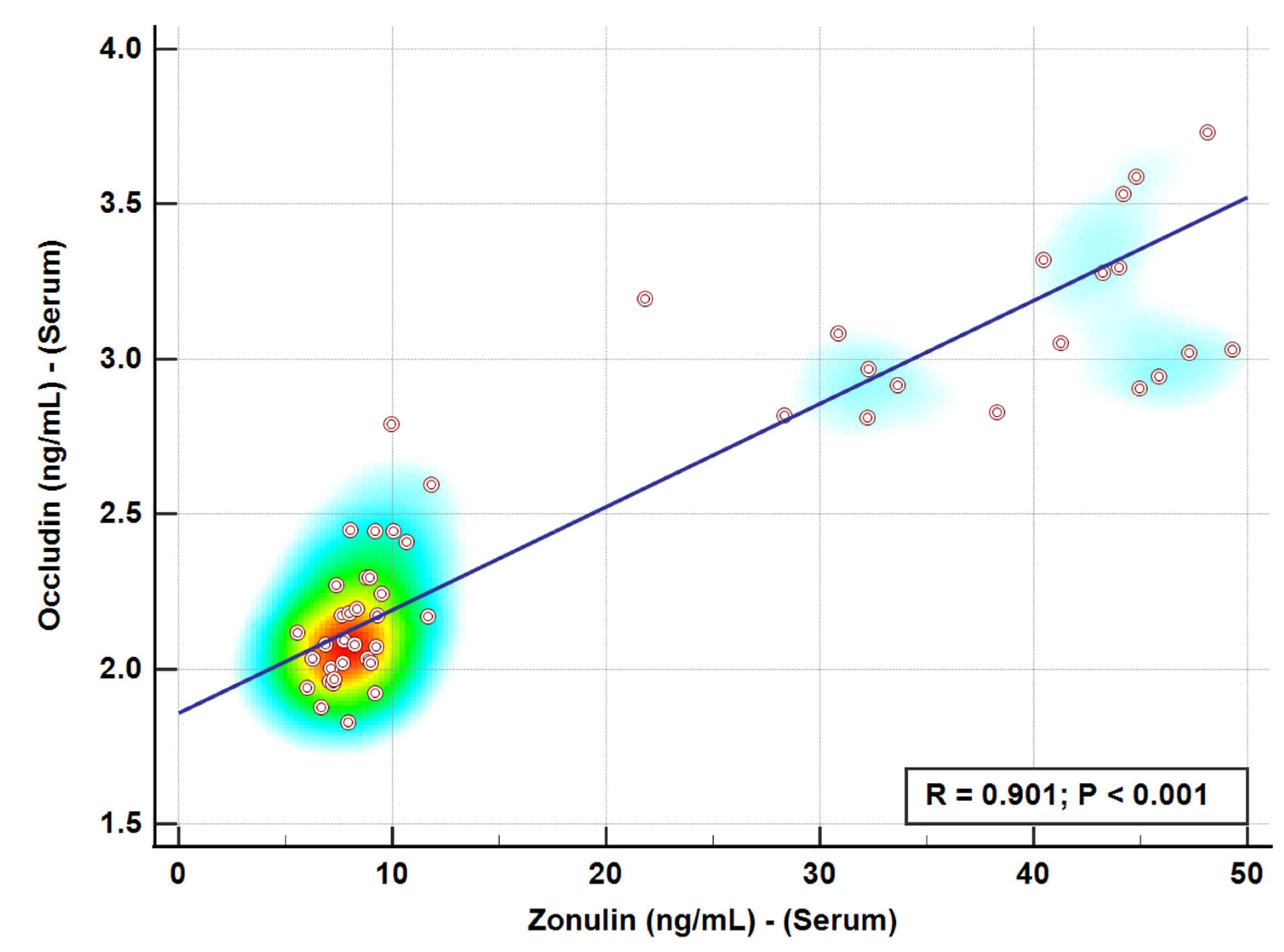
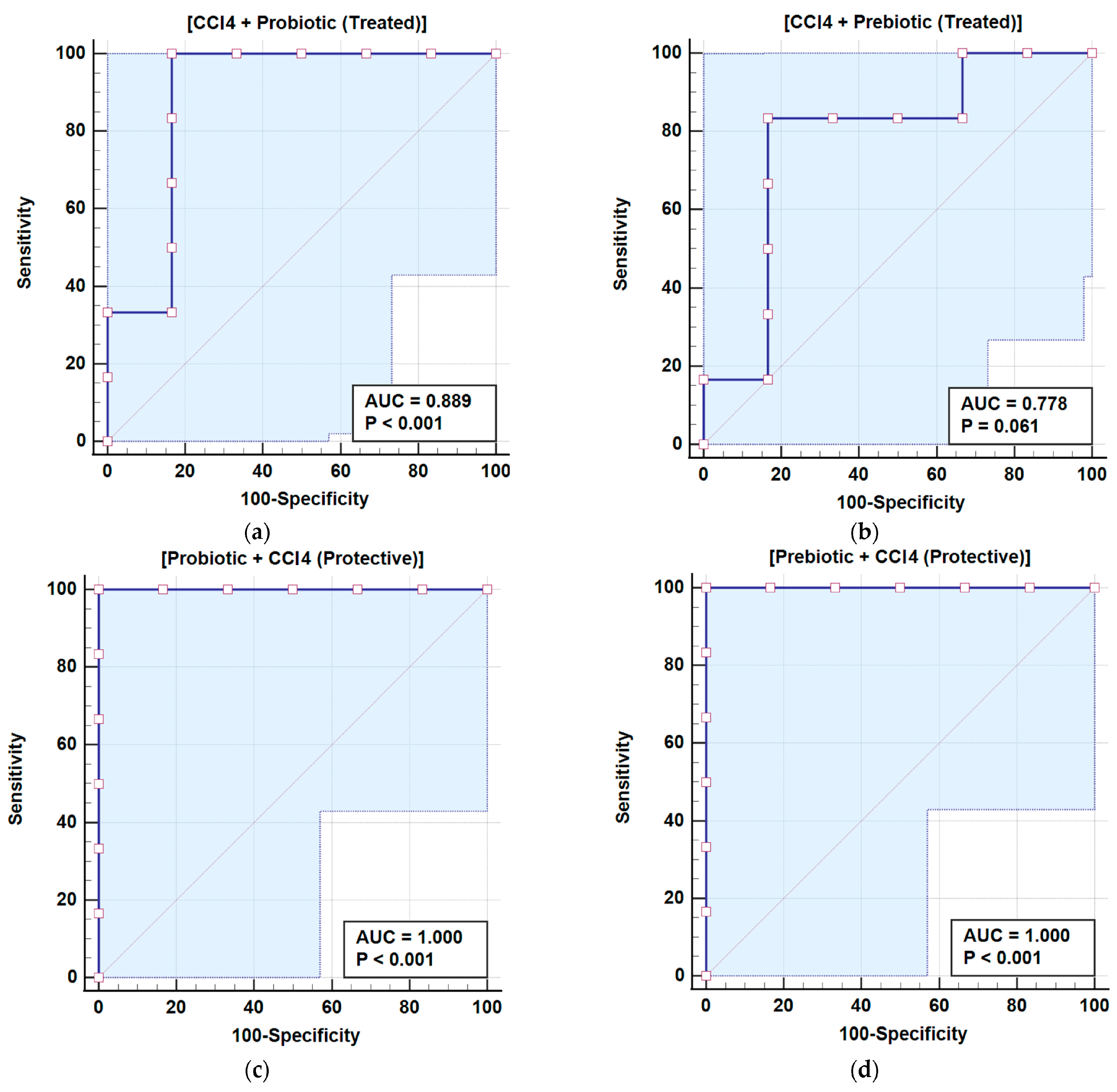
Zonulin and Occludin levels varied significantly across treatment groups. Zonulin levels in the probiotic and prebiotic groups were similar to the control; however, in the CCl4 day 1 group, levels were slightly elevated. CCl4 day 1, followed by probiotic or prebiotic treatment, reduced Zonulin levels to normal, as shown in Table 2 and Figure 1. Exposure to CCl4 on day 28 caused a 588.21% increase in Zonulin levels compared to the control (p < 0.001). Similarly, the probiotic + CCl4 day 28 group failed to significantly reduce the Zonulin elevation of 579.50%. The prebiotic + CCl4 day 28 group showed a 411.38% increase, but levels remained significantly higher than the controls. Occludin levels in the probiotic group decreased significantly by 95.07%, while no notable change was observed in the prebiotic group (99.37%) compared to the control (100%). CCl4 exposure on day 1 significantly raised Occludin levels by 121.85%, which decreased with prebiotic (105. 98%) and probiotic (109.51%) treatments, as shown in Groups 5 and 6, respectively, compared to Group 4 with CCl4 but no treatment. On day 28, CCl4 exposure caused a significant increase in Occludin levels by 170.20%. Both Probiotic + CCl4 and Prebiotic + CCl4 groups showed substantial increases (147.03% and 144.82%, respectively), though levels were still lower than the CCl4 day 28 group, indicating partial modulation (Table 2, Figure 1). A positive correlation between Zonulin and Occludin was observed using Pearson correlation, with a trend line and heat map shown in Figure 2. Receiver operating characteristic (ROC) analysis for Zonulin and Occludin levels is presented in Table 3 and Figure 3 and Figure 4. Zonulin levels in the therapeutic groups showed strong separation between CCl4 + Probiotic (AUC = 1.000) and CCl4 + Prebiotic (AUC = 0.917), compared with the CCl4 alone group. In protective groups with CCl4 day 28 as references, Prebiotic + CCl4 demonstrated high discrimination (AUC = 1.000), while Probiotic + CCl4 showed moderate separation (AUC = 0.611) (Table 3, Figure 3). For Occludin, both Probiotic + CCl4 day 28 (AUC = 1.000) and Prebiotic + CCl4 day 28 (AUC = 0.889) achieved strong discrimination relative to CCl4 alone, whereas CCl4 + Prebiotic in the therapeutic group demonstrate moderate discrimination (AUC = 0.778, p = 0.061) (Table 3, Figure 4).

3.3. Histopathological Evidence of Protection

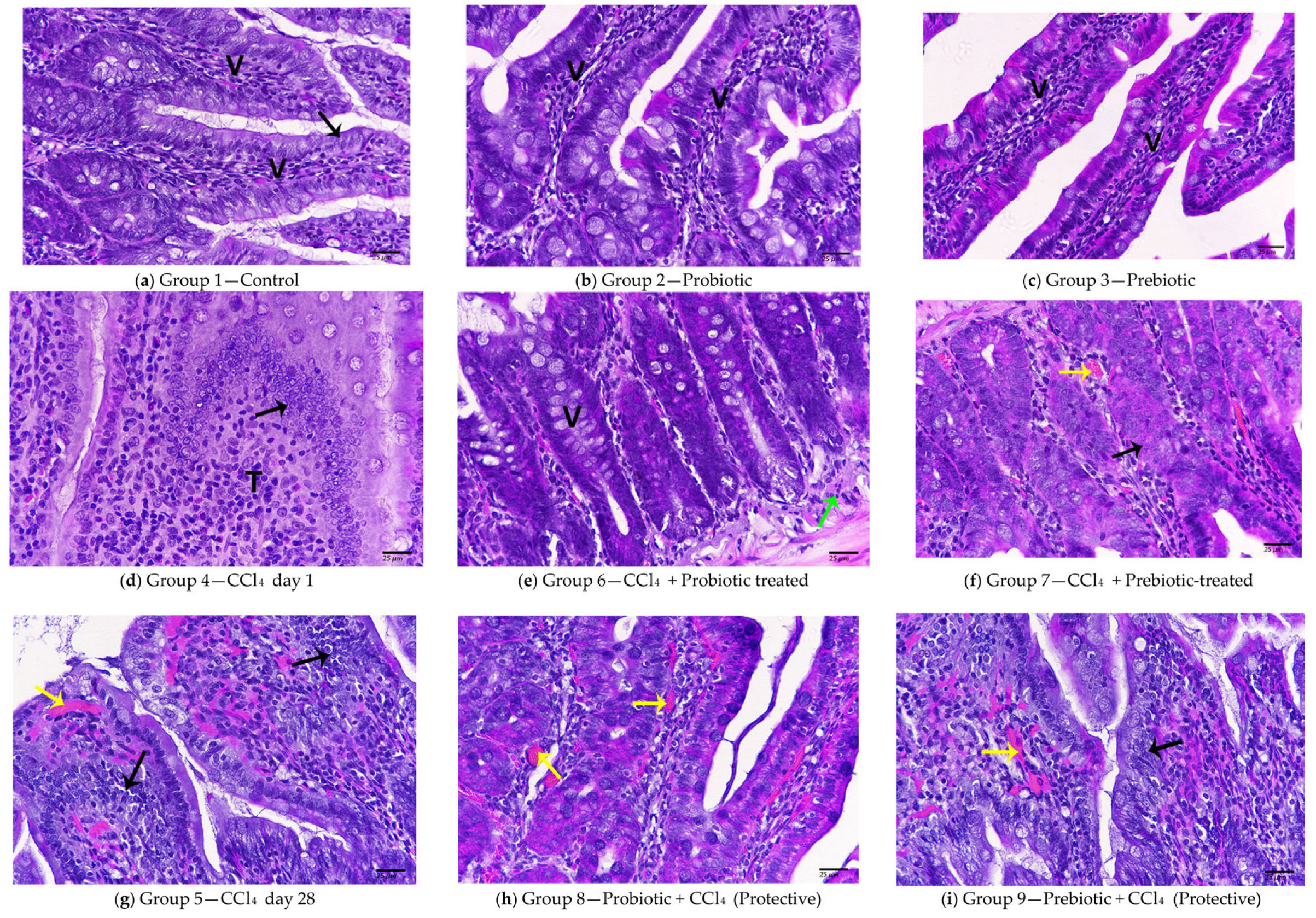
The histopathology images of the intestine samples are presented in Figure 5. The control small intestine showing normal villi covered with columnar epithelial cells is shown in Figure 5a. Histological sections of animals treated with probiotics and prebiotics in Figure 5b,c show no pathological features and no detectable pathological alterations. However, animals treated with CCl4 on day one exhibited the formation of nodular lesions composed of proliferating epithelial cells intermingled with infiltrating immune cells, as well as abundant hyperplasia of columnar epithelia, which are clearly seen in Figure 5d. The group treated with CCl4 followed by probiotics revealed marked improvement manifested by a reduction in pathological signs, the presence of healthy villi, and a reduction in inflammatory cells, as revealed by histological sections in Figure 5e. On the other hand, animals treated with CCl4 followed by prebiotic, shown in Figure 5f, revealed some pathological signs, such as hyperplasia and focal hemorrhage within the intestinal mucosa. Animals treated with CCl4 28 days before sacrifice revealed spacious villi with hemorrhage due to ulcers, along with hyperplasia of columnar epithelial lining, shown in Figure 5g. Moreover, the intestine of animals protected with probiotics and then treated with CCl4 showed partial amelioration of pathological signs, though ulceration and hemorrhage remained evident, as seen in Figure 5h. Additionally, the intestines of animals protected with prebiotics and then with CCl4 demonstrated mild pathological changes, including limited epithelial hyperplasia and minor hemorrhage as shown in Figure 5i.

4. Discussion

The intestine is the body’s largest interface with the external environment and a selective barrier that maintains internal stability [9]. The intestinal barrier is actively influenced by gut microbiota and intercellular junctions [15]. Research has highlighted the critical role of tight junction proteins in both normal physiology and gastrointestinal (GI) and liver diseases. TJ proteins maintain barrier integrity within the gut and liver and have the potential to be therapeutic targets for GI diseases [8]. In the present study, CCl4 was used to disrupt tight junction networks, and therapeutic strategies aimed at restoring intestinal integrity and gut flora through the use of prebiotics were evaluated. CCl4 promotes microbial overgrowth, including yeasts, Gram-negative bacteria, and Enterobacteriaceae. Probiotics showed a protective effect, particularly against overgrowth of yeast and Enterobacteriaceae. CCl4 exposure was associated with disruption of gut microbial homeostasis, as noted immediately after CCl4 exposure in Groups 7–9 (Table 1), with a remarkable increase in microbial burden, particularly lactose-fermenting Enterobacteriaceae, which were absent in other groups (Groups 1–6). CCl4 is reported to disrupt gut flora and induce pathogenic colonization in rodents [31]. Recent studies have reported noticeable gut dysbiosis, including shifts in pathogenic overgrowth in CCl4-treated mice [32]. Probiotic yeasts and bacterial strains restore the Candida species by competitive inhibition and pH modulation [33]. The protective effect of probiotics in our study is likely due to their antioxidant and anti-inflammatory properties, highlighting their potential as targeted therapies for toxin-induced dysbiosis [34,35]. Zonulin and Occludin were measured as circulating biomarkers of intestinal barrier integrity. Zonulin regulated the intestinal permeability by modulating intercellular tight junctions, and increased serum level reflects enhanced permeability associated with tight junction disassembly. Occludin is a transmembrane tight junction protein expressed in epithelial and endothelial cells that plays a major role in maintaining junctional integrity. Elevated serum Occludin levels are mainly due to the release of junctional components into circulation which indicates epithelial injury or tight junction disruption. The combined assessment of these two biomarkers reflects intestinal barrier integrity in the gut. Probiotics are reported to normalize the intestinal barrier by upregulating tight junction proteins like Occludin and ZO-1 through activation of AMPK, a key mechanism behind assembly and reassembly of tight junctions in epithelial cells [36]. Previous studies suggest that probiotics also inhibits the NF-κB pathway, a major inflammatory signal involved in TJP disruption. Probiotics have also been shown to reduce oxidative stress-induced damage to epithelial junctions by strengthening the barrier and reducing inflammation [37]. In contrast, limited protection of prebiotics supports their inefficiency in managing microbial imbalances due to slower microbial fermentation dynamics or insufficient SCFA production under toxic conditions [38]. SCFAs play a vital role in gut health by supporting the intestinal barrier, reducing inflammation, and inhibiting harmful bacteria. If microbial fermentation of prebiotics is slow or SCFA production is insufficient, the protective effects may be delayed, leaving the gut vulnerable to acute toxin damage [39]. Our results suggest a potential role for probiotics against environmental toxins concerning gut health. The differential effect of probiotics and prebiotics in alleviating CCl4-induced alterations on Zonulin and Occludin was timing-dependent. A slight increase in Zonulin after CCl4 exposure on day 1 suggests early barrier disruption, which was effectively normalized by both probiotic and prebiotic treatments, indicating a healing potential in acute settings [40]. However, CCl4 exposure on day 28 showed significant intestinal injury, showing no protection by probiotic or prebiotic, suggesting a limited capacity of prebiotics to restore barrier function under chronic toxin-induced stress [41]. The positive correlation between Zonulin and Occludin levels suggests that both markers serve as complementary indicators of barrier integrity [42]. ROC analysis further demonstrated the ability of Zonulin and Occludin to discriminate between predefined experimental groups. Intestinal probiotics are critically important for human health [43]. These active microorganisms can renew intestinal epithelial cells, strengthen their connection, and intensify tight junction proteins [44]. Gut probiotics improve the immune system by regulating the intestinal antimicrobial peptides and compete for nutrients and space with pathogenic bacteria to restore the intestinal barrier [45]. In this study, a multi-strain probiotic formula of Lactobacilli and Bifidobacteria preserves the integrity of the intestinal barrier from damage caused by CCl4 by modulating Zonulin or Occludin levels. Our data suggest that probiotics improved tight junction integrity more effectively than prebiotics, although partial protection was observed in protective groups [46]. Probiotics affect gut epithelial integrity by enhancing the expression of tight junction proteins and secreting bioactive compounds, mainly short-chain fatty acids, bacteriocins, and polysaccharide A, to promote epithelial cell proliferation, mucus secretion, and immune tolerance [47]. Probiotics modulate immune responses by downregulating pro-inflammatory cytokines and upregulating anti-inflammatory mediators, reducing inflammation-induced barrier disruption [48]. Prebiotics, on the other hand, act through commensal bacteria present in the gut to generate protective metabolites through fermentation [49].
Altered tight junctions and structural disruption of the epithelial barrier were also confirmed through histopathological observations, which demonstrated clear alterations in intestinal architecture following CCl4 exposure. We found differences in protective efficacy between probiotics and prebiotics against CCl4-induced intestinal injury. Rats treated with either probiotics or prebiotics alone showed no detectable pathological changes, confirming the safety and non-toxic nature of these interventions under normal physiological conditions [50]. CCl4 administration alone resulted in severe intestinal damage. Probiotic treatment markedly ameliorated CCl4-induced mucosal injury, restoring villus architecture and reducing inflammation. However, CCl4 followed by prebiotics still exhibited signs of mucosal hyperplasia and focal hemorrhage, indicating only partial protection. These findings suggest that prebiotics alone cannot heal the damage caused by CCl4, possibly due to their indirect mode of action that depends on gut microbial fermentation [51]. Overall, these results support the efficiency of probiotics over prebiotics in preserving intestinal histology under chemical-induced injury; however, elevated Zonulin levels in the protective groups indicate only partial restoration of barrier function [52].

5. Conclusions

The present study suggest that probiotics in the form of multi-strain Bifidobacterium and Lactobacillus may offer protection against CCl4-induced intestinal damage compared to bee pollen-derived prebiotics; however, both interventions were found to be safe under normal physiological conditions. The beneficial outcomes associated with probiotic treatment were associated with improvement in tight junction-related biomarkers and balance by suppressing overgrowth of pathogenic organisms such as Enterobacteriaceae and Candida spp., as compared to prebiotics which showed partial protection.

Supplementary Materials

The following supporting information can be downloaded at: https://www.mdpi.com/article/10.3390/cimb48030310/s1.

Author Contributions

Conceptualization, S.A.-D., R.S.B. and S.Z.; Methodology, N.A. and R.S.B.; Formal analysis, R.S.B. and S.A.-D.; Resources N.A. and A.M.A.; Data curation, N.A. and R.S.B.; Writing R.S.B.; Review and editing R.S.B., S.Z. and S.A.-D.; Project administration S.Z. and S.A.-D.; Funding acquisition N.A. and A.M.A. All authors have read and agreed to the published version of the manuscript.

Funding

Ongoing Research Funding Programme (ORF-2026-183), King Saud University, Riyadh, Saudi Arabia.

Institutional Review Board Statement

The study was approved by the Research Ethics Committee (REC) at King Saud University under Ethics Reference No. KSU-SE-24-14 dated 9 May 2024.

Informed Consent Statement

Not applicable.

Data Availability Statement

The original contributions presented in this study are included in the article. Further inquiries can be directed to the corresponding authors.

Acknowledgments

The authors extend appreciation to the Ongoing Research Funding Programme (ORF-2026-183), King Saud University, Riyadh, Saudi Arabia.

Conflicts of Interest

The authors declare no conflicts of interest.

References

  1. Di Sabatino, A.; Santacroce, G.; Rossi, C.M.; Broglio, G.; Lenti, M.V. Role of mucosal immunity and epithelial-vascular barrier in modulating gut homeostasis. Intern. Emerg. Med. 2023, 18, 1635–1646. [Google Scholar] [CrossRef]
  2. Zhou, X.; Wu, Y.; Zhu, Z.; Lu, C.; Zhang, C.; Zeng, L.; Xie, F.; Zhang, L.; Zhou, F. Mucosal immune response in biology, disease prevention and treatment. Signal Transduct. Target. Ther. 2025, 10, 7. [Google Scholar] [CrossRef]
  3. Vancamelbeke, M.; Vermeire, S. The intestinal barrier: A fundamental role in health and disease. Expert Rev. Gastroenterol. Hepatol. 2017, 11, 821–834. [Google Scholar] [CrossRef] [PubMed]
  4. Takiishi, T.; Fenero, C.I.M.; Câmara, N.O.S. Intestinal barrier and gut microbiota: Shaping our immune responses throughout life. Tissue Barriers 2017, 5, e1373208. [Google Scholar] [CrossRef]
  5. Suárez, L.J.; Arboleda, S.; Angelov, N.; Arce, R.M. Oral Versus Gastrointestinal Mucosal Immune Niches in Homeostasis and Allostasis. Front. Immunol. 2021, 12, 705206. [Google Scholar] [CrossRef] [PubMed]
  6. Lee, S.H. Intestinal permeability regulation by tight junction: Implication on inflammatory bowel diseases. Intest. Res. 2015, 13, 11–18. [Google Scholar] [CrossRef] [PubMed] [PubMed Central]
  7. Fu, R.; Jiang, X.; Li, G.; Zhu, Y.; Zhang, H. Junctional complexes in epithelial cells: Sentinels for extracellular insults and intracellular homeostasis. FEBS J. 2022, 289, 7314–7333. [Google Scholar] [CrossRef]
  8. Oami, T.; Shimazui, T.; Yumoto, T.; Otani, S.; Hayashi, Y.; Coopersmith, C.M. Gut integrity in intensive care: Alterations in host permeability and the microbiome as potential therapeutic targets. J. Intensive Care 2025, 13, 16. [Google Scholar] [CrossRef]
  9. Di Vincenzo, F.; Del Gaudio, A.; Petito, V.; Lopetuso, L.R.; Scaldaferri, F. Gut microbiota, intestinal permeability, and systemic inflammation: A narrative review. Intern. Emerg. Med. 2024, 19, 275–293. [Google Scholar] [CrossRef]
  10. Aleman, R.S.; Moncada, M.; Aryana, K.J. Leaky Gut and the Ingredients That Help Treat It: A Review. Molecules 2023, 28, 619. [Google Scholar] [CrossRef]
  11. Min, S.; Than, N.; Shin, Y.C.; Hu, G.; Shin, W.; Ambrosini, Y.M.; Kim, H.J. Live probiotic bacteria administered in a pathomimetic Leaky Gut Chip ameliorate impaired epithelial barrier and mucosal inflammation. Sci. Rep. 2022, 12, 22641. [Google Scholar] [CrossRef] [PubMed]
  12. Kong, C.; Yang, M.; Yue, N.; Zhang, Y.; Tian, C.; Wei, D.; Shi, R.; Yao, J.; Wang, L.; Li, D. Restore Intestinal Barrier Integrity: An Approach for Inflammatory Bowel Disease Therapy. J. Inflamm. Res. 2024, 17, 5389–5413. [Google Scholar] [CrossRef]
  13. Moonwiriyakit, A.; Pathomthongtaweechai, N.; Steinhagen, P.R.; Chantawichitwong, P.; Satianrapapong, W.; Pongkorpsakol, P. Tight junctions: From molecules to gastrointestinal diseases. Tissue Barriers 2023, 11, 2077620. [Google Scholar] [CrossRef]
  14. Ghosh, S.; Whitley, C.S.; Haribabu, B.; Jala, V.R. Regulation of Intestinal Barrier Function by Microbial Metabolites. Cell. Mol. Gastroenterol. Hepatol. 2021, 11, 1463–1482. [Google Scholar] [CrossRef]
  15. Dmytriv, T.R.; Storey, K.B.; Lushchak, V.I. Intestinal barrier permeability: The influence of gut microbiota, nutrition, and exercise. Front. Physiol. 2024, 15, 1380713. [Google Scholar] [CrossRef]
  16. Sivri, D.; Şeref, B.; Şare Bulut, M.; Gezmen Karadağ, M. Evaluation of the Effect of Probiotic Supplementation on Intestinal Barrier Integrity and Epithelial Damage in Colitis Disease: A Systematic Review. Nutr. Rev. 2025, 83, e1782–e1797. [Google Scholar] [CrossRef]
  17. Bhat, R.S. Fluoride Toxicity and Gut Health: Targeting Gut Microbiome and Barrier Function. Fluoride 2025, 58, e324. [Google Scholar]
  18. Cuddihey, H.; Cavin, J.B.; Keenan, C.M.; Wallace, L.E.; Vemuri, K.; Makriyannis, A.; MacNaughton, W.K.; Sharkey, K.A. Role of CB1 receptors in the acute regulation of small intestinal permeability: Effects of high-fat diet. Am. J. Physiol. Gastrointest. Liver Physiol. 2022, 323, G219–G238. [Google Scholar] [CrossRef]
  19. Davani-Davari, D.; Negahdaripour, M.; Karimzadeh, I.; Seifan, M.; Mohkam, M.; Masoumi, S.J.; Berenjian, A.; Ghasemi, Y. Prebiotics: Definition, Types, Sources, Mechanisms, and Clinical Applications. Foods 2019, 8, 92. [Google Scholar] [CrossRef] [PubMed]
  20. Shin, Y.; Han, S.; Kwon, J.; Ju, S.; Choi, T.G.; Kang, I.; Kim, S.S. Roles of Short-Chain Fatty Acids in Inflammatory Bowel Disease. Nutrients 2023, 15, 4466. [Google Scholar] [CrossRef] [PubMed]
  21. Robenek, H.; Themann, H.; Ott, K. Carbon tetrachloride induced proliferation of tight junctions in the rat liver as revealed by freeze-fracturing. Eur. J. Cell Biol. 1979, 20, 62–70. [Google Scholar]
  22. Buckley, A.; Turner, J.R. Cell Biology of Tight Junction Barrier Regulation and Mucosal Disease. Cold Spring Harb. Perspect. Biol. 2018, 10, a029314. [Google Scholar] [CrossRef] [PubMed]
  23. Li, R.; Yang, W.; Yin, Y.; Ma, X.; Zhang, P.; Tao, K. 4-OI Attenuates Carbon Tetrachloride-Induced Hepatic Injury via Regulating Oxidative Stress and the Inflammatory Response. Front. Pharmacol. 2021, 12, 651444. [Google Scholar] [CrossRef]
  24. Weber, L.W.; Boll, M.; Stampfl, A. Hepatotoxicity and mechanism of action of haloalkanes: Carbon tetrachloride as a toxicological model. Crit. Rev. Toxicol. 2003, 33, 105–136. [Google Scholar] [CrossRef] [PubMed]
  25. Unsal, V.; Cicek, M.; Sabancilar, İ. Toxicity of carbon tetrachloride, free radicals and role of antioxidants. Rev. Environ. Health 2020, 36, 279–295. [Google Scholar] [CrossRef]
  26. Tarakci, N.G.; Erdem, N.Z.; Dumen, E. Probiotic Foods Are Effective on Weight Loss, Biochemical Parameters, and Intestinal Microbiota in Wistar Albino Rats with Obese Microbiota. Int. J. Clin. Pract. 2022, 2022, 4569100. [Google Scholar] [CrossRef] [PubMed]
  27. Alghamdi, M.A.; Al-Ayadhi, L.; Hassan, W.M.; Bhat, R.S.; Alonazi, M.A.; El-Ansary, A. Bee Pollen and Probiotics May Alter Brain Neuropeptide Levels in a Rodent Model of Autism Spectrum Disorders. Metabolites 2022, 12, 562. [Google Scholar] [CrossRef]
  28. Dinu, L.D.; Gatea, F.; Roaming Israel, F.; Lakicevic, M.; Dedović, N.; Vamanu, E. The Modulation Effect of a Fermented Bee Pollen Postbiotic on Cardiovascular Microbiota and Therapeutic Perspectives. Biomedicines 2023, 11, 2712. [Google Scholar] [CrossRef]
  29. Algefare, A.I.; Alfwuaires, M.; Famurewa, A.C.; Elsawy, H.; Sedky, A. Geraniol prevents CCl4-induced hepatotoxicity via suppression of hepatic oxidative stress, pro-inflammation and apoptosis in rats. Toxicol. Rep. 2024, 12, 128–134. [Google Scholar] [CrossRef]
  30. Itoh, K.; Mitsuoka, T.; Sudo, K.; Suzuki, K. Comparison of faecal flora of mice based upon different strains and different housing conditions. Z. Versuchstierkd 1983, 25, 135–146. [Google Scholar]
  31. Sánchez, E.; Nieto, J.C.; Vidal, S.; Santiago, A.; Martinez, X.; Sancho, F.J.; Sancho-Bru, P.; Mirelis, B.; Corominola, H.; Juárez, C.; et al. Fermented milk containing Lactobacillus paracasei subsp. paracasei CNCM I-1518 reduces bacterial translocation in rats treated with carbon tetrachloride. Sci. Rep. 2017, 7, 45712. [Google Scholar] [CrossRef]
  32. Xu, Y.; Zhang, Z.; Wang, B.; He, X.; Tang, J.; Peng, W.; Zhou, J.; Wang, Y. Flammulinavelutipes Polysaccharides Modulate Gut Microbiota and Alleviate Carbon Tetrachloride-Induced Hepatic Oxidative Injury in Mice. Front. Microbiol. 2022, 13, 847653. [Google Scholar] [CrossRef]
  33. Kunyeit, L.; Anu-Appaiah, K.A.; Rao, R.P. Application of Probiotic Yeasts on Candida Species Associated Infection. J. Fungi 2020, 6, 189. [Google Scholar] [CrossRef] [PubMed]
  34. Hamamah, S.; Lobiuc, A.; Covasa, M. Antioxidant Role of Probiotics in Inflammation-Induced Colorectal Cancer. Int. J. Mol. Sci. 2024, 25, 9026. [Google Scholar] [CrossRef] [PubMed]
  35. Pop, O.L.; Suharoschi, R.; Gabbianelli, R. Biodetoxification and Protective Properties of Probiotics. Microorganisms 2022, 10, 1278. [Google Scholar] [CrossRef]
  36. Bhat, R.S. The dual role of microbiota as a therapeutic target in lupus nephritis. Turk. J. Nephrol. 2025, 34, 240–252. [Google Scholar] [CrossRef]
  37. Olivier, S.; Leclerc, J.; Grenier, A.; Foretz, M.; Tamburini, J.; Viollet, B. AMPK Activation Promotes Tight Junction Assembly in Intestinal Epithelial Caco-2 Cells. Int. J. Mol. Sci. 2019, 20, 5171. [Google Scholar] [CrossRef]
  38. Ji, J.; Jin, W.; Liu, S.J.; Jiao, Z.; Li, X. Probiotics, prebiotics, and postbiotics in health and disease. MedComm 2020, 4, e420. [Google Scholar] [CrossRef]
  39. Bui, T.N.Y.; Paul, A.; Guleria, S.; O’sUllivan, J.M.; Toldi, G. Short-chain fatty acids—A key link between the gut microbiome and T-lymphocytes in neonates? Pediatr. Res. 2025. [Google Scholar] [CrossRef]
  40. Rau, S.; Gregg, A.; Yaceczko, S.; Limketkai, B. Prebiotics and Probiotics for Gastrointestinal Disorders. Nutrients 2024, 16, 778. [Google Scholar] [CrossRef]
  41. Ji, H.; Yan, X.; Zhang, L.; Yang, L.; Xie, P.; Gu, F.; Bian, S.; Wan, H.; Nie, S. Prebiotics empower probiotics with gastrointestinal stress resistance for colon-targeted release to synergistically alleviate colitis. J. Control. Release 2025, 380, 297–316. [Google Scholar] [CrossRef] [PubMed]
  42. Zengil, S.; Laloğlu, E. Evaluation of Serum Zonulin and Occludin Levels in Bipolar Disorder. Psychiatry Investig. 2023, 20, 382–389. [Google Scholar] [CrossRef]
  43. Sarita, B.; Samadhan, D.; Hassan, M.Z.; Kovaleva, E.G. A comprehensive review of probiotics and human health-current prospective and applications. Front. Microbiol. 2025, 15, 1487641. [Google Scholar] [CrossRef]
  44. Rose, E.C.; Odle, J.; Blikslager, A.T.; Ziegler, A.L. Probiotics, Prebiotics and Epithelial Tight Junctions: A Promising Approach to Modulate Intestinal Barrier Function. Int. J. Mol. Sci. 2021, 22, 6729. [Google Scholar] [CrossRef]
  45. Latif, A.; Shehzad, A.; Niazi, S.; Zahid, A.; Ashraf, W.; Iqbal, M.W.; Rehman, A.; Riaz, T.; Aadil, R.M.; Khan, I.M.; et al. Probiotics: Mechanism of action, health benefits and their application in food industries. Front. Microbiol. 2023, 14, 1216674, Erratum in Front. Microbiol. 2024, 15, 1378225. https://doi.org/10.3389/fmicb.2024.1378225. [Google Scholar] [CrossRef]
  46. DiMattia, Z.; Damani, J.J.; Van Syoc, E.; Rogers, C.J. Effect of Probiotic Supplementation on Intestinal Permeability in Overweight and Obesity: A Systematic Review of Randomized Controlled Trials and Animal Studies. Adv. Nutr. 2024, 15, 100162. [Google Scholar] [CrossRef]
  47. Liu, Q.; Yu, Z.; Tian, F.; Zhao, J.; Zhang, H.; Zhai, Q.; Chen, W. Surface components and metabolites of probiotics for regulation of intestinal epithelial barrier. Microb. Cell Fact. 2020, 19, 23. [Google Scholar] [CrossRef]
  48. Cristofori, F.; Dargenio, V.N.; Dargenio, C.; Miniello, V.L.; Barone, M.; Francavilla, R. Anti-Inflammatory and Immunomodulatory Effects of Probiotics in Gut Inflammation: A Door to the Body. Front. Immunol. 2021, 12, 578386. [Google Scholar] [CrossRef]
  49. You, S.; Ma, Y.; Yan, B.; Pei, W.; Wu, Q.; Ding, C.; Huang, C. The promotion mechanism of prebiotics for probiotics: A review. Front. Nutr. 2022, 9, 1000517. [Google Scholar] [CrossRef] [PubMed]
  50. Yadav, M.K.; Kumari, I.; Singh, B.; Sharma, K.K.; Tiwari, S.K. Probiotics, prebiotics and synbiotics: Safe options for next-generation therapeutics. Appl. Microbiol. Biotechnol. 2022, 106, 505–521. [Google Scholar] [CrossRef] [PubMed]
  51. Guarino, M.P.L.; Altomare, A.; Emerenziani, S.; Di Rosa, C.; Ribolsi, M.; Balestrieri, P.; Iovino, P.; Rocchi, G.; Cicala, M. Mechanisms of Action of Prebiotics and Their Effects on Gastro-Intestinal Disorders in Adults. Nutrients 2020, 12, 1037. [Google Scholar] [CrossRef] [PubMed]
  52. Smolinska, S.; Popescu, F.D.; Zemelka-Wiacek, M. A Review of the Influence of Prebiotics, Probiotics, Synbiotics, and Postbiotics on the Human Gut Microbiome and Intestinal Integrity. J. Clin. Med. 2025, 14, 3673. [Google Scholar] [CrossRef] [PubMed]
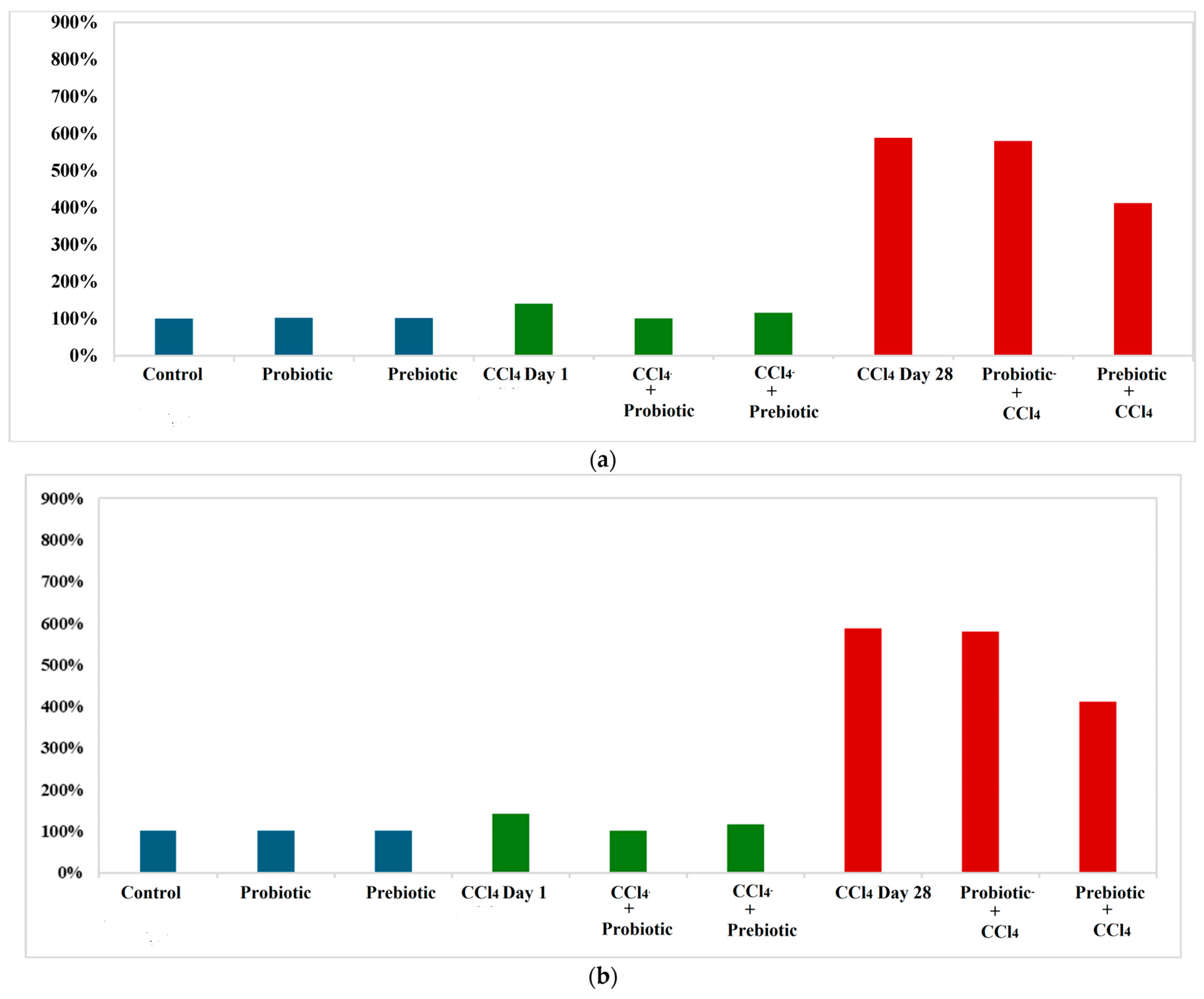
Figure 1. Percent change in mean for different groups according to control group in (a) Zonulin and (b) Occludin.
Cimb 48 00310 g001
Figure 2. Correlation between Zonulin and Occludin using Person correlation with trend line and heat map (Positive correlation). The color gradient represents the density of data points.
Cimb 48 00310 g002
Figure 3. ROC curve for Zonulin with (a) CCl4 + Probiotic and (b) CCl4 + Prebiotic with reference to CCl4 day 1 group (c) Probiotic + CCl4 and (d) Prebiotic + CCl4 with reference to CCl4 day 28.
Cimb 48 00310 g003
Figure 4. ROC curve for Occludin (a) CCl4 + Probiotic and (b) CCl4 + Prebiotic with reference to CCl4 day 1 group (c) Probiotic + CCl4 and (d) Prebiotic + CCl4 with reference to CCl4 day 28 group.
Cimb 48 00310 g004
Figure 5. Photomicrograph of (a) Control -normal feature without pathological signs, villi (V), columnar epithelia [black arrow]; (b) Probiotic group-showing healthy villi; (c) Prebiotic group showing healthy villi (V); (d) CCl4 day 1 group showing displaying tumor node (T), hyperplasia (black arrow); (e) CCl4 + Probiotic-treated group showing improved villi (V), a few inflammatory cells (green arrow); (f) CCl4 + Prebiotic-treated group displaying hemorrhage (yellow arrow), hyperplasia (black arrow); (g) CCl4 day 28 group revealing spacious villi filled with hyperplasia of columnar epithelia (black arrow), ulcer filled with hemorrhage (yellow arrow); (h) Probiotic + CCl4 protective group revealing marked ulcer filled with hemorrhage (yellow arrow); (i) Prebiotic + CCL4 Protective group displaying marked ulcer filled with hemorrhage (yellow arrow), hyperplasia (black arrow). (H&E-400×).
Cimb 48 00310 g005
Table 1. Quantitative assessment of microbial growth among different treated groups compared with control.
MediaOrganismsGroup 1
Control
Group 2
Probiotic
Group 3
Prebiotic
Group 4
CCl4
Day 1
Group 5
CCl4 + Pro
Group 6
CCl4 + Pre
Group 7
CCl4 Day 28
Group 8
Pro + CCl4
Group 9
Pre + CCl4
SDAYeasts---+--++++++++++
MHAGram-negative rods or cocci++++++++++++++++++++++
SBAGram-positive/Gram-negative rod and cocci++++++++++++++++++++++
MCAEnterobacteriaceae (Gram-negative rod, lactose fermenters)------++++-++++
SDA, sabouraud dextrose agar; Mueller Hinton agar (MHA); Sheep Blood agar (SBA); MacConkey agar (MCA). In cultured plate, bacterial growth is quantified on a scale as follows: - = No growth, less than 103 CFU/gram of feces. + = Rare growth, less than 103 CFU/gram of feces. ++ = Few colonies, 103 to 104 CFU/gram of feces. +++ = Moderate growth, 105 to 106 CFU/gram of feces. ++++ = Heavy growth, more than 106 CFU/gram of feces. For each dilution, colony counts between 30 and 300 are typically used to estimate the culture count.
Table 2. Comparison between different groups for Zonulin and Occludin levels compared to control.
ParametersGroupsMean ± S.D.Percent ChangeFp Value
Zonulin (ng/mL)Control7.50 ± 0.99 a100.00152.560.001
Probiotic7.68 ± 1.01 a102.35  
Prebiotic7.60 ± 1.24 a101.34  
CCl4 on day 110.56 ± 1.04 a140.74  
CCl4 day 1 + Probiotic7.58 ± 1.19 a101.09  
CCl4 day 1 + Prebiotic8.69 ± 0.84 a115.86  
CCl4 on day 2844.13 ± 2.48 c588.21  
Probiotic + CCl4 day 2843.47 ± 6.11 c579.50  
Prebiotic + CCl4 day 2830.86 ± 5.54 b411.38  
Occludin (ng/mL)Control2.03 ± 0.06 ab100.0082.150.001
Probiotic1.93 ± 0.10 a95.07  
Prebiotic2.02 ± 0.05 ab99.37  
CCl4 on day 12.48 ± 0.21 d121.85  
CCl4 day 1 + Probiotic2.15 ± 0.11 bc105.98  
CCl4 day 1 + Prebiotic2.22 ± 0.17 c109.51  
CCl4 on day 283.46 ± 0.19 f170.20  
Probiotic + CCl4 day 282.99 ± 0.06 e147.03  
Prebiotic + CCl4 day 282.94 ± 0.16 e144.82  
Table describes a One-way ANOVA Test between different groups with Multiple Comparisons (Duncan test) within the entire groups. The groups which have different letters are significantly different with each other at significance level (0.05). The groups which have the same letter are not significantly different from each other.
Table 3. ROC results for Zonulin and Occludin according to CCl4 day 1 and CCl4 day 28 as a reference group.
ParameterRef. GroupGroupsAUCCut-Off ValueSensitivity %Specificity %p Value
Zonulin (ng/mL)CCl4 day 1CCl4 + Probiotic1.0009.067100.0%100.0%0.001
CCl4 day 1CCl4 + Prebiotic0.9179.721100.0%83.3%0.001
CCl4 day 28Probiotic + CCl40.61144.85966.7%83.3%0.539
CCl4 day 28Prebiotic + CCl41.00039.360100.0%100.0%0.001
Occludin (ng/mL)CCl4 day 1CCl4 + Probiotic0.8892.351100.0%83.3%0.001
CCl4 day 1CCl4 + Prebiotic0.7782.35283.3%83.3%0.061
CCl4 day 28Probiotic + CCl41.0003.165100.0%100.0%0.001
CCl4 day 28Prebiotic + CCl41.0003.237100.0%100.0%0.001
Disclaimer/Publisher’s Note: The statements, opinions and data contained in all publications are solely those of the individual author(s) and contributor(s) and not of MDPI and/or the editor(s). MDPI and/or the editor(s) disclaim responsibility for any injury to people or property resulting from any ideas, methods, instructions or products referred to in the content.