Figure 1.
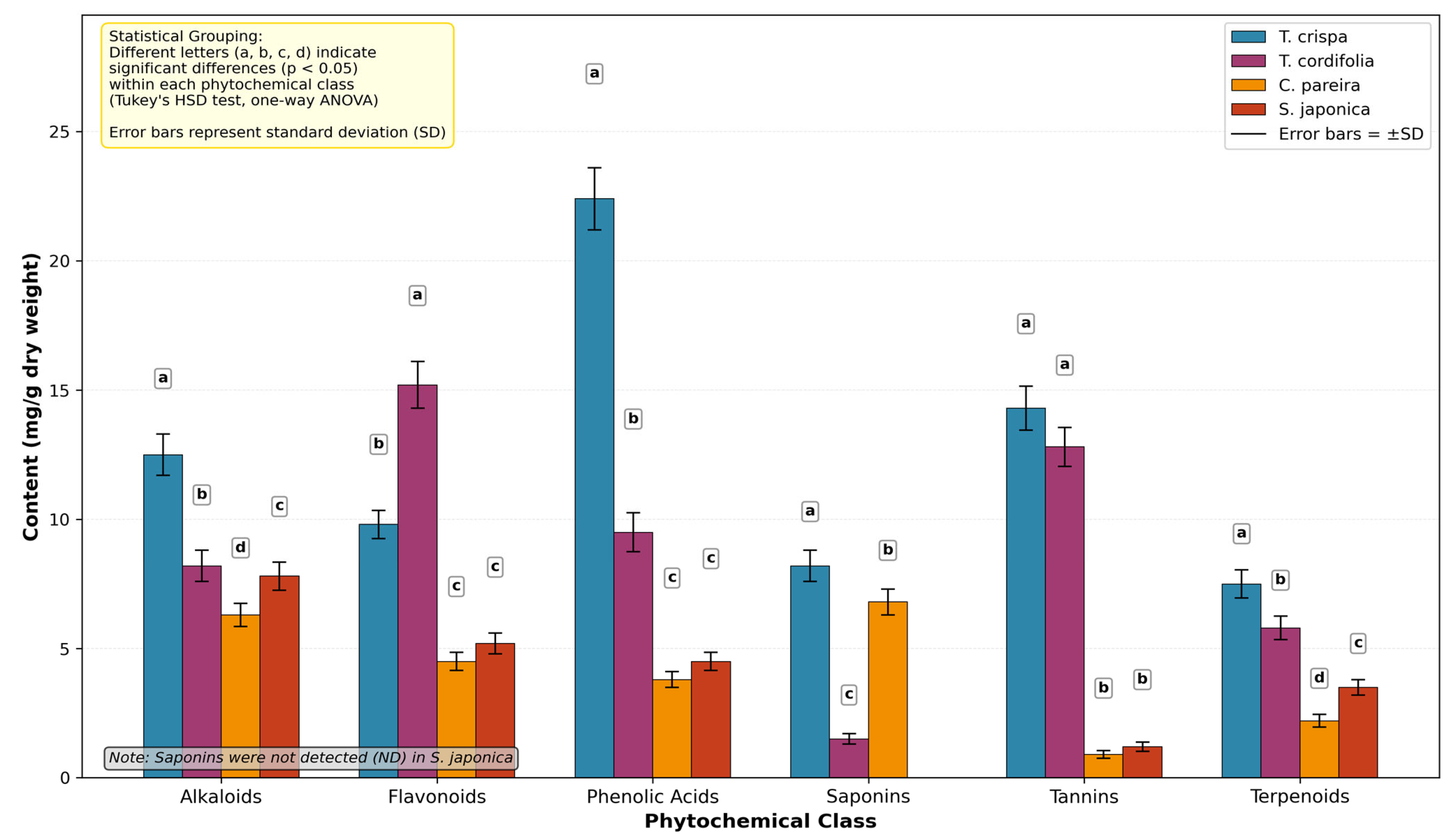
Comparative phytochemical profile of four climbing species referred to as Phyllo-stem arboreum. Bar heights represent the mean concentration (mg/g dry weight ± SD, n = 3) of six major secondary metabolite classes. Bars sharing the same letter within a class are not significantly different. T. crispa shows the most consistently high or leading statistical ranking across multiple classes, particularly alkaloids, phenolic acids, and terpenoids, supporting its selection for further investigation.
Figure 1.
Comparative phytochemical profile of four climbing species referred to as Phyllo-stem arboreum. Bar heights represent the mean concentration (mg/g dry weight ± SD, n = 3) of six major secondary metabolite classes. Bars sharing the same letter within a class are not significantly different. T. crispa shows the most consistently high or leading statistical ranking across multiple classes, particularly alkaloids, phenolic acids, and terpenoids, supporting its selection for further investigation.
Figure 2.
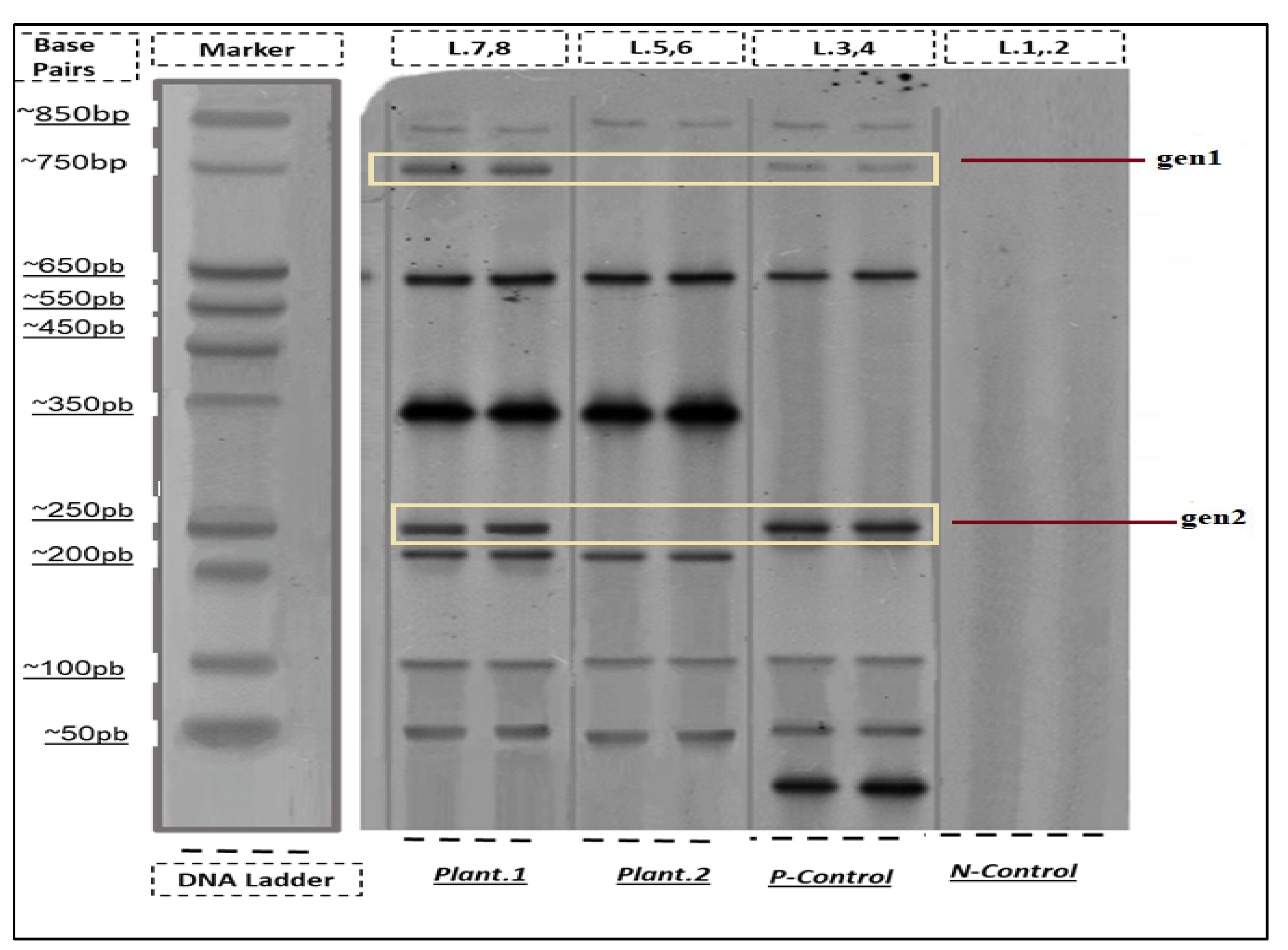
Agarose gel electrophoresis of PCR-amplified genetic regions from
T. crispa accessions. Lane 1: DNA size ladder. Lane 2: Plant.1 (wild ecotype). Lane 3: Plant.2 (cultivated/reference ecotype). Lane 4: Positive control (P-Control). Lane 5: Negative control (N-Control). The upper band (~650 bp) corresponds to the gen1 locus, showing strong amplification in Plant.2 and the positive control, but faint/absent amplification in Plant.1. The lower band (~250 bp) corresponds to the gen2 internal control, consistently amplified in both Plant.1 and Plant.2. The differential gen1 amplification pattern, reproducible across replicates, correlates with an identified SNP in its primer-binding region (see
Figure 3).
Figure 2.
Agarose gel electrophoresis of PCR-amplified genetic regions from
T. crispa accessions. Lane 1: DNA size ladder. Lane 2: Plant.1 (wild ecotype). Lane 3: Plant.2 (cultivated/reference ecotype). Lane 4: Positive control (P-Control). Lane 5: Negative control (N-Control). The upper band (~650 bp) corresponds to the gen1 locus, showing strong amplification in Plant.2 and the positive control, but faint/absent amplification in Plant.1. The lower band (~250 bp) corresponds to the gen2 internal control, consistently amplified in both Plant.1 and Plant.2. The differential gen1 amplification pattern, reproducible across replicates, correlates with an identified SNP in its primer-binding region (see
Figure 3).
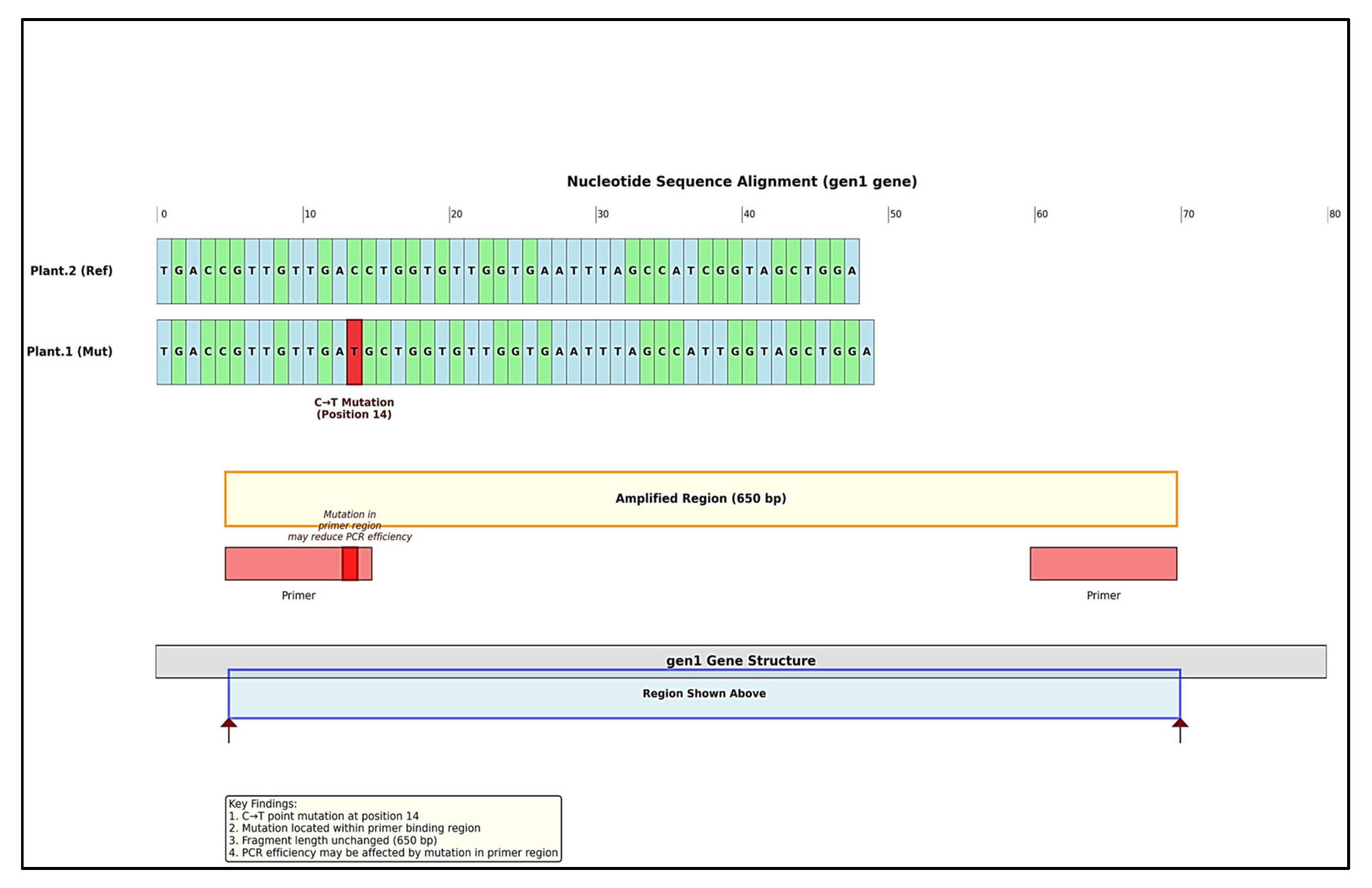
Figure 3.
Identification and schematic representation of an SNP in the gen1 locus of
T. crispa. Panel (
1) shows the Sanger sequencing alignment between the reference (Plant.2, Ref) and mutant (Plant.1, Mut) sequences, highlighting a C→T transition at position 14 (boxed) within the forward primer-binding site. Panel (
2) provides a schematic of the gen1 gene and the 650 bp amplicon, illustrating that this mutation does not change the fragment length but is positioned to impair primer hybridization, explaining the reduced PCR efficiency observed in
Figure 2.
Figure 3.
Identification and schematic representation of an SNP in the gen1 locus of
T. crispa. Panel (
1) shows the Sanger sequencing alignment between the reference (Plant.2, Ref) and mutant (Plant.1, Mut) sequences, highlighting a C→T transition at position 14 (boxed) within the forward primer-binding site. Panel (
2) provides a schematic of the gen1 gene and the 650 bp amplicon, illustrating that this mutation does not change the fragment length but is positioned to impair primer hybridization, explaining the reduced PCR efficiency observed in
Figure 2.
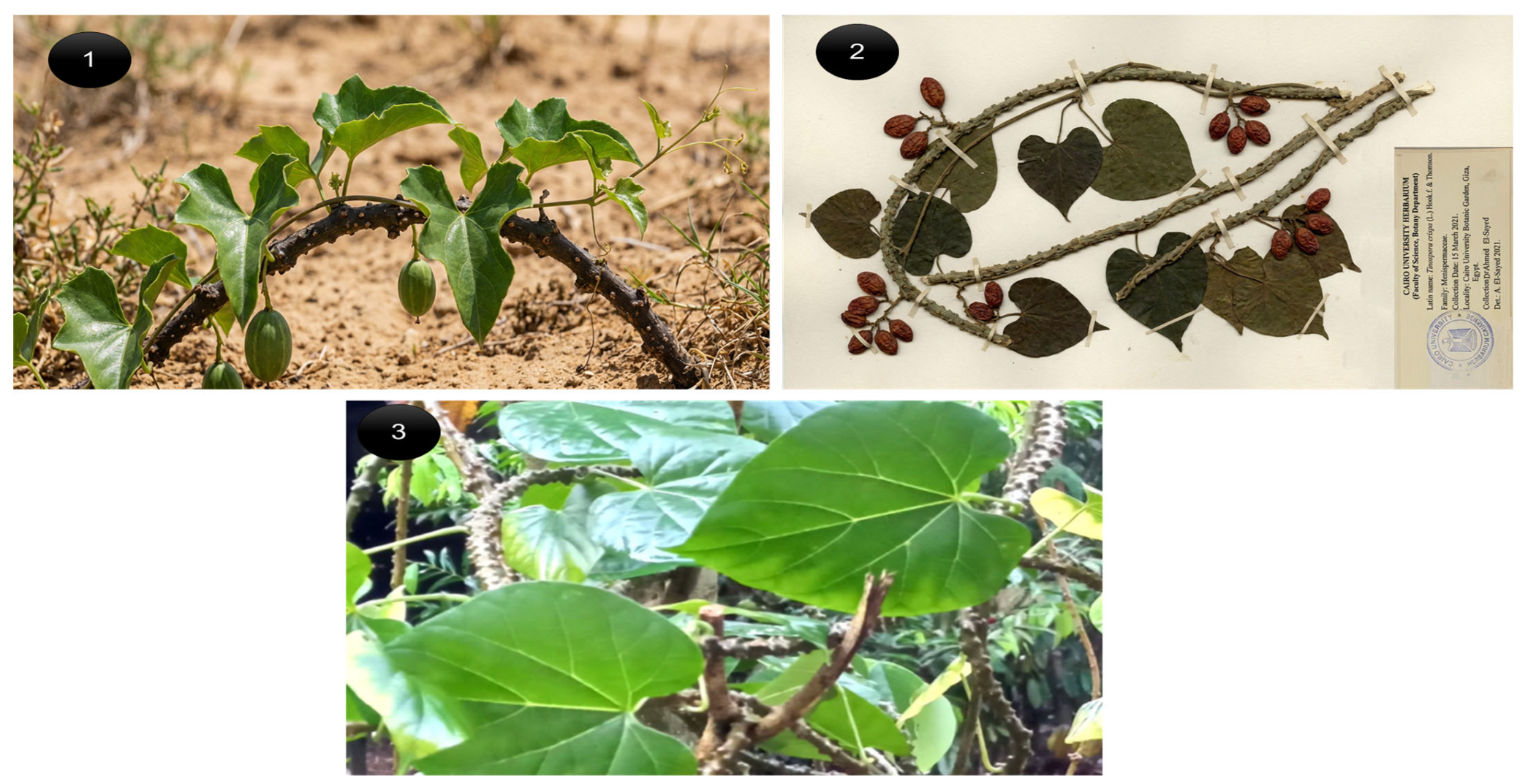
Figure 4.
Comparative morphology of T. crispa under contrasting growth conditions. (1) Field-collected wild ecotype from a sandy, drought-prone habitat showing smaller, slightly lobed leaves and a more lignified, verrucose stem. (2) Corresponding herbarium voucher prepared from the same wild population, documenting leaves, fruits, and seeds for taxonomic authentication. (3) Cultivated reference plant grown under greenhouse conditions, characterized by larger, fully developed cordate leaves and a robust, less stressed stem architecture.
Figure 4.
Comparative morphology of T. crispa under contrasting growth conditions. (1) Field-collected wild ecotype from a sandy, drought-prone habitat showing smaller, slightly lobed leaves and a more lignified, verrucose stem. (2) Corresponding herbarium voucher prepared from the same wild population, documenting leaves, fruits, and seeds for taxonomic authentication. (3) Cultivated reference plant grown under greenhouse conditions, characterized by larger, fully developed cordate leaves and a robust, less stressed stem architecture.
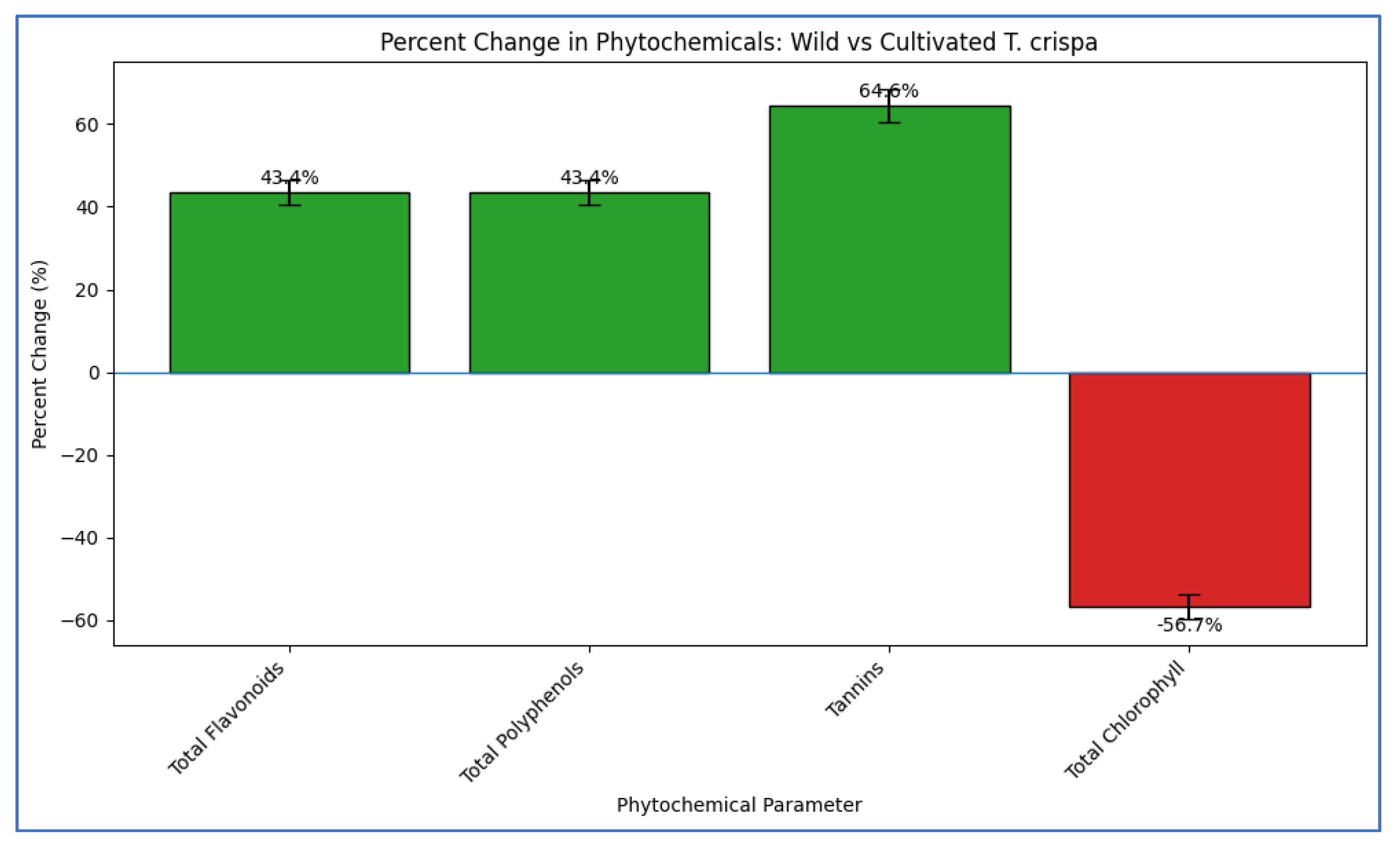
Figure 5.
Comparative phytochemical content in wild and cultivated T. crispa ecotypes. Quantitative comparison of total flavonoids (expressed as mg Quercetin Equivalents per gram dry weight, mg QE/g DW), total polyphenols (mg Gallic Acid Equivalents per gram, mg GAE/g DW), tannins (mg Catechin Equivalents per gram, mg CE/g DW), and total chlorophyll (mg per gram fresh weight, mg/g FW). Data are presented as mean ± standard deviation (SD) from three independent biological replicates (n = 3). Statistical significance between the wild and cultivated groups for each parameter was determined using an unpaired two-tailed Student’s t-test. Significance levels: p < 0.001. The wild ecotype shows significantly higher levels of phenolic compounds but lower chlorophyll content, indicating a stress-induced metabolic trade-off.
Figure 5.
Comparative phytochemical content in wild and cultivated T. crispa ecotypes. Quantitative comparison of total flavonoids (expressed as mg Quercetin Equivalents per gram dry weight, mg QE/g DW), total polyphenols (mg Gallic Acid Equivalents per gram, mg GAE/g DW), tannins (mg Catechin Equivalents per gram, mg CE/g DW), and total chlorophyll (mg per gram fresh weight, mg/g FW). Data are presented as mean ± standard deviation (SD) from three independent biological replicates (n = 3). Statistical significance between the wild and cultivated groups for each parameter was determined using an unpaired two-tailed Student’s t-test. Significance levels: p < 0.001. The wild ecotype shows significantly higher levels of phenolic compounds but lower chlorophyll content, indicating a stress-induced metabolic trade-off.
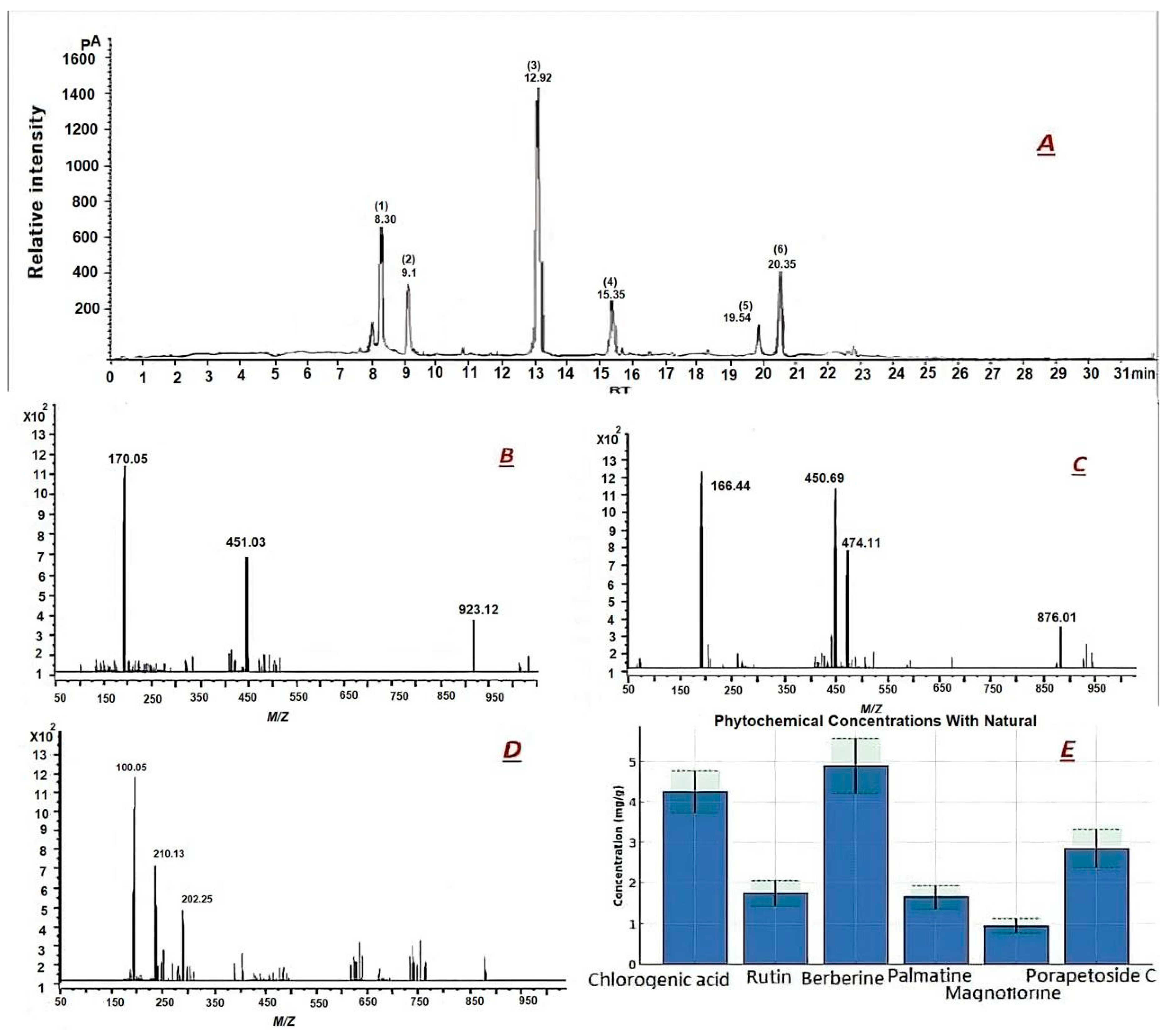
Figure 6.
UHPLC–ESI–QTOF–MS profiling and quantitative analysis of major metabolites in Tinospora crispa (L.) Hook.f. & Thomson. (A–C) Representative base-peak chromatograms (BPC) and annotated MS/MS spectra for key biomarkers: (A) Chlorogenic acid ([M − H]− at *m/z* 353.0878), (B) Berberine ([M]+ at *m/z* 336.1226), and (C) Borapetoside C ([M + H]+ at *m/z* 451.1965). Characteristic fragment ions are labeled. (D) Relative abundance (peak area) heatmap of major metabolite classes across ecotypes. (E) Quantitative levels (mg/g dry weight, DW) of six key phytochemicals. Horizontal dashed lines represent typical concentration ranges reported in the literature. Data are mean ± SD (n = 3 technical replicates per biological sample). Statistical differences between ecotypes for each compound were assessed by one-way ANOVA followed by Tukey’s post hoc test. The wild ecotype exhibits a pronounced enrichment in multiple bioactive compounds, particularly berberine, chlorogenic acid, and borapetoside C.
Figure 6.
UHPLC–ESI–QTOF–MS profiling and quantitative analysis of major metabolites in Tinospora crispa (L.) Hook.f. & Thomson. (A–C) Representative base-peak chromatograms (BPC) and annotated MS/MS spectra for key biomarkers: (A) Chlorogenic acid ([M − H]− at *m/z* 353.0878), (B) Berberine ([M]+ at *m/z* 336.1226), and (C) Borapetoside C ([M + H]+ at *m/z* 451.1965). Characteristic fragment ions are labeled. (D) Relative abundance (peak area) heatmap of major metabolite classes across ecotypes. (E) Quantitative levels (mg/g dry weight, DW) of six key phytochemicals. Horizontal dashed lines represent typical concentration ranges reported in the literature. Data are mean ± SD (n = 3 technical replicates per biological sample). Statistical differences between ecotypes for each compound were assessed by one-way ANOVA followed by Tukey’s post hoc test. The wild ecotype exhibits a pronounced enrichment in multiple bioactive compounds, particularly berberine, chlorogenic acid, and borapetoside C.

Figure 7.
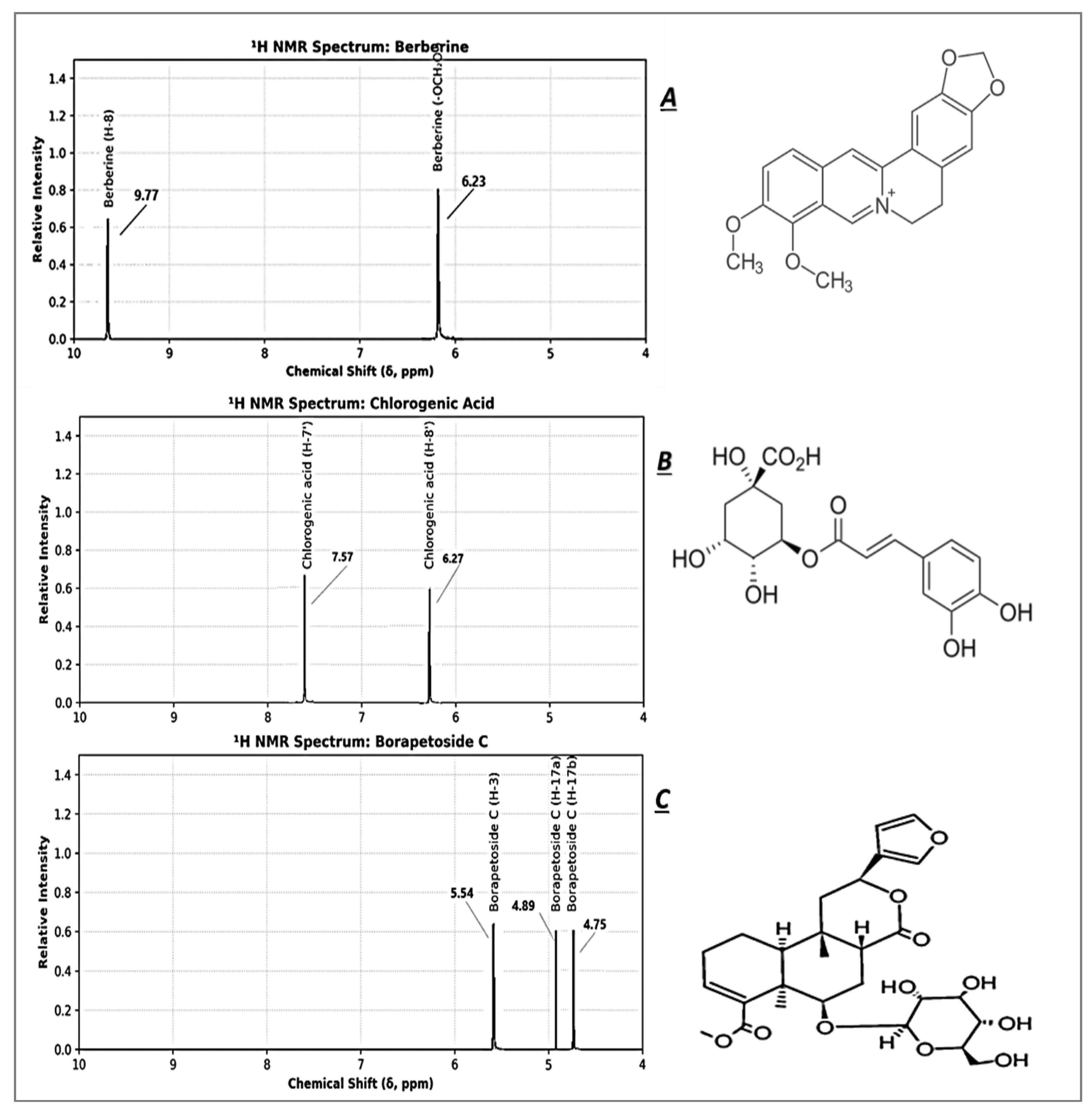
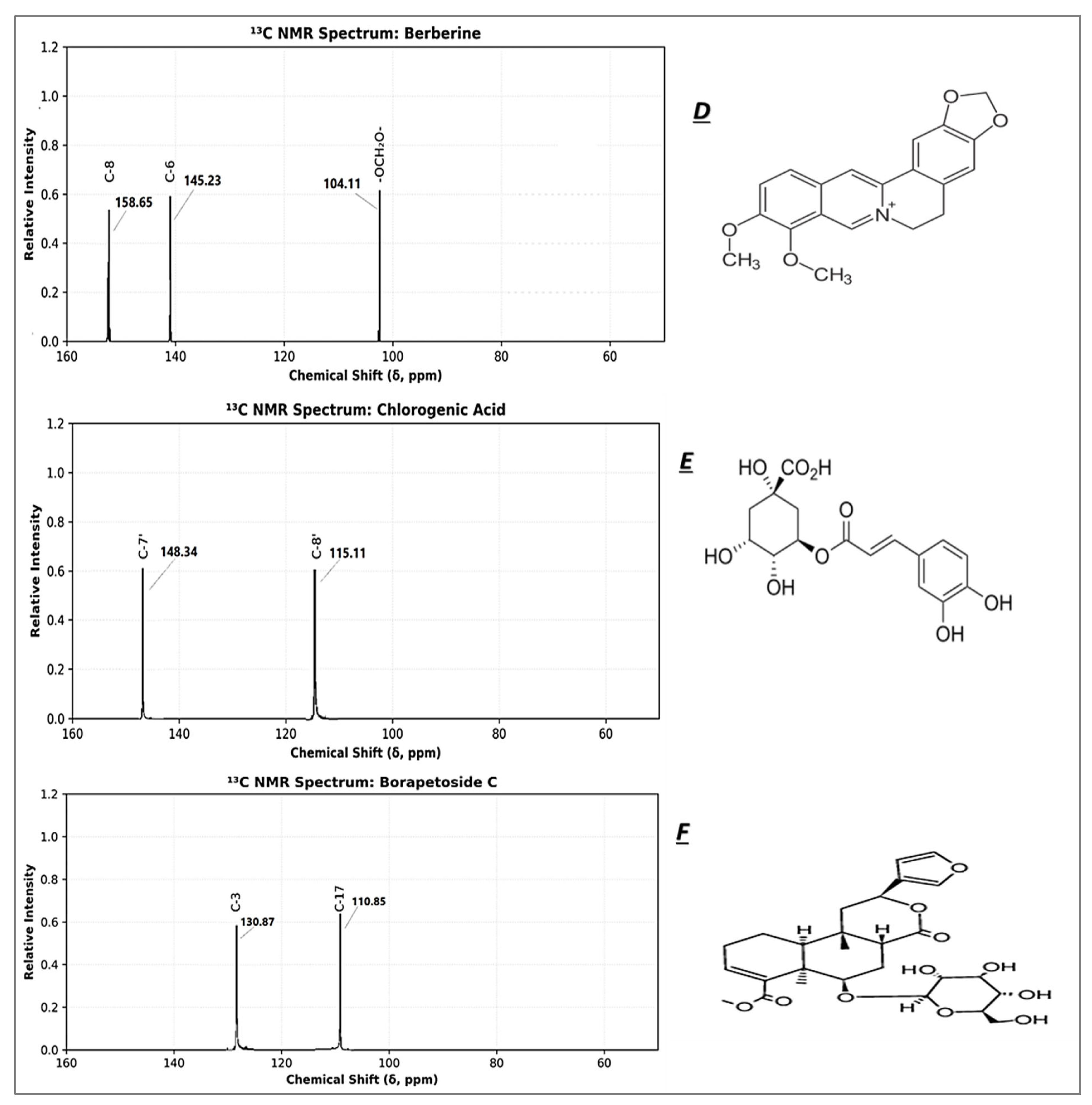
1H NMR Spectra of Key Bioactive Compounds Identified in T. crispa. (A) Berberine, (B) chlorogenic acid, (C) Borapetoside C. 13 C-NMR Spectra of Key Bioactive Compounds Identified in T. crispa. (D) Berberine, (E) Chlorogenic acid, (F) Borapetoside C.
Figure 7.
1H NMR Spectra of Key Bioactive Compounds Identified in T. crispa. (A) Berberine, (B) chlorogenic acid, (C) Borapetoside C. 13 C-NMR Spectra of Key Bioactive Compounds Identified in T. crispa. (D) Berberine, (E) Chlorogenic acid, (F) Borapetoside C.
Figure 8.
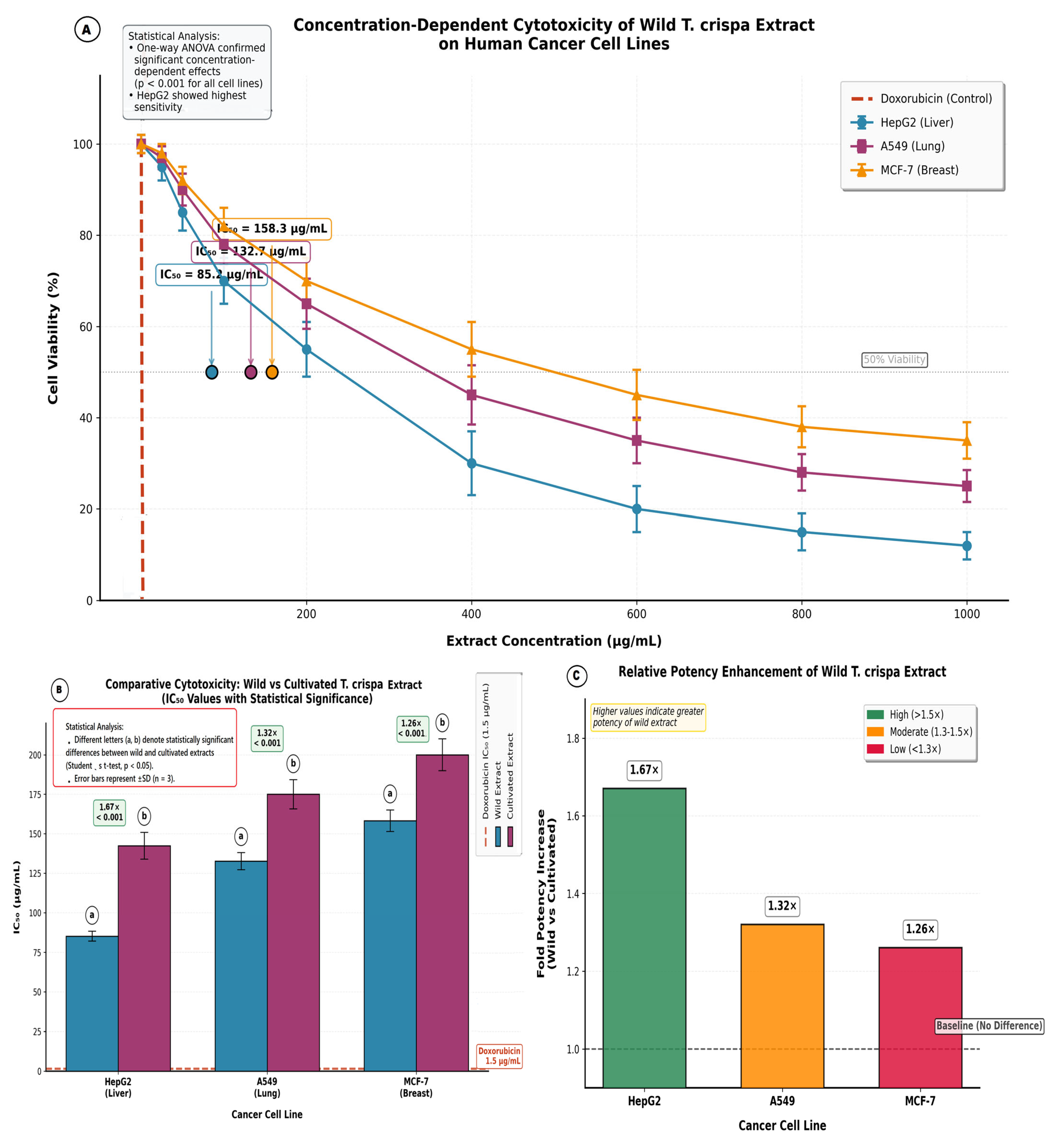
Cytotoxic activity of T. crispa extract against human cancer cell lines. (A) Dose–response curves of wild extract on MCF-7, HepG2, and A549 cells. Points are mean ± SD (n = 3). Arrows indicate IC50 values (HepG2: 85.2 µg/mL). Significant concentration-dependent inhibition was observed (p < 0.001). (B) IC50 comparison between wild and cultivated extracts. Bars show mean ± SD. The wild extract was significantly more potent. (C) Potency enhancement (fold-increase) of wild versus cultivated extract. The greatest increase was against HepG2 cells (1.67-fold). Color indicates the level of enhancement.
Figure 8.
Cytotoxic activity of T. crispa extract against human cancer cell lines. (A) Dose–response curves of wild extract on MCF-7, HepG2, and A549 cells. Points are mean ± SD (n = 3). Arrows indicate IC50 values (HepG2: 85.2 µg/mL). Significant concentration-dependent inhibition was observed (p < 0.001). (B) IC50 comparison between wild and cultivated extracts. Bars show mean ± SD. The wild extract was significantly more potent. (C) Potency enhancement (fold-increase) of wild versus cultivated extract. The greatest increase was against HepG2 cells (1.67-fold). Color indicates the level of enhancement.
Figure 9.
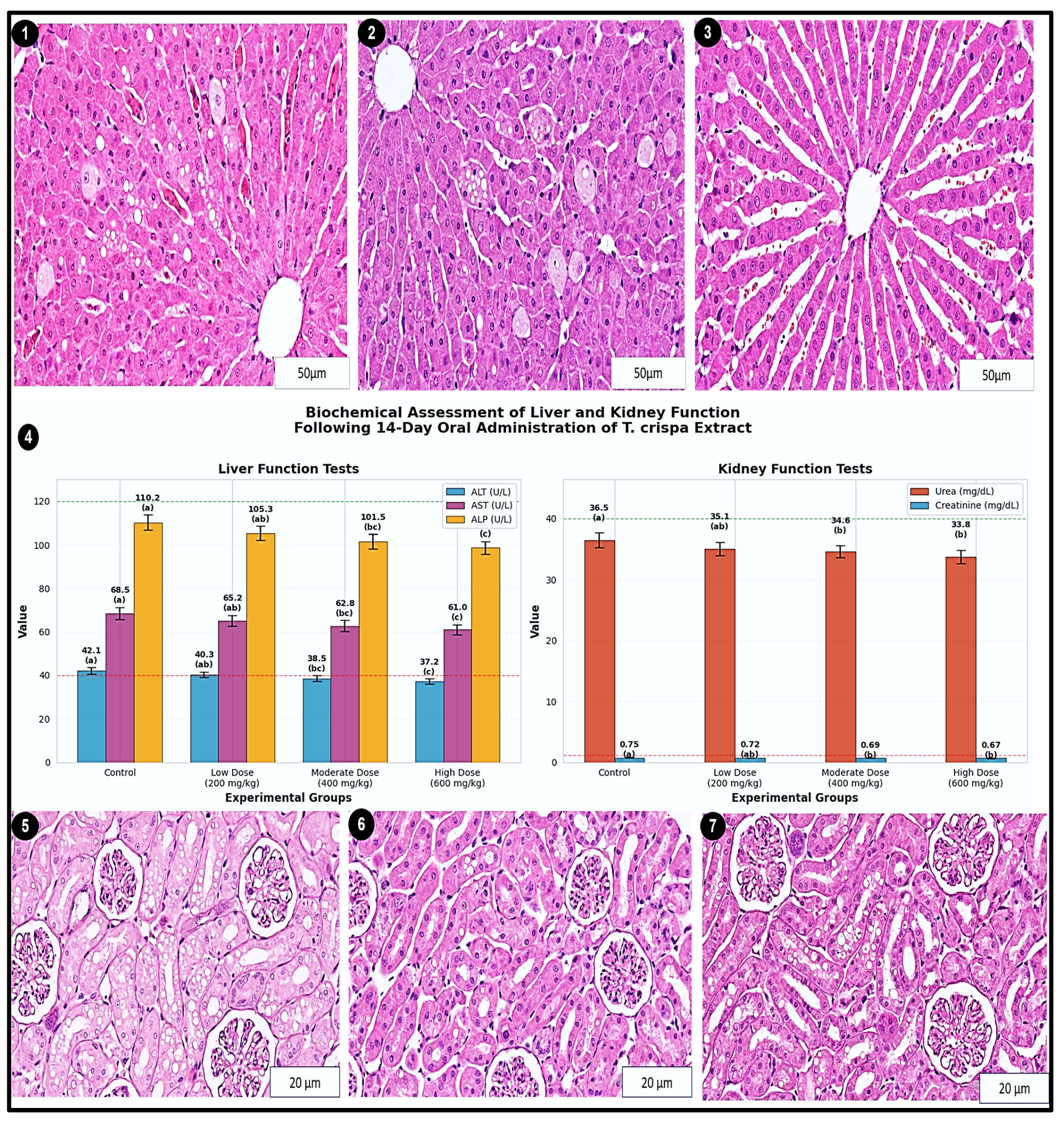
Histopathological and biochemical assessment of liver and kidney tissues following 14-day oral administration of T. crispa extract. (1–3) Representative hematoxylin and eosin (H&E)-stained liver sections from control (1), moderate-dose (400 mg/kg) (2), and high-dose (600 mg/kg) (3) groups, showing preserved hepatic cord architecture with no signs of necrosis, inflammation, or fatty degeneration. (4–6) Representative H&E-stained kidney sections from control (4), moderate-dose (5), and high-dose (6) groups, demonstrating intact glomerular and tubular structures. Minimal and reversible tubular epithelial vacuolation was observed in some treated groups, with no evidence of degeneration or interstitial nephritis. (7) Key serum biochemical parameters (Alanine Aminotransferase, ALT; Aspartate Aminotransferase, AST; Alkaline Phosphatase, ALP; Urea; Creatinine) across all experimental groups, with all values remaining within normal physiological limits (dashed lines). Collectively, the histopathological and biochemical data indicate the absence of significant hepatorenal toxicity at the tested doses. Scale bars: 50 µm (1–3, liver); 20 µm (4–6, kidney).
Figure 9.
Histopathological and biochemical assessment of liver and kidney tissues following 14-day oral administration of T. crispa extract. (1–3) Representative hematoxylin and eosin (H&E)-stained liver sections from control (1), moderate-dose (400 mg/kg) (2), and high-dose (600 mg/kg) (3) groups, showing preserved hepatic cord architecture with no signs of necrosis, inflammation, or fatty degeneration. (4–6) Representative H&E-stained kidney sections from control (4), moderate-dose (5), and high-dose (6) groups, demonstrating intact glomerular and tubular structures. Minimal and reversible tubular epithelial vacuolation was observed in some treated groups, with no evidence of degeneration or interstitial nephritis. (7) Key serum biochemical parameters (Alanine Aminotransferase, ALT; Aspartate Aminotransferase, AST; Alkaline Phosphatase, ALP; Urea; Creatinine) across all experimental groups, with all values remaining within normal physiological limits (dashed lines). Collectively, the histopathological and biochemical data indicate the absence of significant hepatorenal toxicity at the tested doses. Scale bars: 50 µm (1–3, liver); 20 µm (4–6, kidney).

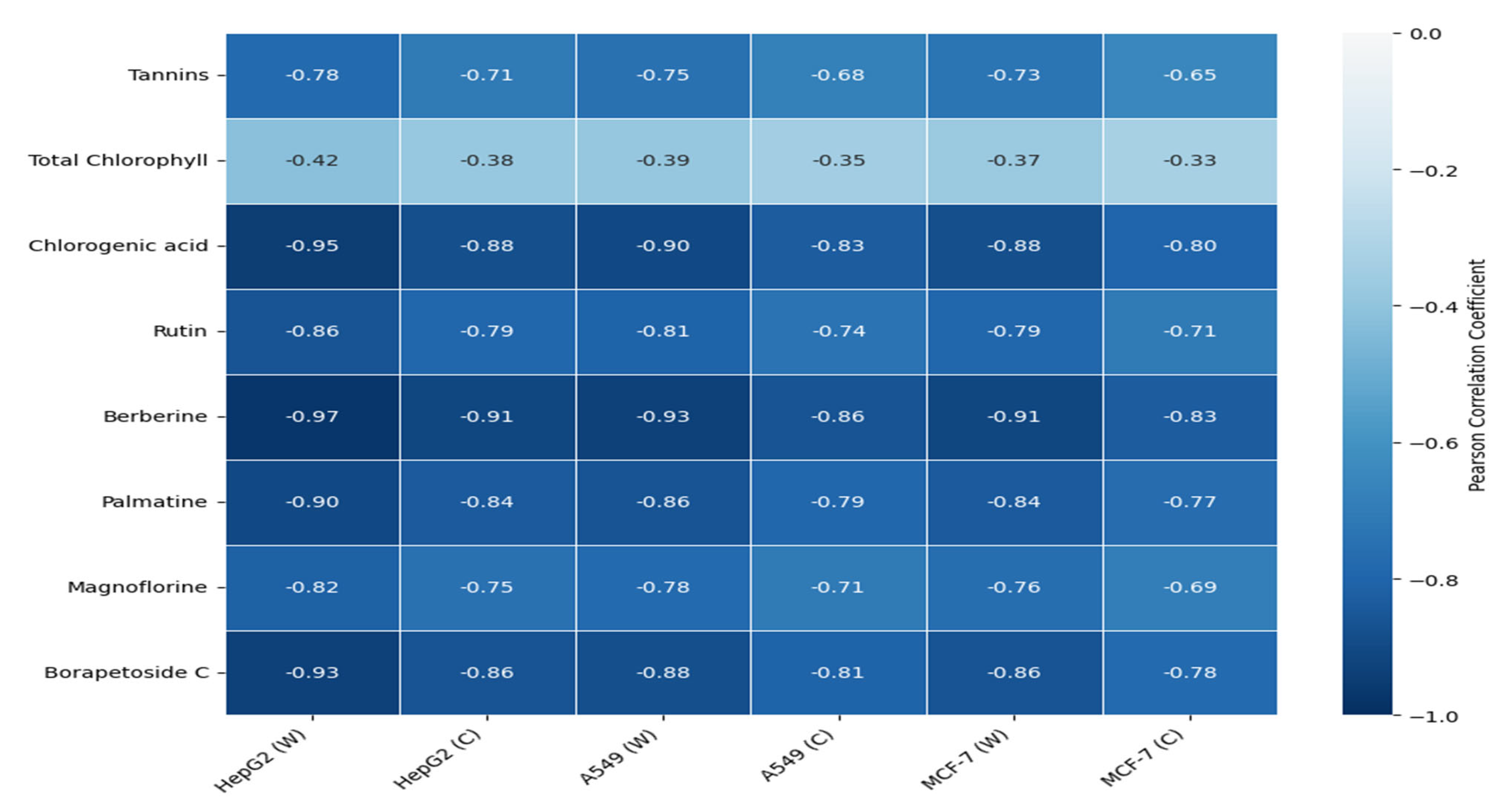
Figure 10.
Pearson correlation coefficients between phytochemical contents and cell viability in human cancer cell lines. Tannins, total chlorophyll, chlorogenic acid, rutin, berberine, palmatine, magnoflorine, and borapetoside C were correlated with the viability of HepG2 (human hepatocellular carcinoma), A549 (human lung carcinoma), and MCF-7 (human breast adenocarcinoma) cells after 48 h of treatment. HepG2 (W), A549 (W), and MCF-7 (W) denote cell viability obtained by the WST-1 assay, while HepG2 (C), A549 (C), and MCF-7 (C) refer to viability determined by the crystal violet assay. Correlations were calculated using the Pearson correlation coefficient (dimensionless), ranging from −11 to 11, where values close to −11 indicate a strong inverse linear relationship between phytochemical concentration and cell viability.
Figure 10.
Pearson correlation coefficients between phytochemical contents and cell viability in human cancer cell lines. Tannins, total chlorophyll, chlorogenic acid, rutin, berberine, palmatine, magnoflorine, and borapetoside C were correlated with the viability of HepG2 (human hepatocellular carcinoma), A549 (human lung carcinoma), and MCF-7 (human breast adenocarcinoma) cells after 48 h of treatment. HepG2 (W), A549 (W), and MCF-7 (W) denote cell viability obtained by the WST-1 assay, while HepG2 (C), A549 (C), and MCF-7 (C) refer to viability determined by the crystal violet assay. Correlations were calculated using the Pearson correlation coefficient (dimensionless), ranging from −11 to 11, where values close to −11 indicate a strong inverse linear relationship between phytochemical concentration and cell viability.
Table 1.
Source, Authentication, and Database Reference of Human Cancer Cell Lines Employed in the Study.
Table 1.
Source, Authentication, and Database Reference of Human Cancer Cell Lines Employed in the Study.
| Cell Line | ATCC Code | Organism/Origin | Authentication | Database Reference |
|---|
| HepG2 | HB-8065 | Human hepatocellular carcinoma | STR-profiled; mycoplasma-free | Cellosaurus CVCL_0027 [32] |
| A549 | CCL-185 | Human lung carcinoma | STR-profiled; mycoplasma-free | Cellosaurus CVCL_0023 [33] |
| MCF-7 | HTB-22 | Human breast adenocarcinoma | STR-profiled; mycoplasma-free | Cellosaurus CVCL_0031 [34,35] |
Table 2.
Quantitative Comparison of Major Phytochemical Screening in Four Climbing Herbaceous Plants Referred to as “Phyllo-stem arboreum”.
Table 2.
Quantitative Comparison of Major Phytochemical Screening in Four Climbing Herbaceous Plants Referred to as “Phyllo-stem arboreum”.
| Compound Class | T. crispa | T. cordifolia | C. pareira | S. japonica | p-Value (ANOVA) |
|---|
| Alkaloids | 12.50 ± 0.80 a | 8.20 ± 0.60 b | 6.30 ± 0.45 d | 7.80 ± 0.55 c | <0.001 |
| Flavonoids | 9.80 ± 0.55 b | 15.20 ± 0.90 a | 4.50 ± 0.35 c | 5.20 ± 0.40 c | <0.001 |
| Phenolic Acids | 22.40 ± 1.20 a | 9.50 ± 0.75 b | 3.80 ± 0.30 c | 4.50 ± 0.35 c | <0.001 |
| Saponins | 8.20 ± 0.60 a | 1.50 ± 0.20 c | 6.80 ± 0.50 b | ND | <0.001 |
| Tannins | 14.30 ± 0.85 a | 12.80 ± 0.75 a | 0.90 ± 0.15 b | 1.20 ± 0.18 b | <0.001 |
| Terpenoids | 7.50 ± 0.55 a | 5.80 ± 0.45 b | 2.20 ± 0.25 d | 3.50 ± 0.30 c | <0.001 |
Table 3.
Morphological Adaptations in Wild T. crispa Under Environmental Stress.
Table 3.
Morphological Adaptations in Wild T. crispa Under Environmental Stress.
| Morphological Trait | Reference (Herbarium/Cultivated, Panels 2–3) | Field-Collected Sample (Panel 1) | Observed Change |
|---|
| Leaf shape and size | Broad, fully cordate leaves with smooth margins | Smaller leaves, slightly lobed with undulating margins | Leaf area reduction and marginal waviness under stress |
| Leaf texture and color | Thin, uniformly deep green lamina | Thicker, somewhat tougher lamina, green but less lustrous | Slights chlorophyll and reduced apparent chlorophyll density |
| Stem architecture and surface | Relatively straight, uniformly cylindrical green stems with fine warts | Arched, more irregular stems with pronounced nodal swellings and rough, prickly surface | Increased stem lignification and armature for mechanical protection |
| Fruit surface and shape | Plump, ovoid drupes with smoother surface (panel 2) | More elongated, pendant ovoid fruits with clearer longitudinal ridges (panel 1) | Shape elongation and accentuated ribbing associated with stressful habitat |
Table 4.
Phytochemical Comparison Between Wild and Reference T. crispa (Mean ± SD).
Table 4.
Phytochemical Comparison Between Wild and Reference T. crispa (Mean ± SD).
| Parameter | Wild T. crispa | Ref T. crispa | % Change | p-Value (t-test) |
|---|
| Total Flavonoids (mg QE/g) | 17.5 ± 1.6 a | 12.2 ± 1.3 b | +43.4% | <0.01 |
| Total Polyphenols (mg GAE/g) | 28.1 ± 2.1 a | 19.6 ± 1.7 b | +43.4% | <0.01 |
| Tannins (mg CE/g) | 7.9 ± 0.6 a | 4.8 ± 0.4 b | +64.6% | <0.001 |
| Total Chlorophyll (mg/g FW) | 1.32 ± 0.09 b | 3.05 ± 0.11 a | −56.7% | <0.001 |
Table 5.
Quantitative LC–MS Profiling of Major Bioactive Metabolites Identified in Wild T. crispa Extract.
Table 5.
Quantitative LC–MS Profiling of Major Bioactive Metabolites Identified in Wild T. crispa Extract.
| Peak # | RT (Min) | m/z | Molecular Formula | Ion Type | MS2 Fragments (m/z) | Putative Identification | Concentration in Wild T. crispa (mg/g DW, Mean ± SD) | Significance Letter (Wild vs. Cultivated) |
|---|
| 1 | 8.3 | 355.103 | C16H18O9 | [M + H]+ | 163.04, 135.03 | Chlorogenic acid | 22.4 ± 1.2 | a |
| 2 | 9.1 | 611.161 | C27H30O16 | [M + H]+ | 303.05, 271.02, 151.00 | Rutin | 4.6 ± 0.4 | a |
| 3 | 12.92 | 336.123 | C20H18NO4+ | [M]+ | 321.09, 306.07, 292.06 | Berberine | 12.5 ± 0.8 | a |
| 4 | 15.35 | 352.134 | C21H22NO4+ | [M]+ | 337.12, 320.10, 292.08 | Palmatine | 6.2 ± 0.5 | a/b |
| 5 | 19.54 | 342.17 | C18H23NO5+ | [M]+ | 251.14, 131.08 | Magnoflorine | 3.1 ± 0.3 | a |
| 6 | 20.35 | 571.192 | C28H35O12 | [M + H]+ | 409.15, 247.10, 108.05, 230.13, 262.28 | Borapetoside C | 7.8 ± 0.6 | |
Table 6.
Compilation of Key 1H-NMR Signals for Selected Natural Compounds.
Table 6.
Compilation of Key 1H-NMR Signals for Selected Natural Compounds.
| Compound | δ (1H) ppm | Multiplicity | Integration | Key Proton Assignment |
|---|
| Chlorogenic acid | 7.58 | d (J = 15.9 Hz) | 1H | H-7′ (trans-cinnamoyl) |
| | 6.28 | d (J = 15.9 Hz) | 1H | H-8′ |
| Rutin | 12.61 | s | 1H | 5-OH (chelated) |
| | 7.68 | d (J = 2.0 Hz) | 1H | H-2′ (flavone) |
| Berberine | 9.89 | s | 1H | H-8 (isoquinoline) |
| | 6.18 | s | 2H | -OCH2O- (dioxymethylene) |
| Palmatine | 9.85 | s | 1H | H-8 |
| | 4.05 | s | 3H | -OCH3 (methoxy) |
| Magnoflorine | 6.78 | s | 1H | H-1 (aporphine) |
| | 3.45 | s | 6H | -N+(CH3)2 (dimethylamino) |
| Borapetoside C | 5.58 | dd (J = 3.5,12.0) | 1H | H-3 (olefinic) |
| | 4.92 | d (J = 12.0 Hz) | 1H | H-17a (exomethylene) |
| | 4.75 | d (J = 12.0 Hz) | 1H | H-17b |
Table 7.
Cytotoxicity profiles and comparative statistical analysis of T. crispa extracts.
Table 7.
Cytotoxicity profiles and comparative statistical analysis of T. crispa extracts.
| Parameter | Wild Extract IC50 (µg/mL) | Cultivated Extract IC50 (µg/mL) | p-Value (t-test) | Fold Potency Increase | Doxorubicin (+ Control) IC50 (µg/mL) | p-Value vs. Dox |
|---|
| HepG2 | 85.2 ± 3.1 a | 142.4 ± 8.5 b | <0.001 | 1.67× | <2.0 | <0.001 |
| A549 | 132.7 ± 5.4 a | 175.0 ± 9.2 b | <0.001 | 1.32× | <2.0 | <0.001 |
| MCF-7 | 158.3 ± 6.8 a | 200.0 ± 10.1 b | <0.001 | 1.26× | <2.0 | <0.001 |
Table 8.
Dose–Response Assessment of Liver (ALT, AST, ALP) and Kidney (Urea, Creatinine) Function Markers.
Table 8.
Dose–Response Assessment of Liver (ALT, AST, ALP) and Kidney (Urea, Creatinine) Function Markers.
| | Liver Function | Kidney Function |
|---|
| Group | ALT (U/L) | AST (U/L) | ALP (U/L) | Urea (mg/dL) | Creatinine (mg/dL) |
| Control | 42.1 ± 1.5 a | 68.5 ± 2.8 a | 110.2 ± 3.5 a | 36.5 ± 1.2 a | 0.75 ± 0.03 a |
| Low Dose (200 mg/kg) | 40.3 ± 1.3 ab | 65.2 ± 2.5 ab | 105.3 ± 3.2 ab | 35.1 ± 1.1 ab | 0.72 ± 0.03 ab |
| Moderate Dose (400 mg/kg) | 38.5 ± 1.4 bc | 62.8 ± 2.6 bc | 101.5 ± 3.3 bc | 34.6 ± 1.0 b | 0.69 ± 0.02 b |
| High Dose (600 mg/kg) | 37.2 ± 1.2 c | 61.0 ± 2.3 c | 98.7 ± 3.0 c | 33.8 ± 1.1 b | 0.67 ± 0.02 b |
| ANOVA p-value | p < 0.01 | p < 0.01 | p < 0.01 | p < 0.05 | p < 0.05 |