
Broccoli Extract (Broccoli NMN®) Improves Skin Hydration by Regulating HAS and NF-κB Pathways and Reduces Wrinkle Formation via the TGF-βR1/Smad3/Collagen Pathway

 ,
, 
Abstract
1. Introduction
2. Materials and Methods
2.1. Preparation of Broccoli Extract (BRC)
2.2. Cell Culture and Treatment
2.3. Animals and UVB Irradiation
2.4. Measurement of Transepidermal Water Loss (TEWL)
2.5. Morphological and Histological Observations
2.6. Measurement of Antioxidant Enzyme Activity
2.7. Protein Extraction and Western Blot Analysis
2.8. Total RNA Isolation and Real-Time Polymerase Chain Reaction (PCR)
2.9. Measurement of Hyaluronic Acid and Sphingomyelin
2.10. Measurement of Pro-Inflammatory Cytokines
2.11. Measurement of Intracellular Melanin and Tyrosinase Activity
2.12. Measurement of Nitric Oxide, Glutathione, and cAMP Levels
2.13. Statistical Analysis
3. Results
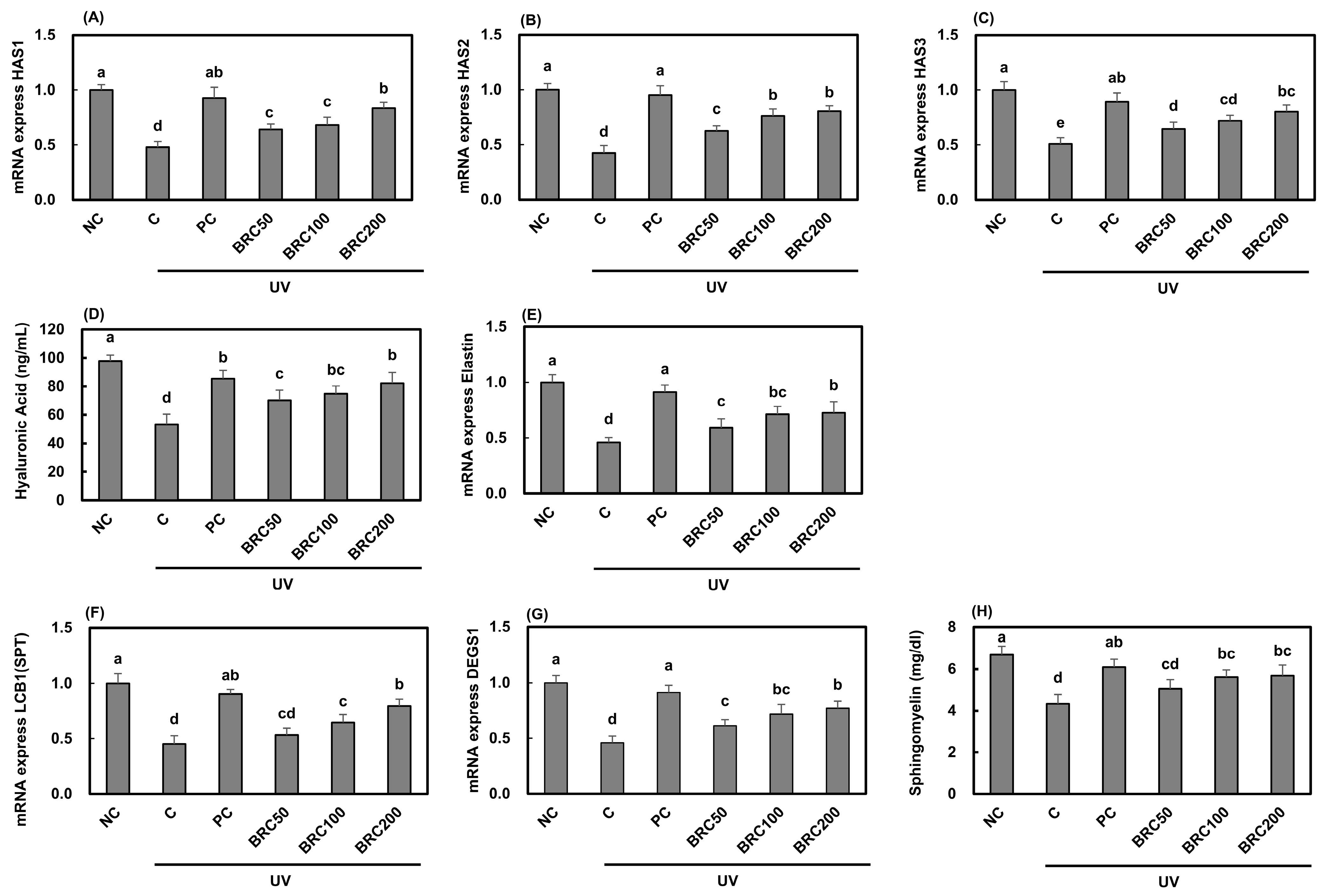
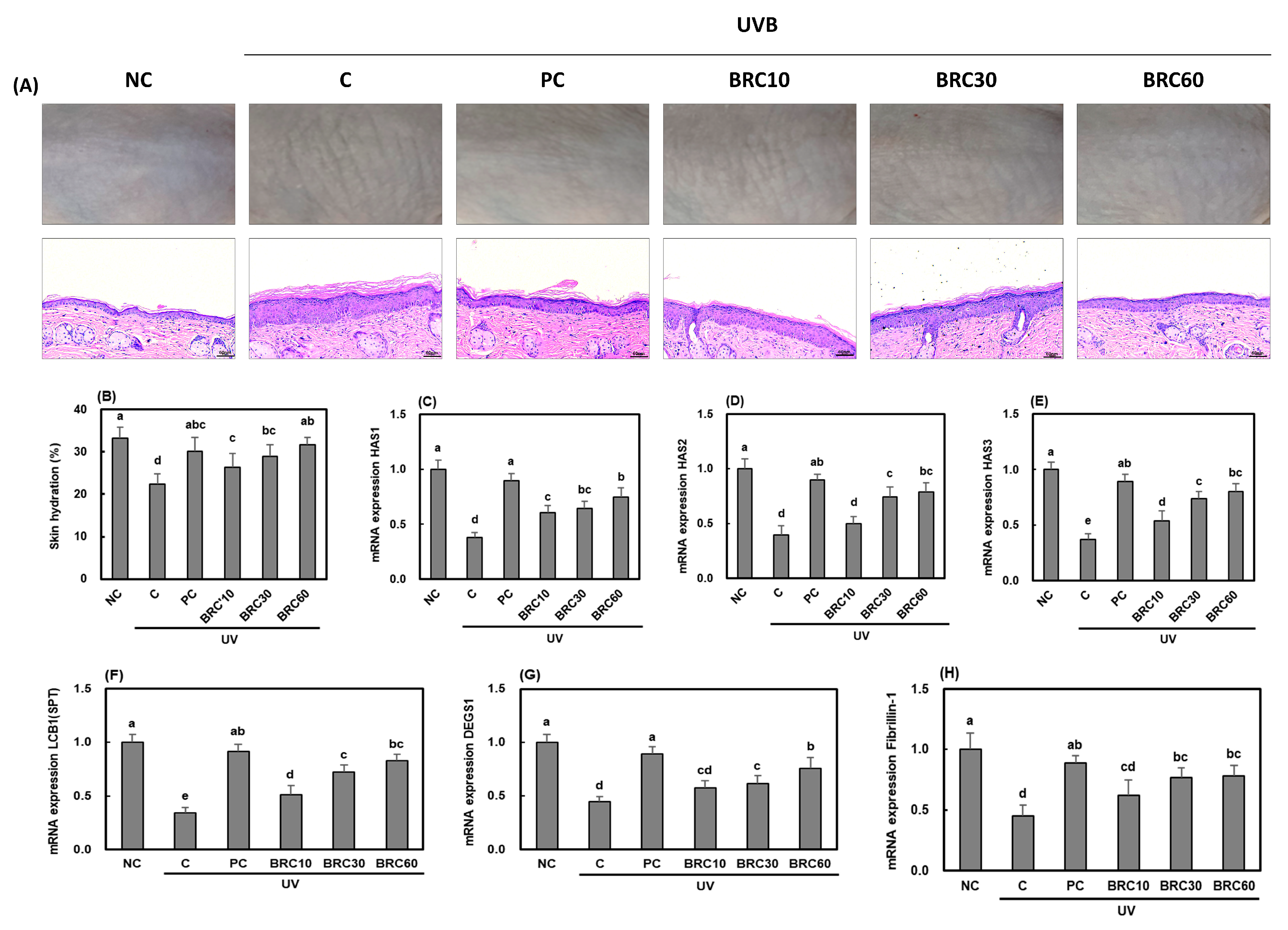
3.1. Effects of BRC on the Expression of Skin Moisturizing-Related Genes in UV-Irradiated HaCaT Cells and SKH-1 Hairless Mice
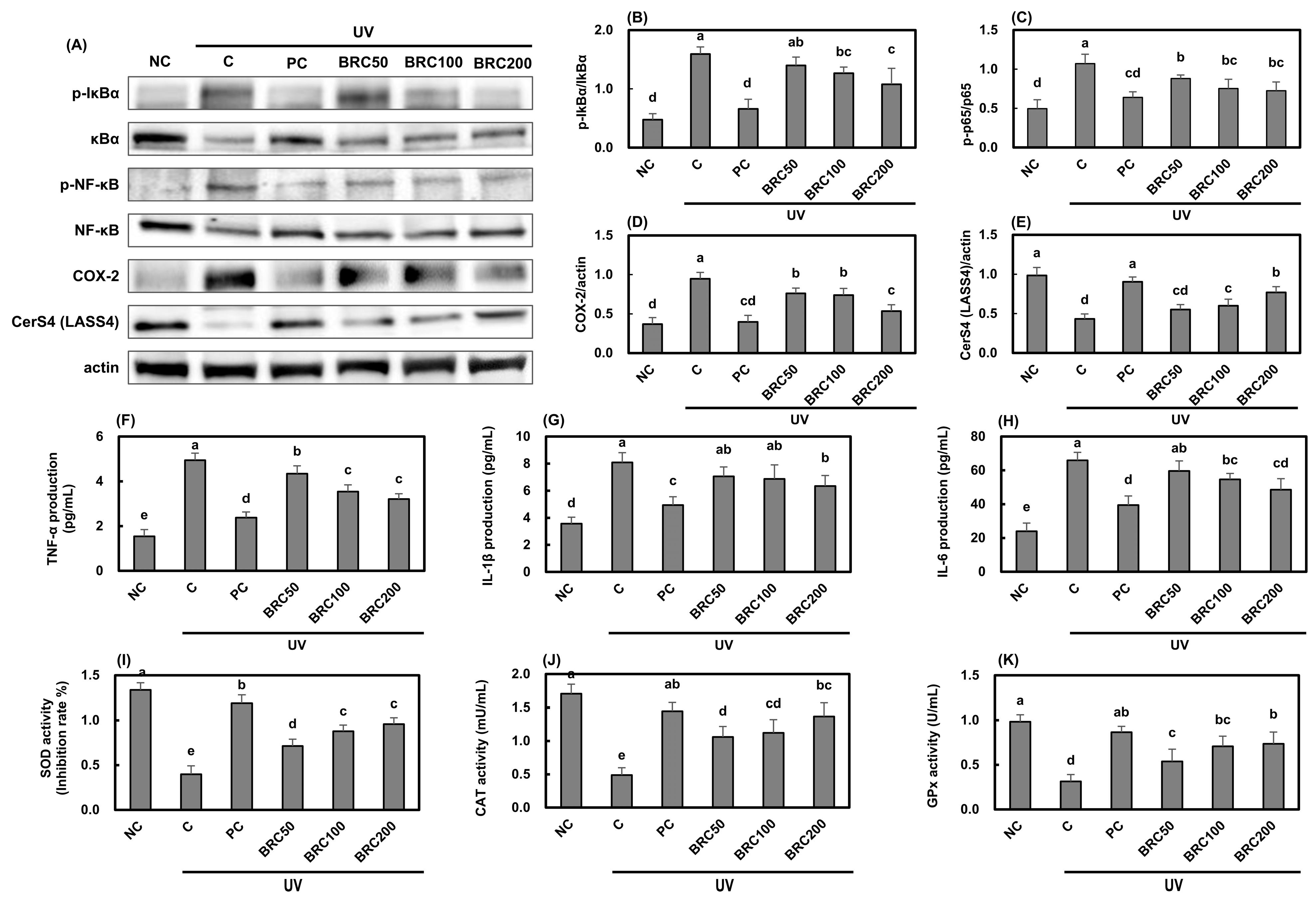
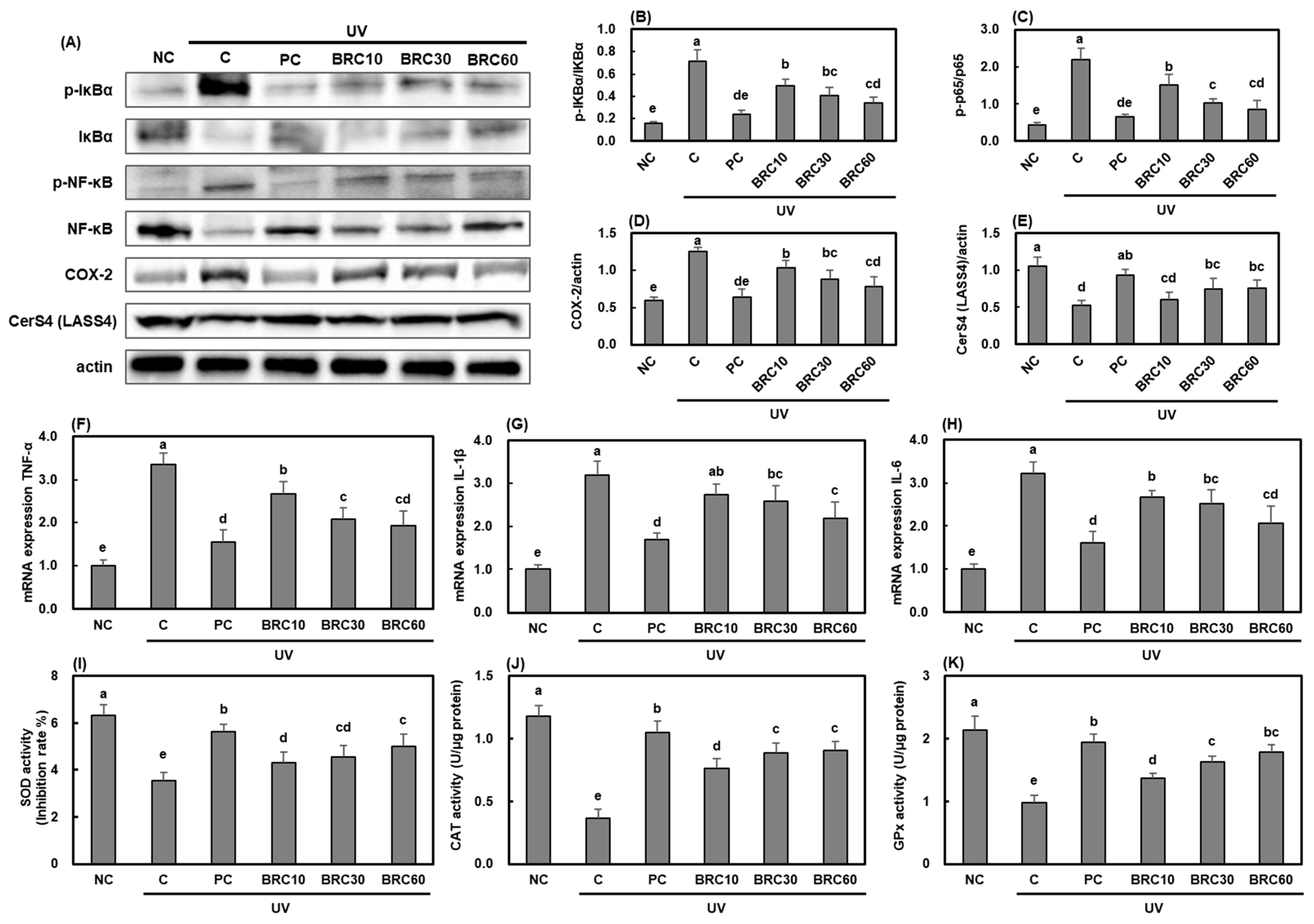
3.2. Effects of BRC on Skin Barrier Damage and Antioxidant-Related Factors in UV-Irradiated HaCaT Cells and SKH-1 Hairless Mice
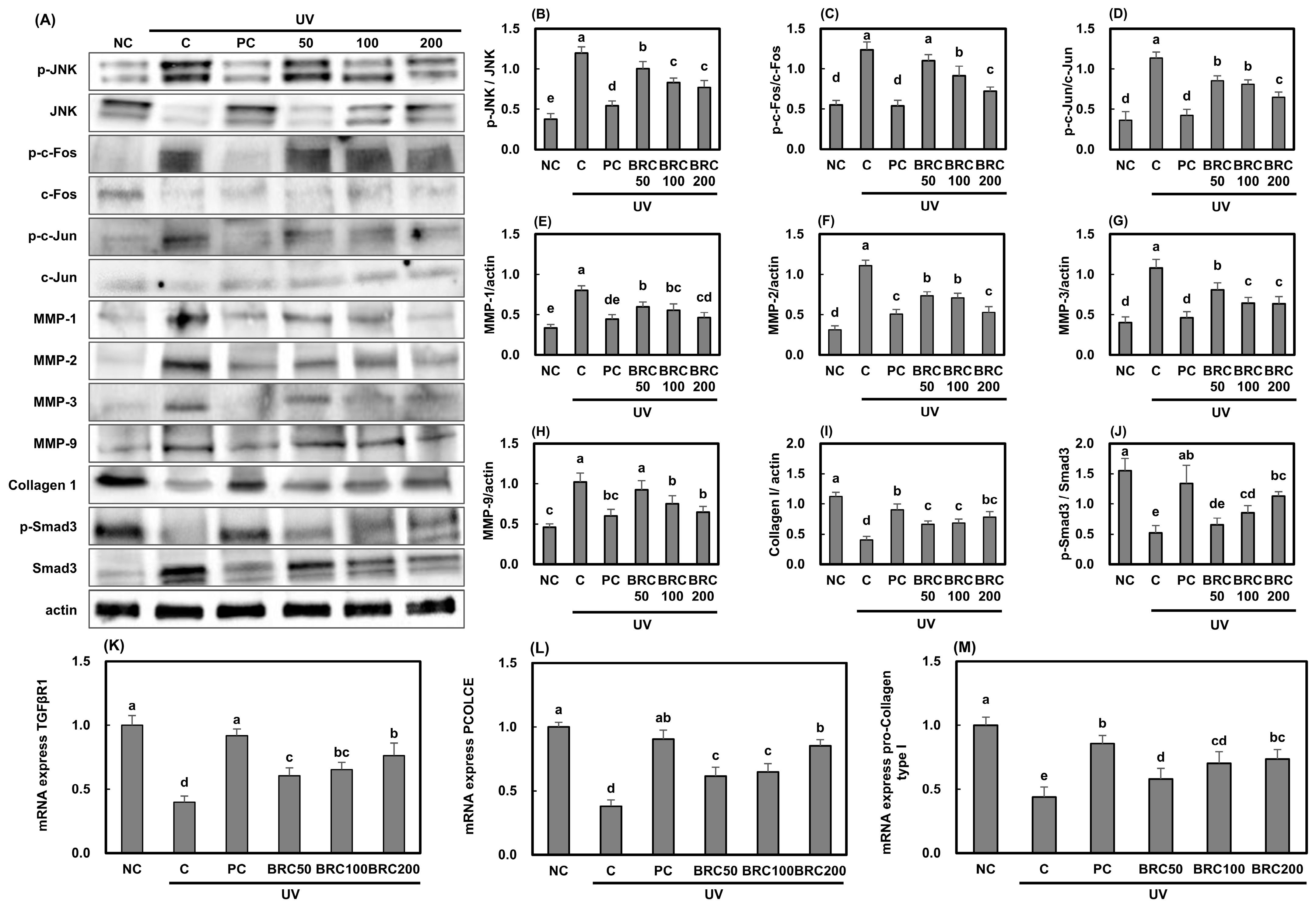
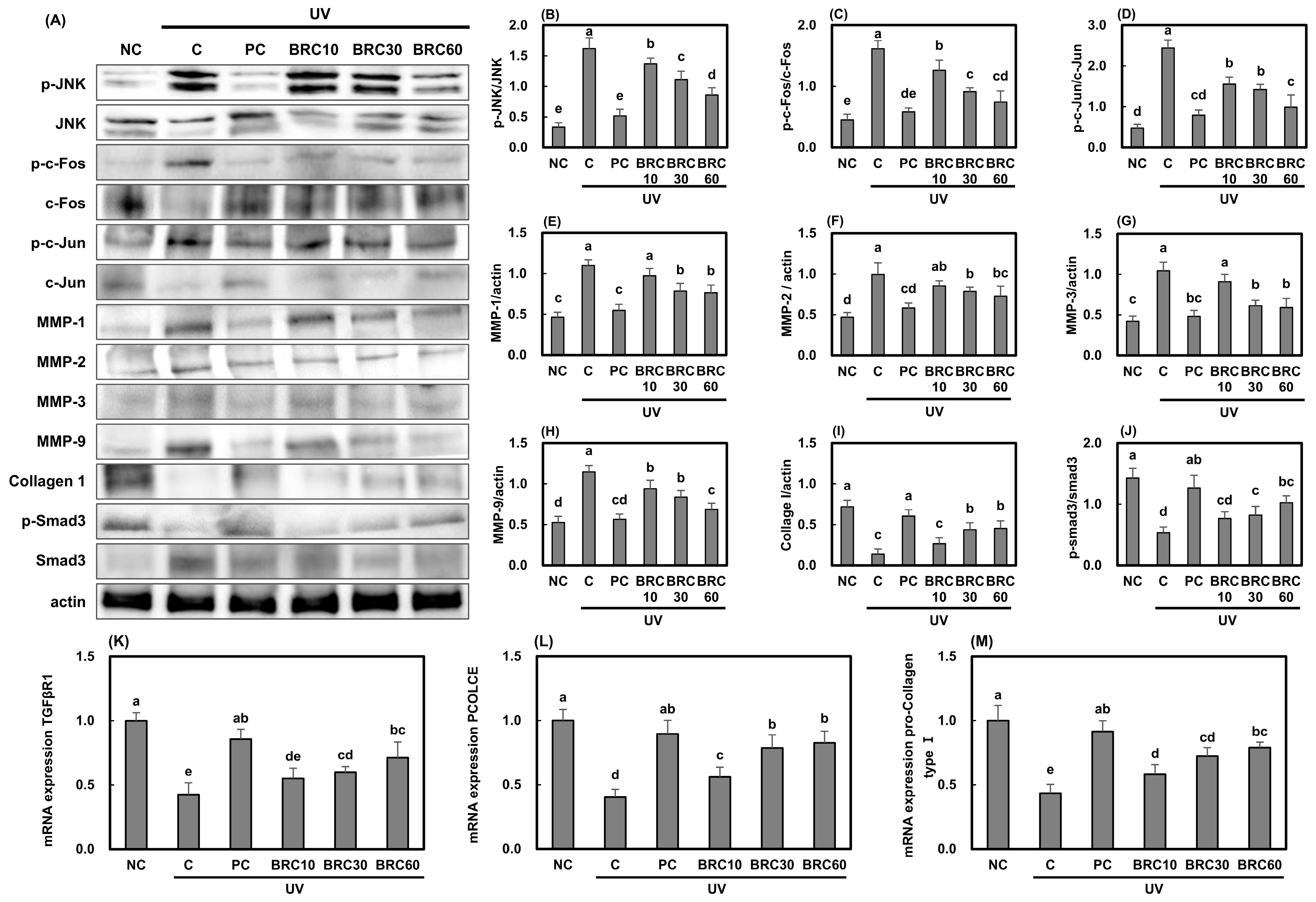
3.3. Effects of BRC on Wrinkle Formation-Related Factors in UV-Irradiated HS27 Cell and SKH-1 Hairless Mice
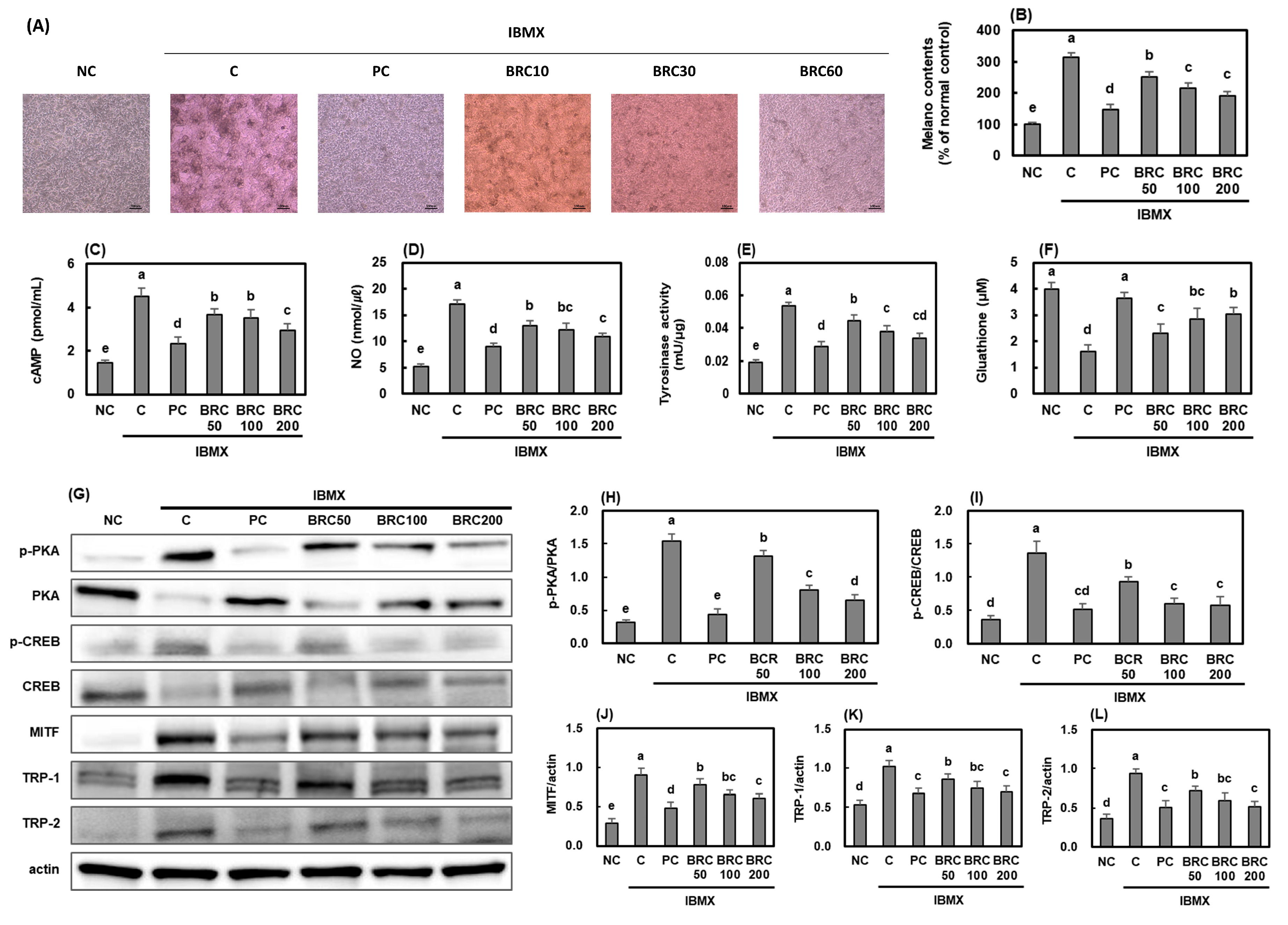
3.4. Effects of BRC on Pigmentation-Related Factors in UV-Irradiated B16F10 Cells
4. Discussion
5. Conclusions
Author Contributions
Funding
Institutional Review Board Statement
Informed Consent Statement
Data Availability Statement
Conflicts of Interest
Abbreviations
| UV | Ultraviolet |
| ROS | Reactive oxygen species |
| ECM | Extracellular matrix |
| MMP | Matrix metalloproteinase |
| BRC | Broccoli extract |
| NMN | Nicotinamide mononucleotide |
| NAD+ | Nicotinamide adenine dinucleotide |
| HAS | Hyaluronic acid synthase |
| LCB1 (SPT) | Long-chain base biosynthesis protein 1 |
| DEGS1 | Delta 4-desaturase sphingolipid 1 |
| CerS4 | Ceramide synthase 4 |
| NF-κB | Nuclear factor kappa-light-chain-enhancer of activated B cells |
| COX-2 | Cyclooxygenase-2 |
| JNK | c-Jun N-terminal kinases |
| TGFβR1 | Transforming growth factor beta receptor 1 |
| Smad3 | Suppressor of mothers against decapentaplegic 3 |
| cAMP | Cyclic adenosine monophosphate |
| PKA | Protein kinase A |
| CREB | cAMP-responsive element binding protein |
| MITF | Microphthalmia-associated transcription factor |
| TRP | Tyrosinase related protein |
| IBMX | Isobutylmethylxanthine |
| MED | Minimal erythemal dose |
| TEWL | Transepidermal water loss |
| SOD | Superoxide dismutase |
| CAT | Catalase |
| GPx | Glutathione peroxidase |
| ECL | Enhanced chemiluminescence |
| IL | Interleukin |
| TNF-α | Tumor necrosis factor-alpha |
| NO | Nitric oxide |
| PCOLCE | Procollagen C-endopeptidase enhancer |
| α-MSH | Alpha-melanocyte-stimulating hormone |
References
- Boer, M.; Duchnik, E.; Maleszka, R.; Marchlewicz, M. Structural and biophysical characteristics of human skin in maintaining proper epidermal barrier function. Postepy. Dermatol. Alergol. 2016, 33, 1–5. [Google Scholar] [CrossRef]
- Farage, M.A.; Miller, K.W.; Elsner, P.; Maibach, H.I. Intrinsic and extrinsic factors in skin ageing: A review. Int. J. Cosmet. Sci. 2008, 30, 87–95. [Google Scholar] [CrossRef] [PubMed]
- Lan, C.E.; Hung, Y.T.; Fang, A.H.; Ching-Shuang, W. Effects of irradiance on UVA-induced skin aging. J. Dermatol. Sci. 2019, 94, 220–228. [Google Scholar] [CrossRef] [PubMed]
- Wei, M.; He, X.; Liu, N.; Deng, H. Role of Reactive Oxygen Species in Ultraviolet-Induced Photodamage of the Skin. Cell Div. 2024, 19, 1. [Google Scholar] [CrossRef]
- Masaki, H. Role of antioxidants in the skin: Anti-aging effects. J. Dermatol. Sci. 2010, 58, 85–90. [Google Scholar] [CrossRef]
- Baumann, L. Skin ageing and its treatment. J. Pathol. 2007, 211, 241–251. [Google Scholar] [CrossRef]
- Rittié, L.; Fisher, G.J. UV-light-induced signal cascades and skin aging. Ageing Res. Rev. 2002, 1, 705–720. [Google Scholar] [CrossRef]
- Wang, P.W.; Hung, Y.C.; Lin, T.-Y.; Fang, J.-Y.; Yang, P.-M.; Chen, M.-H.; Pan, T.-L. Comparison of the Biological Impact of UVA and UVB upon the Skin with Functional Proteomics and Immunohistochemistry. Antioxidants 2019, 8, 569. [Google Scholar] [CrossRef]
- Umar, S.A.; Tanveer, M.A.; Nazir, L.A.; Divya, G.; Vishwakarma, R.A.; Tasduq, S.A. Glycyrrhizic Acid Prevents Oxidative Stress Mediated DNA Damage Response through Modulation of Autophagy in Ultraviolet-B-Irradiated Human Primary Dermal Fibroblasts. Cell. Physiol. Biochem. 2019, 53, 242–257. [Google Scholar] [CrossRef]
- Yoshino, J.; Baur, J.A.; Imai, S.-I. NAD+ Intermediates: The Biology and Therapeutic Potential of NMN and NR. Cell. Metab. 2018, 27, 513–528. [Google Scholar] [CrossRef] [PubMed]
- Brito, S.; Baek, J.-M.; Cha, B.; Heo, H.; Lee, S.-H.; Lei, L.; Jung, S.Y.; Lee, S.M.; Lee, S.H.; Kwak, B.-M.; et al. Nicotinamide mononucleotide reduces melanin production in aged melanocytes by inhibiting cAMP/Wnt signaling. J. Dermatol. Sci. 2022, 106, 159–169. [Google Scholar] [CrossRef]
- Kahn, B.; Borrelli, M.; Libby, T. A Narrative Review of Nicotinamide Adenine Dinucleotide (NAD)+ Intermediates Nicotinamide Riboside and Nicotinamide Mononucleotide for Keratinocyte Carcinoma Risk Reduction. J. Drugs. Dermatol. 2022, 21, 1129–1132. [Google Scholar] [CrossRef]
- Vicentini, F.T.; He, T.; Shao, Y.; Fonseca, M.J.; Verri, W.A., Jr.; Fisher, G.J.; Xu, Y. Quercetin inhibits UV irradiation-induced inflammatory cytokine production in primary human keratinocytes by suppressing NF-κB pathway. J. Dermatol. Sci. 2011, 61, 162–168. [Google Scholar] [CrossRef]
- Kim, D.; Choi, C.-H.; Lee, J.Y.; See, H.-J.; Kim, H.-J.; Cho, Y.; Kim, O.-K.; Lee, J. Glucocerebroside-Containing Milk Concentrated Powder Suppresses Oxidative Stress and Photoaging in the Skin of Hairless Mice. Antioxidants 2022, 11, 1804. [Google Scholar] [CrossRef]
- Srinivas, C.R. Innovations in dermatology. Indian J. Dermatol. Venereol. Leprol. 2016, 82, 641–644. [Google Scholar] [CrossRef] [PubMed]
- Zhang, Z.; Cheng, B.; Du, W.; Zeng, M.; He, K.; Yin, T.; Shang, S.; Su, T.; Han, D.; Gan, X.; et al. The Role of Nicotinamide Mononucleotide Supplementation in Psoriasis Treatment. Antioxidants 2024, 13, 186. [Google Scholar] [CrossRef] [PubMed]
- Li, H.; Liu, Q.; Zhu, C.; Sun, X.; Sun, C.; Yu, C.; Li, P.; Deng, X.; Wang, J. β-Nicotinamide Mononucleotide Activates NAD+/SIRT1 Pathway and Attenuates Inflammatory and Oxidative Responses in the Hippocampus Regions of Septic Mice. Radic. Biol. Med. 2023, 63, 102745. [Google Scholar] [CrossRef]
- Papakonstantinou, E.; Roth, M.; Karakiulakis, G. Hyaluronic acid: A key molecule in skin aging. Dermatoendocrinol 2012, 4, 253–258. [Google Scholar] [CrossRef] [PubMed]
- Dai, G.; Freudenberger, T.; Zipper, P.; Melchior, A.; Grether-Beck, S.; Rabausch, B.; Groot, J.; Twarock, S.; Hanenberg, H.; Homey, B.; et al. Chronic ultraviolet B irradiation causes loss of hyaluronic acid from mouse dermis because of down-regulation of hyaluronic acid synthases. Am. J. Pathol. 2007, 171, 1451–1461. [Google Scholar] [CrossRef]
- Verdier-Sévrain, S.; Bonté, F. Skin hydration: A review on its molecular mechanisms. J. Cosmet. Dermatol 2007, 6, 75–82. [Google Scholar] [CrossRef]
- Sur, I.; Ulvmar, M.; Toftgård, R. The two-faced NF-kappaB in the skin. Int. Rev. Immunol. 2008, 27, 205–223. [Google Scholar] [CrossRef]
- Chun, K.S.; Langenbach, R. A proposed COX-2 and PGE2 receptor interaction in UV-exposed mouse skin. Mol. Carcinog. 2007, 46, 699–704. [Google Scholar] [CrossRef] [PubMed]
- Sanchez, J.; Le Jan, S.; Muller, C.; François, C.; Renard, Y.; Durlach, A.; Bernard, P.; Reguiai, Z.; Antonicelli, F. Matrix remodelling and MMP expression/activation are associated with hidradenitis suppurativa skin inflammation. Exp. Dermatol. 2019, 28, 593–600. [Google Scholar] [CrossRef]
- Tanaka, Y.; Uchi, H.; Ito, T.; Furue, M. Indirubin-pregnane X receptor-JNK axis accelerates skin wound healing. Sci. Rep. 2019, 9, 18174. [Google Scholar] [CrossRef]
- Liarte, S.; Bernabé-García, Á.; Nicolás, F.J. Role of TGF-β in Skin Chronic Wounds: A Keratinocyte Perspective. Cells 2020, 9, 306. [Google Scholar] [CrossRef] [PubMed]
- D’Mello, S.A.; Finlay, G.J.; Baguley, B.C.; Askarian-Amiri, M.E. Signaling Pathways in Melanogenesis. Int. J. Mol. Sci. 2016, 17, 1144. [Google Scholar] [CrossRef] [PubMed]
- Rzepka, Z.; Buszman, E.; Beberok, A.; Wrześniok, D. From tyrosine to melanin: Signaling pathways and factors regulating melanogenesis. Postepy. Hig. Med. Dosw. 2016, 70, 695–708. [Google Scholar] [CrossRef]
- Yun, J.Y.; Roh, E.; Son, J.K.; Lee, S.H.; Seo, C.S.; Hwang, B.Y.; Han, S.B.; Kim, Y. Effect of saucerneol D on melanin production in cAMP-elevated melanocytes. Arch. Pharm. Res. 2011, 34, 1339–1345. [Google Scholar] [CrossRef]



| Gene | Primer Sequences |
|---|---|
| HAS1 1 (H) | F 5′-ATG TGG AGC GGG CTT GTC-3′ R 5′-AGG CCT AGA GGA CCG CTG AT-3′ |
| HAS2 (H) | F 5′-GAA ACA GCC CCA GCC AAA-3′ R 5′-AAG ACT CAG CAG AAC CCA GGA A-3′ |
| HAS3 (H) | F 5′-TGC TTG CCC TCC AAA TGT C-3′ R 5′-CCT CTT GTC TGC TGT CCA CCT T-3′ |
| DEGS1 2 (H) | F 5′-GCT GAT GGC GTC GAT GTA GA-3′ R 5′-TGA AAG CGG TAC AGA AGA ACC A-3′ |
| Elastin (H) | F 5′-GTC GGA GTC GGA GGT ATC-3′ R 5′-TGA GAA GAG CAA ACT GGG-3′ |
| TGF-βR1 3 (H) | F 5′-TCC CGG CAG ATC AAC GA-3′ R 5′-ACG CGG TCA CAA ACA TGG T-3′ |
| PCOLCE 4 (H) | F 5′-TTA CGT GGC AAG TGA GGG TTT-3′ R 5′-TGT CCA GAT GCA CTT CTT GTT TG-3′ |
| Pro-Collagen type I (H) | F 5′-GAC CGT TCT ATT CCT CAG TGC AA-3′ R 5′-CCC GGT GAC ACA CAA AGA CA-3′ |
| GAPDH (H) | F 5′-CCC CAC ACA CAT GCA CTT ACC-3′ R 5′-TTG CCA AGT TGC CTG TCC TT-3′ |
| Gene | Primer Sequences |
|---|---|
| HAS1 1 (M) | F 5′-TCA GGG AGT GGG ATT GTA GGA-3′ R 5′-AAA TAG CAA CAG GGA GAA AAT GGA-3′ |
| HAS2 (M) | F 5′-AAT ACA CGG CTC GGT CCA AGT-3′ R 5′-CCA TCG GGT CTG CTG GTT-3′ |
| HAS3 (M) | F 5′-GGC CAT GGG AGC TAA AGT TG-3′ R 5′-CCA AAT TGA TGT TGA AAC TCT TGA AA-3′ |
| LCB1 (SPT) 2 (M) | F 5′-AGC GCC TGG CAA AGT TTA TG-3′ R 5′-GTG GAG AAG CCG TAC GTG TAA AT-3′ |
| DEGS1 3 (M) | F 5′-CCG GCG CAA GGA GAT CT-3′ R 5′-TGT GGT CAG GTT TCA TCA AGG A-3′ |
| Fibrillin-1 (M) | F 5′-ACA ATT GTT CAC CGA GTC GAT CT-3′ R 5′-ACT GTA CCT GGG TGT TGC CAT T-3′ |
| TNF-α 4 (M) | F 5′-ACC CCC CCA TGC TAA GTT CT-3′ R 5′-ATG CCT GTG TCT ATT TCC TTT TGA T-3′ |
| IL-1β 5 (M) | F 5′-GTC GCT CAG GGT CAC AAG AAA-3′ R 5′-AAG GAG GAA AAC ACA GGC TCT CT-3′ |
| IL-6 (M) | F 5′-CCA CGG CCT TCC CAT CTT C-3′ R 5′-TTG GGA GTG GTA TCC TCT GTG A-3′ |
| TGF-βR1 6 (M) | F 5′-CATCCTGATGGCAAGAGCTACA-3′ R 5′-TAGTGGATGCGGACGTAACCA-3′ |
| PCOLCE 7 (M) | F 5′-TTA CGT GGC AAG TGA GGG TTT-3′ R 5′-TGT CCA GAT GCA CTT CTT GTT TG-3′ |
| Pro-collagen type 1 (M) | F 5′-GAC CGT TCT ATT CCT CAG TGC AA-3′ R 5′-CCC GGT GAC ACA CAA AGA CA-3′ |
| GAPDH (M) | F 5′-CAT GGC CTT CCG TGT TCC TA-3′ R 5′-GCG GCA CGT CAG ATC CA-3′ |
Disclaimer/Publisher’s Note: The statements, opinions and data contained in all publications are solely those of the individual author(s) and contributor(s) and not of MDPI and/or the editor(s). MDPI and/or the editor(s) disclaim responsibility for any injury to people or property resulting from any ideas, methods, instructions or products referred to in the content. |
© 2025 by the authors. Licensee MDPI, Basel, Switzerland. This article is an open access article distributed under the terms and conditions of the Creative Commons Attribution (CC BY) license.
Share and Cite
Cho, W.; Lee, Y.; Lee, M.; Park, J.; Mukai, Y.; Lim, D.S.; Jeon, H.; Jun, W. Broccoli Extract (Broccoli NMN®) Improves Skin Hydration by Regulating HAS and NF-κB Pathways and Reduces Wrinkle Formation via the TGF-βR1/Smad3/Collagen Pathway. Curr. Issues Mol. Biol. 2026, 48, 50. https://doi.org/10.3390/cimb48010050
Cho W, Lee Y, Lee M, Park J, Mukai Y, Lim DS, Jeon H, Jun W. Broccoli Extract (Broccoli NMN®) Improves Skin Hydration by Regulating HAS and NF-κB Pathways and Reduces Wrinkle Formation via the TGF-βR1/Smad3/Collagen Pathway. Current Issues in Molecular Biology. 2026; 48(1):50. https://doi.org/10.3390/cimb48010050
Chicago/Turabian StyleCho, Wonhee, Yeonhwa Lee, Minhee Lee, Jeongjin Park, Yuki Mukai, Dae Soo Lim, Hyelin Jeon, and Woojin Jun. 2026. "Broccoli Extract (Broccoli NMN®) Improves Skin Hydration by Regulating HAS and NF-κB Pathways and Reduces Wrinkle Formation via the TGF-βR1/Smad3/Collagen Pathway" Current Issues in Molecular Biology 48, no. 1: 50. https://doi.org/10.3390/cimb48010050
APA StyleCho, W., Lee, Y., Lee, M., Park, J., Mukai, Y., Lim, D. S., Jeon, H., & Jun, W. (2026). Broccoli Extract (Broccoli NMN®) Improves Skin Hydration by Regulating HAS and NF-κB Pathways and Reduces Wrinkle Formation via the TGF-βR1/Smad3/Collagen Pathway. Current Issues in Molecular Biology, 48(1), 50. https://doi.org/10.3390/cimb48010050