
Jasmonic Acid Signals Involved in Valsa Canker Resistance Caused by C2H2-Type Transcription Factor PbeSTOP2 in Pyrus betulifolia

Abstract
1. Introduction
2. Materials and Methods
2.1. Plant Materials and Pathogen Isolation
2.2. Bioinformatic Analysis of PbeSTOP2
2.3. Subcellular Localization of PbeSTOP2
2.4. Exogenous Hormone Treatment
2.5. Transient Expression of PbeSTOP2 in Fruits
2.6. Stable Overexpression and Functional Verification of PbeSTOP2
2.7. Gene Expression Assays
2.8. Endogenous Hormone Assays
2.9. Statistical Analysis
3. Results
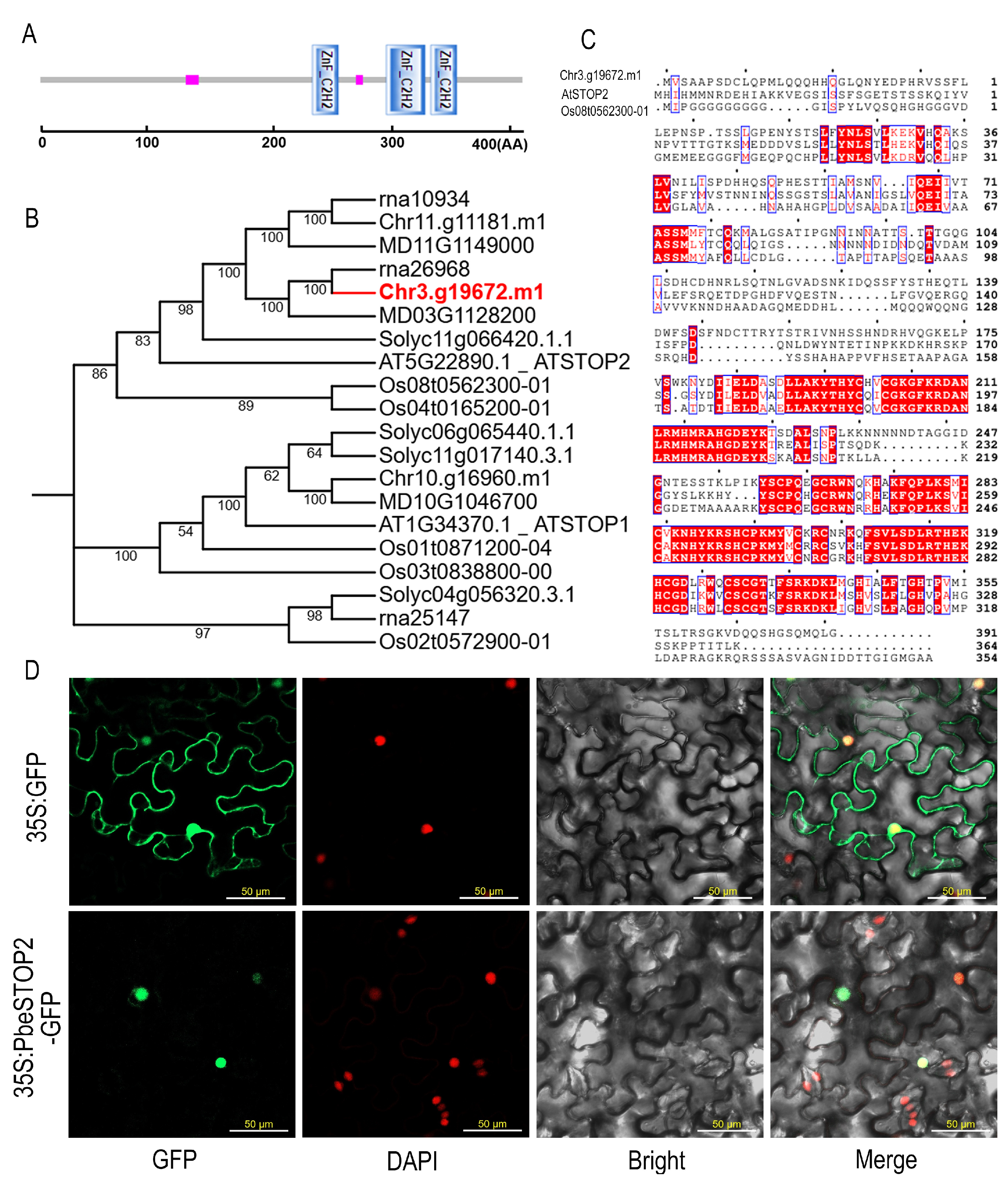
3.1. PbeSTOP2 Encoded a Typical C2H2-Type Zinc Finger Protein
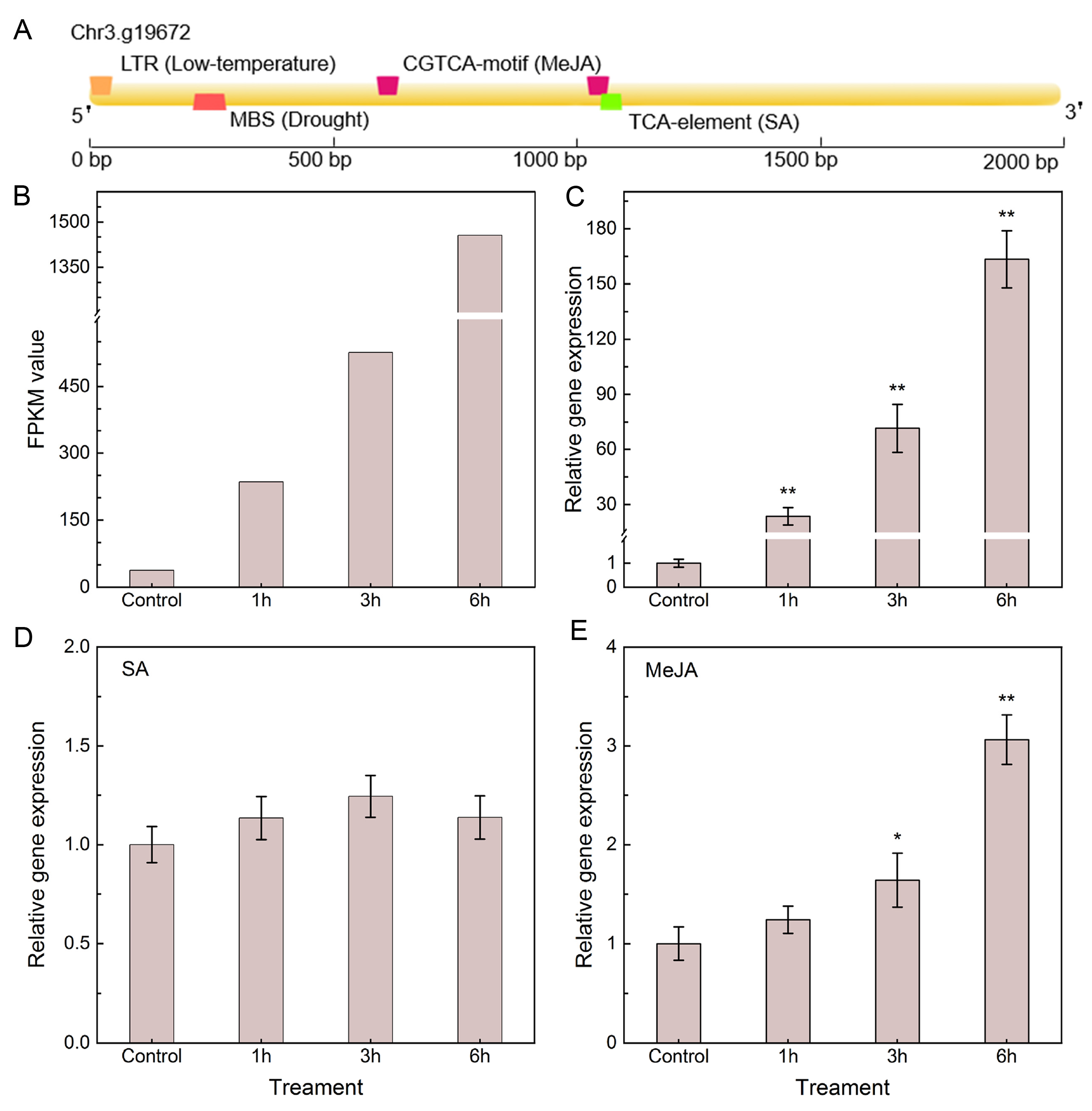
3.2. PbeSTOP2 Responded to Vp and Related Defense Signals
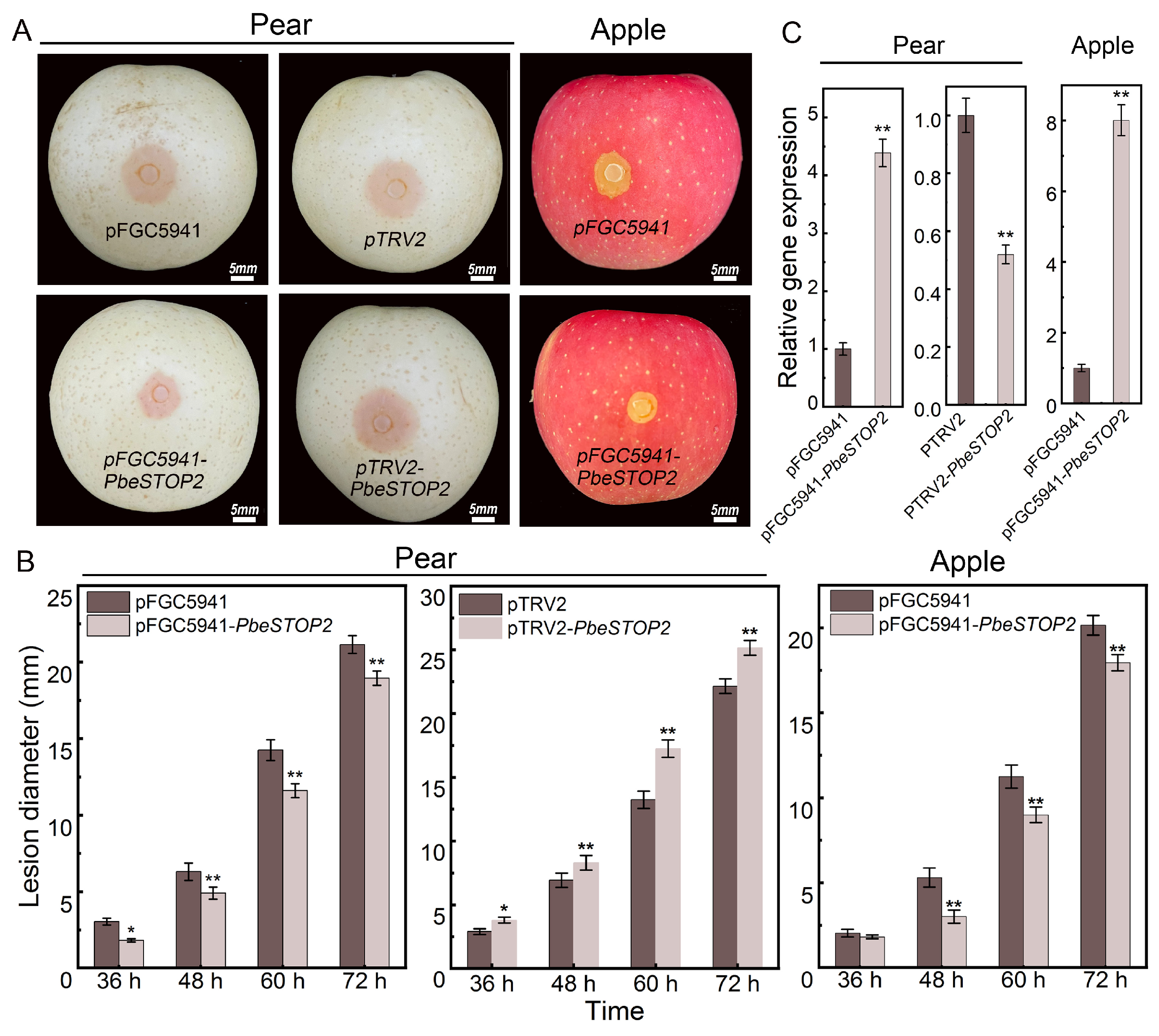
3.3. PbeSTOP2 Positively Regulates Valsa Canker Resistance of Apple and Pear Fruits
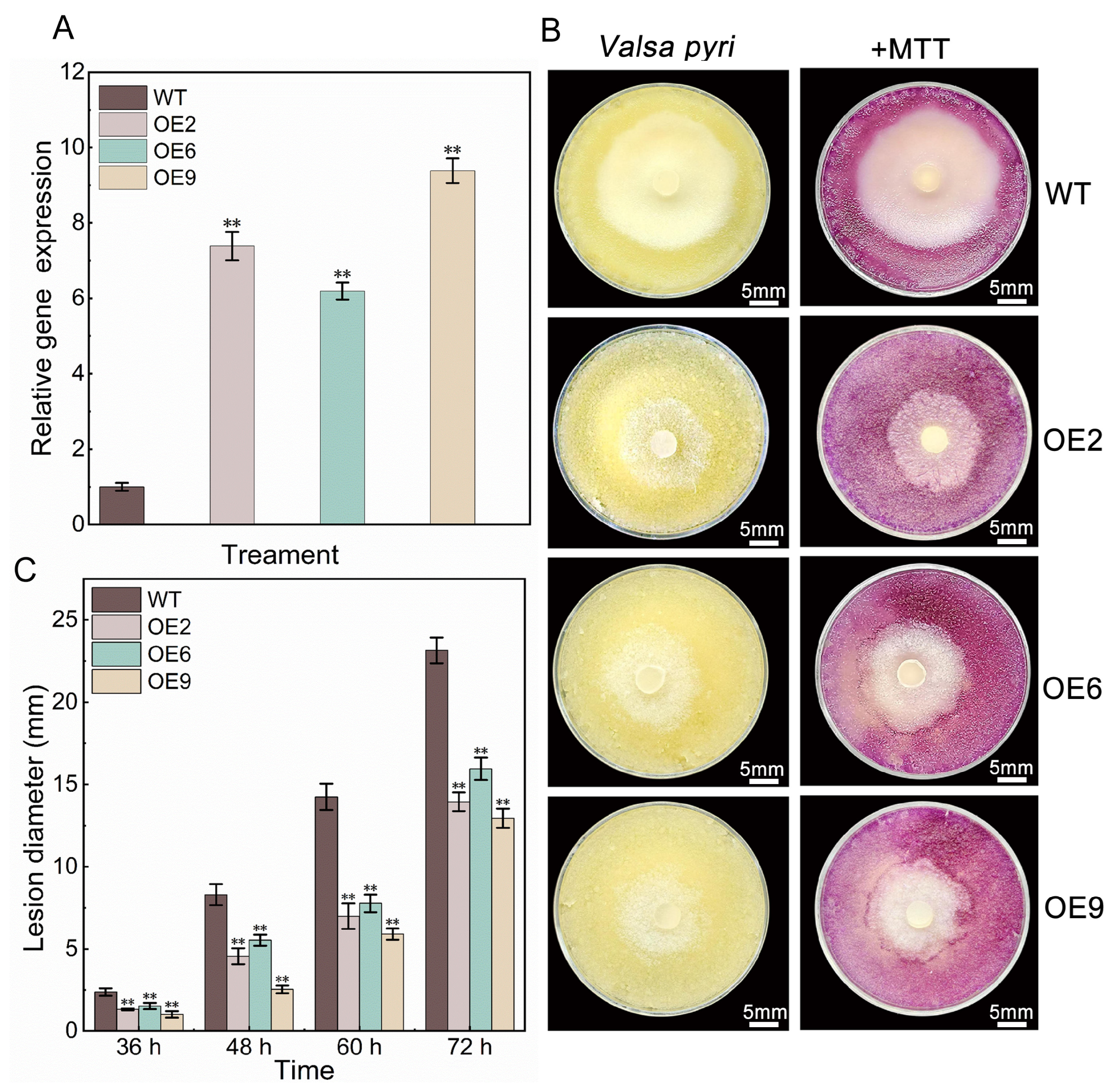
3.4. PbeSTOP2 Overexpression Enhanced Vp Resistance of ‘Duli-G03’ Suspension Cells
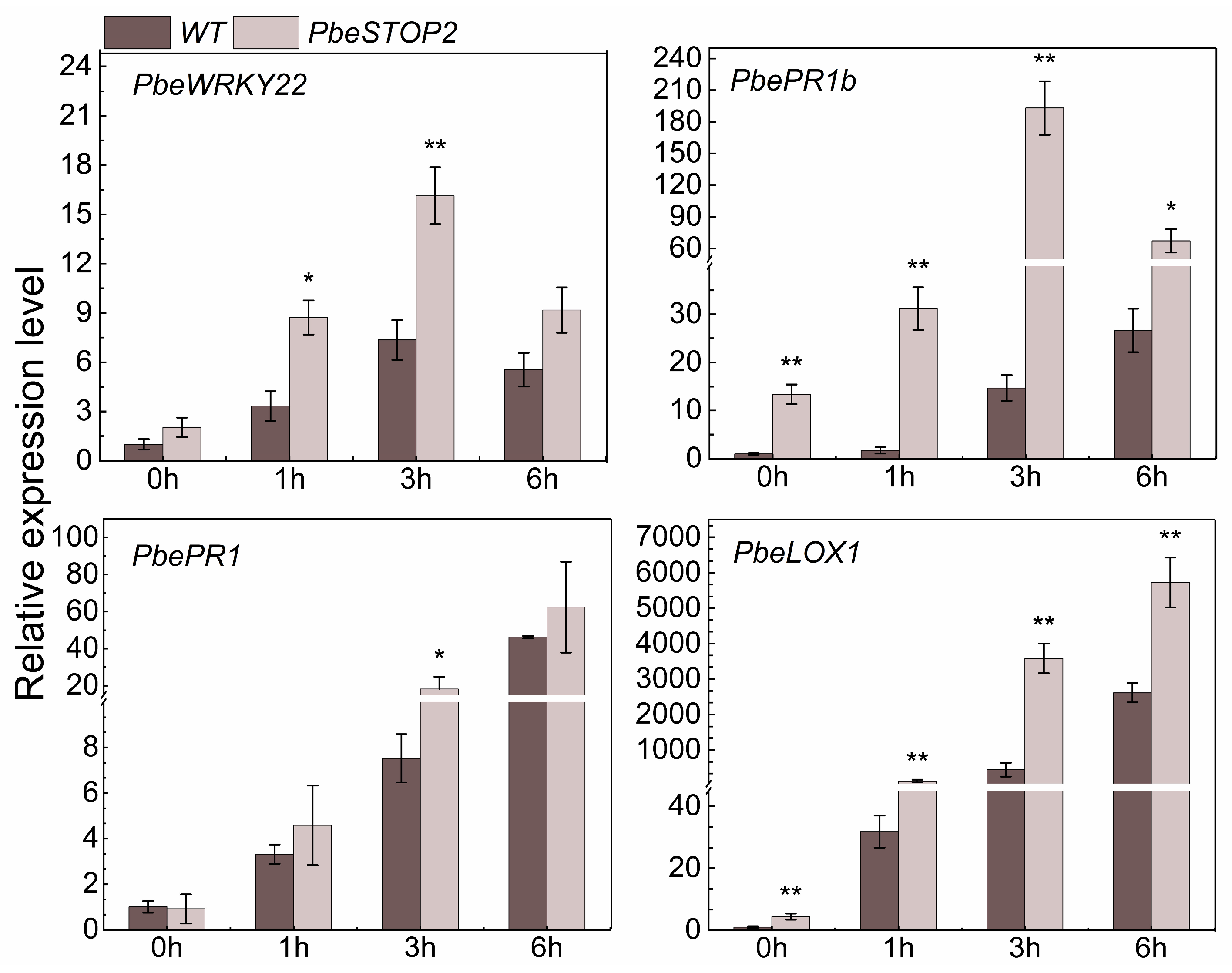
3.5. PbeSTOP2 Initiated Immune Responses
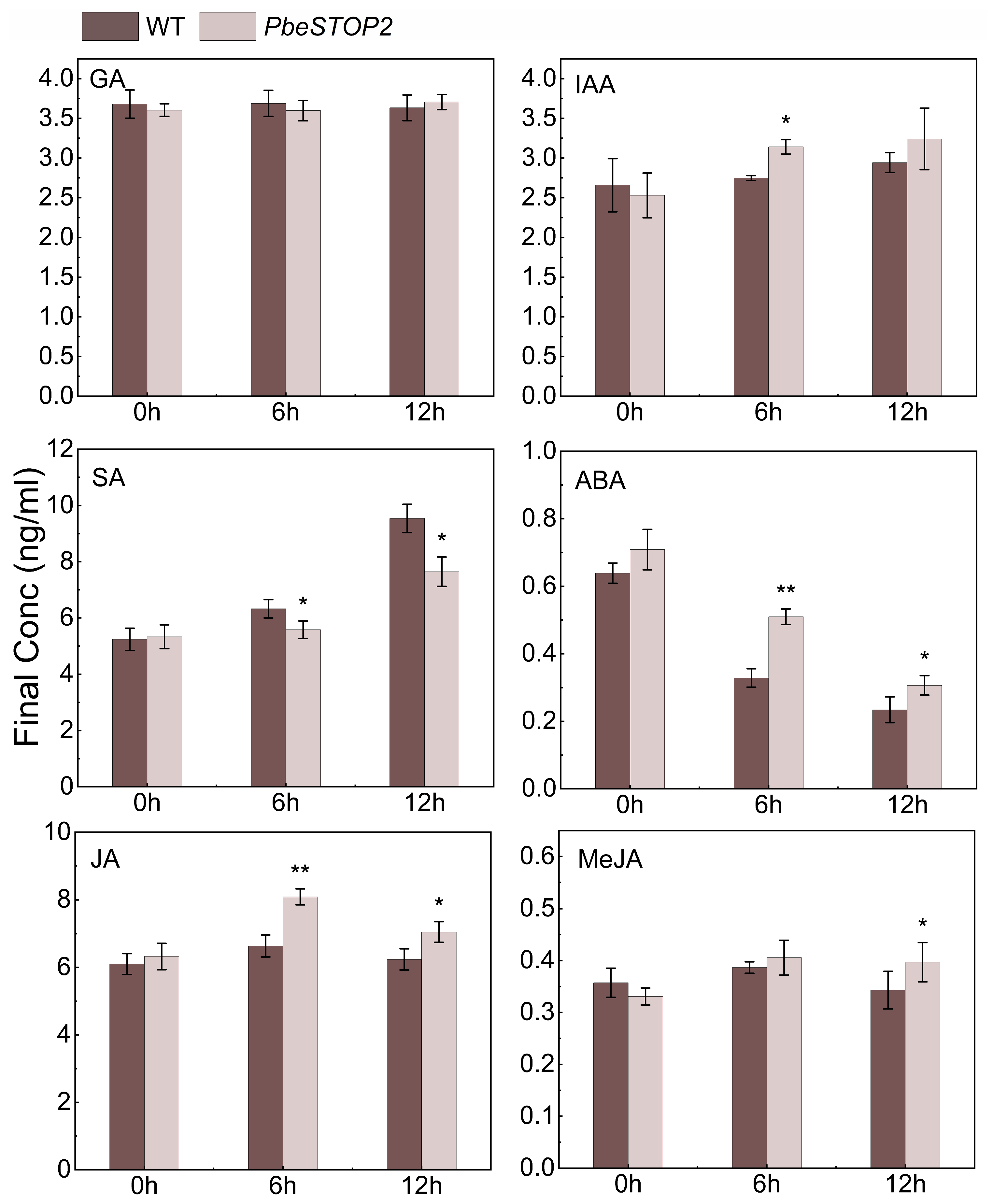
3.6. PbeSTOP2 Induced the Accumulation of Defense-Related Phytohormones
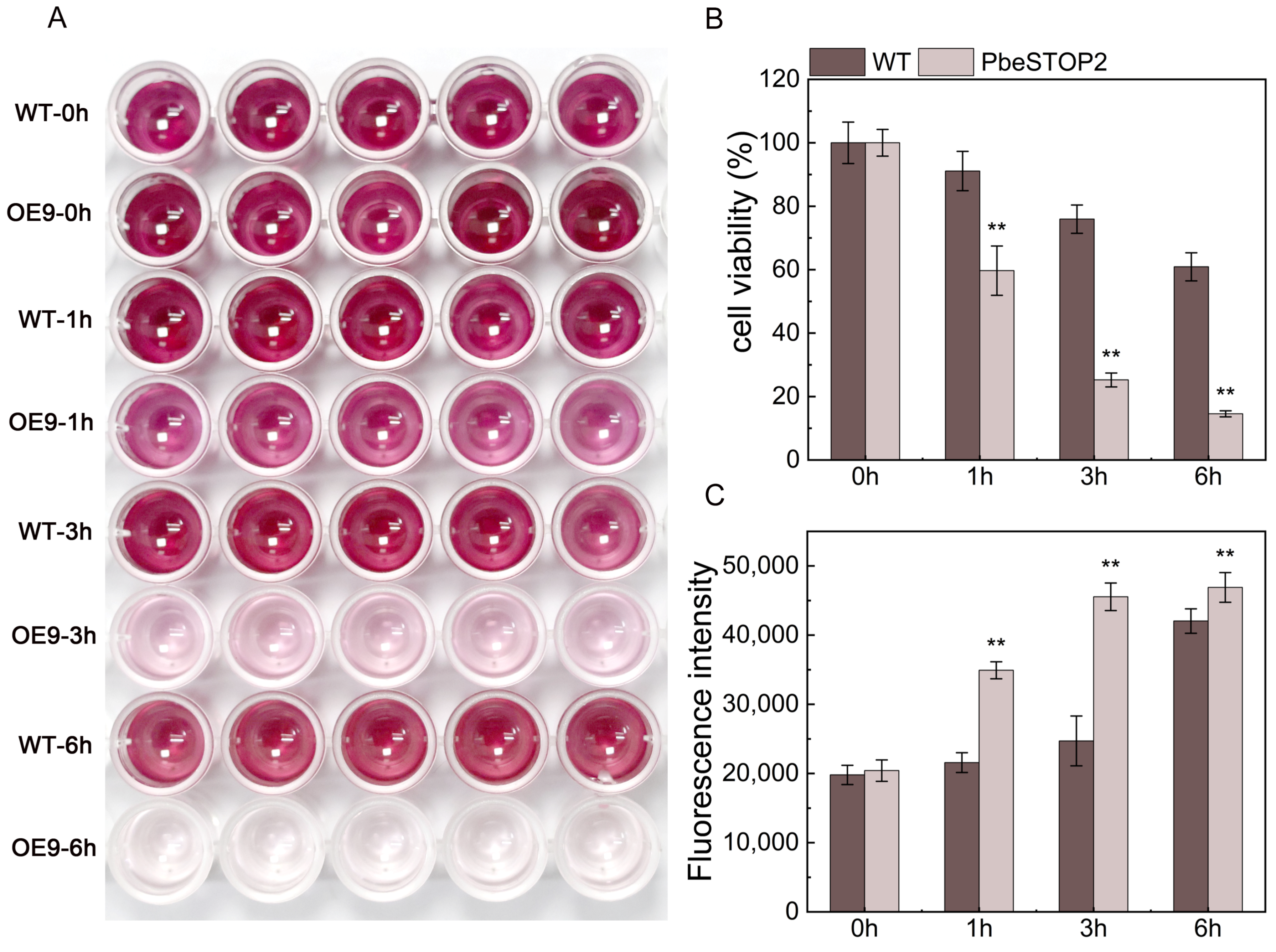
3.7. PbeSTOP2 Enhanced VpM Sensitivity and ROS Bursting of ‘Duli-G03’ Suspension Cells
4. Discussion
5. Conclusions
Supplementary Materials
Author Contributions
Funding
Institutional Review Board Statement
Informed Consent Statement
Data Availability Statement
Conflicts of Interest
References
- Meng, X.; Qi, X.; Han, Z.; Guo, Y.; Wang, Y.; Hu, T.; Wang, L.; Cao, K.; Wang, S. Latent Infection of Valsa mali in the Seeds, Seedlings and Twigs of Crabapple and Apple Trees is a Potential Inoculum Source of Valsa Canker. Sci. Rep. 2019, 9, 7738. [Google Scholar] [CrossRef]
- Liu, X.; Ao, K.; Yao, J.; Zhang, Y.; Li, X. Engineering plant disease resistance against biotrophic pathogens. Curr. Opin. Plant Biol. 2021, 60, 101987. [Google Scholar] [CrossRef]
- Boller, T.; Felix, G. A renaissance of elicitors: Perception of microbe-associated molecular patterns and danger signals by pattern-recognition receptors. Annu. Rev. Plant Biol. 2009, 60, 379–406. [Google Scholar] [CrossRef] [PubMed]
- Jones, J.; Dangl, J. The plant immune system. Nature 2006, 444, 323–329. [Google Scholar] [CrossRef] [PubMed]
- Aksimov, I.; Shein, M.; Burkhanova, G. RNA Interference in Plant Protection from Fungal and Oomycete Infection. Appl. Biochem. Microbiol. 2022, 58 (Suppl. 1), S16–S31. [Google Scholar] [CrossRef]
- Zhang, S.; Li, C.; Si, J.; Han, Z.; Chen, D. Action Mechanisms of Effectors in Plant-Pathogen Interaction. Int. J. Mol. Sci. 2022, 23, 6758. [Google Scholar] [CrossRef]
- Rushton, P.; Somssich, I. Transcriptional control of plant genes responsive to pathogens. Curr. Opin. Plant Biol. 1998, 1, 311–315. [Google Scholar] [CrossRef]
- Mitsuda, N.; Ohme-Takagi, M. Functional analysis of transcription factors in Arabidopsis. Plant Cell Physiol. 2009, 50, 1232–1248. [Google Scholar] [CrossRef] [PubMed]
- Riechmann, J.; Heard, J.; Martin, G.; Reuber, L.; Jiang, C.; Keddie, J.; Adam, L.; Pineda, O.; Ratcliffe, O.; Samaha, R.R.; et al. Arabidopsis transcription factors: Genome-wide comparative analysis among eukaryotes. Science 2000, 290, 2105–2110. [Google Scholar] [CrossRef]
- Englbrecht, C.; Schoof, H.; Böhm, S. Conservation, diversification and expansion of C2H2 zinc finger proteins in the Arabidopsis thaliana genome. BMC Genom. 2004, 5, 39. [Google Scholar] [CrossRef]
- Ciftci-Yilmaz, S.; Mittler, R. The zinc finger network of plants. Cell. Mol. Life Sci. 2008, 65, 1150–1160. [Google Scholar] [CrossRef]
- Takatsuji, H.; Mori, M.; Benfey, P.; Ren, L.; Chua, N. Characterization of a zinc finger DNA-binding protein expressed specifically in Petunia petals and seedlings. EMBO J. 1992, 11, 241–249. [Google Scholar] [CrossRef] [PubMed]
- Agarwal, P.; Arora, R.; Ray, S.; Singh, A.K.; Singh, V.P.; Takatsuji, H.; Kapoor, S.; Tyagi, A.K. Genome-wide identification of C2H2 zinc-finger gene family in rice and their phylogeny and expression analysis. Plant Mol. Biol. 2007, 65, 467–485. [Google Scholar] [CrossRef] [PubMed]
- Faraji, S.; Rasouli, S.H.; Kazemitabar, S.K. Genome-wide exploration of C2H2 zinc finger family in durum wheat (Triticum turgidum ssp. Durum): Insights into the roles in biological processes especially stress response. Biometals 2018, 31, 1019–1042. [Google Scholar] [CrossRef]
- Liu, Z.; Coulter, J.A.; Li, Y.; Zhang, X.; Meng, J.; Zhang, J.; Liu, Y. Genome-wide identification and analysis of the Q-type C2H2 gene family in potato (Solanum tuberosum L.). Int. J. Biol. Macromol. 2020, 153, 327–340. [Google Scholar] [CrossRef]
- Li, Y.; Chu, Z.; Luo, J.; Zhou, Y.; Cai, Y.; Lu, Y.; Xia, J.; Kuang, H.; Ye, Z.; Ouyang, B. The C2H2 zinc-finger protein SlZF3 regulates AsA synthesis and salt tolerance by interacting with CSN5B. Plant Biotechnol. J. 2018, 16, 1201–1213. [Google Scholar] [CrossRef]
- Hu, X.; Zhu, L.; Zhang, Y.; Xu, L.; Li, N.; Zhang, X.; Pan, Y. Genome-wide identification of C2H2 zinc-finger genes and their expression patterns under heat stress in tomato (Solanum lycopersicum L.). PeerJ 2019, 7, e7929. [Google Scholar] [CrossRef]
- Kim, S.H.; Hong, J.K.; Lee, S.C.; Sohn, K.H.; Jung, H.W.; Hwang, B.K. CAZFP1, Cys2/His2-type zinc-finger transcription factor gene functions as a pathogen-induced early-defense gene in Capsicum annuum. Plant Mol. Biol. 2004, 55, 883–904. [Google Scholar] [CrossRef]
- Luo, J.; Tang, Y.; Chu, Z.; Peng, Y.; Chen, J.; Yu, H.; Shi, C.; Jafar, J.; Chen, R.; Tang, Y.; et al. SlZF3 regulates tomato plant height by directly repressing SlGA20ox4 in the gibberellic acid biosynthesis pathway. Hortic Res. 2023, 10, uhad025. [Google Scholar] [CrossRef]
- Yang, K.; An, J.; Li, C.; Shen, X.; Liu, Y.; Wang, D.; Ji, X.; Hao, Y.; You, C. The apple C2H2-type zinc finger transcription factor MdZAT10 positively regulates JA-induced leaf senescence by interacting with MdBT2. Horticult Res. 2021, 8, 2191–2204. [Google Scholar] [CrossRef] [PubMed]
- Zhao, D.; Tian, Y.; Yu, H.; Mao, X.; Wang, C.; Duo, H.; Sun, E.; Zuo, C. Establishment of the “Valsa pyri metabolites (VpM)-suspension cell”-based system to study the response of pears to VpM. Physiol. Mol. Plant Pathol. 2022, 120, 101850. [Google Scholar] [CrossRef]
- Mao, X.; Wang, C.; Lv, Q.; Tian, Y.; Wang, D.; Chen, B.; Mao, J.; Li, W.; Chu, M.; Zuo, C. Cyclic nucleotide gated channel genes (CNGCs) in Rosaceae: Genome-wide annotation, evolution and the roles on Valsa canker resistance. Plant Cell Rep. 2021, 40, 2369–2382. [Google Scholar] [CrossRef]
- Duo, H.; Yu, H.; Sun, E.; Zhao, D.; Zuo, C. RNA sequencing reveals that cell wall, Ca2+, hypersensitive response and salicylic acid signals are involved in pear suspension cells responses to Valsa pyri infection. Sci. Hortic. 2022, 305, 111422. [Google Scholar] [CrossRef]
- Yu, H.; Sun, E.; Mao, X.; Chen, Z.; Xu, T.; Zuo, L.; Jiang, D.; Cao, Y.; Zuo, C. Evolutionary and functional analysis reveals the crucial roles of receptor-like proteins in resistance to Valsa canker in Rosaceae. J. Exp. Bot. 2023, 74, 162–177. [Google Scholar] [CrossRef]
- Zuo, C.; Mao, J.; Chen, Z.; Chu, M.; Duo, H.; Chen, B. RNA sequencing analysis provides new insights into dynamic molecular responses to Valsa mali pathogenicity in apple ‘Changfu No. 2’. Tree Genet Genomes 2018, 14, 75. [Google Scholar] [CrossRef]
- Sun, E.; Yu, H.; Chen, Z.; Cai, M.; Mao, X.; Li, Y.; Zuo, C. Enhanced Valsa canker resistance conferred by expression of MdLecRK-S.4.3 in Pyrus betulifolia is largely suppressed by PbePUB36. J. Exp. Bot. 2023, 74, 3998–4013. [Google Scholar] [CrossRef] [PubMed]
- Chou, K.; Shen, H. Plant-mPLoc: A top-down strategy to augment the power for predicting plant protein subcellular localization. PLoS ONE 2010, 5, e11335. [Google Scholar] [CrossRef] [PubMed]
- Pessina, S.; Pavan, S.; Catalano, D.; Gallotta, A.; Visser, R.; Bai, Y.; Malnoy, M.; Schouten, H. Characterization of the MLO gene family in Rosaceae and gene expression analysis in Malus domestica. BMC Genom. 2014, 15, 618. [Google Scholar] [CrossRef] [PubMed]
- Livak, K.; Schmittgen, T. Analysis of relative gene expression data using real-time quantitative PCR and the 2−ΔΔCT Method. Methods 2001, 25, 402–408. [Google Scholar] [CrossRef]
- Pan, X.; Welti, R.; Wang, X. Quantitative analysis of major plant hormones in crude plant extracts by high-performance liquid chromatography-mass spectrometry. Nat. Protoc. 2010, 5, 986–992. [Google Scholar] [CrossRef]
- Sun, Y.; Qiao, Z.; Muchero, W.; Chen, J. Lectin receptor-like kinases: The sensor and mediator at the plant cell surface. Front. Plant Sci. 2020, 11, 596301. [Google Scholar] [CrossRef] [PubMed]
- Zhang, C.; Chen, H.; Zhuang, R.R.; Chen, Y.; Deng, Y.; Cai, T.; Wang, S.; Liu, Q.; Tang, R.; Shan, S.; et al. Overexpression of the peanut CLAVATA1-like leucine-rich repeat receptor-like kinase AhRLK1 confers increased resistance to bacterial wilt in tobacco. J. Exp. Bot. 2019, 70, 5407–5421. [Google Scholar] [CrossRef]
- Hall, T.M. Multiple modes of RNA recognition by zinc finger proteins. Curr. Opin. Struct. Biol. 2005, 15, 367–373. [Google Scholar] [CrossRef]
- Kiełbowicz-Matuk, A. Involvement of plant C2H2-type zinc finger transcription factors in stress responses. Plant Sci. 2012, 185, 78–85. [Google Scholar] [CrossRef]
- Lee, H.; Guo, Y.; Ohta, M.; Xiong, L.; Stevenson, B.; Zhu, J. LOS2, a genetic locus required for cold-responsive gene transcription encodes a bi-functional enolase. EMBO J. 2002, 21, 2692–2702. [Google Scholar] [CrossRef]
- Chinnusamy, V.; Zhu, J.; Sunkar, R. Gene regulation during cold stress acclimation in plants. Plant Stress Tolerance 2010, 639, 39–55. [Google Scholar] [CrossRef]
- Wu, S.; Shan, L.; He, P. Microbial signature-triggered plant defense responses and early signaling mechanisms. Plant Sci. 2014, 228, 118–126. [Google Scholar] [CrossRef]
- Qi, J.; Wang, J.; Gong, Z.; Zhou, J. Apoplastic ROS signaling in plant immunity. Curr. Opin. Plant Biol. 2017, 38, 92–100. [Google Scholar] [CrossRef]
- Yuan, M.; Jiang, Z.; Bi, G.; Nomura, K.; Liu, M.; Wang, Y.; Cai, B.; Zhou, J.; He, S.; Xin, X. Pattern-recognition receptors are required for NLR-mediated plant immunity. Nature 2021, 592, 105–109. [Google Scholar] [CrossRef]
- Kadota, Y.; Liebrand, T.W.; Goto, Y.; Sklenar, J.; Derbyshire, P.; Menke, F.L.; Torres, M.; Molina, A.; Zipfel, C.; Coaker, G.; et al. Quantitative phosphor proteomic analysis reveals common regulatory mechanisms between effector-and PAMP-triggered immunity in plants. New Phytol. 2019, 221, 2160–2175. [Google Scholar] [CrossRef] [PubMed]
- Zurbriggen, M.D.; Carrillo, N.; Hajirezaei, M.R. ROS signaling in the hypersensitive response: When, where and what for? Plant Signal. Behavior. 2010, 5, 393–396. [Google Scholar] [CrossRef]
- Bassham, D.C.; Laporte, M.; Marty, F.; Moriyasu, Y.; Ohsumi, Y.; Olsen, L.J.; Yoshimoto, K. Autophagy in development and stress responses of plants. Autophagy 2005, 2, 2–11. [Google Scholar] [CrossRef]
- Yoshimoto, K.; Jikumaru, Y.; Kamiya, Y.; Kusano, M.; Consonni, C.; Panstruga, R.; Ohsumi, Y.; Shirasu, K. Autophagy negatively regulates cell death by controlling NPR1-dependent salicylic acid signaling during senescence and the innate immune response in Arabidopsis. Plant Cell. 2009, 21, 2914–2927. [Google Scholar] [CrossRef]
- Liu, Y.; Schiff, M.; Czymmek, K.; Tallóczy, Z.; Levine, B.; Dinesh-Kumar, S.P. Autophagy regulates programmed cell death during the plant innate immune response. Cell 2005, 121, 567–577. [Google Scholar] [CrossRef]
- Pieterse, C.M.; Does, D.V.; Zamioudis, C.; Leon-Reyes, A.; Wees, S.C. Hormonal modulation of plant immunity. Annu. Rev. Cell. Dev. Biol. 2012, 28, 489–521. [Google Scholar] [CrossRef] [PubMed]
- Kazan, K.; Manners, J.M. Jasmonate signaling: Toward an integrated view. Plant Physiol. 2008, 146, 1459–1468. [Google Scholar] [CrossRef]
- Mengiste, T. Plant immunity to necrotrophs. Annu. Rev. Phytopathol. 2012, 50, 267–294. [Google Scholar] [CrossRef] [PubMed]
- Tsuda, K.; Sato, M.; Stoddard, T.; Glazebrook, J.; Katagiri, F. Network properties of robust immunity in plants. PLoS Genet 2009, 5, e1000772. [Google Scholar] [CrossRef] [PubMed]
- Liu, L.; Sonbol, F.M.; Huot, B.; Gu, Y.; Withers, J.; Mwimba, M.; Yao, J.; He, S.; Dong, X. Salicylic acid receptors activate jasmonic acid signalling through a non-canonical pathway to promote effector-triggered immunity. Nat. Commun. 2016, 7, 13099. [Google Scholar] [CrossRef]
- Rodriguez, M.C.S.; Petersen, M.; Mundy, J.; Cristina, M.; Petersen, M.; Mundy, J. Mitogen-activated protein kinase signaling in plants. Annu. Rev. Plant Biol. 2010, 61, 621–649. [Google Scholar] [CrossRef]
- Fang, X.; Chai, W.; Li, S.; Zhang, L.; Yu, H.; Shen, J.; Xiao, W.; Liu, A.; Zhou, B.; Zhang, X. HSP17.4 mediates salicylic acid and jasmonic acid pathways in the regulation of resistance to Colletotrichum gloeosporioides in strawberry. Mol. Plant Pathol. 2021, 22, 817–828. [Google Scholar] [CrossRef]
- Hickman, R.; Mendes, M.P.; Verk, M.C.; Dijken, A.J.H.; Sora, J.D.; Denby, K.; Denby, K.; Pieterse, C.M.J.; Wees, S.C.M. Transcriptional dynamics of the salicylic acid response and its interplay with the jasmonic acid pathway. BioRxiv 2019. BioRxiv:742742. [Google Scholar] [CrossRef]
- Qi, L.; Yan, J.; Li, Y.; Jiang, H.; Sun, J.; Chen, Q.; Li, H.; Chu, J.; Yan, C.; Sun, X.; et al. Arabidopsis thaliana plants differentially modulate auxin biosynthesis and transport during defense responses to the necrotrophic pathogen Alternaria brassicicola. New Phytol. 2012, 195, 872–882. [Google Scholar] [CrossRef]
- Ton, J.; Flors, V.; Mauch-Mani, B. The multifaceted role of ABA in disease resistance. Trends Plant Sci. 2009, 14, 310–317. [Google Scholar] [CrossRef]
- Yin, Z.; Ke, X.; Kang, Z.; Huang, L. Apple resistance responses against Valsa mali revealed by transcriptomics analyses. Physiol. Mol. Plant Pathol. 2016, 93, 85–92. [Google Scholar] [CrossRef]
- Melotto, M.; Underwood, W.; Koczan, J.; Nomura, K.; He, S. Plant stomata function in innate immunity against bacterial invasion. Cell 2006, 126, 969–980. [Google Scholar] [CrossRef] [PubMed]
- Asselbergh, B.; Curvers, K.; França, S.C.; Audenaert, K.; Vuylsteke, M.; Breusegem, F.V.; Höfte, M. Resistance to Botrytis cinerea in sitiens, an abscisic acid-deficient tomato mutant, involves timely production of hydrogen peroxide and cell wall modifications in the epidermis. Plant Physiol. 2007, 144, 1863–1877. [Google Scholar] [CrossRef]
- Lorenzo, O.; Piqueras, R.; Sánchez-Serrano, J.J.; Solano, R. ETHYLENE RESPONSE FACTOR1 integrates signals from ethylene and jasmonate pathways in plant defense. Plant Cell 2003, 15, 165–178. [Google Scholar] [CrossRef]
- Lorenzo, O.; Chico, J.M.; Saénchez-Serrano, J.J.; Solano, R. JASMONATE-INSENSITIVE1 encodes a MYC transcription factor essential to discriminate between different jasmonate-regulated defense responses in Arabidopsis. Plant Cell 2004, 16, 1938–1950. [Google Scholar] [CrossRef] [PubMed]
- Llorente, F.; Muskett, P.; Sánchez-Vallet, A.; López, G.; Ramos, B.; Sánchez-Rodríguez, C.; Jordá, L.; Parker, J.; Molina, A. Repression of the auxin response pathway increases Arabidopsis susceptibility to necrotrophic fungi. Mol. Plant 2008, 1, 496–509. [Google Scholar] [CrossRef]



| Application | Gene Name | Gene Accession | Forward Primer | Reverse Prime |
|---|---|---|---|---|
| PCR | PbeSTOP2 | Chr3.g19672 | GCGGCGCGCCATGGTTTCTGCGGCCCCATCTGATT | GCCCTAGGTCATCCCAATTGCATTTGCGATCCA |
| qRT-PCR | PbeSTOP2 | Chr3.g19672 | CGTCACGGCTTCTTCGATGA | TATCAGCGACGCCAAGGTTT |
| Reference genes | β-Tubulinc | Chr3.g20215 | TTCAGATACTGTTGTGGAGCCTTAC | AGTAACTCCAGACATTGTTGCAGAG |
| VIGS | PbeSTOP2 | Chr3.g19672 | CAACGCGTGTTTCTGCGGCCCCATCTGATTGT | GACCCCCGCATCCAAGAAGCCGTGACCATGAT |
| PTI | PbeWRK22 | Chr7.g33338 | CATATCCAAGGGGATATTACAGATG | GTGACTATAAAAATATTCGGGTCGG |
| JA | PbePR1b | Chr5.g08127 | GACACACCCCAAGACTACCTCAAG | GTCACCAGTGCTCATGGCAAG |
| JA | PbeLOX1 | Chr4.g40498 | GCTTATGTGGCTGTAAATGACTCTG | GAGGATGCAGAAGTTTGTAAATTGG |
| SA | PbeRP1 | Chr5.g08131 | AATCTTGTTCATTTTGGTGGGCC | AACAACCTGAGTATAATGCCCACAC |
Disclaimer/Publisher’s Note: The statements, opinions and data contained in all publications are solely those of the individual author(s) and contributor(s) and not of MDPI and/or the editor(s). MDPI and/or the editor(s) disclaim responsibility for any injury to people or property resulting from any ideas, methods, instructions or products referred to in the content. |
© 2025 by the authors. Licensee MDPI, Basel, Switzerland. This article is an open access article distributed under the terms and conditions of the Creative Commons Attribution (CC BY) license.
Share and Cite
Zuo, L.; Liu, Z.; Sun, E.; Lu, Y.; Cai, M.; Yu, H.; Zhao, J.; Zuo, C. Jasmonic Acid Signals Involved in Valsa Canker Resistance Caused by C2H2-Type Transcription Factor PbeSTOP2 in Pyrus betulifolia. Curr. Issues Mol. Biol. 2026, 48, 14. https://doi.org/10.3390/cimb48010014
Zuo L, Liu Z, Sun E, Lu Y, Cai M, Yu H, Zhao J, Zuo C. Jasmonic Acid Signals Involved in Valsa Canker Resistance Caused by C2H2-Type Transcription Factor PbeSTOP2 in Pyrus betulifolia. Current Issues in Molecular Biology. 2026; 48(1):14. https://doi.org/10.3390/cimb48010014
Chicago/Turabian StyleZuo, Longgang, Zhihong Liu, E Sun, Yuan Lu, Minrui Cai, Hongqiang Yu, Junying Zhao, and Cunwu Zuo. 2026. "Jasmonic Acid Signals Involved in Valsa Canker Resistance Caused by C2H2-Type Transcription Factor PbeSTOP2 in Pyrus betulifolia" Current Issues in Molecular Biology 48, no. 1: 14. https://doi.org/10.3390/cimb48010014
APA StyleZuo, L., Liu, Z., Sun, E., Lu, Y., Cai, M., Yu, H., Zhao, J., & Zuo, C. (2026). Jasmonic Acid Signals Involved in Valsa Canker Resistance Caused by C2H2-Type Transcription Factor PbeSTOP2 in Pyrus betulifolia. Current Issues in Molecular Biology, 48(1), 14. https://doi.org/10.3390/cimb48010014