2. System Model and Problem Formulation
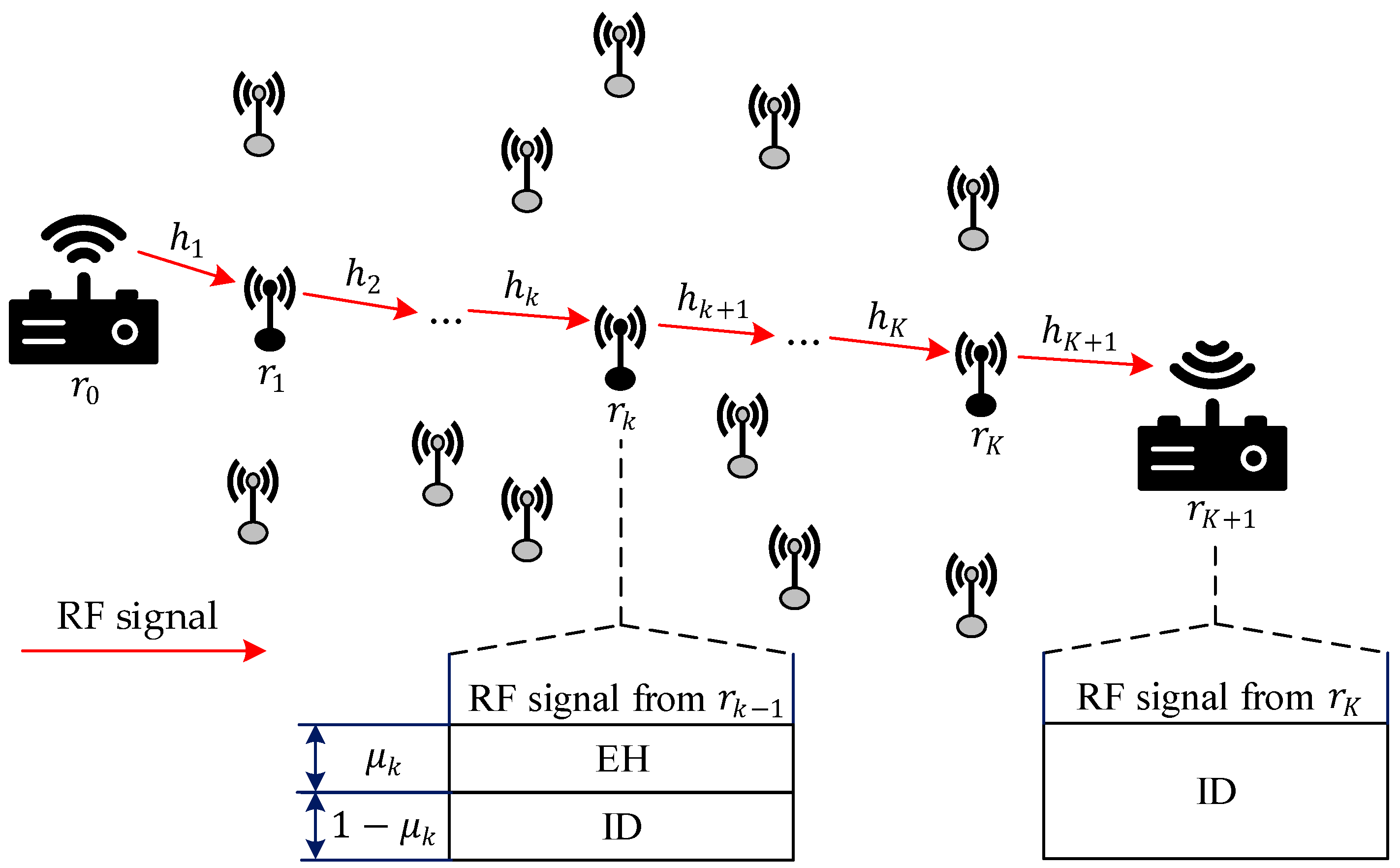
Table 2 lists the main symbols used in this paper. In this section, we first introduce the considered multi-hop relaying communication network model, as shown in
Figure 1. In this network, we denote the source node as
, which forwards information hop-by-hop through the relays in the set
to the destination node
. It is assumed that the source node is powered by an internal battery or an external power supply, while all the relays operate in a passive state. Specifically, relay
,
, employs the SWIPT technology to harvest energy from the RF signals of its previous-hop neighboring node. Using the PS protocol, it simultaneously decodes and forwards data packets to the next-hop neighboring node. Denoting the PS ratio as
(Practical power splitters have finite resolution and dynamic range constraints. Although we assume ideal PS ratios in
, our closed-form solutions, e.g., Equation (36), can be adapted to discrete values in real devices), the RF signal at relay
is divided into two streams: a portion,
, is used for EH, and the remaining portion
is used for ID. Furthermore, we assume that all nodes are equipped with a single antenna and operate in half-duplex mode, meaning that a relay node forwards data only after completing the reception of information. The channel coefficient between nodes
and
is denoted as
,
, and it remains constant during the time period (transmission frame) when data is transmitted from one node to the next adjacent node.
In this paper, the channel coefficients
for each hop are assumed to be independent and identically distributed (i.i.d.) to ensure analytical tractability and facilitate the derivation of closed-form solutions. This assumption is common in foundational studies of multi-hop SWIPT systems [
23,
25] as it decouples the per-hop resource allocation problems. However, we acknowledge that in practical deployments, especially in industrial WSNs with dense node layouts or shared propagation paths, channels may exhibit spatial or temporal correlation due to factors like limited scattering or common obstacles. Such a correlation could alter the joint statistics of the channel gains
and potentially affect the optimal PS ratio distribution across relays. The investigation of correlated channel models and their impact on resource allocation is identified as an important direction for future work.
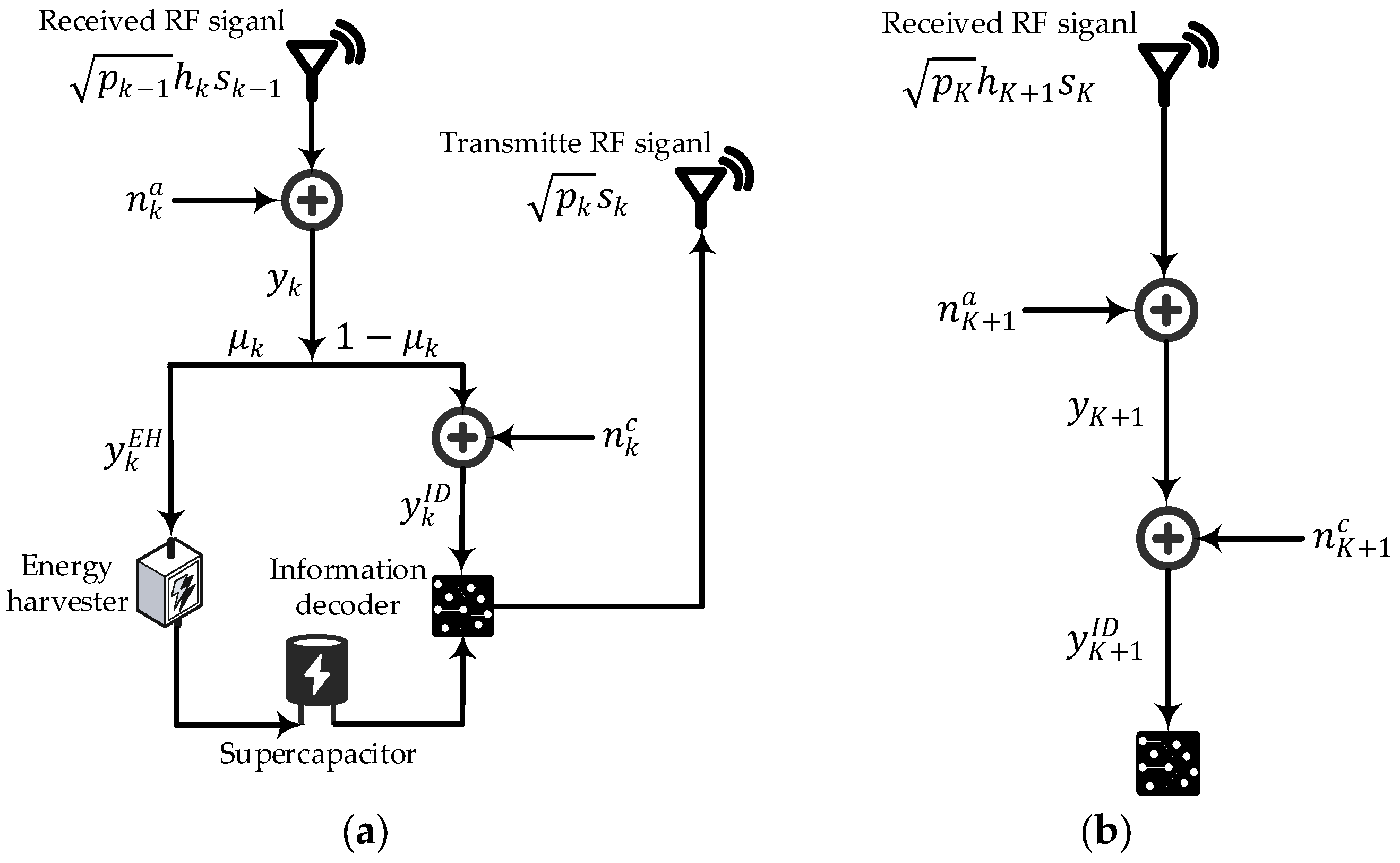
Figure 2 illustrates the signal processing flow at the relay and destination nodes in our multi-hop DF relay network model. As shown, the relay node
,
, harvests energy from the
portion of the received RF signal via an EH circuit and stores it in a supercapacitor. All harvested energy is utilized for ID and retransmission. This paper assumes that the source node
possesses the channel state information (CSI) of all nodes, while each relay node
and the destination node
only have CSI of their corresponding communication channels, i.e.,
,
and
. It is assumed that direct links exist only between adjacent nodes. For example, there is no direct communication link between
and
. Numerous sensor network routing algorithms support this assumption [
20,
31,
32].
The RF signal received at node
,
, from the previous-hop neighboring node
is
where
denotes the information symbol from the previous-hop neighboring node
, with each symbol having unit average power, i.e.,
.
denotes the transmit power of
. As shown in
Figure 2a,
represents the additive white Gaussian noise (AWGN) introduced at the antenna of node
, which follows the distribution
.
is the total power of
.
As shown in
Figure 1 and
Figure 2a, the received RF signal at relay node
,
, is then split into two streams according to the PS ratio
, for EH and ID, respectively. The signal for EH can be expressed as
The signal for ID at relay node
can be expressed as
where
is the AWGN introduced by the ID circuit of node
, which follows the distribution
.
is the total power of
.
We assume that all the harvested energy is used for ID and data retransmission. Thus, according to Equation (2), the transmit power of node
,
, can be derived as
where
represents the constant rectification efficiency factor at relay node
. This equation employs a linear EH model, where the harvested power is directly proportional to the received RF power, a common assumption in the initial theoretical analysis of SWIPT systems [
8].
A more comprehensive discussion of EH models is warranted. While the linear model offers mathematical tractability, which is beneficial for deriving the fundamental closed-form solutions presented in this work, practical EH circuits exhibit non-linear characteristics. These non-linear models account for the saturation effect of the diodes in the rectifying circuit, where the harvested power plateaus when the input power exceeds a certain threshold, and the sensitivity effect, where EH only initiates once the input power surpasses a minimum activation level. Recent literature has extensively explored such practical non-linear EH models to capture more realistic system behaviors [
33,
34]. The linear model can be viewed as a special case of these non-linear models within a specific operating range where the input power is neither too low to cause sensitivity issues nor too high to trigger saturation. The primary focus of this paper is to establish the optimal resource allocation framework and derive the foundational closed-form solutions for the multi-hop DF relay network. The investigation of the proposed schemes under more complex and practical non-linear EH models, which introduce additional constraints and non-convexities, is a highly relevant and necessary direction for future work, as discussed in
Section 5.
Since
, we further obtain
where
represents the channel gain between nodes
and
;
denotes the transmit power of the source node
.
According to (3) and
, the received signal-to-noise ratio (SNR) at relay
can be expressed as
In the PS-based SWIPT system, the additive noise at the antenna is generally much smaller than that introduced by the ID circuit [
35,
36]. Therefore, with
, we further obtain
where
.
Similarly, based on (3), (5) and
, the received SNR at relay
,
, is expressed as
where
.
As shown in
Figure 1 and
Figure 2b, since the destination node
performs ID only without EH, the signal for ID at node
can be expressed as
The received SNR at node
is given by
where
.
Since we obtained the SNR
for
, the achievable rate for the
-th hop can be expressed as
where
denotes the transmission bandwidth.
Having experienced
hops, which means that the information transmission from the source node to the destination node requires
frames, the end-to-end throughput of our multi-hop DF relay network can be expressed as
In WSNs, given hardware costs, many sensor nodes transmit signals at a predetermined, constant power when the communication environment is stable and straightforward [
37,
38]. Thus, in this paper, the first problem we aim to address is to maximize the system throughput by optimizing the PS ratio
of each relay under a given source node transmit power
. This optimization problem can be formulated as
Moreover, in WSNs, minimizing transmit power while ensuring QoS is essential for extending network lifetime and achieving green communication [
39]. In this paper, we use the achievable rate as the metric for QoS. Therefore, the second problem we aim to solve is to minimize the source node transmit power
by jointly optimizing the PS ratio
of each relay and the source node transmit power
, under the constraint that the system throughput is no less than the required minimum achievable rate threshold. The corresponding second optimization problem is formulated as follows:
where
and
represent the minimum and maximum transmit power of the source node
, respectively, and
denotes the minimum achievable rate threshold of the system.
3. Multi-Hop Relaying Joint Optimization
This section addresses the STM problem under a given source node transmit power, i.e., (13), in
Section 3.1, and the SPM problem under a given minimum QoS requirement, i.e., (14), in
Section 3.2, respectively. Additionally, we discuss the real-world implementation of our proposed solutions to the aforementioned two problems.
3.1. System Throughput Maximization
First, Problem (13) is non-convex with respect to the variables
. This can be demonstrated by computing and analyzing the Hessian matrix of
. However, due to the complexity of the computational process, we omit it in this paper. In standard convex optimization problems, since any local minimum is also the global minimum, and the optimal solution can be easily found using methods such as Lagrangian duality [
40,
41], in this subsection, we first attempt to transform Problem (13) into a standard convex optimization problem. To overcome the non-differentiability of
in (13a), we introduce an auxiliary variable
, transforming the complex min–max problem into a standard constrained optimization problem as follows.
where
,
.
Let
and
. After taking the exponential, rearranging terms, and taking the logarithm of (15b), (15c), and (15d), we obtain
The transformed problem (16) is a convex optimization problem, as proved below.
Proposition 1. Problem (16) is a convex optimization problem.
Proof of Proposition 1. Since
is a linear function and linear functions are both convex and concave, the objective function is convex. (16e) is a convex set. Therefore, to prove that problem (16) is a convex problem, it suffices to show that the corresponding functions below for constraints (16b–d) are convex.
Define the auxiliary function . Its second derivative is . Therefore, is a convex function. Moreover, since is a linear term and is a constant, then is the sum of convex functions and is also a convex function.
Define the auxiliary function . Its second derivative is . Therefore, is a convex function. Similarly, both and are sums of convex functions and are thus also convex functions.
Therefore, (16) is a convex problem. □
Thus, the optimal solution to problem (16) satisfies the Karush–Kuhn–Tucker (KKT) conditions, and if and only if Slater’s condition holds, the KKT point is the global optimum. That is, at the optimal solution, constraints (16b–d) must be tight (i.e., equality holds) [
40,
41]. By setting (16b–d) equal and making slight rearrangements, we obtain
The solution for , , can be given in the following three cases.
Case 1: The expression for .
By solving the case for
in Equations (21) and (22) simultaneously, we obtain
After rearrangement, we obtain
Case 2: The expression for , .
By simultaneously solving the cases for
and
in Equation (21), we obtain
After rearrangement, we obtain
Case 3: The expression for .
By simultaneously solving Equation (20) and the case of
in Equation (21), we can obtain
After rearrangement, we obtain
To find the optimal PS ratios , we introduce the reciprocal variables , yielding the following:
For
, we have
Define
, then the recurrence relation of Equation (30) also holds for
, and Equations (29) and (30) can be unified as
Next, we prove the following proposition:
Proposition 2. The closed-form expression for is Proof of Proposition 2. First, it is straightforward to verify the case when
as follows:
Assume that
holds. According to the recurrence relation (31), we have
Therefore, by mathematical induction, we can prove that (32) holds. □
According to (35),
and
, we can obtain the closed-form solution for the optimal PS combination that maximizes the system throughput under a given source node transmit power as follows:
3.2. Source Power Minimization
Similar to Problem (13), due to the presence of
in constraint (14d), Problem (14) is also a non-convex optimization problem with respect to the decision variables
and
. We first simplify constraint (14d) and arrive at
Combining with Equation (11), we can further obtain
By combining Equations (7), (8) and (10), Constraint (14d) can be written separately as
where
,
.
Taking the logarithm on both sides of inequalities (39)–(41), Problem (14) can be equivalently transformed into
This transformed problem can be proven to be a convex optimization problem as follows:
Proposition 3. Problem (42) is a convex optimization problem.
Proof of Proposition 3. First, the objective function
is a linear function and is therefore convex. Second, the constraints (42b) and (42c) are linear inequalities, which define convex sets. Consequently, we only need to prove that the following functions corresponding to constraints (42d–f) are convex.
Since we have already demonstrated in the proof of Proposition 1 that the auxiliary functions and are convex, it follows that , , , , and are all convex functions. The functions , where , are sums of constants and these convex functions, and thus, are also convex.
In summary, all constraints define convex sets, and the objective function is convex. Therefore, (42) is a convex optimization problem. □
Since the problem (42) is a convex optimization problem, it can be solved via the KKT conditions. Boundary constraints (42b) and (42c) are treated as the domain of the variables and are not active. If they are not active, then constraints (42d–f) are tight (i.e., they hold with equality) at the optimal solution [
40,
41]. By setting (42d–f) equal and making slight rearrangements, we obtain
The solution for , , can be given in the following three cases.
Case 1: The expression for .
By solving the case for
in Equations (47) and (48) simultaneously, we can obtain
After rearrangement, we obtain
Case 2: The expression for , .
By simultaneously solving the cases for
and
in Equation (47), we obtain
After rearrangement, we obtain
Case 3: The expression for .
By simultaneously solving Equation (46) and the case of
in Equation (47), we can obtain
After rearrangement, we obtain
Equations (50), (52) and (54) can be unified as
Similar to Proposition 2, we can prove the following proposition.
Proposition 4. The closed-form expression for is Proof of Proposition 4. We first verify the case when
as follows:
Clearly, (57) is consistent with (55). Assume that
holds. Substituting (58) into the recurrence relation (55), we obtain
Therefore, we prove that (56) holds. □
Now, we proceed to derive the closed-form expression for
. First, we add Equations (46)–(48) to obtain
Let
. Expanding the last two terms of
, we have
This is a telescoping sum, where all the intermediate terms cancel each other out, resulting in
. Therefore, we obtain
Equations (56) and (62) provide the closed-form optimal solutions for and , respectively, derived without accounting for the linear constraints (42b) and (42c). According to (56), it is evident that the solution for satisfies constraint (42b).
Now, consider the scenario where the boundary constraint (42c) is activated, and discuss it in three cases:
Case 1: .
In this case, the unbounded solution violates the lower-bound constraint
. Therefore, the optimal solution should be set to
. At this point,
is chosen according to Equation (36) to yield the solution that maximizes the system throughput. Note that (36) is consistent with (56). Thus, the optimal solution is
Case 2: .
In this case, the unbounded solution violates the upper-bound constraint , rendering the problem infeasible with no solution.
Case 3: .
In this case, the unbounded solution satisfies the boundary constraints, so the optimal solution is the unbounded one:
3.3. Implementation Analysis of the Proposed Schemes
In this section, we analyze the specific implementation plans for the proposed STM scheme, which is based on the closed-form optimal solution from
Section 3.1, and the proposed SPM scheme, which is based on the closed-form optimal solution from
Section 3.2.
First, for the proposed STM scheme, based on Equation (36), it is evident that can be obtained in a centralized manner by the source node, which first acquires the CSI , for each hop across the entire relay network and then calculates the auxiliary variable .
On the other hand, according to Equation (31) and the expressions for the auxiliary variables
,
, we combine (31) with
to obtain
Therefore, the relay node can obtain its own in a distributed manner by utilizing the local CSI and the optimal PS ratio of the next-hop adjacent relay.
For the proposed SPM scheme, Equation (55) similarly allows us to derive Equation (67). Therefore, can also be obtained either in a centralized or distributed manner.
However, according to Equation (65) and the expressions for , , it is evident that the calculation of requires the source node to possess global CSI and be computed in a centralized manner.
4. Simulation Results and Discussion
In this section, we conduct numerical simulations to evaluate the performance of the two proposed schemes based on the closed-form optimal solutions presented in
Section 3, within the SWIPT-enabled multi-hop DF relaying system. The numerical simulations are performed on a laptop with an AMD Ryzen R9 7945HX CPU and 64 GB of RAM. The algorithms are implemented, and the data is analyzed using MATLAB R2022b as the software platform.
Unless otherwise specified, the simulations in this section adopt the following parameter settings: the power spectral density of the AWGN introduced at the ID circuit of node , , is dBm/Hz; the transmission bandwidth is MHz; the rectification efficiency at each relay node is uniformly set to , ; the minimum transmit power of the source node is dBm; the maximum transmit power of the source node is dBm.
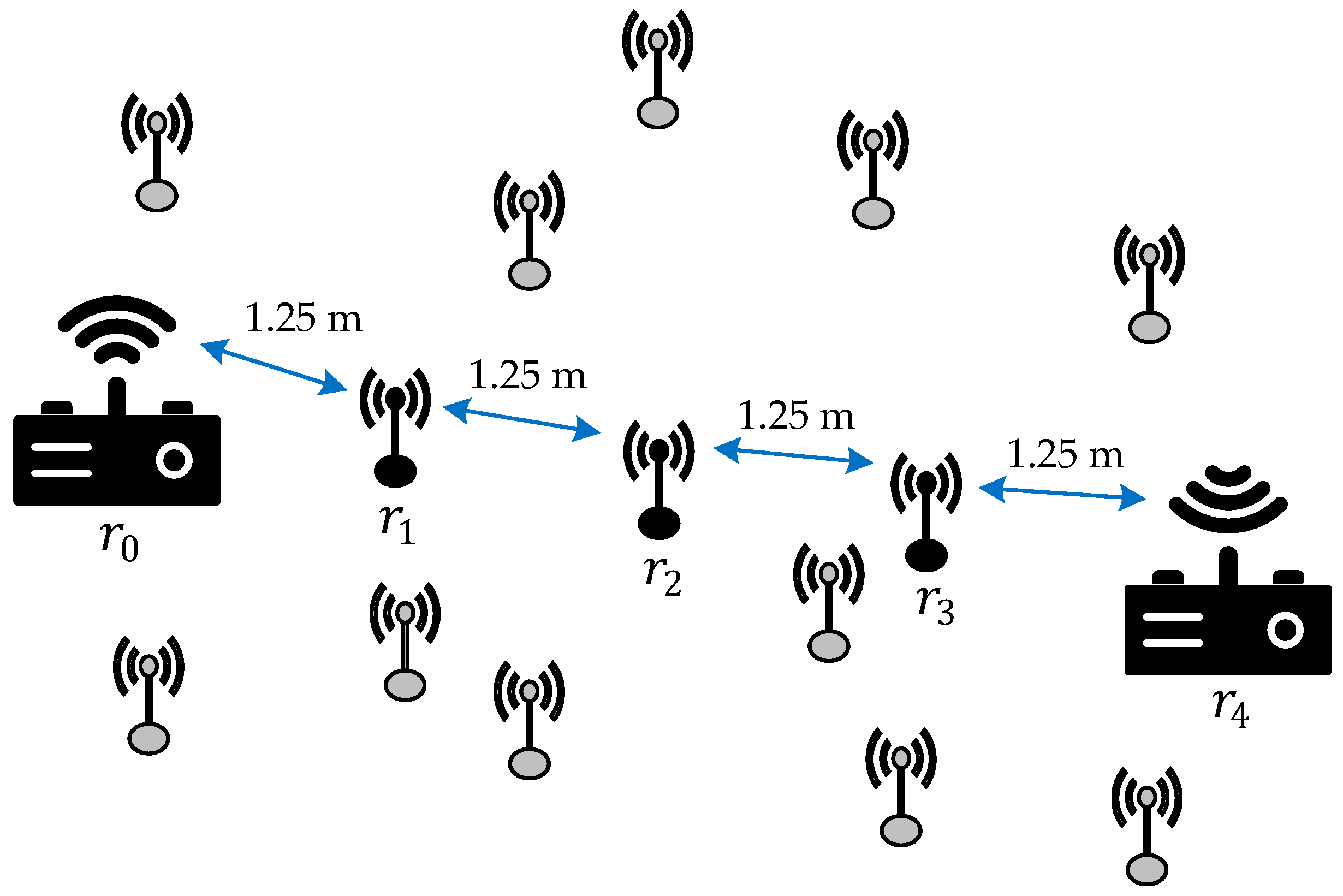
Additionally, we assume that in the considered multi-hop relay network system, the distance between two nodes in each hop is equal, and the sum of these distances is 5 m. Specifically, if there are
relays in our model, the multi-hop relay network consists of
hops, with the spacing of each hop being
m.
Figure 3 provides an example for the case of
.
The channel model used in the simulations considers both large-scale fading and small-scale fading. For large-scale fading, the log-distance path loss model is adopted, with a path loss exponent set to 3.8, a carrier frequency of 2.4 GHz, and a reference distance of 1 m. Regarding the small-scale fading model, we adopt Rician fading to accurately represent the propagation environment. Given that the relays are typically deployed in proximity within controlled settings (e.g., industrial halls), a strong LoS path is expected between communicating nodes. Therefore, the channel gain , , is modeled as follows: a Rician distribution with a K-factor of 7, representing a dominant LoS component relative to the scattered multipath components. The channel gains are modeled as independent Rician variables to isolate the effects of multi-hop resource allocation. While this assumes ideal uncorrelated conditions, it provides a baseline for evaluating the proposed schemes; correlated channels would require additional analysis beyond the scope of this paper.
All simulation results are obtained by averaging over 1000 random channel realizations.
4.1. System Throughput Maximization
We compare the proposed STM scheme based on the closed-form solution from
Section 3.1 with the following benchmark schemes: the first is the performance-optimal scheme based on exhaustive search, which determines the optimal PS ratio combination using an exhaustive search with a PS ratio step size of 0.02; the other three suboptimal schemes fix the PS ratio at each relay to 0.25, 0.5, and 0.75, respectively.
4.1.1. System Throughput vs. Source Transmit Power
First,
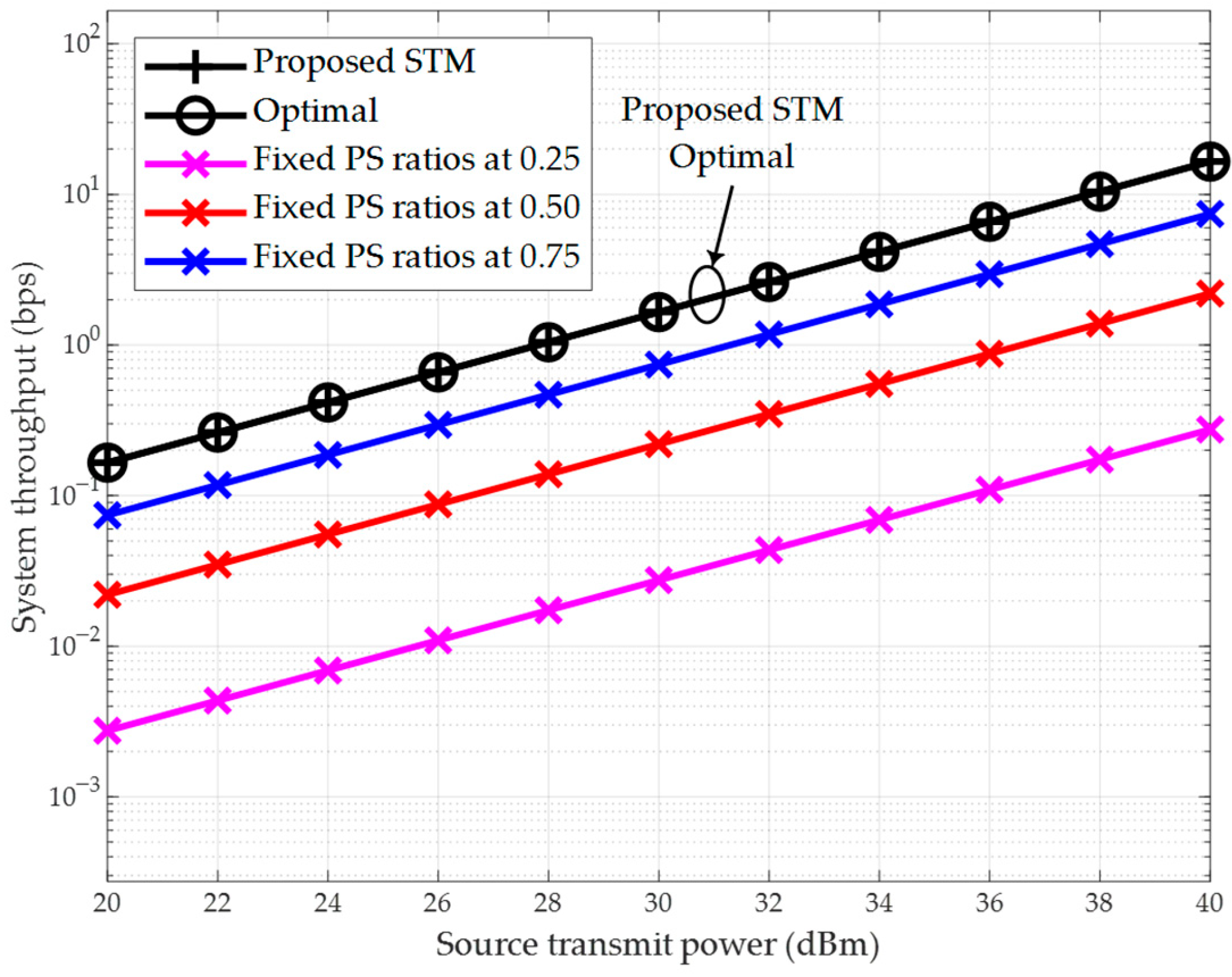
Figure 4 illustrates the relationship between throughput and the source transmit power in our SWIPT-enabled multi-hop DF relaying system, where the number of hops is set to
. Accordingly, the distance per hop is calculated as
m. As shown in this figure, the throughput of all schemes increases with the rise in the source transmit power. For example, the throughput of the proposed scheme increases from
bps at
to
bps at
. Furthermore, the curve of the proposed scheme based on the closed-form solution from
Section 3.1 coincides with that of the exhaustive search-based scheme. This consistency is also observed under other parameter settings, demonstrating that the proposed scheme achieves optimal throughput performance. On the other hand, the proposed scheme significantly outperforms the three suboptimal schemes with fixed PS ratios in terms of throughput. For instance, the results indicate that the average throughput of the proposed scheme is 123% higher than that of the scheme with fixed PS ratios of 0.75. This notable advantage persists even when the fixed PS ratios are set to other values.
4.1.2. System Throughput vs. Number of Relays
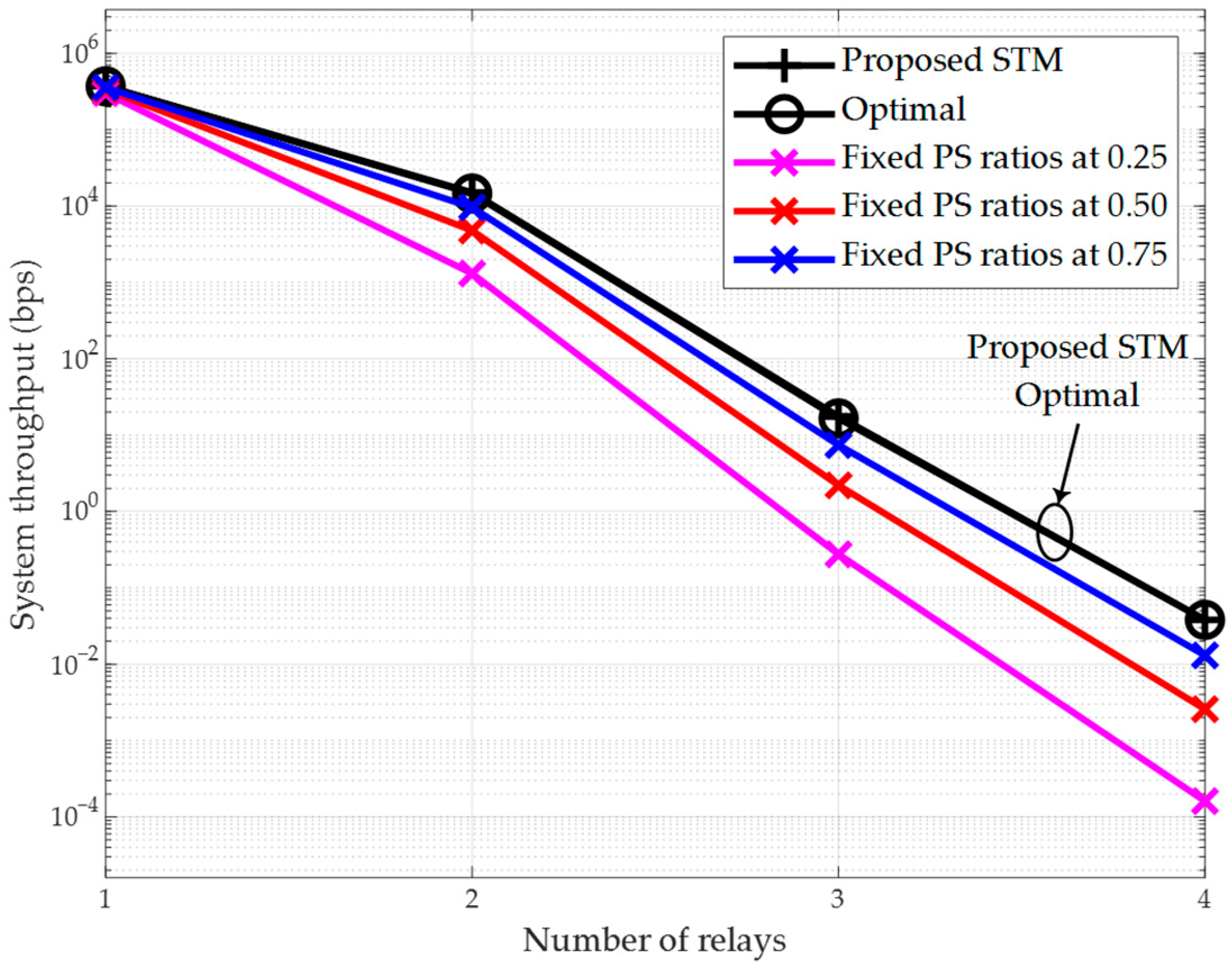
Figure 5 illustrates the relationship between the throughput of the multi-hop relay system and the number of relays,
. The transmit power of the source node is set to
. The number of relays in the multi-hop relay system increases from 1 to 4, corresponding to an increase in the number of hops between the source and destination nodes from 2 to 5. Given that the distance per hop is equal and the total distance of all hops is 5 m, the per-hop distances are 2.5 m, 1.67 m, 1.25 m, and 1 m, respectively. The conclusions from
Figure 5 align with those from
Figure 4: the proposed scheme, based on the closed-form solution from
Section 3.1, achieves optimal performance, and its throughput surpasses that of the suboptimal schemes with fixed PS ratios. For instance, when the number of relays is
, the throughput of the proposed scheme matches that of the optimal scheme at
bps, whereas the throughput of the scheme with fixed PS ratios of 0.75 is only
bps.
Furthermore, it can be observed that the throughput of all schemes decreases rapidly as the number of relays increases. Taking the proposed scheme as an example, when , the corresponding throughput is bps; however, when , its throughput drops to a negligible bps. The throughput decline in multi-hop scenarios reflects the cumulative effect of practical EH constraints, where harvested energy per relay diminishes with hop distance. This indicates that when deploying a multi-hop relay network, the number of relays must be controlled, provided that favorable channel conditions can be achieved for each hop. Nevertheless, we can still observe that the proposed scheme not only outperforms the suboptimal schemes with fixed PS ratios but also exhibits a significantly slower rate of throughput degradation as the number of relays increases from 1 to 4, compared to the fixed PS ratio schemes. All the above phenomena demonstrate the performance advantages of the proposed scheme.
4.1.3. Insights on Relay Number and Placement
The results presented in
Figure 5 demonstrate that the system throughput decreases significantly as the number of relays (and thus hops) increases. This subsection provides a deeper analysis of this trend and derives practical insights for network design.
The primary reason for the throughput degradation with increasing hop count is the cumulative effect of PS and signal attenuation at each relay. In the considered PS-based SWIPT scheme, each relay node diverts a portion of the received power for EH, which reduces the power available for information transmission to the next hop. Although the closed-form solution optimizes to balance this trade-off, the multiplicative nature of power transfer over multiple hops (as seen in Equations (5) and (10)) inherently leads to a reduction in the signal power reaching the destination. Furthermore, each hop introduces additional channel attenuation and potential decoding errors in DF relays, which collectively constrain the end-to-end throughput governed by the min-hop rate in Equation (12).
This analysis reveals a critical trade-off in multi-hop SWIPT network design: increasing the number of relays extends the communication coverage by breaking a long, low-quality link into several short, high-quality links, but at the cost of reduced overall throughput due to the cumulative losses. Therefore, determining the optimal number of relays is essential.
Based on our simulations for a total distance of 5 m, the following insights can be drawn:
For applications requiring very high throughput over short distances (e.g., within a single room), a minimal number of relays (e.g., or 2) is preferable. For instance, with , the throughput is bps, which is suitable for high-data-rate sensor networks.
For applications prioritizing coverage extension over raw speed (e.g., monitoring a long corridor), a larger number of relays (e.g., or 4) can be used, accepting a lower throughput. However, as shown, the throughput for drops to nearly zero, indicating a practical limit exists.
An optimal point often exists. In our scenario, (3 hops) provides a balance, maintaining a throughput of approximately bps while significantly extending the range compared to direct transmission.
Regarding relay placement, our model assumes equal hop distances for analytical tractability. However, the findings suggest that in a real-world deployment, relays should be placed such that the channel gains for each hop are maximized and balanced. Avoiding hops with severe path loss (e.g., due to obstacles) is critical. The proposed optimal PS ratio solution (Equation (36)) dynamically allocates resources based on channel conditions; hence, placing relays in locations with strong LoS components (high Rician K-factor) can further enhance performance. Ultimately, the number and placement of relays should be jointly optimized based on the specific environment and QoS requirements, a promising direction for future work involving spatial optimization algorithms.
4.1.4. Computational Time vs. Number of Relays
Figure 4 and
Figure 5 demonstrate that the proposed scheme achieves optimal throughput performance. Next, in
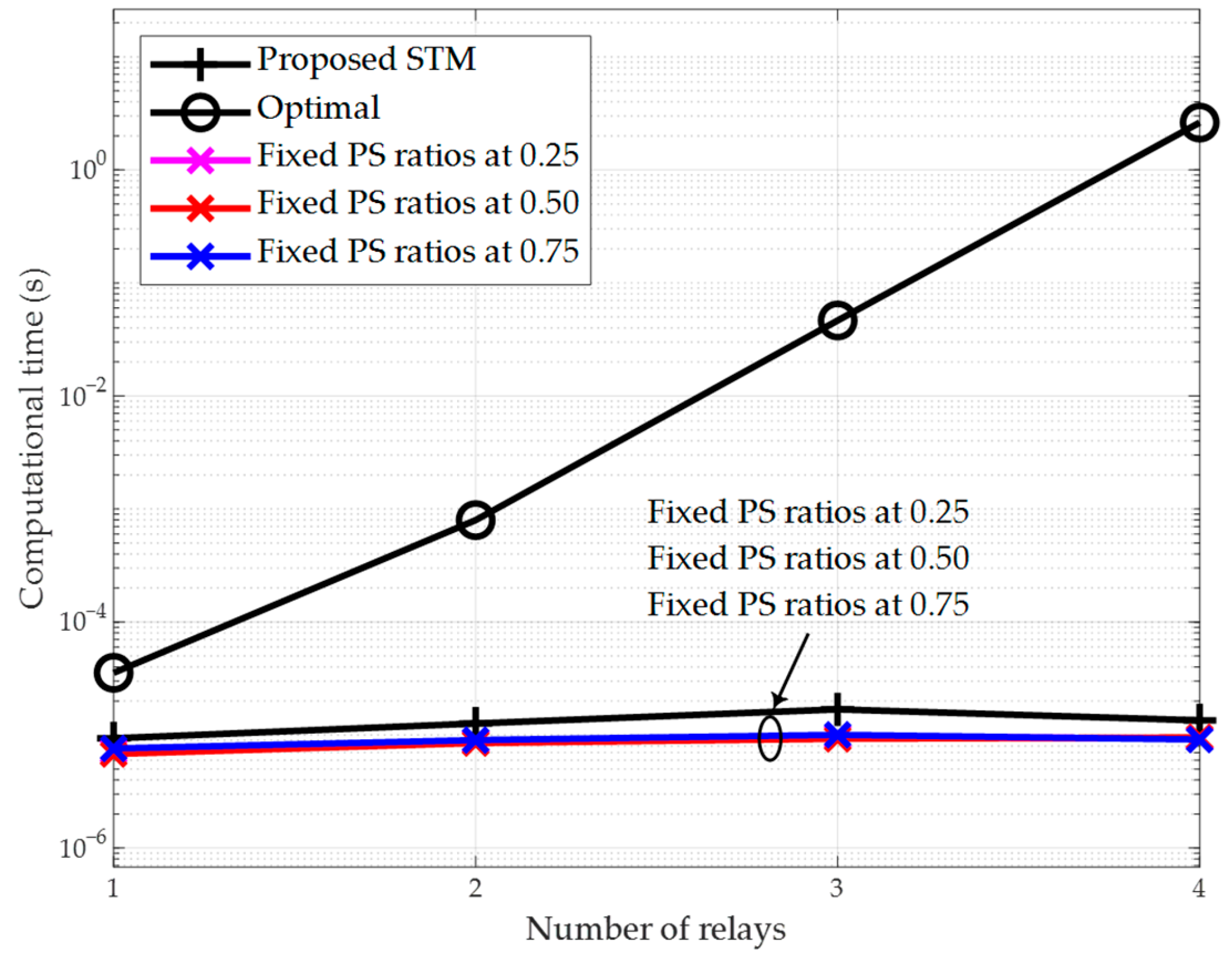
Figure 6, we evaluate the performance of the proposed STM scheme from the perspective of computational efficiency. For this purpose, we measure the computational time of all schemes. The transmit power of the source node is set to
. The results show that the exhaustive search-based optimal scheme requires the longest computational time, which increases rapidly with the number of relays. When the number of relays
, the optimal scheme takes 2.62 s to complete the computation, which is unacceptable for practical communication systems.
It is worth noting that in our implementation of the optimal scheme based on the exhaustive search, we did not use nested loops. Instead, we utilized MATLAB’s built-in “ndgrid” function to generate a grid matrix of all possible PS ratio combinations, thereby accelerating the search process. This approach trades increased computational memory usage for a significant reduction in computation time. However, when the number of relays is large, the computation time remains unsatisfactory and can lead to a memory explosion issue.
On the other hand, as expected, the three schemes with fixed PS ratios exhibit identical and minimal computational times, which remain almost constant as the number of relays increases. In comparison, the computational time of the proposed STM scheme is within the same order of magnitude as these three suboptimal schemes. For instance, when , the computational time of the proposed STM scheme is s, which is only 168% of that of the suboptimal scheme with fixed PS ratios of 0.75. Evidently, the proposed STM scheme is well-suited for practical communication systems.
The proposed SPM scheme shares the same computational complexity as the proposed STM scheme, as both are derived from the identical closed-form solution.
To further demonstrate the computational efficiency of the proposed schemes, we compare their complexity with the existing iterative method in [
25], which addresses a similar multi-hop DF relay network but employs TS-SWIPT. The scheme in [
25] uses an interior-point algorithm with a complexity of
, where
is the tolerance. This complexity scales polynomially with the number of relays
, making it less suitable for large-scale networks. In contrast, our proposed STM and SPM schemes leverage closed-form solutions derived from convex optimization, which require only direct evaluation of analytical expressions (e.g., Equations (36) and (56)). Thus, their computational complexity is
, i.e., constant time, regardless of
. This fundamental difference is evident in
Figure 6, where the computational time of our schemes remains flat as
increases, while iterative methods like [
25] would exhibit significant growth. The
complexity ensures real-time applicability in resource-constrained IoT scenarios.
4.2. Source Power Minimization
In this section, we evaluate the performance of the SPM scheme based on the closed-form solution from
Section 3.2. Similarly, our comparative algorithms include the optimal scheme derived from exhaustive search and suboptimal schemes that utilize fixed PS ratios along with a fixed source node transmit power. The difference lies in the configuration of the exhaustive search: besides setting the PS ratio step size to 0.02, we also set the source node transmit power search step size to 1 dB. Furthermore, for the three suboptimal schemes, the PS ratios remain fixed at 0.25, 0.5, and 0.75, respectively, and the source node transmit power is fixed at 30 dBm.
Since the proposed SPM scheme based on the closed-form solution from
Section 3.2 demonstrates performance trends and characteristics similar to those of the proposed STM scheme from
Section 3.1 in terms of system throughput versus the number of relays and computational time versus the number of relays, the corresponding simulation result figures are not presented separately. Instead,
Figure 7 and
Figure 8 are utilized to highlight the performance advantages of the proposed SPM scheme in guaranteeing the system’s minimum QoS requirement and extending the network lifetime.
4.2.1. System Throughput vs. Minimum QoS Requirement
First,
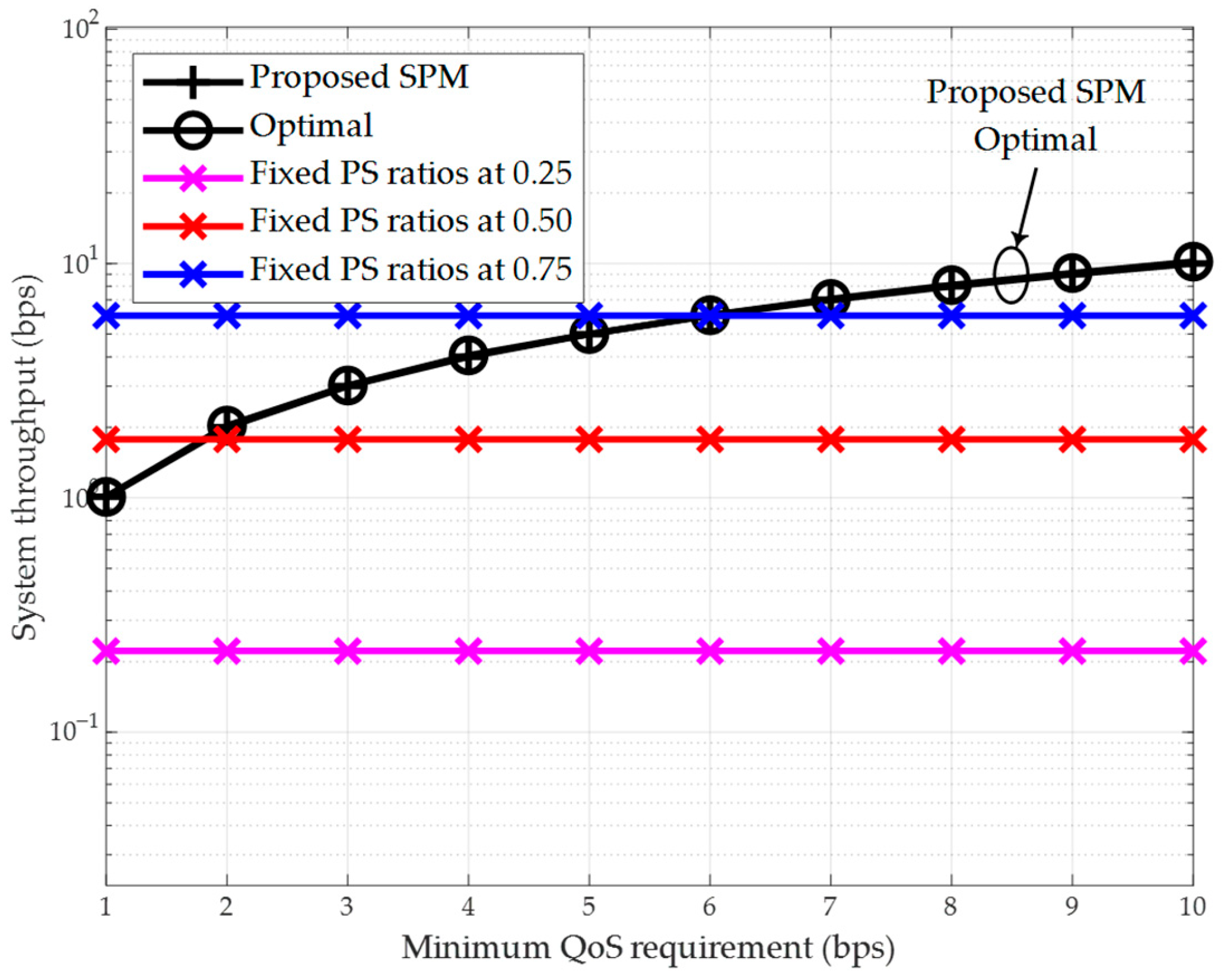
Figure 7 illustrates the relationship between the system throughput and the minimum QoS requirement, i.e., the minimum achievable rate threshold of the system
. The number of relays is set to
, resulting in a hop distance of 1.25 m. The minimum QoS requirement varies from 1 bps to 10 bps. The results show that the proposed SPM scheme and the exhaustive search-based optimal scheme achieve identical performance, confirming the optimality of the former. Furthermore, it can be observed that the throughput of the proposed scheme meets and equals the minimum QoS requirement. In contrast, the throughput of the three schemes with fixed PS ratios and fixed source node transmit power remains constant regardless of the minimum QoS requirement. Although the suboptimal schemes with fixed PS ratios of 0.5 and 0.75 exhibit higher throughput than the proposed scheme when
is low, they clearly fail to guarantee the system’s minimum QoS requirement.
4.2.2. Network Lifetime vs. Minimum QoS Requirement
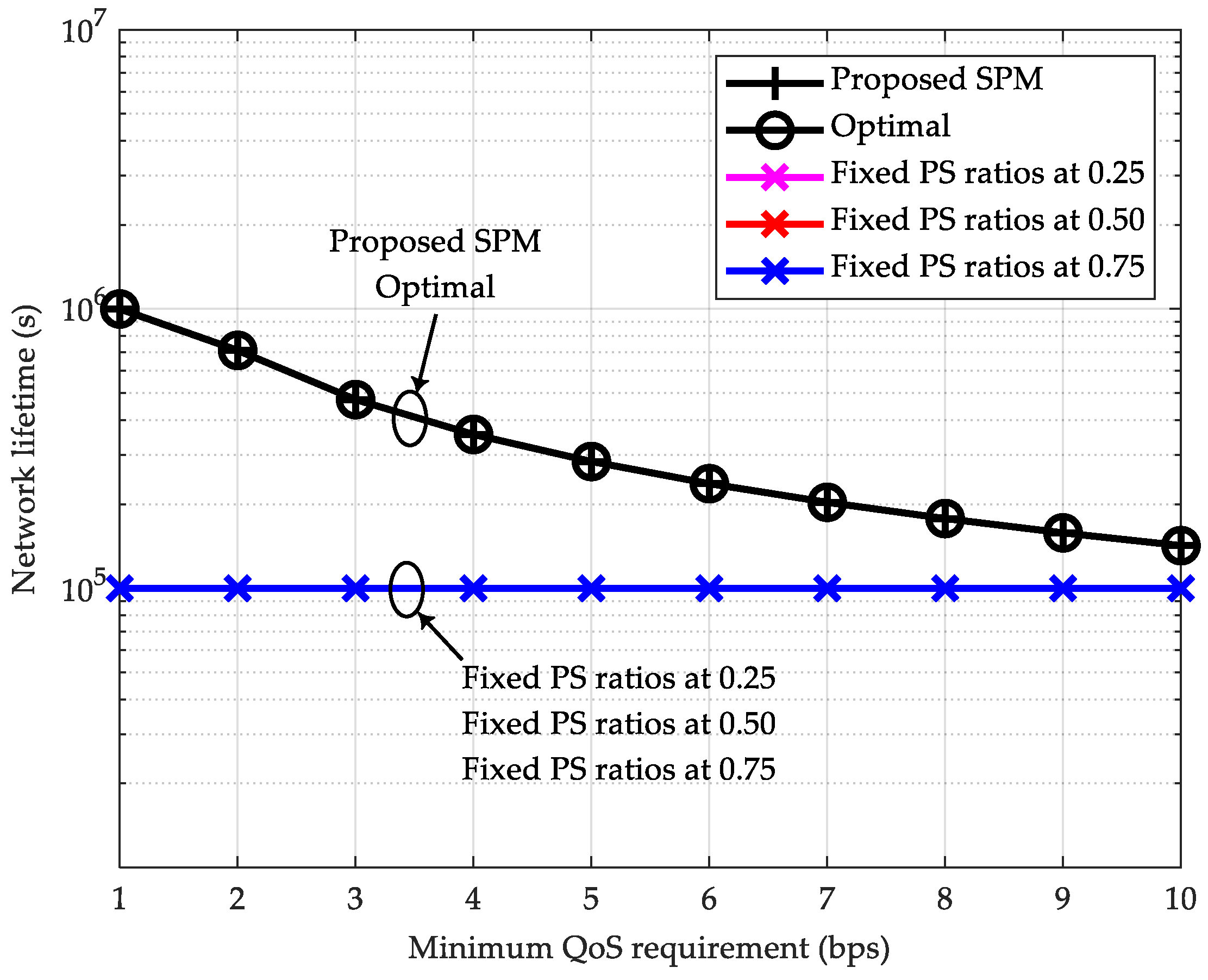
Finally, we evaluate the capability of the proposed SPM scheme in extending the network lifetime. The network lifetime is defined as the time period from the initial state of the source node until its energy is depleted. The number of relays is set to , with a hop distance of 1.25 m. The initial energy of the source node is set to 1 J. We assume that the frame duration used for data transmission is 10 ms. In the theoretical analysis, the execution time of all schemes is assumed to be negligible.
As shown in
Figure 8, the proposed SPM scheme achieves a longer network lifetime compared to the suboptimal schemes with fixed PS ratios. For instance, when
bps, the network lifetime is
s; when
bps, it is
s, which are 10 times and 1.42 times that of the three fixed PS ratio schemes, respectively. Although the network lifetime of the proposed SPM scheme decreases as the minimum QoS requirement increases, it simultaneously guarantees the minimum QoS requirement, which the three fixed PS ratio schemes fail to achieve.
4.3. Impact of Cascade Fading and Practical Considerations
A legitimate concern for any multi-hop system, including the SWIPT-enabled network considered here, is the impact of cascade fading along the multi-hop link, which can lead to inefficient power transfer and signal degradation. This effect results from the cumulative signal attenuation over each hop. However, the proposed closed-form optimal resource allocation scheme is specifically designed to combat this inefficiency. By optimally determining the PS ratio at each relay based on the instantaneous channel gains
, our scheme dynamically balances the trade-off between harvesting enough energy for retransmission and preserving sufficient signal power for reliable ID. The simulation results validate the effectiveness of this approach. Even under the combined effects of large-scale path loss and small-scale Rician fading—which together model a realistic cascade fading channel—our proposed algorithms achieve superior performance compared to suboptimal schemes, as evidenced by the throughput and power minimization results in
Figure 4,
Figure 5,
Figure 7 and
Figure 8. This demonstrates that the optimal allocation of resources is key to mitigating the drawbacks of cascade fading, making SWIPT a viable and efficient solution for the practical applications outlined in
Section 1.3.
In summary, both proposed schemes not only achieve optimal performance but also feature extremely fast execution speeds, making them highly suitable for practical deployment in WSNs. Moreover, the proposed SPM scheme aligns with the concept of green communication by effectively prolonging the network lifetime.
5. Conclusions
This paper focuses on an SWIPT DF multi-hop relaying system applied in WSNs. In this system, relay nodes are equipped with a single antenna and utilize SWIPT technology, enabling battery-free and external power-free operation. This allows passive communication between source and destination nodes, eliminating the manpower costs associated with battery replacement maintenance. It is suitable for applications such as industrial monitoring, remote areas, and emergency communications.
In this work, we investigate two optimization problems: the first aims to maximize system throughput under a given source node transmit power; the second seeks to determine the minimum source node transmit power required to meet a given minimum QoS requirement. We formulate both problems as convex optimization problems and derive closed-form optimal solutions—specifically, the PS ratio combination for the first problem, and the joint PS ratio combination and the source node transmit power for the second problem.
In the simulation section, we compare the two proposed schemes based on the optimal solutions with the exhaustive search-based optimal scheme and suboptimal schemes using fixed PS ratios. The results demonstrate that the two proposed schemes achieve optimal performance while offering extremely fast computational speed, making them suitable for deployment in practical communication systems within the defined application scenarios. While cascade fading presents a general challenge for multi-hop networks, the proposed optimal resource allocation strategy provides an effective means to maintain high efficiency in end-to-end information and power transfer. Furthermore, we highlight the potential of the second proposed scheme in extending network lifetime.
This study is limited to PS-based SWIPT employing single-antenna DF relays. Future work may explore several promising directions to build upon the findings of this paper. First, the resource allocation algorithms should be investigated under practical non-linear EH models that account for saturation and sensitivity effects to provide more accurate performance estimates for real-world deployments. Second, extending the proposed framework to multi-antenna (MIMO) relay nodes represents a significant avenue for enhancing performance; this would involve designing novel beamforming and resource allocation algorithms to jointly optimize EH and ID in the spatial domain, which is expected to yield significant performance gains. Third, research into alternative relaying strategies within the considered multi-hop system, such as AF or TS-based SWIPT protocols, could provide valuable comparisons and extend the applicability of the proposed optimization framework. Fourth, investigating the impact of imperfect CSI and developing robust algorithms for dynamic resource allocation in time-varying channels are also important practical extensions to enhance the resilience and adaptability of the system. Fifth, extending the proposed framework to account for correlated channel conditions is essential for enhancing realism. Future work could integrate spatial correlation models (e.g., using Kronecker or exponential correlation matrices) into the optimization problem and develop robust algorithms to mitigate performance degradation under correlated fading. This would improve the applicability of SWIPT multi-hop networks in industrial IoT scenarios where channel correlations are common.
Finally, beyond the aforementioned model and protocol extensions, the robustness of multi-hop SWIPT networks in real-world deployments must be examined. Key practical aspects include (1) synchronization issues across multiple hops, such as timing, phase, and carrier frequency offsets, which can degrade the coherence of both energy and information transfer, and (2) hardware impairments at transceivers (e.g., power amplifier non-linearities, I/Q imbalance, and phase noise), which are prevalent in low-cost IoT devices and can severely impact the efficiency of energy harvesting and information decoding. Developing resource allocation strategies that are resilient to such practical imperfections would be a vital step toward bridging the gap between theoretical models and real-world applications.