Abstract
To reliably realize the functions of autonomous navigation and cruise of logistics robots in a complex logistics storage environment, this paper proposes a new robot navigation system based on vision and multiline lidar information fusion, which can not only ensure rich information and accurate map edges, but also meet the real-time and accurate positioning and navigation in complex logistics storage scenarios. Simulation and practical verification showed that the robot navigation system is feasible and robust, and overcomes the problems of low precision, poor robustness, weak portability, and difficult expansion of the mobile robot system in a complex environment. It provides a new idea for inspection in an actual logistics storage scenario and has a good prospective application.
1. Introduction
In recent years, with the arrival of Industry 4.0, mobile robot technology has also developed rapidly. At present, it has been widely used in logistics, manufacturing, agriculture, service, and other fields [1]. Among them, navigation is the key piece of mobile robot technology, mainly including slam and path planning. Slam refers to the positioning and mapping of the robot, and path planning is to plan a feasible path for the robot to avoid dynamic obstacles in the process of moving according to the optimization criteria.
Robot navigation technology began in 1972. Stanford University developed the first mobile robot that can make autonomous decisions and plan through the observations made by cameras, lidar, and other sensors. Since then, many research groups and scholars have carried out a lot of research on various navigation problems. At present, there are two main methods based on vision and lidar. For example, the mono slam, the first monocular slam system proposed by Smith [2] and others, uses a Kalman filter as the backend to track the sparse feature points at the frontend. Another example is the orb designed by Mur et al. The SLAM algorithm [3] solves the problem of cumulative error. Grisetti [4] et al. improved the slam method based on the Rao Black well particle filter and realized the gmapping algorithm. Eitan et al. [5] proposed an effective voxel-based 3D mapping algorithm, which can explicitly model the unknown space. The Rtabmap system proposed by Labb et al. [6] uses RGB-d cameras for synchronous positioning and local mapping to overcome the shortcomings of loop detection affecting real-time processing over time.
Robot patrol inspection in a storage environment can greatly improve the efficiency of logistics operations. However, the existing methods and technologies still have some problems, such as the poor autonomous navigation performance of mobile robots in complex scenes. For this reason, we designed a mobile robot autonomous mapping and path planning system based on multi-sensor fusion, which obtains the information on the surrounding environment through the 3D lidar, and realizes the autonomous positioning and mapping of the robot by using the real-time appearance mapping algorithm. To improve the efficiency of global path planning, we used the improved A* algorithm as the global path planning method, and the local path planning method uses the classic DWA algorithm to avoid obstacles.
2. System Framework
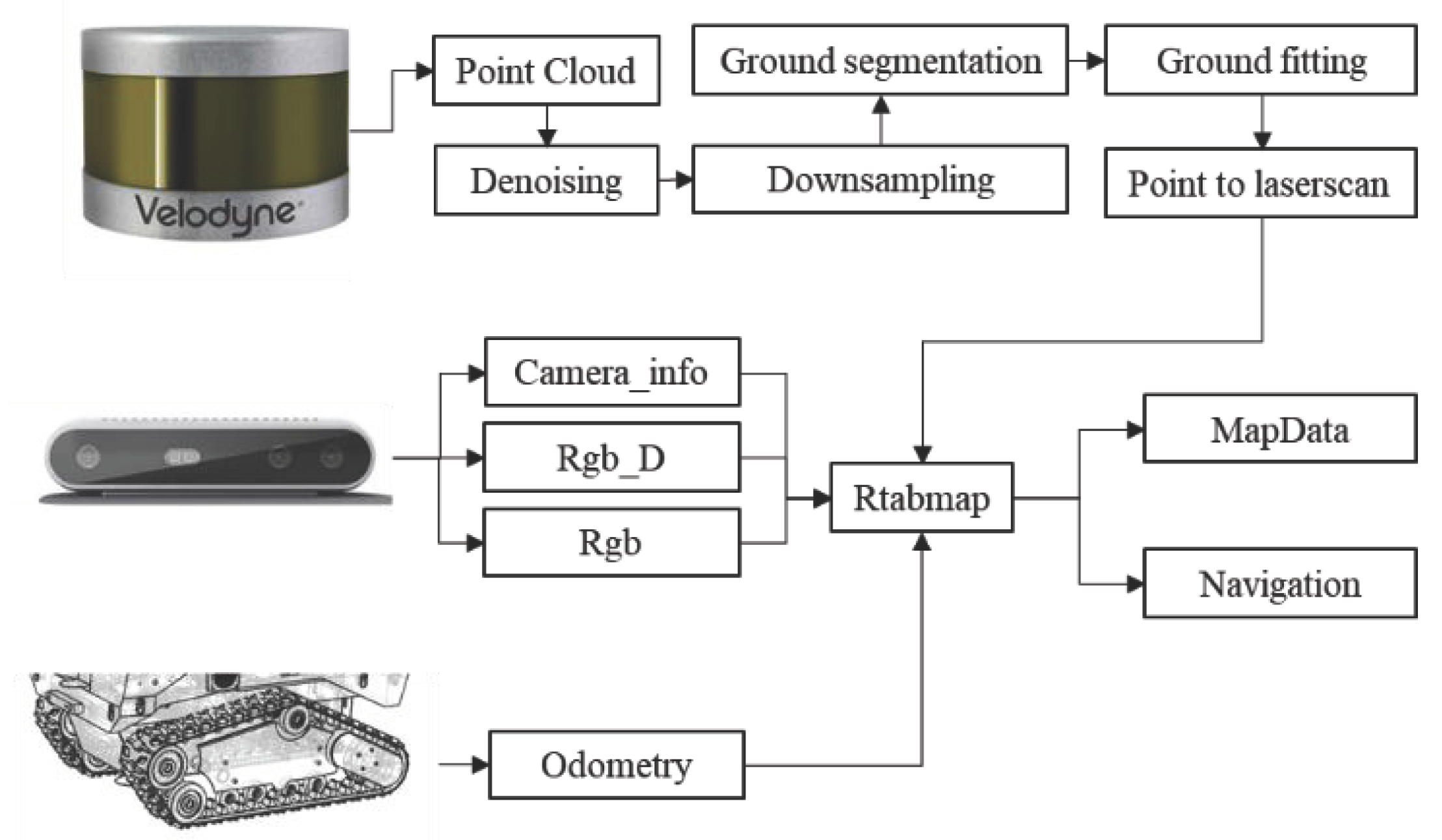
The multi-sensor information fusion logistics robot navigation system designed in this paper for the real and complex logistics warehousing scene is shown in Figure 1. Firstly, the 3D laser point cloud was denoised, downsampled, point cloud segmented, ground fit, and point cloud converted, and then the visual and lidar information was fused to use the rtabmap algorithm [6] for map modeling. Finally, DWA [7] and the improved A* algorithm were selected for local and global planning, respectively.
Figure 1.
System framework.
3. LIDAR Point Cloud Preprocessing
3.1. Point Cloud Filtering
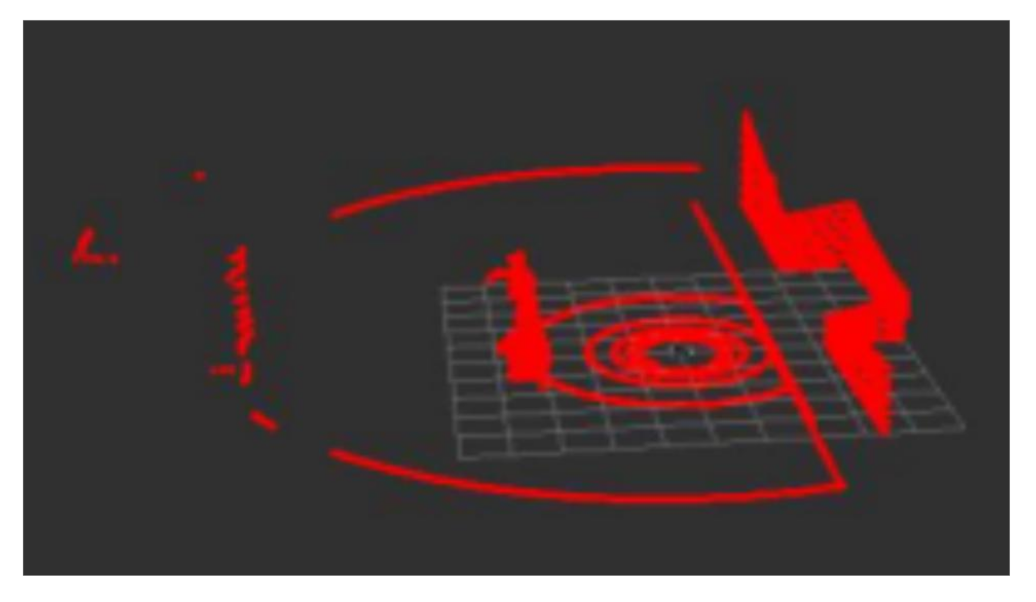
In the process of lidar point cloud data acquisition, due to factors such as low equipment accuracy and a complex environment, there will be noise in the collected data, as shown in Figure 2. Therefore, we chose direct, statistical [8], and conditional filtering [9] to process noise. In addition, the amount of directly acquired point cloud data is large. In order to speed up the subsequent mapping, positioning, and other operations, voxel filtering [10] is also used to realize down sampling.
Figure 2.
Original point cloud.
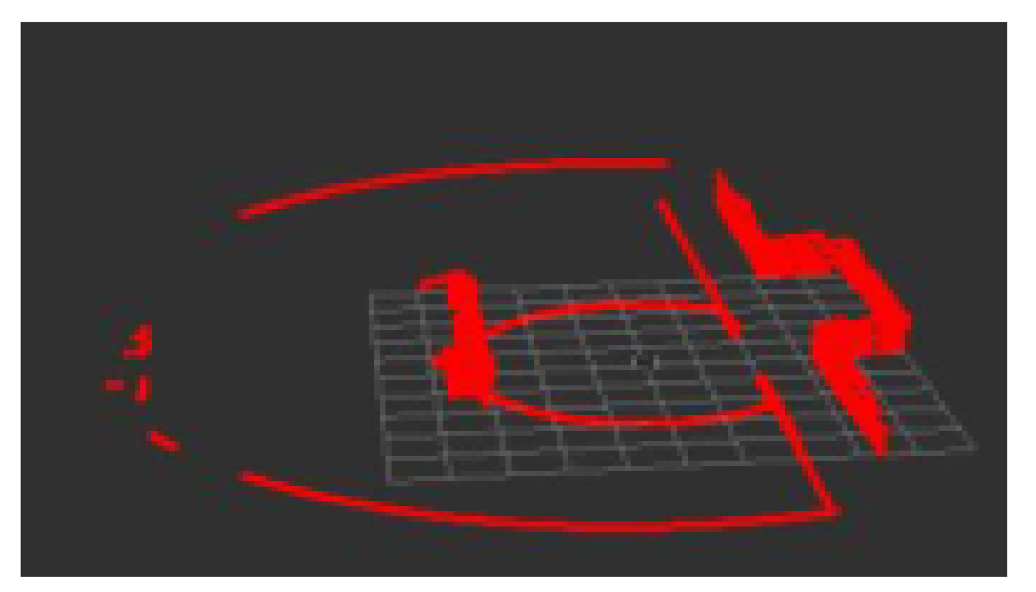
Pass-through filtering is to cut the outliers in the specified coordinate range, which can realize fast cutting of outliers. Statistical filtering is used to eliminate the obvious outliers introduced by noise through the comparison of mean and variance. The conditional rate is set to be similar to the piecewise function for targeted filtering. Voxel filtering is to desample lidar point cloud data for subsequent processing. After filtering and downsampling, the lidar point cloud is shown in Figure 3.
Figure 3.
After denoising and desampling.
3.2. Ground Treatment
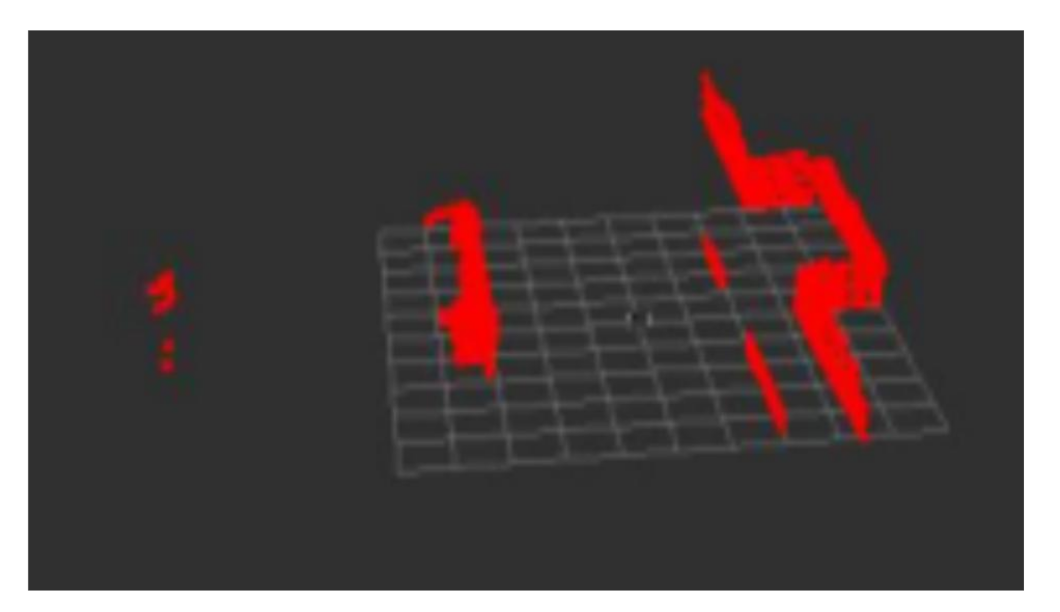
There is ground information in the filtered point cloud. In this study, an incremental line fitting algorithm [11] was used to segment the ground. The specific operations were as follows: converting the 3D point cloud to under the 2D plane, and partition. The space was divided into N parts, as shown in Figure 4, according to lidar characteristics, as shown in Formula (1).
where is the angle covered by each segment, and then , the corresponding space groups, are
Figure 4.
Point cloud map after ground segmentation, fitting, and conversion.
5. Experiment and Analysis
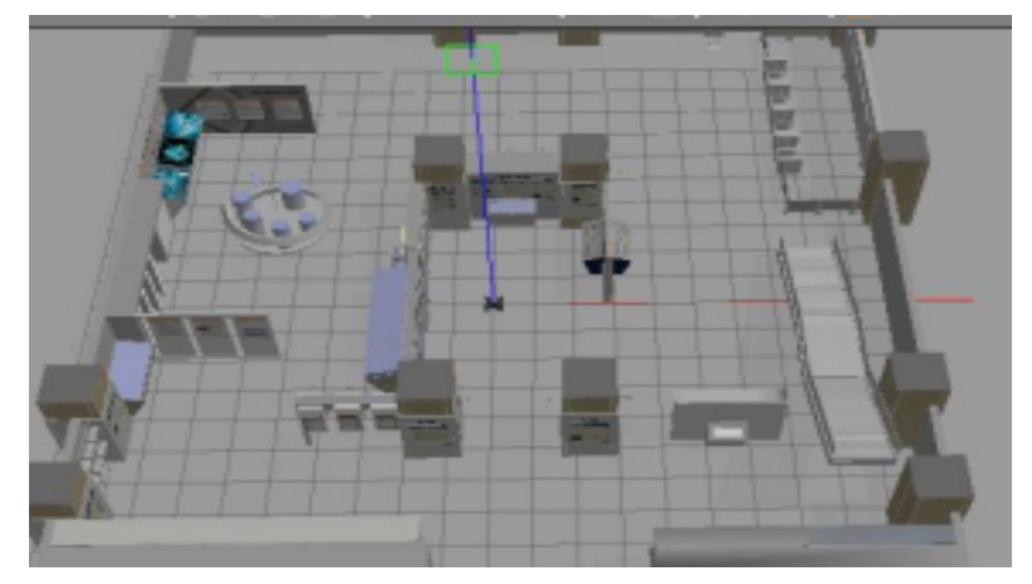
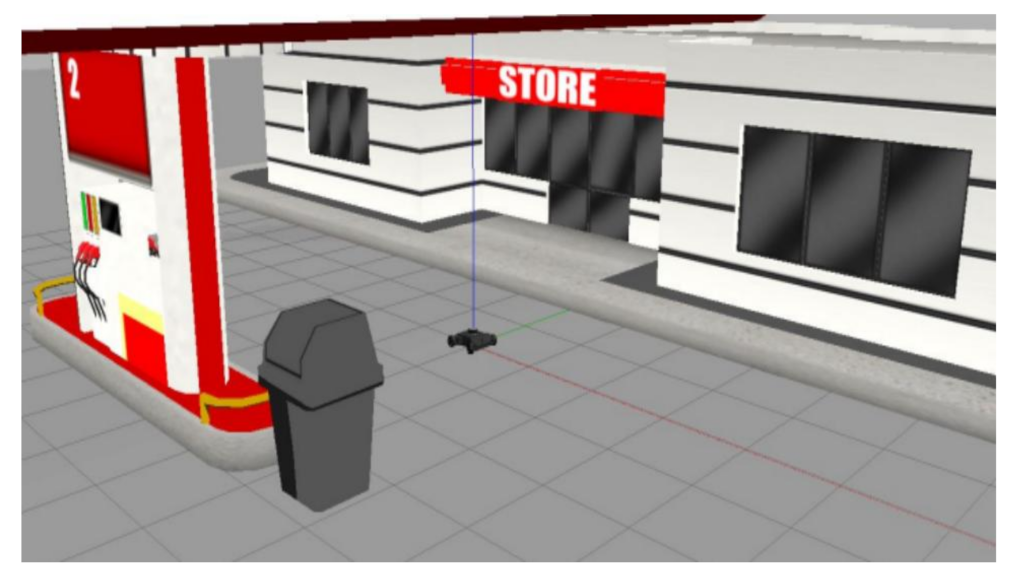
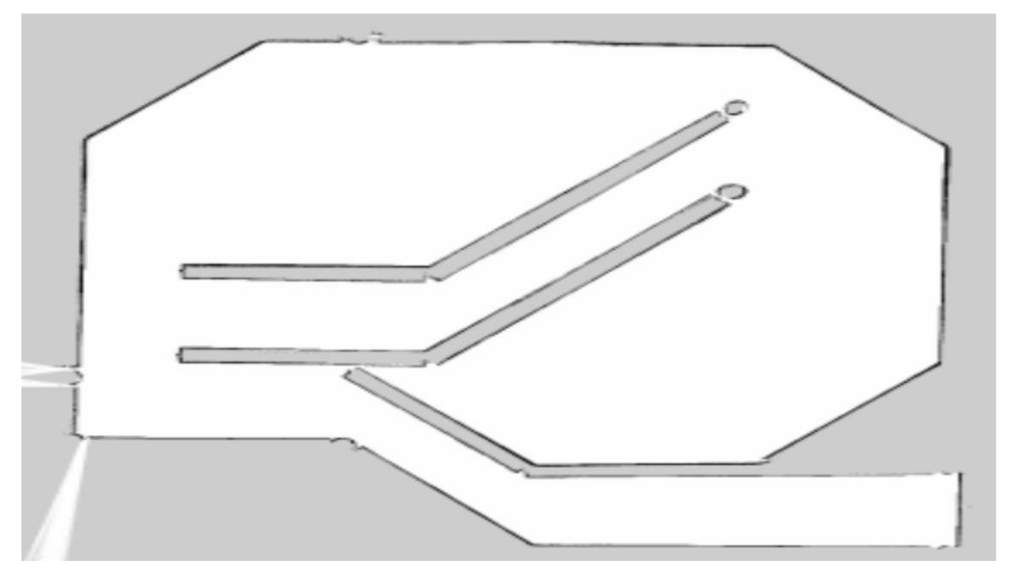
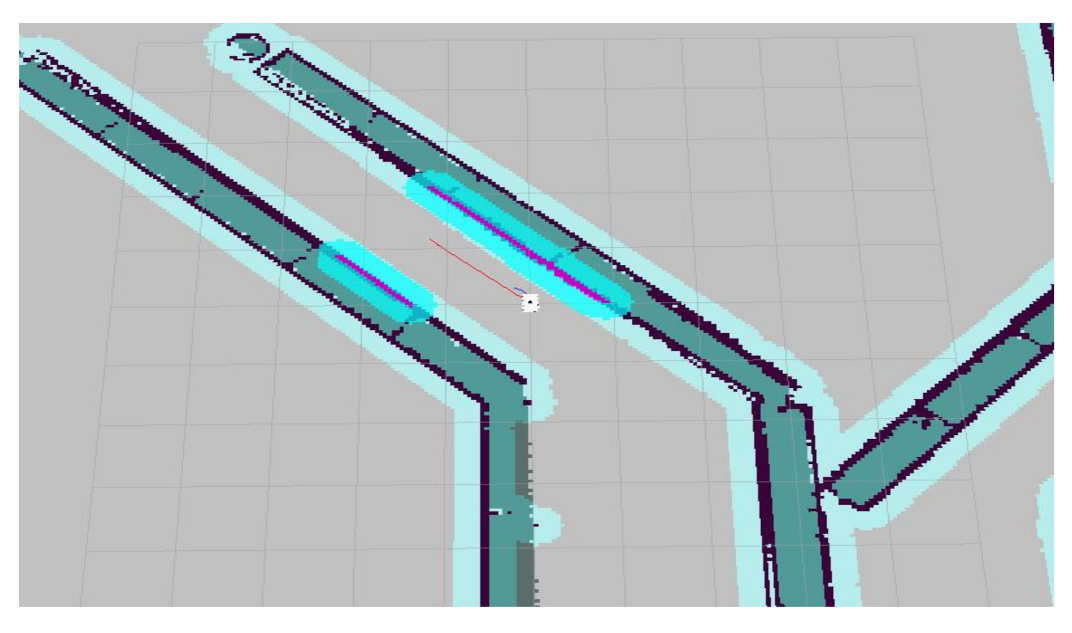
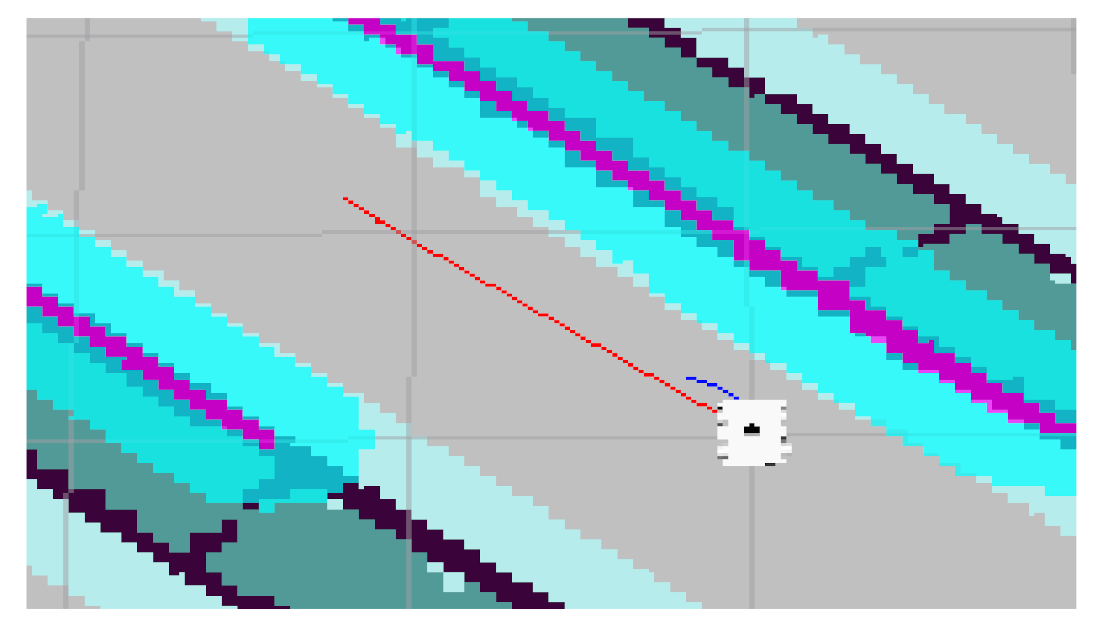
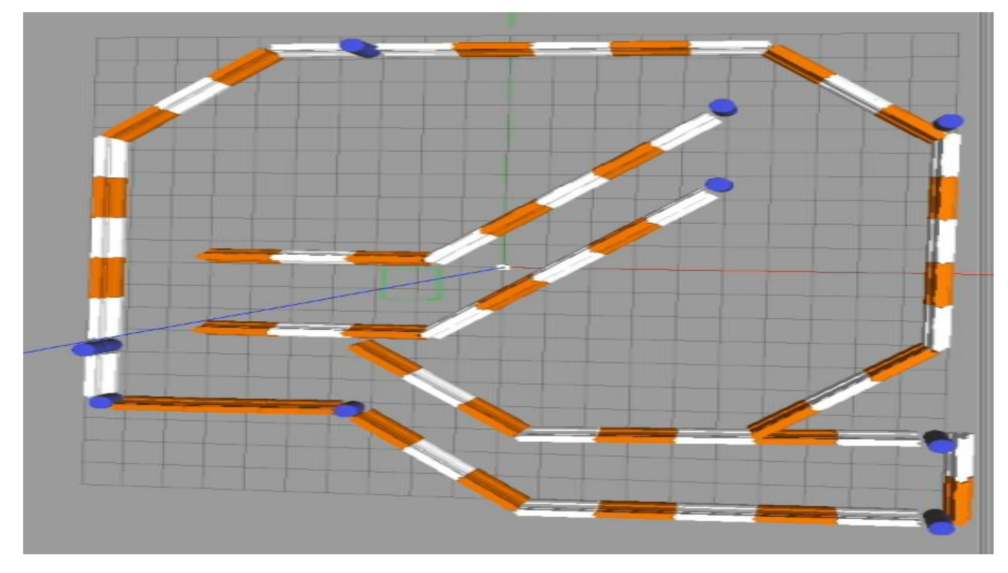
To evaluate the navigation system better and more comprehensively, we verified it on a simulation platform and in a real experiment. The simulation tool uses the gazebo simulation platform [16] of ROS to build different types of warehouse simulation. Figure 5, Figure 6 and Figure 7 show the indoor environment of the office, and the outdoor environments of the gas station and the narrow road in that order. The map built in the simulated narrow environment is shown in Figure 8, the actual navigation map is shown in Figure 9, and the path planning map is shown in Figure 10. The red line is the global planning route, and the blue line is the global planning route. The simulation used a turtlebot3 robot, and the laser lidar was a multiline lidar. The computer CPU had an Intel (R) core (TM), i5-10210u CPU @ 1.60 GHZ, Ubuntu version 18.04, and ROS version melodic.
Figure 5.
Office.
Figure 6.
Gas station.
Figure 7.
Narrow road.
Figure 8.
Scene map.
Figure 9.
Navigation map.
Figure 10.
Navigation enlarged map.
To highlight the performance of the improved A* algorithm, simulation path planning experiments were conducted in offices, gas stations, and narrow channel scenes. The experimental results are shown in Table 1. Under the same target point location, the path planning time of the improved A* algorithm was shorter, indicating the superiority of the improvement.
Table 1.
Planning time.
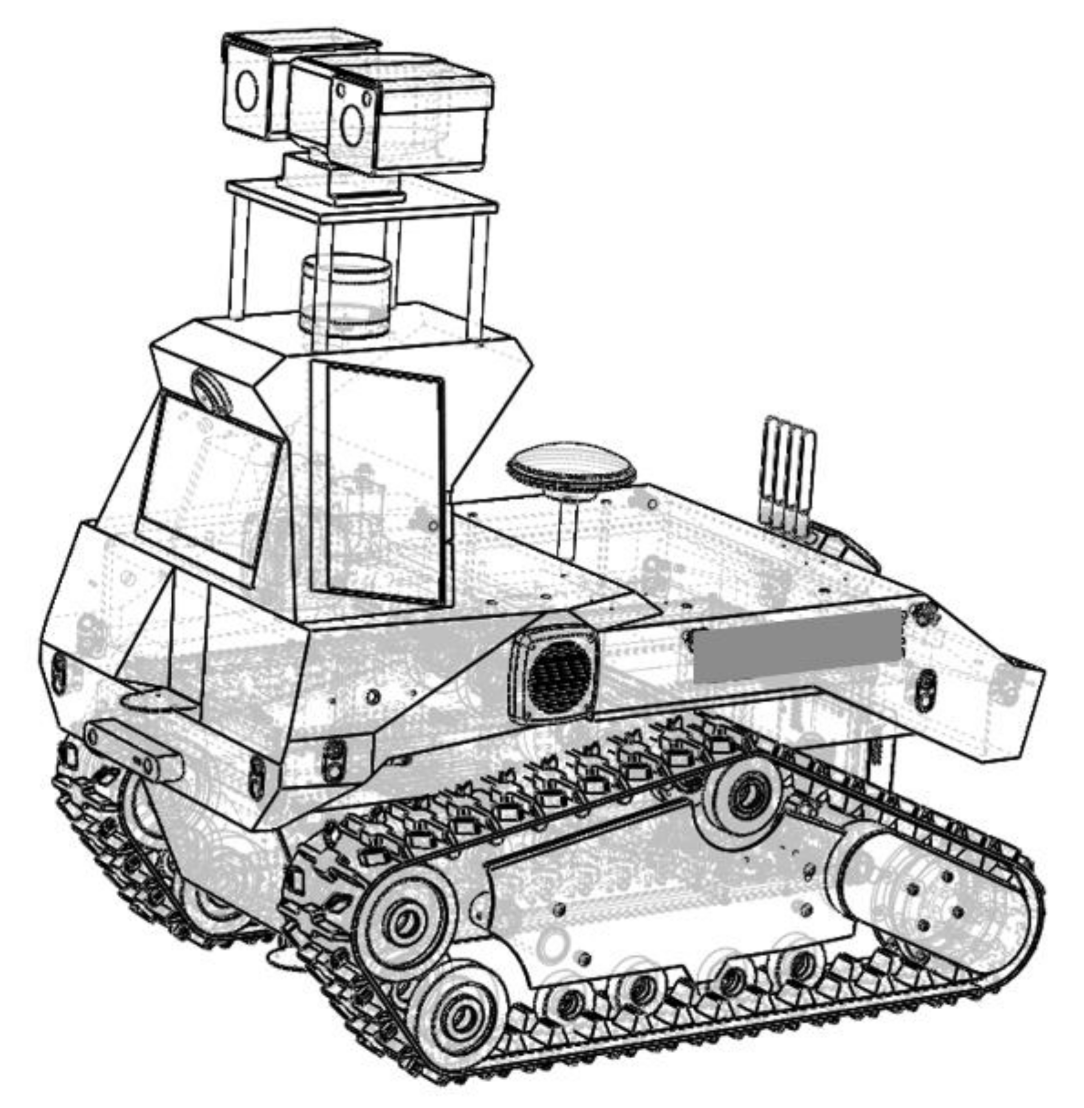
The navigation software for the real environment was still based on the ROS system of Ubuntu 18.04. The 16 line laser radar was velodyne16, the depth camera was Intel realsense d435i, and the on-board computer was mic-770h-00a1. The motion model was the crawler difference model, and the built robot is shown in Figure 11. We compare the mapping speed of downsampled point clouds with that of upsampled point clouds. Three scenarios with great differences were selected for mapping. The offline mapping speed is shown in Table 2. It can be seen from the table that the downsampling filter processing can improve the offline mapping speed.
Figure 11.
Logistics inspection robot.
Table 2.
Comparison of mapping speed.
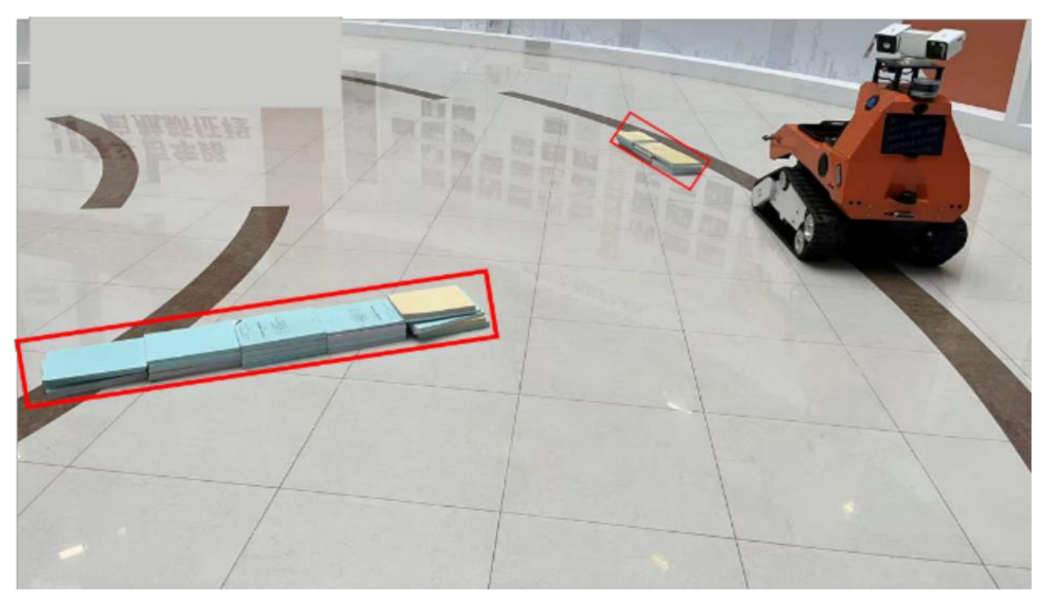
In the actual complex scene, compared with the two-dimensional laser radar, the robot designed by us was equipped with a multiline laser radar, which can well identify and avoid obstacles on the ground and met the detection requirements. The obstacles in the red area are shown in Figure 12.
Figure 12.
Obstacle scene.
We conducted a two-point repeatability accuracy test. In the real scene, we set the linear speed of the robot to 1 m/s and the angular speed to 1.5 rad/s. Set the position coordinates of the initial robot as (0, 0, 0), and the coordinates of the endpoint are shown in Table 3. A total of 50 groups were selected. The experimental results are shown in the table. The average error of X and Y was less than 5 cm, and the angle was less than 0.1 radian out—high accuracy. The error mainly came from the friction between the measurement and the ground. In order to test the navigation accuracy performance in the actual application state, we also conducted a multi-point repeated navigation accuracy test, selected four paths, and selected six target points on each path. In the multi-point repeated navigation accuracy test, the average error between the target point and the actual arrival position was less than 10 cm, and the angle error was less than 0.12 rad, which can meet the navigation requirements of the logistics robot in a warehouse environment.
Table 3.
Partial navigation coordinates.
6. Summary and Outlook
The use of intelligent inspection robots can improve the efficiency of logistics operations, provide an efficient workflow for the practical operation of traditional logistics warehousing, and greatly improve work efficiency. In this paper, a high-precision navigation system integrating multi-sensor information was designed for the complex scenes of real storage. To better realize the positioning in the disordered and ordered scenes, a 16-line laser lidar was used and the point cloud processing algorithm was designed, and the improved navigation algorithm was integrated for path planning. To better evaluate the navigation performance, simulation and real scene experiments were carried out at the same time. The results show that the navigation system can complete the navigation and positioning of complex scenes. Therefore, it is a new model for robot navigation and has important application significance. However, during the experiment, it was found that with the acceleration of speed, the performance of feature matching is greatly reduced. How to achieve navigation and positioning at a high speed will be the focuses and challenges of future research.
Author Contributions
Conceptualization, Y.Z. (Yang Zhang); methodology, H.L. and Y.Z. (Yanjun Zhou); software, H.H.; validation, W.C. and W.Z. All authors have read and agreed to the published version of the manuscript.
Funding
This research received no external funding.
Institutional Review Board Statement
For studies not involving humans or animals.
Informed Consent Statement
Not applicable.
Data Availability Statement
Not applicable.
Conflicts of Interest
The authors declare no conflict of interest.
References
- Sun, H.; Yang, Y.; Yu, J.; Zhang, Z.; Xia, Z.; Zhu, J.; Zhang, H. Artificial Intelligence of Manufacturing Robotics Health Monitoring System by Semantic Modeling. Micromachines 2022, 13, 300. [Google Scholar] [CrossRef] [PubMed]
- Jin, Y.; Yu, L.; Chen, Z.; Fei, S. A Mono SLAM Method Based on Depth Estimation by DenseNet-CNN. IEEE Sensors J. 2021, 22, 2447–2455. [Google Scholar] [CrossRef]
- Buemi, A.; Bruna, A.; Petinot, S.; Roux, N. ORB-SLAM with Near-infrared images and Optical Flow data. In Proceedings of the IEEE/CVF International Conference on Computer Vision, Montreal, QC, Canada, 10–17 October 2021; pp. 1799–1804. [Google Scholar]
- Balasuriya, B.L.E.A.; Chathuranga, B.A.H.; Jayasundara, B.H.M.D.; Napagoda, N.R.A.C.; Kumarawadu, S.P.; Chandima, D.P.; Jayasekara, A.G.B.P. Outdoor robot navigation using Gmapping based SLAM algorithm. In Proceedings of the 2016 Moratuwa Engineering Research Conference (MERCon), Moratuwa, Sri Lanka, 5–6 April 2016; pp. 403–408. [Google Scholar]
- Marder-Eppstein, E.; Berger, E.; Foote, T.; Gerkey, B.; Konolige, K. The office marathon: Robust navigation in an indoor office environment. In Proceedings of the 2010 IEEE International Conference on Robotics and Automation, Anchorage, Alaska, 3–8 May 2010. [Google Scholar]
- Turchi, P. Maps of the Imagination: The Writer as Cartographer; Trinity University Press: San Antonio, TX, USA, 2011. [Google Scholar]
- Karur, K.; Sharma, N.; Dharmatti, C.; Siegel, J.E. A survey of path planning algorithms for mobile robots. Vehicles 2021, 3, 448–468. [Google Scholar] [CrossRef]
- Roth, M.; Özkan, E.; Gustafsson, F. A Student’s t filter for heavy tailed process and measurement noise. In Proceedings of the 2013 IEEE International Conference on Acoustics, Speech and Signal Processing, Vancouver, BC, Canada, 26–31 May 2013; pp. 5770–5774. [Google Scholar]
- Handschin, J.E.; Mayne, D.Q. Monte Carlo techniques to estimate the conditional expectation in multi-stage non-linear filtering. Int. J. Control. 1969, 9, 547–559. [Google Scholar] [CrossRef]
- Pan, Y. Dynamic Update of Sparse Voxel Octree Based on Morton Code; Purdue University Graduate School: West Lafayette, IN, USA, 2021. [Google Scholar]
- Wang, L.; Yu, F. Jackknife resample method for precision estimation of weighted total least squares. Commun. Stat. Simul. Comput. 2021, 50, 1272–1289. [Google Scholar] [CrossRef]
- Labb, M.; Michaud, F. RTABMap as an opensource lidar and visual simultaneous localization and mapping library for largescale and longterm online operation. J. Field Robot. 2019, 36, 416–446. [Google Scholar] [CrossRef]
- Matsuzaki, S.; Aonuma, S.; Hasegawa, Y. Dynamic Window Approach with Human Imitating Collision Avoidance. In Proceedings of the 2021 IEEE International Conference on Robotics and Automation (ICRA), Xi’an, China, 30 May–5 June 2021; pp. 8180–8186. [Google Scholar]
- Rigatos, G. A nonlinear optimal control approach for tracked mobile robots. J. Syst. Sci. Complex. 2021, 34, 1279–1300. [Google Scholar] [CrossRef]
- Lai, X.; Li, J.H.; Chambers, J. Enhanced center constraint weighted a* algorithm for path planning of petrochemical inspection robot. J. Intell. Robot. Syst. 2021, 102, 1–15. [Google Scholar] [CrossRef]
- Rivera, Z.B.; De Simone, M.C.; Guida, D. Unmanned ground vehicle modelling in Gazebo/ROS-based environments. Machines 2019, 7, 42. [Google Scholar] [CrossRef]
Publisher’s Note: MDPI stays neutral with regard to jurisdictional claims in published maps and institutional affiliations. |
© 2022 by the authors. Licensee MDPI, Basel, Switzerland. This article is an open access article distributed under the terms and conditions of the Creative Commons Attribution (CC BY) license (https://creativecommons.org/licenses/by/4.0/).