You are currently viewing a new version of our website. To view the old version click .
Sensors
  • Article
  • Open Access

23 December 2021

User Experience Estimation in Multi-Service Scenario of Cellular Network
,
,
and
1
Department of Information and Communication Engineering, Beijing University of Posts and Telecommunications, Beijing 100876, China
2
School of Communication and Information Engineering, Chongqing University of Posts and Telecommunications, Chongqing 400000, China
*
Author to whom correspondence should be addressed.
This article belongs to the Special Issue Emotional AI and its Applications in Communications Networks

Abstract

The estimation of user experience in a wireless network has always been a research hotspot, especially for the realization of network automation. In order to solve the problem of user experience estimation in wireless networks, we propose a two-step optimization method for the selection of the kernel function and bandwidth in a naive Bayesian classifier based on kernel density estimation. This optimization method can effectively improve the accuracy of estimation. At present, research on user experience estimation in wireless networks does not include an in-depth analysis of the reasons for the decline of user experience. We established a scheme integrating user experience prediction and network fault diagnosis. Key performance indicator (KPI) data collected from an actual network were divided into five categories, which were used to estimate user experience. The results of these five estimates were counted through the voting mechanism, and the final estimation results could be obtained. At the same time, this voting mechanism can also feed back to us which KPIs lead to the reduction of user experience. In addition, this paper also puts forward the evaluation standard of the multi-service perception capability of cell-level wireless networks. We summarize the user experience estimation for three main services in a cell to obtain a cell-level user experience evaluation. The results showed that the proposed method can accurately estimate user experience and diagnosis abnormal values in a timely manner. This method can improve the efficiency of network management.

1. Introduction

5G has brought great changes to life, and many new application scenarios have appeared, such as auto driving, AR, VR, and so on. At the same time, cellular traffic has increased greatly [1]. Ultra-dense deployment of 5G makes the cost of network construction increase, and the difficulty of network management has also increased. Users have higher requirements for real-time experience than before. The balance between resource consumption and users’ low-latency and highly reliable experience is a huge challenge for operators. Since operators need to consider both costs and users’ real-time experience, to solve this problem, quality of service (QoS) and quantity of experience (QoE) are topics that cannot be separated. Research on network automation based on the estimation of the QoE by QoS is becoming more and more popular.
The QoS is a performance indicator of every network, and it can be truly measured and used in network services’ improvement. It is worth noting that for any wireless network, whether 3G, 4G, or 5G, the measurement indicators of network performance are basically the same. The QoS has always been the focus of research and the basis of network management. However, QoS parameters only reflect the network performance, which can not directly reflect the user satisfaction [2]. The specific indicators of the QoS are the KPIs, which are often the data collected from the base station in a cellular network. The indicator of the QoE is different from the QoS, which is composed of subjective and objective parts. The subjective part often varies from person to person; the judgment standard is usually the mean opinion score (MOS). The objective part is the key quality indicators (KQIs). The objective part is the focus of our research.
The goal of operators is to provide users a satisfactory level of the QoE during service delivery. There is a strong relationship between the QoS and QoE. Usually, QoS parameters have a great impact on the QoE. The standardized LTE network focuses on defining network performance from the perspective of the QoS and does not define the relationship between two entities. A complete quality analysis needs this relationship in order to maximize the QoE during service delivery. The expected level of the QoE can be estimated through the QoS/QoE model according to the QoS measurement results [3]. At present, most of the research on the QoE focuses on the subjective index MOS. Although the mapping of the MOS-QoE [4] can well judge the perception of users, it is obviously not realistic to obtain the subjective opinions for each user in the actual network optimization with tens of millions users.
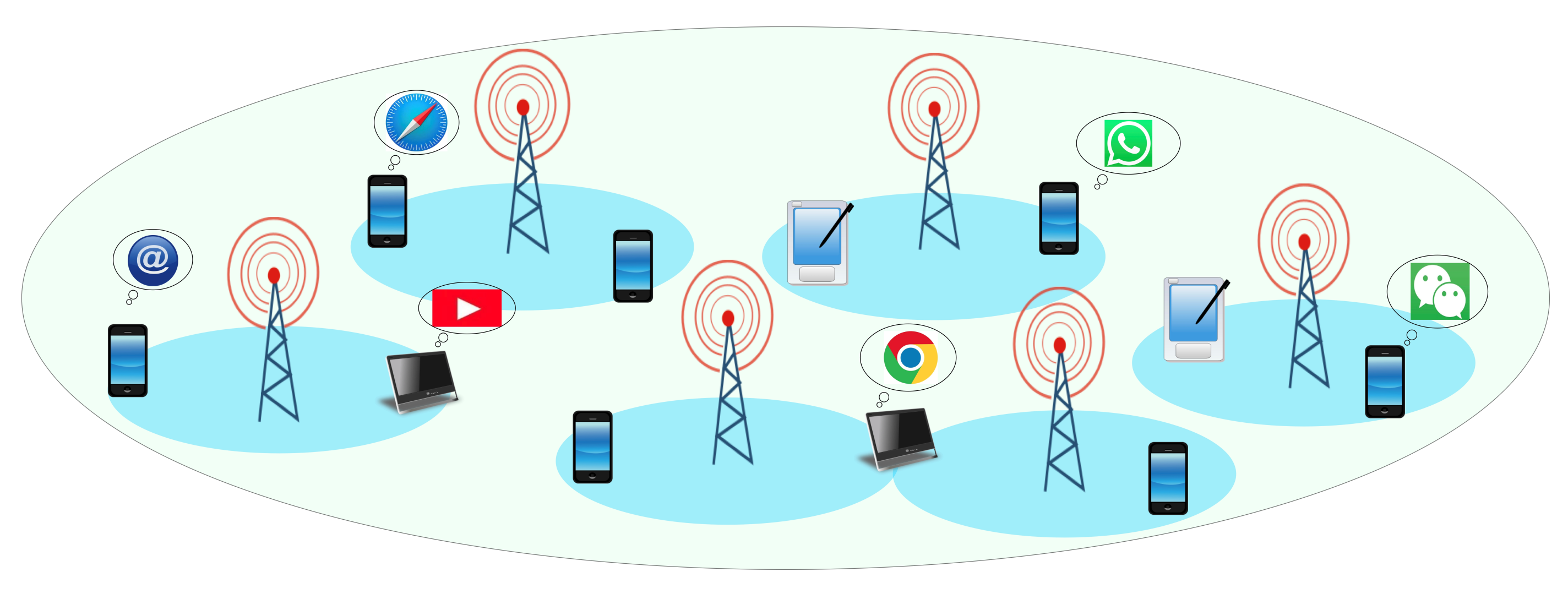
For cellular operators, considering the ultra-dense deployment of 5G and the challenges brought by the low latency requirement, it is necessary to provide the guarantee of user experience for key services. At the same time, energy consumption should also be considered. Therefore, the purpose of this paper is to estimate user experience for multiple services through KPIs and combine experience estimation with fault diagnosis. For users, there are three widely used main types of service. As shown in Figure 1, these three types of applications are the most frequently used in daily life. Instant messaging includes WeChat, WhatsApp, and other applications. Video service is provided by YouTube, TikTok, etc. Web page browsing is also a common type of application, including news, email, etc. We chose these three main service types for user experience estimation and fault diagnosis. User experience for these three types of services are summarized as cell-level wireless network perception capabilities, which provide direct assistance for network management. At the same time, faults can be diagnosed in time when the user experience is estimated to decline.
Figure 1. Main service types of cellular network users.
A method for user experience estimation and diagnosis for cellular network is proposed in this paper. The main contributions are as follows:
First, due to the complexity of KPI data in wireless networks, the probability density distribution of various data is different. Therefore, in order to improve the estimation accuracy, an adaptive selection method for the kernel and bandwidth based on the naive Bayesian classifier is proposed. Through this mechanism, an accurate association between KPIs and KQIs is realized.
Second, in this paper, KPIs for each type were used to obtain the corresponding estimates of multiple KQIs, and the final estimation result of the KQIs can be obtained through a voting mechanism. When the estimated value for the KQIs is abnormal, we can analyze the causes of network failure according to the votes of different types of KPIs, that is, when the user experience is predicted to degrade, the cause of the fault can be found in time. At the same time, the accuracy of estimation is also guaranteed.
Third, through the user experience estimation of three main services, we propose a method to evaluate the perception capability of cell-level wireless networks. As far as the authors know, this is the first time cell-level multi-service perception estimation has been proposed. This method can deal with user experience optimization of different services in cell-level cellular networks.

3. Materials and Methods

3.1. Data Description

The data used in simulation came from a real cellular network, which were provided by an operator in China. We used the data of a base station over 104 days (15 July 2019–27 October 2019) to correlate the KPIs with the KQIs. The data were collected every hour, and the statistics was the average value within one hour. Therefore, for each kind of KPI/KQI, a total of 2496 pieces of data was collected. There were 1500 pieces of data used for training, and the remaining 996 pieces of data comprised the test set.
KPI data were divided into five categories, as shown in Table 1. Accessibility KPIs include the successful establishment of the number of RRC connections and E-RAB. RRC_establish reflects the acceptance capability of the UE (user) in a eNB (eNodeB) or a cell. The successful establishment of RRC connection means that the UE has established a signal connection with the network, which is the basis for other services. E-RAB_establish means that eNB successfully allocates the connection to the UE, which reflects the ability of eNodeB or the cell to accept services. E-RAB establishment is used to transmit voice, data, and multimedia services between the UE and core network (CN). The establishment of E-RAB is initiated by the CN. After E-RAB is successfully established, a basic service is established, and the UE enters the service process. Mobility KPIs are the statistics of handover KPIs in a cellular network. Handover can be divided into the same frequency and different frequency according to the carrier frequency configuration. The handover capability directly affects the satisfaction of users with the network services. The success rate of intra-eNB handover reflects the continuity of users’ service in movement. It is related to the handover processing capacity and network planning, and users can directly feel it. Network quality includes Uplink_MAC_block_error and Downlink_MAC_block_error. They reflect the system MAC layer load and represent network load and system processing capacity to a certain extent, wherein downlink refers to eNB to the UE and uplink refers to the UE to eNB. Capacity includes the average utilization of the PUSCH PRB and PDSCH PRB, in which, PRB is the physical resource block. They represent the PRB usage assigned to PUSCH and PDSCH, respectively. These indicators reflect the utilization of the wireless resources of the system and provide a basis for system algorithm optimization. It is worth noting that the fifth type of data was set as a potential factor, because the number of users and traffic volume are constantly changing over the long term. This is a potential variable for network construction. The KQI data are shown in Table 2. We selected one KQI for each service type.
Table 1. KPI classification.
Table 2. KQI classification.
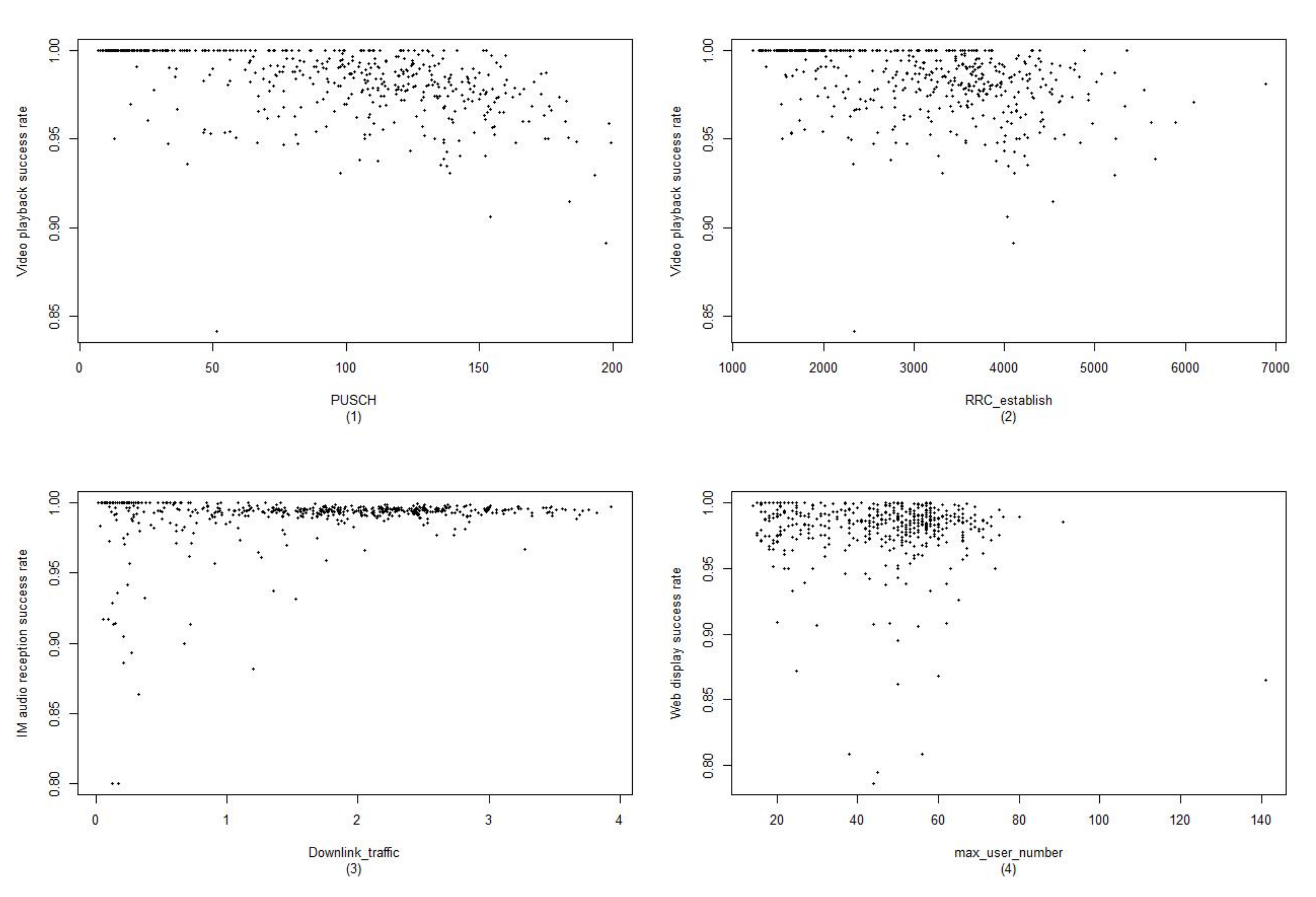
As can be seen from Figure 2, the change of the KPIs and KQIs are not linear, and the corresponding relationship is irregular. Therefore, if we discretize the KPI data, we cannot obtain the relationship well, and we will lose some information in the process of model learning. Therefore, discretization was not considered in the data processing. The probability density distribution was used in the classifier. As mentioned above, we combined the estimation of user experience and fault diagnosis. Therefore, each kind of KPI data will have the corresponding fault type. When a certain kind of KPI is associated with the deterioration of the KQI, the possible cause of the failure can be found directly. The relationship between the KPI and corresponding fault causes [34] is given in Table 3.
Figure 2. In Figure 2: (1) shows the corresponding relationship between the video playback success rate (KQI) and the PUSCH utilization rate (KPI) in the cell; (2) shows the corresponding relationship between the video playback success rate and the number of RRCs established in the cell; (3) shows the corresponding relationship between the IM audio receiving success rate and the downlink traffic in the cell; (4) is the corresponding relationship between the web display success rate and the max number of the cell.
Table 3. Troubleshooting guide.

3.2. Methods

The purpose of the proposed method is to estimate KQIs for different services. At the same time, fault diagnosis and optimization suggestions are given. As mentioned above, most of the research on cellular KQI estimation is based on discrete KPI data. Due to the complexity of KPI data, discretization will bring much inaccuracy. Some commonly used association methods, such as a priori [35], SVM [24,25], random forest [36], and so on, have a high complexity, and these methods cannot obtain real-time fault cause feedback.
We did not discretize KPI data, but KQI data were discretized by converting them into Boolean values (abnormal/normal) through the threshold value. The threshold value is adjustable, which can be changed according to the requirements of network optimization personnel. In the evaluation, the threshold for the KQIs of their service types (web response success rate, IM receiving success rate, and video playback success rate) was set to 95%. In this way, the estimation of user experience was transformed into a binary classification problem. When the KQI was lower than 95%, it was judged as abnormal, and when the KQI was greater than or equal to 95%, it was judged as normal. In this way, the estimation of user experience was transformed into a binary classification problem. We used the method based on naive Bayes. Through the combination of KDE and the adaptive bandwidth selection algorithm, the optimal kernel function was found. When choosing the optimal kernel function, we used the R 2 goodness of fit as the standard. Finally, the kernel function was applied to the classifier.
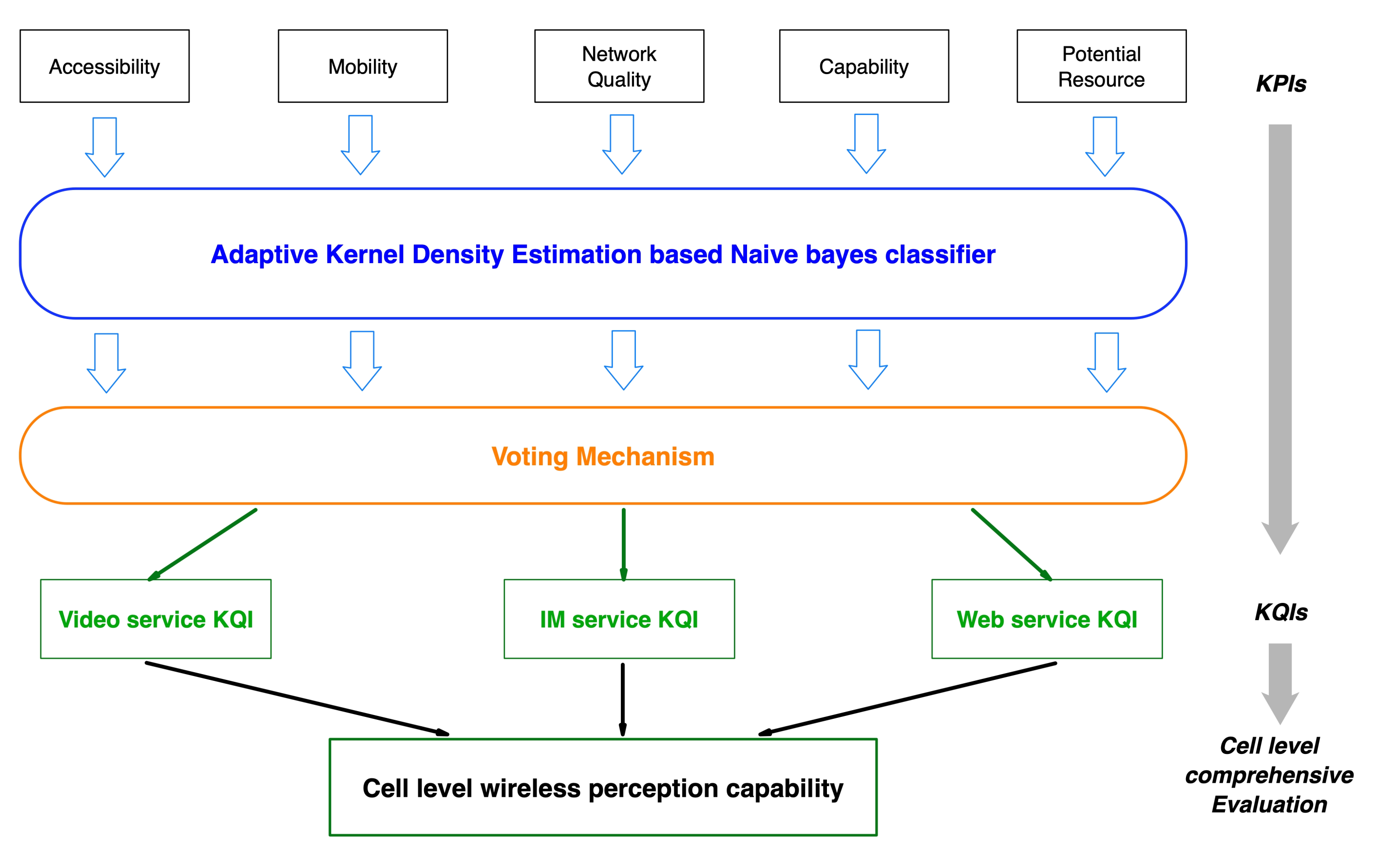
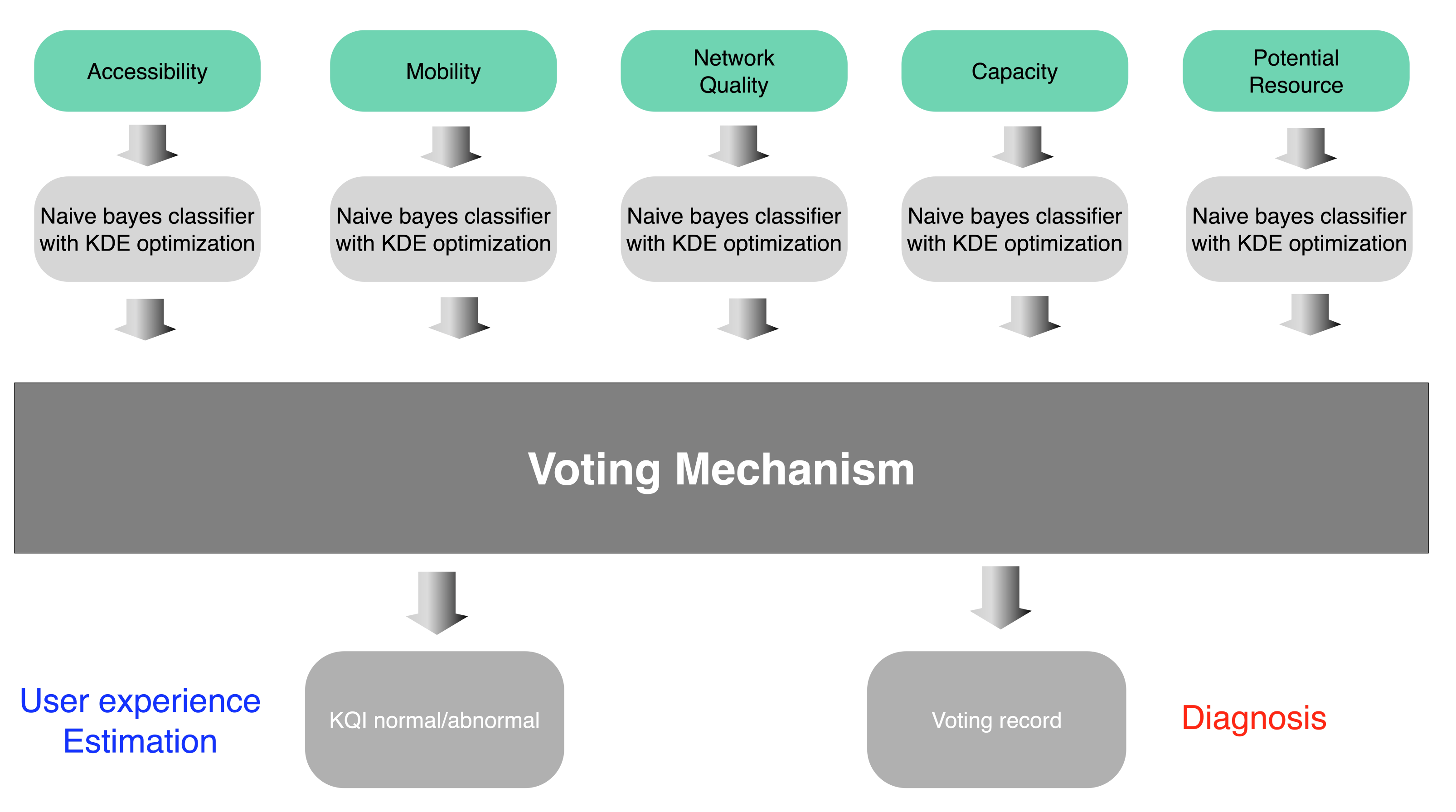
KPI data of different classes as shown in Table 1 were put into different classifiers for processing. Five KQI estimation results could be obtained, and user experience estimation results for each service type could be obtained through the voting mechanism. The user experience for three service types was summarized into a cell-level evaluation. Figure 3 shows these processes.
Figure 3. User experience estimation.
Because of the complexity of KPI data, the probability density distribution of each type of data is different. Therefore, different Bayesian classifiers were used to process these data, and different bandwidth and kernel functions were considered. For each kind of KPI data, the estimated value of KQI was obtained respectively, and then, the final KQI estimation was obtained by a voting mechanism. This can improve the accuracy of prediction, and more importantly, when the KQI degradation is estimated, we can analyze the causes of network failure according to the voting of different types of KPIs. The table below shows the corresponding relationship between different types of KPI degradation and failure causes. According to the KQI of each service, the overall wireless network service perception ability of the cell is judged.
S = [ [ [ s m , t ] t = 1 T ] m = 1 M ] g = 1 G
In Equation (1), S is the KPI dataset, t is time, and m is the KPI type, where maximum value of m is 5, and five KPI types (access, handover, network quality, capacity, potential resources) were used in the evaluation. g is the service type, and there are three service types (instant messaging, video, and web browsing) in total. For KQI data, Boolean conversion was carried out according to the threshold value to construct set C, as shown in function (2), where 0 represents abnormal and 1 represents normal. The threshold value can be set according to the actual network management and optimization requirements.
C = 0 , 1
In this way, the estimation of the KQI can be transformed into a binary classification problem. According to the idea of naive Bayes, our goal was to classify the KQI according to the conditional probability.

3.2.1. Adaptive Kernel Density Estimation

Solving the distribution density function of random variables from a given sample set is one of the basic problems in probability statistics. Methods to solve this problem include parametric estimation and nonparametric estimation. Parameter estimation can be divided into regression analysis and discriminant analysis. In parametric regression analysis, people assume that the data distribution conforms to a certain property, such as a linear, reducible linear, or exponential property, and then, a specific solution can be obtained in the objective function sets. Experience and theory show that there is a gap between the basic assumption of the parametric model and the actual model. These methods cannot always achieve satisfactory results.
Due to the above defects, a non-parametric estimation method was proposed [37], namely kernel density estimation. Kernel density estimation does not use the prior knowledge about the data distribution and does not attach any assumptions to the data distribution; it is a method that can capture the characteristics of the data distribution from the data sample itself. Therefore, it is highly valued in the field of statistical theory and application [38].
f h x = 1 n h K n x x i = 1 n h i = 1 n K x x i h
In Equation (3), K ( . ) is a kernel function. h > 0 is a smoothing parameter called the bandwidth. x 1 , x 2 , x 3 x n represents n sample points. In the kernel density estimation part, we selected the kernel function and the optimal bandwidth, respectively. Considering the different data distribution for each KPI, four kernel functions were used for simulation, and they are Gaussian, Epanechnikov, cosine, and rectangular.
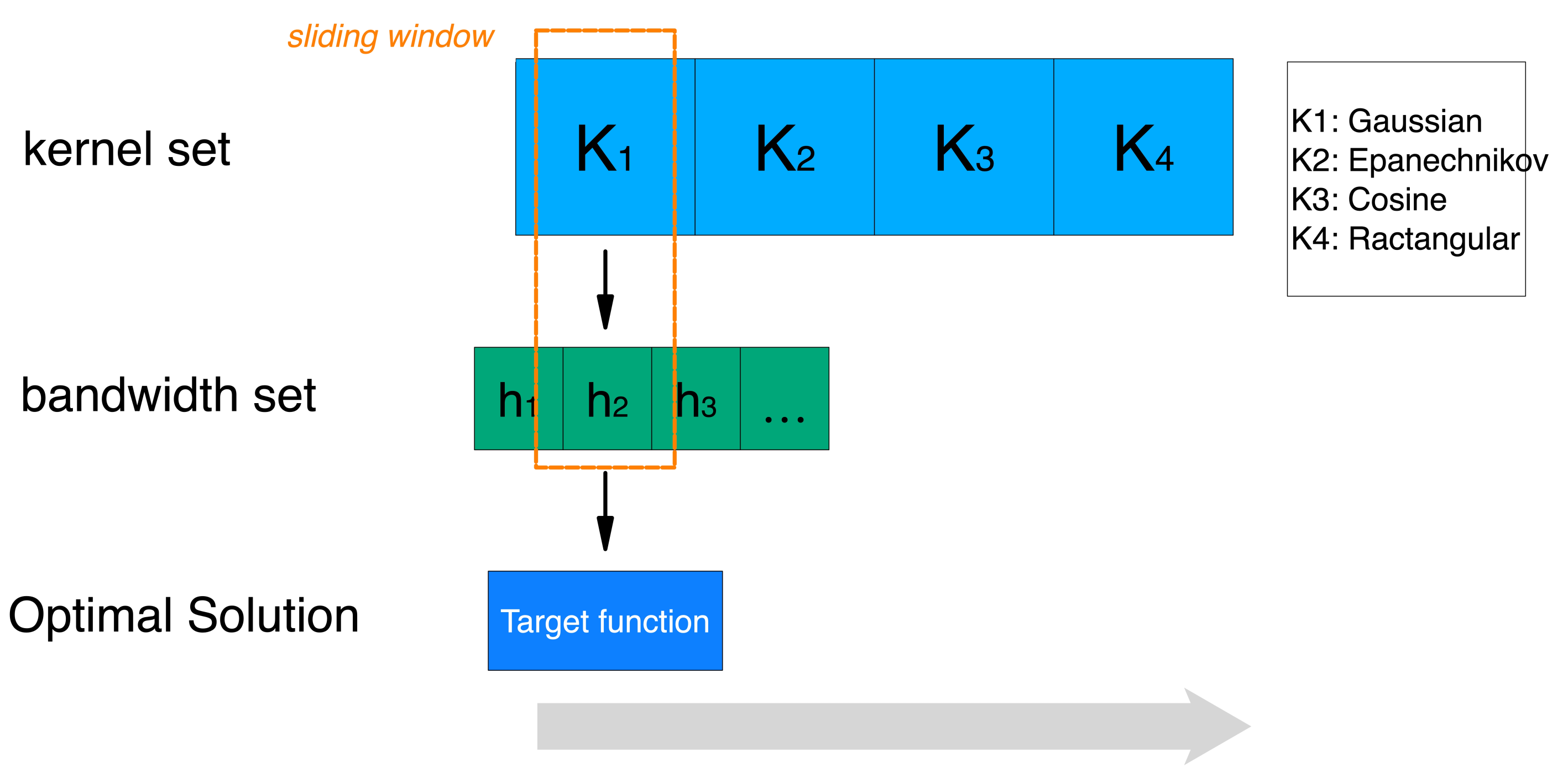
In order to select the optimal kernel function and bandwidth, we propose a two-step optimization scheme. As shown in Figure 4, the kernel function and bandwidth were successively selected through a sliding window. Specifically, we first selected one of four kernel functions, then found the optimal bandwidth based on the known kernel function. When the optimal bandwidth of each kernel function was selected, we chose the optimal kernel density estimation scheme from these four cases and used it in the classifier. The specific algorithm is given by Algorithm 1.
Algorithm 1 Two-step optimization in kernel density estimation.
Require: K: Kernel function set; S: KPI set;
Ensure: optimal K * ; optimal h *
 1: Initial K i and h;
 2: Calculation of average value and standard deviation for each attribute in S;
 3: repeat
 4:  Kernel function selection;
 5:  repeat
 6:   Bandwidth calculation;
 7:  until Based on current kernel function, the optimal bandwidth h * is found
 8: until The optimal kernel function K * and optimal bandwidth h * are obtained
Figure 4. Two-step optimization for kernel density estimation.
Once the kernel function has been determined as Equation (3), when selecting the bandwidth, the optimal bandwidth for the current kernel function can be found through the MISE.
M I S E h = E f h x f x 2 d x
The MISE in Formula (4) can be decomposed into three parts as:
M I S E h = E f h 2 x d x 2 f x E f h x d x + f 2 x d x
The third component in Equation (3) was removed because it does not depend on the kernel, and the cost function is defined as:
C ^ h = M I S E f 2 x d x
which also can be expressed as:
C ^ h = E f h 2 x d x 2 f x E f h x d x
The minimizer of C ^ h is an estimate of the bandwidth in Algorithm 1, which is denoted by h * .
When comparing different kernel functions with the corresponding bandwidth, the R 2 goodness of fit was used as the comparison standard. The goodness of fit refers to the fitting degree between the regression model and the observed value. Statistical measurement of the goodness of fit was the determinate coefficient R 2 . The maximum value of R 2 is 1. The closer to 1, the better the fitting degree of the regression to the observed value that can be obtained; on the contrary, the smaller R 2 is, the worse the fitting degree of the regression to the observed value is.
y is the value to be fitted; the mean value is y ¯ , and the fitting value is y ^ . The sum of squares total (SST), sum of squares regression (SSR), and sum of squares error (SSE) are expressed as follows:
S S T = i = 1 N y i y ¯ 2
S S R = i = 1 N y i ^ y ¯ 2
S S E = i = 1 N y i y i ^ 2
According to S S T = S S R + S S E , R 2 can be obtained by Equation (11).
R 2 = S S R S S T = i = 1 N y i ^ y ¯ 2 i = 1 N y i y ¯ 2 = 1 S S E S S T
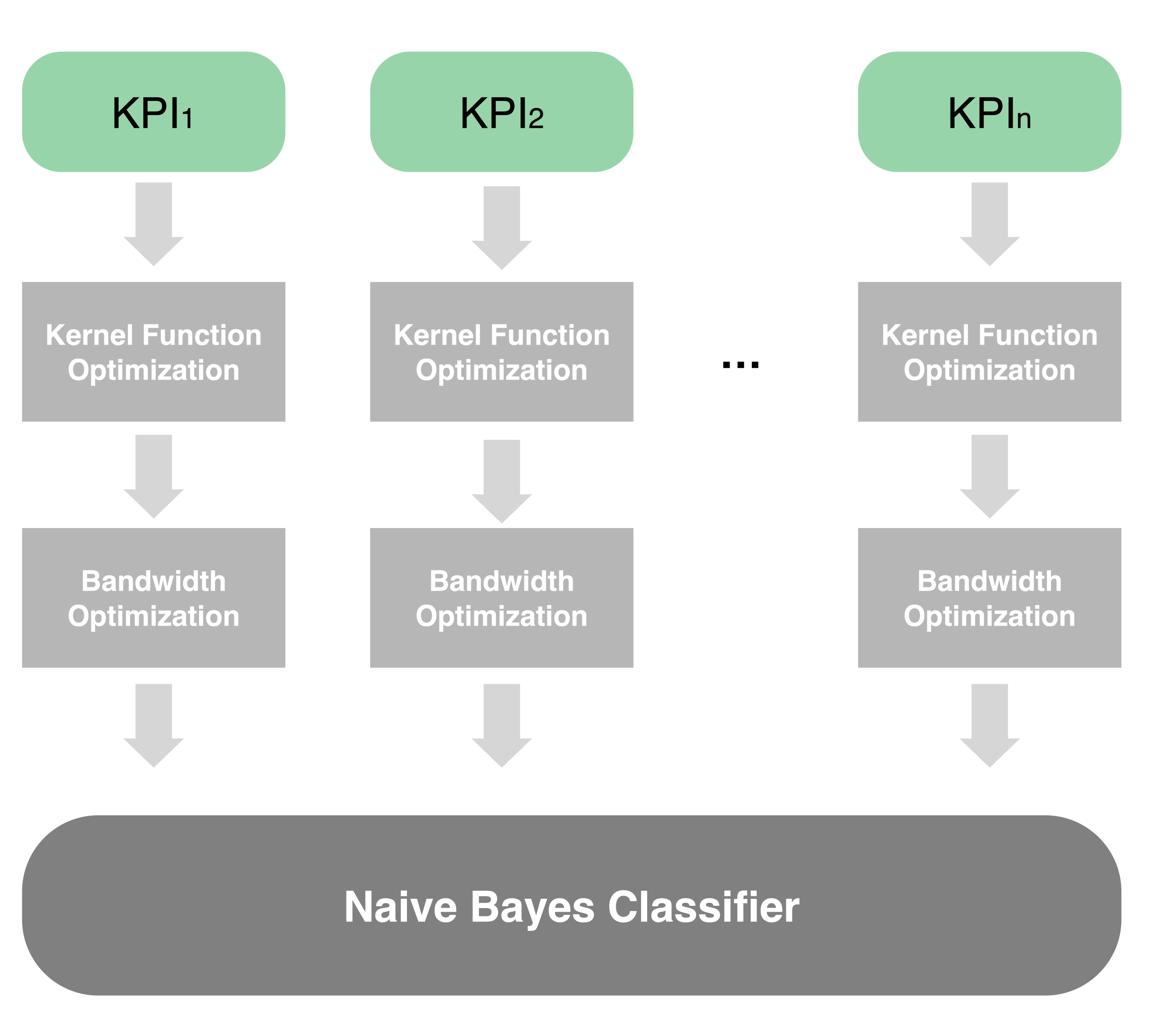
We adopted a two-step KDE method to select the kernel function and bandwidth according to the determination coefficient. As shown in Figure 5, we selected the most suitable kernel function and bandwidth for each group of KPI data. The final probability density distribution function was used in the naive Bayes classifier.
Figure 5. Two-step kernel density estimation.
The essence of kernel probability density estimation is to regard each datum and bandwidth as the parameters of the kernel function. After multiple kernel functions have been obtained, the kernel density estimation was formed through linear superposition, then the kernel density probability density function could be obtained after normalization. We used this method in the probability calculation, and the result can be used in the naive Bayesian classifier. This can improve the estimation accuracy and avoid the error caused by the discretization of KPI data. In kernel density estimation, the bandwidth determines the smoothness, and the kernel function determines the shape of the distribution.

3.2.2. Naive Bayes Classifier

The naive Bayes classifier is a series of simple “probability classifiers” based on the application of the Bayesian theorem. It is also a supervised machine-learning technology for classification and characterized by being fast, accurate, simple, and easy to operate [39]. Each input variable in naive Bayes is assumed independent.
We divided the KQIs into two categories: normal and abnormal, represented as 1 and 0 according to the threshold value. The conditional probability can be obtained as P S C . For the KQI estimation, the classification problem can be expressed as:
P C = 0 S = P C = 0 i = 1 n P i s i C = 0
P C = 1 S = P C = 1 i = 1 n P i s i C = 1
The judgment of the result can be expressed as:
l o g p C = 0 S p C = 1 S = l o g p C = 0 p C = 1 + i = 1 n l o g P i s i C = 0 P i s i C = 1
We define the threshold Θ , if l o g p C = 0 S p C = 1 S Θ , and the KQI is considered abnormal.
For continuous data such as the KPIs in this paper, we used the following probability density function for naive Bayes.
f s = 1 n h i = 1 n K s s i h
where K and h are provided by the last step. s S and s i are the training points. For a certain KPI, the conditional probability can be expressed as:
P s C = c k = 1 n h i = 1 n K s s i h C = c k
where c k 0 , 1 is the classification set. After kernel function optimization and bandwidth optimization, the probability density distribution function corresponding to each group of KPIs is used in the classifier.

3.2.3. Voting Mechanism

Different from other methods using the Bayesian classifier for estimation, we classified KPI data. For each class of KPIs, the KQI can be estimated respectively. The estimated results of each category are summarized by the voting mechanism. In all results, if more than two abnormal KQI results were estimated, we considered that the KQI value was abnormal. As shown in Figure 6, this is the judgment process of voting mechanism. It should be noted that the voting information will be collected every time. We can judge the main reason for the decline of user experience according to Table 3 in the cell through the statistics of multiple voting.
Figure 6. Voting mechanism.
As mentioned above, we divided the KPIs into five categories. One of three services’ KQI was selected, which means the user experience of one service type would be estimated. At the same time, five kinds of KPIs were used to estimate the KQI one by one. It can be seen from function (1) that when we estimate the first service type KQI through the first type of KPI data, we set m = 1 and g = 1 , and the KPI data can be expressed as S m 1 , g 1 , while the correlation result can be expressed as C m 1 , g 1 . Each type of KPI was associated with the first KQI one by one. The summary result can be expressed as:
C m 1 , g 1 = m = 1 6 C m i , g 1
When summarizing the results, we chose the voting mechanism. When the proportion of abnormal KQIs estimated by the KPIs accounted for more than two, the current service KQI was determined as abnormal. This judgment method is expressed as Equation (18). Finally, the KQI results estimated by each type of KPI were recorded. The statistical result for every vote can be used for fault diagnosis.
C m , g > 2 N o r m a l C m , g 2 A b n o r m a l

3.2.4. Service Perception Capability in Cell-Level Wireless Networks

The perception capability of wireless networks is a comprehensive reflection of users’ experience of multiple services in a cell-level wireless network. In this paper, we considered three main services, and the user experience of these three main services was used to evaluate the perception capability of wireless networks. In actual network optimization, different service types can be assigned different weights to obtain the overall user experience according to the requirements of network management. Through the Bayesian classifier and the voting mechanism, the user experience of each kind of service in the cell can be obtained. We summarize the KQI of three services (instant messaging, video, and web browsing). As shown in Table 4, these four levels depend on the proportion of abnormal KQIs in three services. For example, if user experience estimates of two from three services were abnormal, the cell-level user experience was considered poor. When the user experience of three services was estimated to be normal, the cell-level user experience was evaluated as excellent. So far, the cell level wireless perception capability evaluation has been completed.
Table 4. Cellular network perception capability.

4. Results

4.1. Evaluation of the Adaptive KDE Naive Bayes Classifier

The KPI types are given in Table 1, and the KQIs of three services are estimated, respectively. The corresponding KQIs of the three services are video playback success rate, instant messaging audio transmission success rate, and web response success rate. In the verification, naive Bayesian classifier based on the Gaussian kernel function (GNB), and K-nearest neighbor (KNN) were used as the comparison algorithms. AKNB is our proposed algorithm, which means adaptive kernel density estimation based naive Bayes. For the KNN, we set the clustering number K to two. The ratio of the training set to the test set was set to 1.5:1. The verification results of the three services’ KQIs are shown in Table 5. Through the results shown in these three tables, it can be seen that compared with the other two common methods, naive Bayes based on KDE with two-step optimization had better accuracy for the association between KPIs and KQIs.
Table 5. Algorithm comparison for three service KQIs’ estimation.
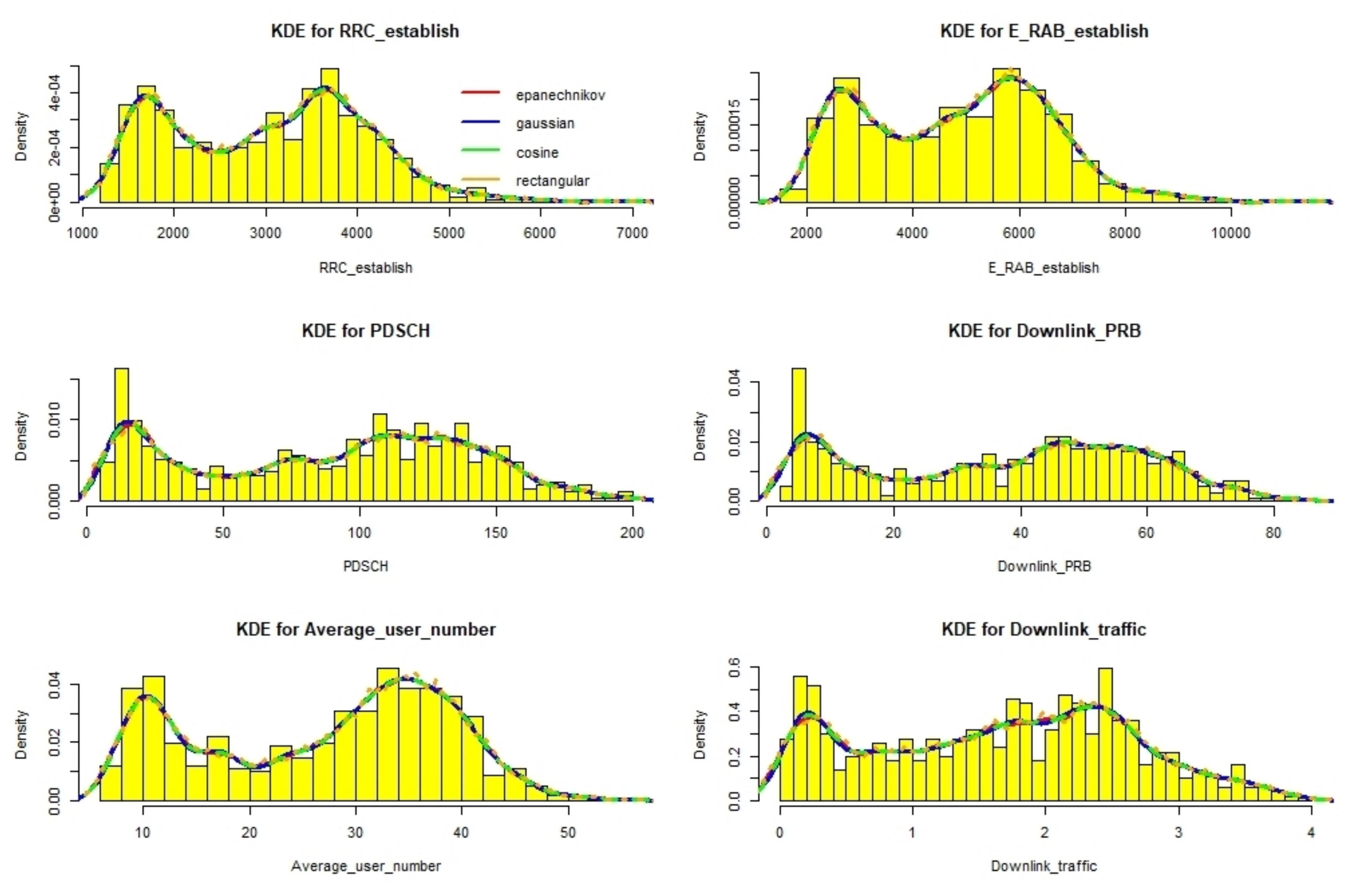
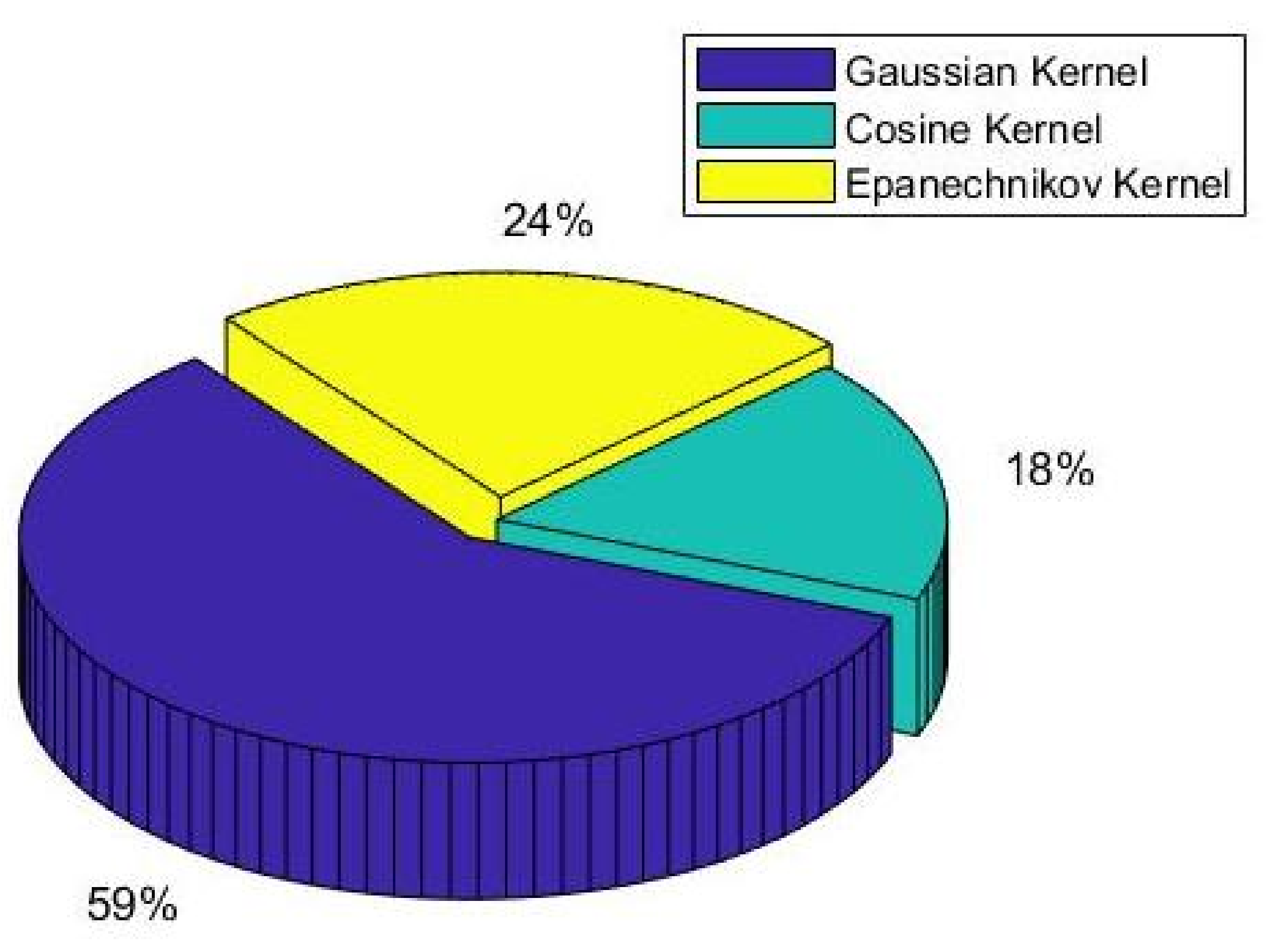
At the same time, we explored the selection of the kernel function in the two-step optimization. Figure 7 shows the kernel density estimation results of the four kernel functions for different KPI data. From Figure 8, it can be seen that the Gaussian kernel function was the most selected one when performing adaptive kernel density estimation for all KPI data.
Figure 7. Kernel density estimation results for different KPI data.
Figure 8. Proportion of each kernel function.

4.2. Evaluation of the Combination of Classifiers with the Voting Mechanism

In order to combine user experience estimation and network fault diagnosis, a voting mechanism was introduced into our method. As mentioned above, our estimation of cell-level KQI was obtained from the estimation results of five types of KPIs, which were counted by the voting mechanism. The fault diagnosis was based on the vote (normal or abnormal) of each type of KPI.
Taking the video service as an example, we verified the estimation accuracy of this voting mechanism. The KNN and SVM based on multiple kernel functions were used for the comparison. SVM is an advanced algorithm commonly used in user experience estimation and fault diagnosis. For the proposed method, we first obtained the estimated value of each kind of KPI for the video service KQIs according to the adaptive KDE naive Bayes based on two-step optimization, and then, we summarized the five results to obtain the final estimated value. The final results and computational complexity of each algorithm are given in Table 6, where n is the number of samples and d is the dimension of the data. It should be noted that in addition to the accuracy, we also give the specificity and sensitivity, which are critical to judge the performance of user experience estimation. These two items are calculated as follows:
S e n s i t i v i t y = T P T P + F N
S p e c i f i c i t y = F P F P + T N
in which, T P (true positive) means the KQI was correctly estimated as normal; F P (false positive) means the KQI was incorrectly estimated as normal; T N (true negative) represents that the KQI was correctly estimated as abnormal; F N (false negative) represents that the KQI was incorrectly estimated as abnormal.
Table 6. Comparison results of various algorithms.
In this paper, sensitivity means the proportion of correctly estimated KQIs in KQI normal samples, while specificity is the estimation accuracy of abnormal KQIs. It can be seen that the proposed algorithm and SVM with the Gaussian kernel had the best performance, but the complexity of the proposed algorithm was much less than that of SVM. This is also very important for regional network optimization, because the amount of wireless data in a region is huge, and it is particularly important to select algorithms with low complexity and high effectiveness.

4.3. Cell-Level Multi-Service Perception

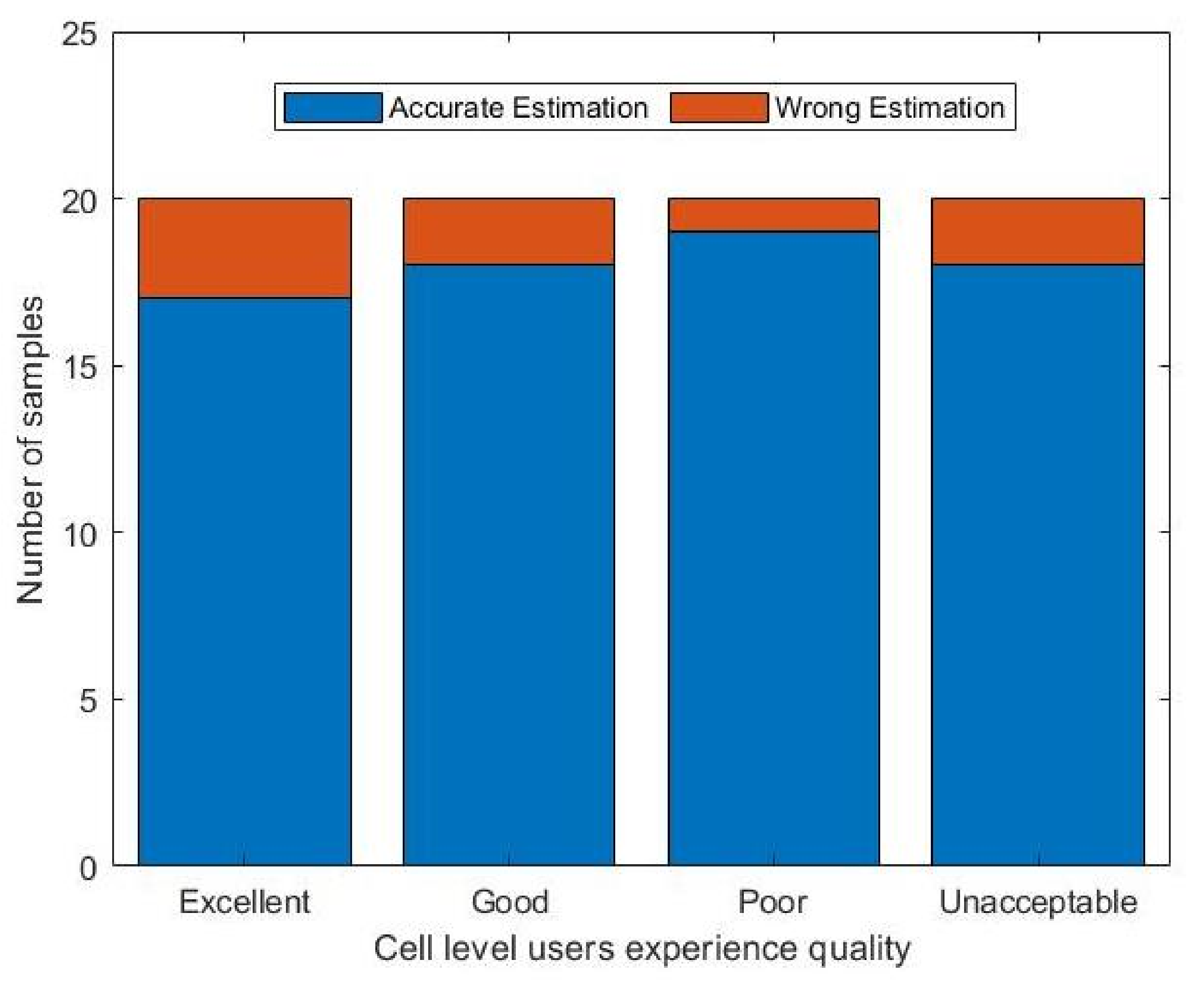
Cell-level wireless network perception is an overall evaluation index of users for three service types in a cell. The evaluation criteria are shown in Table 4. There are four levels of perception, namely excellent, good, poor, and unacceptable. In the verification process, we selected 80 groups of data, and each level contained 20 groups of data. For the estimation, we combined the voting mechanism with the two-step-optimized AKNB to obtain the estimated KQI for the three services, then the KQIs for three services were summarized into cell-level wireless network perception capability. The statistical results are shown in Figure 9 and Table 7. The proposed method can well estimate the perception capability of cell-level wireless networks.
Figure 9. Statistical results for cell-level service perception evaluation.
Table 7. Statistical results for cell-level service perception evaluation.
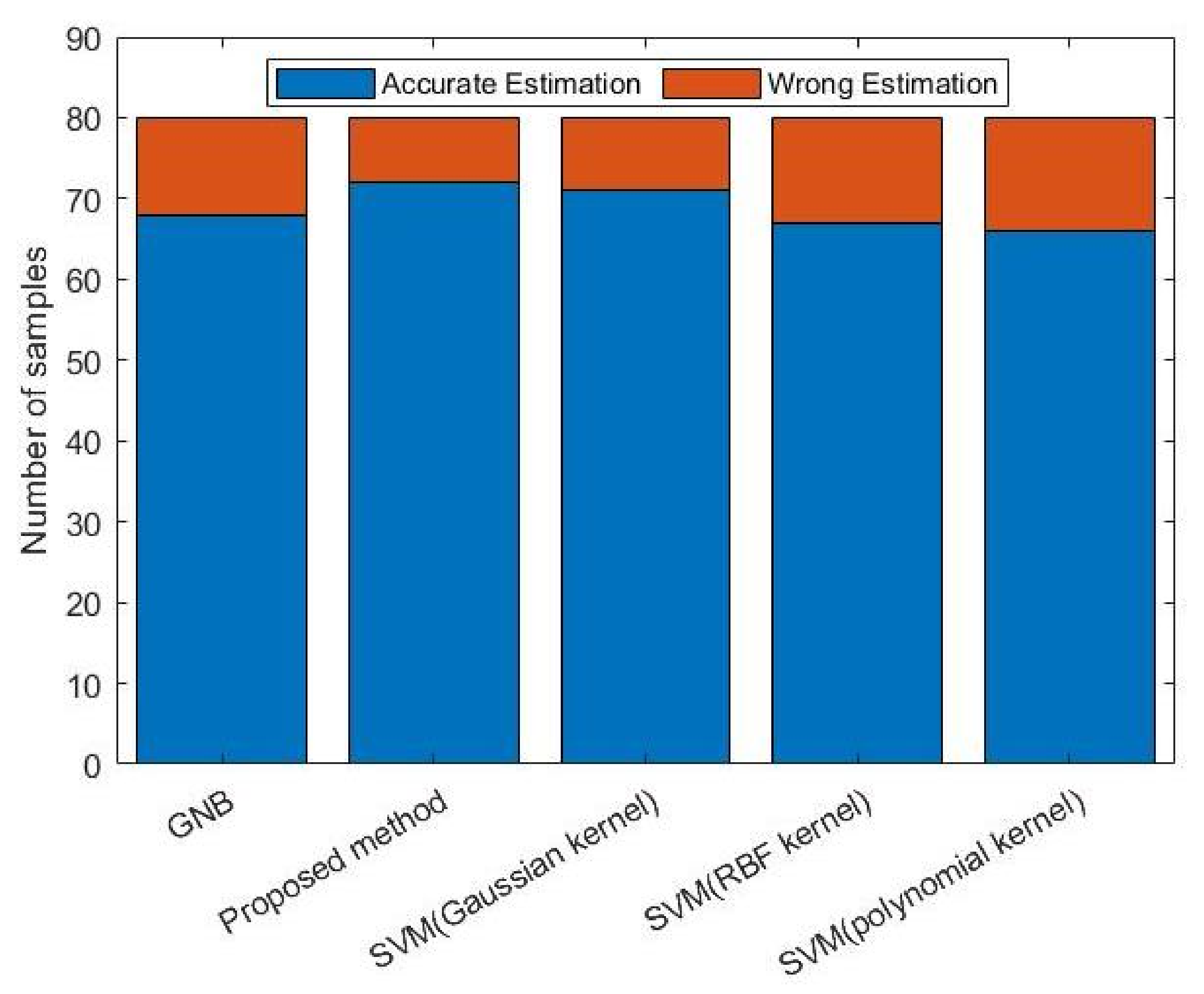
At the same time, commonly used algorithms in the research of user experience were also selected to evaluate the perception ability of cell-level wireless networks, and the application performance of various algorithms in such scenarios were verified. As the verification in previous step, we used 80 sets of data for the different algorithms. The difference was that we only counted the number of correctly estimated and incorrectly estimated samples, not for different levels of user experience. In our proposed scheme, adaptive kernel density estimation and naive Bayes were used to estimate users’ experience for each type of KPI, and the final user experience was obtained by the voting mechanism; for other algorithms, all KPI data were used to estimate the user experience. These different algorithms were used to estimate the user experience of the three services, respectively, and the estimation results of the three services were summarized as the cell-level wireless network perception capability. Figure 10 shows the results. The proposed algorithm and the SVM based on the Gaussian kernel function had better performance. The algorithms that performed well in user experience prediction can be used to evaluate the perception ability of cell-level wireless networks.
Figure 10. Cell-level service perception evaluation based on different methods.
This evaluation standard can well present the cell-level service quality for network provider, and the weight value can be used to summarize the estimated values of three services according to the specific requirements of the network provider for different services in the region. This method can be used to provide guidance and suggestions for network optimization.

5. Discussion

We estimated the KQIs for different types of KPIs, respectively, and determined the final estimation result by combining naive Bayes based on two-step optimization in KDE and a voting mechanism. After verification in three aspects, the results showed that compared with traditional KQI estimation algorithms, the accuracy of the algorithm was guaranteed with a low complexity. At the same time, this method combines user prediction with network fault diagnosis, which has not been realized in all previous studies on user experience estimation. The application of the proposed method can find out the KPI that often leads to the decline of user experience in a period of time according to the statistical results, so that the network can be adjusted for such KPIs. Based on the estimation of the user experience, we introduced a wireless network perception capability to evaluate cell-level user experience for multiple services. To the best of the author’s knowledge, this is the first time that multi-service user experience estimation at the cell level has been proposed. The final results showed that the proposed framework can accurately estimate and evaluate the network quality of the cell from the perspective of user experience.
However, some limitations should be noted. In this paper, our data came from one base station due to data collection limitations. The general applicability of the verified method needs to be improved. In the future, we will collect and process city-level data to enhance the generalization ability of the algorithm.

6. Conclusions

Recently, in mainstream research on KQI estimation for wireless networks, discretization of KPIs is always adopted, which will lead to some error. In this method, KPI data are regarded as continuous, and prior probability is calculated by the probability density function. For KPI data in wireless networks, the distribution rules of each kind of data are different. For each kind of KPI data, we used the two-step optimized kernel density estimation method to find the best probability distribution through the fitting degree, and this probability density was used by the naive Bayesian classifier to further improve the accuracy. The voting mechanism of KQI estimation was adopted, and the result can feed back to the network optimization personnel which kind of KPI caused the fault, that is which kind of KPI was voted as abnormal. According to the long-term statistical results, we can know which kind of KPI is always problematic. This can make network optimization work more efficiently. The proposed algorithm has low complexity while ensuring accuracy. Finally, we summarized the KQI estimation results of three main services (instant messaging, web page browsing, and video), and the cell-level wireless network perception capability was obtained. The results showed that the proposed method can accurately evaluate the multi-service user perception of a cell.
In the research of user experience estimation, some studies are based on the user’s subjective experience [15,16,20,23]. However, for actual network management, it is not realistic to obtain the subjective experience of each user. Therefore, the objective part of user experience is the KQI, which is increasingly used for research on user experience estimation [21,22,24,25]. The prediction technology of the KPIs for wireless network is becoming mature, but the prediction value of the KPIs cannot well reflect the actual user experience; meanwhile, the KQI data are often unpredictable. Among them, most research is based on discretized KQI data [21]. The effectiveness of the SVM [24,25,26] and Bayesian [13] classifiers has been verified. By comparing the proposed algorithm with these advanced methods, the results showed that the proposed algorithm can better deal with user experience estimation. At the same time, it should be noted that research on user experience estimation and wireless network fault diagnosis is usually in two different research directions. We combined them together and obtained good results in both aspects. The method proposed in this paper can also make the research of wireless network data prediction more practical.
The work of network management and optimization has gradually shifted from manual to network self-management and self-optimization. The proposed method can be well used in network automation. It not only saves network operation cost, but also ensures optimized performance. Our future work will continue to focus on user experience estimation in cellular network. A general model of user subjective experience is the focus of our next research. We hope that the combination for the estimation of the subjective part and the objective part can make more accurate estimation of user experience and more accurate positioning of network faults.

Author Contributions

Conceptualization, K.Z.; methodology, K.Z.; software, S.M.; validation, K.Z. and S.M.; formal analysis, K.Z.; resources, G.C. and Q.L.; data curation, K.Z.; writing—original draft preparation, K.Z.; writing—review and editing, G.C. and S.M.; visualization, Q.L.; supervision, G.C. All authors have read and agreed to the published version of the manuscript.

Funding

This work was supported by the National Key Research and Development Project of China under Grant 2020YFB1806703.

Institutional Review Board Statement

Not applicable.

Data Availability Statement

No data available.

Conflicts of Interest

The authors declare no conflict of interest.

Abbreviations

The following abbreviations are used in this manuscript:
KPIKey performance indicators
KQIKey quality indicators
QoSQuality of service
QoEQuality of experience
KDEKernel density estimation
GNBGaussian naive Bayes
AKNBAdaptive kernel-density-estimation-based naive Bayes
E-RABEvolved radio access bearer
RRCRadio resource control
UEUsers
eNBEvolved Node B

References

  1. Banovic-curguz, N.; Ilisevic, D. Mapping of QoS/QoE in 5G Networks. In Proceedings of the 42nd International Convention on Information and Communication Technology, Electronics and Microelectronics (MIPRO), Opatija, Croatia, 20–24 May 2019; pp. 404–408. [Google Scholar]
  2. Anchuen, P.; Uthansakul, P.; Uthansakul, M. QOE model in cellular networks based on QOS measurements using Neural Network approach. In Proceedings of the 13th International Conference on Electrical Engineering/Electronics, Computer, Telecommunications and Information Technology (ECTI-CON), Chiang Mai, Thailand, 28 June–1 July 2016; pp. 1–5. [Google Scholar]
  3. Vaser, M.; Forconi, S. QoS KPI and QoE KQI Relationship for LTE VIdeo Streaming and VoLTE Services. In Proceedings of the 9th International Conference on Next Generation Mobile Applications, Services and Technologies, Cardiff, UK, 16–19 September 2015; pp. 318–323. [Google Scholar]
  4. Hobfeld, T.; Fiedler, M.; Gustafsson, J. Betas: Deriving quantiles from MOS-QoS relations of IQX models for QoE management. In Proceedings of the IFIP/IEEE Symposium on Integrated Network and Service Management (IM), Lisbon, Portugal, 8–12 May 2017; pp. 1011–1016. [Google Scholar]
  5. Ramezani, P.; Jamalipour, A. Toward the Evolution of Wireless Powered Communication Networks for the Future Internet of Things. IEEE Netw. 2017, 31, 62–69. [Google Scholar] [CrossRef]
  6. Agiwal, M.; Roy, A.; Saxena, N. Next Generation 5G Wireless Networks: A Comprehensive Survey. IEEE Commun. Surv. Tutor. 2016, 18, 1617–1655. [Google Scholar] [CrossRef]
  7. Bouraqia, K.; Sabir, E.; Sadik, M.; Ladid, L. Quality of Experience for Streaming Services: Measurements, Challenges and Insights. IEEE Access 2020, 8, 13341–13361. [Google Scholar] [CrossRef]
  8. Zhao, T.; Liu, Q.; Chen, C.W. QoE in video transmission: A user experience-driven strategy. IEEE Commun. Surv. Tutor. 2017, 19, 285–302. [Google Scholar] [CrossRef]
  9. Laghari, K.R.; Connelly, K. Toward total quality of experience: A QoE model in a communication ecosystem. IEEE Commun. Magzine 2012, 50, 58–65. [Google Scholar] [CrossRef]
  10. Amour, L.; Boulabiar, M.I.; Souihi, S.; Mellouk, A. An improved QoE estimation method based on QoS and affective computing. In Proceedings of the International Symposium on Programming and Systems (ISPS), Algiers, Algeria, 24–26 April 2018; pp. 1–6. [Google Scholar]
  11. Garcia, A.C.; Casas, S. Mobile QoE exploration: An unsupervised field study in an Argentine Patagonian city. In Proceedings of the 39th International Conference of the Chilean Computer Science Society (SCCC), Coquimbo, Chile, 16–20 November 2020; pp. 1–7. [Google Scholar]
  12. Begluk, T.; Husic, J.B.; Barakovic, S. Machine learning-based QoE prediction for video streaming over LTE network. In Proceedings of the 17th International Symposium INFOTEH-JAHORINA (INFOTEH), East Sarajevo, Herzegovina, 21–23 March 2018; pp. 1–5. [Google Scholar]
  13. Tasaka, S. Bayesian Hierarchical Regression Models for QoE Estimation and Prediction in Audiovisual Communications. IEEE Trans. Multimed. 2017, 19, 1195–1208. [Google Scholar] [CrossRef]
  14. Gu, H.; Dong, Y.; Cao, T. Data Driven QoE-QoS Association Modeling of Conversational Video. In Proceedings of the IEEE Global Conference on Signal and Information Processing (GlobalSIP), Ottawa, ON, Canada, 11–14 November 2019. [Google Scholar]
  15. El-Ezzi, Z.Q.; Al-Dulaimi, A.M.; Ibrahim, A.A. Personalized Quality of Experience (QOE) Management using Data Driven Architecture in 5G Wireless Networks. In Proceedings of the 4th International Symposium on Multidisciplinary Studies and Innovative Technologies (ISMSIT), Istanbul, Turkey, 22–24 October 2020; pp. 1–10. [Google Scholar]
  16. Altozano, M.L.M.; Toril, M.; Luna-Ramírez, S.; Gijon, C. A Self-Tuning Algorithm for Optimal QoE-Driven Traffic Steering in LTE. IEEE Access 2020, 8, 156707–156717. [Google Scholar] [CrossRef]
  17. Uthansakul, P.; Anchuen, P.; Uthansakul, M.; Ahmad Khan, A. Estimating and Synthesizing QoE Based on QoS Measurement for Improving Multimedia Services on Cellular Networks Using ANN Method. IEEE Trans. Netw. Serv. Manag. 2020, 17, 389–402. [Google Scholar] [CrossRef]
  18. Chen, J.; Wang, Y.; Li, Y.; Wang, E. QoE-Aware Intelligent Vertical Handoff Scheme Over Heterogeneous Wireless Access Networks. IEEE Access 2018, 6, 38285–38293. [Google Scholar] [CrossRef]
  19. Pierucci, L.; Micheli, D. A Neural Network for Quality of Experience Estimation in Mobile Communications. IEEE Multimed. 2016, 23, 42–49. [Google Scholar] [CrossRef]
  20. Ahmad, N.; Wahab, A.; Schormans, J. Importance of Cross-Correlation of QoS metrics in Network Emulators to Evaluate QoE of Video Streaming Applications. In Proceedings of the 11th International Conference on Network of the Future (NoF), Bordeaux, France, 12–14 October 2020; pp. 43–47. [Google Scholar]
  21. Fan, G.; Shi, W.; Guo, L.; Zeng, J.; Zhang, K.; Gui, G. Machine Learning Based Quantitative Association Rule Mining Method for Evaluating Cellular Network Performance. IEEE Access 2019, 7, 166815–166822. [Google Scholar] [CrossRef]
  22. Tego, E.; Matera, F. Correlation among QoE/QoS and Network Degradations for Automatic Performance Recovery in a Wide Area Network Test Bed. In Proceedings of the 10th International Conference on Networks of the Future (NoF), Rome, Italy, 1–3 October 2019; pp. 118–121. [Google Scholar]
  23. Hobfeld, T.; Heegaard, P.E.; Varela, M.; Skorin Kapov, L.; Fiedler, M. From QoS Distributions to QoE Distributions a System’s Perspective. In Proceedings of the 6th IEEE Conference on Network Softwarization (NetSoft), Ghent, Belgium, 29 June–3 July 2020; pp. 51–56. [Google Scholar]
  24. Youssef, Y.B.; Afif, M.; Ksantini, R.; Tabbane, S. A Novel Online QoE Prediction Model Based on Multiclass Incremental Support Vector Machine. In Proceedings of the IEEE 32nd International Conference on Advanced Information Networking and Applications (AINA), Krakow, Poland, 16–18 May 2018; pp. 334–341. [Google Scholar]
  25. Qian, L.; Chen, H.; Xie, L. SVM-based QoE estimation model for video streaming service over wireless networks. In Proceedings of the International Conference on Wireless Communications and Signal Processing (WCSP), Nanjing, China, 15–17 October 2015. [Google Scholar]
  26. Elwerghemmi, R.; Heni, M.; Ksantini, R.; Bouallegue, R. Online QoE Prediction Model Based on Stacked Multiclass Incremental Support Vector Machine. In Proceedings of the 8th International Conference on Modeling Simulation and Applied Optimization (ICMSAO), Manama, Bahrain, 15–17 April 2019. [Google Scholar]
  27. Eckert-Gallup, A.; Martin, N. Kernel density estimation (KDE) with adaptive bandwidth selection for environmental contours of extreme sea states. In Proceedings of the OCEANS 2016 MTS/IEEE Monterey, Monterey, CA, USA, 19–23 September 2016. [Google Scholar]
  28. Shitara, Y.; Yamazaki, T.; Yamori, K.; Miyoshi, T. Congestion field detection for Service Quality improvement using Kernel density estimation. In Proceedings of the 18th Asia-Pacific Network Operations and Management Symposium (APNOMS), Kanazawa, Japan, 5–7 October 2016. [Google Scholar]
  29. Kinoshita, T.; Yamamoto, T. Design of a Data-Driven Control System Based on the Abnormality Using Kernel Density Estimation. In Proceedings of the 57th Annual Conference of the Society of Instrument and Control Engineers of Japan (SICE), Nara, Japan, 11–14 September 2018; pp. 196–201. [Google Scholar]
  30. Shimazaki, H.; Shinomoto, S. Kernel bandwidth optimization in spike rate estimation. J. Comput. Neurosci. 2009, 29, 171–182. [Google Scholar] [CrossRef] [PubMed] [Green Version]
  31. Sasongko, T.B.; Arifin, O.; Al Fatta, H. Optimization of Hyper Parameter Bandwidth on Naïve Bayes Kernel Density Estimation for the Breast Cancer Classification. In Proceedings of the International Conference on Information and Communications Technology (ICOIACT), Yogyakarta, Indonesia, 24–25 July 2019; pp. 226–231. [Google Scholar]
  32. Denton, A.; Perrizo, W. A Kernel-Based Semi-Naive Bayesian Classifier Using P-Trees. In Proceedings of the 2004 SIAM International Conference on Data Mining, Lake Buena Vista, FL, USA, 22–24 April 2004; pp. 404–408. [Google Scholar]
  33. Yildirim, P.; Birant, D. Naive Bayes classifier for continuous variables using novel method (NBC4D) and distributions. In Proceedings of the IEEE International Symposium on Innovations in Intelligent Systems and Applications (INISTA) Proceedings, Alberobello, Italy, 23–25 June 2014; pp. 110–115. [Google Scholar]
  34. Zhang, X. LTE Optimization Engineering Handbook, 1st ed.; Wiley-IEEE Press: Hoboken, NJ, USA, 2017. [Google Scholar]
  35. Chun-Sheng, Z.; Yan, L. Extension of local association rules mining algorithm based on a priori algorithm. In Proceedings of the IEEE 5th International Conference on Software Engineering and Service Science, Beijing, China, 27–29 June 2014; pp. 340–343. [Google Scholar]
  36. Fan, G.; Wang, J.; Zhang, K.; Zeng, J.; Gui, G. Cellular Network Performance using Machine Learning based Quantitative Association Rule Mining Method. In Proceedings of the IEEE 91st Vehicular Technology Conference (VTC), Antwerp, Belgium, 25–28 May 2020; pp. 1–5. [Google Scholar]
  37. Sheather, S.J.; Jones, M.C. A reliable data-based bandwidth selection method for kernel density estimation. J. R. Stat. Soc. 1991, 53, 683–690. [Google Scholar] [CrossRef]
  38. Simonoff, J.S. Smoothing Methods in Statistics, 1st ed.; Springer: Berlin/Heidelberg, Germany, 1996. [Google Scholar]
  39. Ma, T.M.; Yamamori, K.; Thida, A. A Comparative Approach to Nave Bayes Classifier and Support Vector Machine for Email Spam Classification. In Proceedings of the IEEE 9th Global Conference on Consumer Electronics (GCCE), Kobe, Japan, 13–16 October 2020. [Google Scholar]
Publisher’s Note: MDPI stays neutral with regard to jurisdictional claims in published maps and institutional affiliations.

Article Metrics

Citations

Article Access Statistics

Multiple requests from the same IP address are counted as one view.