You are currently viewing a new version of our website. To view the old version click .
Molbank
  • Short Note
  • Open Access

2 December 2025

(Z)-N-Carbamothioyl-4-hydroxy-2-oxo-4-(p-tolyl)but-3-enamide

,
and
1
Department of Chemistry, Perm State University, ul. Bukireva, 15, 614990 Perm, Russia
2
Institute of Technical Chemistry UB RAS, 3 Akademik Korolev St., 614013 Perm, Russia
*
Author to whom correspondence should be addressed.
Molbank2025, 2025(4), M2099;https://doi.org/10.3390/M2099 
(registering DOI)

Abstract

The reaction of 5-(p-tolyl)furan-2,3-dione with thiourea in a 1:1 ratio when refluxed in 1,4-dioxane gives (Z)-N-carbamothioyl-4-hydroxy-2-oxo-4-(p-tolyl)but-3-enamide with a good yield. This compound was fully characterized.

1. Introduction

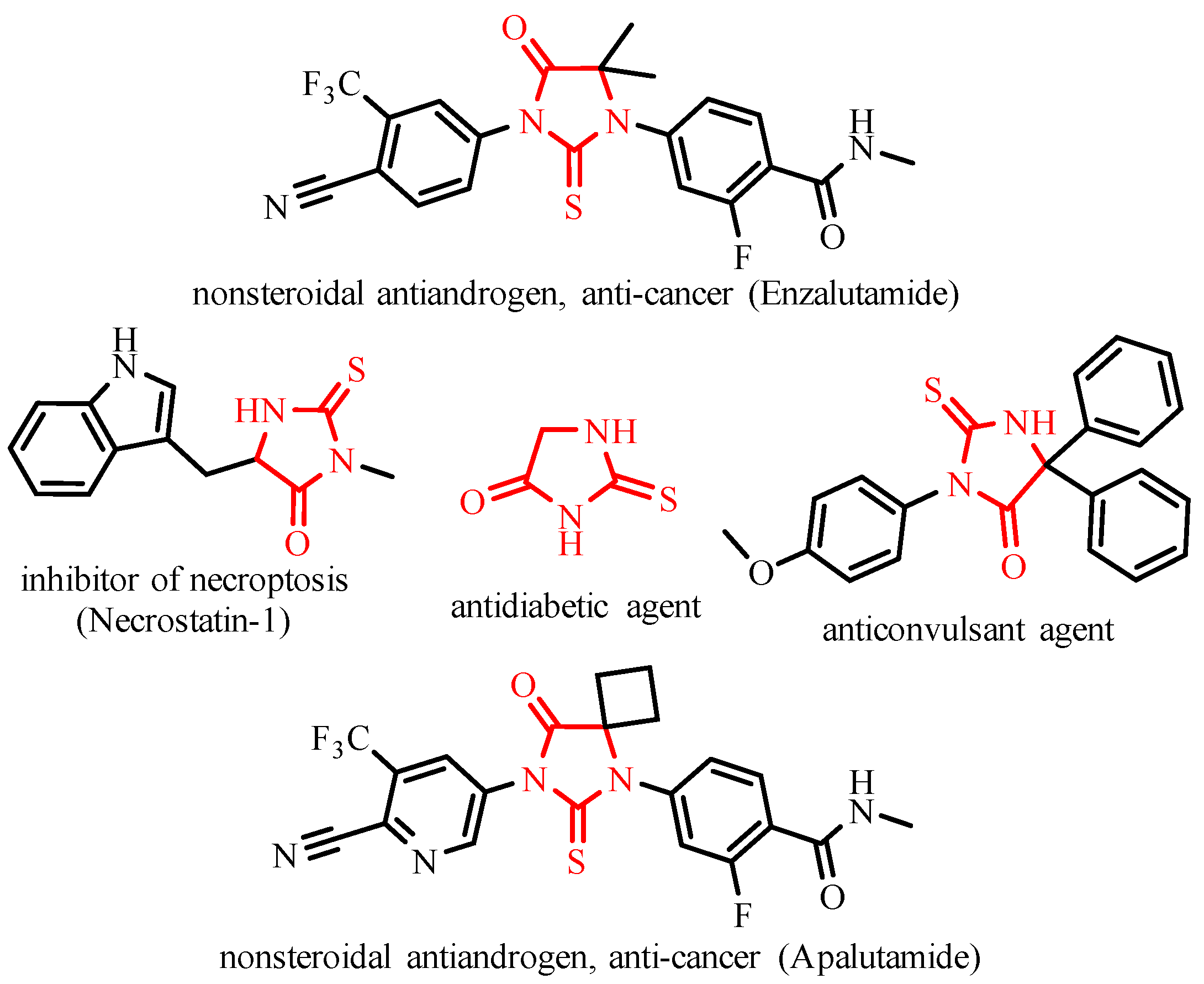
Structural modifications in 2-thioxo-4-imidazolidinone (2-thiohydantoin) produce compounds with a wide spectrum of pharmacological and biological activities, including antibacterial, antifungal, anticonvulsant, anti-human immunodeficiency virus (HIV), anticancer, antitumor, antidiabetic, and anti-inflammatory activities [1,2,3,4]. This scaffold is also included in the structures of medicinal products such as Enzalutamide and Apalutamide, which have been FDA-approved as nonsteroidal antiandrogens, or Necrostatin-1, an inhibitor of necroptosis [1,5,6] (Figure 1). Thus, the development of new synthetic approaches to compounds bearing a 2-thioxo-4-imidazolidinone core is in demand.
Figure 1. Potential pharmaceutical substances bearing a 2-thiohydantoine core.
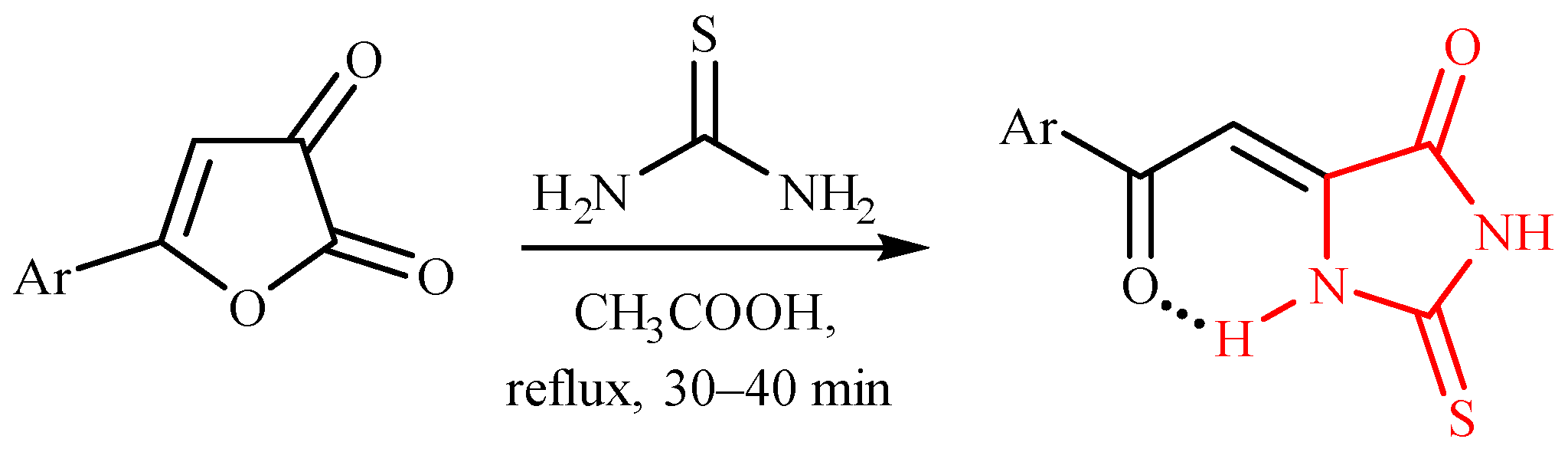
Earlier, the formation of 2-thioxoimidazolidin-4-ones was described by refluxing 5-arylfuran-2,3-diones with thiourea in 15 mL of anhydrous acetic acid for 30–40 min (Scheme 1) [7].
Scheme 1. Synthesis of 2-thioxoimidazolidin-4-ones via a reaction of 5-arylfuran-2,3-diones and thiourea.
Pursuing the development of a synthetic protocol for enaminones under milder conditions [8] than used in [7], we synthesized an intermediate of the reaction, (Z)-N-carbamothioyl-4-hydroxy-2-oxo-4-(p-tolyl)but-3-enamide 1, whose synthesis and characteristics are reported herein.

2. Results and Discussion

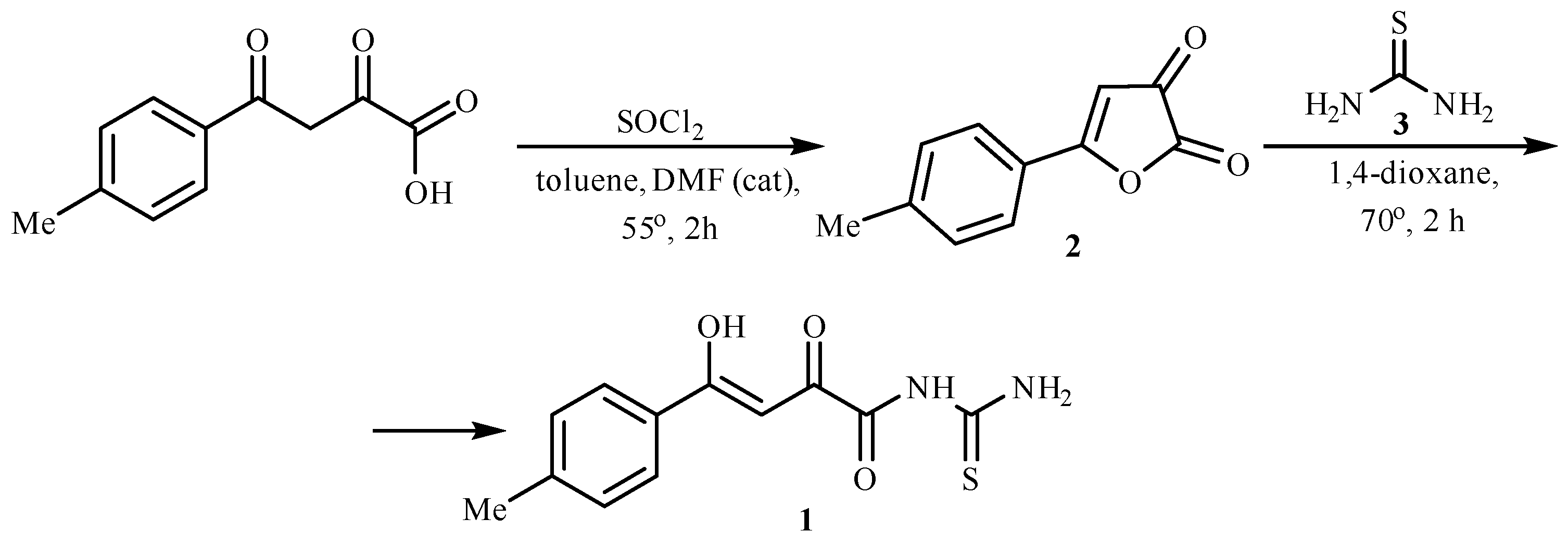
The title compound 1 was synthesized in several stages (Scheme 2). Initially, 5-(p-tolyl)furan-2,3-dione 2 was obtained in the reaction of 2,4-dioxo-4-(p-tolyl)butanoic acid with thionyl chloride [9]. Then, as a result of the reaction of compound 2 and thiourea 3, (Z)-N-carbamothioyl-4-hydroxy-2-oxo-4-(p-tolyl)but-3-enamide 1, the target compound, was obtained for the first time.
Scheme 2. Synthesis of (Z)-N-carbamothioyl-4-hydroxy-2-oxo-4-(p-tolyl)but-3-enamide 1.
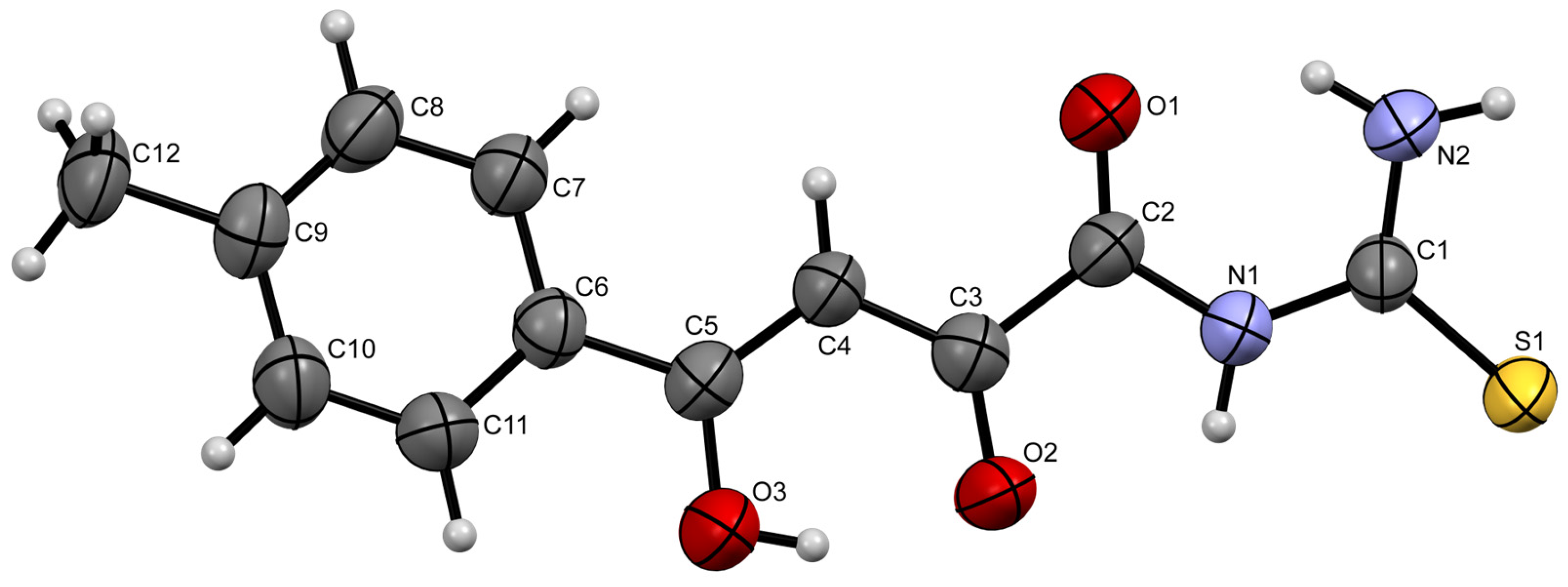
The structure of compound 1 was unambiguously confirmed by X-ray diffraction analysis of a single crystal (CCDC 2503066) (Figure 2).
Figure 2. Structure of compound 1, obtained by X-ray diffraction analysis.

3. Materials and Methods

3.1. General Information

1H and 13C NMR spectra (Supplementary Materials) were obtained on a Bruker Avance III 400 HD spectrometer (Fällanden, Switzerland) (at 400 and 100 MHz, respectively) in CDCl3 using the solvent residual signal (in 1H NMR, 7.27 for CDCl3; in 13C NMR, 77.00 for CDCl3) as an internal standard. IR spectrum was recorded on a Perkin Elmer Spectrum Two Spectrometer (Shelton, CT, USA) as mulls in mineral oil. The melting point was measured on a Khimlabpribor PTP (USSR) device. The single crystal X-ray analysis of compound 1 was performed on an Xcalibur Ruby diffractometer (Agilent Technologies, Wroclaw, Poland). An empirical absorption correction was introduced via the multi-scan method using the SCALE3 ABSPACK algorithm [10]. Using OLEX2 [11], the structure was solved with the SHELXT [12] program and refined by full-matrix least-squares minimization in the anisotropic approximation of all non-hydrogen atoms with the SHELXL [13] program. Hydrogen atoms bound to carbon were positioned geometrically and refined using a riding model. Hydrogen atoms of OH, NH, and NH2 groups were refined independently with isotropic displacement parameters. Elemental analysis was carried out on a Vario MICRO Cube analyzer. The compound 4-(4-Methylphenyl)-2,4-dioxobutanoic acid was obtained according to reported procedures [14] from commercially available reagents. The starting compound 2 was obtained according to reported procedures from commercially available reagents [9]. All procedures with compound 2 were performed in oven-dried glassware. All other solvents and reagents were purchased from commercial vendors and used as received.

3.2. (Z)-N-Carbamothioyl-4-hydroxy-2-oxo-4-(p-tolyl)but-3-enamide 1

A suspension of 0.63 g (3.33 mmol) of 5-(p-tolyl)furan-2,3-dione 2 was added to a solution of 0.25 g (3.33 mmol) of thiourea 3 in 25 mL of anhydrous 1,4-dioxane and refluxed for 2 h. Next, the reaction mixture was cooled to room temperature, and after full evaporation of the solvent on a rotovap, the formed precipitate was recrystallized from chloroform to yield the title compound 1. Yield: 0.75 g (86%); yellow solid; m.p. 155–156 °C (decomp.). 1H NMR (CDCl3, 400 MHz): δ = 2.46 (s, 3H), 7.05 (br.s, 1H), 7.16 (s, 1H), 7.33 (d, 2H, J = 8.3 Hz), 7.93 (d, 2H, J = 8.3 Hz), 9.62 (br.s, 1H), 9.85 (s, 1H), 15.56 (br.s, 1H). 13C NMR (CDCl3, 100 MHz): δ = 22.0, 94.5, 128.2 (2C), 130.0 (2C), 130.8, 145.8, 160.5, 175.2, 181.6, 187.4. IR (mineral oil): 3342, 3245, 3162, 3062, 1708, 1604 cm−1. Anal.Calcd (%) for C12H12N2O3S: C 54.53; H 4.58; N 10.60; S 12.13. Found: C 54.81; H 4.48; N 10.63; S 11.82.
Crystal data of compound 1. C12H12N2O3S, M = 264.30, triclinic, space group P–1, a = 5.8383(10) Å, b = 7.8011(14) Å, c = 13.859(3) Å, α = 96.197(15)°, β = 98.548(15)°, γ = 96.606(15)°, V = 615.00(19) Å3, T = 295(2) K, Z = 2, μ(Mo Kα) = 0.265 mm−1. The final refinement parameters: R1 = 0.0860 (for observed 1490 reflections with I > 2σ(I)); wR2 = 0.2623 (for all independent 2822 reflections, Rint = 0.0390), S = 1.040. The largest diff. peak and hole were 0.796 and −0.290 ēÅ−3. The crystal structure of compound 1 was deposited at the Cambridge Crystallographic Data Centre with the deposition number CCDC 2503066.

Supplementary Materials

The following supporting information (copies of the NMR spectra and checkCIF of compound 1) can be downloaded online.

Author Contributions

Conceptualization, A.N.M. and Y.V.S.; methodology, A.O.D. and A.N.M.; validation, A.O.D. and A.N.M.; investigation, A.O.D. (synthetic chemistry); writing—original draft preparation, A.O.D., A.N.M. and Y.V.S.; writing—review and editing, A.O.D., A.N.M. and Y.V.S.; visualization, A.O.D.; supervision, A.N.M. and Y.V.S.; project administration, A.N.M.; funding acquisition, A.N.M. All authors have read and agreed to the published version of the manuscript.

Funding

This study was performed with financial support from the Ministry of Science and Higher Education of the Russian Federation (FSNF-2025-0013).

Data Availability Statement

The presented data are available in this article.

Conflicts of Interest

The authors declare no conflicts of interest.

References

  1. Khirallah, S.M.; Ramadan, H.M.M.; Shawky, A.; Qahl, S.H.; Baty, R.S.; Alqadri, N.; Alsuhaibani, A.M.; Jaremko, M.; Emwas, A.-H.; Saied, E.M. Development of Novel 1,3-Disubstituted-2-Thiohydantoin Analogues with Potent Anti-Inflammatory Activity; In Vitro and In Silico Assessments. Molecules 2022, 27, 6271. [Google Scholar] [CrossRef] [PubMed]
  2. Elhady, H.A.; El Desoky, S.; Al-Shareef, H.; El-Mekawy, R. Synthesis, reactions, and applications of 2-thiohydantoin derivatives. Acta Pol. Pharm. 2019, 76, 971–986. [Google Scholar] [CrossRef] [PubMed]
  3. Uma, S.; Devika, P. In Vitro studies on the antidiabetic activity of 2-thiohydantoin using α-amylase and α-glucosidase. Asian J. Pharm. Clin. Res. 2019, 12, 155–157. [Google Scholar] [CrossRef]
  4. Eunsun, P. CAplus and MEDLINE. ACS Med. Chem. Lett. 2022, 13, 1459–1467. [Google Scholar]
  5. Eberli, D.; Kranzbühler, B.; Mortezavi, A.; Sulser, T.; Salemi, S. Apalutamide in combination with autophagy inhibitors improves treatment effects in prostate cancer cells. Urol. Oncol. Semin. Orig. Investig. 2020, 38, 683.e19–683.e26. [Google Scholar] [CrossRef] [PubMed]
  6. Chen, K.-Q.; Wang, S.-Z.; Lei, H.-B.; Liu, X. Necrostatin-1: A promising compound for neurological disorders. Front. Cell. Neurosci. 2024, 18, 1408364. [Google Scholar] [CrossRef] [PubMed]
  7. Andreichikov, Y.S.; Nekrasov, D.D.; Rudenko, M.A.; Nalimova, Y.A. Reaction of 5-aryl-2,3-dihydrofuran-2,3-diones with N-substituted ureas and their thio and seleno analogs. Chem. Heterocycl. Compd. 1988, 10, 1411–1413. [Google Scholar]
  8. Derevnina, A.O.; Andreeva, A.A.; Maslivets, A.N. (Z)-N-Carbamoyl-4-hydroxy-4-(4-methoxyphenyl)-2-oxobut-3-enamide. Molbank 2024, 2024, M1844. [Google Scholar] [CrossRef]
  9. Stepanova, E.E.; Lukmanova, D.N.; Kasatkina, S.O.; Dmitriev, M.V.; Maslivets, A.N. Facile Synthesis of Regioisomeric N-Alkyl Substituted 3- Methylene-3,4-dihydroquinoxalin-2(1H)-ones. ChemistrySelect 2019, 4, 12774–12778. [Google Scholar] [CrossRef]
  10. CrysAlisPro, Version 1.171.42.74a; Rigaku Oxford Diffraction: Wroclaw, Poland, 2022. Available online: https://www.rigaku.com/products/crystallography/crysalis (accessed on 5 April 2024).
  11. Dolomanov, O.V.; Bourhis, L.J.; Gildea, R.J.; Howard, J.A.K.; Puschmann, H. OLEX2: A complete structure solution, refinement and analysis program. J. Appl. Cryst. 2009, 42, 339–341. [Google Scholar] [CrossRef]
  12. Sheldrick, G.M. SHELXT–Integrated space-group and crystal-structure determination. Acta Crystallogr. Sect. A Found. Adv. 2015, 71, 3–8. [Google Scholar] [CrossRef] [PubMed]
  13. Sheldrick, G.M. Crystal structure refinement with SHELXL. Acta Crystallogr. Sect. C Struct. Chem. 2015, 71, 3–8. [Google Scholar] [CrossRef] [PubMed]
  14. Andreychikov, Y.S. Guidelines for Student Research Work: Methods of Synthesis of Biologically Active Heterocyclic Compounds; Perm University: Perm, Russia, 1988; p. 9. [Google Scholar]
Disclaimer/Publisher’s Note: The statements, opinions and data contained in all publications are solely those of the individual author(s) and contributor(s) and not of MDPI and/or the editor(s). MDPI and/or the editor(s) disclaim responsibility for any injury to people or property resulting from any ideas, methods, instructions or products referred to in the content.

Article Metrics

Citations

Article Access Statistics

Article metric data becomes available approximately 24 hours after publication online.