Short Note

1-[4-(4-Chlorophenyl)piperazin-1-yl]-2-[(4-phenyl-4H-1,2,4-triazol-3-yl)sulfanyl]ethan-1-one

Department of Organic Chemistry, Medical University of Lublin, 4A Chodzki Street, 20-093 Lublin, Poland
*
Author to whom correspondence should be addressed.
Molbank 2025, 2025(4), M2097; https://doi.org/10.3390/M2097 (registering DOI)
Submission received: 10 November 2025 / Revised: 26 November 2025 / Accepted: 28 November 2025 / Published: 2 December 2025

Abstract

Heterocyclic systems such as 1,2,4-triazoles and piperazines play an important role in modern medicinal chemistry due to their structural diversity and broad spectrum of biological activities. In this Short Note, we report the synthesis and spectroscopic characterization of a new hybrid molecule combining both pharmacophoric fragments: 1-[4-(4-chlorophenyl)piperazin-1-yl]-2-[(4-phenyl-4H-1,2,4-triazol-3-yl)sulfanyl]ethan-1-one (compound 3). The compound was obtained in 70% yield via S-alkylation of 4-phenyl-1,2,4-triazole-3-thione with a chloroacetyl derivative of 4-chlorophenylpiperazine under alkaline conditions. The structure of 3 was confirmed by 1H and 13C NMR spectroscopy, DEPT-135, 2D NMR (COSY, NOESY, HSQC, HMBC), FT-IR, and elemental analysis. These results support the utility of combining triazole and piperazine fragments in the design of new heterocyclic frameworks with potential biological relevance.

1. Introduction

The synthesis of new chemical compounds remains a key step in the search for substances with potential biological and pharmacological relevance. Among the wide variety of chemical structures explored, heterocyclic systems have gained particular attention due to their structural versatility, stability, and pronounced influence on molecular properties and biological response. Such frameworks often serve as core elements in drug molecules, contributing to receptor binding and overall pharmacological performance.
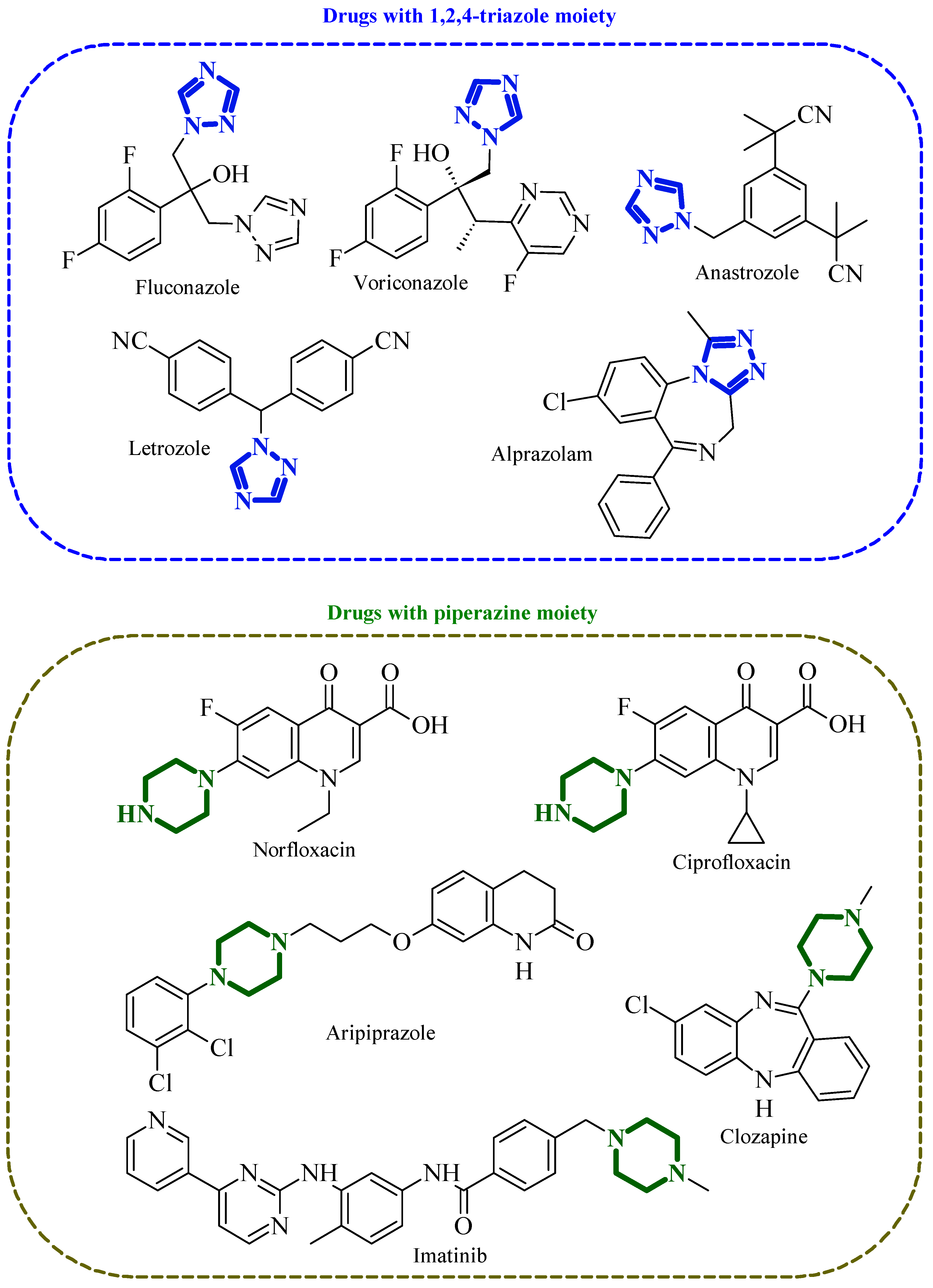
Among this class of compounds, the 1,2,4-triazole ring is an important structural motif found in many molecules that show a wide range of therapeutic activities [1]. 1,2,4-Triazole derivatives have been reported to exhibit a broad spectrum of pharmacological activities, including antifungal [2], antibacterial [3], anticancer [4], anti-inflammatory [5], antiviral [6], anticoagulant [7], and anticonvulsant [8] effects. Notably, several clinically used drugs such as fluconazole, voriconazole, anastrozole, letrozole, and alprazolam contain the 1,2,4-triazole moiety, highlighting its importance in modern drug design (Figure 1).
Another structural element of considerable pharmacological relevance is the piperazine ring. Piperazine and its derivatives are known for their wide range of therapeutic effects, spanning antibacterial [9], antipsychotic [10], antihistaminic [11], antiparasitic [12], and anticancer [13] activities. Examples of therapeutic agents containing the piperazine unit, such as fluoroquinolone antibiotics (norfloxacin, ciprofloxacin), the anticancer agent imatinib, and antipsychotic drugs including aripiprazole and clozapine, illustrate its versatility and enduring relevance in drug design (Figure 1).
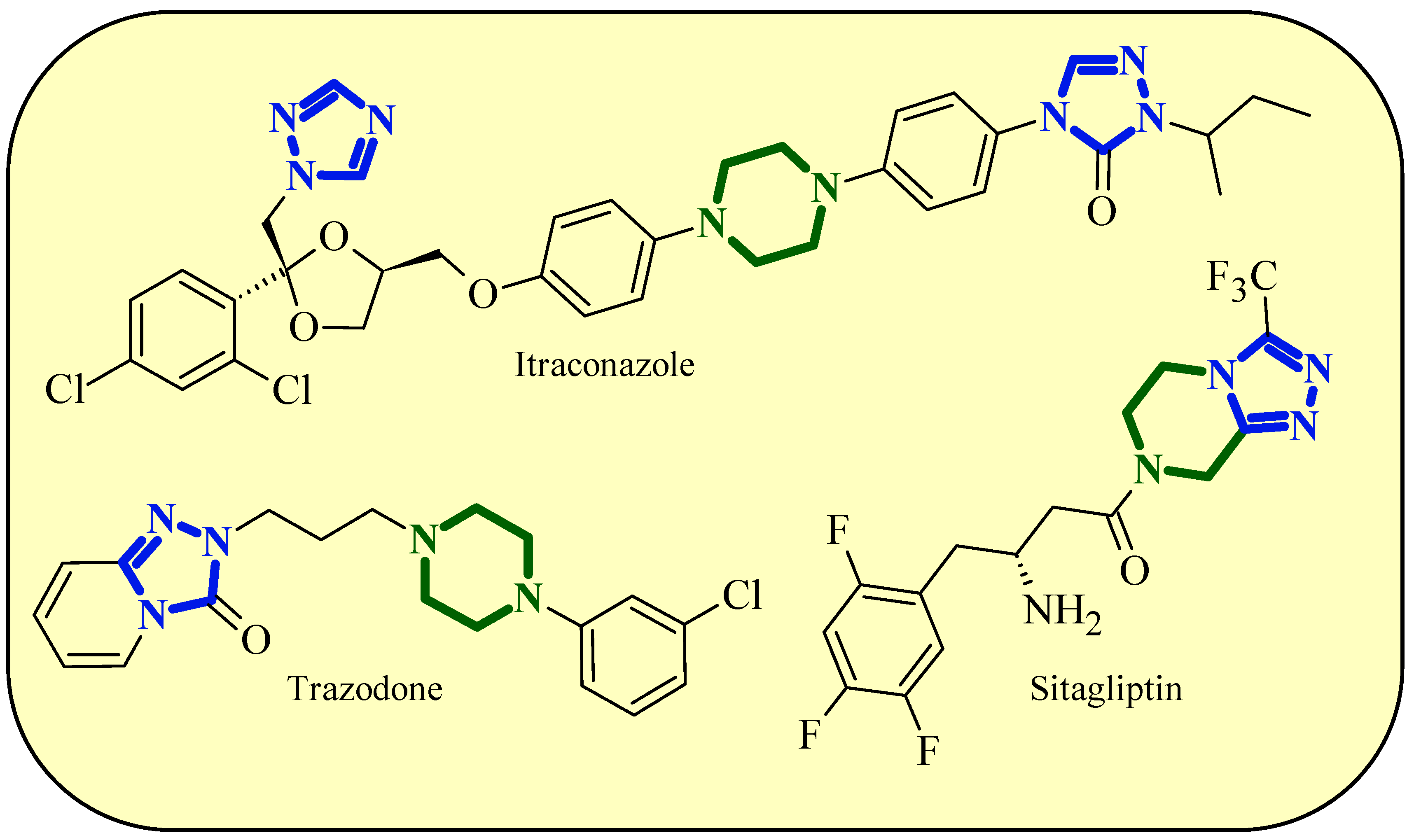
The combination of a 1,2,4-triazole system with a piperazine ring represents an attractive strategy for designing hybrid molecules with enhanced or novel biological properties. Notably, both 1,2,4-triazole and piperazine moieties can coexist within a single molecule, as exemplified by the antifungal drug itraconazole, the antidepressant trazodone, and the antidiabetic agent sitagliptin (Figure 2). Integrating these two pharmacophoric units—each associated with a broad spectrum of therapeutic activities—may lead to compounds with improved potency and selectivity. Therefore, the synthesis and characterization of new compounds containing both triazole and piperazine fragments may contribute to the discovery of molecules with promising pharmacological profiles.

2. Results and Discussion

The target compound described in the present Short Note was obtained via a nucleophilic substitution reaction. The substrates for this reaction were synthesized according to previously reported methods.
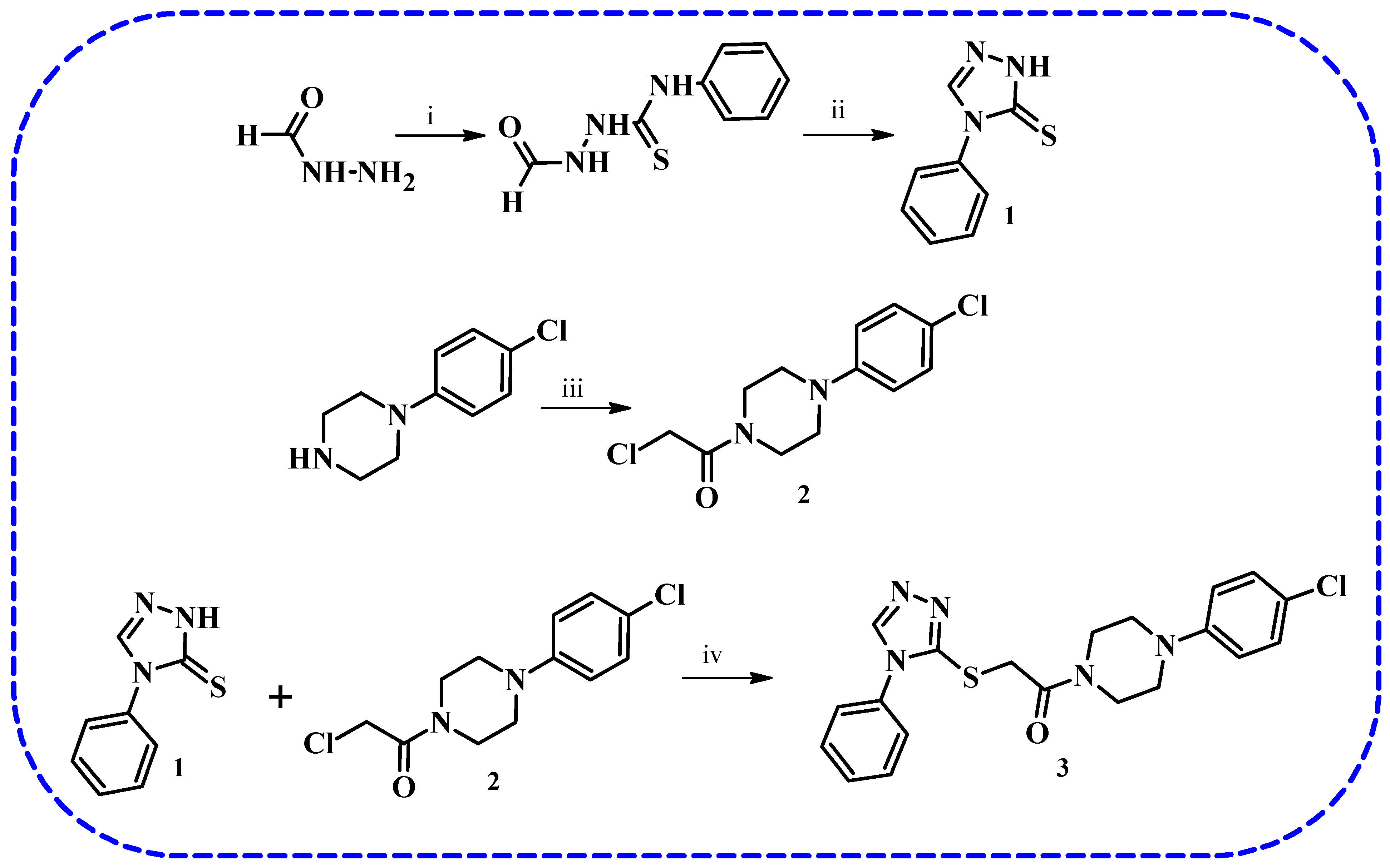
In the first step, formic acid hydrazide reacted with phenyl isothiocyanate to afford 1-formyl-4-phenyl-3-thiosemicarbazide. The resulting thiosemicarbazide derivative was then heated under reflux with a 2% sodium hydroxide solution to yield 4-phenyl-2,4-dihydro-3H-1,2,4-triazole-3-thione (compound 1) [14]. The yield of this reaction was 71%.
The second substrate for the nucleophilic substitution reaction, 2-chloro-1-[4-(4-chlorophenyl)piperazin-1-yl]ethan-1-one (compound 2), was obtained by acylation of 1-(4-chlorophenyl)piperazine with chloroacetyl chloride in dioxane. The reaction proceeded with a yield of 84%. This procedure was described previously by Sharma et al. [15,16].
The target compound 3 was synthesized via nucleophilic substitution of 1,2,4-triazole-3-thione (1) with the piperazine derivative (2) under alkaline conditions, affording the S-alkylated product 3 in a satisfactory yield (70%) (Scheme 1). Earlier studies provide evidence that the reaction proceeds in this direction, resulting in the formation of the S-alkylated product [17,18,19,20].
The structure of compound 3 was confirmed by spectroscopic methods, including 1H NMR, 13C NMR, DEPT-135, 2D NMR (COSY, NOESY, HSQC, and HMBC), and infrared spectroscopy (IR), as well as by elemental analysis.
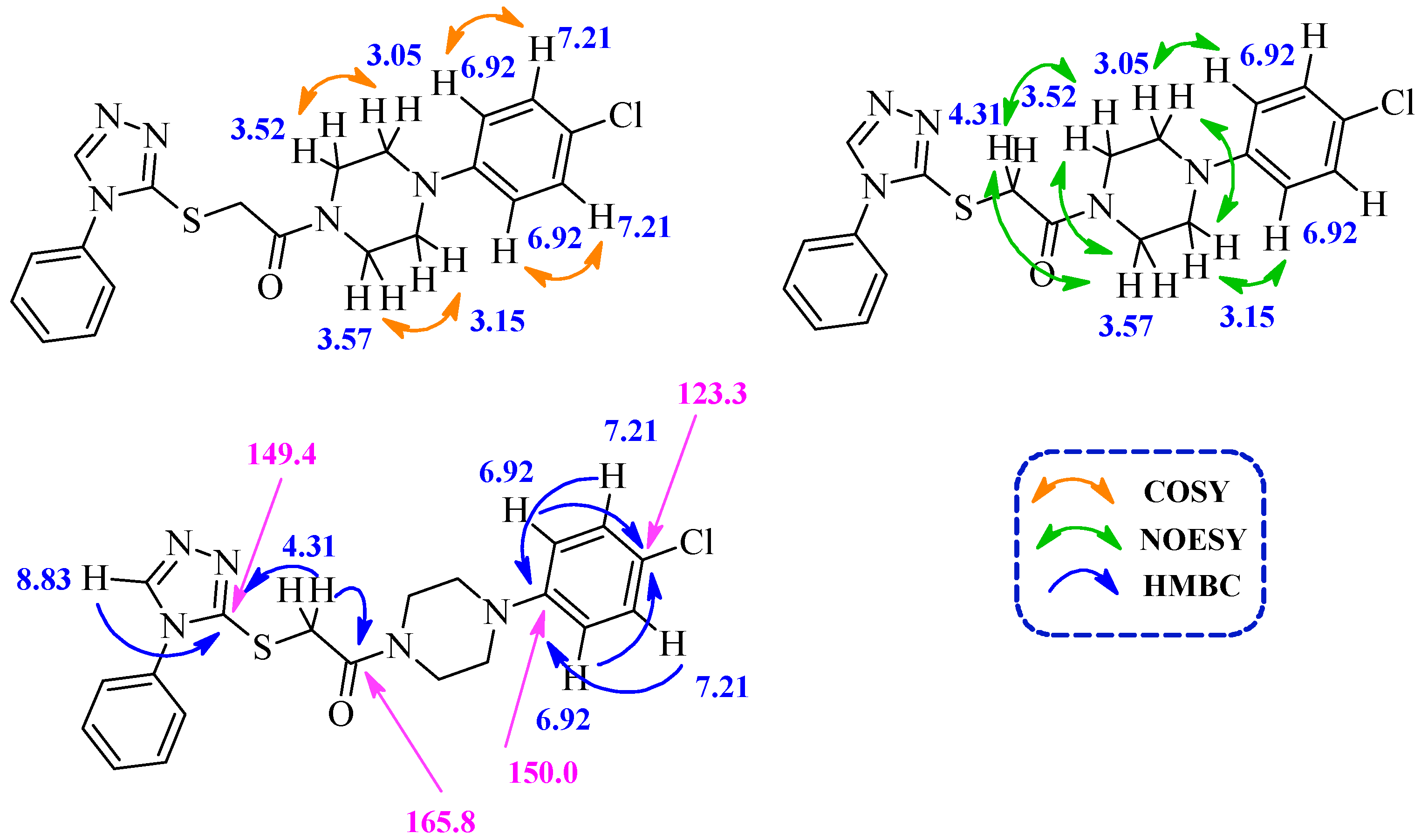
The proton signals from the para-substituted phenyl group (4-chlorophenyl fragment) appeared as two doublets at 6.92 and 7.21 ppm, with a coupling constant equal to 9.0 Hz. The piperazine fragment appeared in the 1H NMR spectrum as four triplet signals, indicating the inequivalence of the two CH2 bridges. Each signal corresponds to two protons coupled with neighbouring protons within the NCH2CH2N fragment, creating an AA’XX’ type system. Signals were observed in the typical 3.05–3.57 ppm range, with a coupling constant of 7.3 Hz.
The 13C NMR spectrum of compound 3 confirmed the presence of all carbon atoms. The carbonyl carbon gave a characteristic signal at 165.8 ppm. Signals for aliphatic carbons were observed at 37.1 ppm for the CH2S fragment and at 41.8, 45.6, 48.3, and 48.7 ppm for four CH2 groups of the piperazine fragment, which appeared as negative signals in the DEPT-135 spectrum. The absence of a signal for the C=S group supports S-alkylation as the pathway for the synthesis of compound 3. The HMBC spectrum (Figure 3) exhibited the expected long-range proton–carbon correlations.
1H and 13C NMR data, including DEPT-135 and 2D NMR experiments (COSY, NOESY, HSQC, and HMBC), are provided in the Materials and Methods section and in the Supplementary Materials (Figures S1–S7).
The IR spectrum of compound 3 exhibited a clear carbonyl stretching vibration at 1652 cm−1. Additionally, absorption bands at 3089 cm−1 and 2964, 2853 cm−1 were observed, corresponding to aromatic and aliphatic C–H stretching, respectively. Detailed FT-IR absorption data are provided in the Supplementary Materials (Figure S8).

3. Materials and Methods

3.1. General

All reagents and solvents were of analytical grade and obtained from Merck Co. (Darmstadt, Germany) or Fisher Scientific (Waltham, MA, USA). They were used as received, without any additional purification. The melting point was measured using an Electrothermal Standard 120 VAC apparatus (Cole-Parmer, Wertheim, Germany) and is reported uncorrected.
The 1H NMR, 13C NMR, DEPT-135, and 2D NMR spectra were recorded on JEOL ECZL500 (Jeol Ltd., 1-2, Musashino 3-Chome Akishima, Tokyo, Japan) in DMSO-d6 solution with TMS as the internal reference. Chemical shifts (δ) are expressed in parts per million (ppm), and signal multiplicities are denoted as follows: singlet (s), doublet (d), triplet (t), and multiplet (m).
The FT-IR spectrum was obtained on a Nicolet 6700 spectrometer (Thermo Scientific, Philadelphia, PA, USA). Elemental analyses were performed using an AMZ 851 CHX analyzer (PG, Gdańsk, Poland), and the results were found to be within ±0.4% of the calculated values.

3.2. Synthesis of 4-Phenyl-2,4-dihydro-3H-1,2,4-triazole-3-thione (1) and 2-Chloro-1-[4-(4-chlorophenyl)piperazin-1-yl]ethan-1-one (2)

The synthesis of compound 1 (CAS Registry Number 5373-72-8) and compound 2 (CAS Registry Number 60121-78-0) was performed according to a previously described method [14,15,16]. The physicochemical data were consistent with those reported in the publications [14,15,16].

3.3. Synthesis of 1-[4-(4-Chlorophenyl)piperazin-1-yl]-2-[(4-phenyl-4H-1,2,4-triazol-3-yl)sulfanyl]ethan-1-one (3)

To a solution of compound 1 (3.2 mmol, 0.56 g) and potassium hydroxide (3.2 mmol, 0.18 g) in ethanol (15 mL), compound 2 (3.2 mmol, 0.86 g) was added. The reaction mixture was heated under reflux for 30 min. After completion, the reaction mixture was poured into water (50 mL). The resulting solid was filtered off, washed with water, and dried. The crude product was recrystallized from isopropanol to give compound 3 in 70% yield (0.93 g).
Yield 70%, m.p. = 154.7–155.8 °C. FT-IR (ν, cm−1): 3089 (Car.-H); 2964, 2853 (Cal.-H); 1652 (C=O); 1588 (C=N). 1H NMR (500 MHz, DMSO-d6) δ (ppm): 3.05 (t, J = 5.3 Hz, 2H), 3.15 (t, J = 5.2 Hz, 2H), 3.52 (t, J = 5.3 Hz, 2H), 3.57 (t, J = 5.3 Hz, 2H) (4 × CH2 piperazine); 4.31 (s, 2H, CH2-S); 6.92 (d, J = 9.0 Hz, 2H), 7.21 (d, J = 8.9 Hz, 2H) (4-Cl-C6H4); 7.48-7.52 (m, 3H), 7.57 (t, J = 7.3 Hz, 2H) (C6H5); 8.83 (s, 1H, CH=). 13C NMR (126 MHz, DMSO-d6) δ (ppm): 37.1 (CH2-S); 41.8, 45.6, 48.3, 48.7 (4 × CH2, piperazine); 117.8, 123.3, 125.9, 129.2, 129.9, 130.3, 133.9, 150.0 (12Car.); 145.8 (CH=, triazole); 149.4 (N-C=N, triazole); 165.8 (C=O). Anal. calc. for C20H20ClN5OS (413.924) (%): C 58.03, H 4.87, N 16.92. Found: C 57.94, H 4.82, N 16.95.

4. Conclusions

A new heterocyclic derivative containing both 1,2,4-triazole and piperazine fragments was synthesized through a nucleophilic substitution reaction, leading to the S-alkylated product of the triazole-3-thione derivative (3). Comprehensive spectroscopic analysis, including 1H, 13C NMR, and 2D NMR methods, conclusively confirmed the structure of compound 3. The synthetic approach proved efficient and reproducible, affording the target molecule in satisfactory yield. The combined presence of two pharmacologically relevant moieties highlights this compound as a promising scaffold for further exploration in the search for bioactive molecules. Future studies may focus on evaluating its biological activity and expanding the structural diversity of related triazole–piperazine hybrids.

Supplementary Materials

The following supporting information can be downloaded online. Figure S1: 1H NMR spectrum of compound 3; Figure S2: 13C NMR spectrum of compound 3; Figure S3: DEPT-135 spectrum of compound 3; Figure S4: COSY spectrum of compound 3; Figure S5: NOESY spectrum of compound 3; Figure S6: HSQC spectrum of compound 3; Figure S7: HMBC spectrum of compound 3; Figure S8: FT-IR spectrum of compound 3.

Author Contributions

Conceptualization, N.T.; methodology, N.T.; validation, W.D. and J.S.; formal analysis, N.T.; investigation, W.D., J.S. and N.T.; resources, N.T.; data curation, N.T.; writing—original draft preparation, W.D. and N.T.; writing—review and editing, N.T.; visualization, W.D., J.S. and N.T.; supervision, N.T.; project administration, N.T.; funding acquisition, N.T. All authors have read and agreed to the published version of the manuscript.

Funding

This research was funded by the Medical University of Lublin (DS14).

Data Availability Statement

The data are contained within the article and Supplementary Materials.

Conflicts of Interest

The authors declare no conflicts of interest.

References

  1. Rodrigues, S.C.; Moratorio de Moraes, R.S.; Tavares de Almeida Pinto, G.; Martins, M.T.M.; Antunes do Nascimento, P.; Alves Soares, D.L.; Mestre Botelho, A.B.; Cardoso Cruz, C.; Cunha, A.C. A review on chemistry and methods of synthesis of 1,2,4-triazole derivatives. Chem. Rec. 2025, 25, e202400190. [Google Scholar] [CrossRef] [PubMed]
  2. Kazeminejad, Z.; Marzi, M.; Shiroudi, A.; Kouhpayeh, S.A.; Farjam, M.; Zarenezhad, E. Novel 1,2,4-triazoles as antifungal agents. BioMed Res. Int. 2022, 2022, 4584846. [Google Scholar] [CrossRef] [PubMed]
  3. Strzelecka, M.; Świątek, P. 1,2,4-Triazoles as important antibacterial agents. Pharmaceuticals 2021, 14, 224. [Google Scholar] [CrossRef] [PubMed]
  4. El-Sherief, H.A.M.; Youssif, B.G.M.; Bukhari, S.N.A.; Abdelazeem, A.H.; Abdel-Aziz, M.; Abdel-Rahman, H.M. Synthesis, anticancer activity and molecular modeling studies of 1,2,4-triazole derivatives as EGFR inhibitors. Eur. J. Med. Chem. 2018, 156, 774–789. [Google Scholar] [CrossRef] [PubMed]
  5. Hamoud, M.M.S.; Osman, N.A.; Rezq, S.; Abd El-Wahab, H.A.A.; Hassan, A.E.A.; Abdel-Fattah, H.A.; Romero, D.G.; Ghanim, A.M. Design and synthesis of novel 1,3,4-oxadiazole and 1,2,4-triazole derivatives as cyclooxygenase-2 inhibitors with anti-inflammatory and antioxidant activity in LPS-stimulated RAW264.7 Macrophages. Bioorg. Chem. 2022, 124, 105808. [Google Scholar] [CrossRef] [PubMed]
  6. Aly, A.A.; Hassan, A.A.; Makhlouf, M.M.; Bräse, S. Chemistry and biological activities of 1,2,4-triazolethiones—Antiviral and anti-infective drugs. Molecules 2020, 25, 3036. [Google Scholar] [CrossRef] [PubMed]
  7. Korff, M.; Imberg, L.; Will, J.M.; Bückreiß, N.; Kalinina, S.A.; Wenzel, B.M.; Kastner, G.A.; Daniliuc, C.G.; Barth, M.; Ovsepyan, R.A.; et al. Acylated 1H-1,2,4-triazol-5-amines targeting human coagulation factor XIIa and thrombin: Conventional and microscale synthesis, anticoagulant properties, and mechanism of action. J. Med. Chem. 2020, 63, 13159–13186. [Google Scholar] [CrossRef] [PubMed]
  8. Karaküçük-Iyidoğan, A.; Başaran, E.; Tatar-Yilmaz, G.; Oruç-Emre, E.E. Development of new chiral 1,2,4-triazole-3-thiones and 1,3,4-thiadiazoles with promising in vivo anticonvulsant activity targeting GABAergic system and voltage-gated sodium channels (VGSCs). Bioorg. Chem. 2024, 151, 107662. [Google Scholar] [CrossRef] [PubMed]
  9. Plé, C.; Tam, H.-K.; Vieira Da Cruz, A.; Compagne, N.; Jiménez-Castellanos, J.-C.; Müller, R.T.; Pradel, E.; Foong, W.E.; Malloci, G.; Ballée, A.; et al. Pyridylpiperazine-based allosteric inhibitors of RND-type multidrug efflux pumps. Nat. Commun. 2022, 13, 115. [Google Scholar] [CrossRef] [PubMed]
  10. Stępnicki, P.; Targowska-Duda, K.M.; Martínez, A.L.; Zięba, A.; Wronikowska-Denysiuk, O.; Wrobel, M.Z.; Bartyzel, A.; Trzpil, A.; Wrobel, T.M.; Chodkowski, A.; et al. Discovery of novel arylpiperazine-based DA/5-HT modulators as potential antipsychotic agents—Design, synthesis, structural studies and pharmacological profiling. Eur. J. Med. Chem. 2023, 252, 115285. [Google Scholar] [CrossRef] [PubMed]
  11. Szczepańska, K.; Podlewska, S.; Dichiara, M.; Gentile, D.; Patamia, V.; Rosier, N.; Mönnich, D.; Ruiz Cantero, M.C.; Karcz, T.; Łażewska, D.; et al. Structural and molecular insight into piperazine and piperidine derivatives as histamine H3 and sigma-1 receptor antagonists with promising antinociceptive properties. ACS Chem. Neurosci. 2022, 13, 1–15. [Google Scholar] [CrossRef] [PubMed]
  12. LaMonte, G.M.; Rocamora, F.; Marapana, D.S.; Gnädig, N.F.; Ottilie, S.; Luth, M.R.; Worgall, T.S.; Goldgof, G.M.; Mohunlal, R.; Kumar, T.R.S.; et al. Pan-active imidazolopiperazine antimalarials target the Plasmodium falciparum intracellular secretory pathway. Nat. Commun. 2020, 11, 1780. [Google Scholar] [CrossRef] [PubMed]
  13. Zhang, H.; Li, M.; Zhou, X.; Tang, L.; Chen, G.; Zhang, Y. Design, synthesis of combretastatin A-4 piperazine derivatives as potential antitumor agents by inhibiting tubulin polymerization and inducing autophagy in HCT116 cells. Eur. J. Med. Chem. 2024, 272, 116497. [Google Scholar] [CrossRef] [PubMed]
  14. Dobosz, M.; Pitucha, M.; Wujec, M. The reaction of cyclization of thiosemicarbazide derivatives to 1,2,4-triazole or 1,3,4-thiadiazole system. Acta Pol. Pharm. 1996, 53, 31–38. [Google Scholar]
  15. Sharma, M.; Singh, D.; Gupta, M. Synthesis and evaluation of thiouracil derivatives as dipeptidyl peptidase IV inhibitors. Chem. Biol. Drug Des. 2013, 81, 257–264. [Google Scholar] [CrossRef] [PubMed]
  16. Sharma, M.; Gupta, M.; Singh, D.; Kumar, M.; Kaur, P. Synthesis, evaluation and molecular docking of thiazolopyrimidine derivatives as dipeptidyl peptidase IV inhibitors. Chem. Biol. Drug Des. 2012, 80, 918–928. [Google Scholar] [CrossRef] [PubMed]
  17. Trotsko, N.; Król, J.; Siwek, A.; Wujec, M.; Kosikowska, U.; Malm, A. Synthesis and antimicrobial evaluation of new 1-{[4-(4-halogenophenyl)-4H-1,2,4-triazol-3-yl]sulfanyl}acetyl-4-substituted thiosemicarbazides and products of their cyclization. Heteroat. Chem. 2012, 23, 117–121. [Google Scholar] [CrossRef]
  18. Maliszewska-Guz, A.; Wujec, M.; Pitucha, M.; Dobosz, M.; Chodkowska, A.; Jagiełło-Wójtowicz, E.; Mazur, L.; Kozioł, A.E. Cyclization of 1-{[(4-methyl-4H-1,2,4-triazol-3-yl)sulfanyl]acetyl}thiosemicarbazides to 1,2,4-triazole and 1,3,4-thiadiazole derivatives and their pharmacological properties. Collect. Czech. Chem. Commun. 2005, 70, 51–62. [Google Scholar] [CrossRef]
  19. Kalhora, M.; Shabania, M.; Nikokarb, I.; Banisaeed, S.R. Synthesis, characterization and antibacterial activity of some novel thiosemicarbazides, 1,2,4-triazol-3-thiols and their S-substituted derivatives. Iran. J. Pharm. Res. 2015, 14, 67–75. [Google Scholar]
  20. Fizer, M.; Slivka, M.; Korol, N.; Fizer, O. Identifying and explaining the regioselectivity of alkylation of 1,2,4-triazole-3-thiones using NMR, GIAO and DFT methods. J. Mol. Struct. 2021, 1223, 128973. [Google Scholar] [CrossRef]
Figure 1. Drugs containing 1,2,4-triazole and piperazine moieties.
Molbank 2025 m2097 g001
Figure 2. Drugs featuring both 1,2,4-triazole and piperazine frameworks.
Molbank 2025 m2097 g002
Scheme 1. Synthesis of compound 3. Reagents and condition: (i) PhNCS, heat on oil bath at 80 °C for 8 h; (ii) 2% NaOH, heated under reflux for 2 h; neutralized with diluted HCl; (iii) ClCH2COCl, dioxane, heated under reflux for 2 h; neutralized with NaHCO3; (iv) KOH, ethanol; heated under reflux for 30 min.
Molbank 2025 m2097 sch001
Figure 3. Some 1H and 13C NMR shifts of compound 3 with key interactions in the relevant COSY, NOESY, and HMBC spectra.
Molbank 2025 m2097 g003
Disclaimer/Publisher’s Note: The statements, opinions and data contained in all publications are solely those of the individual author(s) and contributor(s) and not of MDPI and/or the editor(s). MDPI and/or the editor(s) disclaim responsibility for any injury to people or property resulting from any ideas, methods, instructions or products referred to in the content.