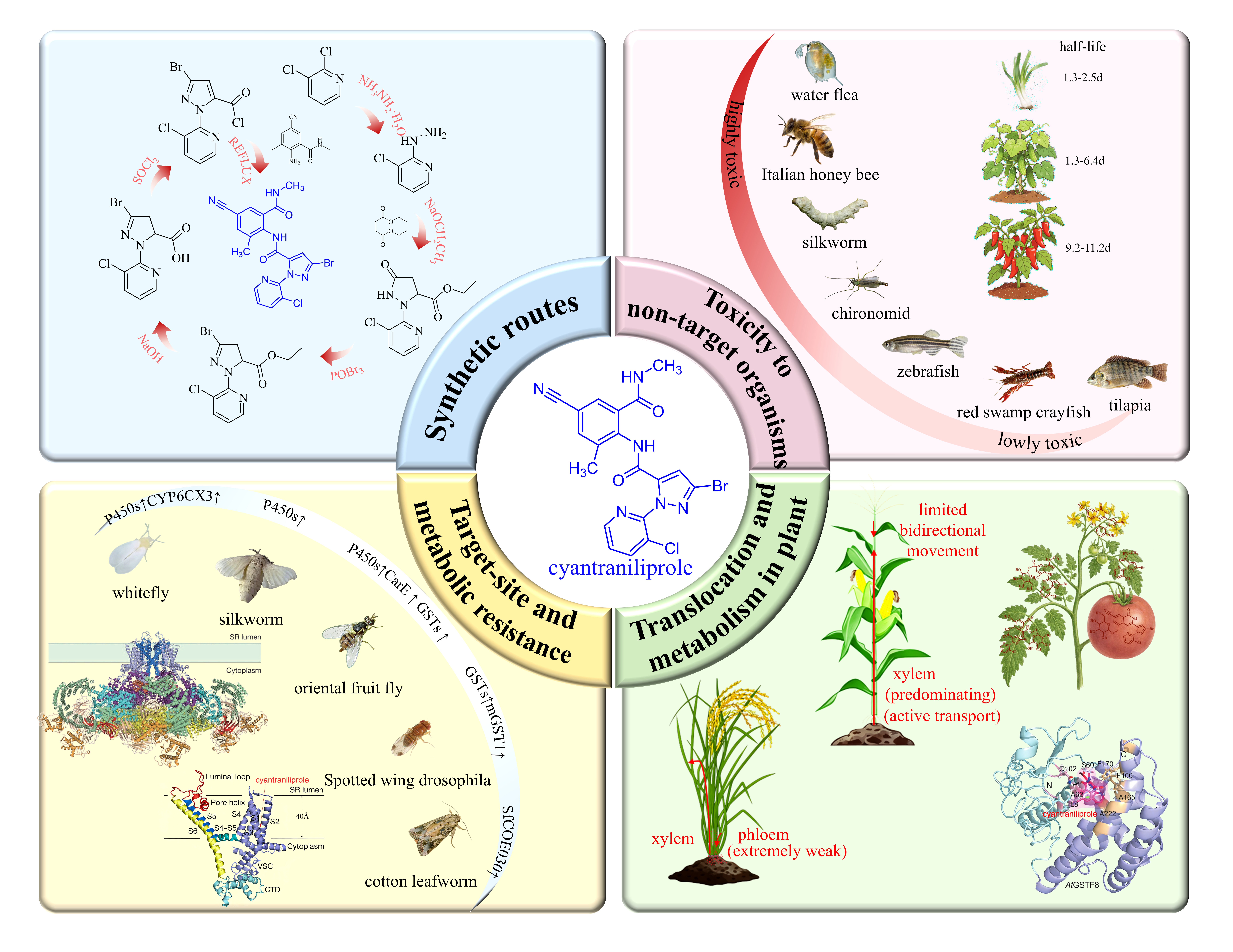
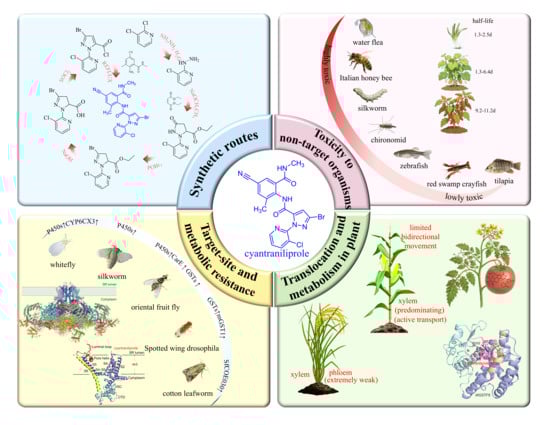
Molecular Insights into the Action Mechanism, Resistance Development, and Ecological Risks of Cyantraniliprole


Abstract
1. Background, Chemical Structure, Synthesis, and Mechanism of Action of Cyantraniliprole
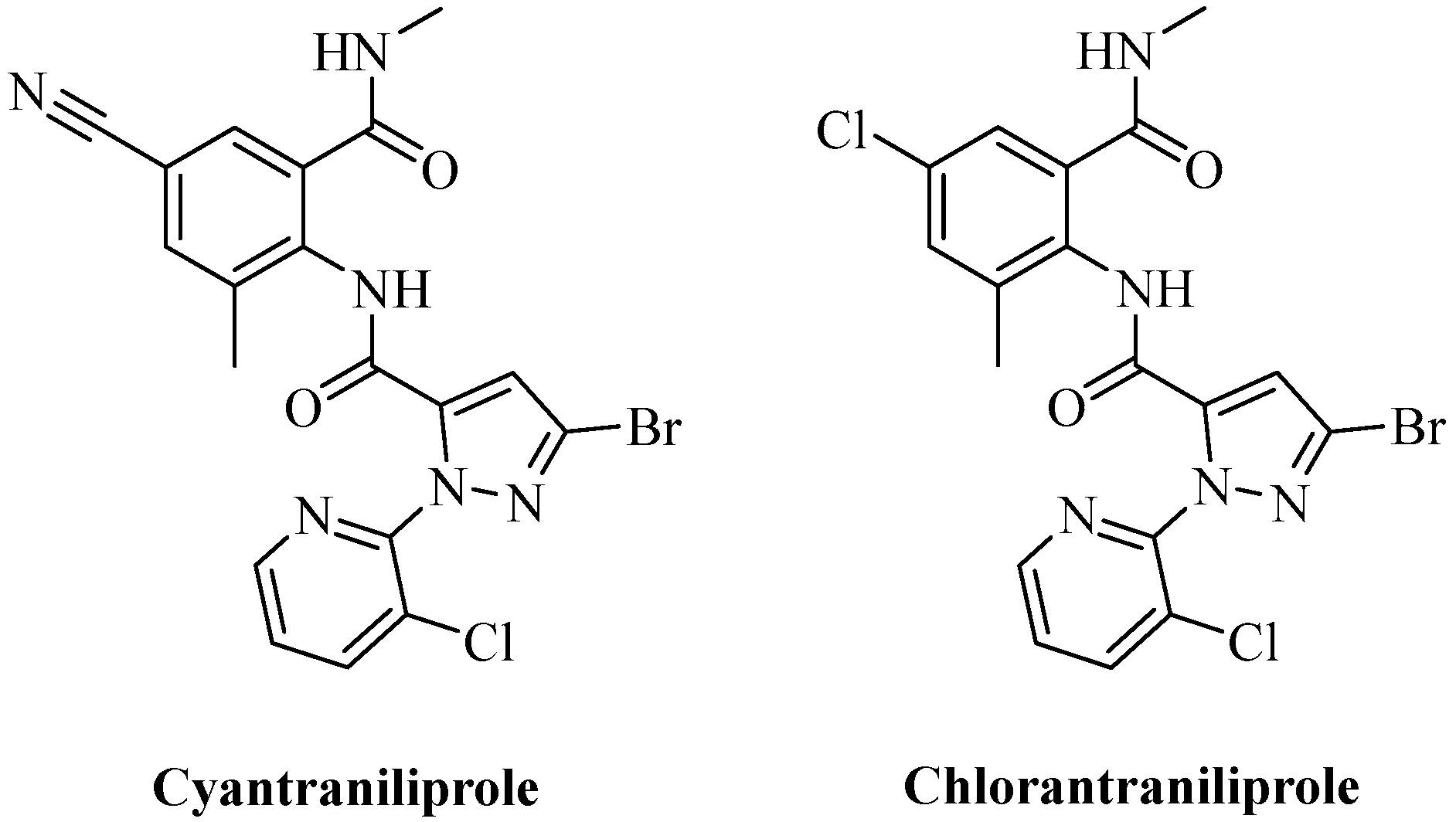
1.1. Background and Chemical Structure
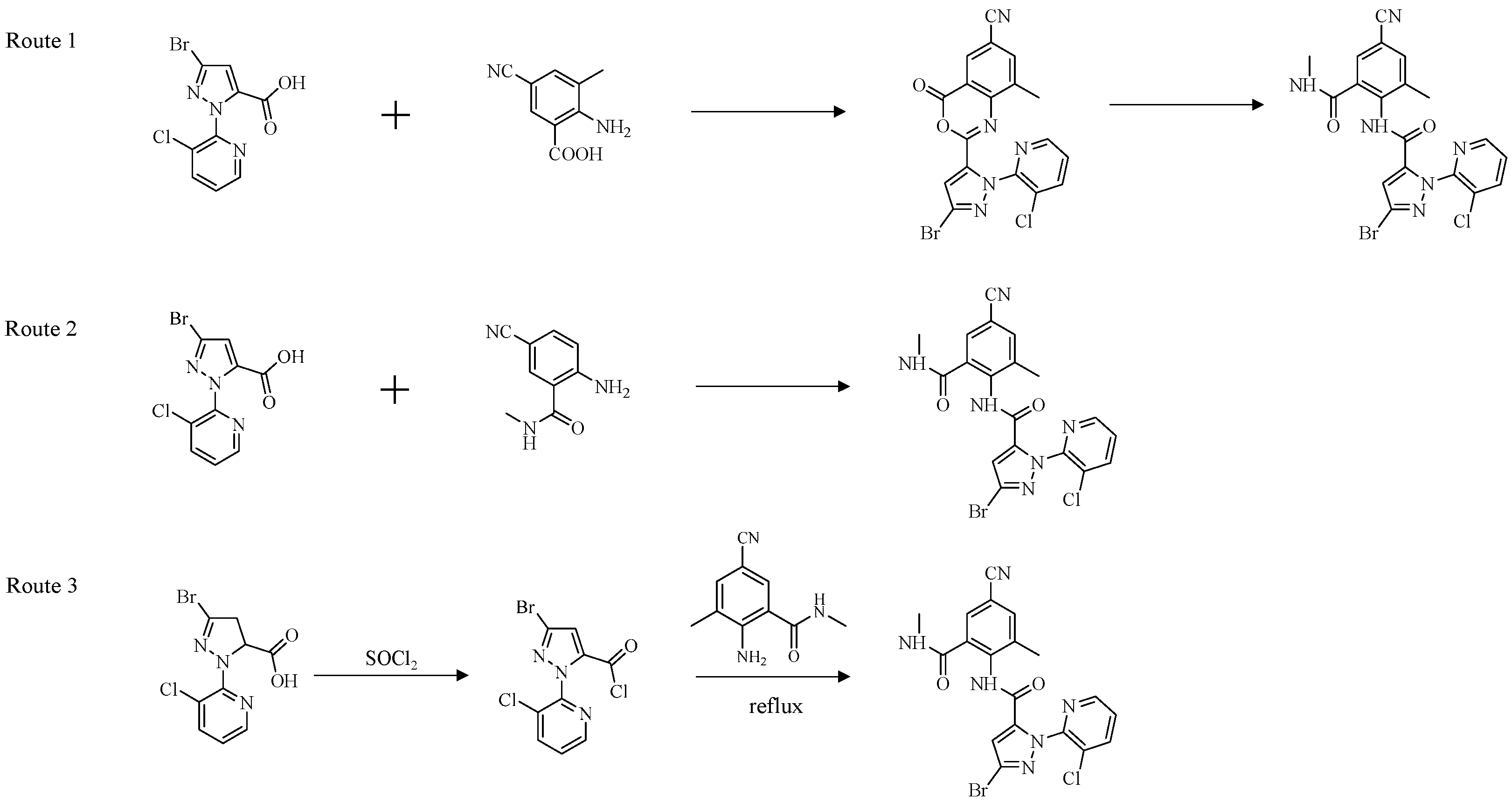
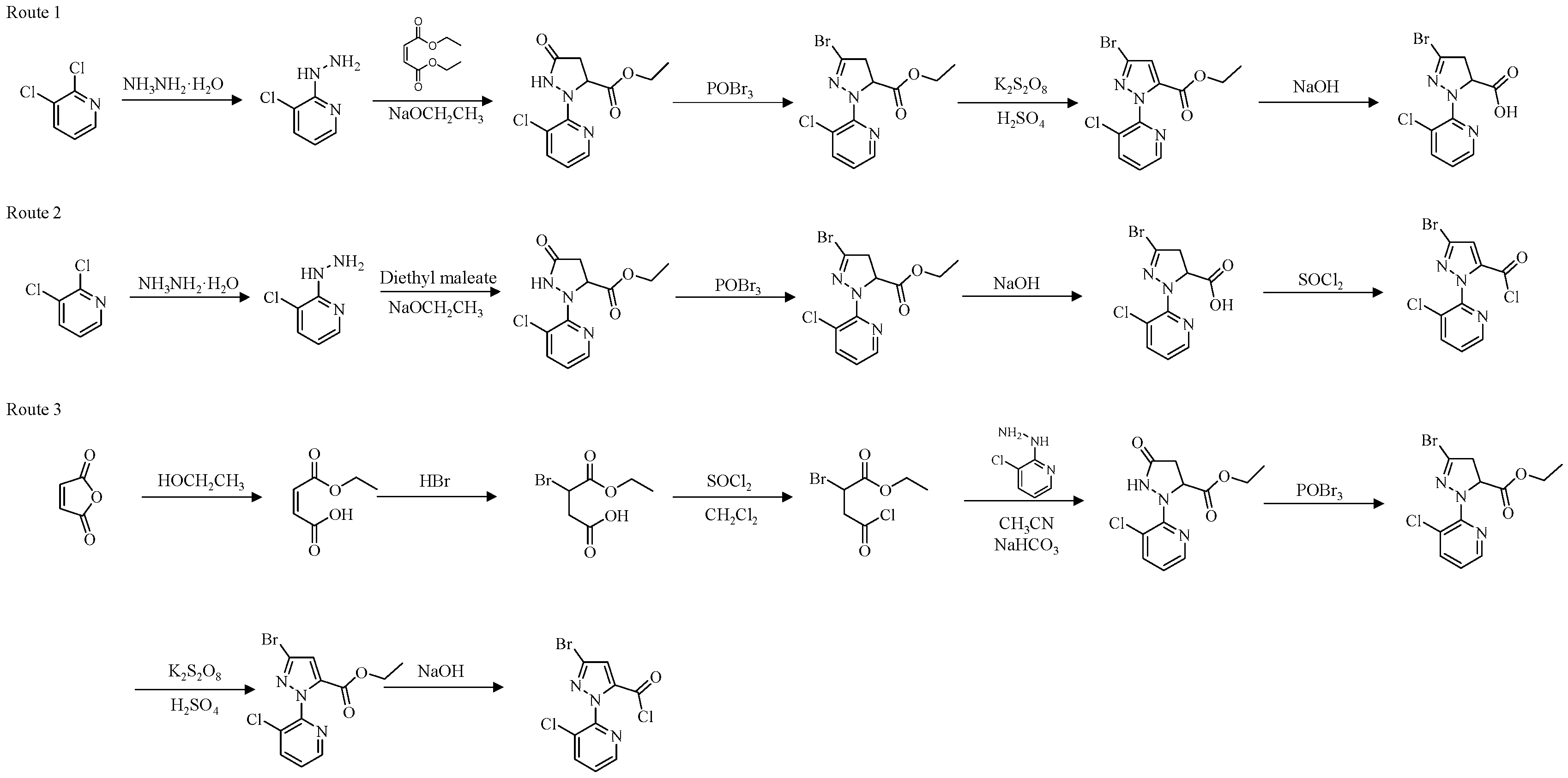
1.2. Synthetic Methods of Cyantraniliprole

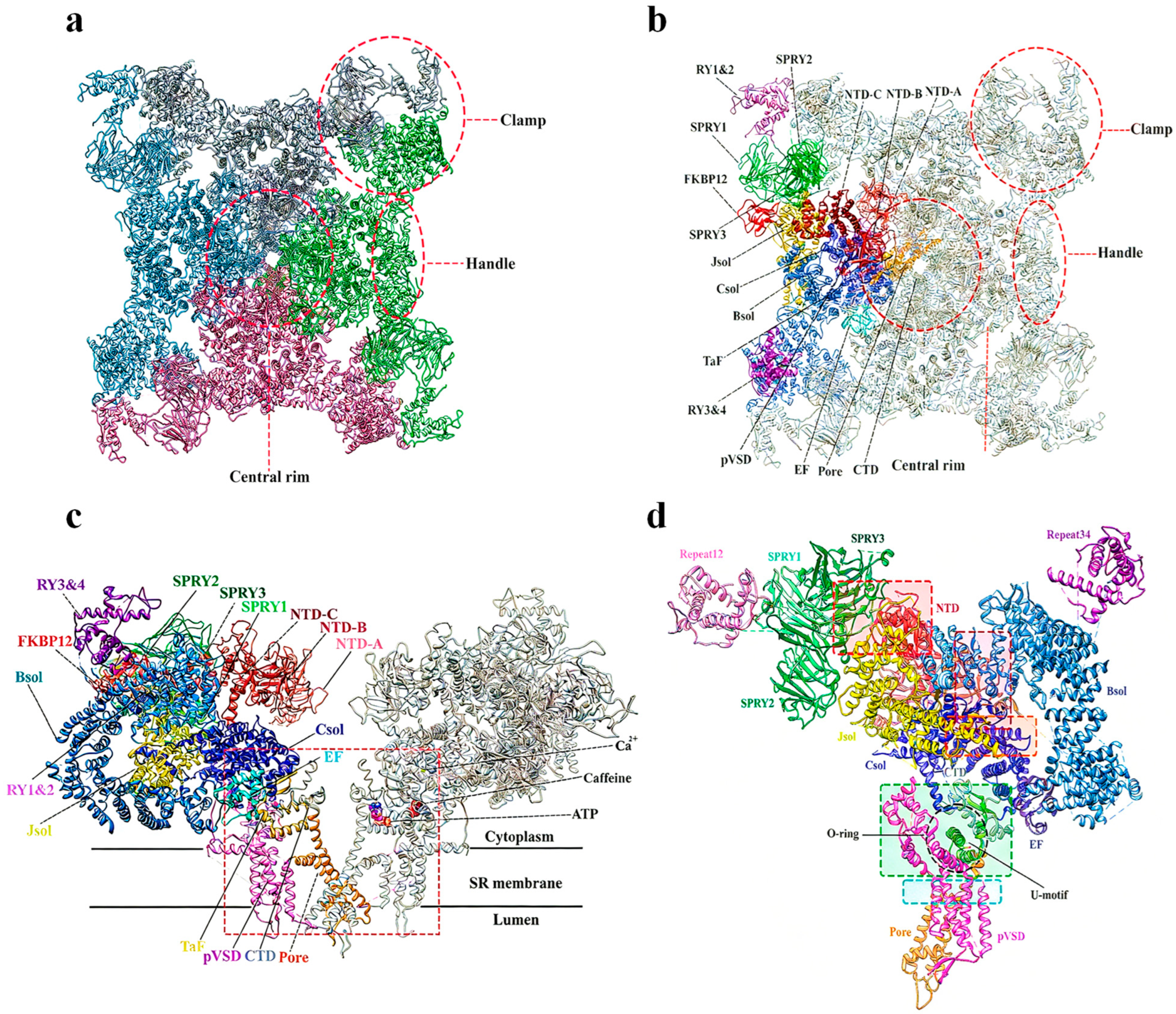
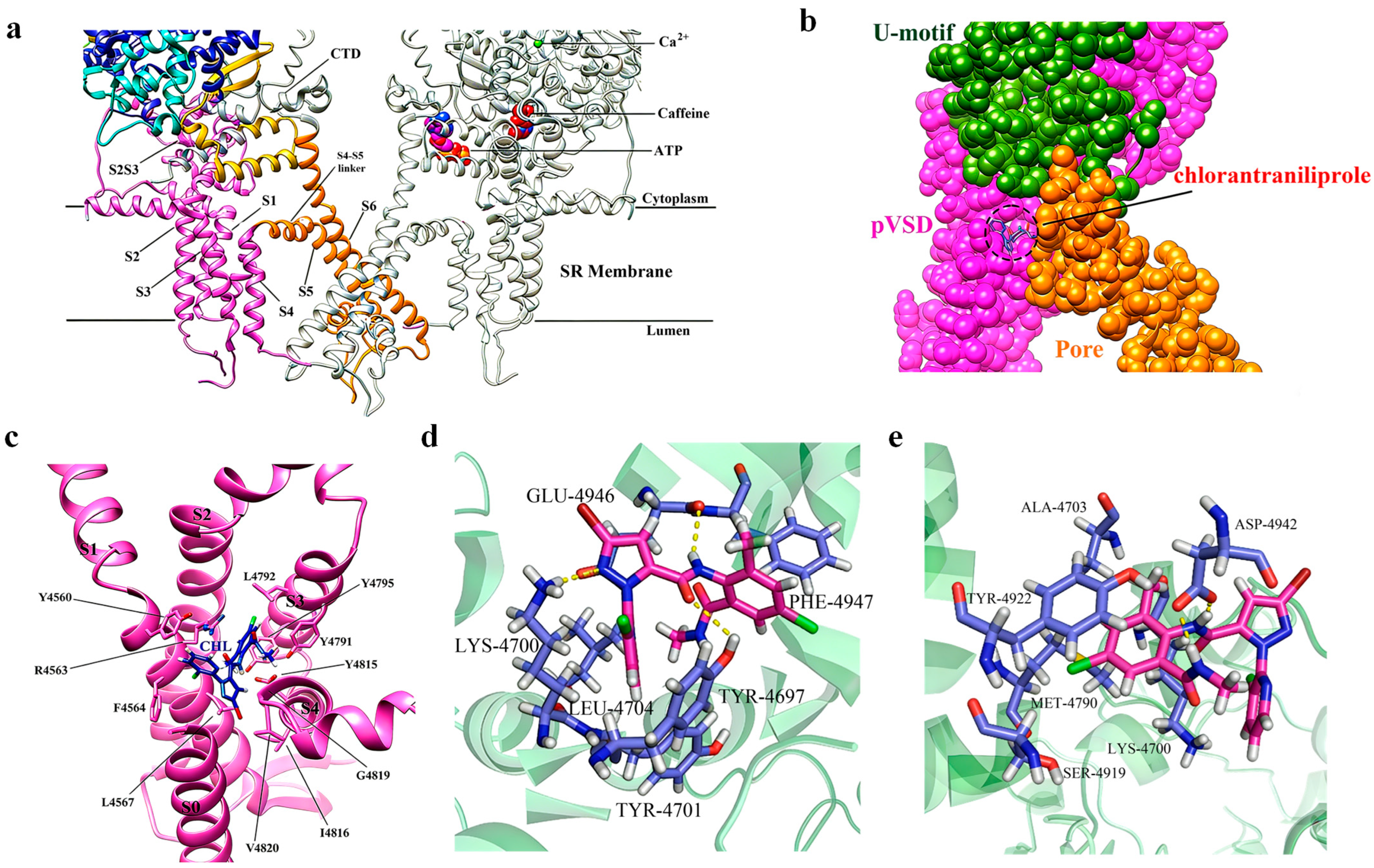
1.3. The Ryanodine Receptor (RyR): Target and Mechanism of Action of Cyantraniliprole
2. Resistance: Mechanisms and Management Challenges
2.1. Cross-Resistance Mediated by Target-Site Mutations
2.2. Molecular Mechanisms of Target-Site Resistance
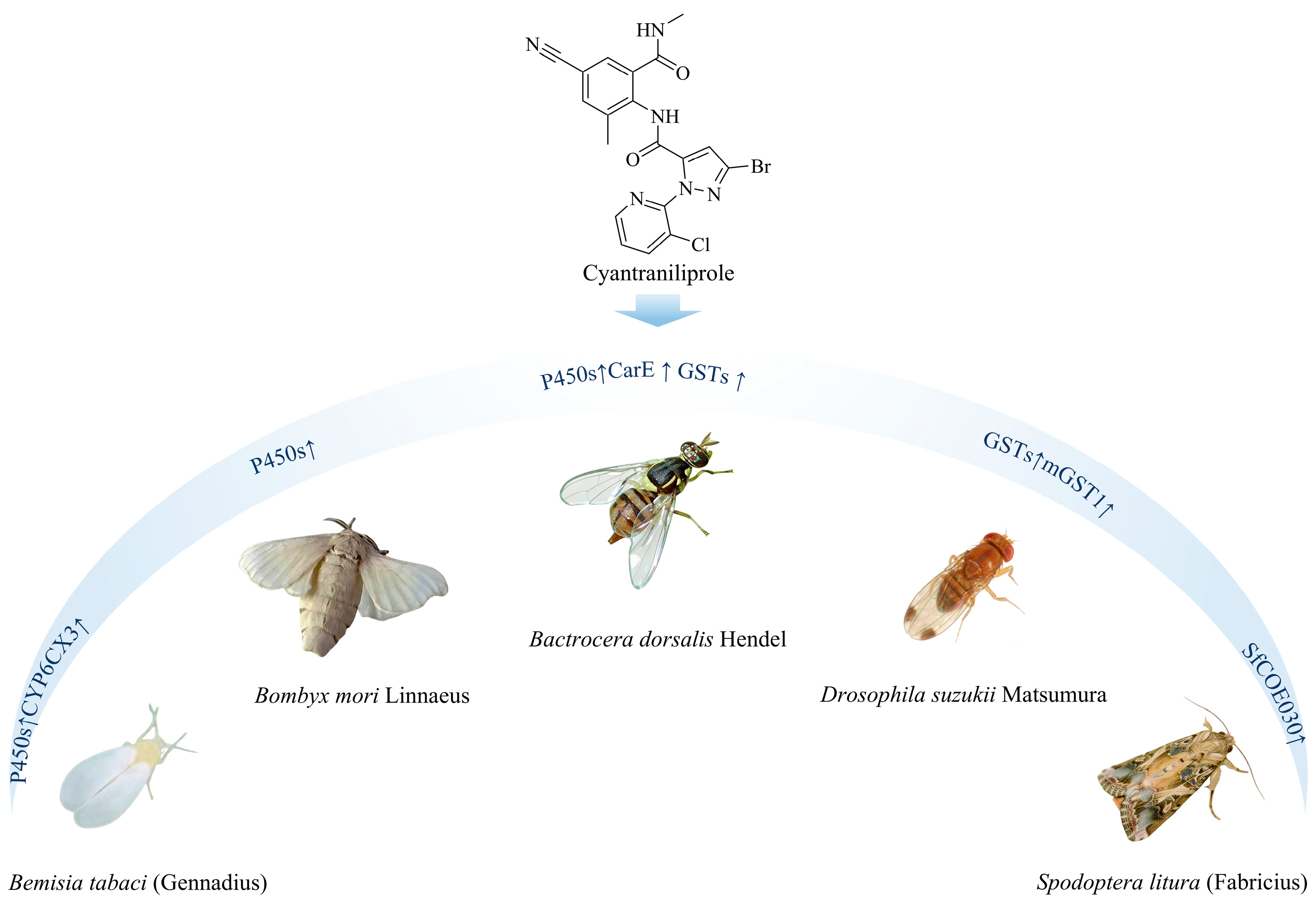
2.3. Metabolic Resistance
2.4. Other Mechanisms and Novel Gene Discovery
2.5. Potential Cross-Resistance with Structurally Related Compounds
3. Sublethal Effects and Ecotoxicology
3.1. Impacts on Insect Populations
3.2. Toxicity to Non-Target Organisms
3.2.1. Risks to Aquatic Ecosystems
3.2.2. Risk to Soil Ecosystems
3.2.3. Toxicity to Pollinators and Other Beneficial Arthropods
3.2.4. Biochemical Mechanisms of Toxicity and Detoxification in Non-Target Organisms
3.3. Exposure and Risk Assessment in Rice–Crayfish Co-Culture Systems
3.4. Risk to Human Health
4. Environmental Behavior and Residues
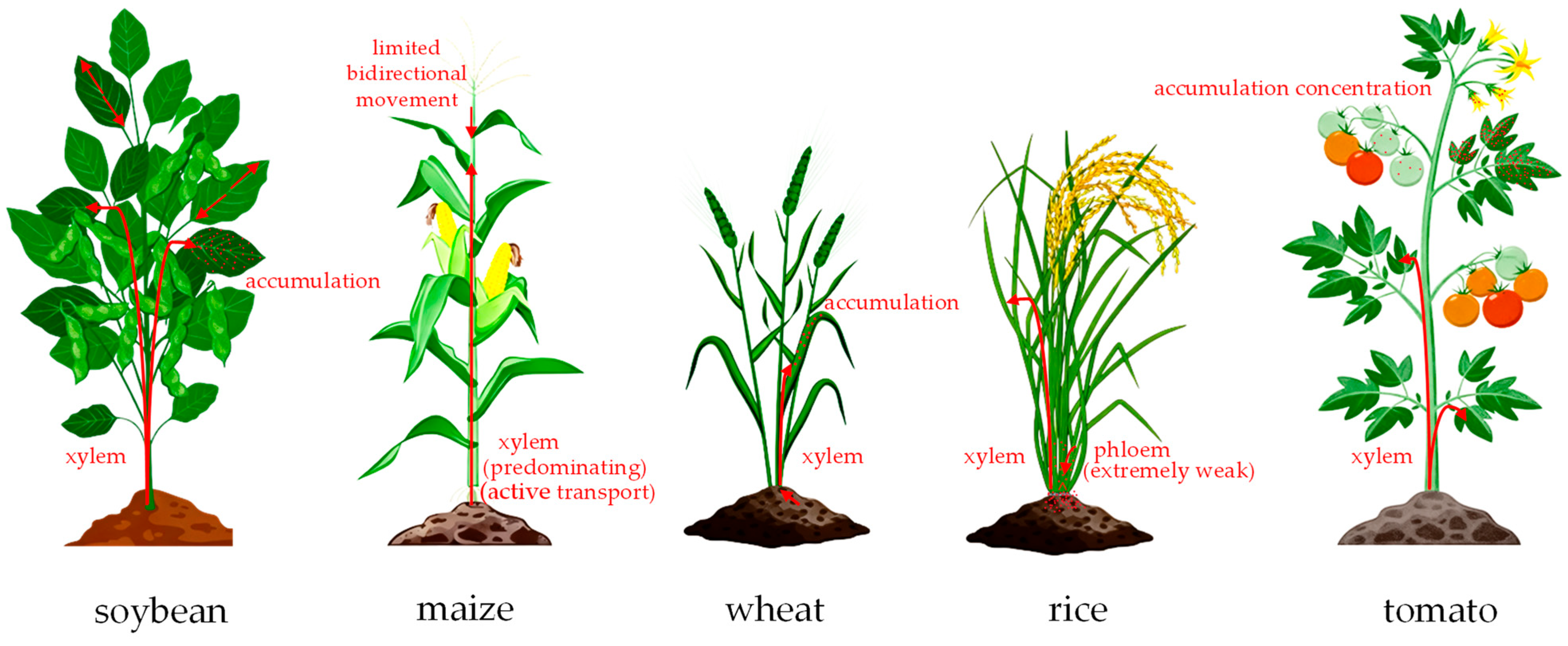
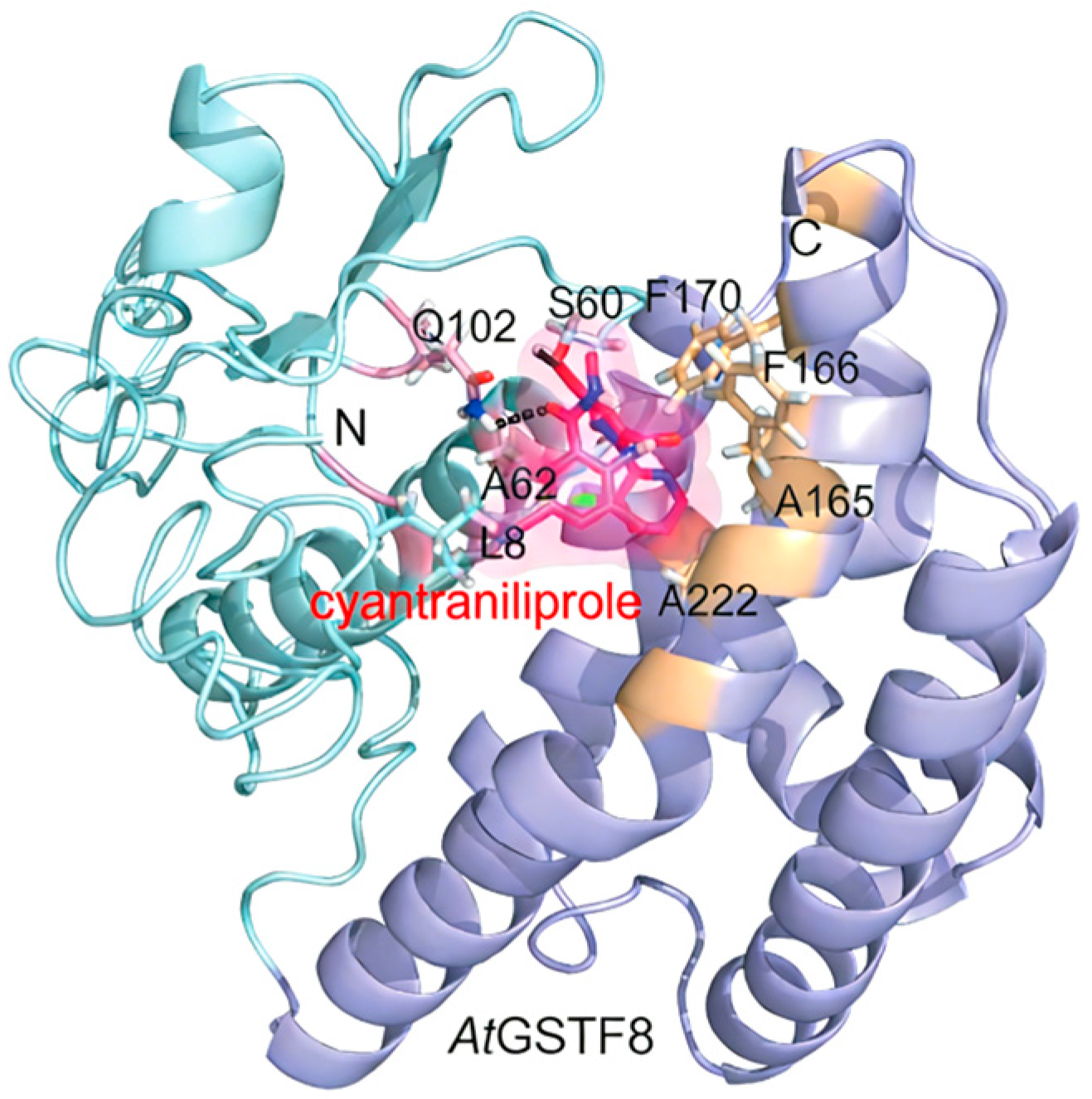
4.1. Uptake, Translocation, and Distribution in Plants
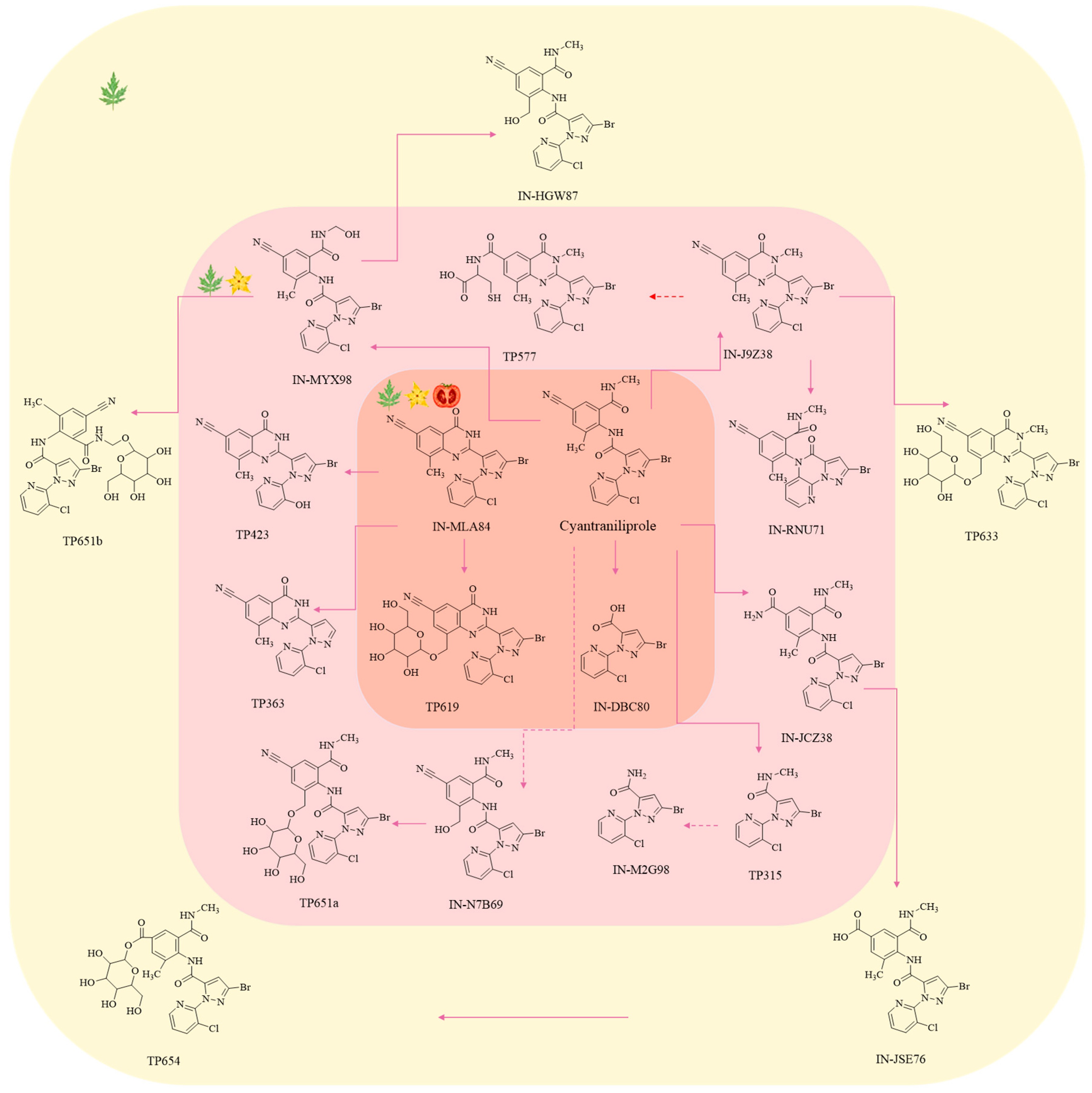
4.2. Metabolic Pathways and Degradation Products in Crops
4.3. Impact on Plant Physiological and Biochemical Processes in Plants
4.4. Residue and Dissipation Dynamics in Soil, Water, and Crops
4.5. Environmental Persistence and Toxicity of Metabolites J9Z38
5. Application Optimization and Risk Management
5.1. Innovative Formulation Technologies for Cyantraniliprole
5.2. Cyantraniliprole Combined Applications
5.3. Risk Mitigation and Management Recommendations
6. Conclusions and Prospects
Author Contributions
Funding
Institutional Review Board Statement
Informed Consent Statement
Data Availability Statement
Conflicts of Interest
References
- Zhou, C.; Yang, H.; Yang, H.; Wang, Z.; Jin, D.C. Sublethal effects of cyantraniliprole on lab sensitive population of Sogatella furcifera (Horváth). Chin. J. Pestic. Sci. 2016, 18, 651–655. [Google Scholar]
- Li, J.Y.; Lv, Y.T.; Liu, Y.J.; Bi, R.; Pan, Y.O.; Shang, Q.L. Inducible gut-specific carboxylesterase SlCOE030 in polyphagous pests of Spodoptera litura conferring tolerance between nicotine and cyantraniliprole. J. Agric. Food Chem. 2023, 71, 4281–4291. [Google Scholar] [CrossRef]
- Liang, Z.H.; Xu, Q.; Chen, X.; Xiao, J.J.; Gao, Q.; Cao, H.Q.; Liao, M. Ecological toxicity of cyantraniliprole against Procambarus clarkii: Histopathology, oxidative stress, and intestinal microbiota. J. Agric. Food Chem. 2024, 72, 3363–3373. [Google Scholar] [CrossRef]
- Zeng, X.C.; Pan, Y.O.; Song, J.B.; Li, J.Y.; Lv, Y.T.; Gao, X.W.; Tian, F.Y.; Peng, T.F.; Xu, H.F.; Shang, Q.L. Resistance risk assessment of the ryanoid anthranilic diamide insecticide cyantraniliprole in Aphis gossypii Glover. J. Agric. Food Chem. 2021, 69, 5849–5857. [Google Scholar] [CrossRef]
- Anderson, J.J.; Bookhart, S.W.; Clark, J.M.; Jernberg, K.M.; Kingston, C.K.; Snyder, N.; Wallick, K.; Watson, L.J. Uptake of cyantraniliprole into tomato fruit and foliage under hydroponic conditions: Application to calibration of a plant/soil uptake model. J. Agric. Food Chem. 2013, 61, 9027–9035. [Google Scholar] [CrossRef]
- Wang, F.; Yang, X.D.; Chen, J.B.; Zhao, F.P.; Liu, C.; He, J.; Zhang, R. Toxicity tests and field efficacy trials of cyantraniliprole 10% OD against Chinese Wolfberry Aphids. Chin. J. Agrochem. 2019, 58, 687–689. [Google Scholar]
- Hong, W.Y.; Wu, Y.J.; Wei, J.Q.; Wu, Y. Efficiency of cyantraniliprole on Plutella xylostella (L.) and its residual dissipation dynamics in Brassica oleracea. Chin. J. Pestic. Sci. 2017, 19, 211–216. [Google Scholar]
- Cao, G.C.; Lu, Q.; Zhang, L.L.; Guo, F.; Liang, G.M.; Wu, K.M.; Wyckhuys, K.A.G.; Guo, Y.Y. Toxicity of chlorantraniliprole to Cry1Ac-susceptible and resistant strains of Helicoverpa armigera. Pestic. Biochem. Physiol. 2010, 98, 99–103. [Google Scholar] [CrossRef]
- Li, X.C.; Degain, B.A.; Harpold, V.S.; Marçon, P.G.; Nichols, R.L.; Fournier, A.J.; Naranjo, S.E.; Palumbo, J.C.; Ellsworth, P.C. Baseline susceptibilities of B- and Q-biotype Bemisia tabaci to anthranilic diamides in Arizona. Pest Manag. Sci. 2012, 68, 83–91. [Google Scholar] [CrossRef] [PubMed]
- Zhang, R.; Zhao, W.; Yang, S.Y.; Yang, J.W.; Lu, H.; Lv, B.Q. Uptake and translocation of cyantraniliprole in maize plants and effects of sublethal doses on the growth, development and reproduction of Spodoptera frugiperda. Chin. J. Maize Sci. 2025, 33, 109–117. [Google Scholar]
- Yang, G.Q.; Huang, Q.; Chen, L.; Yang, H.B.; Yu, H.B.; Li, B. Summary of a novel pesticide cyantraniliprole. Chin. J. World Pestic. 2012, 34, 19–21. [Google Scholar]
- Zhang, C.P.; Fang, N.; Li, Y.J.; Wang, X.Y.; He, H.M.; Jiang, J.H.; Tang, T.; Xu, Z.L.; Zhao, X.P.; Li, Y.B. Uptake, translocation and distribution of cyantraniliprole in rice planting system. J. Hazard. Mater. 2022, 436, 129125. [Google Scholar] [CrossRef]
- Dong, F.S.; Liu, X.G.; Xu, J.; Li, J.; Li, Y.B.; Shan, W.L.; Song, W.C.; Zheng, Y.Q. Determination of cyantraniliprole and its major metabolite residues in vegetable and soil using ultra-performance liquid chromatography/tandem mass spectrometry. Biomed. Chromatogr. 2012, 26, 377–383. [Google Scholar] [CrossRef]
- Sun, J.P.; Feng, N.; Tang, C.F.; Qin, D.M. Determination of cyantraniliprole and its major metabolite residues in pakchoi and soil using ultra-performance liquid chromatography-tandem mass spectrometry. Bull. Environ. Contam. Toxicol. 2012, 89, 845–852. [Google Scholar] [CrossRef]
- Hu, Y.W.; Sun, J.C.; Geng, Y.Y.; Yang, X.; Lou, L. Research progress and application status of cyantraniliprole. Chin. J. South China Agric. 2016, 10, 24–27. [Google Scholar]
- Zheng, X.S.; Lai, T.C.; Shi, L.B.; Lu, W.P. Current situation on application of novel diamide insecticides. Chin. J. Agrochem. 2012, 51, 554–557+580. [Google Scholar]
- Lahm, G.P.; Selby, T.P.; Stevenson, T.M. Arthropodicidal Anthranilamides. WO2003015519A1, 27 February 2003. [Google Scholar]
- Lahm, G.P.; McCann, S.F.; Patel, K.M.; Selby, T.P.; Stevenson, T.M. Method for Controlling Particular Insect Pests by Applying Anthranilamide Compounds. WO2003015518A1, 27 February 2003. [Google Scholar]
- Hall, R.G.; Loisleur, O.; Pabba, J.; Pal, S.; Jeanguenat, A.; Edmunds, A.; Stoller, A. Condensed Anthranilamide Insecticides. WO2009010260A2, 22 January 2009. [Google Scholar]
- Cloyd, R.A.; Bethke, J.A.; Cowles, R.S. Systemic insecticides and their use in ornamental plant systems. Floric. Ornam. Biotechnol. 2011, 5, 1–9. [Google Scholar]
- Yang, G.Q.; Zhang, Y.; Yang, H.B.; Wu, H.F.; Yu, H.B.; Li, B. New method for synthesizing cyantraniliprole. Chin. J. Mod. Agrochem. 2012, 11, 22–24+29. [Google Scholar]
- Berger, R.A.; Flexner, J.L. Anthranilamide Arthropodicide Treatment. WO2003024222A1, 27 March 2003. [Google Scholar]
- Freudenberger, J.H.; Lahm, G.P.; Selby, T.P.; Stevenson, T.M. Substituted Dihydro-3-halo-1H-pyrazole-5-carboxylates Their Preparation and Use. WO2003016283A1, 27 February 2003. [Google Scholar]
- Usherwood, P.N.; Vais, H. Towards the development of ryanoid insecticides with low mammalian toxicity. Toxicol. Lett. 1995, 82–83, 247–254. [Google Scholar] [CrossRef]
- Tohnishi, M.; Nakao, H.; Furuya, T.; Seo, A.; Kodama, H.; Tsubata, K.; Fujioka, S.; Kodama, H.; Hirooka, T.; Nishimatsu, T. Flubendiamide, a novel insecticide highly active against lepidopterous insect pests. J. Pestic. Sci. 2005, 30, 354–360. [Google Scholar] [CrossRef]
- Lahm, G.P.; Stevenson, T.M.; Selby, T.P.; Freudenberger, J.H.; Cordova, D.; Flexner, L.; Bellin, C.A.; Dubas, C.M.; Smith, B.K.; Hughes, K.A.; et al. Rynaxypyr™: A new insecticidal anthranilic diamide that acts as a potent and selective ryanodine receptor activator. Bioorg. Med. Chem. Lett. 2007, 17, 6274–6279. [Google Scholar] [CrossRef]
- Cordova, D.; Benner, E.A.; Sacher, M.D.; Rauh, J.J.; Sopa, J.S.; Lahm, G.P.; Selby, T.P.; Stevenson, T.M.; Flexner, L.; Caspar, T.; et al. Elucidation of the mode of action of Rynaxypyr™, a selective ryanodine receptor activator. In Pesticide Chemistry: Crop Protection, Public Health, Environmental Safety; Ohkawa, H., Miyagawa, H., Lee, P.W., Eds.; Wiley-VCH: Weinheim, Germany, 2007; pp. 121–126. [Google Scholar]
- Selby, T.P.; Lahm, G.P.; Stevenson, T.M.; Hughes, K.A.; Cordova, D.; Annan, I.B.; Barry, J.D.; Benner, E.A.; Currie, M.J.; Pahutski, T.F. Discovery of cyantraniliprole, a potent and selective anthranilic diamide ryanodine receptor activator with cross-spectrum insecticidal activity. Bioorg. Med. Chem. Lett. 2013, 23, 6341–6345. [Google Scholar] [CrossRef]
- Ma, S.Y.; Hadiatullah, H.; Wang, W.L.; Yuchi, Z.G. Advances in structural and functional studies of the insect ryanodine receptor and the related resistance mechanisms. Chin. J. Pestic. Sci. 2024, 26, 234–245. [Google Scholar]
- Sattelle, D.B.; Cordova, D.; Cheek, T.R. Insect ryanodine receptors: Molecular targets for novel pest control chemicals. Invertebr. Neurosci. 2008, 8, 107–119. [Google Scholar] [CrossRef] [PubMed]
- Fill, M.; Copello, J.A. Ryanodine receptor calcium release channels. Physiol. Rev. 2002, 82, 893–922. [Google Scholar] [CrossRef] [PubMed]
- Caboni, P.; Sarais, G.; Angioni, A.; Vargiu, S.; Pagnozzi, D.; Cabras, P.; Casida, J.E. Liquid chromatography-tandem mass spectrometric ion-switching determination of chlorantraniliprole and flubendiamide in fruits and vegetables. J. Agric. Food Chem. 2008, 56, 7696–7699. [Google Scholar] [CrossRef] [PubMed]
- Lahm, G.P.; Cordova, D.; Barry, J.D. New and selective ryanodine receptor activators for insect control. Bioorg. Med. Chem. 2009, 17, 4127–4133. [Google Scholar] [CrossRef]
- Coronado, R.; Morrissette, J.; Sukhareva, M.; Vaughan, D.M. Structure and function of ryanodine receptors. Am. J. Physiol.-Cell Physiol. 1994, 266, 1485–1504. [Google Scholar] [CrossRef]
- Nauen, R.; Steinbach, D. Resistance to diamide insecticides in lepidopteran pests. In Advances in Insect Control and Resistance Management; Horowitz, A.R., Ishaaya, I., Eds.; Springer International Publishing: Cham, Switzerland, 2016; pp. 219–236. [Google Scholar]
- Bolzan, A.; Padovez, F.E.O.; Nascimento, A.R.B.; Kaiser, I.S.; Lira, E.C.; Amaral, F.S.A.; Kanno, R.H.; Malaquias, J.B.; Omoto, C. Selection and characterization of the inheritance of resistance of Spodoptera frugiperda (Lepidoptera: Noctuidae) to chlorantraniliprole and cross-resistance to other diamide insecticides. Pest Manag. Sci. 2019, 75, 2682–2689. [Google Scholar] [CrossRef]
- Thiesen, L.V.; Gonçalves, G.C.; Guidolin, A.S.; Nascimento, A.R.B.; Coutinho, E.F.; Borba, J.P.; Picelli, E.C.M.; Omoto, C. Characterization of cyantraniliprole resistance in Spodoptera frugiperda: Selection, inheritance pattern, and cross-resistance to other diamide insecticides. Pest Manag. Sci. 2025, 81, 4677–4689. [Google Scholar] [CrossRef]
- Zuo, Y.Y.; Wang, H.; Xu, Y.J.; Huang, J.L.; Wu, S.W.; Wu, Y.D.; Yang, Y.H. CRISPR/Cas9 mediated G4946E substitution in the ryanodine receptor of Spodoptera exigua confers high levels of resistance to diamide insecticides. Insect Biochem. Mol. Biol. 2017, 89, 79–85. [Google Scholar] [CrossRef]
- Troczka, B.; Zimmer, C.T.; Elias, J.; Schorn, C.; Bass, C.; Davies, T.G.E.; Field, L.M.; Williamson, M.S.; Slater, R.; Nauen, R. Resistance to diamide insecticides in diamondback moth, Plutella xylostella (Lepidoptera: Plutellidae) is associated with a mutation in the membrane-spanning domain of the ryanodine receptor. Insect Biochem. Mol. Biol. 2012, 42, 873–880. [Google Scholar] [CrossRef] [PubMed]
- Guo, L.; Tang, B.Z.; Dong, W.; Liang, P.; Gao, X.W. Cloning, characterisation and expression profiling of the cDNA encoding the ryanodine receptor in diamondback moth, Plutella xylostella (L.) (Lepidoptera: Plutellidae). Pest Manag. Sci. 2012, 68, 1605–1614. [Google Scholar] [CrossRef]
- Guo, L.; Wang, Y.; Zhou, X.G.; Li, Z.Y.; Liu, S.Z.; Pei, L.; Gao, X.W. Functional analysis of a point mutation in the ryanodine receptor of Plutella xylostella (L.) associated with resistance to chlorantraniliprole. Pest Manag. Sci. 2014, 70, 1083–1089. [Google Scholar] [CrossRef] [PubMed]
- Guo, L.; Liang, P.; Zhou, X.G.; Gao, X.W. Novel mutations and mutation combinations of ryanodine receptor in a chlorantraniliprole resistant population of Plutella xylostella (L.). Sci. Rep. 2014, 4, 6924. [Google Scholar] [CrossRef] [PubMed]
- Li, K.; Wang, K.B.; Tao, L.H.; Li, L.; Li, J.J.; Wu, W.W.; Xiao, C.; Ye, M. Analysis of binding modes and resistance risk between ryanodine receptor of Spodoptera frugiperda and diamide insecticides. Chin. J. Pestic. Sci. 2021, 23, 856–868. [Google Scholar]
- Zhang, M.Y.; Zhang, P.; Su, X.; Guo, T.X.; Zhou, J.L.; Zhang, B.Z.; Wang, H.L. MicroRNA-190-5p confers chlorantraniliprole resistance by regulating CYP6K2 in Spodoptera frugiperda (Smith). Pestic. Biochem. Physiol. 2022, 184, 105133. [Google Scholar] [CrossRef]
- Li, X.X.; Guo, L.; Zhou, X.G.; Gao, X.W.; Liang, P. MiRNAs regulated overexpression of ryanodine receptor is involved in chlorantraniliprole resistance in Plutella xylostella (L.). Sci. Rep. 2015, 5, 14095. [Google Scholar] [CrossRef]
- Zhu, B.; Li, L.H.; Wei, R.; Liang, P.; Gao, X.W. Regulation of GSTu1-mediated insecticide resistance in Plutella xylostella by miRNA and lncRNA. PLoS Genet. 2021, 17, e1009888. [Google Scholar] [CrossRef]
- Hadiatullah, H.; He, Z.; Yuchi, Z. Structural insight into ryanodine receptor channelopathies. Front. Pharmacol. 2022, 13, 897494. [Google Scholar] [CrossRef]
- Fabiato, A. Calcium-induced release of calcium from the cardiac sarcoplasmic reticulum. Am. J. Physiol. 1983, 245, C1–C14. [Google Scholar] [CrossRef]
- Macmillan, D. FK506 binding proteins: Cellular regulators of intracellular Ca2+ signalling. Eur. J. Pharmacol. 2013, 700, 181–193. [Google Scholar] [CrossRef]
- Bezprozvanny, L.; Watras, J.; Ehrlich, B.E. Bell-shaped calcium-response curves of lns(l,4,5)P3- and calcium-gated channels from endoplasmic reticulum of cerebellum. Nature 1991, 351, 751–754. [Google Scholar] [CrossRef] [PubMed]
- Smith, J.S.; Coronado, R.; Meissner, G. Single channel measurements of the calcium release channel from skeletal muscle sarcoplasmic reticulum. Activation by Ca2+ and ATP and modulation by Mg2+. J. Gen. Physiol. 1986, 88, 573–588. [Google Scholar] [CrossRef] [PubMed]
- Rios, E.; Brum, G. Involvement of dihydropyridine receptors in excitation–contraction coupling in skeletal muscle. Nature 1987, 325, 717–720. [Google Scholar] [CrossRef]
- Block, B.; Imagawa, T.; Campbell, K.P.; Franzini-Armstrong, C. Structural evidence for direct interaction between the molecular components of the transverse tubule/sarcoplasmic reticulum junction in skeletal muscle. J. Cell Biol. 1989, 107, 2587–2600. [Google Scholar] [CrossRef]
- Li, H.S.; Lin, P.X.; Wang, M.Z.; Dong, B.B.; Gao, C.F.; Wu, S.F. Insecticide resistance monitoring and identification of ryanodine receptor mutations driving diamide resistance in Cnaphalocrocis medinalis. Pestic. Biochem. Physiol. 2026, 216, 106765. [Google Scholar] [CrossRef] [PubMed]
- Ma, R.F.; Haji-Ghassemi, O.; Ma, D.; Jiang, H.; Lin, L.Y.; Yao, L.; Samurkas, A.; Li, Y.X.; Wang, Y.W.; Cao, P.; et al. Structural basis for diamide modulation of ryanodine receptor. Nat. Chem. Biol. 2020, 16, 1246–1254. [Google Scholar] [CrossRef]
- Ren, J.Z.; Ji, X.; Gao, W.; Yu, Z.W.; Li, K.; Xiong, L.X.; Yang, N.; Li, Y.X.; Li, Z.M.; Fan, Z.J. 3D-QSAR-Based molecular design to discover ultrahigh active N-phenylpyrazoles as insecticide candidates. J. Agric. Food Chem. 2023, 71, 4258–4271. [Google Scholar] [CrossRef]
- Zuo, Y.Y.; Ma, H.H.; Lu, W.J.; Wang, X.L.; Wu, S.W.; Nauen, R.; Wu, Y.D.; Yang, Y.H. Identification of the ryanodine receptor mutation I4743M and its contribution to diamide insecticide resistance in Spodoptera exigua (Lepidoptera: Noctuidae). Insect Sci. 2020, 27, 791–800. [Google Scholar] [CrossRef]
- Roush, R.T.; Mckenzie, J.A. Ecological genetics of insecticide and acaricide resistance. Annu. Rev. Entomol. 1987, 32, 361–380. [Google Scholar] [CrossRef]
- Scheres, S.H.W. RELION: Implementation of a Bayesian approach to cryo-EM structure determination. J. Struct. Biol. 2012, 180, 519–530. [Google Scholar] [CrossRef]
- Abbas, N.; Khan, H.; Shad, S.A. Cross-resistance, stability, and fitness cost of resistance to imidacloprid in Musca domestica L., (Diptera: Muscidae). Parasitol. Res. 2015, 114, 247–255. [Google Scholar] [CrossRef]
- Ahmad, M.; Arif, M.I. Resistance of pakistani field populations of spotted bollworm Earias vittella (Lepidoptera: Noctuidae) to pyrethroid, organophosphorus and new chemical insecticides. Pest Manag. Sci. 2009, 65, 433–439. [Google Scholar] [CrossRef]
- Liu, X.; Ning, Y.B.; Wang, H.Y.; Wang, K.Y. Cross-resistance, mode of inheritance, synergism, and fitness effects of cyantraniliprole resistance in Plutella xylostella. Entomol. Exp. Appl. 2015, 157, 271–278. [Google Scholar] [CrossRef]
- Vontas, J.; Hernández-Crespo, P.; Margaritopoulos, J.T.; Ortego, F.; Feng, H.T.; Mathiopoulos, K.D.; Hsu, J.C. Insecticide resistance in tephritid flies. Pestic. Biochem. Physiol. 2011, 100, 199–205. [Google Scholar] [CrossRef]
- Zhang, Z.; Wen, Z.R.; Li, K.X.; Xu, W.; Liang, N.; Yu, X.Y.; Li, C.Y.; Chu, D.; Guo, L. Cytochrome P450 gene, CYP6CX3, is involved in the resistance to cyantraniliprole in Bemisia tabaci. J. Agric. Food Chem. 2022, 70, 12398–12407, Erratum in J. Agric. Food Chem. 2022, 70, 14974–14975. [Google Scholar] [CrossRef] [PubMed]
- Zhang, R.; He, S.; Chen, J. Monitoring of Bactrocera dorsalis (Diptera: Tephritidae) resistance to cyantraniliprole in the south of China. J. Econ. Entomol. 2014, 107, 1233–1238. [Google Scholar] [CrossRef] [PubMed]
- Wei, J.P.; Liu, C.P.; Guan, D.J.; Wang, Z.C.; Ge, H.C.; Li, H.; Zhang, H.N.; Qian, K.; Wang, J.J. Molecular characterization of Spodoptera frugiperda nose resistant to fluoxetine protein 6 and its putative involvement in tolerance to cyantraniliprole. Pestic. Biochem. Physiol. 2025, 214, 106602. [Google Scholar] [CrossRef] [PubMed]
- Zhang, R.M.; He, S.Y.; Zeng, J.W.; Chen, J.H.; Dong, J.F. Cross-resistance and lack of fitness costs occurred in the cyantraniliprole-resistant oriental fruit fly. Phytoparasitica 2021, 49, 703–712. [Google Scholar]
- Li, J.Y.; Yan, K.P.; Jin, L.; Xu, P.J.; Pan, Y.; Shang, Q.L. A malpighian tubule-specific P450 gene SlCYP9A75a contributes to xenobiotic tolerance in Spodoptera litura. J. Agric. Food Chem. 2024, 72, 15624–15632. [Google Scholar] [CrossRef]
- Zhang, L.; Ou, X.M.; Pei, H. A review on pyrrole compounds with insecticidal and miticidal activity. Fine-Scale Chem. Intermed. 2009, 39, 1–6. [Google Scholar]
- Cantori, L.V.; Iost Filho, F.H.; Pazini, J.D.B.; Diniz, A.J.F.; Yamamoto, P.T.; Parra, J.R.P. Is integrated management of Gymnandrosoma aurantianum possible with Trichogramma atopovirilia and novel products used in citrus orchards in Brazil? Insects 2023, 14, 419. [Google Scholar] [CrossRef] [PubMed]
- Wang, R.; Wang, J.D.; Che, W.N.; Sun, Y.; Li, W.X.; Luo, C. Characterization of field-evolved resistance to cyantraniliprole in Bemisia tabaci MED from China. J. Integr. Agric. 2019, 18, 2571–2578. [Google Scholar] [CrossRef]
- Han, W.S.; Wang, L.H.; Sun, H.H.; Gao, X.W. Research progress on sublethal effects of insecticides on insect. China Plant Prot. 2011, 31, 15–20. [Google Scholar]
- Yu, H.L.; Xiang, X.; Yuan, G.X.; Chen, Y.Q.; Wang, X.G. Effects of sublethal doses of cyantraniliprole on the growth and development and the activities of detoxifying enzymes in Spodoptera exigua (Lepidoptera: Noctuidae). Chin. J. Acta Entomol. Sin. 2015, 58, 634–641. [Google Scholar]
- Sang, S.; Shu, B.S.; Hu, M.Y.; Wang, Z.; Zhong, G.H. Sublethal effects of cyantraniliprole on the development and reproduction of the cabbage cutworm, Spodoptera litura. Chin. J. South China Agric. Univ. 2014, 35, 64–68. [Google Scholar]
- Dong, J.F.; Wang, K.; Li, Y.; Wang, S.L. Lethal and sublethal effects of cyantraniliprole on Helicoverpa assulta (Lepidoptera: Noctuidae). Pestic. Biochem. Physiol. 2017, 136, 58–63. [Google Scholar] [CrossRef]
- Gondim, K.C.; Atella, G.C.; Pontes, E.G.; Majerowicz, D. Lipid metabolism in insect disease vectors. Insect Biochem. Mol. Biol. 2018, 101, 108–123. [Google Scholar] [CrossRef]
- Tellis, M.B.; Kotkar, H.M.; Joshi, R.S. Regulation of trehalose metabolism in insects: From genes to the metabolite window. Glycobiology 2023, 33, 262–273. [Google Scholar] [CrossRef]
- Pan, M.L.; Yang, Y.P.; Dai, J.Z.; Qian, Q.J.; Sun, H.Y.; Chen, W.G. Comparison of acute and residual toxicity of cyantraniliprole and chlorantraniliprole against silkworm, Bombyx mori. Chin. J. Acta Sericologica Sin. 2021, 47, 589–594. [Google Scholar]
- Perier, J.D.; Cremonez, P.S.G.; Parkins, A.J.; Kheirodin, A.; Simmons, A.M.; Riley, D.G. Modified maximum dose bioassay for assessing insecticide response in field populations of Bemisia tabaci (Hemiptera: Aleyrodidae). J. Entomol. Sci. 2024, 59, 475–487. [Google Scholar] [CrossRef]
- Fan, T.L.; Chen, X.J.; Zhao, M.; Wang, J.J.; Meng, Z.Y.; Dong, S.; Miao, X.Y.; Wu, Q.C. Uptake, translocation and subcellular distribution of chlorantraniliprole and tetrachlorantraniliprole in maize. Sci. Total Environ. 2021, 800, 149429. [Google Scholar] [CrossRef]
- Yan, J.H.; Zhang, J.W.; Wang, Y.A.; Liu, H.; Sun, X.P.; Li, A.X.; Cui, P.F.; Yu, L.M.; Yan, X.F.; He, Z.Y. Rapidly inhibiting the inflammatory cytokine storms and restoring cellular homeostasis to alleviate sepsis by blocking pyroptosis and mitochondrial apoptosis pathways. Adv. Sci. 2023, 10, 2207448. [Google Scholar] [CrossRef]
- Lv, S.S.; Guan, D.J.; Wei, J.P.; Ge, H.C.; Zhou, X.Y.; Zheng, Y.; Qian, K.; Wang, J.J. Low concentrations of cyantraniliprole negatively affects the development of Spodoptera frugiperda by disruption of ecdysteroid biosynthesis and carbohydrate and lipid metabolism. Pestic. Biochem. Physiol. 2024, 200, 105827. [Google Scholar] [CrossRef]
- Lin, T.; You, Y.; Zheng, L.Z.; Wei, H.; Lin, R.H.; Wang, C.F.; Fu, J.W.; Li, J.Y.; Shi, M.Z. Acute toxicity of three diamide insecticide preparations to environmental non-target organisms. Chin. J. Pestic. Sci. 2015, 17, 757–762. [Google Scholar]
- Wang, X.A.; Ma, A.J.; Huang, Z.H.; Sun, Z.B.; Liu, Z.F. Genetic mechanism for antioxidant activity of endogenous enzymes under salinity and temperature stress in turbot (Scophthalmus maximus). Antioxidants 2022, 11, 2062. [Google Scholar] [CrossRef] [PubMed]
- Yang, F.; Chen, Y.F.; Hou, X.M. Insight into the underlying molecular toxic mechanisms of cyantraniliprole and broflanilide against different targets with glutathione transferase Phi8 from Arabidopsis thaliana. J. Agric. Food Chem. 2025, 73, 6537–6544. [Google Scholar] [CrossRef] [PubMed]
- Oakley, A. Glutathione transferases: A structural perspective. Drug Metab. Rev. 2011, 43, 138–151. [Google Scholar] [CrossRef] [PubMed]
- Yan, S.H.; Ren, X.Y.; Zheng, L.; Wang, X.G.; Liu, T. A systematic analysis of residue and risk of cyantraniliprole in the water-sediment system: Does metabolism reduce its environmental risk? Environ. Int. 2023, 179, 108185. [Google Scholar] [CrossRef]
- Maloney, E.M.; Sykes, H.; Morrissey, C.; Peru, K.M.; Headley, J.V.; Liber, K. Comparing the acute toxicity of imidacloprid with alternative systemic insecticides in the aquatic insect Chironomus dilutus. Environ. Toxicol. Chem. 2020, 39, 587–594. [Google Scholar] [CrossRef]
- Bhanbhane, V.; Ekatpure, S.; Pardeshi, A.; Ghotgalkar, P.; Deore, P.; Shaikh, N.; Upadhyay, A.; Thekkumpurath, A.S. Non-targeted impact of cyantraniliprole residues on soil quality, mechanism of residue degradation, and isolation of potential bacteria for its bioremediation. Environ. Geochem. Health 2024, 46, 171. [Google Scholar] [CrossRef]
- Zhang, X.; Liu, T.; Sun, W.; Zhang, C.Z.; Jiang, X.K.; You, X.W.; Wang, X.G. The fate and ecological risk of typical diamide insecticides in soil ecosystems under repeated application. J. Hazard. Mater. 2025, 494, 138440. [Google Scholar] [CrossRef]
- European Food Safety Authority. Conclusion on the peer review of the pesticide risk assessment of confirmatory data submitted for the active substance imidacloprid. EFSA J. 2014, 12, 3741. [Google Scholar] [CrossRef]
- Song, P.P.; Gao, J.P.; Li, X.X.; Zhang, C.; Zhu, L.S.; Wang, J.H.; Wang, J. Phthalate induced oxidative stress and DNA damage in earthworms (Eisenia fetida). Environ. Int. 2019, 129, 10–17. [Google Scholar] [CrossRef]
- Fu, L.; Bai, Y.N.; Lu, Y.Z.; Ding, J.; Zhou, D.D.; Zeng, R.J. Degradation of organic pollutants by anaerobic methane-oxidizing microorganisms using methyl orange as example. J. Hazard. Mater. 2019, 364, 264–271. [Google Scholar] [CrossRef]
- Guo, X.P.; Yang, Y.; Niu, Z.S.; Lu, D.P.; Zhu, C.H.; Feng, J.N.; Wu, J.Y.; Chen, Y.R.; Tou, F.Y.; Liu, M.; et al. Characteristics of microbial community indicate anthropogenic impact on the sediments along the Yangtze Estuary and its coastal area, China. Sci. Total Environ. 2019, 648, 306–314. [Google Scholar] [CrossRef]
- Wu, C.C.; Ma, Y.J.; Wang, D.; Shan, Y.P.; Song, X.P.; Hu, H.Y.; Ren, X.L.; Ma, X.Y.; Cui, J.J.; Ma, Y. Integrated microbiology and metabolomics analysis reveal plastic mulch film residue affects soil microorganisms and their metabolic functions. J. Hazard. Mater. 2022, 423, 127258. [Google Scholar] [CrossRef]
- Pu, Y.; Pan, J.; Yao, Y.; Ngan, W.Y.; Yang, Y.; Li, M.; Habimana, O. Ecotoxicological effects of erythromycin on a multispecies biofilm model, revealed by metagenomic and metabolomic approaches. Environ. Pollut. 2021, 276, 116737. [Google Scholar] [CrossRef]
- Behrens, D.; Rouxel, J.; Burgeot, T.; Akcha, F. Comparative embryotoxicity and genotoxicity of the herbicide diuron and its metabolites in early life stages of Crassostrea gigas: Implication of reactive oxygen species production. Aquat. Toxicol. 2016, 175, 249–259. [Google Scholar] [CrossRef]
- Koppel, N.; Rekdal, V.M.; Bakkus, E.P. Chemical transformation of xenobiotics by the human gut microbiota. Science 2017, 356, eaag2770. [Google Scholar] [CrossRef]
- Kiruthika, K.; Suganthi, A.; Anandham, R.; Edward, Y.S.J.T.; Renukadevi, P.; Murugan, M.; Sahoo, B.K.; Ikram, M.; Kousika, J.; Alagar, M. Biodegradation of insecticide residue by lactic acid bacteria. Sci. Rep. 2026, 16, 4648. [Google Scholar] [CrossRef]
- Liu, S.Y.; Huang, W.K.; Hou, F.Y.; Wang, Q.J.; Saqib, F.; Zhang, J.; Xie, J.; Xu, C.B.; Zhao, W.Y.; Ma, A.J.; et al. Genotype-dependent apoptotic responses to cyantraniliprole exposure in Zebrafish (Danio rerio): Insights from statistical modeling and molecular validation. Ecotoxicol. Environ. Saf. 2025, 303, 118988. [Google Scholar] [CrossRef]
- Liu, G.Y.; Zhou, Z.R.; Chen, H.L.; Zhang, R.; Zhang, H.; Yang, S.Y. Preparation and performance evaluation of cyantraniliprole polylacticacid microcapsules. Chin. J. Agrochem. 2024, 63, 812–819+842. [Google Scholar]
- Hou, J.; Styles, D.; Cao, Y.X.; Ye, X.X. The sustainability of rice-crayfish co-culture systems: A mini review of evidence from Jianghan Plain in China. J. Sci. Food Agric. 2021, 101, 3843–3853. [Google Scholar] [CrossRef]
- Wei, Y.B.; Lu, M.; Yu, Q.Y.; Xie, A.K.; Hu, Q.; Wu, W.B. Understanding the dynamics of integrated rice-crawfish farming in Qianjiang county, China using Landsat time series images. Agric. Syst. 2021, 191, 103167. [Google Scholar] [CrossRef]
- Yu, J.X.; Ren, Y.; Xu, T.; Li, W.; Xiong, M.T.; Zhang, T.L.; Li, Z.J.; Liu, J.S. Physicochemical water quality parameters in typical rice-crayfish integrated systems (RCIS) in China. Int. J. Agric. Biol. Eng. 2018, 11, 54–60. [Google Scholar] [CrossRef]
- Liao, M.; Liang, Z.H.; Wu, R.F.; Hu, Z.B.; Xiao, J.J.; Gao, Q.; Cao, H.Q. The field efficacy of cyantraniliprole against Chilo suppressalis and its effect on growth of Procambarus clarkii in rice-crayfish co-culture system. Chin. J. Anhui Agric. Univ. 2023, 50, 828–834. [Google Scholar]
- Zhang, Y.X.; Xiang, Y.X.; Cao, Z.Y.; Dai, K.J.; Gui, S.Y.; Liu, Y.Y.; Liu, Z.Q.; Shi, Y.H.; Cao, H.Q.; Xiao, J.J. Oxidative stress biomarkers for assessing the synergistic toxicity of emamectin benzoate and cyantraniliprole on liver function. Sci. Rep. 2025, 15, 17051. [Google Scholar] [CrossRef]
- Chen, X.J.; Fei, C.; Fan, L.P.; Yang, Y.Z. Intake transportation function of new insecticide chlorantraniliprole in soybean. Chin. J. Sci. Agric. Sin. 2011, 44, 2276–2283. [Google Scholar]
- Pes, M.P.; Melo, A.A.; Stacke, R.S.; Zanella, R.; Perini, C.R.; Silva, F.M.A.; Guedes, J.V.C. Translocation of chlorantraniliprole and cyantraniliprole applied to corn as seed treatment and foliar spraying to control Spodoptera frugiperda (Lepidoptera: Noctuidae). PLoS ONE 2020, 15, e0229151. [Google Scholar] [CrossRef]
- Cao, D.T.; Zhang, Y.; Fu, X.X.; Wang, F.Y.; Wei, H.Y.; Zhou, Q.H.; Huang, Y.J.; Peng, W.W. Uptake, translocation, and distribution of cyantraniliprole in a wheat planting system. J. Agric. Food Chem. 2023, 71, 5127–5135. [Google Scholar] [CrossRef]
- Huynh, K.; Leonard, E.; Chong, J.H.; Palmer, C.; Tharayil, N. Persistence and metabolism of the diamide insecticide cyantraniliprole in tomato plants. Sci. Rep. 2021, 11, 21570. [Google Scholar] [CrossRef]
- Barry, J.D.; Portillo, H.E.; Annan, I.B.; Cameron, R.A.; Clagg, D.G.; Dietrich, R.F.; Watson, L.J.; Leighty, R.M.; Ryan, D.L.; McMillan, J.A.; et al. Movement of cyantraniliprole in plants after foliar applications and its impact on the control of sucking and chewing insects. Pest Manag. Sci. 2015, 71, 395–403. [Google Scholar] [CrossRef]
- Zebrowski, W.; Buszewski, B.; Lankmayr, E. Modeling of uptake of xenobiotics in plants. Crit. Rev. Anal. Chem. 2004, 34, 147–164. [Google Scholar] [CrossRef]
- Tang, S.F.; Hou, X. Probing the toxic interactions between bisphenol A and glutathione S-transferase Phi8 from Arabidopsis thaliana. Ecotoxicol. Environ. Saf. 2021, 213, 112029. [Google Scholar] [CrossRef]
- Foley, R.C.; Sappl, P.G.; Perl-Treves, R.; Millar, A.H.; Singh, K.B. Desensitization of GSTF8 Induction by a Prior Chemical Treatment Is Long Lasting and Operates in a Tissue-Dependent Manner. Plant Physiol. 2006, 142, 245–253. [Google Scholar] [CrossRef]
- Gleason, C.; Huang, S.B.; Thatcher, L.F.; Foley, R.C.; Anderson, C.R.; Carroll, A.J.; Millar, A.H.; Singh, K.B. Mitochondrial complex II has a key role in mitochondrial-derived reactive oxygen species influence on plant stress gene regulation and defense. Proc. Natl. Acad. Sci. USA 2011, 108, 10768–10773. [Google Scholar] [CrossRef]
- Hou, X.; Tan, L.; Tang, S.F. Molecular mechanism study on the interactions of cadmium (II) ions with Arabidopsis thaliana glutathione transferase Phi8. Spectrochim. Acta Part A Mol. Biomol. Spectrosc. 2019, 216, 411–417. [Google Scholar] [CrossRef]
- Pathania, M.; Arora, P.K. Bioefficacy and persistence of cyantraniliprole in kinnow mandarin under subtropical conditions of Punjab, India. Int. J. Trop. Insect Sci. 2024, 44, 433–439. [Google Scholar] [CrossRef]
- Tossounian, M.A.; Wahni, K.; Van Molle, I.; Vertommen, D.; Rosado, L.A.; Messens, J. Redox-regulated methionine oxidation of Arabidopsis thaliana glutathione transferase Phi9 induces H-site flexibility. Protein Sci. 2018, 28, 56–67. [Google Scholar] [CrossRef]
- Lian, L.Y. NMR structural studies of glutathione S-transferase. Cell. Mol. Life Sci. 1998, 54, 359–362. [Google Scholar] [CrossRef]
- Zhao, K.X.; Sun, J.P.; Qin, D.M.; Tang, C.F. Study on residue of cyantraniliprole and its metabolites in soil and green onion. Chin. J. Environ. Sci. Technol. 2014, 37, 89–95. [Google Scholar]
- U.S. Environmental Protection Agency (USEPA). Cyantraniliprole. Petition for the establishment of permanent tolerances and registration for use on brassica (cole) leafy vegetables (group 5), bulb vegetables (group 3-07), bushberries (group 13-07b), oilseed (group 20), citrus fruit (group 10-10), cucurbit vegetables (group 9), fruiting vegetables (group 8-10), leafy vegetables (non-brassica) (group 4), pome fruit (group 11-10), stone fruit (group 12), tree nuts (group 14), tuberous and corm vegetables (subgroup 1c), and food/feed handling establishments. In Summary of Analytical Chemistry and Residue Data; U.S. Environmental Protection Agency: Washington, DC, USA, 2013. [Google Scholar]
- Du, F.; Feng, C.X.; Zhou, D.F.; Hou, X.M. Evaluation of the two typical diamide insecticide-induced oxidative damages and the molecular mechanism underlying their toxicity in Triticum aestivum. J. Agric. Food Chem. 2023, 71, 8008–8015. [Google Scholar] [CrossRef]
- Park, M.; Kim, H.; Kim, M.; Im, M.H. Reduction in residual cyantraniliprole levels in spinach after various washing and blanching methods. Front. Nutr. 2022, 9, 948671, Correction in Front. Nutr. 2024, 11, 1469028. [Google Scholar] [CrossRef]
- Zhang, X.L.; Wang, X.G.; Liu, Y.L.; Fang, K.; Liu, T. Residue and toxicity of cyantraniliprole and its main metabolite J9Z38 in soil-earthworm microcosms. Chemosphere 2020, 249, 126479. [Google Scholar] [CrossRef]
- He, H.M.; Zhang, C.R.; Zhu, Y.H.; Zhang, C.P.; Ping, L.F.; Zhao, H.; Wu, M.; Yang, T.; Cai, X.M.; Li, Z. Residue and degradation of cyantraniliprole and its main metabolite in pepper and soil. Chin. J. Anal. Chem. 2014, 42, 1177–1182. [Google Scholar]
- Liu, B.R.; Shi, T.Z.; Yang, H.Y.; Zhang, J.; Li, Y.H. Size-dependent effect on controllable release and field insecticidal efficacy of diamide insecticide polylactic acid microspheres delivery systems against Ostrinia nubilalis. Int. J. Biol. Macromol. 2024, 278, 134659. [Google Scholar] [CrossRef]
- Dos Reis, C.N.; Bessa, L.A.D.M.; Silva, M.G.; Santos, T.M.; Borges, K.B.; Alves, E.; Da Silva, J.C.J.; De Castro, G.F.; Da Cruz, C.G.; Fernandes, F.L.; et al. Enhanced control of Leucoptera coffeella on coffee leaves using cyantraniliprole-hybrid polymeric membranes. ACS Omega 2026, 11, 6671–6682. [Google Scholar] [CrossRef]
- Tian, X.X.; Zhao, B.R.; Chai, J.F.; Jing, L.L.; Zhang, H.Y.; Hong, B.; Jia, Y.X. Three kinds of spray adjuvants for pesticide reduction and synergistic effect against Plutella xylostella. Chin. J. Agric. Sci. 2021, 42, 32–39. [Google Scholar]
- Jin, L.X.; Dong, D.X.; Zhang, P.S.; Sun, Q.L.; Chen, J.R.; Jiang, Q.F. Control effects of insect pathogenic nematode and its mixture on Phyllotreta striolata in green vegetable. Chin. J. Zhejiang Agric. Sci. 2019, 60, 443–445. [Google Scholar]
- Warsi, S.; Mbata, G.N.; Perier, J.; Toews, M.D.; Shapiro-Ilan, D. Integrating entomopathogens and synthetic insecticides for the management of whitefly (Hemiptera: Aleyrodidae) on vegetables. J. Econ. Entomol. 2026, 119, toag013. [Google Scholar] [CrossRef]
- Xu, C.B.; Fan, Y.M.; Zhang, X.K.; Kong, W.H.; Miao, W.G.; Li, Q.X. DNA damage in liver cells of the tilapia fish Oreochromis mossambicus larva induced by the insecticide cyantraniliprole at sublethal doses during chronic exposure. Chemosphere 2020, 238, 124586. [Google Scholar] [CrossRef]
- Byrne, F.J.; Redak, R.A. Insecticide resistance in California populations of the glassy-winged sharpshooter Homalodisca vitripennis. Pest Manag. Sci. 2021, 77, 2315–2323. [Google Scholar] [CrossRef]
- Gong, W.W.; Jiang, M.Y.; Zhang, T.T.; Zhang, W.; Liang, G.; Li, B.R.; Hu, B.; Han, P. Uptake and dissipation of metalaxyl-M, fludioxonil, cyantraniliprole and thiamethoxam in greenhouse chrysanthemum. Environ. Pollut. 2020, 257, 113499. [Google Scholar] [CrossRef]


Disclaimer/Publisher’s Note: The statements, opinions and data contained in all publications are solely those of the individual author(s) and contributor(s) and not of MDPI and/or the editor(s). MDPI and/or the editor(s) disclaim responsibility for any injury to people or property resulting from any ideas, methods, instructions or products referred to in the content. |
© 2026 by the authors. Licensee MDPI, Basel, Switzerland. This article is an open access article distributed under the terms and conditions of the Creative Commons Attribution (CC BY) license.
Share and Cite
Wu, J.; Liu, X.; Peng, Y.; Huang, J.; Zhou, L. Molecular Insights into the Action Mechanism, Resistance Development, and Ecological Risks of Cyantraniliprole. Int. J. Mol. Sci. 2026, 27, 2897. https://doi.org/10.3390/ijms27062897
Wu J, Liu X, Peng Y, Huang J, Zhou L. Molecular Insights into the Action Mechanism, Resistance Development, and Ecological Risks of Cyantraniliprole. International Journal of Molecular Sciences. 2026; 27(6):2897. https://doi.org/10.3390/ijms27062897
Chicago/Turabian StyleWu, Jiabao, Xiaohui Liu, Yuqing Peng, Jiguang Huang, and Lijuan Zhou. 2026. "Molecular Insights into the Action Mechanism, Resistance Development, and Ecological Risks of Cyantraniliprole" International Journal of Molecular Sciences 27, no. 6: 2897. https://doi.org/10.3390/ijms27062897
APA StyleWu, J., Liu, X., Peng, Y., Huang, J., & Zhou, L. (2026). Molecular Insights into the Action Mechanism, Resistance Development, and Ecological Risks of Cyantraniliprole. International Journal of Molecular Sciences, 27(6), 2897. https://doi.org/10.3390/ijms27062897