Semaglutide-Mediated Remodeling of Adipose Tissue in Type 2 Diabetes: Molecular Mechanisms Beyond Glycemic Control
Abstract
1. Introduction
- Summarize the pathophysiological features of adipose tissue dysfunction in T2DM that underpin insulin resistance and cardiometabolic risk;
- Examine depot-specific effects of semaglutide on visceral, subcutaneous, and epicardial adipose tissue;
- Delineate the molecular mechanisms by which semaglutide regulates adipocyte lipid metabolism, lipolysis, and ectopic fat deposition;
- Discuss mitochondrial adaptations and the induction of beige/brown adipocyte programs associated with semaglutide treatment;
- Evaluate the immunometabolic effects of semaglutide on adipokine secretion and inflammatory signaling.
2. Adipose Tissue in Type 2 Diabetes: Pathophysiology
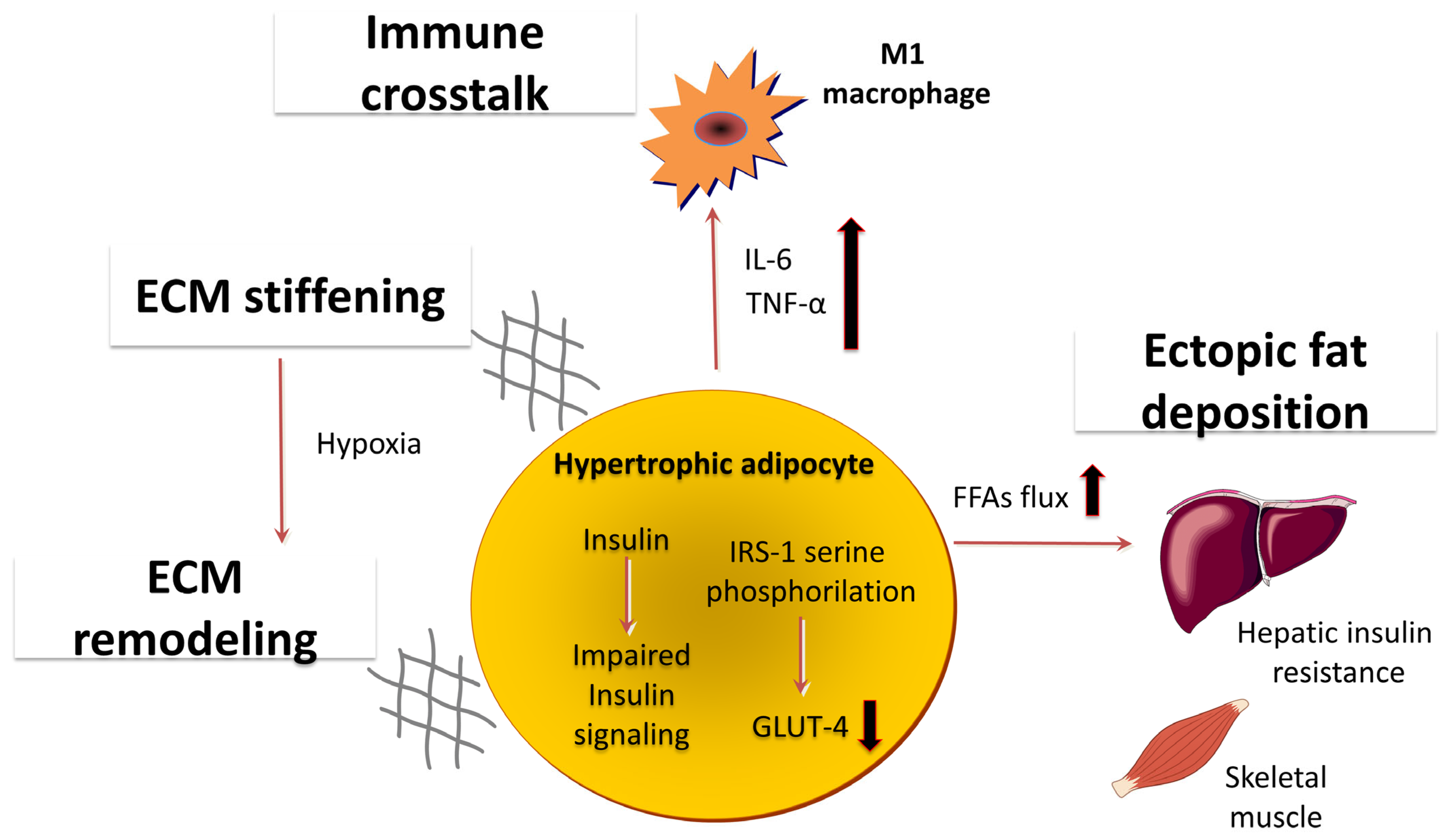
2.1. Adipocyte Hypertrophy, Inflammation, and Insulin Resistance
2.2. Lipotoxicity and Ectopic Fat Deposition
2.3. Role of Adipokines and Immune Crosstalk
3. Semaglutide: Pharmacology and Mechanisms of Action
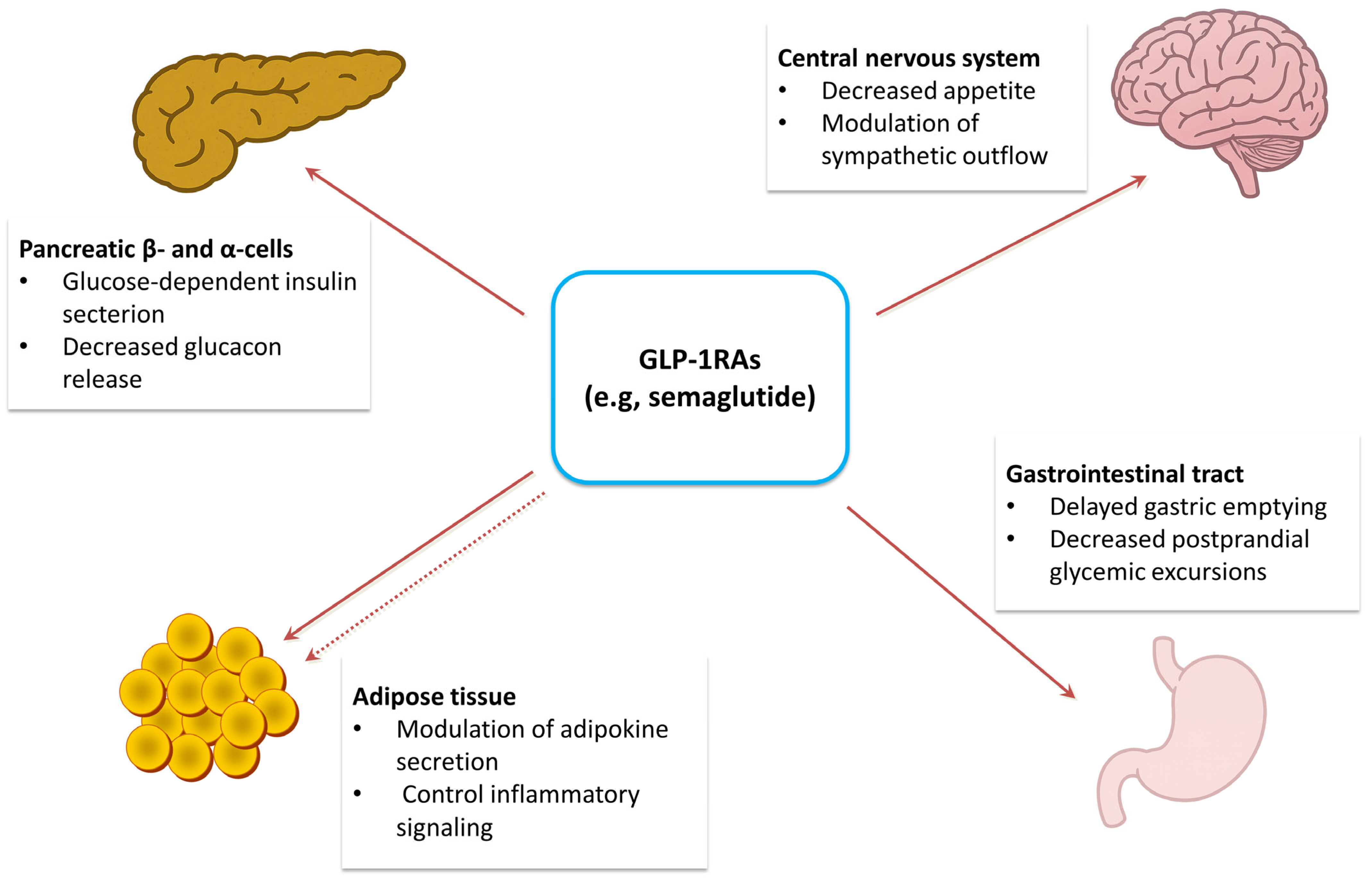
3.1. GLP-1 Receptor Signaling in Metabolic Tissues
3.2. Pharmacokinetics and Dosing
3.3. Overview of Systemic Metabolic Effects
4. Effects of Semaglutide on Adipose Tissue Biology in Type 2 Diabetes
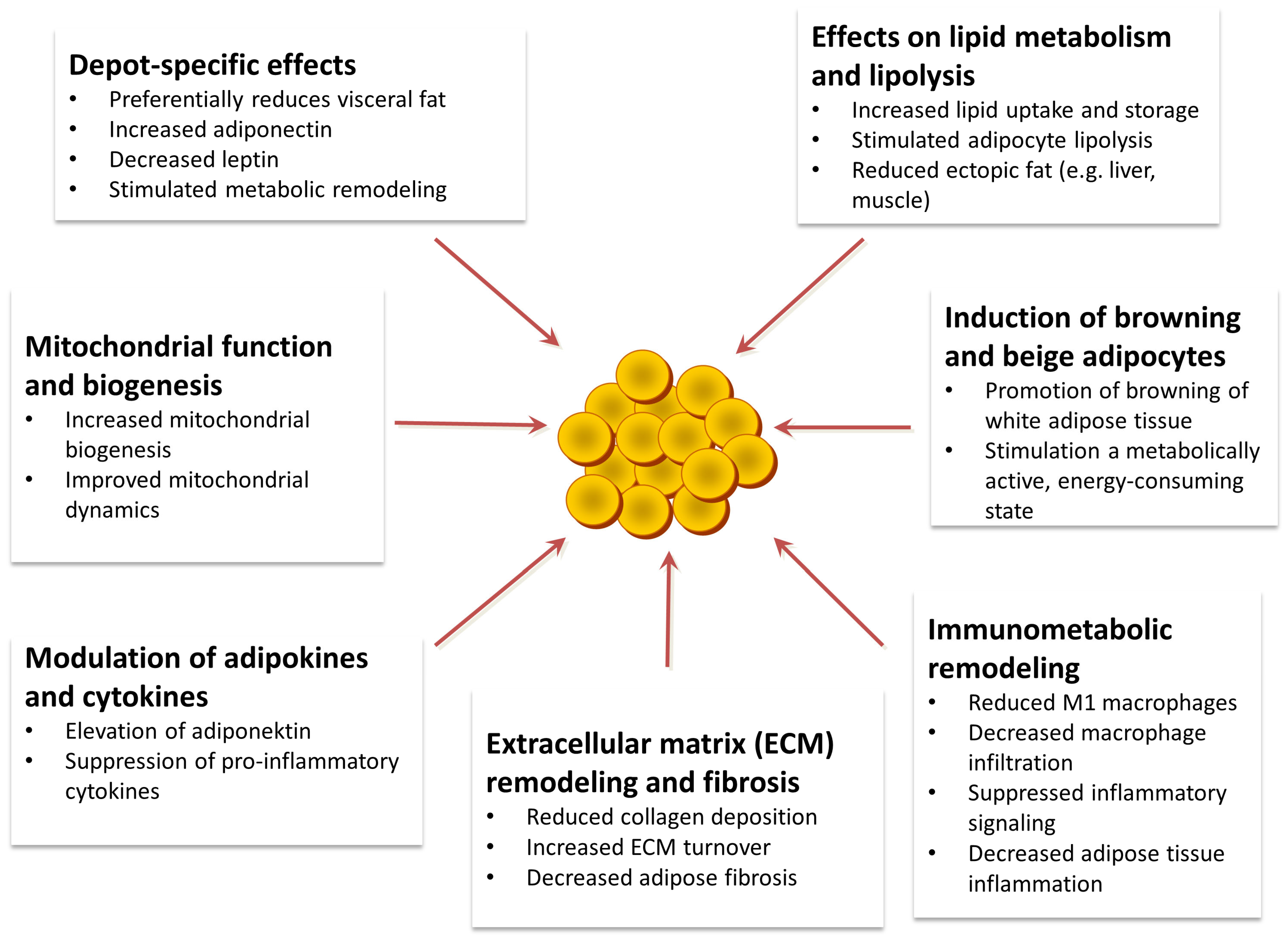
4.1. Depot-Specific Effects of Semaglutide on Adipose Tissue

| Mechanistic Domain | Key Molecular Mediators/Pathways | Adipose Depot/Cell Type | Principal Adipose-Related Effect | Evidence Type | Strength of Evidence | References |
|---|---|---|---|---|---|---|
| Depot-specific adipose effects | Preferential reduction in visceral fat; adipokine shift (adiponectin levels increase, leptin levels decrease) | Visceral vs. subcutaneous adipose tissue (SAT); systemic biomarkers | Reduction in visceral adiposity and improvement of adipose endocrine function | Randomized clinical trials; real-world prospective studies | Strong | [8,9,35,36] |
| Lipid metabolism and lipolysis | Remodeling of lipid-handling proteins (CD36, LPL, FABPs, PLIN2); altered lipid flux | White adipose tissue (predominantly VAT); adipocytes | Reduced lipid uptake and storage programs; improved lipid handling | Preclinical (proteomic analysis in obese mice) | Moderate | [38] |
| Adipose–liver crosstalk and ectopic fat | Adipocyte-driven hepatic insulin resistance; suppression of hepatic lipogenesis and steatosis | Adipocyte–hepatocyte axis; liver | Reduction in ectopic liver fat and improvement of hepatic metabolic phenotype | Translational (human iPSC-based MPS), preclinical, and clinical MASLD studies | Moderate–Strong | [39,42,43] |
| Mitochondrial function and biogenesis | AMPK–SIRT1–PGC-1α signaling; oxidative gene programs | Subcutaneous and visceral adipocytes; skeletal muscle | Enhanced mitochondrial biogenesis and oxidative capacity | Preclinical studies and integrative reviews | Moderate | [27,44,45] |
| Induction of browning and beige adipocytes | UCP1, PRDM16, SIRT1-dependent thermogenic pathways | Predominantly subcutaneous adipose tissue; beige/BAT lineage | Promotion of beige adipocyte programming and thermogenesis | Preclinical semaglutide studies in obese mice; mechanistic reviews | Moderate | [11,13,37,46] |
| Adipokine and cytokine modulation | Decreased TNF-α, IL-6, CRP; increased insulin-sensitizing adipokines | Adipose tissue secretome; systemic circulation | Attenuation of chronic low-grade inflammation | Meta-analyses and mechanistic reviews | Strong | [22,47,48,49] |
| Immunometabolic remodeling | Reduced macrophage infiltration; STAT3-mediated M2 polarization; suppression of NF-κB/JNK signaling | Adipose tissue macrophages (ATM) | Shift toward an anti-inflammatory immune milieu | Preclinical models and in vitro human macrophage studies | Moderate | [12,49,50,51] |
| Extracellular matrix remodeling and fibrosis | Collagen VI (COL6A3), LOX, MMP/TIMP balance; peri-adipocyte ECM remodeling | Fibrotic adipose microenvironment | Reduced fibrotic constraints and improved adipose tissue expandability | Mechanistic adipose fibrosis literature; comparative pharmacotherapy studies | Limited–Moderate | [18,52,53,54,55] |
| Adipose tissue cellular composition | Distinct remodeling of white adipose tissue cellular landscape vs. bariatric surgery | Mouse white adipose tissue | Qualitative reshaping of adipose cellular ecosystem | Preclinical tissue-level studies | Limited | [11,14] |
4.2. Effects on Lipid Metabolism and Lipolysis
4.3. Mitochondrial Function and Biogenesis
4.4. Induction of Browning and Beige Adipocytes
4.5. Modulation of Adipokines and Cytokines
4.6. Immunometabolic Remodeling
4.7. Extracellular Matrix Remodeling and Fibrosis
5. Conclusions and Perspectives
Author Contributions
Funding
Institutional Review Board Statement
Informed Consent Statement
Data Availability Statement
Conflicts of Interest
Abbreviations
| T2DM | Type 2 diabetes mellitus |
| ECM | Extracellular matrix |
| GLP-1RAs | Glucagon-like peptide-1 receptor agonists |
| VAT | Visceral adipose tissue |
| IL-6 | Interleukin-6 |
| TNF-α | Tumor necrosis factor-α |
| CCL-2 | C-C motif chemokine ligand 2 |
| IRS-1 | Insulin receptor substrate 1 |
| GLUT4 | Glucose transporter type-4 |
| FFAs | Free fatty acids |
| GLP1-RA | Peptide-1 receptor agonist |
| CNS | Central nervous system |
| GLP1-R | GLP-1 receptor |
| DPP-4 | Dipeptidyl peptidase-4 |
| HSL | Hormone-sensitive lipase |
| PPARα | Peroxisome proliferator-activated receptor α |
| CPT1A | Carnitine palmitoyltransferase 1A |
| PGC-1α | Peroxisome proliferator-activated receptor-gamma co-activator 1-α |
| MRI | Magnetic resonance imaging |
| VLDL | Very low-density lipoprotein |
| MASLD | Metabolic dysfunction-associated steatotic liver disease |
| LDL | Low-density lipoprotein |
| TG | Triglycerides |
| HDL | High-density lipoprotein |
| NEFA | Non-esterified fatty acids |
| NRF1 | Nuclear respiratory factor1 |
| TFAM | Mitochondrial transcription factor |
| OPA1/Mfn2 | Optic atrophy 1/mitofusins2 |
| TCA cycle | Tricarboxylic acid cycle |
| WAT | White adipose tissue |
| Prdm16 | PR domain containing 16 |
| β3-ar | β3-adrenergic receptor |
| iNOS | Nitric Oxide Synthase |
| STAT3 | Signal transducer and activator of transcription 3 |
| NF-κB | Nuclear factor-κB |
| JNK | Jun N-terminal kinase |
| ATM | Adipose tissue macrophages |
| COL6A3 | Collagen type VI alpha 3 chain |
| LOX | Lysyl oxidase (LOX) |
| YAP | Yes-associated protein |
| TAZ | Transcriptional co-activator with PDZ-binding motif |
| COL1A1 | Collagen type I alpha 1 |
| AMPK | AMP-activated protein kinase |
| MMPs | Matrix metalloproteinases |
| DAMPs | Damage-associated molecular patterns |
| SGLT2 | Sodium–glucose cotransporter 2 |
References
- Kang, Z.; Jin, Z.; Wu, L.; Sun, A.; Dong, L.; Li, J.; Li, Q.; Tong, X. Investigating the pathogenesis and treatment of type 2 diabetes mellitus from the perspective of adipose tissue. Diabetes Metab. Syndr. Obes. 2025, 18, 2343–2360. [Google Scholar] [CrossRef] [Scilit]
- Alloca, S.; Monda, A.; Messina, A.; Casillo, M.; Sapuppo, W.; Monda, V.; Polito, R.; Di Maio, G.; Monda, M.; La Marra, M. Endocrine and metabolic mechanisms linking obesity to type 2 diabetes: Implications for targeted therapy. Healthcare 2025, 16, 1437. [Google Scholar] [CrossRef] [Scilit] [PubMed]
- Cimini, F.A.; Sentinelli, F.; Oldani, A.; Barchetta, I.; Cavallo, M.G. Adipose tissue dysfunction and metabolic diseases: The role of vitamin D/vitamin D receptor axis. Int. J. Mol. Sci. 2025, 26, 10256. [Google Scholar] [CrossRef] [Scilit] [PubMed]
- McGuire, D.K.; Marx, N.; Mulvagh, S.L.; Deanfield, J.E.; Inzucchi, S.E.; Pop-Busui, R.; Mann, J.F.E.; Emerson, S.S.; Poulter, N.R.; Engelmann, M.D.M.; et al. Oral semaglutide and cardiovascular outcomes in high-risk type 2 diabetes. N. Engl. J. Med. 2025, 392, 2001–2012. [Google Scholar] [CrossRef] [Scilit] [PubMed]
- Mayer, C.S.; Fomtelo, P. Semaglutide use in people with obesity and type 2 diabetes from real-world utilization data: An analysis of the all of US program. Diabetes Obes. Metab. 2024, 26, 4989–4995. [Google Scholar] [CrossRef] [Scilit]
- Sklepinski, S.M.; Deng, Y.; Swarna, K.S.; Herrin, J.; Polley, E.C.; Neumiller, J.J.; Galindo, R.J.; Umpierrez, G.E.; Ross, J.S.; Borah, B.J.; et al. Comparative effectiveness of GLP-1 receptor agonists on cardiovascular outcomes among adults with type 2 diabetes and moderate cardiovascular risk: Emulation of a target trial. Diabetes Res. Clin. Pract. 2025, 229, 112910. [Google Scholar] [CrossRef] [Scilit]
- Cortes, T.M.; Vasquez, L.; Serra, M.C.; Robbins, R.; Stepanenko, A.; Brown, K.; Barrus, H.; Campos, A.; Espinoza, S.E.; Musi, N. Effect of semaglutide on physical function, body composition, and biomarkers of aging in older adults with overweight and insulin resistance: Protocol for an open-labeled randomized controlled trial. JMIR Res. Protoc. 2024, 13, e62667. [Google Scholar] [CrossRef] [Scilit]
- Volpe, S.; Lisco, G.; Fanelli, M.; Racaniello, D.; Colaianni, V.; Lavarra, V.; Triggiani, D.; Crudele, L.; Triggiani, V.; Sabbà, C.; et al. Oral semaglutide improves body composition and preserves lean mass in patients with type 2 diabetes: A 26-week prospective real-life study. Front. Endocrinol. 2023, 14, 1240263. [Google Scholar] [CrossRef] [Scilit]
- Deanfield, J.; Lincoff, A.M.; Kahn, S.E.; Emerson, S.S.; Lingvay, I.; Scirica, B.M.; Plutzky, J.; Kushner, R.F.; Colhoun, H.M.; Hovingh, G.K.; et al. Semaglutide and cardiovascular outcomes by baseline and changes in adiposity measurements: A prespecified analysis of the SELECT trial. Lancet 2025, 406, 2257–2268. [Google Scholar] [CrossRef] [Scilit]
- Papakonstantinou, I.; Tsioufis, K.; Katsi, V. Spotlight on the mechanism of action of semaglutide. Curr. Issues Mol. Biol. 2024, 46, 14514–14541. [Google Scholar] [CrossRef] [Scilit]
- Martins, F.F.; Marinho, T.S.; Cardoso, L.E.M.; Barbosa-da-Silva, S.; Souza-Mello, V.; Aguila, M.B.; Mandarim-de-Lacerda, C.A. Semaglutide (GLP-1 receptor agonist) stimulates browning on subcutaneous fat adipocytes and mitigates inflammation and endoplasmic reticulum stress in visceral fat adipocytes of obese mice. Cell Biochem. Funct. 2022, 40, 903–913. [Google Scholar] [CrossRef] [Scilit] [PubMed]
- Lee, Y.S.; Park, M.S.; Choung, J.S.; Kim, S.S.; Oh, H.H.; Choi, C.S.; Ha, S.Y.; Kang, Y.; Kim, Y.; Jun, H.S. Glucagon-like peptide-1 inhibits adipose tissue macrophage infiltration and inflammation in an obese mouse model of diabetes. Diabetologia 2012, 55, 2456–2468. [Google Scholar] [CrossRef] [Scilit]
- Villarroya, F.; Peyrou, M.; Giralt, M. Adipose Tissue, at the Core of the Action of Incretin and Glucagon-Based Anti-Obesity Drugs. Curr. Obes. Rep. 2025, 14, 67. [Google Scholar] [CrossRef] [Scilit]
- Emont, M.P.; Essene, A.L.; Gulko, A.; Bozadjieva-Kramer, N.; Jacobs, C.; Nagesh, S.; Seeley, R.J.; Tsai, L.T.; Rosen, E.D. Semaglutide and bariatric surgery induce distinct changes in the composition of mouse white adipose tissue. Mol. Metab. 2025, 95, 102126. [Google Scholar] [CrossRef] [Scilit]
- Horwitz, A.; Birk, R. Adipose tissue hyperplasia and hypertrophy in common and syndromic obesity—The case of BBS obesity. Nutrients 2023, 15, 3445. [Google Scholar] [CrossRef] [Scilit]
- Dommel, S.; Blüher, M. Does C-C motif chemokine ligand 2 (CCL2) link obesity to a pro-inflammatory state? Int. J. Mol. Sci. 2021, 22, 1500. [Google Scholar] [CrossRef] [Scilit] [PubMed]
- Zatterale, F.; Longo, M.; Naderi, J.; Raciti, G.A.; Desiderio, A.; Miele, C.; Beguinot, F. Chronic adipose tissue inflammation linking obesity to insulin resistance and type 2 diabetes. Front. Physiol. 2020, 10, 1607. [Google Scholar] [CrossRef] [Scilit]
- Sun, K.; Li, X.; Scherer, P.E. Extracellular matrix (ECM) and fibrosis in adipose tissue: Overview and perspectives. Compr. Physiol. 2023, 13, 4387–4407. [Google Scholar] [CrossRef] [Scilit]
- Sancar, G.; Birkenfeld, A.L. The role of adipose tissue dysfunction in hepatic insulin resistance and T2D. J. Endocrinol. 2024, 262, e240115. [Google Scholar] [CrossRef] [Scilit] [PubMed]
- An, Q.; Zhang, Q.H.; Wang, Y.; Zhang, H.Y.; Liu, Y.H.; Zhang, Z.T.; Zhang, M.L.; Lin, L.J.; He, H.; Yang, Y.F.; et al. Association between type 2 diabetes mellitus and body composition based on MRI fat fraction mapping. Front. Public. Health 2024, 12, 1332346. [Google Scholar] [CrossRef] [Scilit]
- Ziegler, A.K.; Scheele, C. Human adipose depots’ diverse functions and dysregulations during cardiometabolic disease. npj Metab. Health Dis. 2024, 2, 34. [Google Scholar] [CrossRef] [Scilit]
- Jouy, S.H.; Mohan, S.; Scichilone, G.; Mostafa, A.; Mahmoud, A.M. Adipokines in the crosstalk between adipose tissues and other organs: Implications in cardiometabolic diseases. Biomedicines 2024, 12, 2129. [Google Scholar] [CrossRef] [Scilit]
- Rabiee, A.; Hossain, M.A.; Poojari, A. Adipose tissue insulin resistance: A key driver of metabolic syndrome pathogenesis. Biomedicines 2025, 13, 2376. [Google Scholar] [CrossRef] [Scilit]
- Zheng, Z.; Zong, Y.; Ma, Y.; Tian, Y.; Pang, Y.; Zhang, C.; Gao, J. Glucagon-like peptide-1 receptor: Mechanisms and advances in therapy. Signal Transduct. Target. Ther. 2024, 9, 234. [Google Scholar] [CrossRef] [Scilit] [PubMed]
- Yang, X.D.; Yang, Y.Y. Clinical Pharmacokinetics of Semaglutide: A Systematic Review. Drug Des. Dev. Ther. 2024, 25, 2555–2570. [Google Scholar] [CrossRef] [Scilit]
- Tamayo-Trujillo, R.; Ruiz-Pozo, V.A.; Cadena-Ullauri, S.; Guevara-Ramírez, P.; Paz-Cruz, E.; Zambrano-Villacres, R.; Simancas-Racines, D.; Zambrano, A.K. Molecular mechanisms of semaglutide and liraglutide as therapeutic option for obesity. Front. Nutr. 2024, 11, 1398059. [Google Scholar] [CrossRef] [Scilit]
- Szekeres, Z.; Nagy, A.; Jahner, K.; Szabados, E. Impact of selected glucagon-like peptide-1 receptor agonists on serum lipids, adipose tissue, and muscle metabolism—A narrative review. Int. J. Mol. Sci. 2024, 25, 8214. [Google Scholar] [CrossRef] [Scilit] [PubMed]
- Røder, M.E. Clinical potential of treatment with semaglutide in type 2 diabetes patients. Drugs Context 2019, 8, 212585. [Google Scholar] [CrossRef] [Scilit]
- Bu, T.; Sun, Z.; Pan, Y.; Deng, X.; Yuan, G. Glucagon-like peptide-1: A new regulator in lipid metabolism. Diabetes Metab. J. 2024, 48, 354–372. [Google Scholar] [CrossRef] [Scilit] [PubMed]
- Bergmann, N.C.; Davies, M.J.; Lingvay, I.; Knop, F.K. Semaglutide for treatment of overweight and obesity: A review. Diabetes Obes. Metab. 2023, 25, 18–35. [Google Scholar] [CrossRef] [Scilit]
- Gong, B.; Li, C.; Shi, T.; Wang, F.; Dai, R.; Chen, G.; Su, H. GLP-1 receptor agonists: Exploration of transformation from metabolic regulation to multi-organ therapy. Front. Pharmacol. 2025, 16, 1675552. [Google Scholar] [CrossRef] [Scilit]
- Rivera, F.B.; Cruz, L.L.A.; Magalong, J.V.; Ruyeras, J.M.M.J.; Aparece, J.P.; Bantayan, N.R.B.; Lara-Breitinger, K.; Gulati, M. Cardiovascular and renal outcomes of glucagon-like peptide 1 receptor agonists among patients with and without type 2 diabetes mellitus: A meta-analysis of randomized placebo-controlled trials. Am. J. Prev. Cardiol. 2024, 18, 100679. [Google Scholar] [CrossRef] [Scilit]
- Alissou, M.; Demangeat, T.; Folope, V.; Van Elslande, H.; Lelandais, H.; Blanchemaison, J.; Cailleaux, P.E.; Guney, S.; Aupetit, A.; Aubourg, A.; et al. Impact of semaglutide on fat mass, lean mass and muscle function in patients with obesity: The SEMALEAN study. Diabetes Obes. Metab. 2026, 28, 112–121. [Google Scholar] [CrossRef] [Scilit]
- Vozza, A.; Triggiani, D.; Fanelli, M.; Lisco, G.; Coletto, D.; Custodero, C.; Volpe, S.; Racaniello, D.; Colaianni, V.; Lavarra, V.; et al. Predictive factors of body weight loss in patients with type 2 diabetes treated with GLP-1 receptor agonists: A 52-week prospective real-life study. Front. Endocrinol. 2025, 16, 1674308. [Google Scholar] [CrossRef] [Scilit] [PubMed]
- Davies, M.; Færch, L.; Jeppesen, O.K.; Pakseresht, A.; Pedersen, S.D.; Perreault, L.; Rosenstock, J.; Shimomura, I.; Viljoen, A.; Wadden, T.A.; et al. Semaglutide 2.4 mg once weekly in adults with overweight or obesity, and type 2 diabetes (STEP 2): A randomised, double-blind, double-dummy, placebo-controlled, phase 3 trial. Lancet 2021, 397, 971–984. [Google Scholar] [CrossRef] [Scilit]
- Shaheer, A.; Jallo, M.; Akhtar, S. Effect of semaglutide add-on to metformin on visceral adiposity index and markers of visceral adipose tissue activity in type 2 diabetic patients. Biomed. Pharmacol. J. 2025, 18, 1545–1558. [Google Scholar] [CrossRef] [Scilit]
- Hropot, T.; Herman, R.; Janez, A.; Lezaic, L.; Jensterle, M. Brown adipose tissue: A new potential target for glucacon-like peptide 1 receptor agonists in the treatment of obesity. Int. J. Mol. Sci. 2023, 24, 8592. [Google Scholar] [CrossRef] [Scilit] [PubMed]
- Zhu, R.Y.; Chen, S. Proteomic analysis reveals semaglutide impacts lipogenic protein expression in epididymal adipose tissue of obese mice. Front. Endocrinol. 2023, 14, 1095432. [Google Scholar] [CrossRef] [Scilit]
- Qi, L.; Groeger, M.; Sharma, A.; Goswami, I.; Chen, E.; Zhong, F.; Ram, A.; Healy, K.; Hsiao, E.C.; Willenbring, H.; et al. Adipocyte inflammation is the primary driver of hepatic insulin resistance in a human iPSC-based microphysiological system. Nat. Commun. 2024, 15, 7991. [Google Scholar] [CrossRef] [Scilit]
- Gamberi, T.; Magherini, F.; Modesti, A.; Fiaschi, T. Adiponectin signaling pathways in liver diseases. Biomedicines 2018, 6, 52. [Google Scholar] [CrossRef] [Scilit]
- Sun, L.; Shang, B.; Lv, S.; Liu, G.; Wu, Q.; Geng, Y. Effects of semaglutide on metabolism and gut microbiota in high-fat diet-induced obese mice. Front. Pharmacol. 2025, 16, 1562896. [Google Scholar] [CrossRef] [Scilit]
- Soto-Catalán, M.; Opazo-Ríos, L.; Quiceno, H.; Lázaro, I.; Moreno, J.A.; Gómez-Guerrero, C.; Egido, J.; Mas-Fontao, S. Semaglutide improves liver steatosis and de novo lipogenesis markers in obese and type-2-diabetic mice with metabolic-dysfunction-associated steatotic liver disease. Int. J. Mol. Sci. 2024, 25, 2961. [Google Scholar] [CrossRef] [Scilit]
- Dusilová, T.; Kovář, J.; Laňková, I.; Thieme, L.; Hubáčková, M.; Šedivý, P.; Pajuelo, D.; Burian, M.; Dezortová, M.; Milánková, D.; et al. Semaglutide treatment effects on liver fat content in obese subjects with metabolic-associated steatotic liver disease (MASLD). J. Clin. Med. 2024, 13, 6100. [Google Scholar] [CrossRef] [Scilit]
- van der Kolk, B.W.; Pirinen, E.; Nicoll, R.; Pietiläinen, K.H.; Heinonen, S. Subcutaneous adipose tissue and skeletal muscle mitochondria following weight loss. Trends Endocrinol. Metab. 2025, 36, 339–363. [Google Scholar] [CrossRef] [Scilit]
- Xu, F.; Lin, B.; Zheng, X.; Chen, Z.; Cao, H.; Xu, H.; Liang, H.; Weng, J. GLP-1 receptor agonist promotes brown remodelling in mouse white adipose tissue through SIRT1. Diabetologia 2016, 59, 1059–1069. [Google Scholar] [CrossRef] [Scilit] [PubMed]
- Kononova, Y.A.; Tuchina, T.P.; Babenko, A.Y. Brown and beige adipose tissue: One or different targets for treatment of obesity and obesity-related metabolic disorders? Int. J. Mol. Sci. 2024, 25, 13295. [Google Scholar] [CrossRef] [Scilit]
- Masson, W.; Lobo, M.; Nogueira, J.P.; Rodriguez-Granillo, A.M.; Barbagelata, L.E.; Siniawski, D. Anti-inflammatory effect of semaglutide: Updated systematic review and meta-analysis. Front. Cardiovasc. Med. 2024, 11, 1379189. [Google Scholar] [CrossRef] [Scilit]
- Ren, Y.; Chen, Y.; Zheng, W.; Kong, W.; Liao, Y.; Zhang, J.; Wang, M.; Zeng, T. The effect of GLP-1 receptor agonists on circulating inflammatory markers in type 2 diabetes patients: A systematic review and meta-analysis. Diabetes Obes. Metab. 2025, 27, 3607–3626. [Google Scholar] [CrossRef] [Scilit]
- Bendotti, G.; Montefusco, L.; Lunati, M.E.; Usuelli, V.; Pastore, I.; Lazzaroni, E.; Assi, E.; Seelam, A.J.; El Essawy, B.; Jang, J.; et al. The anti-inflammatory and immunological properties of GLP-1 receptor agonists. Pharmacol. Res. 2022, 182, 106320. [Google Scholar] [CrossRef] [Scilit] [PubMed]
- Reilly, S.M.; Saltiel, A.R. Adapting to obesity with adipose tissue inflammation. Nat. Rev. Endocrinol. 2017, 13, 633–643. [Google Scholar] [CrossRef] [Scilit] [PubMed]
- Shiraishi, D.; Fujiwara, Y.; Komohara, Y.; Mizuta, H.; Takeya, M. Glucacon-like peptide-1 (GLP-1) induces M2 polarization of human macrophages via STAT3 activation. Biochem. Biophys. Res. Commun. 2012, 425, 304–308. [Google Scholar] [CrossRef] [Scilit]
- Sun, K.; Tordjman, J.; Clément, K.; Scherer, P.E. Fibrosis and adipose tissue dysfunction. Cell Metab. 2013, 18, 470–477. [Google Scholar] [CrossRef] [Scilit] [PubMed]
- Khan, T.; Muise, E.S.; Iyengar, P.; Wang, Z.V.; Chandalia, M.; Abate, N.; Zhang, B.B.; Bonaldo, P.; Chua, S.; Scherer, P.E. Metabolic dysregulation and adipose tissue fibrosis: Role of collagen VI. Mol. Cell. Biol. 2009, 29, 1575–1591. [Google Scholar] [CrossRef] [Scilit] [PubMed]
- Chun, T.H. Peri-adipocyte ECM remodeling in obesity and adipose tissue fibrosis. Adipocyte 2012, 1, 89–95. [Google Scholar] [CrossRef] [Scilit]
- Wiśniewski, K.; Choromańska, B.; Maciejczyk, M.; Dadan, J.; Myśliwiec, P. Modulating matrix metalloproteinase activity in obesity: Comparative effects of bariatric surgery and GLP-1/GIP-based pharmacotherapy. J. Clin. Med. 2025, 14, 7648. [Google Scholar] [CrossRef] [Scilit]
- Miranda, S.; Choudhari, J.; Chauhan, N.; Parmar, M.S. Impact of semaglutide on lipid profiles in overweight and obese non-diabetic adults: A systematic review and meta-analysis of randomized controlled trials. Eur. J. Pharmacol. 2025, 1003, 177953. [Google Scholar] [CrossRef] [Scilit]
- Maretty, L.; Gill, D.; Simonsen, L.; Soh, K.; Zagkos, L.; Galanakis, M.; Sibbesen, J.; Iglesias, M.T.; Secher, A.; Valkenborg, D.; et al. Proteomic changes upon treatment with semaglutide in individuals with obesity. Nat. Med. 2025, 31, 267–277. [Google Scholar] [CrossRef] [Scilit] [PubMed]
- Ma, Y.-L.; Kong, C.-Y.; Guo, Z.; Wang, M.-Y.; Wang, P.; Liu, F.-Y.; Yang, D.; Yang, Z.; Tang, Q.-Z. Semaglutide ameliorates cardiac remodeling in male mice by optimizing energy substrate utilization through the Creb5/NR4a1 axis. Nat. Commun. 2024, 15, 4757. [Google Scholar] [CrossRef] [Scilit]
- Vaittinen, M.; Ilha, M.; Herbers, E.; Wagner, A.; Virtanen, K.A.; Pietiläinen, K.H.; Pirinen, E.; Pihlajamäki, J. Liraglutide demonstrates a therapeutic effect on mitochondrial dysfunction in human SGBS adipocytes in vitro. Diabetes Res. Clin. Pract. 2023, 199, 110635. [Google Scholar] [CrossRef] [Scilit]
- Pellegrinelli, V.; Carobbio, S.; Vidal-Puig, A. Adipose tissue plasticity: How fat depots respond differently to pathophysiological cues. Diabetologia 2016, 59, 1075–1088. [Google Scholar] [CrossRef] [Scilit]
- Scavo, M.P.; Lisco, G.; Depalo, N.; Rizzi, F.; Volpe, S.; Arrè, V.; Carrieri, L.; Notarnicola, M.; De Nunzio, V.; Curri, M.L.; et al. Semaglutide modulates extracellular matrix production of LX-2 cells via exosomes and improves metabolic dysfunction-associated steatotic liver disease (MASLD). Int. J. Mol. Sci. 2024, 25, 1493. [Google Scholar] [CrossRef] [Scilit]
- Blüher, M. Adipose tissue dysfunction contributes to obesity related metabolic diseases. Best Pract. Res. Clin. Endocrinol. Metab. 2013, 27, 163–177. [Google Scholar] [CrossRef] [Scilit]
- Saltiel, A.R.; Olefsky, J.M. Inflammatory mechanisms linking obesity and metabolic disease. J. Clin. Investig. 2017, 127, 1–4. [Google Scholar] [CrossRef] [Scilit]
- Rosen, E.D.; Spiegelman, B.M. What we talk about when we talk about fat. Cell 2014, 156, 20–44. [Google Scholar] [CrossRef] [Scilit]
- Marso, S.P.; Bain, S.C.; Consoli, A.; Eliaschewitz, F.G.; Jódar, E.; Leiter, L.A.; Lingvay, I.; Rosenstock, J.; Seufert, J.; Seufert, J.; et al. Semaglutide and cardiovascular outcomes in patients with type 2 diabetes. N. Engl. J. Med. 2016, 375, 1834–1844. [Google Scholar] [CrossRef] [Scilit] [PubMed]
- Wilding, J.P.H.; Batterham, R.L.; Calanna, S.; Davies, M.; Van Gaal, L.F.; Lingvay, I.; McGowan, B.M.; Rosenstock, J.; Tran, M.T.D.; Wadden, T.A.; et al. Once-weekly semaglutide in adults with overweight or obesity. N. Engl. J. Med. 2021, 384, 989–1002. [Google Scholar] [CrossRef] [Scilit]
- Wilding, J.P.H.; Batterham, R.L.; Calanna, S.; Van Gaal, L.F.; McGowan, B.M.; Rosenstock, J.; Tran, M.T.D.; Wharton, S.; Yokote, K.; Zeuthen, N.; et al. Impact of semaglutide on body composition in adults with overweight or obesity: Exploratory analysis of the SEP 1 study. J. Endocr. Soc. 2021, 5, A16–A17. [Google Scholar] [CrossRef] [Scilit]
- Ngabea, M.A.; Dimeji, I.Y. GLP-1 receptor agonists and inflammatory pathway modulation: Dual targeting of metabolic and immune dysfunction in insulin resistance. Biochem. Biophys. Res. Commun. 2025, 14, 152822. [Google Scholar] [CrossRef] [Scilit] [PubMed]
- Kahn, C.R.; Wang, G.; Lee, K.Y. Altered adipose tissue and adipocyte function in the pathogenesis of metabolic syndrome. J. Clin. Investig. 2019, 129, 3990–4000. [Google Scholar] [CrossRef] [Scilit] [PubMed]
- Blüher, M. Metabolically healthy obesity. Endocr. Rev. 2020, 41, bnaa004. [Google Scholar] [CrossRef] [Scilit]
- Mousavi, A.; Shojaei, S.; Soleimani, H.; Semirani-Nezhad, D.; Ebrahimi, P.; Zafari, A.; Ebrahimi, R.; Roozbehi, K.; Harrison, A.; Syed, M.A.; et al. Safety, efficacy, and cardiovascular benefits of combination therapy with SGLT-2 inhibitors and GLP-1 receptor agonists in patients with diabetes mellitus: A systematic review and meta-analysis of randomized controlled trials. Diabetol. Metab. Syndr. 2025, 17, 68. [Google Scholar] [CrossRef] [Scilit] [PubMed]
- Vernstrøm, L.; Gullaksen, S.; Sørensen, S.S.; Funck, K.L.; Laugesen, E.; Poulsen, P.L. Separate and combined effects of empagliflozin and semaglutide on vascular function: A 32-week randomized trial. Diabetes Obes. Metab. 2024, 26, 1624–1635. [Google Scholar] [CrossRef] [Scilit] [PubMed]
- Le Magueresse-Battistoni, B. Adipose tissue and endocrine-disrupting chemicals: Does sex matter? Int. J. Environ. Res. Public Health 2020, 17, 9403. [Google Scholar] [CrossRef] [Scilit] [PubMed]


Disclaimer/Publisher’s Note: The statements, opinions and data contained in all publications are solely those of the individual author(s) and contributor(s) and not of MDPI and/or the editor(s). MDPI and/or the editor(s) disclaim responsibility for any injury to people or property resulting from any ideas, methods, instructions or products referred to in the content. |
© 2026 by the authors. Licensee MDPI, Basel, Switzerland. This article is an open access article distributed under the terms and conditions of the Creative Commons Attribution (CC BY) license.
Share and Cite
Ábel, T.; Csobod Csajbókné, É. Semaglutide-Mediated Remodeling of Adipose Tissue in Type 2 Diabetes: Molecular Mechanisms Beyond Glycemic Control. Int. J. Mol. Sci. 2026, 27, 1186. https://doi.org/10.3390/ijms27031186
Ábel T, Csobod Csajbókné É. Semaglutide-Mediated Remodeling of Adipose Tissue in Type 2 Diabetes: Molecular Mechanisms Beyond Glycemic Control. International Journal of Molecular Sciences. 2026; 27(3):1186. https://doi.org/10.3390/ijms27031186
Chicago/Turabian StyleÁbel, Tatjana, and Éva Csobod Csajbókné. 2026. "Semaglutide-Mediated Remodeling of Adipose Tissue in Type 2 Diabetes: Molecular Mechanisms Beyond Glycemic Control" International Journal of Molecular Sciences 27, no. 3: 1186. https://doi.org/10.3390/ijms27031186
APA StyleÁbel, T., & Csobod Csajbókné, É. (2026). Semaglutide-Mediated Remodeling of Adipose Tissue in Type 2 Diabetes: Molecular Mechanisms Beyond Glycemic Control. International Journal of Molecular Sciences, 27(3), 1186. https://doi.org/10.3390/ijms27031186