G Protein-Coupled Receptors in Cerebrovascular Diseases: Signaling Mechanisms and Therapeutic Opportunities


Abstract
1. Introduction
2. Canonical GPCR Signaling Pathways
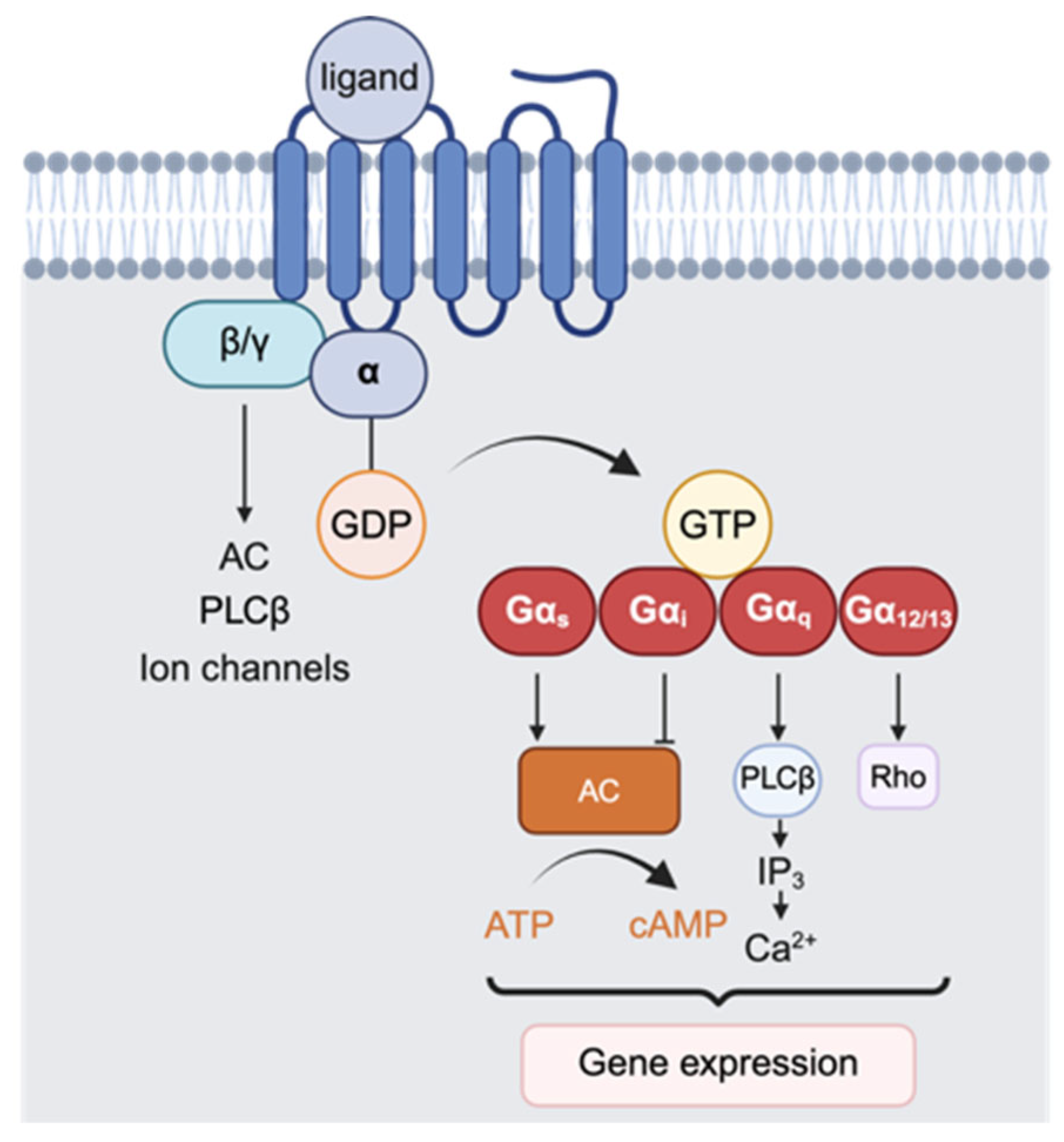
2.1. GPCRs and the G Protein Family
- Rhodopsin family (Class A): The largest subgroup (~70% of GPCRs), including adrenergic receptors, endothelin receptors, and chemokine receptors (e.g., CCR5, CXCR4).
- Secretin family (Class B): Ligands are peptide hormones (e.g., glucagon), with receptors involved in metabolic regulation.
- Glutamate family (Class C): Includes metabotropic glutamate receptors (mGluRs) and γ-aminobutyric acid (GABA) receptors, critical for neural signaling.
- Adhesion family: Regulates cell adhesion and tissue development, with roles in vascular integrity.
- Frizzled/Taste2 family: Mediates Wnt signaling (Frizzled) and taste perception (Taste2).
2.2. Core GPCR Signal Transduction Mechanisms
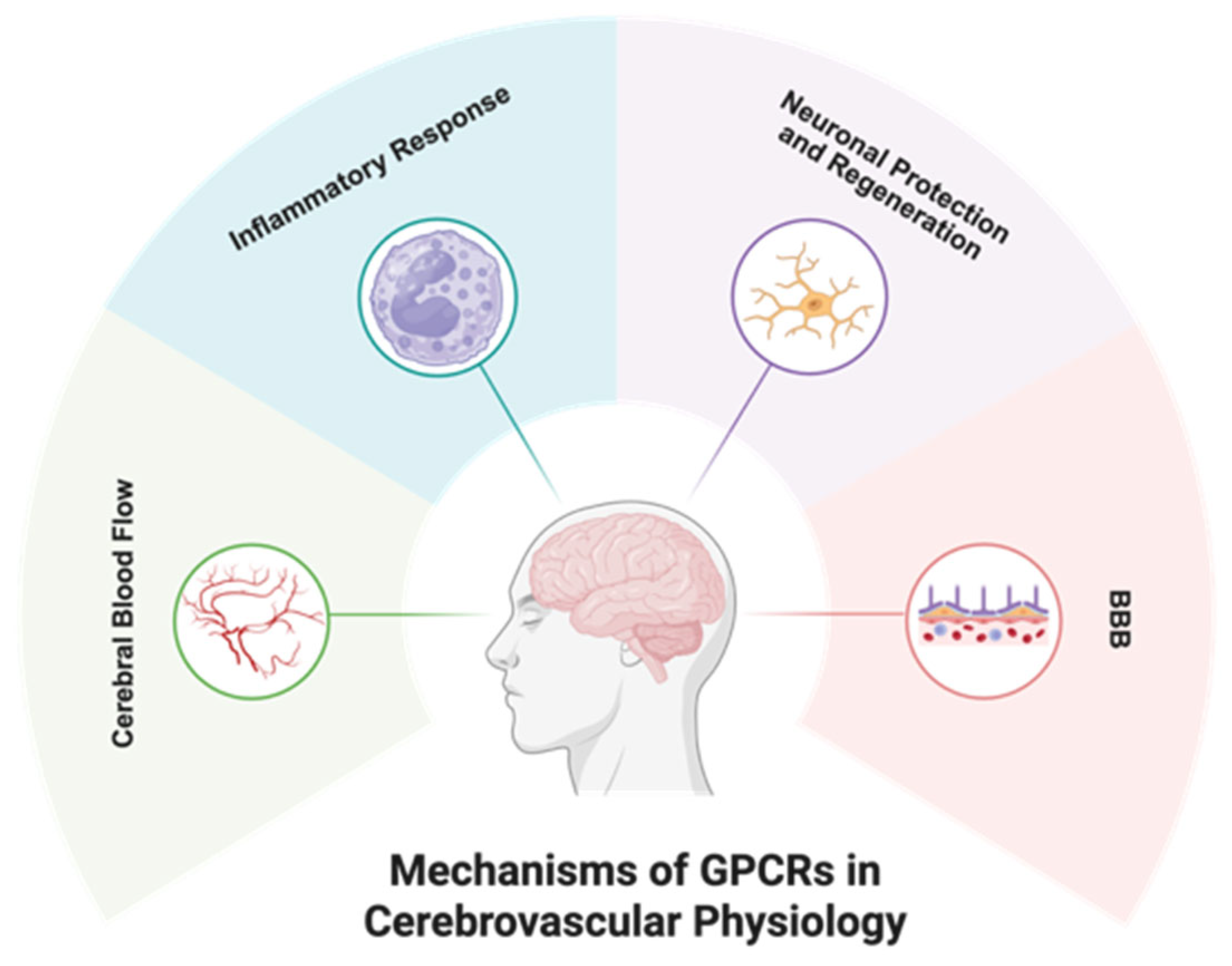
3. GPCR Signaling Within the NVU
3.1. Endothelial–Pericyte GPCR Crosstalk in Vascular Stability
3.2. Astrocyte–Endothelial GPCR Signaling at the BBB
3.3. Microglia–Neuron GPCR Communication in Immune Surveillance
3.4. Integrated GPCR Networks Across the NVU
4. GPCRs in Acute Cerebrovascular Injury
4.1. Regulation of Cerebral Blood Flow During Acute Ischemia
4.2. GPCR-Mediated Neuroinflammation and Secondary Injury
4.3. GPCR Regulation of BBB Disruption in the Acute Phase
5. GPCRs in Neuronal Survival, Plasticity, and Functional Recovery
5.1. GPCR Regulation of Delayed Neuronal Survival
5.2. GPCR Modulation of Synaptic Plasticity and NVU Remodeling
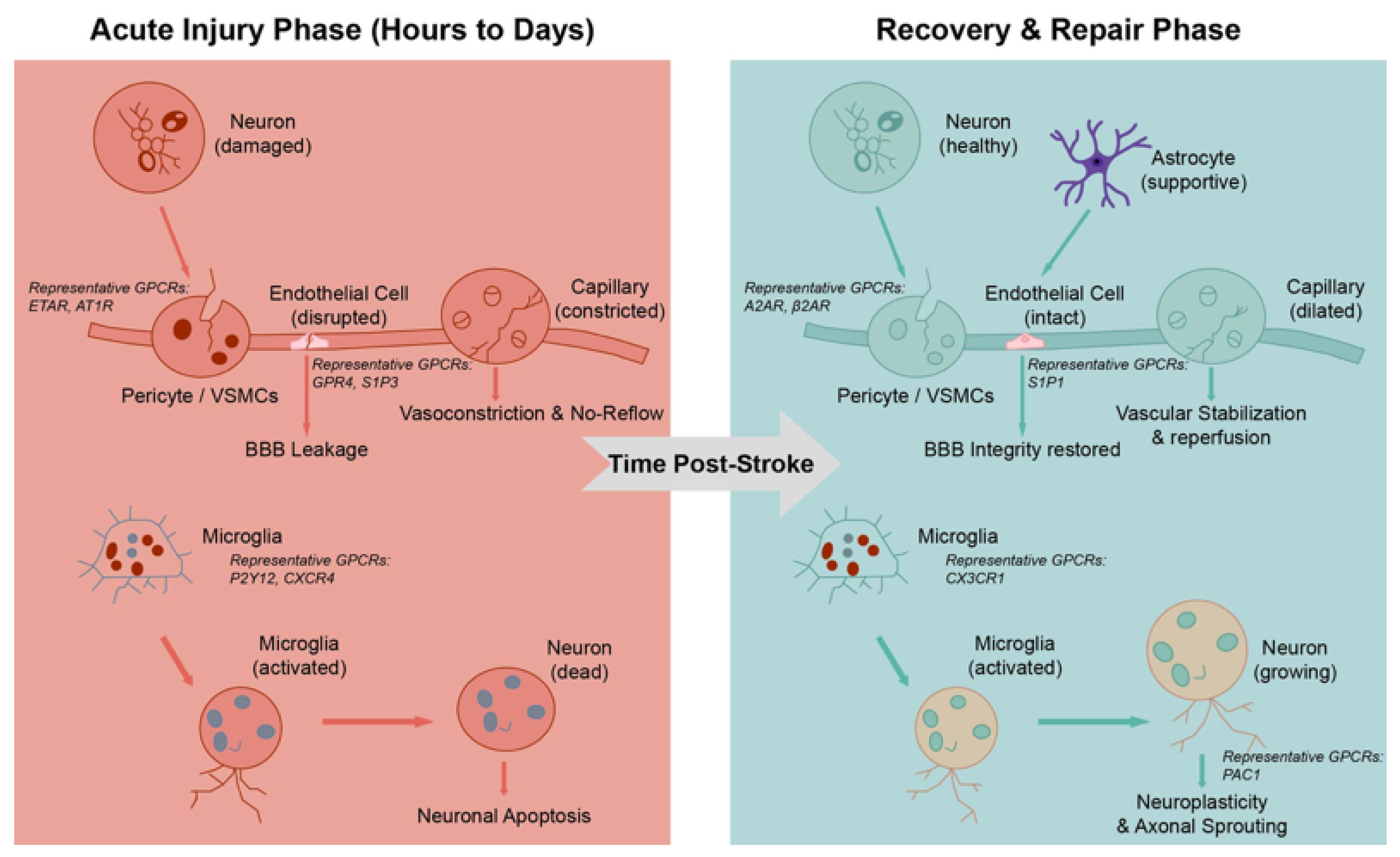
5.3. Stage-Dependent GPCR Signaling Switches and Functional Outcomes
6. Translational and Therapeutic Challenges of Targeting GPCRs in Cerebrovascular Diseases
6.1. Clinically Validated and Repurposed GPCR Targets
- ❿
- Adenosine receptors (ARs)
- ❿
- Endothelin receptors (ETRs)
- ❿
- Sphingosine-1-phosphate receptors (S1P receptors)
- ❿
- Chemokine receptors (CCR5 and CXCR4)
- ❿
- Serotonin receptors (5-HTRs)
6.2. Discrepancy Between Preclinical Efficacy and Clinical Outcomes
6.3. Pharmacological Barriers: BBB Penetration, Off-Target Effects, and Therapeutic Windows
6.4. Species Differences and Limitations of Rodent Models
6.5. Emerging Human-Relevant Models for GPCR Research
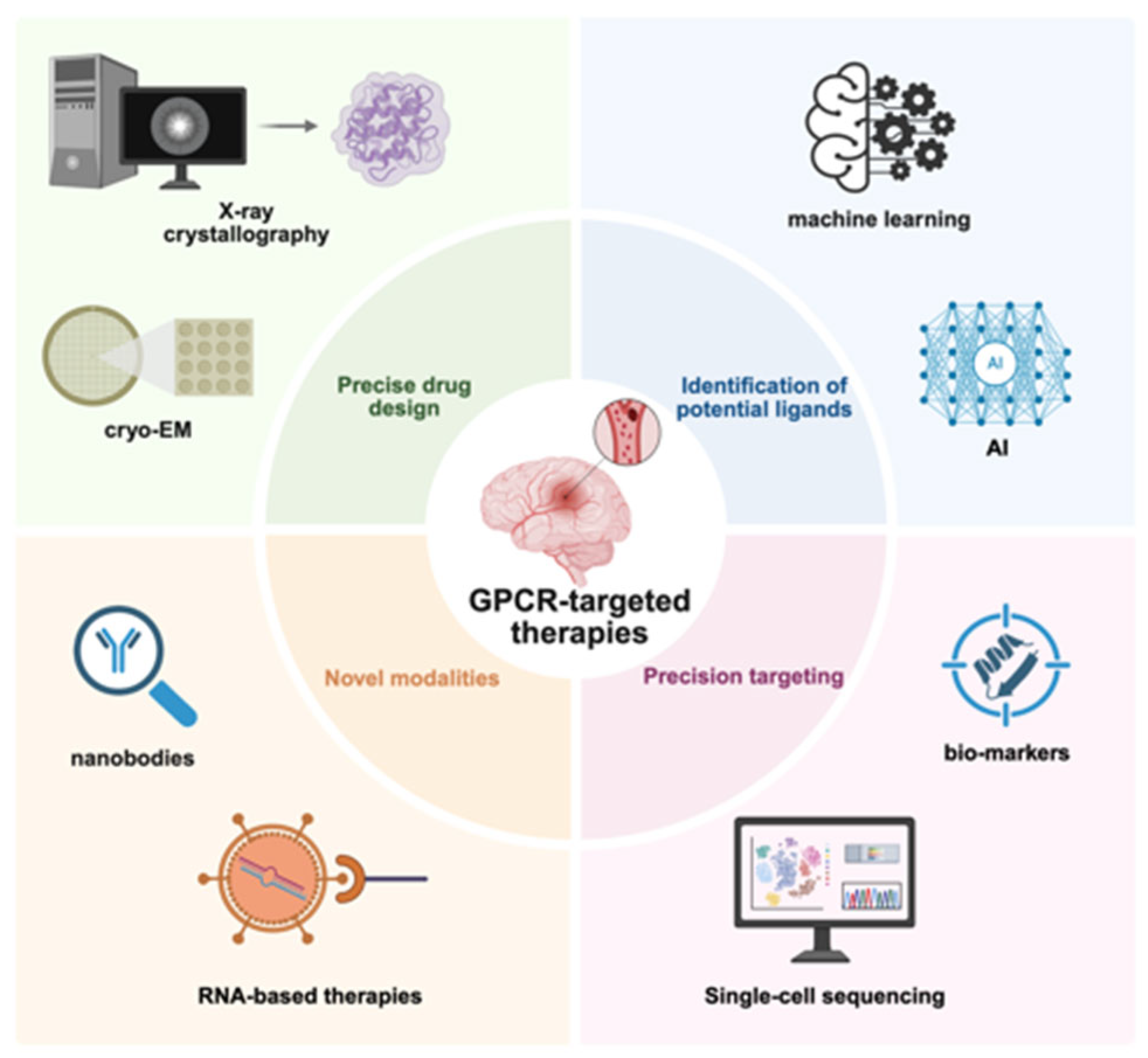
6.6. Perspectives: Toward Precision GPCR Targeting in Cerebrovascular Diseases
Author Contributions
Funding
Institutional Review Board Statement
Informed Consent Statement
Data Availability Statement
Conflicts of Interest
References
- Wu, J.W.; Wang, B.X.; Shen, L.P.; Chen, Y.L.; Du, Z.Y.; Du, S.Q.; Lu, X.J.; Zhao, X.D. Investigating the Potential Therapeutic Targeting of the JAK-STAT Pathway in Cerebrovascular Diseases: Opportunities and Challenges. Mol. Neurobiol. 2025, 62, 9338–9364. [Google Scholar] [CrossRef]
- Chen, Q.; Yu, Y.; Zhu, L.; Duan, X.; Zhong, Y.; Li, C.; Wu, W. Recent progress of carbon dots in the theranostics of cardiovascular and cerebrovascular diseases. Nanoscale 2025, 17, 14521–14557. [Google Scholar] [CrossRef]
- Yin, X.; Li, S.; Wang, J.; Wang, M.; Yang, J. Research progress of active compounds from traditional Chinese medicine in the treatment of stroke. Eur. J. Med. Chem. 2025, 291, 117599. [Google Scholar] [CrossRef]
- Hu, S.; Wang, D.; Liu, W.; Wang, Y.; Chen, J.; Cai, X. Apelin receptor dimer: Classification, future prospects, and pathophysiological perspectives. Biochim. Biophys. Acta Mol. Basis Dis. 2024, 1870, 167257. [Google Scholar] [CrossRef]
- Wang, Y.; Zhu, C.L.; Li, P.; Liu, Q.; Li, H.R.; Yu, C.M.; Deng, X.M.; Wang, J.F. The role of G protein-coupled receptor in neutrophil dysfunction during sepsis-induced acute respiratory distress syndrome. Front. Immunol. 2023, 14, 1112196. [Google Scholar] [CrossRef] [PubMed]
- Annamneedi, A.; Gora, C.; Dudas, A.; Leray, X.; Bozon, V.; Crepieux, P.; Pellissier, L.P. Towards the convergent therapeutic potential of G protein-coupled receptors in autism spectrum disorders. Br. J. Pharmacol. 2025, 182, 3044–3067. [Google Scholar] [CrossRef]
- Shao, Y.; Mei, Y.; Tan, Y.; Yang, M.; Wu, H. The regulatory functions of G protein-coupled receptors signaling pathways in B cell differentiation and development contributing to autoimmune diseases. Cell Biosci. 2025, 15, 57. [Google Scholar] [CrossRef]
- Chen, S.; Niu, Z.; Shen, Y.; Lu, W.; Zhao, J.; Yang, H.; Guo, M.; Zhang, L.; Zheng, R.; Du, G.; et al. Naodesheng decoction regulating vascular function via G-protein-coupled receptors: Network analysis and experimental investigations. Front. Pharmacol. 2024, 15, 1355169. [Google Scholar] [CrossRef] [PubMed]
- Wang, B.; Wang, M.; Ao, D.; Wei, X. CXCL13-CXCR5 axis: Regulation in inflammatory diseases and cancer. Biochim. Biophys. Acta Rev. Cancer 2022, 1877, 188799. [Google Scholar] [CrossRef]
- Oz-Arslan, D.; Yavuz, M.; Kan, B. Exploring orphan GPCRs in neurodegenerative diseases. Front. Pharmacol. 2024, 15, 1394516. [Google Scholar] [CrossRef] [PubMed]
- Vessey, D.A.; Li, L.; Imhof, I.; Honbo, N.; Karliner, J.S. FTY720 postconditions isolated perfused heart by a mechanism independent of sphingosine kinase 2 and different from S1P or ischemic postconditioning. Med. Sci. Monit. Basic. Res. 2013, 19, 126–132. [Google Scholar] [CrossRef]
- Ricart-Ortega, M.; Font, J.; Llebaria, A. GPCR photopharmacology. Mol. Cell Endocrinol. 2019, 488, 36–51. [Google Scholar] [CrossRef] [PubMed]
- Hussain, M.; Liu, J.; Wang, G.Z.; Zhou, G.B. CXCL13 Signaling in the Tumor Microenvironment. Adv. Exp. Med. Biol. 2021, 1302, 71–90. [Google Scholar] [CrossRef]
- Janicot, R.; Maziarz, M.; Park, J.C.; Zhao, J.; Luebbers, A.; Green, E.; Philibert, C.E.; Zhang, H.; Layne, M.D.; Wu, J.C.; et al. Direct interrogation of context-dependent GPCR activity with a universal biosensor platform. Cell 2024, 187, 1527–1546 e1525. [Google Scholar] [CrossRef]
- Mazarura, G.R.; Dallagnol, J.C.C.; Chatenet, D.; Allen, B.G.; Hebert, T.E. The complicated lives of GPCRs in cardiac fibroblasts. Am. J. Physiol. Cell Physiol. 2022, 323, C813–C822. [Google Scholar] [CrossRef]
- Schaeffer, S.; Iadecola, C. Revisiting the neurovascular unit. Nat. Neurosci. 2021, 24, 1198–1209. [Google Scholar] [CrossRef]
- Liu, S.; Anderson, P.J.; Rajagopal, S.; Lefkowitz, R.J.; Rockman, H.A. G Protein-Coupled Receptors: A Century of Research and Discovery. Circ. Res. 2024, 135, 174–197. [Google Scholar] [CrossRef]
- Hilger, D.; Masureel, M.; Kobilka, B.K. Structure and dynamics of GPCR signaling complexes. Nat. Struct. Mol. Biol. 2018, 25, 4–12. [Google Scholar] [CrossRef] [PubMed]
- Sprang, S.R.; Chen, Z.; Du, X. Structural basis of effector regulation and signal termination in heterotrimeric Galpha proteins. Adv. Protein Chem. 2007, 74, 1–65. [Google Scholar] [CrossRef] [PubMed]
- Kamato, D.; Thach, L.; Bernard, R.; Chan, V.; Zheng, W.; Kaur, H.; Brimble, M.; Osman, N.; Little, P.J. Structure, Function, Pharmacology, and Therapeutic Potential of the G Protein, Galpha/q,11. Front. Cardiovasc. Med. 2015, 2, 14. [Google Scholar] [CrossRef]
- Suzuki, N.; Hajicek, N.; Kozasa, T. Regulation and physiological functions of G12/13-mediated signaling pathways. Neurosignals 2009, 17, 55–70. [Google Scholar] [CrossRef]
- Kelly, P.; Casey, P.J.; Meigs, T.E. Biologic functions of the G12 subfamily of heterotrimeric g proteins: Growth, migration, and metastasis. Biochemistry 2007, 46, 6677–6687. [Google Scholar] [CrossRef]
- Halls, M.L.; Cooper, D.M. Regulation by Ca2+-signaling pathways of adenylyl cyclases. Cold Spring Harb. Perspect. Biol. 2011, 3, a004143. [Google Scholar] [CrossRef] [PubMed]
- Yen, Y.C.; Li, Y.; Chen, C.L.; Klose, T.; Watts, V.J.; Dessauer, C.W.; Tesmer, J.J.G. Structure of adenylyl cyclase 5 in complex with Gbetagamma offers insights into ADCY5-related dyskinesia. Nat. Struct. Mol. Biol. 2024, 31, 1189–1197. [Google Scholar] [CrossRef]
- Giri, L.; Patel, A.K.; Karunarathne, W.K.; Kalyanaraman, V.; Venkatesh, K.V.; Gautam, N. A G-protein subunit translocation embedded network motif underlies GPCR regulation of calcium oscillations. Biophys. J. 2014, 107, 242–254. [Google Scholar] [CrossRef] [PubMed]
- Ubeysinghe, S.; Wijayaratna, D.; Kankanamge, D.; Karunarathne, A. Molecular regulation of PLCbeta signaling. Methods Enzymol. 2023, 682, 17–52. [Google Scholar] [CrossRef] [PubMed]
- Whorton, M.R.; MacKinnon, R. X-ray structure of the mammalian GIRK2-betagamma G-protein complex. Nature 2013, 498, 190–197. [Google Scholar] [CrossRef]
- Wang, W.; Touhara, K.K.; Weir, K.; Bean, B.P.; MacKinnon, R. Cooperative regulation by G proteins and Na(+) of neuronal GIRK2 K(+) channels. elife 2016, 5, e15751. [Google Scholar] [CrossRef]
- Behrendt, M.; Gruss, F.; Enzeroth, R.; Dembla, S.; Zhao, S.; Crassous, P.A.; Mohr, F.; Nys, M.; Louros, N.; Gallardo, R.; et al. The structural basis for an on-off switch controlling Gbetagamma-mediated inhibition of TRPM3 channels. Proc. Natl. Acad. Sci. USA 2020, 117, 29090–29100. [Google Scholar] [CrossRef]
- Zhao, C.; MacKinnon, R. Structural and functional analyses of a GPCR-inhibited ion channel TRPM3. Neuron 2023, 111, 81–91. e7. [Google Scholar] [CrossRef]
- Toussay, X.; Tiberi, M.; Lacoste, B. Laser Doppler Flowmetry to Study the Regulation of Cerebral Blood Flow by G Protein-Coupled Receptors in Rodents. Methods Mol. Biol. 2019, 1947, 377–387. [Google Scholar] [CrossRef]
- Akhter, N.; Lambay, A.; Almotairi, R.; Hamadi, A.; Bhatia, K.; Ahmad, S.; Ducruet, A.F. The Complex Role of the Complement C3a Receptor (C3aR) in Cerebral Injury and Recovery Following Ischemic Stroke. Cells 2025, 14, 1440. [Google Scholar] [CrossRef]
- Rada, C.C.; Mejia-Pena, H.; Grimsey, N.J.; Canto Cordova, I.; Olson, J.; Wozniak, J.M.; Gonzalez, D.J.; Nizet, V.; Trejo, J. Heat shock protein 27 activity is linked to endothelial barrier recovery after proinflammatory GPCR-induced disruption. Sci. Signal 2021, 14, eabc1044. [Google Scholar] [CrossRef]
- Ma, Y.; Zheng, K.; Zhao, C.; Chen, J.; Chen, L.; Zhang, Y.; Chen, T.; Yao, X.; Cai, Y.; Wu, J. Microglia LILRB4 upregulation reduces brain damage after acute ischemic stroke by limiting CD8(+) T cell recruitment. J. Neuroinflammation 2024, 21, 214. [Google Scholar] [CrossRef]
- Jayaraj, R.L.; Azimullah, S.; Beiram, R.; Jalal, F.Y.; Rosenberg, G.A. Neuroinflammation: Friend and foe for ischemic stroke. J. Neuroinflammation 2019, 16, 142. [Google Scholar] [CrossRef]
- Khan, H.; Kaur, P.; Singh, T.G.; Grewal, A.K.; Sood, S. Adenosine as a Key Mediator of Neuronal Survival in Cerebral Ischemic Injury. Neurochem. Res. 2022, 47, 3543–3555. [Google Scholar] [CrossRef]
- Garcia, J.G.; Liu, F.; Verin, A.D.; Birukova, A.; Dechert, M.A.; Gerthoffer, W.T.; Bamberg, J.R.; English, D. Sphingosine 1-phosphate promotes endothelial cell barrier integrity by Edg-dependent cytoskeletal rearrangement. J. Clin. Investig. 2001, 108, 689–701. [Google Scholar] [CrossRef] [PubMed]
- Thangada, S.; Shapiro, L.H.; Silva, C.; Yamase, H.; Hla, T.; Ferrer, F.A. Treatment with the immunomodulator FTY720 (fingolimod) significantly reduces renal inflammation in murine unilateral ureteral obstruction. J. Urol. 2014, 191, 1508–1516. [Google Scholar] [CrossRef] [PubMed]
- Li, W.; Wu, S.; Hickey, R.W.; Rose, M.E.; Chen, J.; Graham, S.H. Neuronal cyclooxygenase-2 activity and prostaglandins PGE2, PGD2, and PGF2 alpha exacerbate hypoxic neuronal injury in neuron-enriched primary culture. Neurochem. Res. 2008, 33, 490–499. [Google Scholar] [CrossRef] [PubMed]
- Kostandy, B.B. The role of glutamate in neuronal ischemic injury: The role of spark in fire. Neurol. Sci. 2012, 33, 223–237. [Google Scholar] [CrossRef]
- Fung, S.; Cherry, A.E.; Xu, C.; Stella, N. Alkylindole-sensitive receptors modulate microglial cell migration and proliferation. Glia 2015, 63, 1797–1808. [Google Scholar] [CrossRef] [PubMed]
- McHugh, D.; Hu, S.S.; Rimmerman, N.; Juknat, A.; Vogel, Z.; Walker, J.M.; Bradshaw, H.B. N-arachidonoyl glycine, an abundant endogenous lipid, potently drives directed cellular migration through GPR18, the putative abnormal cannabidiol receptor. BMC Neurosci. 2010, 11, 44. [Google Scholar] [CrossRef] [PubMed]
- Gu, C.; Chen, Y.; Chen, Y.; Liu, C.F.; Zhu, Z.; Wang, M. Role of G Protein-Coupled Receptors in Microglial Activation: Implication in Parkinson’s Disease. Front. Aging Neurosci. 2021, 13, 768156. [Google Scholar] [CrossRef]
- Reyes-Gibby, C.C.; Yuan, C.; Wang, J.; Yeung, S.C.; Shete, S. Gene network analysis shows immune-signaling and ERK1/2 as novel genetic markers for multiple addiction phenotypes: Alcohol, smoking and opioid addiction. BMC Syst. Biol. 2015, 9, 25. [Google Scholar] [CrossRef] [PubMed]
- Yang, L.V.; Oppelt, K.A.; Thomassen, M.J.; Marie, M.A.; Nik Akhtar, S.; McCallen, J.D. Can GPR4 Be a Potential Therapeutic Target for COVID-19? Front. Med. 2020, 7, 626796. [Google Scholar] [CrossRef]
- Negri, S.; Faris, P.; Maniezzi, C.; Pellavio, G.; Spaiardi, P.; Botta, L.; Laforenza, U.; Biella, G.; Moccia, D.F. NMDA receptors elicit flux-independent intracellular Ca(2+) signals via metabotropic glutamate receptors and flux-dependent nitric oxide release in human brain microvascular endothelial cells. Cell Calcium 2021, 99, 102454. [Google Scholar] [CrossRef]
- Kuhr, F.; Lowry, J.; Zhang, Y.; Brovkovych, V.; Skidgel, R.A. Differential regulation of inducible and endothelial nitric oxide synthase by kinin B1 and B2 receptors. Neuropeptides 2010, 44, 145–154. [Google Scholar] [CrossRef]
- Jiang, W.; Jin, Y.; Zhang, S.; Ding, Y.; Huo, K.; Yang, J.; Zhao, L.; Nian, B.; Zhong, T.P.; Lu, W.; et al. PGE2 activates EP4 in subchondral bone osteoclasts to regulate osteoarthritis. Bone Res. 2022, 10, 27. [Google Scholar] [CrossRef]
- McCullough, L.; Wu, L.; Haughey, N.; Liang, X.; Hand, T.; Wang, Q.; Breyer, R.M.; Andreasson, K. Neuroprotective function of the PGE2 EP2 receptor in cerebral ischemia. J. Neurosci. 2004, 24, 257–268. [Google Scholar] [CrossRef]
- Lacroix, A.; Toussay, X.; Anenberg, E.; Lecrux, C.; Ferreiros, N.; Karagiannis, A.; Plaisier, F.; Chausson, P.; Jarlier, F.; Burgess, S.A.; et al. COX-2-Derived Prostaglandin E2 Produced by Pyramidal Neurons Contributes to Neurovascular Coupling in the Rodent Cerebral Cortex. J. Neurosci. 2015, 35, 11791–11810. [Google Scholar] [CrossRef]
- Liu, X.; Deng, F.; Yu, Z.; Xie, Y.; Hu, C.; Chen, L. Inhibition of endothelin A receptor protects brain microvascular endothelial cells against hypoxia-induced injury. Int. J. Mol. Med. 2014, 34, 313–320. [Google Scholar] [CrossRef]
- Bearzi, P.; Navarini, L.; Currado, D.; Marino, A.; Minerba, M.; Salvolini, C.; Perrone, A.; Frasca, L.; Liakouli, V.; Vomero, M.; et al. Bosentan effect on echocardiographic systolic pulmonary arterial pressure in systemic sclerosis-related pulmonary hypertension: A systematic review and metanalysis. Clin. Exp. Rheumatol. 2024, 42, 1615–1622. [Google Scholar] [CrossRef]
- Davenport, A.P.; Hyndman, K.A.; Dhaun, N.; Southan, C.; Kohan, D.E.; Pollock, J.S.; Pollock, D.M.; Webb, D.J.; Maguire, J.J. Endothelin. Pharmacol. Rev. 2016, 68, 357–418. [Google Scholar] [CrossRef]
- Hennenberg, M.; Trebicka, J.; Biecker, E.; Schepke, M.; Sauerbruch, T.; Heller, J. Vascular dysfunction in human and rat cirrhosis: Role of receptor-desensitizing and calcium-sensitizing proteins. Hepatology 2007, 45, 495–506. [Google Scholar] [CrossRef]
- Sauge, E.; Pechkovsky, D.; Atmuri, N.D.P.; Tehrani, A.Y.; White, Z.; Dong, Y.; Cait, J.; Hughes, M.; Tam, A.; Donen, G.; et al. Losartan metabolite EXP3179 is a unique blood pressure-lowering AT1R antagonist with direct, rapid endothelium-dependent vasoactive properties. Vascul Pharmacol. 2022, 147, 107112. [Google Scholar] [CrossRef] [PubMed]
- Tobo, M.; Tomura, H.; Mogi, C.; Wang, J.Q.; Liu, J.P.; Komachi, M.; Damirin, A.; Kimura, T.; Murata, N.; Kurose, H.; et al. Previously postulated “ligand-independent” signaling of GPR4 is mediated through proton-sensing mechanisms. Cell Signal. 2007, 19, 1745–1753. [Google Scholar] [CrossRef] [PubMed]
- Chen, A.; Dong, L.; Leffler, N.R.; Asch, A.S.; Witte, O.N.; Yang, L.V. Activation of GPR4 by acidosis increases endothelial cell adhesion through the cAMP/Epac pathway. PLoS ONE 2011, 6, e27586. [Google Scholar] [CrossRef]
- Xu, D.; Gao, Q.; Wang, F.; Peng, Q.; Wang, G.; Wei, Q.; Lei, S.; Zhao, S.; Zhang, L.; Guo, F. Sphingosine-1-phosphate receptor 3 is implicated in BBB injury via the CCL2-CCR2 axis following acute intracerebral hemorrhage. CNS Neurosci. Ther. 2021, 27, 674–686. [Google Scholar] [CrossRef]
- Blaho, V.A.; Hla, T. Regulation of mammalian physiology, development, and disease by the sphingosine 1-phosphate and lysophosphatidic acid receptors. Chem. Rev. 2011, 111, 6299–6320. [Google Scholar] [CrossRef]
- Vahidinia, Z.; Joghataei, M.T.; Beyer, C.; Karimian, M.; Tameh, A.A. G-Protein-Coupled Receptors and Ischemic Stroke: A Focus on Molecular Function and Therapeutic Potential. Mol. Neurobiol. 2021, 58, 4588–4614. [Google Scholar] [CrossRef] [PubMed]
- Rabbani, P.; Ramkhelawon, B.; Cronstein, B.N. Adenosine metabolism and receptors in aging of the skin, musculoskeletal, immune and cardiovascular systems. Ageing Res. Rev. 2025, 106, 102695. [Google Scholar] [CrossRef] [PubMed]
- Goncalves, F.Q.; Valada, P.; Matos, M.; Cunha, R.A.; Tome, A.R. Feedback facilitation by adenosine A(2A) receptors of ATP release from mouse hippocampal nerve terminals. Purinergic Signal. 2024, 20, 247–255. [Google Scholar] [CrossRef]
- Lin, S.; Landon, B.; Zhang, H.; Jin, K. Pericyte Dysfunction Contributes to Vascular Cognitive Impairment Induced by Chronic Cerebral Hypoperfusion in Rats. Aging Dis. 2024, 15, 1357–1372. [Google Scholar] [CrossRef]
- Yamamoto, M.; Guo, D.H.; Hernandez, C.M.; Stranahan, A.M. Endothelial Adora2a Activation Promotes Blood-Brain Barrier Breakdown and Cognitive Impairment in Mice with Diet-Induced Insulin Resistance. J. Neurosci. 2019, 39, 4179–4192. [Google Scholar] [CrossRef]
- Cheng, C.; Cheng, W.; Wang, Y.; Chen, X.; Zhang, L.; Li, Y.; Shen, F.; Yuan, D.; Hong, P.; Huang, W. The Dual Role of A2aR in Neuroinflammation: Modulating Microglial Polarization in White Matter Lesions. eNeuro 2025, 12, 1–21. [Google Scholar] [CrossRef]
- Carr, R., 3rd; Schilling, J.; Song, J.; Carter, R.L.; Du, Y.; Yoo, S.M.; Traynham, C.J.; Koch, W.J.; Cheung, J.Y.; Tilley, D.G.; et al. beta-arrestin-biased signaling through the beta2-adrenergic receptor promotes cardiomyocyte contraction. Proc. Natl. Acad. Sci. USA 2016, 113, E4107–E4116. [Google Scholar] [CrossRef] [PubMed]
- Bhattacharya, S.; Hall, S.E.; Li, H.; Vaidehi, N. Ligand-stabilized conformational states of human beta(2) adrenergic receptor: Insight into G-protein-coupled receptor activation. Biophys. J. 2008, 94, 2027–2042. [Google Scholar] [CrossRef] [PubMed]
- Li, Y.J.; Shi, S.X.; Liu, Q.; Shi, F.D.; Gonzales, R.J. Targeted role for sphingosine-1-phosphate receptor 1 in cerebrovascular integrity and inflammation during acute ischemic stroke. Neurosci. Lett. 2020, 735, 135160. [Google Scholar] [CrossRef]
- Alves, N.G.; Yuan, S.Y.; Breslin, J.W. Sphingosine-1-phosphate protects against brain microvascular endothelial junctional protein disorganization and barrier dysfunction caused by alcohol. Microcirculation 2019, 26, e12506. [Google Scholar] [CrossRef]
- Zhu, H.; Cao, Y.; Chen, X.; Xu, N.; Zhou, Y.; Yang, P.; Xu, F.; Ji, J. CX3CL1 attenuates neurological deficit and neuroinflammation through CX3CR1/p38 MAPK/ERK1/2 signaling pathway in traumatic brain injury. Int. Immunopharmacol. 2026, 168, 115765. [Google Scholar] [CrossRef]
- Reglodi, D.; Tamas, A.; Jungling, A.; Vaczy, A.; Rivnyak, A.; Fulop, B.D.; Szabo, E.; Lubics, A.; Atlasz, T. Protective effects of pituitary adenylate cyclase activating polypeptide against neurotoxic agents. Neurotoxicology 2018, 66, 185–194. [Google Scholar] [CrossRef]
- Wu, Y.; Li, Z.; Ding, T.; Yang, Y.; Wei, C.; Zhang, S.; Fan, X. Bidirectional regulation of neuronal autophagy in ischemic stroke: Mechanisms and therapeutic potential. Ageing Res. Rev. 2025, 111, 102842. [Google Scholar] [CrossRef] [PubMed]
- Zhu, W.M.; Neuhaus, A.; Beard, D.J.; Sutherland, B.A.; DeLuca, G.C. Neurovascular coupling mechanisms in health and neurovascular uncoupling in Alzheimer’s disease. Brain 2022, 145, 2276–2292. [Google Scholar] [CrossRef]
- Stenman, E.; Malmsjo, M.; Uddman, E.; Gido, G.; Wieloch, T.; Edvinsson, L. Cerebral ischemia upregulates vascular endothelin ET(B) receptors in rat. Stroke 2002, 33, 2311–2316. [Google Scholar] [CrossRef]
- Edvinsson, L. Cerebrovascular endothelin receptor upregulation in cerebral ischemia. Curr. Vasc. Pharmacol. 2009, 7, 26–33. [Google Scholar] [CrossRef]
- Cai, L.; Gong, Q.; Qi, L.; Xu, T.; Suo, Q.; Li, X.; Wang, W.; Jing, Y.; Yang, D.; Xu, Z.; et al. ACT001 attenuates microglia-mediated neuroinflammation after traumatic brain injury via inhibiting AKT/NFkappaB/NLRP3 pathway. Cell Commun. Signal. 2022, 20, 56. [Google Scholar] [CrossRef]
- Kumar, A.; Stoica, B.A.; Loane, D.J.; Yang, M.; Abulwerdi, G.; Khan, N.; Kumar, A.; Thom, S.R.; Faden, A.I. Microglial-derived microparticles mediate neuroinflammation after traumatic brain injury. J. Neuroinflammation 2017, 14, 47. [Google Scholar] [CrossRef]
- Lattanzi, R.; Miele, R. Versatile Role of Prokineticins and Prokineticin Receptors in Neuroinflammation. Biomedicines 2021, 9, 1648. [Google Scholar] [CrossRef]
- Yang, Y.; Rosenberg, G.A. Blood-brain barrier breakdown in acute and chronic cerebrovascular disease. Stroke 2011, 42, 3323–3328. [Google Scholar] [CrossRef] [PubMed]
- De Bock, M.; Wang, N.; Decrock, E.; Bol, M.; Gadicherla, A.K.; Culot, M.; Cecchelli, R.; Bultynck, G.; Leybaert, L. Endothelial calcium dynamics, connexin channels and blood-brain barrier function. Prog. Neurobiol. 2013, 108, 1–20. [Google Scholar] [CrossRef] [PubMed]
- Williams, J.; Bogwu, J.; Oyekan, A. The role of the RhoA/Rho-kinase signaling pathway in renal vascular reactivity in endothelial nitric oxide synthase null mice. J. Hypertens. 2006, 24, 1429–1436. [Google Scholar] [CrossRef]
- Masago, K.; Kihara, Y.; Yanagida, K.; Hamano, F.; Nakagawa, S.; Niwa, M.; Shimizu, T. Lysophosphatidic acid receptor, LPA(6), regulates endothelial blood-brain barrier function: Implication for hepatic encephalopathy. Biochem. Biophys. Res. Commun. 2018, 501, 1048–1054. [Google Scholar] [CrossRef]
- Ji, B.; Cheng, B.; Pan, Y.; Wang, C.; Chen, J.; Bai, B. Neuroprotection of bradykinin/bradykinin B2 receptor system in cerebral ischemia. Biomed. Pharmacother. 2017, 94, 1057–1063. [Google Scholar] [CrossRef]
- Panossian, A.; Lemerond, T.; Efferth, T. Adaptogens in Long-Lasting Brain Fatigue: An Insight from Systems Biology and Network Pharmacology. Pharmaceuticals 2025, 18, 261. [Google Scholar] [CrossRef] [PubMed]
- McCrary, M.R.; Jiang, M.Q.; Giddens, M.M.; Zhang, J.Y.; Owino, S.; Wei, Z.Z.; Zhong, W.; Gu, X.; Xin, H.; Hall, R.A.; et al. Protective effects of GPR37 via regulation of inflammation and multiple cell death pathways after ischemic stroke in mice. FASEB J. 2019, 33, 10680–10691. [Google Scholar] [CrossRef] [PubMed]
- Ma, X.D.; Hang, L.H.; Shao, D.H.; Shu, W.W.; Hu, X.L.; Luo, H. TDAG8 activation attenuates cerebral ischaemia-reperfusion injury via Akt signalling in rats. Exp. Neurol. 2017, 293, 115–123. [Google Scholar] [CrossRef] [PubMed]
- Wang, T.; Zhou, G.; He, M.; Xu, Y.; Rusyniak, W.G.; Xu, Y.; Ji, Y.; Simon, R.P.; Xiong, Z.G.; Zha, X.M. GPR68 Is a Neuroprotective Proton Receptor in Brain Ischemia. Stroke 2020, 51, 3690–3700. [Google Scholar] [CrossRef]
- Villanueva, M.T. Repurposing CCR5 inhibitors for stroke recovery. Nat. Rev. Drug Discov. 2019, 18, 253. [Google Scholar] [CrossRef]
- Wu, Q.L.; Cui, L.Y.; Ma, W.Y.; Wang, S.S.; Zhang, Z.; Feng, Z.P.; Sun, H.S.; Chu, S.F.; He, W.B.; Chen, N.H. A novel small-molecular CCR5 antagonist promotes neural repair after stroke. Acta Pharmacol. Sin. 2023, 44, 1935–1947. [Google Scholar] [CrossRef]
- Gupte, R.P.; Kadunganattil, S.; Shepherd, A.J.; Merrill, R.; Planer, W.; Bruchas, M.R.; Strack, S.; Mohapatra, D.P. Convergent phosphomodulation of the major neuronal dendritic potassium channel Kv4.2 by pituitary adenylate cyclase-activating polypeptide. Neuropharmacology 2016, 101, 291–308. [Google Scholar] [CrossRef]
- White, R.E.; Palm, C.; Xu, L.; Ling, E.; Ginsburg, M.; Daigle, B.J.; Han, R.; Patterson, A.; Altman, R.B.; Giffard, R.G. Mice lacking the beta2 adrenergic receptor have a unique genetic profile before and after focal brain ischaemia. ASN Neuro 2012, 4, AN20110020. [Google Scholar] [CrossRef]
- Chen, H.; Yuan, M.; Huang, C.; Xu, Z.; Li, M.; Zhang, C.; Gao, Z.; Zhang, M.; Xu, J.; Qian, H.; et al. Endothelial Cell Inflammation and Barriers Are Regulated by the Rab26-Mediated Balance between beta2-AR and TLR4 in Pulmonary Microvessel Endothelial Cells. Mediators Inflamm. 2019, 2019, 7538071. [Google Scholar] [CrossRef]
- Lin, B.; Zhou, Y.; Huang, Z.; Ma, M.; Qi, M.; Jiang, Z.; Li, G.; Xu, Y.; Yan, J.; Wang, D.; et al. GPR34 senses demyelination to promote neuroinflammation and pathologies. Cell Mol. Immunol. 2024, 21, 1131–1144. [Google Scholar] [CrossRef]
- Nasu-Tada, K.; Koizumi, S.; Inoue, K. Involvement of beta1 integrin in microglial chemotaxis and proliferation on fibronectin: Different regulations by ADP through PKA. Glia 2005, 52, 98–107. [Google Scholar] [CrossRef]
- Tsigkou, V.; Siasos, G.; Rovos, K.; Tripyla, N.; Tousoulis, D. Peripheral artery disease and antiplatelet treatment. Curr. Opin. Pharmacol. 2018, 39, 43–52. [Google Scholar] [CrossRef] [PubMed]
- Cattaneo, M. P2Y12 receptors: Structure and function. J. Thromb. Haemost. 2015, 13, S10–S16. [Google Scholar] [CrossRef] [PubMed]
- Hansen, L.; Lohfink, N.; Vutukuri, R.; Kestner, R.I.; Trautmann, S.; Hecht, M.; Wagner, P.V.; Spitzer, D.; Khel, M.I.; Macas, J.; et al. Endothelial Sphingosine-1-Phosphate Receptor 4 Regulates Blood-Brain Barrier Permeability and Promotes a Homeostatic Endothelial Phenotype. J. Neurosci. 2022, 42, 1908–1929. [Google Scholar] [CrossRef] [PubMed]
- Bierwirth, J.; Tan, J.B.; Mendez Padilla, B.D.; Zhang, L.; Schroeder, H.; Liu, T.; Power, G.G.; Blood, A.B. Role of alpha1 adrenergic receptors in the cerebral cortical blood flow response to acute hypoxia in low- and high-altitude near-term fetal lambs. Am. J. Physiol. Regul. Integr. Comp. Physiol. 2025, 328, R364–R373. [Google Scholar] [CrossRef]
- Hein, L. Adrenoceptors and signal transduction in neurons. Cell Tissue Res. 2006, 326, 541–551. [Google Scholar] [CrossRef]
- Garcia, V.; Gilani, A.; Shkolnik, B.; Pandey, V.; Zhang, F.F.; Dakarapu, R.; Gandham, S.K.; Reddy, N.R.; Graves, J.P.; Gruzdev, A.; et al. 20-HETE Signals Through G-Protein-Coupled Receptor GPR75 (G(q)) to Affect Vascular Function and Trigger Hypertension. Circ. Res. 2017, 120, 1776–1788. [Google Scholar] [CrossRef]
- Feldman, R.D.; Gros, R. Vascular effects of aldosterone: Sorting out the receptors and the ligands. Clin. Exp. Pharmacol. Physiol. 2013, 40, 916–921. [Google Scholar] [CrossRef] [PubMed]
- Thomas, P.; Alyea, R.; Pang, Y.; Peyton, C.; Dong, J.; Berg, A.H. Conserved estrogen binding and signaling functions of the G protein-coupled estrogen receptor 1 (GPER) in mammals and fish. Steroids 2010, 75, 595–602. [Google Scholar] [CrossRef] [PubMed]
- Wang, T.; Shao, J.; Kumar, S.; Alnouri, M.W.; Carvalho, J.; Gunther, S.; Krasel, C.; Murphy, K.T.; Bunemann, M.; Offermanns, S.; et al. Orphan GPCR GPRC5C Facilitates Angiotensin II-Induced Smooth Muscle Contraction. Circ. Res. 2024, 134, 1259–1275. [Google Scholar] [CrossRef]
- Freundt, G.V.; von Samson-Himmelstjerna, F.A.; Nitz, J.T.; Luedde, M.; Waltenberger, J.; Wieland, T.; Frey, N.; Preusch, M.; Hippe, H.J. The orphan receptor GPRC5B activates pro-inflammatory signaling in the vascular wall via Fyn and NFkappaB. Biochem. Biophys. Res. Commun. 2022, 592, 60–66. [Google Scholar] [CrossRef]
- Albee, L.J.; Gao, X.; Majetschak, M. Plasticity of seven-transmembrane-helix receptor heteromers in human vascular smooth muscle cells. PLoS ONE 2021, 16, e0253821. [Google Scholar] [CrossRef] [PubMed]
- Tan, X.; Sanders, P.; Bolado, J., Jr.; Whitney, M. Integration of G-protein coupled receptor signaling pathways for activation of a transcription factor (EGR-3). Genom. Proteom. Bioinform. 2003, 1, 173–179. [Google Scholar] [CrossRef]
- Chen, G.; Jin, Z.; Wang, X.; Yu, Q.H.; Hu, G.B. Danshen injection mitigated the cerebral ischemia/reperfusion injury by suppressing neuroinflammation via the HIF-1alpha/CXCR4/NF-kappaB signaling pathway. Neuroreport 2024, 35, 601–611. [Google Scholar] [CrossRef]
- Ofek, O.; Attar-Namdar, M.; Kram, V.; Dvir-Ginzberg, M.; Mechoulam, R.; Zimmer, A.; Frenkel, B.; Shohami, E.; Bab, I. CB2 cannabinoid receptor targets mitogenic Gi protein-cyclin D1 axis in osteoblasts. J. Bone Miner. Res. 2011, 26, 308–316. [Google Scholar] [CrossRef]
- Sanchez, T.; Skoura, A.; Wu, M.T.; Casserly, B.; Harrington, E.O.; Hla, T. Induction of vascular permeability by the sphingosine-1-phosphate receptor-2 (S1P2R) and its downstream effectors ROCK and PTEN. Arterioscler. Thromb. Vasc. Biol. 2007, 27, 1312–1318. [Google Scholar] [CrossRef]
- Grimm, M.; Tischner, D.; Troidl, K.; Albarran Juarez, J.; Sivaraj, K.K.; Ferreiros Bouzas, N.; Geisslinger, G.; Binder, C.J.; Wettschureck, N. S1P2/G12/13 Signaling Negatively Regulates Macrophage Activation and Indirectly Shapes the Atheroprotective B1-Cell Population. Arterioscler. Thromb. Vasc. Biol. 2016, 36, 37–48. [Google Scholar] [CrossRef]
- Saligrama, N.; Noubade, R.; Case, L.K.; del Rio, R.; Teuscher, C. Combinatorial roles for histamine H1-H2 and H3-H4 receptors in autoimmune inflammatory disease of the central nervous system. Eur. J. Immunol. 2012, 42, 1536–1546. [Google Scholar] [CrossRef]
- Wang, D.; Guo, Q.; Wu, Z.; Li, M.; He, B.; Du, Y.; Zhang, K.; Tao, Y. Molecular mechanism of antihistamines recognition and regulation of the histamine H(1) receptor. Nat. Commun. 2024, 15, 84. [Google Scholar] [CrossRef]
- Leurs, R.; Smit, M.J.; Timmerman, H. Molecular pharmacological aspects of histamine receptors. Pharmacol. Ther. 1995, 66, 413–463. [Google Scholar] [CrossRef]
- Karlstedt, K.; Jin, C.; Panula, P. Expression of histamine receptor genes Hrh3 and Hrh4 in rat brain endothelial cells. Br. J. Pharmacol. 2013, 170, 58–66. [Google Scholar] [CrossRef]
- Mogi, C.; Tobo, M.; Tomura, H.; Murata, N.; He, X.D.; Sato, K.; Kimura, T.; Ishizuka, T.; Sasaki, T.; Sato, T.; et al. Involvement of proton-sensing TDAG8 in extracellular acidification-induced inhibition of proinflammatory cytokine production in peritoneal macrophages. J. Immunol. 2009, 182, 3243–3251. [Google Scholar] [CrossRef]
- Meyer, R.C.; Giddens, M.M.; Schaefer, S.A.; Hall, R.A. GPR37 and GPR37L1 are receptors for the neuroprotective and glioprotective factors prosaptide and prosaposin. Proc. Natl. Acad. Sci. USA 2013, 110, 9529–9534. [Google Scholar] [CrossRef] [PubMed]
- Leeb-Lundberg, L.M.; Marceau, F.; Muller-Esterl, W.; Pettibone, D.J.; Zuraw, B.L. International union of pharmacology. XLV. Classification of the kinin receptor family: From molecular mechanisms to pathophysiological consequences. Pharmacol. Rev. 2005, 57, 27–77. [Google Scholar] [CrossRef]
- Reiss, A.B.; Grossfeld, D.; Kasselman, L.J.; Renna, H.A.; Vernice, N.A.; Drewes, W.; Konig, J.; Carsons, S.E.; DeLeon, J. Adenosine and the Cardiovascular System. Am. J. Cardiovasc. Drugs 2019, 19, 449–464. [Google Scholar] [CrossRef] [PubMed]
- Larsen, K.; Lindberg, U.; Ozenne, B.; McCulloch, D.E.; Armand, S.; Madsen, M.K.; Johansen, A.; Stenbaek, D.S.; Knudsen, G.M.; Fisher, P.M. Acute psilocybin and ketanserin effects on cerebral blood flow: 5-HT2AR neuromodulation in healthy humans. J. Cereb. Blood Flow. Metab. 2025, 45, 1385–1401. [Google Scholar] [CrossRef]
- Comer, M.B. Pharmacology of the selective 5-HT(1B/1D) agonist frovatriptan. Headache 2002, 42, S47–S53. [Google Scholar] [CrossRef] [PubMed]
- Razzaque, Z.; Heald, M.A.; Pickard, J.D.; Maskell, L.; Beer, M.S.; Hill, R.G.; Longmore, J. Vasoconstriction in human isolated middle meningeal arteries: Determining the contribution of 5-HT1B- and 5-HT1F-receptor activation. Br. J. Clin. Pharmacol. 1999, 47, 75–82. [Google Scholar] [CrossRef]
- Elhusseiny, A.; Hamel, E. Sumatriptan elicits both constriction and dilation in human and bovine brain intracortical arterioles. Br. J. Pharmacol. 2001, 132, 55–62. [Google Scholar] [CrossRef]
- Stockwell, J.; Jakova, E.; Cayabyab, F.S. Adenosine A1 and A2A Receptors in the Brain: Current Research and Their Role in Neurodegeneration. Molecules 2017, 22, 676. [Google Scholar] [CrossRef]
- Zhao, Y.; Zhou, Y.G.; Chen, J.F. Targeting the adenosine A(2A) receptor for neuroprotection and cognitive improvement in traumatic brain injury and Parkinson’s disease. Chin. J. Traumatol. 2024, 27, 125–133. [Google Scholar] [CrossRef]
- Merighi, S.; Travagli, A.; Nigro, M.; Pasquini, S.; Cappello, M.; Contri, C.; Varani, K.; Vincenzi, F.; Borea, P.A.; Gessi, S. Caffeine for Prevention of Alzheimer’s Disease: Is the A(2A) Adenosine Receptor Its Target? Biomolecules 2023, 13, 967. [Google Scholar] [CrossRef]
- Cosenzi, A. Enrasentan, an antagonist of endothelin receptors. Cardiovasc. Drug Rev. 2003, 21, 1–16. [Google Scholar] [CrossRef]
- Gonsalves, A.M.; Baker, S.E.; Jacob, D.W.; Harper, J.L.; Manrique-Acevedo, C.M.; Limberg, J.K. Effect of endothelin-1 on the blood pressure response to acute hypoxia and hyperoxia in healthy young men. Physiol. Rep. 2024, 12, e70004. [Google Scholar] [CrossRef] [PubMed]
- Binish, F.; Xiao, J. Deciphering the role of sphingosine 1-phosphate in central nervous system myelination and repair. J. Neurochem. 2025, 169, e16228. [Google Scholar] [CrossRef] [PubMed]
- Wang, Z.; Kawabori, M.; Houkin, K. FTY720 (Fingolimod) Ameliorates Brain Injury through Multiple Mechanisms and is a Strong Candidate for Stroke Treatment. Curr. Med. Chem. 2020, 27, 2979–2993. [Google Scholar] [CrossRef] [PubMed]
- Ping, S.; Qiu, X.; Kyle, M.; Zhao, L.R. Brain-derived CCR5 Contributes to Neuroprotection and Brain Repair after Experimental Stroke. Aging Dis. 2021, 12, 72–92. [Google Scholar] [CrossRef]
- Joy, M.T.; Ben Assayag, E.; Shabashov-Stone, D.; Liraz-Zaltsman, S.; Mazzitelli, J.; Arenas, M.; Abduljawad, N.; Kliper, E.; Korczyn, A.D.; Thareja, N.S.; et al. CCR5 Is a Therapeutic Target for Recovery after Stroke and Traumatic Brain Injury. Cell 2019, 176, 1143–1157 e1113. [Google Scholar] [CrossRef]
- Patterson, B.K.; Yogendra, R.; Guevara-Coto, J.; Mora-Rodriguez, R.A.; Osgood, E.; Bream, J.; Parikh, P.; Kreimer, M.; Jeffers, D.; Rutland, C.; et al. Case series: Maraviroc and pravastatin as a therapeutic option to treat long COVID/Post-acute sequelae of COVID (PASC). Front. Med. 2023, 10, 1122529, Erratum in Front. Med. 2024, 11, 1375607. [Google Scholar] [CrossRef] [PubMed]
- Lorente, J.S.; Sokolov, A.V.; Ferguson, G.; Schioth, H.B.; Hauser, A.S.; Gloriam, D.E. GPCR drug discovery: New agents, targets and indications. Nat. Rev. Drug Discov. 2025, 24, 458–479. [Google Scholar] [CrossRef] [PubMed]
- Lemes Dos Santos Sanna, P.; Bernardes Carvalho, L.; Cristina Dos Santos Afonso, C.; de Carvalho, K.; Aires, R.; Souza, J.; Rodrigues Ferreira, M.; Birbrair, A.; Martha Bernardi, M.; Latini, A.; et al. Adora2A downregulation promotes caffeine neuroprotective effect against LPS-induced neuroinflammation in the hippocampus. Brain Res. 2024, 1833, 148866. [Google Scholar] [CrossRef]
- Company-Marin, I.; Gunner, J.; Poyner, D.; Simms, J.; Pitt, A.R.; Spickett, C.M. The effect of oxidative stress on the adenosine A(2A) receptor activity and signalling. Biochim. Biophys. Acta Biomembr. 2025, 1867, 184412. [Google Scholar] [CrossRef] [PubMed]
- Wala, K.; Szlasa, W.; Saczko, J.; Rudno-Rudzinska, J.; Kulbacka, J. Modulation of Blood-Brain Barrier Permeability by Activating Adenosine A2 Receptors in Oncological Treatment. Biomolecules 2021, 11, 633. [Google Scholar] [CrossRef]
- Folkesson, H.G.; Kuzenko, S.R.; Lipson, D.A.; Matthay, M.A.; Simmons, M.A. The adenosine 2A receptor agonist GW328267C improves lung function after acute lung injury in rats. Am. J. Physiol. Lung Cell Mol. Physiol. 2012, 303, L259–L271. [Google Scholar] [CrossRef]
- Yan, L.; Burbiel, J.C.; Maass, A.; Muller, C.E. Adenosine receptor agonists: From basic medicinal chemistry to clinical development. Expert. Opin. Emerg. Drugs 2003, 8, 537–576. [Google Scholar] [CrossRef] [PubMed]
- Davenport, A.P.; Scully, C.C.G.; de Graaf, C.; Brown, A.J.H.; Maguire, J.J. Advances in therapeutic peptides targeting G protein-coupled receptors. Nat. Rev. Drug Discov. 2020, 19, 389–413. [Google Scholar] [CrossRef]
- Bauer, B.; Hartz, A.M.; Fricker, G.; Miller, D.S. Modulation of p-glycoprotein transport function at the blood-brain barrier. Exp. Biol. Med. 2005, 230, 118–127. [Google Scholar] [CrossRef]
- Li, J.; Zheng, M.; Shimoni, O.; Banks, W.A.; Bush, A.I.; Gamble, J.R.; Shi, B. Development of Novel Therapeutics Targeting the Blood-Brain Barrier: From Barrier to Carrier. Adv. Sci. 2021, 8, e2101090. [Google Scholar] [CrossRef] [PubMed]
- McAuley, M.A.; Breu, V.; Graham, D.I.; McCulloch, J. The effects of bosentan on cerebral blood flow and histopathology following middle cerebral artery occlusion in the rat. Eur. J. Pharmacol. 1996, 307, 171–181. [Google Scholar] [CrossRef]
- Hanna, L.A.; Basalious, E.B.; ON, E.L. Respirable controlled release polymeric colloid (RCRPC) of bosentan for the management of pulmonary hypertension: In vitro aerosolization, histological examination and in vivo pulmonary absorption. Drug Deliv. 2016, 24, 188–198. [Google Scholar] [CrossRef] [PubMed]
- Macrae, I.M. Preclinical stroke research--advantages and disadvantages of the most common rodent models of focal ischaemia. Br. J. Pharmacol. 2011, 164, 1062–1078. [Google Scholar] [CrossRef]
- Stebbins, M.J.; Gastfriend, B.D.; Canfield, S.G.; Lee, M.S.; Richards, D.; Faubion, M.G.; Li, W.J.; Daneman, R.; Palecek, S.P.; Shusta, E.V. Human pluripotent stem cell-derived brain pericyte-like cells induce blood-brain barrier properties. Sci. Adv. 2019, 5, eaau7375. [Google Scholar] [CrossRef]
- Noorani, B.; Bhalerao, A.; Raut, S.; Nozohouri, E.; Bickel, U.; Cucullo, L. A Quasi-Physiological Microfluidic Blood-Brain Barrier Model for Brain Permeability Studies. Pharmaceutics 2021, 13, 1474. [Google Scholar] [CrossRef]
- Papamichail, L.; Koch, L.S.; Veerman, D.; Broersen, K.; van der Meer, A.D. Organoids-on-a-chip: Microfluidic technology enables culture of organoids with enhanced tissue function and potential for disease modeling. Front. Bioeng. Biotechnol. 2025, 13, 1515340. [Google Scholar] [CrossRef] [PubMed]
- Kaur, H.; Carvalho, J.; Looso, M.; Singh, P.; Chennupati, R.; Preussner, J.; Gunther, S.; Albarran-Juarez, J.; Tischner, D.; Classen, S.; et al. Single-cell profiling reveals heterogeneity and functional patterning of GPCR expression in the vascular system. Nat. Commun. 2017, 8, 15700, Correction in Nat. Commun. 2019, 10, 1448. [Google Scholar] [CrossRef]
- Kogut-Gunthel, M.M.; Zara, Z.; Nicoli, A.; Steuer, A.; Lopez-Balastegui, M.; Selent, J.; Karanth, S.; Koehler, M.; Ciancetta, A.; Abiko, L.A.; et al. The path to the G protein-coupled receptor structural landscape: Major milestones and future directions. Br. J. Pharmacol. 2025, 182, 3225–3248. [Google Scholar] [CrossRef]
- Lopez-Balastegui, M.; Stepniewski, T.M.; Kogut-Gunthel, M.M.; Di Pizio, A.; Rosenkilde, M.M.; Mao, J.; Selent, J. Relevance of G protein-coupled receptor (GPCR) dynamics for receptor activation, signalling bias and allosteric modulation. Br. J. Pharmacol. 2025, 182, 3211–3224. [Google Scholar] [CrossRef]
- Yu, J.; Kumar, A.; Zhang, X.; Martin, C.; Van Holsbeeck, K.; Raia, P.; Koehl, A.; Laeremans, T.; Steyaert, J.; Manglik, A.; et al. Structural basis of mu-opioid receptor targeting by a nanobody antagonist. Nat. Commun. 2024, 15, 8687. [Google Scholar] [CrossRef]
- Stolwijk, J.A.; Sauer, L.; Ackermann, K.; Nassios, A.; Aung, T.; Haerteis, S.; Baumner, A.J.; Wegener, J.; Schreml, S. pH sensing in skin tumors: Methods to study the involvement of GPCRs, acid-sensing ion channels and transient receptor potential vanilloid channels. Exp. Dermatol 2020, 29, 1055–1061. [Google Scholar] [CrossRef] [PubMed]
- Dashti, M.R.; Gorbanzadeh, F.; Jafari-Gharabaghlou, D.; Farhoudi Sefidan Jadid, M.; Zarghami, N. G Protein-Coupled Receptor 75 (GPR75) As a Novel Molecule for Targeted Therapy of Cancer and Metabolic Syndrome. Asian Pac. J. Cancer Prev. 2023, 24, 1817–1825. [Google Scholar] [CrossRef] [PubMed]
- Godoy-Marin, H.; Duroux, R.; Jacobson, K.A.; Soler, C.; Colino-Lage, H.; Jimenez-Sabado, V.; Montiel, J.; Hove-Madsen, L.; Ciruela, F. Adenosine A(2A) Receptors Are Upregulated in Peripheral Blood Mononuclear Cells from Atrial Fibrillation Patients. Int. J. Mol. Sci. 2021, 22, 3467. [Google Scholar] [CrossRef] [PubMed]
- Hashem, S.; Dougha, A.; Tuffery, P. Ligand-Induced Biased Activation of GPCRs: Recent Advances and New Directions from In Silico Approaches. Molecules 2025, 30, 1047. [Google Scholar] [CrossRef]



| GPCR | Major NVU Cell Types | Endogenous Ligand/ Representative Modulator | Ligand Type | Dominant Signaling Pathway | Phase- Dependent Effects | BBB Permeability | Clinical Development Status | Known Signaling Bias | References |
|---|---|---|---|---|---|---|---|---|---|
| EP2/EP4 | VSMCs, neurons | PGE2 | Agonist (endogenous) | Gs-cAMP-PKA | Acute: neurovascular coupling, ↑CBF; Dysfunction: neurovascular uncoupling | Indirect | Preclinical | Gs-biased | [48,49,50] |
| P2Y12 | Microglia | ATP/ADP | Agonist (endogenous) | Gi-cAMP | Acute: microglial process extension, injury surveillance | N/A | Approved (antiplatelet, peripheral) | Gi-biased | [94,95,96] |
| GPR4 | Endothelial cells | Protons (low pH) | Endogenous activator | G12/13-RhoA/Gs-cAMP | Acute: leukocyte adhesion, edema | N/A | Preclinical | G12/13-biased | [45,56,57] |
| ETAR | VSMCs, pericytes | ET-1/Bosentan | Agonist/antagonist | Gq-Ca2+ | Acute: vasospasm, no-reflow; blockade improves CBF but may worsen viral injury | Limited | Approved (PAH) | Gq-biased | [51,52,53] |
| CX3CR1 | Microglia | CX3CL1 (fractalkine) | Agonist (endogenous) | Gi-cAMP | Recovery: inflammation resolution, synaptic stabilization | N/A | Preclinical (stroke) | Context-dependent | [70] |
| S1P1 | Endothelial cells, astrocytes | S1P/Fingolimod | Functional agonist | Gi-Rac1 | Recovery: BBB repair, anti-inflammation | Yes | Approved (MS) | Functional agonism | [37,38,68,69] |
| S1P4 | Endothelial cells | S1P | Agonist | G12/13-RhoA/Gi | Barrier-protective signaling | Unknown | Preclinical | Poorly defined | [59,97] |
| A2AR | Neurons, endothelial cells, microglia, pericytes | Adenosine/CGS21680/Istradefylline | Agonist/Antagonist | Gs-cAMP-PKA | Acute: ↑CBF, neuroprotection; Chronic: ↑BBB permeability, inflammation | Yes | Approved (PD); repurposing explored for stroke | Context-dependent | [60,61,62,63,64,65] |
| β2AR | VSMCs, neurons, astrocytes | Norepinephrine/Salbutamol | Agonist | Gs-cAMP; β-arrestin | Acute: vasodilation; Chronic: β-arrestin-mediated inflammation | Yes | Approved (non-stroke) | G protein/β-arrestin-biased | [66,67] |
| α1AR | VSMCs | Norepinephrine | Agonist | Gq-Ca2+ | Acute: vasoconstriction, hypoperfusion | Limited | Approved (CV indications) | Gq-biased | [98,99] |
| AT1R | VSMCs, endothelial cells | Angiotensin II/Losartan | Agonist/Antagonist | Gq-Ca2+ | Acute: vasoconstriction, hypoperfusion | Limited | Approved (hypertension) | Gq-biased | [54,55] |
| GPR75 | VSMCs | 20-HETE | Endogenous agonist | Gq-Ca2+-PKC | Acute: vasoconstriction, hypertension-related hypoperfusion | Unknown | Preclinical | Gq-biased | [100] |
| GPER | Endothelial cells | Estrogen/Aldosterone | Agonist | Gs-cAMP | Acute/Recovery: NO-mediated vasodilation | Indirect | Preclinical | Gs-biased | [101,102] |
| GPR5C | VSMCs | Orphan | Modulator | AT1R-Ca2+ facilitation | Acute: enhances Ang II-induced vasoconstriction | N/A | Preclinical | Context-dependent | [103] |
| GPR5B | Endothelial cells, VSMCs | Orphan | Modulator | Inflammatory GPCR networks | Chronic: vascular inflammation, metabolic stress | N/A | Preclinical | Poorly defined | [104] |
| CXCR4 | Microglia, neurons, endothelial cells | CXCL12 | Agonist | Gi-cAMP | Acute: inflammation, leukocyte recruitment; Recovery: repair signaling | Limited | Approved (oncology); preclinical stroke | Gi-biased | [105,106,107] |
| PKR1/2 | Neurons | PK2 | Agonist | Gs-cAMP/Gi-cAMP/Gq-Ca2+ | Acute: pro-inflammatory; Context-dependent neuro-glial signaling | Unknown | Preclinical | Context-dependent | [78] |
| CB2 | Microglia, immune cells | Endocannabinoids | Agonist | Gi-cAMP | Anti-inflammatory, neuroprotection | Yes | Preclinical | Gi-biased | [108] |
| S1P2 | Endothelial cells | S1P | Agonist | G12/13-RhoA | Acute: BBB disruption | Unknown | Preclinical | G12/13-biased | [109,110] |
| S1P3 | Endothelial cells | S1P | Agonist | G12/13-RhoA/Gq- Ca2+/Gi-cAMP | BBB protection in ICH via CCL2 suppression | Unknown | Preclinical | Context-dependent | [58,59] |
| H1R/H2R | Endothelial cells | Histamine | Agonist | Gq-Ca2+ (H1R)/Gs-cAMP (H2R) | Acute: ↑BBB permeability, capillary leakage | NA | Approved (allergy) | Receptor-specific | [111,112,113] |
| H3R/H4R | Endothelial cells, immune cells | Histamine | Agonist | Gi-cAMP | Acute/Chronic: immune cell trafficking, BBB modulation | Limited | Approved (non-CNS/immune) | Gi-biased | [111,113,114] |
| TDAG8 | Immune cells | Protons (low pH) | Endogenous activator | Gs-cAMP-PKA | Acute: anti-apoptotic, neuroprotection | N/A | Preclinical | Gs-biased | [86,115] |
| GPR68 | Neurons | Protons (low pH) | Endogenous activator | Gq-Ca2+-PKC | Acute: neuroprotection under acidosis | Yes | Preclinical | Gq-biased | [87] |
| GPR37 | Neurons, astrocytes | Prosaposin | Agonist (endogenous) | Gi-cAMP | Recovery: neuronal survival, anti-inflammation | Yes | Preclinical | Gi-biased | [85,116] |
| PAC1 | Neurons | PACAP | Agonist | Gs-cAMP-PKA/Gq-Ca2+-PKC | Recovery: neuroprotection, plasticity | Yes | Preclinical | Context-dependent | [71] |
| B2R | Neurons, endothelial cells | Bradykinin | Agonist | Gq-Ca2+-NO | Acute/Recovery: neuroprotection, angiogenesis | Limited | Approved (non-CNS) | Gq-biased | [83,117] |
| A1AR | Neurons, astrocytes | Adenosine | Agonist | Gi-cAMP | Acute: anti-excitotoxic; Excessive activation may impair perfusion | Yes | Preclinical (stroke) | Gi-biased | [118] |
| CCR5 | Neurons, microglia | CCL5/Maraviroc | Antagonist | Gi-cAMP | Recovery: neuroplasticity, motor recovery | Limited | Approved (HIV); repurposing explored | Gi-biased | [88,89] |
| 5-HT1/2 | VSMCs, neurons | Serotonin | Agonist/Antagonist | Gi-cAMP (5-HT1)/Gq-Ca2+ (5-HT2) | Acute: cerebrovascular tone regulation | Limited | Approved (migraine) | Receptor-specific | [60,119,120,121,122] |
Disclaimer/Publisher’s Note: The statements, opinions and data contained in all publications are solely those of the individual author(s) and contributor(s) and not of MDPI and/or the editor(s). MDPI and/or the editor(s) disclaim responsibility for any injury to people or property resulting from any ideas, methods, instructions or products referred to in the content. |
© 2026 by the authors. Licensee MDPI, Basel, Switzerland. This article is an open access article distributed under the terms and conditions of the Creative Commons Attribution (CC BY) license.
Share and Cite
Gu, Q.; Yao, J.; Sheng, J.; Liu, D. G Protein-Coupled Receptors in Cerebrovascular Diseases: Signaling Mechanisms and Therapeutic Opportunities. Int. J. Mol. Sci. 2026, 27, 736. https://doi.org/10.3390/ijms27020736
Gu Q, Yao J, Sheng J, Liu D. G Protein-Coupled Receptors in Cerebrovascular Diseases: Signaling Mechanisms and Therapeutic Opportunities. International Journal of Molecular Sciences. 2026; 27(2):736. https://doi.org/10.3390/ijms27020736
Chicago/Turabian StyleGu, Qiuxiang, Jia Yao, Jiajing Sheng, and Dong Liu. 2026. "G Protein-Coupled Receptors in Cerebrovascular Diseases: Signaling Mechanisms and Therapeutic Opportunities" International Journal of Molecular Sciences 27, no. 2: 736. https://doi.org/10.3390/ijms27020736
APA StyleGu, Q., Yao, J., Sheng, J., & Liu, D. (2026). G Protein-Coupled Receptors in Cerebrovascular Diseases: Signaling Mechanisms and Therapeutic Opportunities. International Journal of Molecular Sciences, 27(2), 736. https://doi.org/10.3390/ijms27020736