
Abstract
Vascular endothelial growth factor 165 (VEGF165) stands out as a pivotal isoform of the VEGF-A protein and is critically involved in various angiogenesis-related diseases. Consequently, it has emerged as a promising target for diagnosing and treating such conditions. Structurally, VEGF165 forms a homodimer, and each of its constituting monomers comprises a receptor-binding domain (RBD) and a heparin-binding domain (HBD). These two domains are linked by a flexible linker, and thus the overall structure of VEGF165 remains incompletely understood. Aptamers are known as potent drugs that interact with VEGF165, and dimeric aptamers that can simultaneously interact with two distant domains are frequently adopted to improve the potency. However, designing such aptamer dimers faces challenges in regard to determining the appropriate length of the linker connecting the two aptamer fragments. To gain insight into this distance information, we here employ biased molecular dynamics (MD) simulations with the umbrella sampling method, with the distance between the two HBDs serving as a reaction coordinate. Our simulations reveal an overall preference for compact conformations with HBD-HBD distances below 3 nm, with the minimum of the potential of mean force located at 1.1 nm. We find that VEGF165 with the optimal HBD-HBD distance forms hydrogen bonds with its receptor VEGFR-2 that well match experimentally known key hydrogen bonds. We then try to computationally design aptamer homodimers consisting of two del5-1 aptamers connected by various linker lengths to target VEGF165. Collectively, our findings may provide quantitative guidelines for rationally designing high-affinity aptamers for targeting VEGF165.
1. Introduction
Vascular endothelial growth factor (VEGF) regulates physiological vasculogenesis and angiogenesis by binding to and activating the VEGF receptor (VEGFR) family [1,2,3,4,5,6]. VEGF has been implicated in pathological angiogenic diseases and has made itself a key target for diagnosing and treating such conditions [2,3,7,8,9,10,11]. There are five different types of human VEGF, among which VEGF-A, often referred to as just VEGF, is known to be most important with its own several isoforms [11]. VEGF165 is the most prevalent one and it consists of two monomers forming a homodimeric structure. Each monomer contains a receptor binding domain (RBD) and a heparin binding domain (HBD) and they are connected by a flexible linker [11,12]. While the structures of both binding domains have been characterized experimentally, the complete VEGF165 structure remains elusive due to its flexible linker. Thus, efforts have been made to gain insights on the full structure and to understand the dynamics of VEGF165 through computational methods [12,13,14]. Some studies suggested that the two HBDs exhibit significant scissoring motion due to the flexible linker [13,14]. However, a clear understanding of the optimal inter-HBD distance and its distribution is still lacking, posing a significant challenge in drug development. Indeed, the development of aptamer dimers with enhanced avidity toward VEGF165 through simultaneous targeting of two HBDs or both RBD and HBD [15,16,17,18,19,20] will greatly benefit from accurate inter-domain distance information [15,16]. Namely, this information may enable the rational determination of optimal linker length for the aptamer dimer design [16,17].
To address this challenge, we in this work employ biased molecular dynamics (MD) simulations with the umbrella sampling method (USM) [21] by considering the distance between the two HBDs as the reaction coordinate (RC). Our main goal is to determine whether the free energy represented by the potential of mean force (PMF) with respect to the reaction coordinate displays abrupt or gradual changes, thereby uncovering the extent of flexibility in VEGF165 linker and identifying whether multiple stable regions exist. We will show that the PMF of VEGF165 exhibits an inverted-bell shape with distinct minima, corresponding to optimal distance between the two HBDs. This suggests that a single well-designed aptamer homodimer with an optimal HBD-HBD distance can effectively target VEGF165.
To determine whether VEGF165 binding to its typical receptor VEGFR-2 requires adjustments in the distance between the two HBDs of VEGF165, we conduct additional MD simulations of VEGFR-2/VEGF165 complexes with varying HBD distances. Analysis of hydrogen bond (H-bond) formation between VEGF165 and VEGFR-2 reveals that VEGF165 with optimal HBD distances, as determined by the PMF analysis, effectively binds to the receptor and engages in robust interactions. We will show that the residues involved in the hydrogen bond are consistent with those identified in experiments, underscoring the reliability of the optimal HBD distances determined through our MD simulations using USM. We will then try to computationally design aptamer homodimers targeting the two HBDs of these VEGF165 structures by adopting two del5-1 aptamers connected by thymine nucleotide linkers of various lengths (del5-1:del5-1). Through docking calculations, we determine the binding conformations between VEGF165 and the aptamer homodimer. Our analysis provides critical considerations for designing aptamer homodimers that can effectively bind to VEGF165.
2. Results and Discussion
2.1. PMF Along the Reaction Coordinate of VEGF165
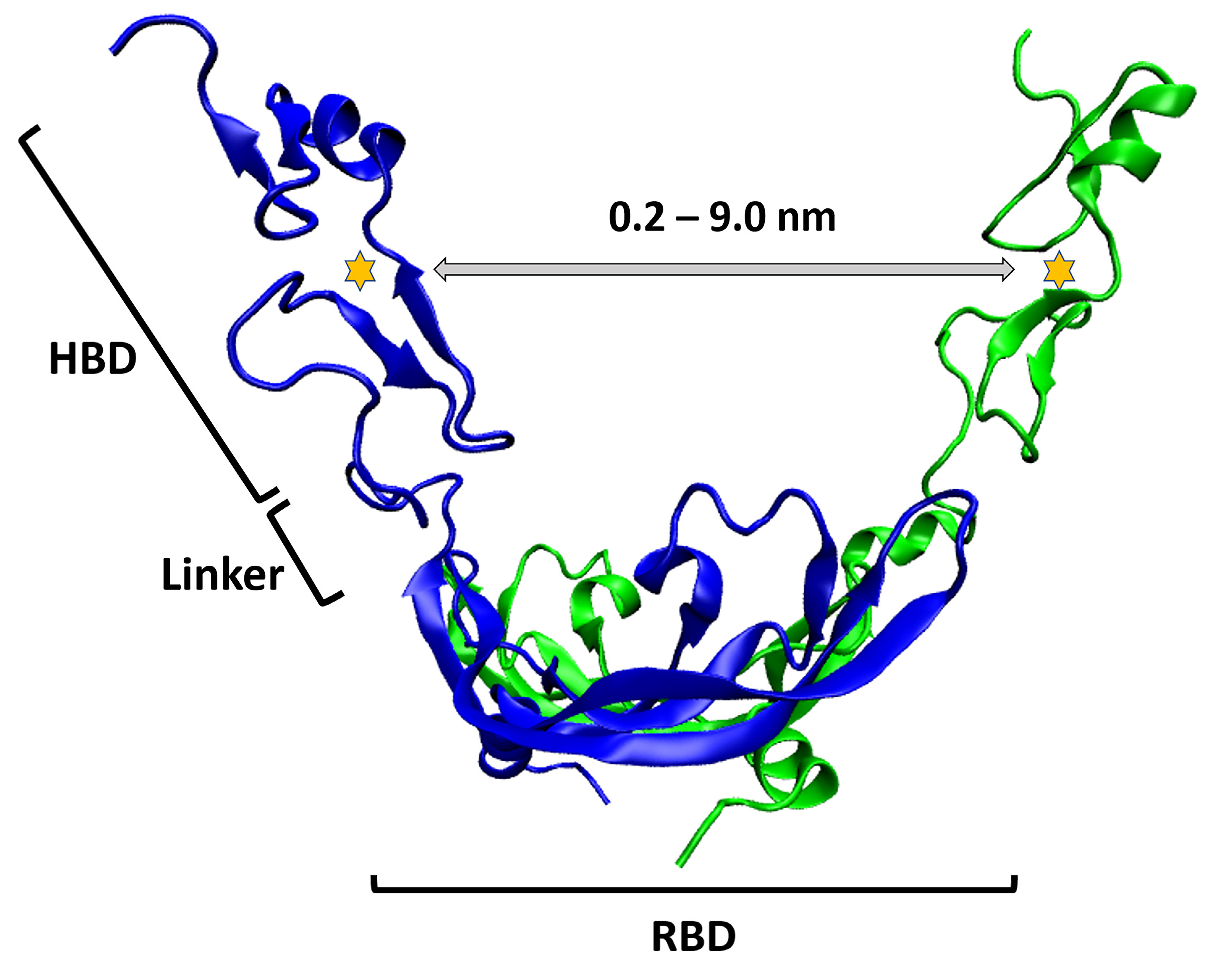
Previous studies stressed the importance of accounting for both large- and small-scale motions of VEGF165 for reliably elucidating its interaction with aptamers [13,14]. Additionally, these studies proposed that the large-scale motion of VEGF165 involves a scissoring motion, and computationally explored a range of HBD-HBD distances to model this effect [13,14]. However, to reduce the computational cost, the anisotropic network model (ANM) was employed toward ascertaining the large-scale motion, thereby sacrificing some accuracy compared to MD simulations with detailed interactions. Hence, in this work, we report on MD simulations using umbrella sampling to investigate the flexibility of VEGF165 across a wide range of HBD-HBD distances. Our aim is to determine whether the dimer exhibits a scissoring motion around one stable conformation with the HBDs oscillating widely, or possesses multiple stable regions with local free energy minima. The RC was defined as the distance between the centers of mass (COMs) of the two HBDs of VEGF165 (Figure 1), explored over a range of 0.2 to 9.0 nm. Choosing this range was based on insights derived from the earlier ANM analyses [13,14] and another computational study suggesting a sandwich-like binding configuration of VEGF165 to VEGFR-2 [12].
Figure 1.
Schematic depiction of the RC for VEGF165. The two VEGF165 monomers are illustrated in blue and green, while the yellow stars represent the COMs of HBD, signifying the inter-monomer COM distance between the two HBDs. This distance is defined as the RC and is employed in the PMF simulations.
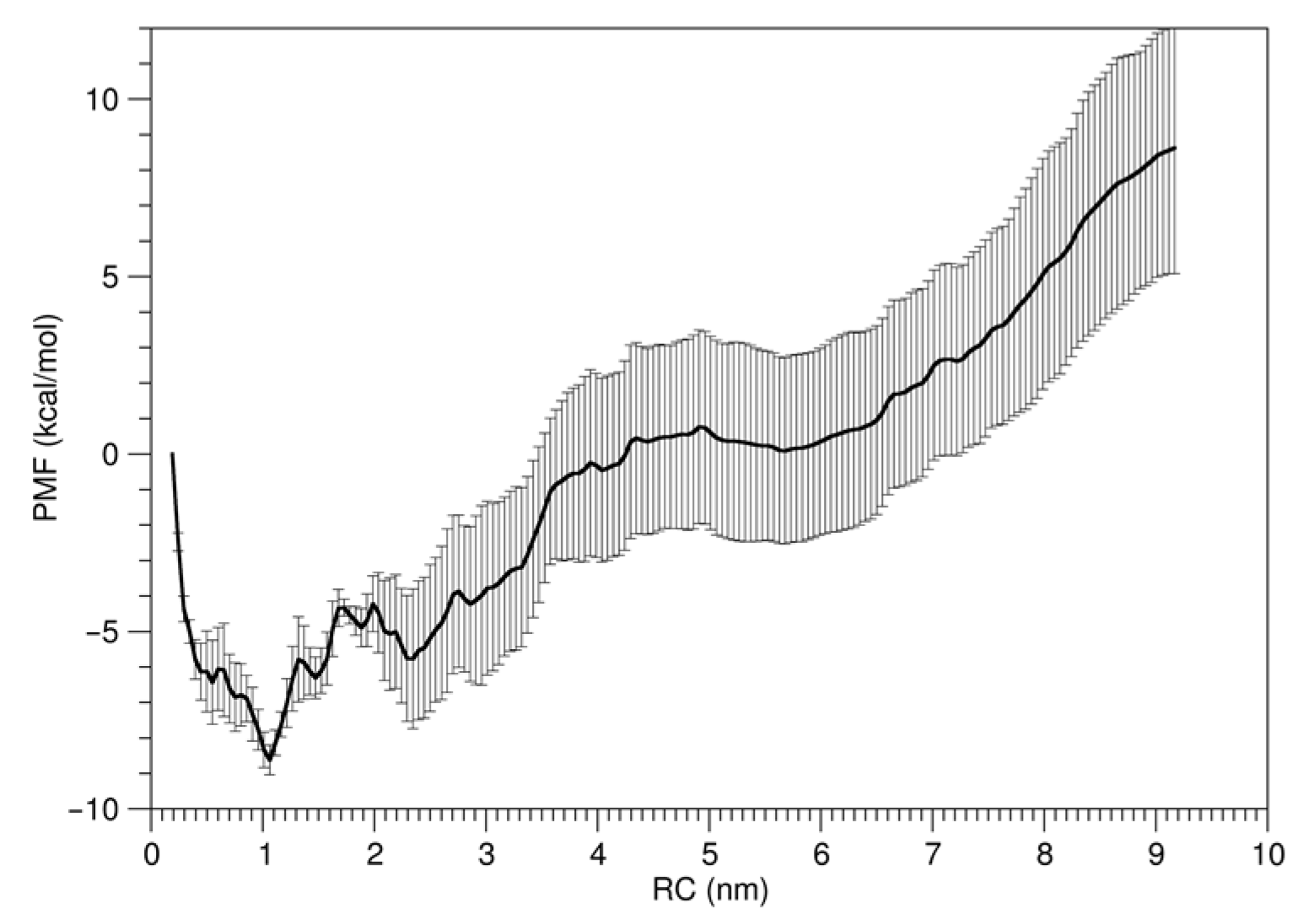
To explore the free energy landscape along the reaction coordinate (RC) defined by the center-of-mass (COM) distance between the two HBDs, the potential of mean force (PMF) was calculated using umbrella sampling (Figure 2). The reliability of the sampling was validated by confirming the significant overlap between adjacent windows (Figure S1). The individual PMF profiles from the five 20 ns blocks used to calculate the error bars in Figure 2 are provided in Figure S2. Through the analysis of the PMF profile shown in Figure 2, we can observe that the free energy reaches a minimum when the distance between two HBDs of VEGF165 is 1.1 nm, with another local minimum at 2.3 nm appearing as the second favorable distance. A significant free energy change of 17.0 kcal/mol is also observed as the distance decreases from 9.0 nm to 1.1 nm. Namely, this PMF profile indicates a progressive and nearly monotonic reduction in the distance between the HBDs until stabilization around at 1.1 nm, and at this distance VEGF165 adopts a sandwich-like conformation. Our results show the dominant large-scale dynamics is a unidirectional transition toward this stable and compact conformation, somewhat differently from the scissoring motion suggested earlier with ANM [13,14].
Figure 2.
PMF as a function of the distance between the two HBD units of VEGF165. Error bar represents standard deviation of dataset of last 100 ns of the production phase of umbrella sampling trajectories divided into five independent 20 ns blocks.
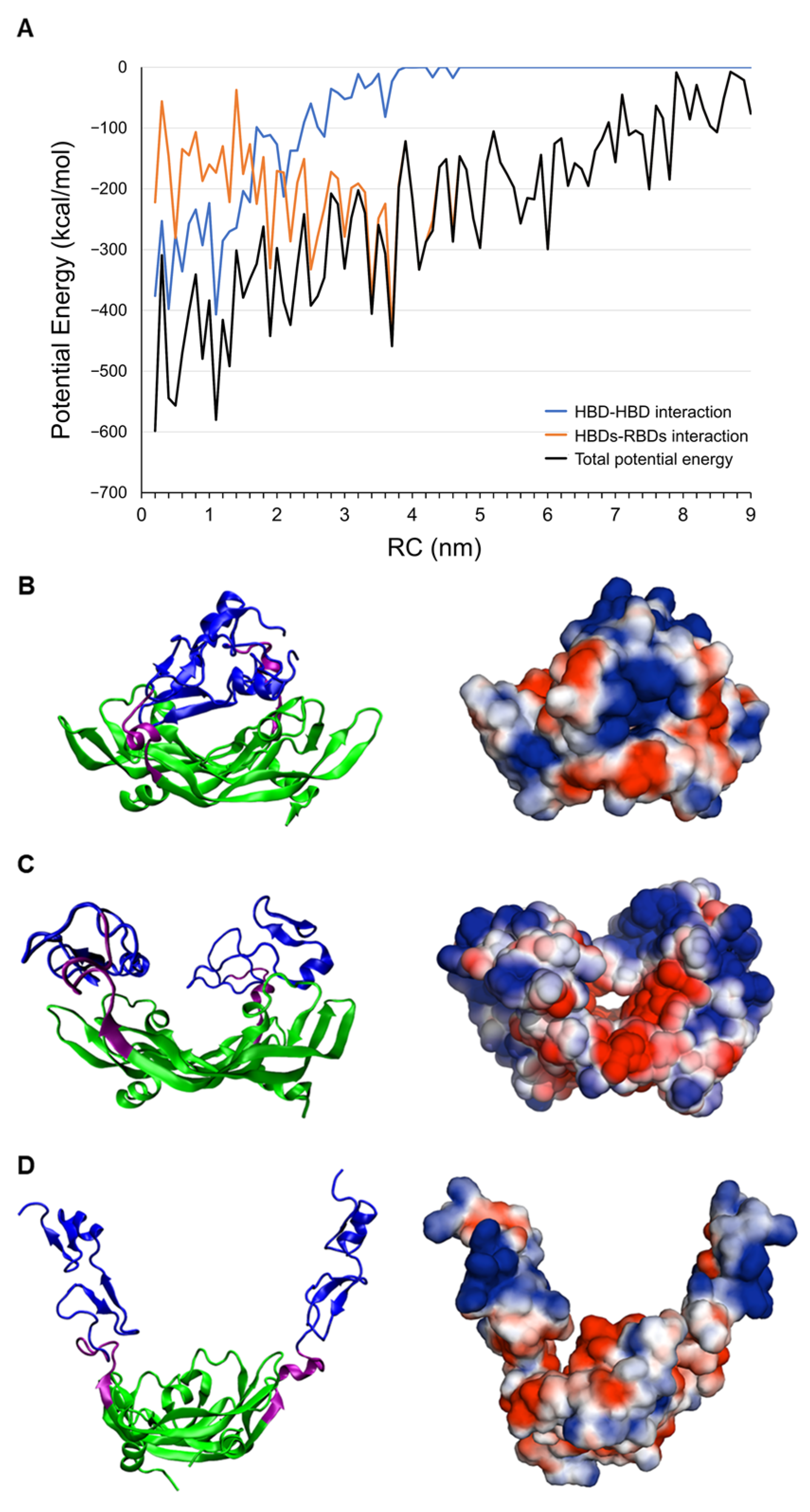
To rationalize this stabilization, we calculated the interaction energy profiles between the HBD–HBD pair and the HBD–RBD pairs along the RC (Figure 3A). The results show that the HBD–HBD interaction diminishes to zero at RC > 4.0 nm, while the HBD–RBD interaction dominates the total potential in the range of 3.0–4.0 nm. This indicates that at large RCs, the HBDs are initially driven toward smaller RC values primarily by interactions with the RBDs; once they are sufficiently close, the HBD–HBD interaction begins to contribute to the overall stabilization. We also calculated the solvent-accessible surface electrostatic potential around VEGF165 using the APBS tool in PyMOL (version 1.9.0) [22], with atomic charges of proteins and aptamers generated by PDB2PQR serving as input for APBS. This revealed that the RBD region of VEGF165 generally exhibits a negative electrostatic potential, while the HBD region tends to exhibit a positive electrostatic potential (Figure 3B–D). When the two HBDs of VEGF165 forms a sandwich-like compact structure (observed at HBD–HBD distances below 3.0 nm), two HBDs are observed to be closely associated (Figure 3B). This tight electrostatic interaction becomes absent in extended VEGF165 conformations where the HBD–HBD distance exceeds 3.0 nm (Figure 3C,D). This will be the reason VEGF165 adopts a stable and relatively compact conformation rather than displaying wide structural fluctuations. When the trajectory simulations were extended for additional 50 ns starting from structures obtained at the end of the biased MD simulations but by turning off the biases, we observed a tendency for RC to decrease, particularly in trajectories that started from extended conformations (Figure S3). This structural insight indicates that aptamer dimer targeting both HBDs should maintain optimal separation distance to bind VEGF165 effectively. Furthermore, elucidating whether VEGF165 binds to VEGFR-2 directly from its thermodynamically stable conformation or needs to involve conformational rearrangement prior to binding VEGFR-2 may be an important issue for dimeric aptamer design. These will be the points of discussion in the following sections.
Figure 3.
(A) Profiles of inter-domain interaction energies along the reaction coordinate (RC): HBD–HBD interaction energy (blue), HBD–RBD interaction energy (orange), and their sum (black). (B–D) Solvent-accessible surface electrostatic potentials of VEGF165 at its varying structures with HBD-HBD distances of (B) 1.1 nm, (C) 3.5 nm, and (D) 9.0 nm. The conformations were taken from the last frames of the biased MD trajectories with the umbrella potentials centered at each given distance. The left panels show the structures with a coloring scheme of RBD: green, linker: purple, and HBD: blue. The right panels display the solvent-accessible surface electrostatic potential, with red indicating negative and blue indicating positive electrostatic potential, represented on a scale ranging from −1.5 to 1.5 kBT/e with T = 298 K.
2.2. HBD-HBD Distance Change in VEGF165 upon VEGFR-2 Binding
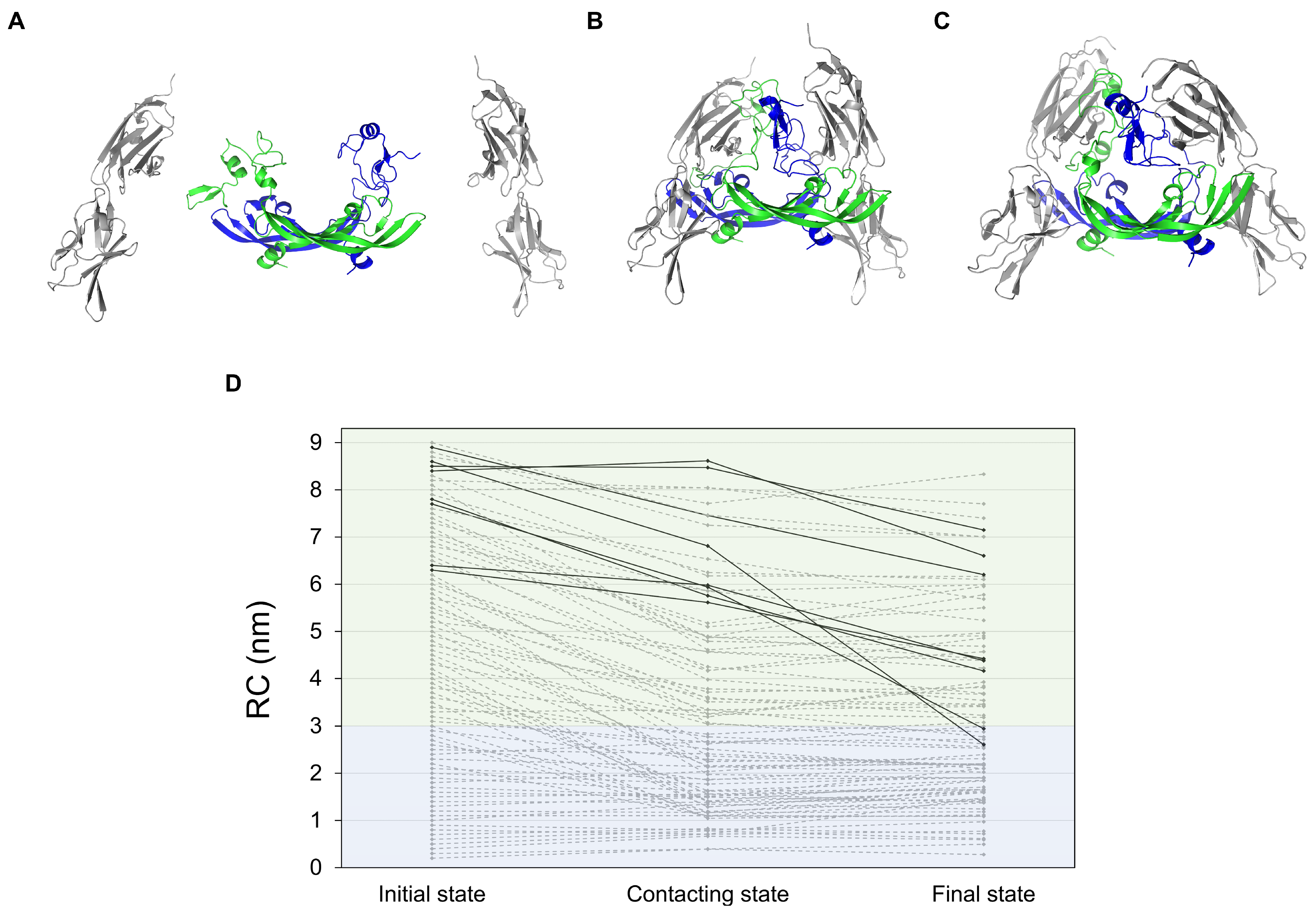
To investigate whether the binding of VEGF165 to VEGFR-2 requires adjustments in the HBD–HBD distance, we constructed 89 initial complex models. During the initial structural overlay onto the experimental template (PDB ID: 3V2A) [23], steric clashes occurred especially for conformations with HBD–HBD distances exceeding 3 nm. To circumvent this, the two VEGFR-2 units were temporarily translated 4 nm away from the RBD. This procedure created sufficient separation to eliminate any steric clashes (Figure 4A). Each VEGFR-2 was then pulled back along the same vector toward dimeric RBD COM until reaching their initial superimposed positions (Figure 4B). The generated 89 VEGFR-2/VEGF165 complexes then underwent MD simulations for 100 ns (Figure 4C).
Figure 4.
VEGFR-2/VEGF165 complex formation demonstrates preferential binding with compact VEGF165 conformation. (A) Initial state showing VEGFR-2 positioned 4.0 nm away from VEGF165 RBD COM for the case with the HBD-HBD distance at 4.5 nm. (B) Contacting state immediately after rigid-body translation of VEGFR-2 toward VEGF165 RBDs. (C) Final relaxed VEGFR-2/VEGF165 complex after 100 ns of an unrestrained MD simulation. (D) Changes in the HBD-HBD distance for all 89 trajectories across the three states. Gray dashed lines represent individual trajectories, while black solid lines highlight systems with RC changes of 1 nm or greater from the contacting to the final state. Notably, all highlighted systems show a decrease in RC during equilibration. Systems with compact initial conformations (RC < 3.0 nm, blue-shaded region) remain stable, whereas those with extended conformations (RC ≥ 3.0 nm, green-shaded region) tend to become more compact over time, exhibiting larger structural changes.
Analyses with these procedures revealed distinct behaviors depending on the initial HBD-HBD distance. During the pulling simulations, complexes with compact conformations maintained their HBD-HBD distances, but the ones with extended conformations gradually changed the geometries into decreased HBD-HBD distances, indicating that the binding pocket formed by the two VEGFR-2 units preferentially accommodates VEGF165 in its compact form. This trend persisted in subsequent MD simulations. Namely, initially extended conformations transitioned toward the compact side, while the compacted VEGF165 generally remained compact without expanding beyond the level of thermal fluctuations during subsequent unrestrained simulations (Figure 4D), consistently with the PMF profile. Therefore, we can infer that the compact conformation is not only a thermodynamically stable state of VEGF165 but also the crucial conformation for productive binding to VEGFR-2. We also checked whether the initial pulling speed (0.01 nm ps−1) was too fast for some extended conformations to fully relax to compaction. For all trajectories initiated with RC ≥ 6.0 nm, which occasionally failed to compact at this speed (Figure 4), we conducted new pulling simulations at a ten times slower rate (0.001 nm ps−1). With this slower speed, all trajectories showed a clear tendency to compact (Figure S4), confirming that this compacting behavior is a genuine feature of the system and not an artifact of trapping induced by an artificial pulling speed.
2.3. Hydrogen Bond Formation Between VEGF165 and VEGFR-2
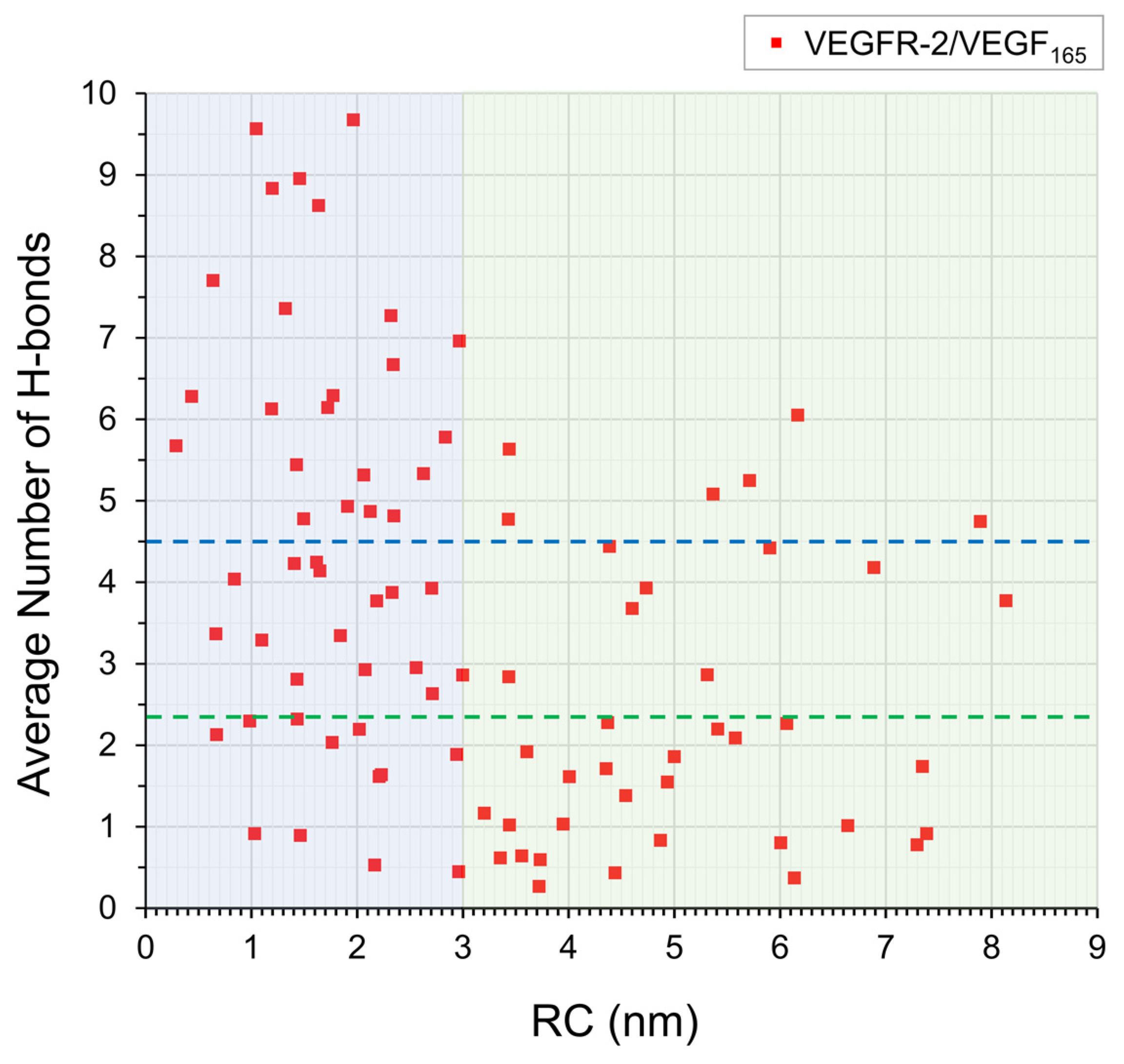
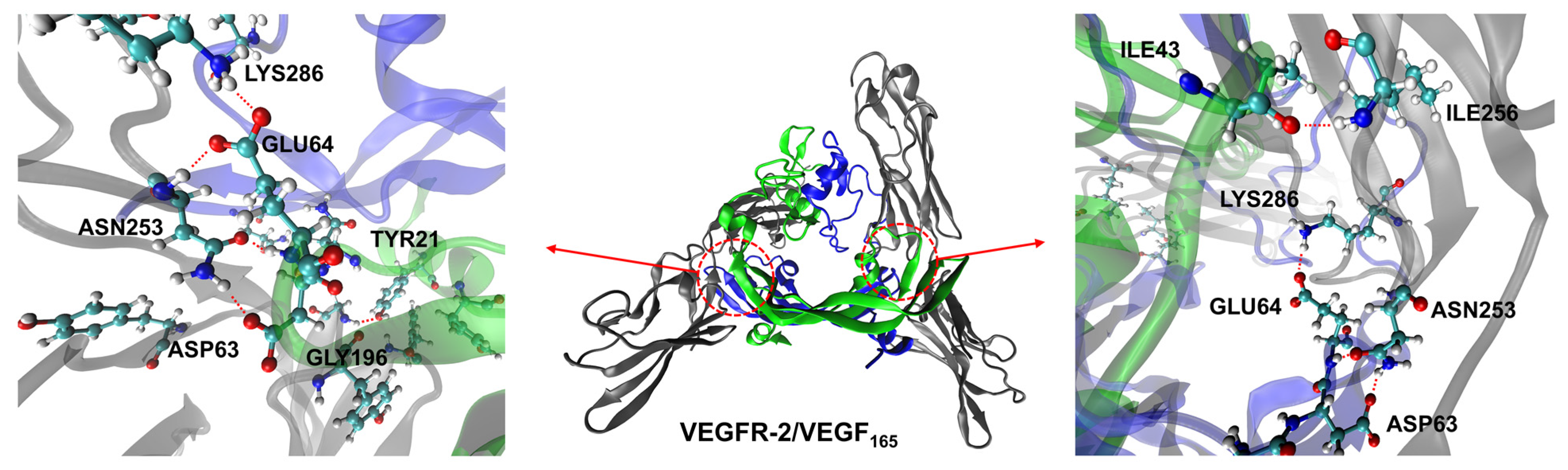
To validate the biological relevance of the compact conformation in our simulations, we next analyzed their ability to reproduce the 10 specific key hydrogen bonds observed in experimental studies of VEGFR-2/VEGF165 complex (Table S1) [23]. For this hydrogen bond analysis, snapshots were extracted at every 10 ps from the 50–100 ns windows of the 100 ns MD trajectories of the complexes. Because of the dimeric nature of the complex, we considered the possibilities of 20 hydrogen bonds in total. This analysis revealed that complexes with compact VEGF165 conformations formed an average of 4.40 hydrogen bonds, which is significantly higher than the average of 2.38 hydrogen bonds observed in complexes with extended conformation (Figure 5). Notably, the conformations exhibiting the highest hydrogen bond counts were mostly in the 1–2 nm range, encompassing the energy minimum identified within the explored PMF profile. The prevalence of hydrogen bonds in the compact conformation arises because an increased HBD-HBD distance leads to a higher VEGFR-2 root-mean-square deviation (RMSD), indicating significant structural distortion compared to the experimental structure (Figure S5). This implies that the thermodynamically most stable conformation also achieves an optimal binding geometry and demonstrates that the results of our biased MD simulations with the umbrella sampling are meaningful. To illustrate the formation of key H-bonds, in Figure 6, we depicted the structure of the VEGFR-2/VEGF165 complex obtained after 100 ns simulation with a final HBD distance of 1.1 nm. The ability of the compact VEGF165 conformations to form a robust interaction network with VEGFR-2 that reproduces key experimental hydrogen bonds provides compelling evidence that the low-energy basin identified in our PMF profile corresponds to the functionally relevant and optimal binding geometry.
Figure 5.
The average number of key H-bonds established between VEGFR-2 and VEGF165. The horizontal axis (RC) represents average distance between the two HBDs of VEGF165 over the 50–100 ns simulation windows. The blue-shaded region (RC < 3.0 nm) represents compact, sandwich-like structures and includes the two minima observed in the PMF profile. The green-shaded region (RC ≥ 3.0 nm) corresponds to extended conformations. Horizontal blue and green dotted lines represent the mean number of hydrogen bonds calculated within blue and green regions.
Figure 6.
Illustration of the VEGFR-2/VEGF165 complex and its H-bonds formed between the two proteins. VEGFR-2 is depicted in silver, while monomers A and B of VEGF165 are shown in blue and green. On the left panel, hydrogen bonds between VEGFR-2 and the monomer A of VEGF165 are depicted along with relevant residues, while on the right panel the same information is shown for the monomer B of VEGF165. These H-bonds are represented by red dashed lines.
2.4. Computationally Designing an Aptamer Homodimer Targeting VEGF165
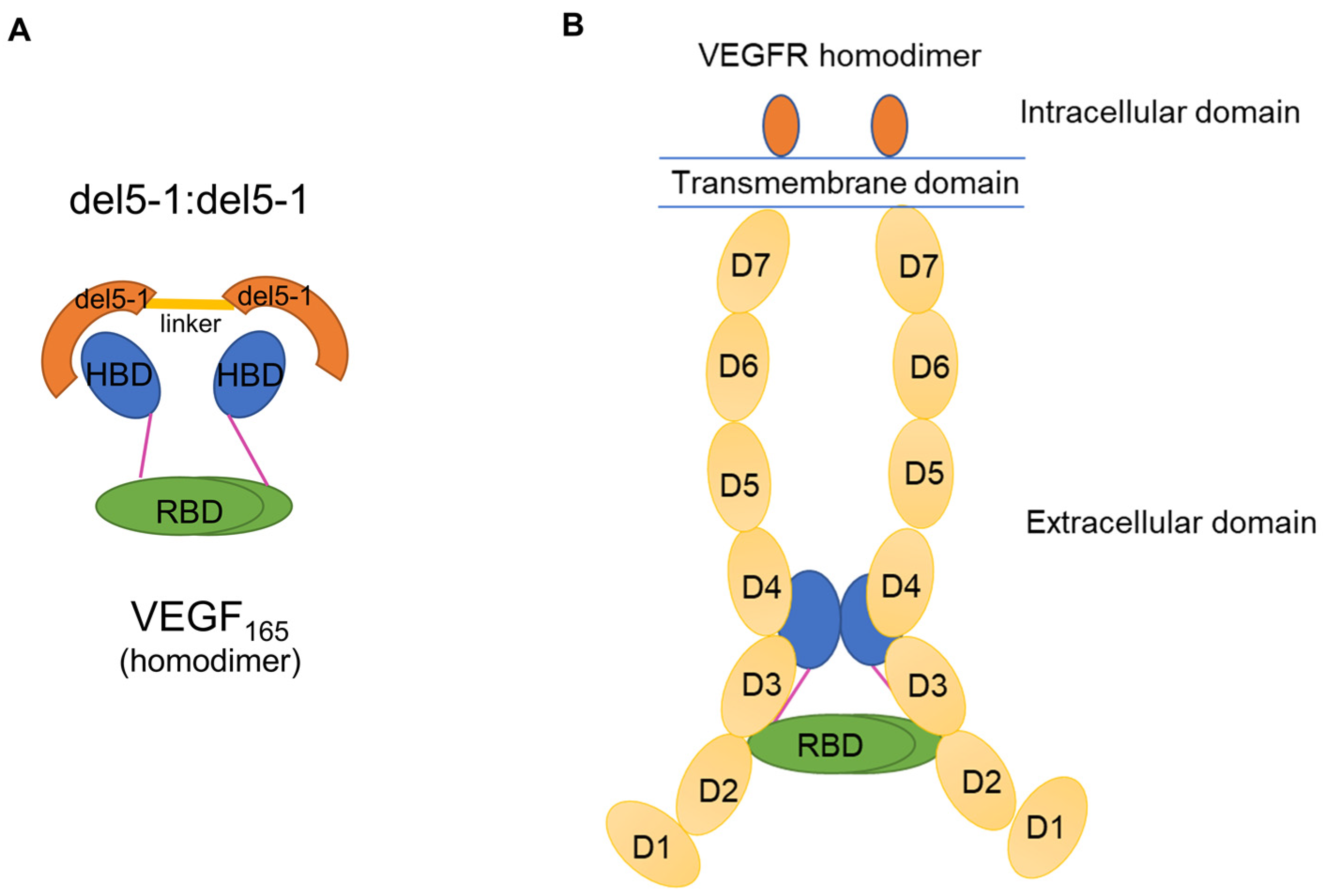
Based on the optimal distance we discovered between the two HBDs of VEGF165, we aimed to provide insights for designing aptamer homodimer linkers that can induce simultaneous binding to both HBDs. It has been experimentally shown that creating an aptamer homodimer by linking two VEa5 mutants, del5-1, results in better binding affinity with VEGF165 in comparison with the monomeric aptamer [15,16]. The structural basis for this enhanced affinity and the potential inhibition mechanism are illustrated in Figure 7. Figure 7A depicts how the dimerized aptamer simultaneously captures both HBDs, while Figure 7B illustrates how this binding could potentially interfere with the native VEGF/VEGFR signaling assembly [4,5,14] on the cell membrane. However, due to the flexibility of the linker connecting the two del5-1 fragments, neither the overall structure of del5-1:del5-1 nor its binding structure with VEGF165 is known.
Figure 7.
(A) Schematic representation of the proposed binding mode between the del5-1:del5-1 aptamer dimer and the VEGF165 homodimer. The orange ovals represent the two del5-1 aptamer domains connected by a flexible linker, which “encircle” the HBD of the VEGF165 by coulombic interaction. (B) Architectural overview of the native VEGF165/VEGFR homodimer complex on the cell membrane. This illustration highlights that del5-1:del5-1 aptamer dimer could potentially interfere with the interaction between the VEGF165 ligand and the VEGFR homodimer, thereby modulating or inhibiting the downstream signaling pathway.
To gain an insight, we investigated whether varying the length of a thymine-only linker connecting the two del5-1 aptamers would affect their binding affinity to VEGF165 by performing docking calculations. We computationally constructed a total of 13 types of del5-1:del5-1 aptamers: one without a linker (0 dT), and others with linkers consisting of 1 to 10 thymine nucleotides (1–10 dTs), as well as linkers with 15 and 20 thymine nucleotides (15 and 20 dTs). Each del5-1:del5-1 underwent energy minimization and a 1500 ns unbiased MD simulation. From the window between 500 ns and 1500 ns, we obtained a total of 101 del5-1:del5-1 snapshots at 10 ns intervals.
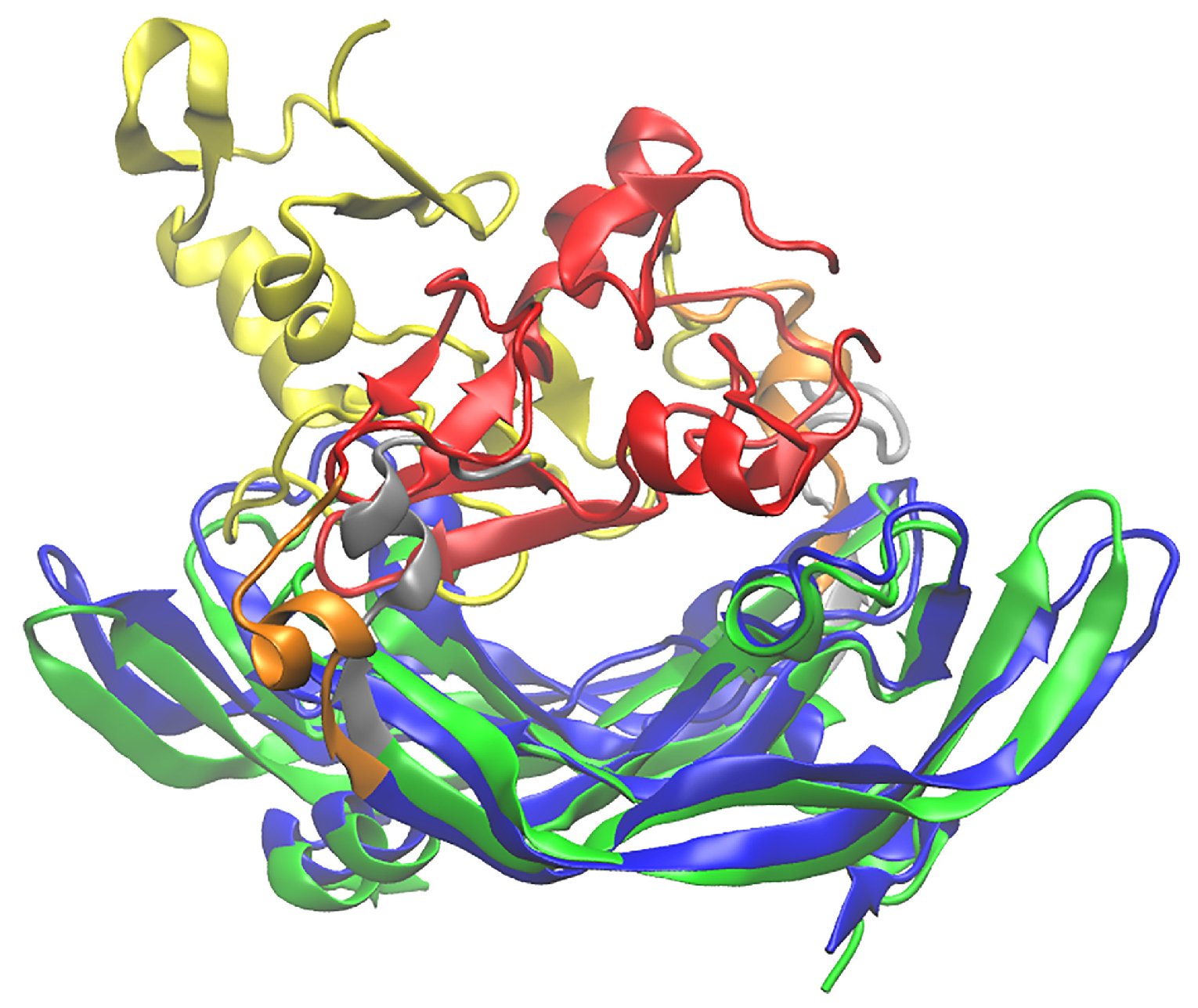
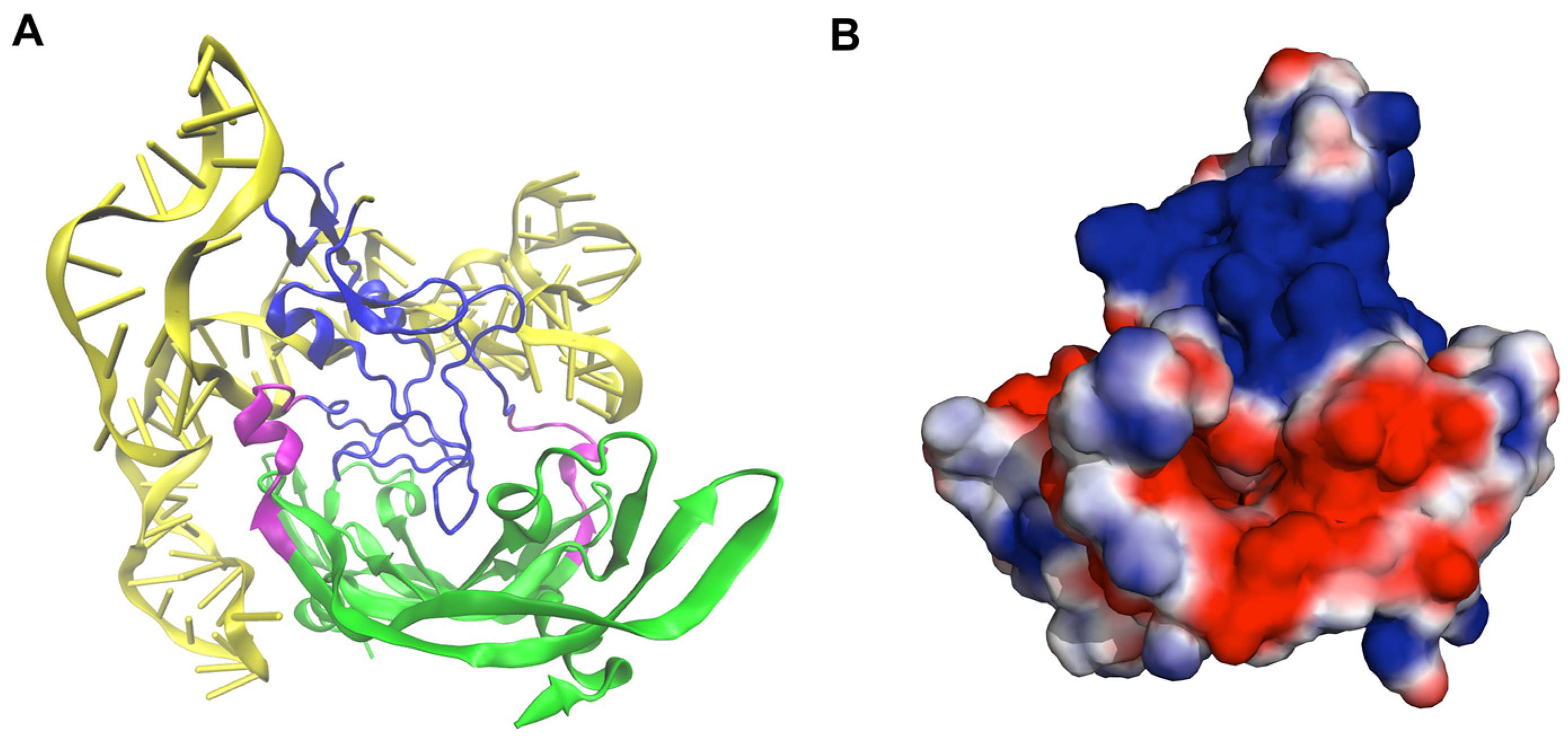
The fact that the two HBD units prefer a separation of 1.1 nm distance does not necessarily mean that the overall VEGF165 conformation is rigid. To investigate how structurally diverse VEGF165 may be at the optimal separation, we conducted additional 10 independent 200 ns biased MD simulations of VEGF165 with different initial velocities, in addition to the two umbrella sampling trajectories already performed. These trajectories indeed yielded diverse VEGF165 structures (Figure 8). Subsequently, we obtained a total of 72 VEGF165 snapshots at 20 ns intervals from the 100–200 ns segments of these 12 MD trajectories. We then used these 72 VEGF165 and del5-1:del5-1 structures to obtain complex structures using rigid body docking with HDOCK [24]. We averaged the docking scores of VEGF165 and del5-1:del5-1 based on the type of linker used for del5-1:del5-1. While the linker with 20 dTs exhibited the highest docking score, no significant positive or negative correlation was observed between the linker length and the binding affinity (Table 1). However, upon analyzing the top ten complexes based on docking scores for each of the 13 different linker lengths, we observed that the distance between the COM of the two del5-1 aptamers in del5-1:del5-1 averaged between 4.5–5.6 nm regardless of the actual linker lengths. Detailed inspection on the complex structures using VMD [25] revealed that del5-1:del5-1 commonly binds in a manner that encircles the two HBDs (Figure 9A). As illustrated in the surface electrostatic potential map (Figure 9B), HBDs exhibit a highly concentrated positive surface potential, which effectively recruits and anchors the negatively charged phosphate backbones of the del5-1 aptamers through coulombic interactions. This indicates that, although determining the optimal length of the linker in an aptamer dimer is challenging due to its flexibility as shown in various studies [16,26], for del5-1:del5-1 targeting VEGF165, it is crucial to design del5-1:del5-1 such that the COM distance between the two del5-1 aptamer domains can become ~5 nm to effectively wrap the cluster of the two HBDs. Perhaps optimization is not even crucial as long as the linker is flexible enough, as the HBDs will display quite a well-defined distance as suggested by our PMF.
Figure 8.
Illustration of the structural diversity of VEGF165. The widely different two conformations correspond to the final snapshots obtained from independent 200 ns biased MD simulations, both bearing the same HBD–HBD separation of 1.1 nm. One VEGF165 is depicted with its RBD part in blue, HBD in red, and linker in orange, while the other one is shown with its RBD part in green, HBD in yellow, and linker in grey.
Table 1.
Predicted docking scores and center-of-mass (COM) distances between the two del5-1 aptamer domains in VEGF165/del5-1:del5-1 complexes with varying linker lengths. Values are presented as mean ± standard deviation (SD).
Figure 9.
Structural and electrostatic characterization of the VEGF165/del5-1:del5-1 complex with a 0 dT linker. (A) Representative conformation of the complex with the highest docking score. The VEGF165 homodimer is depicted with the RBD in green, the HBD in blue, and the linker in magenta. The two del5-1 aptamers are highlighted in yellow. (B) Solvent-accessible surface electrostatic potential of VEGF165 for the same snapshot shown in (A). The surface is colored by the electrostatic potential, where red and blue indicate negative and positive regions, respectively, on a scale ranging from −1.0 to 1.0 kBT/e with T = 298 K. The DNA aptamer have been omitted to clearly illustrate the prominent positive surface charge concentrated on the HBD, which plays a critical role in aptamer recognition and binding.
To validate the structural and thermodynamic stability of the predicted binding modes, we performed 100 ns MD simulations starting from the top five docking poses of all 13 linker systems, amounting to a total of 65 independent trajectories. The structural integrity was assessed by performing molecular mechanics Generalized Born surface area (MM-GBSA) free energy calculations. The comprehensive results are summarized in Table S2. Despite occasional dissociation observed in a few trajectories, we could consistently identify stable binding modes for every linker system. For these stable complexes, the COM distances between each del5-1 aptamer domain and the HBD of VEGF165 remained consistent with the initial docking configurations throughout the production phase. Furthermore, the MM-GBSA results demonstrate that these complexes possess favorable binding energies, providing further energetic evidence that these binding modes are thermodynamically stable in a solvated environment.
3. Materials and Methods
3.1. Modeling VEGF165
The complete experimental structure of homodimeric VEGF165 remains unknown. Nevertheless, the X-ray crystal structure of the homodimeric RBD (PDB ID: 2VPF) [27] and the NMR structure of the monomeric HBD (PDB ID: 1VGH) [28] were at our disposal. Thus, we manually established connections between each HBD and its corresponding RBD monomer using the sequence information, incorporating the interdomain linker sequence RPKKDRARQENP. Here, RPKKD and ARQENP respectively align with the X-ray crystal structure of RBD (PDB ID: 2VPF) and the NMR structure of HBD (PDB ID: 1VGH). The absent residue R110 was generated using Avogadro [29]. Through the application of VMD [25], we manually linked the individual components to complete the construction of the entire structure of homodimeric VEGF165. The overall fold of the constructed model is consistent with the prediction from AlphaFold 3 (see Figure S6 for a visual comparison) [30]. This was followed by stabilization through energy minimization and equilibration, whose details will be described in Section 3.5.
3.2. Modeling VEGFR-2/VEGF165
The X-ray crystal structure of the complex involving domains 2 and 3 (D23) of VEGFR-2 and VEGF-A corresponding to the homodimeric RBD region of VEGF165 is known (PDB ID: 3V2A) [23]. This experimental structure contains missing residues, and we placed these missing residues using the homology modeling method with SWISS-MODEL [31] toward completing the dimeric structure of the VEGFR-2 D23/VEGF165 (referred to as VEGFR-2/VEGF165 throughout this paper).
3.3. Modeling DNA Aptamer
To build the model structure of del5-1:del5-1 with a linker, we first built its secondary structure from the sequence using the Mfold web server [32] and then generated the 3D model via the 3dDNA web server [33]. In both steps, energetically the most stable structure among the predicted ones was selected. The sequence of del5-1 is 5′-ATACC AGTCT ATTCA ATTGG GCCCG TCCGT ATGGT GGGTG TGCTG GCCAG-3′. A total of 13 different linker lengths, namely 0, 1, 2, …, 10, 15, 20 thymines, were adopted to generate del5-1:del5-1 3D structures. For each structure model, we performed energy minimization and unbiased MD simulation over a 1500 ns duration. Detailed information on the MD simulation is described in Section 3.5.
3.4. Docking Simulations
All docking simulations were performed using HDOCK [24], a program that is widely applied for protein-RNA and protein-DNA docking studies [34,35]. It has demonstrated exceptional performance in the community-wide Critical Assessment of PRediction of Interactions (CAPRI) [36], operating as a rigid body docking tool where the target remains stationary while the ligand explores translational and rotational space in fixed increments. Rotational sampling was conducted at 15-degree intervals, and translational sampling, based on fast Fourier transform (FFT), used a step size of 0.12 nm [24]. From these sampling procedures, a shape-based pairwise scoring function was employed to assess binding modes. The top ten translations showing the best shape complementarity were further refined using an iterative knowledge-based scoring function, ensuring that optimal docking results were retained for each rotation [24].
3.5. MD Simulations
After generating each model structure, the system was solvated in TIP3P water [37]. The minimum distance between the solute and the box edge was set to 5 nm, and counter ions of sodium or chloride were added for charge neutralization. The AMBER ff19SB force field parameters for VEGF165 were adopted [38], and the topology file for simulation was generated using AmberTools22 [39]. This was followed by energy minimization with the steepest descent method [40] with convergence reached when the maximum force was below 1000 kJ mol−1 nm−1. The system was then equilibrated by a 100 ps simulation conducted under the NVT conditions, followed by an additional 100 ps of simulation under the NPT conditions.
To generate the initial structures for the umbrella sampling, biased MD simulations were conducted. During this process, biasing potentials with a force constant of 1000 kJ mol−1 nm−2 and a pulling rate of 0.01 nm ps−1 were applied along the distance between the COM of the two HBDs. From the resulting trajectory, snapshots were extracted every 10 ps to select representative starting structures for each of the 89 target windows, which spanned the RC range from 0.2 nm to 9.0 nm. Subsequently, for each window, two biased MD simulations were carried out for 200 ns with a restraining force constant of 1000 kJ mol−1 nm−2 with two randomly and differently selected initial velocities. For equilibration purposes, we discarded the initial 100 ns trajectory from the 200 ns trajectory. Following that, we conducted the PMF calculation and additional analyses. The PMF was computed using WHAM [41] by combining the two sets of trajectories. To estimate statistical uncertainties, the 100–200 ns production phase was partitioned into five 20 ns blocks, and the standard deviation across these blocks was calculated at each point along the reaction coordinate to generate the error bars. For the case where RC was 1.1 nm, an additional 10 trajectories of 200 ns MD simulations were conducted to generate structures for later docking with dimeric aptamers. For 50 ns unbiased MD simulations of VEGF165, we used the same protocol as described in the above, starting from the final structures of the biased MD simulations but after removing the biasing potential. For VEGFR-2/VEGF165 complex formation, each of the two VEGFR-2 molecules was initially translated 4 nm away from the COM of the dimeric RBDs along the vector connecting this COM and the Cα atom of GLY 220, a residue located at the boundary of the D2 and the D3 subunits of VEGFR-2. The system was then solvated in a 32 nm cubic box using the TIP3P water model, and counter ions were added for neutralization. Then, energy minimization and equilibration MD were performed under the same protocol described for the VEGF165 system. Subsequently, the two VEGFR-2 molecules were pulled back in as a rigid body along the same vector toward dimeric RBDs until they reached their original superimposed positions. During this re-associating process, position restraints were applied to the RBDs but HBDs were allowed to relax. A biasing potential with a force constant of 5000 kJ mol−1 nm−2 and a pulling rate of 0.01 nm ps−1 was applied along the pulling direction. For the separate slower pulling simulations performed on selected trajectories (RC ≥ 6.0 nm), the pulling rate was set to 0.001 nm ps−1 while keeping the force constant the same. Each resulting VEGFR-2/VEGF165 complex was then solvated in a box with a minimum distance of 2 nm between the solute and the box edges. Subsequently, energy minimization and equilibration were conducted under the same conditions as in VEGF165, followed by a 100 ns MD simulation.
For each of the 13 different del5-1:del5-1 aptamer homodimers described in the above, 101 binding decoy structures were generated in the following manner. The initially modelled structure was solvated in a box with the minimum distance between the aptamer and the box edge set to 1 nm. TIP3P water was again employed together with counter ions for neutralization. Energy minimization and 500 ns of equilibration were first performed, followed by a sampling simulation of 1000 ns duration. The decoys were sampled at every 10 ns during these sampling simulations.
For the 100 ns MD simulations initiated from the top five docking poses of each of the 13 linker systems—totaling 65 independent trajectories—the same computational protocols as described above were followed. All simulations were conducted under the periodic boundary conditions using GROMACS 2022 [42]. The LINCS algorithm was employed to constrain bonds involving hydrogen atoms, enabling a time step of 2 fs [43]. The short-range Lennard-Jones interactions were cut off at a distance of 1.2 nm, and corrections for long-range dispersion were applied for energy and pressure. The particle mesh Ewald (PME) approach [44] was used for treating the long-range electrostatic interactions with a real-space cutoff of 1.2 nm. The temperature was kept constant at 300 K using the velocity-rescale thermostat [45] with the relaxation time of 1 ps. The pressure was isotropically coupled at 1 bar through the C-rescale barostat [46] with a coupling constant of 1 ps and a compressibility of 4.5 × 10⁻⁵ bar−1. The simulations were conducted on a home-built high-performance computing (HPC) system and relied on Intel 6342 processors together with NVIDIA A100 and A5000 GPUs.
3.6. Binding Free Energy Calculations
Binding free energies ΔGbind were calculated using the MM-GBSA method as implemented in the gmx_MMPBSA (version 1.6.4) package [47]. The Amber ff19SB force field was applied for the protein, and the OL15 force field was utilized for the DNA aptamer to ensure accurate representation of the complex. For the free energy calculations, snapshots were extracted from the 50–100 ns period of each trajectory at 20 ps intervals. To account for the solvent environment, the Generalized Born (GB) model with the igb = 8 (GB-Neck2) parameter was employed. The ionic strength was set to 0.150 M to simulate physiological salt conditions. Per-residue energy decomposition analysis was performed and entropy contribution was not considered in this study.
4. Conclusions
VEGF165 is a crucial therapeutic target for angiogenesis-related diseases, with aptamers emerging as promising agents. Despite the enhanced binding affinity of dimeric aptamers over their monomeric counterparts, the inherent flexibility of VEGF165 inter-domain linker has hindered the complete structural elucidation of VEGF165, posing significant challenges for the rational design of aptamer dimers. To address this challenge of structural flexibility, we calculated the free energy surface shape information as a function of the HBD-HBD distance. The resulting PMF profile showed a distinct energy minimum at 1.1 nm, providing strong evidence for a thermodynamically preferred sandwich-like compact conformation. We next validated the functional relevance of this compact conformation through MD simulations of the VEGFR-2/VEGF165 complex. The simulations revealed a clear preference for this type of conformation, and even initially extended conformations tended to transition toward the thermodynamically favored shortened structure. The preference toward the compact structure was rationalized by a hydrogen bond analysis, which confirmed that the compact one forms a more robust interaction network. The hydrogen bonds also matched well with experimentally resolved H-bonds between VEGF165 and VEGFR-2.
Although an optimal VEGF165 HBD-HBD distance was identified, structural variability was still observed due to the flexible linker, prompting investigation into aptamer homodimer conditions effectively targeting these HBD structures. We constructed del5-1:del5-1 dimers by connecting two units of del5-1 with varying lengths of thymine linkers and docked them to diverse VEGF165 structures that were generated still with satisfying the optimal HBD-HBD distance. The results indicated that the binding affinity with VEGF165 did not significantly vary with the del5-1:del5-1 linker length. Notably, compact conformations where two HBDs were effectively enveloped by del5-1:del5-1 demonstrated efficient HBD binding. The COM distance between the two del5-1 units was determined to be ~5 nm in general, highlighting the necessity to design an aptamer homodimer that can meet this distance criterion for effective VEGF165 binding. These structural and mechanistic insights will enhance our fundamental understanding of VEGF165 dynamics and may advance rational designs of aptamers targeting VEGF165 toward more effective treatments for angiogenesis-related diseases.
5. Limitations
This investigation was conducted entirely in silico. While our simulations identified a thermodynamically preferred compact conformation and specific inter-domain distances, the actual biological environment is far more complex. Factors such as varying pH levels and ionic strengths may influence the protein’s conformational landscape and its binding affinity with aptamers. Therefore, further experimental validation is necessary to confirm the predicted binding affinities and therapeutic potential of the designed aptamer dimers. Despite these limitations, this study may serve as a crucial filtering tool for experimental design. By providing a narrowed range of optimal structural parameters and linker lengths, our findings can offer a theoretical foundation that can significantly reduce the trial-and-error processes in future wet-lab investigations.
Supplementary Materials
The following supporting information can be downloaded at: https://www.mdpi.com/article/10.3390/ijms27020712/s1.
Author Contributions
Conceptualization, Y.J.G. and Y.M.R.; methodology, J.S.L. and Y.J.G.; validation, J.S.L.; investigation, all authors; formal analysis, J.S.L. and Y.J.G.; resources, Y.M.R.; data curation, J.S.L.; writing—original draft preparation, J.S.L. and Y.J.G.; writing—review and editing, all authors; visualization, J.S.L. and Y.J.G.; supervision, Y.M.R.; project administration, Y.M.R.; funding acquisition, Y.M.R. All authors have read and agreed to the published version of the manuscript.
Funding
This research was supported by Mid-Career Researcher Program (Grant No. RS-2021-NR059659) and by Science Research Center (Grant No. RS-2020-NR049542) from National Research Foundation of Korea (NRF), funded by Ministry of Science and ICT of Korea. Additional support by KAIST Quantum+X Convergence R&D Project is also gratefully acknowledged.
Institutional Review Board Statement
Not applicable.
Informed Consent Statement
Not applicable.
Data Availability Statement
The data presented in this study are available in public on FigShare (https://doi.org/10.6084/m9.figshare.30676256 (accessed on 22 November 2025)).
Conflicts of Interest
The authors declare no conflicts of interest.
References
- Risau, W. Mechanisms of angiogenesis. Nature 1997, 386, 671–674. [Google Scholar] [CrossRef]
- Carmeliet, P. Angiogenesis in life, disease and medicine. Nature 2005, 438, 932–936. [Google Scholar] [CrossRef]
- Ferrara, N.; Gerber, H.-P.; LeCouter, J. The biology of VEGF and its receptors. Nat. Med. 2003, 9, 669–676. [Google Scholar] [CrossRef]
- Simons, M.; Gordon, E.; Claesson-Welsh, L. Mechanisms and regulation of endothelial VEGF receptor signalling. Nat. Rev. Mol. Cell Biol. 2016, 17, 611–625. [Google Scholar] [CrossRef]
- Go, Y.J.; Kalathingal, M.; Rhee, Y.M. Elucidating activation and deactivation dynamics of VEGFR-2 transmembrane domain with coarse-grained molecular dynamics simulations. PLoS ONE 2023, 18, e0281781. [Google Scholar] [CrossRef] [PubMed]
- Modi, S.J.; Kulkarni, V.M. Vascular endothelial growth factor receptor (VEGFR-2)/KDR inhibitors: Medicinal chemistry perspective. Med. Drug Discov. 2019, 2, 100009. [Google Scholar] [CrossRef]
- Hanahan, D.; Weinberg, R.A. Hallmarks of cancer: The next generation. Cell 2011, 144, 646–674. [Google Scholar] [CrossRef]
- Azizi, G.; Boghozian, R.; Mirshafiey, A. The potential role of angiogenic factors in rheumatoid arthritis. Int. J. Rheum. Dis. 2014, 17, 369–383. [Google Scholar] [CrossRef]
- Miller, J.W.; Le Couter, J.; Strauss, E.C.; Ferrara, N. Vascular endothelial growth factor a in intraocular vascular disease. Ophthalmology 2013, 120, 106–114. [Google Scholar] [CrossRef] [PubMed]
- Ng, E.W.; Adamis, A.P. Targeting angiogenesis, the underlying disorder in neovascular age-related macular degeneration. Can. J. Ophthalmol. 2005, 40, 352–368. [Google Scholar] [CrossRef]
- Bhisitkul, R. Vascular endothelial growth factor biology: Clinical implications for ocular treatments. Br. J. Ophthalmol. 2006, 90, 1542–1547. [Google Scholar] [CrossRef]
- Uciechowska-Kaczmarzyk, U.; Babik, S.; Zsila, F.; Bojarski, K.K.; Beke-Somfai, T.; Samsonov, S.A. Molecular dynamics-based model of VEGF-A and its heparin interactions. J. Mol. Graph. Model. 2018, 82, 157–166. [Google Scholar] [CrossRef] [PubMed]
- Lee, W.; Park, J.W.; Go, Y.J.; Kim, W.J.; Rhee, Y.M. Considering both small and large scale motions of vascular endothelial growth factor (VEGF) is crucial for reliably predicting its binding affinities to DNA aptamers. RSC Adv. 2021, 11, 9315–9326. [Google Scholar] [CrossRef]
- Go, Y.J.; Kalathingal, M.; Rhee, Y.M. An ensemble docking approach for analyzing and designing aptamer heterodimers targeting VEGF165. Int. J. Mol. Sci. 2024, 25, 4066. [Google Scholar] [CrossRef] [PubMed]
- Nonaka, Y.; Sode, K.; Ikebukuro, K. Screening and improvement of an anti-VEGF DNA aptamer. Molecules 2010, 15, 215–225. [Google Scholar] [CrossRef] [PubMed]
- Hasegawa, H.; Taira, K.-i.; Sode, K.; Ikebukuro, K. Improvement of aptamer affinity by dimerization. Sensors 2008, 8, 1090–1098. [Google Scholar] [CrossRef]
- Manochehry, S.; McConnell, E.M.; Li, Y. Unraveling determinants of affinity enhancement in dimeric aptamers for a dimeric protein. Sci. Rep. 2019, 9, 17824. [Google Scholar] [CrossRef]
- Manochehry, S.; Gu, J.; McConnell, E.M.; Salena, B.J.; Li, Y. In vitro selection of new DNA aptamers for human vascular endothelial growth factor 165. ChemBioChem 2020, 21, 2029–2036. [Google Scholar] [CrossRef]
- Nonaka, Y.; Yoshida, W.; Abe, K.; Ferri, S.; Schulze, H.; Bachmann, T.T.; Ikebukuro, K. Affinity improvement of a VEGF aptamer by in silico maturation for a sensitive VEGF-detection system. Anal. Chem. 2013, 85, 1132–1137. [Google Scholar] [CrossRef]
- Moccia, F.; Riccardi, C.; Musumeci, D.; Leone, S.; Oliva, R.; Petraccone, L.; Montesarchio, D. Insights into the G-rich VEGF-binding aptamer V7t1: When two G-quadruplexes are better than one! Nucleic Acids Res. 2019, 47, 8318–8331. [Google Scholar] [CrossRef]
- Torrie, G.M.; Valleau, J.P. Nonphysical sampling distributions in Monte Carlo free-energy estimation: Umbrella sampling. J. Comput. Phys. 1977, 23, 187–199. [Google Scholar] [CrossRef]
- Jurrus, E.; Engel, D.; Star, K.; Monson, K.; Brandi, J.; Felberg, L.E.; Brookes, D.H.; Wilson, L.; Chen, J.; Liles, K.; et al. Improvements to the APBS biomolecular solvation software suite. Protein Sci. 2018, 27, 112–128. [Google Scholar] [CrossRef]
- Brozzo, M.S.; Bjelić, S.; Kisko, K.; Schleier, T.; Leppänen, V.-M.; Alitalo, K.; Winkler, F.K.; Ballmer-Hofer, K. Thermodynamic and structural description of allosterically regulated VEGFR-2 dimerization. Blood 2012, 119, 1781–1788. [Google Scholar] [CrossRef] [PubMed]
- Yan, Y.; Zhang, D.; Zhou, P.; Li, B.; Huang, S.-Y. HDOCK: A web server for protein–protein and protein–DNA/RNA docking based on a hybrid strategy. Nucleic Acids Res. 2017, 45, W365–W373. [Google Scholar] [CrossRef]
- Humphrey, W.; Dalke, A.; Schulten, K. VMD: Visual molecular dynamics. J. Mol. Graph. 1996, 14, 33–38. [Google Scholar] [CrossRef] [PubMed]
- Riccardi, C.; Napolitano, E.; Musumeci, D.; Montesarchio, D. Dimeric and multimeric DNA aptamers for highly effective protein recognition. Molecules 2020, 25, 5227. [Google Scholar] [CrossRef] [PubMed]
- Muller, Y.A.; Christinger, H.W.; Keyt, B.A.; de Vos, A.M. The crystal structure of vascular endothelial growth factor (VEGF) refined to 1.93 Å resolution: Multiple copy flexibility and receptor binding. Structure 1997, 5, 1325–1338. [Google Scholar] [CrossRef]
- Fairbrother, W.J.; Champe, M.A.; Christinger, H.W.; Keyt, B.A.; Starovasnik, M.A. Solution structure of the heparin-binding domain of vascular endothelial growth factor. Structure 1998, 6, 637–648. [Google Scholar] [CrossRef]
- Hanwell, M.D.; Curtis, D.E.; Lonie, D.C.; Vandermeersch, T.; Zurek, E.; Hutchison, G.R. Avogadro: An advanced semantic chemical editor, visualization, and analysis platform. J. Cheminform. 2012, 4, 17. [Google Scholar] [CrossRef]
- Abramson, J.; Adler, J.; Dunger, J.; Evans, R.; Green, T.; Pritzel, A.; Ronneberger, O.; Willmore, L.; Ballard, A.J.; Bambrick, J.; et al. Accurate structure prediction of biomolecular interactions with AlphaFold 3. Nature 2024, 630, 493–500. [Google Scholar] [CrossRef]
- Waterhouse, A.; Bertoni, M.; Bienert, S.; Studer, G.; Tauriello, G.; Gumienny, R.; Heer, F.T.; de Beer, T.A.P.; Rempfer, C.; Bordoli, L. SWISS-MODEL: Homology modelling of protein structures and complexes. Nucleic Acids Res. 2018, 46, W296–W303. [Google Scholar] [CrossRef] [PubMed]
- Zuker, M. Mfold web server for nucleic acid folding and hybridization prediction. Nucleic Acids Res. 2003, 31, 3406–3415. [Google Scholar] [CrossRef] [PubMed]
- Zhang, Y.; Xiong, Y.; Xiao, Y. 3dDNA: A computational method of building DNA 3D structures. Molecules 2022, 27, 5936. [Google Scholar] [CrossRef]
- Lee, S.Y.; Birkholz, N.; Fineran, P.C.; Park, H.H. Molecular basis of anti-CRISPR operon repression by Aca10. Nucleic Acids Res. 2022, 50, 8919–8928. [Google Scholar] [CrossRef]
- Tian, H.; Liu, C.; Yu, J.; Han, J.; Du, J.; Liang, S.; Wang, W.; Liu, Q.; Lian, R.; Zhu, T. PHF14 enhances DNA methylation of SMAD7 gene to promote TGF-β-driven lung adenocarcinoma metastasis. Cell Discov. 2023, 9, 41. [Google Scholar] [CrossRef] [PubMed]
- Janin, J.; Henrick, K.; Moult, J.; Eyck, L.T.; Sternberg, M.J.E.; Vajda, S.; Vakser, I.; Wodak, S.J. CAPRI: A Critical Assessment of PRedicted Interactions. Proteins Struct. Funct. Bioinform. 2003, 52, 2–9. [Google Scholar] [CrossRef]
- Jorgensen, W.L.; Chandrasekhar, J.; Madura, J.D.; Impey, R.W.; Klein, M.L. Comparison of simple potential functions for simulating liquid water. J. Chem. Phys. 1983, 79, 926–935. [Google Scholar] [CrossRef]
- Tian, C.; Kasavajhala, K.; Belfon, K.A.; Raguette, L.; Huang, H.; Migues, A.N.; Bickel, J.; Wang, Y.; Pincay, J.; Wu, Q.; et al. ff19SB: Amino-acid-specific protein backbone parameters trained against quantum mechanics energy surfaces in solution. J. Chem. Theory Comput. 2019, 16, 528–552. [Google Scholar] [CrossRef]
- Case, D.A.; Aktulga, H.M.; Belfon, K.; Ben-Shalom, I.Y.; Berryman, J.T.; Brozell, S.R.; Cerutti, D.S.; Cheatham, T.E., III; Cisneros, G.A.; Cruzeiro, V.W.D.; et al. Amber 2022; University of California: San Francisco, CA, USA, 2022. [Google Scholar]
- Press, W.H.; Teukolsky, S.A.; Vetterling, W.T.; Flannery, B.P. Numerical Recipes 3rd Edition: The Art of Scientific Computing; Cambridge University Press: Cambridge, UK, 2007. [Google Scholar]
- Kumar, S.; Rosenberg, J.M.; Bouzida, D.; Swendsen, R.H.; Kollman, P.A. The weighted histogram analysis method for free-energy calculations on biomolecules. I. The method. J. Comput. Chem. 1992, 13, 1011–1021. [Google Scholar] [CrossRef]
- Bauer, P.; Hess, B.; Lindahl, E. GROMACS 2022 Source Code (Version 2022). Available online: https://zenodo.org/records/6103835 (accessed on 22 February 2022).
- Hess, B.; Bekker, H.; Berendsen, H.J.; Fraaije, J.G. LINCS: A linear constraint solver for molecular simulations. J. Comput. Chem. 1997, 18, 1463–1472. [Google Scholar] [CrossRef]
- Essmann, U.; Perera, L.; Berkowitz, M.L.; Darden, T.; Lee, H.; Pedersen, L.G. A smooth particle mesh Ewald method. J. Chem. Phys. 1995, 103, 8577–8593. [Google Scholar] [CrossRef]
- Bussi, G.; Donadio, D.; Parrinello, M. Canonical sampling through velocity rescaling. J. Chem. Phys. 2007, 126, 014101. [Google Scholar] [CrossRef] [PubMed]
- Bernetti, M.; Bussi, G. Pressure control using stochastic cell rescaling. J. Chem. Phys. 2020, 153, 114107. [Google Scholar] [CrossRef] [PubMed]
- Valdés-Tresanco, M.S.; Valdés-Tresanco, M.E.; Valiente, P.A.; Moreno, E. gmx_MMPBSA: A New Tool to Perform End-State Free Energy Calculations with GROMACS. J. Chem. Theory Comput. 2021, 17, 6281–6291. [Google Scholar] [CrossRef] [PubMed]
Disclaimer/Publisher’s Note: The statements, opinions and data contained in all publications are solely those of the individual author(s) and contributor(s) and not of MDPI and/or the editor(s). MDPI and/or the editor(s) disclaim responsibility for any injury to people or property resulting from any ideas, methods, instructions or products referred to in the content. |
© 2026 by the authors. Licensee MDPI, Basel, Switzerland. This article is an open access article distributed under the terms and conditions of the Creative Commons Attribution (CC BY) license.