

Light-Controlled Modulation of the Endocannabinoid System: Photoswitchable Ligands for Cannabinoid and TRPV1 Receptors

 , ,
, ,
Abstract
1. Introduction
2. Photoresponsive Mechanisms

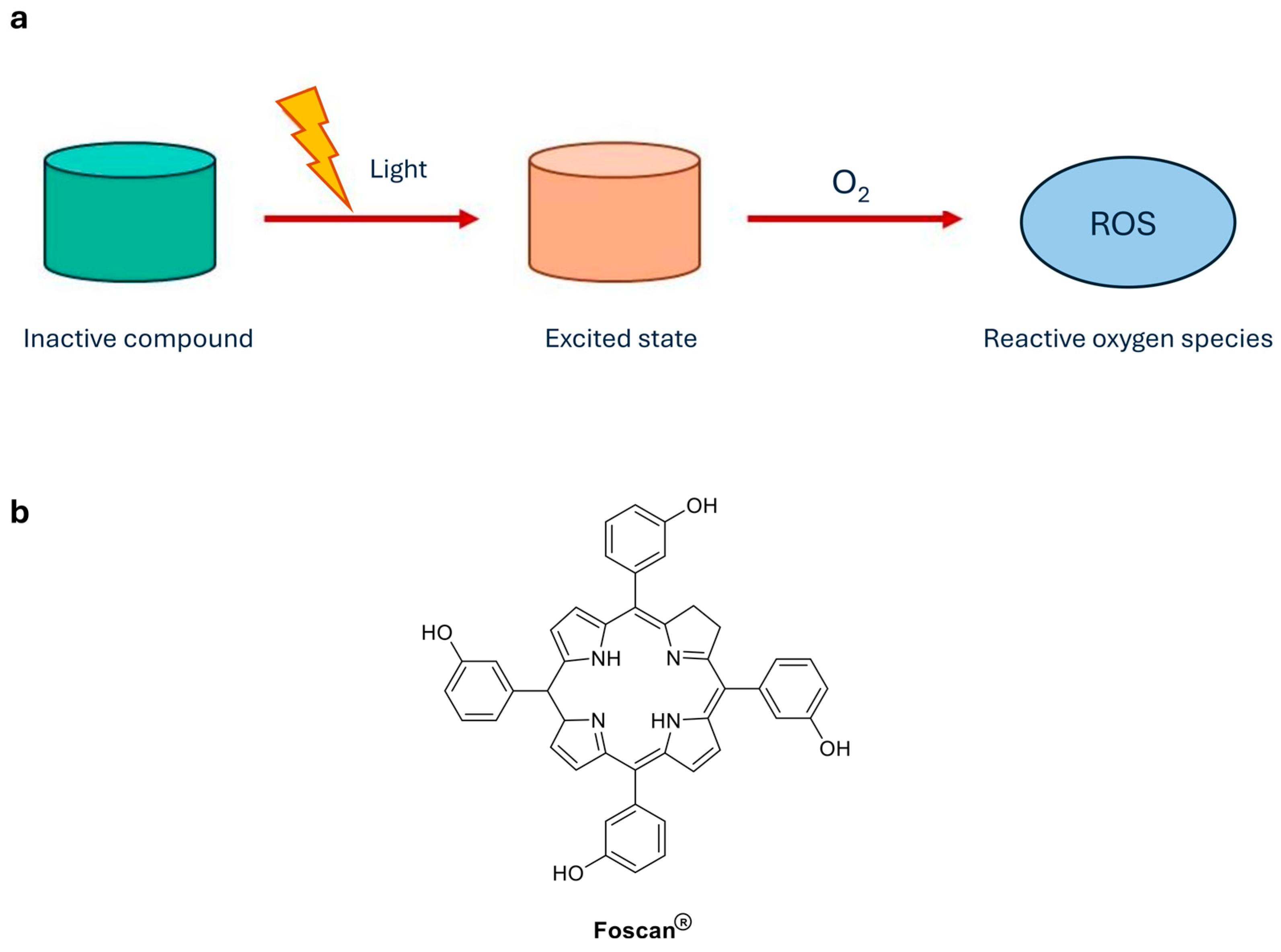
- PDT requires effective light delivery to the target site, restricting its therapeutic use to superficial tumours or lesions located in tissues adjacent to accessible organs [19].
- PDT often relies on high-energy, short-wavelength excitation (UV, blue, or green light), which significantly limits tissue penetration [20].
- The abnormal vasculature and rapid proliferation of cancer cells in solid tumours lead to hypoxic microenvironments with reduced oxygen availability, which severely compromises the generation of reactive oxygen species and consequently diminishes PDT efficacy.

3. Modulation of the Endocannabinoid System Through Light
4. Photopharmacological Approach in the Development of ECS Receptor Ligands
4.1. Photoswitchable CB1 Ligands
4.1.1. Photoswitchable CB1 Agonists
4.1.2. Photoswitchable CB1 Antagonists
4.2. Photoswitchable CB2 Ligands
4.2.1. Photoswitchable CB2 Agonists
4.2.2. Photoswitchable CB2 Antagonists
4.3. Photoswitchable TRPV1 Ligands
4.3.1. Photoswitchable TRPV1 Agonists
4.3.2. Photoswitchable TRPV1 Antagonists
5. In Vivo Translation of ECS Photopharmacology
- Many cannabinoid photoswitches still rely on UV or blue-light excitation, which severely limits effective control to superficial tissues. In contrast, red- or NIR-addressable photoswitches, capable of deeper tissue penetration with reduced photochemical damage, are only now beginning to be adopted in cannabinoid photopharmacology.
- Many current ECS photoswitches exhibit suboptimal pharmacokinetic profiles. Poor aqueous solubility and limited bioavailability, combined with a strong tendency to partition non-specifically into lipid-rich tissues, can lead to off-target distribution and systemic effects, ultimately undermining the spatiotemporal selectivity that photopharmacological approaches aim to achieve.
- Given the high lipophilicity of cannabinoid ligands and the membrane-embedded nature of CB receptors, photoswitch behaviour is highly sensitive to lipid microenvironments, nonspecific protein binding, and metabolic turnover. Such influences can compromise fatigue resistance, shift photostationary equilibria, and alter thermal back-isomerization kinetics, thereby reducing the robustness and reversibility of optical control in vivo.
- Clinically compatible light-delivery technologies, such as endoscopic, fibre-based, or implantable systems, are needed to safely access deep brain and visceral ECS targets within standard care settings.
6. Conclusions
Author Contributions
Funding
Institutional Review Board Statement
Informed Consent Statement
Data Availability Statement
Conflicts of Interest
Abbreviations
| AEA | Anandamide |
| 2-AG | 2-Arachidonoylglycerol |
| cAMP | Cyclic adenosine monophosphate |
| CAP | Capsaicine |
| CPZ | Capsazepine |
| BRET | Bioluminescence resonance energy transfer |
| CB1 | Cannabinoid receptors type-1 |
| CB2 | Cannabinoid receptors type-2 |
| CNS | Central nervous system |
| DAGL | Diacylglycerol lipase |
| ECS | Endocannabinoid system |
| ERK1/2 | Extracellular signal-regulated kinases 1/2 |
| GPCR | G protein-coupled receptor |
| IR | Infrared |
| LED | Light emitting diodes |
| NAPE–PLD | N-acyl phosphatidylethanolamine phospholipase D |
| PAM | Positive allosteric modulator |
| PDT | Photodynamic therapy |
| PSS | Photostationary state |
| ROS | Reactive oxygen species |
| THC | Δ9-tetrahydrocannabinol |
| TNF-α | Tumour necrosis factor alpha |
| TRPV1 | Transient receptor potential vanilloid 1 |
| UV | Ultraviolet |
| VTA | Ventral tegmental area |
References
- Velema, W.A.; Szymanski, W.; Feringa, B.L. Photopharmacology: Beyond Proof of Principle. J. Am. Chem. Soc. 2014, 136, 2178–2191. [Google Scholar] [CrossRef]
- Broichhagen, J.; Frank, J.A.; Trauner, D. A Roadmap to Success in Photopharmacology. Acc. Chem. Res. 2015, 48, 1947–1960. [Google Scholar] [CrossRef] [PubMed]
- Liu, Y.; Wang, T.; Wang, W. Photopharmacology and Photoresponsive Drug Delivery. Chem. Soc. Rev. 2025, 54, 5792–5835. [Google Scholar] [CrossRef]
- Sharma, M.; Friedman, S.H. The Issue of Tissue: Approaches and Challenges to the Light Control of Drug Activity. ChemPhotoChem 2021, 5, 611–618. [Google Scholar] [CrossRef] [PubMed]
- Li, Y.; Wang, M.; Wang, F.; Lu, S.; Chen, X. Recent Progress in Studies of Photocages. Smart Mol. 2023, 1, e20220003. [Google Scholar] [CrossRef]
- Hansen, M.J.; Velema, W.A.; Lerch, M.M.; Szymanski, W.; Feringa, B.L. Wavelength-Selective Cleavage of Photoprotecting Groups: Strategies and Applications in Dynamic Systems. Chem. Soc. Rev. 2015, 44, 3358–3377. [Google Scholar] [CrossRef]
- Neto, B.A.D.; Lapis, A.A.M.; Mota, A.A.R. Fluorescent coumarin derivatives: Understanding molecular architecture, photophysical, and cell-imaging responses. Targets Heterocycl. Syst. 2025, 28, 181–220. [Google Scholar]
- Holmes, C.P. Model Studies for New o-Nitrobenzyl Photolabile Linkers: Substituent Effects on the Rates of Photochemical Cleavage. J. Org. Chem. 1997, 62, 2370–2380. [Google Scholar] [CrossRef]
- Ma, C.; Chen, Y.; Steinmetz, M.G. Photochemical Cleavage and Release of Para-Substituted Phenols from α-Keto Amides. J. Org. Chem. 2006, 71, 4206–4215. [Google Scholar] [CrossRef] [PubMed]
- Johan, A.N.; Li, Y. Development of Photoremovable Linkers as a Novel Strategy to Improve the Pharmacokinetics of Drug Conjugates and Their Potential Application in Antibody–Drug Conjugates for Cancer Therapy. Pharmaceuticals 2022, 15, 655. [Google Scholar] [CrossRef]
- Klán, P.; Šolomek, T.; Bochet, C.G.; Blanc, A.; Givens, R.; Rubina, M.; Popik, V.; Kostikov, A.; Wirz, J. Photoremovable Protecting Groups in Chemistry and Biology: Reaction Mechanisms and Efficacy. Chem. Rev. 2013, 113, 119–191. [Google Scholar] [CrossRef]
- Zhao, J.; Sankaranarayanan, A.; Paik, B.H.; Kim, J.; Shim, H.; Kao, J.P.Y. Caged Vanilloid Ligands for Activation of TRPV1 Receptors by 1- and 2-Photon Excitation. Biochemistry 2006, 45, 4915–4926. [Google Scholar] [CrossRef]
- Josa-Culleré, L.; Llebaria, A. In the Search for Photocages Cleavable with Visible Light: An Overview of Recent Advances and Chemical Strategies. ChemPhotoChem 2021, 5, 296–314. [Google Scholar] [CrossRef]
- Xiong, H.; Xu, Y.; Kim, B.; Rha, H.; Zhang, B.; Li, M.; Yang, G.F.; Kim, J.S. Photo-Controllable Biochemistry: Exploiting the Photocages in Phototherapeutic Window. Chem 2023, 9, 29–64. [Google Scholar] [CrossRef]
- Aebisher, D.; Czech, S.; Dynarowicz, K.; Misiołek, M.; Komosińska-Vassev, K.; Kawczyk-Krupka, A.; Bartusik-Aebisher, D. Photodynamic Therapy: Past, Current, and Future. Int. J. Mol. Sci. 2024, 25, 11325. [Google Scholar] [CrossRef]
- Glowacka-Sobotta, A.; Czarczynska-Goslinska, B.; Ziental, D.; Wysocki, M.; Michalak, M.; Güzel, E.; Sobotta, L. Versatile Porphyrin Arrangements for Photodynamic Therapy—A Review. Nanomaterials 2024, 14, 1879. [Google Scholar] [CrossRef] [PubMed]
- Wiehe, A.; Senge, M.O. The Photosensitizer Temoporfin (mTHPC)—Chemical, Pre-Clinical and Clinical Developments in the Last Decade. Photochem. Photobiol. 2023, 99, 356–419. [Google Scholar] [CrossRef] [PubMed]
- Wang, X.; Peng, J.; Meng, C.; Feng, F. Recent Advances for Enhanced Photodynamic Therapy: From New Mechanisms to Innovative Strategies. Chem. Sci. 2024, 15, 12234–12257. [Google Scholar] [CrossRef]
- Zhou, Z.; Song, J.; Nie, L.; Chen, X. Reactive Oxygen Species Generating Systems Meeting Challenges of Photodynamic Cancer Therapy. Chem. Soc. Rev. 2016, 45, 6597–6626. [Google Scholar] [CrossRef]
- Fan, W.; Huang, P.; Chen, X. Overcoming the Achilles’ heel of photodynamic therapy. Chem. Soc. Rev. 2016, 45, 6488–6519. [Google Scholar] [CrossRef]
- Xie, X.; Sun, T.; Pan, H.; Ji, D.; Xu, Z.; Gao, G.; Miao, J.; Wang, L.; Zhang, Y.; Liu, J.; et al. Development of Novel β-Carboline/Furylmalononitrile Hybrids as Type I/II Photosensitizers with Chemo-Photodynamic Therapy and Minimal Toxicity. Mol. Pharm. 2024, 21, 3553–3565. [Google Scholar] [CrossRef]
- Shen, W.; Han, G.; Yu, L.; Yang, S.; Li, X.; Zhang, W.; Pei, P. Combined Prussian Blue Nanozyme Carriers Improve Photodynamic Therapy and Effective Interruption of Tumor Metastasis. Int. J. Nanomed. 2022, 17, 1397–1408. [Google Scholar] [CrossRef] [PubMed]
- Zou, Y.; Chen, J.; Luo, X.; Qu, Y.; Zhou, M.; Xia, R.; Wang, W.; Zheng, X. Porphyrinengineered nanoscale metal-organic frameworks: Enhancing photodynamic therapy and ferroptosis in oncology. Front. Pharmacol. 2024, 15, 1481168. [Google Scholar] [CrossRef]
- Yavuz, M.S.; Cheng, Y.; Chen, J.; Cobley, C.M.; Zhang, Q.; Rycenga, M.; Xie, J.; Kim, C.; Song, K.H.; Schwartz, A.G.; et al. Gold Nanocages Covered by Smart Polymers for Controlled Release with Near-Infrared Light. Nat. Mater. 2009, 8, 935–939. [Google Scholar] [CrossRef]
- Kong, X.; Zhang, X.; Wang, Y.; Zhang, B. Recent Advances of Photothermal Materials for Biomedical Applications. ACS Omega 2025, 10, 38345–38358. [Google Scholar] [CrossRef] [PubMed]
- Li, X.; Lovell, J.F.; Yoon, J.; Chen, X. Clinical development and potential of photothermal and photodynamic therapies for cancer. Nat. Rev. Clin. Oncol. 2020, 17, 657–674. [Google Scholar] [CrossRef] [PubMed]
- Chen, G.; Zhao, Y.; Xu, Y.; Zhu, C.; Liu, T.; Wang, K. Chitosan nanoparticles for oral photothermally enhanced photodynamic therapy of colon cancer. Int. J. Pharm. 2020, 589, 119763. [Google Scholar] [CrossRef]
- Atel, B.; Kim, A.H. Laser Interstitial Thermal Therapy. Mo. Med. 2020, 117, 50–55. [Google Scholar]
- Shirata, C.; Kaneko, J.; Inagaki, Y.; Kokudo, T.; Sato, M.; Kiritani, S.; Akamatsu, N.; Arita, J.; Sakamoto, Y.; Hasegawa, K.; et al. Near-infrared photothermal/photodynamic therapy with indocyanine green induces apoptosis of hepatocellular carcinoma cells through oxidative stress. Sci. Rep. 2017, 7, 13958. [Google Scholar] [CrossRef]
- Fomina, N.; McFearin, C.; Sermsakdi, M.; Edigin, O.; Almutairi, A. UV and Near-IR Triggered Release from Polymeric Nanoparticles. J. Am. Chem. Soc. 2010, 132, 9540–9542. [Google Scholar] [CrossRef]
- Men, Y.; Brevé, T.G.; Liu, H.; Denkova, A.G.; Eelkema, R. Photocleavable Thioacetal Block Copolymers for Controlled Release. Polym. Chem. 2021, 12, 3612–3618. [Google Scholar] [CrossRef]
- Kubota, H.; Ouchi, M. Rapid and Selective Photo-Degradation of Polymers: Design of an Alternating Copolymer with an o-Nitrobenzyl Ether Pendant. Angew. Chem. Int. Ed. 2023, 62, e202217365. [Google Scholar] [CrossRef] [PubMed]
- Xu, Z.; Shi, L.; Jiang, D.; Cheng, J.; Shao, X.; Li, Z. Azobenzene-Modified Imidacloprid Derivatives as Photoswitchable Insecticides: Steering Molecular Activity in a Controllable Manner. Sci. Rep. 2015, 5, 13962. [Google Scholar] [CrossRef] [PubMed]
- Cacciarini, M.; Woolley, G.A.; Szymanski, W.; Simeth, N.A. Introduction to photoswitches and photopharmacology. Org. Biomol. Chem. 2025, 23, 7668–7670. [Google Scholar] [CrossRef]
- Jerca, F.A.; Jerca, V.V.; Hoogenboom, R. Advances and opportunities in the exciting world of azobenzenes. Nat. Rev. Chem. 2022, 6, 51–69. [Google Scholar] [CrossRef]
- Zhou, X.; Du, L.; Li, M. Recent Progress in Azobenzene-Based In Vivo Photopharmacology. Med. Res. Rev. 2025, 45, 1597–1629. [Google Scholar] [CrossRef] [PubMed]
- Lerch, M.M.; Hansen, M.J.; van Dam, G.M.; Szymanski, W.; Feringa, B.L. Emerging Targets in Photopharmacology. Angew. Chem. Int. Ed. 2016, 55, 10978–10999. [Google Scholar] [CrossRef]
- SeethaLekshmi, S.; Thakur, T.S.; Varughese, S. Photoinstability in Active Pharmaceutical Ingredients: Crystal Engineering as a Mitigating Measure. J. Photochem. Photobiol. C Photochem. Rev. 2021, 49, 100455. [Google Scholar] [CrossRef]
- Poggialini, F.; Governa, P.; Vagaggini, C.; Maramai, S.; Lamponi, S.; Mugnaini, C.; Brizzi, A.; Purgatorio, R.; de Candia, M.; Catto, M.; et al. Light-Mediated Activation/Deactivation Control and In Vitro ADME–Tox Profiling of a Donepezil-like Dual AChE/MAO-B Inhibitor. Eur. J. Pharm. Sci. 2025, 209, 107066. [Google Scholar] [CrossRef]
- Paolino, M.; De Candia, M.; Purgatorio, R.; Catto, M.; Saletti, M.; Tondo, A.R.; Nixolotti, O.; Cappelli, A.; Brizzi, A.; Mugnaini, C.; et al. Investigation on Novel E/Z 2-Benzylideneindan-1-One-Based Photoswitches with AChE and MAO-B Dual Inhibitory Activity. Molecules 2023, 28, 5857. [Google Scholar] [CrossRef]
- Paolino, M.; Rullo, M.; Maramai, S.; de Candia, M.; Pisani, L.; Catto, M.; Mugnaini, C.; Brizzi, A.; Cappelli, A.; Olivucci, M.; et al. Design, synthesis and biological evaluation of light-driven on–off multitarget AChE and MAO-B inhibitors. RSC Med. Chem. 2022, 13, 873–883. [Google Scholar] [CrossRef] [PubMed]
- Irie, M.; Fukaminato, T.; Matsuda, K.; Kobatake, S. Photochromism of Diarylethene Molecules and Crystals: Memories, Switches, and Actuators. Chem. Rev. 2014, 114, 12174–12277. [Google Scholar] [CrossRef] [PubMed]
- Zhang, J.; Tian, H. The Endeavor of Diarylethenes: New Structures, High Performance, and Bright Future. Adv. Opt. Mater. 2018, 6, 1701278. [Google Scholar] [CrossRef]
- Guo, H.; Dai, J.; Deng, L.; Zhang, Z.; Tian, H.; Zhang, J. Photopharmacology beyond azobenzene photoswitches. Responsive Mater. 2025, 3, 70026. [Google Scholar] [CrossRef]
- Kortekaas, L.; Browne, W.R. The evolution of spiropyran: Fundamentals and progress of an extraordinarily versatile photochrome. Chem. Soc. Rev. 2019, 48, 3406, Erratum in Chem. Soc. Rev. 2021, 50, 2211. [Google Scholar] [CrossRef]
- Rad, J.K.; Balzade, Z.; Mahdavian, A.R. Spiropyran-based advanced photoswitchable materials: A fascinating pathway to the future stimuli-responsive devices. J. Photochem. Photobiol. C Photochem. Rev. 2022, 51, 100487. [Google Scholar]
- Fuchter, M.J. On the promise of photopharmacology using photoswitches: A medicinal chemist’s perspective. J. Med. Chem. 2020, 63, 11436–11447. [Google Scholar] [CrossRef]
- Arkhipova, V.; Fu, H.; Hoorens, M.W.H.; Trinco, G.; Lameijer, L.N.; Marin, E.; Ben, L.; Feringa, B.L.; Poelarends, G.J.; Szymanski, W.; et al. Structural Aspects of Photopharmacology: Insight into the Binding of Photoswitchable and Photocaged Inhibitors to the Glutamate Transporter Homologue. J. Am. Chem. Soc. 2021, 143, 1513–1520. [Google Scholar] [CrossRef]
- Rapp, T.L.; DeForest, C.A. Targeting drug delivery with light: A highly focused approach. Adv. Drug Deliv. Rev. 2021, 171, 94–107. [Google Scholar] [CrossRef] [PubMed]
- Axelrod, S.; Shakhnovich, E.; Gómez-Bombarelli, R. Thermal Half-Lives of Azobenzene Derivatives: Virtual Screening Based on Intersystem Crossing Using a Machine Learning Potential. ACS Cent. Sci. 2023, 9, 166–176. [Google Scholar] [CrossRef]
- Volarić, J.; Szymanski, W.; Feringa, B.L.; Velema, W.A. Molecular Photoswitches in Aqueous Environments. Chem. Soc. Rev. 2021, 50, 12377–12449. [Google Scholar] [CrossRef]
- Kohl, F.; Vogl, T.; Hampel, F.; Dube, H. Hemiphosphoindigos as a Platform for Chiroptical or Water Soluble Photoswitching. Nat. Commun. 2025, 16, 1760. [Google Scholar] [CrossRef] [PubMed]
- Weinstain, R.; Slanina, T.; Kand, D.; Klán, P. Visible-to-NIR-Light Activated Release: From Small Molecules to Nanomaterials. Chem. Rev. 2020, 120, 13135–13272. [Google Scholar] [CrossRef] [PubMed]
- Szymański, W.; Beierle, J.M.; Kistemaker, H.A.V.; Velema, W.A.; Feringa, B.L. Reversible photocontrol of biological systems by the incorporation of molecular photoswitches. Chem. Rev. 2013, 113, 6114–6178. [Google Scholar] [CrossRef]
- Ankenbruck, N.; Courtney, T.; Naro, Y.; Deiters, A. Optochemical Control of Biological Processes in Cells and Animals. Angew. Chem. Int. Ed. 2018, 57, 2768–2798. [Google Scholar] [CrossRef]
- Yang, Y.; Long, K.; Chu, Y.; Lu, H.; Wang, W.; Zhan, C. Photoresponsive Drug Delivery Systems: Challenges and Progress. Adv. Funct. Mater. 2024, 34, 2402975. [Google Scholar] [CrossRef]
- Metuh, P.; Petersen, P.M.; Ou, Y. Recent Advances in Wireless Optoelectronic Biomedical Implants. Laser Photonics Rev. 2024, 18, 2300752. [Google Scholar] [CrossRef]
- Guesdon-Vennerie, A.; Couvreur, P.; Ali, F.; Pouzoulet, F.; Roulin, C.; Martínez-Rovira, I.; Bernadat, G.; Legrand, F.X.; Bourgaux, C.; Mazars, C.L.; et al. Breaking photoswitch activation depth limit using ionising radiation stimuli adapted to clinical application. Nat. Commun. 2022, 13, 4102. [Google Scholar] [CrossRef]
- Wang, C.; Yu, Q.; Zhang, X.; Wu, M.X.; Lu, M. Flexible, implantable, and wearable LED devices based on the perspective of photomedicine: Progress and potential medical applications. Mater. Today 2025, 88, 752–762. [Google Scholar] [CrossRef]
- Qazi, R.; Kim, C.Y.; Kang, I.; Binazarov, D.; McCall, J.G.; Jeong, J.W. Implantable Optofluidic Systems for Wireless In Vivo Photopharmacology. ChemPhotoChem 2021, 5, 96–105. [Google Scholar] [CrossRef]
- Wang, C.; Yu, Q.; Li, M.; Chen, H.; Fan, H.; Ma, Y.; Zhang, Z.; Wu, M.X.; Lu, M. Challenges and opportunities in next-generation LED therapeutic devices. Light Sci. Appl. 2025, 14, 325. [Google Scholar] [CrossRef]
- Piomelli, D. The molecular logic of endocannabinoid signalling. Nat. Rev. Neurosci. 2003, 4, 873–884. [Google Scholar] [CrossRef]
- Lu, H.C.; Mackie, K. Review of the Endocannabinoid System. Biol. Psychiatry Cogn. Neurosci. Neuroimaging 2021, 6, 607–615. [Google Scholar] [CrossRef]
- Mechoulam, R.; Parker, L.A. The endocannabinoid system and the brain. Annu. Rev. Psychol. 2013, 64, 21–47. [Google Scholar] [CrossRef] [PubMed]
- Di Marzo, V.; Bifulco, M.; De Petrocellis, L. The endocannabinoid system and its therapeutic exploitation. Nat. Rev. Drug Discov. 2004, 3, 771–784. [Google Scholar] [CrossRef]
- Martin, J.B. Molecular Basis of the Neurodegenerative Disorders. N. Engl. J. Med. 1999, 340, 1970–1980, Erratum in N. Engl. J. Med. 1999, 341, 1407. [Google Scholar] [CrossRef] [PubMed]
- Grossi, E.; Mancini, A.; Buscema, M.; Savarè, R.; Intraligi, M. SAAB—Sistemi Artificiali Adattivi in Biomedicina: Donepezil e disturbi comportamentali in pazienti con sindrome di Alzheimer: Profilo prototipico dei Responders e Non-responders attraverso un nuovo modello di Reti Neurali Artificiali. Sist. Artif. Adattivi Biomed. 2006, 3, 26–43. [Google Scholar]
- Caterina, M.J.; Schumacher, M.A.; Tominaga, M.; Rosen, T.A.; Levine, J.D.; Julius, D. The capsaicin receptor: A heat-activated ion channel in the pain pathway. Nature 1997, 389, 816–824. [Google Scholar] [CrossRef]
- Romeo, I.; Brizzi, A.; Pessina, F.; Ambrosio, F.A.; Aiello, F.; Belardo, C.; Carullo, G.; Costa, G.; De Petrocellis, L.; Frosini, M.; et al. In Silico-Guided Rational Drug Design and Synthesis of Novel 4-(Thiophen-2-yl)butanamides as Potent and Selective TRPV1 Agonists. J. Med. Chem. 2023, 66, 6994–7015. [Google Scholar] [CrossRef]
- Di Marzo, V. The endocannabinoid system: Its general strategy of action, tools for its pharmacological manipulation and potential therapeutic exploitation. Pharmacol. Res. 2009, 60, 77–84. [Google Scholar] [CrossRef]
- Lowe, H.; Toyang, N.; Steele, B.; Bryant, J.; Ngwa, W. The Endocannabinoid System: A Potential Target for the Treatment of Various Diseases. Int. J. Mol. Sci. 2021, 22, 9472. [Google Scholar] [CrossRef]
- Xiao, T.; Sun, M.; Zhao, C.; Kang, J. TRPV1: A promising therapeutic target for skin aging and inflammatory skin diseases. Front. Pharmacol. 2023, 14, 1037925. [Google Scholar] [CrossRef] [PubMed]
- Rinaldi-Carmona, M.; Barth, F.; Héaulme, M.; Shire, D.; Calandra, B.; Congy, C.; Martinez, S.; Maruani, J.; Néliat, G.; Caput, D.; et al. SR141716A, a potent and selective antagonist of the brain cannabinoid receptor. FEBS Lett. 1994, 350, 240–244. [Google Scholar] [CrossRef]
- Lan, R.; Lu, Q.; Fan, P.; Gatley, J.; Volkow, N.D.; Fernando, S.R.; Volkow, N.D.; Pertwee, R.; Makriyannis, A. Design and synthesis of the CB1 selective cannabinoid antagonist AM281: A potential human SPECT ligand. AAPS PharmSci 1999, 1, 4. [Google Scholar] [CrossRef]
- Brizzi, A.; Brizzi, V.; Cascio, M.G.; Bisogno, T.; Sirianni, R.; Di Marzo, V. Design, Synthesis, and Binding Studies of New Potent Ligands of Cannabinoid Receptors. J. Med. Chem. 2005, 48, 7343–7350. [Google Scholar] [CrossRef]
- Brizzi, A.; Cascio, M.G.; Brizzi, V.; Bisogno, T.; Dinatolo, M.T.; Martinelli, A.; Tuccinardi, T.; Di Marzo, V. Design, synthesis, binding, and molecular modeling studies of new potent ligands of cannabinoid receptors. Bioorg. Med. Chem. 2007, 15, 5406–5416. [Google Scholar] [CrossRef]
- Mugnaini, C.; Brizzi, A.; Ligresti, A.; Allarà, M.; Lamponi, S.; Vacondio, F.; Silva, C.; Mor, M.; Di Marzo, V.; Corelli, F. Investigations on the 4-Quinolone-3-carboxylic Acid Motif. 7. Synthesis and Pharmacological Evaluation of 4-Quinolone-3-carboxamides and 4-Hydroxy-2-quinolone-3-carboxamides as High Affinity Cannabinoid Receptor 2 (CB2R) Ligands with Improved Aqueous Solubility. J. Med. Chem. 2016, 59, 1052–1067. [Google Scholar] [PubMed]
- Ibrahim, M.M.; Porreca, F.; Lai, J.; Albrecht, P.J.; Rice, F.L.; Khodorova, A.; Davar, G.; Makriyannis, A.; Vanderah, T.W.; Mata, H.P.; et al. CB2 cannabinoid receptor activation produces antinociception by stimulating peripheral release of endogenous opioids. Proc. Natl. Acad. Sci. USA 2005, 102, 3093–3098. [Google Scholar] [CrossRef]
- Hanuš, L.; Breuer, A.; Tchilibon, S.; Shiloah, S.; Goldenberg, D.; Horowitz, M.; Pertwee, R.G.; Ross, R.A.; Mechoulam, R.; Fride, E. HU-308: A specific agonist for CB2, a peripheral cannabinoid receptor. Proc. Natl. Acad. Sci. USA 1999, 96, 14228–14233. [Google Scholar] [CrossRef] [PubMed]
- Brizzi, A.; Maramai, S.; Aiello, F.; Baratto, M.C.; Corelli, F.; Mugnaini, C.; Paolino, M.; Scorzelli, F.; Aldinucci, C.; De Petrocellis, L.; et al. Lipoic/Capsaicin-Related Amides: Synthesis and Biological Characterization of New TRPV1 Agonists Endowed with Protective Properties against Oxidative Stress. Int. J. Mol. Sci. 2022, 23, 13580. [Google Scholar] [CrossRef]
- Maramai, S.; Mugnaini, C.; Paolino, M.; Schiano Moriello, A.; De Petrocellis, L.; Corelli, F.; Aiello, F.; Brizzi, A. Indole-2-Carboxamide as an Effective Scaffold for the Design of New TRPV1 Agonists. Molecules 2025, 30, 721. [Google Scholar] [CrossRef]
- Bosquez-Berger, T.; Szanda, G.Ó.; Straiker, A. Requiem for Rimonabant: Therapeutic Potential for Cannabinoid CB1 Receptor Antagonists after the Fall. Drugs Drug Candidates 2023, 2, 689–707. [Google Scholar] [CrossRef]
- Carruthers, E.R.; Grimsey, N.L. Cannabinoid CB2 receptor orthologues; in vitro function and perspectives for preclinical to clinical translation. Br. J. Pharmacol. 2024, 181, 2247–2269. [Google Scholar] [CrossRef]
- Naikoo, R.A.; Painuli, R.; Akhter, Z.; Singh, P.P. Cannabinoid receptor 2 (CB2) modulators: A patent review (2016–2024). Bioorg. Chem. 2024, 153, 107775. [Google Scholar] [CrossRef]
- Guenther, K.G.; Wirt, J.L.; Oliva, I.; Saberi, S.A.; Crystal, J.D.; Hohmann, A.G. The cannabinoid CB2 agonist LY2828360 suppresses neuropathic pain behavior and attenuates morphine tolerance and conditioned place preference in rats. Neuropharmacology 2025, 265, 110257. [Google Scholar] [CrossRef]
- Laklouk, M.; Baranidharan, G. Profile of the capsaicin 8% patch for the management of neuropathic pain associated with postherpetic neuralgia: Safety, efficacy, and patient acceptability. Patient Prefer. Adherence 2016, 10, 1913–1918. [Google Scholar] [PubMed]
- Koivisto, A.P.; Belvisi, M.G.; Gaudet, R.; Szallasi, A. Advances in TRP channel drug discovery: From target validation to clinical studies. Nat. Rev. Drug Discov. 2021, 21, 41–59. [Google Scholar] [CrossRef]
- Di Marzo, V. New approaches and challenges to targeting the endocannabinoid system. Nat. Rev. Drug Discov. 2018, 17, 623–639, Erratum in: Nat Rev Drug Discov. 2018, 17, 688. [Google Scholar] [CrossRef]
- Alger, B.E.; Kim, J. Supply and demand for endocannabinoids. Trends Neurosci. 2011, 34, 304–315. [Google Scholar] [CrossRef] [PubMed]
- Ricart-Ortega, M.; Font, J.; Llebaria, A. GPCR photopharmacology. Mol. Cell. Endocrinol. 2019, 488, 36–51. [Google Scholar] [CrossRef] [PubMed]
- Ling, X.; Zhang, S.; Liu, Y.; Bai, M. Light-activatable cannabinoid prodrug for combined and target-specific photodynamic and cannabinoid therapy. J. Biomed. Opt. 2018, 23, 108001. [Google Scholar]
- Yin, J.; Sharma, R.; Tyndall, J.D.A.; Grimsey, N.-L.; Vernall, A.J. Synthesis and Characterization of a Cannabinoid Type 2 Receptor Photoactivated Prodrug. ChemPhotoChem 2023, 7, 202200291. [Google Scholar] [CrossRef]
- Mori, S.; Arella, D.; Decker, M. Photoswitchable allosteric and dualsteric ligands in GPCR pharmacology. Trends Pharmacol. Sci. 2025; ahead of print. [Google Scholar]
- Basagni, F.; Rosini, M.; Decker, M. Functionalized Cannabinoid Subtype 2 Receptor Ligands: Fluorescent, PET, Photochromic and Covalent Molecular Probes. ChemMedChem 2020, 15, 1374–1389. [Google Scholar] [CrossRef]
- Westphal, M.V.; Schafroth, M.A.; Sarott, R.C.; Imhof, M.A.; Bold, C.P.; Leippe, P.; Amey Dhopeshwarkar, A.; Grandner, J.G.; Katritch, V.; Mackie, K.; et al. Synthesis of Photoswitchable 9-Tetrahydrocannabinol Derivatives Enables Optical Control of Cannabinoid Receptor 1 Signaling. J. Am. Chem. Soc. 2017, 139, 18206–18212. [Google Scholar] [CrossRef]
- Rodríguez-Soacha, D.A.; Steinmüller, S.A.M.; Işbilir, A.; Fender, J.; Deventer, M.H.; Ramírez, Y.A.; Tutov, A.; Sotriffer, C.; Stove, C.P.; Lorenz, K.; et al. Development of an Indole-Amide-Based Photoswitchable Cannabinoid Receptor Subtype 1 (CB1R) “Cis-On” Agonist. ACS Chem. Neurosci. 2022, 13, 2410–2435. [Google Scholar] [CrossRef]
- Rodríguez-Soacha, D.A.; Fender, J.; Ramírez, Y.A.; Collado, J.A.; Muñoz, E.; Maitra, R.; Sotriffer, C.; Lorenz, K.; Decker, M. “Photo-Rimonabant”: Synthesis and Biological Evaluation of Novel Photoswitchable Molecules Derived from Rimonabant Lead to a Highly Selective and Nanomolar “Cis-On” CB1R Antagonist. ACS Chem. Neurosci. 2021, 12, 1632–1647. [Google Scholar] [CrossRef] [PubMed]
- Hu, T.; Zheng, G.; Xue, D.; Zhao, S.; Li, F.; Zhou, F.; Zhao, F.; Xie, L.; Tian, C.; Hua, T.; et al. Rational Remodeling of Atypical Scaffolds for the Design of Photoswitchable Cannabinoid Receptor Tools. J. Med. Chem. 2021, 64, 13752–13765. [Google Scholar] [CrossRef]
- Sarott, R.C.; Viray, A.E.G.; Pfaff, P.; Sadybekov, A.; Rajic, G.; Katritch, V.; Carreira, E.M.; Frank, J.A. Optical Control of Cannabinoid Receptor 2-Mediated Ca2+ Release Enabled by Synthesis of Photoswitchable Probes. J. Am. Chem. Soc. 2021, 143, 736–743. [Google Scholar] [CrossRef] [PubMed]
- Steinmüller, S.A.M.; Tutov, A.; Hislop, J.N.; Decker, M. Bridging the Binding Sites 2.0: Photoswitchable Dualsteric Ligands for the Cannabinoid 2 Receptor. ACS Chem. Neurosci. 2023, 14, 3737–3744. [Google Scholar] [CrossRef]
- Steinmüller, S.A.M.; Fender, J.; Deventer, M.H.; Tutov, A.; Lorenz, K.; Stove, C.P.; Hislop, J.N.; Decker, M. Visible-Light Photoswitchable Benzimidazole Azo-Arenes as β-Arrestin2-Biased Selective Cannabinoid 2 Receptor Agonists. Angew. Chem. Int. Ed. 2023, 62, e202306176. [Google Scholar] [CrossRef] [PubMed]
- Viray, A.E.G.; Frank, J.A. The photoswitchable cannabinoid azo-HU308 enablesoptical control of Ca2+ dynamics in INS-1 b-cells viaoff-target effects on TRPC channels. FEBS Open Bio 2025, 11, 70146. [Google Scholar]
- Tutov, A.; Steinmüller, S.A.M.; Ramírez, Y.A.; Jack, C.E.; Rodríguez-Soacha, D.A.; Sotriffer, C.; Decker, M. Bridging the Binding Sites: Dualsteric Ligands for the Cannabinoid 2 Receptor (CB2R). Adv. Ther. 2023, 6, 2200260. [Google Scholar] [CrossRef]
- Kobauri, P.; Dekker, F.J.; Szymanski, W.; Feringa, B.L. Rational Design in Photopharmacology with Molecular Photoswitches. Angew. Chem. Int. Ed. 2023, 62, e202300681. [Google Scholar] [CrossRef] [PubMed]
- Frank, J.A.; Moroni, M.; Moshourab, R.; Sumser, M.; Lewin, G.R.; Trauner, D. Photoswitchable fatty acids enable optical control of TRPV1. Nat. Commun. 2015, 6, 7118. [Google Scholar] [CrossRef]
- Frank, J.A.; Antonini, M.J.; Chiang, P.H.; Canales, A.; Konrad, D.B.; Garwood, I.C.; Rajic, G.; Koehler, F.; Fink, Y.; Anikeeva, P. In Vivo Photopharmacology Enabled by Multifunctional Fibers. ACS Chem. Neurosci. 2020, 11, 3802–3813. [Google Scholar] [CrossRef]
- Konrad, D.B.; Frank, J.A.; Trauner, D. Synthesis of Redshifted Azobenzene Photoswitches by Late-Stage Functionalization. Chem. Eur. J. 2016, 22, 4364–4368. [Google Scholar] [CrossRef]
- Stein, M.; Breit, A.; Fehrentz, T.; Gudermann, T.; Trauner, D. Optical control of TRPV1 channels. Angew. Chem. Int. Ed. 2013, 52, 9845–9848. [Google Scholar] [CrossRef]
- Gataulina, E.D.; Nikolaev, M.V.; Tikhonov, D.B. Design of Soluble Compounds for Optical Control of Tetrameric P-Loop Ion Channels. J. Evol. Biochem. Physiol. 2024, 60, 2241–2254. [Google Scholar] [CrossRef]
- Wermuth, C.G. Similarity in drugs: Reflections on analogue design. Drug Discov. Today 2006, 11, 348–354. [Google Scholar] [CrossRef] [PubMed]
- Rustler, K.; Maleeva, G.; Gomila, A.M.J.; Gorostiza, P.; Bregestovski, P.; Kçnig, B. Optical Control of GABA A Receptors with a Fulgimide-Based Potentiator. Chem. Eur. J. 2020, 26, 12722–12727. [Google Scholar] [CrossRef]
- Oltrabella, F.; Melgoza, A.; Nguyen, B.; Guo, S. Role of the endocannabinoid system in vertebrates: Emphasis on the zebrafish model. Develop. Growth Differ. 2017, 59, 194–210. [Google Scholar] [CrossRef] [PubMed]
- Campolongo, P.; Trezza, V. The endocannabinoid system: A key modulator of emotions and cognition. Front. Behav. Neurosci. 2012, 6, 73. [Google Scholar] [CrossRef] [PubMed]



| Compound | Parent Compound | Isomerization Type | Trans/Cis Activity Switching | Functional Assay Context | Distinctive Elements |
| [95] | [95] | Azobenezene meta-linked to a phenyl group replacing the pentyl chain | Cis-ON | cAMP, Electrophysiology | Asymmetric synthesis; functional light-dependent switch |
 | 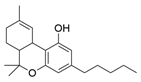 | Switching Wavelengths (trans-to-cis/cis-to-trans) | E/Z ratio at PSS | Thermal Stability | |
| 2 | 1 | 365 nm/450 nm | Exact ratios are not specified | Half-life (t1/2) ~216 min in water | |
| Compound | Parent Compound | Isomerization Type | Trans/Cis Activity Switching | Functional Assay Context | Distinctive Elements |
| [95] | [95] | Azobenezene replaces the pentyl chain | Trans-ON | cAMP, Electrophysiology | Asymmetric synthesis; functional light-dependent switch |
 |  | Switching Wavelengths (trans-to-cis/cis-to-trans) | E/Z ratio at PSS | Thermal Stability | |
| 3 | 1 | 365 nm/450 nm | Exact ratios are not specified | Half-life (t1/2) ~216 min in water | |
| Compound | Parent Compound | Isomerization Type | Trans/Cis Activity Switching | Functional Assay Context | Distinctive Elements |
| [96] | [96] | Azobenzene linked at the indole-amide central core | Cis-ON (5.4× affinity shift) | Radioligand, arrestin, Ca2+ | Reversible optical control |
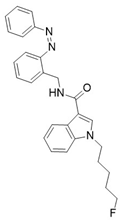 |  | Switching Wavelengths (trans-to-cis/cis-to-trans) | E/Z ratio at PSS | Thermal Stability | |
| 4 | 5 | 366 nm/454 nm | PSS366nm = 16/84 PSS454nm = 17/83 | Thermal stable in 4:1 DMSO/buffer (pH 7.4) for 3 h at 37 °C. Half-life not reported | |
| Compound | Parent Compound | Isomerization Type | Trans/Cis Activity Switching | Functional Assay Context | Distinctive Elements |
|---|---|---|---|---|---|
| [97] | [97] | Azo-extension on position 3 | Cis-ON (15.3 affinity shift) | Radioligand binding, Ca2+ mobilization and cell luminescence assay | First photomodulable CB1 antagonist; high selectivity |
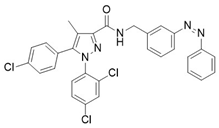 | 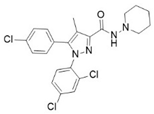 | Switching Wavelengths (trans-to-cis/cis-to-trans) | E/Z ratio at PSS | Thermal Stability | |
| 6 | Rimonabant (7) | 366 nm/454 nm | PSS366nm = 4/96 PSS454nm = 74/26 | Thermal stable in a period of >3 h in buffer (pH 7.4) at 37 °C | |
| Compound | Parent Compound | Isomerization Type | Trans/Cis Activity Switching | Functional Assay Context | Distinctive Elements |
| [99] | [99] | Azobenzene unit fused to the resorcinol core of the parent compound | Trans-ON | Real time fluorescent Ca2+ imaging in in AtT-20(CB2) cells | Optical control over Ca2+ levels in AtT-20(CB2) cells |
 |  | Switching Wavelengths (trans-to-cis/cis-to-trans) | E/Z ratio at PSS | Thermal Stability | |
| 9 | HU-308 (8) | 365 nm/455 nm | PSS365nm = 20/80 PSS455nm = 83/17 | Half-life (t1/2) ~2.1 h in water | |
| Compound | Parent Compound | Isomerization Type | Trans/Cis Activity Switching | Functional Assay Context | Distinctive Elements |
| [99] | [99] | Azobenzene unit linked to the resorcinol core of the parent compound | Cis-ON | Real time fluorescent Ca2+ imaging in in AtT-20(CB2) cells | Optical control over Ca2+ levels in AtT-20(CB2) cells |
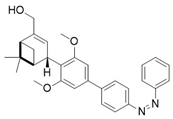 |  | Switching Wavelengths (trans-to-cis/cis-to-trans) | E/Z ratio at PSS | Thermal Stability | |
| 10 | HU-308 (8) | 365 nm/455 nm | PSS365nm = 51/49 PSS455nm = 87/13 | Half-life (t1/2) ~1.6 h in water | |
| Compound | Parent Compound | Isomerization Type | Trans/Cis Activity Switching | Functional Assay Context | Distinctive Elements |
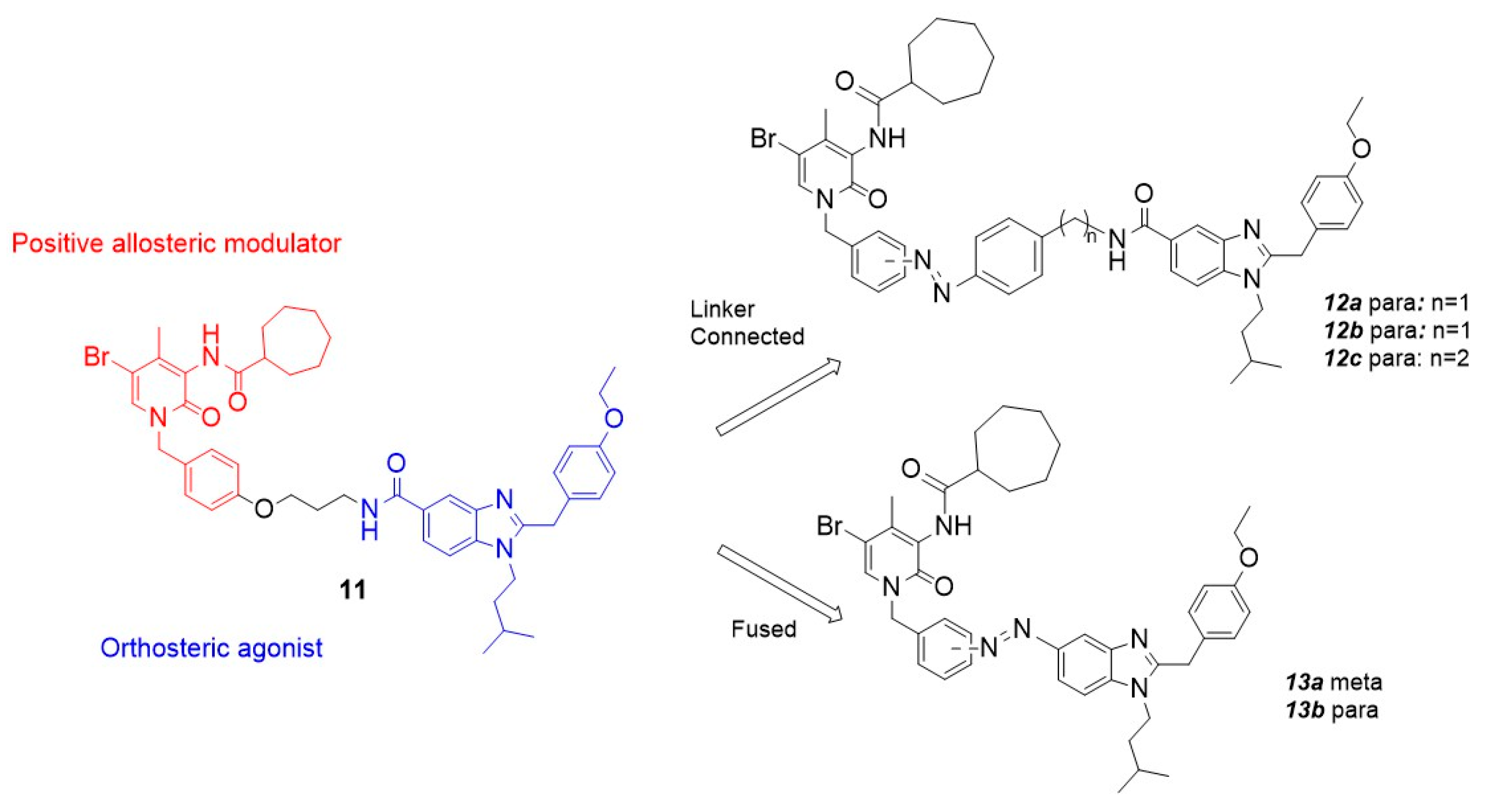
| [100] | [100] | Azobenzene replaces the original linker being fused on one side to the benzyl group and on the other side with the benzimidazole core | Cis-ON, >10× potency shift (17-para) | Internalization, calcium mobilization, and BRET studies | First dual-steric CB2 photoprobe, pathway-specific |
 |  | Switching Wavelengths (trans-to-cis/cis-to-trans) | E/Z ratio at PSS | Thermal Stability | |
| 13b | 11 | 365 nm/530 nm | PSS365nm = 5/95 PSS530nm = 85/15 | Thermal stable in DMSO for 3 h. Half-life not reported | |
| Compound | Parent Compound | Isomerization Type | Trans/Cis Activity Switching | Functional Assay Context | Distinctive Elements |
| [101] | [101] | Azobenzene fused with the imidazole core of the parent compound | Trans-ON | β-arrestin2 recruitment and CB2 internalization assays | First pathway-selective CB2 photoprobes |
 |  | Switching Wavelengths (trans-to-cis/cis-to-trans) | E/Z ratio at PSS | Thermal Stability | |
| 15 | 14 | 400 nm/590 nm | PSS400nm = 33/67 PSS590nm = 98/2 | Half-life (t1/2) ~245 min in DMSO and ~346 min in Tris-buffer (pH 7.4) at room temperature | |
| Compound | Parent Compound | Isomerization Type | Trans/Cis Activity Switching | Functional Assay Context | Distinctive Elements |
|---|---|---|---|---|---|
| [98] | [98] | Azobenzene replaces the adamantyl arm | Cis-ON | Binding/ Selectivity | Structure-guided remodelling (exploiting pocket clusters) |
 |  | Switching Wavelengths (trans-to-cis/cis-to-trans) | E/Z ratio at PSS | Thermal Stability | |
| 17 | 16 | 365 nm/435 nm | PSS365nm = 7/93 | Half-life (t1/2) ~136 h in DMSO at room temperature | |
| Compound | Parent Compound | Isomerization Type | Trans/Cis Activity Switching | Functional Assay Context | Distinctive Elements |
| [105] | [105] | The azobenzene unit replaces the alkyl tail of the capsaicin. | Cis-ON | TRPV1-expressing HEK293 cells and primary DRG neurons; ionic currents and Ca2+ responses measured under alternating illumination | Fully reversible and reproducible responses |
 |  | Switching Wavelengths (trans-to-cis/cis-to-trans) | E/Z ratio at PSS | Thermal Stability | |
| 19 | 18 | 365 nm/460 nm | No quantitative values reported; description: complete and rapid reversible switching | Half-life (t1/2) not reported | |
| Compound | Parent Compound | Isomerization Type | Trans/Cis Activity Switching | Functional Assay Context | Distinctive Elements |
| [106] | [106] | Replacement of azobenzene. with a red-shifted azobenzene | Cis-ON | In vivo neural/behavioural (VTA mouse) | In vivo activity red-shifted isomerization |
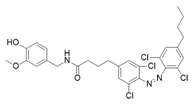 |  | Switching Wavelengths (trans-to-cis/cis-to-trans) | E/Z ratio at PSS | Thermal Stability | |
| 20 | 19 | 560 nm/400 nm | No quantitative values reported | Half-life (t1/2) not reported | |
| Compound | Parent Compound | Isomerization Type | Trans/Cis Activity Switching | Functional Assay Context | Distinctive Elements |
|---|---|---|---|---|---|
| [108] | [108] | Replacement of chlorobenzene with a substituted azobenzene | Trans-ON | Electrophysiology in HEK cells transfected with TRPV1; voltage-dependent assay and Ca2+ luminescence assay for CAP response | 82% inhibition of CAP-induced TRPV1 currents at 360 nm |
 |  | Switching Wavelengths (trans-to-cis/cis-to-trans) | E/Z ratio at PSS | Thermal Stability | |
| 22 | 21 | 360 nm/440 nm | No quantitative values reported | Not reported | |
Disclaimer/Publisher’s Note: The statements, opinions and data contained in all publications are solely those of the individual author(s) and contributor(s) and not of MDPI and/or the editor(s). MDPI and/or the editor(s) disclaim responsibility for any injury to people or property resulting from any ideas, methods, instructions or products referred to in the content. |
© 2026 by the authors. Licensee MDPI, Basel, Switzerland. This article is an open access article distributed under the terms and conditions of the Creative Commons Attribution (CC BY) license.
Share and Cite
Corallo, A.A.; Noli, C.; Brizzi, A.; Paolino, M.; Mugnaini, C.; Corelli, F. Light-Controlled Modulation of the Endocannabinoid System: Photoswitchable Ligands for Cannabinoid and TRPV1 Receptors. Int. J. Mol. Sci. 2026, 27, 573. https://doi.org/10.3390/ijms27020573
Corallo AA, Noli C, Brizzi A, Paolino M, Mugnaini C, Corelli F. Light-Controlled Modulation of the Endocannabinoid System: Photoswitchable Ligands for Cannabinoid and TRPV1 Receptors. International Journal of Molecular Sciences. 2026; 27(2):573. https://doi.org/10.3390/ijms27020573
Chicago/Turabian StyleCorallo, Alessia Agata, Carlotta Noli, Antonella Brizzi, Marco Paolino, Claudia Mugnaini, and Federico Corelli. 2026. "Light-Controlled Modulation of the Endocannabinoid System: Photoswitchable Ligands for Cannabinoid and TRPV1 Receptors" International Journal of Molecular Sciences 27, no. 2: 573. https://doi.org/10.3390/ijms27020573
APA StyleCorallo, A. A., Noli, C., Brizzi, A., Paolino, M., Mugnaini, C., & Corelli, F. (2026). Light-Controlled Modulation of the Endocannabinoid System: Photoswitchable Ligands for Cannabinoid and TRPV1 Receptors. International Journal of Molecular Sciences, 27(2), 573. https://doi.org/10.3390/ijms27020573