
Evaluating the Role of Vitamin D in Alleviating Chronic Pruritus: A Meta-Analysis
Abstract
1. Introduction
2. Results
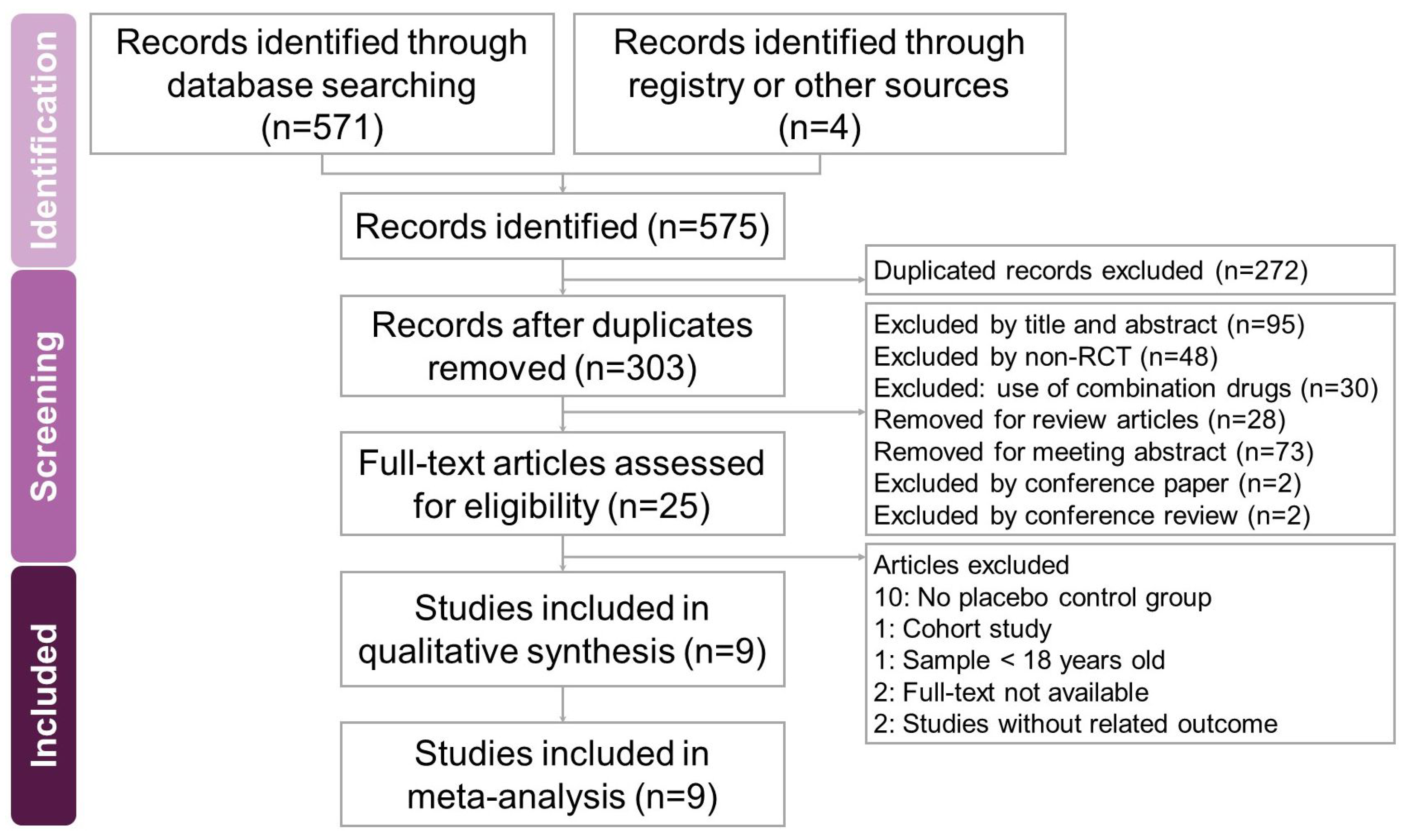
2.1. Study Search and Characteristics of Included Patients
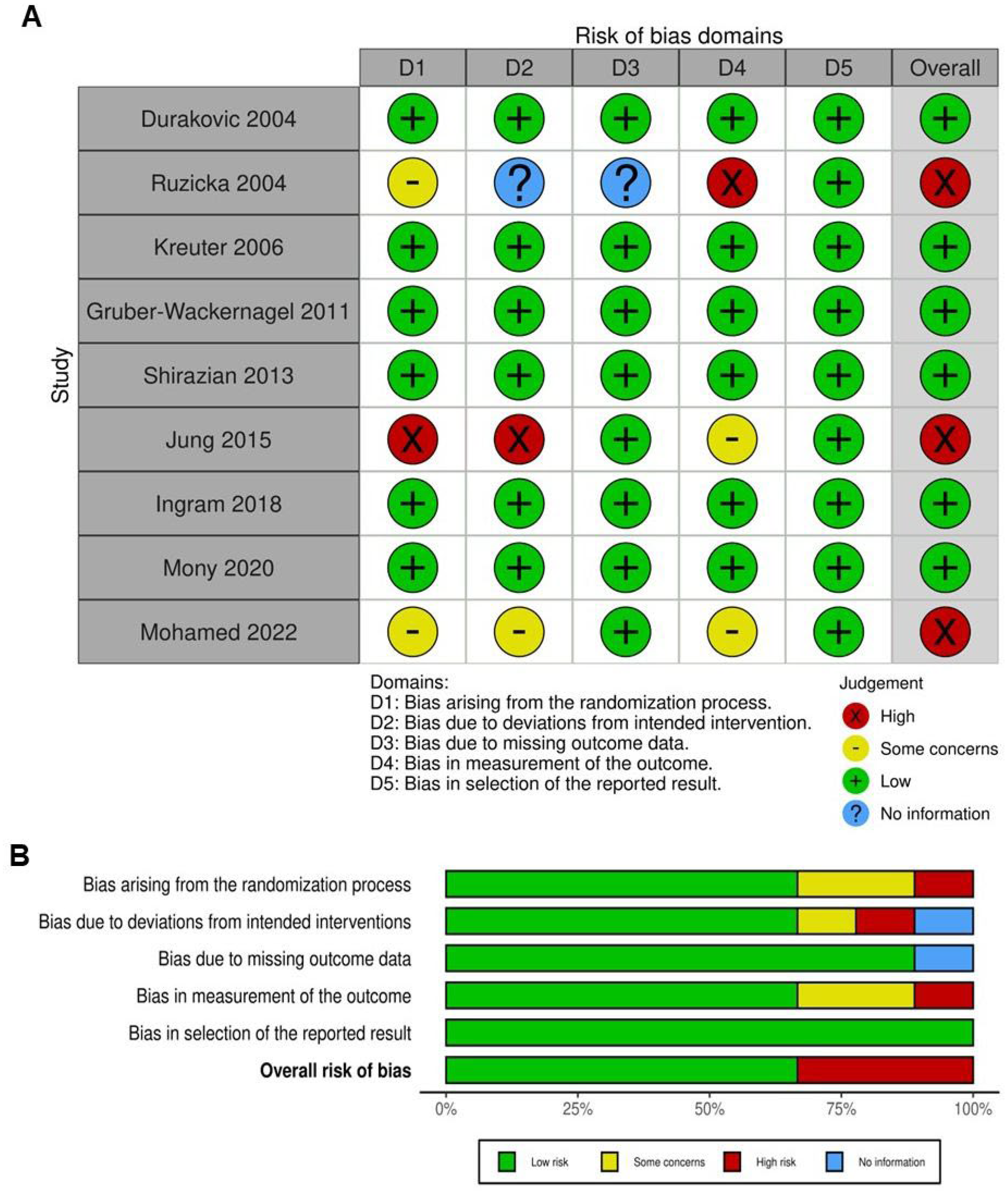
2.2. Quality Assessment
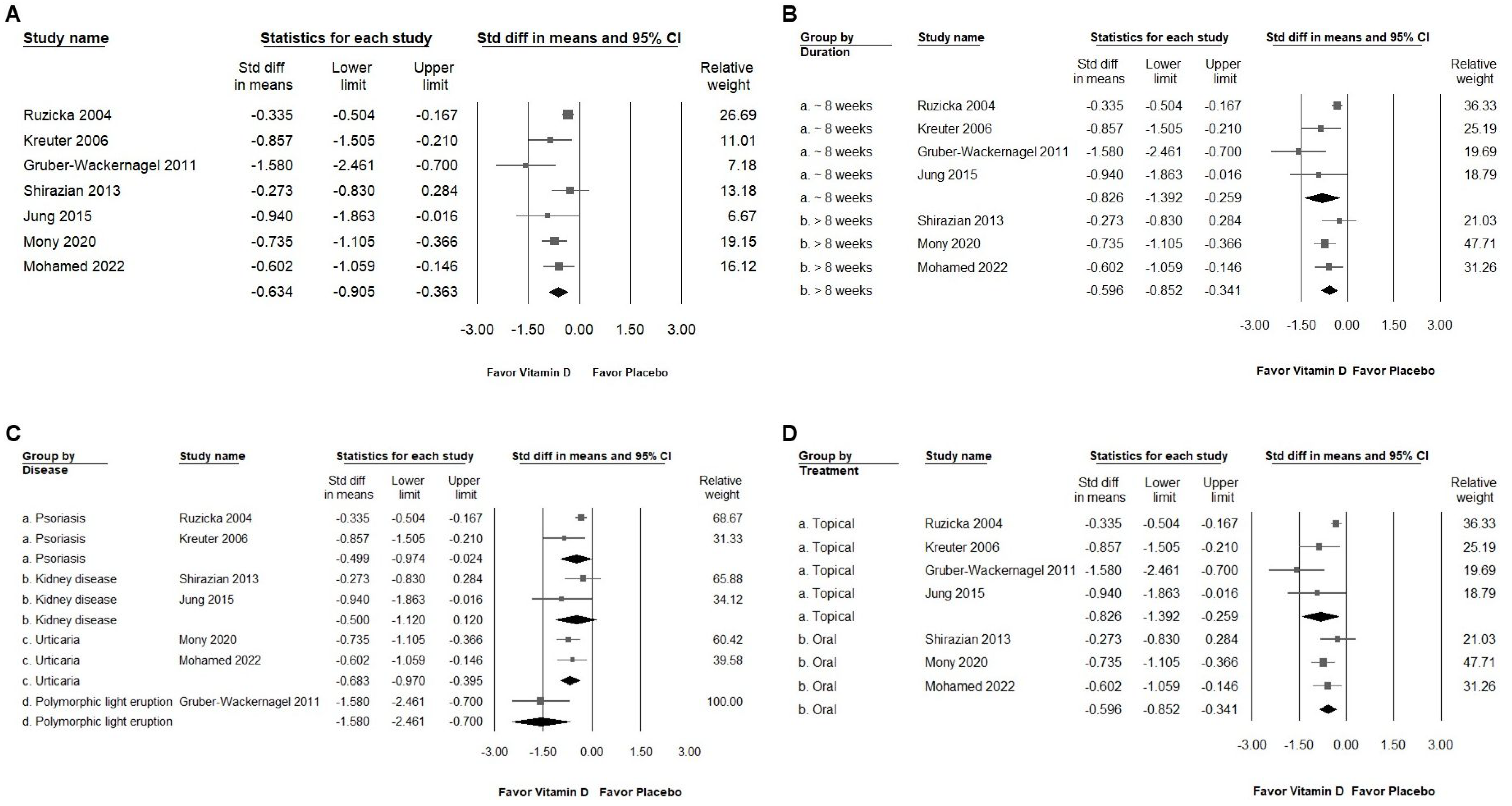
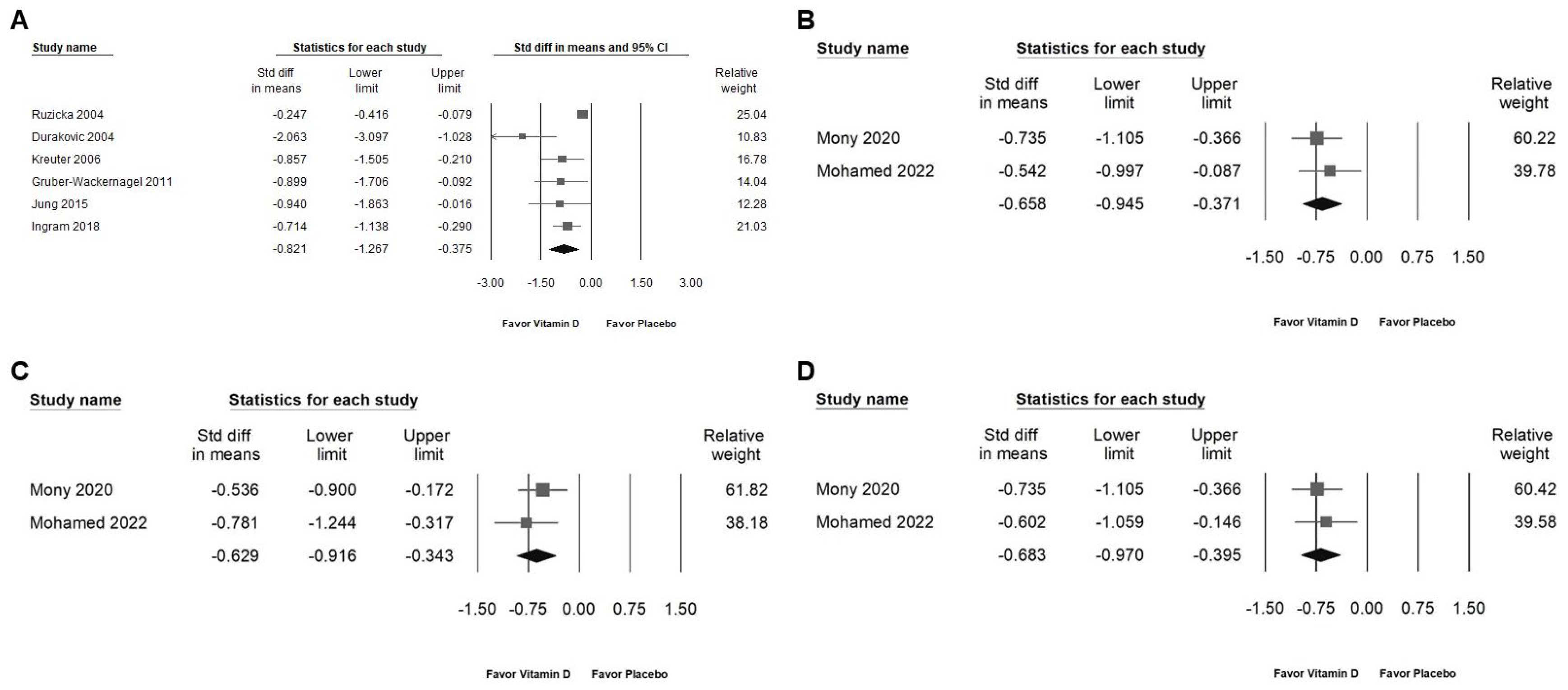
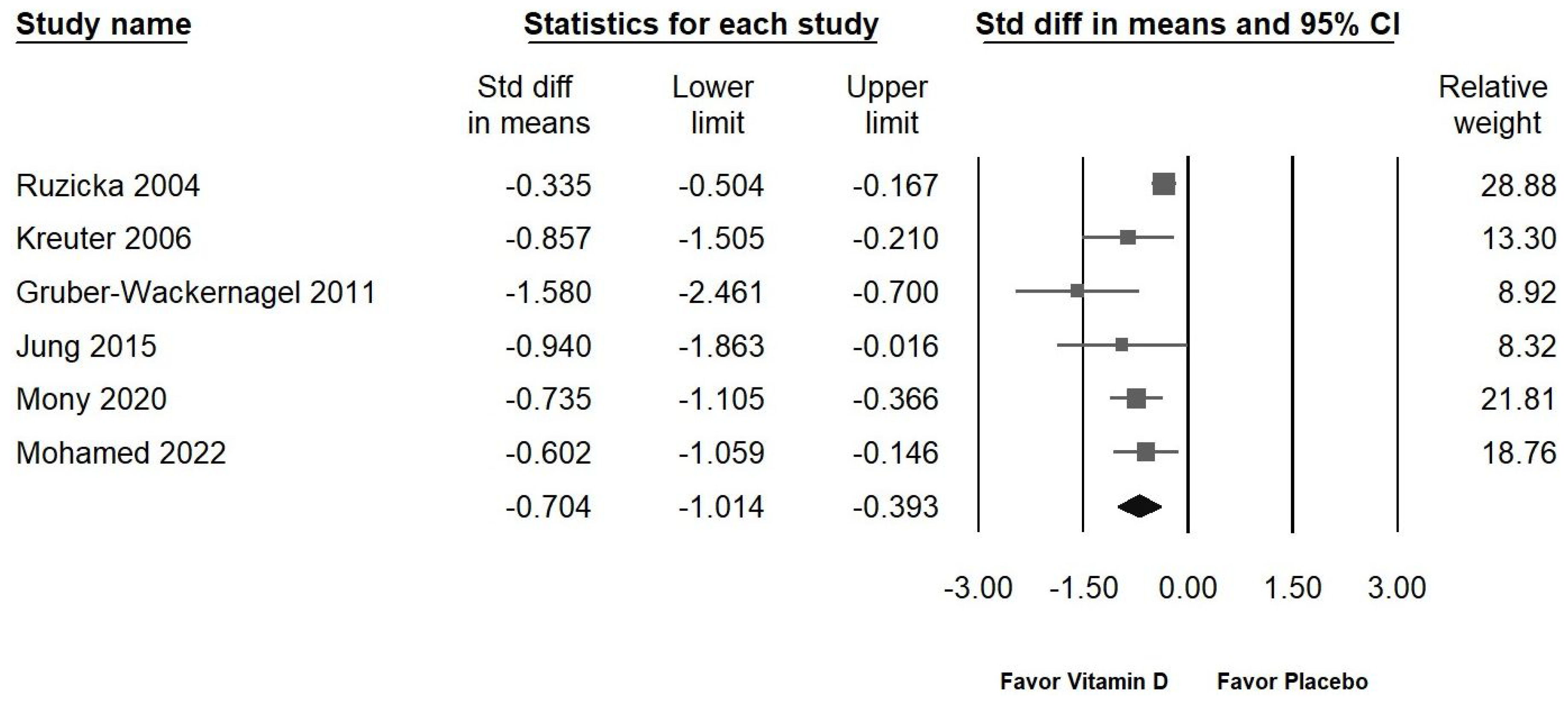
2.3. Impact of Vitamin D on Chronic Pruritus
2.4. Effect of Vitamin D on Lesion Area Reduction and Inhibition of Inflammatory Cytokines
2.5. Sensitivity Analysis
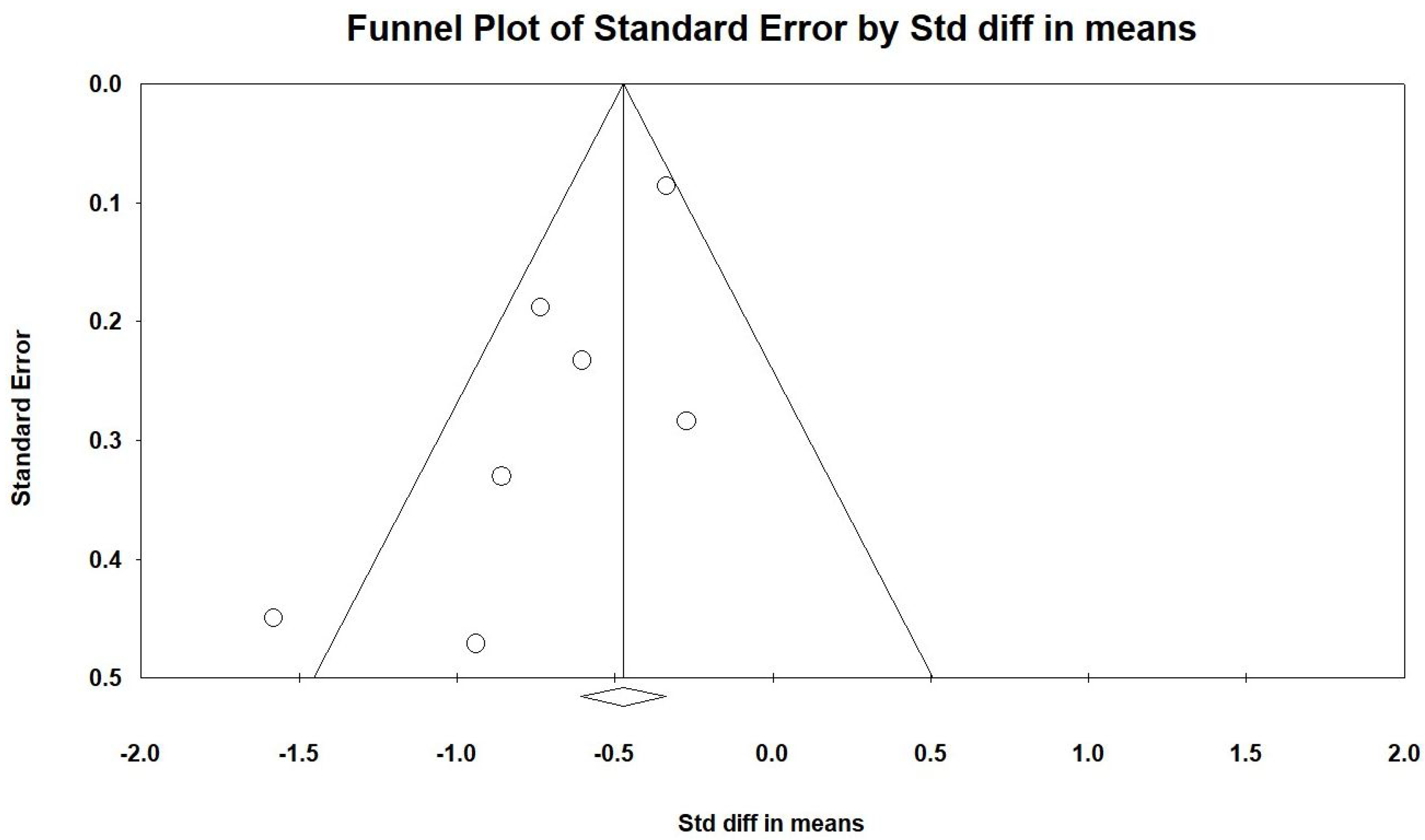
2.6. Publishing Bias
3. Discussion
4. Methods and Materials
4.1. Data Sources and Selection Criteria
4.2. Selection of Studies
4.3. Data Extraction
4.4. Outcomes
4.5. Assessment of Methodological Quality
4.6. Statistical Analyses
5. Conclusions
Author Contributions
Funding
Institutional Review Board Statement
Informed Consent Statement
Data Availability Statement
Acknowledgments
Conflicts of Interest
References
- Chang, A.L.S.; Chen, S.C.; Osterberg, L.; Brandt, S.; von Grote, E.C.; Meckfessel, M.H. A daily skincare regimen with a unique ceramide and filaggrin formulation rapidly improves chronic xerosis, pruritus, and quality of life in older adults. Geriatr. Nurs. 2018, 39, 24–28. [Google Scholar] [CrossRef] [PubMed]
- Jung, K.E.; Woo, Y.R.; Lee, J.S.; Shin, J.H.; Jeong, J.U.; Koo, D.W.; Bang, K.T. Effect of topical vitamin D on chronic kidney disease-associated pruritus: An open-label pilot study. J. Dermatol. 2015, 42, 800–803. [Google Scholar] [CrossRef] [PubMed]
- Shirazian, S.; Schanler, M.; Shastry, S.; Dwivedi, S.; Kumar, M.; Rice, K.; Miyawaki, N.; Ghosh, S.; Fishbane, S. The effect of ergocalciferol on uremic pruritus severity: A randomized controlled trial. J. Ren. Nutr. 2013, 23, 308–314. [Google Scholar] [CrossRef] [PubMed]
- Tanaka, A.; Ma, X.; Takahashi, A.; Vierling, J.M. Primary biliary cholangitis. Lancet 2024, 396, 1915–1926. [Google Scholar] [CrossRef]
- Fishbein, A.B.; Vitaterna, O.; Haugh, I.M.; Bavishi, A.A.; Zee, P.C.; Turek, F.W.; Sheldon, S.H.; Silverberg, J.I.; Paller, A.S. Nocturnal eczema: Review of sleep and circadian rhythms in children with atopic dermatitis and future research directions. J Allergy Clin. Immunol. 2015, 136, 1170–1177. [Google Scholar] [CrossRef]
- Stander, S.; Weisshaar, E.; Mettang, T.; Szepietowski, J.C.; Carstens, E.; Ikoma, A.; Bergasa, N.V.; Gieler, U.; Misery, L.; Wallengren, J.; et al. Clinical classification of itch: A position paper of the International Forum for the Study of Itch. Acta Derm. Venereol. 2007, 87, 291–294. [Google Scholar] [CrossRef]
- Yosipovitch, G.; Bernhard, J.D. Clinical practice. Chronic pruritus. N. Engl. J. Med. 2013, 368, 1625–1634. [Google Scholar] [CrossRef]
- Holick, M.F. Vitamin D deficiency. N. Engl. J. Med. 2007, 357, 266–281. [Google Scholar] [CrossRef]
- Soni, B.; Shivgotra, R.; Trehan, K.; Chhina, A.; Saini, M.; Jain, S.K.; Thakur, S. An Overview of Contemporary and Future Therapeutic Strategies for Scalp Psoriasis. Curr. Drug Targets 2024, 25, 353–373. [Google Scholar] [CrossRef]
- Komiya, E.; Tominaga, M.; Kamata, Y.; Suga, Y.; Takamori, K. Molecular and Cellular Mechanisms of Itch in Psoriasis. Int. J. Mol. Sci. 2020, 21, 8406. [Google Scholar] [CrossRef]
- Mattozzi, C.; Paolino, G.; Richetta, A.G.; Calvieri, S. Psoriasis, vitamin D and the importance of the cutaneous barrier’s integrity: An update. J. Dermatol. 2016, 43, 507–514. [Google Scholar] [CrossRef] [PubMed]
- Bikle, D.D. Vitamin D metabolism, mechanism of action, and clinical applications. Chem. Biol. 2014, 21, 319–329. [Google Scholar] [CrossRef] [PubMed]
- Palacios, C.; Trak-Fellermeier, M.A.; Martinez, R.X.; Lopez-Perez, L.; Lips, P.; Salisi, J.A.; John, J.C.; Pena-Rosas, J.P. Regimens of vitamin D supplementation for women during pregnancy. Cochrane Database Syst. Rev. 2019, 10, CD013446. [Google Scholar] [CrossRef]
- Barrea, L.; Savanelli, M.C.; Di Somma, C.; Napolitano, M.; Megna, M.; Colao, A.; Savastano, S. Vitamin D and its role in psoriasis: An overview of the dermatologist and nutritionist. Rev. Endocr. Metab. Disord. 2017, 18, 195–205. [Google Scholar] [CrossRef]
- Kreuter, A.; Sommer, A.; Hyun, J.; Brautigam, M.; Brockmeyer, N.H.; Altmeyer, P.; Gambichler, T. 1% pimecrolimus, 0.005% calcipotriol, and 0.1% betamethasone in the treatment of intertriginous psoriasis: A double-blind, randomized controlled study. Arch. Dermatol. 2006, 142, 1138–1143. [Google Scholar] [CrossRef]
- Ebner, F.; Heller, A.; Rippke, F.; Tausch, I. Topical use of dexpanthenol in skin disorders. Am. J. Clin. Dermatol. 2002, 3, 427–433. [Google Scholar] [CrossRef]
- Ingram, M.A.; Jones, M.B.; Stonehouse, W.; Jarrett, P.; Scragg, R.; Mugridge, O.; von Hurst, P.R. Oral vitamin D(3) supplementation for chronic plaque psoriasis: A randomized, double-blind, placebo-controlled trial. J. Dermatol. Treat 2018, 29, 648–657. [Google Scholar] [CrossRef]
- Alora-Palli, M.B.; Perkins, A.C.; Van Cott, A.; Kimball, A.B. Efficacy and tolerability of a cosmetically acceptable coal tar solution in the treatment of moderate plaque psoriasis: A controlled comparison with calcipotriene (calcipotriol) cream. Am. J. Clin. Dermatol. 2010, 11, 275–283. [Google Scholar] [CrossRef]
- Cassano, N.; Miracapillo, A.; Coviello, C.; Loconsole, F.; Bellino, M.; Vena, G.A. Treatment of psoriasis vulgaris with the two-compound product calcipotriol/betamethasone dipropionate followed by different formulations of calcipotriol. Clin. Drug Investig. 2006, 26, 227–233. [Google Scholar] [CrossRef]
- Gooderham, M.; Debarre, J.M.; Keddy-Grant, J.; Xu, Z.; Kurvits, M.; Goodfield, M. Safety and efficacy of calcipotriol plus betamethasone dipropionate gel in the treatment of scalp psoriasis in adolescents 12-17 years of age. Br. J. Dermatol. 2014, 171, 1470–1477. [Google Scholar] [CrossRef]
- Guenther, L.C.; Poulin, Y.P.; Pariser, D.M. A comparison of tazarotene 0.1% gel once daily plus mometasone furoate 0.1% cream once daily versus calcipotriene 0.005% ointment twice daily in the treatment of plaque psoriasis. Clin. Ther. 2000, 22, 1225–1238. [Google Scholar] [CrossRef] [PubMed]
- Ozkan, I.; Kose, O.; Ozmen, I.; Arca, E. Efficacy and safety of non-laser, targeted UVB phototherapy alone and in combination with psoralen gel or calcipotriol ointment in the treatment of localized, chronic, plaque-type psoriasis. Int. J. Dermatol. 2012, 51, 609–613. [Google Scholar] [CrossRef] [PubMed]
- Rorie, A.; Goldner, W.S.; Lyden, E.; Poole, J.A. Beneficial role for supplemental vitamin D3 treatment in chronic urticaria: A randomized study. Ann. Allergy Asthma. Immunol. 2014, 112, 376–382. [Google Scholar] [CrossRef] [PubMed]
- Takahashi, H.; Tsuji, H.; Ishida-Yamamoto, A.; Iizuka, H. Comparison of clinical effects of psoriasis treatment regimens among calcipotriol alone, narrowband ultraviolet B phototherapy alone, combination of calcipotriol and narrowband ultraviolet B phototherapy once a week, and combination of calcipotriol and narrowband ultraviolet B phototherapy more than twice a week. J. Dermatol. 2013, 40, 424–427. [Google Scholar] [CrossRef]
- Theng, C.T.; Tan, S.H.; Goh, C.L.; Suresh, S.; Wong, H.B.; Machin, D.; Singapore Lichen Planus Study, G. A randomized controlled trial to compare calcipotriol with betamethasone valerate for the treatment of cutaneous lichen planus. J. Dermatol. Treat. 2004, 15, 141–145. [Google Scholar] [CrossRef]
- Veien, N.K.; Bjerke, J.R.; Rossmann-Ringdahl, I.; Jakobsen, H.B. Once daily treatment of psoriasis with tacalcitol compared with twice daily treatment with calcipotriol. A double-blind trial. Br. J. Dermatol. 1997, 137, 581–586. [Google Scholar] [CrossRef]
- Juntongjin, P.; Pongprasert, R. Calcipotriol ointment shows comparable efficacy to topical steroids in chronic hand eczema. Dermatol. Ther. 2019, 32, e12956. [Google Scholar] [CrossRef]
- Thaci, D.; Daiber, W.; Boehncke, W.H.; Kaufmann, R. Calcipotriol solution for the treatment of scalp psoriasis: Evaluation of efficacy, safety and acceptance in 3,396 patients. Dermatology 2001, 203, 153–156. [Google Scholar] [CrossRef]
- Guttmann-Gruber, C.; Pinon Hofbauer, J.; Tockner, B.; Reichl, V.; Klausegger, A.; Hofbauer, P.; Wolkersdorfer, M.; Tham, K.C.; Lim, S.S.; Common, J.E.; et al. Impact of low-dose calcipotriol ointment on wound healing, pruritus and pain in patients with dystrophic epidermolysis bullosa: A randomized, double-blind, placebo-controlled trial. Orphanet J. Rare Dis. 2021, 16, 473. [Google Scholar] [CrossRef]
- Lebwohl, M.; Menter, A.; Weiss, J.; Clark, S.D.; Flores, J.; Powers, J.; Balin, A.K.; Kempers, S.; Glinert, R.J.; Fleming, T.; et al. Calcitriol 3 microg/g ointment in the management of mild to moderate plaque type psoriasis: Results from 2 placebo-controlled, multicenter, randomized double-blind, clinical studies. J. Drugs Dermatol. 2007, 6, 428–435. [Google Scholar]
- Omidian, M.; Khazanee, A.; Yaghoobi, R.; Ghorbani, A.R.; Pazyar, N.; Beladimousavi, S.S.; Ghadimi, M.; Mohebbipour, A.; Feily, A. Therapeutic effect of oral nicotinamide on refractory uremic pruritus: A randomized, double-blind study. Saudi J. Kidney Dis. Transpl. 2013, 24, 995–999. [Google Scholar] [CrossRef]
- Akizawa, T.; Ohashi, Y.; Akiba, T.; Suzuki, M.; Nishizawa, Y.; Ogata, E.; Slatopolsky, E.; Kurokawa, K. Dose-response study of 22-oxacalcitriol in patients with secondary hyperparathyroidism. Ther. Apher. Dial. 2004, 8, 480–491. [Google Scholar] [CrossRef] [PubMed]
- Hata, T.R.; Audish, D.; Kotol, P.; Coda, A.; Kabigting, F.; Miller, J.; Alexandrescu, D.; Boguniewicz, M.; Taylor, P.; Aertker, L.; et al. A randomized controlled double-blind investigation of the effects of vitamin D dietary supplementation in subjects with atopic dermatitis. J. Eur. Acad. Dermatol. Venereol. 2014, 28, 781–789. [Google Scholar] [CrossRef] [PubMed]
- Durakovic, C.; Ray, S.; Holick, M.F. Topical paricalcitol (19-nor-1 alpha,25-dihydroxyvitamin D2) is a novel, safe and effective treatment for plaque psoriasis: A pilot study. Br. J. Dermatol. 2004, 151, 190–195. [Google Scholar] [CrossRef]
- Gruber-Wackernagel, A.; Bambach, I.; Legat, F.J.; Hofer, A.; Byrne, S.N.; Quehenberger, F.; Wolf, P. Randomized double-blinded placebo-controlled intra-individual trial on topical treatment with a 1,25-dihydroxyvitamin D(3) analogue in polymorphic light eruption. Br. J. Dermatol. 2011, 165, 152–163. [Google Scholar] [CrossRef]
- Mohamed, A.A.; Hussein, M.S.; Salah, E.M.; Eldemery, A.; Darwish, M.M.; Ghaith, D.M.; Attala, R.A.; El Borolossy, R. Efficacy and safety of active vitamin D supplementation in chronic spontaneous urticaria patients. J. Dermatol. Treat 2022, 33, 427–432. [Google Scholar] [CrossRef]
- Mony, A.; Chandrashekar, L.; Rajappa, M.; Munisamy, M.; Sahoo, J.P.; Selvarajan, S. Effect of vitamin D supplementation on clinical outcome and biochemical profile in South Indian population with vitamin D-deficient chronic urticarial—A randomized double-blind placebo controlled trial. Clin. Chim. Acta 2020, 504, 1–6. [Google Scholar] [CrossRef]
- Ruzicka, T.; Trompke, C. Treatment of scalp psoriasis. An effective and safe tacalcitol emulsion. Hautarzt 2004, 55, 165–170. [Google Scholar] [CrossRef]
- Amrein, K.; Scherkl, M.; Hoffmann, M.; Neuwersch-Sommeregger, S.; Kostenberger, M.; Tmava Berisha, A.; Martucci, G.; Pilz, S.; Malle, O. Vitamin D deficiency 2.0: An update on the current status worldwide. Eur. J. Clin. Nutr. 2020, 74, 1498–1513. [Google Scholar] [CrossRef]
- Powala, A.; Zolek, T.; Brown, G.; Kutner, A. Structure and the Anticancer Activity of Vitamin D Receptor Agonists. Int. J. Mol. Sci. 2024, 25, 6624. [Google Scholar] [CrossRef]
- Wetmore, J.B.; Kimber, C.; Mahnken, J.D.; Stubbs, J.R. Cholecalciferol v. ergocalciferol for 25-hydroxyvitamin D (25(OH)D) repletion in chronic kidney disease: A randomised clinical trial. Br. J. Nutr. 2016, 116, 2074–2081. [Google Scholar] [CrossRef] [PubMed]
- Paul, C.; Stein Gold, L.; Cambazard, F.; Kalb, R.E.; Lowson, D.; Bang, B.; Griffiths, C.E. Calcipotriol plus betamethasone dipropionate aerosol foam provides superior efficacy vs. gel in patients with psoriasis vulgaris: Randomized, controlled PSO-ABLE study. J. Eur. Acad. Dermatol. Venereol. 2017, 31, 119–126. [Google Scholar] [CrossRef] [PubMed]
- Pinter, A.; Reich, A.; Arenberger, P.; Gold, L.S.; Armstrong, A.; Iversen, L.; Praestegaard, M.; Augustin, M. Randomized Phase 3 trial demonstrating high efficacy, favourable safety and convenience of a novel calcipotriol and betamethasone dipropionate cream for the treatment of psoriasis. J. Eur. Acad. Dermatol. Venereol. 2023, 37, 2327–2335. [Google Scholar] [CrossRef]
- Stein Gold, L.; Pinter, A.; Armstrong, A.; Augustin, M.; Arenberger, P.; Bhatia, N.; Praestegaard, M.; Iversen, L.; Reich, A. Calcipotriene and Betamethasone Dipropionate PAD-Cream Demonstrates Greater Treatment Efficacy in Patients with Moderate-to-Severe Psoriasis Compared to Topical Suspension/Gel: A Subgroup Analysis of Two Phase 3 Studies. Dermatol. Ther. 2023, 13, 2031–2044. [Google Scholar] [CrossRef]
- Karampinis, E.; Goudouras, G.; Ntavari, N.; Bogdanos, D.P.; Roussaki-Schulze, A.V.; Zafiriou, E. Serum vitamin D levels can be predictive of psoriasis flares up after COVID-19 vaccination: A retrospective case control study. Front. Med. 2023, 10, 1203426. [Google Scholar] [CrossRef]
- Higgins, J.P.T. Cochrane Collaboration: Cochrane Handbook for Systematic Reviews of Interventions, 2nd ed.; Wiley-Blackwell: Hoboken, NJ, USA, 2020. [Google Scholar]
- Page, M.J.; McKenzie, J.E.; Bossuyt, P.M.; Boutron, I.; Hoffmann, T.C.; Mulrow, C.D.; Shamseer, L.; Tetzlaff, J.M.; Akl, E.A.; Brennan, S.E.; et al. The PRISMA 2020 statement: An updated guideline for reporting systematic reviews. BMJ 2021, 372, n71. [Google Scholar] [CrossRef]



| Author (year)/Country | Inclusion Criteria | Exclusion Criteria | Sample Size (% of Male)/Age | Study Design | Placebo Using | Intervention/ Duration | Main Results | Secondary Results |
|---|---|---|---|---|---|---|---|---|
| ~8 weeks | ||||||||
| Ruzicka (2004) [38]/Germany | Male and female patients aged 18 to 79 years with scalp psoriasis. | Patients with elevated calcium or phosphate levels, those who had used topical retinoids or vitamin D3 analogs, patients with severe comorbidities, known hypersensitivity to vitamin D3 analogs, or conditions that could interfere with the assessment of the study medication’s efficacy, safety, or tolerability, as well as women of childbearing potential who were not using effective contraception. | P:273 I: 273 (51.2)/ P: not explicitly detailed I: average age 45 years | RCT/double-blind/placebo | Placebo emulsion | Tacalcitol emulsion (4 µg/g) applied once daily to the scalp/8 weeks | The tacalcitol group showed a significant improvement in scalp psoriasis, with the median sum score decreasing by 53% compared to 30% in the placebo group (p < 0.0001). Additionally, tacalcitol was significantly superior to placebo in reducing erythema, scaling, and infiltration. | Tacalcitol also showed a significant improvement in patient-reported outcomes, including itching and scaling. The treatment was well tolerated, with similar incidences of local side effects in both the tacalcitol and placebo groups. |
| Kreuter (2006) [15]/Germany | Adult patients, at least 18 years old, with continuous intertriginous psoriasis for a minimum of 6 months, and otherwise healthy. | Patients who had used systemic corticosteroids, immunosuppressants, or UV light therapy (such as UV-A, UV-B, or psoralen–UV-A) in the previous 4 weeks, those who had received topical treatment for target lesions in the previous 2 weeks, or those with acute guttate or pustular psoriasis, pregnancy or lactation, severe concurrent infectious diseases, diseases associated with immunosuppression or malignancy, drug dependency, mental dysfunction, or other factors limiting compliance. | P: 20 (60) I: (1% Pimecrolimus): 20 (60) I: (0.005% Calcipotriol): 20 (75) I: (0.1% Betamethaone Valerate): 20 (50)/ P: 53.8 ±17.1 I: (1% Pimecrolimus): 53.2 ±14.5 I: (0.005% Calcipotriol): 52.1 ±13.3 I: (0.1% Betamethaone Valerate): 50.4 ±11.9 | RCT/double-blind/placebo/ single-center | Vehicle cream | 1% pimecrolimus, 0.005% calcipotriol, 0.1% betamethasone valerate, or vehicle cream/4 weeks | VAS for pruritus: decreased by 78% for 0.1% betamethasone, 57% for 0.005% calcipotriol, 35% for 1% pimecrolimus, and 43% for the vehicle. | After 28 days, the mean reduction in Modified Psoriasis Area and Severity Score (MPAS) was 86.4% for 0.1% betamethasone, 62.4% for 0.005% calcipotriol, 39.7% for 1% pimecrolimus, and 21.1% for the vehicle. Betamethasone was significantly more effective than pimecrolimus and the vehicle (p < 0.05 |
| Gruber-Wackernagel (2011) [35]/Austria | Patients aged above 18 years with a confirmed diagnosis of PLE based on typical patient history, histology of skin lesions, or positive photoprovo-cation results. | Patients with a presence or history of malignant skin tumors, dysplastic nevus syndrome, photosensitive diseases such as porphyria, chronic actinic dermatitis, xeroderma pigmentosum, or basal cell nevus syndrome, and autoimmune disorders such as lupus erythematosus or dermatomyositis were excluded from the study. Additional exclusion criteria included psychiatric disorders, immune deficiency, or systemic treatment with steroids and/or other immunosuppressive drugs within 6 months before the study. Pregnancy, lactation, UV exposure in the test fields within 8 weeks before the study, general poor health status, severe liver or renal disease, and disorders of calcium metabolism or therapy for such disorders with vitamin D-containing drugs were also exclusion factors. | 1. 13 patients (3 men, 10 women; 23% male). 2. Mean age: 37.4 years | RCT/double-blind/placebo/ intraindividual half-body trial | Placebo cream | Calcipotriol cream applied twice daily for 7 days before the start of photoprovocation testing with solar-simulated UV radiation. | Calcipotriol pretreatment significantly reduced PLE symptoms by an average of 32% compared with the placebo throughout the observation period from 48 to 144 h after the first photoprovocation exposure (p = 0.0022) | Calcipotriol pretreatment resulted in a significantly lower PLE test score in 58% (48 h), 75% (72 h), and 83% (144 h) of the cases compared with the placebo. Reduced erythema and increased pigmentation were observed with calcipotriol pretreatment. |
| Jung (2015) [2]/Korea | Patients with chronic kidney disease-associated pruritus (CKD-aP) who were undergoing hemodialysis. | Not explicitly mentioned in the provided text. | P:10 (30) I:10 (30)/Mean age: 63.3 years | RCT/double-blind/placebo/ single-center, open-label pilot study | Vehicle solution | Topical calcipotriol or vehicle solution applied twice daily for 1 month | Both the MPAS and VAS scores significantly decreased after 2 and 4 weeks of topical vitamin D treatment compared to the vehicle (p < 0.05). Additionally, dermoscopic evaluation showed significant improvement in skin dryness in the vitamin D-treated group compared to the vehicle group. | No significant side effects were observed. |
| >8 weeks | ||||||||
| Durakovic (2004) [34]/United States | Patients with moderate plaque psoriasis involving at least 5% of body surface area, two target lesions of at least 5 cm in diameter, and plaque elevation, scaling, and erythema with at least moderate severity (a score of 2 on a scale of 0–4). | Patients with a history of hepatic failure, renal failure, nephrocalcinosis, hypercalcemia, hypercalciuria, or hyperphosphatemia were excluded from the study, as were women of childbearing age who were pregnant, lactating, or unwilling to use effective contraception. Additionally, patients using calcium supplements or drugs that influence calcium metabolism were also excluded. | Paricalcitol-treated Group: 11 (88), mean age 46.5 years (range 29–65). | RCT/double-blind/placebo/self-controlled study | Placebo ointment | 15 µg/g paricalcitol ointment (19-nor-1α,25-dihydroxyvitamin D2) once daily/12 weeks | Paricalcitol-treated lesions showed a significant decrease in scaling (74%), erythema (69%), and plaque elevation (71%) compared to placebo-treated lesions, which showed reductions of 32%, 22%, and 8%, respectively. | Serum calcium and phosphorus levels, as well as the 24-hour urinary calcium/creatinine ratio, remained within normal ranges. Immunohistochemical analysis showed that paricalcitol treatment markedly reduced the immunoreactivity of transglutaminase K in psoriatic lesions, bringing it closer to the pattern observed in non-lesional skin. |
| Shirazian (2013) [3]/United States | Adult patients undergoing maintenance HD who described excessive pruritus and had been on HD for more than 3 months. | With PTH levels less than 70 pg/mL or greater than 1000 pg/mL, serum phosphorus levels greater than 7.0 mg/dL, or serum calcium levels greater than 11 mg/dL were excluded from the study. Other exclusion criteria included the presence of active malignancy and current treatment with ergocalciferol. | P:25 (56) I:25 (60)/ P: 66.2 ± 13.7 I: 66.1 ± 14.7 | RCT/double-blind/placebo | Placebo pill | Ergocalciferol 50,000 international units (IU) or placebo once weekly for 12 weeks | Both groups experienced a decrease in pruritus scores, with a reduction of 38.9% in the treatment group and 47.5% in the placebo group. The treatment*time interaction was not statistically significant (p = 0.34), indicating no significant difference in pruritus scores between the treatment and placebo groups. | There were no significant differences in calcium, phosphorus, and PTH levels between the groups. However, there was a significant increase in 25-hydroxy vitamin D levels in the treatment group compared to the placebo group (19 ng/mL vs. 1.4 ng/ mL, p < 0.01). |
| Ingram (2018) [17]/New Zealand | Adults aged 18 years and older with chronic plaque psoriasis, who had stable psoriasis not requiring systemic treatment and no history of using more than 1000 IU/day of vitamin D supplements in the last two months. | Patients with chronic kidney or liver disease, those who smoked, were pregnant, lactating, or planning a pregnancy were excluded from the study. Additionally, the use of phototherapy, systemic steroids, or other psoriasis treatments within the last three months was also an exclusion criterion. | P:34 (50) I:67 (58)/ P: 46.7 ± 13.7 I: 50.7 ± 13.44 | RCT/double-blind/placebo | Placebo capsules identical in appearance to vitamin D3 capsules, taken once monthly for 12 months. | Monthly oral doses of 100,000 IU of vitamin D3. | There was no significant difference in PASI scores between the vitamin D and placebo groups over the 12-month period. Both groups showed a mild improvement in PASI scores from baseline, but the improvement was not significantly different between the groups. | Serum 25(OH)D concentrations significantly increased in the treatment group and unexpectedly also increased in the placebo group, possibly due to increased sun exposure or other factors. |
| Mony (2020) [37]/India | Adults aged 20 to 50 years with CU for more than 6 weeks and vitamin D deficiency (serum vitamin D < 20 ng/mL) were included in the study. | Patients with acute urticaria, physical urticaria, urticarial vasculitis, hereditary or acquired angioedema, symptoms of vitamin D deficiency such as musculoskeletal pain or fractures, hepatic or renal dysfunction, malignancies, infections, or inflammatory cutaneous disorders were excluded from the study. Pregnant and lactating women, as well as patients who had taken vitamin D supplementation in the past 6 months were also exclusion. | P:60 (21) I:60 (20)/ P: 36.71 ± 11.01 I: 38.80 ± 12.54 | RCT/double-blind/placebo | Matched placebo | Experimental group: 60,000 IU of vitamin D3 (cholecalciferol) fortnightly for 12 weeks. Control group: similar-looking placebo fortnightly for 12 weeks. Both groups received standard treatment with levocetirizine. | There was a significant reduction in UAS7 and medication dosage in the vitamin D-treated group compared to the placebo group (p < 0.0001). Additionally, there was a significant reduction in inflammatory cytokines, IL-6, IL-17, TGF-β, and hs-CRP, in the vitamin D-treated group compared to the placebo group. | There was a significant increase in 25-OH vitamin D and vitamin D binding protein levels in the vitamin D-treated group compared to the placebo group. In contrast, there was no significant change in cytokine concentrations or vitamin D levels in the placebo group. |
| Mohamed (2022) [36]/Egypt | Adults > 18 years of age, having urticaria episodes at least 2 days per week for 6 weeks or longer with/without angioedema | Patients with only physical urticaria, urticarial vasculitis, hereditary or acquired angioedema were excluded, as were those with dyslipidemia, diabetes, hypertension, pre-existing cardiovascular disease, cerebrovascular accidents, hypothyroidism, smokers, and other systemic or cutaneous disorders such as atopic dermatitis or psoriasis. Additionally, patients with hypercalcemia (>11 mg/dL), diabetes, renal insufficiency, hepatic disorders, hyperparathyroidism, sarcoidosis, other granulomatous disorders, or malignancy were excluded. Pregnant and lactating women, as well as those who had taken vitamin D supplementation in the past 6 months were also exclusion. | P:67 (50.7) I:77 (40.2)/ P: 39.34 ± 7.23 I: 36.50 ± 5.12 | RCT/single-blind/placebo | Matched placebo | Study group: received 0.25 µg alfacalcidol once daily for 12 weeks in addition to the standard therapy (Hydroxyzine 25 mg/day). Placebo group: received an oral placebo taken with the same regimen for 12 weeks in addition to the standard therapy (Hydroxyzine 25 mg/day) | The UAS7 total score was significantly lower in the study group after active vitamin D administration compared to the placebo group (p < 0.01) | No significant change in the UAS7 total score or the number of patients in each severity level in the placebo group compared to their baseline results. In the study group, there was a significant increase in mean serum [25(OH) D] levels compared to the placebo group and their baseline results (p < 0.001). Additionally, the study group showed a significant decrease in mean serum IL-6, hs-CRP, and TNF-α levels compared to the placebo group and their baseline results (p < 0.01). Moreover, there was a significant negative correlation (r = −0.67, p < 0.05) between serum [25(OH) D] levels and total UAS7 scores, indicating disease severity. |
Disclaimer/Publisher’s Note: The statements, opinions and data contained in all publications are solely those of the individual author(s) and contributor(s) and not of MDPI and/or the editor(s). MDPI and/or the editor(s) disclaim responsibility for any injury to people or property resulting from any ideas, methods, instructions or products referred to in the content. |
© 2024 by the authors. Licensee MDPI, Basel, Switzerland. This article is an open access article distributed under the terms and conditions of the Creative Commons Attribution (CC BY) license (https://creativecommons.org/licenses/by/4.0/).
Share and Cite
Li, C.-P.; Huang, S.-C.; Hsiao, Y.; Tsai, R.-Y. Evaluating the Role of Vitamin D in Alleviating Chronic Pruritus: A Meta-Analysis. Int. J. Mol. Sci. 2024, 25, 9983. https://doi.org/10.3390/ijms25189983
Li C-P, Huang S-C, Hsiao Y, Tsai R-Y. Evaluating the Role of Vitamin D in Alleviating Chronic Pruritus: A Meta-Analysis. International Journal of Molecular Sciences. 2024; 25(18):9983. https://doi.org/10.3390/ijms25189983
Chicago/Turabian StyleLi, Chen-Pi, Shin-Chuan Huang, Yao Hsiao, and Ru-Yin Tsai. 2024. "Evaluating the Role of Vitamin D in Alleviating Chronic Pruritus: A Meta-Analysis" International Journal of Molecular Sciences 25, no. 18: 9983. https://doi.org/10.3390/ijms25189983
APA StyleLi, C.-P., Huang, S.-C., Hsiao, Y., & Tsai, R.-Y. (2024). Evaluating the Role of Vitamin D in Alleviating Chronic Pruritus: A Meta-Analysis. International Journal of Molecular Sciences, 25(18), 9983. https://doi.org/10.3390/ijms25189983