Review

Risk Prediction of Cardiovascular Events by Exploration of Molecular Data with Explainable Artificial Intelligence

by
Annie M. Westerlund
1,2,†,
Johann S. Hawe
1,†,
Matthias Heinig
2,3,* and
Heribert Schunkert
1,4,*
1
Department of Cardiology, Deutsches Herzzentrum München, Technical University Munich, Lazarettstrasse 36, 80636 Munich, Germany
2
Institute of Computational Biology, HelmholtzZentrum München, Ingolstädter Landstrasse 1, 85764 Munich, Germany
3
Department of Informatics, Technical University Munich, Boltzmannstrasse 3, 85748 Garching, Germany
4
Deutsches Zentrum für Herz- und Kreislaufforschung (DZHK), Munich Heart Alliance, Biedersteiner Strasse 29, 80802 Munich, Germany
*
Authors to whom correspondence should be addressed.
These authors contributed equally to this work.
Int. J. Mol. Sci. 2021, 22(19), 10291; https://doi.org/10.3390/ijms221910291
Submission received: 30 August 2021 / Revised: 17 September 2021 / Accepted: 18 September 2021 / Published: 24 September 2021
(This article belongs to the Special Issue Molecular Pathways in Cardio-Metabolic Disease)

Abstract

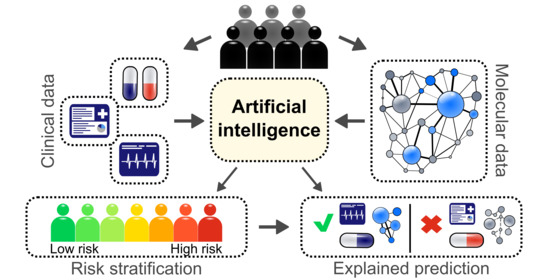
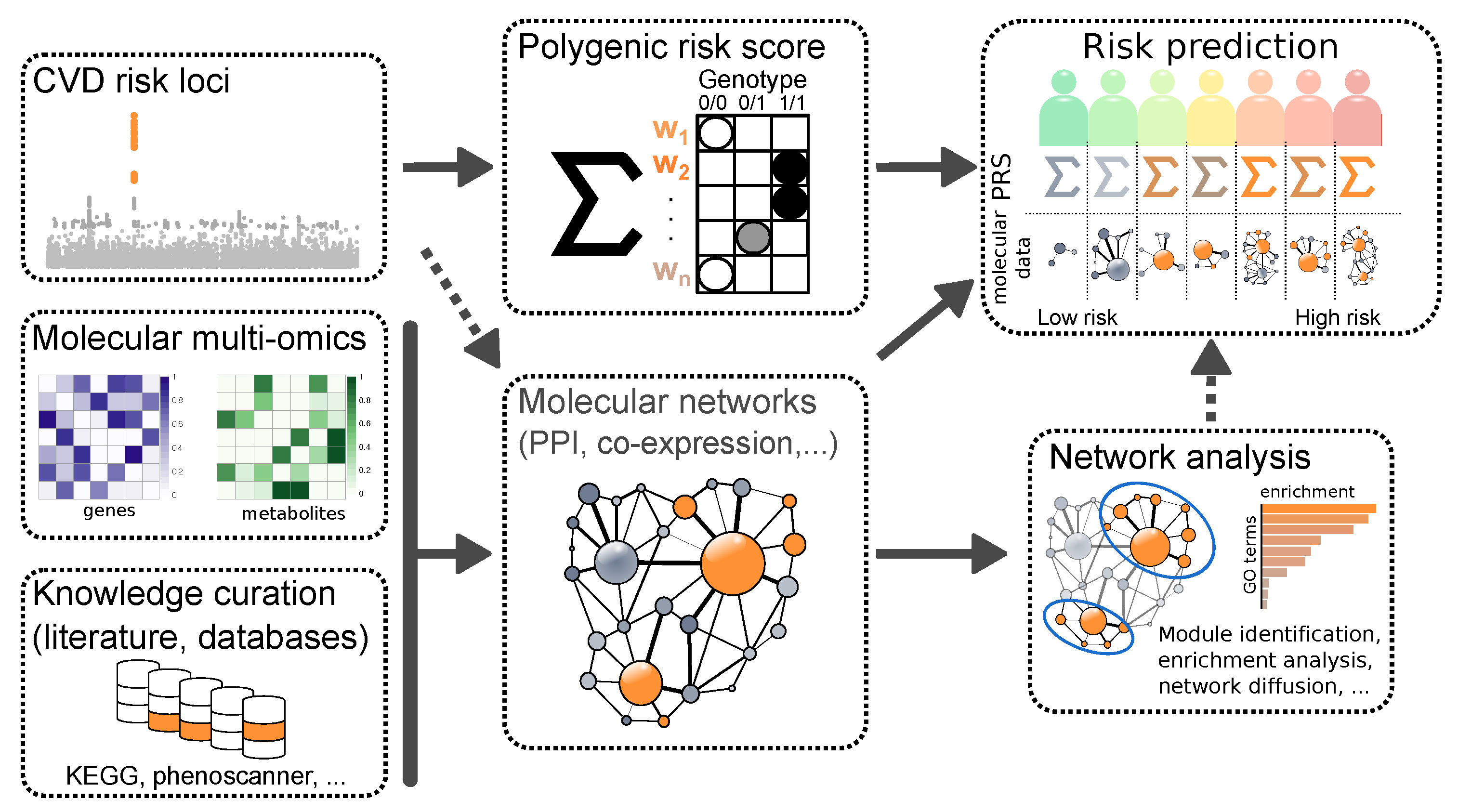
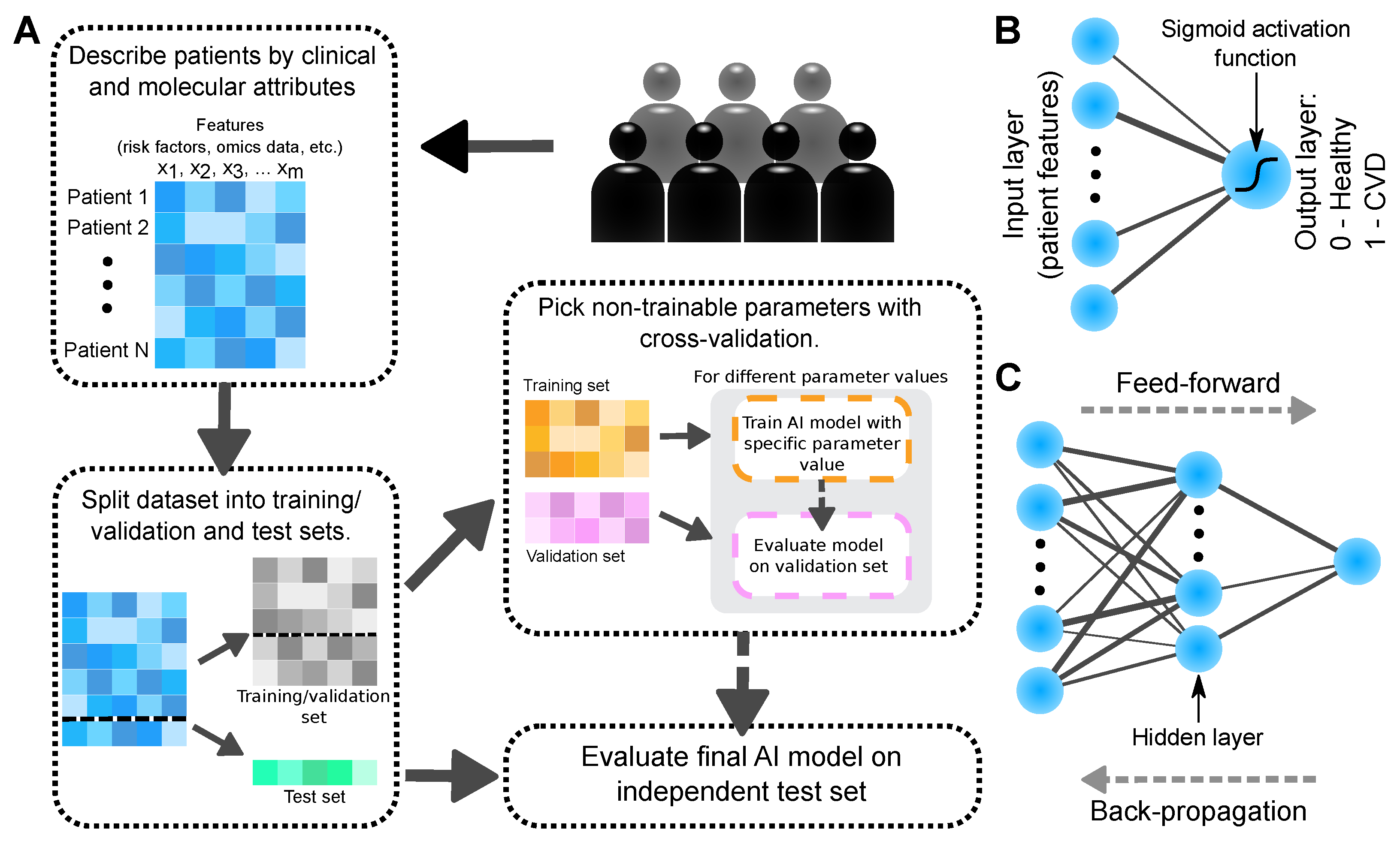
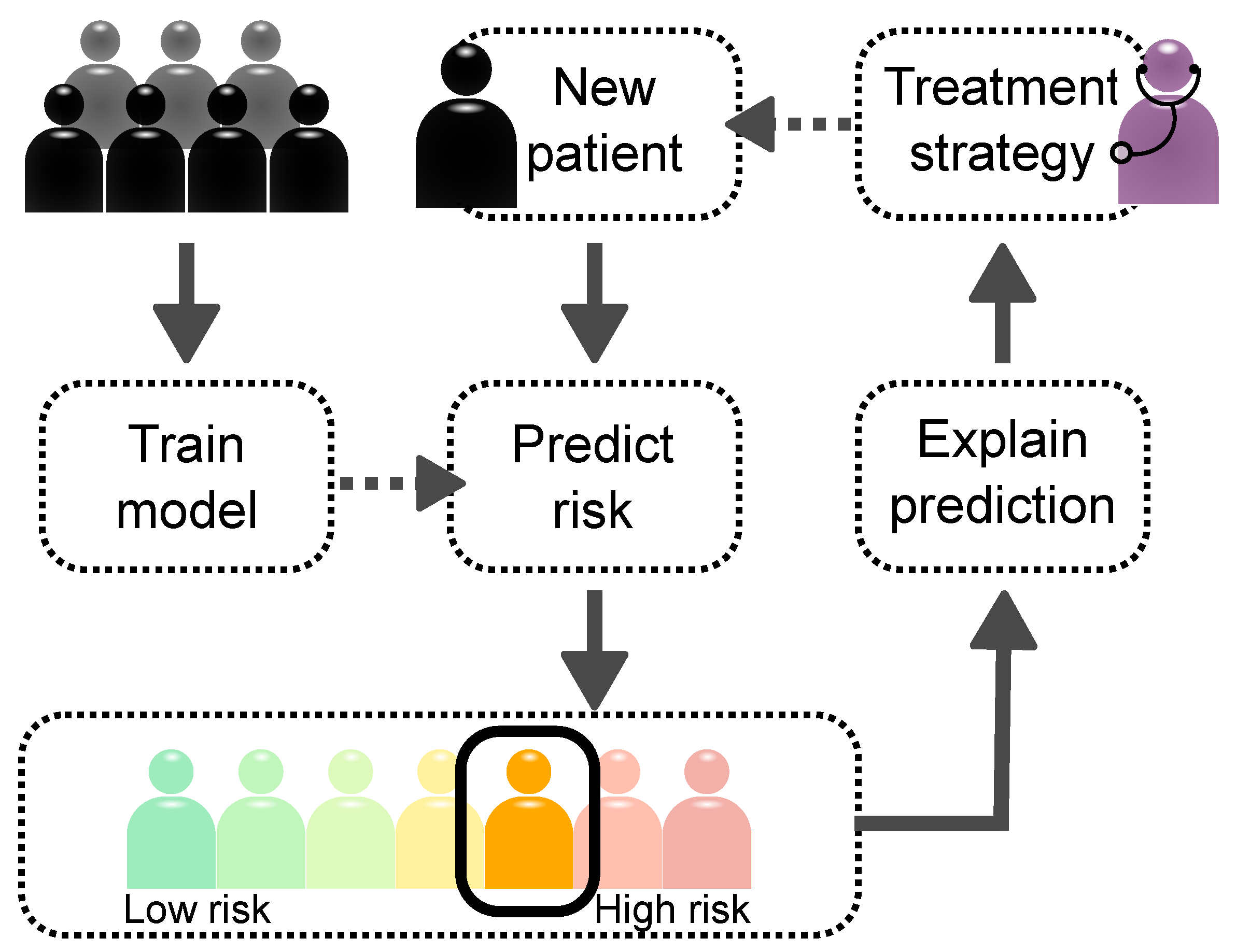
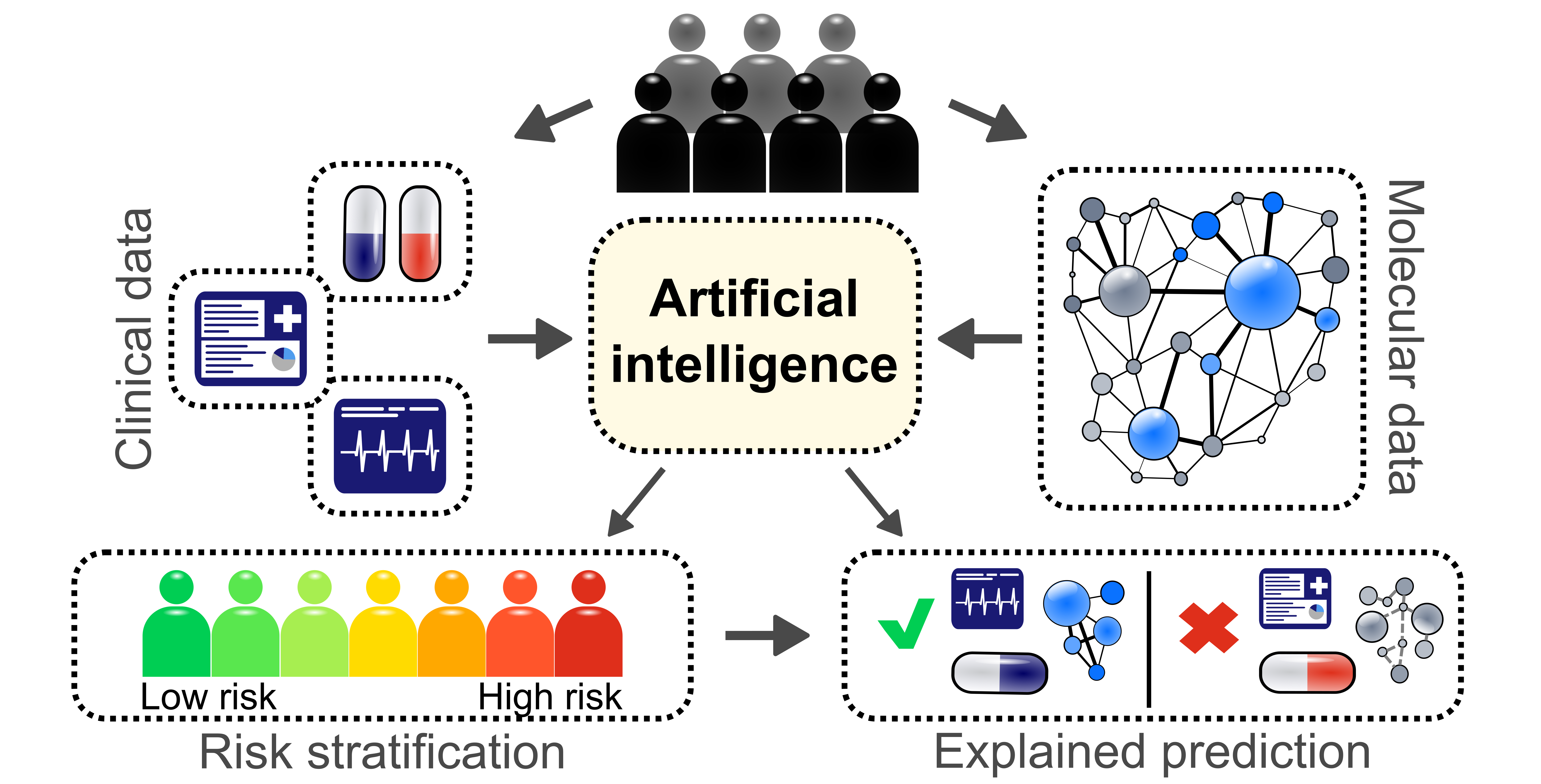
Cardiovascular diseases (CVD) annually take almost 18 million lives worldwide. Most lethal events occur months or years after the initial presentation. Indeed, many patients experience repeated complications or require multiple interventions (recurrent events). Apart from affecting the individual, this leads to high medical costs for society. Personalized treatment strategies aiming at prediction and prevention of recurrent events rely on early diagnosis and precise prognosis. Complementing the traditional environmental and clinical risk factors, multi-omics data provide a holistic view of the patient and disease progression, enabling studies to probe novel angles in risk stratification. Specifically, predictive molecular markers allow insights into regulatory networks, pathways, and mechanisms underlying disease. Moreover, artificial intelligence (AI) represents a powerful, yet adaptive, framework able to recognize complex patterns in large-scale clinical and molecular data with the potential to improve risk prediction. Here, we review the most recent advances in risk prediction of recurrent cardiovascular events, and discuss the value of molecular data and biomarkers for understanding patient risk in a systems biology context. Finally, we introduce explainable AI which may improve clinical decision systems by making predictions transparent to the medical practitioner.
Keywords: cardiovascular disease; coronary artery disease; genomics; proteomics; multi-omics; biomarkers; molecular networks; machine learning; AI; explainable artificial intelligence cardiovascular disease; coronary artery disease; genomics; proteomics; multi-omics; biomarkers; molecular networks; machine learning; AI; explainable artificial intelligence
Graphical Abstract