Review

Rutin as a Potential Therapeutic Agent for Multi-Organ Ischemia–Reperfusion Injury: From Multidimensional Mechanisms to Clinical Translation
1
Key Laboratory of Hunan Province for Integrated Traditional Chinese and Western Medicine on Prevention and Treatment of Cardio-Cerebral Diseases, College of Integrated Traditional Chinese Medicine and Western Medicine, Hunan University of Chinese Medicine, Changsha 410208, China
2
Key Laboratory of Vascular Biology and Translational Medicine, Medical School, Hunan University of Chinese Medicine, Changsha 410208, China
*
Authors to whom correspondence should be addressed.
These authors contributed equally to this work.
Molecules 2026, 31(7), 1070; https://doi.org/10.3390/molecules31071070
Submission received: 9 February 2026 / Revised: 10 March 2026 / Accepted: 13 March 2026 / Published: 24 March 2026
(This article belongs to the Special Issue Bioactive Molecules from Natural Sources and Their Functions)

Abstract

Ischemia–reperfusion injury (IRI) is a prevalent pathological process in clinical settings characterized by complex pathogenesis involving the interplay of oxidative stress, inflammation, mitochondrial dysfunction, and diverse cell death pathways. Fundamentally, IRI manifests as a complication arising from reperfusion therapies aimed at restoring blood flow following ischemia. Despite the existence of various therapeutic strategies, the development of effective interventions for IRI remains a significant challenge. Rutin, a low-molecular-weight flavonoid glycoside ubiquitously present in vegetables, fruits, and herbal medicines, exhibits promising therapeutic potential due to its pleiotropic biological activities, including antioxidant, anti-inflammatory, and cytoprotective effects against cell death. This review systematically elucidates the molecular mechanisms underlying the protective effects of rutin against IRI and synthesizes evidence from preclinical studies regarding its diverse modes of action. However, the clinical application of rutin is currently hampered by its relatively low bioavailability. Future research should prioritize the development of innovative pharmaceutical formulations to enhance its bioavailability, thereby fully unlocking its clinical translational value.

1. Introduction

Ischemia–reperfusion injury (IRI) is a pathophysiological process in which the restoration of blood supply to tissues or organs following a period of ischemia or hypoperfusion fails to recover function, and instead paradoxically exacerbates tissue injury, triggering severe inflammatory responses and dysfunction. Clinically ubiquitous and associated with high morbidity and mortality rates, IRI represents an inevitable secondary insult in various critical conditions, including recanalization for acute myocardial infarction, thrombolysis for ischemic stroke, organ transplantation (e.g., heart, liver, and kidney), major surgical procedures, and hemorrhagic shock [1,2]. The pathogenesis of IRI is multifactorial and complex, involving a burst of reactive oxygen species (ROS), mitochondrial dysfunction, inflammatory cytokine cascades, and various regulated cell death pathways such as apoptosis, pyroptosis, and ferroptosis. Collectively, these factors severely constrain the improvement of clinical prognosis in related major diseases [3]. Despite substantial advancements in modern reperfusion strategies—such as interventional therapies and thrombectomy—developing specific preventive and therapeutic measures targeting IRI itself remains a formidable challenge. Currently, there is a clinical paucity of targeted protective agents with defined efficacy and minimal side effects; existing interventions often yield limited outcomes and fail to effectively reverse microcirculatory disturbances and severe parenchymal cell injury. In this context, the identification of highly efficient and low-toxicity bioactive molecules from natural products has emerged as a pivotal direction in novel drug discovery. Rutin (also known as rutoside) is a natural flavonoid glycoside widely distributed in Sophora japonica, buckwheat, and various citrus fruits. In recent years, accumulating evidence indicates that rutin, owing to its superior antioxidant, anti-inflammatory, anti-apoptotic, and immunomodulatory properties [4], exhibits significant protective potential in IRI models across multiple organs—including the heart, brain, kidney, liver, intestine, and skeletal muscle. Consequently, it is increasingly recognized as a promising candidate agent for the prevention and treatment of reperfusion injury [1,5,6,7]. This review systematically summarizes research progress regarding the protective effects of rutin against IRI in various critical organs. Furthermore, it discusses current research limitations and future prospects for clinical application, aiming to provide novel insights for the clinical management of IRI.

2. Overview of the Biological Properties of Rutin

Rutin, a common secondary plant metabolite, appears as greenish-yellow needle-like crystals. It is variously known as rutoside, vitamin P, quercetin-3-O-rutinoside, or sophorin [8]. With a chemical formula of C27H30O16 and a molecular weight of 610.53, rutin belongs to the flavonol class and specifically constitutes the rutinoside (rhamnoglucoside) of quercetin. Structurally identified as 5,7,3′,4′-tetrahydroxyflavonol-3-rhamnoglucoside, it is hydrolyzed by gut microbiota into quercetin and subsequently metabolized into various downstream chemical products [9]. At room temperature, this compound manifests as yellow crystals with a melting point of approximately 178 °C. It possesses a bitter taste and is photosensitive, darkening upon exposure to light.
Similar to other flavonoids, rutin is widely distributed in various plant-based foods. Notably, the flower buds of Sophora japonica (Leguminosae), known as Huai Mi, contain up to 20% rutin [10]. It is also found in buckwheat, Ruta graveolens, jujube, hawthorn, ginkgo, wolfberry, and orange peel, as well as in medicinal herbs such as motherwort (Leonurus cardiaca), Bupleurum, Prunella vulgaris, aloe, and Gynostemma pentaphyllum [11]. As the human body cannot synthesize bioflavonoids, rutin must be obtained through dietary intake.
In animal models, rutin demonstrates a broad spectrum of physiological and pharmacological activities, including antioxidant [12], anti-aging [13], anti-inflammatory [14], neuroprotective [10,15,16], anti-diabetic [17], anti-cancer [18], anti-nociceptive [11,19], nephroprotective [20] and cardioprotective effects [12]. Furthermore, rutin delayed neurodegeneration in a rat model of Alzheimer’s disease [21].
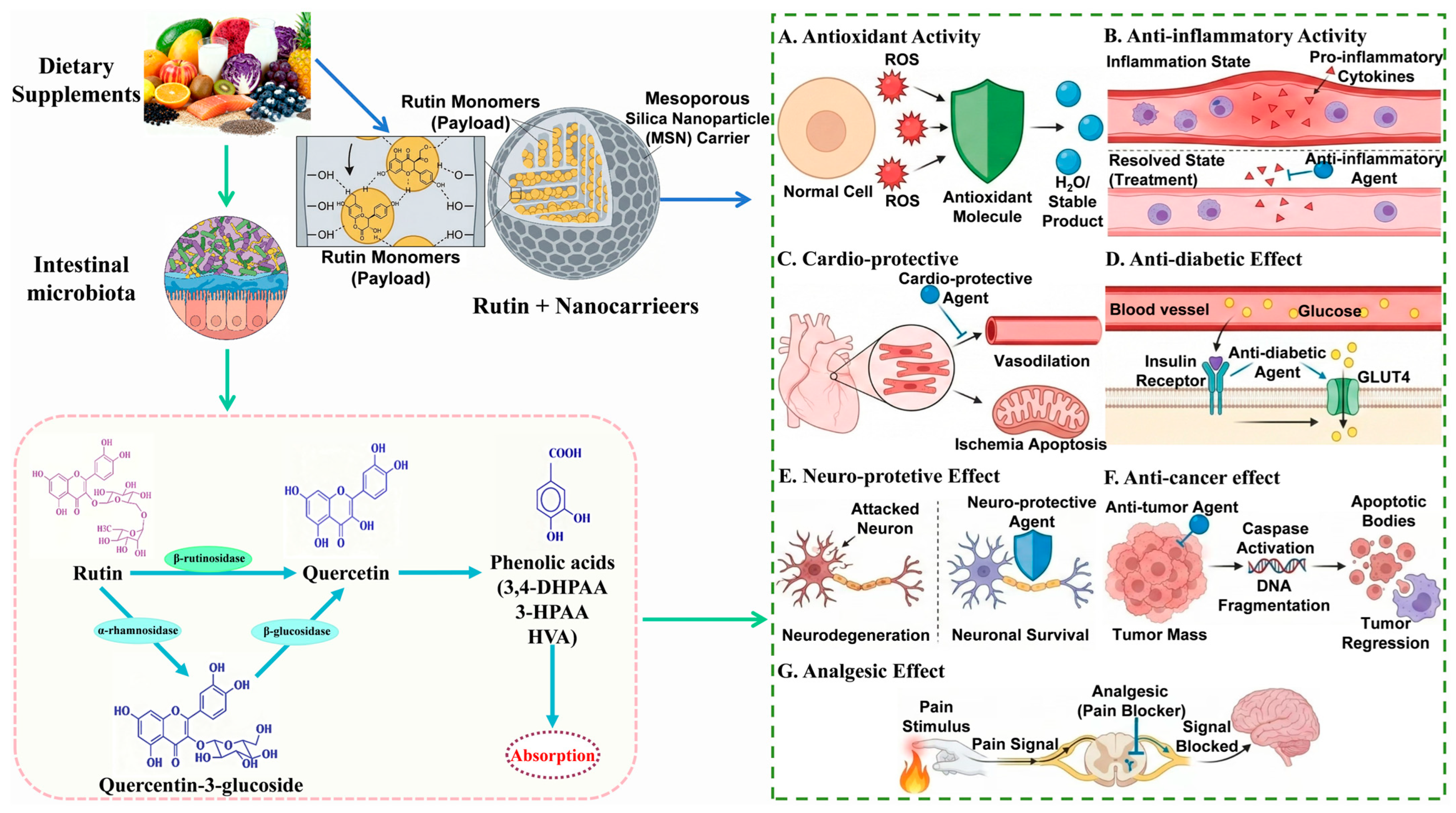
Despite its therapeutic potential, flavonoids generally exhibit low bioavailability. Following oral administration, rutin is not efficiently digested by intestinal enzymes. Instead, gut microbiota-derived glycosidases—specifically α-L-rhamnosidase and β-glucosidase—hydrolyze it into its aglycone form, quercetin, which is then absorbed into the systemic circulation [22]. Consequently, the biomedical application of rutin faces significant hurdles, including low solubility, poor absorption, limited bioavailability, short half-life, and rapid metabolism [23]. In recent years, advancements in nanotechnology have offered promising solutions to these limitations. Accordingly, various nano-formulation strategies have emerged, aiming to enhance the solubility, absorption, and overall therapeutic efficacy of rutin. These strategies are primarily categorized into two classes: the direct preparation of rutin as nanocrystals without auxiliary compounds, and the construction of composite nano-systems by combining rutin with materials such as proteins, polysaccharides, lipids, polymers, or metals [24,25]. A schematic representation of the natural sources, intestinal absorption, and pharmacological activities of rutin is shown in Figure 1.

3. Pathophysiological Mechanisms of IRI

IRI is a complex pathophysiological phenomenon characterized by the paradoxical exacerbation of tissue damage following the restoration of blood flow and oxygen supply to ischemic tissues [26,27]. It is a primary cause of organ dysfunction and transplantation failure [26,28]. The underlying mechanisms involve a complex interplay at both cellular and molecular levels, including ROS generation, inflammatory responses, cell death, and calcium overload [27].

3.1. Oxidative Stress

Oxidative stress is defined by a disequilibrium between oxidant production and antioxidant capacity [29]. During IRI, abrupt alterations in the tissue metabolic milieu serve as a pivotal driver affecting oxidative stress and mitochondrial dysfunction.

3.1.1. ROS

ROS are the primary mediators of damage in IRI, encompassing superoxide anions (O2−), hydroxyl radicals (OH), and hydrogen peroxide (H2O2). In eukaryotic cells, approximately 95% of ROS originate from electron leakage at mitochondrial respiratory chain complexes [29]. In ischemic tissues, nitric oxide (NO) reacts with superoxide anions to produce highly toxic peroxynitrite [29]. During the ischemic phase, hypoxia impairs the mitochondrial electron transport chain (ETC), leading to the accumulation of tricarboxylic acid (TCA) cycle precursors such as NADH and succinate [30]. Concomitantly, cytochrome c (Cyt c) is lost during ischemia from the mitochondrion. CL is indispensable for the activity of mitochondrial complexes I, III, and IV [31]. Upon reoxygenation during reperfusion, although the ETC attempts to re-establish function, it remains compromised due to the depletion of CL and Cyt c. The rapid oxidation of accumulated succinate by succinate dehydrogenase (SDH) in early reperfusion initiates reverse electron transport (RET), driving electrons retrogradely from coenzyme Q (CoQ) to Complex I. This RET causes the over-reduction in Complex I and electron leakage to molecular oxygen, generating massive amounts of O2− and H2O2, thereby triggering a ROS burst. Complex I is recognized as the most significant source of mitochondrial ROS generation during reperfusion [32]. ROS production is also mediated by xanthine oxidase (XO), which converts xanthine and hypoxanthine into uric acid while generating O2− and H2O2. Under hypoxic conditions, NADPH oxidase (NOX) activity increases, utilizing oxygen to produce O2− and H2O2. Furthermore, nitric oxide synthase (NOS) may become uncoupled due to the loss of tetrahydrobiopterin (BH4) during ischemia-hypoxia, leading to excessive ROS production [33]. Notably, clinical IRI may be driven by ‘reductive stress’ (i.e., NADH and NADPH accumulation) rather than traditional oxidative stress. This reductive stress is associated with the global activation of catabolic pathways (including glycolysis, fatty acid β-oxidation, autophagy, and glutaminolysis). These pathways generate excess reducing equivalents (NADH and FADH2) that exceed the oxidative capacity of the mitochondrial ETC or cytosolic lactate dehydrogenase (LDH), resulting in their accumulation [26].

3.1.2. Mitochondrial Dysfunction

Mitochondria are the central hubs for oxidative metabolism and energy generation. Under hypoxic conditions, inhibition of the ETC causes a sharp reduction in ATP synthesis, which subsequently inactivates membrane electrolyte transporters and disrupts ionic homeostasis. Calcium overload activates xanthine oxidase, leading to a large production of ROS. The ensuing accumulation of ROS further damages the ETC, dissipating the mitochondrial membrane potential and exacerbating ATP deficits. In the context of renal IRI (RIRI), pathological outcomes are closely tied to dysregulated mitochondrial dynamics (fusion/fission), biogenesis, and autophagy [34]. IRI shifts the dynamic balance toward excessive fission—a process mediated by dynamin-related protein 1 (DRP1)—leading to mitochondrial fragmentation, ROS buildup, and cell death. While IRI suppresses the fusion proteins OPA1 and MFN2, targeting DRP1 inhibition has proven effective in attenuating RIRI [35]. Moreover, IRI compromises mitochondrial biogenesis by downregulating the key transcriptional regulator PGC−1α [36]. Regarding quality control, IRI triggers mitophagy to clear damaged mitochondria [37]. This process occurs via the ubiquitin-dependent PINK1-Parkin pathway or through ubiquitin-independent receptors such as BNIP3, NIX, and FUNDC1 that bind directly to LC3. Loss of PINK1, PARK2, or BNIP3 hinders this protective clearance and worsens renal injury. Similarly, in hepatic IRI, upregulation of PCSK9 exacerbates liver damage by inhibiting PINK1-Parkin-mediated mitophagy [34]. This inhibition promotes the release of mitochondrial DNA (mtDNA), thereby activating the cGAS-STING/NLRP3 inflammatory axis. Targeting PCSK9 blockade thus presents a viable strategy to mitigate mitochondrial damage [38].

3.1.3. Imbalance of Antioxidant Defenses

Glutathione (GSH) is recognized as one of the most potent endogenous antioxidants within cells. In the context of hepatic IRI, the activity of γ-glutamyl transferase (γ-GT) is increased, driving the enhanced degradation of GSH. γ-GT hydrolyzes GSH into cysteinylglycine and glutamate. As a highly reactive thiol compound, cysteinylglycine initiates a redox cycle by reducing ferric iron (Fe3+) to ferrous iron (Fe2+). Subsequently, molecular oxygen oxidizes Fe2+ to generate O2−. This redox cycling results in elevated ROS levels, thereby exacerbating intracellular oxidative stress [39].

3.2. Inflammatory Response

Endothelial dysfunction driven by inflammasome activation, the release of pro-inflammatory cytokines and chemokines, and neutrophil infiltration constitutes a key pathophysiological mechanism of IRI. The initiation of this process is closely associated with mitochondrial injury, ROS accumulation, and pro-apoptotic signaling pathways [29].

3.2.1. Inflammasome Activation

The activation of the NLRP3 inflammasome is critical to the pathology of IRI [40]. The assembly and activation of the inflammasome are triggered when injured cells release endogenous damage-associated molecular patterns (DAMPs). Subsequently, NLRP3 recruits ASC and procaspase-1 to form the inflammasome complex, thereby initiating the mechanism of pyroptosis [41]. The generation of ROS and reactive nitrogen species (RNS) further promotes tissue inflammation and the activation of the NLRP3 complex. Additionally, the leakage of mtDNA into the cytosol can activate both the cGAS-STING and NLRP3 pathways [42]. Moreover, ischemia-driven succinate accumulation acts as a distinct signal governing NLRP3 inflammasome activation [43].

3.2.2. Release of Pro-Inflammatory Cytokines and Chemokines

The NF-κB signaling pathway acts as a central regulator of the inflammatory response in IRI, being universally activated across organs such as the heart, brain, liver, and kidney [29,44]. Once activated, NF-κB orchestrates the transcription of downstream genes and mediates the release of diverse pro-inflammatory cytokines. Crucially, NF-κB signaling functions as the essential priming step for NLRP3 inflammasome activation. Among the downstream effectors, TNF-α induces vascular endothelial injury and heightens capillary permeability, potentially compromising the integrity of the blood–brain barrier (BBB) [45]. Similarly, IL-6 is significantly elevated following renal IRI and propagates inflammatory signals via the IL-6/JAK/STAT3 axis [46]. IL-1β, predominantly derived from activated macrophages and monocytes, is a key mediator of sterile inflammation; it promotes leukocyte recruitment by upregulating endothelial adhesion molecules. Furthermore, macrophage-derived IL-1β engages STAT3 and NF-κB to drive the transcription of the angiogenic factor VEGF-A [47]. In contrast to these pro-inflammatory mediators, IL-10 functions as a protective anti-inflammatory cytokine. It suppresses macrophage activation and attenuates cytokine/chemokine production; consequently, IL-10 deficiency has been shown to aggravate AKI biomarkers, apoptosis, and inflammation in renal IRI models [48].

3.2.3. Neutrophil Infiltration and Endothelial Dysfunction

In the early phase of reperfusion, neutrophil activation triggers the release of various products that act as chemokines, facilitating the recruitment of additional leukocytes. Following this, neutrophils secrete ROS and proteases, notably cathepsin G, which induces morphological changes in cardiomyocytes (CMs) and dismantles focal adhesions. In pulmonary IRI specifically, neutrophils further aggravate tissue damage via mechanisms such as the formation of neutrophil extracellular traps (NETs) [49].
Endothelial dysfunction plays a critical role in IRI, characterized by reduced nitric oxide (NO) generation and the upregulation of adhesion molecules [27]. This dysfunction promotes leukocyte adhesion, precipitating the ‘no-reflow phenomenon’ and microvascular obstruction (MVO). MVO is driven by vasoconstriction and microthrombosis. Additionally, NF-κB activation is implicated in endothelial dysfunction [50].

3.3. Modes of Cell Death

IRI culminates in cell death, encompassing a spectrum of programmed and non-programmed modalities such as apoptosis, necrosis, pyroptosis, and ferroptosis.
While necrosis is distinguished by cellular swelling and membrane rupture, apoptosis—a programmed process—is marked by nuclear shrinkage and chromatin condensation [51]. Pyroptosis represents an inflammatory form of regulated cell death involving membrane pore formation and the release of pro-inflammatory cytokines (IL-1β/IL-18). The NLRP3 inflammasome serves as the core machinery for pyroptosis; specifically, activated Caspase-1 cleaves Gasdermin D (GSDMD), or Caspase-3 cleaves GSDME, creating pores that result in cell lysis and inflammation [52]. Ferroptosis, an iron-dependent form of cell death, is defined by the toxic accumulation of lipid peroxides, primarily due to glutathione peroxidase 4 (GPX4) dysfunction. Morphologically, it presents with mitochondrial atrophy, increased membrane density, and cristae reduction. Mechanistically, Fe2+ drives lipid peroxidation by generating ROS through the Fenton reaction and serving as a cofactor for lipoxygenases (LOXs) [53]. In the context of hepatic IRI, the GLP-1 receptor agonist liraglutide and its metabolite GLP-1(9-37) have been shown to mitigate injury by suppressing ferroptosis. This protection is mediated by the reduction in lipid peroxidation via the GSK3β/Nrf2 pathway and the limitation of iron overload via the SMAD1/5/9/Hepcidin/FTH axis [54]. In renal IRI, ferroptosis involves the upregulation of ACSL4, which is subject to negative regulation by HIF-α [55].

3.4. Other Key Pathogenic Mechanisms

3.4.1. Calcium Overload

IRI precipitates a disruption in calcium homeostasis, characterized by a pathological surge in intracellular calcium levels. Under hypoxic conditions, ATP depletion compromises the energy-dependent Na+/K+-ATPase, resulting in the retention of intracellular Na+. This ionic imbalance suppresses the activity of the Na+/H+ exchanger and the Na+/Ca2+ exchanger, thereby driving intracellular Ca2+ overload. This calcium excess exerts deleterious effects on mitochondria, manifesting as reduced ATP synthesis, dissipation of membrane potential, and the opening of the mitochondrial permeability transition pore (mPTP). Moreover, the accumulation of intracellular Ca2+ serves as a potent stimulus for oxidative stress and inflammasome activation [56].

3.4.2. Metabolic Reprogramming and Lactylation

During ischemia–reperfusion (IR), the accumulation of L-lactate drives protein lactylation—a post-translational modification defined by the attachment of lactyl groups to lysine residues. In MIRI, there is a specific post-reperfusion surge in the expression of Serpina3k (SA3K) and its lactylation at the K351 site, a modification that confers enhanced stability to the SA3K protein. Predominantly secreted by cardiac fibroblasts (FBs), lactylated SA3K exerts a paracrine protective effect on CMs, shielding them from apoptosis. Mechanistically, this process recruits the Reperfusion Injury Salvage Kinase (RISK) and Survivor Activating Factor Enhancement (SAFE) pathways [57,58]. Conversely, in renal IRI, a deleterious mechanism is observed involving Hexokinase 2 (HK2), the rate-limiting enzyme of glycolysis. Histone lactylation at H3K18 transcriptionally activates the HK2 promoter, creating a positive feedback loop that intensifies renal injury [59].

3.4.3. Gut Microbiota Dysbiosis and Intestinal Barrier Injury

In organ transplantation, IRI exerts a direct deleterious effect on the intestinal barrier, precipitating gut microbiota dysbiosis and heightening susceptibility to infection and rejection. Mechanistically, IRI triggers apoptosis in intestinal epithelial cells and downregulates key tight junction proteins such as Occludin and ZO-1. This disruption of barrier integrity enhances intestinal permeability, allowing for the translocation of toxins and microbes. Concurrently, IRI diminishes both IgA mRNA transcription and secretory IgA (sIgA) secretion, compromising mucosal immunity and facilitating bacterial translocation. In terms of the microbiome, IRI causes a significant reduction in microbial diversity, shifting the community profile towards dysbiosis. This is manifested by a decrease in beneficial genera (e.g., Bifidobacterium, Lactobacillus) alongside an overgrowth of opportunistic pathogens (e.g., Enterococcus, Enterobacteriaceae). This microbial imbalance ultimately results in reduced production of protective short-chain fatty acids (SCFAs) [28].

3.4.4. Regulation by Non-Coding RNAs (ncRNAs)

ncRNAs are exemplified by long non-coding RNAs (lncRNAs), microRNAs (miRNAs), and circular RNAs (circRNAs). Recent evidence underscores the pivotal role of ncRNAs in modulating the pathogenesis of various organ disorders, including IRI [60]. Specifically, the circular RNA circMIRIAF is upregulated in myocardial IRI (MIRI) [61]. Acting as a competitive endogenous RNA (ceRNA), circMIRIAF sponges miR-544, resulting in the upregulation of WDR12. WDR12 subsequently activates the Notch1 signaling pathway, which intensifies oxidative stress and inflammation, ultimately aggravating MIRI.
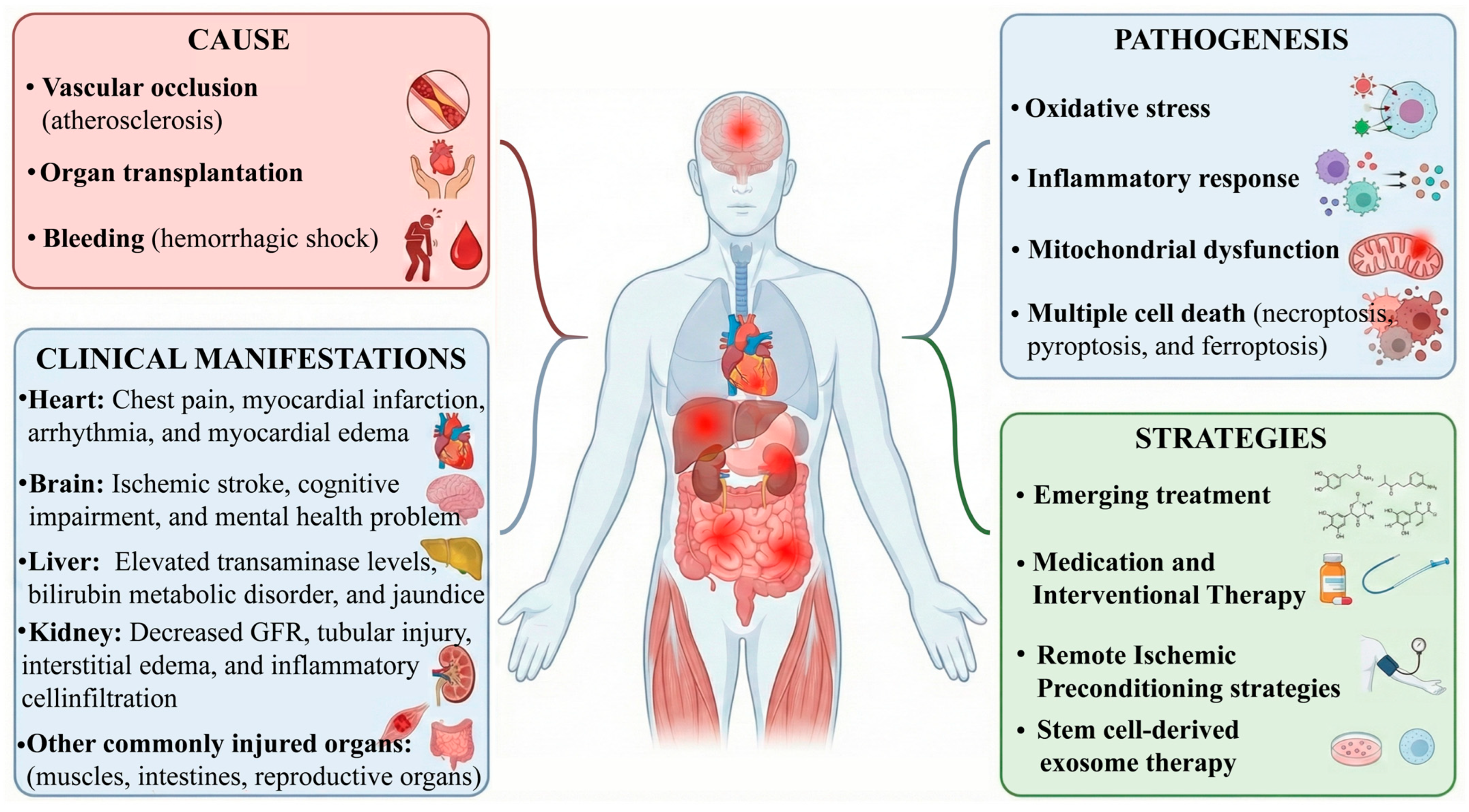
The pathophysiology of IRI is underpinned by a complex regulatory network involving multifaceted interactions and multiple signaling pathways. Contemporary research is moving beyond the traditional focus on early-stage oxidative damage and inflammation, delving into more refined molecular mechanisms such as regulated cell death, mitochondrial quality control, and gene expression networks. These insights provide a theoretical foundation for future precision medicine interventions. Additionally, novel nanoparticle strategies tailored to the properties of the BBB are paving the way for advanced therapeutic approaches in cerebral ischemia–reperfusion injury (CIRI) [62,63]. Cause, pathogenesis, clinical manifestations, and treatment strategies of IRI are shown in Figure 2.

4. Organ-Specific Protective Effects of Rutin Against IRI

4.1. Protective Effects of Rutin in CIRI

As shown in Table 1, research investigating Rutin and its complexes in the context of CIRI has consistently demonstrated clear neuroprotective efficacy. These benefits are orchestrated through a multifaceted approach involving antioxidant, anti-inflammatory, and anti-apoptotic activities, alongside BBB stabilization and the modulation of critical signaling cascades. The therapeutic potential of Rutin was highlighted as early as 1995 by Ortolani et al. in stroke patients [64]. By 2005, Lao et al. reported that Sophora japonica—a rich source of Rutin—reduced cerebral infarct volume and neurological deficits in rats, attributed to the suppression of microglial activation, IL-1β release, and apoptosis [64]. Subsequent investigations (2007–2009) centered on neuronal survival and cognitive preservation. Rutin was shown to reverse spatial memory impairment and inhibit neuronal death in the hippocampal CA1 region [65]. In a transient MCAO model, Rutin pretreatment bolstered antioxidant defenses, significantly elevating the activities of GPx, GR, CAT, GSH and SOD, while reducing levels of TBARS, H2O2, and protein carbonyls (PCs) compared to untreated controls [66]. Further exploration into mechanistic pathways revealed potent anti-inflammatory properties. For instance, Rutin was found to lower serum pro-inflammatory cytokines (TNF-α, IL-1β) and myeloperoxidase (MPO) in IRI models [67,68]. In a 2014 photothrombotic ischemia model, Rutin attenuated BBB disruption and improved neurological outcomes by suppressing matrix metalloproteinase-9 (MMP-9) [69]. Similarly, in a 2016 subarachnoid hemorrhage (SAH) model, Rutin mitigated brain edema and BBB damage, potentially by inhibiting the RAGE-NF-κB axis [70]. Similarly, Troxerutin and Troxerutin-Cerebroprotein Hydrolysate Injections (TCHIs) have been found to maintain BBB integrity and mitigate CIRI through antioxidant, anti-inflammatory, and anti-cell death pathways [71,72,73,74]. In 2018, using an ovariectomized (OVX) rat CIRI model, Rutin treatment was shown to upregulate the levels of activated estrogen receptor α (ERα), ERβ, brain-derived neurotrophic factor (BDNF), nerve growth factor (NGF), tropomyosin receptor kinase A (TrkA), TrkB, and phosphorylated cAMP response element-binding protein (p-CREB) in the hippocampus and cerebral cortex. The protective effects were partially abolished by the endoplasmic reticulum antagonist ICI182780, suggesting that Rutin pretreatment ameliorates CIRI in OVX rats via ER-mediated BDNF-TrkB and NGF-TrkA signaling [5]. Additionally, Rutin enhanced the viability of PC12 neurons under serum/glucose deprivation (SGD) conditions, reducing ROS production and lipid peroxidation. It also inhibited apoptosis by downregulating pro-apoptotic proteins (Bax, caspase-3, caspase-9) and upregulating the anti-apoptotic protein Bcl-2 [75]. Regarding pyroptosis, Troxerutin (TXN) was found to downregulate the expression of pyroptosis-related proteins (NLRP3, caspase-1, ASCI) and Toll-like receptor 3 (TLR3), while reducing inflammatory markers (IL-6, IL-4, TNF-α), thereby improving IRI outcomes [76]. Recent studies have focused on innovative delivery systems and refined molecular mechanisms. A 2023 study developed a Rutin-based three-target self-assembling nanodelivery system (SHR) for ischemic stroke. This system demonstrated high affinity for the ACE2 receptor, achieving vascular normalization and anti-inflammatory effects via the activation of ACE2/Ang1-7 signaling, which effectively reduced neurological deficits and infarct size in tMCAO rats [77]. In the same year, another study found that the co-administration of Rutin and Lithium exerted synergistic protective effects in a global CIRI rat model. This combination significantly attenuated the mRNA transcription of antioxidant markers (Hmox1 and Nqo1) and pro-inflammatory markers (IL-2, IL-6, and IL-1β). Mechanistically, this was achieved by inhibiting GSK-3β phosphorylation, upregulating downstream β-catenin and Nrf2 expression, suppressing NF-κ-induced inflammation, and enhancing the expression of key neuroprotective proteins such as CREB and BDNF [78]. In summary, Rutin exerts comprehensive neuroprotection in CIRI through multi-target mechanisms, holding significant promise for stroke therapy, especially within the realms of nanomedicine and combination regimens.

4.2. Protective Effects of Rutin in Myocardial Ischemia–Reperfusion Injury (MIRI)

The cardioprotective effects of the flavonoids Rutin and Troxerutin against MIRI have been extensively investigated, primarily utilizing rat models and H9c2 CMs for both in vivo and in vitro studies [79]. Early research confirmed that Rutin protects isolated rat hearts from MIRI via antioxidant mechanisms [80]. Specifically, Rutin was shown to significantly reduce the percentage of left ventricular necrosis (PLVN) and lipid peroxidation products, while bolstering myocardial antioxidant defenses, including catalase (CAT) and reduced GSH [81]. Mechanism-focused studies from the same period demonstrated that Rutin preserves myocardial contractile function and exerts anti-apoptotic effects by elevating the Bcl-2/Bax ratio and suppressing active Caspase-3. In an in vitro H9c2 cell injury model, these protective benefits were shown to be dependent on the ERK1/2 and PI3K/Akt signaling pathways, as evidenced by the blocking effects of specific inhibitors [82]. A 2011 study indicated that Rutin limited infarct size in both normal and diabetic rats. Notably, the cardioprotective effect of Rutin was partially abolished by the pre-administration of L-NAME, a NO synthase inhibitor, suggesting a partial role for NO in this mechanism [83]. Research in 2012 focused on hemodynamics, demonstrating that Rutin possesses potent free radical scavenging activity and protects hemodynamic function in isolated rat hearts via antioxidant activity. Rutin significantly reduced left ventricular end-diastolic pressure (LVEDP) and markedly improved the maximum rate of rise/fall of left ventricular pressure (±dP/dt), while increasing superoxide dismutase (SOD) activity in both H9c2 cells and primary CMs [84]. In 2015, continuous oral administration of Troxerutin was shown to prevent MIRI in isolated hearts from healthy and diabetic rats. Troxerutin significantly lowered levels of cardiac troponin I (cTnI), a marker of myocardial injury, and reduced tissue apoptosis. This mechanism was linked to the inhibition of GSK-3β activity via phosphorylation [85]. Concurrently, another study examining Rutin’s protection in isolated rat hearts found that it attenuated infarct size and reduced oxidative stress (indicated by decreased TBARS and increased GSH). Interestingly, this study showed that rutin significantly reduced IRI-induced Na+/K+-ATPase activity. The effect of rutin is likely similar to that of ouabain (a selective Na KT ATPase inhibitor), which acts as a buffer against calcium overload during ischemia through other signaling pathways or by initiating pretreatment protection [86]. Two studies in 2017 further established the mechanism of action for Troxerutin. Troxerutin pretreatment was confirmed to mediate cardioprotection via the PI3K/Akt pathway, as the inhibitor LY294002 blocked its protective effects [87]. Furthermore, both Troxerutin pretreatment and post-ischemic conditioning significantly reduced the post-IRI inflammatory response, including the suppression of pro-inflammatory cytokines (TNF-α and IL-1β) and ICAM-1 activity [88]. A 2018 study also confirmed Troxerutin’s significant anti-arrhythmic and anti-inflammatory effects (lowering TNF-α, IL-1β, and ICAM-1) in a diabetic rat model [89]. At the molecular level, research in 2019 revealed that Troxerutin attenuated apoptosis in rat hypoxia/reoxygenation (H/R) cardiomyocyte models and rat IRI models by inhibiting miR-146a-5p transcription [90]. Another 2019 study found that Rutin alleviated H/R injury and oxidative stress by upregulating SIRT1 expression, an effect blocked by SIRT1 inhibitors [91]. In 2020, the mechanism of Troxerutin was further refined, showing it mitigates oxidative stress and inflammation by enhancing the PI3K/AKT/HIF-1α signaling pathway [92]. The latest research reveals that Rutin protects the myocardium by targeting the NF-κB/NLRP3/pyroptosis pathway. Rutin reduced infarct size, oxidative stress, and the release of inflammatory factors (TNF-α, IL-1β, IL-18). It inhibited pyroptosis by downregulating the expression of NF-κB, NLRP3, active Caspase-1, and cleaved GSDMD protein. The abolition of Rutin’s protection by an NLRP3 agonist reaffirmed the central role of this pathway [1]. The protective effects of Rutin in MIRI are shown in Table 2.

4.3. Protective Effects of Rutin in Hepatic IRI (Transplantation and Surgical Models)

Rutin demonstrated multifaceted mechanisms and therapeutic implications in metabolic dysfunction-associated fatty liver disease (MAFLD) [93]. A 2007 study confirmed that Rutin significantly attenuates hepatic I/R injury in rats, with mechanisms involving antioxidant activity and the modulation of the DDAH/NOS pathway. Rutin treatment normalized elevated liver injury markers (ALT and AST), inhibited lipid hydroperoxide (LOOH) formation and DNA fragmentation, and replenished thiol group (RSH) levels [7]. In 2009, a subsequent study investigated the efficacy of the co-administration of Rutin and L-arginine. The results indicated that this combined treatment was more effective in mitigating liver injury—as evidenced by elevated ALT/AST activities—than either Rutin or L-arginine monotherapy. The protective effect of this combination was associated with the significant induction of heme oxygenase-1 (HO-1) expression and the inhibition of iNOS activity, suggesting that HO-1 induction may be one of the mechanisms underlying its beneficial effects [94]. Shifting focus to distant organ injury, a 2023 study examined oxidative damage in the lungs induced by hepatic IRI. The findings demonstrated that Rutin significantly prevented lung injury and exerted antioxidant and anti-inflammatory protection by reducing malondialdehyde (MDA) and MPO—an indicator of polymorphonuclear leukocyte (PMNL) activation—in both blood and lung tissues, while increasing total glutathione (tGSH) levels. The study concluded that Rutin holds potential for preventing distant organ (lung) injury caused by hepatic IRI [7]. The Protective effects of Rutin in hepatic IRI is shown in Table 3.

4.4. Protective Effects of Rutin in Renal IRI

Accumulating evidence substantiates the protective role of Rutin in a spectrum of renal injury models, encompassing renal IRI, obstructive nephropathy, and drug-induced or septic renal damage. The mechanisms underpinning this protection are multifaceted, involving the scavenging of ROS, inhibition of the NF-κB and TGF-β/Smad signaling axes, suppression of inflammation and apoptosis, and the enhancement of mitochondrial function [96,97,98]. Clinically, Rutin treatment consistently correlates with reduced serum creatinine and blood urea nitrogen (BUN) levels, alongside ameliorated histopathological changes. In the specific context of IRI, Rutin has demonstrated robust efficacy. Korkmaz et al. (2010) utilized a rat model (unilateral nephrectomy + 45 min ischemia/3 h reperfusion) to show that intraperitoneal Rutin (1 g/kg) significantly attenuated serum creatinine, BUN, and LDH, while restoring renal MnSOD activity and GSH levels, thereby mitigating oxidative damage [99]. Building on this, their 2013 study identified the inhibition of nitrosative stress as a key mechanism, observing that Rutin suppressed iNOS activity, 3-nitrotyrosine (3-NT) formation, and plasma NO metabolite/cGMP levels [100]. In 2015, Muthuraman et al. established an isolated rat kidney IRI model using a Langendorff perfusion system. Following oral administration of Rutin (100 mg/kg) for five days, results showed significantly reduced levels of creatinine, urea, and creatine kinase (CK) in the perfusate. The study indicated that Rutin inhibited Na+-K+-ATPase activity, reduced TBARS generation, and restored GSH levels, suggesting protection through antioxidant activity and the modulation of ion pump activity [101]. In 2022, Güzel et al. employed a rat model of 30 min renal ischemia and 1 h reperfusion with Rutin pretreatment (500 mg/kg, i.g.) [6]. Rutin significantly decreased serum BUN, urea, and TNF-α levels, reduced total oxidant status (TOS) and the apoptosis index in renal tissue, and improved histopathological outcomes, thereby demonstrating protection via anti-inflammatory, antioxidant, and anti-apoptotic mechanisms. Most recently, in 2024, Feng et al. developed Rutin-loaded polydopamine nanoparticles (PPR NPs). Intravenous injection in a mouse IRI model showed that PPR NPs could target the kidney, scavenge ROS, repair mitochondrial function, and inhibit ferroptosis, significantly improving renal function and histological damage. This highlights the innovative therapeutic potential of Rutin nanoformulations in IRI [102]. Collectively, these findings underscore Rutin’s potent renoprotective potential in IRI through a complex network of antioxidant, anti-inflammatory, and anti-ferroptotic mechanisms, paving the way for future clinical translation. The protective effects of Rutin in renal IRI are shown in Table 4.

4.5. Protective Effects of Rutin in IRI of Other Organs

Rutin exerts comprehensive protective effects against IRI across multiple organ systems—including the testes, ovaries, gastric mucosa, skeletal muscle, and retina—mediated by its antioxidant, anti-inflammatory, and anti-apoptotic activities. Highlighting its therapeutic potential in male infertility, studies in rat testicular IRI models demonstrate that Rutin significantly alleviates oxidative stress and tissue damage [103,104]. This is achieved by scavenging ROS, reducing MDA levels, and boosting the activity of endogenous antioxidant enzymes (SOD and CAT), leading to improved long-term spermatogenic function [103,105]. Similarly, Rutin exerts beneficial effects on the female reproductive system [106]. In ovarian IRI models, Rutin significantly downregulated MDA levels, TNF-α and IL-1β levels, and COX-2 activity, while elevating tGSH levels and COX-1 activity in ovarian [107].
In the context of the digestive system, Rutin provides dose-dependent protection against gastric mucosal injury [108]. Its mechanism involves antioxidant activity (reduction in MDA), the inhibition of neutrophil infiltration (reduced MPO activity), and the modulation of the NOS/NO pathway—specifically, the maintenance of constitutive NOS (cNOS) activity and the inhibition of inducible NOS (iNOS) [109].
Rutin exerts multifaceted protective effects on skeletal muscle by regulating oxidative stress, inflammation, and mitochondrial biogenesis via the activation of the AMPK/PGC-1α pathway. These molecular actions translate into improved muscle architecture, augmented exercise capacity, and reduced fatigue in both aging and injured states [108,110,111,112]. In the specific context of skeletal muscle IRI, Rutin treatment significantly lowers serum injury markers (CPK and LDH). This protection is mediated by the suppression of oxidative stress (enhancing total antioxidant status) and inflammation (reducing TNF-α, IL-1β, IL-6), as well as the inhibition of leukocyte recruitment via the downregulation of adhesion molecules (E-selectin, L-selectin, and ICAM-1) [2]. Furthermore, the enzyme-flavonoid complex Phlogenzym® (containing Rutin, trypsin, and bromelain) has been shown to improve microvascular hemodynamics and prevent lipid peroxidation (plasma MDA elevation) in a rabbit model of IRI [113].
Regarding ocular neuroprotection, Rutin dose-dependently preserves the viability of retinal ganglion cells (RGCs) in in vitro H/R models. Mechanistically, Rutin drives microglial polarization toward the anti-inflammatory M2 phenotype and impedes the JAK/STAT3 signaling axis by selectively inhibiting JAK1 phosphorylation. This modulation effectively suppresses the secretion of key pro-inflammatory cytokines, including TNF-α and IL-6 [114]. The protective effects of Rutin in IRI of other organs are shown in Table 5.

5. Molecular Mechanisms Underlying Rutin-Mediated Protection Against IRI

Rutin and its derivative, Troxerutin, have demonstrated broad-spectrum protective effects across multiple organ IRI models, encompassing vital organs such as the brain, heart, kidney, and liver. These protective effects stem from the multidimensional regulation of complex molecular networks, including the inhibition of oxidative stress, the attenuation of inflammatory responses, the blockade of apoptosis and cell death, and the modulation of various critical signaling pathways. Furthermore, recent studies have revealed that Rutin can specifically target mitochondrial dysfunction and novel cell death pathways—such as pyroptosis and ferroptosis—providing a more precise theoretical basis for its clinical application.

5.1. Modulation of Oxidative Stress

The core mechanism underlying Rutin’s protective efficacy against IRI pivots on its robust antioxidant capability. Specifically, this action encompasses the direct scavenging of ROS, the upregulation of endogenous antioxidant defenses, and the modulation of nitrosative stress.

5.1.1. Direct Scavenging and Inhibition of ROS Generation

Rutin has been confirmed to possess potent free radical scavenging activity. Across IRI models involving the brain, myocardium, kidney, liver, testes, ovaries, stomach, and skeletal muscle, Rutin significantly lowers the levels of lipid peroxidation products, such as MDA and thiobarbituric acid reactive substances (TBARS) [2]. Furthermore, in the context of CIRI, Rutin has been shown to reduce H2O2 and PC levels [66]. Of particular note in renal IRI, Rutin-loaded polydopamine nanoparticles (PPR NPs) have shown the capacity to specifically target renal tissue and scavenge mitochondrial ROS (mitoROS), consequently lowering the TOS [102].

5.1.2. Activation of Endogenous Antioxidant Systems

Rutin possesses the capacity to restore and enhance the activity of endogenous antioxidant enzymes. In the context of cerebral IRI, Rutin significantly elevates the activities of glutathione peroxidase (GPx), glutathione reductase (GR), CAT, and SOD [1,67,103]. In myocardial tissue, Rutin increases SOD activity and improves the status of CAT and reduced GSH [86]. In renal IRI, Rutin facilitates the restoration of manganese superoxide dismutase (MnSOD) activity and GSH levels [99]. Regarding hepatic IRI, rutin exerts protective effects by replenishing thiol group (RSH) levels and increasing tGSH concentrations [95]. Furthermore, in testicular and ovarian IRI models, Rutin significantly boosts SOD and CAT activities while elevating tGSH levels [105,109].

5.1.3. Modulation of Nitrosative Stress

Rutin mitigates nitrosative stress through the differential modulation of NOS isoforms. In the context of CIRI, Rutin orchestrates NOS activity by downregulating neuronal NOS (nNOS) and iNOS, while conversely upregulating endothelial NOS (eNOS) [74]. This protective regulatory pattern is also observed in renal IRI, where Rutin significantly suppresses iNOS activity and limits 3-NT formation, thereby conferring renoprotection [100]. In hepatic IRI, Rutin modulates the DDAH/NOS axis to inhibit iNOS and induce eNOS [7]. Furthermore, in gastric mucosal IRI, Rutin acts to preserve the activity of cNOS while concurrently inhibiting iNOS activity [109].

5.2. Inhibition of Inflammatory Responses

Rutin attenuates IRI-induced tissue damage by suppressing inflammatory responses via multiple pathways—a therapeutic effect validated across diverse organ systems including the heart, brain, kidney, ovary, skeletal muscle, and retina.

5.2.1. Regulation of Inflammatory Mediators and Cytokines

Generally, Rutin treatment results in a marked reduction in post-IRI inflammation. Specifically, in the context of CIRI, Rutin decreases serum concentrations of the pro-inflammatory cytokines TNF-α and IL-1β, reduces MPO levels, and lowers IL-6 [71]. Similarly, in MIRI, Rutin or Troxerutin inhibits the activity of TNF-α and IL-1β while downregulating IL-6 and IL-18 [1]. This anti-inflammatory profile extends to renal and ovarian IRI, where Rutin significantly lowers TNF-α and IL-1β levels [107]. In skeletal muscle IRI, Rutin reduces the release of inflammatory factors such as TNF-α and IL-1β, and IL-6 [2]. Finally, in retinal IRI, Rutin suppresses the release of pro-inflammatory factors including TNF-α and IL-6 [114].

5.2.2. Inhibition of Inflammatory Cell Recruitment and Adhesion Molecules

Rutin confers tissue protection primarily by suppressing the recruitment and activation of inflammatory cells. In the context of cerebral IRI, it lowers pathological levels of MMP-9, downregulates adhesion molecules (ICAM-1 and ICAM-2), and exerts an inhibitory effect on microglial activation [69]. Regarding hepatic IRI, Rutin acts to prevent secondary distant organ injury—specifically in the lungs—by reducing MPO levels. A similar mechanism is observed in gastric mucosal IRI, where Rutin impedes neutrophil infiltration as evidenced by decreased MPO activity [95]. In skeletal muscle IRI, Rutin effectively blocks leukocyte adhesion and infiltration through the downregulation of E-selectin, L-selectin, and ICAM-1 [2]. Furthermore, in retinal IRI, Rutin facilitates the polarization of microglia toward the anti-inflammatory M2 phenotype, thereby actively resolving inflammation [114].

5.3. Attenuation of Apoptosis and Cell Death

Rutin confers robust cytoprotection by regulating apoptosis-associated genes, blocking the mitochondrial intrinsic apoptotic pathway, and suppressing emerging cell death modalities, including pyroptosis and ferroptosis.

5.3.1. Regulation of Canonical Apoptotic Pathways

It exerts a significant anti-apoptotic effect across diverse organ systems. Mechanistically, in both myocardial and cerebral IRI models, Rutin shifts the apoptotic balance toward survival by upregulating the anti-apoptotic protein Bcl-2 and downregulating the pro-apoptotic protein Bax, thereby increasing the Bcl-2/Bax ratio [75,82]. Concurrently, it reduces the cleavage of active Caspase-3 and Caspase-9. In the specific context of cerebral IRI, Rutin further alleviates DNA damage and arrests apoptosis via the downregulation of p53 expression [75,82].

5.3.2. Inhibition of Pyroptosis and Ferroptosis

Recent mechanistic investigations into Rutin have pivoted toward its role in suppressing inflammasome-mediated cell death. In models of myocardial and cerebral IRI, Rutin exerts protective effects by targeting the NF-κB/NLRP3/pyroptosis axis [1,76]. Mechanistically, Rutin mitigates pyroptosis by downregulating the expression of NLRP3, active Caspase-1, and cleaved GSDMD. In parallel, Troxerutin improves outcomes in CIRI by downregulating ASC and TLR3, thereby exerting anti-pyroptotic activity [76]. Regarding renal IRI, Rutin-loaded nanoparticles (PPR NPs) have been shown to suppress ferroptosis, a novel cell death modality, via the upregulation of GPX4 [102].

5.4. Modulation of Key Signaling Pathways

At the molecular level, Rutin mediates protective effects by activating cell survival signaling pathways, suppressing inflammatory cascades, and regulating hormone- and metabolism-related pathways.

5.4.1. Activation of Cell Survival Signaling Pathways

In the context of MIRI, the protective effects of Rutin are achieved through the activation of the ERK1/2 and PI3K/Akt signaling pathways [82]. Similarly, Troxerutin mediates cardioprotection via the PI3K/Akt axis and enhances the PI3K/Akt/HIF-1α signaling pathway to mitigate oxidative stress and inflammation [92]. In both myocardial and cerebral tissues, Troxerutin functions by phosphorylating GSK-3β, thereby inhibiting its activity [78,85]. In the brain, the co-administration of Rutin and Lithium upregulates downstream Nrf2 protein expression by inhibiting GSK-3β phosphorylation [78]. In skeletal muscle, Rutin activates the AMPK/PGC-1α pathway, thereby enhancing mitochondrial biogenesis [110].

5.4.2. Inflammatory and Protective Transcription Factor Pathways

Rutin exerts significant regulatory control over the NF-κB pathway. It downregulates NF-κB expression in the myocardium and kidney [96], while in the brain, it potentially attenuates inflammation by inhibiting the RAGE-NF-κB signaling axis [70]. Regarding antioxidant signaling, the synergistic co-administration of Rutin and Lithium in cerebral IRI potentiates downstream Nrf2 protein expression [78]; similarly, Rutin induces HO-1 expression in hepatic tissues [94]. Furthermore, in retinal IRI, Rutin impedes the JAK/STAT3 signaling cascade via the selective inhibition of JAK1 phosphorylation, effectively suppressing the release of pro-inflammatory cytokines [114].

5.4.3. Estrogen Receptor-Mediated Neuroprotection

In the context of CIRI in OVX rats, Rutin has been shown to elevate the levels of activated estrogen receptors, specifically ERα and ERβ [5]. Acting through ER-mediated signaling cascades, Rutin stimulates the BDNF-TrkB and NGF-TrkA axes, leading to the upregulation of key neuroprotective proteins such as CREB and BDNF.
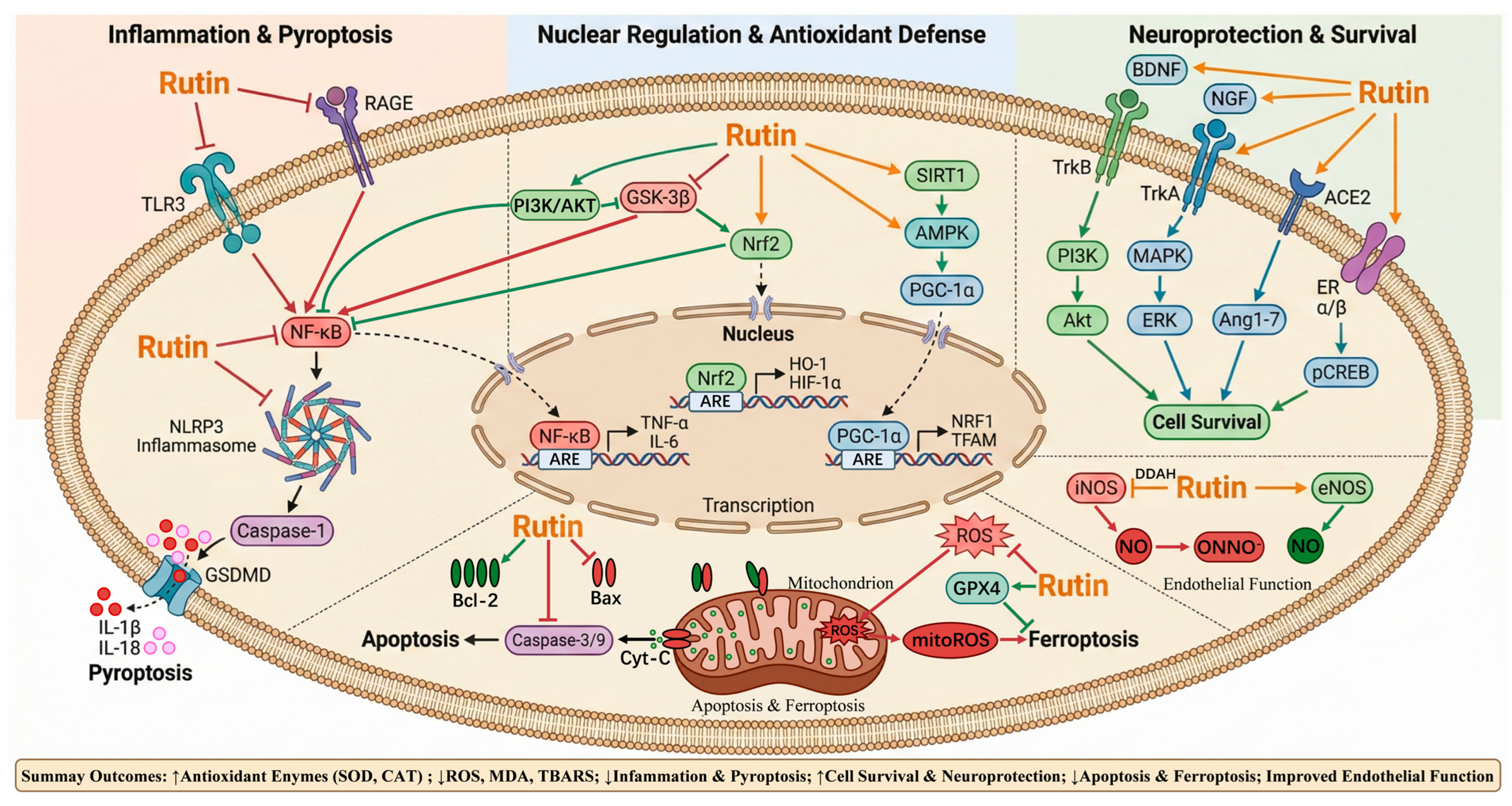
In summary, Rutin exerts protection against IRI through a mechanism that is as complex as it is comprehensive. Acting as a versatile ‘molecular toolkit,’ it orchestrates a multifaceted defense by simultaneously triggering the cell’s ‘firefighting’ capacity (antioxidant activity) and ‘emergency response’ systems (anti-apoptotic and anti-inflammatory regulation). This dual approach effectively mitigates the ‘double hit’ of ischemia–reperfusion, ensuring the maximal preservation of cellular and organ architecture and function. The main mechanism of rutin in preventing IRI is shown in Figure 3.

6. Challenges and Future Perspectives

Rutin, a potent natural flavonoid, demonstrates substantial clinical prospects and therapeutic efficacy in protecting a broad spectrum of organs—including the kidney, heart, brain, liver, testes, ovaries, and skeletal muscle—from IRI. The field is currently witnessing a paradigm shift toward advanced delivery systems and the refinement of molecular targets. In the context of renal IRI, the development of Rutin-loaded polydopamine nanoparticles (PPR NPs) represents a significant breakthrough. These nanoparticles effectively target renal tissue, scavenge ROS, repair mitochondrial function, and suppress ferroptosis, underscoring the potential of Rutin nano-formulations [102]. Similarly, for CIRI, a three-target self-assembling nanodelivery system (SHR) has been engineered to activate the ACE2/Ang1-7 axis, facilitating vascular normalization and anti-inflammatory responses [77]. Such cutting-edge delivery platforms are poised to surmount the limitations of bioavailability and targeting specificity inherent in conventional administration. In parallel, combination therapies have emerged as a promising strategy for synergistic protection. Notably, the co-administration of Rutin and Lithium has been shown to markedly reduce inflammatory markers in CIRI via GSK-3β inhibition and Nrf2 upregulation [78].
Mechanistically, Rutin’s profile is becoming increasingly well-defined: it targets the NF-κB/NLRP3/pyroptosis pathway in MIRI [1]; activates ER-driven neurotrophic signaling (BDNF-TrkB/NGF-TrkA) in CIRI [5]; and mitigates remote organ injury (e.g., pulmonary oxidative stress) following hepatic IRI [95]; additionally, its protective role in testicular IRI suggests a noteworthy therapeutic avenue for male infertility [104].
However, several challenges must be addressed to bridge the translational gap. Most findings are currently derived from preclinical models. Realizing the full clinical potential of Rutin necessitates rigorous human clinical trials to validate its safety and efficacy, alongside the standardization of indications, dosing regimens, and routes of administration. Since current studies utilize diverse protocols (e.g., oral, i.p., i.v.), future efforts must prioritize the optimization of pharmacokinetics and targeting efficiency to facilitate successful clinical translation.

7. Conclusions

Rutin demonstrates comprehensive and robust protection against IRI across a spectrum of vital organs, including the kidney, heart, brain, liver, testes, and skeletal muscle. The core therapeutic superiority of Rutin is attributed to its pleiotropic, multi-targeted mechanism. Mechanistically, this involves the orchestrated mitigation of oxidative stress (characterized by ROS scavenging, elevated SOD/GSH, and decreased MDA/TBARS), the suppression of inflammation (via NF-κB inhibition and reduced TNF-α/IL-1β), and the blockade of regulated cell death modalities (apoptosis, pyroptosis, and ferroptosis). Through these concerted actions, Rutin effectively attenuates injury biomarkers (such as creatinine, BUN, CK, and ALT/AST), improves histopathological outcomes, and promotes functional restoration. Thus, Rutin and its derivatives represent a class of high-potential neuroprotective and organ-protective agents for ischemic diseases, especially when leveraged through advanced delivery systems or combination therapies. Metaphorically acting as a multifunctional ‘rescue team,’ Rutin extinguishes the ‘fire’ of oxidative stress, dissipates the ‘smoke’ of inflammation, and repairs cellular damage, thereby ensuring that organs can maximally recover physiological function following the dual insult of ischemia and reperfusion.

Author Contributions

Writing—original draft preparation, Q.P.; writing—review and editing, Y.Z., Q.P., X.Y., M.Y., X.C. and G.W.; visualization, Q.P.; supervision, X.C. and G.W.; project administration, Q.P.; funding acquisition, X.C. and G.W. All authors have read and agreed to the published version of the manuscript.

Funding

This research was funded by the National Natural Science Foundation of China (82474115), Joint funding project of Hunan Natural Science Foundation Committee and Hunan Xiangya Boai Rehabilitation Hospital Co., Ltd. (2024JJ9443, 2025JJ90275, 2024JJ9107), Key funded project of Hunan Provincial Health Commission (A202303066904, 20255245), Graduate Innovation Project of Hunan University of Traditional Chinese Medicine (2025CX074) Funding for Hunan Provincial Department of Education Project (25C0220). First-class Discipline of Basic Medicine at Hunan University of Chinese Medicine (2026), and Funding for Hunan Provincial First-class Discipline of integrated traditional Chinese and western medicine (2026).

Data Availability Statement

No new data were created or analyzed in this study. Data sharing is not applicable to this article.

Conflicts of Interest

The authors declare that this study received funding from Hunan Natural Science Foundation Committee and Hunan Xiangya Boai Rehabilitation Hospital Co., Ltd. The funder was not involved in the study design, collection, analysis, interpretation of data, the writing of this article or the decision to submit it for publication.

Abbreviations

The following abbreviations are used in this manuscript:
BH4Tetrahydrobiopterin
BUNBlood urea nitrogen
BBBBlood–brain barrier
BDNFBrain-derived neurotrophic factor
CTNICardiac troponin I
CLCardiolipin
CMsCardiomyocytes
CATCatalase
CIRICerebral ischemia–reperfusion injury
CircRNAsCircular RNAs
CoQCoenzyme Q
ceRNACompetitive endogenous RNA
cNOSConstitutive NOS
CKCreatine kinase
Cyt CCytochrome c
DAMPsDamage-associated molecular patterns
DRP1Dynamin-related protein 1
ETCElectron transport chain
eNOSEndothelial NOS
ERαEstrogen receptor α
Fe3+Ferric iron
Fe2+Ferrous iron
FBsFibroblasts
GSDMDGasdermin D
GSHGlutathione
GPXGlutathione peroxidase
GPX4Glutathione peroxidase 4
GRGlutathione reductase
H2O2Hydrogen peroxide
HO-1Heme oxygenase-1
HK2Hexokinase 2
H/RHypoxia/reoxygenation
iNOSInducible NOS
I/RIschemia–reperfusion
IRIIschemia–reperfusion injury
LDHLactate dehydrogenase
LVEDPLeft ventricular end-diastolic pressure
LOOHLipid hydroperoxide
LOXSLipoxygenases
LncRNAsLong non-coding RNAs
MDAMalondialdehyde
MNSOManganese superoxide dismutase
MMP-9Matrix metalloproteinase-9
MiRNAsMicroRNAs
MVOMicrovascular obstruction
Mt-DNAMitochondrial DNA
MPTPMitochondrial permeability transition pore
MPOMyeloperoxidase
MIRIMyocardial IRI
NOXNADPH oxidase
NGFNerve growth factor
nNOSNeuronal NOS
NETsNeutrophil extracellular traps
NONitric oxide
NOSNitric oxide synthase
NcRNAsNon-coding RNAs
O2−Superoxide anions
OHHydroxyl radicals
OVXOvariectomized
PLVNPercentage of left ventricular necrosis
p-CREBPhosphorylated camp response element-binding protein
PMNLPolymorphonuclear leukocyte
PCsProtein carbonyl
RNSReactive nitrogen species
ROSReactive oxygen species
RISKReperfusion injury salvage kinase
RSHReplenished thiol group
RGCsRetinal ganglion cells
SIgASecretory IgA
SA3KSerpina3k
SGDSerum/glucose deprivation
SCFAsShort-chain fatty acids
SAHSubarachnoid hemorrhage
SDHSuccinate dehydrogenase
SODSuperoxide dismutase
SAFESurvivor activating factor enhancement
TBARsThiobarbituric acid reactive substances
TLR3Toll-like receptor 3
TGSHTotal glutathione
TOSTotal oxidant status
TCATricarboxylic acid
TRKATropomyosin receptor kinase A
TXNTroxerutin
TCHITroxerutin-cerebroprotein hydrolysate injections
XOXanthine oxidase
γ-GTγ-glutamyl transferase
3-NT3-nitrotyrosine

References

  1. Tian, K.; Song, L.; Liu, L.; Lai, T.; Liu, W. Rutin Protects Myocardial Ischemia-Reperfusion Injury via the NF-κB/NLRP3/Pyroptosis Pathway. ACS Omega 2025, 10, 21777–21785. [Google Scholar] [PubMed]
  2. Ergün, Y.; Baykişi, Y.; Kılınç, M.; Toksözlü, F.; Aykan, D.A.; Mavigök, A.N.; Eser, N. Rutin and skeletal muscle ischemia-reperfusion injury: Effects of acute treatment. Tissue Cell 2026, 98, 103183. [Google Scholar]
  3. Sun, Z.; Wang, X.; Pang, X. Potential of Polydatin Against Ischemia-Reperfusion Injury: New Insights from Pharmacological-Pathological Mechanism Associations. Drug Des. Devel Ther. 2025, 19, 1585–1594. [Google Scholar]
  4. Goyal, J.; Verma, P.K. An Overview of Biosynthetic Pathway and Therapeutic Potential of Rutin. Mini Rev. Med. Chem. 2023, 23, 1451–1460. [Google Scholar]
  5. Liu, H.; Zhong, L.; Zhang, Y.; Liu, X.; Li, J. Rutin attenuates cerebral ischemia-reperfusion injury in ovariectomized rats via estrogen-receptor-mediated BDNF-TrkB and NGF-TrkA signaling. Biochem. Cell Biol. 2018, 96, 672–681. [Google Scholar] [CrossRef]
  6. Güzel, A.; Özorak, A.; Oksay, T.; Öztürk, S.A.; Bozkurt, K.K.; Yunusoğlu, S.; Uz, E.; Uğuz, A.C.; Aslan Koşar, P. The efficiency of oxerutin on apoptosis and kidney function in rats with renal ischemia reperfusion injury. Ulus. Travma Acil Cerrahi Derg. 2022, 28, 344–351. [Google Scholar] [CrossRef]
  7. Lanteri, R.; Acquaviva, R.; Di Giacomo, C.; Sorrenti, V.; Li Destri, G.; Santangelo, M.; Vanella, L.; Di Cataldo, A. Rutin in rat liver ischemia/reperfusion injury: Effect on DDAH/NOS pathway. Microsurgery 2007, 27, 245–251. [Google Scholar]
  8. Zhou, T.; Wang, H.; Zhang, J.; Bao, Y.; Yu, Y.; Chang, J. Research progress in natural sources, biosynthesis and metabolism regulation of rutin in plant-derived food materials. Food Sci. 2025, 46, 284–295. [Google Scholar]
  9. Calabrese, E.J.; Pressman, P.; Hayes, A.W.; Dhawan, G.; Kapoor, R.; Agathokleous, E.; Calabrese, V. RUTIN, a widely consumed flavonoid, that commonly induces hormetic effects. Food Chem. Toxicol. 2024, 187, 114626. [Google Scholar] [CrossRef]
  10. Chunmei, Z.; Shuai, W. Molecular mechanisms of neuroprotective effect of rutin. Front. Pharmacol. 2025, 16, 1599167. [Google Scholar] [CrossRef] [PubMed]
  11. Forouzanfar, F.; Pourbagher-Shahri, A.M.; Ahmadzadeh, A.M. Rutin attenuates complete Freund’s adjuvant-induced inflammatory pain in rats. Iran. J. Basic Med. Sci. 2025, 28, 332–339. [Google Scholar]
  12. Abdullah, H.A.; Moawed, F.S.; Ahmed, E.S.; Abdel Hamid, F.F.; Haroun, R.A. Iron chelating, antioxidant and anti-apoptotic activities of hesperidin and/or rutin against induced-ferroptosis in heart tissue of rats. Int. J. Immunopathol. Pharmacol. 2025, 39, 3946320251331873. [Google Scholar]
  13. Liu, H.; Xu, Q.; Wufuer, H.; Li, Z.; Sun, R.; Jiang, Z.; Dou, X.; Fu, Q.; Campisi, J.; Sun, Y. Rutin is a potent senomorphic agent to target senescent cells and can improve chemotherapeutic efficacy. Aging Cell 2024, 23, e13921. [Google Scholar] [CrossRef] [PubMed]
  14. Wang, M.; Ma, X.; Gao, C.; Luo, Y.; Fei, X.; Zheng, Q.; Ma, X.; Kuai, L.; Li, B.; Wang, R.; et al. Rutin attenuates inflammation by downregulating AGE-RAGE signaling pathway in psoriasis: Network pharmacology analysis and experimental evidence. Int. Immunopharmacol. 2023, 125, 111033. [Google Scholar] [CrossRef] [PubMed]
  15. Chen, S.; Tang, Y.; Gao, Y.; Nie, K.; Wang, H.; Su, H.; Wang, Z.; Lu, F.; Huang, W.; Dong, H. Antidepressant Potential of Quercetin and its Glycoside Derivatives: A Comprehensive Review and Update. Front. Pharmacol. 2022, 13, 865376. [Google Scholar] [CrossRef] [PubMed]
  16. Foudah, A.I.; Alqarni, M.H.; Alam, A.; Devi, S.; Salkini, M.A.; Alam, P. Rutin Improves Anxiety and Reserpine-Induced Depression in Rats. Molecules 2022, 27, 7313. [Google Scholar] [CrossRef]
  17. Liu, Y.; Sun, Z.; Dong, R.; Liu, P.; Zhang, X.; Li, Y.; Lai, X.; Cheong, H.F.; Wu, Y.; Wang, Y.; et al. Rutin ameliorated lipid metabolism dysfunction of diabetic NAFLD via AMPK/SREBP1 pathway. Phytomedicine 2024, 126, 155437. [Google Scholar] [CrossRef]
  18. Chekuri, S.; Sirigiripeta, S.R.; Thupakula, S.; Vyshnava, S.S.; Ayesha, S.; Karamthote, J.; Cheniya, S.B.; Kuruva, R.; Anupalli, R.R. Rutin isolated from Acalypha indica L.: A comprehensive analysis of its antibacterial and anticancer activities. Biochem. Biophys. Res. Commun. 2025, 765, 151833. [Google Scholar] [CrossRef] [PubMed]
  19. Forouzanfar, F.; Sahranavard, T.; Tsatsakis, A.; Iranshahi, M.; Rezaee, R. Rutin: A pain-relieving flavonoid. Inflammopharmacology 2025, 33, 1289–1301. [Google Scholar] [CrossRef]
  20. Ma, X.; Ren, X.; Zhang, X.; Wang, G.; Liu, H.; Wang, L. Rutin ameliorate PFOA induced renal damage by reducing oxidative stress and improving lipid metabolism. J. Nutr. Biochem. 2024, 123, 109501. [Google Scholar]
  21. Kessas, K.; Lounis, W.; Chouari, Z.; Vejux, A.; Lizard, G.; Kharoubi, O. Benefits of rutin on mitochondrial function and inflammation in an aluminum-induced neurotoxicity rat model: Potential interest for the prevention of neurodegeneration. Biochimie 2024, 222, 1–8. [Google Scholar] [CrossRef]
  22. Al-Ishaq, R.K.; Liskova, A.; Kubatka, P.; Büsselberg, D. Enzymatic Metabolism of Flavonoids by Gut Microbiota and Its Impact on Gastrointestinal Cancer. Cancers 2021, 13, 3934. [Google Scholar] [CrossRef] [PubMed]
  23. Boyle, S.P.; Dobson, V.L.; Duthie, S.J.; Hinselwood, D.C.; Kyle, J.A.; Collins, A.R. Bioavailability and efficiency of rutin as an antioxidant: A human supplementation study. Eur. J. Clin. Nutr. 2000, 54, 774–782. [Google Scholar] [CrossRef]
  24. Malekpour, M.; Ebrahiminezhad, A.; Karimi, Z.; Saadi, M.I.; Berenjian, A. Current strategies for rutin nano-formulation; a promising bioactive compound with increased efficacy. Bioprocess Biosyst. Eng. 2025, 48, 877–898. [Google Scholar] [CrossRef]
  25. Nautiyal, G.; Minocha, N.; Sharma, S.K.; Yadav, K.; Kaushik, D.; Pandey, P. Nano-Rutin: A Promising Solution for Alleviating Various Disorders. Recent Pat. Nanotechnol. 2025, 19, 592–608. [Google Scholar]
  26. de Kok, M.; Schaapherder, A.; Bloeme-Ter Horst, J.R.; Faro, M.L.L.; de Vries, D.K.; Ploeg, R.J.; Bakker, J.A.; Lindeman, J.H.N. Clinical ischemia-reperfusion injury: Driven by reductive rather than oxidative stress? A narrative review. Biochim. Biophys. Acta Bioenerg. 2025, 1866, 149539. [Google Scholar] [PubMed]
  27. Bertero, E.; Popoiu, T.A.; Maack, C. Mitochondrial calcium in cardiac ischemia/reperfusion injury and cardioprotection. Basic Res. Cardiol. 2024, 119, 569–585. [Google Scholar] [CrossRef]
  28. Lian, Y.Q.; Li, P.F.; Guo, Y.; Tao, Y.L.; Liu, Y.N.; Liang, Z.Y.; Zhu, S.F. Interaction between ischemia-reperfusion injury and intestinal microecology in organ transplantation and its therapeutic prospects. Front. Immunol. 2024, 15, 1495394. [Google Scholar] [CrossRef]
  29. Li, W.; Liao, Y.; Chen, J.; Kang, W.; Wang, X.; Zhai, X.; Xue, Y.; Zhang, W.; Xia, Y.; Cui, D. Ischemia-Reperfusion injury: A roadmap to precision therapies. Mol. Asp. Med. 2025, 104, 101382. [Google Scholar]
  30. Carlström, M.; Rannier Ribeiro Antonino Carvalho, L.; Guimaraes, D.; Boeder, A.; Schiffer, T.A. Dimethyl malonate preserves renal and mitochondrial functions following ischemia-reperfusion via inhibition of succinate dehydrogenase. Redox Biol. 2024, 69, 102984. [Google Scholar] [PubMed]
  31. Bei, Y.; Zhu, Y.; Zhou, J.; Ai, S.; Yao, J.; Yin, M.; Hu, M.; Qi, W.; Spanos, M.; Li, L.; et al. Inhibition of Hmbox1 Promotes Cardiomyocyte Survival and Glucose Metabolism Through Gck Activation in Ischemia/Reperfusion Injury. Circulation 2024, 150, 848–866. [Google Scholar] [CrossRef]
  32. Wu, J.; Gao, P.; Yang, C.; Zhuang, F.; Luo, Y.; Wen, F.; Zhang, P.; Wang, L.; Xie, H.; Dai, C.; et al. Targeting mitochondrial complex I of CD177(+) neutrophils alleviates lung ischemia-reperfusion injury. Cell Rep. Med. 2025, 6, 102140. [Google Scholar]
  33. Mohammad, A.; Babiker, F.; Al-Bader, M. Effects of Apocynin, a NADPH Oxidase Inhibitor, in the Protection of the Heart from Ischemia/Reperfusion Injury. Pharmaceuticals 2023, 16, 492. [Google Scholar] [CrossRef] [PubMed]
  34. Li, H.; Wang, X.; Deng, D.; Lv, S.; Huang, L.; Wang, X. Advances in understanding the role of mitochondria in renal ischemia-reperfusion injury. Clin. Exp. Nephrol. 2025, 29, 1685–1698. [Google Scholar]
  35. Song, Z.; Xia, Y.; Shi, L.; Zha, H.; Huang, J.; Xiang, X.; Li, H.; Huang, H.; Yue, R.; Wang, H.; et al. Inhibition of Drp1- Fis1 interaction alleviates aberrant mitochondrial fragmentation and acute kidney injury. Cell Mol. Biol. Lett. 2024, 29, 31. [Google Scholar]
  36. Yu, L.; Wang, X.; Lei, Q.; Liu, Y.; Li, Z.; Dai, X.; Song, Z.; He, Y.; Gao, S.; Yu, C.; et al. Tongmai Yangxin pill alleviates myocardial ischemia/reperfusion injury by regulating mitochondrial fusion and fission through the estrogen receptor alpha/peroxisome proliferator-activated receptor gamma coactivator-1 alpha signaling pathway. J. Ethnopharmacol. 2025, 345, 119639. [Google Scholar]
  37. Li, X.T.; Li, X.Y.; Tian, T.; Yang, W.H.; Lyv, S.G.; Cheng, Y.; Su, K.; Lu, X.H.; Jin, M.; Xue, F.S. The UCP2/PINK1/LC3b-mediated mitophagy is involved in the protection of NRG1 against myocardial ischemia/reperfusion injury. Redox Biol. 2025, 80, 103511. [Google Scholar]
  38. Zhang, Y.; Wang, Z.; Jia, C.; Yu, W.; Li, X.; Xia, N.; Nie, H.; Wikana, L.P.; Chen, M.; Ni, Y.; et al. Blockade of Hepatocyte PCSK9 Ameliorates Hepatic Ischemia-Reperfusion Injury by Promoting Pink1-Parkin-Mediated Mitophagy. Cell Mol. Gastroenterol. Hepatol. 2024, 17, 149–169. [Google Scholar] [PubMed]
  39. George, J.; Lu, Y.; Tsuchishima, M.; Tsutsumi, M. Cellular and molecular mechanisms of hepatic ischemia-reperfusion injury: The role of oxidative stress and therapeutic approaches. Redox Biol. 2024, 75, 103258. [Google Scholar] [CrossRef] [PubMed]
  40. Xiang, Q.; Yi, X.; Zhu, X.H.; Wei, X.; Jiang, D.S. Regulated cell death in myocardial ischemia-reperfusion injury. Trends Endocrinol. Metab. 2024, 35, 219–234. [Google Scholar]
  41. Chen, L.; Mao, L.S.; Xue, J.Y.; Jian, Y.H.; Deng, Z.W.; Mazhar, M.; Zou, Y.; Liu, P.; Chen, M.T.; Luo, G.; et al. Myocardial ischemia-reperfusion injury: The balance mechanism between mitophagy and NLRP3 inflammasome. Life Sci. 2024, 355, 122998. [Google Scholar] [CrossRef]
  42. Liu, J.; Luo, R.; Zhang, Y.; Li, X. Current status and perspective on molecular targets and therapeutic intervention strategy in hepatic ischemia-reperfusion injury. Clin. Mol. Hepatol. 2024, 30, 585–619. [Google Scholar] [CrossRef]
  43. Leng, J.; Cao, Z.; Li, L.; Hu, D.; Luo, Y.; Tu, B.; Cao, X.; Tao, R.; Jiang, Y.; Tie, H. PGC1α alleviates M1 macrophage polarization through dual regulation of succinate metabolism and TRAF5 expression to mitigate TLR4/NF-κB-driven inflammatory cascades and myocardial ischemia/reperfusion injury. Inflamm. Res. 2025, 74, 156. [Google Scholar]
  44. Li, J.; Dong, S.; Quan, S.; Ding, S.; Zhou, X.; Yu, Y.; Wu, Y.; Huang, W.; Shi, Q.; Li, Q. Nuciferine reduces inflammation induced by cerebral ischemia-reperfusion injury through the PI3K/Akt/NF-κB pathway. Phytomedicine 2024, 125, 155312. [Google Scholar]
  45. Weiss, A.; Ding, Y. Beyond Reperfusion: Adjunctive Therapies Targeting Inflammation, Edema, and Blood-Brain Barrier Dysfunction in Ischemic Stroke. Cerebrovasc Dis. 2026, 55, 292–301. [Google Scholar] [PubMed]
  46. Wang, J.; Xiong, M.; Fan, Y.; Liu, C.; Wang, Q.; Yang, D.; Yuan, Y.; Huang, Y.; Wang, S.; Zhang, Y.; et al. Mecp2 protects kidney from ischemia-reperfusion injury through transcriptional repressing IL-6/STAT3 signaling. Theranostics 2022, 12, 3896–3910. [Google Scholar]
  47. Lan, R.; Zhang, Y.; Fu, X.Q.; Lan, R.; Zhang, Y.; Fu, X.Q.; Wang, M.M.; Zou, X.H.; Wang, W.W.; Shen, X.M.; et al. Xiao-xu-ming decoction improved synaptic damage after acute cerebral ischemia and reperfusion via JAK2/STAT3 pathway in rats. J. Ethnopharmacol. 2025, 340, 119261. [Google Scholar] [PubMed]
  48. Prionas, A.; Hamaoui, K.; Vanezis, K.; Reebye, V.; Habib, N.; Papalois, V. The Effect of Interleukin-10 Immunotherapy on Renal Ischemia-Reperfusion Injury: A Systematic Review and Meta-Analysis of Preclinical Studies. Int. J. Mol. Sci. 2024, 25, 6231. [Google Scholar] [PubMed]
  49. Li, Q.; Nie, H. Advances in lung ischemia/reperfusion injury: Unraveling the role of innate immunity. Inflamm. Res. 2024, 73, 393–405. [Google Scholar] [CrossRef]
  50. Lang, X.; Zhong, C.; Su, L.; Qin, M.; Xie, Y.; Shan, D.; Cui, Y.; Shi, M.; Li, M.; Quan, H.; et al. Edgeworthia gardneri (Wall.) Meisn. Ethanolic Extract Attenuates Endothelial Activation and Alleviates Cardiac Ischemia-Reperfusion Injury. Molecules 2024, 29, 1068. [Google Scholar] [CrossRef]
  51. Tonnus, W.; Locke, S.; Meyer, C.; Maremonti, F.; Eggert, L.; von Mässenhausen, A.; Bornstein, S.R.; Green, D.R.; Linkermann, A. Rubicon-deficiency sensitizes mice to mixed lineage kinase domain-like (MLKL)-mediated kidney ischemia-reperfusion injury. Cell Death Dis. 2022, 13, 236. [Google Scholar]
  52. Ye, B.; Xu, D.; Zhong, L.; Wang, Y.; Wang, W.; Xu, H.; Han, X.; Min, J.; Wu, G.; Huang, W.; et al. Ubiquitin-specific protease 25 improves myocardial ischemia-reperfusion injury by deubiquitinating NLRP3 and negatively regulating NLRP3 inflammasome activity in cardiomyocytes. Clin. Transl. Med. 2025, 15, e70243. [Google Scholar]
  53. Zhang, M.; Liu, Q.; Meng, H.; Duan, H.; Liu, X.; Wu, J.; Gao, F.; Wang, S.; Tan, R.; Yuan, J. Ischemia-reperfusion injury: Molecular mechanisms and therapeutic targets. Signal Transduct. Target. Ther. 2024, 9, 12. [Google Scholar] [CrossRef]
  54. Lu, C.; Xu, C.; Li, S.; Ni, H.; Yang, J. Liraglutide and GLP-1(9-37) alleviated hepatic ischemia-reperfusion injury by inhibiting ferroptosis via GSK3β/Nrf2 pathway and SMAD159/Hepcidin/FTH pathway. Redox Biol. 2025, 79, 103468. [Google Scholar]
  55. Kang, P.; Zhou, X.; Zhao, S.; Yu, W.; Ye, Z.; Cheng, F. Inhibitors of p53 Apoptosis-Stimulating Protein Mitigate Acute Kidney Injury by Modulating the HIF-1α/SLC7A11 Pathway to Suppress Ferroptosis. J. Cell Mol. Med. 2025, 29, e70580. [Google Scholar]
  56. Hu, F.; Zhang, S.; Chen, X.; Fu, X.; Guo, S.; Jiang, Z.; Chen, K. MiR-219a-2 relieves myocardial ischemia-reperfusion injury by reducing calcium overload and cell apoptosis through HIF1α/ NMDAR pathway. Exp. Cell Res. 2020, 395, 112172. [Google Scholar] [PubMed]
  57. Zhao, X.; Li, Q.; Zhu, X.; Jiao, Y.; Yang, H.; Feng, J. Protein modifications in hepatic ischemia-reperfusion injury: Molecular mechanisms and targeted therapy. Front. Immunol. 2025, 16, 1553298. [Google Scholar] [CrossRef] [PubMed]
  58. Wang, L.; Li, D.; Yao, F.; Feng, S.; Tong, C.; Rao, R.; Zhong, M.; Wang, X.; Feng, W.; Hu, Z.; et al. Serpina3k lactylation protects from cardiac ischemia reperfusion injury. Nat. Commun. 2025, 16, 1012. [Google Scholar] [PubMed]
  59. Zhou, J.; Zhang, J.; Xu, F.; Gao, H.; Wang, L.; Zhao, Y.; Li, K. AST-120 alleviates renal ischemia-reperfusion injury by inhibiting HK2-mediated glycolysis. Mol. Med. 2024, 30, 133. [Google Scholar]
  60. Lee, T.L.; Shen, W.C.; Chen, Y.C.; Lai, T.C.; Lin, S.R.; Lin, S.W.; Yu, I.S.; Yeh, Y.H.; Li, T.K.; Lee, I.T.; et al. Mir221- and Mir222-enriched adsc-exosomes mitigate PM exposure-exacerbated cardiac ischemia-reperfusion injury through the modulation of the BNIP3-MAP1LC3B-BBC3/PUMA pathway. Autophagy 2025, 21, 374–393. [Google Scholar]
  61. Yin, L.; Li, L.; Gao, M.; Qi, Y.; Xu, L.; Peng, J. circMIRIAF aggravates myocardial ischemia-reperfusion injury via targeting miR-544/WDR12 axis. Redox Biol. 2024, 73, 103175. [Google Scholar]
  62. Du, Z.W.; Li, Y.S.; Jiang, X.C.; Gao, J.Q. Nanoparticles Designed Based on the Blood-Brain Barrier for the Treatment of Cerebral Ischemia-Reperfusion Injury. Small 2025, 21, e2410404. [Google Scholar]
  63. Wang, S.; Shi, X.; Xiong, T.; Chen, Q.; Yang, Y.; Chen, W.; Zhang, K.; Nan, Y.; Huang, Q.; Ai, K. Inhibiting Mitochondrial Damage for Efficient Treatment of Cerebral Ischemia-Reperfusion Injury Through Sequential Targeting Nanomedicine of Neuronal Mitochondria in Affected Brain Tissue. Adv. Mater. 2024, 36, e2409529. [Google Scholar] [PubMed]
  64. Ortolani, O.; Caggiano, M.; Mannelli, R.; Gogliettino, A.; Tufano, R. Protection from ischemia-reperfusion damage in patients with stroke: The role of rutin and GSH. Transplant. Proc. 1995, 27, 2877–2878. [Google Scholar] [PubMed]
  65. Pu, F.; Mishima, K.; Irie, K.; Motohashi, K.; Tanaka, Y.; Orito, K.; Egawa, T.; Kitamura, Y.; Egashira, N.; Iwasaki, K.; et al. Neuroprotective effects of quercetin and rutin on spatial memory impairment in an 8-arm radial maze task and neuronal death induced by repeated cerebral ischemia in rats. J. Pharmacol. Sci. 2007, 104, 329–334. [Google Scholar] [CrossRef]
  66. Khan, M.M.; Ahmad, A.; Ishrat, T.; Khuwaja, G.; Srivastawa, P.; Khan, M.B.; Raza, S.S.; Javed, H.; Vaibhav, K.; Khan, A.; et al. Rutin protects the neural damage induced by transient focal ischemia in rats. Brain Res. 2009, 1292, 123–135. [Google Scholar] [CrossRef] [PubMed]
  67. Abd-El-Fattah, A.A.; El-Sawalhi, M.M.; Rashed, E.R.; El-Ghazaly, M.A. Possible role of vitamin E, coenzyme Q10 and rutin in protection against cerebral ischemia/reperfusion injury in irradiated rats. Int. J. Radiat. Biol. 2010, 86, 1070–1078. [Google Scholar] [CrossRef]
  68. Annapurna, A.; Ansari, M.A.; Manjunath, P.M. Partial role of multiple pathways in infarct size limiting effect of quercetin and rutin against cerebral ischemia-reperfusion injury in rats. Eur. Rev. Med. Pharmacol. Sci. 2013, 17, 491–500. [Google Scholar]
  69. Jang, J.W.; Lee, J.K.; Hur, H.; Kim, T.W.; Joo, S.P.; Piao, M.S. Rutin improves functional outcome via reducing the elevated matrix metalloproteinase-9 level in a photothrombotic focal ischemic model of rats. J. Neurol. Sci. 2014, 339, 75–80. [Google Scholar] [CrossRef]
  70. Hao, G.; Dong, Y.; Huo, R.; Wen, K.; Zhang, Y.; Liang, G. Rutin Inhibits Neuroinflammation and Provides Neuroprotection in an Experimental Rat Model of Subarachnoid Hemorrhage, Possibly Through Suppressing the RAGE-NF-κB Inflammatory Signaling Pathway. Neurochem. Res. 2016, 41, 1496–1504. [Google Scholar]
  71. Zhào, H.; Liu, Y.; Zeng, J.; Li, D.; Zhang, W.; Huang, Y. Troxerutin and Cerebroprotein Hydrolysate Injection Protects Neurovascular Units from Oxygen-Glucose Deprivation and Reoxygenation-Induced Injury In Vitro. Evid.-Based Complement. Altern. Med. 2018, 2018, 9859672. [Google Scholar]
  72. Ma, W.; Wang, S.; Liu, X.; Tang, F.; Zhao, P.; Cheng, K.; Zheng, Q.; Zhuo, Y.; Zhao, X.; Li, X.; et al. Protective effect of troxerutin and cerebroprotein hydrolysate injection on cerebral ischemia through inhibition of oxidative stress and promotion of angiogenesis in rats. Mol. Med. Rep. 2019, 19, 3148–3158. [Google Scholar] [CrossRef]
  73. Sui, R.; Zang, L.; Bai, Y. Administration of troxerutin and cerebroprotein hydrolysate injection alleviates cerebral ischemia/reperfusion injury by down-regulating caspase molecules. Neuropsychiatr. Dis. Treat. 2019, 15, 2345–2352. [Google Scholar] [CrossRef]
  74. Zhào, H.; Wang, R.; Zhang, Y.; Liu, Y.; Huang, Y. Neuroprotective effects of troxerutin and cerebroprotein hydrolysate injection on the neurovascular unit in a rat model of Middle cerebral artery occlusion. Int. J. Neurosci. 2021, 131, 264–278. [Google Scholar]
  75. Nassiri-Asl, M.; Ghorbani, A.; Salehisar, S.; Asadpour, E.; Sadeghnia, H.R. Effect of rutin on oxidative DNA damage in PC12 neurons cultured in nutrients deprivation condition. Iran. J. Basic Med. Sci. 2020, 23, 390–395. [Google Scholar]
  76. Gao, C.; Song, Y.; Dou, T.; Jiang, S.; Wu, H.; Seshadri, V.D.; Veeraraghavan, V.P.; Hou, P. Troxerutin Abrogates Ischemic/Reperfusion-Induced Brain Injury through Ameliorating Oxidative Stress and Neuronal Inflammation by Inhibiting the Expression of NLRP3 in Sprague Dawley Rats. J. Environ. Pathol. Toxicol. Oncol. 2021, 40, 11–19. [Google Scholar] [CrossRef] [PubMed]
  77. Zhao, T.; He, F.; Zhao, K.; Yuxia, L.; Li, H.; Liu, X.; Cen, J.; Duan, S. A Triple-Targeted Rutin-Based Self-Assembled Delivery Vector for Treating Ischemic Stroke by Vascular Normalization and Anti-Inflammation via ACE2/Ang1-7 Signaling. ACS Cent. Sci. 2023, 9, 1180–1199. [Google Scholar]
  78. Rana, A.K.; Kumar, R.; Shukla, D.N.; Singh, D. Lithium co-administration with rutin improves post-stroke neurological outcomes via suppressing Gsk-3β activity in a rat model. Free Radic. Biol. Med. 2023, 207, 107–119. [Google Scholar]
  79. Wang, Y.; Shou, X.; Fan, Z.; Cui, J.; Xue, D.; Wu, Y. A Systematic Review and Meta-Analysis of Phytoestrogen Protects Against Myocardial Ischemia/Reperfusion Injury: Pre-Clinical Evidence From Small Animal Studies. Front. Pharmacol. 2022, 13, 847748. [Google Scholar] [CrossRef] [PubMed]
  80. Blasig, I.E.; Löwe, H.; Ebert, B. Radical trapping and lipid peroxidation during myocardial reperfusion injury—Radical scavenging by troxerutin in comparison to mannitol. Biomed. Biochim. Acta 1987, 46, S539–S544. [Google Scholar]
  81. Ali, M.S.; Mudagal, M.P.; Goli, D. Cardioprotective effect of tetrahydrocurcumin and rutin on lipid peroxides and antioxidants in experimentally induced myocardial infarction in rats. Pharmazie 2009, 64, 132–136. [Google Scholar] [PubMed]
  82. Jeong, J.J.; Ha, Y.M.; Jin, Y.C.; Lee, E.J.; Kim, J.S.; Kim, H.J.; Seo, H.G.; Lee, J.H.; Kang, S.S.; Kim, Y.S.; et al. Rutin from Lonicera japonica inhibits myocardial ischemia/reperfusion-induced apoptosis in vivo and protects H9c2 cells against hydrogen peroxide-mediated injury via ERK1/2 and PI3K/Akt signals in vitro. Food Chem. Toxicol. 2009, 47, 1569–1576. [Google Scholar] [CrossRef] [PubMed]
  83. Challa, S.R.; Akula, A.; Metla, S.; Gopal, P.N. Partial role of nitric oxide in infarct size limiting effect of quercetin and rutin against ischemia-reperfusion injury in normal and diabetic rats. Indian J. Exp. Biol. 2011, 49, 207–210. [Google Scholar]
  84. Bhandary, B.; Piao, C.S.; Kim, D.S.; Lee, G.H.; Chae, S.W.; Kim, H.R.; Chae, H.J. The protective effect of rutin against ischemia/reperfusion-associated hemodynamic alteration through antioxidant activity. Arch. Pharm. Res. 2012, 35, 1091–1097. [Google Scholar] [CrossRef]
  85. Mokhtari, B.; Badalzadeh, R.; Alihemmati, A.; Mohammadi, M. Phosphorylation of GSK-3β and reduction of apoptosis as targets of troxerutin effect on reperfusion injury of diabetic myocardium. Eur. J. Pharmacol. 2015, 765, 316–321. [Google Scholar] [CrossRef]
  86. Singh, H.; Kaur, P.; Kaur, P.; Muthuraman, A.; Singh, G.; Kaur, M. Investigation of therapeutic potential and molecular mechanism of vitamin P and digoxin in I/R-induced myocardial infarction in rat. Naunyn-Schmiedeberg’s Arch. Pharmacol. 2015, 388, 565–574. [Google Scholar] [CrossRef]
  87. Shu, L.; Zhang, W.; Huang, C.; Huang, G.; Su, G. Troxerutin Protects Against Myocardial Ischemia/Reperfusion Injury via Pi3k/Akt Pathway in Rats. Cell Physiol. Biochem. 2017, 44, 1939–1948. [Google Scholar] [CrossRef]
  88. Badalzadeh, R.; Baradaran, B.; Alihemmati, A.; Yousefi, B.; Abbaszadeh, A. Troxerutin Preconditioning and Ischemic Postconditioning Modulate Inflammatory Response after Myocardial Ischemia/Reperfusion Injury in Rat Model. Inflammation 2017, 40, 136–143. [Google Scholar] [CrossRef]
  89. Najafi, M.; Noroozi, E.; Javadi, A.; Badalzadeh, R. Anti-arrhythmogenic and anti-inflammatory effects of troxerutin in ischemia/reperfusion injury of diabetic myocardium. Biomed. Pharmacother. 2018, 102, 385–391. [Google Scholar] [CrossRef]
  90. Shu, L.; Zhang, W.; Huang, G.; Huang, C.; Zhu, X.; Su, G.; Xu, J. Troxerutin attenuates myocardial cell apoptosis following myocardial ischemia-reperfusion injury through inhibition of miR-146a-5p expression. J. Cell Physiol. 2019, 234, 9274–9282. [Google Scholar] [CrossRef] [PubMed]
  91. Yang, H.; Wang, C.; Zhang, L.; Lv, J.; Ni, H. Rutin alleviates hypoxia/reoxygenation-induced injury in myocardial cells by up-regulating SIRT1 expression. Chem.-Biol. Interact. 2019, 297, 44–49. [Google Scholar] [CrossRef] [PubMed]
  92. Yu, Z.P.; Yu, H.Q.; Li, J.; Li, C.; Hua, X.; Sheng, X.S. Troxerutin attenuates oxygen-glucose deprivation and reoxygenation-induced oxidative stress and inflammation by enhancing the PI3K/AKT/HIF-1α signaling pathway in H9C2 cardiomyocytes. Mol. Med. Rep. 2020, 22, 1351–1361. [Google Scholar] [CrossRef]
  93. Wang, Q.; Zhang, Y.; Lu, R.; Zhao, Q.; Gao, Y. The multiple mechanisms and therapeutic significance of rutin in metabolic dysfunction-associated fatty liver disease (MAFLD). Fitoterapia 2024, 178, 106178. [Google Scholar] [CrossRef]
  94. Acquaviva, R.; Lanteri, R.; Li Destri, G.; Caltabiano, R.; Vanella, L.; Lanzafame, S.; Di Cataldo, A.; Li Volti, G.; Di Giacomo, C. Beneficial effects of rutin and L-arginine coadministration in a rat model of liver ischemia-reperfusion injury. Am. J. Physiol. Gastrointest. Liver Physiol. 2009, 296, G664–G670. [Google Scholar] [CrossRef]
  95. Olmez, H.; Tosun, M.; Unver, E.; Cimen, F.K.; Arslan, Y.K.; Gulaboglu, M.; Suleyman, B. The role of polymorphonuclear leukocytes in distant organ (lung) oxidative damage of liver ischemia/reperfusion and the protective effect of rutin. Adv. Clin. Exp. Med. 2023, 32, 81–89. [Google Scholar] [CrossRef]
  96. da Silva Rangel, R.; Tamiosso, R.T.; da Silva, R.S.; da Silva de Oliveira, L.S.; Biscarra Bortolotto Paz, M.F.; De Paula Martins, T.T.; Mazaro, A.; de Moraes Chitolina, A.B.; Maurente, M.M.; de Andrade, C.M.; et al. Rutin attenuates oxidative damage-induced renal injury in rats experimentally infected with Cryptococcus neoformans by improving antioxidant capacity and reducing fungal burden. Microb. Pathog. 2025, 204, 107540. [Google Scholar] [CrossRef]
  97. Shan, Q.; Zheng, G.H.; Han, X.R.; Wen, X.; Wang, S.; Li, M.Q.; Zhuang, J.; Zhang, Z.F.; Hu, B.; Zhang, Y.; et al. Troxerutin Protects Kidney Tissue against BDE-47-Induced Inflammatory Damage through CXCR4-TXNIP/NLRP3 Signaling. Oxid. Med. Cell Longev. 2018, 2018, 9865495. [Google Scholar] [CrossRef]
  98. Wang, B.; Liu, D.; Zhu, Q.H.; Li, M.; Chen, H.; Guo, Y.; Fan, L.P.; Yue, L.S.; Li, L.Y.; Zhao, M. Rutin ameliorates kidney interstitial fibrosis in rats with obstructive nephropathy. Int. Immunopharmacol. 2016, 35, 77–84. [Google Scholar] [CrossRef]
  99. Korkmaz, A.; Kolankaya, D. Protective effect of rutin on the ischemia/reperfusion induced damage in rat kidney. J. Surg. Res. 2010, 164, 309–315. [Google Scholar] [CrossRef] [PubMed]
  100. Korkmaz, A.; Kolankaya, D. Inhibiting inducible nitric oxide synthase with rutin reduces renal ischemia/reperfusion injury. Can. J. Surg. 2013, 56, 6–14. [Google Scholar] [CrossRef] [PubMed]
  101. Muthuraman, A.; Kaur, P.; Kaur, P.; Singh, H.; Boparai, P.S. Ameliorative potential of vitamin P and digoxin in ischemic-reperfusion induced renal injury using the Langendorff apparatus. Life Sci. 2015, 124, 75–80. [Google Scholar] [CrossRef]
  102. Feng, W.; Zhu, N.; Xia, Y.; Huang, Z.; Hu, J.; Guo, Z.; Li, Y.; Zhou, S.; Liu, Y.; Liu, D. Melanin-like nanoparticles alleviate ischemia-reperfusion injury in the kidney by scavenging reactive oxygen species and inhibiting ferroptosis. iScience 2024, 27, 109504. [Google Scholar] [CrossRef]
  103. Wei, S.M.; Yan, Z.Z.; Zhou, J. Protective effect of rutin on testicular ischemia-reperfusion injury. J. Pediatr. Surg. 2011, 46, 1419–1424. [Google Scholar] [CrossRef]
  104. Rotimi, D.E.; Elebiyo, T.C.; Ojo, O.A. Therapeutic potential of rutin in male infertility: A mini review. J. Integr. Med. 2023, 21, 130–135. [Google Scholar] [CrossRef]
  105. Akondi, B.R.; Challa, S.R.; Akula, A. Protective effects of rutin and naringin in testicular ischemia-reperfusion induced oxidative stress in rats. J. Reprod. Infertil. 2011, 12, 209–214. [Google Scholar]
  106. Sirotkin, A.V. Positive effects of rutin on female reproduction. Reprod. Domest. Anim. 2024, 59, e14540. [Google Scholar] [CrossRef]
  107. Nayki, C.; Nayki, U.; Keskin Cimen, F.; Kulhan, M.; Yapca, O.E.; Kurt, N.; Bilgin Ozbek, A. The effect of rutin on ovarian ischemia-reperfusion injury in a rat model. Gynecol. Endocrinol. 2018, 34, 809–814. [Google Scholar] [CrossRef]
  108. Ren, Y.; Wang, L.; Wang, D.; Huang, J.; Wang, O.; Ding, G. Rutin-Whey Protein Nanoparticles Inhibit D-Galactose-Induced Skeletal Muscle Dysfunction by Modulating Gut Microbiota and Metabolic Pathways. Nutrients 2025, 17, 1734. [Google Scholar] [CrossRef] [PubMed]
  109. Liu, Y.; Gou, L.; Fu, X.; Li, S.; Lan, N.; Yin, X. Protective effect of rutin against acute gastric mucosal lesions induced by ischemia-reperfusion. Pharm. Biol. 2013, 51, 914–919. [Google Scholar] [CrossRef] [PubMed]
  110. Zhang, Y.; Xiong, W.; Ren, Y.; Huang, J.; Wang, X.; Wang, O.; Cai, S. Preparation of Rutin-Whey Protein Pickering Emulsion and Its Effect on Zebrafish Skeletal Muscle Movement Ability. Nutrients 2024, 16, 3050. [Google Scholar] [CrossRef] [PubMed]
  111. Moldovan, M.; Muntean, M.; Schauer, S.A.; Moldovan, R.; Mitrea, D.R. Oxidative Stress and Ultrastructural Analysis in Heart, Aorta, Skeletal Muscle and Lung of Rats Treated with N-Acetylcysteine or Rutin After Sprint Running. J. Funct. Morphol. Kinesiol. 2025, 10, 206. [Google Scholar] [CrossRef] [PubMed]
  112. Seo, S.; Lee, M.S.; Chang, E.; Shin, Y.; Oh, S.; Kim, I.H.; Kim, Y. Rutin Increases Muscle Mitochondrial Biogenesis with AMPK Activation in High-Fat Diet-Induced Obese Rats. Nutrients 2015, 7, 8152–8169. [Google Scholar] [CrossRef] [PubMed]
  113. Neumayer, C.; Fügl, A.; Nanobashvili, J.; Blumer, R.; Punz, A.; Gruber, H.; Polterauer, P.; Huk, I. Combined enzymatic and antioxidative treatment reduces ischemia-reperfusion injury in rabbit skeletal muscle. J. Surg. Res. 2006, 133, 150–158. [Google Scholar] [CrossRef] [PubMed]
  114. Su, A.L.; Zhao, S.; Zhu, H.N.; Qiao, Y.; Zhang, T. Rutin promotes M2 phenotype microglia polarization by suppressing the JAK/STAT3 signaling to protect against retinal ischemia-reperfusion injury. Biomed. Res. 2024, 45, 13–23. [Google Scholar] [CrossRef] [PubMed]
Figure 1. Schematic representation of the natural sources, intestinal absorption, and pharmacological activities of rutin.
Molecules 31 01070 g001
Figure 2. Cause, pathogenesis, clinical manifestations, and treatment strategies of IRI.
Molecules 31 01070 g002
Figure 3. The main mechanism of rutin in preventing ischemia–reperfusion injury.
Molecules 31 01070 g003
Table 1. Protective effects of Rutin in CIRI.
Experimental ModelDose and AdministrationEffectsKey Pathways/MechanismsRef.
Rat CIRI50 mg/kg (ip)Ameliorated spatial memory impairment; Neuronal death in hippocampal CA1 region↓Anti-apoptotic[64]
Rat CIRI25 mg/kg (ip), 21-day pretreatmentGPx↑, GR↑, CAT↑, SOD↑, GSH↑; TBARS↓, H2O2↓, PC↓; p53↓; Apoptosis↓Antioxidant[66]
Rat CIRI100 mg/kg (ip)GPx↑,GR↑, SOD↑, MDA↓; TNF-α↓, IL-1β↓; LDH↓, Ca2+↓; Ameliorated brain injuryAntioxidant, Anti-inflammatory[67]
Rat CIRI10 mg/kg (ip) 10 min pretreatmentSOD↑, CAT↑, MDA↓; MPO↓; Infarct size↓Antioxidant, Anti-inflammatory[68]
Rat CIRI50 mg/kg (ip)MMP-9↓; BBB permeability↓Improved functional outcomes[69]
Rat SAH50 mg/kg (ip)RAGE↓, NF-κB↓; BBB permeability↓Anti-inflammatory[70]
NVU with OGD/R injury10–1000 µMGAP-43↑, Claudin-5↑, AQP-4↓; TNF-α↓, IL-1β↓, IL-6, ↓VCAM-1↓; Bax↓, p53↓, caspase-1↓; Maintained normal BBB structureAnti-inflammatory, Anti-cell death[71]
Rat CIRI2.0 mL/kg (ip)LD↑, LDH↓; SOD↑, MDA↓; Promoted endothelial cell proliferation, adhesion, migration, and angiogenesisAntioxidant, Pro-angiogenic[72]
Rat CIRI2.0 mL/kg (ip)caspase-1↓, aspase-3↓, caspase-8↓Anti-cell death[73]
Rat CIRI2.0 mL/kg (ip) 5-day pretreatmentnNOS↓, iNOS↓, eNOS↑; Modulated activity of NOS isoformsAntioxidant[74]
OVX Rat IRI100 mg/kg (ip) 5-day pretreatmentERα↑, ERβ↑, BDNF↑, NGF↑, TrkA↑, TrkB↑, pi-CREB↑; Attenuated neuronal lossActivation of ER-mediated signaling[5]
PC12 cells (SGD)0–200 µMROS↓, Lipid peroxidation↓; Bax↓, Bcl-2↑, caspase-3↓, caspase-9↓Antioxidant, Anti-apoptotic[75]
Rat CIRI20 mg/kg (ip) 15 min pretreatmentTBARS↓, LOOH↓, SOD↑, MDA↓, GSH↑; IL-6↓, IL-4↓, TNF-α↓; NLRP3↓, caspase-1↓, ASCI↓, TLR3↓; Antioxidant, Anti-inflammatory, Anti-pyroptotic[76]
Rat CIRI25 mg/kg (ip)Ho-1↑, PSD-95↓; Hmox1↓, Nqo1↓; IL-2↓, IL-6↓, IL-1β↓piGsk-3β↓; β-catenin↑; Nrf2↑; pi-NF-kB↓; pi-CREB↑, BDNF↑; Ameliorated post-stroke neuroinflammationAntioxidant, Anti-inflammatory, Neurotrophic[78]
↑ indicates an increase, and ↓ indicates a decrease. The same applies to the following tables.
Table 2. Protective effects of Rutin in MIRI.
Experimental ModelDose and AdministrationEffectsKey Pathways/MechanismsRef.
Isolated Rat MIRI5 μMFree radicals↓Antioxidant[80]
Rat MIRI10 mg/kg (ip), 10 min pretreatmentMDA↓, CAT↓, GSH↑, SOD↑; AST/ALT↓; Infarct size↓Antioxidant[81]
Rat MIRI10 mg/kg (ip), 1 h pretreatmentBcl-2/Bax↑, Caspase-3↓; Myocardial contractile function↑, Infarct size↓Anti-apoptotic[82]
H9c2(H2O2 injury)20 μMBcl-2/Bax↑, Caspase-3↓; pi-ERK↑; pi-Akt↑Anti-apoptotic[82]
Diabetic Rat MIRI10 mg/kg (ip), 10 min pretreatmentNO↓; Infarct size↓Vasodilation[83]
Isolated Rat MIRI50 µMVEDP↓, ±dP/dt↑; SOD↑, DPPH↑; Cardiac dynamics↑Antioxidant[84]
Isolated MIRI (Healthy and Diabetic Rats)150 mg/kg (po) 4-week pretreatmentcTnI↓; GSK-3β activity↓; Apoptosis index↓Anti-apoptotic[85]
Isolated Rat MIRI150 mg/kg (po)CK-MB↓, LDH1↓; TBARS↓, GSH↑; Na+-K+-ATPase↓; Infarct size↓; Improved coronary flowAntioxidant[86]
Rat MIRI150 mg/kg (po)CK↓, AST, LDH↓; TNF-α↓, IL-1β↓, IL-10↓; pi-PI3K↑pi-Akt↑; Bax↓,Caspase 3↓Anti-inflammatory, Anti-apoptotic[87]
Isolated Rat MIRI150 mg/kg (po), 4-week pretreatmentCK↓; TNF-α↓, IL-1β↓, ICAM-1↓Anti-inflammatory[88]
Isolated MIRI (Diabetic Rats)150 mg/kg (po), 4-week pretreatmentTNF-α↓, IL-1β↓, ICAM-1↓; Anti-arrhythmic effectsAnti-inflammatory[89]
Rat MIRI; CMs (H/R)150 mg/kg (po), 4-week pretreatment; 1–20 μMCK↓, LDH; TNF-α↓, IL-10↓; Bcl-2/Bax↑, Caspase 3↓; MiR-146a-5p↓Anti-inflammatory, Anti-apoptotic[90]
H9c2(H/R)50 μMSOD↑, GSH-Px↑, MDA↓, GSH↑; Caspase 3↓,SIRT1↑; Apoptosis rate↓Antioxidant, Anti-apoptotic[91]
H9c2(H/R)10 μMSOD↑, GSH-Px↑, MDA↓; IL-1β↓, IL-6↓, TNF-α↓; PI3K↑, HIF-1α↑; pi-AKT/AKT ratio↑Antioxidant, Anti-inflammatory, Anti-apoptotic[92].
Mouse MIRI; CMs (H/R) CK-MB↓, cTnT/I↓, MDA↓, ROS↓; IL-1β↓, TNF-α↓, IL-18↓; NF-κB↓, NLRP3↓, Caspase-1↓, GSDMD↓; Infarct size↓ Pyroptosis rate↓Antioxidant, Anti-inflammatory, Anti-pyroptotic[1]
Table 3. Protective effects of Rutin in hepatic IRI.
Experimental ModelDose and AdministrationEffectsKey Pathways/MechanismsRef.
Rat Hepatic IRI30 mg/kg (ip), 3-day pretreatmentALT↓, AST↓, LOOH↓; DNA fragmentation ↓; RSH↑; iNOS↓, eNOS↑; DDAH-1↓Antioxidant[7]
Rat Hepatic IRI30 mg/kg (ip), 3-day pretreatmentALT↓, AST↓, LOOH↓; DNA fragmentation ↓; RSH↑; iNOS↓, HO-1↑Antioxidant[94]
Rat Hepatic IRI50 mg/kg (ip), 1 h pretreatmentMDA↓; MPO↓; tGSH↑Antioxidant, Anti-inflammatory[95]
Table 4. Protective effects of Rutin in renal IRI.
Experimental ModelDose and AdministrationEffectsKey Pathways/MechanismsRef.
Rat Renal IRI1 g/kg (ip)Creatinine↓, BUN↓; LDH↓, MDA; MnSOD↑, GSH↑, Tissue injury↓Antioxidant[99]
Rat Renal IRI1 g/kg (ip)iNOS↓, 3-NT↓, NO↓iNOS/NO pathway modulation[100]
Isolated Renal IRI100 mg/kg (ip), 5-day pretreatmentCreatinine↓, BUN ↓, CK; Na+-K+-ATPase↓, TBARS↓, GSH↑Antioxidant[101]
Rat Renal IRI500 mg/kg (ip)BUN↓, BUN ↓; TNF-α↓, TOS↓; Apoptosis ↓; Improved histopathologyAntioxidant, Anti-inflammatory, Anti-apoptotic[6]
Mouse Renal IRIRutin Nanoparticles (PPR NPs) (iv)mitoROS↓, Mitochondrial function ↑; GPX4↑; Improved histopathologyAntioxidant, Anti-mitochondrial damage, Anti-ferroptotic[102]
Table 5. Protective effects of Rutin in IRI of other organs.
Experimental ModelDose and AdministrationEffectsKey Pathways/MechanismsRef.
Rat Testicular IRI10 mg/kg (ip), 30 min pretreatmentMDA↓; SOD↑, CAT↑; Testicular tissue structure ↑, Spermatogenic cell alignment ↑Antioxidant[103]
Rat Testicular IRI30 mg/kg (ip), 3-month pretreatmentMDA↓; SOD↑, CAT↑, Spermatogenic function ↑, Spermatogenesis ↑Antioxidant[105]
Rat Ovarian IRI50 mg/kg (ip), 1 h pretreatmentMDA↓, SOD↑, COX-1↑, tGSH↑; TNF-α↓, IL-1β↓Antioxidant, Anti-inflammatory[107]
Rat Gastric IRI50–200 mg/kg (po)MDA↓; MPO↓, cNOS↑, iNOS↓; Gastric mucosal injury index↓Antioxidant, Anti-inflammatory, NOS/NO system[109]
Rat Hindlimb Muscle IRI10–100 mg/kg (ip), 30 min pretreatmentCPK↓, LDH↓; TAS↑; TNF-α↓, IL-1β↓, IL-6↓; ICAM-1↓, E-selectin↓, L-selectin↓, Leukocyte adhesion and infiltration↓Antioxidant, Anti-inflammatory[2]
Rabbit Hindlimb Muscle IRIRutin complex (Phlogenzym) (ip), 30 min pretreatmentMDA↓, Blood flow and microvascular function↑Antioxidant[113]
RGCs (H/R)1–5 μmol/L, 2 h pretreatmentTNF-α↓, IL-6↓; pi-JAK1↓; Apoptosis↓Anti-inflammatory, Anti-apoptotic[114]
Disclaimer/Publisher’s Note: The statements, opinions and data contained in all publications are solely those of the individual author(s) and contributor(s) and not of MDPI and/or the editor(s). MDPI and/or the editor(s) disclaim responsibility for any injury to people or property resulting from any ideas, methods, instructions or products referred to in the content.