Article

Violet Anthraquinone for Expanding the Color Palette of Electrochromes with Three Discrete Colors and Full Color Bleaching


1
Chemistry Department, Université de Montréal, 1375 Avenue Thérèse-Lavoie-Roux, Montreal, QC H2V 0B3, Canada
2
X-Ray Diffraction Laboratory, Chemistry Department, Université de Montréal, 1375 Avenue Thérèse-Lavoie-Roux, Montreal, QC H2V 0B3, Canada
3
Institut Courtois, Université de Montréal, Montreal, QC H3C 3J7, Canada
*
Author to whom correspondence should be addressed.
Molecules 2026, 31(5), 879; https://doi.org/10.3390/molecules31050879
Submission received: 19 December 2025 / Revised: 10 February 2026 / Accepted: 26 February 2026 / Published: 6 March 2026
(This article belongs to the Special Issue Advances in Dyes and Photochromics)

Abstract

An anthraquinone chromophore displaying a vivid violet color in solution was synthesized and it was thoroughly characterized both spectroscopically and electrochemically, along with its X-ray crystallography. Single crystal X-ray analysis of the chromophore revealed a nearly planar π-conjugated framework with short intermolecular contacts. Cyclic voltammetry revealed two consecutive one-electron reductions, corresponding to the formation of its radical anion and dianion. The spectroelectrochemistry of the chromophore confirmed two distinct and reversible color changes with the stepwise electrochemical reduction. These were quantified via the CIE L a* b* color space. Large optical differences (98%) between the bleached and colored states were observed along with a coloration efficiency of 698 cm2/C. These parameters confirm the anthraquinone is an ideal electrochrome: capable of reversibly switching its colors with applied potential. The three color changes and color bleaching associated with the neutral, radical anion, dianion, and cation, respectively, are also of interest for extending the palette of colors of molecular electrochromes toward panchromatic color tuning with molecular structure for use in smart windows and displays.

Graphical Abstract

1. Introduction

Anthraquinones are widely recognized for their rich reversible electrochemistry that enables a range of applications. Indeed, they play important roles as polymerization inhibitors [1], dyes [2], and pigments [3]. Anthraquinones have also gone through a resurgence in activity as electroactive materials for energy storage owing to their capacitive two-electron storage [4]. The use of anthraquinones in energy storage is further spurred on by their sustainability, being derived from naturally recurring resources such as ferns/conifers [5] and marine fungi [6]. Integrating such sustainable materials into energy storage contributes to advancing the environmental circularity of electricity generation. The additional virtue of anthraquinones is their degree of conjugation that gives rise to visible absorptions and emissions [7,8,9,10]. Both the color and emission wavelength can be tailored contingent on molecular structure [11]. Leveraging both the visible color and electrochemistry make anthraquinones ideal candidates for electrochromics: change in color with applied bias. Smart windows for automotive and architectural uses [12], displays [13,14], and anti-counterfeiting [15] are tangible applications that have benefited from the reversible color change with applied potential of electrochromes [16].
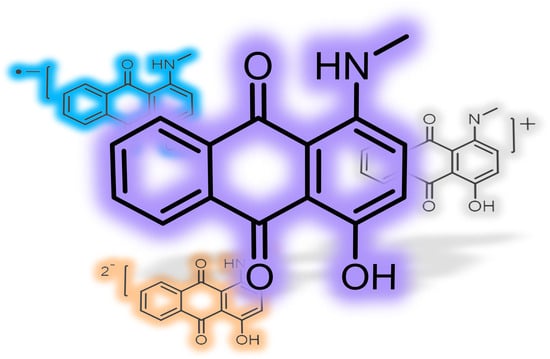
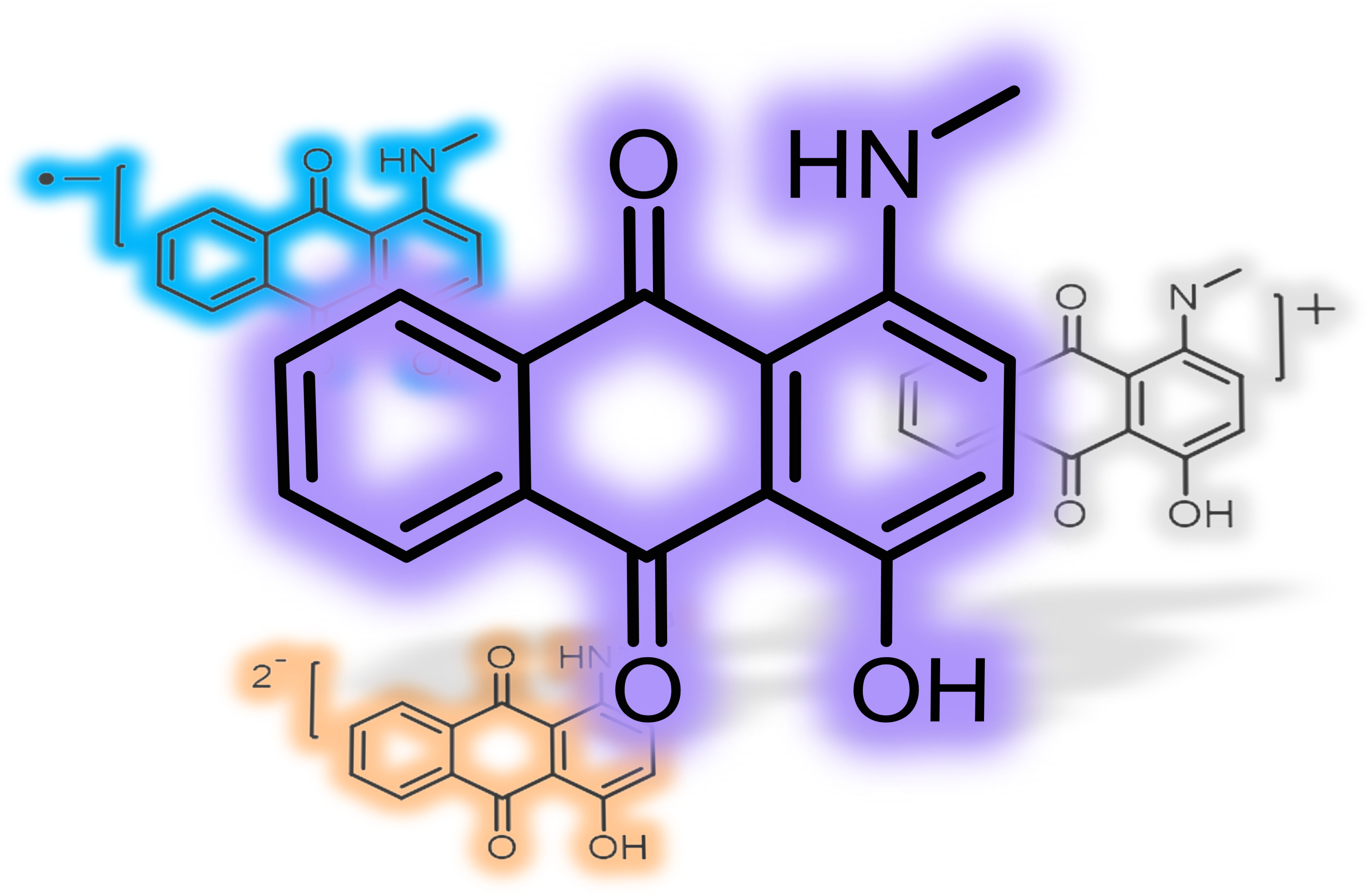
Recent developments in π-conjugated anthraquinones have highlighted their potential for multicolor electrochromic devices, sensors, and energy-storage systems [17,18,19]. Although anthraquinones are poised to be ideal electrochromes for such applications owing to their electrochemical reduction and reversible visible colors, they are often overlooked. They are advantageous over their molecular anodic counterparts because of the greater chemical stability of the electrochemical-mediated intermediates, resulting in no undesired electrochemically induced byproducts [20,21]. This has the benefit of maintaining the color of the different states with repeated cycles of applied potential [22,23]. The two reduced states of anthraquinones can further be exploited to give rise to three discrete colored states: neutral, radical anion, and dianion concomitant with color-bleaching of the oxidized state. This contrasts with the anodic counterparts that typically have only two colored states [24,25]. Despite this, using anthraquinones as electrochromes is relatively underused. Bearing this in mind, it is of interest to understand the effect of molecular structure on both the anthraquinone’s electrochemistry and the possible color changes with applied potential. This knowledge could be leveraged to ultimately rationally design molecular electrochromes having targeted colors for both the bleached and colored states. Toward providing such insight, we prepared the anthraquinone (AQ-V; Figure 1). The design elements of AQ-V include the amine that serves three roles: (i) an electron donor, (ii) hydrogen donor for hydrogen bonding and (iii) N-alkylation. The collective electronics and hydrogen bonding were expected to shift the otherwise off-yellow color of the native anthraquinone into the visible region [26]. This would be advantageous for further ensuring the absorption of the corresponding radical anion and dianion would also absorb in the visible, each with discrete colors. Collectively, these attributes would potentially confer three colored states to the electrochrome corresponding to its neutral, radical anion and dianion states, and color-bleached cation, whereas N-alkylation would ensure solubility of AQ-V in a range of common solvents. The electrochromism of AQ-V is herein presented along with its X-ray crystallography to evaluate the effect of the electronic group substitution on the color without affecting the desired electrochemical redox activity. To reinforce the suitability of AQ-V as a viable electrochrome, its optical contrast, coloration efficiency, and switching kinetics are also herein presented.

2. Results

2.1. Crystal Structure

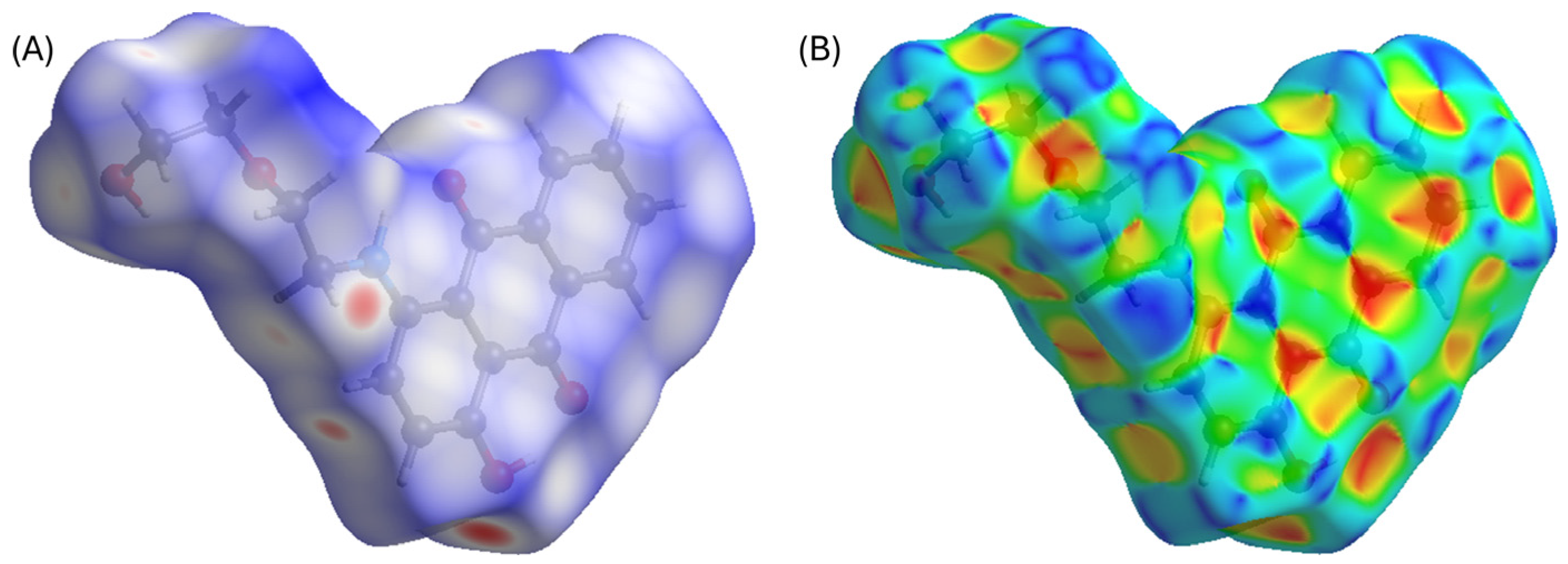
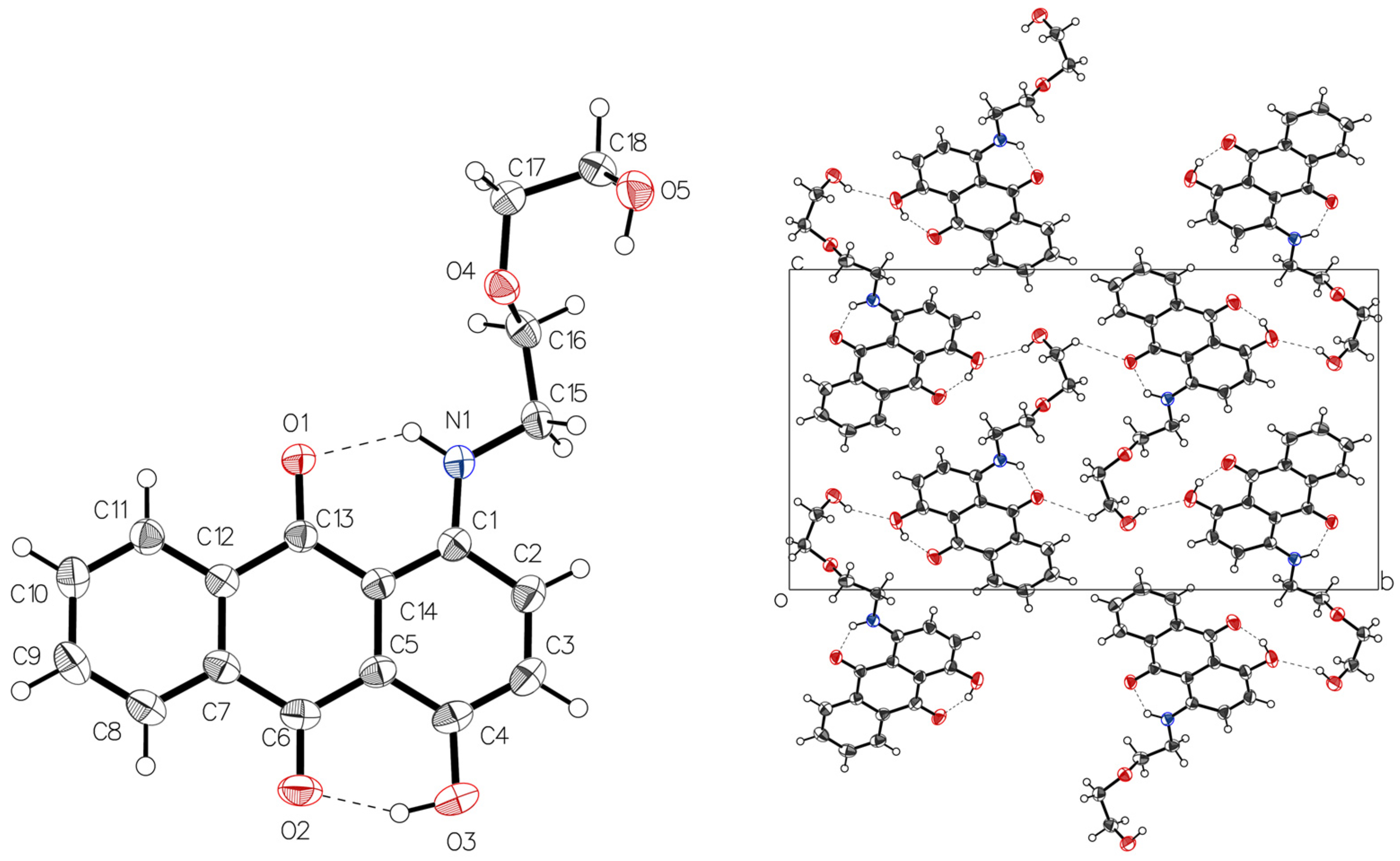
AQ-V crystallized in the P21/n monoclinic space group. The crystal structure revealed a complex network of hydrogen bonds. The carbonyl acted as a hydrogen-bond acceptor, promoting intramolecular interactions with the neighboring amine and the alcohol (left panel Figure 2). Indeed, two intramolecular hydrogen bonds, along with a total of three intermolecular hydrogen bonds involving O1, O2, O3 occurred between different molecules (Table S1). These intramolecular contacts enhanced the hydrogen-donor character of the secondary carbon adjacent to the amine. This, in turn, formed intermolecular interactions with the oxygen of the carbonyl on neighboring molecules. The overall crystal packing was further stabilized by intermolecular hydrogen bonds involving the secondary carbon and the hydroxyl of the rigid aromatic core. Additional stabilization arises from interactions between the carbonyl and hydroxyl groups along the alkyl side chains. The intermolecular contacts can readily be visualized as red dots in the dnorm representation of Figure 3A. These combined interactions led to a slight deviation from coplanarity of the tricyclic aromatic, reducing the π–π stacking overlap between adjacent molecules.
π–π stacking occurred in the solid-state packing. This is visually evident in the shape index calculated in Crystal Explorer [27,28]), according to the well-defined adjacent triangles forming an hourglass shape via the tip-to-tip (Figure 3B). The complementary colors, red and black, correspond to concave and convex regions, respectively, on the electrostatic potential. These interactions occur between two of the three anthraquinone aromatics of adjacent molecules. These interactions are quantifiable and are summarized in the crystallographic table (Table S2). In short, several near-parallel slipped π–π contacts occur between ring centroids with the shortest centroid-to-centroid distances of 3.8379(9) and 3.8755(9) Å [29]. The collective crystallographic data confirm that multiple contacts, including hydrogen bonding and π–π stacking, occur despite the simple structure and the alkyl chain that was expected to disrupt these interactions.

2.2. Electrochemistry

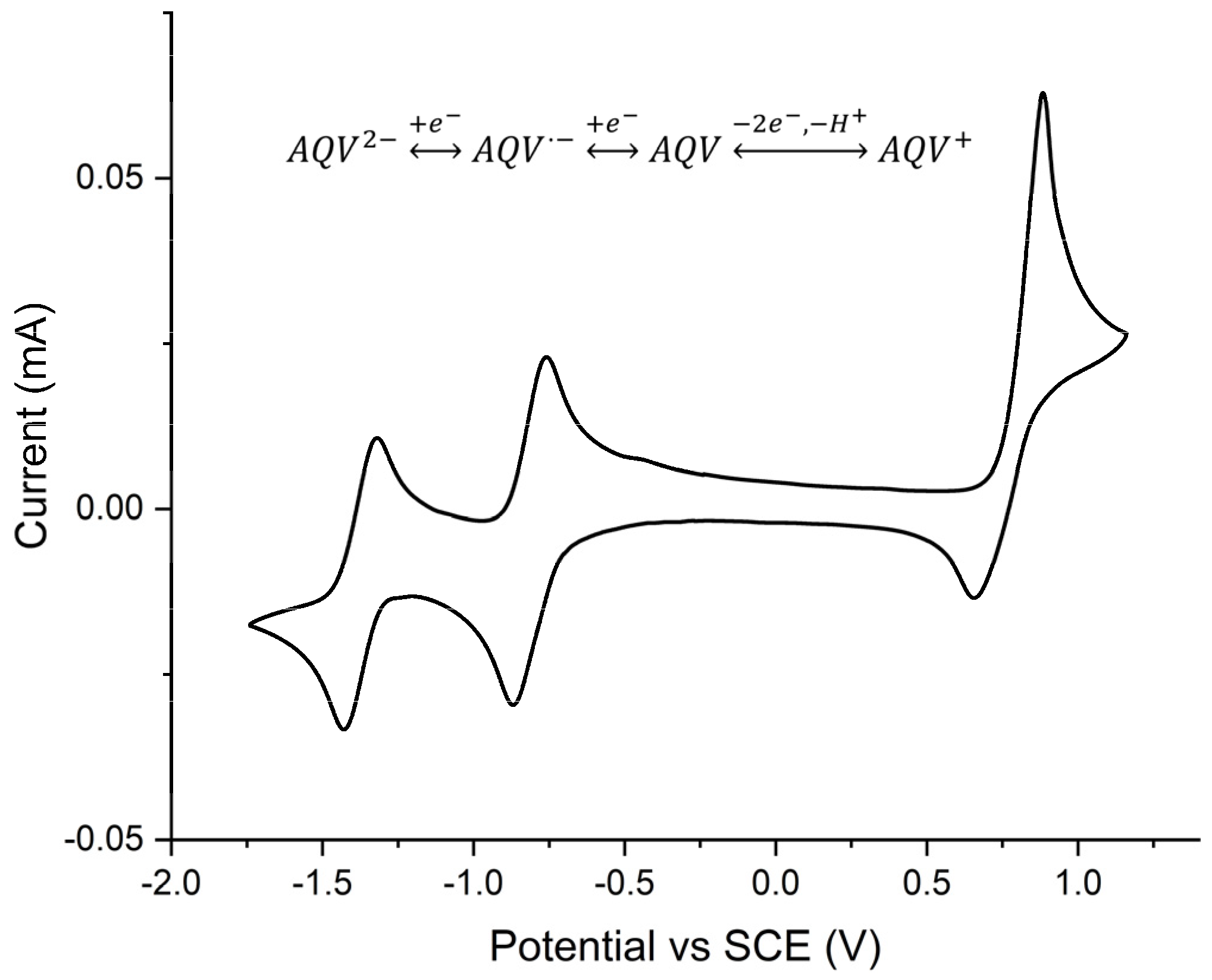
The overarching property that is required of anthraquinones for their use as electrochromes is electrochemical activity. Their electrochemically induced intermediates must also be persistent and do not react in ways that would otherwise result in both the depletion of the transients and the neutral state. This would result in inconsistent color changes and mixed absorptions rather than desired discrete colors. Anhydrous DMF was the choice solvent for cyclic voltammetry to evaluate the chemical inertness of the intermediates because of its large window of stability for evaluating both the expected anodic and cathodic processes of AQ-V. Moreover, its electrochemical inertness is biased to the negative potentials compared to other solvents [30,31]. This is important for assessing the two expected electrochemical reductions of AQ-V. As expected, owing to the anthraquinone core, AQ-V underwent two discrete reductions at E1/2 = −0.81 and −1.37 V vs. SCE (Figure 4). These were assigned to the consecutive one-electron reductions to form the radical anion and the dianion according to their similar peak intensity and identical peak current to the internal ferrocene standard. The identical peak current of the forward and reverse waves of the cathodic processes illustrates the chemical stability of the radical anion and dication within the timeframe of the measurement. Consistent cyclic voltammograms were measured during 300 cycles of reversibly applied potential between +1.1 and −1.8 V. Indeed, no change in the voltammograms was observed after the extended cycling compared to the original voltammogram (Figure S3). This contrasts with the anodic process forming the radical cation whose reverse wave was 1/3 the intensity of the corresponding forward wave (E1/2 = 0.77 V). Based on the relative peak current, the anodic process involves two simultaneous one-electron oxidations occurring at the amine. The amino radical cation formed from a one-electron oxidation rapidly deprotonates followed by simultaneous subsequent one-electron oxidation. Deprotonation of the amino radical cation is chemically irreversible as per the cyclic voltammogram. This aside, the advantage of the amine conjugated with anthraquinone is it opens the anodic channel that is otherwise not active with native anthraquinones.
The cyclic voltammetry data confirmed both the cathodic and anodic processes of AQ-V. It also provided information about the chemical stability of the radical anion and dianion intermediates produced, an important electrochromic requirement. The peak-to-peak separation (ΔEp ≈ 110 mV) concomitant with the linear correlation of the peak current with the square root of the scan speed confirmed both the electrochemical processes are diffusion-controlled and quasi-reversible [32].

2.3. Spectroelectrochemistry

The other requisite for an electrochrome is the reversible color change with applied potential. This was evaluated by monitoring the change in absorption with applied potential. The spectroelectrochemistry was done in situ using a commercial low-volume cell and an electrode with a 19-well honeycomb electrode. Although the measurements were done in solution, both the low volume of the wells and the narrow optical path of the cell limit diffusion of the electrochrome. Therefore, AQ-V can be completed converted to its corresponding intermediates with applied potential. The large number of wells of the working ceramic honeycomb creates a sufficiently large area to track the change in absorption spectroscopically.
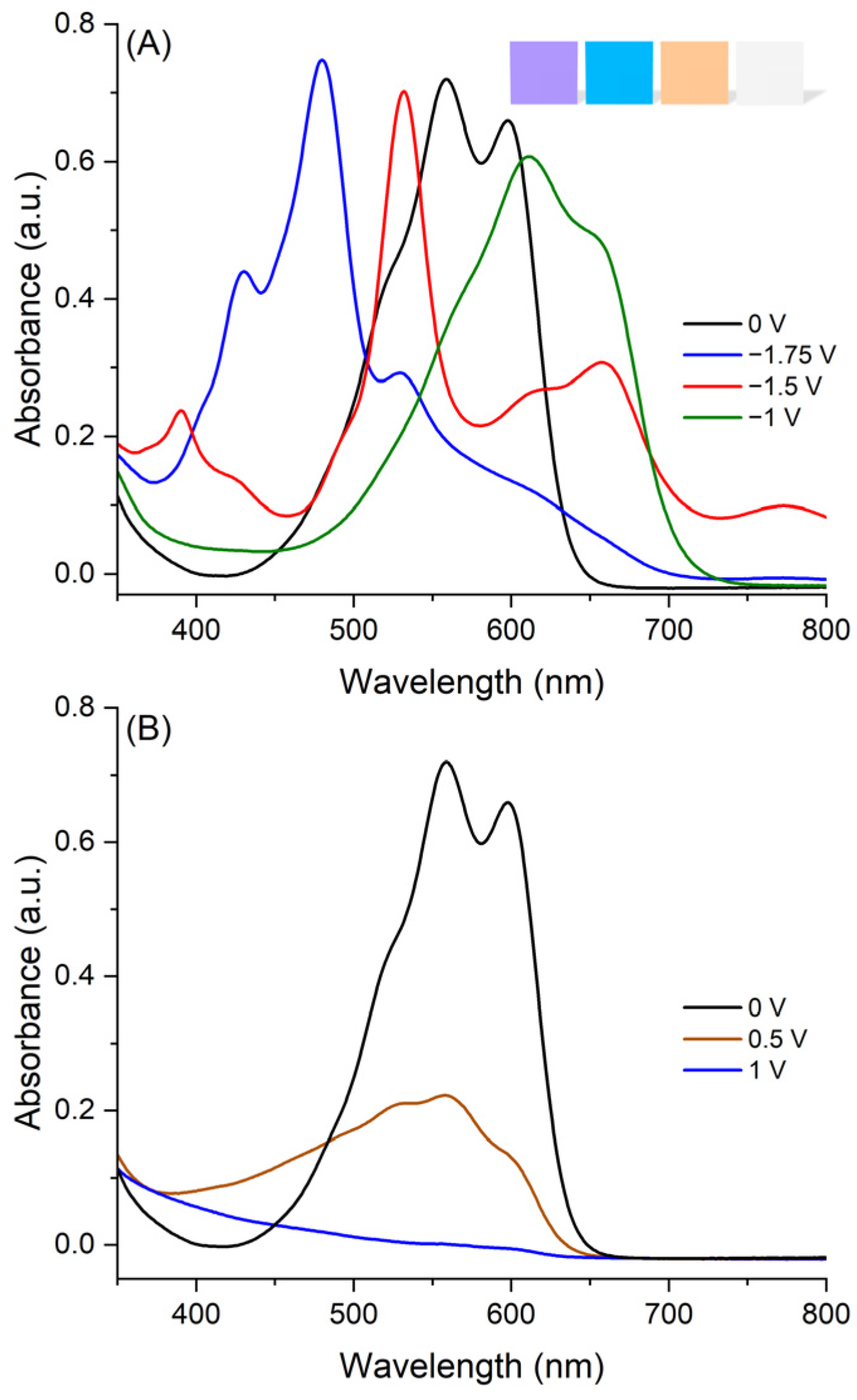
The change in absorption was monitored after applying a given potential for a set period of time and the resulting spectrum measured. The potential applied was maintained during the acquisition of the absorption spectrum to ensure the spectrum recorded was the steady-state product and not the continuous formation of various species. The negative potential was gradually increased to convert the original AQ-V to the radical anion and then to its dianion. The resulting change in the absorption spectrum is found in Figure 5A. Of importance is the unique absorption of each state corresponding to a unique color for the original AQ-V, its radical anion and dianion. Indeed, the original absorptions of AQ-V at 560 nm and its minor absorption at 600 nm were replaced with the absorption at 530 nm, corresponding to the radical anion. This absorption was depleted and it was replaced with the absorption of the dianion at 480 nm. The corresponding perceived colors changed from violet for AQ-V to cyan and yellow for the radical anion and the dianion, respectively (inset Figure 5A). The original violet color of AQ-V could also be bleached with a positive potential. Indeed, the absorption of the cation in the visible region is completely bleached with its absorption shift to the UV (orange line Figure 5B).
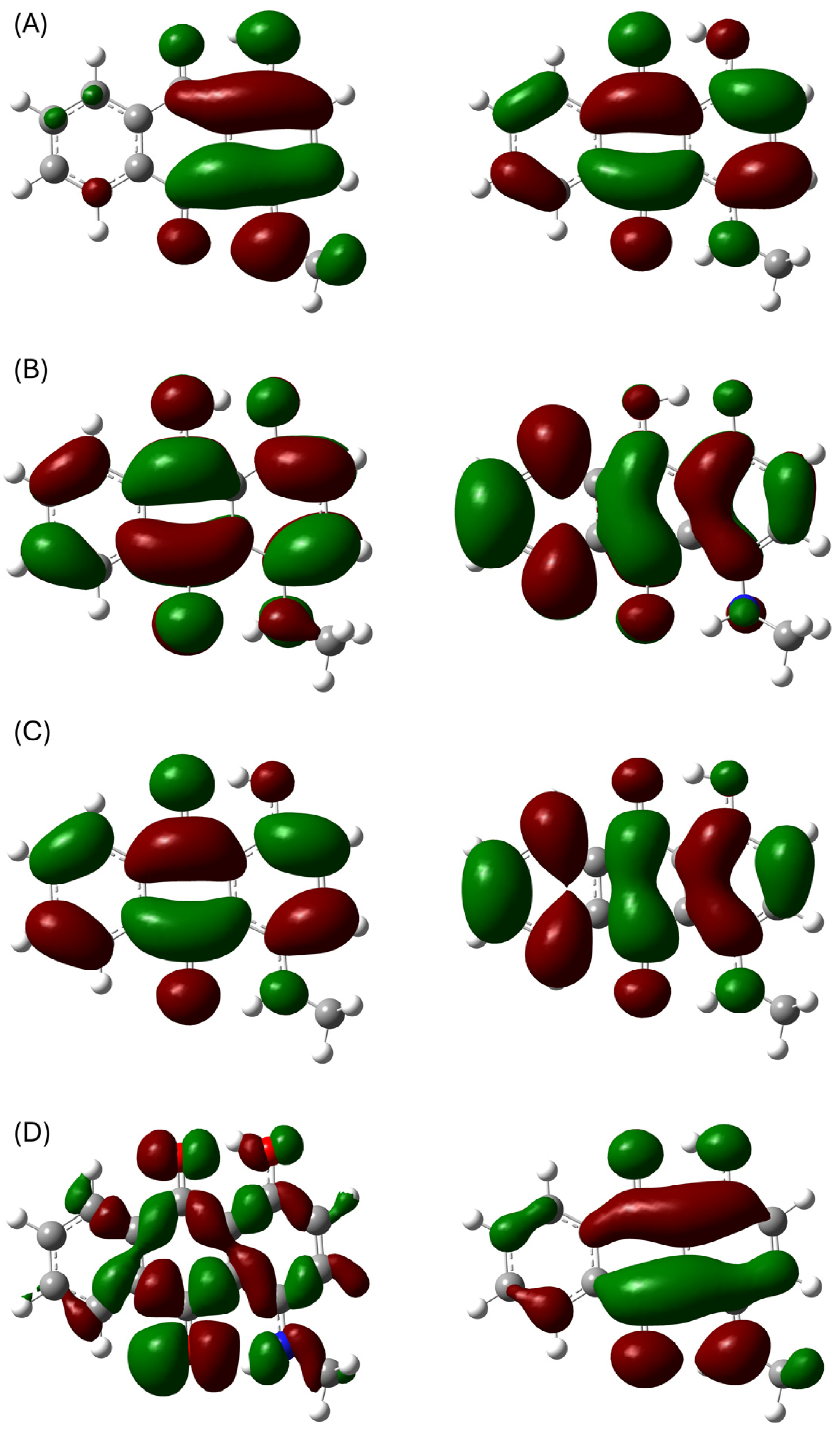
To corroborate the electrochemically induced spectral changes, the electronic transitions of the various states were calculated. This included the neutral AQ-V and its corresponding radical anion, radical cation, and dianion. The ωB97X-D long-range hybrid correlated functional was chosen because it considers both short- and long-range interactions and it is capable of modeling hydrogen bonding. The latter is ideal given the two intramolecular hydrogen bonds (vide supra). The same trend in spectral changes was calculated (Figure S6) as seen experimentally, according to the principal transitions. The absorptions indeed progressively blue-shifted upon progressing from the neutral AQ-V to the radical anion, dication, and the radical anion. The calculations also gave insight into the orbitals in these transitions. The Natural Transition Orbitals were calculated because they consolidate the various molecular orbitals into a single set of orbitals for the given transition [33]. For example, the HOMO of the neutral state of AQ-V is concentrated on both the central and substituted aromatics. This contrasted with its corresponding LUMO that was delocalized over the entire anthraquinone. This is responsible for intramolecular transfer of the lowest energy transition (Figure 6A). Both the orbitals of ground and lowest excited states of the corresponding intermediates were similarly distributed across the anthraquinone. It is worth noting that the α-spin orbitals were principally involved in the lowest energy optical transition of the radical anion whereas they were the β-spin orbitals for the radical cation.
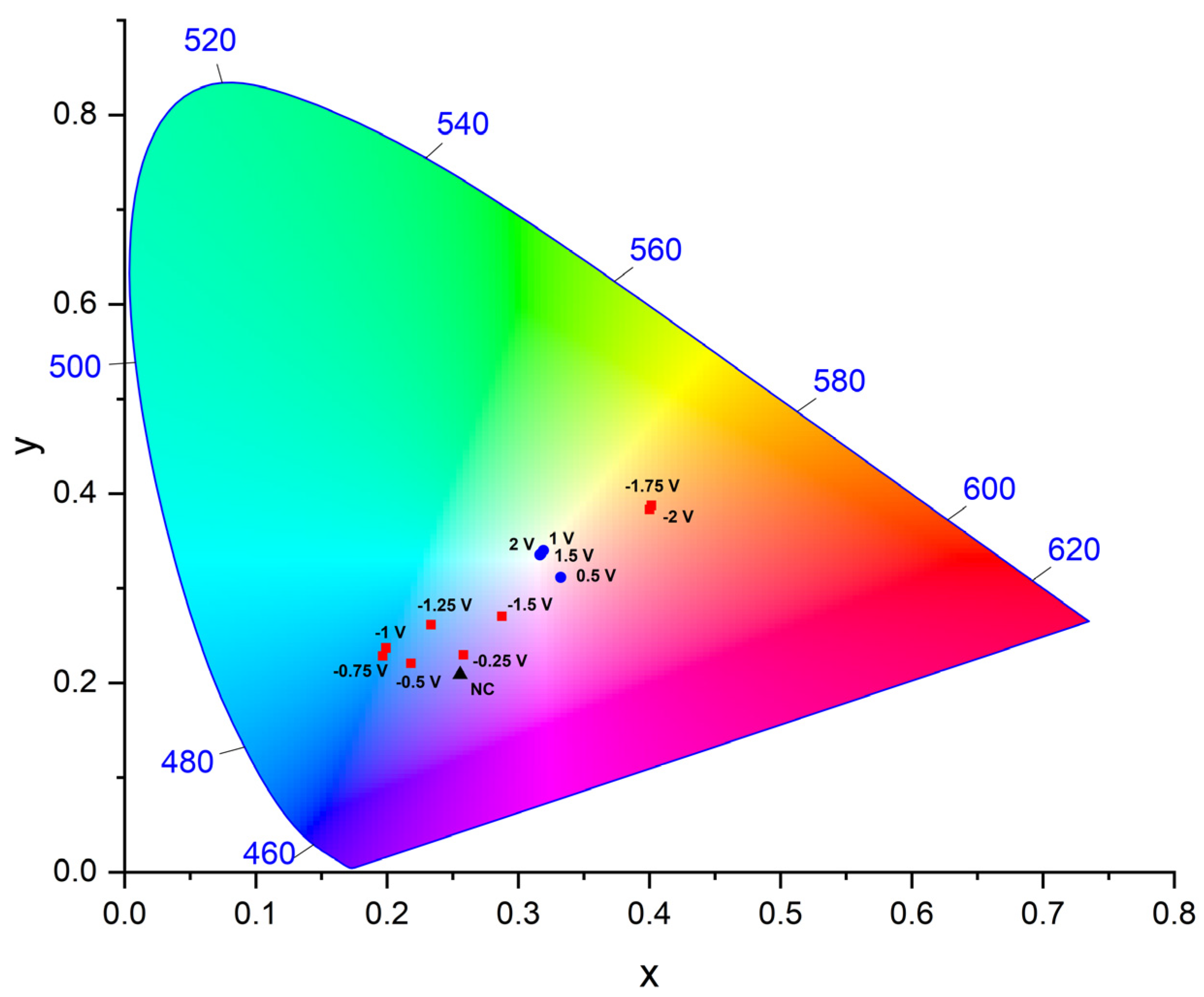
Both the perceived color and the absorption changes with applied potential confirm AQ-V is suitable for electrochromic use. The color changes with applied can be separated into perceived primary colors according to the CIE coordinates. The convention divides the absorption into its lightness (L), red/green (a*), and blue/yellow (b*) contributions. The values can then be plotted according to a CIE 1976 diagram (ISO 11664-4:2019 [34]) to visually track the composition of each color contribution to the spectrum. Here, the neutral AQ-V, without applied potential, is taken as the reference to benchmark the change in color with applied potential. With the applied negative potential generating the radical anion, the lightness remains the same along with the blue contribution to the spectrum. Meanwhile, the red component is replaced with green, according to the negative a* (Table 1). The coordinates of the dianion are equally different than both the original AQ-V and the dianion. Of noteworthiness is the lightness that increased while the green contribution was eliminated and it was replaced with red. These CIE changes shift the perceived color of the dianion toward the orange spectrum (Figure 7). The color is nearly bleached with the applied potential, corresponding to near-perfect white in the diagram. Collectively, the applied potential significantly varies the color from blue to yellow, according to the diagram, being an ideal electrochromic response.

2.4. Electrochromic Performance

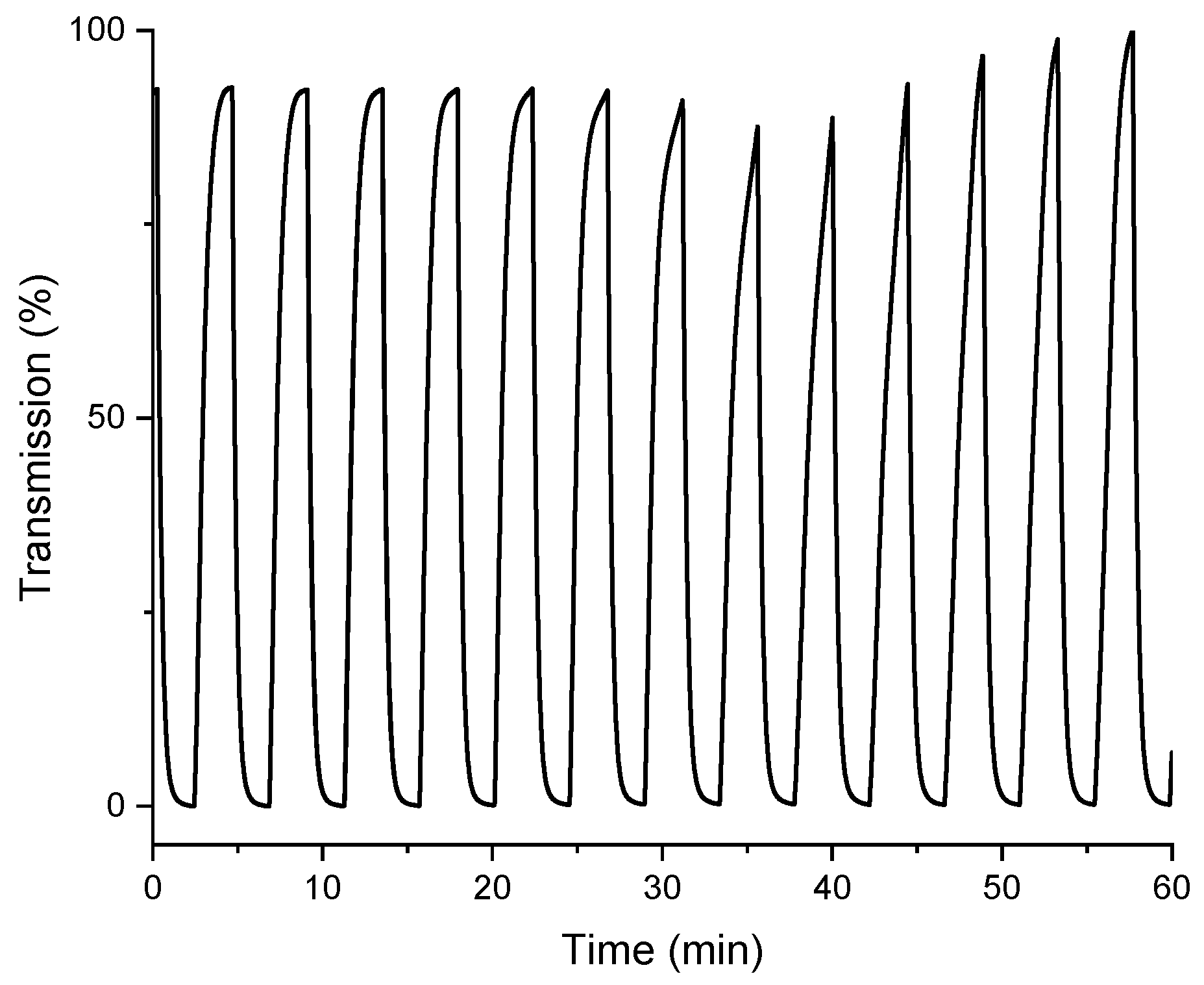
The electrochromic performance of AQ-V was further evaluated by monitoring the change in transmission of both the radical anion and the dianion over repeated cycles of reversibly applying the potential. This provides information about the colorfast of both the bleached and colored states. Variations in either the original AQ-V and its electrochemically induced colored state by irreversible and unwanted reactions would be evident as a decrease in the optical difference (ΔT%). As seen in Figure 8, the percent transmission of the two states is constant at ca. 98% over 60 min. of continuous switching between the neutral and radical anion and 98% when switching between the radical anion and dianion.
The coloration efficiency (CE; Equation (S1) in Supplementary Materials) is an equally important performance metric of electrochromes. This correlates with the amount of charge per area required to induce the optical change. CE is typically monitored at a unique wavelength. The CE of the radical anion was 506 cm2/C at 530 nm while the corresponding dianion was 698 cm2/C at λ = 480 nm. To frame this performance value, the best CE of an inorganic electrochrome reached 55 cm2/C [35]. Similarly, the most highly performing organic electrochromes that are derived from viologen [36], PEDOT:PSS [37,38] and aniline [39] have a maxima CE of 680 cm2/C. According to the calculated CEs, the color of the cation is easier to produce than the dianion, according to the CE.
Chronoamperometric measurements further revealed reversible color switching with coloration and bleaching times (tcolored, tbleached) of 21 s and 82 s for the first reduction and 15 s and 125 s for the second reduction, respectively. The switching kinetics are limited by slow diffusion to the electrode in contrast to fast electron transfer in solid-state devices. This aside, after 60 min of cycling between the colored states, the color contrast retained almost 100% of its initial value, indicating excellent durability and electrochemical stability. Collectively, the data demonstrate that the violet anthraquinone chromophore combines strong optical modulation and high coloration efficiency, making it a promising material for multicolored electrochromic applications.

3. Materials and Methods

3.1. General Procedures

All reagents and solvents were obtained from commercial suppliers and used as received. NMR spectra were recorded on a 400 MHz Bruker spectrometer (Madison, WI, USA) with CDCl3 as solvent and TMS as reference. High-resolution mass spectrometry data were collected using electrospray ionization (ESI; Synapt G2S Q-TOF, Waters Corporation, Milford, MA, USA). The absorption spectra were measured using quartz cuvettes (1 cm path length).

3.2. Synthesis of the Chromophore

The violet anthraquinone derivative was synthesized by condensation between quinizarin and 2-(2-aminoethoxy)ethanol in acetonitrile under an inert atmosphere [40]. (See Supporting Information for full details, including 2D HSQC NMR spectrum).

3.3. X-Ray Crystallography

Single-Crystal X-ray data collection was performed at 150 K using a Bruker (Madison, WI, USA) Venture diffractometer equipped with a liquid-gallium Metaljet source, a Helios MX optics and a CMOS Photon III detector. The structure was solved by intrinsic phasing using XT [41] and refined with XL [42]. All the hydrogen atoms linked to carbon atoms were refined using standard riding model, while the hydrogen atoms linked to nitrogen and oxygen were located from difference Fourier map and freely refined with isotropic thermal displacement parameters. CCDC structure deposit 2517348.

3.4. Electrochemical Measurements

Electrochemical measurements were done with a potentiostat using a three-electrode cell: glassy carbon working electrode, Pt counter electrode, and Ago pseudo-reference. Measurements were carried out in anhydrous DMF containing Bu4NClO4 (0.1 M) at room temperature and the samples were purged with nitrogen for ca. 15 min. before measuring. A gentle blanket of nitrogen was also maintained over the solution during the measurements. Ferrocene was added as an internal reference as the end of the measurements to calibrate the potentials relative to SCE [43].

3.5. Spectroelectrochemistry and Colorimetry

Spectroelectrochemical studies were done using a commercial ceramic honeycomb cell (Pine Research Instrumentation, Durham, NC, USA) consisting of 19 gold-plated wells and 0.7 mm thick. The electrode was placed in an optically narrow quartz cuvette (1 mm). Absorption spectra were measured with a continuously applied potential with a potentiostat corresponding to each redox state. The color coordinates (L*, a*, b*) were calculated from the absorption spectra according to CIE 1976 standards.

3.6. Theoretical Calculations

Theoretical calculations were done with Gaussian 16 rev. C.01 in a two-step process [44]. First, the geometry was optimized using with the ωB97X-D functional with the def2-TZVP basis set [45]. This was then used as the singlet point energy calculation of TD-DFT to calculate the electronic transitions. The 10 lowest transitions were calculated. For both steps, the IEFPCM solvent model was used with DMF as the solvent. The Natural Transition Orbitals [33] and the lowest-energy electronic transition were also calculated from the TD-DFT [46] data.

4. Conclusions

Leveraging the intrinsic double reduction of the anthraquinone concomitant with the oxidation conferred by the electron donor, a molecular electrochrome capable of three discrete color changes was possible. This demonstrates that substituted anthraquinone is ideally suited for electrochromics owing to its reversible electrochemical activity and the subsequent color change with applied potential. Integrating an electron donor, also promoting hydrogen bonding, shifted the absorption of the anthraquinone deep into the visible, enhancing the optical properties for electrochromics. The multiple colors demonstrate the advantage of the molecular anthraquinone compared to its conventional dichromatic electrochromes. Both the color of the neutral and electrochemically mediated intermediates can be tailored by adjusting the anthraquinone substituents. This opens the possibility of tuning their absorptions across the visible toward achieving panchromaticity.

Supplementary Materials

The following supporting information can be downloaded at: https://www.mdpi.com/article/10.3390/molecules31050879/s1, crystallographic, electrochemical, and spectroelectrochemical data, NMR and mass spectrometry spectra, and atomic coordinates from theoretical calculations. Refs. [40,47] are cited in the Supplementary Materials.

Author Contributions

Conceptualization, W.G.S.; methodology, I.S.; validation, I.S. and W.G.S.; formal analysis, I.S., T.M. and W.G.S.; investigation, I.S. and W.G.S.; resources, W.G.S.; data curation, W.G.S.; writing—original draft preparation, I.S., T.M. and W.G.S.; writing—review and editing, I.S. and W.G.S.; visualization, W.G.S.; supervision, W.G.S.; funding acquisition, W.G.S. All authors have read and agreed to the published version of the manuscript.

Funding

This research was funded by the Natural Sciences and Engineering Council (NSERC) Canada and the Canada Foundation for Innovation (CFI) for operating and equipment, respectively.

Institutional Review Board Statement

Not applicable.

Informed Consent Statement

Not applicable.

Data Availability Statement

The data that support the findings of this study are available in the Supporting Information.

Acknowledgments

The Natural Sciences and Engineering Council (NSERC) Canada and the Canada Foundation for Innovation (CFI) are acknowledged for operating and equipment grants that supported this research. The Quebec Center for Advanced Materials is also recognized for access to instrumentation for this research in addition to the Institut Courtois. The Digital Alliance Canada (https://alliancecan.ca/) and its regional partner, the BC DRI Group, are thanked for access to computational resources and software for theoretical calculations.

Conflicts of Interest

The authors declare no conflicts of interest.

References

  1. Oettmeier, W.; Masson, K.; Donner, A. Anthraquinone inhibitors of photosystem II electron transport. FEBS Lett. 1988, 231, 259–262. [Google Scholar] [CrossRef]
  2. Epolito, W.J.; Lee, Y.H.; Bottomley, L.A.; Pavlostathis, S.G. Pavlostathis, Characterization of the textile anthraquinone dye Reactive Blue 4. Dye Pigment. 2005, 67, 35–46. [Google Scholar] [CrossRef]
  3. Bick, I.R.C.; Rhee, C. Anthraquinone pigments from Phoma foveata Foister. Biochem. J. 1966, 98, 112–116. [Google Scholar] [CrossRef] [PubMed]
  4. Gerhardt, M.R.; Tong, L.; Gómez-Bombarelli, R.; Chen, Q.; Marshak, M.P.; Galvin, C.J.; Aspuru-Guzik, A.; Gordon, R.G.; Aziz, M.J. Anthraquinone Derivatives in Aqueous Flow Batteries. Adv. Energy Mater. 2017, 7, 1601488. [Google Scholar] [CrossRef]
  5. Thomson, R.H. Distribution of naturally occurring quinones. Pharm. Weekbl. Sci. Ed. 1991, 13, 70–73. [Google Scholar]
  6. Fouillaud, M.; Venkatachalam, M.; Girard-Valenciennes, E.; Caro, Y.; Dufossé, L. Anthraquinones and Derivatives from Marine-Derived Fungi: Structural Diversity and Selected Biological Activities. Mar. Drugs 2016, 14, 64. [Google Scholar] [CrossRef]
  7. Murschell, A.E.; Kan, W.H.; Thangadurai, V.; Sutherland, T.C. Anthraquinone derivatives as electron-acceptors with liquid crystalline properties. Phys. Chem. Chem. Phys. 2012, 14, 4626. [Google Scholar] [CrossRef]
  8. Park, J.; Park, Y.; Park, J. Synthesis and Physical Property Measurement of New Red Pigment based on Anthraquinone Derivatives for Color Filter Pigments. Mol. Cryst. Liq. Cryst. 2011, 551, 116–122. [Google Scholar] [CrossRef]
  9. Goudappagouda; Nidhankar, A.D.; Nayak, R.A.; Santhosh Babu, S. Aggregation-induced phosphorescence of an anthraquinone based emitter. Org. Biomol. Chem. 2021, 19, 1004–1008. [Google Scholar] [CrossRef]
  10. Zhang, Q.; Kuwabara, H.; Potscavage, W.J.; Huang, S.; Hatae, Y.; Shibata, T.; Adachi, C. Anthraquinone-Based Intramolecular Charge-Transfer Compounds: Computational Molecular Design, Thermally Activated Delayed Fluorescence, and Highly Efficient Red Electroluminescence. J. Am. Chem. Soc. 2014, 136, 18070–18081. [Google Scholar]
  11. Prinzisky, C.; Meyenburg, I.; Jacob, A.; Heidelmeier, B.; Schröder, F.; Heimbrodt, W.; Sundermeyer, J. Optical and Electrochemical Properties of Anthraquinone Imine Based Dyes for Dye-Sensitized Solar Cells. Eur. J. Org. Chem. 2016, 2016, 756–767. [Google Scholar] [CrossRef]
  12. Guedes, A.F.; Silva de Lima, R.; Tartari, S. Electrochromic Smart Windows with Visible-Light Modulation and Radiation UV Filter. In Proceedings Volume 13453, Window and Dome Technologies and Materials XVIII; SPIE: Bellingham, WA, USA, 2025. [Google Scholar] [CrossRef]
  13. Xu, L.; Zhang, L.; Liu, D.; Ren, Z.; Liu, W.; Zhang, Y.; Wang, Y.; Sun, J.; Yang, R.; Lv, Z.; et al. A Comprehensive Review of the Functionalized Integrated Application of Gel Polymer Electrolytes in Electrochromic Devices. Nano-Micro Lett. 2026, 18, 106. [Google Scholar] [CrossRef] [PubMed]
  14. Zhang, W.; Wang, X.; Wang, Y.; Yang, G.; Gu, C.; Zheng, W.; Zhang, Y.-M.; Li, M.; Zhang, S.X.-A. Bio-inspired ultra-high energy efficiency bistable electronic billboard and reader. Nat. Commun. 2019, 10, 1559. [Google Scholar] [CrossRef] [PubMed]
  15. Zhang, W.; Ding, Y.; Wang, K.; Liu, X.; Zhang, Y.; Zhao, S.; Li, R.; Ai, D.; Xi, A.; Huang, Y.; et al. Dynamic Electro-Fluorochromic Device Based on Aggregation-Induced Emission Carbon Dots and Prussian Blue for Anti-Counterfeiting. Adv. Opt. Mater. 2025, 13, 2500461. [Google Scholar] [CrossRef]
  16. Deepa, M.; Agrawal, A. Trends in Organic Electrochromic Materials and Their Applications. In Chromogenics; John Wiley & Sons, Inc.: Hoboken, NJ, USA, 2026; pp. 173–194. [Google Scholar]
  17. Chen, F.; Fu, X.; Zhang, J.; Wan, X. Near-infrared and multicolored electrochromism of solution processable triphenylamine-anthraquinone imide hybrid systems. Electrochim. Acta 2013, 99, 211–218. [Google Scholar] [CrossRef]
  18. Ali, S.; Tahir, M.; Mehboob, N.; Wahab, F.; Langford, S.J.; Mohd Said, S.; Sarker, M.R.; Julai, S.; Hamid Md Ali, S. Amino Anthraquinone: Synthesis, Characterization, and Its Application as an Active Material in Environmental Sensors. Materials 2020, 13, 960. [Google Scholar] [CrossRef]
  19. Song, Z.; Qian, Y.; Gordin, M.L.; Tang, D.; Xu, T.; Otani, M.; Zhan, H.; Zhou, H.; Wang, D. Polyanthraquinone as a Reliable Organic Electrode for Stable and Fast Lithium Storage. Angew. Chem. 2015, 127, 14153–14157. [Google Scholar] [CrossRef]
  20. Pognon, G.; Brousse, T.; Demarconnay, L.; Bélanger, D. Performance and stability of electrochemical capacitor based on anthraquinone modified activated carbon. J. Power Sources 2011, 196, 4117–4122. [Google Scholar] [CrossRef]
  21. Balasubramaniam, E.; Ramachandraiah, G.; Natarajan, P.; Bied-Charreton, C.; Devynck, J.; Bedioui, F. Electrochemical preparation of anthraquinone and zinc porphyrin coated electrodes: Redox activity and film stability. J. Mater. Chem. 1995, 5, 625. [Google Scholar] [CrossRef]
  22. Sui, B.; Fu, X. Novel application of 1-/2-phenyl substituted 9,10-anthraquinones in solid electrochromic devices. J. Solid State Electrochem. 2009, 13, 1889–1895. [Google Scholar] [CrossRef]
  23. Sezer, B.; Şener, M.K.; Koca, A.; Erdoğmuş, A.; Avcıata, U. Synthesis, electrochemistry, spectroelectrochemistry and electrocolorimetry of phthalocyanine–anthraquinone hybrids. Synth. Met. 2010, 160, 2155–2166. [Google Scholar] [CrossRef]
  24. Anthony Raj, M.R.; Humeniuk, H.V.; Skene, W.G. Covalent Attachment Strategies of Molecular Electrochromes for Enhancing Electrochromic Performance. ChemPlusChem 2025, 90, e202500178. [Google Scholar] [CrossRef] [PubMed]
  25. Anthony Raj, M.R.; Yao, C.; Frémont, M.; Skene, W.G. Exploiting Mixed Valence Charge Transfer for Electrochromic and Electrofluorochromic Use. Chem. Eur. J. 2024, 30, e202401417. [Google Scholar] [CrossRef] [PubMed]
  26. Dollendorf, C.; Kreth, S.K.; Choi, S.W.; Ritter, H. Polymerization of novel methacrylated anthraquinone dyes. Beilstein J. Org. Chem. 2013, 9, 453–459. [Google Scholar] [CrossRef]
  27. Spackman, P.R.; Turner, M.J.; McKinnon, J.J.; Wolff, S.K.; Grimwood, D.J.; Jayatilaka, D.; Spackman, M.A. CrystalExplorer: A program for Hirshfeld surface analysis, visualization and quantitative analysis of molecular crystals. J. Appl. Crystallogr. 2021, 54, 1006–1011. [Google Scholar] [CrossRef]
  28. Turner, M.J.; McKinnon, J.J.; Wolff, S.K.; Grimwood, D.J.; Spackman, P.R.; Jayatilaka, D.; Spackman, M.A. CrystalExplorer17; University of Western Australia: Crawley, WA, Australia, 2017. [Google Scholar]
  29. Spek, A. Structure validation in chemical crystallography. Acta Crystallogr. Sect. D 2009, 65, 148–155. [Google Scholar] [CrossRef]
  30. Sasaki, K.; Kashimura, T.; Ohura, M.; Ohsaki, Y.; Ohta, N. Solvent Effect in the Electrochemical Reduction of p-Quinones in Several Aprotic Solvents. J. Electrochem. Soc. 1990, 137, 2437–2443. [Google Scholar] [CrossRef]
  31. Evans, D.H. One-Electron and Two-Electron Transfers in Electrochemistry and Homogeneous Solution Reactions. Chem. Rev. 2008, 108, 2113–2144. [Google Scholar] [CrossRef]
  32. González-Meza, O.A.; Larios-Durán, E.R.; Gutiérrez-Becerra, A.; Casillas, N.; Escalante, J.I.; Bárcena-Soto, M. Development of a Randles-Ševčík-like equation to predict the peak current of cyclic voltammetry for solid metal hexacyanoferrates. J. Solid State Electrochem. 2019, 23, 3123–3133. [Google Scholar] [CrossRef]
  33. Martin, R.L. Natural transition orbitals. J. Chem. Phys. 2003, 118, 4775–4777. [Google Scholar] [CrossRef]
  34. ISO 11664-4:2019; Colorimetry. Part 4: CIE 1976 L*a*b* Colour Space. International Organization for Standardization: Geneva, Switzerland, 2019.
  35. Lee, S.-H.; Deshpande, R.; Parilla, P.A.; Jones, K.M.; To, B.; Mahan, A.H.; Dillon, A.C. Crystalline WO3 Nanoparticles for Highly Improved Electrochromic Applications. Adv. Mater. 2006, 18, 763–766. [Google Scholar] [CrossRef]
  36. Song, R.; Li, G.; Zhang, Y.; Rao, B.; Xiong, S.; He, G. Novel electrochromic materials based on chalcogenoviologens for smart windows, E-price tag and flexible display with improved reversibility and stability. Chem. Eng. J. 2021, 422, 130057. [Google Scholar] [CrossRef]
  37. Sonmez, G.; Meng, H.; Wudl, F. Organic Polymeric Electrochromic Devices:  Polychromism with Very High Coloration Efficiency. Chem. Mater. 2004, 16, 574–580. [Google Scholar] [CrossRef]
  38. Levasseur, D.; Mjejri, I.; Rolland, T.; Rougier, A. Color Tuning by Oxide Addition in PEDOT:PSS-Based Electrochromic Devices. Polymers 2019, 11, 179. [Google Scholar] [CrossRef]
  39. Kang, J.-H.; Oh, Y.; Paek, S.-M.; Hwang, S.-J.; Choy, J.-H. Electrochromic device of PEDOT–PANI hybrid system for fast response and high optical contrast. Sol. Energy Mater. Sol. Cells 2009, 93, 2040–2044. [Google Scholar] [CrossRef]
  40. Gianoncelli, A.; Basili, S.; Scalabrin, M.; Sosic, A.; Moro, S.; Zagotto, G.; Palumbo, M.; Gresh, N.; Gatto, B. Rational Design, Synthesis, and DNA Binding Properties of Novel Sequence-Selective Peptidyl Congeners of Ametantrone. ChemMedChem 2010, 5, 1080–1091. [Google Scholar] [CrossRef]
  41. Sheldrick, G. SHELXT—Integrated space-group and crystal-structure determination. Acta Crystallogr. Sect. A 2015, 71, 3–8. [Google Scholar] [CrossRef]
  42. Sheldrick, G. Crystal structure refinement with SHELXL. Acta Crystallogr. Sect. C 2015, 71, 3–8. [Google Scholar] [CrossRef]
  43. Connelly, N.G.; Geiger, W.E. Chemical Redox Agents for Organometallic Chemistry. Chem. Rev. 1996, 96, 877–910. [Google Scholar] [CrossRef]
  44. Frisch, M.J.; Trucks, G.W.; Schlegel, H.B.; Scuseria, G.E.; Robb, M.A.; Cheeseman, J.R.; Scalmani, G.; Barone, V.; Petersson, G.A.; Nakatsuji, H.; et al. Gaussian 16 Rev. C.01; Gaussian, Inc.: Wallingford, CT, USA, 2016. [Google Scholar]
  45. Chai, J.-D.; Head-Gordon, M. Long-range corrected hybrid density functionals with damped atom–atom dispersion corrections. Phys. Chem. Chem. Phys. 2008, 10, 6615–6620. [Google Scholar] [CrossRef]
  46. Runge, E.; Gross, E.K.U. Density-Functional Theory for Time-Dependent Systems. Phys. Rev. Lett. 1984, 52, 997–1000. [Google Scholar] [CrossRef]
  47. Kaur, N.; Kumar, S. Near-IR region absorbing 1,4-diaminoanthracene-9,10-dione motif based ratiometric chemosensors for Cu2+. Tetrahedron 2008, 64, 3168–3175. [Google Scholar] [CrossRef]
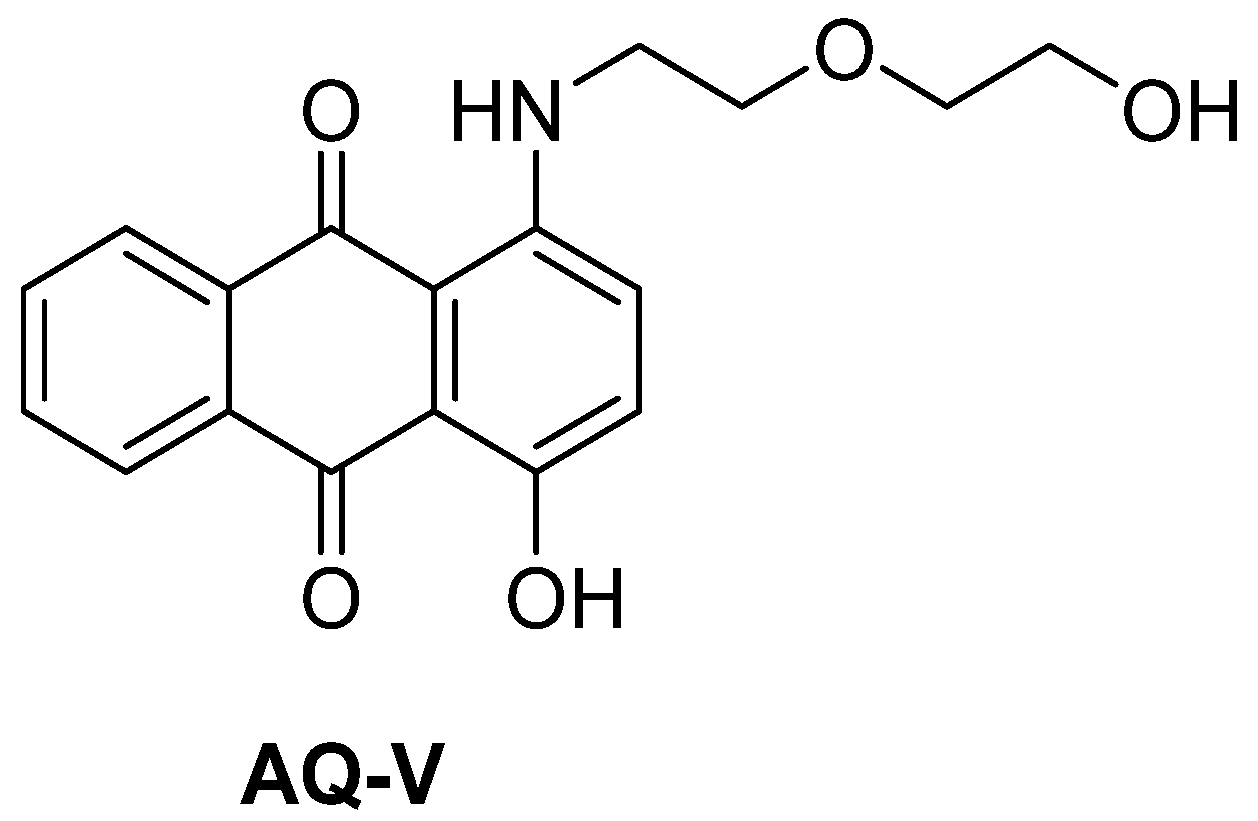
Figure 1. Structure of anthraquinone molecular electrochrome prepared and evaluated.
Molecules 31 00879 g001
Figure 2. ORTEP diagram of the single X-ray crystal structure of AQ-V with the ellipses drawn at 50% probability and the hydrogens arbitrarily drawn (left). Projection along the a-axis of the unit cell showing extended packing of AQ-V illustrating both the intra- and intermolecular hydrogen bonds as dashes (right).
Molecules 31 00879 g002
Figure 3. (A) AQ-V representation of dnorm with red dots indicating sites of intermolecular interactions. (B) AQ-V representation of shape index with adjacent blue and red triangles indicating π-π stacking location. Both images calculated with Crystal Explorer [27,28].
Molecules 31 00879 g003
Figure 4. Cyclic voltammogram of AQ-V measured in anhydrous DMF at 50 mV/s with Bu4NClO4 electrolyte. Inset: corresponding electrochemically generated intermediates of AQ-V.
Molecules 31 00879 g004
Figure 5. Spectroelectrochemistry of AQ-V with negative (A) and positive (B) potentials in anhydrous DMF with Bu4NClO4. Inset: representative perceived colors of AQ-V in the neutral, radical anion, dianion, and radical cation (from left to right).
Molecules 31 00879 g005
Figure 6. Highest (left) and lowest (right) occupied Natural Transition Orbitals calculated of the neutral AQ-V (A), dianion (B), α-spin of radical anion (C), and β-spin of radical cation (D).
Molecules 31 00879 g006
Figure 7. CIE color coordinates of AQ-V with applied potential; NC = no current.
Molecules 31 00879 g007
Figure 8. Change in percent transmission of AQ-V dianion monitored at 530 nm with applied potentials of −2 V and −1.5 V.
Molecules 31 00879 g008
Table 1. 1931 CIE color coordinates of AQ-V with applied potential.
StateL*a*b*
Neutral67.731.9−47.8
Radical anion68.7−20.5−45.8
Dianion84.415.734.5
Cation1001.14.8
Disclaimer/Publisher’s Note: The statements, opinions and data contained in all publications are solely those of the individual author(s) and contributor(s) and not of MDPI and/or the editor(s). MDPI and/or the editor(s) disclaim responsibility for any injury to people or property resulting from any ideas, methods, instructions or products referred to in the content.