You are currently viewing a new version of our website. To view the old version click .
Molecules
  • Review
  • Open Access

4 June 2018

Ball Milling Promoted N-Heterocycles Synthesis


,
,
and
1
Chemistry Department, Faculty of Science, Taibah University, Yanbu 46423 Saudi Arabia
2
Chemistry Department, Faculty of Women for Arts, Science and Education, Ain Shams University, Heliopolis, Cairo 11757, Egypt
3
Chemistry Department, Faculty of Science, Alexandria University, P.O. 426 Ibrahemia, Alexandria 21321, Egypt
*
Author to whom correspondence should be addressed.
This article belongs to the Section Green Chemistry

Abstract

In the last years, numerous protocols have been published using ball milling for organic synthesis. Compared to other methods such as microwave or ultrasound irradiation and ionic liquids, ball mill chemistry is an economical, and ecofriendly method in organic synthesis that is rather underrepresented in the knowledge of organic chemists. The aim of this review is to explore the advantages of the application of ball milling in synthesis of N-heterocyclic compounds.

1. Introduction

The past decade has witnessed a sustainable and ever increasing interest in the reactivity of N-heterocycles due to their importance in Nature, medicinal chemistry, living matter, drug design, advanced materials, and natural product synthesis [1]. They constitute an important an important class of compounds found in many natural products [2] with anticancer [3], cytotoxic [4], anti-HIV [5], anti-malarial [6], anti-inflammatory [7], antimicrobial [8], anti-hyperglycemic and anti-dyslipidemic [9] activity, in addition to anti-neurodegenerative disorder drugs targeting Alzheimer’s, Parkinson disease, Huntington’s disease [10], and many more [11,12].
Many reviews involving the synthesis of N-heterocycles have been published, including cascade synthetic reactions [13], the synthesis of six membered rings [14], the synthesis of spiro hetrocycles [15], the microwave assisted synthesis of five-membered azaheterocyclic systems [16], synthesis of small N-hetrocycles [17] and metalation [18].
Ball milling is a mechanical method broadly used to granulate minerals into very fine particles and the preparation or alteration of inorganic solids, although its use in organic synthesis is relatively uncommon [19,20,21,22].
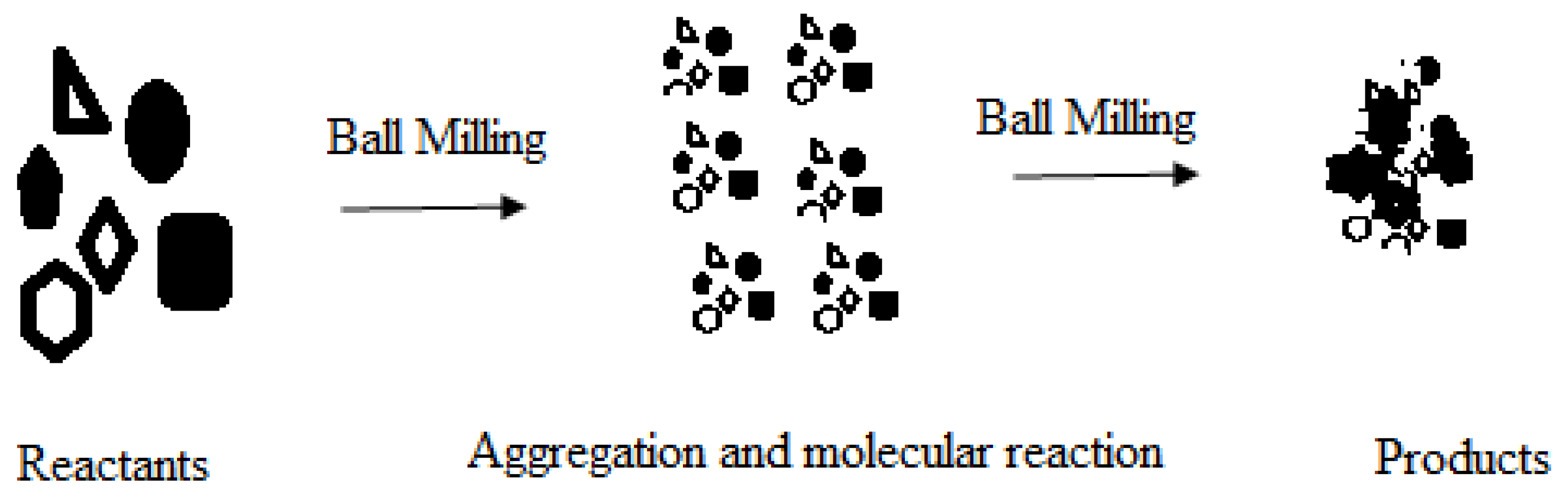
The term mechanochemistry has been introduced in periodicals recently. According to IUPAC a mechanochemical reaction is defined as “a chemical reaction that is induced by the direct absorption of mechanical energy” [23]. However, the area is furthermore divided into: (i) mechanical activation of solids; (ii) mechanical alloying and (iii) the reactive milling of solids [24,25,26,27] (Figure 1). Very recently, ball milling has been used in synthesis of organic compounds. Several reviews describing the use of ball milling in the synthesis and reactions of organic compounds have been published [28,29,30,31,32].
Figure 1. Ball milling process.
Recently, ball milling reactions have not been limited to simple organic reactions like condensations but have become widely used in more complex reactions like:
  • Metal-catalyzed organic reactions
  • nucleophilic reactions
  • cascade reactions
  • Diels–Alder reactions
  • Oxidation-reduction reactions
  • Halogenation and aminohalogenation reactions
  • Formation of calixarenes, rotaxanes and cage compounds
  • Transformation of biologically active compounds
  • Asymmetric synthesis
This review is dedicated to the utilization of the ball-milling technique in the synthesis of heterocycles.

2. Five Membered Rings

2.1. Pyrrole Synthesis

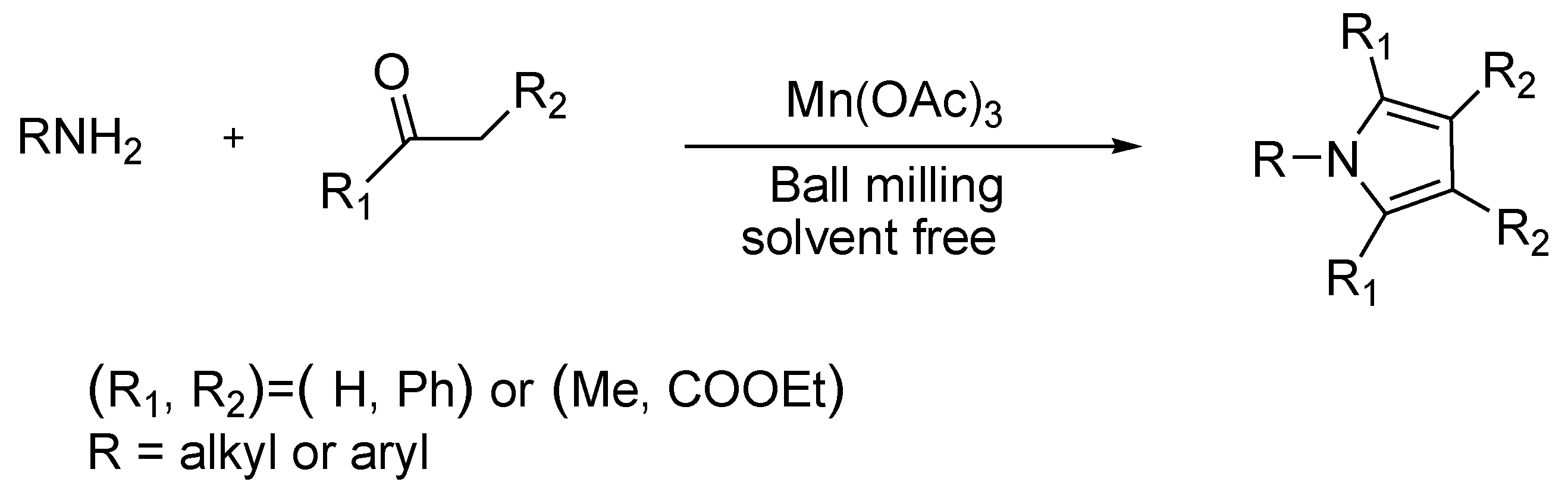
Zeng et al. [33] developed a mechanochemical and solvent free synthesis for preparing a series of 2,5-dimethylpyrrole-3,4-dicarboxylates and 3,4-diphenylpyrroles in moderate to excellent yields from various amines and acetoacetate or 2-phenylacetaldehyde, respectively, in the presence of Mn(OAc)3 as mediator (Scheme 1).
Scheme 1. Synthesis of 2,5-dimethylpyrrole-3,4-dicarboxylates and 3,4-diphenylpyrroles.
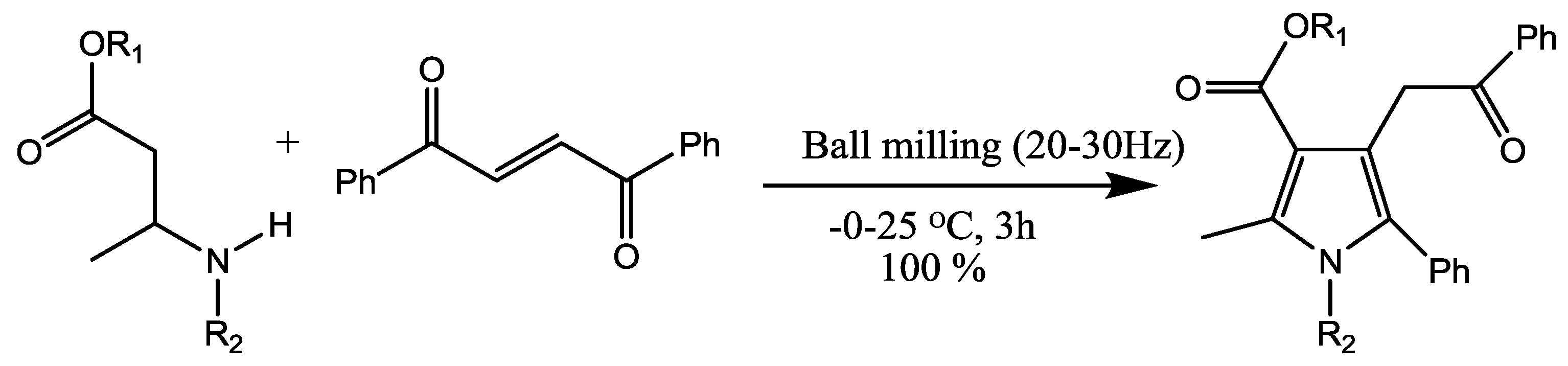
Cascade mechanical milling reactions were reported for the first time by Kaupp et al. [34]. They investigated synthesis of pyrrole and indole products in quantitative yields by the reaction of trans-1,2 dibenzoylethene with primary, secondary enamine esters or enamine ketones in a ball mill (Scheme 2). The reactions took place through Michael addition of the enamine nitrogen followed by cyclization addition of the enamine double bond. The product is obtained by rearrangement to the enamine followed by elimination of water.
Scheme 2. Reaction of trans-1,2 dibenzoylethene with primary, secondary enamine esters or enamine ketones.

2.2. Indole Synthesis.

Zille et al. [35] reported a good Sonogashira reaction method under solvent free conditions involving the reaction of o-iodoaniline and terminal alkynes using ZnBr2 as catalyst to afford 2-alkynylanilines in a planetary ball mill at 800 rpm for 30 min (Scheme 3).
Scheme 3. Sonogashira reaction for synthesis of indoles.
Rhodium (III)-catalyzed oxidative cyclization of acetanilides and non-terminal alkynes using dioxygen as a oxidant in the absence of a solvent, under mechanochemical conditions afforded 10 differently substituted indole in moderate to good yields [36] (Scheme 4).
Scheme 4. Oxidative cyclization of acetanilides and non-terminal alkynes.
Under solvent-free and milling reaction conditions, 2-carbonylindoles were synthesized by cyclization of their corresponding enaminone using molecular iodine as a mediator for the annulation process. The enaminone precursors were prepared by mechanochemical reaction of aniline derivatives with alpha-haloketone to afford arylaminomethylenecarbonyl derivative then by subsequent thermal condensation with N,N′-dimethylformamide dimethyl acetal [37] (Scheme 5).
Scheme 5. Cyclization of enaminone for synthesis of 2-carbonylindoles.
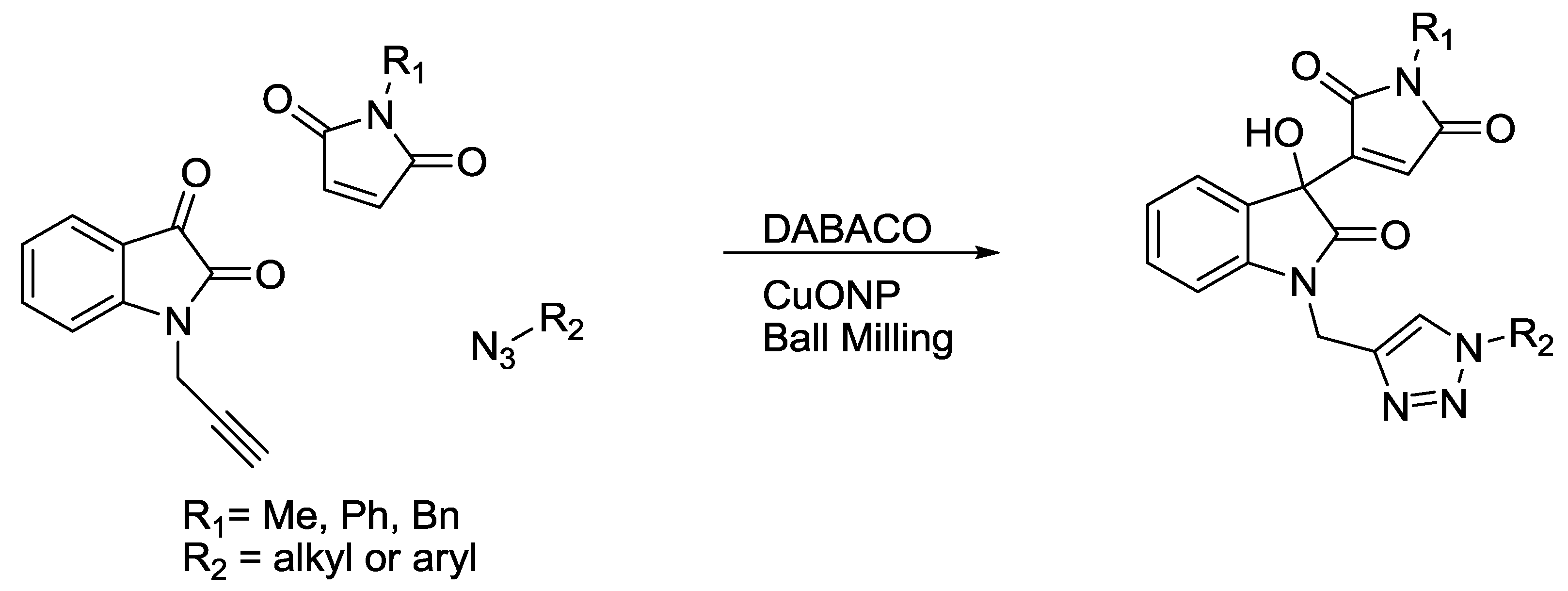
Recently, Vadivelu et al. reported solvent-free ball milling of three components—malimide, N-propargyl isatin and an alkyl or aryl azide—along with DABCO and CuO nanoparticles as a recyclable heterogeneous catalyst to afford N-triazolylmethyloxindole [38] (Scheme 6).
Scheme 6. Synthesis of N-triazolylmethyloxindole.

2.3. Indeno[1,2-b]pyrrole Synthesis

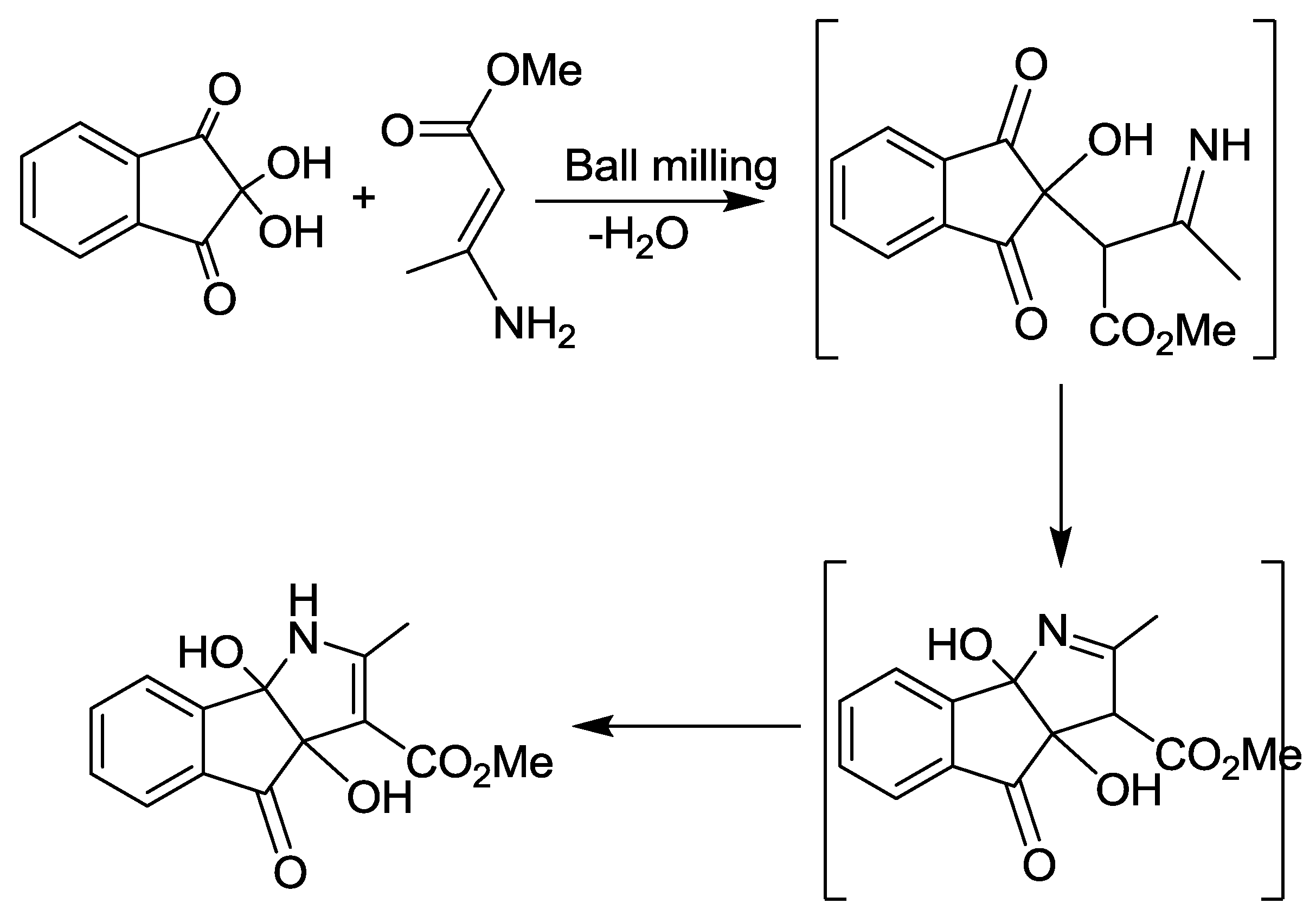
Synthesis of N-heterocyclic compounds with α-hydroxyketone and N=O-semiaminal functionalities had been reported by Kaupp et al. [39]. The reaction proceeded via a three-cascade reactions vinylogous substitution, cyclization, and 1,3-hydrogen shift by reaction of ninhydrin and enamino ester (Scheme 7).
Scheme 7. Synthesis of indeno[1,2-b]pyrrole.

2.4. Pyrazole Synthesis

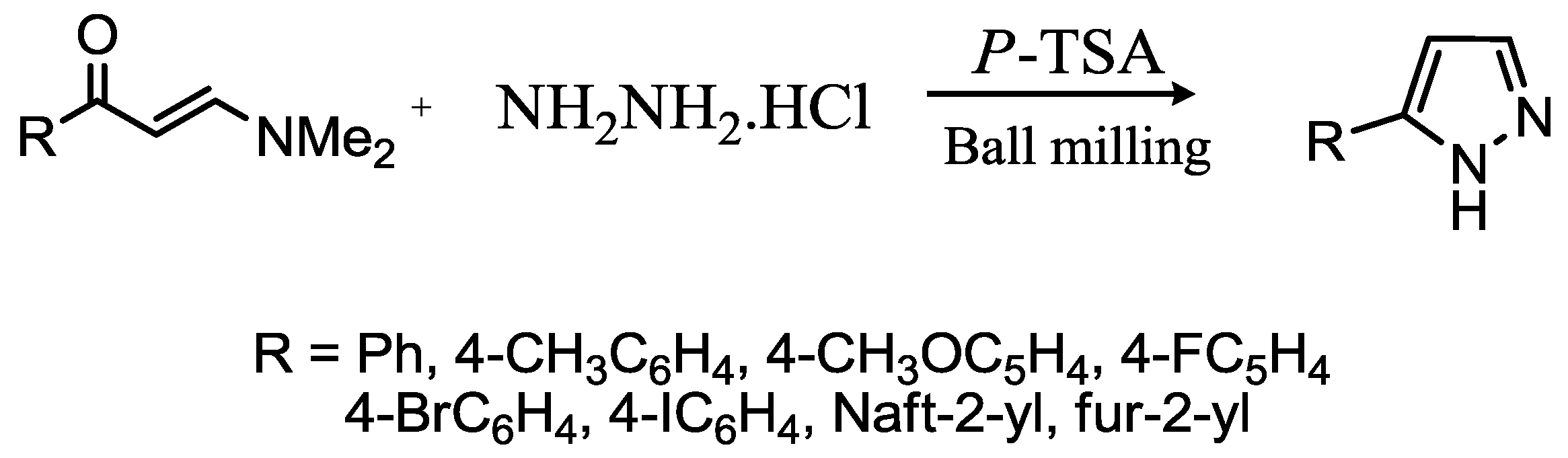
Paveglio et al. [40] studied the mechanical parameters for the best conversion and selectivity for synthesis of 1H-pyrazole derivatives in a ball mill (Scheme 8.) The optimum conditions were 450 rpm, five balls (10 mm), and the use of 10% of para-toluenesulfonic acid (p-TSA) as catalyst for 3 min.
Scheme 8. Synthesis of 1H-pyrazole derivatives.
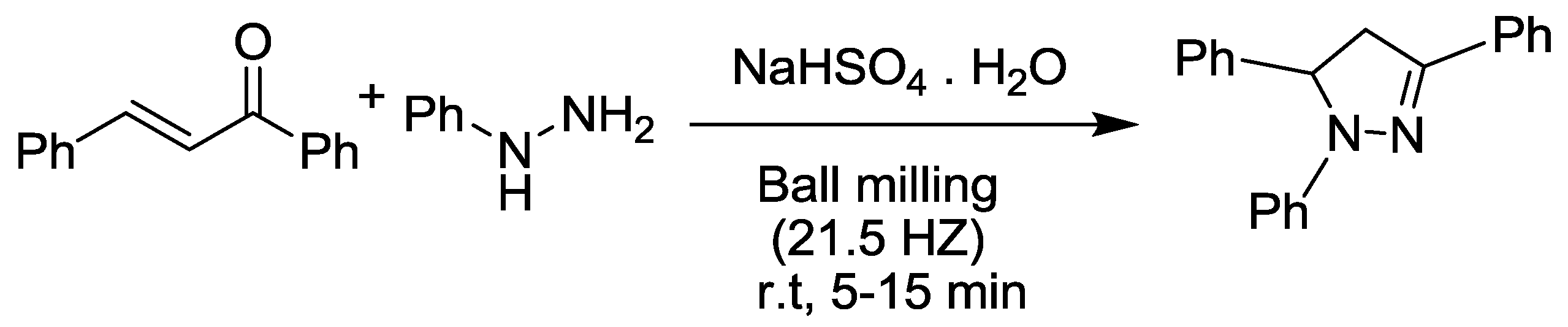
A solid-solid ball milling reaction of chalcone and phenylhydrazine catalyzed by NaHSO4·H2O (0.5 equivalents) was reported by Zhu and coworkers [41]. The reaction proceeded effectively using a high-speed ball mill at 1290 rpm to give 1,3,5-triaryl-2-pyrazoline in good yields (up to 93%) (Scheme 9). The reaction was extended by using thiosemicarbazides and aliphatic enones to give 2-pyrazoline derivatives [28].
Scheme 9. Synthesis of 1,3,5-triaryl-2-pyrazoline.
Ze et al. [42] developed a one-pot and solvent-free protocol for the synthesis in excellent yields of 3,5-diphenyl-1H-pyrazoles under mechanochemical ball-milling conditions using cheap sodium persulfate as the oxidant (Scheme 10) followed by a very simple work-up procedure.
Scheme 10. Synthesis of 3,5-diphenyl-1H-pyrazoles.
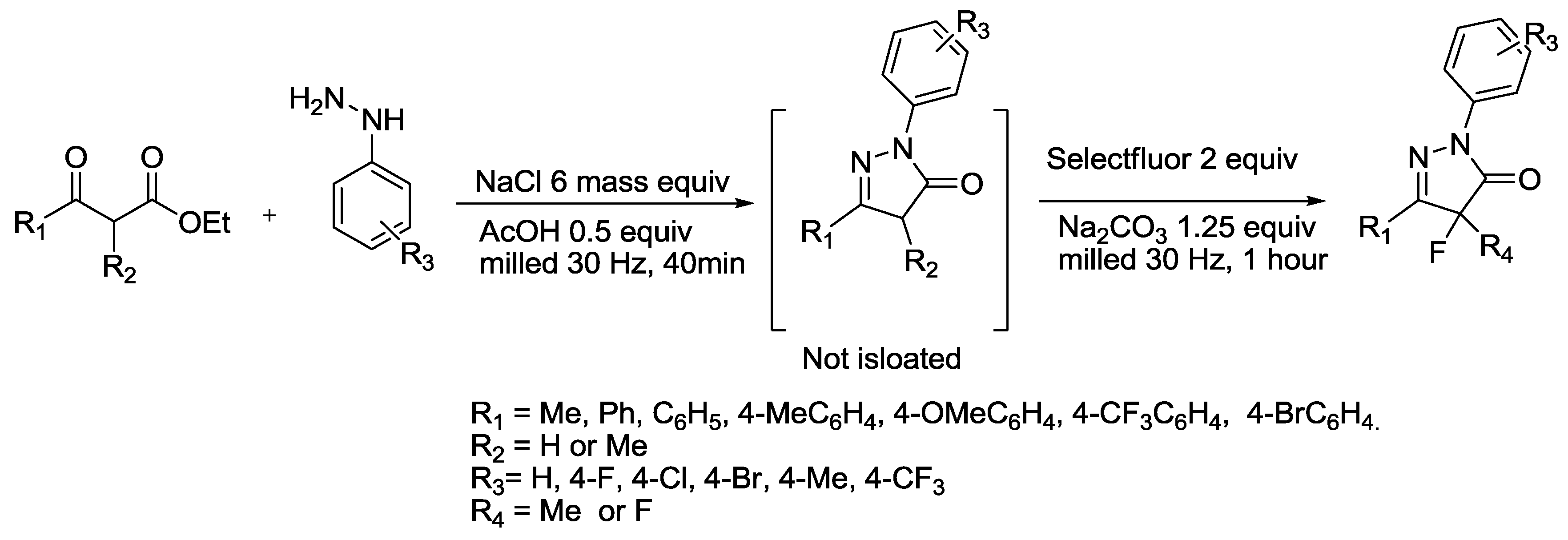
Twelve diflourinated pyrazolones were synthesized via a solventless one-pot, two-step mechanochemical reaction. The first step is the condensation between a β-ketoester and phenylhydrazine to give the corresponding pyrazoline, which is flourinated in the next step to afford the fluorinated pyrazolones [43] (Scheme 11).
Scheme 11. Condensation of a β-ketoester and phenylhydrazine.
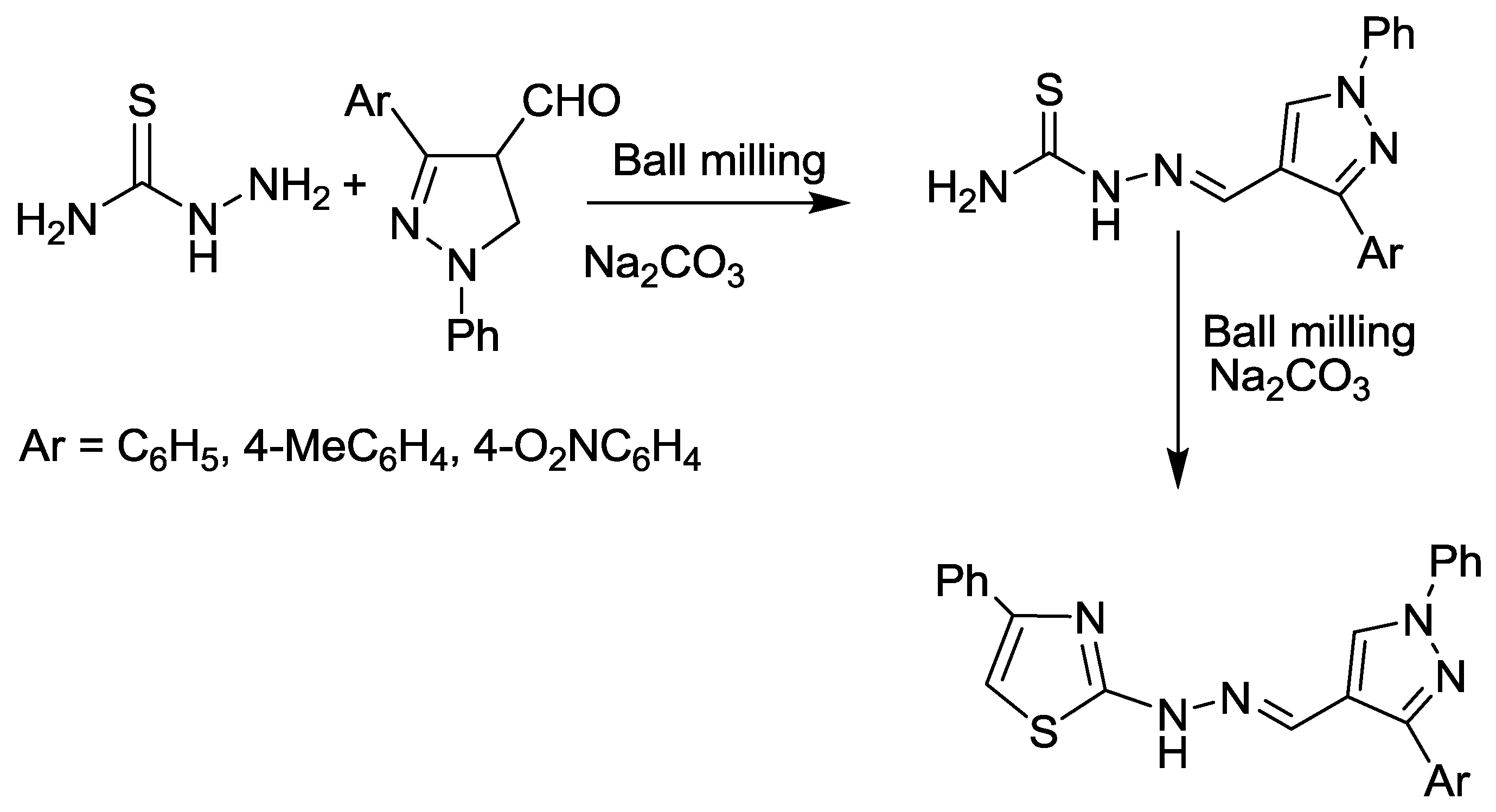
Bondock and coworkers [44], synthesized a series of pyrazolylthiosemicarbazones by reaction of thiosemicarbazide and appropriate aldehydes using sodium carbonate and 1 h ball milling. The reaction of phenacyl bromide with pyrazolylthiosemicarbazones afforded the corresponding 2-(arylidenehydrazino)-4-phenylthiazoles in high yield (up to 98%) (Scheme 12).
Scheme 12. Synthesized of 2-(arylidenehydrazino)-4-phenylthiazoles.

2.5. Imidazole Synthesis

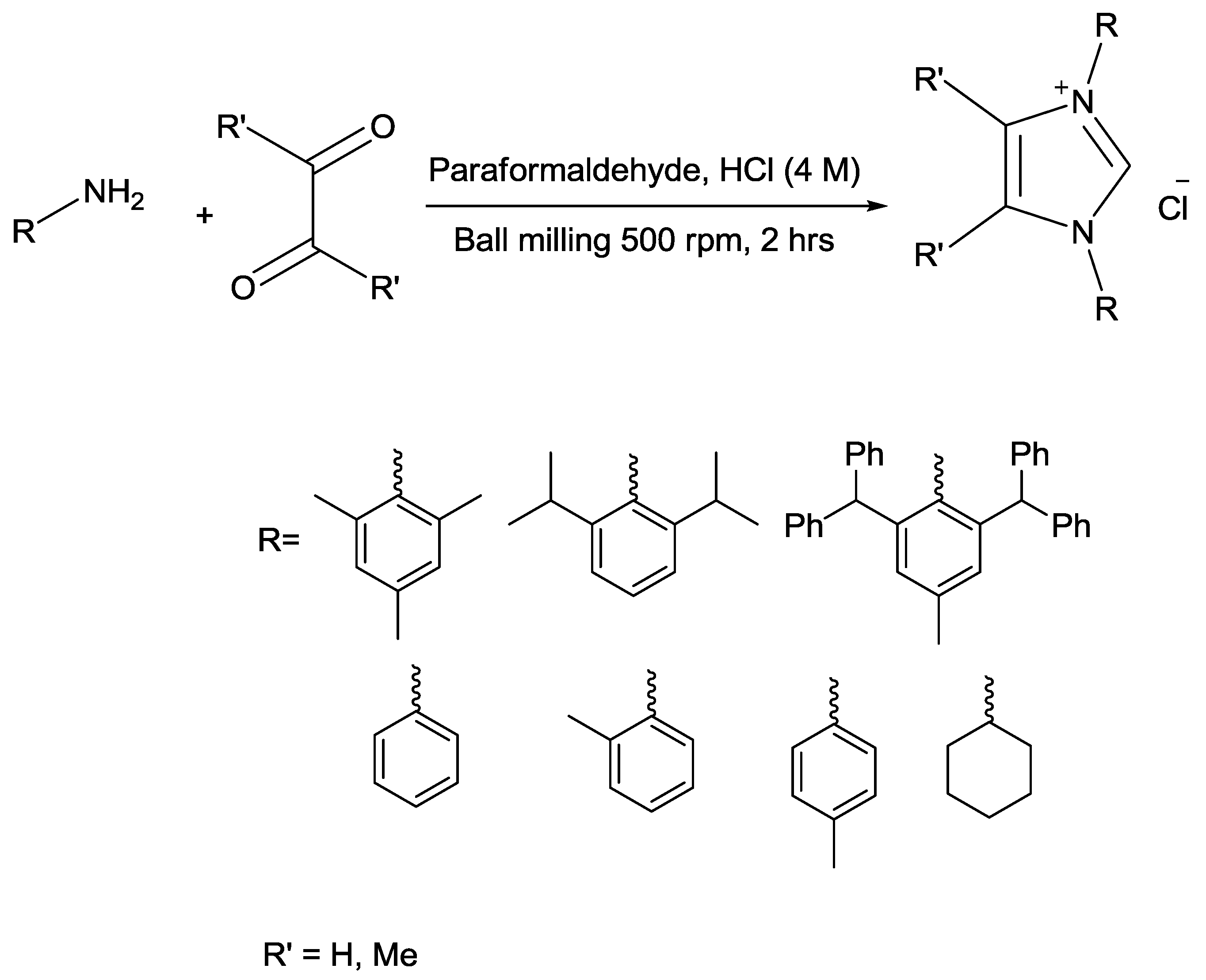
Lamaty et al. [45] investigated a solvent-free ball milling one-pot two-step synthesis of N-heterocyclic carbenes directly from anilines. This strategy allowed a significant improvement of the yields compared to conventional procedures. Synthesis of IPrMe·HCl of was selected as a model reaction. The optimum reaction conditions were 2:1 molar equivalents of 2,6-diisopropyl- phenylamine:2,3-butanedione at 500 rpm for two hours. Variable carbon sources were used (formaldehyde, chloromethylethylether, 1,3,5-trioxane and paraformaldehyde), and the best results were obtained with paraformaldehyde and HCl (4M) in dioxane as a solvent to afford the product in 49% yield over the two steps. Under the optimium conditions, the scope of the reaction was studied for many products (IPr·HCl, IMes·HCl, Io-Tol·HCl and ICy·HCl), and the reaction proceeded effectively to afford NCH in high yield (up to 100%) for all substrates except a highly hindered 2,6-diphenylmethyl-4-methylphenyl substrate (Scheme 13).
Scheme 13. Synthesis of N-heterocyclic carbenes directly from anilines.

2.6. Benzimidazole Synthesis

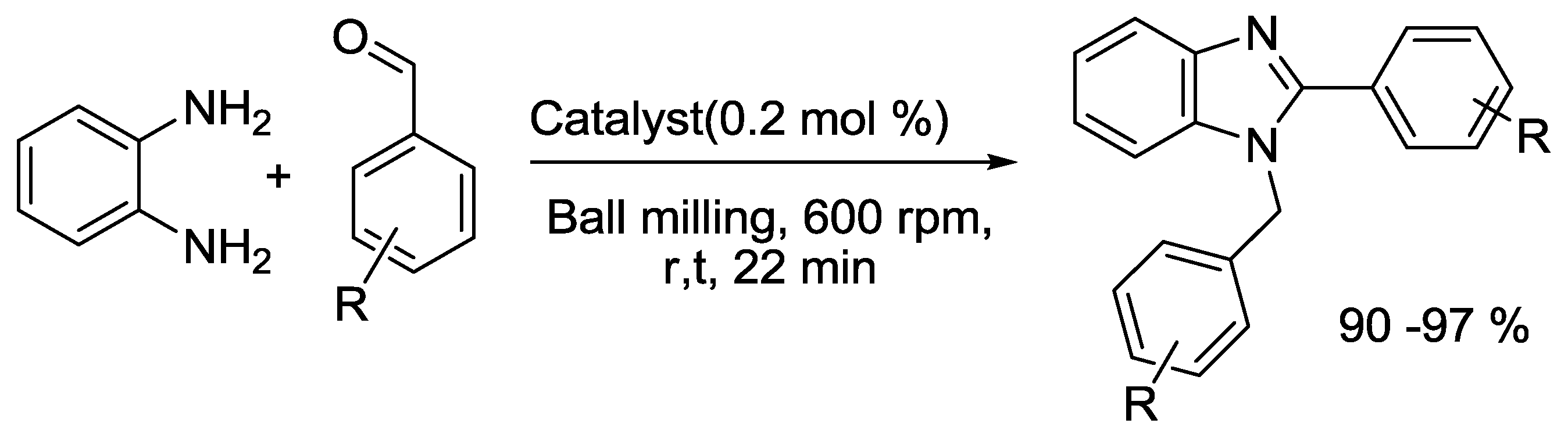
Recyclable ionic liquid-coated ZnO-nanoparticles (ZnO-NPs, catalyst 5) were employed as a catalyst in the green synthesis of 1,2-disubstituted benzimidazoles derivatives by a ball milling technique which produced high yields with high selectivity [46] (Scheme 14).
Scheme 14. Synthesis of 1,2-disubstituted benzimidazoles.
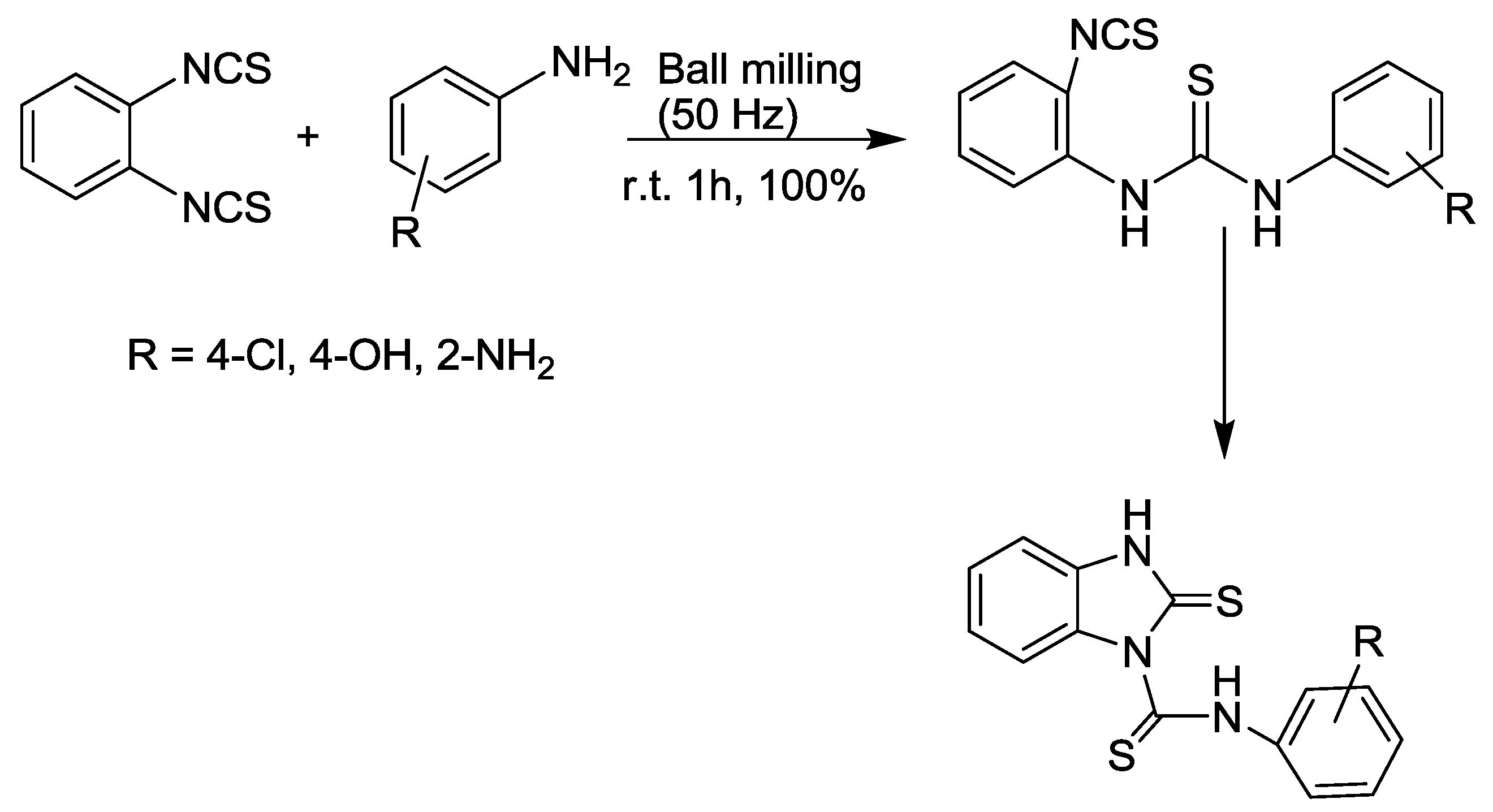
At room temperature, 1 h ball milling afforded 100% yield of substituted (anilino-thiocarbonyl)-benzimidazolidine-2-thiones by reaction of aniline derivatives and o-phenylenediisothiocyanate (Scheme 15) [44].
Scheme 15. Synthesis of (anilino-thiocarbonyl)-benzimidazolidine-2-thiones.
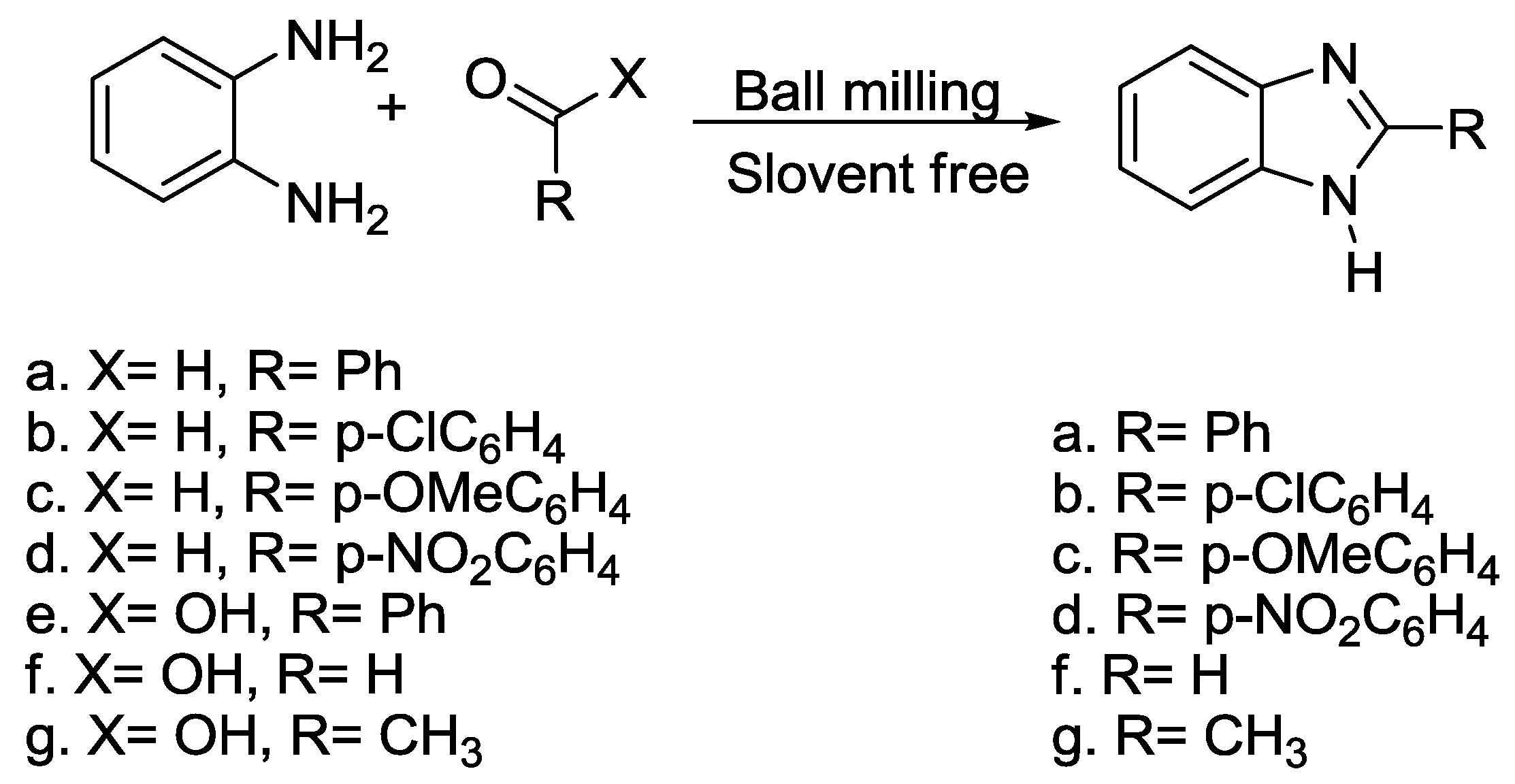
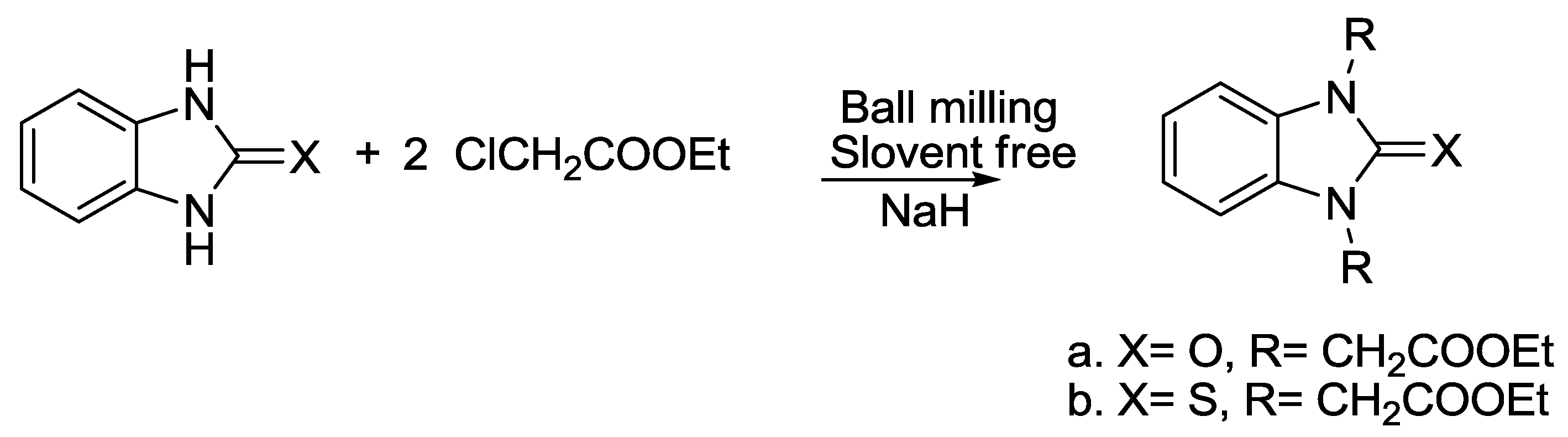
Recently, our research group [47] reported a high yielding ball milling synthetic method for a series of benzimidazol-2-ones or benzimidazol-2-thiones under solvent-free conditions by reaction of o-phenylenediamine and benzaldehydes or benzoic acids. Several reaction parameters were investigated such as milling ball weight, frequency and milling time. This method shows effectiveness for the reaction of different carboxylic acids, aldehydes, urea, ammonium thiocyanate or thiourea with o-phenylenediamine (Scheme 16 and Scheme 17). Moreover; alkylation of benzimidazolone or benzimidazolthione by ethyl chloroacetate was also studied (Scheme 18).
Scheme 16. Synthesis of benzimidazoles from carboxylic acids or aldehydes.
Scheme 17. Synthesis of benzimidazol-2-ones or benzimidazol-2-thione.
Scheme 18. Alkylation of benzimidazolone or benzimidazolthione.
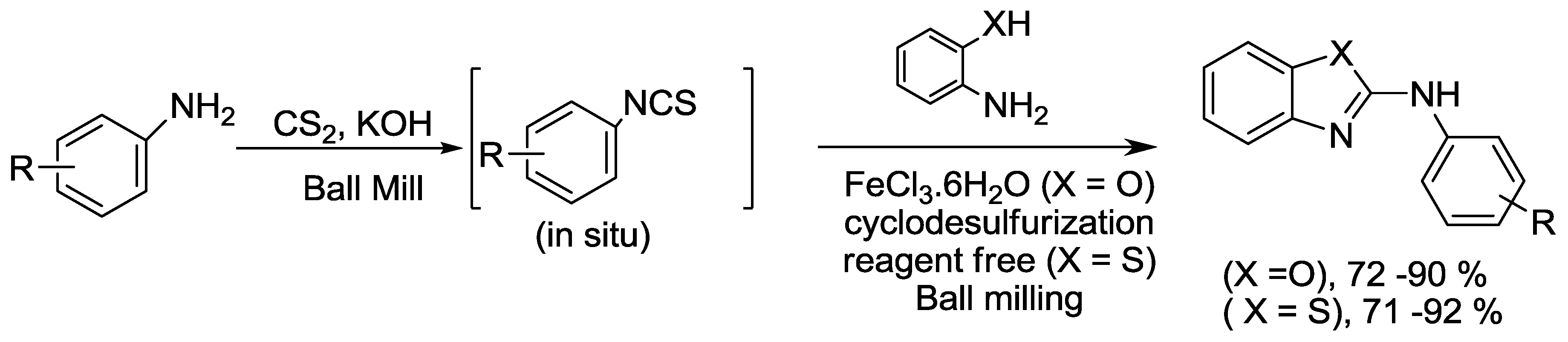
Reaction of anilines, CS2, and 2-aminophenol or thiophenol under solvent-free ball milling conditions leads to a series of 2-anilinobenzoxazoles or thiazoles, respectively, in good to excellent yields (Scheme 19) [48].
Scheme 19. Synthesis of 2-anilinobenzoxazoles or 2-anilinobenzothiazoles.

2.7. Indeno[2,1-d]imidazole Synthesis

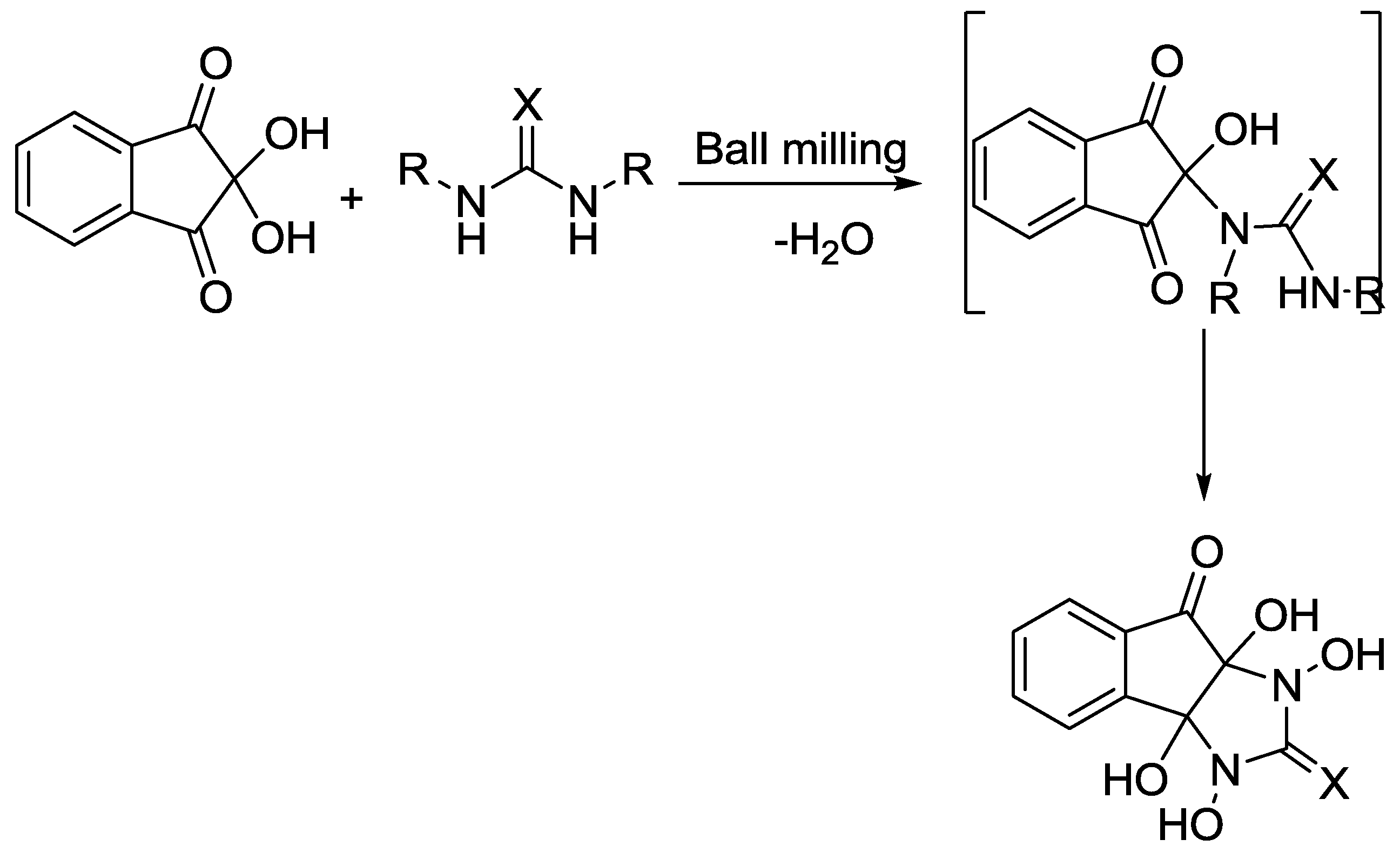
Kaupp et al. reported a good reaction of ninhydrin with ureas/thioureas to afford heterocyclic bis-semi acetals by substitution and addition cascade reactions under ball milling technique conditions [39] (Scheme 20).
Scheme 20. Reaction of ninhydrin with ureas/thioureas.

2.8. Thiazole and Oxazole Synthesis

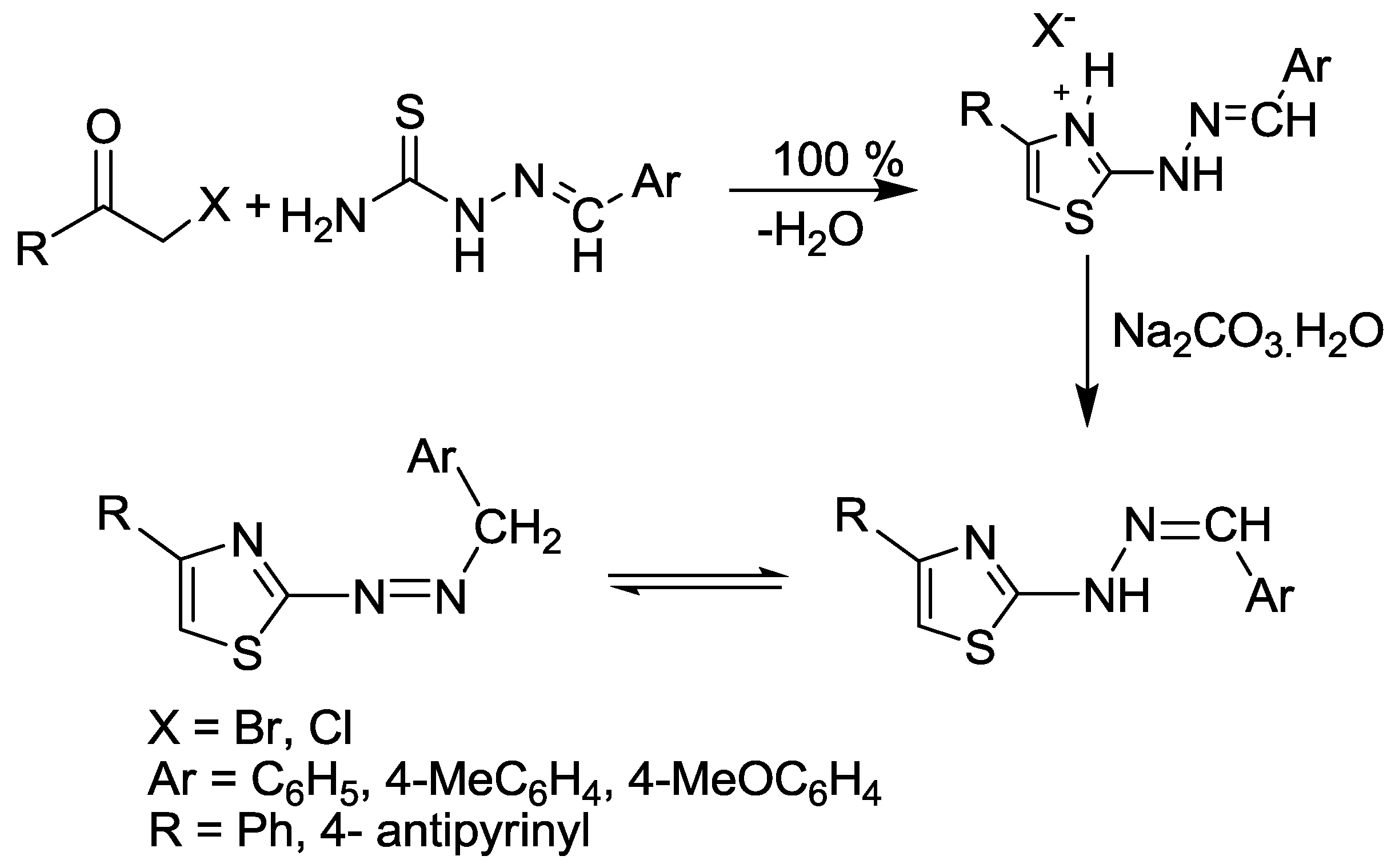
Solvent and catalyst-free reactions of α-haloketones with thiosemicarbazones to give the corresponding 4-substituted 2-(arylidenehydrazino)thiazoles in a ball milling reactor were reported by Abdel-Latif and coworkers [49] (Scheme 21).
Scheme 21. Synthesis of 4-substituted-2-(arylidenehydrazino)thiazoles.
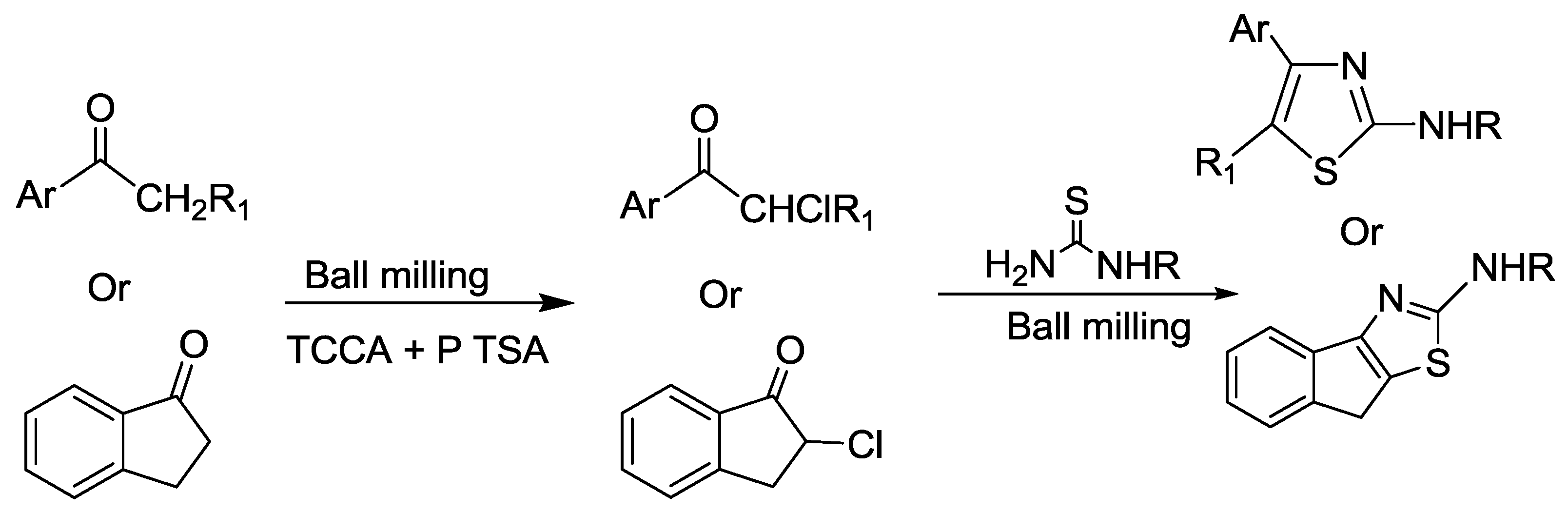
Nagarajaiah et al. [50] reported an efficient chlorination method to give α-chloroketones by the reaction of ketones with trichloroisocyanuric acid in the presence of p-TSA under ball-milling conditions. Then these α-chloroketones reacted with thiosemicarbazides and thiourea to afford 2-hydrazinylthiazoles and 2-aminothiazoles, respectively, in good yields (Scheme 22).
Scheme 22. Synthesis of 2-hydrazinylthiazoles and 2-aminothiazoles.
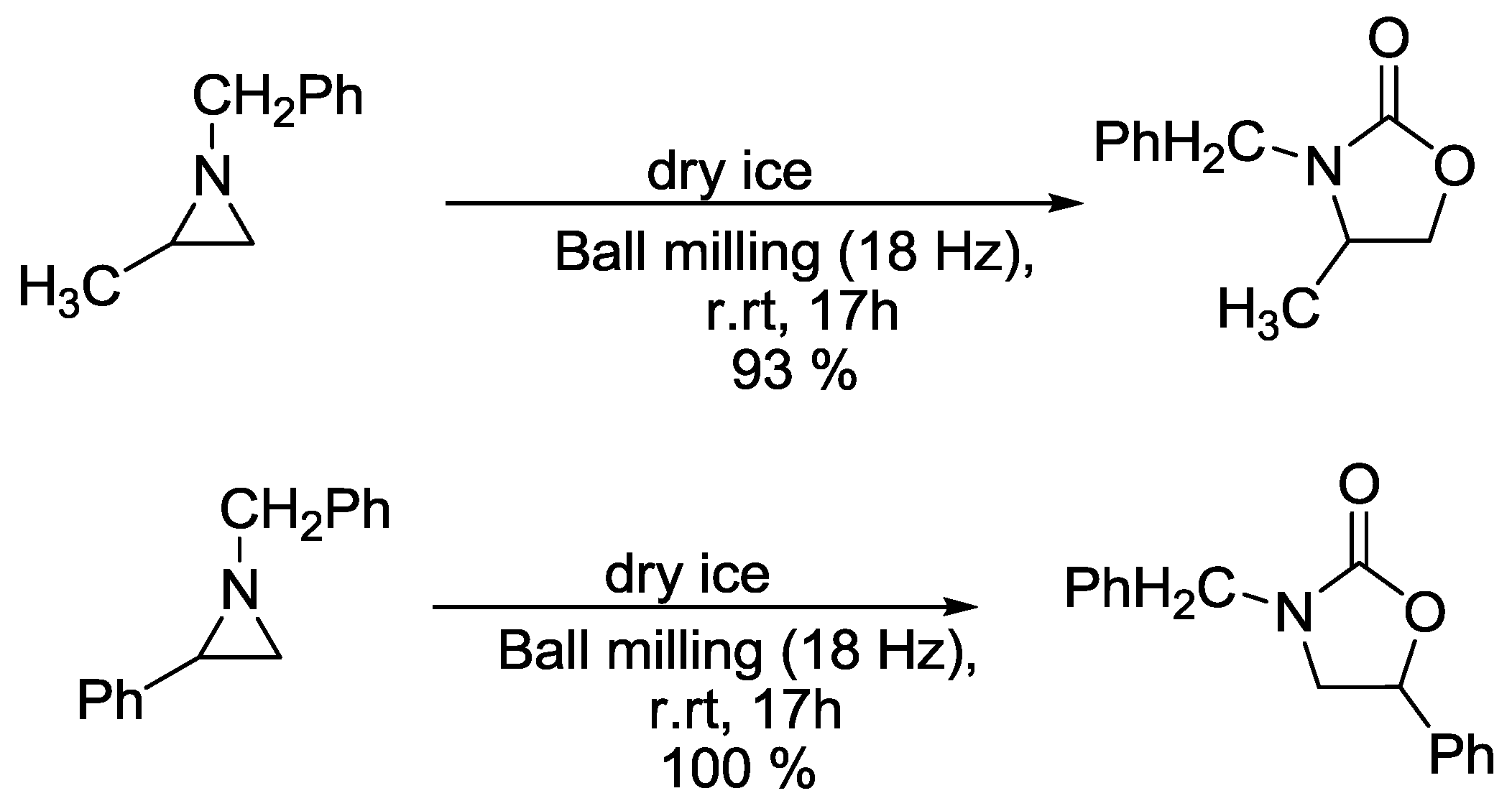
Phung et al. [49] showed the importance of the ball milling technique in dry ice for regioselective conversion of an unactivated 2-aryl aziridine or 2-alkyl into an oxazolidinone (Scheme 23).
Scheme 23. Conversion of aziridine into an oxazolidinone.

2.9. Triazole Synthesis

A series of 1,4-substituted-1H-1,2,3-triazoles were synthesized in high yields (up to 99%) by 1,3-dipolar cycloaddition of alkynes with decylazide and a catalytic amount of Cu(OAc)2 using a ball-mill at 800 rpm rotation speed (13.3 Hz) for 10 min [51] (Scheme 24).
Scheme 24. 1,3-Dipolar cycloaddition of alkynes with decylazide.
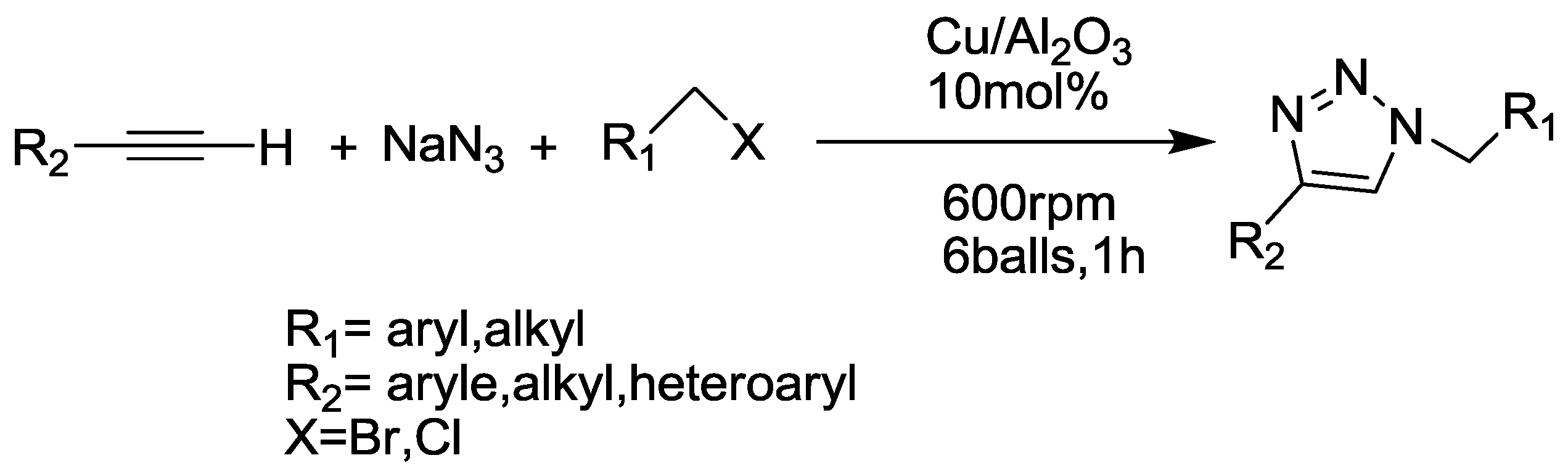
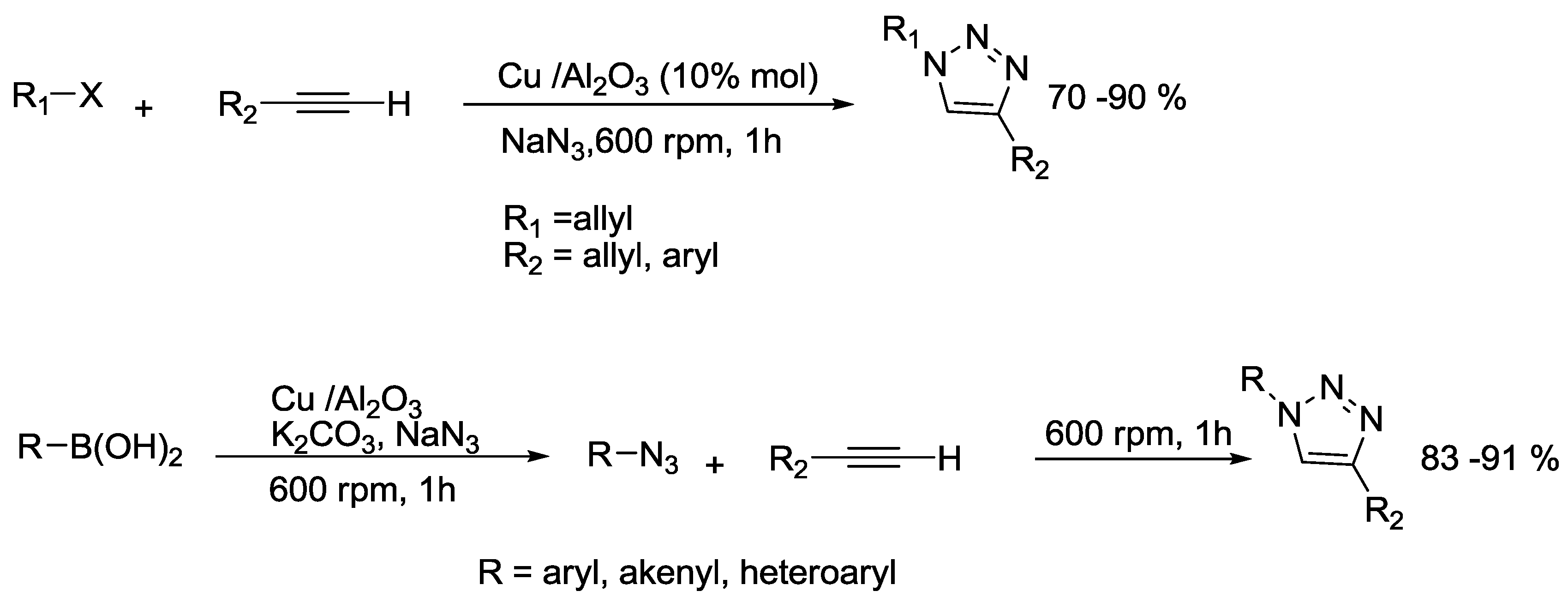
Under mechanical milling, synthesis of 1,2,3-triazole derivatives occurred by a coupling of terminal alkynes, alkyl halides or aryl boronic acids and sodium azide over copper(II) sulfate supported on alumina (Cu/Al2O3) in the absence of any solvent (Scheme 25) [52].
Scheme 25. Coupling of terminal alkynes, alkyl halides or aryl boronic acids and sodium azide.
Thorwirth and coworkers [51] have reported polymerization of 1,12-diazidododecane and bisethynyl compounds in a ball mill without destroying the polymer backbone (Scheme 26).
Scheme 26. Polymerization of 1,12-diazidododecane and bisethynyl.
Ranu et al. [52] reported Cu/Al2O3 as a catalyst for the synthesis of 1,4-disubstituted-1,2,3-triazoles by the reaction of terminal alkynes, alkyl halide/aryl boronic acid and sodium azide under solvent free and ball milling conditions. This method averts the use of hazardous organo- azides to afford arylalkyl- and arylaryl-substituted 1,2,3-triazoles in excellent yield (Scheme 27).
Scheme 27. Synthesis of 1,4-disubstituted-1,2,3-triazoles from aryl boronic acid.

3. Six Membered Rings

3.1. Pyridine Synthesis

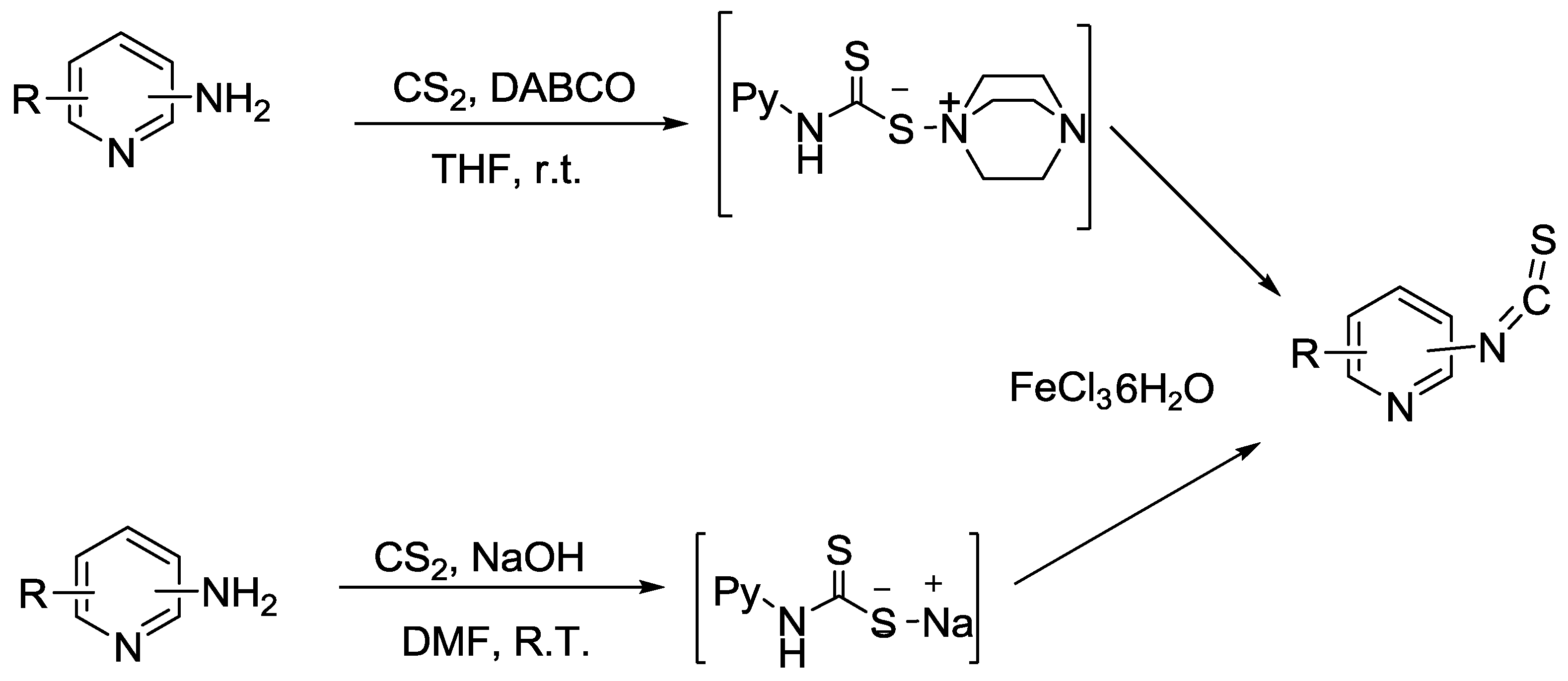
Zhang et al. [53] reported an effective method for the synthesis of pyridyl isothiocyanates (ITCs) from the corresponding amines, where aqueous iron(III) chloride promotes desulfurization of a dithiocarbamate salt that is generated in situ from the amine and carbon disulfide in the presence of DABCO or sodium hydride under ball-milling conditions ( Scheme 28). Use of this protocol gives good yields.
Scheme 28. Synthesis of pyridyl isothiocyanates.

3.2. Quinoline Synthesis

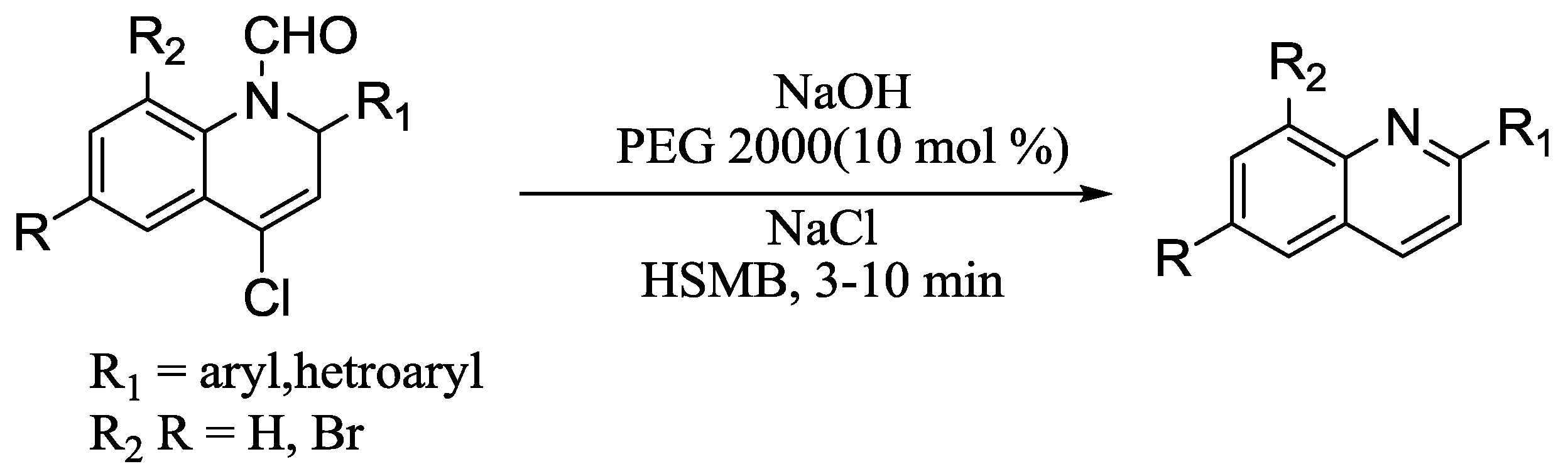
Yu et al. [54] reported a high yield (up to 99%) synthetic method for quinoline derivatives by the reaction of N-formyldihydroquinoline on a solid base such as sodium hydroxide (NaOH) under high-speed ball milling conditions with a catalytic amount of polyethylene glycol 2000 (PEG 2000) as catalyst (Scheme 29).
Scheme 29. Deformylation of N-formyldihydroquinoline.
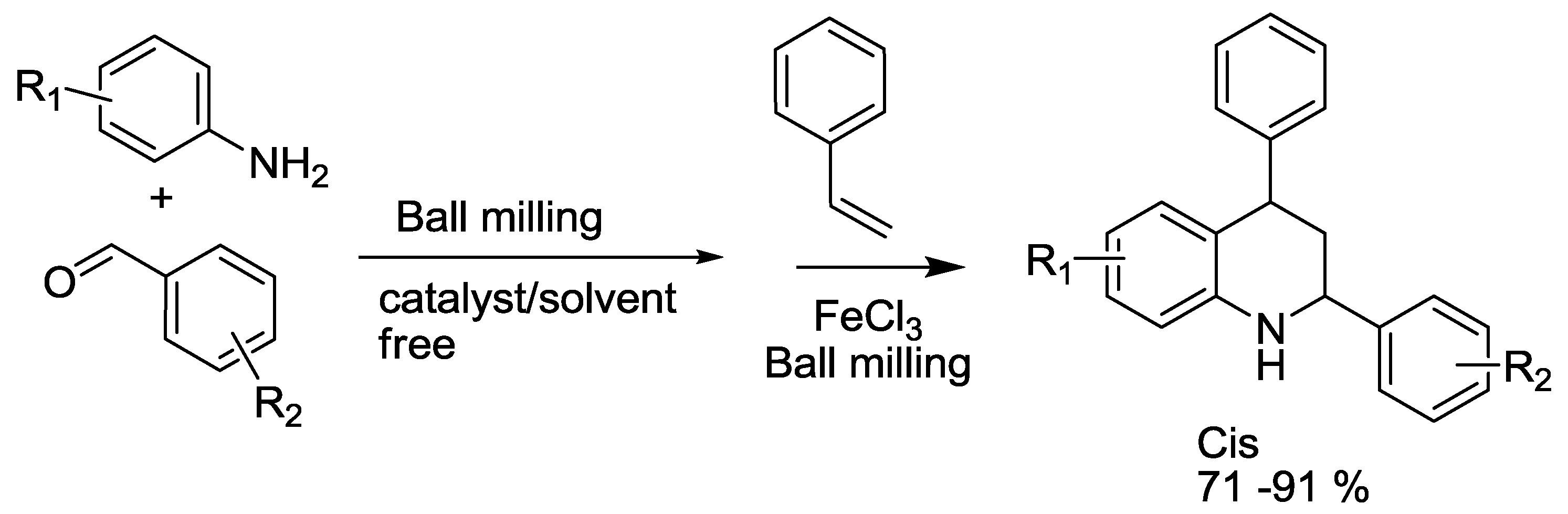
Under solvent-free high-speed ball milling styrene and N-aryl aldimines generated in situ are used for the synthesis of cis-2,4-diphenyltetrahydroquinolines in good yield via Diels–Alder cycloaddition reactions in presence of FeCl3 (Scheme 30). This method is a very efficient and green alternative to conventional methods for synthesis for these types of heterocyclic skeletons. The advantages of this method are a short reaction time, easy availability of the required reagents, solvent free conditions and a nontoxic catalyst [53].
Scheme 30. Diels–Alder synthesis of cis-2,4-diphenyltetrahydroquinolines.

3.3. Imidazo[1,2-a]pyridine Synthesis

One pot Ugi-multicomponent reactions between 2-amioazines, aldehydes and isonitriles were conducted under solvent-free mechanochemical ball-milling conditions to afford 3-aminoimidazo[1,2-a]pyridine derivatives in good to excellent yields at room temperature [55]. The reaction has been shown to display good functional group tolerance (Scheme 31).
Scheme 31. Ugi-multi-component reaction.
A series of 2,3-substituted imidazo[1,2-a]pyridines were obtained by reaction of 2-amino- pyridines with methyl ketones or 1,3-dicarbonyl compounds by I2-enhanced condensation/ cyclization via ball milling under solvent-free conditions. This method gives good functional group and broad molecular diversity with good product yields [56] (Scheme 32).
Scheme 32. Synthesis of 2,3-substituted imidazo[1,2-a]pyridines.

3.4. Chromeno[3,4-b]pyridine Synthesis

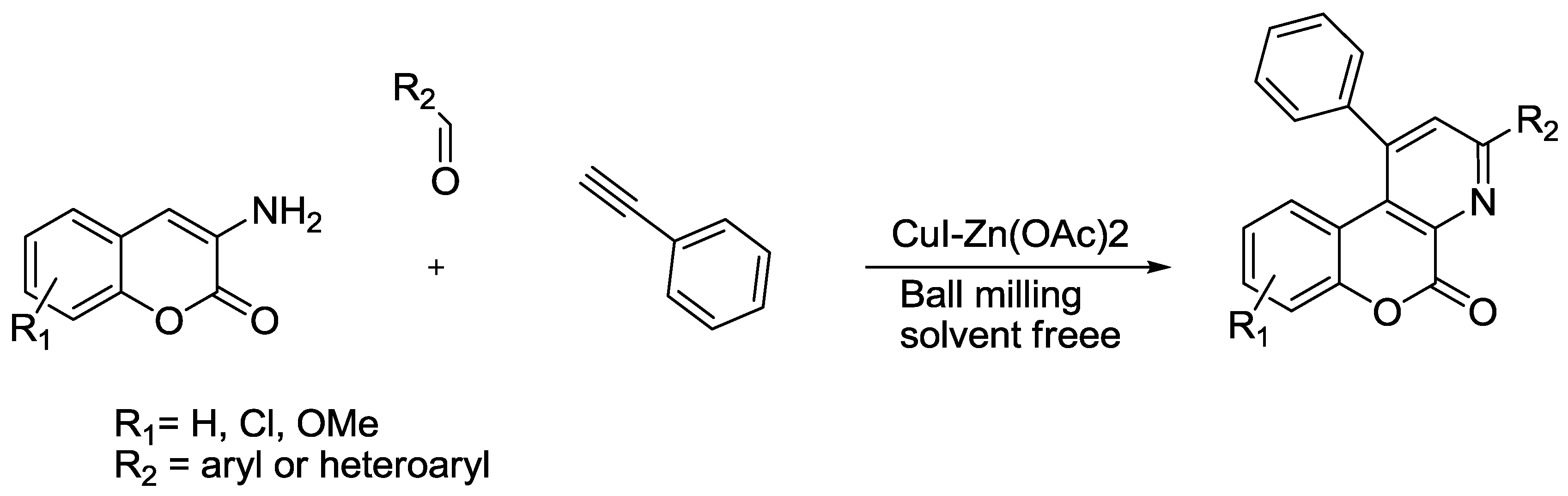
Recently, Kausar et al. described a synthesis of sixteen different pyridocoumarins in excellent yield by solvent free ball milling of 3-aminocoumarin, aldehydes and phenylacetylene along with CuI-Zn(OAc)2 as a catalyst for activation and functionalization of C(sp2)-H of 3-aminocoumarin [57] (Scheme 33).
Scheme 33. Synthesis of pyridocoumarins.

3.5. Pyrimidine Synthesis

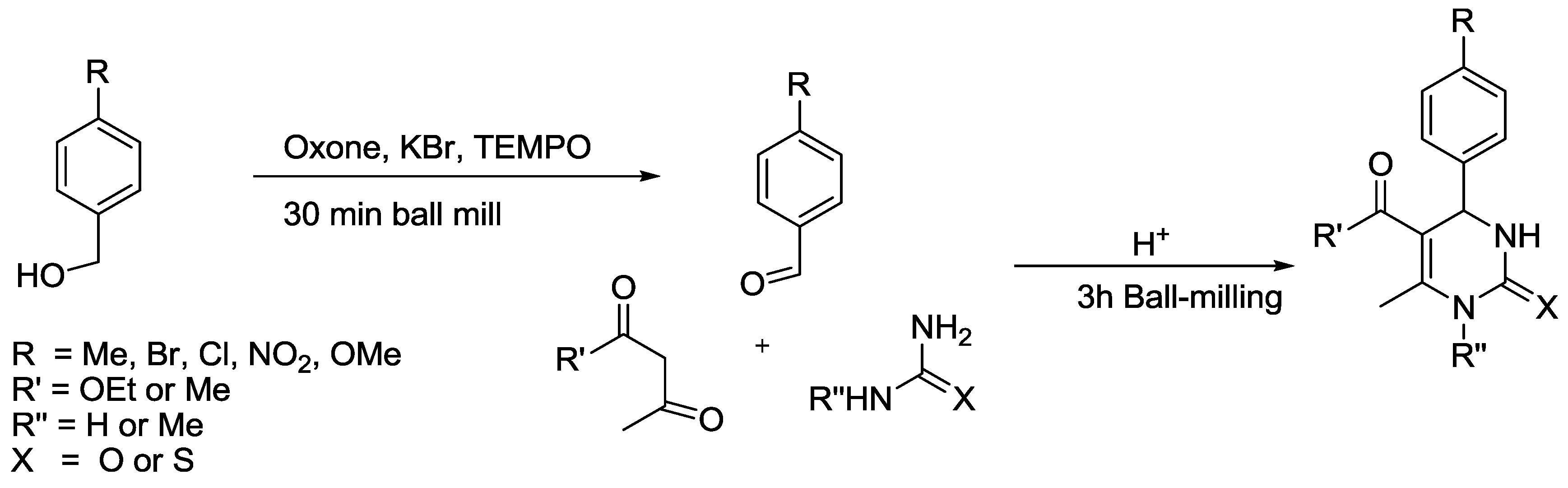
Under mechanochemical solvent-free conditions, a multicomponent Biginelli reaction was reported to give dihydropyrimidones [58]. The starting aldehydes were prepared within the same reaction pot by Br+ catalyzed oxidation of their corresponding primary alcohols which results in formation of byproducts. The acid was used as catalyst in the cascade transformation leading to dihydropyrimidones (Scheme 34).
Scheme 34. Multicomponent Biginelli reaction.
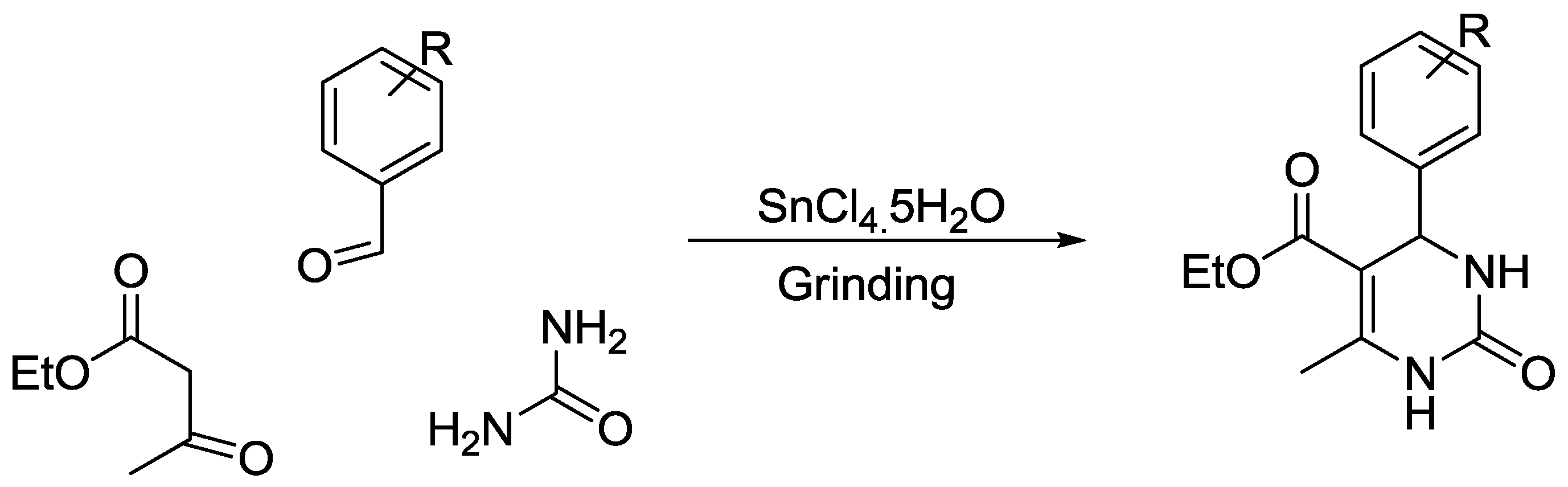
On the other hands, Sachdeva et al. reported the formation of dihydropyrimidones using a mechanochemical Biginelli reaction in presence of SnCl4·5H2O as a catalyst instead of the free acid [59] (Scheme 35).
Scheme 35. Synthesis of dihydropyrimidones by Biginelli reaction.
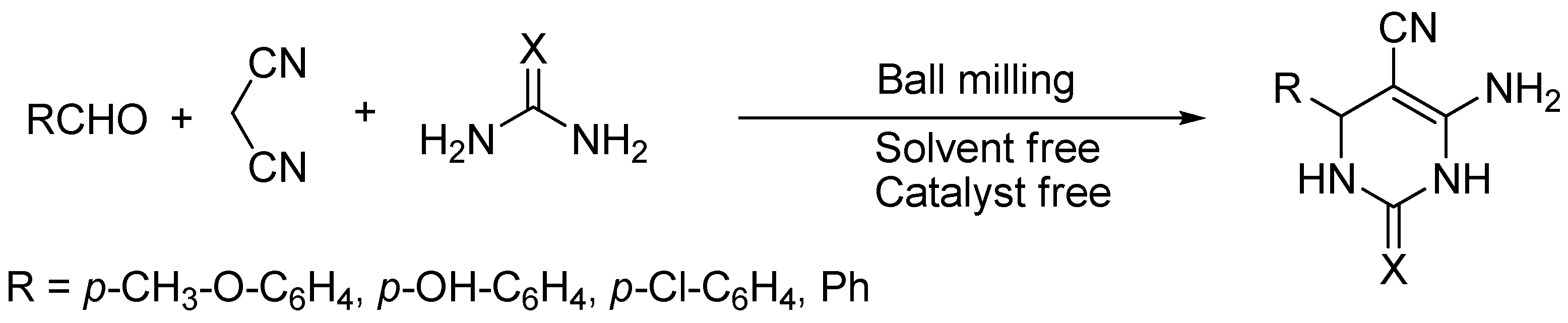
Ould et al. [28] showed that the condensation reaction of an equimolar amount of an aldehyde, malononitrile and thiourea/urea by ball milling in 40 min gives 2-thioxo or 2-oxo-1,2,3,4-tetrahydropyrimidine-5-carbonitrile derivatives (Scheme 36). The reactions proceed effectively without the aid of any catalyst or solvent to give the products in excellent yields (up to 98%).
Scheme 36. Synthesis of 2-thioxo or 2-oxo-1,2,3,4-tetrahydropyrimidine-5-carbonitriles.

3.6. Pyrano[2,3-d]pyrimidine Synthesis

Mashkouri et al. [22] used aromatic aldehydes, malononitrile, and barbituric acid (Scheme 37) to synthesize pyrano[2,3-d]pyrimidine-2,4(1H,3H)-diones in good yield (up to 94%) under a ball milling technique in circulating warm water to heat the reaction for 55 min milling.
Scheme 37. Synthesize pyrano[2,3-d]pyrimidine-2,4(1H,3H)-diones.

3.7. Diazine and Diazepine Synthesis

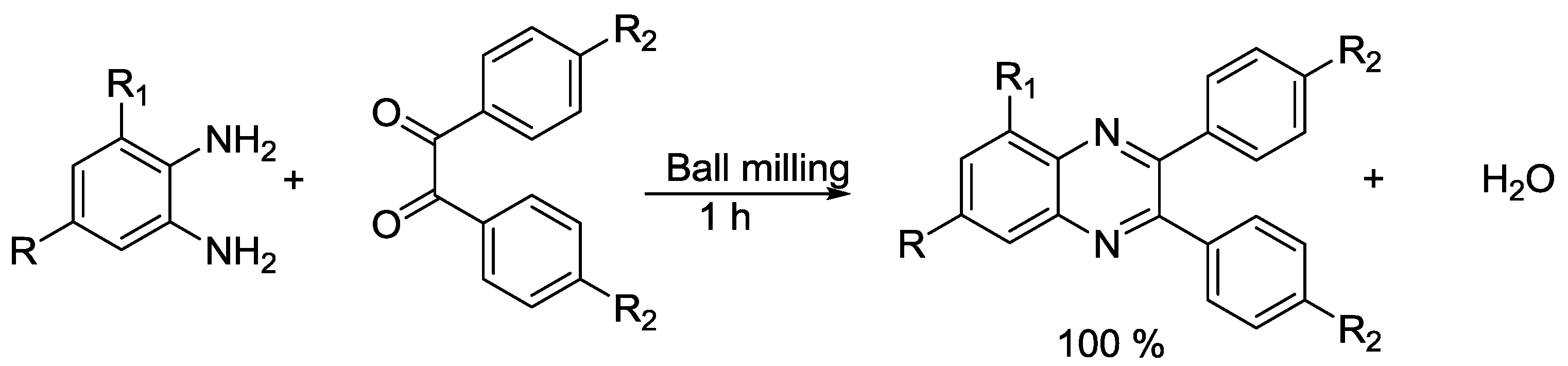
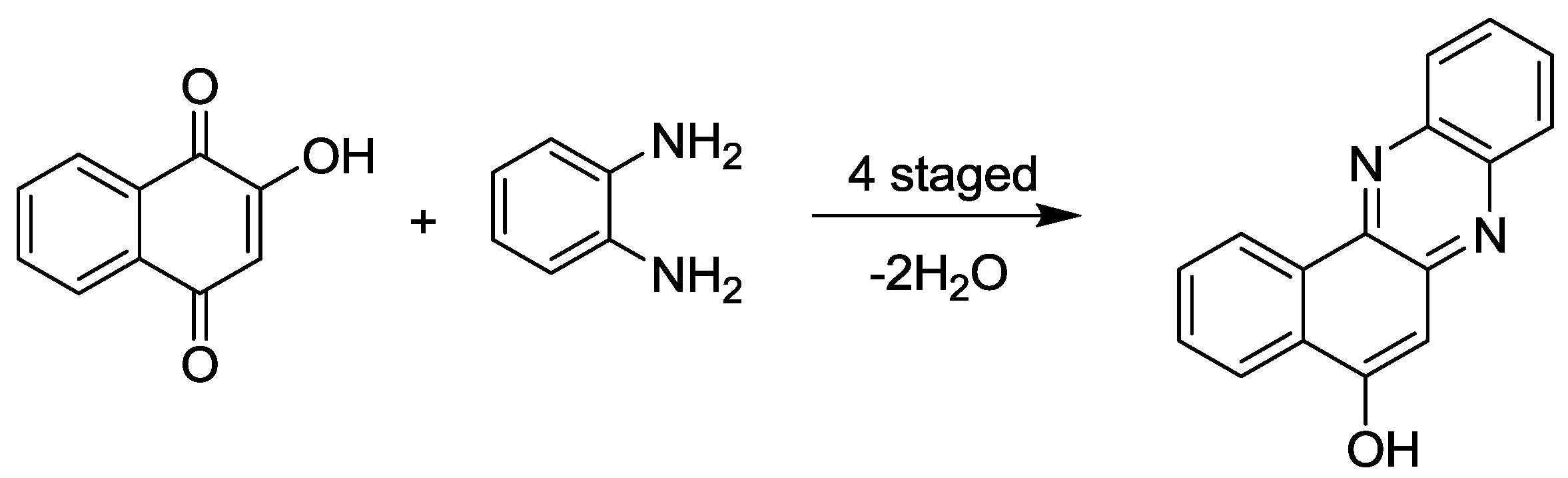
Kaupp et al. [39] studied the condensation of o-phenylene diamines with various 1,2-dicarbonyl compounds under ball milling conditions to afford a series of heterocycles. The condensation reaction of substituted o-phenylenediamines and benzil gave quinoxaline derivatives within 1 h (Scheme 38). Moreover, was benzo[a]phenazin-5-ol obtained by a condensation reaction between 2-hydroxy1,4-naphthoquinone and o-phenylenediamine within 15 min at 70 °C.
Scheme 38. Condensation of o-phenylenediamines and benzil to quinoxaline.
Substituted benzo[a]phenazin-5-ols were produced in 100% yield by milling of 2-hydroxy- 1,4-naphthoquinone and o-phenylenediamines for 15 min via a four cascade reaction (two additions two and eliminations, Scheme 39).
Scheme 39. Cascade synthesis of benzo[a]phenazin-5-ols.
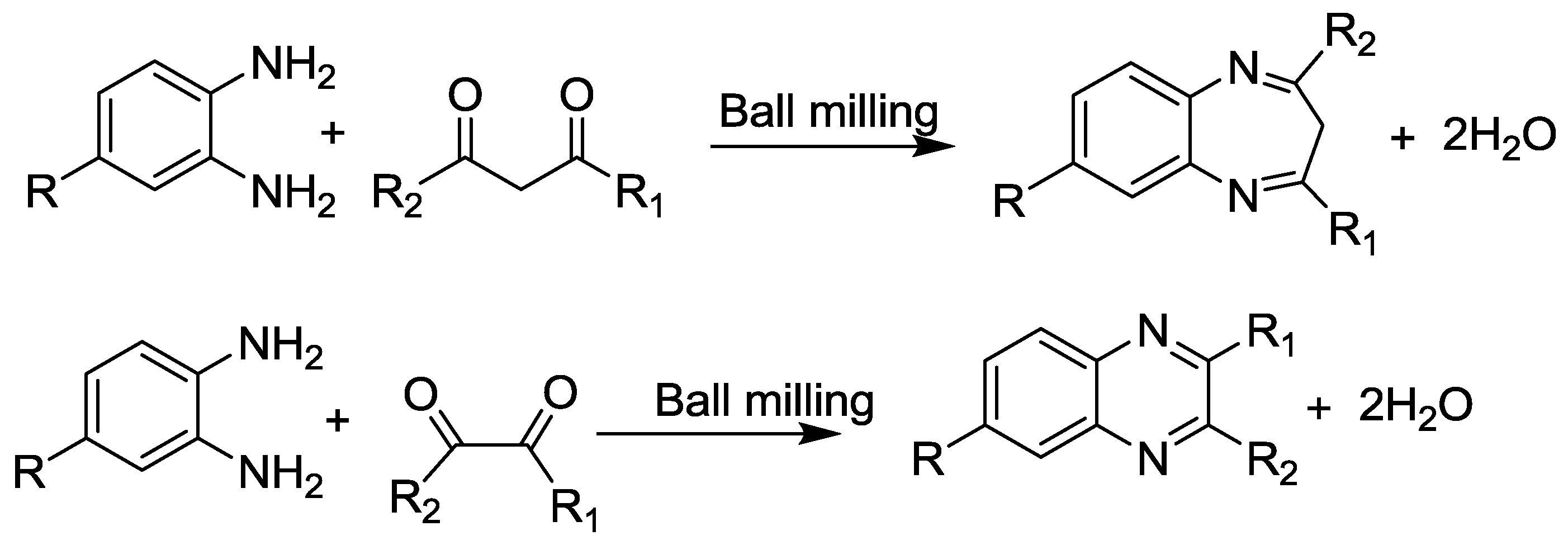
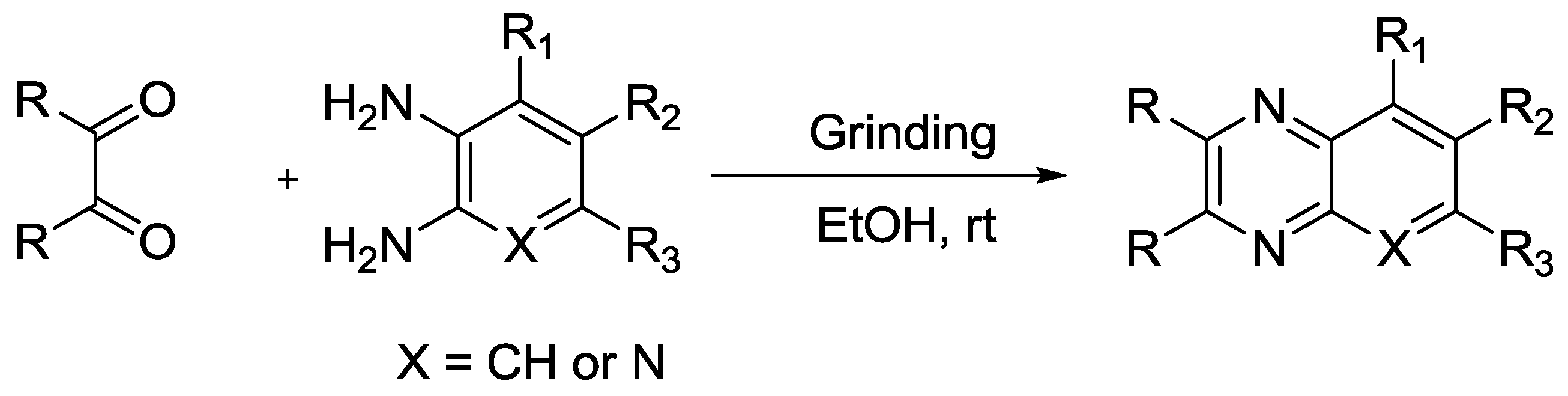
Ball milling conditions were successfully was used in the condensation reactions between o-diaminoarenes with 1,2-dicarbonyl compounds to afford a variety of differently substituted quinoxalines or pyrido[2,3-b]pyrazines [60,61] (Scheme 40).
Scheme 40. Synthesis of quinoxalines or pyrido[2,3-b]pyrazines.
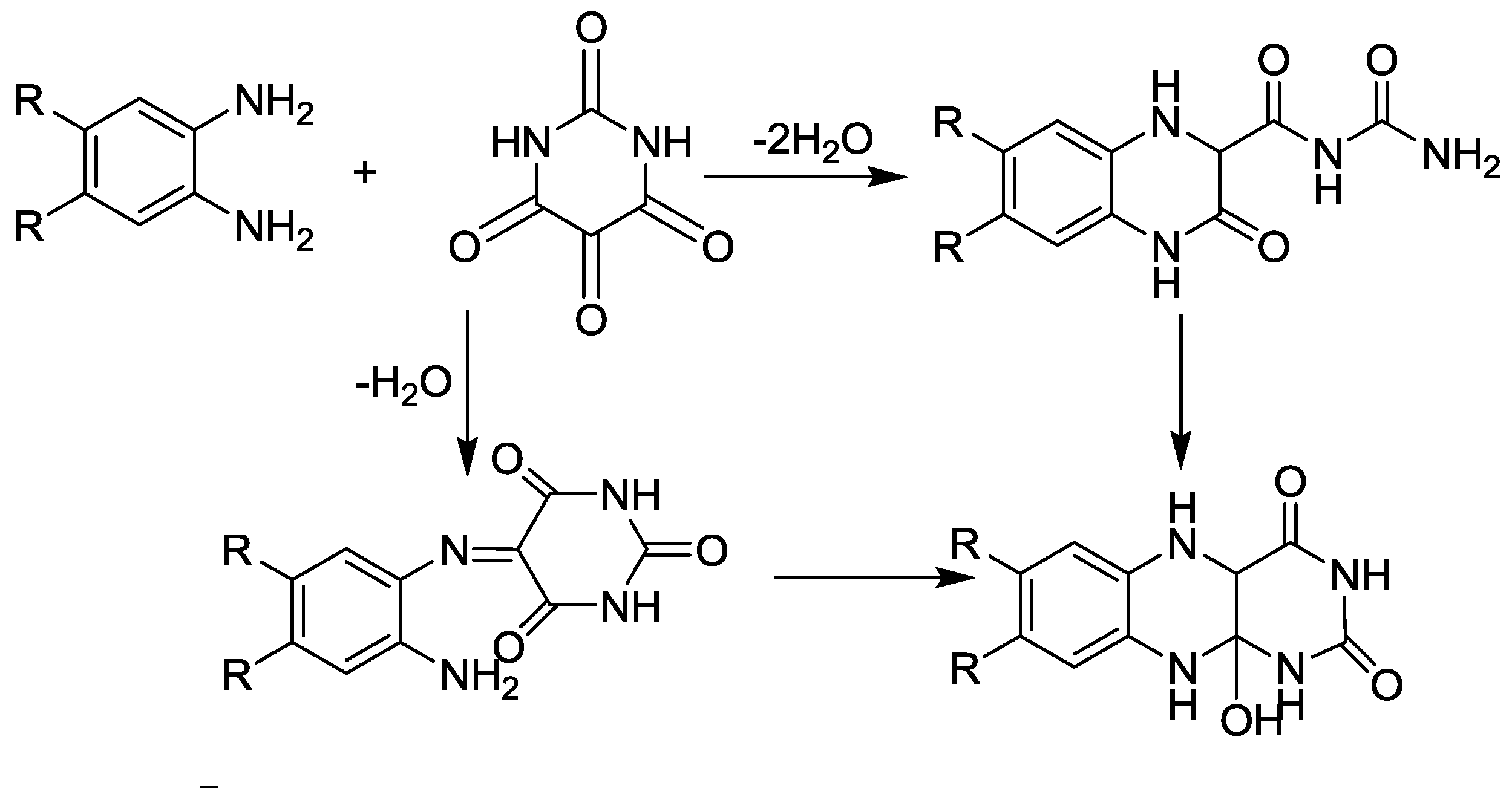
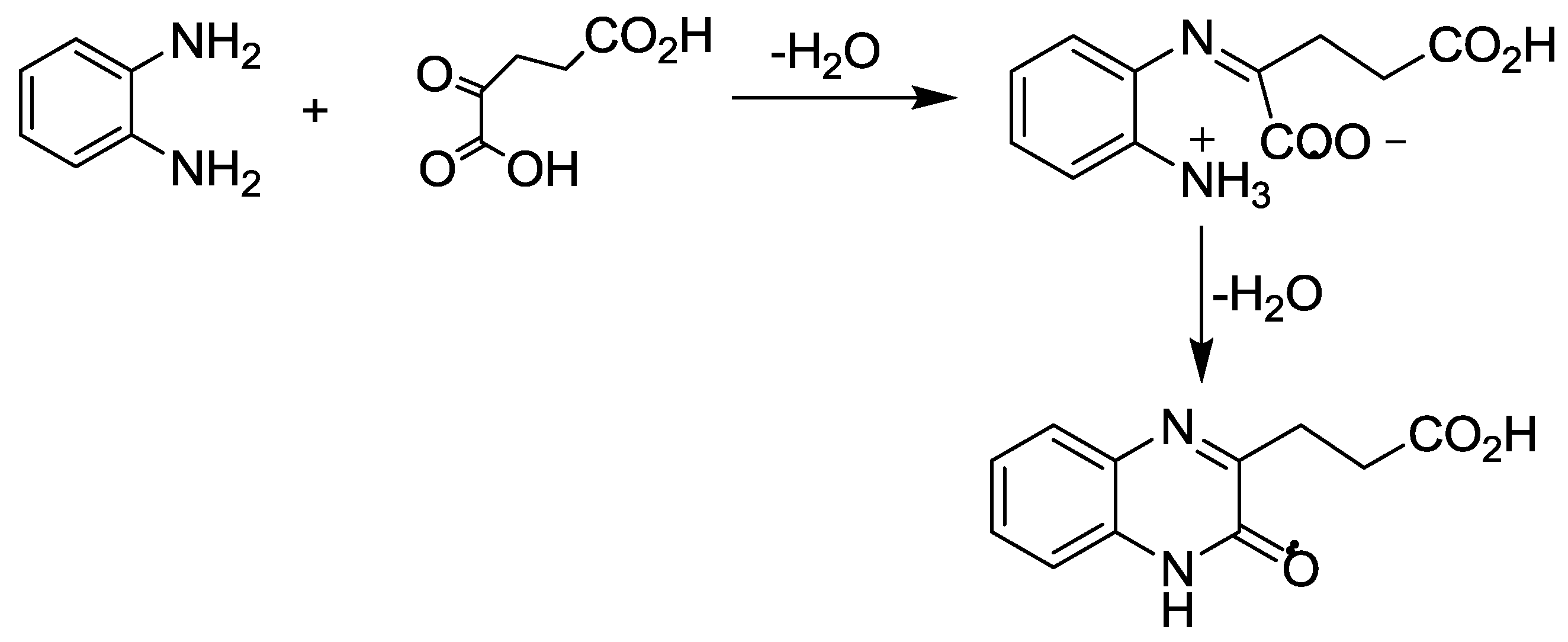
3-Oxo-3,4-dihydroquinoxaline was produced in 90% yield by milling of 2-oxoglutaric acid and o-phenylenediamine for 10 min (Scheme 41). Four-cascade reactions consisting of substitution, elimination, cyclization and ring opening of o-phenylenediamines with alloxane hydrate and 3-oxo-3,4-dihydroquinoxaline-2-carbonylureas produced 3-oxo-3,4-dihydroquinoxaline-2-carbonyl- ureas [39] (Scheme 42).
Scheme 41. Synthesis of 3-oxo-3,4-dihydroquinoxaline.
Scheme 42. Synthesis of 3-oxo-3,4-dihydroquinoxaline-2-carbonyl-ureas.
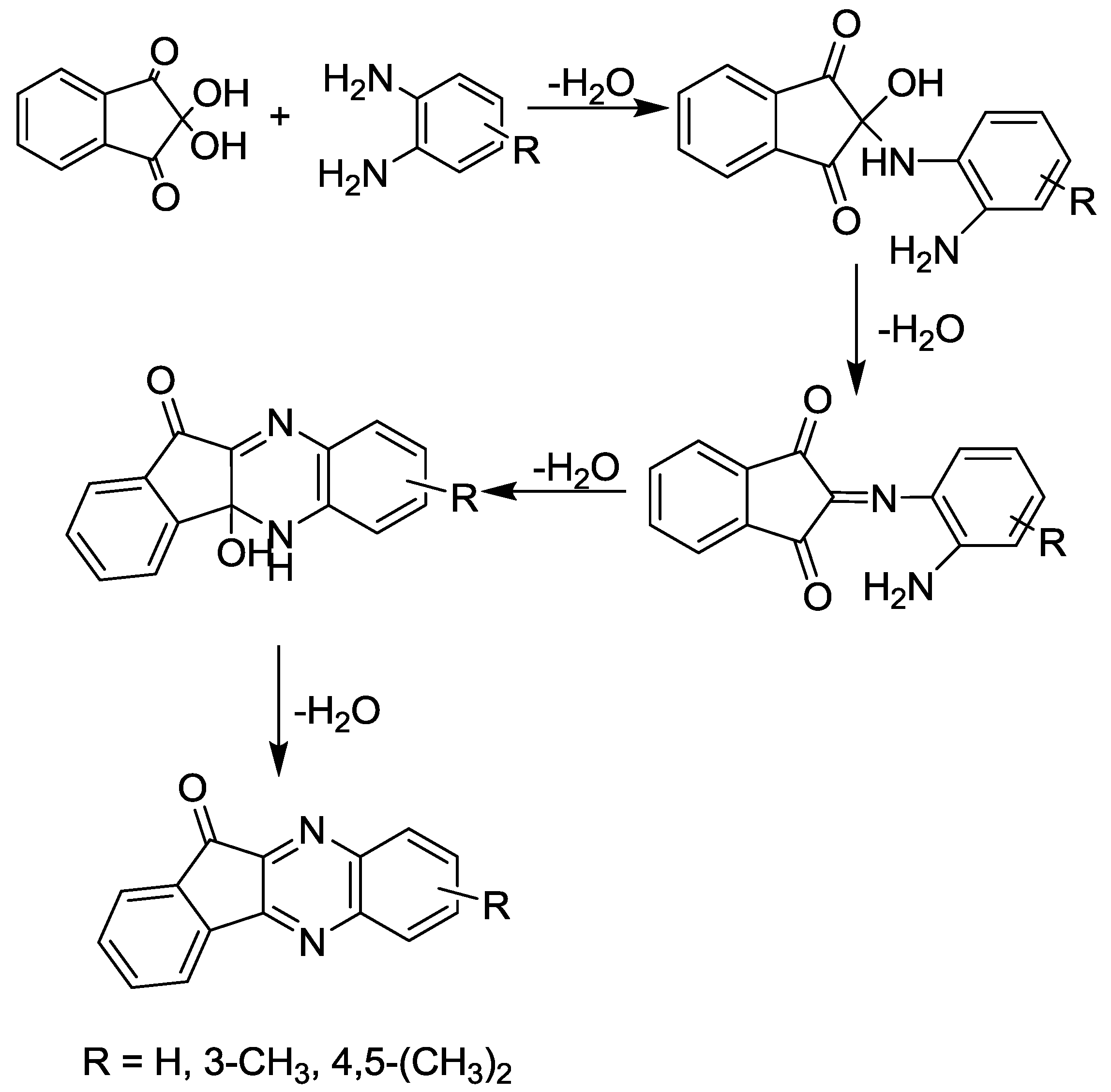
Kaupp et al. [62] described cascade mechanochemical reactions of solid-state ninhydrin and o-phenylenediamines, o-mercaptoaniline, urea/thiourea and methyl 3-aminocrotonate in a ball mill at 20–25 Hz to give indenoquinoxaline ketones (Scheme 43).
Scheme 43. Synthesis of indenoquinoxaline ketones.
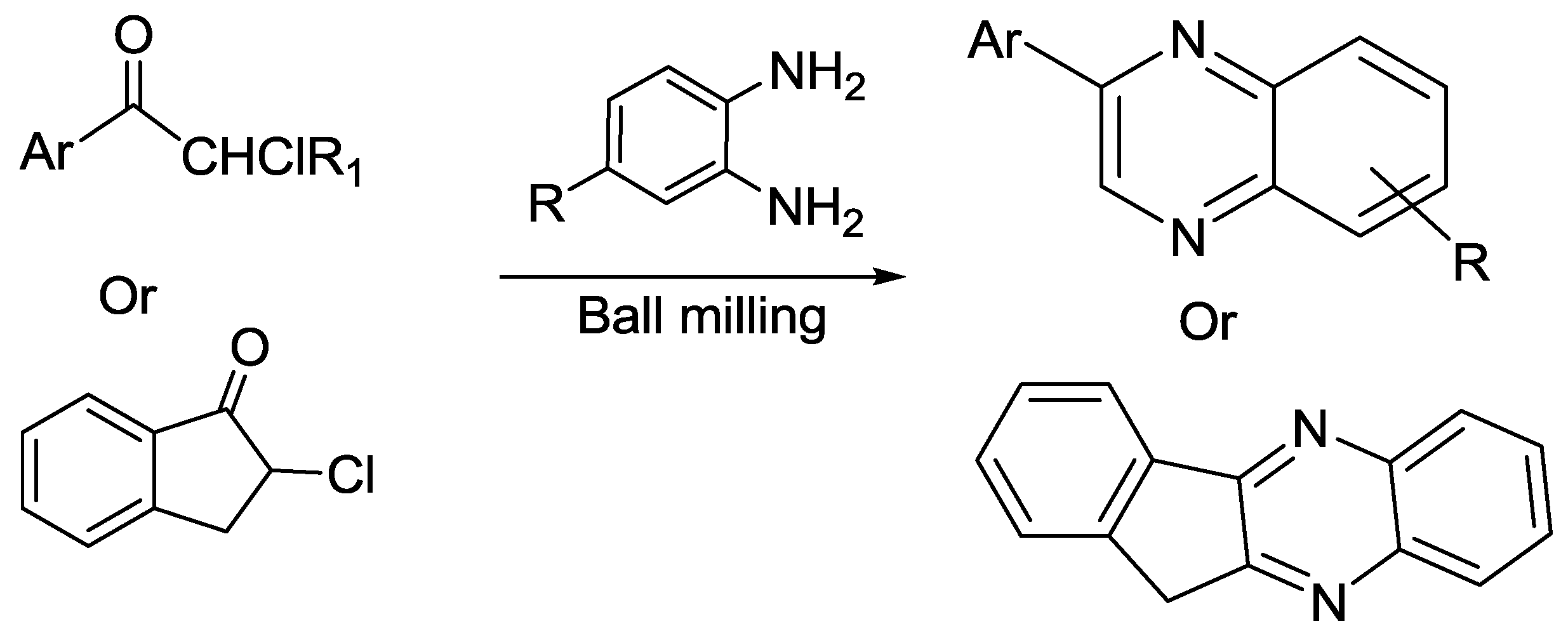
Nagarajaiah et al. [50] reported an efficient ball-milling reaction of α-chloroketones with o-phenylenediamine to give quinoxalines (Scheme 44).
Scheme 44. Reaction of α-chloroketones with o-phenylenediamine to quinoxalines.
Carlier et al. [63] described catalyst- and solvent-free mechanochemical reactions of diamines and 1,2- or 1,3-dicarbonyls to give dibenzophenazines and dibenzopyridoquinoxaline derivatives, respectively, in good yield (Scheme 45).
Scheme 45. Synthesis of dibenzophenazines and dibenzopyridoquinoxaline.
Etman, et al. [64] reported an efficient reaction without the aid of any catalyst or solvent, of ninhydrin with o-phenylenediamine under ball milling conditions (Scheme 46). Using the conventional method gave only 60% yields of the same product by heating of ninhydrin with o-phenylenediamine in EtOH/AcOH (7:3).
Scheme 46. Reaction of ninhydrin with o-phenylenediamine.

3.8. Thiazine Synthesis

Sharifi et al. [65] reported that the use of KF–Al2O3 solid support in a solvent-free ball milling procedure involving the reaction of 2-aminothiophenols with 2-bromoalkanoates (Scheme 47) led to a green and efficient synthesis of a series of benzothiazinone in excellent yield.
Scheme 47. Synthesis of benzothiazinone.
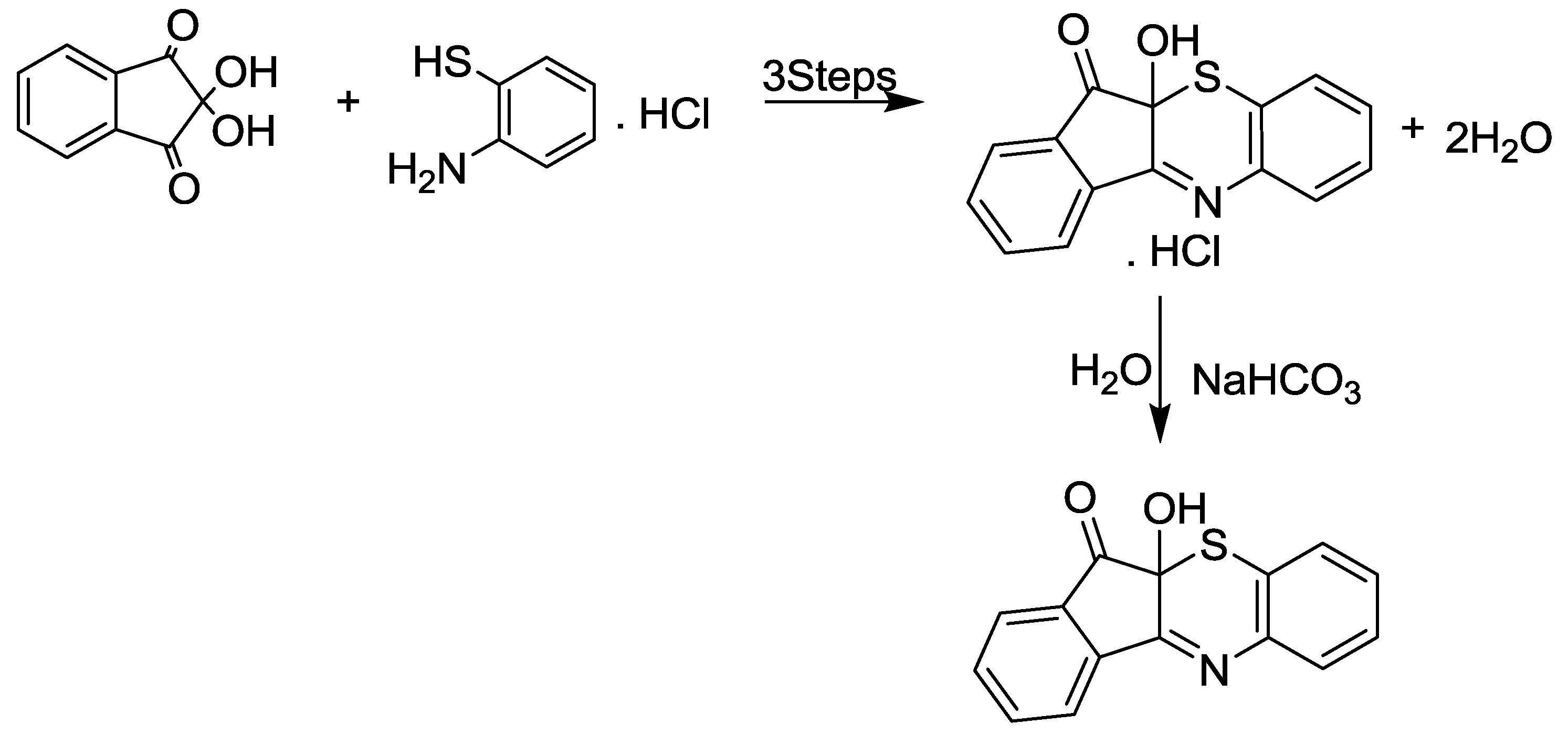
Moreover, hydroxyindeno[2,1-b]benzo[1,4]thiazine was produced by the reaction of ninhydrin with o-mercaptoaniline hydrochloride in a in three-reaction cascade (substitution, cyclization and elimination, Scheme 48).
Scheme 48. Synthesis of hydroxyindeno[2,1-b]benzo[1,4]thiazine.

3.9. Azaborinine Synthesis

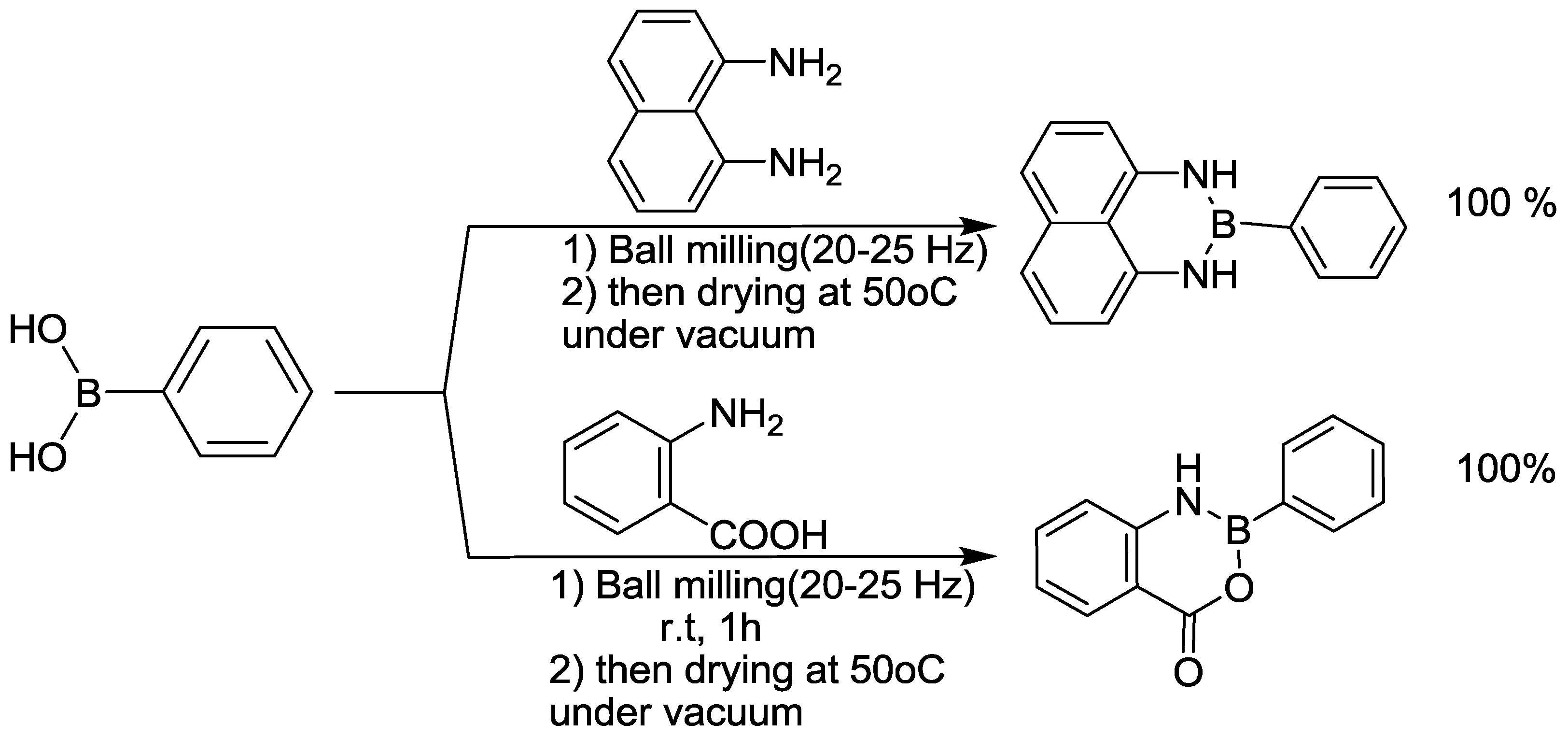
The six membered heterocyclic diazaborinine and O, B, N six-membered heteroborinone could be obtained by mixing of 1,8-diaminonaphthalene or anthranilic acid and phenylboronic acid in a ball mill without solvent for 1 h followed by heating in a vacuum [30] (Scheme 49).
Scheme 49. Synthesis of azaborinines.

4. Higher Membered Heterocycles

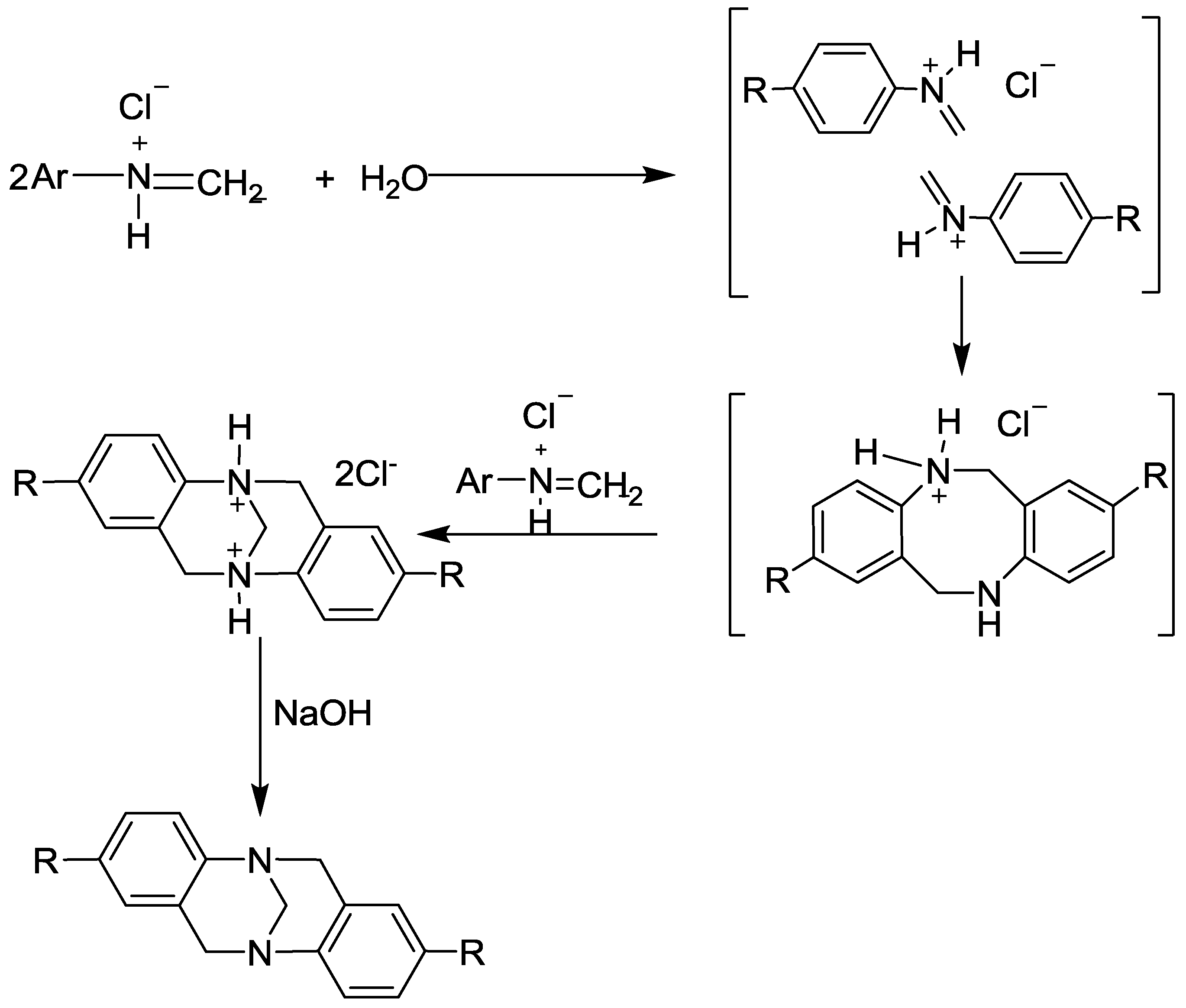
Kaupp et al. [66] studied the transformation of N-arylmethyleneiminium salts to Tröger’s bases in the presence of water vapor or MgSO4·7H2O. after milling for 5–10 min. The products were formed via a three-reaction cascade involving a double arylaminomethylation and methylenation of the tetrahydro-1,5-diazocine intermediate (Scheme 50).
Scheme 50. Synthesis of 1,5-diazocine.

5. Conclusions

Herein, we have reviewed the use of mechanochemical technique for synthesis of variety of N-heterocyles. As discussed, the ball milling technique is becoming a more promising green tool for the synthesis of various N-heterocycles, including condensation reactions, multicomponent cascade reactions, metal catalyzed synthesis, etc.

Author Contributions

All authors equally.

Conflicts of Interest

The authors declare no conflict of interest.

References

  1. Knölker, H.-J.; Reddy, K.R. Isolation and synthesis of biologically active carbazole alkaloids. Chem. Rev. 2002, 102, 4303–4428. [Google Scholar] [CrossRef] [PubMed]
  2. Lehuédé, J.; Fauconneau, B.; Barrier, L.; Ourakow, M.; Piriou, A.; Vierfond, J.-M. Synthesis and antioxidant activity of new tetraarylpyrroles. Eur. J. Med. Chem. 1999, 34, 991–996. [Google Scholar] [CrossRef]
  3. Novák, P.; Müller, K.; Santhanam, K.; Haas, O. Electrochemically active polymers for rechargeable batteries. Chem. Rev. 1997, 97, 207–282. [Google Scholar] [CrossRef] [PubMed]
  4. Brahmachari, G. Handbook of Pharmaceutical Natural Products; Wiley-VCH: Weinheim, Germany, 2010; Volume 1. [Google Scholar]
  5. Brahmachari, G. Green Synthetic Approaches for Biologically Relevant Heterocycles: An Overview. In Green Synthetic Approaches for Biologically Relevant Heterocycles; Brahmachari, G., Ed.; Elsevier: Boston, MI, USA, 2015; pp. 1–6. [Google Scholar]
  6. Wu, J.Y.-C.; Fong, W.-F.; Zhang, J.-X.; Leung, C.-H.; Kwong, H.-L.; Yang, M.-S.; Li, D.; Cheung, H.-Y. Reversal of multidrug resistance in cancer cells by pyranocoumarins isolated from Radix Peucedani. Eur. J. Pharmacol. 2003, 473, 9–17. [Google Scholar] [CrossRef]
  7. Raj, T.; Bhatia, R.K.; Sharma, M.; Saxena, A.; Ishar, M. Cytotoxic activity of 3-(5-phenyl-3H-[1,2,4] dithiazol-3-yl) chromen-4-ones and 4-oxo-4H-chromene-3-carbothioic acid N-phenylamides. Eur. J. Med. Chem. 2010, 45, 790–794. [Google Scholar] [CrossRef] [PubMed]
  8. Rueping, M.; Sugiono, E.; Merino, E. Asymmetric organocatalysis: An efficient enantioselective access to benzopyranes and chromenes. Chemistry 2008, 14, 6329–6332. [Google Scholar] [CrossRef] [PubMed]
  9. De Andrade-Neto, V.F.; Goulart, M.O.; da Silva Filho, J.F.; da Silva, M.J.; Pinto Mdo, C.; Pinto, A.V.; Zalis, M.G.; Carvalho, L.H.; Krettli, A.U. Antimalarial activity of phenazines from lapachol, beta-lapachone and its derivatives against Plasmodium falciparum in vitro and Plasmodium berghei in vivo. Bioorgan. Med. Chem. Lett. 2004, 14, 1145–1149. [Google Scholar] [CrossRef] [PubMed]
  10. Moon, D.-O.; Kim, K.-C.; Jin, C.-Y.; Han, M.-H.; Park, C.; Lee, K.-J.; Park, Y.-M.; Choi, Y.H.; Kim, G.-Y. Inhibitory effects of eicosapentaenoic acid on lipopolysaccharide-induced activation in BV2 microglia. Int. Immunopharmacol. 2007, 7, 222–229. [Google Scholar] [CrossRef] [PubMed]
  11. Morgan, L.R.; Jursic, B.S.; Hooper, C.L.; Neumann, D.M.; Thangaraj, K.; LeBlanc, B. Anticancer activity for 4,4′-dihydroxybenzophenone-2,4-dinitrophenylhydrazone (A-007) analogues and their abilities to interact with lymphoendothelial cell surface markers. Bioorg. Med. Chem. Lett. 2002, 12, 3407–3411. [Google Scholar] [CrossRef]
  12. Kumar, A.; Maurya, R.A.; Sharma, S.; Ahmad, P.; Singh, A.; Bhatia, G.; Srivastava, A.K. Pyranocoumarins: A new class of anti-hyperglycemic and anti-dyslipidemic agents. Bioorgan. Med. Chem. Lett. 2009, 19, 6447–6451. [Google Scholar] [CrossRef] [PubMed]
  13. Zhang, B.; Studer, A. Recent advances in the synthesis of nitrogen heterocycles via radical cascade reactions using isonitriles as radical acceptors. Chem. Soc. Rev. 2015, 44, 3505–3521. [Google Scholar] [CrossRef] [PubMed]
  14. Baumann, M.; Baxendale, I.R. An overview of the synthetic routes to the best selling drugs containing 6-membered heterocycles. Beilstein J. Org. Chem. 2013, 9, 2265–2319. [Google Scholar] [CrossRef] [PubMed]
  15. Borad, M.A.; Bhoi, M.N.; Prajapati, N.P.; Patel, H.D. Review of Synthesis of Multispiro Heterocyclic Compounds from Isatin. Synth. Commun. 2014, 44, 1043–1057. [Google Scholar] [CrossRef]
  16. Sakhuja, R.; Panda, S.S.; Bajaj, K. Microwave Assisted Synthesis of Five Membered Azaheterocyclic Systems. Curr. Org. Chem. 2012, 16, 789–828. [Google Scholar]
  17. Andrei, Y. Introduction: Small Heterocycles in Synthesis. Chem. Rev. 2014, 114, 7783. [Google Scholar] [CrossRef] [PubMed]
  18. Bürli, R.W.; McMinn, D.; Kaizerman, J.A.; Hu, W.; Ge, Y.; Pack, Q.; Jiang, V.; Gross, M.; Garcia, M.; Tanaka, R. DNA binding ligands targeting drug-resistant Gram-positive bacteria. Part. 1: Internal benzimidazole derivatives. Bioorgan. Med. Chem. Lett. 2004, 14, 1253–1257. [Google Scholar] [CrossRef] [PubMed]
  19. Brahmachari, G.; Banerjee, B. Facile and One-Pot Access of 3,3-Bis (indol-3-yl) indolin-2-ones and 2,2-Bis (indol-3-yl) acenaphthylen-1 (2H)-one Derivatives via an Eco-Friendly Pseudo-Multicomponent Reaction at Room Temperature Using Sulfamic Acid as an Organo-Catalyst. ACS Sustain. Chem. Eng. 2014, 2, 2802–2812. [Google Scholar] [CrossRef]
  20. Foye, W. Principal di Chemico Farmaceutica; Piccin: Padova, Italy, 1991; p. 416. [Google Scholar]
  21. Kaupp, G.; Naimi-Jamal, M.; Ren, H.; Zoz, H. In Advanced Technologies Based on Self-Propogating and Mechanochemical Reactions for Environmental Protection; Cao, G., Delogu, F., Orru, R., Eds.; Research Signpost: Kerala, India, 2003; Volume 4, pp. 83–100. [Google Scholar]
  22. Mashkouri, S.; Naimi-Jamal, M.R. Mechanochemical solvent-free and catalyst-free one-pot synthesis of pyrano [2,3-d] pyrimidine-2,4 (1H,3H)-diones with quantitative yields. Molecules 2009, 14, 474–479. [Google Scholar] [CrossRef] [PubMed]
  23. McNaught, A.D.; Wilkinson, A. Compendium of Chemical Terminology; IUPAC Recommendations; IUPAC: Zürich, Switzerland, 1997. [Google Scholar]
  24. Beyer, M.K.; Clausen-Schaumann, H. Mechanochemistry: The mechanical activation of covalent bonds. Chem. Rev. 2005, 105, 2921–2948. [Google Scholar] [CrossRef] [PubMed]
  25. Todres, Z.V. Organic Mechanochemistry and Its Practical Applications; CRC Press: Boca Raton, FL, USA, 2006. [Google Scholar]
  26. Boldyrev, V.V. Mechanochemistry and mechanical activation of solids. Russ. Chem. Rev. 2006, 75, 177. [Google Scholar] [CrossRef]
  27. Kaupp, G. Mechanochemistry: The varied applications of mechanical bond-breaking. CrystEngComm 2009, 11, 388–403. [Google Scholar] [CrossRef]
  28. Ould M’hamed, M. Ball Milling for Heterocyclic Compounds Synthesis in Green Chemistry: A Review. Synth. Commun. 2015, 45, 2511–2528. [Google Scholar] [CrossRef]
  29. Stolle, A.; Szuppa, T.; Leonhardt, S.E.; Ondruschka, B. Ball milling in organic synthesis: Solutions and challenges. Chem. Soc. Rev. 2011, 40, 2317–2329. [Google Scholar] [CrossRef] [PubMed]
  30. Wang, G.-W. Mechanochemical organic synthesis. Chem. Soc. Rev. 2013, 42, 7668–7700. [Google Scholar] [CrossRef] [PubMed]
  31. Margetic, D.; Štrukil, V. Mechanochemical Organic Synthesis; Elsevier: New York, NY, USA, 2016. [Google Scholar]
  32. Friščić, T. Supramolecular concepts and new techniques in mechanochemistry: Cocrystals, cages, rotaxanes, open metal–organic frameworks. Chem. Soc. Rev. 2012, 41, 3493–3510. [Google Scholar] [CrossRef] [PubMed]
  33. Zeng, J.-C.; Xu, H.; Yu, F.; Zhang, Z. Manganese (III) acetate mediated synthesis of polysubstituted pyrroles under solvent-free ball milling. Tetrahedron Lett. 2017, 58, 674–678. [Google Scholar] [CrossRef]
  34. Kaupp, G.; Schmeyers, J.; Kuse, A.; Atfeh, A. Cascade Reactions in Quantitative Solid-State Syntheses. Angew. Chem. Int. Ed. 1999, 38, 2896–2899. [Google Scholar] [CrossRef]
  35. Zille, M.; Stolle, A.; Wild, A.; Schubert, U.S. ZnBr 2-mediated synthesis of indoles in a ball mill by intramolecular hydroamination of 2-alkynylanilines. RSC Adv. 2014, 4, 13126–13133. [Google Scholar] [CrossRef]
  36. Hermann, G.N.; Jung, C.L.; Bolm, C. Mechanochemical indole synthesis by rhodium-catalysed oxidative coupling of acetanilides and alkynes under solventless conditions in a ball mill. Green Chem. 2017, 19, 2520–2523. [Google Scholar] [CrossRef]
  37. Jerezano, A.V.; Labarrios, E.M.; Jiménez, F.E.; del Carmen Cruz, M.; Pazos, D.C.; Gutiérrez, R.U.; Delgado, F.; Tamariz, J. Iodine-mediated one-pot synthesis of indoles and 3-dimethylaminoindoles via annulation of enaminones. Arkivoc 2014, 3, 18–53. [Google Scholar]
  38. Vadivelu, M.; Sugirdha, S.; Dheenkumar, P.; Arun, Y.; Karthikeyan, K.; Praveen, C. Solvent-free implementation of two dissimilar reactions using recyclable CuO nanoparticles under ball-milling conditions: Synthesis of new oxindole-triazole pharmacophores. Green Chem. 2017, 19, 3601–3610. [Google Scholar] [CrossRef]
  39. Kaupp, G.; Naimi-Jamal, M.R. Quantitative cascade condensations between o-phenylenediamines and 1, 2-dicarbonyl compounds without production of wastes. Eur. J. Org. Chem. 2002, 2002, 1368–1373. [Google Scholar] [CrossRef]
  40. Paveglio, G.C.; Longhi, K.; Moreira, D.N.; München, T.S.; Tier, A.Z.; Gindri, I.M.; Bender, C.R.; Frizzo, C.P.; Zanatta, N.; Bonacorso, H.G. How Mechanical and Chemical Features Affect the Green Synthesis of 1 H-Pyrazoles in a Ball Mill. ACS Sustain. Chem. Eng. 2014, 2, 1895–1901. [Google Scholar] [CrossRef]
  41. Zhu, X.; Li, Z.; Jin, C.; Xu, L.; Wu, Q.; Su, W. Mechanically activated synthesis of 1,3, 5-triaryl-2-pyrazolines by high speed ball milling. Green Chem. 2009, 11, 163–165. [Google Scholar] [CrossRef]
  42. Zhang, Z.; Tan, Y.-J.; Wang, C.-S. One-pot synthesis of 3,5-diphenyl-1H-pyrazoles from chalcones and hydrazine under mechanochemical ball milling. Heterocycles 2014, 89, 103–112. [Google Scholar] [CrossRef]
  43. Howard, J.L.; Nicholson, W.; Sagatov, Y.; Browne, D.L. One-pot multistep mechanochemical synthesis of fluorinated pyrazolones. Beilstein J. Org. Chem. 2017, 13, 1950–1956. [Google Scholar] [CrossRef] [PubMed]
  44. Bondock, S.; El-Azap, H.; Kandeel, E.-E.M.; Metwally, M.A. Eco-friendly solvent-free synthesis of thiazolylpyrazole derivatives. Monatshefte Chem. Chem. Mon. 2008, 139, 1329–1335. [Google Scholar] [CrossRef]
  45. Beillard, A.; Bantreil, X.; Métro, T.-X.; Martinez, J.; Lamaty, F. A more sustainable and efficient access to IMes·HCl and IPr·HCl by ball-milling. Green Chem. 2018, 20, 964–968. [Google Scholar] [CrossRef]
  46. Sharma, H.; Kaur, N.; Singh, N.; Jang, D.O. Synergetic catalytic effect of ionic liquids and ZnO nanoparticles on the selective synthesis of 1,2-disubstituted benzimidazoles using a ball-milling technique. Green Chem. 2015, 17, 4263–4270. [Google Scholar] [CrossRef]
  47. EL-Sayed, T.H.; Aboelnaga, A.; Hagar, M. Ball Milling Assisted Solvent and Catalyst Free Synthesis of Benzimidazoles and Their Derivatives. Molecules 2016, 21, 1111. [Google Scholar] [CrossRef] [PubMed]
  48. Zhang, Z.; Wang, F.-J.; Wu, H.-H.; Tan, Y.-J. Straightforward synthesis of 2-anilinobenzoxazoles/benzothiazoles via mechanochemical ball-milling promoted one-pot reactions. Chem. Lett. 2015, 44, 440–441. [Google Scholar] [CrossRef]
  49. Abdel-Latif, E.; Metwally, M.A. Waste-Free Solid-state organic syntheses: Solvent-free alkylation, heterocyclization, and azo-coupling reactions. Monatshefte Chem. Chem. Mon. 2007, 138, 771–776. [Google Scholar] [CrossRef]
  50. Nagarajaiah, H.; Mishra, A.K.; Moorthy, J.N. Mechanochemical solid-state synthesis of 2-aminothiazoles, quinoxalines and benzoylbenzofurans from ketones by one-pot sequential acid-and base-mediated reactions. Org. Biomol. Chem. 2016, 14, 4129–4135. [Google Scholar] [CrossRef] [PubMed]
  51. Thorwirth, R.; Stolle, A.; Ondruschka, B.; Wild, A.; Schubert, U.S. Fast, ligand-and solvent-free copper-catalyzed click reactions in a ball mill. Chem. Commun. 2011, 47, 4370–4372. [Google Scholar] [CrossRef] [PubMed]
  52. Mukherjee, N.; Ahammed, S.; Bhadra, S.; Ranu, B.C. Solvent-free one-pot synthesis of 1,2,3-triazole derivatives by the ‘Click’reaction of alkyl halides or aryl boronic acids, sodium azide and terminal alkynes over a Cu/Al2O3 surface under ball-milling. Green Chem. 2013, 15, 389–397. [Google Scholar] [CrossRef]
  53. Zhang, H.; Liu, R.-Q.; Liu, K.-C.; Li, Q.-B.; Li, Q.-Y.; Liu, S.-Z. A One-Pot Approach to Pyridyl Isothiocyanates from Amines. Molecules 2014, 19, 13631–13642. [Google Scholar] [CrossRef] [PubMed]
  54. Yu, J.; Li, Z.; Su, W. Synthesis of Quinolines by N-Deformylation and Aromatization via Solvent-Free, High.-Speed Ball Milling. Synth. Commun. 2013, 43, 361–374. [Google Scholar] [CrossRef]
  55. Maleki, A.; Javanshir, S.; Naimabadi, M. Facile synthesis of imidazo [1,2-a] pyridines via a one-pot three-component reaction under solvent-free mechanochemical ball-milling conditions. RSC Adv. 2014, 4, 30229–30232. [Google Scholar] [CrossRef]
  56. Wang, F.-J.; Xu, H.; Xin, M.; Zhang, Z. I2-mediated amination/cyclization of ketones with 2-aminopyridines under high-speed ball milling: Solvent- and metal-free synthesis of 2,3-substituted imidazo[1,2-a]pyridines and zolimidine. Mol. Divers. 2016, 20, 659–666. [Google Scholar] [CrossRef] [PubMed]
  57. Kausar, N.; Das, A.R. CuI–Zn(OAc)2 catalyzed C(sp2)–H activation for the synthesis of pyridocoumarins through an uncommon CuI–CuIII switching mechanism: A fast, solvent-free, combo-catalytic, ball milling approach. Tetrahedron Lett. 2017, 58, 2602–2607. [Google Scholar] [CrossRef]
  58. Sahoo, P.K.; Bose, A.; Mal, P. Solvent-Free Ball-Milling Biginelli Reaction by Subcomponent Synthesis. Eur. J. Org. Chem. 2015, 2015, 6994–6998. [Google Scholar] [CrossRef]
  59. Sachdeva, H.; Saroj, R.; Khaturia, S.; Singh, H.L. Comparative studies of lewis acidity of alkyl-tin chlorides in multicomponent biginelli condensation using grindstone chemistry technique. J. Chil. Chem. Soc. 2012, 57, 1012–1016. [Google Scholar] [CrossRef]
  60. Oliveira, P.F.; Haruta, N.; Chamayou, A.; Guidetti, B.; Baltas, M.; Tanaka, K.; Sato, T.; Baron, M. Comprehensive experimental investigation of mechanically induced 1, 4-diazines synthesis in solid state. Tetrahedron 2017, 73, 2305–2310. [Google Scholar] [CrossRef]
  61. Bhutia, Z.T.; Prasannakumar, G.; Das, A.; Biswas, M.; Chatterjee, A.; Banerjee, M. A Facile, Catalyst-Free Mechano-Synthesis of Quinoxalines and their In-Vitro Antibacterial Activity Study. ChemistrySelect 2017, 2, 1183–1187. [Google Scholar] [CrossRef]
  62. Kaupp, G.; Naimi-Jamal, M.R.; Schmeyers, J. Quantitative Reaction Cascades of Ninhydrin in the Solid State. Chemistry 2002, 8, 594–600. [Google Scholar] [CrossRef]
  63. Carlier, L.; Baron, M.; Chamayou, A.; Couarraze, G. Use of co-grinding as a solvent-free solid state method to synthesize dibenzophenazines. Tetrahedron Lett. 2011, 52, 4686–4689. [Google Scholar] [CrossRef]
  64. Etman, H.; Metwally, H.; Elkasaby, M.; Khalil, A.; Metwally, M. Green, two components highly efficient reaction of ninhydrin with aromatic amines, and malononitrile using ball-milling technique. Am. J. Org. Chem. 2011, 1, 10–13. [Google Scholar] [CrossRef]
  65. Sharifi, A.; Ansari, M.; Darabi, H.R.; Abaee, M.S. Synergistic promoting effect of ball milling and KF–alumina support for the green synthesis of benzothiazinones. Tetrahedron Lett. 2016, 57, 529–532. [Google Scholar] [CrossRef]
  66. Kaupp, G.; Schmeyers, J.; Boy, J. Iminium Salts in Solid-State Syntheses Giving 100% Yield. J. Prakt. Chem. 2000, 342, 269–280. [Google Scholar] [CrossRef]
Article Metrics

Citations

Article Access Statistics

Multiple requests from the same IP address are counted as one view.