Abstract
Sleeping sickness, Chagas disease, Leishmaniasis, and Malaria are infectious diseases caused by unicellular eukaryotic parasites (“protozoans”). The three first mentioned are classified as Neglected Tropical Diseases (NTDs) by the World Health Organization and together threaten more than one billion lives worldwide. Due to the lack of research interest and the high increase of resistance against the existing treatments, the search for effective and safe new therapies is urgently required. In view of the large tradition of natural products as sources against infectious diseases [1,2], the aim of the present study is to investigate the potential of legally approved and marketed herbal medicinal products (HMPs) as antiprotozoal agents. Fifty-eight extracts from 53 HMPs on the German market were tested by a Multiple-Target-Screening (MTS) against parasites of the genera Leishmania, Trypanosoma, and Plasmodium. Sixteen HMPs showed in vitro activity against at least one of the pathogens (IC50 < 10 µg/mL). Six extracts from preparations of Salvia, Valeriana, Hypericum, Silybum, Arnica, and Curcuma exhibited high activity (IC50 < 2.5 µg/mL). They were analytically characterized by UHPLC/ESI-QqTOF-MSMS and the activity-guided fractionation of the extracts with the aim to isolate and identify the active compounds is in progress.
1. Introduction
With over a billion people affected worldwide and the health of millions more threatened [3], Leishmaniasis, Human African Trypanosomiasis, and Chagas diseases are considered Neglected Tropical Diseases (NTDs) by the World Health Organization (WHO) because they are neglected by a large part of the pharmaceutical industry and they have low public visibility in high-income countries. NTDs are a group of 17 mostly life-threating or disabling infectious diseases, which are endemic in 149 countries [3], caused by a variety of pathogens such as bacteria, viruses, helminthes, and protozoans.
Although, until relatively recently, the highest number of people affected by NTDs lived in low-income countries in tropical areas of Africa, South America, and Asia, the situation is currently changing and the number of endemic countries with middle-income status is increasing [3]. Furthermore, a potential northward shift of parasite transmission due to climate change from the current range is predicted to concern some European countries and North America in the next decades [4,5]. NTDs constitute, thus, a worldwide public health problem.
The focus of the present project was on the following NTDs: Human African Trypanosomiasis (HAT), and Chagas Disease (caused by species of the genus Trypanosoma), and visceral Leishmaniasis (caused by Leishmania donovani). Another tropical protozoan disease, Malaria, caused by species of the genus Plasmodium, was also included in the study—even though it is not currently mentioned by the WHO list—due to the high number of infections and deaths that it produces every year.
Considering the very old tradition of plant natural products as remedies against all kinds of disorders, especially infectious diseases, the search for new lead compounds against NTDs in natural sources is a very active field of science [1,2,6,7].
The purpose of the present work was to explore the potential antiprotozoal activity of legally approved and marketed herbal medicinal preparations (HMPs). The use of such HMPs as the source material in the search for new anti-protozoal leads or drugs promises the distinct advantage that they are already in use and thus have been shown to possess relatively few unwanted effects and low toxicity. Furthermore, the starting material is obtained from sustainable biological sources and is easily accessible at relatively low prices, which would represent further advantages in comparison with de novo designed chemicals. The positive antiprotozoal activity of such herbal drugs would therefore represent a good starting point for the development of new leads and drugs against protozoal tropical diseases.
2. Results and Discussion
2.1. Activity Screening of HMPs against Protozoan Parasites
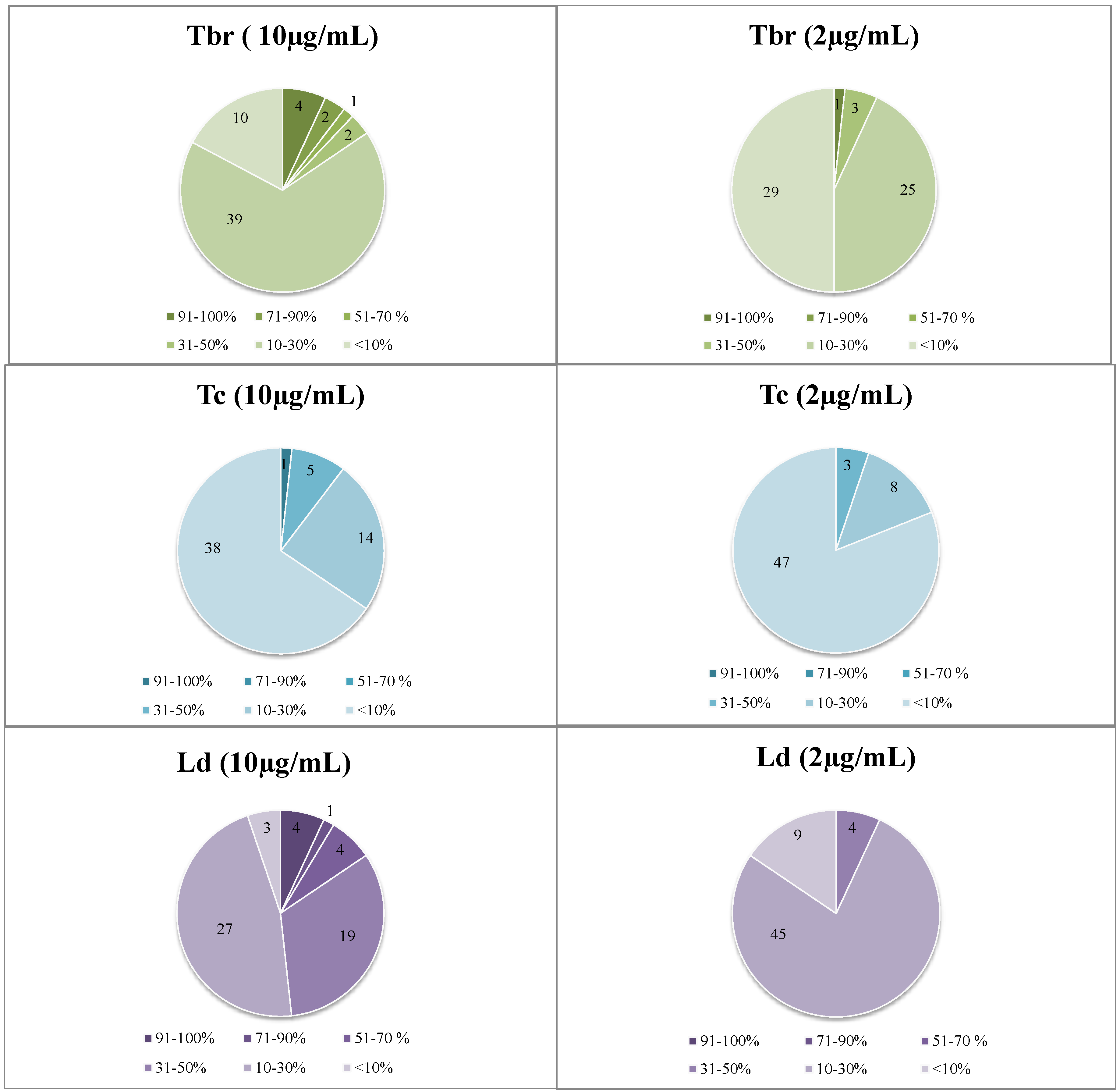
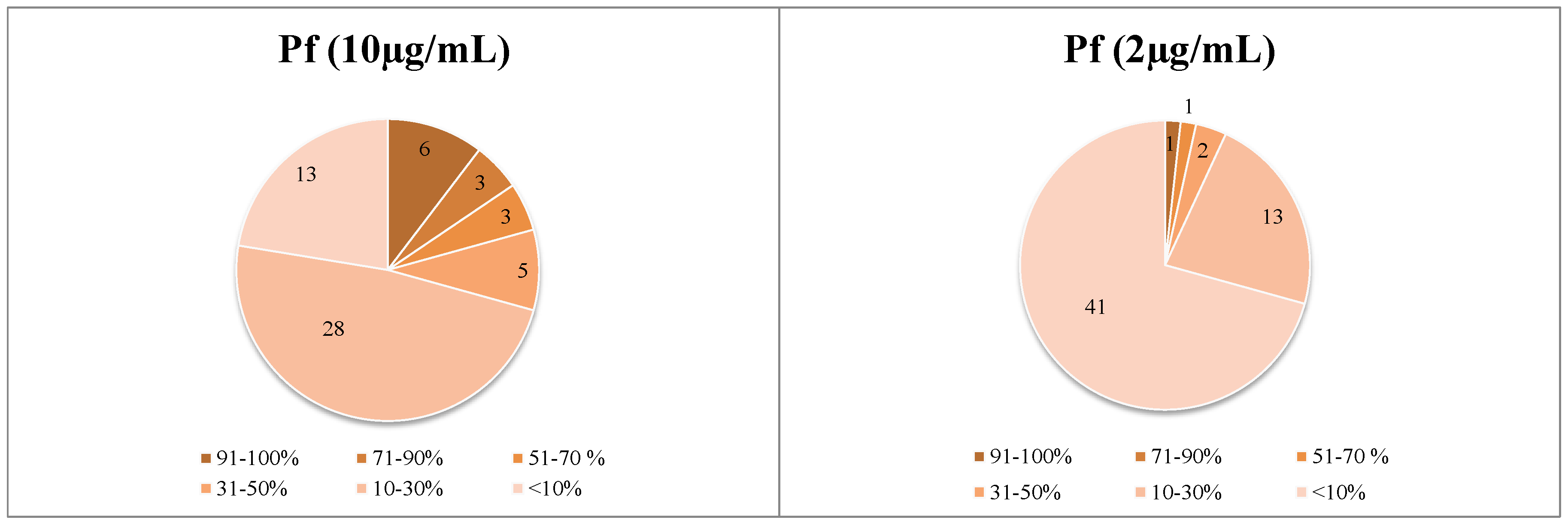
A total number of 58 extracts were prepared from 53 HMPs and tested in vitro at two test concentrations, 2 and 10 µg/mL, for growth inhibitory (GI) activity against the following parasites: Trypanosoma brucei rhodesiense (Tbr), T. cruzi (Tc), Leishmania donovani (Ld), and Plasmodium falciparum (Pf), according to the procedures described in Section 3.3. The identity of the HMPs is depicted in Table A1, Appendix. The results of these biological assays are reported in Figure 1 (numerical data are reported in Table A2, Appendix). In case of samples displaying activity in this assay, IC50 values against the susceptible parasites as well as for cytotoxicity against mammalian cells (L6 rat skeletal myoblasts) were determined. The results of the IC50 determinations and the respective selectivity indices (SI = IC50 (L6)/IC50 (parasite)) are reported in Table 1. UHPLC-UV chromatograms and LC-MS data of the active extracts, i.e., their suggested dereplicated constituents, are depicted in the section Dereplication Data, Appendix.

Figure 1.
Distribution of the dataset of 58 extracts over the four biological activities under study at the two tested concentrations. Data represent percent growth inhibition of the various parasites at 10 and 2 µg/mL.
Table 1.
IC50 values of active extracts against the most susceptible parasites and for cytotoxicity against L6 cells. All data are expressed in µg/mL and represent the mean of two independent determinations. Highlighted in light green: 2.5 < IC50 < 10 µg/mL. Dark green: IC50 < 2.5 µg/mL. Orange: SI > 10. Yellow: 10 > SI > 7.5.
| ID | Tbr | Tc | Ld | Pf | L6 | SI (Tbr) | SI (Tc) | SI (Ld) | SI (Pf) |
|---|---|---|---|---|---|---|---|---|---|
| Melarsoprol | 0.004 | ||||||||
| Benznidazole | 0.533 | ||||||||
| Miltefosine | 0.075 | ||||||||
| Chloroquine | 0.002 | ||||||||
| Podophyllotoxin | 0.007 | ||||||||
| 2 | n.d. | n.d. | 5.34 | 9.25 | 67.4 | 12.6 | 7.3 | ||
| 3 | n.d. | n.d. | n.d. | 8.21 | 59.4 | 7.2 | |||
| 14 | 5.87 | n.d. | 2.14 | 0.59 | 5.28 | 0.90 | 2.5 | 8.9 | |
| 22 | n.d. | n.d. | n.d. | 10.08 | 47.0 | 4.7 | |||
| 25 | n.d. | n.d. | 5.65 | 2.00 | 54.6 | 9.7 | 27.3 | ||
| 26 | n.d. | 5.87 | 2.24 | 4.13 | 41.6 | 7.09 | 18.6 | 10.1 | |
| 40 | n.d. | n.d. | 3.17 | 2.28 | 47.7 | 15.1 | 21.0 | ||
| 45 | n.d. | n.d. | n.d. | 5.83 | 52.3 | 9.0 | |||
| 49 | n.d. | n.d. | 4.53 | n.d. | 50.5 | 11.1 | |||
| 20B * | 4.03 | n.d. | n.d. | n.d. | 0.01 | 0.003 | |||
| 28B * | 3.79 | n.d. | n.d. | n.d. | 53.7 | 14.2 | |||
| 38 | n.d. | n.d. | n.d. | 2.72 | 55.0 | 20.3 | |||
| 39 | 1.86 | n.d. | n.d. | n.d. | 32.3 | 17.3 | |||
| 55 | 1.12 | n.d. | n.d. | n.d. | 12.1 | 10.9 |
* Samples obtained with extraction method B, see Table 2; n.d.: not determined.
Sixteen HMPs showed growth inhibition (GI) activity in vitro against at least one of the pathogens (>50% GI at 10 µg/mL), six extracts of which displayed high activity (IC50 < 2.5 µg/mL).
Generally, Plasmodium falciparum was found to be the most sensitive parasite to the tested HMPs and T. cruzi the least sensitive, against which activities hardly ever exceeded 45% of inhibition.
In particular, promising results were obtained with Arnica montana and Salvia officinalis as the most active preparations against the etiologic agent of East African Human Trypanosomiasis (sleeping sickness). Moreover, the highest antimalarial activities were determined for the extracts of Curcuma longa, Silybum marianum, and Hypericum perforatum. It is noteworthy that the preparation of Valeriana officinalis showed antileishmanial activity with an IC50 value of 2.1 µg/mL and was the only preparation that also displayed moderate activity against T. cruzi. Beside these “first line samples”, some preparations presenting moderate activity (IC50 values 2.5–6 µg/mL) and showing high SI values, i.e., ID_38, can still be considered interesting samples which will be subject to following studies.
2.2. Antitrypanosomal Activity
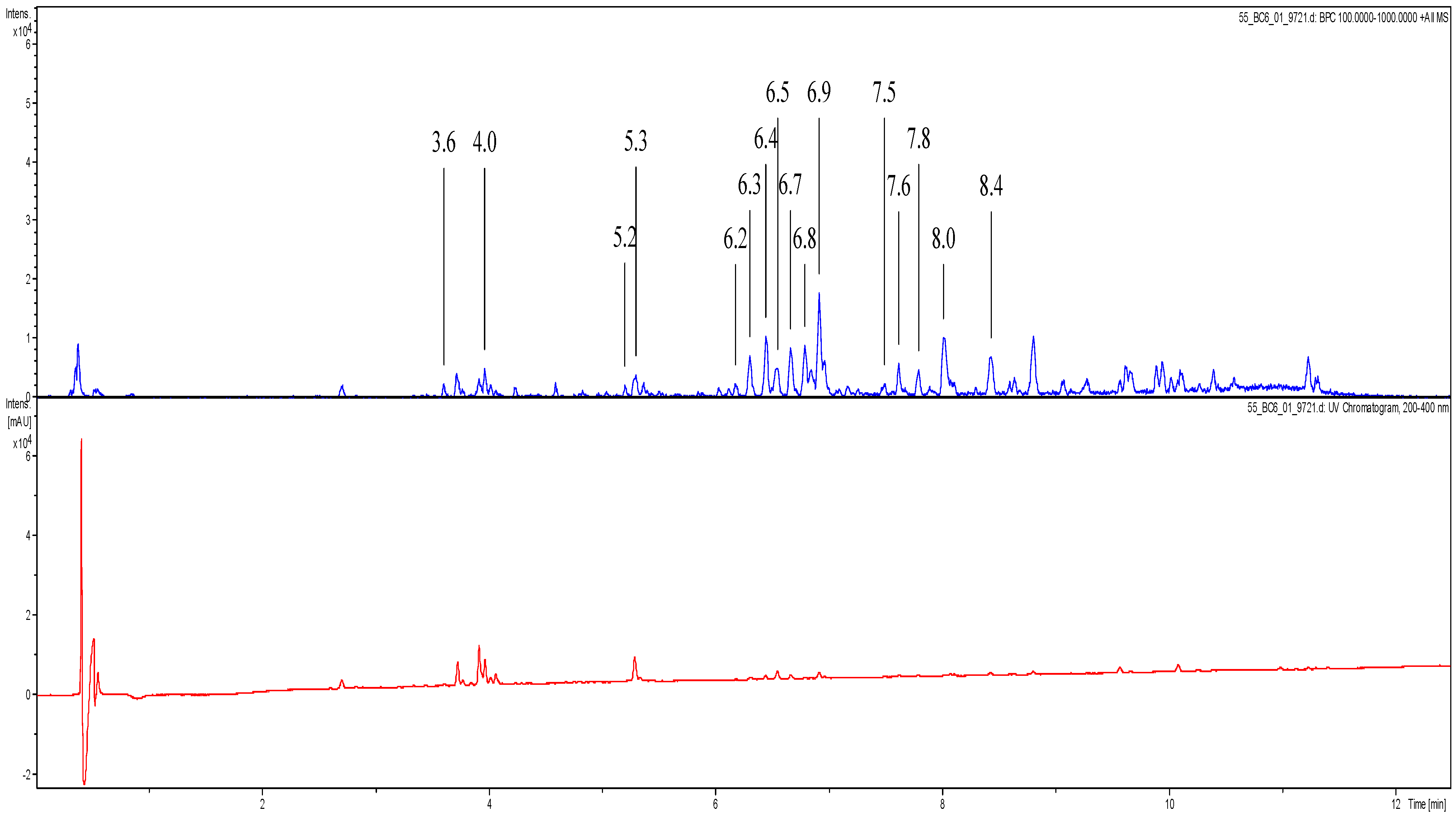
The extract of Arnica montana L. (Asteraceae) (IC50 = 1.12 µg/mL and SI = 10.86) was included in the study as a herbal positive-control, since the anti-trypansosomal activity of its main sesquiterpene lactone constituents was previously described by our group [8,9]. The tincture under study was analyzed by UHPLC/ESI-QqTOF-MSMS and found to contain the main sesquiterpene lactones of the helenalin type known from this plant (see Figure A6 and Table A8, Appendix). Thus, the positive result found with this Arnica tincture in the present research is in agreement with the strong antitrypanosomal activity of its major constituents.
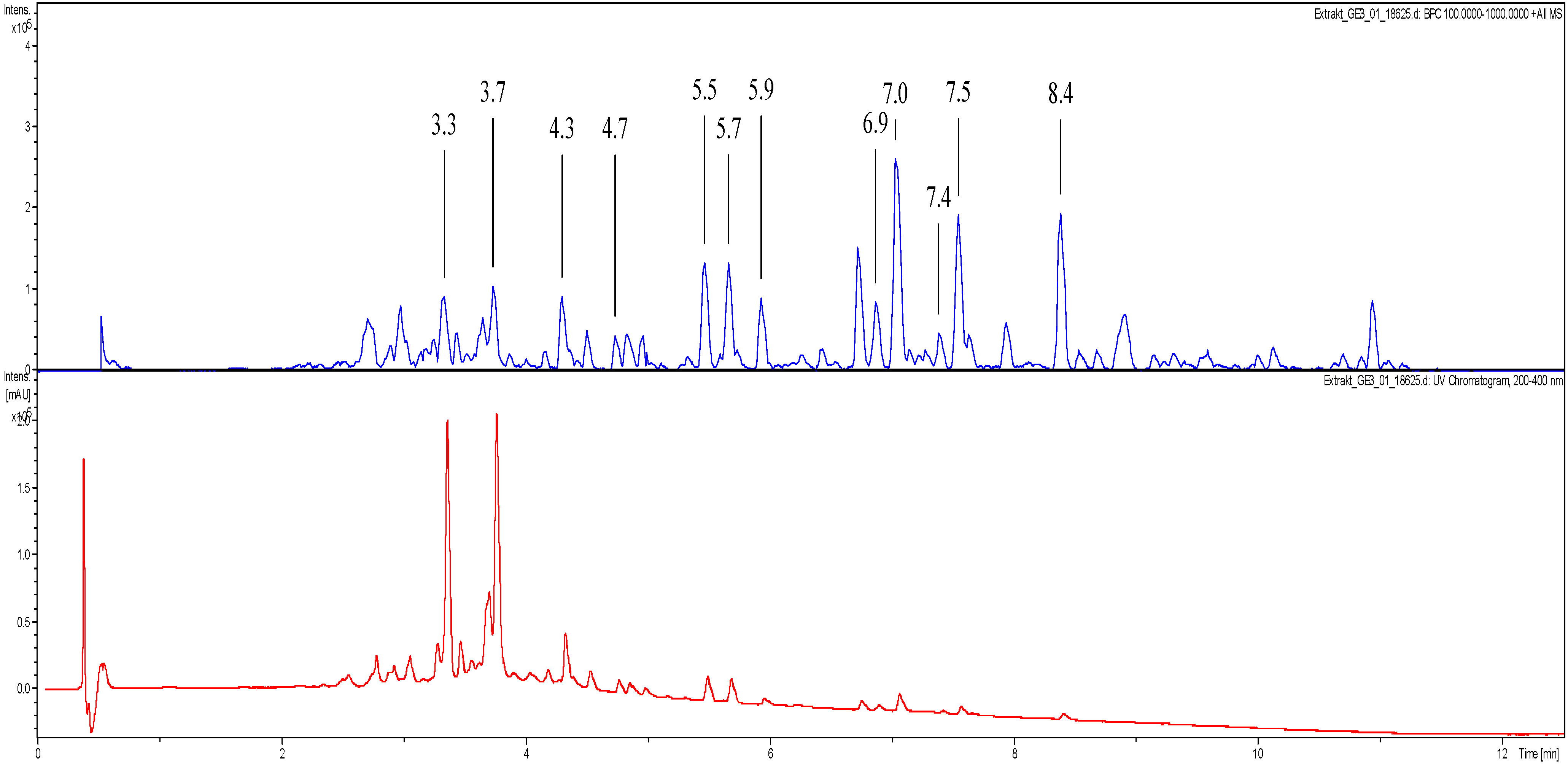
With an IC50 value of 1.86 µg/mL against Tbr, the extract ID_39 of Salvia officinalis L. (Lamiaceae) appears to be a promising hit for further evaluation. The antitrypanosomal and antimalarial activity of other species of the genus Salvia have been previously reported, however, the majority of hitherto isolated and active compounds also showed nonselective toxicity [10,11,12,13,14]. Our tested extract presented a favorable value of SI = 17.3. Therefore, the fractionation of this extract and the evaluation of the resulting biologically active fractions appears interesting. In-depth studies with the aim to identify its antitrypanosomal constituent(s) based on multivariate data analyses in a similar manner, as it was recently described by Ellendorf et al. [15], and to target isolation of the relevant natural products are in progress.
The only preparation that showed activity against T. cruzi (IC50 = 5.86 µg/mL and SI = 7.9) was the ethanolic extract ID_26 of Valeriana officinalis L. (Caprifoliaceae—including all former Valerianaceae—[16]). To the best of our knowledge, no previous reports exist on any antitrypanosomal activity of this plant. Even though the biological values of this sample somewhat exceeded our general criteria range for promising activity (IC50 < 4 µg/mL and SI > 10), which is probably due to the generally lower sensitivity of this intracellular parasite to drugs, it appears interesting to study extract ID_26 further for the antitrypanosomal activity of its single constituents. Valerian is very widespread in Europe, Asia, and North America and is easy to cultivate, so it might become a promising source of new therapeutics against T. cruzi infections.
2.3. Antileishmanial Activity
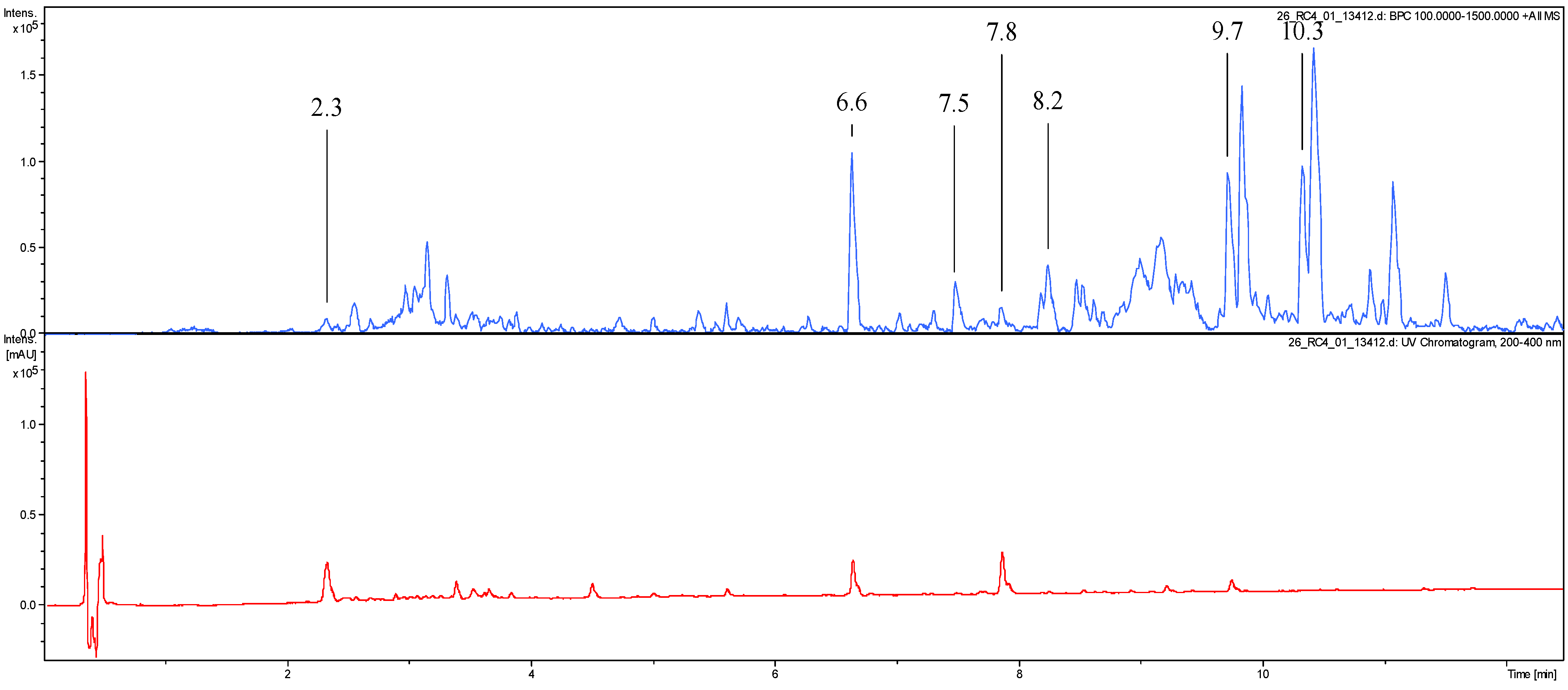
The preparation ID_26 of Valeriana officinalis L. also displayed interesting antileishmanial activity. A much higher IC50 value (≈225 µg/mL) was previously reported for the chloroform extract of V. officinalis [17]. Several isolated constituents of V. wallichii were tested against Leishmania major and showed activity in a range (from lowest and highest value) but also showed unfavorable toxicity results [18]. In contrast to the published results, our extract displayed an IC50 value of 2.1 µg/mL against Ld and SI = 18, which constitutes grounds to select this preparation for further evaluation against this parasite.
2.4. Antiplasmodial Activity
Extract ID_14, obtained from a commercial preparation of turmeric, Curcuma longa L. (Zingiberaceae), showed promising antiplasmodial activity with an IC50 value of only 0.59 µg/mL, which is significantly lower than previously published data on this plant [19]. In the literature, the rhizomes of different species of Curcuma are mentioned to be used in traditional medicine, attributing the therapeutic properties largely to their polyphenolic curcuminoid constituents [19]. Specifically, the most abundant curcuminoid, curcumin, exhibited in vitro and in vivo antimalarial activity with IC50 values ranging from 1.84–3.5 µg/mL [20,21] and an absence of significant toxicity. Furthermore, Arteminisin (ART)-based combination therapies with curcumin have been investigated as a new hope for malaria therapy. Curcumin was found to synergize with ART but also to prime the immune system to protect against recrudescence in mice infected with Plasmodium berghei [22]. Based on the significantly lower IC50 value of the present extract compared to the published data, experiments are in progress to investigate whether curcumin/curcuminoids are the only active compounds of our extract or whether further synergistic contributions can come from other constituents of the total extract.
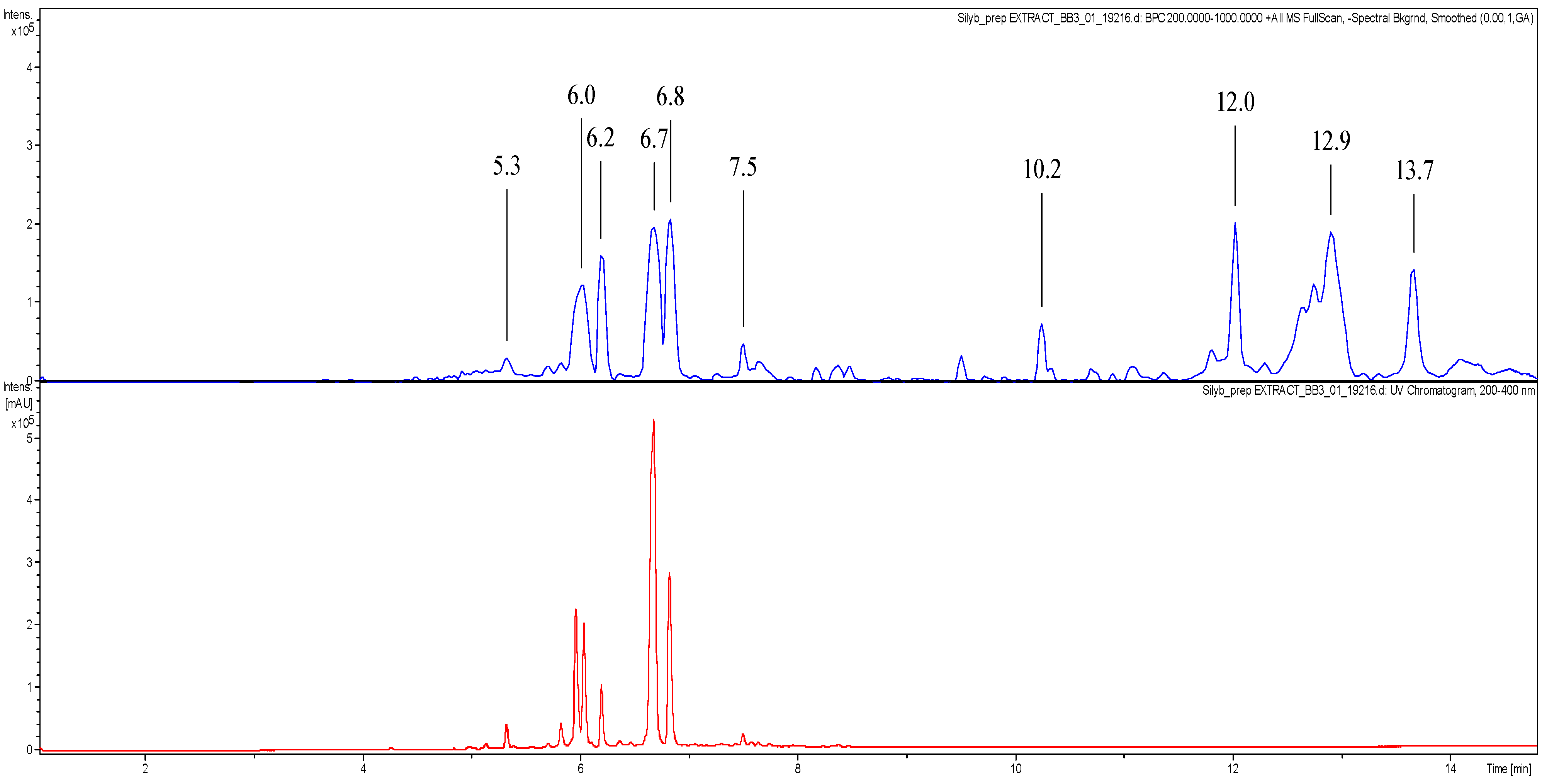
The sample ID_25, representing a preparation of Silymarin, a standardized mixture of closely related flavolignans obtained from milk thistle (Silybum marianum (L.) Gaertn. (Asteraceae)), showed promising antiplasmodial activity with IC50 = 2 µg/mL and SI = 27.3. Milk thistle is one of the oldest medicinal plants and is nowadays used for the treatment of liver damage, hepatitis, and cirrhosis. Moreover, Silybin dihemisuccinate, a derivative of silybin, is used as a clinical antidote for acute Amanita mushroom poisoning [23]. In spite of a large number of studies on the pharmacological activity of milk thistle existing in the literature, there is no information, to date, on the antiplasmodial activity of this plant or its constituents, apart from some tests carried out with the synthetized flavolignans 2,3-dehydrosilibinin and 8-(1;1)-DMA-kaempferide [24]. Since the IC50 value and SI found in our study were quite favorable and the therapeutic window of the extract is known to be wide, we consider S. marianum extract a promising and a useful hit to combat Pf. The isolation of the different flavolignans present in the extract and their biological activity tests are in progress.
The ethanolic extract ID_40 of Hypericum perforatum L. (Hypericaceae) showed high activity against Pf with an IC50 value of 2.27 µg/mL and with favorable selectivity values. Five phloroglucinol derivatives of H. erectum were reported to possess antiplasmodial activity [25], however, they were not found in our active extract (see Figure A5 and Table A7, Appendix). Hyperforin, which was present in our sample, and some derivatives were also reported active against Pf. For instance, the lithium salt of Hyperforin showed IC50 = 2.1 µM [26]. Thus, bioguided fractionation and biological evaluation of isolated compounds compared to the total extract are in progress in order to evaluate whether synergism or the additive effects of single constituents may account for the conspicuous activity of the total extract. Thus, we would justify the use of the complete extract as antiplasmodial instead of the single compounds.

3. Experimental Section
3.1. Source Material and Reagents
The source material used for this study consists of a selected array of 53 approved or registered HMPs of liquid and solid dosage marketed in Germany and purchased from commercial sources (Table A1, Appendix). Solvents used for extraction procedures and LC-MS determinations were of reagent grade and HPLC grade, respectively.
3.2. Extraction Methods
Extraction procedures were applied to (a) lead to an optimal enrichment of potentially active constituents and separate them from unwanted constituents of the galenical matrix and (b), if possible, yield solid extracts that could be directly used for biological testing. Different procedures were applied according to the nature of the preparations (see Table 2 and Table 3).
Table 2.
Extraction methods used for liquid dosage forms.
| ID | Name | Method A | Method B | ||
|---|---|---|---|---|---|
| EtOAc | Direct Evaporation * | Lyophilization | CH2Cl2 | ||
| 21 | Agnolyt® | X | |||
| 10 | Angocin® | X | |||
| 55 | Arnikatinktur Hetterich | X | |||
| 9 | Aspecton® | X | |||
| 20 | Colchysat® | X | X | ||
| 42 | Eleu Curarina® | X | |||
| 56 | Hametum® | X | X | ||
| 37 | Harongan® | X | |||
| 27 | Johanniskraut Rotöl ® | ||||
| 32 | Koro-nyhadin® Tropfen | X | |||
| 35 | Legapas® | X | |||
| 34 | Misteltropfen Hofmann’s® | X | |||
| 38 | Myrrhentinktur Hofmann’s® | X | |||
| 15 | Naturreiner Heilpflanzensaft Schwarzrettich | X | X | ||
| 44 | Nieral® 100 | X | |||
| 8 | Prospan® | X | |||
| 39 | Salbei Curarina® | X | |||
| 50 | Naturreiner Heilpflanzensaft Brennnessel | X | X | ||
| 7 | Naturreiner Heilpflanzensaft Huflattich | X | X | ||
| 28 | Naturreiner Heilpflanzensaft Johanniskraut | X | X | ||
| 18 | Naturreiner Heilpflanzensaft Löwenzahn | X | X | ||
| 4 | Tebonin® forte 40 mg | X | |||
| 12 | Umckaloabo® | X | |||
| 46 | Urophyton® liquidum | X | |||
| 43 | Uvalysat® | X | |||
* 96% Ethanol was used as entrainer in case of hydroethanolic and aqueous extracts during evaporation (rotary evaporator).
Table 3.
Extraction methods used for solid dosage forms.
| ID | Name | Extraction Method | |||
|---|---|---|---|---|---|
| EtOH | EtOAc | H2O | Untreated | ||
| 31 | aar® vir | X | |||
| 52 | Antistax® extra | X | |||
| 3 | Assalix® | X | |||
| 26 | Baldrivit® 600 mg | X | |||
| 47 | Bazoton® uno | X | |||
| 30 | Bryophyllum 50% | X | |||
| 14 | Curcu-Truw® | X | |||
| 45 | Diufluxx Mono® | X | |||
| 33 | Faros® 600 mg | X | |||
| 24 | Femi-loges® | X | |||
| 22 | Florafem ® | X | |||
| 16 | Gallith | X | |||
| 11 | GeloMyrtol®/-forte | X | |||
| 41 | Ginseng SL | ||||
| 48 | Granu Fink® Prosta forte | X | |||
| 13 | Hepar-SL® forte 600 mg | X | |||
| 29 | Hoggar® Balance | X | |||
| 2 | Jucurba® forte 480 mg | X | |||
| 23 | Klimadynon® Uno | X | |||
| 40 | Laif® 900 | X | |||
| 25 | Legalon® forte | X | |||
| 19 | Nieron® E 185 mg | X | |||
| 53 | Phlebodril® | X | |||
| 36 | Ramend Abführ-Tabletten 20 mg | X | |||
| 1 | Rheuma-Hek® forte 600 mg | X | |||
| 49 | Steiprostat® uno | X | |||
| 5 | Styptysat® | X | |||
| 54 | Veno SL® 300 | X | |||
| 51 | Venostasin® | X | |||
3.2.1. Liquid Dosage Form Preparations
Liquid preparations containing low-polarity extracts were obtained by liquid/liquid extraction with low polarity solvents (CH2Cl2 or Ethyl acetate) and subsequently filtered over Na2SO4. Extractions were finally concentrated under vacuum using rotary evaporators at 40 °C for large volumes of solvent (>5 mL) or blow-dried with Nitrogen in case of small volumes. Purely aqueous preparations were directly freeze-dried using a lyophilizer.
Some preparations were submitted to two different procedures (methods A and B in Table 2) in order to get a higher range of possible active constituents and facilitate their identification in case of positive biological activity.
3.2.2. Solid Dosage Form Preparations
In the case of hard-shelled capsules and tablets, a number of five pieces or the contents of them were grinded to fine powder and then extracted with 40 mL of the selected solvent (see Table 3) on a magnetic stirrer for 10 min at room temperature. Extractions were vacuum-filtered and concentrated using a rotary evaporator. In case of soft gel capsules containing liquid or oily extracts, their contents was tested without previous extraction.
3.3. In Vitro Biological Assays
3.3.1. Multiple-Target-Screening (MTS)
In order to screen the extracted HMPs for antiprotozoal activity, all samples were subjected to a two-concentration (2 µg/mL and 10 µg/mL) multiple target screen, i.e., they were tested for percent growth inhibition (GI) as described previously [9] against the following parasites: Trypanosoma cruzi (intracellular amastigotes cultures in L6 rat sekeletal myoblasts as mammalian host cells, Tulahuen C4 strain), Trypanosoma brucei rhodesiense (bloodstream trypomastigotes, STIB 900 strain), Leishmania donovani (axenic amastigotes, strain MHOM-ET67/L82), and Plasmodium falciparum (intraerythrocytic forms, strain NF54).
Samples displaying significantly more than 50% growth inhibition at 10 µg/mL and significant inhibition at 2 µg/mL were considered interesting for further study and, in such cases, the IC50 values against the susceptible parasites and cytotoxicity against L6 cells were determined.
3.3.2. IC50 Determination and Cytotoxicity Assays
The IC50 values of the selected samples yield an exact characterization of their effect against the corresponding parasites. The IC50 values were calculated from the sigmoidal growth inhibition curves resulting of a double determination at seven different concentrations [9]. Melarsoprol, benznidazole, miltefosine, and chloroquine were used as a reference drugs for Tbr, Tc, Ld, and Pf, respectively.
Cytotoxicity was assessed with a similar IC50 protocol using non-infected rat skeletal myoblasts (L6 cells) and Podophyllotoxin as a reference drug [9]. The selectivity index (SI) was calculated as the ratio between the IC50 of the L6 cells and IC50 of the tested parasites. Those samples that showed at least 10-fold selectivity for the parasites were considered interesting hits for following steps of the study.
3.4. Analytical Profiling of the Samples by UHPLC/ESI-QqTOF-MSMS
Analytical characterization of the metabolite profile of the samples was performed by UHPLC coupled with mass spectrometry to obtain detailed information of their constituent profile.
The extracts were injected at a concentration of 2 mg/mL. Chromatographic separations were performed on a Dionex Ultimate 3000 RS Liquid Chromatography System on a Dionex Acclaim RSLC 120, C18 column (2.1 × 100 mm, 2.2 µm) with a binary gradient (A: water with 0.1% formic acid; B: acetonitrile with 0.1% formic acid) at 0.8 mL/min: 0 to 0.2 min: isocratic at 5% B; 0.2 to 9.7 min: linear from 5% B to 100% B; 9.5 to 12.5 min: isocratic at 100% B; 12.5 to 12.6 min: linear from 100% B to 5% B; 12.6 to 15 min: isocratic at 5% B. The injection volume was 10 µL. Eluted compounds were detected using a Dionex Ultimate DAD-3000 RS over a wavelength range of 200–400 nm and a Bruker Daltonics micrOTOF-QII time-of-flight mass spectrometer equipped with an Apollo electrospray ionization source in positive mode at 4 Hz over a mass range of m/z 100–1000 using the following instrument settings: nebulizer gas nitrogen, 4 bar; dry gas nitrogen, 9 L/min, 220 °C; capillary voltage 4500 V; end plate offset −500 V; transfer time 100 µs; collision gas nitrogen; collision energy and collision RF (Radio Frequency) settings were combined to each single spectrum of 1250 summations as follows: 624 summations with 80 eV collision energy and 130 Vpp + 313 summations with 16 eV collision energy and 130 Vpp + 313 summations with 16 eV collision energy and 130 Vpp. Internal dataset calibration (HPC (High Precision Calibration) mode) was performed for each analysis using the mass spectrum of a 10 mM solution of sodium formiate in 50% isopropanol that was infused during LC re-equilibration using a divert valve equipped with a 20 µL sample loop.
3.5. Dereplication of Active Extracts
A partial dereplication of the active extracts was performed by comparison of the obtained UV chromatograms and mass spectra data with the literature and online databases. Moreover, peaks with known m/z from the literature were also searched using Extract Ion Chromatogram (EIC) monitoring. Nevertheless, some peaks could not be assigned unambiguously and it should be noted that for final assignments, the use of a complementary technique after isolation, such as NMR, would be necessary.
4. Conclusions
This screening of a comparatively small number of HMPs led to the discovery of six extracts, namely, from Curcuma longa L., Silybum marianum (L.) Gaertn, Valeriana officinalis L., Salvia officinalis L., Arnica montana L., and Hypericum perforatum L., which showed antiprotozoal activity against at least one of the tested parasites with promising IC50 values and a favorable SI, representing a rate of 10% of tested extracts. Seven extracts also showed moderate antiprotozoal activity with IC50 values ranging between 2.7 and 5.3 µg/mL. This considerable rate of active hits confirms the interesting potential of HMPs in the search for new antiprotozoal agents. Due to the urgent need of research and development of new therapies against protozoan NTDs and the high efforts necessary to develop new drugs de novo, further investigation of the antiprotozoal activity of these and other HMPs may lead to potentially new antiprotozoal compounds of natural origin and facilitate the development of new effective drugs from sustainable and inexpensive natural sources that have already been proven safe.
It should also be considered that natural products in complex mixtures such as plant extracts are often found to show additive or even synergistic effects [27], which could justify the use, in some cases, of the complete extract instead of isolated compounds. Deeper investigations in this direction with the preparations from Hypericum perforatum L. and Curcuma longa L. are in progress.
Acknowledgments
Financial support of this study by Apothekerstiftung Westfalen-Lippe is gratefully acknowledged. NLM receives financial support from Heinrich Böll Fundation in the form of a promotion-fellowship (Promotionsstipendium), which is most gratefully acknowledged. We thank J. Sendker, IPBP Münster, for performing the MS analyses and M. Cal and S. Keller (Swiss TPH) for performing the antiparasitic assays.
This project is an activity within the Research Network Natural Products against Neglected Diseases (ResNetNPND): http:// ResNetNPND.org/.
Author Contributions
N.L.M. performed the phytochemical part of the study and prepared the manuscript. M.K. and R.B. performed the biological assays. This study was initiated and coordinated by T.J.S., who supervised the chemical work and finalized the manuscript.
Conflicts of Interest
The authors declare no conflict of interest.
Appendix
Table A1.
Complete dataset of the selected HMPs.
| ID | Name | Scientific Name |
|---|---|---|
| 31 | aar® vir | Echinacea pallida (Nutt.) Nutt. |
| 21 | Agnolyt® | Vitex agnus-castus L. |
| 10 | Angocin® | Marrubium vulgare L. |
| 52 | Antistax® extra | Vitis vinifera L. |
| 55 | Arnikatinktur Hetterich | Arnica montana L. |
| 9 | Aspecton® | Thymus vulgaris L. |
| 3 | Assalix® | Salix sp. |
| 26 | Baldrivit® 600 mg | Valeriana officinalis L. |
| 47 | Bazoton® uno | Urtica dioica L. |
| 30 | Bryophyllum 50% | Bryophyllum pinnatum (Lam.) Oken |
| 20 | Colchysat® | Colchicum autumnale L. |
| 14 | Curcu-Truw® | Curcuma longa L. |
| 45 | Diufluxx Mono® | Orthosiphon stamineus Benth. |
| 42 | Eleu Curarina® | Eleutherococcus senticosus L. |
| 33 | Faros® 600 mg | Crataegus sp. |
| 24 | Femi-loges® | Rheum rhaponticum L. |
| 22 | Florafem ® | Potentilla anserina L. |
| 16 | Gallith | Glechoma hederacea L. |
| 11 | GeloMyrtol®/-forte | Mixture of rectified essential oils of Eucalyptus globulus Labill., Citrus sinensis (L.) Osbeck., Myrtus communis L., Citrus limon (L.) Burm.f. (66:32:1:1). |
| 41 | Ginseng SL | Panax ginseng C.A.Mey. |
| 48 | Granu Fink® Prosta forte | Cucurbita pepo L. |
| 37 | Harongan® | Harungana madagascariensis Lam. ex Poir. |
| 13 | Hepar-SL® forte 600 mg | Cynara cardunculus L. |
| 29 | Hoggar® Balance | Passiflora incarnata L. |
| 27 | Johanniskraut Rotöl ® | Hypericum perforatum L. |
| 2 | Jucurba® forte 480 mg | Harpagophytum procumbens (Burch.) DC. ex Meisn. |
| 23 | Klimadynon® Uno | Actaea racemosa L. |
| 32 | Koro-nyhadin® Tropfen | Crataegus sp. |
| 40 | Laif® 900 | Hypericum perforatum L. |
| 25 | Legalon® forte | Silybum marianum (L.) Gaertner |
| 35 | Legapas® | Frangula purshiana (DC.) J.G.Cooper |
| 34 | Misteltropfen Hofmann’s® | Viscum album L. |
| 38 | Myrrhentinktur Hofmann’s® | Commiphora myrrha (T.Nees) Engl. |
| 50 | Naturreiner Heilpflanzensaft Brennnessel | Urtica dioica L. |
| 7 | Naturreiner Heilpflanzensaft Huflattich | Tussilago farfara L. |
| 28 | Naturreiner Heilpflanzensaft Johanniskraut | Hypericum perforatum L. |
| 18 | Naturreiner Heilpflanzensaft Löwenzahn | Taraxacum officinale F.H.Wigg. |
| 15 | Naturreiner Heilpflanzensaft Schwarzrettich | Raphanus sativus L. |
| 44 | Nieral® 100 | Solidago virgaurea L. |
| 19 | Nieron® E 185 mg | Equisetum arvense L. |
| 53 | Phlebodril® | Ruscus aculeatus L. |
| 8 | Prospan® | Hedera helix L. |
| 36 | Ramend Abführ-Tabletten 20 mg | Senna alexandrina Mill. |
| 1 | Rheuma-Hek® forte 600 mg | Urtica dioica L. |
| 39 | Salbei Curarina® | Salvia officinalis L. |
| 49 | Steiprostat® uno | Serenoa repens (W.Bartram) Small |
| 5 | Styptysat® | Capsella bursa-pastoris (L.) Medik. |
| 4 | Tebonin® forte 40 mg | Ginkgo biloba L. |
| 12 | Umckaloabo® | Pelargonium sidoides DC |
| 46 | Urophyton® liquidum | Elymus repens (L.) Gould |
| 43 | Uvalysat® | Arctostaphylos uva-ursi (L.) Spreng. |
| 54 | Veno SL® 300 | Troxerutin |
| 51 | Venostasin® | Aesculus hippocastanum L. |
| ID | Tbr | Tc | Ld | Pf | ||||
|---|---|---|---|---|---|---|---|---|
| 10 µg/mL | 2 µg/mL | 10 µg/mL | 2 µg/mL | 10 µg/mL | 2 µg/mL | 10 µg/mL | 2 µg/mL | |
| 1 | 16.8 | 10.9 | 46.4 | 12.3 | 30.1 | 8.5 | 36.3 | 23.5 |
| 2 | 14.6 | 7.6 | 16.3 | 0.0 | 61.6 | 23.4 | 88.3 | 22.0 |
| 3 | 30.1 | 5.9 | 0.0 | 6.4 | 29.6 | 22.4 | 79.1 | 22.1 |
| 4B | 13.4 | 4.7 | 6.8 | 1.6 | 21.4 | 20.6 | 16.2 | 0.0 |
| 5 | 16.7 | 13.7 | 13.5 | 0.0 | 31.3 | 22.4 | 20.8 | 16.8 |
| 7A * | 62.1 | 9.0 | 0.0 | 10.5 | 24.0 | 17.1 | 24.7 | 0.0 |
| 7B * | 21.1 | 0.0 | 0.0 | 2.1 | 23.4 | 15.9 | 21.9 | 7.4 |
| 8 | 8.0 | 0.0 | 0.0 | 6.4 | 0.8 | 0.0 | 20.3 | 0.0 |
| 9 | 16.2 | 13.7 | 9.9 | 1.5 | 23.9 | 24.5 | 9.2 | 0.0 |
| 10 | 15.4 | 11.2 | 10.3 | 12.7 | 23.4 | 27.6 | 13.9 | 0.0 |
| 11 | 9.1 | 9.4 | 15.5 | 0.0 | 30.2 | 23.7 | 18.4 | 14.7 |
| 12 | 15.2 | 15.7 | 8.7 | 0.0 | 26.0 | 23.6 | 8.7 | 0.0 |
| 13 | 23.4 | 11.4 | 35.4 | 30.6 | 27.6 | 22.7 | 23.6 | 19.2 |
| 14 | 80.9 | 22.3 | 41.4 | 0.0 | 100.0 | 47.1 | 99.9 | 95.4 |
| 15A * | 11.6 | 49.3 | 11.3 | 8.4 | 22.3 | 28.0 | 5.7 | 0.0 |
| 15B * | 34.4 | 13.2 | 7.0 | 0.0 | 34.3 | 15.9 | 11.9 | 0.0 |
| 16 | 6.7 | 9.6 | 0.0 | 0.0 | 22.4 | 22.0 | 10.0 | 7.7 |
| 18A * | 11.5 | 9.2 | 9.5 | 8.1 | 25.6 | 27.1 | 16.9 | 0.0 |
| 18B * | 35.3 | 12.6 | 0.0 | 10.5 | 32.2 | 24.1 | 53.0 | 0.0 |
| 19 | 13.5 | 5.5 | 16.9 | 0.0 | 17.7 | 2.4 | 10.2 | 5.0 |
| 20A * | 11.3 | 7.1 | 47.6 | 33.8 | 17.4 | 25.1 | 16.8 | 0.0 |
| 20B * | 99.4 | 16.3 | 37.8 | 37.1 | 17.5 | 18.6 | 33.2 | 0.0 |
| 21 | 4.9 | 0.7 | 0.0 | 5.5 | 15.6 | 8.6 | 8.9 | 4.4 |
| 22 | 28.8 | 12.1 | 7.2 | 0.0 | 44.8 | 26.1 | 73.5 | 20.9 |
| 23 | 15.5 | 6.2 | 16.0 | 7.4 | 44.8 | 25.4 | 30.8 | 18.2 |
| 24 | 6.2 | 8.0 | 8.3 | 4.4 | 38.5 | 28.4 | 5.0 | 4.4 |
| 25 | 28.8 | 11.0 | 20.2 | 8.3 | 76.0 | 28.2 | 99.3 | 46.5 |
| 26 | 17.7 | 8.8 | 93.7 | 31.3 | 100.0 | 49.9 | 99.9 | 14.5 |
| 27 | 10.9 | 8.8 | 0.0 | 0.0 | 34.1 | 23.8 | 8.8 | 1.2 |
| 28A * | 4.2 | 5.8 | 6.8 | 5.1 | 0.8 | 0.0 | 10.5 | 0.0 |
| 28B * | 100.0 | 41.3 | 13.3 | 0.0 | 39.8 | 24.1 | 53.0 | 0.0 |
| 29 | 23.6 | 10.4 | 0.0 | 0.0 | 46.8 | 20.9 | 26.2 | 11.2 |
| 30 | 14.3 | 9.9 | 0.0 | 0.0 | 23.8 | 6.0 | 25.3 | 10.3 |
| 31 | 10.8 | 11.6 | 0.0 | 6.6 | 34.4 | 26.2 | 39.9 | 14.8 |
| 32 | 12.7 | 12.5 | 0.0 | 13.3 | 28.5 | 22.5 | 9.4 | 0.0 |
| 33 | 18.3 | 5.8 | 0.0 | 3.8 | 44.9 | 26.5 | 32.8 | 16.2 |
| 34A | 23.1 | 11.2 | 2.9 | 4.8 | 36.2 | 23.6 | 7.2 | 0.0 |
| 35 | 17.8 | 12.5 | 15.5 | 3.5 | 31.6 | 23.3 | 11.0 | 0.0 |
| 36 | 17.2 | 12.5 | 0.0 | 0.0 | 34.4 | 26.5 | 14.0 | 10.9 |
| 37 | 12.8 | 8.8 | 12.4 | 11.6 | 27.5 | 17.6 | 16.9 | 0.0 |
| 38 | 71.9 | 14.1 | 0.0 | 12.1 | 67.7 | 13.4 | 100.0 | 56.7 |
| 39 | 100.0 | 39.8 | 0.0 | 7.5 | 48.4 | 0.0 | 32.0 | 0.0 |
| 40 | 25.1 | 19.7 | 7.3 | 3.9 | 93.1 | 27.7 | 99.9 | 35.2 |
| 41 | 12.0 | 12.5 | 0.0 | 0.0 | 26.4 | 23.4 | 19.5 | 6.1 |
| 42 | 17.8 | 9.7 | 0.0 | 9.5 | 24.2 | 23.0 | 5.0 | 0.0 |
| 43 | 12.6 | 10.2 | 0.4 | 7.2 | 26.2 | 20.6 | 0.0 | 0.0 |
| 44 | 16.5 | 9.5 | 16.6 | 14.9 | 54.8 | 18.3 | 11.5 | 0.0 |
| 45 | 18.3 | 10.7 | 0.4 | 1.3 | 40.1 | 20.3 | 99.9 | 18.2 |
| 46 | 10.7 | 13.0 | 0.0 | 4.9 | 24.2 | 17.8 | 0.0 | 0.0 |
| 47 | 1.4 | 8.7 | 6.2 | 4.3 | 22.1 | 12.2 | 17.9 | 0.0 |
| 48 | 7.5 | 11.9 | 0.0 | 0.0 | 6.4 | 0.0 | 10.8 | 8.3 |
| 49 | 5.0 | 7.9 | 2.0 | 4.5 | 63.7 | 28.9 | 13.2 | 2.0 |
| 50 | 2.9 | 0.9 | 6.9 | 4.5 | 18.5 | 7.0 | 2.2 | 0.0 |
| 51 | 14.4 | 8.3 | 0.0 | 8.8 | 40.3 | 28.2 | 15.1 | 5.2 |
| 52 | 14.1 | 4.6 | 5.7 | 0.0 | 41.7 | 30.7 | 13.4 | 0.0 |
| 53 | 21.4 | 4.6 | 12.4 | 1.2 | 38.6 | 31.0 | 8.7 | 0.0 |
| 54 | 18.3 | 8.6 | 3.1 | 4.4 | 44.2 | 31.9 | 13.4 | 0.6 |
| 55 | 100.5 | 92.9 | 2.6 | 1.3 | 91.4 | 13.7 | 67.4 | 0.0 |
* HMPs extracted by two different methods, A and B, see Table 2, main document.
Dereplication Data
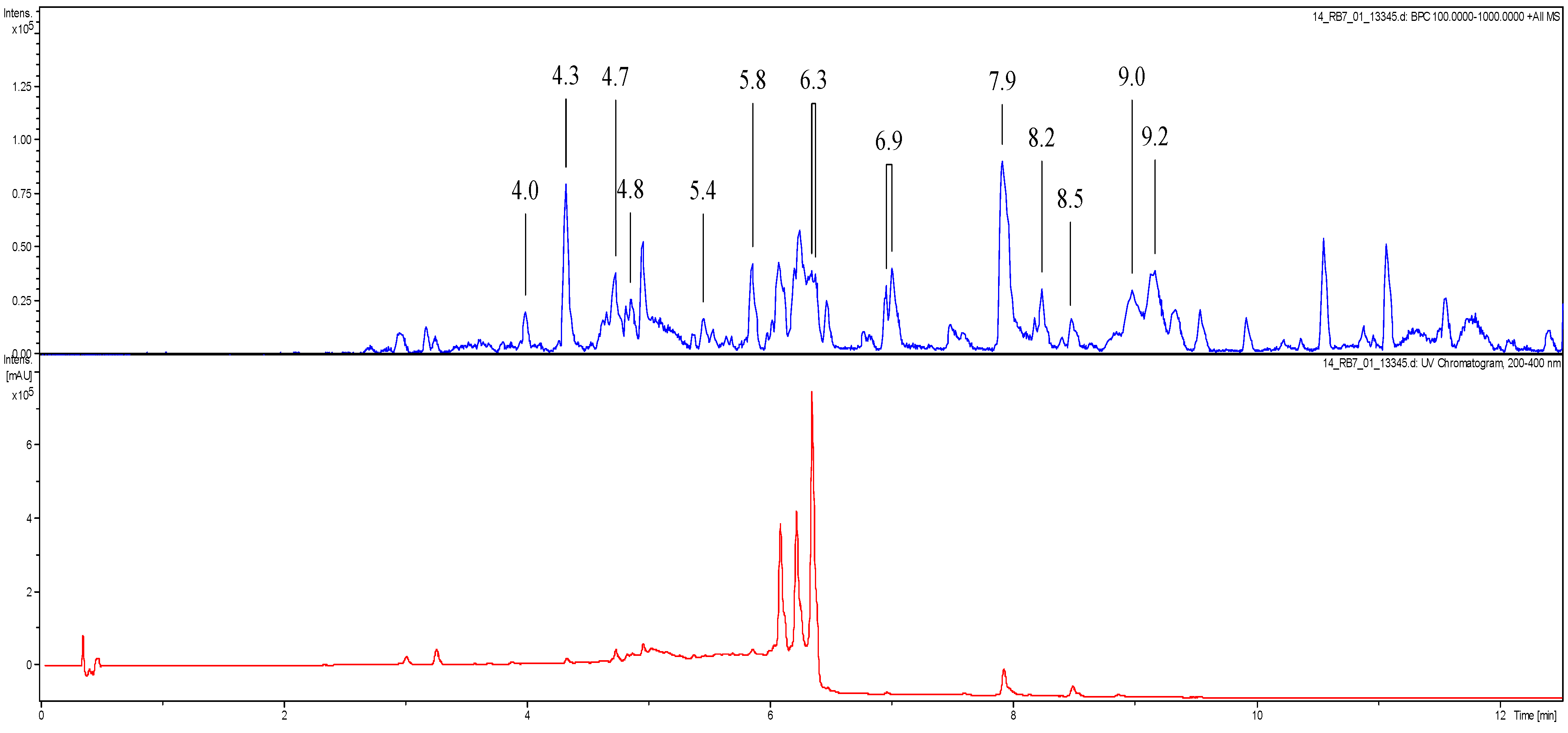
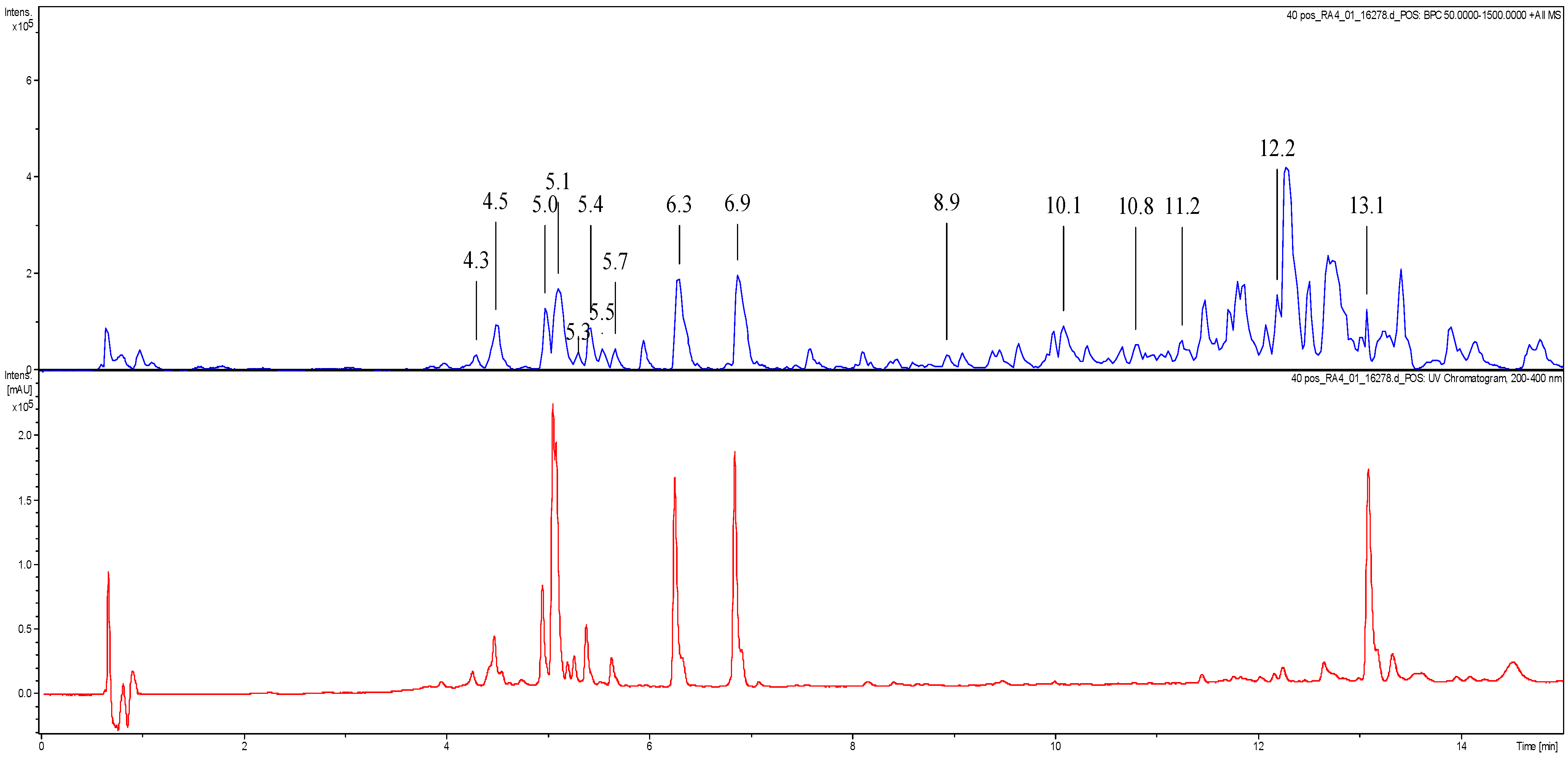
Figure A1, Figure A2, Figure A3, Figure A4, Figure A5 and Figure A6. Representative Chromatograms of positive extract preparations dereplicated by UHPLC/+ESI-QqTOF-MSMS. Blue: Base peak chromatogram (m/z 100–1000). Red: UV Chromatogram 200–400 nm.
Table A3, Table A4, Table A5, Table A6, Table A7 and Table A8. Identification of peaks detected in the extracts.
Figure A1.
ID_14. Extract of Curcuma longa L.
Table A3.
Dereplication results for ID_14.
| tR | Quasimolecular Ion | Suggested Compound |
|---|---|---|
| 4.0 | [M + Na] 275.1628 | Unknown |
| 4.3 | [M + Na] 275.1634 | Unknown |
| 4.7 | [M + H] 309.1141 [M + H] 251.1666 | Bisdemetoxycurcumin Procurcumadiol or isomer |
| 4.8 | [M + Na] 275.1616 | Unknown |
| 5.4 | [M + H] 251.1635 | Procucurmadiol or isomer |
| 5.8 | [M + H] 235.1648 | Curcumenol/Curcumenone or Isocurcumenol |
| 6.3 | [M + H] 369.1335 | Curcumin/Cyclocurcumin |
| 6.9 | [M + H] 233.1551 | Tumeronol A or Tumeronol B |
| 7.9 | [M + H] 217.1586 | Ar-Tumerone/Curzerene or Furanodiene |
| 8.2 | [M + H] 279.1587 | Unknown |
| 8.5 | [M + H] 219.1760 | α- or β-Turmerone/Curlone/Germacrone |
| 9.0 | [M + H] 333.3003 | Unknown |
| 9.2 | [M + H] 333.2992 | Unknown |
Figure A2.
ID_25. Extract of Silybum marianum (L.) Gaertn.
Table A4.
Dereplication results for ID_25.
| tR | Ion [M + H]+ | Suggested Compound |
|---|---|---|
| 5.3 | 305.0662 | Taxifolin |
| 6.0 | 483.1309 | Silychristin/Silydianin * |
| 6.2 | 499.1253 | Unknown |
| 6.7 | 483.1304 | Silybin A/B * |
| 6.8 | 483.1313 | Isosilybin A/B * |
| 7.5 | 481.1131 | 2,3-dehydrosilibin |
| 10.2 | 327.1606 | Unknown |
| 12.0 | 349.2371 | Unknown |
| 12.9 | n.d. | Unknown |
| 13.7 | 371.6210 | Unknown |
* The different flavolignans have the same m/z and very similar UV-Spectra. The assignments were done in comparison with the literature [28].
Figure A3.
ID_26. Extract of Valeriana officinalis L.
Table A5.
Dereplication results for ID_26.
| tR | Ion [M + H]+ | Suggested Compound |
|---|---|---|
| 2.3 | 355.1049 | Chlorogenic acid |
| 6.6 | 293.1752 | Volvalerenal A or C/Acetoxyvalerenic acid |
| 7.5 | 520.3419 | Unknown |
| 7.8 | 235.1708 | Rulepidol |
| 8.2 | 279.1574 | Unknown |
| 9.7 | 339.2543 | Unknown |
| 10.3 | 389.3406 | Unknown |
Figure A4.
ID_39. Extract of Salvia officinalis L.
Table A6.
Dereplication results for ID_39.
| tR | Ion [M + H]+ | Suggested Compound |
|---|---|---|
| 3.3 | 463.0897 | Luteolin-7-glucuronide |
| 3.7 | 361.0943 | Rosmarinic acid |
| 4.3 | 287.0573 | Luteolin |
| 4.7 | 271.0610 | Apigenin |
| 5.5 | 315.0864 | Cirsimartin |
| 5.5 | 347.1776 | Rosmanol/Epirosmanol isomer |
| 5.7 | 347.1868 | Rosmanol/Epirosmanol isomer |
| 5.9 | 347.1879 | Rosmanol/Epirosmanol isomer |
| 6.9 | 361.0943 | Rosmarinic acid |
| 7.0 | 331.1932 | Carnosol |
| 7.4 | 375.2183 | 7α-Acetoxyroyleanone or isomer |
| 7.5 | 375.2183 | 7α-Acetoxyroyleanone or isomer |
| 8.4 | 347.2222 | 12-methoxy carnosic acid |
Figure A5.
ID_40: Extract of Hypericum perforatum L.
Table A7.
Dereplication results for ID_40.
| tR | Ion [M + H]+ | Suggested Compound |
|---|---|---|
| 4.3 | 579.1541 | Unknown |
| 4.5 | 291.0874 | Catechin or Epicatechin |
| 5.0 | 611.1599 | Rutin |
| 5.1 | 465.1045 | Hyperoside/Isoquercitrin |
| 5.3 | 435.0932 | Avicularin |
| 5.4 | 449.1082 | Quercitrin |
| 5.5 | 373.2232 | Unknown |
| 5.7 | 507.1159 | Protohypericin |
| 6.3 | 303.0518 | Quercetin |
| 6.9 | 539.0992 | Biapigenin/I3-II8-biapigenin |
| 8.9 | 676.3585 | Unknown |
| 10.1 | 587.3946 | Unknown |
| 10.8 | 587.3954 | Unknown |
| 11.2 | 587.3961 | Unknown |
| 12.2 | 496.3299 | Unknown |
| 13.1 | 537.3947 | Hyperforin |
Figure A6.
ID_55. Extract of Arnica montana L.
Table A8.
Dereplication results for ID_55.
| tR | [M + H]+ | Main Fragments | Suggested Compound |
|---|---|---|---|
| 3.6 | 265.1469 | 247 | Dihydrohelenalin |
| 3.6 | 427.1918 | 247 | Unknown |
| 4.0 | 479.1140 | 247 | Unknown |
| 5.2 | 307.1542 | 247 | 6-O-Acetyl-11α,13-dihydrohelenalin |
| 5.3 | 305.1376 | 245 | 6-O-Acetylhelenalin |
| 6.2 | 333.1742 | 247 | 6-O-methacryloyl-11α, 13-dihydrohelenalin |
| 6.31 | 335.1845 | 247 | 6-O-isobutyryl-11α, 13-dihydrohelenalin |
| 6.4 | 333.1706 | 245 | 6-O-isobutyrylhelenalin |
| 6.5 | 347.1882 | 247 | 6-O-tigloyl-11α, 13-dihydrohelenalin |
| 6.7 | 345.1690 | 245 | 6-O-tigloylhelenalin |
| 6.8 | 349.2017 | 247 | 6-O-(2-methylbutyryl)-11α, 13-dihydrohelenalin |
| 6.9 | 349.2047 | 247 | 6-O-(2-methylbutyryl)-11α, 13-dihydrohelenalin |
| 7.5 | 377.1990 | 291 | 2β-ethoxy-6-O-methacryloyl-2,3-dihydrohelenalin * |
| 7.6 | 379.2164 | 291 | 2β-ethoxy-6-O-isobutyryl-2,3-dihydrohelenalin * |
| 7.8 | 391.2116 | 291 | 2β-ethoxy-6-O-tigloyl-2,3-dihydrohelenalin * |
| 8.0 | 393.2331 | 291 | 2β-ethoxy-6-O-(-2-methylbutyryl)-2,3-dihydrohelenalin * |
| 8.3 | 335.1852 | 289 | Unknown |
* Artefacts due to the reactivity of the helenalin/11,13-dihydrohelenalin derivatives towards the ethanol used in the tincture [29] In the dereplication of this extract, the main fragments resulting from loss of the respective acid moieties are additionally indicated in the table, because they were used for assignment.
References
- Schmidt, T.J.; Khalid, S.A.; Romanha, A.J.; Alves, T.M.A.; Biavatti, M.W.; Brun, R.; da Costa, F.B.; de Castro, S.L.; Ferreira, V.F.; de Lacerda, M.V.G.; et al. The potential of secondary metabolites from plants as drugs or leads against protozoan neglected diseases—Part I. Curr. Med. Chem. 2012, 19, 2128–2175. [Google Scholar] [PubMed]
- Schmidt, T.J.; Khalid, S.A.; Romanha, A.J.; Alves, T.M.A.; Biavatti, M.W.; Brun, R.; da Costa, F.B.; de Castro, S.L.; Ferreira, V.F.; de Lacerda, M.V.G.; et al. The potential of secondary metabolites from plants as drugs or leads against protozoan neglected diseases—Part II. Curr. Med. Chem. 2012, 19, 2176–2228. [Google Scholar] [CrossRef] [PubMed]
- WHO/Department of Control of Neglected Tropical Diseases. Third WHO Report on Neglected Tropical Diseases: Working to Overcome the Global Impact of Neglected Diseases; Peters, P., Ed.; WHO Press, 2015. Available online: http://www.who.int/neglected_diseases/9789241564861/en/ (accessed on 10 June 2015).
- Garza, M.; Feria Arroyo, T.P.; Casillas, E.A.; Sanchez-Cordero, V.; Rivaldi, C.L.; Sahotra, S. Projected Future Distributions of Vectors of Trypanosoma cruzi in North America under Climate Change Scenarios. PLoS Negl. Trop. Dis. 2014, 8. [Google Scholar] [CrossRef] [PubMed]
- González, C.; Paz, A.; Ferro, C. Predicted altitudinal shifts and reduced spatial distribution of Leishmania infantum vector species under climate change scenarios in Colombia. Acta Trop. 2014, 129, 83–90. [Google Scholar] [CrossRef] [PubMed]
- Newman, D.J.; Cragg, G.M. Natural Products as Sources of New Drugs over the Last 25 Years. J. Nat. Prod. 2007, 70, 461–477. [Google Scholar] [CrossRef] [PubMed]
- Newman, D.J.; Cragg, G.M. Natural Products as Sources of New Drugs over the 30 Years from 1981 to 2010. J. Nat. Prod. 2012, 75, 311–335. [Google Scholar] [CrossRef] [PubMed]
- Schmidt, T.J.; Brun, R.; Willuhn, G.; Khalid, S.A. Anti-trypanosomal Activity of Helenalin and Some Structurally Related Sesquiterepene Lactones. Planta Med. 2002, 68, 750–751. [Google Scholar] [CrossRef] [PubMed]
- Schmidt, T.J.; Nour, A.M.M.; Khalid, S.A.; Kaiser, M.; Brun, R. Quantitative Structure-Antiprotozoal Activity Relationships of Sesquiterpene Lactones. Molecules 2009, 14, 2062–2076. [Google Scholar] [CrossRef] [PubMed]
- Kamatou, G.P.P.; van Zyl, R.L.; Davids, H.; van Heerden, F.R.; Lourens, A.C.U.; Viljoen, A.M. Antimalarial and anticancer activities of selected South African Salvia species and isolated compounds from S. radula. S. Afr. J. Bot. 2008, 17, 238–243. [Google Scholar] [CrossRef]
- Ebrahimi, S.N.; Zimmermann, S.; Zaugg, J.; Smiesko, M.; Brun, R.; Hamburger, M. Abietane Diterpenoids from Salvia sahendica—Antiprotozoal Activity and Determination of their Absolute Configurations. Planta Med. 2013, 79, 150–156. [Google Scholar] [CrossRef] [PubMed]
- Farimani, M.M.; Bahadori, M.B.; Taheri, S.; Ebrahumi, S.N.; Zimmermann, S.; Brun, R.; Amin, G.; Hamburger, M. Triterpenoids with Rare Carbon Skeletons from Salvia hydrangea: Antiprotozoal Activity and Absolute Configurations. J. Nat. Prod. 2011, 74, 2200–2205. [Google Scholar] [CrossRef] [PubMed]
- Sylwester Ślusarczyk, S.; Zimmermann, S.; Kaiser, M.; Matkowski, A.; Hamburger, M.; Adams, M. Antiplasmodial and Antitrypanosomal Activity of Tanshinone-Type Diterpenoids from Salvia miltiorrhiza. Planta Med. 2011, 77, 1594–1596. [Google Scholar] [CrossRef] [PubMed]
- Farimani, M.M.; Ebrahimi, S.N.; Salehi, P.; Bahadori, M.B.; Sonboli, A.; Khavasi, H.R.; Zimmermann, S.; Kaiser, M.; Hamburger, M. Antitrypanosomal Triterpenoid with an ε-Lactone E-Ring from Salvia urmiensis. J. Nat. Prod. 2013, 76, 1806–1809. [Google Scholar] [CrossRef] [PubMed]
- Ellendorf, T.; Brun, R.; Kaiser, M.; Sendker, J.; Schmidt, T.J. PLS-Prediction and Confirmation of Hydrojuglone Glucoside as the Antitrypanosomal Constituent of Juglans Spp. Molecules 2015, 20, 10082–10094. [Google Scholar] [CrossRef] [PubMed]
- Stevens, P.F. Angiosperm Phylogeny Website. Version 12. July 2012. Available online: http://www.mobot.org/MOBOT/research/APweb/ (accessed on 14 June 2015).
- Ghosh, S.; Debnath, S.; Hazra, S.; Hartung, A.; Thomale, K.; Schultheis, M.; Kapkova, P.; Schurigt, U.; Moll, H.; Holzgrabe, U.; et al. Valeriana wallichii root extracts and fractions with activity against Leishmania spp. Parasitol. Res. 2011, 108, 861–871. [Google Scholar] [CrossRef] [PubMed]
- Glaser, J.; Schultheis, M.; Moll, H.; Hazra, B.; Holzgrabe, U. Antileishmanial and Cytotoxic Compounds from Valeriana wallichii and Identification of a Novel Nepetolactone. Molecules 2015, 20, 5740–5753. [Google Scholar] [CrossRef] [PubMed]
- Haddad, M.; Sauvain, M.; Deharo, E. Curcuma as a Parasiticidal Agent: A review. Planta Med. 2011, 77, 672–678. [Google Scholar] [CrossRef] [PubMed]
- Reddya, R.C.; Vatsalab, P.G.; Keshamounia, V.G.; Padmanabanb, G.; Rangarajanb, P.N. Curcumin for malaria therapy. Biochem. Biophys. Res. Commun. 2005, 326, 472–447. [Google Scholar] [CrossRef] [PubMed]
- Rasmussen, H.B.; Christensen, S.B.; Kvist, L.P.; Karazm, A. A Simple and Efficient Separation of the Curcumins, the Antiprotozoal Constituents of Curcuma longa. Planta Med. 2000, 66, 396–398. [Google Scholar] [CrossRef] [PubMed]
- Padmanaban, G.; Nagaraj, V.A.; Rangarajan, P.N. Artemisinin-based combination with curcumin adds a new dimension to malaria therapy. Curr. Sci. 2012, 102, 704–711. [Google Scholar]
- Wellington, K.; Jarvis, B. Silymarin: A review of its clinical properties in the management of hepatic disorders. BioDrugs 2001, 15, 465–489. [Google Scholar] [CrossRef] [PubMed]
- De Monbrison, F.; Maitrejean, M.; Latour, C.; Bugnazet, F.; Peyron, F.; Barron, D.; Picot, S. In vitro antimalarial activity of flavonoid derivatives dehydrosilybin and 8-(1;1)-DMA-kaempferide. Acta Trop. 2006, 97, 102–107. [Google Scholar] [CrossRef] [PubMed]
- Moon, H. Antiplasmodial and Cytotoxic Activity of Phloroglucinol Derivatives from Hypericum erectum Thunb. Phytother. Res. 2010, 24, 941–944. [Google Scholar] [PubMed]
- Verotta, L.; Appendino, G.; Bombardelli, E.; Brun, R. In vitro antimalarial activity of hyperforin, a prenylated acylphloroglucinol. A structure-activity study. Bioorg. Med. Chem. Lett. 2007, 17, 1544–1548. [Google Scholar] [CrossRef] [PubMed]
- Deharo, E.; Ginsburg, H. Analysis of additivity and synergism in the anti-plasmodial effect of purified compounds from plant extracts. Malar. J. 2011, 10. [Google Scholar] [CrossRef] [PubMed]
- Ding, T.; Tian, S.; Zhang, Z.; Gu, D.; Chen, Y.; Shi, Y.; Sun, Z. Determination of active component in silymarin by RP-LC and LC/MS. J. Pharm. Biomed. Anal. 2001, 26, 155–161. [Google Scholar] [CrossRef]
- Schmidt, T.J.; Matthiesen, U.; Willuhn, G. On the Stability of Sesquiterpene Lactones in the Officinal Arnica Tincture of the German Pharmacopoeia. Planta Med. 2000, 66, 678–681. [Google Scholar] [CrossRef] [PubMed]
- Sample Availability: Samples of the compounds are not available from the authors.
© 2015 by the authors. Licensee MDPI, Basel, Switzerland. This article is an open access article distributed under the terms and conditions of the Creative Commons Attribution license ( http://creativecommons.org/licenses/by/4.0/).