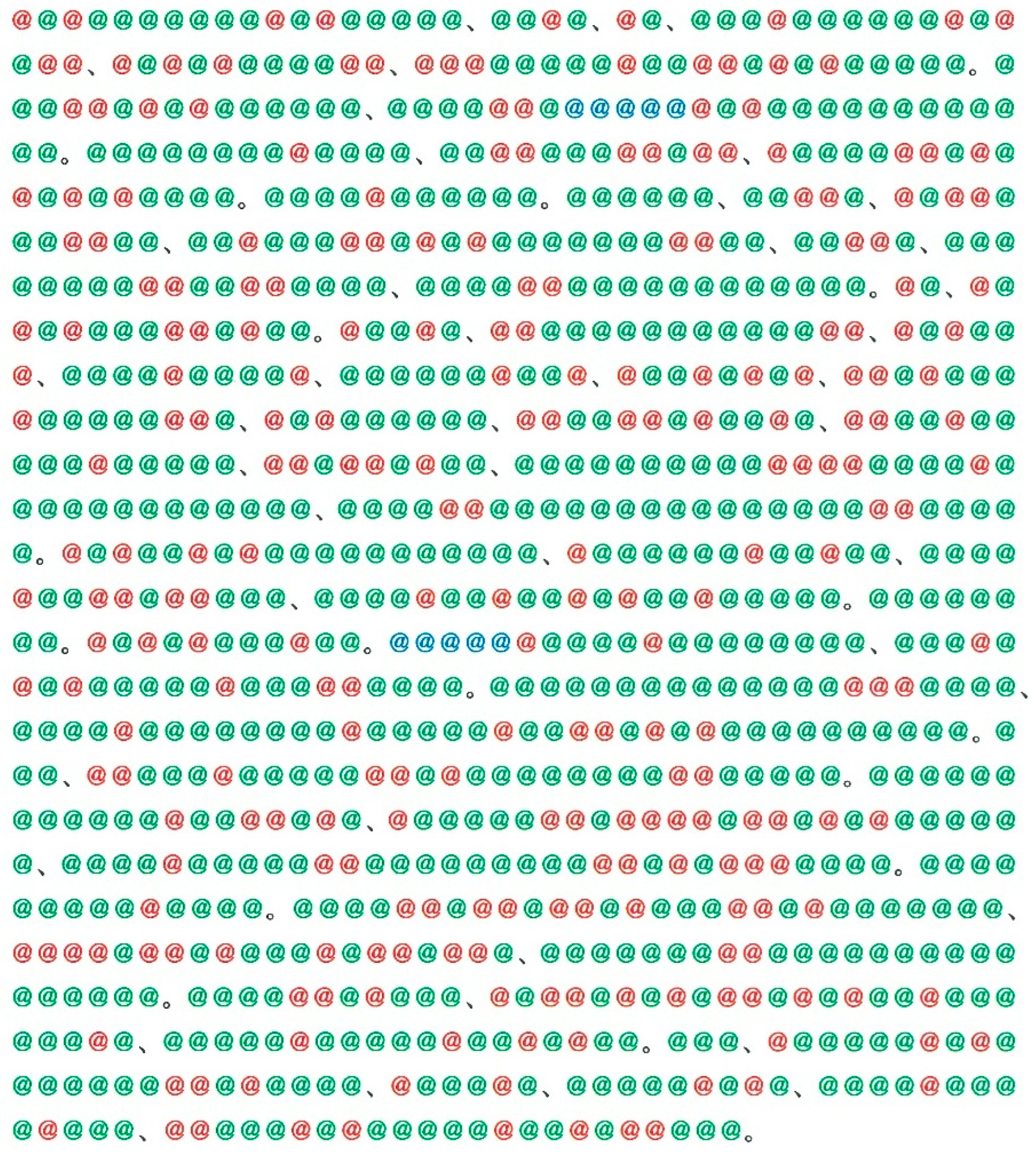
Literal Pattern Analysis of Texts Written with the Multiple Form of Characters: A Comparative Study of the Human and Machine Styles


Abstract
1. Introduction
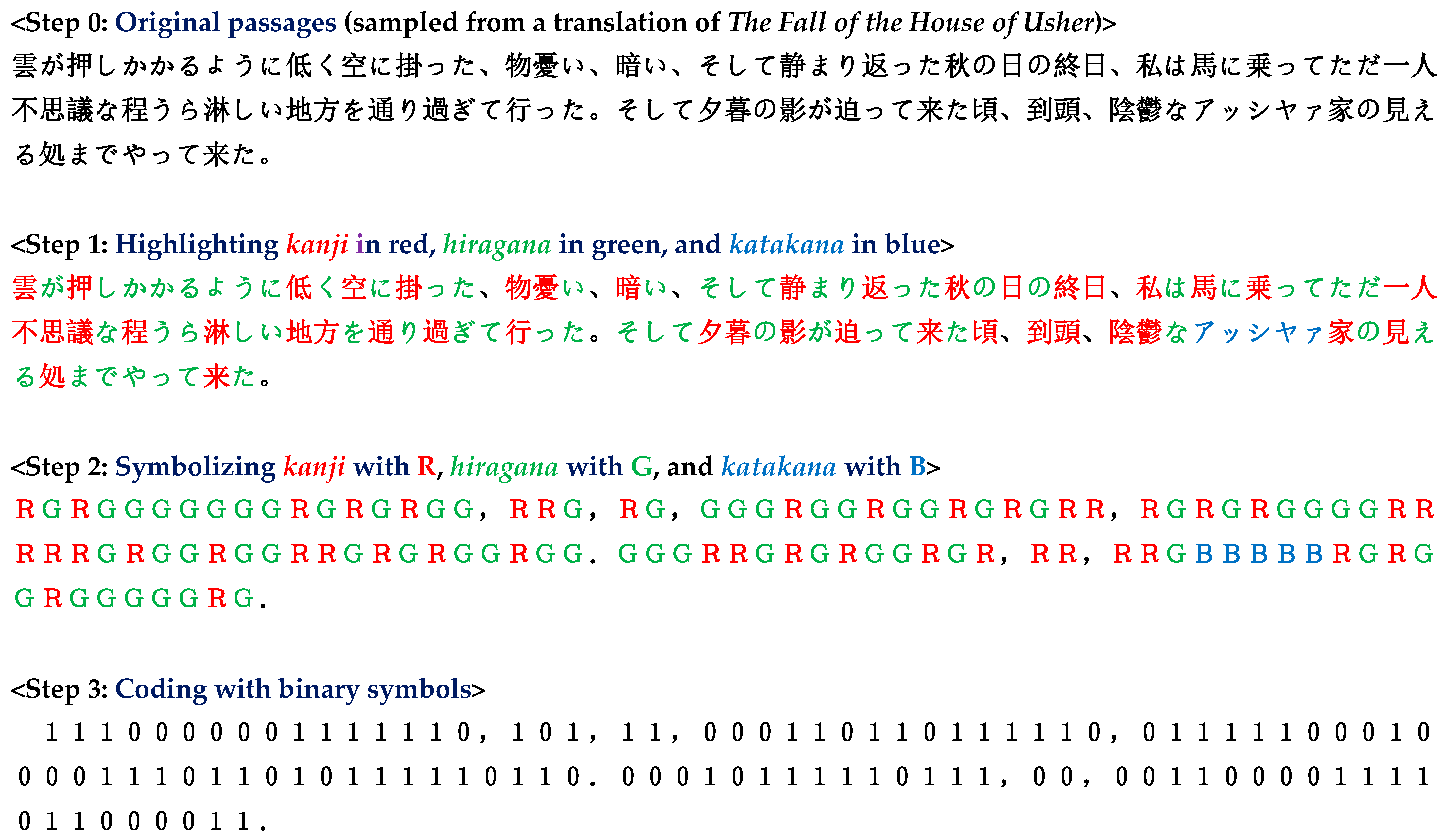
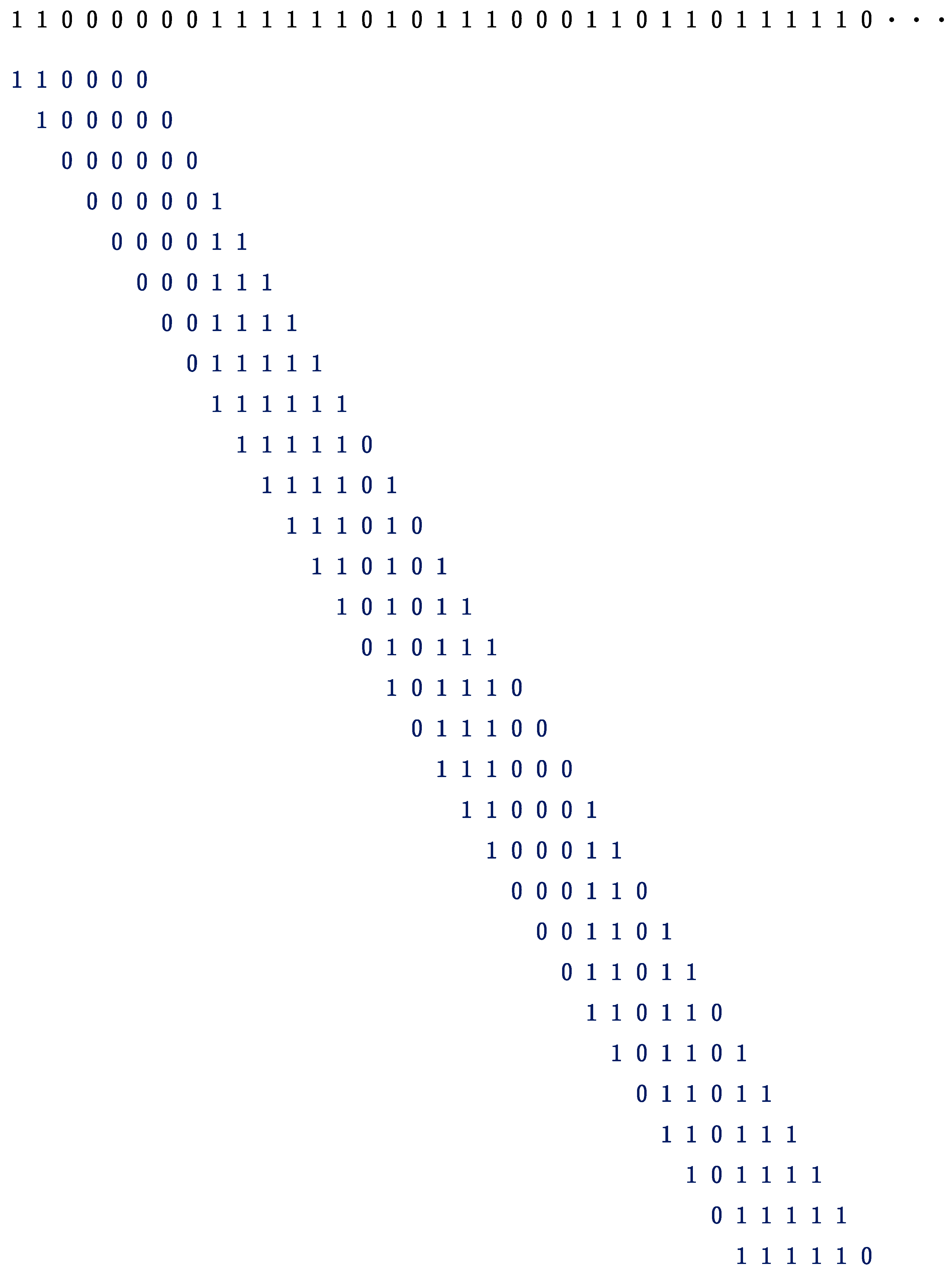
2. Method
3. Results
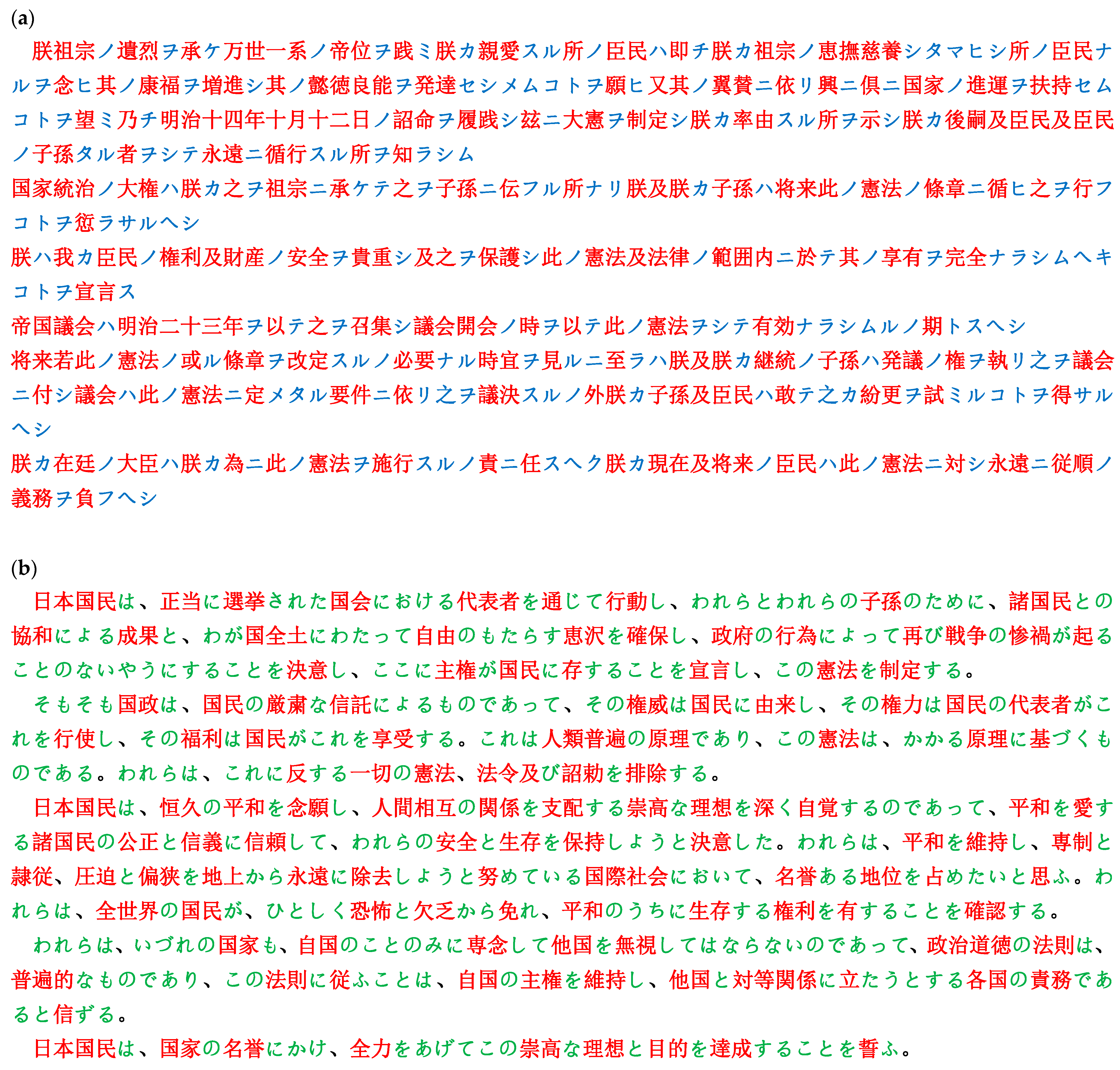
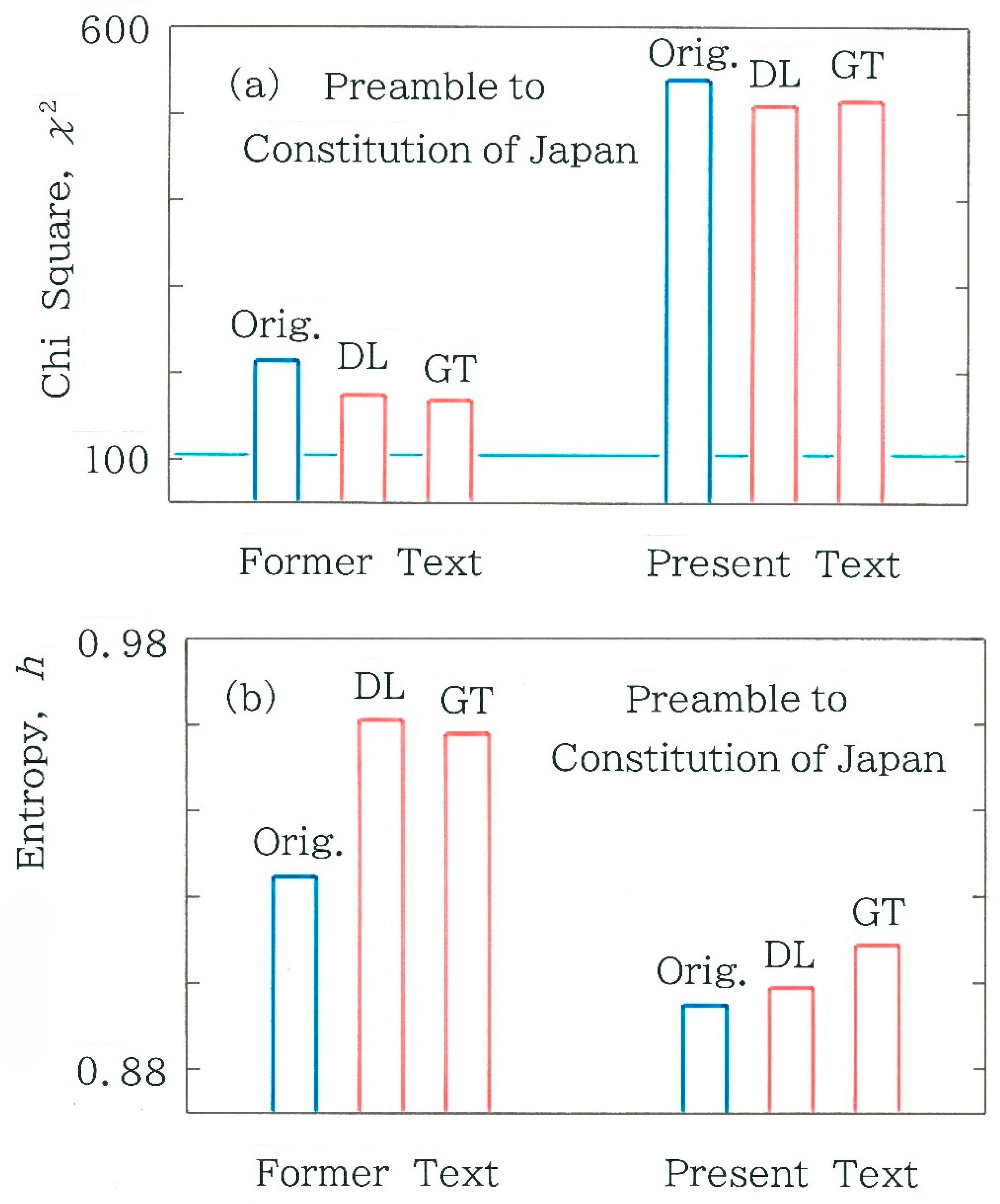
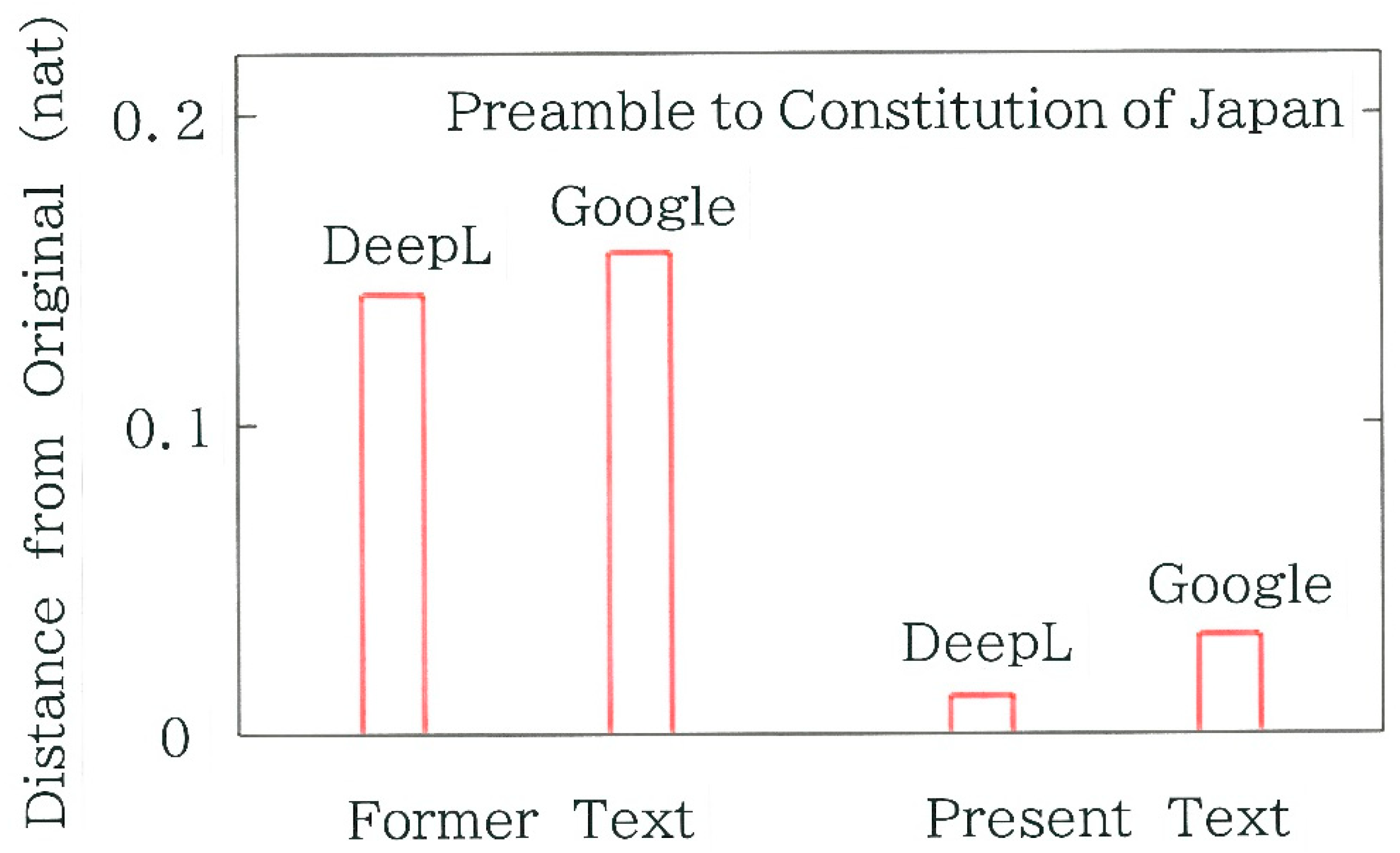
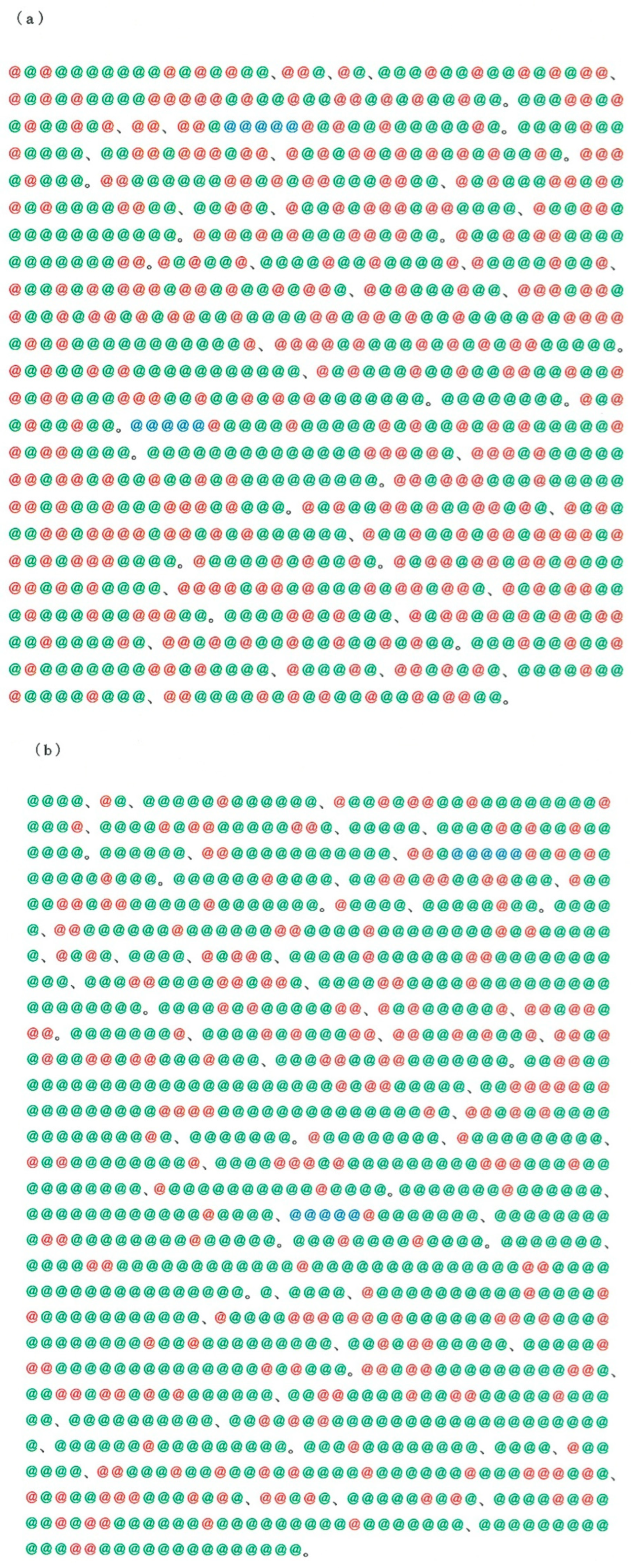
3.1. The Preamble to the Constitution of Japan
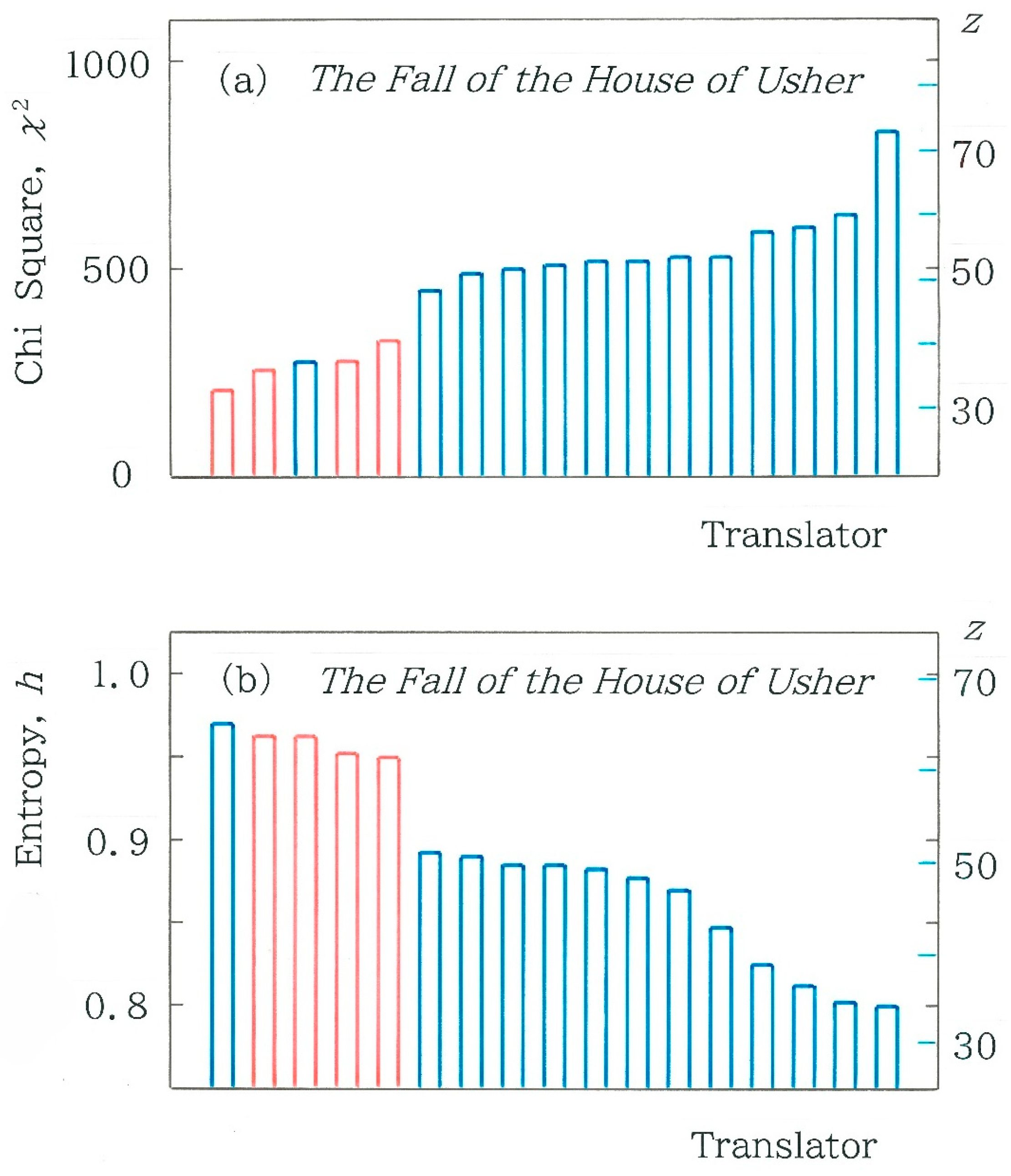
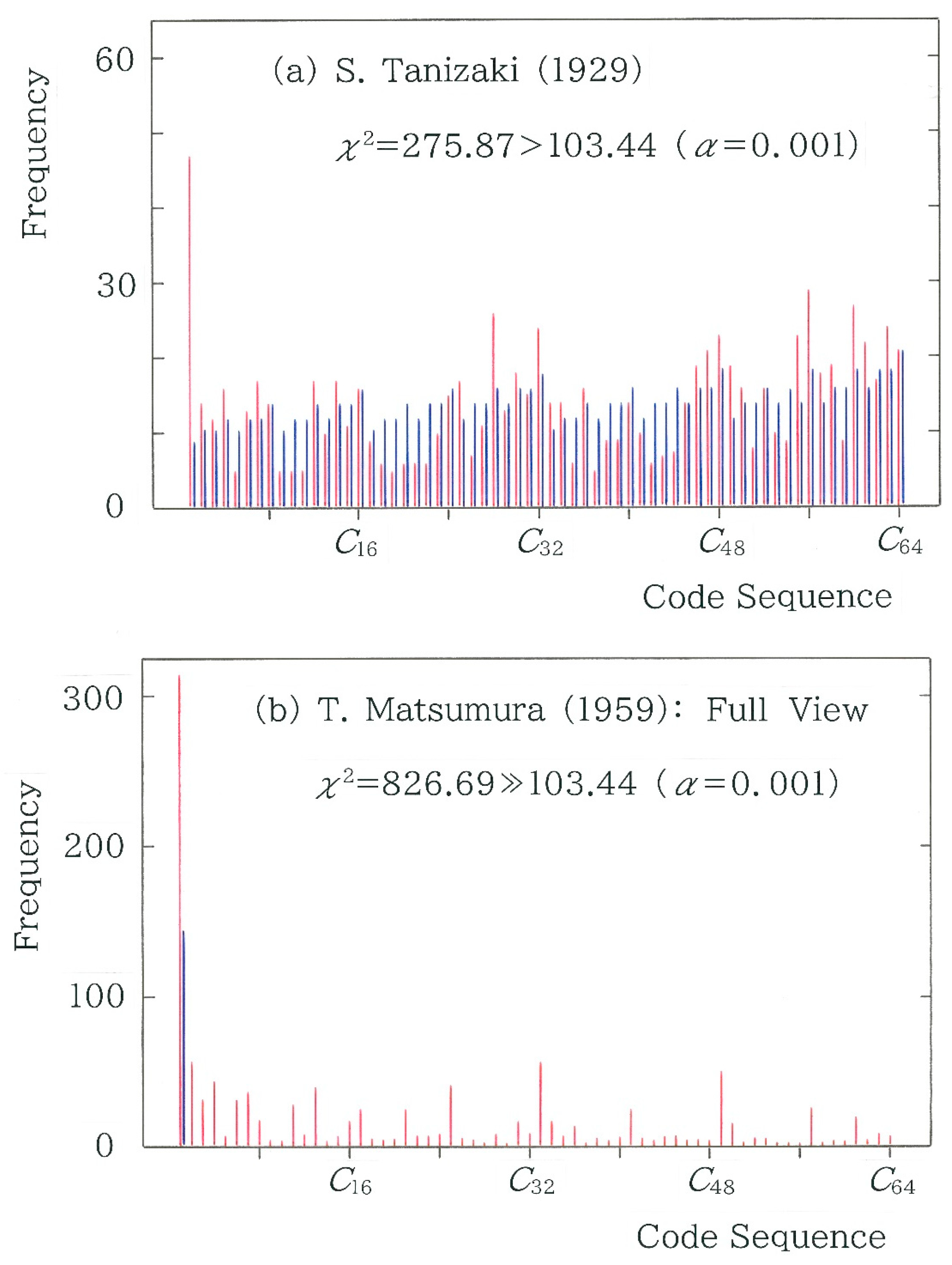
3.2. Passages from an English Story
4. Discussion
4.1. Tests of Statistical Significance
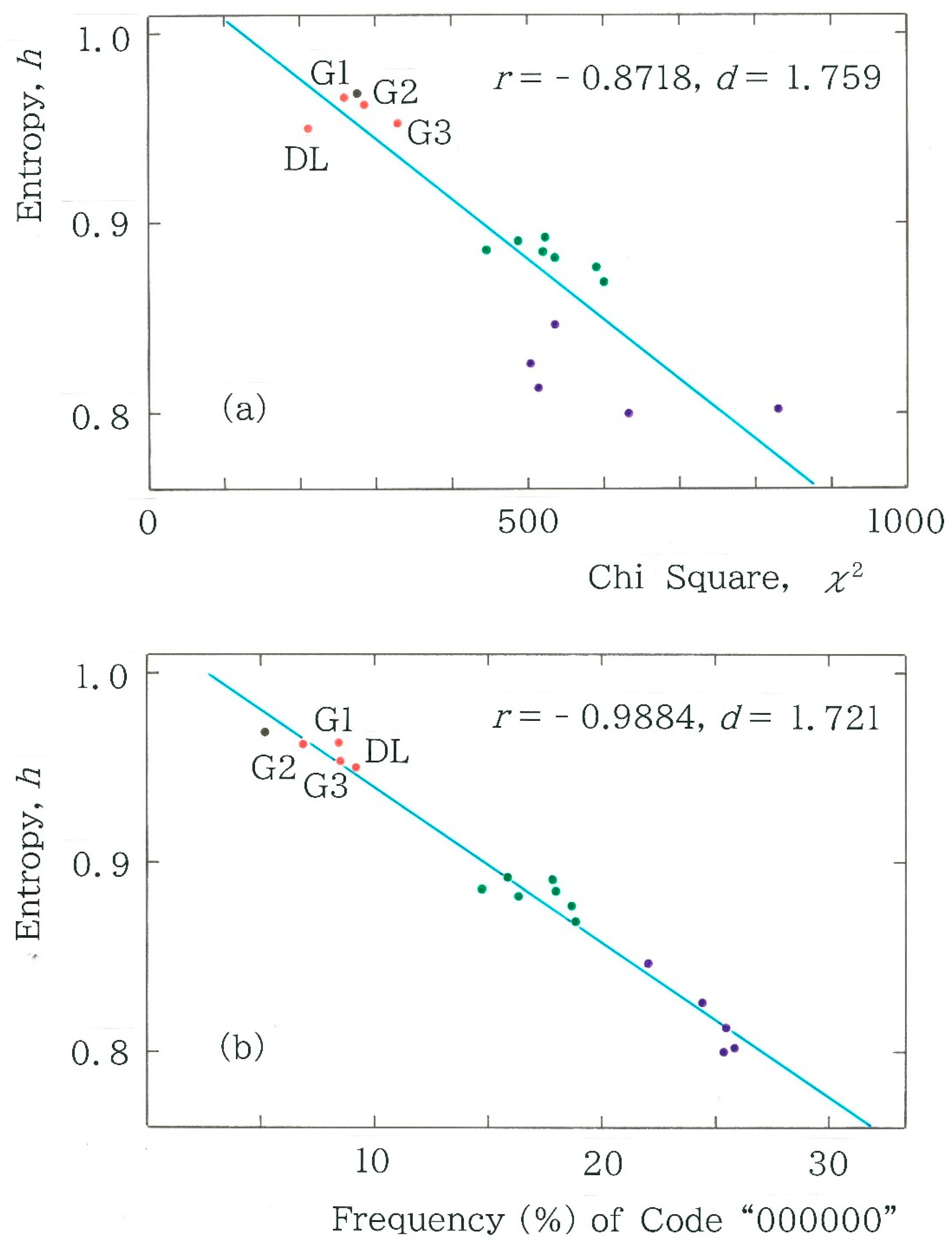
4.2. Scattergrams for Hellinger Distance and Entropy
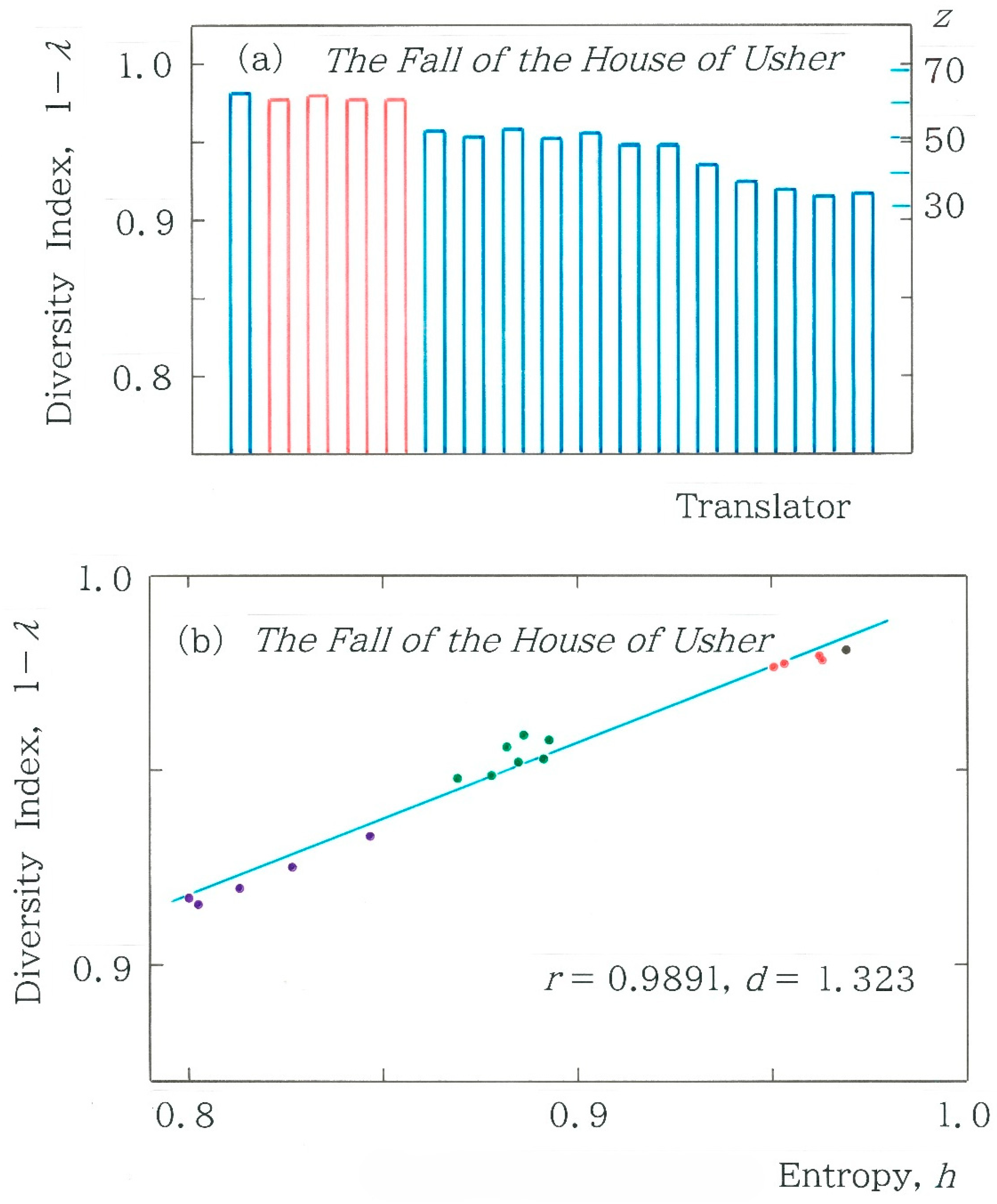
4.3. Diversity Index Other than Entropy
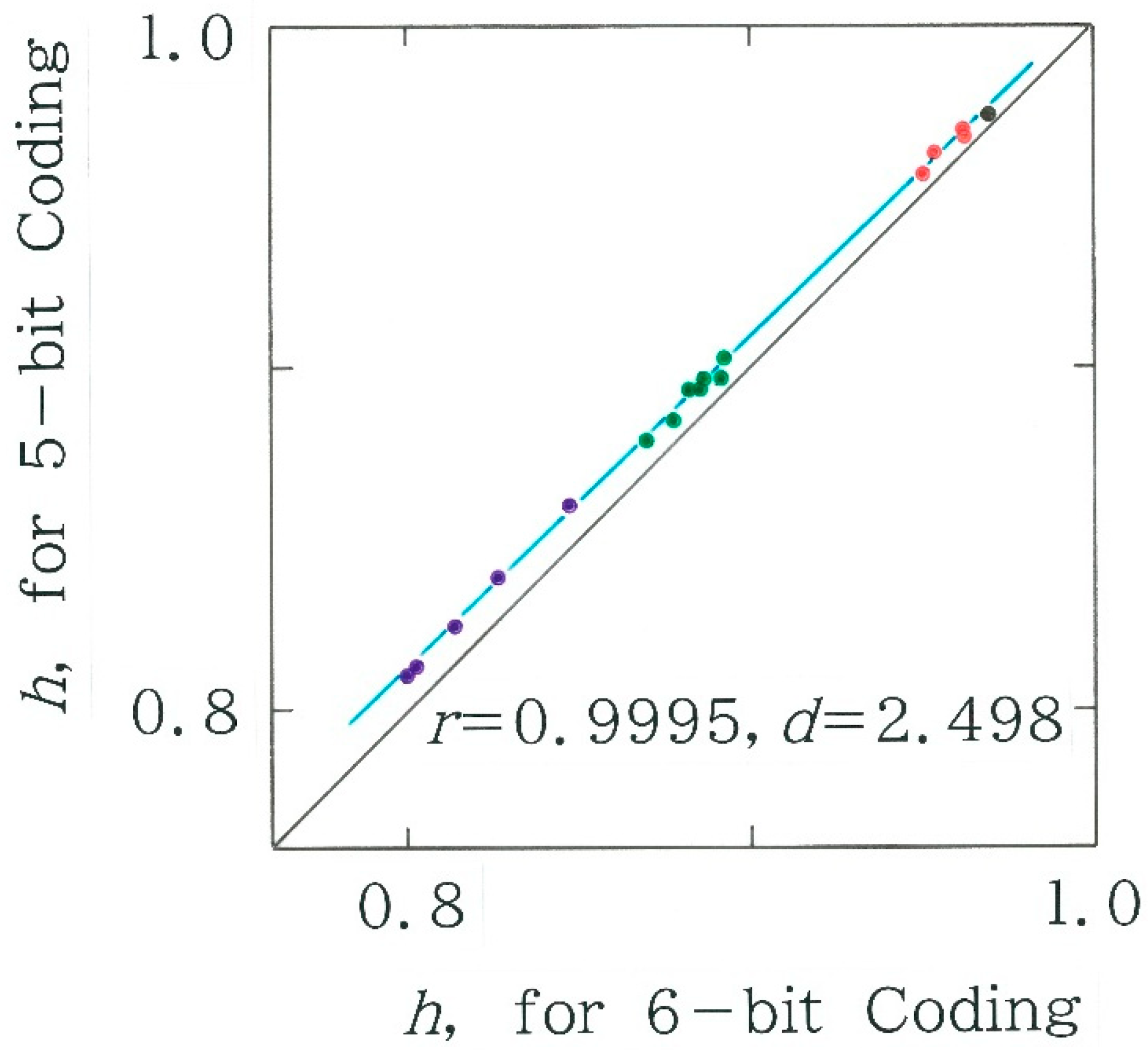
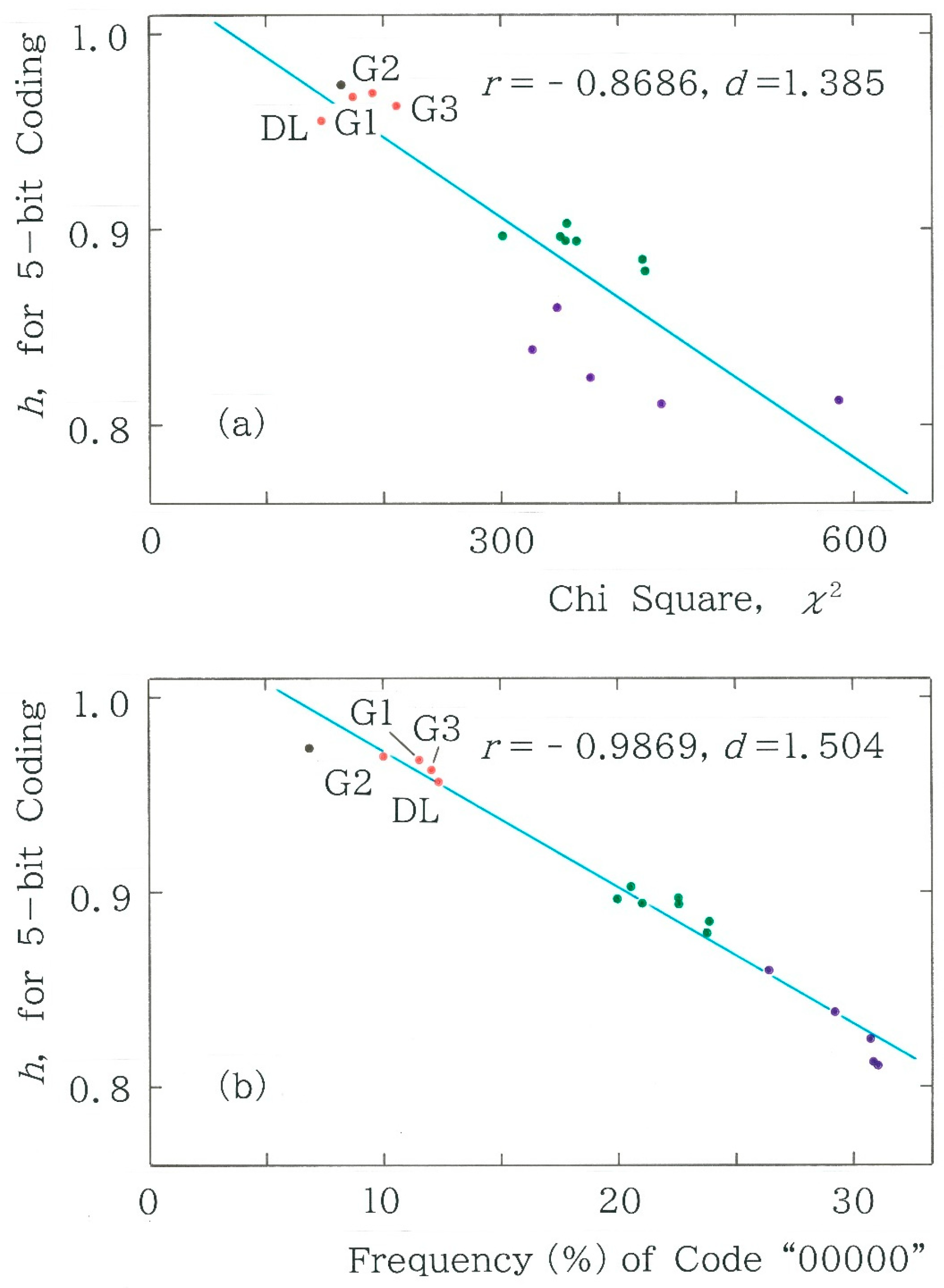
4.4. Dimensionality Reduction
5. Conclusions
Funding
Data Availability Statement
Conflicts of Interest
Appendix A. Addenda to Section 3.2

Appendix B. Cluster Analysis
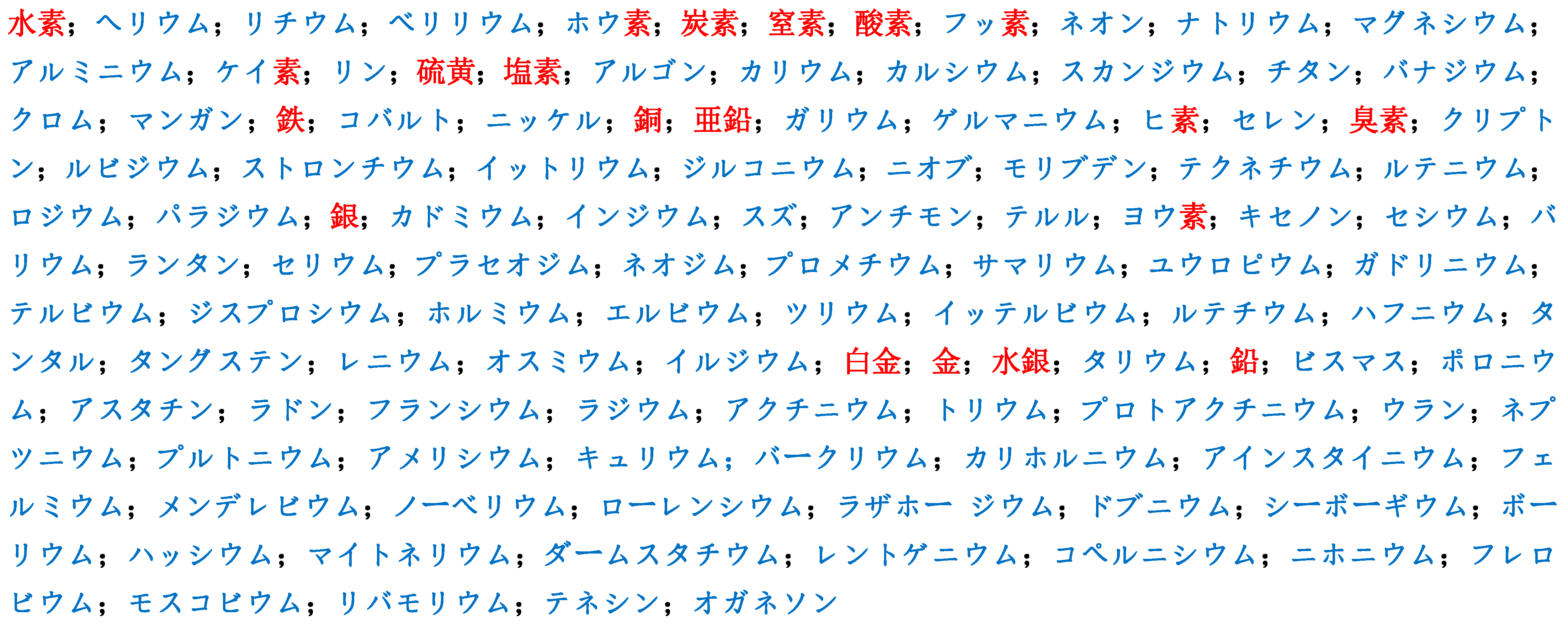
Appendix C. Japanese Version of the Periodic Table of Elements

References
- Shibatani, M. The World’s Major Languages; Comrie, B., Ed.; Oxford University Press: Oxford, UK, 1990; pp. 855–880. [Google Scholar]
- Hao, B. Symbolic dynamics and characterization of complexity. Phys. D Nonlinear Phenom. 1991, 51, 161–176. [Google Scholar] [CrossRef]
- Yang, A.C.-C.; Hseu, S.S.; Yien, H.W.; Goldberger, A.L.; Peng, C.-K. Linguistic analysis of the human heartbeat using frequency and rank order statistics. Phys. Rev. Lett. 2003, 90, 108103. [Google Scholar] [CrossRef] [PubMed]
- Daw, C.S.; Finney, C.E.A.; Tracy, E.R. A review of symbolic analysis of experimental data. Rev. Sci. Instr. 2003, 74, 915–930. [Google Scholar] [CrossRef]
- Hou, F.; Huang, X.; Chen, Y.; Huo, C.; Liu, H.; Ning, X. Combination of equiprobable symbolization and time reversal asymmetry for heartbeat interval series analysis. Phys. Rev. E 2013, 87, 012908. [Google Scholar] [CrossRef] [PubMed]
- Hayata, K. Revealing a tipping point in the climate system: Application of symbolic analysis to the world precipitations and temperatures. Climate 2022, 10, 195. [Google Scholar] [CrossRef]
- Sánchez, D.; Zunino, L.; Gregorio, J.D.; Toral, R.; Mirasso, C. Ordinal analysis of lexical patterns. Chaos 2023, 33, 033121. [Google Scholar] [CrossRef] [PubMed]
- Hayata, K. Symbolic analysis of the quality of texts translated into a language preserving vowel harmony. Entropy 2025, 27, 984. [Google Scholar] [CrossRef] [PubMed]
- Poe, E.A. The Fall of the House of Usher and Other Writings; Penguin Books: New York, NY, USA, 1986; (originally published in 1839). [Google Scholar]
- Tanizaki, S. Assyake no Botsuraku; Shinchosha: Tokyo, Japan, 1929. [Google Scholar]
- Matsumura, T. Assyake no Hokai; Chikuma Shobo: Tokyo, Japan, 1959. [Google Scholar]
- Karita, M. Assyake no Hokai; Obunsha: Tokyo, Japan, 1966. [Google Scholar]
- Ogawa, K. Assyake no Hokai; Chikuma Shobo: Tokyo, Japan, 1968. [Google Scholar]
- Sasaki, N. Assyake no Hokai; Shingakusha: Tokyo, Japan, 1968. [Google Scholar]
- Yagi, T. Assyake no Hokai; Kodansha: Tokyo, Japan, 1971. [Google Scholar]
- Kono, I. Assyake no Hokai; Tokyo Sogensha: Tokyo, Japan, 1974. [Google Scholar]
- Koizumi, I. Assyake no Hokai; Kodansha: Tokyo, Japan, 1976. [Google Scholar]
- Fujikawa, Y. Assyayakata no Hokai; Shueisha: Tokyo, Japan, 1980. [Google Scholar]
- Maruya, S. Assyayakata no Hokai; Chuokoronsha: Tokyo, Japan, 1994. [Google Scholar]
- Ooka, A. Asyake no Hokai; Shogakkan: Tokyo, Japan, 1998. [Google Scholar]
- Tatsumi, T. Assyake no Hokai; Shinchosha: Tokyo, Japan, 2009. [Google Scholar]
- Ogawa, T. Assyake no Hokai; Kobunsha: Tokyo, Japan, 2016. [Google Scholar]
- Kanno, M. The vicissitudes of the usage rate of Chinese characters in Japanese sentences during the Showa and Heisei eras: A case study of the magazine. Bungei Shunju. Math. Linguist. 2024, 34, 498–512. [Google Scholar]
- Simpson, E.H. Measurement of diversity. Nature 1949, 163, 688. [Google Scholar] [CrossRef]
- Tanizaki, S. Assyake no Botsuraku. In The Collected Works of Poe, Vol. 2: Eerie Stories; Shunjusha: Tokyo, Japan, 1962; Volume 2. [Google Scholar]
- Yagi, T. Assyake no Hokai; Iwanami Shoten: Tokyo, Japan, 2006. [Google Scholar]
- Kawai, S. Assyake no Hokai; Kadokawa: Tokyo, Japan, 2022. [Google Scholar]
- Montgomery, S.L. Science in Translation: Movements of Knowledge Through Cultures and Time; The University of Chicago Press: Chicago, IL, USA, 2000. [Google Scholar]
- Pyykkö, P. A suggested periodic table up to z [less-than-or-equal] 172, based on Dirac-Fock calculations on atoms and ions. Phys. Chem. Chem. Phys. 2011, 13, 161–168. [Google Scholar] [CrossRef] [PubMed]
- Nazarewicz, W. The limits of nuclear mass and charge. Nat. Phys. 2018, 14, 537–541. [Google Scholar] [CrossRef]


Disclaimer/Publisher’s Note: The statements, opinions and data contained in all publications are solely those of the individual author(s) and contributor(s) and not of MDPI and/or the editor(s). MDPI and/or the editor(s) disclaim responsibility for any injury to people or property resulting from any ideas, methods, instructions or products referred to in the content. |
© 2025 by the author. Licensee MDPI, Basel, Switzerland. This article is an open access article distributed under the terms and conditions of the Creative Commons Attribution (CC BY) license.
Share and Cite
Hayata, K. Literal Pattern Analysis of Texts Written with the Multiple Form of Characters: A Comparative Study of the Human and Machine Styles. Entropy 2026, 28, 36. https://doi.org/10.3390/e28010036
Hayata K. Literal Pattern Analysis of Texts Written with the Multiple Form of Characters: A Comparative Study of the Human and Machine Styles. Entropy. 2026; 28(1):36. https://doi.org/10.3390/e28010036
Chicago/Turabian StyleHayata, Kazuya. 2026. "Literal Pattern Analysis of Texts Written with the Multiple Form of Characters: A Comparative Study of the Human and Machine Styles" Entropy 28, no. 1: 36. https://doi.org/10.3390/e28010036
APA StyleHayata, K. (2026). Literal Pattern Analysis of Texts Written with the Multiple Form of Characters: A Comparative Study of the Human and Machine Styles. Entropy, 28(1), 36. https://doi.org/10.3390/e28010036