Systematic Review

Do Demographic, Economic, and Quality-of-Life Indicators Have an Effect on the Prevalence of WMSDs Among African Nurses? A Systematic Review and Meta-Analysis

by
Julien Jacquier-Bret
1,2,* and
Philippe Gorce
1,2
1
University of Toulon, CS60584, Cedex 9, 83041 Toulon, France
2
International Institute of Biomechanics and Occupational Ergonomics, Avenue du Docteur Marcel Armanet, CS 10121, 83418 Hyères, France
*
Author to whom correspondence should be addressed.
Theor. Appl. Ergon. 2025, 1(2), 13; https://doi.org/10.3390/tae1020013
Submission received: 20 October 2025 / Revised: 6 November 2025 / Accepted: 1 December 2025 / Published: 7 December 2025

Abstract

Nurses in Africa are exposed to musculoskeletal disorders at work (WMSDs). They are multifactorial and may be related to demographic, economic, and quality-of-life factors. The aim of this study was to investigate the effect of nurses’ age, experience, body mass index (BMI), and macroscopic indices such as nurse-to-bed ratio, Human Development Index (HDI), and Gross Domestic Product (GDP) on the overall prevalence and prevalence by body area. A systematic review and a meta-analysis were conducted during September 2025. ScienceDirect, PubMed/Medline, Google Scholar, Science.gov, and Mendeley were scanned without a date limit. The article selection, review, critical appraisal, and data extraction were performed by two authors independently. Preferred Reporting Items for Systematic Reviews and Meta-Analyses (PRISMA) was used for reporting the search results. Among the 4305 identified records, 18 studies included for a total of 4266. The overall prevalence was pooled at 77.4%. Subgroup analyses demonstrated a decrease in WMSDs with age, and nurse-to-bed ratio, and an increase in lower limb WMSDs with experience, BMI, GDP, and HDI (for most of body areas). Future work could examine the effect of the nurse-to-bed ratio by considering the resources of a facility and conducting more in-depth analyses by subgroup. The development of ergonomic programs remains essential to the well-being at work of African nurses.

1. Introduction

Musculoskeletal disorders are widespread in the workplace, and preventing them has become a major public health issue given the very high number of people affected (1.71 billion in 2019 [1]). These WMSDs are characterized by inflammatory and degenerative condition. These WMSDs are characterized by inflammation and degeneration of muscle, joint, and nerve tissues. They include all inflammatory syndromes (tendinitis, bursitis, etc.), tissue compression, particularly of the nerves (e.g., carpal tunnel syndrome), and all other regional pain syndromes (e.g., low back pain) that cannot be attributed to a known pathology [2]. They are the origin of many work stoppages and induce very high direct and indirect costs.
The prevalence of WMSDs is very high among healthcare professionals [3,4]. Numerous studies have reported an overall prevalence of 83% among surgeons [5,6], 87% among dentists [7,8], 90% among midwives [9,10], 91% among physiotherapists [11,12], 91% among occupational therapists [13], and 58% among osteopaths [14]. A high prevalence of between 50% and 90% has also been widely demonstrated among nurses at the national [15,16], continental [17,18,19], and worldwide [20,21,22] levels. The authors highlighted that the most affected areas were the lower back, with a prevalence of nearly 60%, followed by the neck and shoulder, with a prevalence of 40–45%.
Many factors influence the overall WMSD prevalence and prevalence by body area. Some risk factors are related to professional practice and refer to issues such as awkward postures, handling heavy equipment or dependent patients, repeating numerous tasks throughout the day in static postures maintained for long periods of time, etc. [23,24]. These factors affect their quality of life at work and lead them to adapt their working environment, call for help to perform some care tasks, take more breaks, or reduce the use of specific care practices that aggravate their discomfort [25,26]. Other factors are related to the demographic characteristics of nurses. Studies have shown that age, gender, body mass index, marital status, level of education, and level of experience affect the prevalence of WMSDs among nurses [27,28]. Working conditions, including the number of hours worked per day and per week, heavy workload, and night shift frequency, also have an impact on the onset of WMSDs [15,29]. General working conditions also contribute to the development of WMSDs. They are related to the resources that each country allocates to the healthcare sector. With a larger share of Gross Domestic Product (GDP) invested, it is possible to improve these working conditions, in particular by providing hospital infrastructure, healthcare personnel, and ergonomic equipment, thereby reducing the risk of WMSDs. For example, Sun et al. [20] have shown relationships between parameters related to a country’s development (i.e., financial resources) and the risk of WMSDs. The authors showed that the prevalence in eight body areas was higher in developing countries than in developed countries. With regard to staff, the nurse-to-bed ratio, i.e., the number of nurses administering care to patients, has also been considered at the local level, i.e., a department or institution [30], or at the national level [31] as a risk factor. Abedini et al. [30] showed an effect of the nurse-to-bed ratio on WMSDs: a higher nurse-to-bed ratio reduces the WMSD prevalence. Finally, the degree of awareness is also a factor that could be involved in the prevention of WMSDs. The Human Development Index (HDI) is a macroscopic parameter at the country level that incorporates this aspect through an education index coupled with a life expectancy and national income index. It is therefore a complementary parameter to GDP and the nurse-to-bed ratio that could have an impact on the prevalence of WSMDs.
To our knowledge, few studies have conducted large-scale subgroup analyses, i.e., at the continental level or worldwide. The studies currently available mainly concern overall prevalence and prevalence by body area on a continent [17,19] or worldwide [20,22,32,33,34]. Only recent studies have investigated the effect of some of these parameters on a large scale. Jacquier-Bret et al. [22] assessed the effect of demographic parameters on the prevalence of WMSDs, while Sun et al. [20] analyzed the effect of an economic parameter considering different countries in the world. Only one meta-analysis has tested the effect of experience on the prevalence of WMSDs among nurses in Asia [19]. Analyses by continent have the advantage of highlighting specificities that cannot be seen worldwide and thus contribute to a better understanding of the appearance of WMSDs. These data provide evidence to support practice and improve the professional environment and quality of life at work for nurses through the implementation of appropriate policies, the development of new equipment, and more effective human resource management that incorporates planification and staff rotation cycles.
In this context, the aim of this study was to extend the analyses by continent, examining the effects of demographic, economic, and quality-of-life indicators on the prevalence of WMSDs among African nurses. Subgroup analyses will be conducted based on information on age, experience, body mass index, GDP, HDI, and the nurse-to-bed ratio. It has been hypothesized that a high GDP, HDI, and higher nurse-to-bed ratio leads to better working conditions and therefore a reduced prevalence of WMSDs.

2. Materials and Methods

The Preferred Reporting Items for Systematic Reviews and Meta-Analyses (PRISMA [35,36] guidelines were applied to conduct the systematic review and meta-analysis and present the results. The full protocol was registered in the PROSPERO database under the number CRD420251156021.

2.1. Search Strategy

The following combination of keywords, linked by the Boolean operator AND, was used to search for studies related to the study objective: “work-related musculoskeletal disorders” AND nurse AND prevalence AND Africa. Between 3 and 12 September 2025, the search was conducted in the following five free databases: Google Scholar, Mendeley, PubMed/Medline, ScienceDirect, and Science.gov.
The inclusion criteria were defined according to the PECOs [37] principle (P: Participants; E: Exposures; C: Comparisons; O: Outcomes; s: Study design). An article was included if it investigates nurses of any specialty or department working in Africa (P) for whom the WMSD was reported in the workplace (E) throughout overall prevalence and by body area (O) using a cross-sectional study (s). Comparisons (C) are not applicable in the context of this study. “Work-related musculoskeletal disorders” were defined as symptoms of pain and discomfort lasting at least one week or occurring at least once a month during the past 12 months [38].
Studies that (1) were not peer-reviewed cross-sectional surveys published in English; (2) did not focus on African nurses; or (3) did not report or provide sufficient detail on data regarding the prevalence of MSDs by body area were excluded.
The selection process was conducted in several stages. First, the search keywords were entered into each database. The results corresponding to the search were extracted and compiled into a single table (Microsoft Excel). Multiple entries for the same article were deleted using an automatic function. Each unique entry was then evaluated based on its title and abstract. If it did not meet the inclusion criteria, it was excluded. The full text of the remaining articles was then evaluated to establish the final list of included studies. Each step of the process was carried out separately by two evaluators (PG and JJB). The results were compared at the end of each step, and all discrepancies were resolved by consensus after reevaluating the articles and, if necessary, by consulting a third reviewer.

2.2. Quality Appraisal

The quality was assessed using the Cross-sectional Study Assessment Tool (AXIS tool) [39] by the two reviewers, separately. The presence of each of the 20 items in the text was verified and the percentage of elements present was computed. Three levels of quality were defined in accordance with the classification by Hermanson and Choi [40]: low if the score was between 0 and 50%, medium for a score between 50% and 80%, and high for more than 80% of items present. The results of each reviewer were compared, and discrepancies were discussed in order to reach a consensus.

2.3. Data Extraction and Complementary Information

In accordance with the study objective, overall and body area prevalence rates were extracted from each study and synthesized in a table. The nine body areas contained in the Nordic Musculoskeletal disorders Questionnaire [38] were considered: neck, upper back, lower back, shoulder, elbow, wrist, hip, knee, and ankle. These data were supplemented with information related to each cross-sectional study: the name of the first author, the sample size, gender distribution, average age, body mass index (BMI), professional experience as nurses, as well as the country in which they practice their professional activity. In the case where the prevalence data were reported on a subgroup (most often that of individuals affected by MSD), a homogenization of the data was carried out: the prevalence was recomputed in relation to the total sample in order to allow the comparison of the results with those of other studies.
Three indicators related to the different African countries studied were added to conduct the meta-analysis: Gross Domestic Product (GDP) [41], Human Development Index (HDI) [42], and the nurse-to-bed ratio. The latter was computed from information on the number of beds per 1000 inhabitants [43] and the density of nurses per 10,000 inhabitants for each country [44].

2.4. Statistical Analysis

The method proposed by Neyeloff et al. [45] was used to conduct the meta-analysis. The heterogeneity was assessed using I2 statistic and Cochran’s Q test (significance level < 10%) [46]. For I2, the intervals 0–40%, 30–60%, 50–90%, and 70–100% correspond to low, moderate, substantial, and high heterogeneity, respectively. If p(Q) ≥ 0.1 and I2 ≤ 50%, a fixed effects model was selected (no evidence of heterogeneity). Otherwise, a random effects model was applied. Three demographic (age, years of experience, and body mass index) and two country indicators (HDI and nurse-to-bed ratio) were considered to conduct subgroup analyses and study their effect on overall and body area prevalence among African nurses. The following breakdown was used for the analysis: age (<30 years, 30–40 years, >40 years), years of experience (<10 years, 10–20 years, >20 years), BMI (normal: 18.5–24.9 and overweight: >25 [47], nurse-to-bed ratio (<2 and >2), and HDI (medium: <0.7; high: >0.7). A meta-regression was performed to analyze the trend in WMSD prevalence as a function of the Gross Domestic Product (GDP) of the country in which the different studies were conducted. Analyses were achieved using JASP (v0.19.3.0).

3. Results

3.1. Search Results

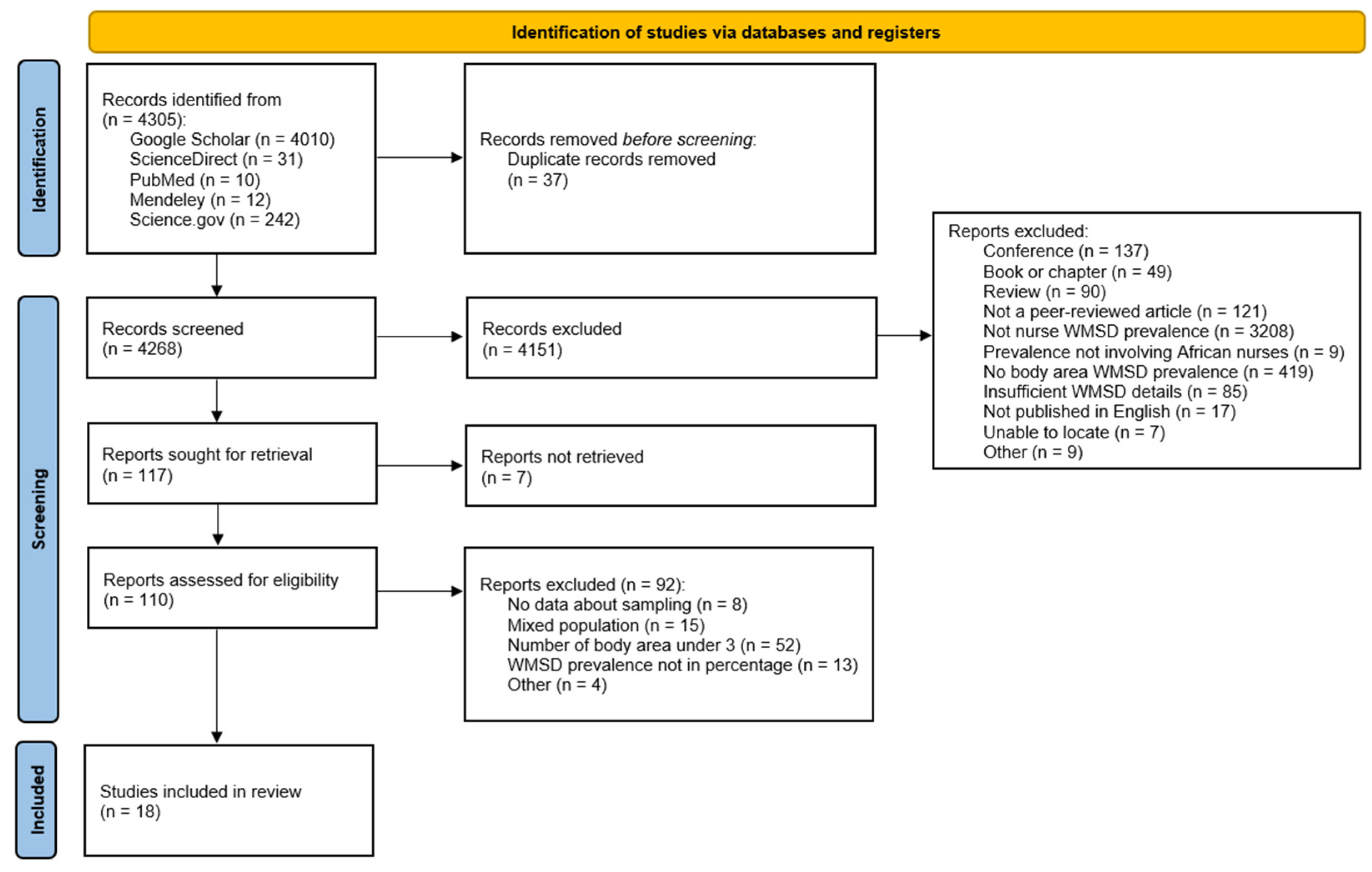
The search of the five databases enabled the extraction of 4305 studies matching the keywords used, with 37 of these being duplicates. During the initial selection based on titles and abstracts, the application of inclusion/exclusion criteria led to the exclusion of 4151 entries out of the 4268 found. The main reasons were related to inadequate format (not peer-reviewed, not written in English, conference, book, review, etc.), lack of detailed presentation of the prevalence of WMSD among nurses, or consideration of a mixed sample (several health professions or not only African participants). The second selection phase, based on the full texts, excluded 92 studies from the remaining 117 based on the following criteria: samples including different healthcare professionals without presentation of the WMSD prevalence by profession, or WMSD values not reported for the total sample of nurses. Seven additional studies were excluded because the article was not accessible. Finally, 18 cross-sectional studies were selected and included in the analysis of WMSD prevalence among nurses in Africa, for a total of 4266 participants. Figure 1 details the selection process.

3.2. Quality Appraisal of the Included Studies

Table 1 details the quality assessment performed with the AXIS tool. Among the 18 included studies [23,26,29,48,49,50,51,52,53,54,55,56,57,58,59,60,61], all scored above 80%, indicating high quality, with the exception of the study by Mailutha et al. [53], which scored 79%, indicating medium quality.

3.3. Study Characteristics

Table 2 reports the demographic characteristics of the participants interviewed in each of the 18 included studies. The samples size ranged from 58 to 741 nurses and were predominantly female in 15 of the 16 studies that reported this parameter. Only the study by Nemera et al. [29] tested a sample in which the number of males was predominant. The mean age of the participants ranged from 20.48 to 43.7 years. Only two studies did not report the mean age of their sample. Experience as nurses was different, i.e., between 3.5 and 19.4 years, for the 10 studies that reported this information. Only five studies reported the weekly practice hours: between 33.8 and 60.6 h per week. BMI was reported by eight studies with values ranging from 22.3 (normal) to 29.4 (overweight). All included studies were conducted in 10 different African countries: Botswana, Egypt, Ethiopia, Kenya, Libya, Nigeria, South Africa, Tunisia, Uganda, and Zambia. For each of them, economic and quality of life parameters were reported. GDP values ranged from 28.91 (Zambia) to 410.34 (South Africa) billion US Dollars. The nurse-to-bed ratio ranged from 0.5 (Kenya and South Africa) to 4.5 (Uganda). Finally, the reported HDI ranged from 0.497 (i.e., low HDI, Ethiopia) to 0.754 (i.e., high HDI, Egypt).
Table 3 detailed all the overall and body area prevalence values estimated by each study. Thirteen studies reported all 10 prevalence values. Two studies, Ajibade et al. [48] and Mutanda et al. [56], assessed the prevalence of all nine body areas but did not report the overall prevalence. Three studies reported the overall prevalence but had areas not assessed (one, three, and five missing areas in the studies of Moodley et al. [54], Mailutha et al. [53], and Muthelo et al. [28], respectively).

3.4. WSMD Prevalence—Meta-Analysis

Table 4 summarizes the overall prevalence and prevalence by body area pooled across all included studies. The overall prevalence was estimated at 77.7% (95% CI: 69.4–86.1%). The most exposed area was lower back with a prevalence of 61.2%. Neck, upper back, shoulder, knee, ankle presented a prevalence between 32% and 37%. A prevalence of 25% was pooled for wrist and hip. Finally, elbow was the least affected (13.8%).

3.4.1. Effect of Demographic Parameters

Table 5 summarizes the effect of nurses’ age on the prevalence of WMSDs. First, the overall prevalence was stable and high (80%) up to age 40, then decreased by 20% after age 40. The neck, shoulder, and wrist prevalence appeared to be high for the youngest group, then decreased significantly from age 30 to over 40. The hip prevalence decreased continuously with age. Upper back, elbow, and knee prevalence decreased up to the age of 40, then increased. Conversely, ankle prevalence increased up to the age of 40, then decreased. Finally, the lower back did not appear to be affected by age, with a very high prevalence over 60% for all three age groups.
Table 6 presents the effect of nurses’ experience on the WMSD prevalence. With the exception of the wrist, the prevalence measured for the upper body remains constant despite increasing years of experience. For the wrist and the three lower limb areas, the prevalence increases by 10 to 15% with experience, as for the overall prevalence (6% increase).
Table 7 illustrates the effect of nurses’ BMI on the prevalence of WMSDs. First, the lower back is highly exposed, regardless of BMI value (>65%). The neck, upper back, shoulder, wrist, and hip showed a lower prevalence in the overweight group. In contrast, the prevalence in the elbows and knees increased with BMI. Ankle appeared to be not affected by the BMI.

3.4.2. Effect of Quality of Life Parameter—HDI

Table 8 presents the WMSD prevalence rates according to the HDI. A decrease in WMSD prevalence was observed for overall prevalence as HDI increased. Conversely, the prevalence of seven of the nine body areas increased with HDI. Only elbow and hip had stable prevalence, regardless of HDI.

3.4.3. Effect of Economic Parameter—Nurse-to-Bed Ratio and GDP

Table 9 shows the prevalence of WMSD by body area as a function of the nurse-to-bed ratio. Prevalence of five body areas (upper back, shoulder, elbow, knee, and ankle) and the overall prevalence decreased as the ratio increased. Four areas, i.e., neck, lower back, wrist and hip, and the overall prevalence were not affected.
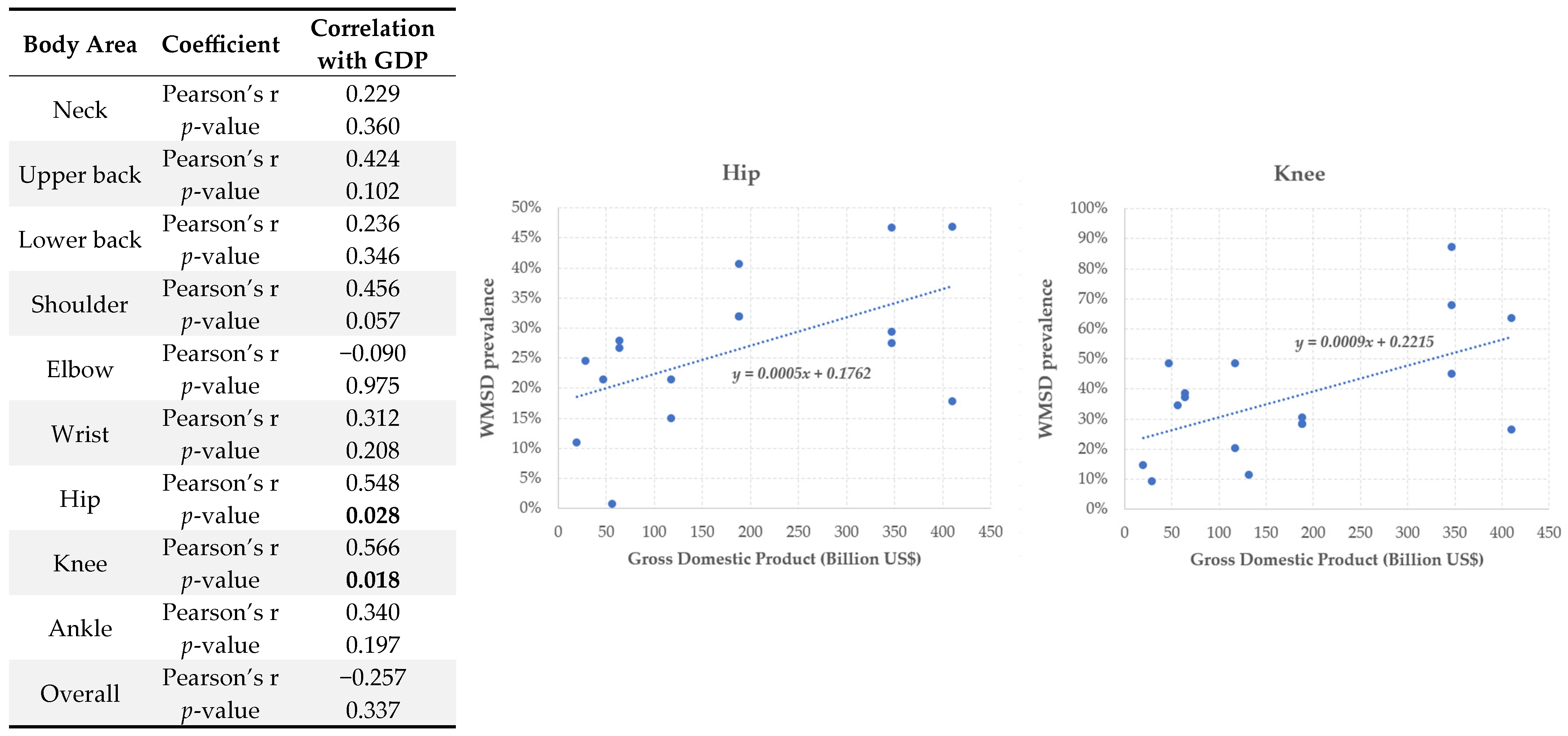
Figure 2 presents the meta-regression performed between GDP and the WMSD overall prevalence and by body area. The results showed a significant correlation between GDP and the prevalence of hip and knee WMSD. The Pearson coefficients were 0.548 and 0.566, respectively (p < 0.05).

4. Discussion

The objective of this literature review was to investigate the effect of demographic, economic, and quality of life indicators on the overall and body area prevalence of WMSDs among African nurses. Six parameters were used to conduct subgroup analyses from data collected in 18 cross-sectional studies involving 4266 nurses. Three anthropometric parameters (age, years of experience, and BMI), two economic parameters (GDP and nurse-to-bed ratio), and one quality of life parameter (HDI) were considered.

4.1. WSMD Prevalence Among African Nurses

The included studies had an overall prevalence ranging from 61.0% to 97.8%, excluding the two studies with the lowest prevalence, i.e., 38.0% [28] and 48.1% [59]. This range corresponds to that presented in the scoping review by KgaKge et al. [18], who reported values between 57.1% and 95.7%. The prevalence pooled by the meta-analysis was 77.7%. It is equivalent to that reported by Sun et al. (77.2% [20]) on worldwide scale and between the values found by Ellapen et al. (71.85% [21]) and Saberipour et al. (84.2% [16]). However, the prevalence in Africa appears to be lower than that observed in Asia (84.3% [19]) and Europe (87.8% [17]). As regards body areas, the most affected area was the lower back, with a prevalence of 61.2%, which was twice as high as in other areas. This result is consistent with the findings of numerous studies in the literature conducted in many countries among nurses. The neck and upper back are also significantly affected, with one in three nurses reporting the presence of WMSDs. These results can be explained by information related to risk factors reported in cross-sectional studies. Nurses repeat many care tasks in awkward positions involving bending and twisting, which are widely considered to be factors that contribute to the onset of WMSDs [25,26]. For the upper limbs, the shoulder was the most affected area (36.1%), well ahead of the wrist (26.3%) and elbow (13.8%). Occupational demands are therefore concentrated on the shoulder area, particularly when carrying heavy materials/equipment and during lifting or transferring patients [62,63]. Finally, for the lower limbs, the knee and ankle also had values of around 35%, indicating a significant prevalence of WMSDs. These high rates can be explained either by maintaining static postures, mainly standing, for long periods of time [64], or by numerous movements during a 12 h shift [65].
These results show that nurses are healthcare professionals who are highly exposed to WMSDs due to their extensive daily tasks. Numerous adjustments are often necessary to enable them to continue their work [25] while considering physical, psychological, and environmental constraints [66]. It is therefore important to continue development and research in order to propose technical, organizational, and educational solutions aimed at maintaining a satisfying quality of life at work.

4.2. Effect of Demographic Parameters on WSMD Prevalence

Based on the 18 studies included and a sample of 4266 nurses, three parameters were used to conduct the subgroup meta-analyses: age, years of experience, and BMI. We observed a decrease in prevalence with age, mainly for overall prevalence and for the upper body. However, the lower back did not appear to be affected by age and showed a high prevalence (>65%). This result contrasts with the results presented in previous studies. Heiden et al. [67] found an increase in the prevalence of WMSDs with age for the neck, shoulder, lower back, and overall in India, based on a study of 273 nurses. In a meta-analysis conducted in China (23 studies and 21,042 nurses), Wang et al. [15] found an age effect with a significant odds ratio of 1.69 (95% CI: 1.16–2.45) for nurses over 35 years of age. In contrast, Mahajan et al. [62] found no age effect on prevalence between nurses under 30 and over 40 in a sample of 190 nurses. Under these conditions, it is difficult to draw conclusions about the effect of age on the prevalence of WMSDs. However, considering age in combination with other parameters related to the country or continent could be relevant for future work.
In our study, an effect of experience was observed on overall prevalence. This result was also observed in the study by Wang et al. [15] on a sample of 21,042 nurses in China. The authors found an odds ratio of 3.30 (95% CI: 1.84–5.92). Analysis by body area showed that the increase in prevalence with experience was mainly concentrated in the lower limbs. Thus, the accumulation of years of nursing practice in Africa would have a greater impact on the hip, knee, and ankle, particularly due to prolonged maintenance of static postures, mainly standing [64], or significant travel of around 10 km during a shift, as reported in the literature [65]. These strain factors have an even greater impact when BMI is high, as shown by the increase in the prevalence of WMSDs in the knee and ankle among overweight nurses (Table 7).
However, in order to further investigate these observations, it would be useful to have a precise breakdown of the time spent performing each task during a shift [68]. By combining this information with the risk factors associated with the appearance of WMSDs, it would then be possible to attribute specific prevalence to clearly identified activities.

4.3. Effect of Economic Parameters on WSMD Prevalence

A subgroup analysis was performed to assess the effect of the nurse-to-bed ratio on the prevalence of WMSDs over 12 months, both overall and for the nine body areas. The analysis showed that five of the nine body areas had a decrease in the prevalence with an increase in the nurse-to-bed ratio. This result is consistent with the literature, which reports that an increase in this ratio reduces stress and workload, as there are more nurses for a given number of beds [30,69]. However, this result could be tempered, as other authors have observed significant emigration of nurses in African countries [70]. This is resulting in a shortage of personnel on the African continent. Available data for 10,000 inhabitants shows that for most countries, the average number of nurses is well below the world threshold of 37.7. In our study, only South Africa and Libya had a higher value (63.9 and 63.8, respectively) [44]. In addition, the number of beds is very low and well below the world average of 3.3 per 1000 inhabitants [71]. Countries such as Ethiopia, Nigeria, and Uganda have fewer than 1 bed per 1000 inhabitants. This lack of healthcare facilities results in an artificial increase in the nurse-to-bed ratio, which minimizes the relevance of this indicator in analyses for this continent.
The second subgroup analysis was conducted based on the GDP of each country included in the analysis. This macroscopic parameter represents a country’s capacity to produce wealth. The results showed an increase in WMSDs with GDP for hip and knee. For other body areas, no direct link between GDP and prevalence was found, which does not validate the hypothesis that a higher level of wealth would offer better working conditions and therefore a lower risk of WMSDs. A country’s wealth does not necessarily mean a lower risk of WMSD. This could be explained by the fact that GDP is only linked to nurses through the percentage of GDP redistributed to healthcare. Thus, the way in which wealth is redistributed is not necessarily consistent across all countries for a given GDP. For example, Nigeria (GDP of $158 billion) and Kenya ($131 billion) have public health expenditures of 0.9% and 3.5%, respectively. Similarly, public health expenditure was twice as high (4% vs. 1.8%) in Tunisia (GDP of $56 billion) and Uganda (GDP of $64 billion) for a similar GDP [72]. Furthermore, the small number of studies and the specificity of healthcare facilities may influence the link that could exist between GDP and the risk of WMSDs. Indeed, GDP is reported for a country, while the prevalence of WMSDs measured is often linked to a facility, whose financial, technical, and structural resources do not necessarily reflect the wealth of the country. Therefore, the link between resources and prevalence needs to be investigated in greater depth. One approach could be to link the degree of development of a facility (human, structural, and financial resources, number of beds, etc.) with the associated WMSD risk level.

4.4. Effect of Quality of Life on WSMD Prevalence

The analysis was conducted based on the HDI of different countries. This composite index represents the human development rate of a country in the world based on life expectancy, access to education, and standard of living [73]. The results showed an increase in prevalence for seven body areas when the HDI was high (no effect was observed for the elbow and hip). Because the HDI takes life expectancy into account, a country with a high HDI has a population that lives longer and therefore works longer. Several studies have reported an effect of age on the prevalence of WMSDs: older people had a higher prevalence of WMSDs [15,67]. This relationship may therefore explain the increase in prevalence observed with the HDI between countries in Africa. In addition, the HDI incorporates access to education and therefore to knowledge. It is widely recognized that knowledge of workplace ergonomics among nurses is an important factor in minimizing loss of time and workforce, early disability, and early fatigue [74], and therefore ultimately preventing the onset of WMSDs. Several authors have highlighted different levels of ergonomic knowledge among nurses in relation to the occurrence of WMSDs. Zakeriyan et al. showed that nurses’ knowledge of ergonomics was at an intermediate level and that there was a significant relationship between this knowledge and WMSDs: the more nurses knew about ergonomic principles at work, the less they suffered from WMSDs [75]. Mohammad et al. found that nurses had a low level of knowledge of ergonomic principles in the workplace, poor workplace ergonomics, and a high prevalence of WMSDs [76]. Finally, Juibari et al. found that nurses in Golestan had a high level of knowledge, but that there was no significant relationship between these two variables [77]. The ergonomic knowledge level among nurses therefore varies greatly and does not always have a direct impact on the occurrence of WMSDs. In the context of our study, African countries with a high HDI have not necessarily acquired the knowledge necessary for the prevention of WMSDs, or else its application in working conditions is not possible or optimal due to a restrictive environment or an expanded workplace. This could therefore explain the higher prevalence observed in the results, despite a high HDI. It therefore appears necessary to maintain and strengthen ergonomic–educational policies for nurses in Africa in order to improve their occupational health and reduce the risk of WMSDs.
Despite high HDI scores in some countries, there has been a strong tendency among African nurses to want to leave their jobs [78] or to want to work in better conditions, i.e., in other countries. Currently, several countries have difficulties to adequately compensate nurses (salaries, pensions, or other benefits) due to a lack of resources [79] or other economic reasons, such as inflation in Nigeria, for example [80]. This situation prevents them from meeting their basic needs and working comfortably. As a result, African nurses are migrating to destinations offering better social benefits [81].

4.5. Solutions to Prevent and Reduce WMSDs

This review has highlighted that the occurrence of WMSDs is multifactorial and widespread in Africa. It is therefore important to continue developing and implementing ergonomic programs and organizational work strategies to reduce their impact. Interventions aimed at reducing WMSDs proposed in the literature fall into five categories: (a) individual, (b) task- and equipment-specific, (c) work organization and task design, (d) work environment, and (e) multifactorial [82]. Individual actions focus on behavior and health preservation at work. Awkward postures and repetitive tasks are two major factors in the appearance of WMSDs [83,84] and must be limited. Physical activity should be encouraged because of its positive effect on WMSDs [85,86] and to prevent new episodes of pain [87]. Programs aimed at improving nurses’ knowledge of ergonomic principles, familiarizing them with appropriate working methods, and using therapeutic equipment should be promoted, as they play an important role in reducing WMSDs among nurses [75]. The ergonomics of equipment and knowledge of how to use it must also be considered. Targeted interventions on issues such as manual and mechanical handling of patients or moving and transporting heavy equipment are all factors that contribute to significantly reducing injuries related to musculoskeletal disorders [88,89]. Finally, workplace environment interventions are another important factor in the prevention of WMSDs. Organizing and limiting shifts [90] and reducing stress by reducing the time pressure associated with a heavy workload [91] (e.g., by reducing the number of patients per shift or adjusting staffing levels, i.e., the nurse-to-bed ratio) are recommendations that should be considered. Finally, the category of multifactorial interventions includes a combination of different types of interventions [92].

4.6. Limitations

Some limitations can be addressed. The first concerns the nurse-to-bed ratio. On the one hand, it is difficult to obtain reliable data and, on the other hand, it relates to the entire country. However, the analyses presented in the various cross-sectional studies were often conducted in a single institution. It would be much more relevant to have this parameter available for each institution, which would more realistically reflect the conditions in which nurses work. Such an approach could lead to more accurate results for WMSD prevalence.
The second concerns the high degree of heterogeneity observed in the results despite the subgroup analyses. From a methodological viewpoint, the different questionnaires used and the subjective nature of the responses are a significant source of variability. In addition, sample size and working conditions (department, specialty, etc.) are parameters that can influence the measurement of prevalence. More in-depth subgroup analyses considering several criteria could refine the results presented.
A third limitation concerns the number of studies included in the subgroup analyses. With regard to overall prevalence and prevalence by body area, all of the studies included provide exhaustive data. However, demographic, socioeconomic, and psychological data for the sample are not always detailed, which limits the subgroup analyses.
The last one relates to the methodological criteria for selecting and including studies in the meta-analysis. Restricting the research to original peer-reviewed studies written exclusively in English may have led to the omission of some studies that could have been relevant in assessing the prevalence of WMSDs among nurses in Africa.

5. Conclusions

WMSDs are common among African nurses, particularly in the lower back, neck, shoulders, knees, and ankles. Demographic, economic, and quality-of-life indicators have an impact on the prevalence of WMSDs. The nurse-to-bed ratio should be viewed with caution, as it may be skewed in Africa. Few countries (Libya and South Africa) have sufficient nursing staff, and all have far fewer beds than the world average, which artificially increases the value of this ratio. In addition, a country with a high HDI may have poor working conditions, leading to an increase in WMSDs. Future work could examine the effect of the nurse-to-bed ratio by considering the resources of a facility and conducting more in-depth analyses by subgroup, particularly by specialty. The ongoing development of ergonomic programs and organizational work strategies remains a major challenge for improving the well-being and safety at work of African nurses.


Author Contributions

Conceptualization, P.G. and J.J.-B.; Methodology, P.G. and J.J.-B.; Software, P.G. and J.J.-B.; Validation, P.G. and J.J.-B.; Formal Analysis, P.G. and J.J.-B.; Investigation, P.G. and J.J.-B.; Resources, P.G. and J.J.-B.; Data Curation, P.G. and J.J.-B.; Writing—Original Draft Preparation, P.G. and J.J.-B.; Writing—Review and Editing, P.G. and J.J.-B.; Visualization, P.G. and J.J.-B.; Supervision, P.G.; Project Administration, P.G.; Funding Acquisition, P.G. All authors have read and agreed to the published version of the manuscript.

Funding

This research received no external funding.

Institutional Review Board Statement

Not applicable.

Informed Consent Statement

Not applicable.

Data Availability Statement

The raw data supporting the conclusions of this article will be made available by the authors on request.

Conflicts of Interest

The authors declare no conflicts of interest.

Abbreviations

The following abbreviations are used in this manuscript:
AXISCross-sectional Study Assessment
BMIBody Mass Index
CIConfidence interval
GDPGross Domestic Product
HDIHuman Development Index
PECOP: Participants; E: Exposures; C: Comparisons; O: Outcomes
PRISMAPreferred Reporting Items for Systematic Reviews and Meta-Analyses
WMSDWork-Related Musculoskeletal Disorders

References

  1. Cieza, A.; Causey, K.; Kamenov, K.; Hanson, S.W.; Chatterji, S.; Vos, T. Global estimates of the need for rehabilitation based on the Global Burden of Disease study 2019: A systematic analysis for the Global Burden of Disease Study 2019. Lancet 2021, 396, 2006–2017. [Google Scholar] [CrossRef]
  2. Punnett, L.; Wegman, D.H. Work-related musculoskeletal disorders: The epidemiologic evidence and the debate. J. Funct. Morphol. Kinesiol. 2004, 14, 13–23. [Google Scholar] [CrossRef]
  3. Jacquier-Bret, J.; Gorce, P. Prevalence of Body Area Work-Related Musculoskeletal Disorders among Healthcare Professionals: A Systematic Review. Int. J. Environ. Res. Public Health 2023, 20, 841. [Google Scholar] [CrossRef] [PubMed]
  4. Ait Ali, D.; Oukhouya, K.; Aziz, A.; Bouhali, H.; El Khiat, A.; El Koutbi, M.; El Houate, B.; Ait Baja, Z.; Khabbache, H. Prevalence of musculoskeletal disorders among healthcare professionals: A hospital-based study. Adv. Med. Psychol. Public Health 2024, 1, 12–25. [Google Scholar] [CrossRef]
  5. Gorce, P.; Jacquier-Bret, J. Effect of Assisted Surgery on Work-Related Musculoskeletal Disorder Prevalence by Body Area among Surgeons: Systematic Review and Meta-Analysis. Int. J. Environ. Res. Public Health 2023, 20, 6419. [Google Scholar] [CrossRef]
  6. Szeto, G.P.Y.; Ho, P.; Ting, A.C.W.; Poon, J.T.C.; Cheng, S.W.K.; Tsang, R.C.C. Work-related Musculoskeletal Symptoms in Surgeons. J. Occup. Rehabil. 2009, 19, 175–184. [Google Scholar] [CrossRef] [PubMed]
  7. Kierklo, A.; Kobus, A.; Jaworska, M.M.; Botuli’nski, B. Work-related musculoskeletal disorders among dentists—A questionnaire survey. Ann. Agric. Environ. Med. 2011, 18, 79–84. [Google Scholar]
  8. Leggat, P.A.; Smith, D.R. Musculoskeletal disorders self-reported by dentists in Queensland, Australia. Aust. Dent. J. 2006, 51, 324–327. [Google Scholar] [CrossRef]
  9. Okuyucu, K.; Gyi, D.; Hignett, S.; Doshani, A. Midwives are getting hurt: UK survey of the prevalence and risk factors for developing musculoskeletal symptoms. Midwifery 2019, 79, 102546. [Google Scholar] [CrossRef]
  10. Okuyucu, K.A.; Jeve, Y.; Doshani, A. Work-related musculoskeletal injuries amongst obstetrics and gynaecology trainees in East Midland region of the UK. Arch. Gynecol. Obstet. 2017, 296, 489–494. [Google Scholar] [CrossRef]
  11. Cromie, J.E.; Robertson, V.J.; Best, M.O. Work-related musculoskeletal disorders in physical therapists: Prevalence, severity, risks, and responses. Phys. Ther. 2000, 80, 336–351. [Google Scholar] [CrossRef]
  12. Gorce, P.; Jacquier-Bret, J. Global prevalence of musculoskeletal disorders among physiotherapists: A systematic review and meta-analysis. BMC Musculoskelet. Disord. 2023, 24, 265. [Google Scholar] [CrossRef]
  13. Darragh, A.R.; Huddieston, W.; King, P. Work-related musculoskeletal injuries and disorders among occupational and physical therapists. Am. J. Occup. Ther. 2009, 63, 351–362. [Google Scholar] [CrossRef]
  14. McLeod, G.A.; Murphy, M.; Henare, T.M.; Dlabik, B. Work-related musculoskeletal injuries among Australian osteopaths: Apreliminary investigation. Int. J. Osteopath. Med. 2018, 27, 14–22. [Google Scholar] [CrossRef]
  15. Wang, K.; Zeng, X.; Li, J.; Guo, Y.; Wang, Z. The prevalence and risk factors of work-related musculoskeletal disorders among nurses in China: A systematic review and meta-analysis. Int. J. Nurs. Stud. 2024, 157, 104826. [Google Scholar] [CrossRef]
  16. Saberipour, B.; Ghanbari, S.; Zarea, K.; Gheibizadeh, M.; Zahedian, M. Investigating prevalence of musculoskeletal disorders among Iranian nurses: A systematic review and meta-analysis. Clin. Epidemiol. Glob. Health 2019, 7, 513–518. [Google Scholar] [CrossRef]
  17. Gorce, P.; Jacquier-Bret, J. Work-Related Musculoskeletal Disorder Prevalence by Body Area Among Nurses in Europe: Systematic Review and Meta-Analysis. J. Funct. Morphol. Kinesiol. 2025, 10, 66. [Google Scholar] [CrossRef] [PubMed]
  18. Kgakge, K.; Hlongwa, M.; Nwagbara, U.I.; Ginindza, T. The distribution of work-related musculoskeletal disorders among nurses in sub-Saharan Africa: A scoping review. Syst. Rev. 2024, 13, 273. [Google Scholar] [CrossRef] [PubMed]
  19. Jacquier-Bret, J.; Gorce, P. Work-Related Musculoskeletal Disorder Prevalence by Body Area Among Nurses in Asia: Systematic Review and Meta-Analysis. Int. J. Environ. Res. Public Health 2025, 22, 652. [Google Scholar] [CrossRef]
  20. Sun, W.; Yin, L.; Zhang, T.; Zhang, H.; Zhang, R.; Cai, W. Prevalence of Work-Related Musculoskeletal Disorders among Nurses: A Meta-Analysis. Iran. J. Public Health 2023, 52, 463–475. [Google Scholar] [CrossRef]
  21. Ellapen, T. Work Related Musculoskeletal Disorders among Nurses: Systematic Review. J. Ergon. 2014, S4, S4-003. [Google Scholar] [CrossRef]
  22. Jacquier-Bret, J.; Gorce, P. Worldwide work-related musculoskeletal disorder prevalence among nurses: Systematic review and meta-analysis. Saf. Sci. 2025, 191, 106970. [Google Scholar] [CrossRef]
  23. Kgakge, K.; Chelule, P.K.; Zungu, L.I. Prevalence and risk factors for self-reported work-related musculoskeletal disorder symptoms among nurses in a tertiary public hospital in Botswana. Occup. Health S. Afr. 2019, 25, 92–96. [Google Scholar]
  24. Almhdawi, K.A.; Alrabbaie, H.; Kanaan, S.F.; Oteir, A.O.; Jaber, A.F.; Ismael, N.T.; Obaidat, D.S. Predictors and prevalence of lower quadrant work-related musculoskeletal disorders among hospital-based nurses: A cross-sectional study. J. Back Musculoskelet. Rehabil. 2020, 33, 885–896. [Google Scholar] [CrossRef] [PubMed]
  25. Anap, D.; Iyer, C.; Rao, K. Work related musculoskeletal disorders among hospital nurses in rural Maharashtra, India: A multi centre survey. Int. J. Res. Med. Sci. 2013, 1, 101–107. [Google Scholar] [CrossRef]
  26. Tinubu, B.M.S.; Mbada, C.E.; Oyeyemi, A.L.; Fabunmi, A.A. Work-Related Musculoskeletal Disorders among Nurses in Ibadan, South-west Nigeria: A cross-sectional survey. BMC Musculoskelet. Disord. 2010, 11, 12. [Google Scholar] [CrossRef] [PubMed]
  27. Sisala Mohammed, I.; Abdulai, M.H.; Ibrahim, M.M.; Buasilenu, H.; Baako, I.A.; Nyarko, B.A.; Wuni, A.; Buunaaisie, C. Prevalence of Workplace-Related Musculoskeletal Disorders Among Nurses and Midwives in a Tertiary Healthcare Facility: A Descriptive Cross-Sectional Survey. Nurs. Open 2024, 11, e70098. [Google Scholar] [CrossRef]
  28. Muthelo, L.; Sinyegwe, N.F.; Phukubye, T.A.; Mbombi, M.O.; Ntho, T.A.; Mothiba, T.M. Prevalence of Work-Related Musculoskeletal Disorders and Its Effects amongst Nurses in the Selected Intellectual Disability Unit of the Limpopo Province. Healthcare 2023, 11, 777. [Google Scholar] [CrossRef]
  29. Nemera, A.; Eliyas, M.; Likassa, T.; Teshome, M.; Tadesse, B.; Dugasa, Y.G.; Tura, M.R. Magnitude of work-related musculoskeletal disorders and its associated factors among Ethiopian nurses: A facility based cross-sectional study. BMC Musculoskelet. Disord. 2024, 25, 452. [Google Scholar] [CrossRef]
  30. Abedini, R.; Choobineh, A.; Hasanzadeh, J. Musculoskeletal Load Assessment in Hospital Nurses with Patient Transfer Activity. Int. J. Occup. Hyg. 2013, 5, 39–45. [Google Scholar]
  31. The Global Economy. Nurse to Hospital Bed Ratio—Country Rankings. 2025. Available online: https://www.theglobaleconomy.com/rankings/nurse_to_hospital_bed_ratio/ (accessed on 1 October 2025).
  32. Clari, M.; Godono, A.; Garzaro, G.; Voglino, G.; Gualano, M.R.; Migliaretti, G.; Gullino, A.; Ciocan, C.; Dimonte, V. Prevalence of musculoskeletal disorders among perioperative nurses: A systematic review and META-analysis. BMC Musculoskelet. Disord. 2021, 22, 226. [Google Scholar] [CrossRef] [PubMed]
  33. Tavakkol, R.; Karimi, A.; Hassanipour, S.; Gharahzadeh, A.; Fayzi, R. A Multidisciplinary Focus Review of Musculoskeletal Disorders Among Operating Room Personnel. J. Multidiscip. Healthc. 2020, 13, 735–741. [Google Scholar] [CrossRef]
  34. Gorce, P.; Jacquier-Bret, J. Continental Umbrella Review and Meta-Analysis of Work-Related Musculoskeletal Disorders Prevalence Among Healthcare Professionals. Theor. Appl. Ergon. 2025, 1, 7. [Google Scholar] [CrossRef]
  35. Harris, J.D.; Quatman, C.E.; Manring, M.M.; Siston, R.A.; Flanigan, D.C. How to Write a Systematic Review. Am. J. Sports Med. 2014, 42, 2761–2768. [Google Scholar] [CrossRef] [PubMed]
  36. Page, M.J.; McKenzie, J.E.; Bossuyt, P.M.; Boutron, I.; Hoffmann, T.C.; Mulrow, C.D.; Shamseer, L.; Tetzlaff, J.M.; Akl, E.A.; Bren-nan, S.E.; et al. The PRISMA 2020 statement: An updated guideline for reporting systematic reviews. BMJ 2021, 372, n71. [Google Scholar] [CrossRef] [PubMed]
  37. Morgan, R.L.; Whaley, P.; Thayer, K.A.; Schünemann, H.J. Identifying the PECO: A framework for formulating good questions to explore the association of environmental and other exposures with health outcomes. Environ. Int. 2018, 121, 1027–1031. [Google Scholar] [CrossRef] [PubMed]
  38. Kuorinka, I.; Jonsson, B.; Kilbom, A.; Vinterberg, H.; Biering-Sørensen, F.; Andersson, G.; Jørgensen, K. Standardised Nor-dic questionnaires for the analysis of musculoskeletal symptoms. Appl. Ergon. 1987, 18, 233–237. [Google Scholar] [CrossRef]
  39. Downes, M.J.; Brennan, M.L.; Williams, H.C.; Dean, R.S. Development of a critical appraisal tool to assess the quality of cross-sectional studies (AXIS). BMJ Open 2016, 6, e011458. [Google Scholar] [CrossRef]
  40. Hermanson, J.E.; Choi, S.D. Study of musculoskeletal risks of the office-based surgeries. Work 2012, 41, 1940–1943. [Google Scholar]
  41. Statista. African Countries with the Highest Gross Domestic Product (GDP) in 2025. 2025. Available online: https://www.statista.com/statistics/1120999/gdp-of-african-countries-by-country/?srsltid=AfmBOor34fPzvlqjZocm2Mr_UN2oQ0dPc9_OoWNZl8ac4YzlX9VFdIAr (accessed on 25 September 2025).
  42. Wikipedia. List of African Countries by Human Development Index. 2025. Available online: https://en.wikipedia.org/wiki/List_of_African_countries_by_Human_Development_Index (accessed on 24 September 2025).
  43. Index Mundi. Hospital Beds per Capita (Beds/1000 Inhabitants). 2025. Available online: https://www.indexmundi.com/g/r.aspx?v=2227&l=fr (accessed on 25 September 2025).
  44. World Health Organization. Density of Nursing and Midwifery Staff (per 10,000 Inhabitants). 2025. Available online: https://data.who.int/fr/indicators/i/B54EB15/5C8435F (accessed on 25 September 2025).
  45. Neyeloff, J.L.; Fuchs, S.C.; Moreira, L.B. Meta-analyses and Forest plots using a Microsoft Excel spreadsheet: Step-by-step guide focusing on descriptive data analysis. BMC Res. Notes 2012, 5, 52. [Google Scholar] [CrossRef]
  46. CochraneTraining. Cochrane Handbook for Systematic Reviews of Interventions. 2019. Available online: https://training.cochrane.org/handbook/archive/v6/chapter-10#section-10-10-2 (accessed on 2 February 2022).
  47. World Health Organization. A Healthy Lifestyle—WHO Recommendations. 2010. Available online: https://www.who.int/europe/news-room/fact-sheets/item/a-healthy-lifestyle---who-recommendations (accessed on 23 September 2025).
  48. Ajibade, B.L.; Alao, M.T. Prevalence of musculoskeletal disorders among nurses in Osun State, Nigeria. J. Biol. Agric. Healthc. 2013, 3, 170–176. [Google Scholar]
  49. Alalagy, S.; Altaeb, S.; Saffour, M. Prevalence and Risk Factors of Work-related Musculoskeletal Disorders Among Nurses: A Cross-Sectional Study in Benghazi, Libya. Alq. J. Med. App Sci. 2025, 8, 1438–1443. [Google Scholar] [CrossRef]
  50. Brien, K.; Lukhele, Z.; Nhlapo, J.; Pieterse, A.; Swanepoel, A.; Wagener, L.; Mashola, M.K. Work-related musculoskeletal disorders in nurses working in South African spinal cord rehabilitation units. Int. J. Afr. Nurs. Sci. 2018, 8, 107–111. [Google Scholar] [CrossRef]
  51. El Ata, G.A.; El Desouky, S.; Manawil, M.; Khalifa, E. Assessment of Work-Related Musculoskeletal Symptoms in Operation Room Nurses. Curr. Sci. Int. 2016, 5, 215–222. [Google Scholar]
  52. Elghazally, S.A.; Mahran, S.A.; Zayet, H.H.; Shaker, I.S. Patterns of work-related musculoskeletal disorders among nurses. Egypt. J. Occup. Med. 2023, 47, 33–48. [Google Scholar] [CrossRef]
  53. Mailutha, J.; Mugga, J.; Kanali, C.L. Prevalence of Musculoskeletal Disorders among Nurses in Kenya: Part 1, Anthropometric Data and MSDS. Int. J. Emerg. Technol. Adv. Eng. 2020, 10, 158–163. [Google Scholar]
  54. Moodley, M.; Ismail, F.; Kriel, A. Work-related musculoskeletal disorders amongst undergraduate nursing students at the University of Johannesburg. Health SA 2020, 25, 1460. [Google Scholar] [CrossRef]
  55. Munabi, I.G.; Buwembo, W.; Kitara, D.L.; Ochieng, J.; Mwaka, E.S. Musculoskeletal disorder risk factors among nursing professionals in low resource settings: A cross-sectional study in Uganda. BMC Nurs. 2014, 13, 7. [Google Scholar] [CrossRef]
  56. Mutanda, T.; Mwaka, E.; Sekimpi, P.; Mutanda, M.J.N. Occupation Related Musculoskeletal Disorders among Nurses at the National Referral Hospital, Mulago in Uganda. Occup. Med. Health Aff. 2017, 5, 1000267. [Google Scholar] [CrossRef]
  57. Nkhata, L.A.; Esterhuizen, T.M.; Siziya, S.; Phiri, P.D.C.; Munalula-Nkandu, E.; Shula, H. The Prevalence and Perceived Contributing Factors for Work-Related Musculoskeletal Disorders among Nurses at the University Teaching Hospital in Lusaka, Zambia. Int. J. Public Health 2015, 3, 508–513. [Google Scholar] [CrossRef]
  58. Ojedoyin, O.O.; Abobabrin, E.; Akintayo, N.D.; Onisile, D.F. Prevalence of work-related musculoskeletal disorders and its association with perceived stress among undergraduate nursing students in Nigeria. Afr. J. Nurs. Midwifery 2025, 8, 86–93. [Google Scholar] [CrossRef]
  59. Ouni, M.; Elghali, M.A.; Abid, N.; Aroui, H.; Dabebbi, F. Prevalence and risk factors of musculoskeletal disorders among Tunisian nurses. Tunis. Med. 2020, 98, 225–231. [Google Scholar] [PubMed]
  60. Sorour, A.S.; El-Maksoud, M.M. Relationship between musculoskeletal disorders, job demands, and burnout among emergency nurses. Adv. Emerg. Nurs. J. 2012, 34, 272–282. [Google Scholar] [CrossRef]
  61. Yitayeh, A.; Mekonnen, S.; Fasika, S.; Gizachew, M. Annual Prevalence of Self-Reported Work Related Musculoskeletal Disorders and Associated Factors among Nurses Working at Gondar Town Governmental Health Institutions, Northwest Ethiopia. Emerg. Med. Australas. 2015, 5, 227. [Google Scholar]
  62. Mahajan, D.; Gupta, M.K.; Mantri, N.; Joshi, N.K.; Gnanasekar, S.; Goel, A.D.; Srinivasan, S.; Gonade, N.M.; Sharma, S.K.; Garg, M.K.; et al. Musculoskeletal disorders among doctors and nursing officers: An occupational hazard of overstrained healthcare delivery system in western Rajasthan, India. BMC Musculoskelet. Disord. 2023, 24, 349. [Google Scholar] [CrossRef]
  63. Alam, M.M.; Ali, A.; Rafey, M.; Sufyaan, M. Work-Related Risk Factors for Musculoskeletal Disorder among Nurses in Indian Hospitals. Muscles Ligaments Tendons J. 2023, 1, 274–283. [Google Scholar] [CrossRef]
  64. Benzo, R.M.; Farag, A.; Whitaker, K.M.; Xiao, Q.; Carr, L.J. A comparison of occupational physical activity and sedentary behavior patterns of nurses working 12-h day and night shifts. Int. J. Nurs. Stud. Adv. 2021, 3, 100028. [Google Scholar] [CrossRef]
  65. Nahk, E.; Frolova, S. Distances covered by ICU nurses during their shifts. Crit. Care 2009, 10, 463. [Google Scholar] [CrossRef]
  66. Freimann, T.; Paasuke, M.; Merisalu, E. Work-Related Psychosocial Factors and Mental Health Problems Associated with Musculoskeletal Pain in Nurses: A Cross-Sectional Study. Pain. Res. Manag. 2016, 2016, 9361016. [Google Scholar] [CrossRef]
  67. Heiden, B.; Weigl, M.; Angerer, P.; Muller, A. Association of age and physical job demands with musculoskeletal disorders in nurses. Appl. Ergon. 2013, 44, 652–658. [Google Scholar] [CrossRef] [PubMed]
  68. Walsby, A.; Williams, S.; Gammon, J.; Best, S. The reality of nursing time: How nurses spend their shifts. Br. J. Nurs. 2024, 33, 968–974. [Google Scholar] [CrossRef]
  69. Gorce, P.; Jacquier-Bret, J. Is there an effect of anthropometric data, environmental parameters and temporal trend on prevalence? Worldwide systematic review and meta-analysis of work-related musculoskeletal disorders among nurses. Work 2025. ahead of print. [Google Scholar]
  70. Adam, F.; Nelson, S.; Salami, B.O.; Grundy, Q.; Wahab, O. African nurses on the move: Decisions, destinations and recruitment practices—A scoping review. BMC Health Serv. Res. 2025, 25, 419. [Google Scholar] [CrossRef]
  71. World Bank Group. Hospital Beds (per 1000 People). 2025. Available online: https://donnees.banquemondiale.org/indicateur/SH.MED.BEDS.ZS (accessed on 25 September 2025).
  72. Wikipedia. List of Countries by Total Health Expenditure per Capita. 2025. Available online: https://en.wikipedia.org/wiki/List_of_countries_by_total_health_expenditure_per_capita (accessed on 17 October 2025).
  73. Ranis, G.; Stewart, F.; Samman, E. Human Development: Beyond the Human Development Index. J. Hum. Dev. 2006, 7, 323–358. [Google Scholar] [CrossRef]
  74. Azizpour, Y.; Maghsoodi Moghadam, R.; Delpisheh, A. Ergonomic evaluation of job performance within the staff of the nursing and the operating room by Reba technique. J. Urmia Nurs. Midwifery Fac. 2015, 1, 75–83. [Google Scholar]
  75. Zakeriyan, A.M.; Mohrez, H.; Soltani Gerdfaramarzi, R.; Asghari, M.; Ghaemiyan, N. Relationship between knowledge of ergonomics and work-place conditions with musculoskeletal disorders among nurses of two Iranian hospitals. Occup. Med. Q. J. Shahid Sadoughi Univ. Med. Sci. 2012, 3, 19–25. [Google Scholar]
  76. Afshar, M.; Bahrami, A.; Hamedian, N. Relationship between Knowledge of Ergonomics and Workplace Condition with Musculoskeletal Disorders among Nurses. Int. Arch. Health Sci. 2019, 6, 121–126. [Google Scholar] [CrossRef]
  77. Juibari, L.; Sanagu, A.; Farrokhi, N. The relationship between knowledge of ergonomic science and the occupational health among nursing staff affiliated to Golestan University of Medical Sciences. Iran. J. Nurs. Midwifery Res. 2010, 15, 185–189. [Google Scholar]
  78. Ayalew, E.; Workineh, Y.; Semachew, A.; Woldgiorgies, T.; Kerie, S.; Gedamu, H.; Zeleke, B. Nurses’ intention to leave their job in sub-Saharan Africa: A systematic review and meta-analysis. Heliyon 2021, 7, e07382. [Google Scholar] [CrossRef] [PubMed]
  79. Hashish, E.A.; Ashour, H.M. Determinants and mitigating factors of the brain drain among Egyptian nurses: A mixed-methods study. J. Res. Nurs. 2020, 25, 699–719. [Google Scholar] [CrossRef] [PubMed]
  80. Aboderin, I. Contexts, motives and experiences of Nigerian overseas nurses: Understanding links to globalization. J. Clin. Nurs. Wiley-Blackwell. 2007, 16, 2237–2245. [Google Scholar] [CrossRef]
  81. Troy, P.H.; Wyness, L.A.; McAuliffe, E. Nurses’ experiences of recruitment and migration from developing countries: A phenomenological approach. Hum. Resour. Health 2007, 5, 15. [Google Scholar] [CrossRef]
  82. Oakman, J.; Macdonald, W.; Kinsman, N. Barriers to more effective prevention of work-related musculoskeletal and mental health disorders. Appl. Ergon. 2019, 75, 184–192. [Google Scholar] [CrossRef]
  83. Gilchrist, A.; Pokorná, A. Prevalence of musculoskeletal low back pain among registered nurses: Results of an online survey. J. Clin. Nurs. 2021, 30, 1675–1683. [Google Scholar] [CrossRef]
  84. Gorce, P.; Jacquier-Bret, J. A systematic review of work-related musculoskeletal disorders among physical therapists and physiotherapists. J. Bodyw. Mov. Ther. 2024, 38, 350–367. [Google Scholar] [CrossRef]
  85. Jakobsen, M.D.; Sundstrup, E.; Brandt, M.; Andersen, L.L. Factors affecting pain relief in response to physical exercise interventions among healthcare workers. Scand. J. Med. Sci. Sports 2017, 27, 1854–1863. [Google Scholar] [CrossRef]
  86. Serra, M.; Camargo, P.R.; Zaia, J.E.; Tonello, M.; Quemelo, P. Effects of physical exercise on musculoskeletal disorders, stress and quality of life in workers. Int. J. Occup. Saf. Ergon. 2018, 24, 62–67. [Google Scholar] [CrossRef]
  87. Smith, B.E.; Hendrick, P.; Bateman, M.; Holden, S.; Littlewood, C.; Smith, T.O.; Logan, P. Musculoskeletal pain and exercise-challenging existing paradigms and introducing new. Br. J. Sports Med. 2019, 53, 907–912. [Google Scholar] [CrossRef] [PubMed]
  88. Alperovitch-Najenson, D.; Weiner, C.; Ribak, J.; Kalichman, L. Sliding Sheet Use in Nursing Practice: An Intervention Study. Workplace Health Saf. 2020, 68, 171–181. [Google Scholar] [CrossRef] [PubMed]
  89. Li, J.; Wolf, L.; Evanoff, B. Use of mechanical patient lifts decreased musculoskeletal symptoms and injuries among health care workers. Inj. Prev. 2004, 10, 212–216. [Google Scholar] [CrossRef] [PubMed]
  90. Chang, W.P.; Peng, Y.X. Differences between fixed day shift nurses and rotating and irregular shift nurses in work-related musculoskeletal disorders: A literature review and meta-analysis. J. Occup. Health 2021, 63, e12208. [Google Scholar] [CrossRef] [PubMed]
  91. Menzel, N.N.; Brooks, S.M.; Bernard, T.E.; Nelson, A. The physical workload of nursing personnel: Association with musculoskeletal discomfort. Int. J. Nurs. Stud. 2004, 41, 859–867. [Google Scholar] [CrossRef] [PubMed]
  92. Oakman, J.; Clune, S.; Stuckey, R. Work-Related Musculoskeletal Disorders in Australia; Safe Work Australia: Canberra, Australia, 2019. Available online: https://www.safeworkaustralia.gov.au/system/files/documents/1912/work-related_musculoskeletal_disorders_in_australia_0.pdf (accessed on 16 October 2025).
Figure 1. PRISMA flow diagram illustrating the search and selection process.
Tae 01 00013 g001
Figure 2. Meta-regression: correlation between Gross Domestic Product (GDP) and overall WMSD prevalence and prevalence by body area. Bold numbers highlight significant correlations. Each blue circle represent data from a study.
Tae 01 00013 g002
Table 1. Quality appraisal of each included study using AXIS tool.
1. Were the Aims/Objectives of the Study Clear?2. Was the Study Design Appropriate for the Stated Aim(S)?3. Was the Sample Size Justified?4. Was the Target/Reference Population Clearly Defined? (Is It Clear Who the Research Was About?)5. Was the Sample Frame Taken from an Appropriate Population Base So That It Closely Represented the Target/Reference Population Under Investigation?6. Was the Selection Process Likely to Select Subjects/Participants That Were Representative of the Target/Reference Population Under Investigation?7.Were Measures Undertaken to Address and Categorize Non-Responders?8. Were the Risk Factor And Outcome Variables Measured Appropriate to the Aims of the Study?9. Were the Risk Factor And Outcome Variables Measured Correctly Using Instruments/Measurements That Had Been Trialed, Piloted or Published Previously?10. Is It Clear What Was Used to Determine Statistical Significance and/or Precision Estimates? (E.G., p Values, Cis)11. Were the Methods (Including Statistical Methods) Sufficiently Described to Enable Them to Be Repeated?12. Were the Basic Data Adequately Described?13. Does the Response Rate Raise Concerns About Non-Response Bias?14. If Appropriate, Was Information About Non-Responders Described?15. Were the Results Internally Consistent?16. Were the Results for the Analyses Described in the Methods Presented?17. Were the Authors’ Discussions And Conclusions Justified by the Results?18. Were the Limitations of the Study Discussed?19. Were There Any Funding Sources or Conflicts of Interest That May Affect the Authors’ Interpretation of the Results?20. Was Ethical Approval or Consent of Participants Attained?YesNoYes (%)Quality
Ajibade et al., 2013 [48]YesYesYesYesYesYesNoYesYesYesYesYesNoNAYesYesYesNoNoYes15484%High
Alalagy et al., 2025 [49]YesYesNoYesYesYesNoYesYesYesYesYesNoNAYesYesYesYesNoYes15484%High
Brien et al., 2018 [50]YesYesNoYesYesYesNoYesYesYesYesYesNoNAYesYesYesYesNoYes15484%High
El Ata et al., 2016 [51]YesYesYesYesYesYesNoYesYesYesYesYesNoNAYesYesYesNoNoYes15484%High
Elghazally et al., 2023 [52]YesYesYesYesYesYesNoYesYesYesYesYesNoNAYesYesYesNoNoYes15484%High
Kgakge et al., 2019 [23]YesYesNoYesYesYesNoYesYesYesYesYesNoNAYesYesYesYesNoYes15484%High
Mailutha et al., 2020 [53]YesYesNoYesYesYesNoYesYesYesYesYesNoNAYesYesYesNoNoYes14579%Medium
Moodley et al., 2020 [54]YesYesYesYesYesYesNoYesYesYesYesYesNoNAYesYesYesYesNoYes16389%High
Munabi et al., 2014 [55]YesYesYesYesYesYesNoYesYesYesYesYesNoNAYesYesYesYesNoYes16389%High
Mutanda et al., 2017 [56]YesYesYesYesYesYesNoYesYesYesYesYesNoNAYesYesYesYesNoYes16389%High
Muthelo et al., 2023 [28]YesYesNoYesYesYesNoYesYesYesYesYesNoNAYesYesYesYesNoYes15484%High
Nemera et al., 2024 [29]YesYesYesYesYesYesNoYesYesYesYesYesNoNAYesYesYesNoNoYes15484%High
Nkhata et al., 2015 [57]YesYesNoYesYesYesNoYesYesYesYesYesNoNAYesYesYesYesNoYes15484%High
Ojedoyin et al., 2025 [58]YesYesYesYesYesYesNoYesYesYesYesYesNoNAYesYesYesNoNoYes15484%High
Ouni et al., 2020 [59]YesYesNoYesYesYesNoYesYesYesYesYesNoNAYesYesYesYesNoYes15484%High
Sorour et al., 2012 [60]YesYesNoYesYesYesNoYesYesYesYesYesNoNAYesYesYesYesNoYes15484%High
Tinubu et al., 2010 [26]YesYesNoYesYesYesNoYesYesYesYesYesNoNAYesYesYesYesNoYes15484%High
Yitayeh et al., 2015 [61]YesYesYesYesYesYesNoYesYesYesYesYesNoNAYesYesYesYesNoYes16389%High
NA: not applicable.
Table 2. Demographic characteristics of participants and their country for each included study.
AuthorsCountryGDP (Billion US $)HDINurse-to-Bed RatioSample SizeMale/FemaleAge (Year)Experience (Year)Practice (Year/Week)BMI
Ajibade et al., 2013 [48]Nigeria188.270.560 (Medium)3.2913816.7%/83.3%36.2
Alalagy et al., 2025 [49]Libya47.480.721 (High)1.992155.1%/94.9%43.7 ± 7.219.4 ± 9.0 29.4 ± 5.3
Brien et al., 2018 [50]South Africa410.340.741(High)2.785916.9%/83.1%36.73 ± 9.339.87 ± 7.5540.14 ± 6.39
El Ata et al., 2016 [51]Egypt347.340.754 (High)1.2818415.8%/84.2% <30
Elghazally et al., 2023 [52]Egypt347.340.754 (High)1.28200 32.4 ± 8.8 27.7 ± 5.4
Kgakge et al., 2019 [23]Botswana19.400.731 (High)1.6820025.0%/75.0%35.25.3
Mailutha et al., 2020 [53]Kenya131.670.628 (Medium)1.62314
Moodley et al., 2020 [54]South Africa410.340.741(High)2.7812522.4%/77.6%22.36
Munabi et al., 2014 [55]Uganda64.280.582 (Medium)4.5274114.3%/85.7%35.4 ± 10.711.9 ± 10.543.7 ± 18.9
Mutanda et al., 2017 [56]Uganda64.280.582 (Medium)4.5226610.0%/90.0%39.214
Muthelo et al., 2023 [28]South Africa410.340.741(High)2.786925.0%/75.0%42.114.7
Nemera et al., 2024 [29]Ethiopia117.460.497 (Medium)4.0739762.5%/37.5%28.673.5
Nkhata et al., 2015 [57]Zambia28.910.595 (Medium)1.4726718.0%/82.0%36.5 ± 9.3911.9 ± 9.2633.8 ± 10.2
Ojedoyin et al., 2025 [58]Nigeria188.280.560 (Medium)3.2921619.9%/80.1%20.48 22.3 ± 4.0
Ouni et al., 2020 [59]Tunisia56.290.746 (High)0.9831045.8%/54.2%41.4 ± 5.78.19 ± 3.9 25.71 ± 2.24
Sorour et al., 2012 [60]Egypt347.340.754 (High)1.285831.0%/69.0%27.9 ± 8.4 60.6 ± 20.225.04
Tinubu et al., 2010 [26]Nigeria188.270.560 (Medium)3.291182.5%/97.5%36.4 ± 7.711.8 ± 7.640.4 ± 6.526.2 ± 4.6
Yitayeh et al., 2015 [61]Ethiopia117.460.497 (Medium)4.0738946.3%/53.7%30.0 ± 5.8 22.29 ± 0.08
BMI: body mass index; GDP: Gross Domestic Product (estimate in 2025 [41]); HDI: Human Development Index (estimate in 2025 [42]).
Table 3. Overall WMSD prevalence and by body area for each included study.
AuthorsCountryNeckUpper BackLower BackShoulderElbowWristHipKneeAnkleOverall
Ajibade et al., 2013 [48]Nigeria20.3%23.3%70.3%21.0%8.7%18.1%31.9%28.3%26.8%-
Alalagy et al., 2025 [49]Libya52.6%42.3%68.8%47.4%14.4%37.7%21.4%48.4%33.5%92.1%
Brien et al., 2018 [50]South Africa8.8%23.5%73.5%41.2%2.9%17.7%17.7%26.5%26.5%61.0%
El Ata et al., 2016 [51]Egypt57.1%37.0%76.1%60.9%23.9%52.2%46.7%67.9%60.9%97.8%
Elghazally et al., 2023 [52]Egypt57.5%48.0%68.5%45.0%22.0%31.5%27.5%87.0%46.0%88.0%
Kgakge et al., 2019 [23]Botswana15.0%32.7%68.6%36.8%3.6%8.2%10.9%14.5%23.2%90.9%
Mailutha et al., 2020 [53]Kenya20.4%-32.5%20.4%-6.3%-11.3%21.5%74.2%
Moodley et al., 2020 [54]South Africa65.9%62.2%81.1%63.6%1.1%41.5%46.8%63.6%-83.0%
Munabi et al., 2014 [55]Uganda36.9%35.8%61.9%32.6%15.4%29.1%27.9%37.1%38.1%80.8%
Mutanda et al., 2017 [56]Uganda24.1%24.1%58.7%20.7%11.0%24.8%26.6%38.5%29.7%-
Muthelo et al., 2023 [28]South Africa9.0%-43.0%22.0%-12.0%---38.0%
Nemera et al., 2024 [29]Ethiopia45.8%13.4%37.2%28.0%31.7%17.1%14.9%20.2%11.6%73.8%
Nkhata et al., 2015 [57]Zambia16.9%19.0%53.3%29.9%10.3%18.5%24.5%9.2%54.9%77.9%
Ojedoyin et al., 2025 [58]Nigeria66.2%56.0%72.9%57.0%16.4%52.7%40.6%30.4%34.3%95.0%
Ouni et al., 2020 [59]Tunisia28.2%36.9%68.5%21.5%20.1%18.1%0.7%34.5%20.8%48.1%
Sorour et al., 2012 [60]Egypt67.2%55.2%63.8%65.5%25.9%50.0%29.3%44.8%44.8%63.8%
Tinubu et al., 2010 [26]Nigeria28.0%16.8%44.1%12.6%7.1%16.2%3.4%22.4%10.2%84.4%
Yitayeh et al., 2015 [61]Ethiopia52.6%42.3%68.8%47.4%14.4%37.7%21.4%48.4%33.5%92.1%
Table 4. Pooled WMSD prevalence from the 18 included studies for nurses in Africa.
Body AreaWMSD Prevalence Among African Nurses
nS. SizeI2ES95% CI
Neck18426695.3436.4%(28.6–44.1)
Upper back16388393.1334.7%(27.9–41.4)
Lower back18426689.8861.2%(53.8–68.6)
Shoulder18426692.1436.1%(30.0–42.3)
Elbow16388394.1913.8%(9.6–18.0)
Wrist18426694.7026.3%(20.3–32.3)
Hip16388397.7924.0%(16.6–31.5)
Knee17419796.3536.5%(28.2–44.8)
Ankle16407294.0331.7%(25.0–38.3)
Overall16386288.1377.7%(69.4–86.1)
n: number of studies. S. size: sample size. ES: effect sizes computed using a random effect model due to significant heterogeneity. 95% CI: 95% confidence interval.
Table 5. Meta-analysis results of WMSD prevalence (overall and by body area) in relation to nurses’ age.
Body Area<30 Years30–40 Years>40 YearsEvolution Profile
nS. SizeI2ES95% CInS. SizeI2ES95% CInS. sizeI2ES95% CI
Neck479679.8260.1%(46.8–73.4)9237895.0628.6%(19.1–38.2)359496.1229.7%(8.0–51.4)Tae 01 00013 i001
Upper back479697.2946.2%(16.2–76.3)9237888.7929.5%(22.7–36.2)25250.038.9%(33.6–44.3)Tae 01 00013 i002
Lower back479693.9563.2%(38.9–87.6)9237860.7562.2%(56.7–67.6)359477.0461.3%(47.2–75.4)Tae 01 00013 i003
Shoulder479693.6752.6%(31.1–74.1)9237890.6431.4%(23.9–38.9)359491.6730.2%(13.6–46.8)Tae 01 00013 i004
Elbow479697.7418.4%(1.9–35.0)9237888.0910.4%(6.7–14.2)252559.4317.3%(11.7–22.9)Tae 01 00013 i005
Wrist479695.1139.8%(18.6–60.9)9237891.7622.4%(15.7–29.2)359490.9022.5%(9.2–35.8)Tae 01 00013 i006
Hip479693.9132.5%(15.2–49.9)9237894.2121.1%(13.7–28.5)252597.6210.8%(0.0–31.1)Tae 01 00013 i007
Knee479692.5538.5%(22.2–54.8)9237896.9534.2%(21.8–46.5)252582.5941.0%(27.4–54.6)Tae 01 00013 i008
Ankle367194.8029.1%(9.1–49.1)9237892.3732.0%(23.6–40.4)252586.1826.8%(14.4–39.2)Tae 01 00013 i009
Overall479668.8079.7%(67.4–92.0)7197447.5583.5%(77.4–89.5)359495.0459.4%(29.6–89.2)Tae 01 00013 i010
n: number of studies. S. size: sample size. ES: effect sizes computed using a random effect model due to significant heterogeneity. 95% CI: 95% confidence interval.
Table 6. Meta-analysis results of WMSD prevalence (overall and by body area) according to nurses’ years of experience.
Body Area<10 Years10–20 YearsEvolution Profile
nS. SizeI2ES95% CInS. SizeI2ES95% CI
Neck496695.6824.5%(9.3–39.6)6167694.3427.7%(16.8–38.5)Tae 01 00013 i011
Upper back496693.6026.5%(13.0–40.0)5160791.0827.5%(18.5–36.4)Tae 01 00013 i012
Lower back496693.6561.1%(40.7–81.5)6167667.4856.1%(49.2–63.0)Tae 01 00013 i013
Shoulder496676.1730.0%(22.4–37.5)6167690.3927.4%(18.9–35.9)Tae 01 00013 i014
Elbow496697.2014.4%(1.9–26.9)5160764.3311.8%(8.8–14.8)Tae 01 00013 i015
Wrist496678.1814.9%(9.4–20.4)6167685.4923.1%(16.6–29.6)Tae 01 00013 i016
Hip496695.9810.5%(1.3–19.7)5160796.4620.7%(9.3–32.0)Tae 01 00013 i017
Knee496686.8623.5%(14.7–32.3)5160797.1230.9%(15.5–46.4)Tae 01 00013 i018
Ankle496682.3319.5%(12.4–26.5)5160795.4633.1%(19.8–46.4)Tae 01 00013 i019
Overall496691.9968.4%(49.0–87.7)5141088.5674.9%(59.9–89.9)Tae 01 00013 i020
n: number of studies. S. size: sample size. ES: effect sizes computed using a random effect model due to significant heterogeneity. 95% CI: 95% confidence interval.
Table 7. Meta-analysis results of WMSD prevalence (overall and by body area) according to nurses’ body mass index.
Body AreaNormal BMI (18.5–24.9)Overweight (25–29.9)Evolution Profile
nS. SizeI2ES95% CInS. SizeI2ES95% CI
Neck260576.1258.8%(45.5–72)6108590.7947.3%(34.0–60.7)Tae 01 00013 i021
Upper back260580.3948.6%(35.2–62)6108586.7638.2%(28.1–48.4)Tae 01 00013 i022
Lower back26050.068.9%(67.7–70.1)6108568.7665.5%(60.7–70.3)Tae 01 00013 i023
Shoulder260558.1451.5%(44.8–56.1)6108595.1241.0%(25.2–56.8)Tae 01 00013 i024
Elbow26050.015.1%(12.0–18.1)6108580.9818.1%(12.3–23.9)Tae 01 00013 i025
Wrist260584.8544.7%(30.0–59.4)6108591.4133.1%(21.9–44.4)Tae 01 00013 i026
Hip260593.4130.7%(11.9–49.5)6108597.3220.6%(9.6–31.5)Tae 01 00013 i027
Knee260591.8239.4%(21.8–57.1)6108594.5350.5%(32.9–68.1)Tae 01 00013 i028
Ankle26050.033.8%(29.1–38.4)6108594.7535.3%(21.1–49.5)Tae 01 00013 i029
Overall26050.093.1%(85.4–100.0)6108592.5678.9%(59.3–98.6)Tae 01 00013 i030
n: number of studies. S. size: sample size. ES: effect sizes computed using a random effect model due to significant heterogeneity. 95% CI: 95% confidence interval.
Table 8. Meta-analysis results of WMSD prevalence (overall and by body area) in relation to HDI.
Body Area<0.7>0.7Evolution Profile
nS. SizeI2ES95% CInS. SizeI2ES95% CI
Neck9284695.0934.2%(24.8–43.6)9142095.9539.1%(25.0–53.2)Tae 01 00013 i031
Upper back8253294.9528.5%(19.5–37.5)8135173.5741.0%(34.2–47.8)Tae 01 00013 i032
Lower back9284692.8055.2%(45.0–65.3)9142045.5068.2%(62.1–74.3)Tae 01 00013 i033
Shoulder9284692.6629.6%(22.3–36.9)9142090.8944.0%(32.8–55.1)Tae 01 00013 i034
Elbow8253288.1414.2%(9.9–18.5)8135194.6213.4%(7.0–19.7)Tae 01 00013 i035
Wrist9284695.8724.1%(15.9–32.4)9142093.6329.0%(19.0–39.0)Tae 01 00013 i036
Hip8253295.3923.5%(15.4–31.6)8135197.3024.6%(12.5–36.7)Tae 01 00013 i037
Knee9284696.1427.1%(18.0–36.3)8135196.0348.1%(30.9–65.2)Tae 01 00013 i038
Ankle9284695.5828.7%(19.8–37.7)7122690.0835.9%(25.4–46.4)Tae 01 00013 i039
Overall7244259.7281.9%(75.9–87.8)9142091.6773.7%(58.0–89.4)Tae 01 00013 i040
n: number of studies. S. size: sample size. ES: effect sizes computed using a random effect model due to significant heterogeneity. 95% CI: 95% confidence interval. HDI: Human Development Index.
Table 9. Meta-analysis results of WMSD prevalence (overall and by body area) in relation to the nurse-to-bed ratio.
Body Area<2>2Evolution Profile
nS. SizeI2ES95% CInS. SizeI2ES95% CI
Neck8174895.1337.8%(26.3–49.2)10251895.6335.3%(24.3–46.2)Tae 01 00013 i041
Upper back7143487.6437.5%(28.6–46.4)9244994.9732.5%(22.7–42.2)Tae 01 00013 i042
Lower back8174891.8062.1%(49.4–74.9)10251889.0860.5%(50.9–70.1)Tae 01 00013 i043
Shoulder8174892.2839.3%(29.4–49.2)10251892.8233.8%(25.3–42.2)Tae 01 00013 i044
Elbow7143491.8716.4%(9.8–23.1)9244995.5111.9%(6.1–17.7)Tae 01 00013 i045
Wrist8174895.6626.3%(16.9–35.7)10251890.6126.4%(19.7–33.1)Tae 01 00013 i046
Hip7143497.6222.5%(10.4–34.6)9244995.2725.1%(16.8–33.5)Tae 01 00013 i047
Knee8174897.5638.8%(24.4–53.1)9244990.3734.5%(26.8–42.2)Tae 01 00013 i048
Ankle8174893.0637.5%(27.2–47.7)8232494.7626.2%(17.1–35.3)Tae 01 00013 i049
Overall8174890.5179.0%(65.5–92.5)8211485.7576.7%(65.9–87.5)Tae 01 00013 i050
n: number of studies. S. size: sample size. ES: effect sizes computed using a random effect model due to significant heterogeneity. 95% CI: 95% confidence interval.
Disclaimer/Publisher’s Note: The statements, opinions and data contained in all publications are solely those of the individual author(s) and contributor(s) and not of MDPI and/or the editor(s). MDPI and/or the editor(s) disclaim responsibility for any injury to people or property resulting from any ideas, methods, instructions or products referred to in the content.