1. Introduction
The ocean plays a fundamental role in regulating Earth’s climate system, biogeochemical cycles, and marine ecosystems. Among its physical properties, temperature and salinity are of primary importance, as they determine seawater density and thus control vertical stratification, water mass formation, and large-scale ocean circulation [
1].
Variations in these properties influence air–sea interactions, nutrient availability, and biological productivity, particularly in coastal and eastern boundary current systems [
2].
The southeastern Atlantic Ocean is characterized by a complex circulation regime resulting from the interaction between the warm, poleward-flowing Angola Current and the cold, equatorward-flowing Benguela Current [
3]. The convergence of these two systems forms the Angola–Benguela Front, a quasi-permanent oceanographic feature marked by sharp horizontal and vertical gradients in temperature, salinity, and density [
2]. This frontal zone exerts strong control on regional circulation, stratification, and ecosystem functioning along the Angolan coast.
The southern sector of the Angolan coast is periodically influenced by coastal upwelling associated with the Benguela system, particularly during the austral winter, when intensified southerly winds promote the uplift of cold, nutrient-rich subsurface waters toward the surface [
4]. This process enhances biological productivity and contributes to the formation of subsurface oxygen minimum layers (OMZs), a defining characteristic of eastern boundary upwelling systems [
5,
6]. Early studies in the eastern South Atlantic documented the close relationship between circulation patterns, vertical stratification, and oxygen depletion, highlighting the role of weak ventilation and high biological oxygen consumption in shaping the oxygen minimum layer [
7].
Despite the environmental and socio-economic importance of the Angolan coastal ocean—supporting fisheries, offshore resources, and coastal communities—integrated studies addressing the vertical structure and seasonal variability of its physical properties remain limited. While previous research has described large-scale circulation and upwelling dynamics in the eastern South Atlantic [
8], detailed analyses combining stratification, density structure, and oxygen distribution along the Angolan coast are still scarce. This represents a significant knowledge gap, particularly in the context of ongoing climate-driven changes, such as increased upper-ocean stratification and ocean deoxygenation.
In this context, the present study aims to investigate the seasonal and latitudinal variability of the main physical properties of seawater along the Angolan coast, with emphasis on temperature, salinity, density, and dissolved oxygen. Specifically, this research addresses the following questions:
- (i)
How does seasonal variability influence the vertical stratification of the water column along the Angolan coast?
- (ii)
What are the latitudinal differences in temperature, salinity, and density associated with the Angola–Benguela circulation system?
- (iii)
How is the observed stratification linked to coastal upwelling processes and the development of an oxygen minimum layer?
By addressing these questions using vertical profile data from the World Ocean Database and analysis performed with Ocean Data View, this study provides a physically consistent characterization of the Angolan coastal ocean and contributes new insight into a region that remains comparatively underrepresented in the physical oceanography literature.
2. Materials and Methods
This study is based on the analysis of oceanographic profile data obtained from the World Ocean Database (WOD), available online:
https://repository.library.noaa.gov (accessed on 20 August 2025), a global repository of quality-controlled oceanographic observations [
3]. The methodological approach was designed to investigate the seasonal and latitudinal variability of seawater temperature, salinity, density, and dissolved oxygen along the Angolan coast, with emphasis on vertical stratification and its relationship with regional circulation and upwelling processes.
2.1. Study Area
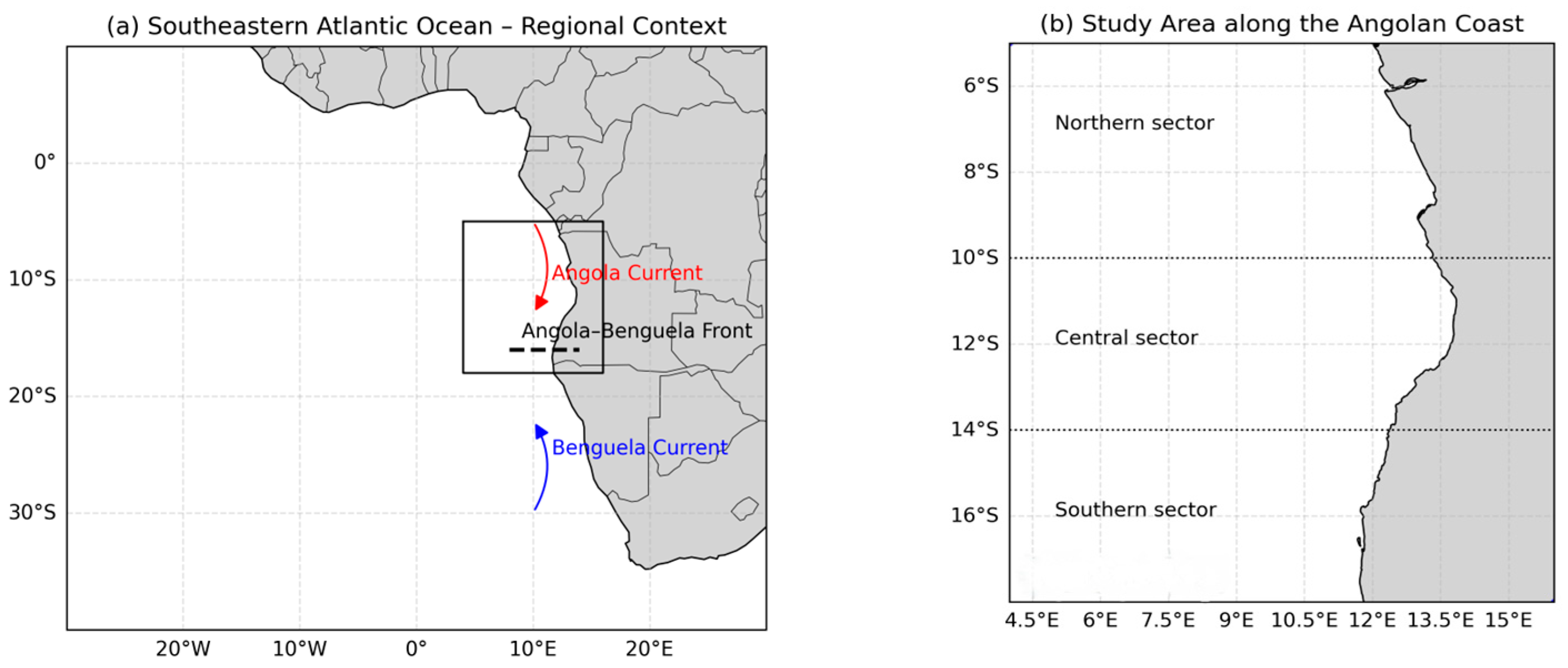
The study area encompasses the coastal region of Angola in the southeastern Atlantic Ocean, extending approximately from 5° S to 18° S in latitude and from 4° E to 16° E in longitude (
Figure 1). This region lies within the transitional zone between the warm, poleward-flowing Angola Current to the north and the cold, equatorward-flowing Benguela Current to the south, and includes the area influenced by the Angola–Benguela Front, a major oceanographic boundary separating tropical and subtropical water masses in the eastern South Atlantic [
3,
9].
The area is characterized by strong meridional gradients in temperature, salinity, and density, resulting from the interaction between contrasting circulation regimes and water masses associated with the Angola and Benguela systems [
5]. Seasonal variability is primarily driven by wind-forced coastal upwelling, particularly in the southern sector during the austral winter, when intensified southerly winds promote the uplift of cold, nutrient-rich subsurface waters toward the surface [
2]. These processes strongly influence vertical stratification, water mass distribution, and biogeochemical conditions along the Angolan coast, including the development of subsurface oxygen minimum layers [
2].
For the purpose of analysis, the study area was subdivided into three coastal sectors—northern, central, and southern Angola—allowing the assessment of latitudinal contrasts in stratification, circulation influence, and oxygen distribution. This spatial framework is consistent with previous regional studies and provides a physically meaningful basis for investigating the role of large-scale circulation, coastal upwelling, and frontal dynamics in shaping the vertical and seasonal structure of the Angolan coastal ocean.
2.2. Oceanographic Data
Vertical profiles of temperature, salinity, and dissolved oxygen were extracted from the World Ocean Database for the period 2005–2020. The dataset includes observations from Conductivity–Temperature–Depth (CTD) casts and oceanographic bottle measurements. Only profiles passing standard WOD quality-control procedures were retained. Potential density was computed from temperature and salinity using standard equations of state implemented within Ocean Data View, version 5.6.6. (Alfred Wegener Institute, Bremerhaven, Germany).
To examine latitudinal variability, the study area was subdivided into three representative coastal sectors: northern, central, and southern Angola. For each sector, profiles were grouped seasonally into warm and cold seasons, following the regional climatological definition. This approach allows for the comparison of vertical structure and surface patterns under contrasting oceanographic conditions.
2.3. Data Analysis and Visualization
Data analysis and visualization were conducted using Ocean Data View (ODV) version 5.6.6 (Alfred Wegener Institute, Bremerhaven, Germany), which was used to generate station plots, surface maps, and composite vertical profiles to examine the horizontal and vertical variability of the analyzed parameters [
10]. Vertical profiles were evaluated down to 500 m depth, with emphasis on the identification of key structural layers, including the mixed layer, thermocline, halocline, pycnocline, and the oxygen minimum layer. The mixed layer depth was estimated from temperature and density gradients, while the thermocline and pycnocline were identified based on the maximum vertical gradients of temperature and density. Seasonal and latitudinal variability in temperature, salinity, density, and dissolved oxygen was assessed through comparisons of mean profiles across coastal sectors, allowing the identification of patterns linked to regional circulation, coastal upwelling, and stratification dynamics along the Angolan coast.
3. Results and Discussion
3.1. Temperature
3.1.1. Surface Temperature Distribution
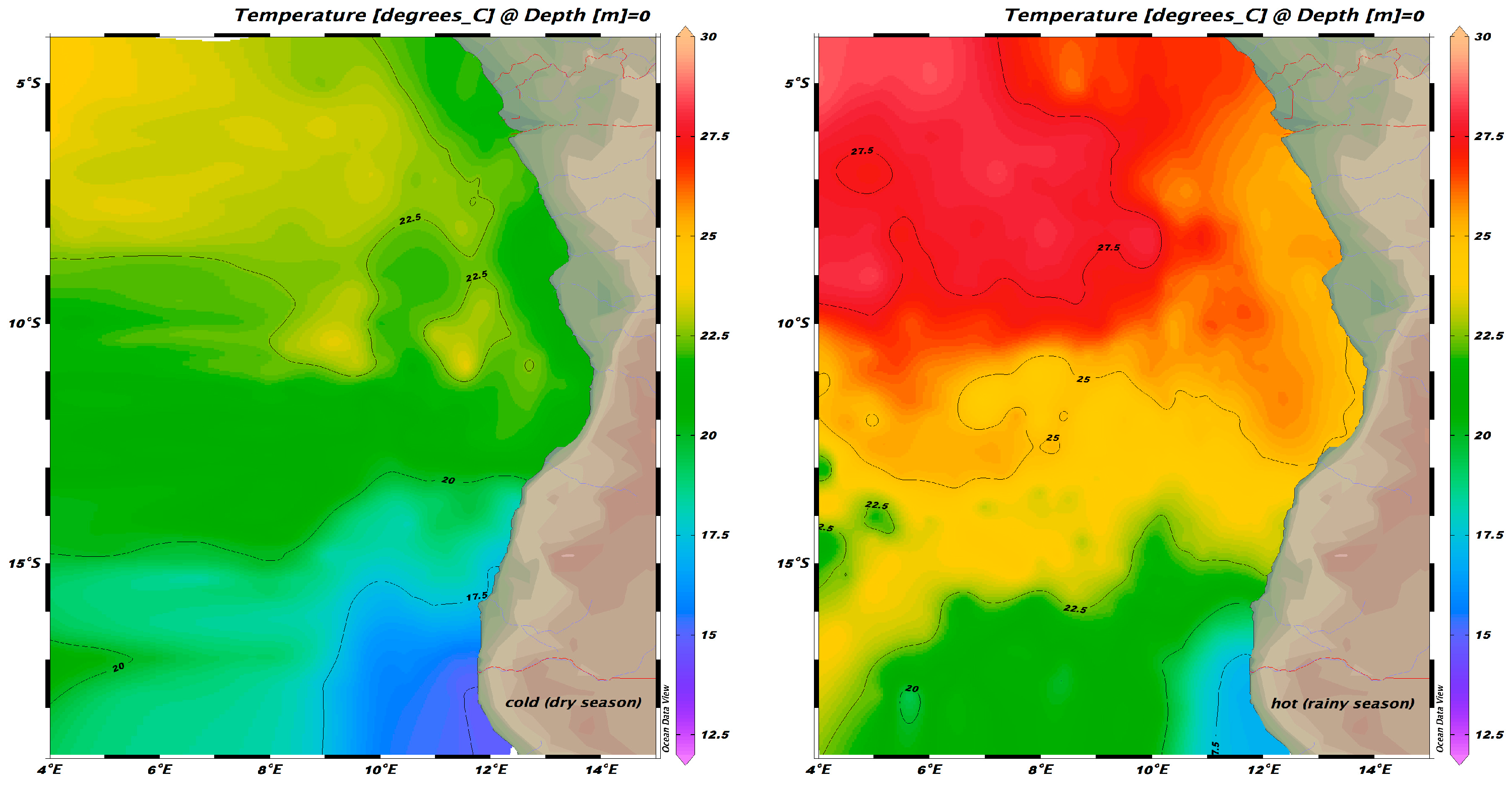
Sea surface temperature (SST) along the Angolan coast exhibits a pronounced meridional gradient, with systematically warmer waters in the northern sector and cooler conditions toward the south (
Figure 2). During the warm season, SST values range approximately from 24 to 28 °C in the northern and central sectors, decreasing southward to values below 22 °C. In contrast, during the cold season, surface temperatures are significantly reduced, particularly south of ~15°S, where SST frequently drops below 18–20 °C.
This spatial pattern reflects the contrasting influence of the Angola and Benguela current systems, with warm tropical waters transported southward by the Angola Current dominating the northern sector, and colder waters associated with the Benguela Current and coastal upwelling prevailing in the south. The south–north temperature gradient intensifies during the cold season under stronger upwelling-favorable winds. The strongest SST gradients align with the Angola–Benguela Front, confirming its role as a major thermal boundary whose seasonal variability modulates surface temperature, stratification, and heat content along the Angolan coast.
3.1.2. Vertical Temperature Structure
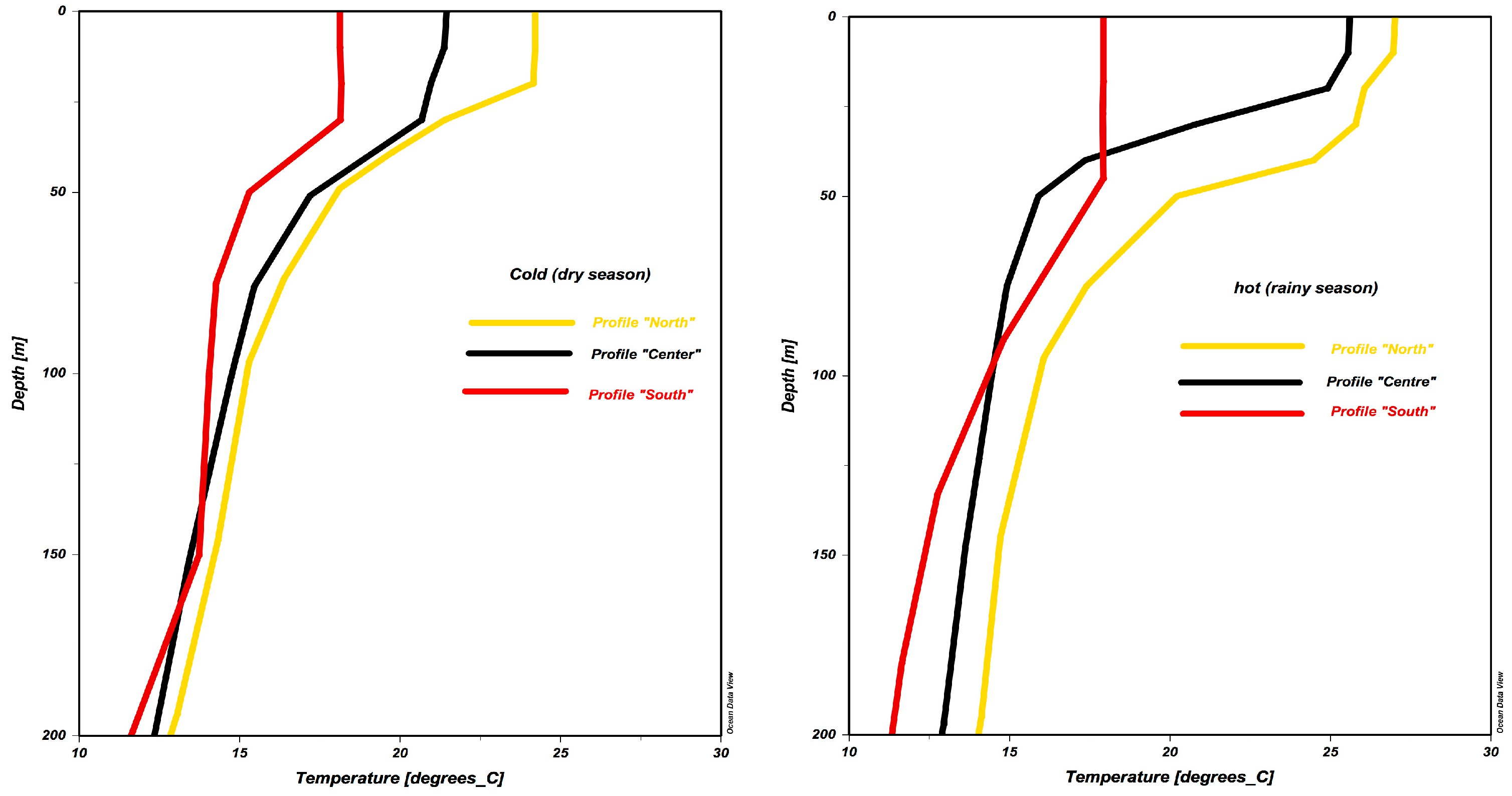
Vertical temperature profiles (
Figure 3) show a well-defined stratification along the Angolan coast, with seasonal and latitudinal variability, comprising a surface mixed layer, an underlying thermocline, and a deeper weakly stratified layer.
The surface mixed layer typically extends to ~20–30 m, becoming shallower in the southern sector during the cold season due to enhanced upwelling and stronger wind forcing, while deepening during the warm season, particularly in the northern sector, in response to increased surface heating and weaker mixing.
Below the mixed layer, a pronounced thermocline develops between approximately 25 m and 50 m depth, characterized by strong vertical temperature gradients. The thermocline is sharper and shallower in the southern sector during the cold season, consistent with the upward displacement of isotherms driven by coastal upwelling. In the northern sector, the thermocline is deeper and less intense, reflecting the dominance of warm, stratified tropical waters associated with the Angola Current.
Below ~50 m depth, temperature decreases gradually, indicating relatively homogeneous subsurface conditions. Nevertheless, colder subsurface waters persist in the southern region, reflecting the influence of the Benguela system and reduced ventilation under upwelling-dominated conditions.
3.1.3. Implications for Circulation and Upwelling
The observed surface and vertical temperature patterns provide clear evidence of the combined influence of large-scale circulation and wind-driven upwelling along the Angolan coast. The southward decrease in SST and the shoaling of the thermocline during the cold season are hallmark features of eastern boundary upwelling systems and are consistent with previous descriptions of the Angola–Benguela region.
Seasonal variations in thermocline depth strongly regulate stratification and nutrient supply to the surface layer. During the cold season, a shallower thermocline enhances upwelling efficiency, promoting the transport of cold, nutrient-rich waters into the euphotic zone, with important implications for biological productivity and the formation of subsurface oxygen minimum layers. Overall, the temperature structure reflects the dynamic interaction between tropical and subtropical influences along the Angolan coast, highlighting the role of fundamental physical processes in controlling circulation, stratification, and air–sea interactions in the southeastern Atlantic.
3.2. Salinity
3.2.1. Surface Salinity Distribution
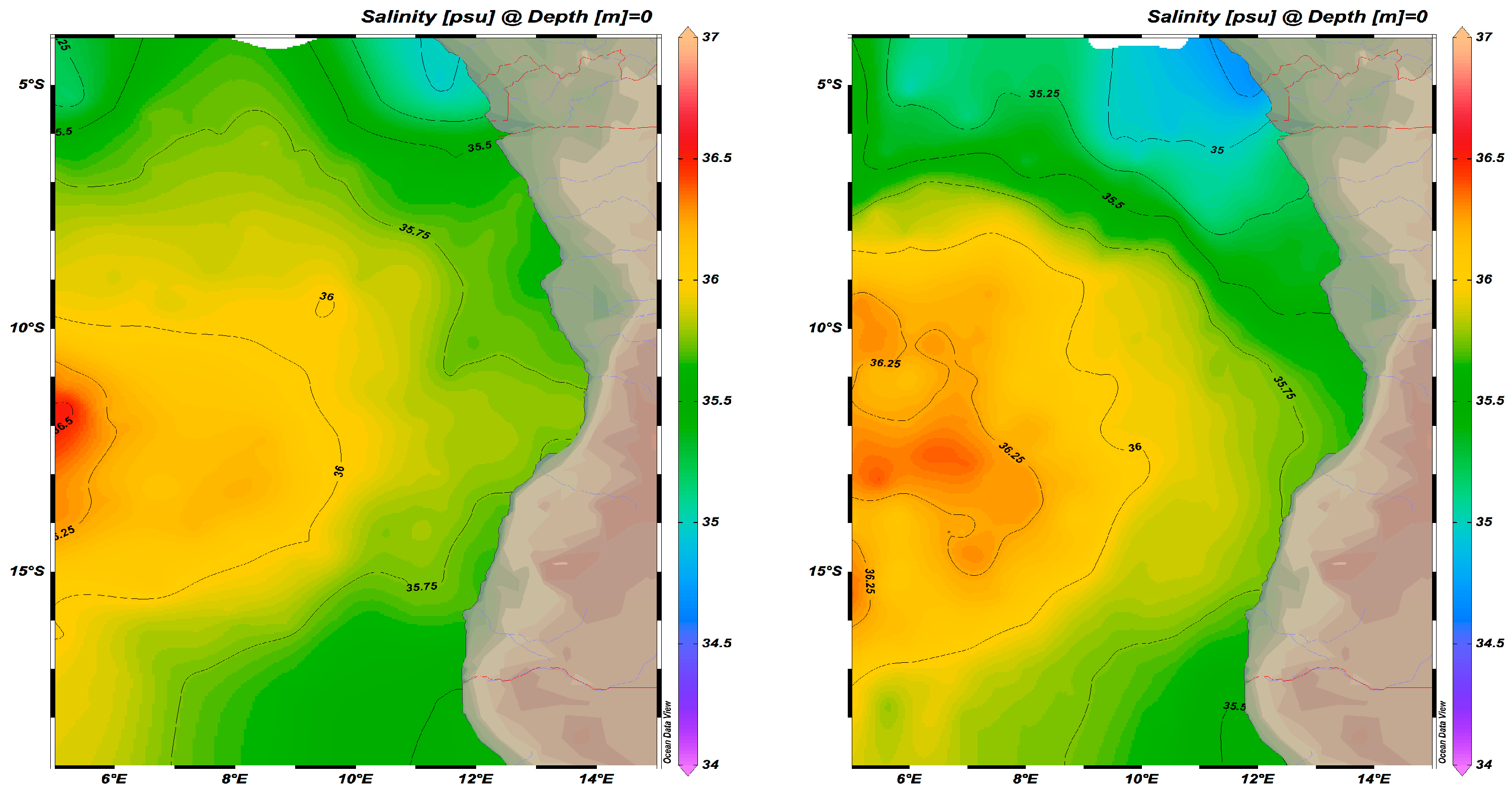
Sea surface salinity (SSS) along the Angolan coast shows a clear latitudinal structure, although less pronounced than that observed for temperature (
Figure 4). Surface salinity values generally range between approximately 35.0 and 36.5, with lower values prevailing in the northern sector and higher salinities toward the central and southern regions.
The reduced surface salinity in the northern sector is primarily associated with the influence of tropical surface waters transported southward by the Angola Current, combined with higher precipitation rates and significant freshwater input from river discharge, particularly in the Cabinda region. These processes contribute to the freshening of the surface layer and enhance vertical stratification in the northern coastal zone.
In contrast, higher surface salinity values observed in the central and southern sectors reflect the dominance of subtropical waters associated with the Benguela system, where evaporation exceeds precipitation and freshwater inputs are comparatively limited. During the cold season, surface salinity tends to increase in the southern sector, consistent with enhanced coastal upwelling that brings more saline subsurface waters toward the surface. This seasonal increase in salinity reinforces the south–north gradient and further differentiates the hydrographic characteristics of the two circulation regimes.
3.2.2. Vertical Salinity Structure
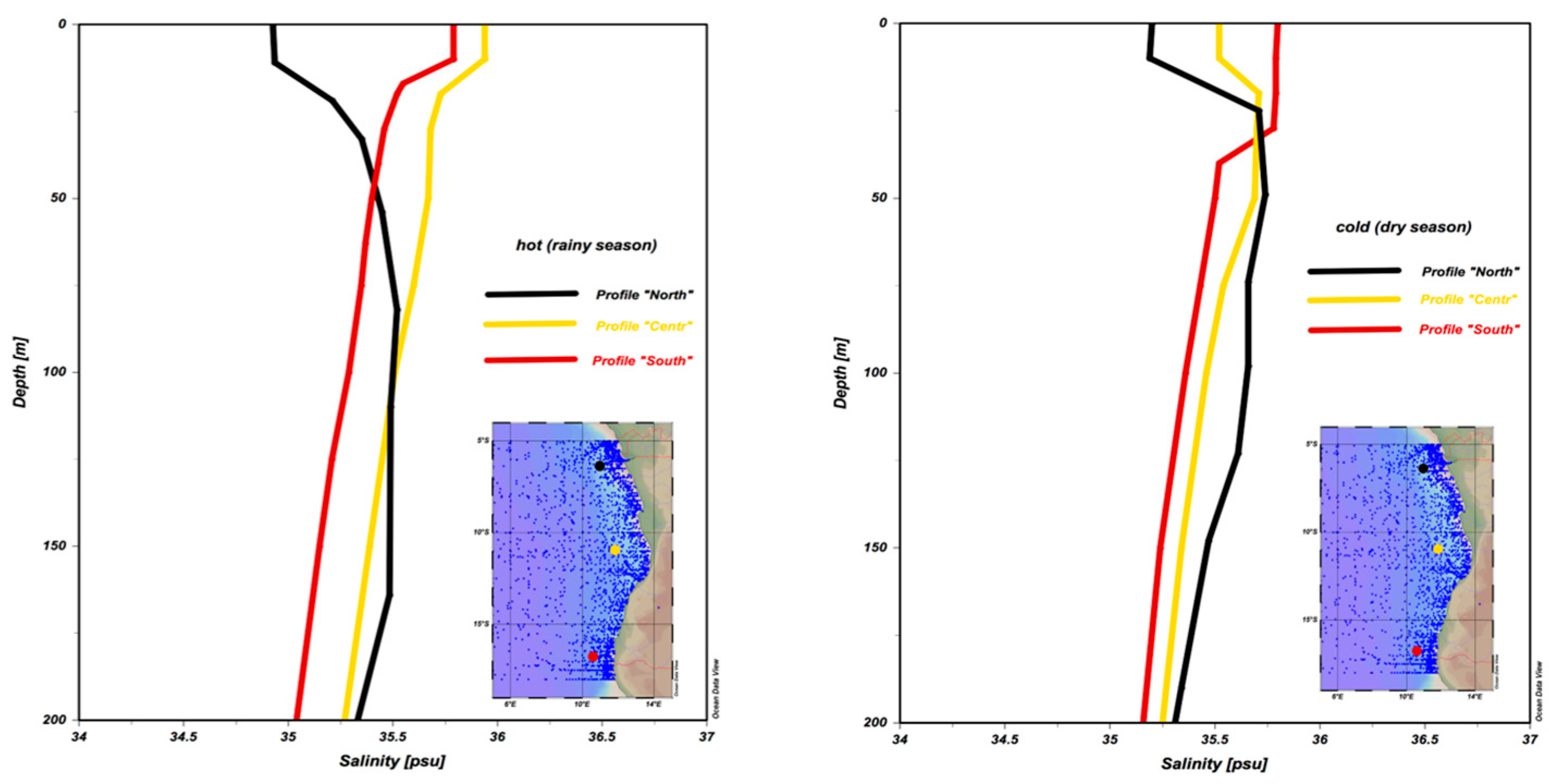
The vertical distribution of salinity reveals a stratified structure similar to that observed for temperature, with distinct seasonal and latitudinal variations (
Figure 5). In both seasons, the upper water column can be divided into three main layers: a surface mixed layer, an underlying halocline, and a deeper layer with relatively weak vertical salinity gradients.
The surface mixed layer extends to depths of approximately 20–30 m and is characterized by nearly uniform salinity values due to wind- and wave-induced mixing. In the northern sector, this layer exhibits lower salinity values, reflecting the combined effects of freshwater input and limited vertical mixing under strong stratification. During the warm season, enhanced surface heating further stabilizes the water column, maintaining a relatively fresh and shallow mixed layer.
Below the mixed layer, a pronounced halocline develops between approximately 25 and 50 m depth, particularly in the central and southern sectors. The halocline is generally sharper during the cold season, when upwelling-driven vertical displacement of isohalines intensifies vertical salinity gradients. In the southern sector, the upward intrusion of saltier subsurface waters during upwelling events contributes to the shoaling of the halocline and increases near-surface salinity.
At greater depths, below ~50 m, salinity varies more gradually with depth, indicating relatively homogeneous subsurface conditions. However, persistent latitudinal differences remain evident, with higher subsurface salinity in the southern region compared to the north, consistent with the contrasting influence of subtropical and tropical water masses.
3.2.3. Role of Salinity in Stratification and Circulation
Salinity plays a critical role in modulating density stratification along the Angolan coast, particularly in regions where temperature gradients are weaker or seasonally variable. In the northern sector, lower surface salinity enhances stratification and limits vertical mixing, favoring the persistence of a shallow mixed layer. In contrast, in the southern sector, increased salinity associated with upwelling partially compensates for surface cooling, influencing the stability and depth of the mixed layer.
The combined temperature–salinity structure highlights the importance of haline processes in shaping the vertical density structure of the water column, especially near the Angola–Benguela Front. Seasonal changes in salinity, driven by the balance between freshwater input, evaporation, and upwelling intensity, contribute to shifts in stratification that affect nutrient supply, ventilation of subsurface waters, and the development of oxygen minimum layers.
Overall, the observed salinity patterns provide further evidence of the strong coupling between regional circulation, atmospheric forcing, and water mass distribution along the Angolan coast. When interpreted together with temperature variability, salinity emerges as a key parameter controlling stratification and the physical environment of this transitional eastern boundary system.
3.3. Density
3.3.1. Surface Density Distribution
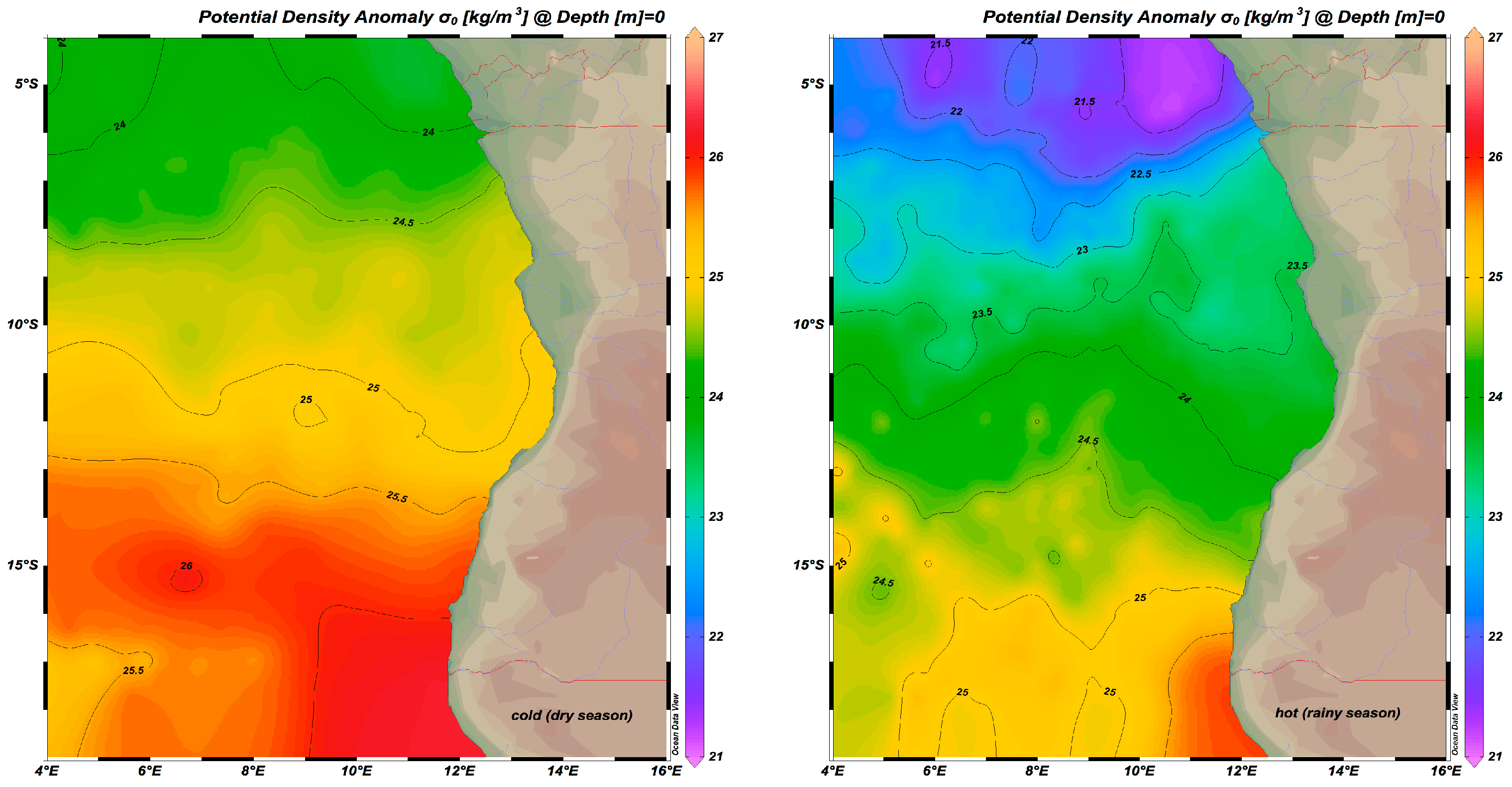
The surface density field along the Angolan coast exhibits a marked latitudinal and seasonal variability that reflects the combined influence of temperature and salinity distributions (
Figure 6). During the warm season, surface density values are generally lower, ranging approximately from 21 to 25 kg m
−3, with minimum values observed in the northern sector. In contrast, during the cold season, surface density increases substantially, particularly toward the southern sector, where values commonly exceed 26–27 kg m
−3.
Lower surface densities in the northern region are primarily associated with higher sea surface temperatures and reduced salinity due to freshwater input and tropical water influence from the Angola Current. These conditions favor strong upper-ocean stratification and limit vertical mixing. Conversely, the southern sector displays higher surface densities as a result of surface cooling and increased salinity linked to the Benguela Current and coastal upwelling. The enhanced density contrast between the northern and southern sectors during the cold season highlights the strengthening of the Angola–Benguela system under upwelling-favorable conditions.
The sharpest horizontal gradients in surface density are observed near the latitude of the Angola–Benguela Front, confirming its role as a major boundary separating water masses of distinct thermohaline properties. Seasonal variations in the intensity and position of this front modulate the spatial distribution of surface density along the Angolan coast.
3.3.2. Vertical Density Structure
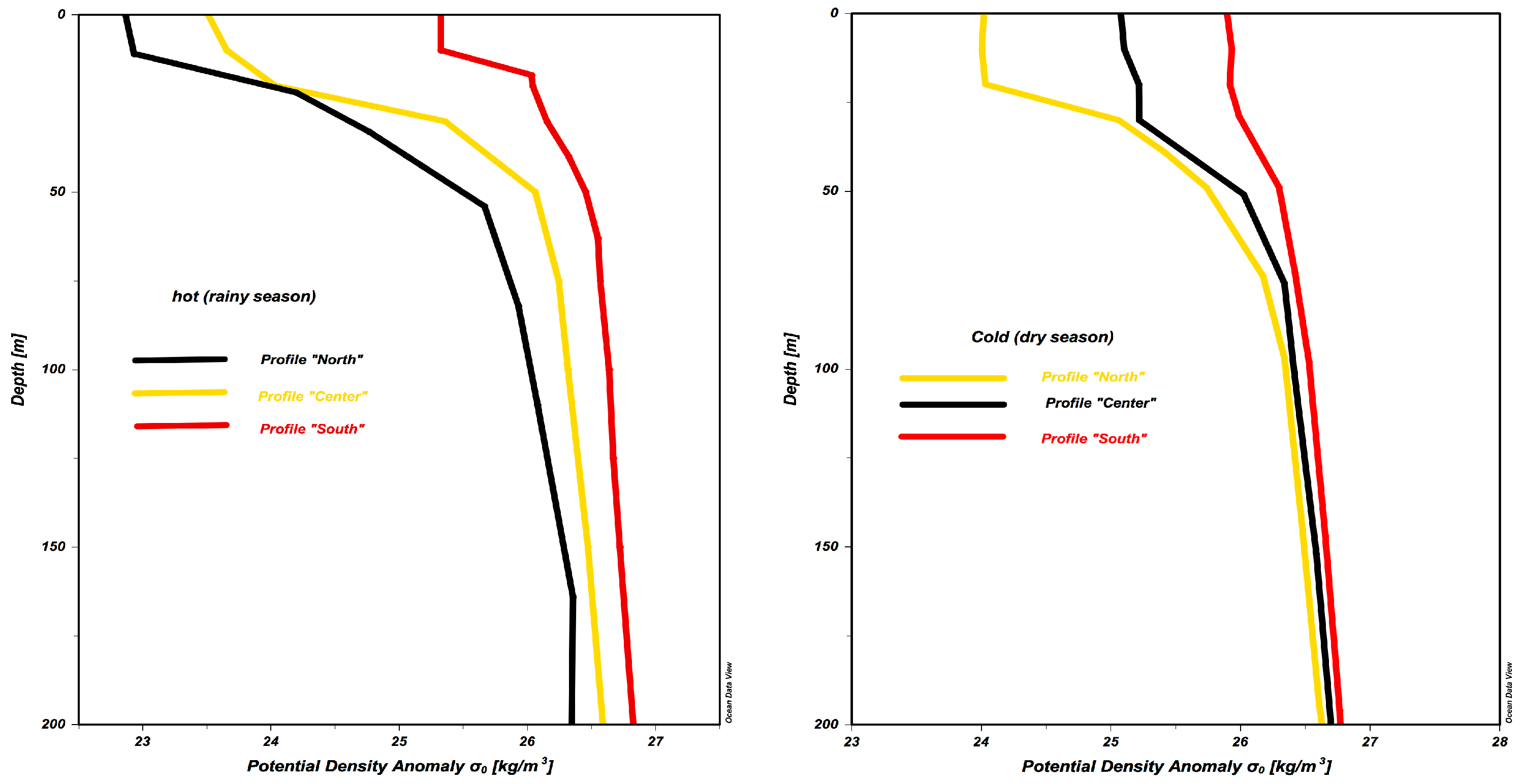
Vertical density profiles reveal a well-defined stratified structure in the upper 500 m of the water column, with clear seasonal and latitudinal contrasts (
Figure 7). In both warm and cold seasons, the density structure can be divided into three main layers: a surface mixed layer, an intermediate pycnocline, and a deeper layer characterized by a gradual increase in density with depth.
The surface mixed layer generally extends to depths of approximately 20–30 m and is characterized by relatively uniform density values. In the northern sector, the mixed layer is typically shallower and less dense, reflecting strong stratification driven by surface warming and freshwater input. In contrast, in the southern sector, particularly during the cold season, the mixed layer becomes denser and slightly shallower, consistent with intensified upwelling and surface cooling.
Below the mixed layer, a pronounced pycnocline develops between approximately 25 and 50 m depth, where density increases rapidly with depth due to the combined effects of decreasing temperature and increasing salinity. The pycnocline is strongest in the southern sector during the cold season, indicating enhanced stratification associated with the upward displacement of denser subsurface waters. In the northern sector, the pycnocline is deeper and weaker, reflecting the dominance of warm, low-density tropical waters.
At depths below ~50 m, density increases more gradually with depth, indicating relatively stable subsurface conditions. However, persistent latitudinal differences remain evident, with higher densities in the southern region compared to the north, further emphasizing the contrasting influence of subtropical and tropical circulation regimes.
3.3.3. Implications for Stratification, Ventilation, and Upwelling
The observed density structure integrates the effects of both temperature and salinity and provides a comprehensive measure of water column stability along the Angolan coast. Strong density stratification in the northern sector limits vertical mixing and inhibits the upward transport of subsurface waters, while enhanced density gradients in the southern sector during the cold season facilitate the efficiency of wind-driven upwelling.
The shoaling of the pycnocline under upwelling conditions limits subsurface ventilation and enhances the persistence of oxygen minimum layers beneath the thermocline. Consequently, the density structure links physical circulation processes to oxygen distribution. Overall, density patterns reflect the dynamic balance between tropical and subtropical influences along the Angolan coast, highlighting density as a key parameter controlling stratification, circulation, and ecosystem functioning in this transitional eastern boundary region.
3.4. Dissolved Oxygen and Oxygen Minimum Layer (OMZ)
3.4.1. Vertical Distribution of Dissolved Oxygen
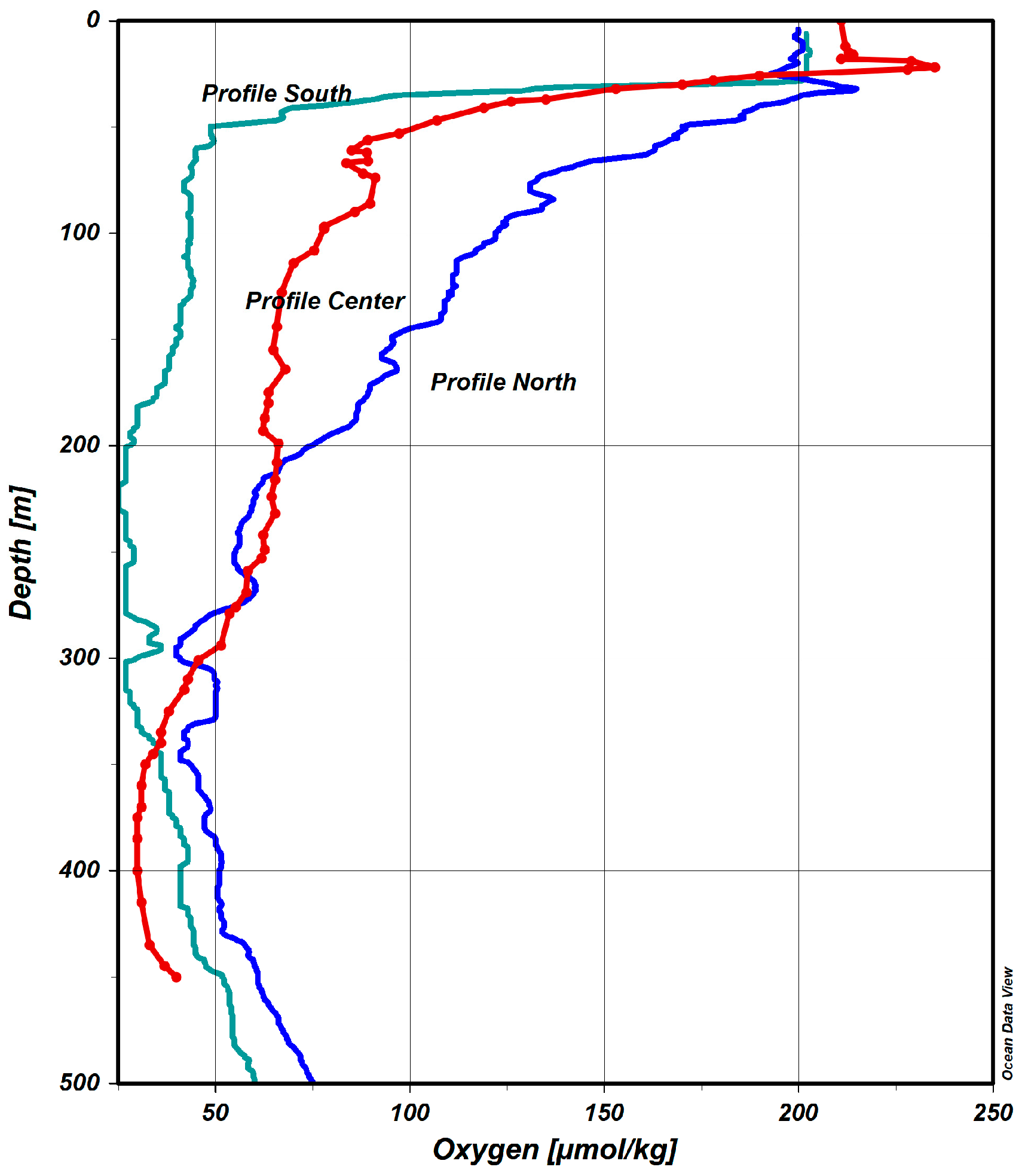
The vertical distribution of dissolved oxygen along the Angolan coast reveals a pronounced subsurface oxygen minimum with clear latitudinal variability (
Figure 8). In all three coastal sectors, surface waters are well oxygenated, reflecting direct air–sea exchange and photosynthetic activity within the euphotic zone. Near-surface oxygen concentrations are highest in the northern sector and decrease southward, consistent with the contrasting influence of tropical and subtropical circulation regimes.
Below the surface mixed layer, dissolved oxygen concentrations decrease markedly with depth, forming a well-defined oxygen minimum layer (OMZ). The OMZ is most pronounced in the central and southern sectors, where oxygen values remain persistently low over a broad depth range, approximately between 100 and 400 m. In contrast, the northern sector exhibits a weaker and deeper oxygen minimum, with comparatively higher oxygen concentrations throughout the water column, reflecting reduced upwelling influence and stronger stratification associated with warm tropical waters.
The vertical position and intensity of the OMZ closely correspond to the depth of the thermocline and pycnocline identified in the temperature and density profiles. This correspondence highlights the strong coupling between physical stratification and oxygen distribution, whereby a strengthened pycnocline restricts vertical ventilation and favors the persistence of low-oxygen waters at subsurface depths.
3.4.2. Latitudinal and Seasonal Variability of the OMZ
The intensity and vertical extent of the oxygen minimum layer (OMZ) exhibit clear latitudinal and seasonal variability along the Angolan coast. The southern sector shows the shallowest and most intense OMZ, particularly during the cold season, when enhanced upwelling transports oxygen-poor subsurface waters upward and a strengthened pycnocline limits ventilation. During the warm season, the OMZ deepens and weakens, especially in the northern sector, reflecting reduced upwelling and stronger surface stratification. These patterns are consistent with earlier studies in the southeastern Atlantic and highlight the combined role of circulation, stratification, and organic matter remineralization in shaping OMZs in eastern boundary upwelling systems.
3.4.3. Physical Controls on Oxygen Distribution
The observed oxygen structure along the Angolan coast is primarily controlled by the interplay between circulation dynamics, vertical stratification, and biological processes. Strong stratification, particularly in the presence of a sharp pycnocline, inhibits vertical mixing and restricts the downward transport of oxygen-rich surface waters. At the same time, upwelling supplies nutrient-rich waters to the surface, stimulating primary production and enhancing the export of organic matter to subsurface layers, where microbial respiration consumes oxygen.
The shoaling of the thermocline and pycnocline during the cold season in the southern sector plays a dual role: it facilitates upwelling while simultaneously limiting subsurface ventilation. This combination favors the development of a shallow and intense OMZ, linking physical forcing directly to biogeochemical conditions. In the northern sector, weaker upwelling and stronger stratification associated with the Angola Current result in a deeper and less intense OMZ.
Overall, the spatial and seasonal variability of dissolved oxygen along the Angolan coast reflects fundamental physical mechanisms governing eastern boundary upwelling systems. The presence of a persistent OMZ underscores the importance of considering oxygen dynamics alongside temperature, salinity, and density when assessing the physical structure and ecological functioning of the region.
4. Conclusions
This study provides an integrated analysis of the seasonal and latitudinal variability of key physical properties of seawater along the Angolan coast, focusing on temperature, salinity, density, and dissolved oxygen. Using vertical profile data from the World Ocean Database and analysis tools implemented in Ocean Data View, the physical structure of the coastal ocean was characterized within the context of the Angola–Benguela circulation system and associated upwelling dynamics.
The results reveal a pronounced south–north gradient in surface and subsurface properties, reflecting the contrasting influence of the warm Angola Current in the north and the cold Benguela Current in the south. Temperature and salinity jointly control the density structure of the water column, leading to marked differences in stratification between sectors and seasons. During the cold season, enhanced wind-driven upwelling in the southern sector results in surface cooling, increased salinity, and a shoaling of the thermocline and pycnocline, while the northern sector remains dominated by warm, stratified tropical waters.
The vertical density structure plays a central role in regulating vertical mixing and ventilation processes. Strong stratification in the upper ocean limits the exchange between surface and subsurface layers, particularly during periods of intensified upwelling. This physical configuration directly influences the distribution of dissolved oxygen, leading to the development of a persistent subsurface oxygen minimum layer. The OMZ is most pronounced in the central and southern sectors, where enhanced stratification and high biological oxygen demand combine to reduce oxygen concentrations below hypoxic thresholds.
Seasonal analysis of oxygen profiles demonstrates that the OMZ exhibits clear temporal variability, with shallower and more intense oxygen depletion during the cold season compared to the warm season. These findings highlight the tight coupling between physical forcing, stratification, and biogeochemical processes in the Angolan coastal ocean, consistent with the behavior of eastern boundary upwelling systems.
Overall, this study moves beyond a purely descriptive characterization by linking observed hydrographic patterns to underlying physical mechanisms, including regional circulation, coastal upwelling, and stratification-driven ventilation. Given the limited number of integrated studies in this region, the results provide a valuable baseline for future investigations of physical–biogeochemical interactions and for assessing the potential impacts of climate-driven changes in stratification and ocean deoxygenation along the Angolan coast.
Author Contributions
Conceptualization, F.G., M.C.N. and P.R.; methodology, F.G. and M.C.N.; software, F.G.; validation, F.G., M.C.N. and P.R.; formal analysis, M.C.N. and P.R.; investigation, F.G. and M.C.N.; resources, F.G., M.C.N. and P.R.; data curation, F.G.; writing—original draft preparation, F.G., M.C.N. and P.R.; writing—review and editing, F.G., M.C.N. and P.R.; visualization, F.G., M.C.N. and P.R.; supervision, M.C.N. and P.R.; project administration, F.G. and M.C.N. All authors have read and agreed to the published version of the manuscript.
Funding
This research received no external funding.
Institutional Review Board Statement
Not applicable.
Informed Consent Statement
Not applicable.
Data Availability Statement
Conflicts of Interest
The authors declare no conflicts of interest.
References
- Talley, L.D.; Pickard, G.L.; Emery, W.J.; Swift, J.H. Introduction to Descriptive Physical Oceanography. In Descriptive Physical Oceanography; Elsevier: Amsterdam, The Netherlands, 2011; pp. 1–6. ISBN 978-0-7506-4552-2. [Google Scholar]
- Brandt, P.; Alory, G.; Awo, F.M.; Dengler, M.; Djakouré, S.; Imbol Koungue, R.A.; Jouanno, J.; Körner, M.; Roch, M.; Rouault, M. Physical Processes and Biological Productivity in the Upwelling Regions of the Tropical Atlantic. Ocean Sci. 2023, 19, 581–601. [Google Scholar] [CrossRef]
- Mishonov, A.V.; Boyer, T.P.; Baranova, O.K.; Bouchard, C.N.; Cross, S.L.; Garcia, H.E.; Locarnini, R.A.; Paver, C.R.; Reagan, J.R.; Wang, Z.; et al. World Ocean Database 2023. Available online: https://repository.library.noaa.gov (accessed on 20 August 2025).
- Koseki, S.; Giordani, H.; Goubanova, K. Frontogenesis of the Angola–Benguela Frontal Zone. Ocean Sci. 2019, 15, 83–96. [Google Scholar] [CrossRef]
- Bakun, A. Global climate change and intensification of coastal ocean upwelling. Science 1990, 247, 198–201. [Google Scholar] [CrossRef] [PubMed]
- Hill, A.E.; Perlin, N. Coastal Upwelling Dynamics; Cambridge University Press: Cambridge, UK, 2014; pp. 3–8. [Google Scholar]
- Paulmier, A.; Ruiz-Pino, D. Oxygen Minimum Zones in the Ocean; Elsevier: Amsterdam, The Netherlands, 2009; pp. 33–40. [Google Scholar]
- Bubnov, V.A. Structure and characteristics of the oxygen minimum layer in the southeastern Atlantic. Oceanology 1972, 12, 193–201. [Google Scholar]
- Vizy, E.K.; Cook, K.H. Decadal change of the South Atlantic Ocean Angola–Benguela Frontal Zone since 1980. Clim. Dyn. 2018, 51, 3251–3273. [Google Scholar] [CrossRef]
- Schlitzer, R. Ocean Data View User’s Guide (Version 5.6.6). Available online: https://odv.awi.de (accessed on 20 August 2025).
| Disclaimer/Publisher’s Note: The statements, opinions and data contained in all publications are solely those of the individual author(s) and contributor(s) and not of MDPI and/or the editor(s). MDPI and/or the editor(s) disclaim responsibility for any injury to people or property resulting from any ideas, methods, instructions or products referred to in the content. |