Article

During the COVID-19 Pandemic, the Gap in Career Awareness Between Urban and Rural Students Widened


by
Keisuke Kokubun
1,2
1
Graduate School of Management, Kyoto University, Kyoto 606-8501, Japan
2
Economic Research Institute, Japan Society for the Promotion of Machine Industry, Tokyo 105-0011, Japan
Psychol. Int. 2025, 7(4), 103; https://doi.org/10.3390/psycholint7040103
Submission received: 28 October 2025 / Revised: 12 November 2025 / Accepted: 16 December 2025 / Published: 18 December 2025
(This article belongs to the Section Neuropsychology, Clinical Psychology, and Mental Health)

Abstract

Numerous studies have examined the effects of the COVID-19 pandemic on university students’ attitudes. However, little is known about how their career awareness changed and how such changes differed between urban and rural areas. This study analyzed psychological data collected through a questionnaire survey conducted from 9 November 2020, to 19 January 2021, among 516 first- to fourth-year students enrolled in social science faculties in Japan. The analysis compared changes in career awareness by university location. The results indicated that, during the pandemic, urban students placed greater emphasis on self-worth, while rural students placed greater emphasis on working conditions, suggesting a possible widening gap between the two groups. Furthermore, logistic multiple regression and path analyses revealed that, among rural students, greater concern for working conditions was associated with a stronger focus on interpersonal relationships, which in turn enhanced their preference for local employment. In addition, valuing interpersonal relationships was linked to a stronger focus on social recognition, which may foster more intrinsic aspects of career awareness.

1. Introduction

The COVID-19 pandemic has been shown to affect people’s attitudes and psychological states, and many studies have examined its impact on university students. Most of these studies have focused on anxiety related to infection. For instance, a study of 212 university students in Switzerland found that stress caused by reduced social interaction led to deteriorating mental health, with female students experiencing more severe effects. In addition, stress related to concerns about health, family, friends, and the future intensified during the pandemic (Elmer et al., 2020).
A study of 195 university students in the United States reported that 138 students (71%) experienced increased levels of stress and anxiety. The main factors included worries about themselves and loved ones (91%), lack of concentration (89%), disrupted sleep patterns (86%), reduced social interactions (86%), and increased concern about academic performance (82%) (Son et al., 2020).
Similarly, a survey of 1535 university students in Greece revealed that two-thirds experienced heightened stress during the lockdown, and about 10% suffered from severe depression. The effects were more pronounced among female students and those with a history of self-harm (Patsali et al., 2020).
In China, a study involving 7143 university students demonstrated that anxiety was higher among those who perceived stronger economic, academic, and lifestyle impacts of the pandemic. However, social support from others was found to alleviate anxiety levels (Cao et al., 2020).
Studies have also investigated changes in students’ attitudes toward future careers during the pandemic. A nationwide survey of 35,542 university students in Japan found that about 80% felt anxious about their future or career paths. Their main concerns included whether they would be able to find employment, obtain their desired type of job, secure stable employment, and identify what kind of work suited them best (National Federation of University Co-operative Associations, 2020).
Another survey targeting 1252 third-year university students and first-year master’s students revealed that 59.3% reported that the COVID-19 outbreak had affected their views on careers and their criteria or values in selecting companies, while 40.7% reported no such effect (DISCO, 2021).
Similarly, a survey of 469 third-year university students found that 31.8% had changed their preferred industry compared to before the spread of COVID-19 (Gakujo, 2020).
However, these surveys merely revealed that students’ career awareness had changed, without clarifying how it had changed. Moreover, they did not explain how these changes in career awareness were related to the growing tendency toward local employment observed during the pandemic. For example, a nationwide survey of 1035 university students conducted from late May to early June 2020 showed that the proportion of students who preferred to work in rural areas increased by 9.0 percentage points during the COVID-19 pandemic (Cabinet Office, 2020). Similarly, a survey of 357 first- to fourth-year students attending universities in Ehime Prefecture from mid-June to early July 2020 found a 7.6-point increase in the preference for local employment (Iyo Bank Regional Economic Research Center, 2020). In contrast, another survey reported that among students who had left their hometowns to attend universities elsewhere, 28.0% hoped to return to and work in their home regions—a proportion that had not significantly changed in recent years, even under the pandemic (DISCO, 2021).
In summary, although changes in students’ career awareness and the increasing preference for local employment—particularly among students attending universities in rural areas—were both observed during the pandemic, few studies have examined the specific nature of these changes or explored how shifts in career awareness were related to the growing tendency toward local employment. This lack of research limits our understanding of the broader implications of the pandemic and hinders our ability to prepare for future crises. Therefore, the present study aims to clarify how university students’ career awareness changed during the COVID-19 pandemic and how these changes were associated with their inclination toward local employment. This study makes a unique academic contribution by linking changes in occupational awareness caused by disasters to the sustainable development of local communities.

1.1. Review of Previous Studies and Hypotheses

To address this research gap, previous studies linking the level of urban development with students’ career awareness provide useful insights. Several studies have shown that students in less developed cities tend to place greater importance on working conditions, while those in more developed cities tend to value challenge and personal growth.
For example, a study of 679 job-seeking university students in Tokyo, Nagoya, and Osaka found that students in Nagoya—a city with a relatively lower economic level—tended to emphasize working conditions, whereas students in Tokyo—a city with a higher economic level—placed greater value on taking on challenging and responsible tasks (Ogata, 2011).
Similarly, a study of 513 university and junior college students in the Chugoku, Shikoku, and Kyushu regions showed that students from economically less developed prefectures (Kagawa and Oita) valued “having sufficient holidays,” whereas those from more developed prefectures (such as Fukuoka) prioritized “an environment where they could achieve personal growth” when choosing an employer (Abe et al., 2016).
These differences are also reflected in students’ orientation toward local employment. A study of 207 social science majors attending rural universities found that students who emphasized challenging job content showed a weaker preference for local employment, while those who valued working conditions and their parents’ opinions demonstrated a stronger inclination to work in their home regions (Sugiyama, 2012).
In addition, differences in the level of urban development may be related to students’ scope of perspective. Evidence suggests that students in less developed cities tend to place more importance on close personal relationships, whereas those in more developed cities tend to focus on relationships with society at large.
A study of 1396 university graduates in Germany found that graduates who valued social bonds were more likely to seek employment in familiar regions, while those who prioritized job opportunities and urban amenities were more likely to seek work in large cities (von Proff et al., 2017).
Similarly, a study of 513 university and junior college students in the Chugoku, Shikoku, and Kyushu regions of Japan indicated that students with a stronger local orientation placed greater emphasis on a company’s atmosphere when choosing an employer than those with a weaker local orientation. This may be because local companies are often more familiar to students, making the workplace atmosphere a decisive factor (Abe et al., 2016).
Furthermore, a study of 549 university students in Spain revealed that, in the economically developed region of Catalonia, social evaluations of entrepreneurship influenced students’ entrepreneurial intentions. In contrast, among students in the less developed region of Andalusia, evaluations from close personal relationships had a greater impact on their entrepreneurial intentions (Liñán et al., 2011).
Previous studies have long documented that interpersonal relationships function as valuable resources in economically less developed cities. In urban areas, creativity is often directly linked to business success due to the presence of supportive environments and competitive dynamics. In contrast, in rural areas that lack such environments and competition, possessing strong social networks based on interpersonal ties, rather than relying on creativity alone, plays a more significant role in business activities (Freire-Gibb & Nielsen, 2014).
An analysis of 931 semiconductor factories operated by 266 companies across 29 countries from 1975 to 2004 showed that countries with more collectivist cultures tended to favor industrial clusters. This pattern suggests that collectivism promotes cooperation and coordination, reduces free-riding and opportunistic behavior, and thereby offers advantages such as lower transaction costs and moderated competition within clusters. Moreover, collectivist orientations encourage knowledge sharing and increase the likelihood of spillover effects (Martin et al., 2010).
Yamawaki (2012) further demonstrated that collectivism tends to be stronger in prefectures with lower per capita value added, smaller tertiary industry ratios, and less population mobility across prefectural borders. Similarly, a survey of 1062 voters in 16 municipalities across Japan found that positive evaluations of social environments—such as interpersonal interactions and community events—enhanced attachment to the local community more strongly than evaluations of physical environments, including cityscapes, buildings, and medical facilities (Hikichi et al., 2009).
Thus, the fact that students in rural areas tend to place greater importance on interpersonal relationships than those in urban areas may have worked to the advantage of rural cities in attracting students during the pandemic. It is also noteworthy that remote work, which became widespread during the pandemic, may have been effective only when supported by strong interpersonal relationships.
Previous research has suggested that building trust in the workplace is a key precondition for the successful implementation of telework. Using data from 9773 U.S. employees in the 2011 Merit Systems Protection Board (MSPB) Telework Study, Kim et al. (2021) found that the formation of trust within workplaces enhanced organizational performance among companies that had adopted telework. Similarly, a survey of 85 managers at public universities in the United States revealed that supervisors tended to allow telework primarily for subordinates they trusted (Kaplan et al., 2018).
In Japan, data from 145 companies showed that organizations with active internal communication achieved better outcomes from telework—such as improved efficiency and cost reduction (Furukawa, 2010). Other studies have also argued that establishing trust is a fundamental condition for the successful diffusion of telework (Jokura, 2018; Adachi, 2010; Furukawa, 2003; Wang et al., 2021).
Therefore, the spread of remote work during the pandemic may have served as a favorable factor for both rural students—who tend to value interpersonal relationships and display a stronger preference for local employment—and rural employers seeking to hire such students.
However, there is also a growing body of critical arguments and evidence regarding the characteristics of students who remain in rural areas. A study of 1640 social science students from universities across Japan found that students with stronger intentions to pursue international careers showed a negative correlation with local orientation (Koyama, 2017). Another study involving 409 students from rural universities indicated that students with strong local orientation often lacked a clear image of work and exhibited low motivation toward job hunting (Hirao & Shigematsu, 2006).
Similarly, a study of 273 students from rural universities revealed that local students tended to strengthen their preference for local employment under the influence of their parents’ opinions, due to lower levels of psychological independence and career awareness (Yonehara & Tanaka, 2015). A survey of 5400 individuals aged 20–34 residing in Aomori Prefecture showed that those who attended universities within the prefecture reported higher levels of interpersonal anxiety compared with those who had studied outside the prefecture (Ishiguro, 2007).
Other studies have pointed out that the attitudes of rural students may be insufficient to serve as human resources capable of leading rural industries (Ushirokawa, 2019); that a strong local orientation could distort the optimal allocation of human resources and hinder innovation (Hioki, 2020); and that the coexistence of locally retained, non-elite young people and the increasing number of foreign workers in rural labor markets could potentially lead to exclusionary attitudes (Kutsuwada, 2009).
These differences in attitudes between urban and rural students can potentially be explained by Maslow’s (1943) hierarchy of needs, a classic psychological model that organizes human needs into five levels, usually depicted as a pyramid. At the base are physiological needs (e.g., food, water, shelter), followed by safety needs (e.g., security, stability), social needs (e.g., love, belonging), esteem needs (e.g., self-respect, recognition), and at the top, self-actualization (realizing one’s full potential). According to the theory, lower-level needs generally must be satisfied before higher-level needs become motivating. This model continues to be widely cited in contemporary research, including in the contexts of regional inequality and development (Lee & Sims, 2023), physician migration from low- and middle-income countries (Dohlman et al., 2019), and human safety during the COVID-19 pandemic (Aikebaier, 2024).
These discussions suggest that the tendency of rural students to prioritize working conditions and interpersonal relationships may conflict with the attitudes of urban students, who place greater importance on challenge, personal growth, and engagement with broader society. Consequently, such orientations among rural students may negatively affect the long-term economic and social development of rural areas.
If the pandemic indeed intensified rural students’ preference for local employment, it is likely that changes also occurred in the career values associated with this orientation. However, these changes may not necessarily be positive; rather, they may have widened the attitudinal gap between urban and rural students. Specifically, the expected change is an increased emphasis among rural students on working conditions and interpersonal relationships linked to their local orientation.

1.2. Hypotheses

H1. 
During the COVID-19 pandemic, rural students placed greater emphasis on working conditions compared to urban students.
H2. 
During the COVID-19 pandemic, rural students placed greater emphasis on interpersonal relationships compared to urban students.
In contrast, the career values that are characteristic of urban students—such as an emphasis on social recognition, opportunities for achievement, and self-worth—are not linked to local orientation. Therefore, it is plausible that rural students placed less emphasis on these aspects during the pandemic than urban students. The following hypotheses are proposed:
H3. 
During the COVID-19 pandemic, urban students placed greater emphasis on social recognition compared to rural students.
H4. 
During the COVID-19 pandemic, urban students placed greater emphasis on opportunities for achievement compared to rural students.
H5. 
During the COVID-19 pandemic, urban students placed greater emphasis on self-worth compared to rural students.
In studies that categorize students by urban or rural affiliation, it is essential to consider their place of origin. For instance, the tendency to value working conditions or interpersonal relationships may be shaped either by attending a rural university or by being raised in a rural environment. In addition, gender differences should also be taken into account.
Previous studies have shown that, due to biological differences or early socialization processes, men tend to prefer competition (Tannen, 1994) and independence (Gefen & Straub, 1997) more than women, and that men’s self-esteem is more strongly influenced by autonomy and decisiveness (Keller et al., 2015). A study of Japanese participants further demonstrated that men place greater value on intrinsic rewards than on extrinsic ones, whereas women make less distinction between the two (Worthley et al., 2009). Therefore, in order to clearly demonstrate how changes during the pandemic differed between urban and rural contexts, it is necessary to control for gender differences.
To address these issues, the present study incorporates university location, place of origin, and gender into the analysis. Moreover, a path analysis using five variables is conducted to examine whether the increased emphasis on working conditions and interpersonal relationships—expected mainly among rural students—is linked to the increased emphasis on social recognition, opportunities for achievement, and self-worth—expected mainly among urban students.
Furthermore, logistic regression analysis is used to clarify the relationship between career values and local orientation among students who are both from rural areas and attend rural universities. In China, the pandemic led university students to adopt a more pessimistic outlook on employment prospects, while showing a marked shift toward greater interest in working for public institutions, state-owned enterprises, and government agencies, as well as in first-tier cities rather than their hometowns (Zheng & Yan, 2024). Similarly, a survey conducted in Japan during the pandemic revealed that students’ preference for large corporations had reached its highest level since the survey began in 2001, likely due to the high number of bankruptcies among small- and medium-sized enterprises (SMEs) at the time (Mynavi, 2020a). Because SMEs occupy an overwhelmingly large share of the rural economy, it has long been suggested that a strong preference for large corporations discourages young people from returning to their home regions after graduation (Japan Finance Corporation Research Institute, 2015; Small and Medium Enterprise Agency, 2017).
Therefore, it is possible that the pandemic-induced rise in large-company orientation negatively affected rural students’ intention to work locally. By controlling for preferences for large or small companies and other related variables, this study aims to clarify how changes in career values may have influenced students’ local orientation.

2. Materials and Methods

2.1. Participants

Between 9 November 2020, and 19 January 2021, a questionnaire survey was distributed to 571 undergraduate students (from first to fourth year) enrolled in social science faculties at five universities in Japan. A total of 516 students responded, yielding a response rate of 90.5%. Among the valid respondents, 72.1% were male and 27.9% were female.
The survey was conducted at five universities located in five prefectures. The number of distributed and returned questionnaires was as follows: Prefecture A (distributed = 67, returned = 67), Prefecture B (34, 34), Prefecture C (170, 166), Prefecture D (100, 89), and Prefecture E (200, 160), for a total of 571 distributed and 516 returned.
In this study, Prefectures A–C—which are not part of Japan’s three major metropolitan areas, namely the Tokyo Metropolitan Area (Tokyo, Saitama, Chiba, Kanagawa), the Nagoya Area (Aichi, Gifu, Mie), and the Osaka Area (Osaka, Hyogo, Kyoto, Nara)—were classified as rural, whereas Prefectures D–E, which belong to the metropolitan areas, were classified as urban. As a result, 48.3% of the respondents attended urban universities, and 51.7% attended rural universities.
Following Hirao and Shigematsu (2006), this study defines “narrow local orientation” as the intention to work in one’s home prefecture, and “broad local orientation” as the intention to work in a prefecture adjacent to one’s home prefecture. The proportions were as follows: narrow local orientation, 60.7%; broad local orientation, 14.0%; urban orientation (intention to work in one of the three major metropolitan areas excluding one’s home and adjacent prefectures), 18.6%; and other, 6.6%. In terms of origin, 40.2% of respondents were from urban areas, and 59.2% were from rural areas.
Table 1 summarizes respondents’ attributes by university location. Key characteristics are as follows:
  • Regarding intended employment type immediately after graduation, the most common choice among urban students was “working in a large company” (35.0%), while among rural students it was “working in a small or venture company” (44.1%).
  • For intended industry immediately after graduation, excluding those who answered “undecided” (urban: 24.3%; rural: 25.6%) or “no particular preference” (urban: 9.9%; rural: 12.8%), the most frequent responses were “finance and insurance” (14.0%) and “services” (11.1%) among urban students, and “local government” (15.1%) among rural students.
  • Regarding intended occupation, the proportions answering “undecided” and “no particular preference” were both lower in urban areas (15.5% and 6.7%, respectively) than in rural areas (25.0% and 10.9%). Conversely, “management/administrative planning” (16.7%) and “sales/marketing” (33.1%) were higher among urban students than among rural students (10.2% and 12.9%).
  • Regarding place of origin, most urban university students were from urban areas (78.7%), while most rural university students were from rural areas (96.5%).
  • Regarding preferred employment location, 89.5% of urban students expressed a preference for working in urban areas, while 82.6% of rural students preferred working in rural areas.
  • Finally, regarding local orientation, narrow local orientation (preference for employment in the home prefecture) was 49.2% among urban students and 71.8% among rural students; broad local orientation (in an adjacent prefecture) was 19.7% and 8.6%, respectively; and urban orientation (in one of the three metropolitan areas excluding home and adjacent prefectures) was 23.8% and 13.7%, respectively.

2.2. Psychological Measures

The first part of the questionnaire collected demographic and background information, including gender, age, academic year, preferred type of employment, preferred industry and occupation after graduation, home prefecture, and preferred prefecture of employment after graduation.
The second part of the questionnaire assessed changes in career attitudes during the COVID-19 pandemic. The items measuring changes in career attitudes were developed specifically for this study, based on Komoda (2007). Participants were presented with the following instruction:
“Please indicate how the importance of each of the following factors in your career choice has changed between before and during the COVID-19 pandemic. For each statement, select the number that best applies to you.”
Participants rated 27 items concerning changes in the importance of various career-related factors using a five-point Likert scale, ranging from 1 = greatly decreased in importance to 5 = greatly increased in importance.
A factor analysis using the principal factor method was then conducted on the 27 items. The eigenvalues were 7.85, 2.98, 2.29, 1.66, 1.50, 1.02, 0.86, and so forth, suggesting that a five-factor structure was appropriate. Accordingly, another factor analysis was conducted with the number of factors fixed at five, using the principal factor method with Varimax rotation. The resulting factor pattern is shown in Table 2.
The five unrotated factors together explained 52.19% of the total variance across the 27 items.
The first factor consisted of ten items such as “flexible working hours (e.g., flextime),” “stable income,” “comprehensive employee benefits,” and “a sufficient number of paid holidays.” This factor was labeled Working Conditions.
The second factor comprised four items: “being able to build a good atmosphere with colleagues,” “being able to establish trustful relationships with people in the workplace,” “feeling connected to others through work,” and “being accepted by people in the workplace.” This factor was labeled Interpersonal Relationships.
The third factor included five items: “being able to engage in work that broadens one’s potential,” “work that allows one’s individuality to be expressed,” “work that utilizes one’s abilities,” “work that contributes to personal growth,” and “work that provides a sense of fulfillment.” This factor was labeled Self-Worth.
The fourth factor consisted of four items: “work that is recognized by society,” “work that earns respect from others,” “work that receives high public evaluation,” and “work that contributes to society.” This factor was labeled Social Recognition.
The fifth factor comprised four items: “having the opportunity to become independent in the future,” “having the opportunity to start a new business,” “being able to gain experience in a wide range of jobs,” and “being able to put one’s own new ideas into practice.” This factor was labeled Opportunities for Achievement.

2.3. Analysis

For the analysis, the arithmetic mean of the items comprising each factor was used as a variable. The following five analytical steps were conducted.
First, the mean values of the five variables were compared to confirm whether the changes observed during the pandemic were statistically significant.
Second, correlation analysis and path analysis were performed to examine the potential connections between Working Conditions and Interpersonal Relationships—characteristic of local students—and Social Recognition, Opportunities for Achievement, and Self-Worth, which are more typical of urban students. Here, we interpret the findings using Maslow’s (1943) hierarchy of needs theory.
Third, changes in occupational attitudes were presented separately by university location.
Fourth, tendencies toward local orientation and urban orientation were examined.
Finally, a logistic regression analysis was conducted, with local orientation as the dependent variable. By controlling for various covariates, this analysis sought to clarify how changes in occupational attitudes were related to students’ intentions to seek employment in their home regions.

3. Results

3.1. Overall Findings

Table 3 presents the descriptive statistics for changes in occupational attitudes. The variables are arranged in descending order of their mean values. Given that “no change” corresponds to a score of 3 on the 5-point scale, it is reasonable to judge whether each mean is statistically higher than 3 as an indicator of whether a meaningful change occurred during the COVID-19 pandemic.
Figure 1 displays the mean values of the five variables, with error bars representing the 95% confidence intervals. For all variables, the lower bound of the confidence interval exceeded 3, indicating that the changes were statistically significant—that is, students’ occupational attitudes did shift during the pandemic. In particular, Working Conditions and Interpersonal Relationships showed relatively high mean scores, suggesting that students became more likely to value these aspects when considering future employment.
However, as none of the mean values reached 4—the level corresponding to “slightly increased importance”—these changes should not be regarded as large. Rather, they can be described as “small but distinct changes.”
Correlation coefficients shown in Table 3 reveal that none of the correlations met the r > 0.70 threshold for a “high correlation” according to Guilford (1956), indicating considerable individual variation in the direction of change. Nonetheless, three correlations exceeded r = 0.40, the criterion for a “moderate correlation.” One such correlation was between Working Conditions and Interpersonal Relationships, while the other two were between Self-Worth and Social Recognition, and between Self-Worth and Opportunities for Achievement.
As discussed in the Introduction, prior research has shown that the former combination tends to characterize students in rural areas, whereas the latter set of linkages is more typical among urban students.

3.2. Path Analysis

To clarify the relationships among the five variables, a path analysis was conducted. Here, we employed path analysis instead of structural equation modeling (SEM) in consideration of consistency with the preceding and subsequent analyses. However, the results described below remained largely unchanged when SEM was applied (available upon request). Assuming that changes were more likely to occur sequentially from variables with higher mean scores (i.e., larger changes) to those with lower mean scores (i.e., smaller changes), a model was specified in which change began with Working Conditions, passed through Interpersonal Relationships, and proceeded to Social Recognition, Opportunities for Achievement, and Self-Worth.
This assumption is supported by Maslow’s (1943) hierarchy of needs, which conceptualizes human motivation as progressing through five levels—physiological, safety, social, esteem, and self-actualization—such that higher-level needs become salient only after lower-level needs have been satisfied.
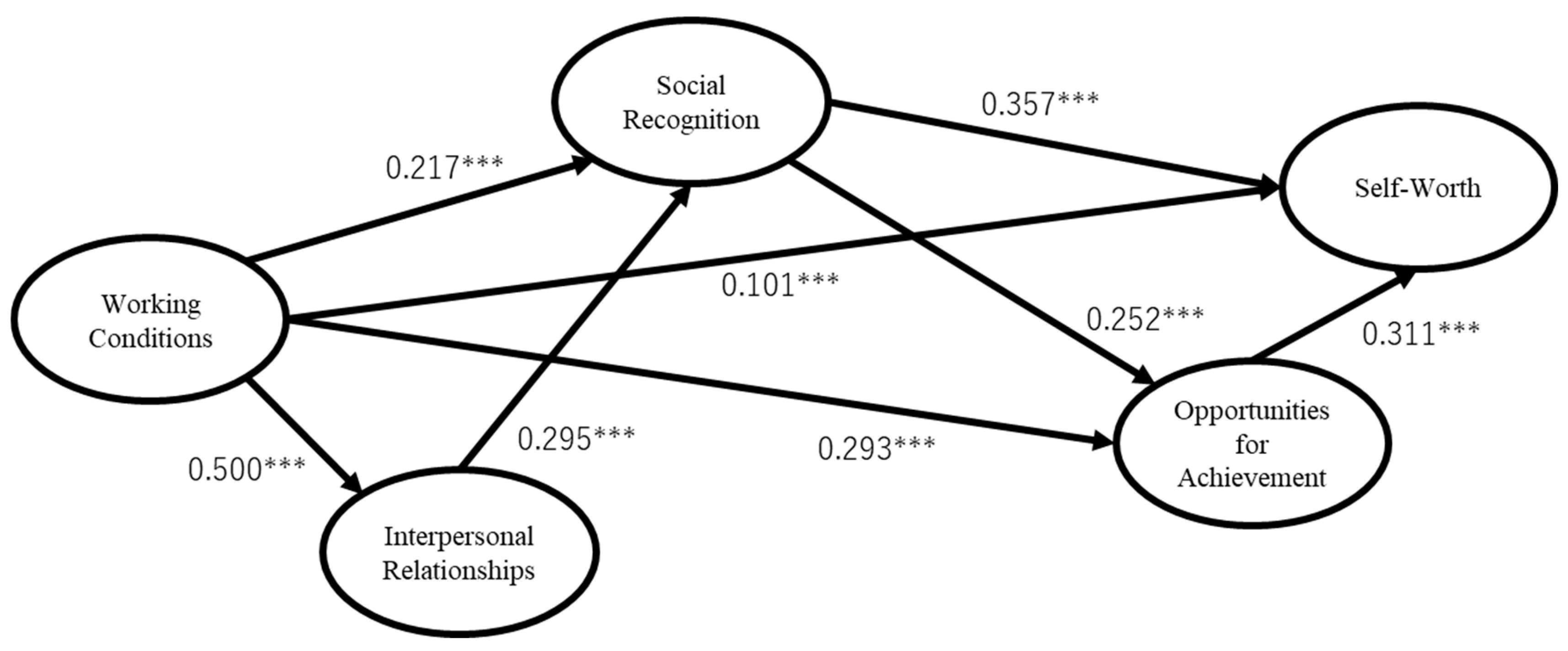
The path diagram shown in Figure 2 suggests that increased emphasis on Working Conditions is associated with greater emphasis on Interpersonal Relationships and Social Recognition. Furthermore, heightened concern for Social Recognition appears to promote greater emphasis on Self-Worth and Opportunities for Achievement.
However, no significant paths were found between Interpersonal Relationships and either Self-Worth or Opportunities for Achievement.
This indicates that becoming more concerned with interpersonal aspects of work does not directly lead to increased emphasis on self-realization or achievement-oriented values. Rather, such a shift appears to exert only an indirect effect, operating through enhanced concern for Social Recognition.

3.3. Changes in Occupational Values by University Location

Next, differences in changes in occupational values were examined according to university location.
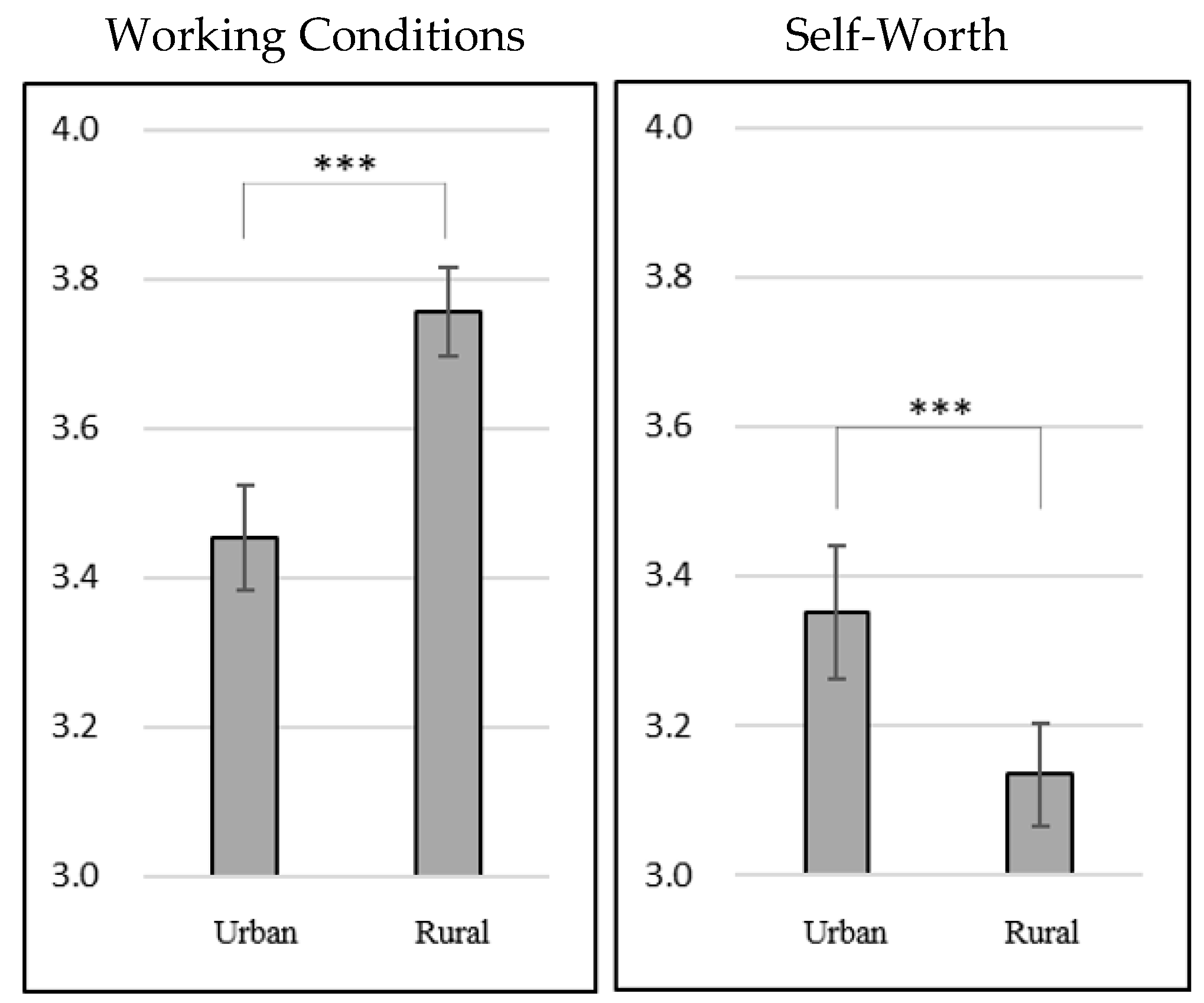
As shown in Table 4, statistically significant differences were found for Working Conditions and Self-Worth.
Specifically, students attending universities in rural areas scored higher on Working Conditions, whereas those attending universities in urban areas scored higher on Self-Worth (see Figure 3).
This indicates that, during the COVID-19 pandemic, urban students became more likely than their rural counterparts to emphasize Self-Worth when choosing a career, whereas rural students became more likely to emphasize Working Conditions.
These findings lend support to Hypotheses 1 and 5 (H1 and H5).
To test the robustness of these results, the following section further disaggregates the analysis by gender and students’ place of origin.

3.4. Changes in Occupational Values by Gender and University Location

Table 5 presents the results by gender and university location.
Statistically significant differences were observed in Working Conditions, Opportunities for Achievement, and Self-Worth.
Post hoc tests revealed the following patterns:
  • For Working Conditions, both male and female students in rural universities scored higher than those in urban universities.
  • For Self-Worth, both male and female students in urban universities scored higher than their counterparts in rural universities (although the difference was not significant among females).
  • For Opportunities for Achievement, male students scored higher than female students regardless of university location (however, the difference between urban males and urban females was not significant).
In summary, male and female students in rural universities became more likely than those in urban universities to emphasize Working Conditions when choosing a career, whereas male and female students in urban universities became more likely to emphasize Self-Worth.
Additionally, across both urban and rural contexts, male students placed greater emphasis on Opportunities for Achievement than did female students (details available upon request).
Overall, the findings suggest that:
  • Emphasis on Working Conditions increased particularly among students in rural areas;
  • Emphasis on Self-Worth increased particularly among students in urban areas;
  • Emphasis on Opportunities for Achievement increased particularly among male students.

3.5. Changes in Occupational Values by Place of Origin and University Location

Table 6 presents the results by students’ place of origin and university location.
Statistically significant differences were found in Working Conditions, Social Evaluation, and Self-Worth.
Post hoc tests indicated that:
  • For Working Conditions, students from rural areas who also attended urban universities (Rural Rural) scored significantly higher than the other groups.
  • For Self-Worth, students from urban areas who attended urban universities (Urban → Urban) scored higher than Rural → Rural students.
  • Additionally, students from rural areas who attended urban universities (Rural → Urban) placed greater emphasis on Social Evaluation than did students from urban areas who attended rural universities (Urban → Rural) (details available upon request).
These results suggest that, during the COVID-19 pandemic, Rural → Rural students became more likely than others to emphasize Working Conditions when choosing a career, whereas Urban → Urban students became more likely than Rural → Rural students to emphasize Self-Worth.
Moreover, Rural → Urban students increased their emphasis on Social Evaluation compared with Urban → Rural students.

3.6. Analysis of Local and Urban Employment Orientation

This section examines the proportion of students expressing either a local or urban employment orientation by the combination of their place of origin and university location.
As shown in Table 7, approximately 80% of students from urban areas who attended urban universities (Urban → Urban), students from urban areas who attended rural universities (Urban → Rural), and students from rural areas who attended rural universities (Rural → Rural) hoped to find employment either within their home prefecture (narrow local orientation) or in a neighboring prefecture (broad local orientation).
In contrast, students from rural areas who attended urban universities (Rural → Urban) showed a distinctly different pattern: only slightly more than 30% expressed a local or broad local orientation, while about 60% preferred to work in an urban area (urban orientation).
This general tendency remained consistent when the analysis was conducted separately for male and female students (details available upon request).

3.7. Factors Enhancing Local Employment Orientation

To identify the factors that enhance students’ orientation toward local employment, logistic regression analyses were conducted using two dependent variables: (1) narrow local orientation (desire to work in one’s home prefecture) and (2) broad local orientation (desire to work in one’s home or adjacent prefecture). The analysis was restricted to students from rural areas attending rural universities, as the number of students from urban areas attending rural universities or vice versa was insufficient relative to the number of independent variables.
Following the guideline proposed by Hair et al. (2014)—which recommends that the number of independent variables should not exceed one-tenth of the number of cases to prevent overfitting—the stepwise selection method was employed to select variables.
Five variables representing changes in occupational consciousness (each measured on a 1–5 scale, as in the previous analyses) were included. Other categorical variables were converted into dummy variables, coded as 1 if the respondent selected the option and 0 otherwise. Response options with fewer than ten cases were excluded prior to the analysis.
As shown in Table 8, the results indicated that students aspiring to work for large corporations were less likely to have a narrow local orientation. Conversely, those who aspired to work for small or venture firms or as local government employees, and those whose occupational consciousness had shifted toward valuing interpersonal relationships, were more likely to have a narrow local orientation.
Similarly, as presented in Table 9, for the broader local orientation, students who wished to work for large corporations again showed a lower tendency toward local employment. In contrast, third-year students, as well as those aspiring to work in small or venture firms or in management and administrative planning, and those who had come to value interpersonal relationships more in their career choice, exhibited a stronger broad local orientation.
In sum, although the specific predictors varied somewhat depending on whether the dependent variable was defined narrowly or broadly, a consistent pattern emerged: students with a strong preference for large corporations were more inclined to seek employment outside their home regions, whereas those favoring small or venture firms, public sector positions, or who had come to prioritize interpersonal relationships during the pandemic tended to prefer employment within their local areas.

4. Discussion

During the COVID-19 pandemic, university students’ occupational consciousness shifted toward placing greater importance on various job-related conditions. Although these changes were statistically significant, the absolute magnitude of change was modest, suggesting that the most appropriate description would be “a small but clearly discernible shift.”
When comparing the five factors extracted through factor analysis, the results were consistent with the classical psychological framework of hierarchy of needs (Maslow, 1943). Awareness related to lower-order needs—such as favorable working conditions and interpersonal relationships—showed a greater increase than awareness related to higher-order needs—such as social recognition, opportunities for achievement, and self-worth. This implies that the heightened sense of insecurity during the pandemic led students to prioritize stability and connection (lower-order needs), while motivations for self-realization and achievement (higher-order needs) increased only slightly.
The most pronounced contrast in occupational consciousness was observed between students who both came from and attended universities in rural areas (local-to-local) and those who did so in urban areas (urban-to-urban). The former group showed a stronger shift toward emphasizing working conditions, whereas the latter group demonstrated a greater shift toward emphasizing self-worth. Students from rural areas who attended urban universities (local-to-urban) exhibited patterns closer to the urban group than to their rural counterparts.
These findings align with prior research indicating that students in economically less developed regions tend to prioritize stable employment conditions, while those in economically developed regions place more emphasis on challenge and self-realization (Abe et al., 2016; Ogata, 2011; Sugiyama, 2012). While previous studies described the state of what students value, the present study revealed how those values changed during the pandemic. Taken together, the results suggest that the pandemic reinforced existing tendencies: rural students, who already valued job stability, came to value it even more, while urban students, who valued challenge and growth, further strengthened that orientation. Thus, this study adds new empirical insight by suggesting that the pandemic not only altered students’ occupational values but also intensified the divide between urban and local orientations.
In addition, this study found that male students, more than female students, became increasingly oriented toward intrinsic work aspects such as opportunities for achievement. Given previous findings that men generally place more emphasis on intrinsic rewards than women (Gefen & Straub, 1997; Keller et al., 2015; Kokubun & Yasui, 2021; Tannen, 1994; Worthley et al., 2009), it is plausible that gender differences in occupational consciousness, like regional differences, widened during the pandemic.
The results of the logistic regression analysis further indicated that a stronger shift toward valuing interpersonal relationships was positively associated with local employment orientation. Such a relationship is possible only if students perceive that workplaces in their home regions provide good interpersonal environments. Therefore, the findings suggest that students’ trust in the quality of human relations within local workplaces may have played a role in strengthening local employment intentions. Although this study did not measure the degree of students’ trust in local workplaces and therefore does not provide definitive evidence, this interpretation is consistent with earlier research showing that students who value social bonds are more likely to remain in their home regions. The present results extend this by indicating that trust in local relationships could act as a catalyst, linking shifts in occupational consciousness toward interpersonal values with increased local orientation.
However, it is noteworthy that the most significant change distinguishing rural from urban students was not in interpersonal relationships but in working conditions. Although the two dimensions were moderately correlated, the correlation did not reach a high level. This implies that local retention strategies should aim to strengthen the linkage between working conditions and interpersonal relationships. Previous research has shown that successful remote work relies heavily on workplace trust. Therefore, by jointly promoting both stable working conditions and supportive interpersonal environments, local companies could effectively appeal to students, adapt to new post-pandemic work styles, and enhance their regional competitiveness.
The finding that students with a strong preference for large corporations exhibited lower local employment orientation is consistent with prior studies reporting similar patterns (Japan Finance Corporation Research Institute, 2015; Small and Medium Enterprise Agency, 2017; Mynavi, 2020a). According to a survey by Mynavi (2020a), students’ preference for large corporations reached its highest level since 2001, likely reflecting heightened uncertainty during the pandemic. Studies conducted in multiple countries have revealed that during the pandemic, factors such as technological infrastructure and differences in digital competency between students and teachers may have widened regional disparities in the quality of remote learning (Cullinan et al., 2021; Kennedy et al., 2022; Zhao et al., 2022). In Japan, it has also been shown that the negative impact of the pandemic on employment was particularly evident in prefectures without major metropolitan areas—regions characterized by a high proportion of small- and medium-sized enterprises and slower adoption of telework (He, 2024). The accumulation of such experiences may have contributed to local students’ growing anxiety about finding employment in their home regions. It is plausible that this surge in corporate preference weakened students’ inclination toward local employment, offsetting what might otherwise have been a stronger rise due to the increased value placed on interpersonal relations.
Furthermore, the path analysis revealed that shifts toward valuing interpersonal relationships were linked to shifts in valuing social recognition, but not directly to shifts in self-worth or achievement opportunities. This suggests that to foster intrinsic motivation, it is not sufficient merely to enhance local attachment. Students must also develop aspirations that extend beyond close personal circles toward broader social engagement. Previous studies attributing rural students’ limited ambition to their narrow perspectives gain further support here, but the present findings offer a more constructive implication: promoting awareness of social contribution could raise intrinsic motivation while maintaining local commitment.
For example, during the pandemic, the number of applications to medical schools in the United States rose by 18% year-on-year, reportedly driven by the public visibility and moral significance of healthcare professionals during the crisis (CNN, 2020). Similarly, a survey of Japanese university students found that “social contribution” ranked fourth among job selection criteria—following “future prospects,” “salary and benefits,” and “welfare programs” (DISCO, 2021)—and that the proportion of students who wished to “work for the benefit of others” increased by 4.6 points from the previous year (Mynavi, 2020b). Linking such a sense of social contribution with rural students’ interpersonal orientation may help narrow the attitudinal gap between urban and rural students. In doing so, it could encourage students to remain in their regions while also fostering intrinsically motivated, socially conscious workers who contribute to the long-term development of local economies.
The findings of this study offer unique insights to the academic community by linking changes in students’ occupational awareness that emerged during the COVID-19 pandemic to regional development. In the future, applying and testing these findings in various disaster contexts may help anticipate shifts in students’ occupational awareness caused by disasters, thereby contributing to regional development and a reduction in regional disparities.

4.1. Findings of the Present Study

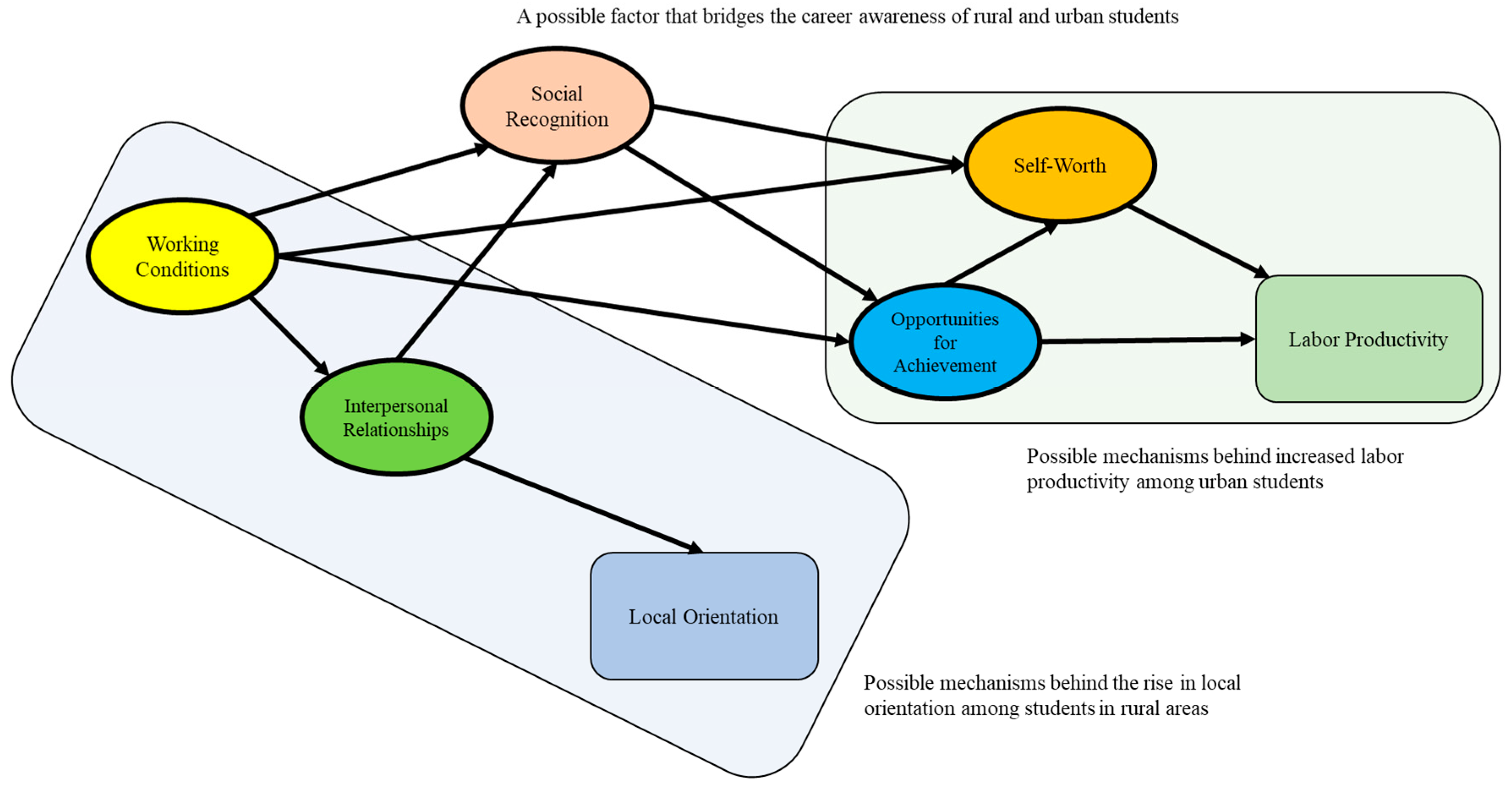
During the COVID-19 pandemic, students in rural areas experienced a shift in consciousness toward placing greater importance on working conditions. This shift was associated with an increased emphasis on interpersonal relationships and a stronger preference for local employment.
In contrast, students in urban areas showed a greater change toward valuing self-worth and opportunities for personal achievement—factors considered to be more closely linked to labor productivity after employment. Consequently, the pandemic appears to have widened the gap between rural and urban students in terms of work-related values, local orientation, and potential labor productivity.
To encourage both strong local commitment and high labor productivity among rural students, it is essential to foster a shift in awareness toward valuing social recognition—a bridging factor between the emphasis on interpersonal relationships and that on self-worth and personal achievement. In other words, promoting values such as “working for the good of others and society” may help connect these orientations and enhance both local engagement and productivity (Figure 4).

4.2. Limitations and Future Directions

Although this study examined changes in occupational consciousness using a scale that asked participants to retrospectively assess shifts in their values, the analysis is cross-sectional rather than longitudinal. Therefore, the findings reflect associations among variables rather than clear causal relationships. Furthermore, recalling attitudes from before the pandemic may have introduced recall bias. Future research employing longitudinal or experimental designs will be necessary to identify causal mechanisms underlying the observed relationships.
Moreover, the sample consisted exclusively of Japanese university students, which limits the generalizability of the findings to students in other cultural or educational contexts. Cultural norms, labor market structures, and pandemic responses may differ substantially across countries, potentially influencing students’ occupational values in distinct ways.
In addition, because the sample was drawn from a limited number of regions within Japan, there may be regional bias in the data, and the results may not fully represent national trends. In relation to this, the generalizability of the survey findings is limited due to the gender imbalance (72.1% male) and the focus solely on students enrolled in social science faculties at five universities. Caution should be taken in interpreting the results, as they do not necessarily represent all Japanese students or those in other academic disciplines.
Future studies should therefore include a more gender-, discipline-, and geographically diverse sample, and conduct cross-national comparisons to further validate and extend the present findings.

5. Conclusions

Based on a survey of university students, this study analyzed changes in students’ occupational consciousness during the COVID-19 pandemic. The results revealed a modest but distinct shift in students’ perceptions, particularly a stronger emphasis on working conditions. A comparison between students at urban universities (located in Japan’s three major metropolitan areas) and those at rural universities (in other prefectures) showed that rural students placed greater importance on working conditions than their urban counterparts. Furthermore, the results of the path analysis and logistic regression analysis suggested that this increased emphasis on working conditions was associated with a greater emphasis on good interpersonal relationships, which in turn was related to a stronger local employment orientation. This linkage implies that students’ growing appreciation for interpersonal relationships could promote local attachment—provided that they hold a positive view of the human relationships available in their home regions.
At the same time, the path analysis indicated that changes toward valuing interpersonal relationships were not directly connected to shifts toward valuing opportunities for achievement or self-worth, factors that are often associated with entrepreneurship and higher productivity. Moreover, changes toward valuing self-worth were found to be more pronounced among urban students than among rural students. In other words, during the pandemic, rural students tended to seek stability (e.g., favorable working conditions), whereas urban students tended to strengthen their orientation toward self-realization and growth. When rural students’ emphasis on stability was accompanied by a heightened appreciation for interpersonal warmth, it appeared to reinforce their attachment to their home regions. However, the pandemic also seems to have widened the psychological divide between urban and rural students, which could have long-term implications for regional development.
The path analysis further demonstrated that changes toward valuing interpersonal relationships could lead, via an increased emphasis on social recognition, to greater attention to achievement opportunities and self-worth. This finding suggests that fostering a broader, more socially oriented perspective among rural students—while maintaining their strong interpersonal ties—may help them remain in their local communities while also contributing to regional economic and social vitality. Educational practices and community engagement programs should therefore aim to integrate these dual perspectives: deep local connectedness and a broad, prosocial outlook. Nevertheless, considering that this study revealed correlations rather than causal relationships, the presumed effectiveness of promoting students’ social recognition to bridge the urban–rural value gap remains a hypothesis at this stage and requires further empirical validation in future research.
Previous research has shown that students who find employment in their home regions after graduation tend to remain there long-term, and that locally retained graduates can serve as catalysts for attracting new talent from outside the region. Thus, even if the heightened local orientation observed during the pandemic proves temporary, its impact on regional revitalization may be relatively enduring. Conversely, the potential deepening of the divide in occupational values between urban and rural students—intensified by the pandemic—could have continuing social consequences. Researchers should therefore continue to monitor post-pandemic shifts in students’ occupational values, contributing to discussions that may inform future disaster preparedness and labor policy.

Funding

This work was supported by JSPS KAKENHI (Grant Number JP22K01695).

Institutional Review Board Statement

The study was conducted in accordance with the Declaration of Helsinki, and the ethical approval was waived for this study. In accordance with Chapter 1 General Provisions, Part 3 (“Scope of Application”) of the Japanese government’s Ethical Guidelines for Human Genome/Gene Analysis Research and the Ethical Guidelines for Medical and Biological Research Involving Human Subjects (Integrated Revision, 2021) (https://www.mhlw.go.jp/stf/seisakunitsuite/bunya/hokabunya/kenkyujigyou/i-kenkyu/index.html, accessed on 27 October 2025), this study falls outside the scope of research requiring ethics review.

Informed Consent Statement

Informed consent was obtained from all subjects involved in the study.

Data Availability Statement

The data presented in this study are available on request from the corresponding author.

Acknowledgments

This paper is part of the results of the Research Committee on the Revitalization of Industrial Clusters and Regional Industrial Innovation organized by the Economic Research Institute, Japan Society for the Promotion of Machine Industry, Tokyo, Japan. I would like to thank the members of the committee for their valuable comments and the students who participated in the survey.

Conflicts of Interest

The author declares no conflicts of interest.

References

  1. Abe, N., Kitao, Y., & Narita, M. (2016). A study on recruitment activities of small and medium-sized enterprises in local cities: Based on a questionnaire survey of university students in the Chugoku, Shikoku, and Kyushu regions. Information Systems and Social Environment Research Report (IS), 2016(7), 1–8. Available online: https://ipsj.ixsq.nii.ac.jp/ej/?item_id=157912 (accessed on 20 March 2021). (In Japanese).
  2. Adachi, F. (2010). Current status and issues of telework: A study on home-based work and telecommuting. Kyoto Gakuen University Journal of Business Administration, 20(1), 49–70. Available online: http://id.nii.ac.jp/1455/00001042/ (accessed on 20 March 2021). (In Japanese).
  3. Aikebaier, S. (2024). COVID-19, new challenges to human safety: A global review. Frontiers in Public Health, 12, 1371238. [Google Scholar] [CrossRef] [PubMed]
  4. Cabinet Office. (2020). Government of Japan. Survey on changes in living consciousness and behavior under the influence of COVID-19. Available online: https://www5.cao.go.jp/keizai2/wellbeing/covid/pdf/shiryo2.pdf (accessed on 20 March 2021). (In Japanese)
  5. Cao, W., Fang, Z., Hou, G., Han, M., Xu, X., Dong, J., & Zheng, J. (2020). The psychological impact of the COVID-19 epidemic on college students in China. Psychiatry Research, 287, 112934. [Google Scholar] [CrossRef]
  6. CNN. (2020, December 26). Medical school applications surge during the COVID-19 pandemic: The “Fauci effect”. Available online: https://www.cnn.co.jp/usa/35164444.html (accessed on 20 March 2021).
  7. Cullinan, J., Flannery, D., Harold, J., Lyons, S., & Palcic, D. (2021). The disconnected: COVID-19 and disparities in access to quality broadband for higher education students. International Journal of Educational Technology in Higher Education, 18(1), 26. [Google Scholar] [CrossRef]
  8. DISCO Inc. (2021). Job hunting awareness survey as of February 1: Results of the CareerTasu Job Hunting 2022 student monitor survey. Available online: https://www.disc.co.jp/wp/wp-content/uploads/2021/02/202102_gakuseichosa_k-.pdf (accessed on 20 March 2021). (In Japanese).
  9. Dohlman, L., DiMeglio, M., Hajj, J., & Laudanski, K. (2019). Global brain drain: How can the Maslow theory of motivation improve our understanding of physician migration? International Journal of Environmental Research and Public Health, 16(7), 1182. [Google Scholar] [CrossRef]
  10. Elmer, T., Mepham, K., & Stadtfeld, C. (2020). Students under lockdown: Comparisons of students’ social networks and mental health before and during the COVID-19 crisis in Switzerland. PLoS ONE, 15(7), e0236337. [Google Scholar] [CrossRef]
  11. Freire-Gibb, L. C., & Nielsen, K. (2014). Entrepreneurship within urban and rural areas: Creative people and social networks. Regional Studies, 48(1), 139–153. [Google Scholar] [CrossRef]
  12. Furukawa, Y. (2003). Success factors of telework in Japan. Sogo Seisaku Kenkyu, (13), 25–40. Available online: http://hdl.handle.net/10236/8011 (accessed on 20 March 2021). (In Japanese).
  13. Furukawa, Y. (2010). Concerns and effects regarding telework: Results of a questionnaire survey. Sogo Seisaku Kenkyu, (35), 1–15. Available online: http://hdl.handle.net/10236/6581 (accessed on 20 March 2021). (In Japanese).
  14. Gakujo Co., Ltd. (2020, September). Comparison of awareness between 2022 graduating students and 20s job changers: Changes in preferred industries. (September 2020 ed.). Available online: https://prtimes.jp/main/html/rd/p/000000588.000013485.html (accessed on 20 March 2021). (In Japanese).
  15. Gefen, D., & Straub, D. W. (1997). Gender differences in the perception and use of e-mail: An extension to the technology acceptance model. MIS Quarterly, 21(4), 389–400. [Google Scholar] [CrossRef]
  16. Guilford, J. P. (1956). Fundamental statistics in psychology and education. McGraw Hill. [Google Scholar]
  17. Hair, J. F., Black, W. C., Babin, B. J., & Anderson, R. E. (2014). Multivariate data analysis (7th ed.). Pearson. [Google Scholar]
  18. He, F. (2024). The impact of the implementation of state of emergency declarations and the spread of infections during the COVID-19 pandemic on employment. Journal of Personal Finance and Economics, 60, 47–62. [Google Scholar] [CrossRef]
  19. Hikichi, H., Aoki, T., & Obuchi, K. (2009). Mechanisms of forming attachment to local communities: The effects of physical and social environments. Journal of Japan Society of Civil Engineers, D, 65(2), 101–110. (In Japanese) [Google Scholar] [CrossRef]
  20. Hioki, T. (2020, September 13). Reasons why the increase in “local-minded youth” cannot be welcomed uncritically: Choosing between “mental richness” and “economic prosperity”. Toyo Keizai Online. Available online: https://toyokeizai.net/articles/-/361935 (accessed on 20 March 2021). (In Japanese).
  21. Hirao, M., & Shigematsu, M. (2006). Local orientation and employment consciousness among university students. University Education, 3, 161–168. Available online: https://petit.lib.yamaguchi-u.ac.jp/14498 (accessed on 20 March 2021). (In Japanese).
  22. Ishiguro, I. (2007). Factors influencing Aomori high school graduates’ decision to attend universities outside the prefecture: A comparison between in-prefecture and out-of-prefecture students. Journal of Humanities and Social Sciences, 18, 69–79. Available online: https://hirosaki.repo.nii.ac.jp/?item_id=500 (accessed on 20 March 2021). (In Japanese).
  23. Iyo Bank Regional Economic Research Center. (2020, August 6). Survey on the attitudes of university students in Ehime Prefecture during the COVID-19 pandemic. Available online: http://www.iyoirc.jp/wp-content/uploads/2020/08/20-215.pdf (accessed on 20 March 2021). (In Japanese).
  24. Japan Finance Corporation Research Institute. (2015). The reality of small and medium-sized enterprises that support local employment and industry: A study of SMEs contributing significantly to job creation in regional areas. JFC Research Report, 2015-1. Available online: https://www.jfc.go.jp/n/findings/pdf/soukenrepo_15_06_09.pdf (accessed on 20 March 2021). (In Japanese)
  25. Jokura, R. (2018). Human resource policies promoting the spread of telework. Works Review, 13(2), 2–11. (In Japanese) [Google Scholar] [CrossRef]
  26. Kaplan, S., Engelsted, L., Lei, X., & Lockwood, K. (2018). Unpackaging manager mistrust in allowing telework: Comparing and integrating theoretical perspectives. Journal of Business and Psychology, 33(3), 365–382. [Google Scholar] [CrossRef]
  27. Keller, A. C., Meier, L. L., Gross, S., & Semmer, N. K. (2015). Gender differences in the association of a high quality job and self-esteem over time: A multiwave study. European Journal of Work and Organizational Psychology, 24(1), 113–125. [Google Scholar] [CrossRef]
  28. Kennedy, A. I., Mejía-Rodríguez, A. M., & Strello, A. (2022). Inequality in remote learning quality during COVID-19: Student perspectives and mitigating factors. Large-Scale Assessments in Education, 10(1), 29. [Google Scholar] [CrossRef]
  29. Kim, T., Mullins, L. B., & Yoon, T. (2021). Supervision of telework: A key to organizational performance. The American Review of Public Administration, 51, 0275074021992058. [Google Scholar] [CrossRef]
  30. Kokubun, K., & Yasui, M. (2021). Gender differences in organizational commitment and rewards within Japanese manufacturing companies in China. Cross Cultural & Strategic Management, 28(3), 501–529. [Google Scholar] [CrossRef]
  31. Komoda, T. (2007). Relationship between occupational values and career choice behavior among university students. Japanese Journal of Adolescent Psychology, 18, 1–17. Available online: https://www.jstage.jst.go.jp/article/jsyap/18/0/18_KJ00004556976/_article/-char/ja/ (accessed on 20 March 2021). (In Japanese).
  32. Koyama, O. (2017). Is global orientation incompatible with local career orientation? Journal of University Evaluation Research, 16, 87–97. Available online: https://www.juaa.or.jp/media/files/pdf/publication/evaluation/no_16/backnumber_14.pdf (accessed on 20 March 2021). (In Japanese).
  33. Kutsuwada, R. (2009). Local orientation and social inclusion/exclusion: A comparative case study of graduates from a private local university. In A. Higuchi (Ed.), Comparative analysis of youth issues: East Asian international comparison and domestic regional comparison (Vol. 3, pp. 151–170). Faculty of Sociology, Hosei University. (In Japanese) [Google Scholar]
  34. Lee, B. T. F., & Sims, J. P. (2023). Maslow’s hierarchy of needs: A framework for understanding China’s soes, smes and Decentralisation. China Report, 59(4), 402–421. [Google Scholar] [CrossRef]
  35. Liñán, F., Urbano, D., & Guerrero, M. (2011). Regional variations in entrepreneurial cognitions: Start-up intentions of university students in Spain. Entrepreneurship and Regional Development, 23(3–4), 187–215. Available online: https://idus.us.es/bitstream/handle/11441/70213/Regional_variations_in_entrepreneurial_cognitions.pdf?sequence=1 (accessed on 20 March 2021). [CrossRef]
  36. Martin, X., Salomon, R. M., & Wu, Z. (2010). The institutional determinants of agglomeration: A study in the global semiconductor industry. Industrial and Corporate Change, 19(6), 1769–1800. [Google Scholar] [CrossRef]
  37. Maslow, A. H. (1943). A theory of human motivation. Psychological Review, 50(4), 370–396. [Google Scholar] [CrossRef]
  38. Mynavi. (2020a). Survey on job consciousness of 2021 university graduates. Available online: https://career-research.mynavi.jp/wp-content/uploads/2021/03/21_Uturn.pdf (accessed on 20 March 2021). (In Japanese).
  39. Mynavi. (2020b). Survey on U-turn and local employment among 2021 university graduates. Available online: https://career-research.mynavi.jp/wp-content/uploads/2020/04/2021_shusyokuishiki.pdf (accessed on 20 March 2021). (In Japanese).
  40. National Federation of University Co-operative Associations. (2020). Emergency survey for university and graduate students: Summary of results. Available online: https://ksnet.u-coop.net/2020/05/ce4d15100e61c45b282591b6124794d15ab15939.pdf (accessed on 20 March 2021). (In Japanese).
  41. Ogata, M. (2011). An empirical study on university students’ occupational orientation: From a questionnaire survey of job-seeking students. Konan Business Review, 52(2), 51–81. (In Japanese) [Google Scholar] [CrossRef]
  42. Patsali, M. E., Mousa, D. P. V., Papadopoulou, E. V., Papadopoulou, K. K., Kaparounaki, C. K., Diakogiannis, I., & Fountoulakis, K. N. (2020). University students’ changes in mental health status and determinants of behavior during the COVID-19 lockdown in Greece. Psychiatry Research, 292, 113298. [Google Scholar] [CrossRef]
  43. Small and Medium Enterprise Agency. (2017). Employment situation and labor shortages in SMEs. White paper on small and medium enterprises in Japan 2017, part 1, chapter 3. Available online: https://www.chusho.meti.go.jp/pamflet/hakusyo/H29/PDF/h29_pdf_mokujityuu.html (accessed on 20 March 2021). (In Japanese)
  44. Son, C., Hegde, S., Smith, A., Wang, X., & Sasangohar, F. (2020). Effects of COVID-19 on college students’ mental health in the United States: Interview survey study. Journal of Medical Internet Research, 22(9), e21279. [Google Scholar] [CrossRef]
  45. Sugiyama, S. (2012). Local orientation and career development among university students. Humanities Research, 123, 123–140. Available online: https://barrel.repo.nii.ac.jp/?item_id=574 (accessed on 20 March 2021). (In Japanese).
  46. Tannen, D. (1994). Gender and discourse. Oxford University Press. [Google Scholar]
  47. Ushirokawa, M. (2019). Trends and determinants of interregional mobility among young people: Inter-prefectural mobility at university entrance and first employment. Kyoto Sangyo University Economic Review, 6, 1–42. Available online: https://ksu.repo.nii.ac.jp/?item_id=10249 (accessed on 20 March 2021). (In Japanese).
  48. von Proff, S., Duschl, M., & Brenner, T. (2017). Motives behind the mobility of university graduates–A study of three German universities. Review of Regional Research, 37(1), 39–58. [Google Scholar] [CrossRef]
  49. Wang, B., Liu, Y., Qian, J., & Parker, S. K. (2021). Achieving effective remote working during the COVID-19 pandemic: A work design perspective. Applied Psychology, 70(1), 16–59. [Google Scholar] [CrossRef]
  50. Worthley, R., MacNab, B., Brislin, R., Ito, K., & Rose, E. L. (2009). Workforce motivation in Japan: An examination of gender differences and management perceptions. The International Journal of Human Resource Management, 20(7), 1503–1520. [Google Scholar] [CrossRef]
  51. Yamawaki, N. (2012). Within-culture variations of collectivism in Japan. Journal of Cross-Cultural Psychology, 43(8), 1191–1204. [Google Scholar] [CrossRef]
  52. Yonehara, T., & Tanaka, D. (2015). Relationship between local orientation and psychological characteristics: Toward the construction of a new developmental model. Regional Studies, Faculty of Regional Sciences, Tottori University, 11(3), 139–151. Available online: https://repository.lib.tottori-u.ac.jp/records/222 (accessed on 20 March 2021). (In Japanese).
  53. Zhao, L., Cao, C., Li, Y., & Li, Y. (2022). Determinants of the digital outcome divide in E-learning between rural and urban students: Empirical evidence from the COVID-19 pandemic based on capital theory. Computers in Human Behavior, 130, 107177. [Google Scholar] [CrossRef]
  54. Zheng, S., & Yan, Y. (2024). Changes in employment psychology of Chinese university students during the two stages of COVID-19 control and their impacts on their employment intentions. Frontiers in Psychology, 15, 1447103. [Google Scholar] [CrossRef]
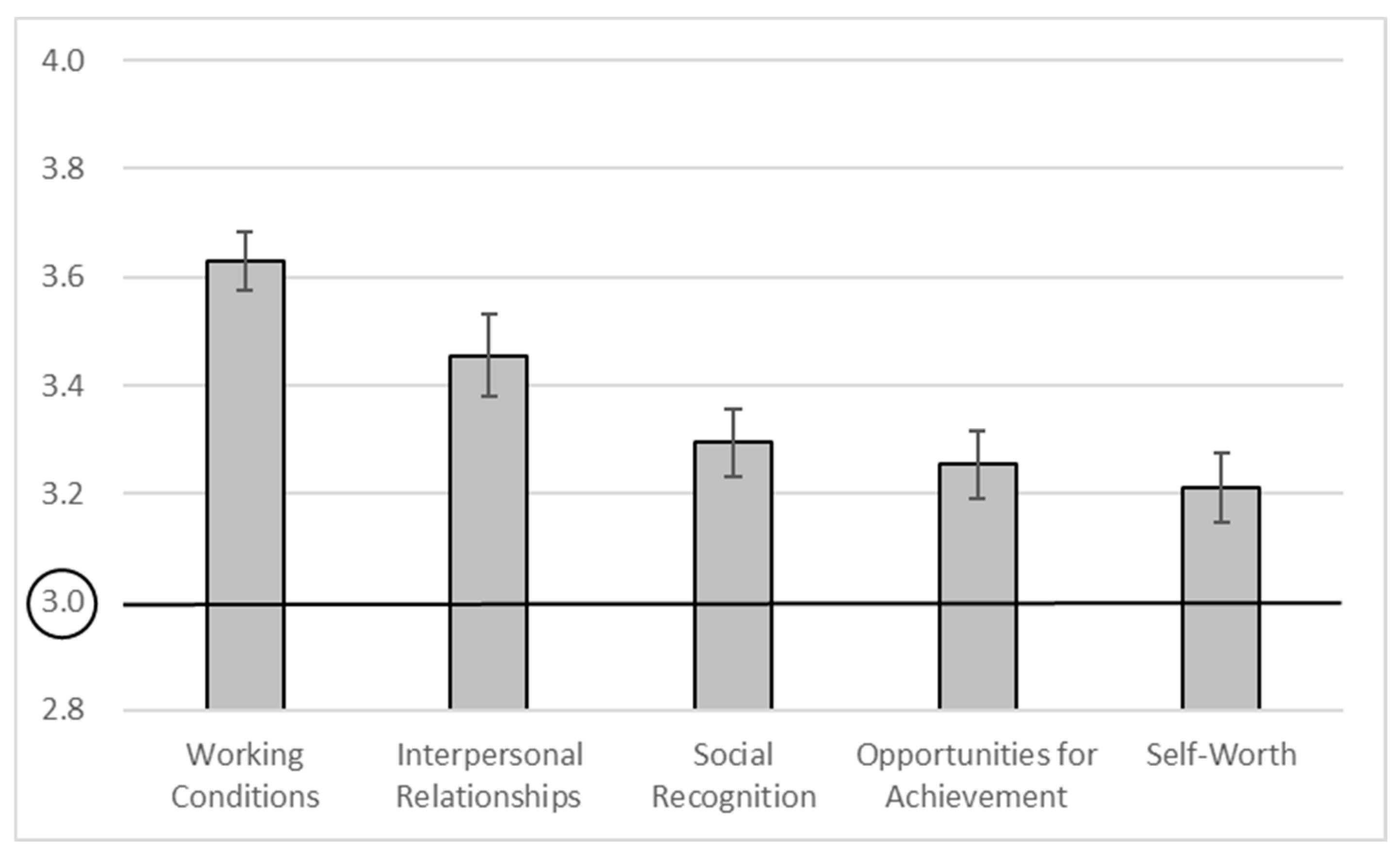
Figure 1. Comparison of mean values by variable. Note. Error bars represent 95% confidence intervals.
Psycholint 07 00103 g001
Figure 2. Changes in occupational awareness: Results of path analysis. Note. Based on path analysis. Variables with higher mean scores (indicating greater change) were assumed to explain those with lower scores (indicating smaller change), and were arranged accordingly. N = 444. *** p < 0.01. Control variables (gender, academic year, hometown, and university location) are omitted from the figure. Goodness-of-fit indices: χ2 = 32.118; df = 26; root mean square error of approximation (RMSEA) = 0.023; probability of close fit (PCLOSE) = 0.975; goodness of fit index (GFI) = 0.987; adjusted goodness of fit index (AGFI) = 0.967; normed fit index (NFI) = 0.980; comparative fit index (CFI) = 0.996.
Psycholint 07 00103 g002
Figure 3. Changes in career consciousness by university location (significance indicated). Note. Scores range from 1 to 5, with higher scores indicating greater changes. *** p < 0.01. Error bars indicate 95% confidence intervals.
Psycholint 07 00103 g003
Figure 4. Findings of the Present Study. Note. Although “labor productivity” is not a variable used in this study, it is positioned based on findings from previous research.
Psycholint 07 00103 g004
Table 1. Respondent characteristics by university location.
UrbanRural
Sex
Male207165
Female42102
Year in University
First-year student4110
Second-year student7150
Third-year student15080
Fourth-year student5127
Preferred Type of Employment after Graduation
Work for a large enterprise8626
Work for a small or venture company60115
Work as a public servant1056
Take over or help with family business42
Not decided yet7757
Other95
Preferred Industry after Graduation
Agriculture, forestry, fisheries, or mining12
Construction67
Manufacturing1120
Electricity, gas, heat supply, or water31
Information and communication1612
Transportation or postal services51
Wholesale or retail trade1616
Finance or insurance3419
Real estate or leasing157
Academic research, professional, or technical services43
Service industry2714
Education or learning support35
Medical or welfare services22
National government employee (excluding educational positions)37
Local government employee (excluding educational positions)639
Enter graduate school12
Not decided yet5966
No particular preference for industry2433
Other (please specify)72
Preferred Occupation after Graduation
Management or business planning4026
Sales or marketing7933
Basic or technical research10
Engineering or product design51
Product planning or development1721
Purchasing or procurement10
Manufacturing, production, or quality control311
Research, advertising, or promotion89
Information systems or IT development64
Logistics or distribution31
Public relations or editing318
Human resources, general affairs, or accounting1123
Enter graduate school33
Not decided yet3764
No particular preference for occupation1628
Other (please specify)614
Place of Origin
Urban area1968
Rural area51249
Overseas21
Relationship between Place of Origin and University Location
Same as university location112208
Different from university location13450
Preferred Employment Location
Urban area21342
Rural area20213
Overseas53
Orientation toward Local or Urban Employment
Narrow local orientation (prefers employment within home prefecture)120183
Broad local orientation (prefers employment within home or neighboring prefecture)4822
Urban orientation (prefers employment in metropolitan areas)5835
Other1815
Table 2. Results of the factor analysis.
Factor 1:
Working
Conditions
Factor 2:
Interpersonal
Relationships
Factor 3:
Self-Worth
Factor 4:
Social
Recognition
Factor 5:
Opportunities for Achievement
Working hours are flexible (e.g., flextime system).0.6310.0420.0720.0850.177
A stable income can be obtained.0.5960.2110.0780.117−0.054
Employee benefits are well provided.0.5940.2030.0990.0640.146
Paid vacation days are sufficient.0.5830.1550.1440.0300.020
There are few job transfers.0.5430.1990.1090.104−0.047
Overtime work is limited.0.5410.1760.1550.0520.016
Remote work is available.0.540−0.100−0.0020.0370.280
The workplace is located in my hometown.0.5070.136−0.0420.2170.095
The workplace is conveniently accessible.0.4290.2260.0450.0750.097
Side jobs are permitted.0.423−0.0630.001−0.0390.357
I can build a good atmosphere with my colleagues.0.2290.8680.1170.1160.083
I can establish mutual trust with people at the workplace.0.2030.8070.0880.1370.064
I can feel connected to others through my work.0.2530.7910.1070.1830.083
I am accepted by people around me at work.0.3040.7420.1340.1790.072
I can engage in work that expands my potential.0.1220.0350.7680.1100.193
I can engage in work that makes use of my individuality.0.0870.1260.7450.1420.137
I can engage in work that utilizes my abilities.0.1470.0570.7070.1620.070
I can engage in work that contributes to my personal growth.0.0640.0670.6570.2750.227
I can engage in work that gives me a sense of fulfillment.0.0720.1880.6160.2640.217
I can engage in work that is recognized by society.0.1200.1640.2770.7590.107
I can engage in work that earns respect from others.0.1700.1130.1530.7380.136
I can engage in work that is highly valued by the public.0.1270.0690.2620.6790.039
I can engage in work that contributes to society.0.0940.2270.1660.5630.129
I can become independent in the future.0.066−0.0190.1770.0540.765
I have opportunities to start my own business.0.1200.0880.2440.1100.757
I can gain experience in a wide variety of jobs.0.1450.1850.1630.1670.601
I can make use of new ideas that I have conceived.0.1730.1550.3040.1870.489
Note. Values represent factor loadings; italicized bold values indicate loadings of 0.40 or higher.
Table 3. Descriptive statistics for changes in occupational attitudes.
MeanSD95%CI
Lower
95%CI
Upper
Working ConditionsInterpersonal RelationshipsSocial RecognitionOpportunities for AchievementSelf-Worth
Working Conditions3.6280.5353.5753.681(0.814)
Interpersonal Relationships3.4540.7523.3803.5290.460 **(0.910)
Social Recognition3.2940.6143.2333.3550.282 **0.305 **(0.841)
Opportunities for Achievement3.2540.6183.1933.3150.312 **0.263 **0.319 **(0.773)
Self-Worth3.2120.6363.1493.2740.164 **0.248 **0.440 **0.440 **(0.855)
Note. ** p < 0.05. Values in parentheses indicate Cronbach’s α reliability coefficients. SD = standard deviation. Bold italic values indicate correlation coefficients greater than 0.40.
Table 4. Changes in occupational awareness by university location.
UrbanRural
MeanSDMeanSDt
Working Conditions3.450.5643.750.463−6.385***
Interpersonal Relationships3.470.8333.440.6970.366
Social Recognition3.300.6833.270.5640.584
Opportunities for Achievement3.310.7123.240.5491.208
Self-Worth3.350.7083.130.5493.749***
Frequency245 255
Note. The values range from 1 to 5, with higher values indicating greater changes. *** p < 0.01.
Table 5. Changes in Career Consciousness by Gender and University Location.
Male × UrbanMale × RuralFemale × UrbanFemale × Rural
MeanSDMeanSDMeanSDMeanSDF
Working Conditions3.450.5623.770.4673.480.5763.720.45713.663***
Interpersonal Relationships3.450.8213.490.6963.570.8913.380.6970.711
Social Recognition3.320.6963.330.5943.210.6113.170.5001.857
Opportunities for Achievement3.350.7153.320.5663.150.6813.130.5043.562**
Self-Worth3.360.7103.170.5583.310.7043.080.5365.093***
Frequency202 154 42 101
Note. Scores range from 1 to 5, with higher scores indicating greater changes. *** p < 0.01, ** p < 0.05. The label before “×” indicates gender, and the label after “×” indicates university location.
Table 6. Changes in Occupational Awareness by Hometown × University Location.
Urban → UrbanUrban → RuralRural → UrbanRural → Rural
MeanSDMeanSDMeanSDMeanSDF
Working Conditions3.450.5543.290.4223.450.6043.760.45914.816***
Interpersonal Relationships3.490.8013.030.9203.380.9633.450.6871.052
Social Recognition3.280.6812.840.4813.440.6693.280.5642.287*
Opportunities for Achievement3.270.6952.930.7733.440.7493.240.5412.068
Self-Worth3.340.6983.330.5953.370.7603.130.5524.637***
Frequency194 8 49 238
Note. Scores range from 1 to 5, with higher scores indicating greater changes. *** p < 0.01, * p < 0.10. The label before “→” refers to hometown, and the label after “→” refers to university location.
Table 7. Local and Urban Orientation by Hometown × University Location.
Urban → UrbanUrban → RuralRural → UrbanRural → Rural
Narrow local108611176
orientation55.10%75.00%23.90%71.50%
Broad local440422
orientation22.40%0.00%8.70%8.90%
Urban2902835
orientation14.80%0.00%60.90%14.20%
Others152313
7.70%25.00%6.50%5.30%
χ2=87.605 ***
Note. The area before the arrow (“→”) indicates the hometown, and the area after the arrow indicates the university location. The upper row shows the frequency, and the lower row shows the percentage. “Narrow local orientation” refers to the intention to work in one’s home prefecture. “Broad local orientation” refers to the intention to work in a prefecture adjacent to one’s home prefecture. “Urban orientation” refers to the intention to work in one of the three major metropolitan areas. *** p < 0.01.
Table 8. Results of Logistic Regression Analysis with Narrow Local Orientation as the Dependent Variable (Students from Rural Areas Attending Universities in Rural Areas).
Coefficient (B)Standard Error (SE)Odds Ratio (Exp(B))95% Confidence Intervalp-Value
Intercept−0.6151.2810.5410.044~6.6600.631
Male a0.5730.3561.7700.884~3.5600.107
Work for a large company b −0.9030.5330.4060.143~1.1500.090 *
Work for a small or venture company b0.8710.3992.3901.090~5.2200.029 **
Real estate/goods rental industry c1.6511.2555.2100.445~61.0000.188
Local government official (excluding teachers) c1.2030.6293.3300.971~11.4000.056 *
Management/administrative planning d1.1000.6753.0000.800~11.3000.103
Research/advertising/public relations d−1.4690.9850.2300.033~1.5900.136
Public relations/editing d 1.5971.0904.9400.584~41.8000.143
Human relations e 0.6980.2842.0101.150~3.5100.014 **
Opportunities for achievement e−0.5420.3420.5820.298~1.1400.113
Notes: Variable selection was performed using the stepwise method based on the Akaike Information Criterion (AIC). a A dummy variable coded as 1 for male and 0 for female. b A dummy variable coded as 1 if the option was selected in “Q4. What kind of employment do you plan to pursue immediately after graduation? (Select one),” and 0 otherwise. c A dummy variable coded as 1 if the option was selected in “Q5. In which industry do you wish to work immediately after graduation? (Select one),” and 0 otherwise. d A dummy variable coded as 1 if the option was selected in “Q6. What type of occupation do you wish to engage in immediately after graduation? (Select one),” and 0 otherwise. e A continuous variable ranging from 1 to 5. ** p < 0.05, * p < 0.10.
Table 9. Results of Logistic Regression Analysis with Narrow and Broad Local Orientation as the Dependent Variables (Students from rural areas attending universities located in rural areas).
Coefficient (B)Standard Error (SE)Odds Ratio (Exp(B))95% Confidence Intervalp-Value
Intercept−2.9521.1940.0520.005~0.5420.013 **
Third-year student f1.2300.5273.4201.220~9.6100.020 **
Work for a large company b −0.9590.5700.3830.125~1.1700.092 *
Work for a small or venture company b1.0430.4862.8401.090~7.3500.032 **
Finance/Insurance industry c −1.1140.6990.3280.083~1.2900.111
National government employee (excluding educational positions) c1.7511.3155.7600.438~75.7000.183
Local government employee (excluding educational positions) c0.9950.7332.7100.643~11.4000.175
Management/Business planning d 2.1201.0898.3300.985~70.4000.052 *
Research/Advertising/Promotion d−1.6541.0920.1910.023~1.6300.130
Public relations/Editing d1.4721.1534.3600.455~41.7000.202
No particular preference for occupation d1.3040.8523.6800.693~19.6000.126
Human relations e1.0480.3422.8501.460~5.5800.002 ***
Notes: Variable selection was performed using the stepwise method based on the Akaike Information Criterion (AIC). b: Dummy variable coded as 1 if selected in “Q4. What kind of work style do you expect immediately after graduation?” and 0 otherwise. c: Dummy variable coded as 1 if selected in “Q5. In which industry do you wish to work immediately after graduation?” and 0 otherwise. d: Dummy variable coded as 1 if selected in “Q6. What type of occupation (job content) do you wish to engage in immediately after graduation?” and 0 otherwise. e: Variable measured on a five-point scale (from 1 to 5). f: Dummy variable coded as 1 for third-year students and 0 for others. *** p < 0.01, ** p < 0.05, * p < 0.10.
Disclaimer/Publisher’s Note: The statements, opinions and data contained in all publications are solely those of the individual author(s) and contributor(s) and not of MDPI and/or the editor(s). MDPI and/or the editor(s) disclaim responsibility for any injury to people or property resulting from any ideas, methods, instructions or products referred to in the content.