1. Introduction
Diabetes is a growing health concern among individuals across the globe, which has a significant clinical and economic burden all over the world. It causes serious microvascular and macrovascular complications such as blindness, neurodegeneration, kidney failure, heart disease, stroke and non-traumatic lower-limb amputations, which greatly worsen the quality of life and risk mortality [
1,
2]. International Diabetes Federation (IDF) Atlas, 11th edition, states that in the year 2024, around 589 million adults aged 20–79 years of the world were living with diabetes, with the figures expected to rise to more than 850 million by 2050 [
1]. The global death toll of diabetes was estimated to be about 34 million each year in 2024 alone, with a significant number of them being premature (IDF, 2024) [
1]. It is estimated that the global diabetes expenditure is over 1 trillion annually and is 12 percent of total healthcare spending. Type 1 Diabetes (T1DM) is caused by pancreatic β-cell autoimmune destruction, which causes absolute insulin deficiency and occurs most often in children, adolescents and young adults, although it can occur at any age. Type 2 Diabetes (T2DM), on the contrary, is a disease that is typified by insulin resistance, which is progressive in nature with a dysfunctional β-cell. The most prevalent is T2DM, with a prevalence of 90 to 95 percent of all diabetes cases [
1,
2]. There are factors of risk, namely aging, sedentary lifestyle, urbanization, overweight, obesity and unhealthy diet. Collectively, the trend of growing prevalence, lifelong pathology, heavy burden of complications and the growth in the economic costs of the disease demand the implementation of effective preventive measures, early stage of diagnosis and new forms of therapeutic intervention to stop the epidemic of diabetes worldwide [
1,
2].
Human insulin is a tiny peptide hormone weighing about 5.8 kDa, which is generated and released by the pancreatic islet 5-cells. It is a disulfide-linked polypeptide in the form of two chains, A (21 amino acids) and B (30 amino acids). Although insulin has a therapeutic value, insulin compounds are not very favorable to the maintenance of cold-chain and, thus, insulin must be maintained at low temperatures, usually at 2 to 80 °C, during the manufacturing, transportation and storage phases to ensure that its biological activity is preserved [
3]. This high-temperature specification poses a huge logistical problem, especially in the developing and resource-constrained areas, where proper refrigeration and distribution facilities may be insufficient.
Clinical insulin requirements vary by diabetes type and stage of disease progression. In type 1 diabetes, where endogenous insulin production is mainly absent, typical full replacement needs are approximately 0.5–1.0 units per kilogram of body weight per day. During the early phase of the disease, often referred to as the partial remission or “honeymoon” period, residual beta-cell activity allows lower exogenous insulin doses, generally 0.2–0.6 units/kg/day [
4]. In type 2 diabetes, progressive beta-cell dysfunction occurs alongside insulin resistance, which can substantially increase insulin demand over time. As a result, total daily insulin requirements in some individuals with type 2 diabetes may exceed 1 unit/kg/day. When insulin therapy is initiated, basal insulin is commonly started at a fixed dose of 10 units per day or at a weight-based dose of 0.1–0.2 units/kg/day, with subsequent dose adjustments based on glycemic response. These values provide a useful clinical benchmark when interpreting insulin delivery outcomes reported for novel transdermal systems [
4]. In a large U.S. cohort of adults with type 2 diabetes using multiple daily injections (MDI), the mean total daily insulin dose (TDD) was 96 units, with a median of 80 units, corresponding to an average of 1.0 units/kg/day [
5]. In another cohort of intensively treated Chinese patients with type 2 diabetes receiving basal–bolus therapy, the mean TDD was 38.22 IU/day, equivalent to 0.58 IU/kg/day, with basal insulin accounting for approximately 23% of the total daily dose [
6]. These clinical dosing ranges highlight the magnitude of systemic insulin exposure typically required to achieve glycemic control and serve as a therapeutic reference point when interpreting reported glucose reductions, transdermal flux values, or duration of hypoglycemic effects in experimental transdermal insulin delivery studies.
Existing insulin therapy of diabetes is largely based on subcutaneous insulin injections with the help of syringes, pen, or continuous infusion devices, which, although they are indispensable in the process of glycemic control, have a number of important limitations affecting the experience of patients and their treatment outcomes [
7]. Repeated injections may also result in pain and discomfort. Although the pain perception has declined with the development of shorter, thinner needles, the feeling of injections and the feeling of phobia to needles still persist. Thus, psychological insulin resistance and low adherence to the insulin regimen are frequent fallacies in most patients with diabetes [
7].
The inconvenience caused by a need to take injections frequently (in many cases, more than once a day) and the embarrassment of administering insulin in social areas also contribute to the inconvenience, which disrupts lifestyle and thus leads to more inadequate adherence [
8]. Lipohypertrophy, induration, ecchymosis and risk of infection may also be caused by improper technique and repeated injections in the same location, which not only affect comfort but also modify the insulin intake and lead to the variation in plasma glucose levels [
7,
8].
In addition, insulin action through subcutaneous injection is associated with the pharmacokinetic profile, which is slower and erratic in absorption, resulting in glucose variability, unpredictable hypoglycemia and difficulties in matching insulin activity to physiological requirements, thereby making it harder to optimally regulate glycemic regulation [
9,
10]. All these combine to highlight the necessity of better delivery technologies and patient-centered care to achieve better outcomes of insulin therapy, as these factors, such as pain and needle fear, poor adherence, injection site complications and pharmacokinetic limitations, persist.
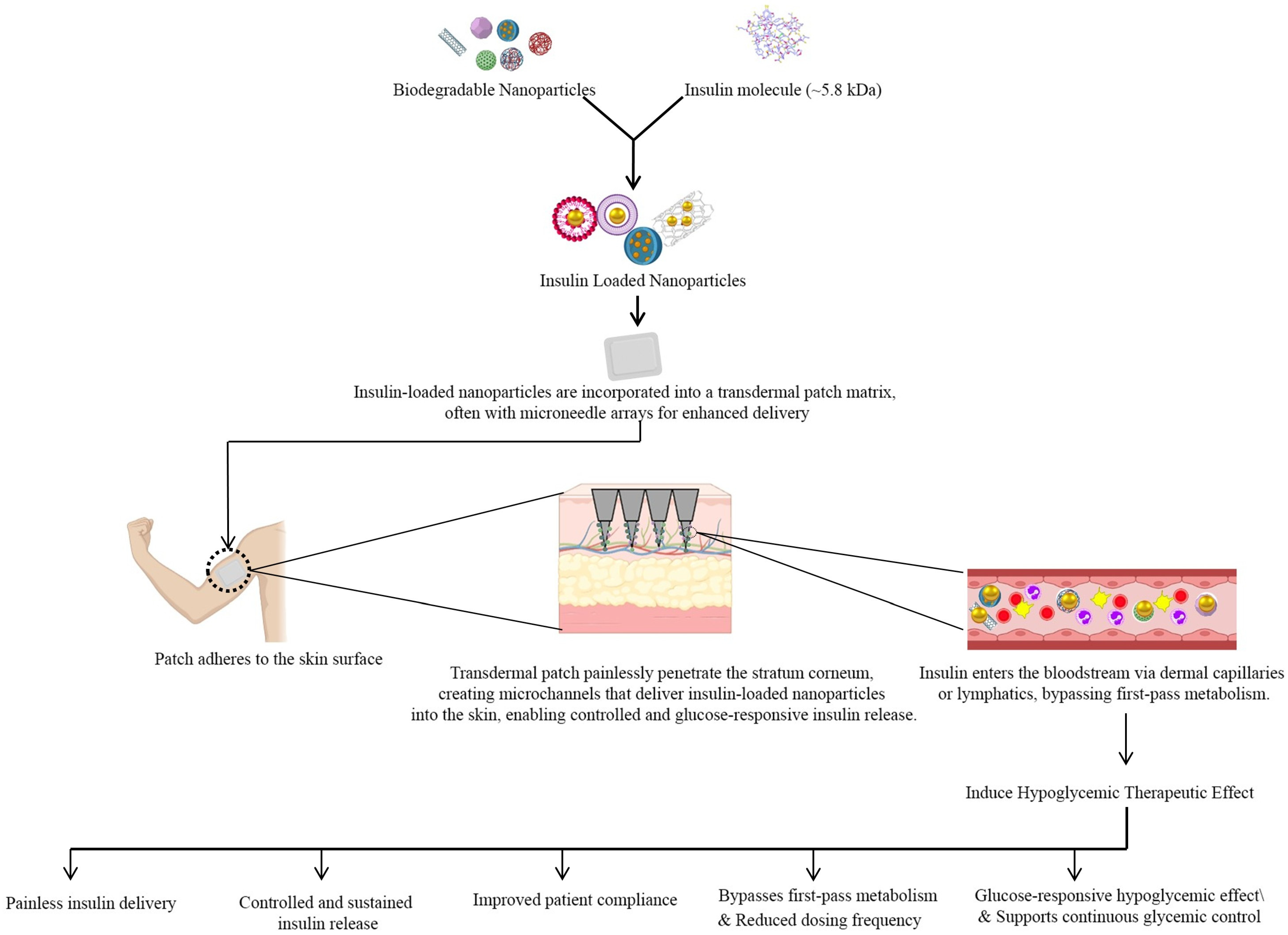
Insulin transdermal delivery is actively being developed as an alternative non-invasive route to subcutaneous delivery since it has the potential to significantly enhance patient comfort and long-term compliance, as well as overcome multiple physiological and pharmacokinetic drawbacks of traditional methods of drug administration [
11]. As opposed to injectable therapeutic agents, transdermal systems such as patches, ionic liquid-mediated delivery, polymeric carriers and microneedle (MN)-mediated delivery allow the delivery of insulin across the skin directly to the systemic circulation, bypassing the gastrointestinal (GI) environment, avoiding enzymatic degradation and first-pass hepatic metabolism, which dramatically undermine the bioavailability of orally administered peptide therapeutics [
12]. Recent studies have shown that improved transdermal preparations are capable of greatly increasing insulin diffusion across the stratum corneum (SC) and lead to controlled or sustained insulin release and an improved and more stable plasma insulin response with extended periods of time than regular injections, leading to improved glycemic regulation and reducing the frequency of dosing [
12]. Transdermal delivery also lowers inter- and intra-patient variability in insulin exposure and maximizes the proportion of biologically active insulin reaching the circulation because it circumvents hepatic and GI degradation [
13]. Moreover, the transdermal system is needle-free and convenient; thus, injection-related pain, and psychological barriers are reduced, making it a more patient-friendly injection method that can contribute to increasing adherence, which is a critical component of reaching optimal glycemic results in life-long insulin therapy [
12]. Taken together, these benefits, including non-invasive administration, GI degradation and first-pass metabolism inhibition, enhanced bioavailability and the ability to sustain drug release, give a solid case on why transdermal insulin delivery systems should continue to be developed and be promoted as valid options in diabetes management.
Nanomedicine has become an innovative approach to overcome the daunting barrier of the SC, the outermost layer of skin impeding the entry of most therapeutic molecules, by using engineered nanocarriers, including nanoparticles (NPs), liposomes, ectosomes, nano-emulsions and deformable vesicles, which interact with and temporarily disaggregate the lipid matrix of the skin, allowing better penetration of most drug molecules and improved fluxation of drugs into viable epidermal and dermal tissues [
14,
15,
16]. Such nanoscale systems (usually less than 100 nm) enhance drug solubility, shield encapsulated agents against degradation and take advantage of these high surface-area to volume ratios to maximize contact with lipids and proteins in the skin and to deliver drugs systemically, which is hard to achieve with traditional formulations [
14,
15,
16]. Notably, nanocarriers may be incorporated to be released slowly and gradually, and therapeutic levels can be delivered over prolonged durations, which minimizes the number of doses required. Meanwhile, surface modifications and reactive materials can be used to achieve stimuli-activated release in response to physiological changes, which, in turn, can form the basis of the so-called smart delivery systems with enhanced pharmacokinetic characteristics. Moreover, NPs that are combined with physical enhancers like MNs, iontophoresis and electroporation enhance the level of skin permeability and offer the capability of delivering biomolecules in a spatially and temporally regulated manner, expanding the applicability of transdermal platforms to large biomolecules, such as insulin. Taken together, these developments testify to the direct challenges that nanotechnology faces in terms of a skin barrier and how nanotechnology can be used to create a responsive, efficient and patient-friendly transdermal delivery infrastructure that can be used to enhance therapeutic responses and compliance in chronic diseases like diabetes [
14,
15,
16].
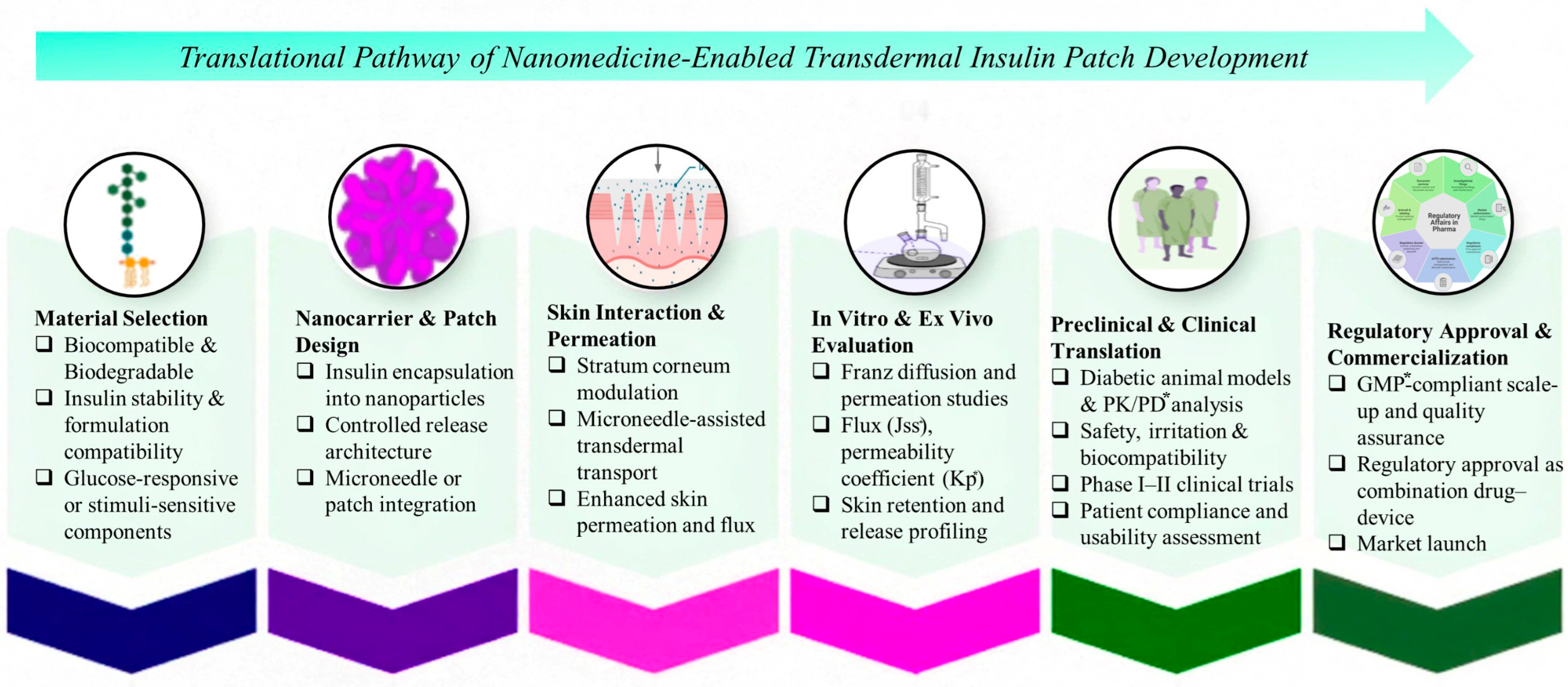
In this review, the current state of knowledge on the use of nanomedicine in insulin delivery across the skin will be discussed to highlight the concepts of design, materials involved and mechanisms of permeation. In addition, critical technological advancements will be highlighted, including the innovative delivery systems such as the MN-assisted delivery system, while reviewing the biological, translational and regulatory hurdles that must be overcome.
5. Material Innovations in Nanoparticle Systems
Innovative materials have played a central role in advancing NP-based transdermal insulin delivery, particularly through the development of tunable polymeric and lipid-based systems. PNPs, derived from natural or synthetic polymers, are especially valuable because their physicochemical properties can be designed to enhance skin interaction, drug protection, and controlled release; for example, chitosan-based NPs exploit the polymer’s mucoadhesive and permeation-enhancing characteristics to facilitate insulin transport across the skin while encapsulating the peptide within protective core–shell structures that can support pH-responsive release in the dermal environment [
16,
82]. Lipid-based NPs such as SLNs and NLCs also show promise, as their lipid matrices resemble skin lipids, promoting close SC interaction and sustained insulin release, while hybrid lipid–polymer composites further improve stability and drug loading efficiency [
82]. Although inorganic NPs, such as gold and silica, have been explored for their structural robustness, concerns about long-term accumulation have limited their application in transdermal systems [
82]. Emerging strategies additionally include amphiphilic, skin-permeable polymers that form NPs capable of diffusing through intercellular pathways without mechanical assistance, as well as bioinspired carriers based on natural polymers such as alginate and hyaluronic acid that mimic extracellular matrix components to enhance biocompatibility and permeation. Collectively, these material innovations aim to overcome the dual challenges of poor skin permeability and insulin instability, thereby supporting the clinical translation of non-invasive transdermal insulin therapies [
71].
5.1. Selection Criteria for Nanoparticle Materials
Strict considerations determine the selection of materials for NPs used to deliver insulin transdermally, ensuring safety, efficacy, and manufacturability. Biocompatibility, biodegradability, and scalability are essential considerations that can be measured using preclinical and regulatory frameworks.
5.1.1. Biocompatibility
The most crucial consideration is biocompatibility to avoid adverse immune response, inflammation, or toxicity when in contact with the skin. They must be minimally cytotoxic, hemocompatible, and non-immunogenic, as commonly determined by in vitro (e.g., MTT cell viability test) and in vivo testing. NPs used in transdermal systems can be designed to blend with skin tissues without affecting their barrier function over the long term. Natural polymers, including chitosan and hyaluronic acids, are also preferred due to their natural biocompatibility, because they are biologically obtained and have low antigenicity [
83,
84,
85]. Synthetic materials, including PLGA, are selected based on their prior experience in inhibiting complement activation and their ability to induce cellular uptake without adverse effects. The selection criteria are surface charge (preferably neutral or slightly positive to allow skin interactions), size (preferably 50–200 nm to maximize permeation), and zeta potential to maintain stability under physiological conditions. Comprehensive biocompatibility testing is emphasized as a regulatory requirement to reduce risks such as allergic reactions, as outlined in ISO 10993 standards [
83,
84,
85].
5.1.2. Biodegradability
Biodegradability ensures that NPs are broken down into non-toxic byproducts that can be eliminated from the body, preventing bioaccumulation. It is a critical criterion in chronic applications, where repeated exposure is required (i.e., insulin delivery). The hydrolysis or enzymatic degradation of biodegradable materials occurs in a controlled breakage, releasing insulin as they undergo metabolism or excretion. Polymers such as PLGA and polycaprolactone (PCL) are used because of their adjustable degradation rates, which can be tailored to therapeutic requirements by varying molecular weight or copolymer content [
86]. Selection will be based on degradation kinetics under simulated dermal conditions, with products of the process being biocompatible and not inducing acidosis [
86]. In general, non-biodegradable substitutes, including certain metallic NPs, are not preferred unless they are designed for clearance, as they pose a long-term hazard due to their retention. Altogether, biodegradability leads to better safety profiles and facilitates sustained release, making it a foundational criterion for material vetting [
86].
5.1.3. Scalability and Excipients
Scalability helps address the challenge of producing at large volumes without sacrificing quality, economic viability, or regulatory compliance. Criteria for reproducible synthesis, such as emulsion-solvent evaporation or nanoprecipitation, that can be scaled from lab to industrial levels without affecting particle uniformity are included [
87]. Production variability and high manufacturing costs must be reduced through efficient process optimization and quality control. Another essential feature of scalability is the use of FDA-approved excipients, which facilitate rapid regulatory approval based on existing safety data. PLGA, polyethylene glycol (PEG), and lecithin can be used to create NPs, as they stabilize and enhance their permeability. Such excipients meet the GMP standards and enable clinical translation, as is the case with approved nanomedicines by other routes [
87]. The combination of excipients with GRAS (Generally Recognized as Safe) status enables seamless incorporation into transdermal patches. Nevertheless, for new NP systems, further stability tests under accelerated conditions are necessary to ascertain scaling [
87].
5.2. Encapsulation and Uptake Strategies
Successful NP-mediated transdermal insulin delivery depends on high encapsulation efficiency (EE), preservation of insulin bioactivity, and effective skin penetration and cellular uptake. These goals are achieved through optimized loading techniques, precise particle size control to exploit follicular pathways, and surface engineering to enhance stability, permeation, and biological compatibility.
5.2.1. Insulin Loading Techniques
Multiple developed methods are used to entrap insulin in NPs and safeguard its structure and biological activity. In PNPs, the double-emulsion solvent evaporation (
w/
o/
w) method remains a standard approach, where insulin is emulsified within polymer solutions (e.g., PLGA and chitosan) and stabilized in an external aqueous phase, often achieving EE values above 85–95% while minimizing insulin exposure to organic solvents [
66]. Lipid-based systems such as SLNs and NLCs commonly use hot homogenization, followed by ultrasonication, incorporating insulin into molten lipids that solidify into NPs upon cooling; newer adaptations using ionic liquids or deep eutectic solvents report EE above 97% with preserved insulin structure [
88]. Nanoprecipitation and self-assembly methods using amphiphilic block copolymers or peptide carriers enable spontaneous NP formation with a narrow size distribution and EE of around 90% [
69]. Advanced fabrication approaches, such as electrospraying, enable one-step production of core–shell NPs. At the same time, mesoporous silica or metal–organic frameworks can load insulin via adsorption, with stimuli-responsive “gatekeepers” for controlled release [
89].
5.2.2. Particle Size Optimization and Follicular Penetration (<100 nm)
Particle size optimization is essential for transdermal NP delivery. The transfollicular route offers a low-resistance pathway, and studies show that NPs smaller than 100 nm penetrate more deeply into hair follicles, with 40–90 nm particles reaching sebaceous glands and perifollicular dermis. In contrast, particles > 200 nm tend to remain at the follicular opening [
90]. For insulin delivery, smaller particles have shown markedly higher transdermal flux and deeper deposition; for example, ~65 nm chitosan-coated PLGA NPs demonstrated substantially greater insulin transport than larger counterparts, and nanosized elastic vesicles have achieved prolonged glycemic control via follicular uptake in animal models [
91]. Optimal design balances penetration, loading capacity, and stability, with polydispersity indices below 0.2 typically required for reproducible performance [
92].
5.2.3. Surface Modifications of Enhanced Uptake and Stealth Properties
Surface chemistry plays a significant role in NP–skin interactions, coronation of proteins, enzymatic degradation and immune recognition. PEGylation provides “stealth” properties by forming a hydrated shell that reduces protein adsorption and immune recognition while improving diffusion through skin interstitial fluid; PEG chain density and molecular weight are key determinants of performance, and PEGylated insulin NPs have shown prolonged hypoglycemic effects [
93]. Zwitterionic coatings, such as poly(carboxybetaine) or poly(sulfobetaine), exhibit ultra-low protein fouling and have enabled insulin delivery without additional penetration enhancers [
94]. Cell-penetrating peptides (e.g., TAT, penetratin, and polyarginine) can enhance transcellular uptake, especially when combined with pH-responsive linkers that activate in deeper skin layers [
95]. Mucoadhesive and targeting coatings using chitosan or hyaluronic acid promote keratinocyte interaction, while charge-reversal systems that become positively charged in mildly acidic environments improve sequential barrier crossing [
96]. Lipid-mimetic surface modifications incorporating ceramides or fatty acids can facilitate fusion with SC lipids, supporting transcellular transport alongside follicular penetration [
96].
5.3. Nanotechnology-Assisted Transdermal Drug Delivery Permeation Enhancement Mechanisms
Transdermal drug delivery systems that are facilitated by nanotechnology enhance the skin permeation using an array of interdependent biophysical, physicochemical and biological interactions that largely focus on the SC, which is the main barrier of percutaneous transport. The SC is a very specialized structure containing terminally differentiated corneocytes that are incorporated in an ordered lamellar lipid matrix that is enriched with ceramides, cholesterol and free fatty acids. Nano-enabled formulations are able to burst through this barrier by triggering lipid reorganization and phase transition control, hydration-driven structural plasticity, vesicle deformability with stress-gradient-driven transport, use of transappendageal signaling, synergistic interaction with physical enhancers of transport such as iontophoresis and MNs, cellular uptake, cutaneous microbiome dynamic interactions and modulation of diffusion kinetics, which can be described using modified Fickian transport models. These mechanisms in combination allow improved, controllable and reversible transdermal permeation with increased reproducibility and with translational capabilities [
22,
97].
5.3.1. Multiscale Lipid Reorganization and Phase Transition Modulation
Nanocarriers interacting directly with the intercellular lipid lamellae of the SC include liposomes, ethosomes, transferosomes, invasomes, glycerosomes, SLNs, and NLCs and, at the molecular and supramolecular level, induce fluidization and reorganization of lipids in cell walls and membranes. Excipients, which enhance penetration, such as surfactants, terpenes and ethanol and glycerin, disrupt hydrogen bonding and van der Waals forces between lipid acyl chains, decreasing the lipid packing density and lowering the lipid phase transition temperatures [
22,
97]. Ethanol-containing vesicles (ethosomes) are known to intercalate lipid bilayers, raising membrane fluidity and raising drug partitioning into skin lipids, whereas terpenes introduced into invasomes cause a temporary lipid extraction and reorientation [
22,
87]. The lateral diffusion is improved by imperfect lipid crystallinity and lipid exchange of carrier matrices and native SC lipids in SLNs and NLCs that create lattice defects and intercellular spaces, improving lateral diffusion. Notably, such changes can be largely reversible, which means that the integrity of the barrier can be restored, and this gives a high degree of safety over aggressive chemical enhancers [
22,
87].
5.3.2. Osmotic Transport and Hydration-Mediated Permeation Enhancement
The most critical factor of transdermal permeability is skin hydration, and transdermal permeability is actively regulated by many nanocarrier systems that control the water content of the SC. Lipid NPs and vesicular formulations adsorb over the skin surface as occlusive or semi-occlusive films that cause a decrease in transepidermal water loss and an increase in bound and free water of the SC. High hydration causes corneocyte swelling, mechanical strain in the lipid protein matrix and dilation of the intercellular diffusion pathways. Slender lipid vignettes, known as glycerosomes with high glycerin concentration, perform a dual role, where they are fatty humectants as well as lipid bilayer fluidizers, enhancing the effect of hydration on the permeation process. In recent mechanistic models, the effect is termed poroelastic transport, where mechanical deformation of the SC due to the presence of hydration forms transient aqueous pores, which, together with lipid disorder, enhance deeper penetration into the viable epidermis and dermis [
22,
80,
87].
5.3.3. Vesicle Deformability, Stress-Driven Transport and Transblemish Pathways
Transmembrane vesicles, which are ultra-deformable, such as transferosomes, ethosomes, invasomes and glycerosomes, possess a special capacity to traverse the SC through the mechanisms of stress-gradient-driven transport. These vesicles deform dynamically and compress and lengthen according to the hydration gradient between the surface of the relatively dry skin and the deeper, wetter layers, as they squeeze through pores and intercellular space considerably narrower than their original size without tearing. Ethanol, glycerin, or edge activators are used to confer high membrane elasticity to allow passage through complicated routes of diffusion. The further development of imaging reveals that such vesicles selectively use hair follicles and sweat ducts as low-entry routes, whereby they temporarily accumulate, partially disperse and onward release into intercellular lipid zones. This is a hybrid intercellular–transappendageal transport system in which bioavailability is greatly increased, especially with macromolecules like peptides, proteins and nucleic acids [
80].
5.3.4. Synergistic Integration with Physical Enhancement Methods
There is a strong level of synergism in nanocarrier-based systems coupled with physical methods of enhancing permeation. Ionophoresis that imposes a low-intensity electrical current improves transport by electromigration and electroosmosis, but also boosts skin surrounding hydration and provokes temporary lipid malady. Iontophoresis, when used along with the NPs, enhances directional carrying of charged carriers, increases the depth of penetration and allows externally directed release of the drug. The other effective hybrid strategy is MN-mediated NP delivery, in which microchannels circumvent the SC altogether and directly introduce NPs (especially exosomes and polymer or lipid carriers) into the epidermis or dermis. These hybrid systems allow drug delivery on demand and are programmable and of particular interest in glucose-responsive insulin systems and other chronotherapeutic uses [
98].
5.3.5. Cellular Uptake, Endocytosis and Intracutaneous Transport
The entry of NPs into the SC and through to viable layers of the skin is followed by cellular absorption patterns of the NPs as an effective determinant of therapeutic efficacy. Based on size, surface charge and composition, nanocarriers accommodate either clathrin-mediated endocytosis, caveolae-dependent uptake, macropinocytosis, or direct membrane fusion. Such are especially true of lipid vesicles and exosome-based systems since they have membrane properties where fusion and intracellular trafficking are likely to occur. Exosomes also offer a biologically smart system of delivery, tapping cell recognition, immune regulation, extracellular remodeling and angiogenic regulation via inherent surface proteins and expanding their capability beyond a role in the passive delivery of drugs [
99].
5.3.6. Nanoparticle and Skin Microbiome Interactions
A new and understudied aspect of nano-enabled transdermal delivery relates to interaction with the cutaneous microbiome, which is an important component of lipid metabolism, immune regulation and the maintenance of barrier homeostasis. There is some initial evidence that some types of lipid NPs and plant-derived exosomes have the potential to regulate microbial composition as well as decrease inflammation-induced barrier tightening and indirectly increase permeability and skin health. This microbiome–NP interface can be described as a new mechanistic interface with tremendous potential over the long term in terms of safety and therapeutic effectiveness [
100].
5.3.7. Mathematical Modeling: Modified Fickian Transport and Advanced Frameworks
Classically, the steady-state flux (
J) of a drug across the skin is described using the laws of diffusion by Fick, expressed as:
where
D is the effective diffusion coefficient,
K is the partition coefficient between the formulation and the SC,
ΔC is the concentration gradient,
and h is the effective diffusion barrier thickness.
Additional mechanisms of flux enhancement with nanotechnology-assisted systems include
D increased by lipid fluidization as well as hydration,
K improved by better solubilization as well as skin affinity and
h decreased by barrier disruption or bypass by use of deformable vesicles and MNs. These advanced modeling models build upon classical Fickian theory to include time-dependent transport coefficients, dual intercellular–appendageal pathways, carrier-mediated drug release kinetics and electro-diffusion coupling to iontophoresis [
101].
5.3.8. Advanced Mathematical Modeling
NP-based transdermal insulin delivery also requires advanced mathematical models that are less steady and more dynamic and heterogeneous, like skin transportation. In contemporary modeling, time-varying skin permeability due to hydration, lipid reorganization, NP–skin interactions and externally applied enhancement methods, like iontophoresis, are all included in the modeling. Through the incorporation of multilayer skin architecture, release behavior, and electrical or physical stimuli, the models give more realistic predictions of drug flux-enabling enhancement of in vitro–in vivo correlation (IVIVC) and rational formulation artistry [
102]. Time-dependent models consider the changing permeability of the skin as the treatment proceeds and capture effects of transient process bottlenecks such as burst release, gradually disruptive penetration of barriers and controlled or pulsatile delivery of insulin. Another extension of skin transport modeling involves the modeling of intercellular and appendageal pathways as separate paths differing in their relative diffusivity, which is especially important to NPs and macromolecules that selectively target hair follicles and sweat ducts. Kinetics relating NP release to incorporation of formulation-dependent availability of drug and behavior of permeation gives a realistic prediction of sustained and stimuli-responsive insulin delivery [
102]. In the case of electrically assisted systems, the influence of the iontophoresis is combined with the electro-diffusion models, which take into consideration the effects of capturing electromigration, electroosmosis and current-dependent amplified transport. These methods have proven good insulin permeation (electric powered) prediction and optimization in devices. Multilayer compartmental models are even more physiologically relevant, in that the skin is further subdivided into discrete functional layers, and drug transfer between them is represented, so that disease-specific conditions and long-term exposure conditions can be simulated [
95]. The approaches of machine learning gradually supplement the mechanistic models through the management of the nonlinear relationships that exist between formulation variables and skin properties on one hand and permeation outcomes on the other. IVIVC is enhanced by artificial neural networks and hybrid mechanistic-data-driven frameworks, experimental load reduction and design quality strategies. Together, all these sophisticated modeling methods constitute a strong tool set to model, optimize and personalize nanotechnology-based transdermal insulin delivery to further catalyze the clinical translation and enhance therapeutic dependability [
102].
5.4. Assessment Method for Transdermal Drug Delivery Systems
The evaluation of transdermal drug delivery systems relies on a set of in vitro, ex vivo, and in vivo techniques to assess drug release, skin permeation, and systemic or local bioavailability.
During formulation development, in vitro and ex vivo techniques are primarily employed. Franz diffusion cells (or vertical diffusion cells) remain the most popular devices for in vitro release testing (IVRT) and in vitro permeation testing (IVPT). IVRT is based on the kinetics of drug release from synthetic membranes under infinite-dose conditions. In contrast, IVPT uses human or animal skin at a finite dose to better mimic in vivo absorption. The significant parameters reported by these studies are flux, cumulative permeation, and lag time. They can help optimize formulations and, for bioequivalence studies, despite challenges such as skin variability and limited tissue availability. Flow through diffusion cells creates greater physiological relevance by continually pumping receptor media, simulating dermal blood flow, and permitting automated sampling. Yet, they are expensive and more complex to operate, which limits their prevalence [
30].
Recent developments include organ-on-a-chip (skin-on-a-chip) systems that combine microfluidics with three-dimensional skin-on-a-chip models to replicate native skin architecture and perfusion dynamics better. These systems do not require large sample volumes, can support mechanistic and molecular studies, and are more reproducible and biologically relevant than traditional diffusion cells. Tape stripping is another proven method for measuring drug uptake in SC by progressively removing the corneocyte layer and analyzing it [
30].
In vivo approaches give the most physiologically beneficial assessment of transdermal use. Dermal open-flow microperfusion (DOFM) and microdialysis, which allow real-time measurement of intradermal drug concentrations and local pharmacokinetics, provide information on formulation variability but may not be readily apparent in in vitro investigations [
30]. The use of transdermal systems is also supported by clinical pharmacokinetic studies demonstrating bioequivalence between transdermal patches and oral dosing for specific drugs, thereby establishing the clinical viability of transdermal delivery for chronic treatment [
30].
In general, in vitro, ex vivo, and in vivo experimental solutions can be vital for fully characterizing transdermal drug performance and for minimizing clinical failures and regulatory approval delays.
5.5. Measurement of Skin Penetration and Visualization Techniques
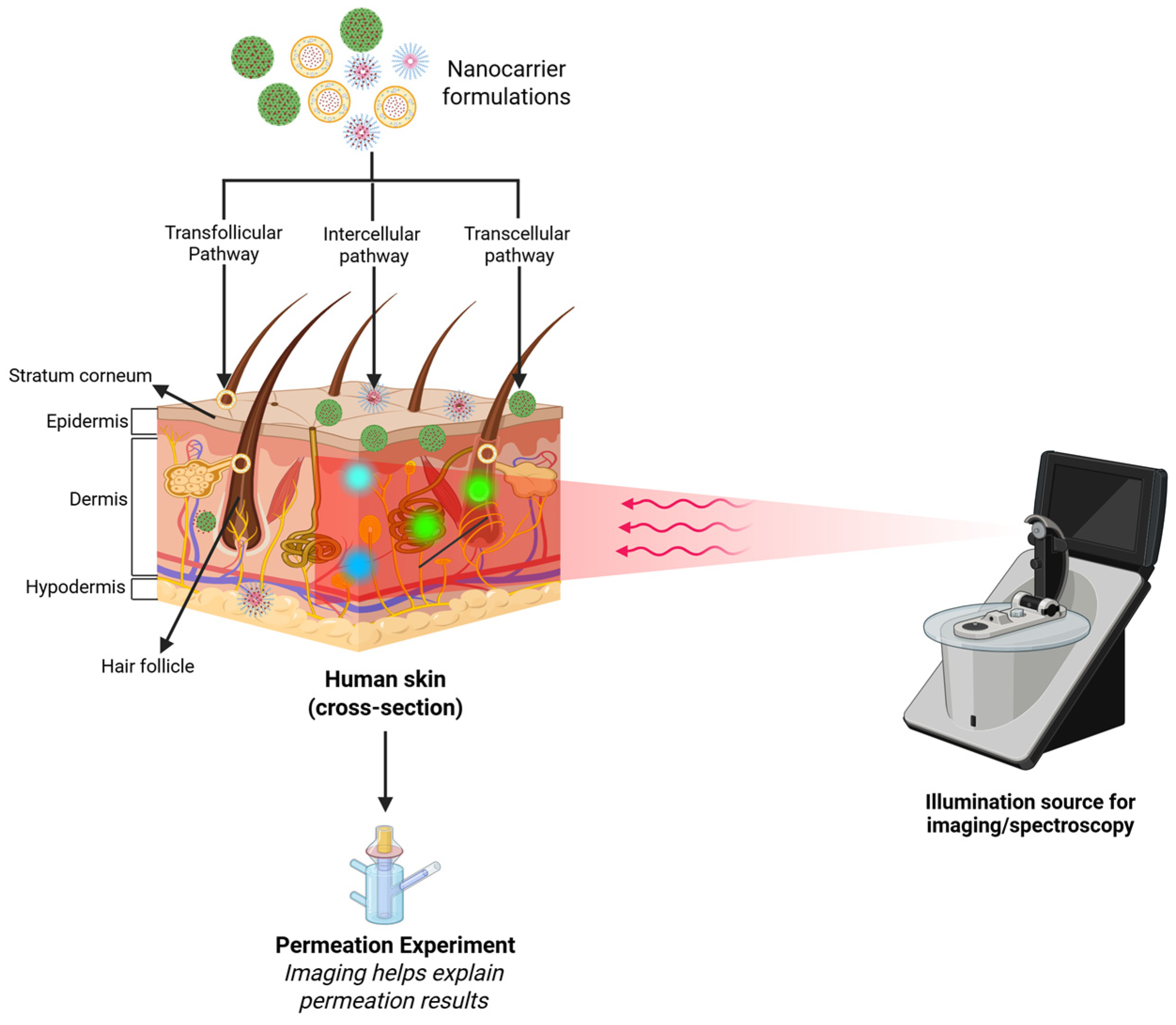
High-order imaging and spectroscopic methods are essential for obtaining information on drug positions, penetration depth, and transport routes across multiple layers of skin, thereby supplementing quantitative permeation experiments.
Figure 3 shows the penetration and transport of nanoformulations across skin layers, as revealed by high-order imaging and spectroscopic methods.
Confocal Laser Scanning Microscopy (CLSM) is a vital imaging technique commonly used to visualize the localization of drugs and nanocarriers in the skin. It allows imaging depth-dependent, high-resolution structures and tracing dominant transport routes, including intercellular, intracellular, and transfollicular routes. CLSM has been useful, especially for assessing NP-based delivery, as evidenced by studies on the selective follicular penetration of chitosan NPs, which identify hair follicles as valuable reservoirs and routes of delivery for nanosystems [
103].
Confocal Raman Spectroscopy (CRS) has emerged as a non-invasive, chemically selective analysis technique capable of producing depth-resolved molecular concentration profiles in both in vivo and ex vivo skin. CRS does not involve the use of labels, as in fluorescence-based applications, thus enabling real-time study of drug penetration. CRS studies have shown its ability to measure the penetration depth and concentration of retinyl acetate, progesterone, and estrogen, thereby providing time-resolved information on intrinsic permeation and formulation behavior. These characteristics render CRS especially useful in the quantitative evaluation of topical and transdermal preparations [
104].
5.6. Membrane and Skin Models for Transdermal Evaluation
Selecting appropriate membranes or skin models is crucial for obtaining credible, translational data on transdermal permeation. Some common membrane and skin models for transdermal evaluation are described below.
5.6.1. Human Skin
Human skin, when used as a model for excised human skin, is regarded as a gold standard for assessing TDDS because it closely approximates the anatomical, biochemical processes, and physiological functions of human skin in vivo. In vitro permeation rates measured in human skin show strong correlations with clinical outcome data when experimental parameters are strictly controlled. Cosmetic surgeries, amputation, and cadavers are the sources where human skin is usually acquired, although the abdominal, back, chest, and thigh skin are the most commonly used. Regardless of its applicability, the use of human skin is limited by ethical constraints, availability, inter-donor variability, and facility requirements. One of these agencies is the regulatory (EMA and FDA), which requires a thorough evaluation of the skin barrier’s integrity before proceeding to experimentation, which is most commonly measured by transepidermal water loss (TEWL). Still, tritiated water permeability or electrical resistance is also widely used as a standardized parameter [
30,
105].
5.6.2. Animal Skin
A core use of animal skin models is when human skin is unavailable. Among the latter, porcine skin is considered the closest surrogate because of its similarities in epidermal thickness, lipid composition, follicular structure, and dermal architecture. It has also been used in other animal models, including rodents, guinea pigs, rabbits, cattle, and reptiles. Rodent models are particularly popular because of their low cost, the ease of manipulation, and availability in hairless strains. Nonetheless, it should be ethically approved, and the use of animal-based information should be accepted differently across jurisdictions. Additionally, variations in baseline TEWL values and the properties of the barriers of animal and human skin should be considered when interpreting results [
30,
105].
5.6.3. Artificial Membranes
An artificial membrane has been developed to overcome the constraints of biological tissues. All these membranes are polymers made from polyethersulfone, polysulfone, cellulose derivatives, or phospholipid-based platforms, providing high reproducibility and minimal variability. Other models, such as Strat-M
® membranes or Skin-PAMPA, are helpful for early formulation screening and mechanistic and comparative permeability screening, but they are not as complex as biological tissue [
106].
5.6.4. Human Skin Equivalents
Three-dimensional bioengineered skin equivalents (HSEs) are bioengineered constructs of human cells cultured in three dimensions, designed to replace native skin architecture. These are reconstructed human epidermis (RHE) models and full-thickness models with both epidermal and dermal layers. Precisely the same thing has been commercially available as ethically acceptable and biologically relevant alternatives to excised human skin, such as systems like EpiDerm (USA), SkinEthic (France), and GraftSkin (USA) [
107].
5.6.5. MIVO® (Multi In Vitro Organ) Systems
MIVO
® systems are advanced, dynamic in vitro systems for culturing applications that can be used under physiologically relevant conditions because fluid circulation is continuous, thereby mimicking human vascularization. These disposable chambers contain either live tissues or an artificial membrane. They can be used in controlled interaction between donor and receptors, similar to a classical Franz diffusion cell, but with dynamic flow. The OECD 428-compliant MIVO wall system features a peristaltic pump and a three-way valve, enabling the sampling of a sterile solution without compromising the tissue structure. MIVO 8 systems and Franz diffusion cells exhibited comparable performance in terms of caffeine and LIP1 permeation kinetics at the Strat-M 2 membranes and porcine skin. Interestingly, MIVO 2 demonstrated a consistent difference in the penetration of lipophilic compounds, enhancing physiological applicability and providing more accurate mimics of in vivo dermal skin penetration, particularly for compounds that are both permeable and metabolite-sensitive. Compared to simple diffusion, MIVO provides greater translational value through dynamic flow, reduced stagnation, and improved nutrient-to-waste exchange. The characteristics make it particularly suitable for assessing complex formulations, lipophilic drugs, and transdermal systems that incorporate nanocarriers, as well as for long-term exposure. Here, the idea is that cells expressing lactate dehydrogenase release the enzyme into the medium, leading to the generation of hydrogen peroxide [
108].
5.6.6. Skin-PAMPA (Parallel Artificial Membrane Permeability Assay) System
Skin-PAMPA is an in vitro permeability screening model, consisting of donor and acceptor chamber assays in a 96-well plate format. The synthetic membrane is designed to replicate key biochemical components of the SC, such as free fatty acids, cholesterol, and ceramide analogs, in physiologically relevant amounts. Several studies have confirmed that skin-PAMPA is a reliable screening measure in the initial stages of drug development. PAMPA is strongly correlated with skin permeability in porcine and human skin under finite dose conditions. Skin-PAMPA enables the rapid screening of formulations, ranking of permeability, and reduction of animal testing, especially in the context of drug development, making it a beneficial tool. Nevertheless, the lack of active metabolism, immune components, and dynamic flow constrains its predictive capability of intricate formulations and biologics. Skin-PAMPA would therefore be best suited as an initial screening device, parallel to more physiologically advanced screening methods [
30].
10. Conclusions
Transdermal insulin delivery using nanomedicine is a paradigm shift in the management of diabetes due to its long-term clinical shortcomings that are inherent to traditional subcutaneous insulin therapy. Through the combination of breakthroughs in materials science, nanotechnology and skin engineering concepts, modern transdermal patches have gone beyond passive delivery to provide multifunctional therapeutic platforms with controlled, responsive and patient-centric insulin delivery. The combination of nanocarriers and transdermal technologies has shown strong preclinical results of improved insulin permeation, extended pharmacodynamic activity and decreased glycemic variability, which are significant parameters that directly influence long-term metabolic regulation and quality of life of patients.
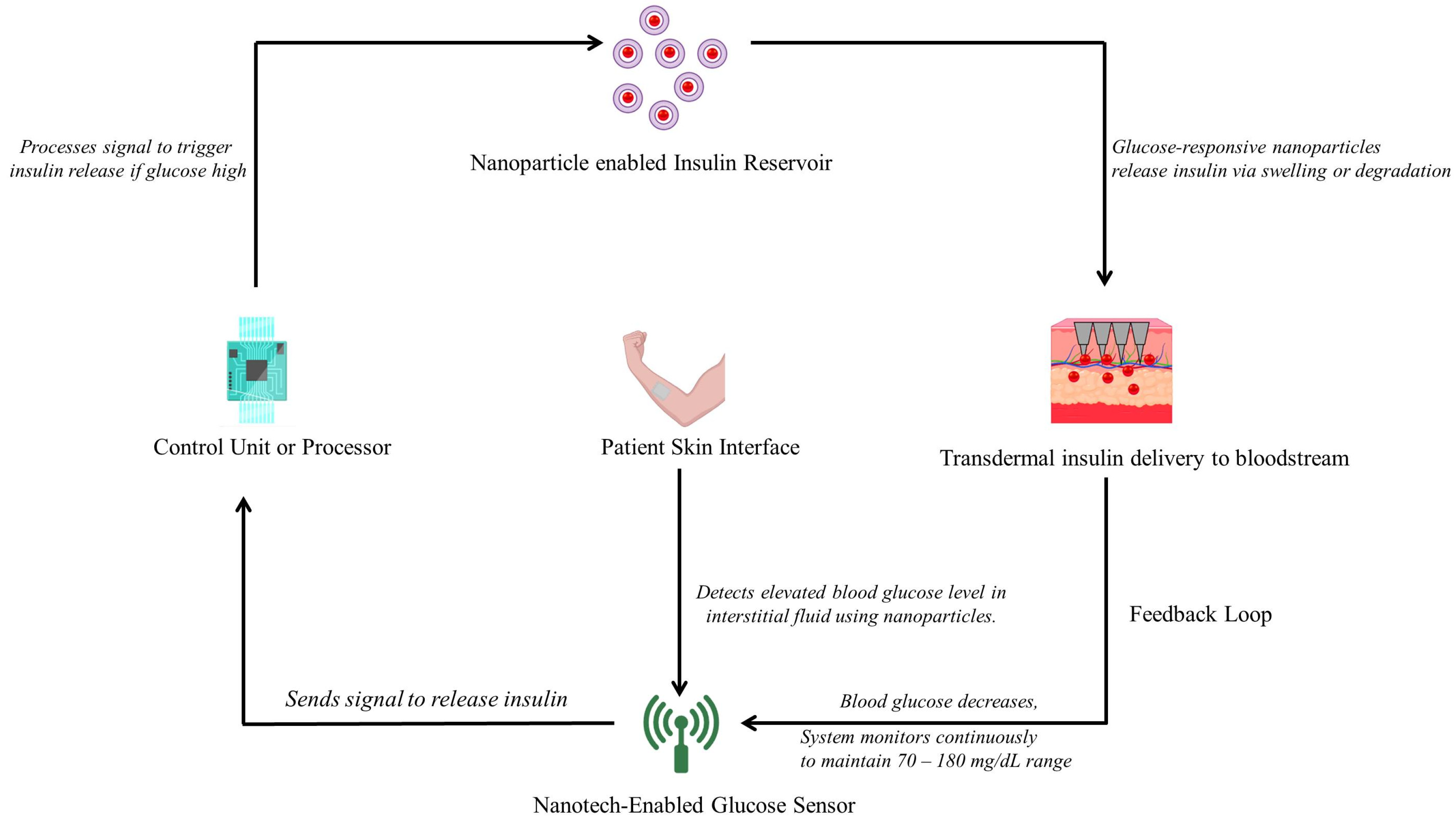
The main success of this discipline is the ability to break the barriers of SC, which is a powerful barrier. The examples of lipid-based nanocarriers, polymeric nanocomposites, nanogels and systems based on the use of the MN demonstrate how the rational nanoscale design may be used to influence skin architecture, augment follicular and intercellular transport and retain insulin bioactivity. Meanwhile, glucose-responsive patches and stimuli-adaptive patches represent a new milestone in closed-loop insulin delivery and a potentially decisive development in the direction of self-regulated insulin release, which recreates the role of the pancreatic gland. These new systems that have been tested in animal models with long-term normoglycemia and positive safety profiles highlight the game-changer that nanomedicine holds in making autonomous care in diabetes a possibility.
Irrespective of these developments, there is still an unequal translational path between laboratory development and clinical reality. Much of the clinical research on platforms based on MN has also demonstrated safety and lack of dermal irritation and pharmacokinetic viability, but there is limited data on human efficacy and long-term outcomes. There are still critical issues in developing standards of nanocarrier characterization, stability of formulations, scalability of reproducible manufacturing processes and locating through complex regulatory frameworks that span the drug–device classification boundary. All these obstacles will demand the concerted action of material scientists, clinicians, regulatory bodies and industry participants, along with the harmonized assessment procedures specific to nanomedicine-based transdermal systems.
In the future, the combination of artificial intelligence-driven formulation design, new manufacturing solutions, including 3D printing, and wearable biosensors will transform the face of transdermal insulin delivery. These advancements precondition the creation of personalized patches that will adjust themselves to the skin physiology, glucose dynamics and lifestyle patterns of a person. Additionally, the general applicability of this technology is not limited to only diabetes but also provides a generalized platform around which other therapeutic peptides and biologics previously restricted to the injection method of administration can be delivered.
Lastly, transdermal insulin patches made possible through nanomedicine represent a promising future of diabetes care, which places more emphasis on precision, comfort and self-determination. Although there are still major scientific and regulatory problems, further interdisciplinary innovation and clinical validation can convert such sophisticated systems into accessible, non-invasive and patient-centered therapies, and eventually redefine the standard of care of millions of diabetic patients across the globe.


 ,
,