Article

Experimental and Numerical Analysis of a Compressed Air Energy Storage System Constructed with Ultra-High-Performance Concrete and Steel


Department of Civil and Environmental Engineering, Idaho State University, Pocatello, ID 83209, USA
*
Author to whom correspondence should be addressed.
J. Exp. Theor. Anal. 2026, 4(1), 5; https://doi.org/10.3390/jeta4010005
Submission received: 8 October 2025 / Revised: 2 December 2025 / Accepted: 5 January 2026 / Published: 16 January 2026

Abstract

This study explores the viability of ultra-high-performance concrete (UHPC) as a structural material for compressed air storage (CAES) systems, combining comprehensive experimental testing and numerical simulations. Scaled (1:20) CAES tanks were designed and tested experimentally under controlled pressure conditions up to 4 MPa (580 psi), employing strain gauges to measure strains in steel cylinders both with and without UHPC confinement. Finite element models (FEMs) developed using ANSYS Workbench 2024 simulated experimental conditions, enabling detailed analysis of strain distribution and structural behavior. Experimental and numerical results agreed closely, with hoop strain relative errors between 0.9% (UHPC-confined) and 1.9% (unconfined), confirming the numerical model’s accuracy. Additionally, the study investigated the role of a rubber interface layer integrated between the steel and UHPC, revealing its effectiveness in mitigating localized stress concentrations and enhancing strain distribution. Failure analyses conducted using the von Mises criterion for steel and the Drucker–Prager criterion for UHPC confirmed adequate safety factors, validating the structural integrity under anticipated operational pressures. Principal stresses from numerical analyses were scaled to real-world operational pressures. These thorough results highlight that incorporating rubber enhances the system’s structural performance.

1. Introduction

Energy consumption has increased significantly in recent decades, underscoring the importance of efficient energy storage systems, especially for integrating renewable energy into the grid [1]. Compressed air energy storage (CAES) systems are emerging as a promising solution due to their ability to store energy efficiently and sustainably. CAES technology stores surplus off-peak energy as compressed air, which is later released to generate electricity during peak demand [2]. This process enhances grid reliability, optimizes energy use, and supports renewable energy adoption. Two large-scale CAES power plants, Huntorf and McIntosh, are in commercial operation, while several others are under construction [3]. In addition, many research institutions and companies have introduced new and innovative CAES system designs.
CAES systems utilize either natural geological formations or engineered structures, such as above-ground tanks, for air storage. Above-ground tanks, constructed from steel or concrete, are gaining popularity because of their easier accessibility and lower maintenance requirements. Nevertheless, such tanks must exhibit good mechanical performance under repeated loading cycles and maintain their integrity to prevent energy losses through leakage, which can reach rates as high as 40% [4]. Storage tank sizes range from 5–50 L for small horizontal units to 100–5000 L for large vertical ones, with the selection based on compressor capacity and air demand [5].
However, CAES tanks must withstand substantial cyclic loading and high pressures, typically ranging from 10 to 50 MPa (1450 to 7252 psi) [4]. Structural integrity and leakage prevention under these demanding operational conditions are critical for long-term safety and efficiency. Consequently, the material selected for CAES tanks must possess superior mechanical properties and resilience against environmental stresses.
UHPC presents significant advantages over conventional concrete materials used in CAES systems due to its superior mechanical and durability properties. UHPC is characterized by a high compressive strength exceeding 150 MPa (22,000 psi), remarkable tensile strength, enhanced durability, and outstanding resistance to environmental degradation [6]. The dense microstructure of UHPC significantly reduces permeability, improving its ability to resist corrosion and environmental degradation.
UHPC achieves its exceptional mechanical properties through densely packed particles and a notably low water-to-cement ratio (below 0.25). Its strength and flexibility are further enhanced by the addition of steel fibers, which effectively restrain microcrack growth and improve tensile resistance [7]. As a result, UHPC exhibits superior performance under cyclic loading conditions and provides better thermal management compared to conventional concrete, making it particularly suitable for CAES applications.
Despite its higher binder content, life-cycle analyses demonstrate that UHPC can lower the total carbon footprint through reduced material usage and maintenance. For example, structural components produced with UHPC have demonstrated a reduction of up to 48% in CO2 emissions compared to standard concrete [8]. Another life-cycle study reported up to a 76% decrease in CO2 emissions when UHPC replaced conventional concrete, largely due to reduced material quantities and significantly extended service life [9].
The primary objective of this research is to evaluate the suitability of UHPC as a construction material for CAES storage tanks. Specifically, this study has the following objectives:
  • Conduct experimental assessments of structural behavior and evaluate strain responses in scaled CAES tanks confined with UHPC when subjected to high-pressure conditions.
  • Validate experimental results through comprehensive finite element modeling using ANSYS Workbench.
  • Investigate the structural benefits provided by integrating a neoprene rubber interface layer between steel cylinders and UHPC.
  • Conduct detailed failure analyses to determine safety factors using the von Mises criterion for steel and the Drucker–Prager criterion for UHPC.
Through achieving these aims, the research intends to demonstrate the potential of UHPC to overcome the limitations of conventional materials, thus paving the way for its adoption in advanced CAES systems.

2. Materials and Methods

2.1. Experimental Methods

2.1.1. Design of Scaled CAES Tanks

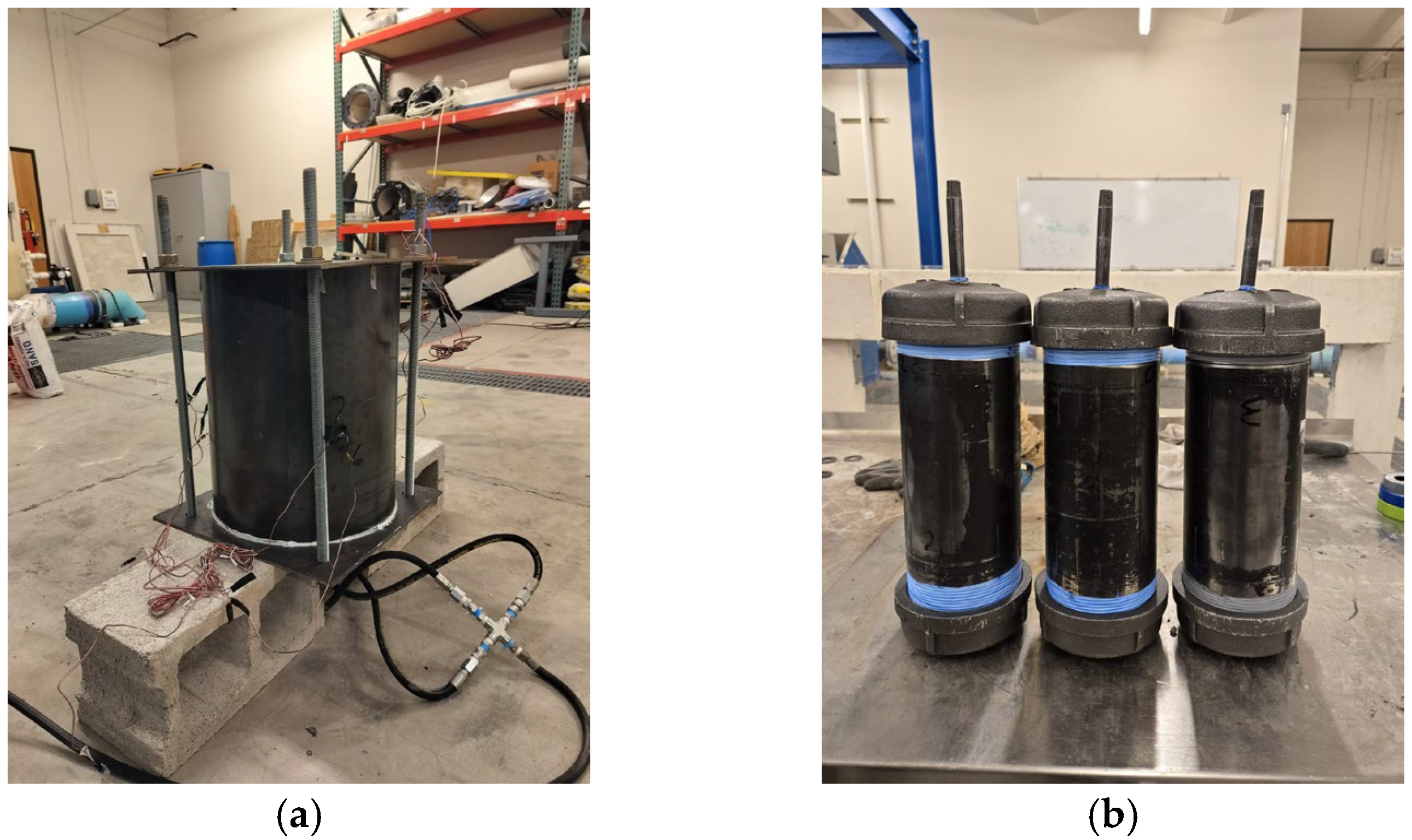
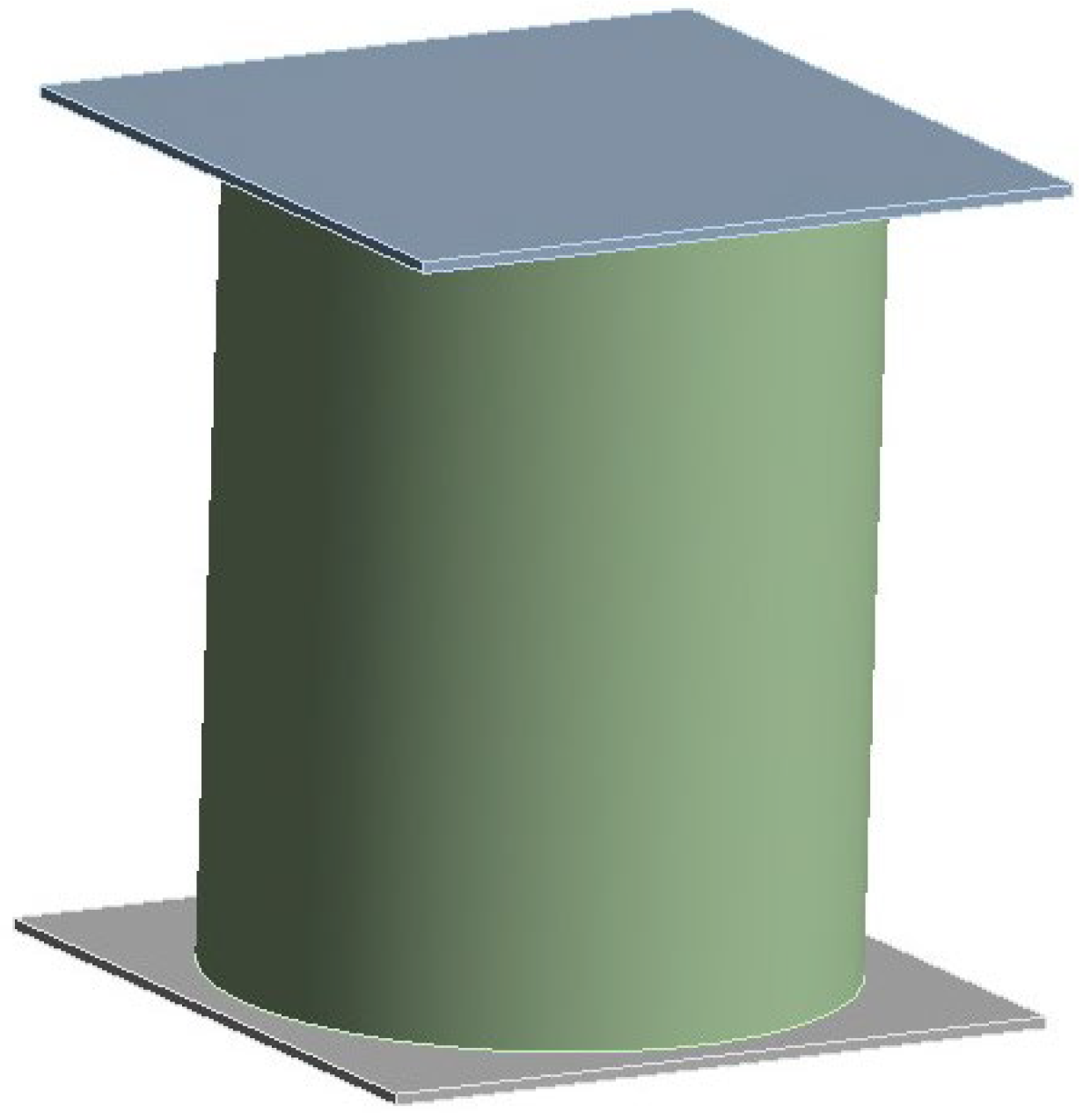
The study evaluated the structural performance of a steel–UHPC composite CAES tank using two 1:20 scale laboratory models. Each cylinder measured 35.56 cm (14 in.) in internal diameter, 45.72 cm (18 in.) in height, and 0.25 cm (0.1 in.) in thickness. To provide structural stability and allow for pressurization, steel plates 0.64 cm (0.25 in.) thick were attached to both the top and bottom, as shown in Figure 1a. Inside each tank, three small cylinders, referred to as cavities, were installed to represent CAES chambers. These cavities have an internal diameter of 10.16 cm (4 in.) and a thickness of 0.64 cm (0.25 in.) as shown in Figure 1b. Their placement and configuration replicate realistic internal conditions where compressed air would be housed under pressure. The caps of these cavities were threaded, allowing for secure connections to smaller piping systems. These pipes provided a conduit through which pressurized water was introduced. This setup simulates the effect of internal pressurization in a controlled and safe manner using water rather than compressed air, minimizing risk during experimentation.
Two configurations were systematically investigated:
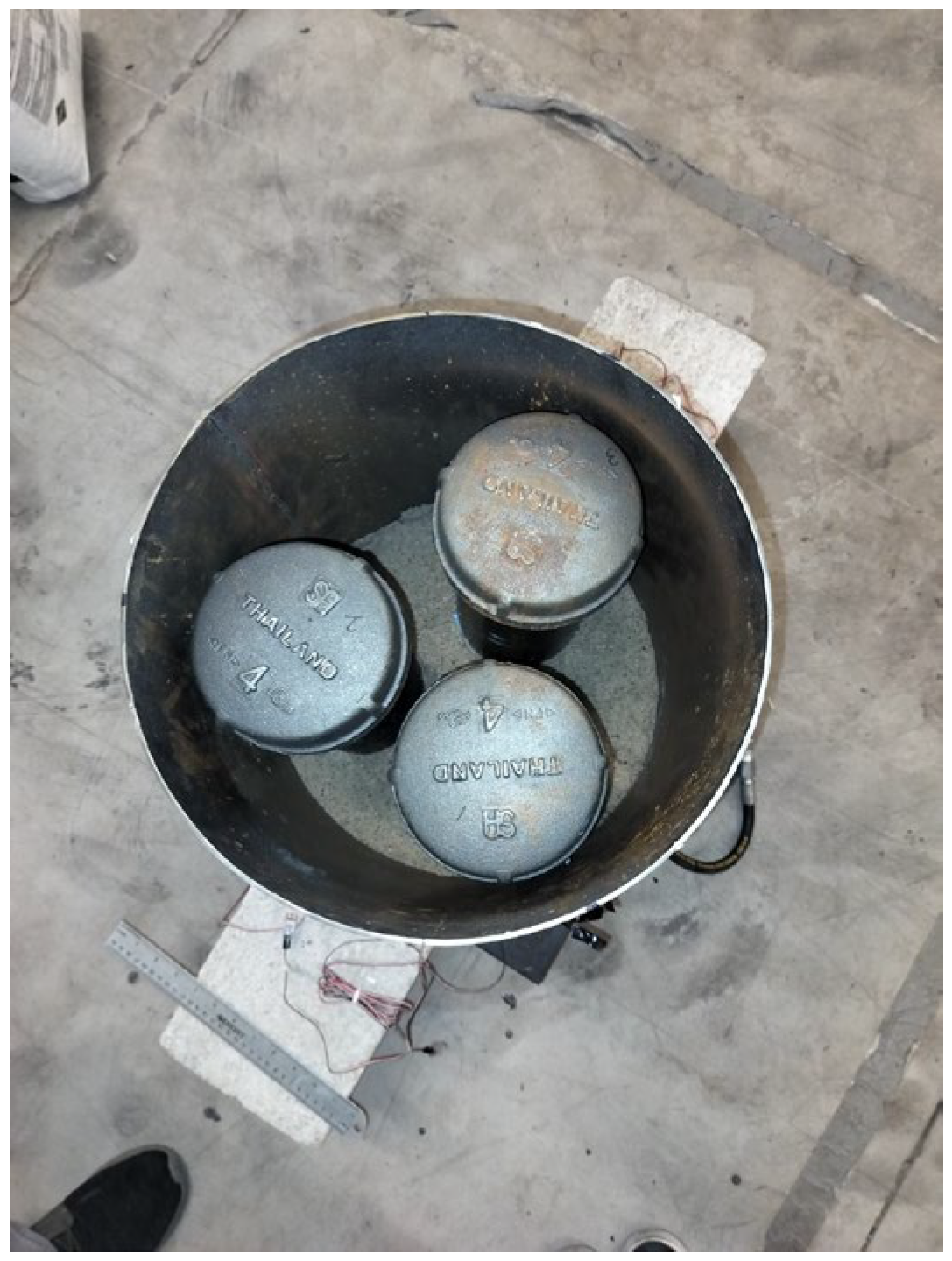
  • Steel cylinders without confinement, as shown in Figure 2: A baseline reference to study the steel cylinders’ response under internal pressure.
2.
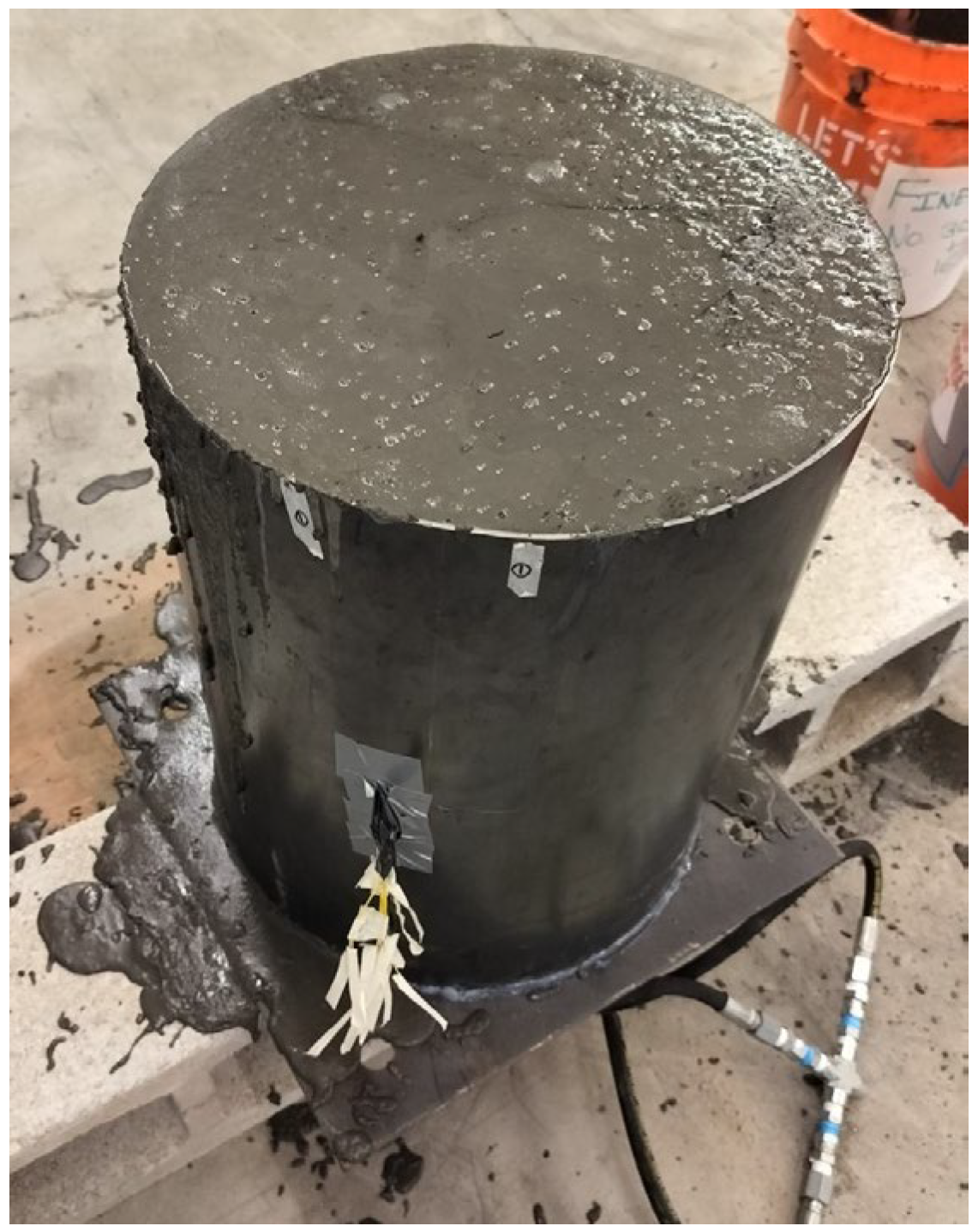
Steel cylinders with UHPC confinement, as shown in Figure 3: UHPC was cast around the steel cylinders to assess structural enhancement capabilities, ensuring improved confinement and durability. After pouring the UHPC, a steel plate was placed on top and secured using four threaded rods and nuts, as shown in Figure 1a. The interface connection between steel and UHPC in the experimental configuration was governed primarily by mechanical interlock and adhesive friction developed during curing. No external bonding agents or anchors were used. Because UHPC undergoes early-age shrinkage, full chemical bonding at the interface was not expected. This informed the FEM decision to incorporate a shrinkage-induced gap.
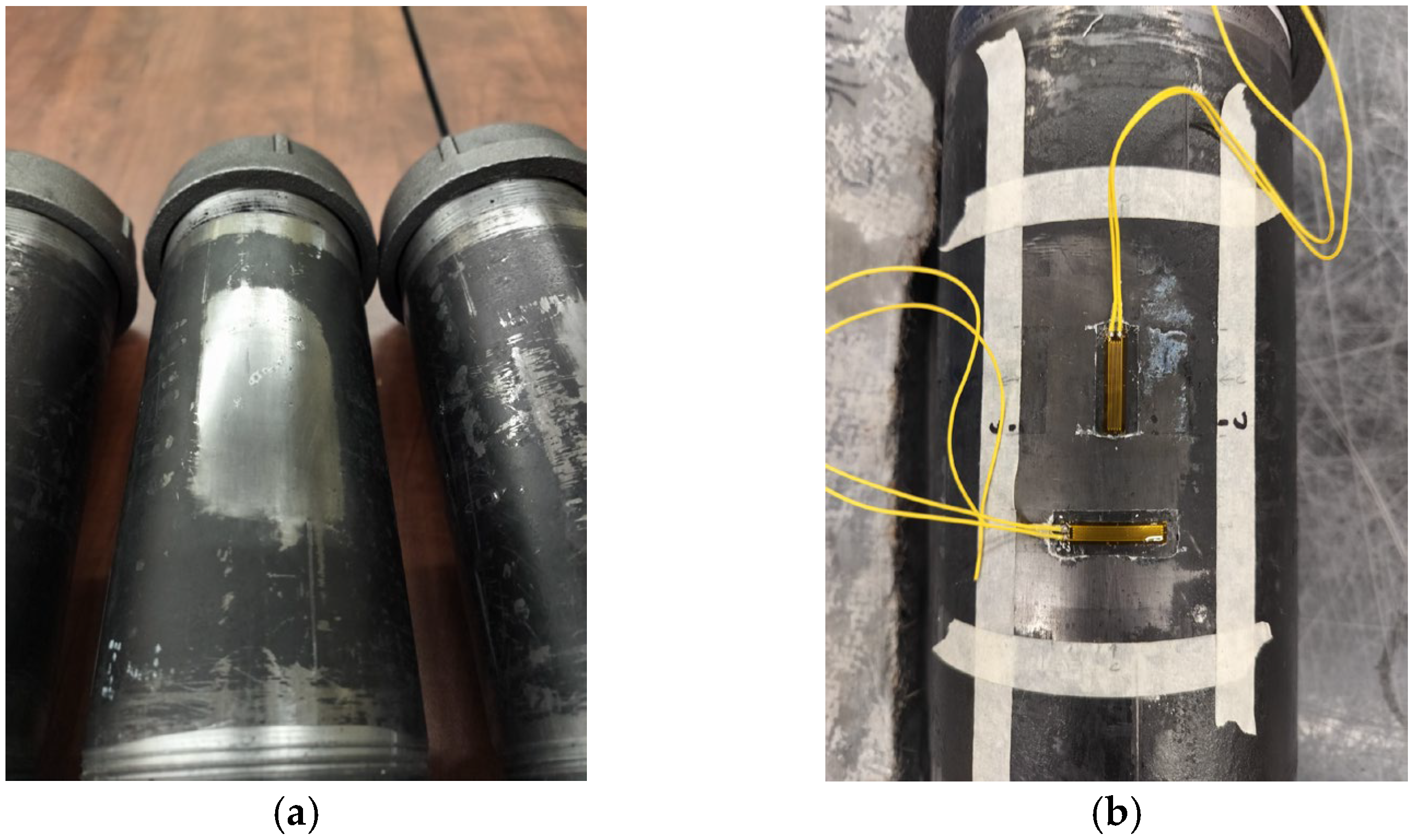
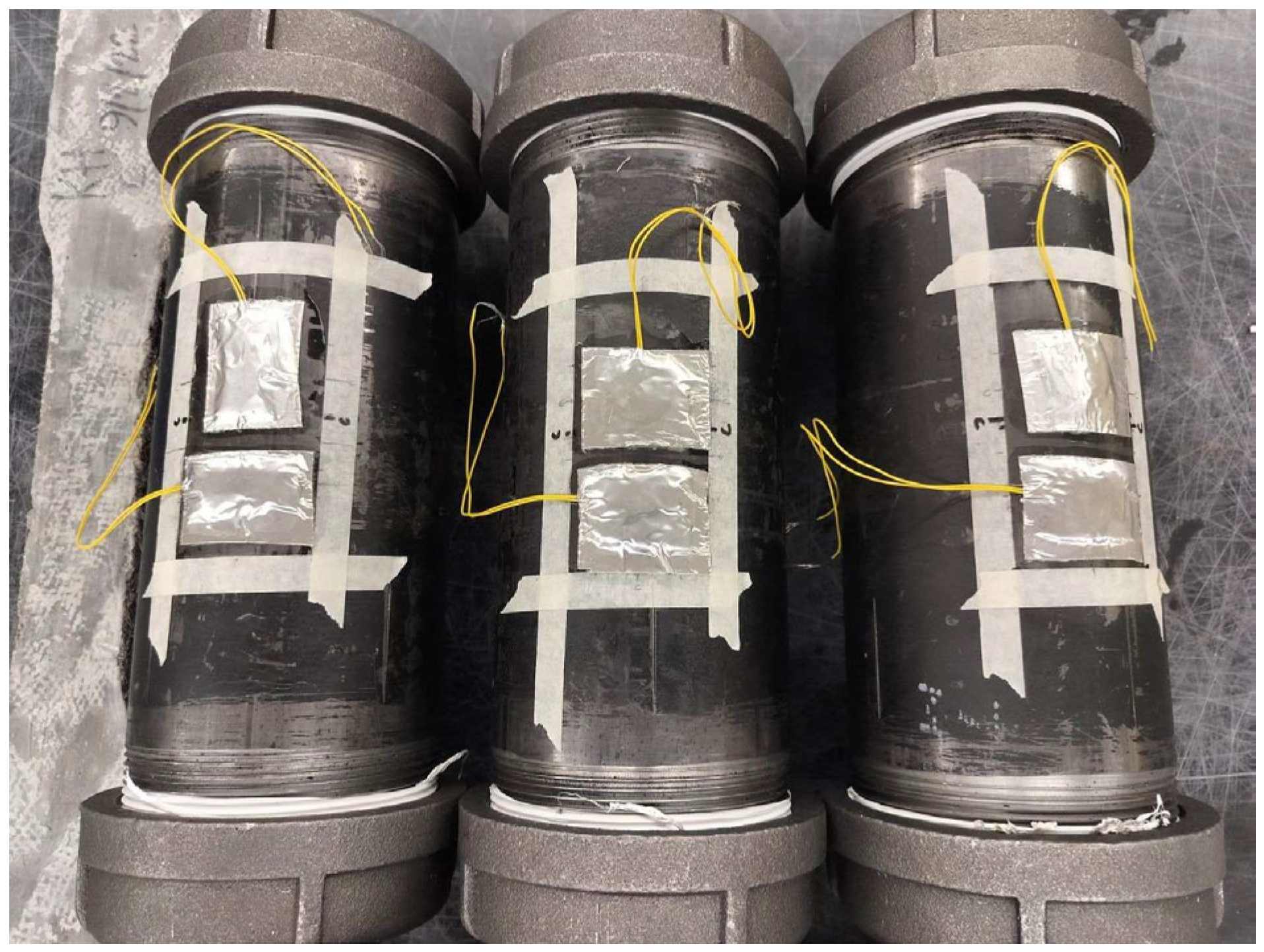
Strain gauges were used to monitor deformation both within the cavity walls and, in the second test configuration, within the surrounding UHPC material. Attaching the strain gauges to the steel cylinders was a relatively straightforward procedure. The process began by identifying regions expected to experience the highest strain due to stress concentration and anticipated loading paths. After selecting these regions, the steel surface was carefully cleaned to ensure proper adhesion, as shown in Figure 4a. Two strain gauges were then affixed: one oriented in the hoop (transverse) direction to capture radial strain, and the other positioned longitudinally to measure axial deformation, as illustrated in Figure 4b. Following the attachment, as shown in Figure 5, the gauges were sealed with a waterproof layer to protect them from moisture infiltration.
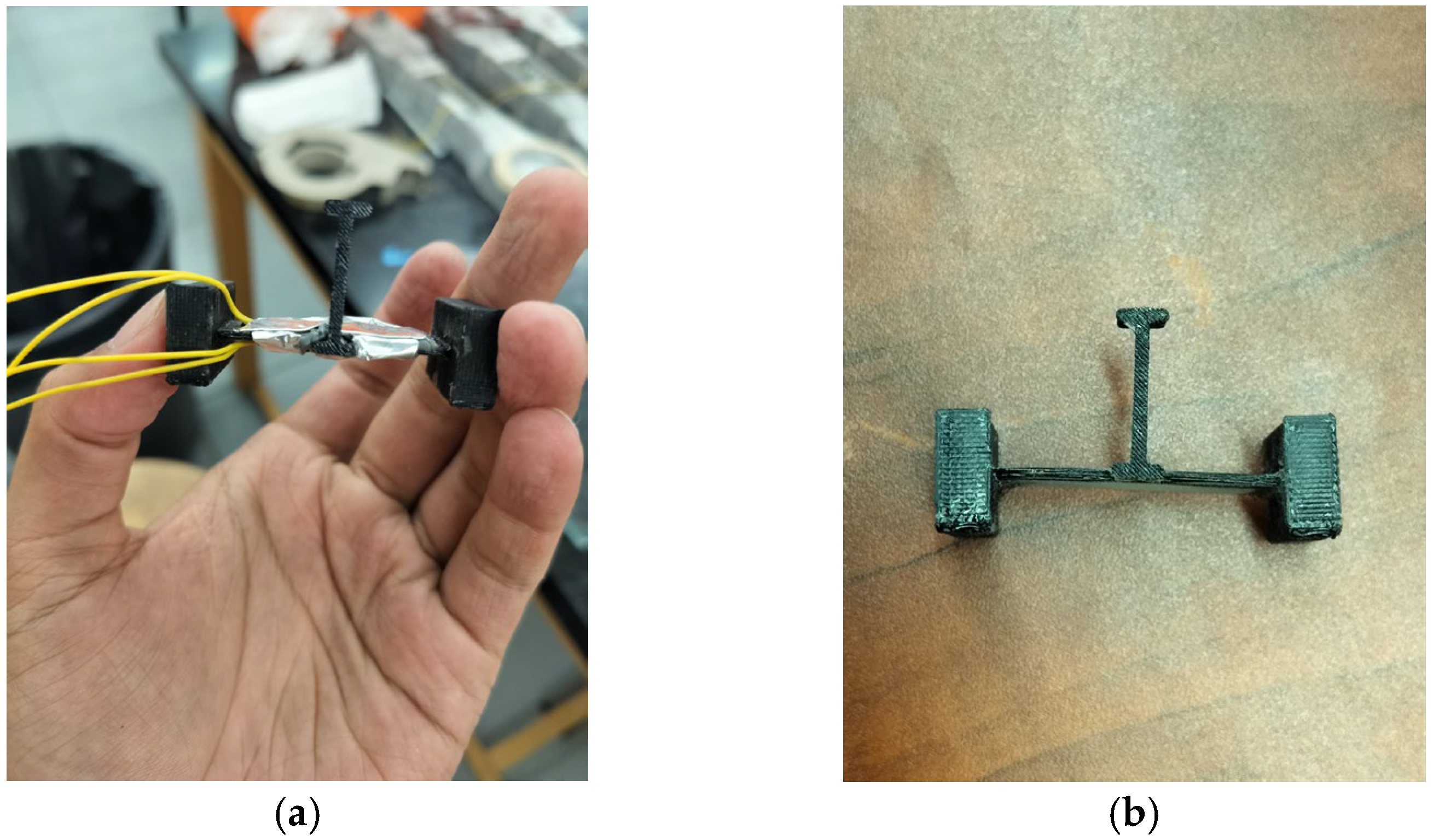
Installing strain gauges within UHPC presented unique challenges. Because UHPC is cast in a semi-fluid state, directly adhering sensors to its surface during placement is not possible. To address this, custom brackets were fabricated using 3D-printed Thermoplastic Polyurethane (TPU), chosen for its flexibility and mechanical compatibility with both the UHPC and the embedded sensors. Each bracket had two strain gauges attached on opposite faces, as shown in Figure 6a, enhancing strain resolution and directional accuracy. The brackets were designed with a protruding extension, visible in Figure 6b, which allowed them to be physically anchored to the surface of the inner steel pipes. This ensured the bracket remained fixed in position as UHPC was poured around it, enabling precise strain capture once the concrete cured and loading conditions.
Before implementing the brackets in the main experimental setup, a preliminary assessment was conducted to evaluate the bonding strength and durability of the adhesive selected for attaching the brackets to the cylinders.
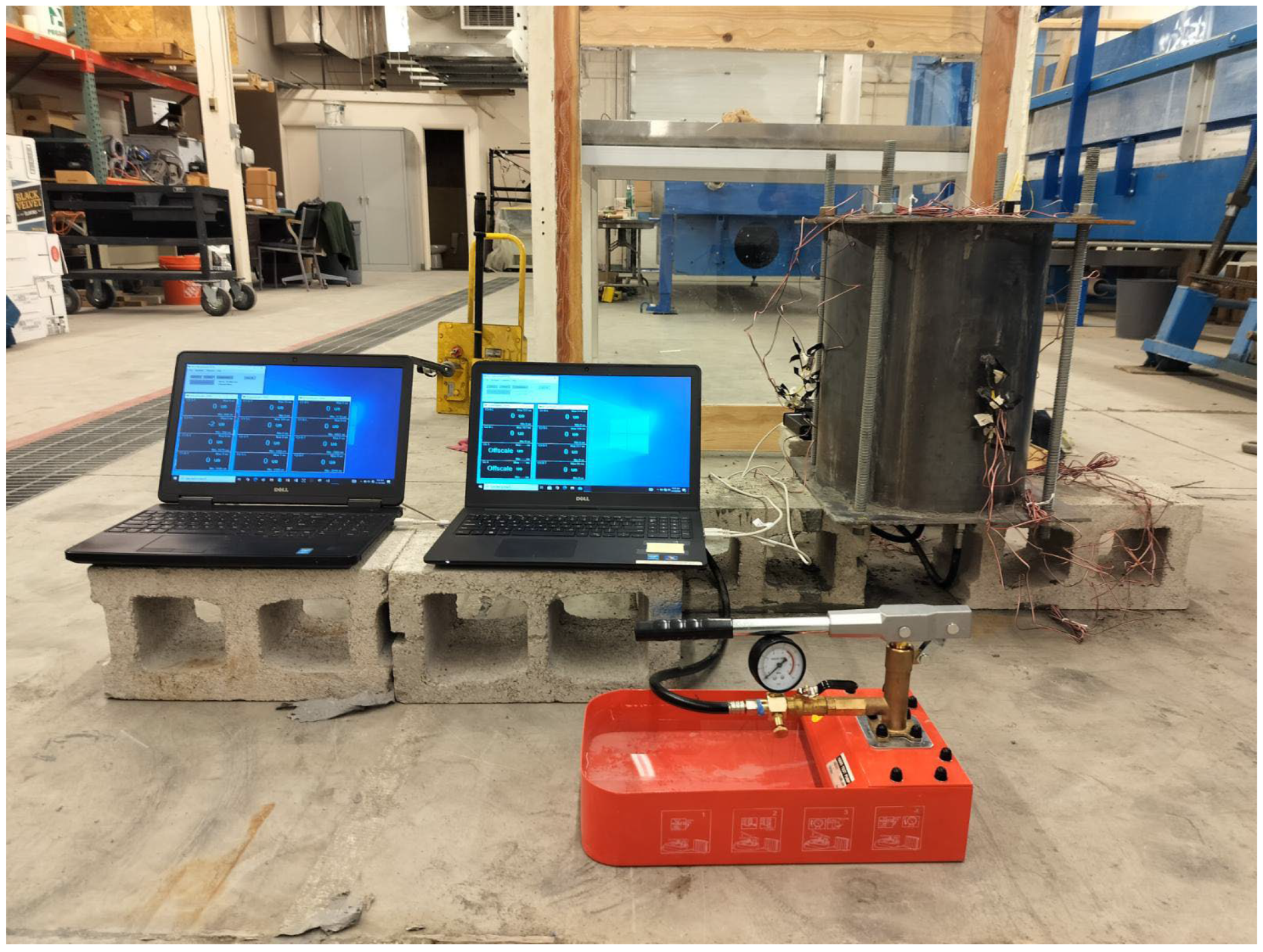
A controlled pressure-loading mechanism was used to incrementally apply pressure to the system, allowing for precise regulation throughout the test sequence. The applied pressure increased from an initial baseline of zero and progressed incrementally until reaching a peak value of 4 MPa (580 psi). Throughout this process, strain data were carefully captured using data acquisition hardware, ensuring continuous real-time monitoring. Measurements were recorded at each pressure interval to enable accurate tracking of structural behavior and deformation responses as the load intensified. Figure 7 shows an overview of the complete experimental setup.

2.1.2. UHPC Mix Design and Evaluating Its Mechanical Properties

To develop a cost-effective yet high-performance UHPC formulation, a non-proprietary mix design was developed using readily available regional materials, as detailed by Shokrgozar [10,11]. The primary binders included Type I/II Portland cement and Class F fly ash, which contribute to the mixture’s strength and durability. Locally sourced volcanic aggregates were incorporated to improve packing density and mechanical interlock. To achieve proper flow and reduce water demand, the mixture utilizes a high-range water-reducing admixture that ensures adequate workability despite a low water-to-cement ratio. Additionally, 0.5 in. steel fibers were introduced to enhance tensile capacity and ductility by bridging microcracks and controlling crack development. All components were combined and blended using a commercial vertical mixer, selected for its ability to provide uniform distribution and thorough mixing, which are critical for consistency and performance in UHPC applications. The non-proprietary UHPC mix developed by Shokrgozar had the mix proportions shown in Table 1.
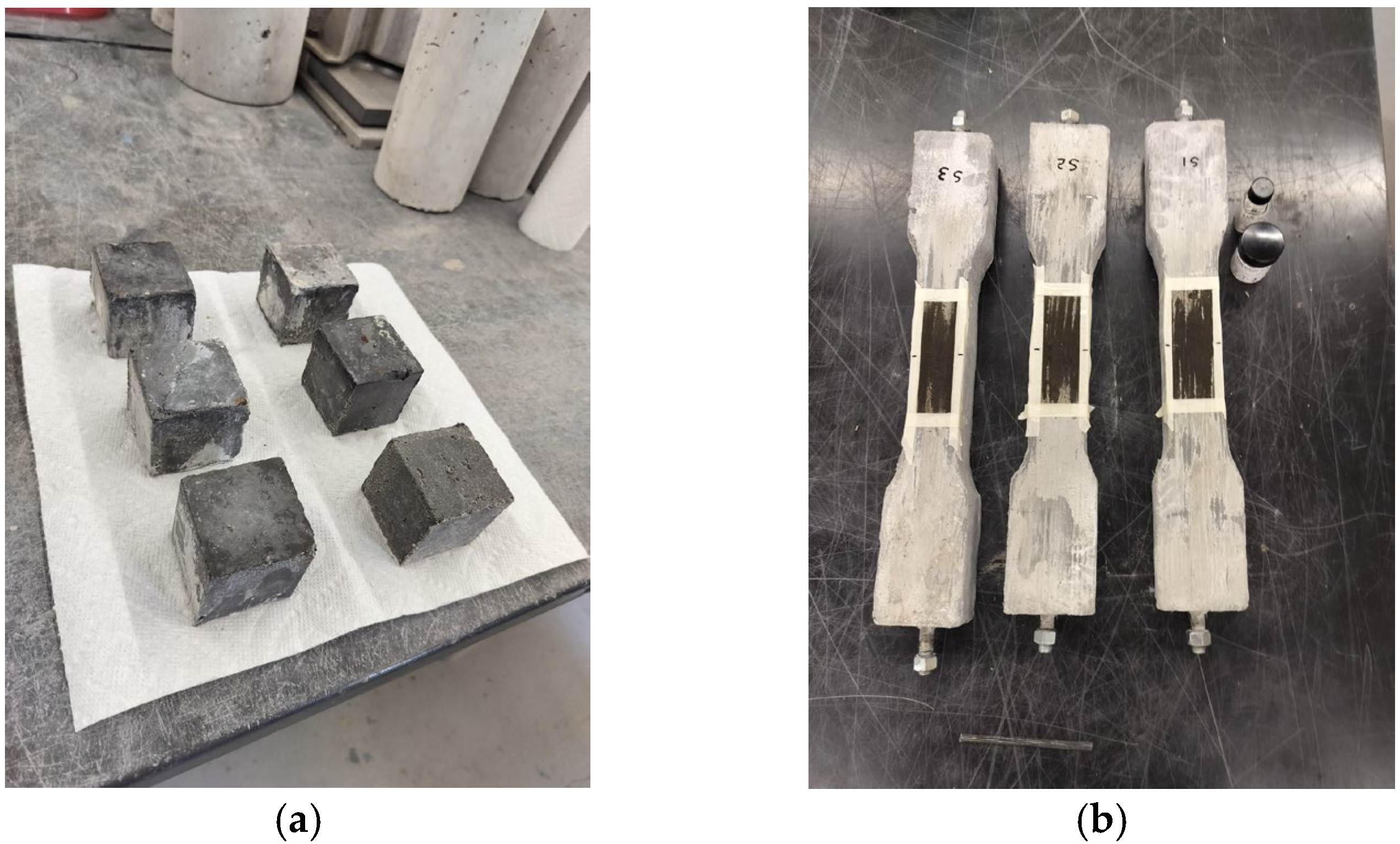
To complement the testing of the small-scale CAES tank and to comprehensively evaluate the mechanical properties of the UHPC mix, a set of standardized specimens was prepared. These included six cube samples measuring 5.1 cm (2 in.) on each side for compressive strength testing, as well as three dog-bone shaped specimens specifically designed for direct tensile tests, as shown in Figure 8a,b, respectively. All specimens were subjected to curing conditions identical to those applied to the scaled tank, ensuring consistency in hydration and material behavior across experimental setups and eliminating variables that could influence the comparative performance data.

2.2. Finite Element Modeling

To support and verify the experimental results, a comprehensive numerical simulation of the CAES tank system was carried out using ANSYS Workbench. This analysis utilized FEM, which facilitated the detailed examination of stress and strain distribution within the tank structure. The numerical approach offered a clearer understanding of the mechanical behavior under pressure, especially in areas where physical measurements were challenging or impractical. Additionally, it provided valuable insight into the influence of confinement effects and interface interactions between different materials, factors that were difficult to isolate or quantify through experimental methods alone.

2.2.1. Model Development and Geometry

The geometry was created in AutoCAD 2025 and then imported to ANSYS Workbench for further processing. The numerical model was designed to closely replicate the actual geometry and configuration used in the laboratory experiments. This included all key components of the physical test setup: the outer steel shell, the base and top plates, the three internal steel cylinders, and the surrounding UHPC layer used for confinement, as shown in Figure 9. The finite element models were constructed in ANSYS Workbench using three-dimensional solid elements (SOLID185) for steel, UHPC, and rubber regions. These 8-node brick elements were chosen due to their suitability for multi-material assemblies. The steel components, including the inner cavities and outer shell, were modeled using standard structural steel properties with an isotropic linear–elastic material. For UHPC, the laboratory-measured material properties described in Section 2.1.1 were used. For the model incorporating the neoprene rubber interface, hyperelastic material properties were defined based on literature values corresponding to a Shore A durometer rating of 80 A. These values represent realistic mechanical behavior for elastomers commonly used in engineering applications where damping or flexibility at interfaces is desired. By mirroring the physical assembly in the simulation, the goal was to accurately capture the structural behavior observed during testing.
In addition to this replication of the experimental setup, a separate model was developed to investigate a configuration that was not physically tested in the lab. This alternative model was employed to explore the potential impact of a thin rubber interface layer on the system’s behavior. Specifically, a layer of neoprene rubber with a hardness rating of 80 A durometer was introduced around the inner steel pipes, which were then fully encased in UHPC. This addition was intended to explore how the presence of a compliant material would affect stress distribution and deformation characteristics.
To facilitate a thorough comparative analysis, three distinct models were developed as part of the numerical modeling study:
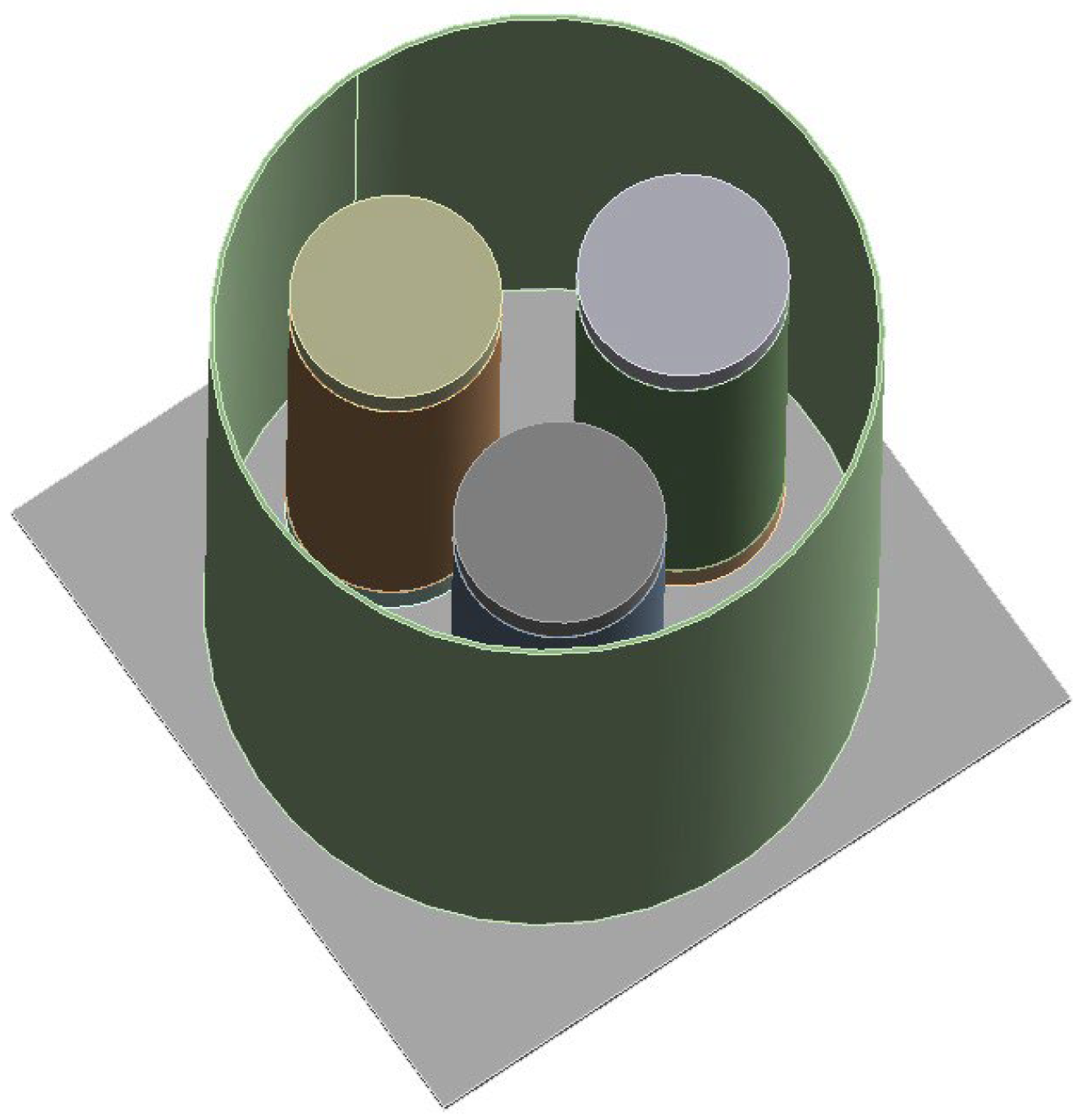
  • Unconfined model: This model included only the three steel cylinders without any UHPC confinement. It served as a baseline to understand the behavior of the cylinders in the absence of external support. The 3D model for this configuration is shown in Figure 10.
2.
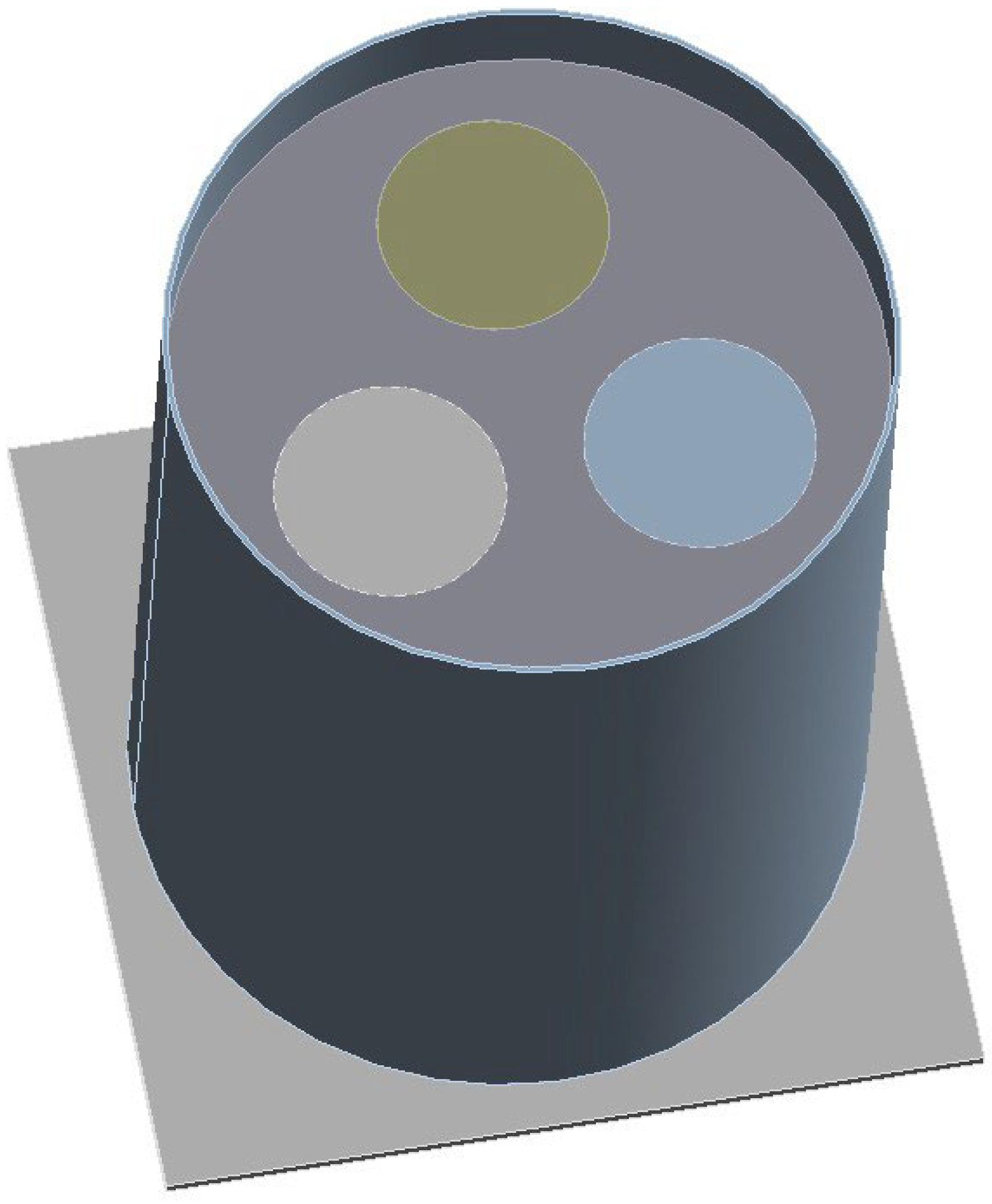
UHPC-confined model: In this configuration, the steel cylinders were surrounded by UHPC to simulate the experimental test conditions. Initially, this model assumed a perfect bond between the steel and UHPC at the contact surfaces, as shown in Figure 11. However, based on UHPC’s known tendency to undergo shrinkage during curing, it was later recognized that such an assumption might not reflect real-world behavior. Shrinkage could lead to the development of small separations or gaps at the interface. To more accurately simulate this effect, the model was updated to include a thin gap of 0.038 cm (0.015 in.) between the steel surface and the UHPC. The method used to estimate the gap size is discussed later in the paper. This refinement provided a more realistic representation of post-curing conditions and improved the predictive accuracy of the simulation.
3.
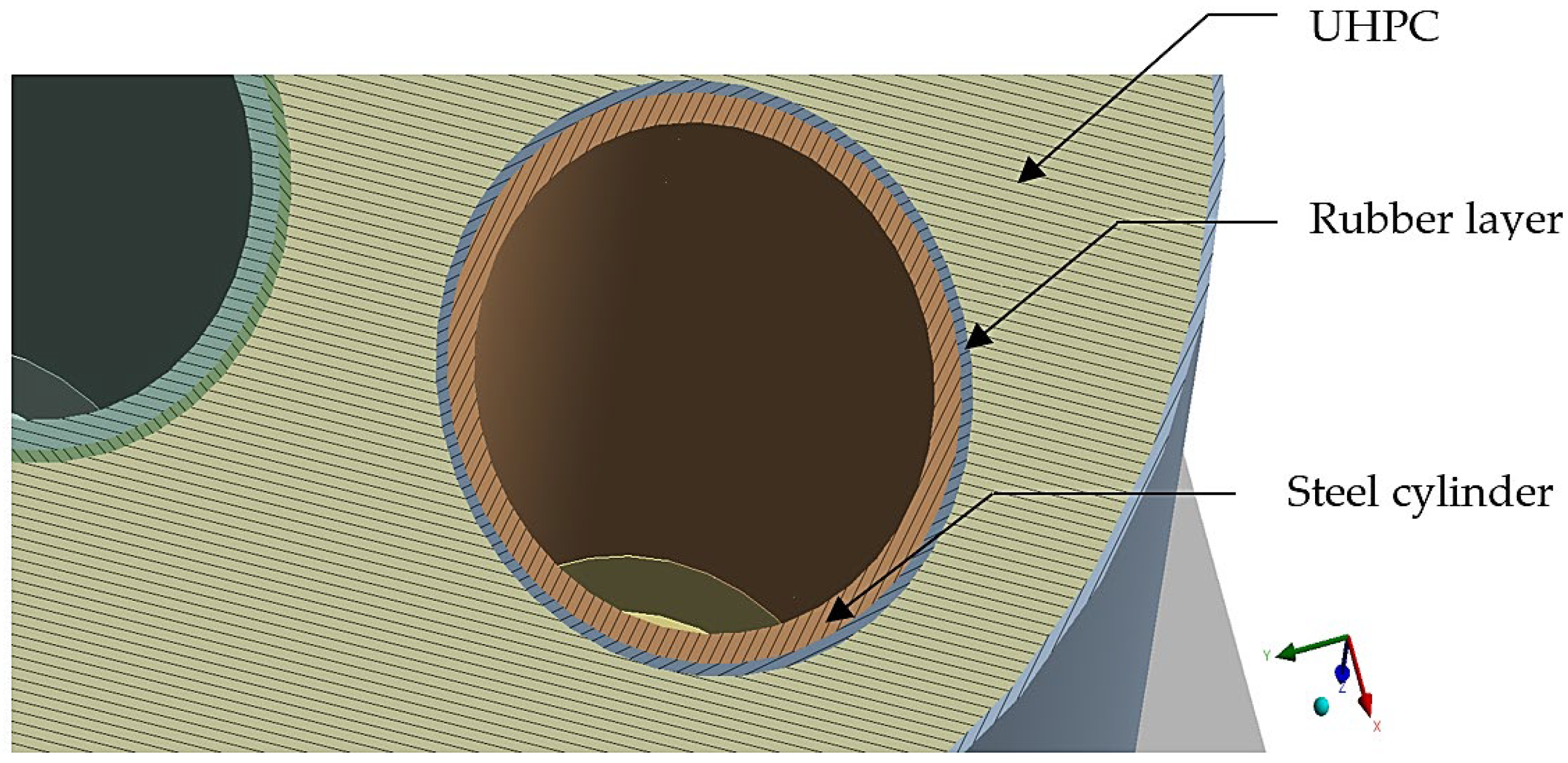
Rubber interface-confined model: This final model incorporated a thin neoprene rubber layer (80 A durometer), 0.25 cm (0.1 in.) thick, around each steel cavity, with the entire assembly confined in UHPC, as shown in Figure 12. It was developed to study the effects of introducing a compressible interface material on the mechanical response of the system, particularly in terms of stress redistribution and strain absorption.
By comparing the results of the first two models, the numerical study offered a deeper understanding of how confinement and interface conditions affect the overall behavior of the CAES tank system.

2.2.2. Material Properties

To ensure the accuracy and reliability of the numerical simulations, it was crucial to represent the material behavior of each component as realistically as possible. The mechanical properties assigned to the UHPC in the FEM were directly derived from experimental testing results, as described earlier in Section 2.1.2. These laboratory-obtained values were input into the simulation to represent the UHPC region, under the assumption of linear elastic behavior. This assumption is appropriate because UHPC tends to exhibit linear–elastic characteristics up to the onset of cracking, making it suitable for simulating its behavior within the uncracked, elastic range.
The use of experimentally validated properties corroborated the model’s fidelity, and the results generated using these parameters are presented in detail in Section 3, where simulation outputs are discussed thoroughly. The steel components, including the three inner cylinders and the surrounding outer shell, were modeled using standard mechanical properties for structural steel. These were treated as isotropic (having the same properties in all directions) and linearly elastic, reflecting their behavior under service-level loads before yielding. For the model that included a neoprene rubber interface layer, hyperelastic material models were applied, with property values sourced from established literature corresponding to a Shore A durometer hardness rating of 80 A.
The interaction between different materials was also carefully defined to replicate realistic boundary behaviors:
  • In the UHPC-only model, a bonded contact was assumed between the UHPC and the steel surfaces. This means the two materials were treated as fully adhered, preventing any relative motion at the interface, reflecting the intent of strong adhesive bonding in the actual experimental setup.
  • In contrast, for the model incorporating the rubber interface, a low-friction or frictionless contact was specified between the rubber and the adjacent concrete surfaces. This allowed for some relative sliding and strain redistribution, simulating how the rubber layer could soften stress concentrations and redistribute load across the interface.

2.2.3. Boundary Conditions and Pressure Loading

A uniform internal pressure of 3 MPa (435 psi) was applied to the interior surface of all three steel cavities, including their end caps. This pressure level was carefully chosen as it falls within the range used during the experimental testing, which reached up to 4 MPa (580 psi).
However, achieving a stable and accurate numerical solution in finite element analysis often presents challenges, especially when dealing with complex assemblies. One such issue is rigid body motion, where the model may move as a whole instead of deforming under load, causing convergence problems during the simulation. To address this, weak springs were strategically added to the model. These springs serve as artificial constraints that provide just enough resistance to prevent the model from floating freely in space. Importantly, they are designed to be so minimal in stiffness that they do not influence the stress or strain results, ensuring the physical behavior remains unaffected while improving numerical stability.
Another significant modeling consideration was the shrinkage behavior of UHPC during curing. UHPC is known for its high shrinkage potential, which can lead to micro-gaps or partial debonding at the interface where it contacts steel surfaces. This is a critical factor that can affect load transfer and confinement effectiveness. To simulate this real-world behavior, the second model was modified to include a thin separation (gap) between the steel cylinders and the surrounding UHPC volume. The presence of this gap accounted for the potential detachment caused by shrinkage. The amount of shrinkage was not arbitrarily assumed; instead, it was determined using two sources:
  • Standard shrinkage prediction guidelines from ACI 209.2R-08 [12], which provide well-established methods for estimating concrete shrinkage over time.
  • Experimental shrinkage measurements, where tests were performed to observe dimensional changes in UHPC samples during the curing period. These results provided direct data for the simulation, reflecting the long-term volumetric contraction expected in the actual material.
While both sources offered valuable information, the final gap size used in the simulation was based on the experimentally measured shrinkage value, as it provided the most accurate and direct representation of the behavior observed in the lab. Incorporating these detailed material behavior and stabilization techniques allowed for a robust and realistic simulation that closely aligned with experimental observations.
The interaction between the inner steel liners and the surrounding UHPC shell governs the structural response of the CAES tank. Under internal pressure, the steel cavities deform radially and transfer load outward to the UHPC through normal contact stresses along the interface. In the bonded (no-gap) condition, load is transferred primarily through direct shear and compressive bearing, resulting in reduced hoop deformation in steel due to the restraining stiffness of UHPC. When shrinkage-induced debonding occurs, load transfer shifts to a localized bearing mechanism where UHPC engages only after steel deformation closes the gap, creating a two-stage stiffness response. This behavior was reflected in the experimental strain measurements, which showed higher initial steel strains until confinement became fully mobilized. The FEM results successfully capture this transition when the shrinkage gap is included.

2.2.4. Meshing Strategy

The meshing in ANSYS Workbench was designed to balance geometric complexity with computational limits. A finer mesh was applied to thin-walled components (steel and neoprene), while a coarser mesh was assigned to the larger volume of UHPC. Initial results quantified that further refinement, especially in regions where strain would be compared with experimental data, could improve accuracy. However, limits on allowable nodes/elements and hardware constraints prevented applying a uniformly fine mesh.
To address this, a localized refinement strategy was attempted, increasing mesh density around steel–concrete interfaces and strain gauge locations where high stress gradients were expected. Less critical areas kept a coarser mesh to reduce computation time. Despite this approach, the refined model remained too computationally demanding for a standard laptop computer. Therefore, the final model used the initial meshing strategy: fine mesh for thin sections and coarse mesh for larger components. This resulted in a total of 1,037,020 elements for the model without the rubber layer, and 1,088,763 elements for the model that included the rubber interface layer.

2.3. Scale Modeling

Scale modeling is an essential part of this research since the experimental phase employs scaled-down models to represent the actual (i.e., prototype) CAES tank. This section explains in detail how the dimensions, pressures, stresses, and strains in the scaled models accurately reflect those found in the prototype CAES model. A structural model is a physical replica or representation of a structure, typically constructed at a reduced scale compared to the original [13]. Structural models are classified into three main categories [13]:
  • True model: This type of model fully replicates the behavior and characteristics of the prototype, meeting all similar criteria precisely. Such models ensure accurate scaling of all relevant parameters without compromise.
  • Adequate model: Adequate models achieve a level of “first-order” similarity, meaning they effectively replicate key characteristics but may overlook minor discrepancies or errors resulting from an incomplete similarity in less critical aspects.
  • Distorted model: These models fail to satisfy one or more crucial similarity criteria, leading to discrepancies between the model and the prototype.
In this research, the scaled CAES models were designed as “true models”. The primary parameters of interest in this study—stress and strain under varying pressures—are directly and proportionally scaled from the prototype. According to the established similitude requirements as shown in Table 2, the scale factor for stress, modulus of elasticity, and pressure is defined as S E , the elasticity scale factor. Given that the scaled models utilize the same materials as the full-sized prototype, this elasticity scale factor is unity ( S E = 1), ensuring exact replication of material behavior. Likewise, the scale factor for strain and Poisson’s ratio is also unity, reinforcing the true model nature of the experimental setup. Consequently, the experimental models designed and tested in the laboratory accurately replicate the full-scale CAES system’s structural responses, differing solely in physical dimensions but maintaining identical material properties, stresses, strains, and pressure conditions.
While the scaled CAES tank models were designed as true elastic models based on similitude requirements, it is important to acknowledge the inherent limitations of scale modeling in high-pressure systems. Small-scale physical models cannot perfectly replicate all physical phenomena, particularly those related to microcracking, localized interface debonding, or temperature-driven behaviors that may manifest differently in full-scale structures. Additionally, small fabrication imperfections, slight variations in UHPC thickness, and non-uniform shrinkage effects may have an impact on the scaled model compared to a prototype.
Nevertheless, the stress–strain behavior captured through scaling laws remains representative because the key elastic similitude parameters, such as material stiffness, pressure, and strain, are preserved at a 1:1 scale factor. This ensures that the scaled model faithfully reproduces the mechanical response of the prototype under elastic loading. Still, to fully validate system behavior under operational conditions such as long-term cyclic pressure loading, creep, and thermal fluctuations, a full-scale validation study is recommended. Such testing would confirm long-term confinement performance, quantify fatigue effects, and evaluate the stability of the steel–UHPC–rubber interface under realistic CAES operating environments.

2.4. Failure Analysis

Once the results from the computer simulation are obtained, a precise analysis of material failure behavior becomes crucial for assessing structural performance and identifying possible failure zones within the system. The CAES tank system being evaluated incorporates steel, a ductile material, and UHPC, a quasi-brittle material. Due to their differing mechanical responses under stress, it is essential to apply suitable failure criteria that accurately represent their distinct characteristics. These two types respond very differently when subjected to mechanical stress—ductile materials tend to deform plastically before failing, while quasi-brittle materials often crack or fracture with minimal plastic deformation. For steel, the maximum distortion energy theory—commonly referred to as the von Mises criterion—was applied. For UHPC, the Drucker–Prager yield criterion was used, as it more accurately captures failure under pressure and shear for materials that do not exhibit significant ductility.

2.4.1. Maximum Distortion Energy Theory (von Mises Criterion)

The von Mises yield criterion is commonly used in FEM to predict how ductile materials respond to complex stress states. It’s built on the concept of distortion energy, which refers specifically to the energy associated with changes in a material’s shape, not its volume. According to this theory, yielding begins when the distortion of energy at a point in a general three-dimensional stress field equals that observed in a simple uniaxial tensile test at the material’s yield strength [14].
A useful baseline for understanding this behavior is the hydrostatic stress state, where all three principal stresses are equal. In this condition, the material undergoes uniform compression or expansion in every direction, leading to a change in volume but no change in shape. Because there is no distortion, the distortion energy is zero, meaning the material does not yield under hydrostatic pressure alone.
However, when the stress state deviates from hydrostatic conditions, such as when principal stresses are unequal, shear stresses develop, causing shape distortion. The von Mises criterion focuses on capturing this effect by evaluating the second deviatoric stress invariant, which quantifies the intensity of distortion in the stress field. Yielding is considered to occur when this invariant reaches a specific threshold, signifying that the distortion energy per unit volume has matched the material’s known yield energy.
To make this concept computationally accessible, engineers use a scalar value called the von Mises stress. It represents an equivalent uniaxial stress level that would produce the same distortion energy as the complex multi-axial stress condition. Yielding is predicted to occur when this von Mises stress reaches the yield strength ( S Y ) of the material, as determined from standard uniaxial tensile tests. While von Mises stress values are typically generated directly from computational simulations, it is still important to understand the underlying equation used to determine them.
σ v o n   M i s e s = 0.5 [ ( σ 1 σ 2 ) 2 + ( σ 2 σ 3 ) 2 + ( σ 3 σ 1 ) 2 ]
The factor of safety ( F o S v o n   M i s e s ) is calculated using the following equation:
F o S v o n   M i s e s =   Y i e l d   S t r e n g t h   v o n   M i s e s   S t r e s s

2.4.2. Drucker–Prager Criterion

UHPC, while possessing some ductility due to fiber reinforcement, is fundamentally a cement-based composite and exhibits predominantly brittle or quasi-brittle behavior under stress. Accordingly, failure criteria suited for brittle materials were considered.
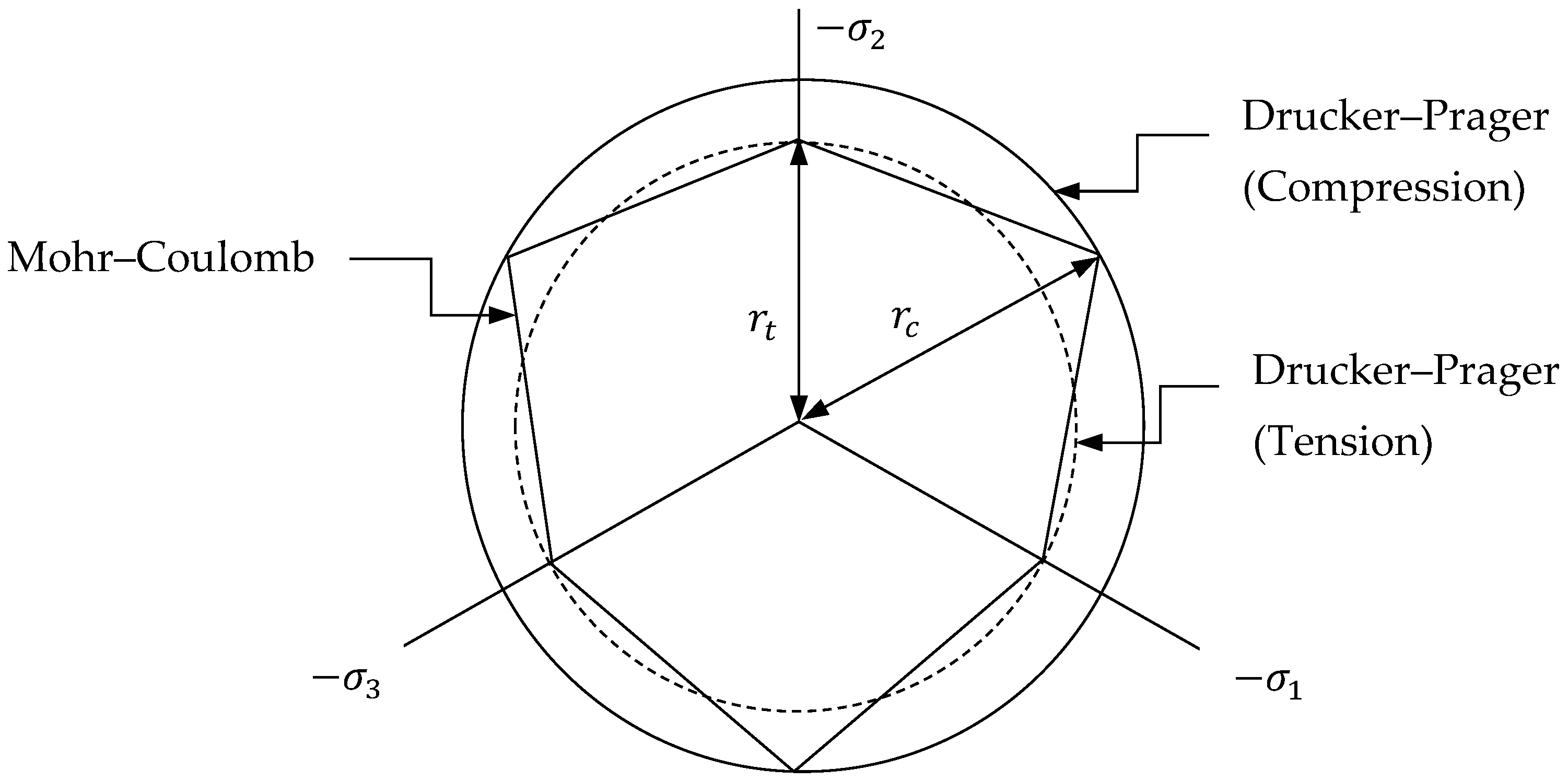
The Drucker–Prager yield criterion is a generalized version of the von Mises criterion that includes the influence of hydrostatic stress [14]. It is a smooth, continuous approximation of the Mohr–Coulomb envelope, making it more stable in computational environments. The Drucker–Prager yield function is defined as:
f = α I 1 + J 2 K
where I 1 is the first invariant of the stress tensor, J 2 is the second deviatoric stress invariant, and α and K are coefficients dependent on the cohesion c and the angle of internal friction ϕ. The Drucker–Prager yield surface can be linked more closely to the tension strength; these coefficients can be expressed as follows:
α = 2   s i n ϕ 3 ( 3 + s i n ϕ )   and   K = 6   c   c o s ϕ 3 ( 3 + s i n ϕ )
Also, I 1 and J 2 are expressed as
I 1 = σ 1 + σ 2 + σ 3
J 2 = 1 6   [ ( σ 1 σ 2 ) 2 + ( σ 2 σ 3 ) 2 + ( σ 3 σ 1 ) 2 ]
The material properties, cohesion c and angle of friction ϕ are determined by using the following equation:
c = Y t 2 Y c Y t   and   ϕ = π 2   2 s i n 1 ( Y t Y c )
where Y t is the tensile strength and Y c is the compressive strength of UHPC. To ensure the brittle material remains safe, the function f expressed in Equation (2) must equal zero. This means that at the material’s critical state, safety is guaranteed only if the following condition is satisfied:
K α I 1 + J 2
The factor of safety ( F o S D r u c k e r P r a g e r ) is calculated using the following equation:
F o S D r u c k e r P r a g e r = K α I 1 + J 2
Figure 13 shows the yield surfaces, comparing the Mohr–Coulomb and Drucker–Prager yield criteria in the π-plane. The π-plane representation, which is a plane perpendicular to the hydrostatic axis, effectively illustrates the differences between the hexagonal yield surface of the Mohr–Coulomb criterion and the smoother circular yield surface of the Drucker–Prager criterion. In Figure 13, σ 1 ,   σ 2 ,   a n d   σ 3 are the maximum, middle, and minimum principal stresses, respectively.

3. Results

This section presents the detailed results obtained from the experimental testing and FEM of the CAES tank. Both experimental and computational analyses were conducted to examine the structural behavior of the tank under internal pressure conditions, with particular attention given to assessing the influence of confinement provided by UHPC and a thin neoprene rubber layer.
The central focus of this study was on measuring hoop (transverse) strains, which are strains that develop circumferentially around the steel cylinders. These measurements were taken at key locations both on the steel surfaces and within the surrounding UHPC to evaluate how the structure responded to internal pressure.
The experimental phase of the study was carried out in a series of stages, beginning with a baseline test of the scale model without any external confinement. This served as a reference point for understanding the structural response in an unconfined state. The study then progressed to more advanced configurations, particularly those involving UHPC as a confinement material, to observe how it affected strain behavior and overall structural performance.
Originally, the experimental plan also included testing a configuration where a rubber interface was placed between the steel and UHPC layers. However, this portion of the study could not be completed as planned.
To overcome this experimental limitation and still explore the intended rubber interface scenario, the study relied heavily on FEM simulations. These numerical models enabled a broader investigation, including configurations that could not be physically tested, and provided valuable additional insights into the strain behavior and structural performance of the rubber interface system.
This section begins by presenting and analyzing the experimental strain data collected from the unconfined steel cylinders and UHPC confinement scenarios. The strain data collected during these experiments are presented and analyzed to understand how the different confinement configurations influence the structural behavior under internal pressure.
After addressing the experimental findings, the section transitions to the numerical analysis using FEM. The FEM results primarily focus on evaluating the distribution of strain and identifying regions of high stress concentration within the models. These insights help visualize how the internal loads are transferred and resisted by the materials and confinements used.
To assess the reliability of the numerical approach, the FEM results are directly compared with the corresponding experimental data. This comparison serves as a validation step, aiming to verify whether the FEM simulations can accurately predict the structural response observed during laboratory testing.
Finally, the numerical outcomes are further analyzed using various established failure criteria to evaluate the structural integrity of the models. These criteria account for both ductile and brittle material behavior. By applying these failure theories to the simulation results, a more comprehensive understanding of the potential failure mechanisms and critical stress conditions in the system is achieved.

3.1. Experimental Testing Overview

Experimental and FEM data both showed nearly identical linear pressure–strain relationships, confirming elastic steel behavior across the tested pressure range. This consistent linearity provided confidence that the experimental setup—strain gauge placement, pressure control, and data acquisition—accurately captured the structural response, and that the FEM model reproduced similar deformation mechanisms. This alignment established a strong foundation for the detailed correlation presented later in Section 4.

3.1.1. Experimental Determination of UHPC Material Properties

Accurate mechanical characterization of UHPC was essential for realistic FEM simulations and structural analysis. To obtain critical properties—compressive strength, tensile strength, Poisson’s ratio, and modulus of elasticity—laboratory tests were performed on two types of specimens: cubes for compression and dog-bone shapes for tension.
Six cube specimens, 5.1 cm (2 in.) per side, were tested under compression, yielding an average compressive strength of 75 MPa (10,898 psi), as shown in Table 3.
For tensile properties, three dog-bone specimens were tested. The results, which are summarized in Table 4, show an average Poisson’s ratio of 0.22, Young’s modulus of 39,707 MPa (5,758,954 psi), and tensile strength of 3.94 MPa (572 psi). These values were directly used as material inputs in the FEM analysis.

3.1.2. Experimental Results for Steel Cylinders Without Confinement

This baseline experiment was critical to understanding the inherent deformation characteristics of the steel cylinders alone, facilitating a clear comparison of confinement effects introduced later by UHPC.
The experiments involved pressurizing three identical inner steel cylinders (denoted as C1, C2, and C3) incrementally up to a maximum pressure of approximately 3.5 MPa (508 psi). To verify consistency and reproducibility, each test was repeated multiple times, ensuring the reliability of the recorded data.
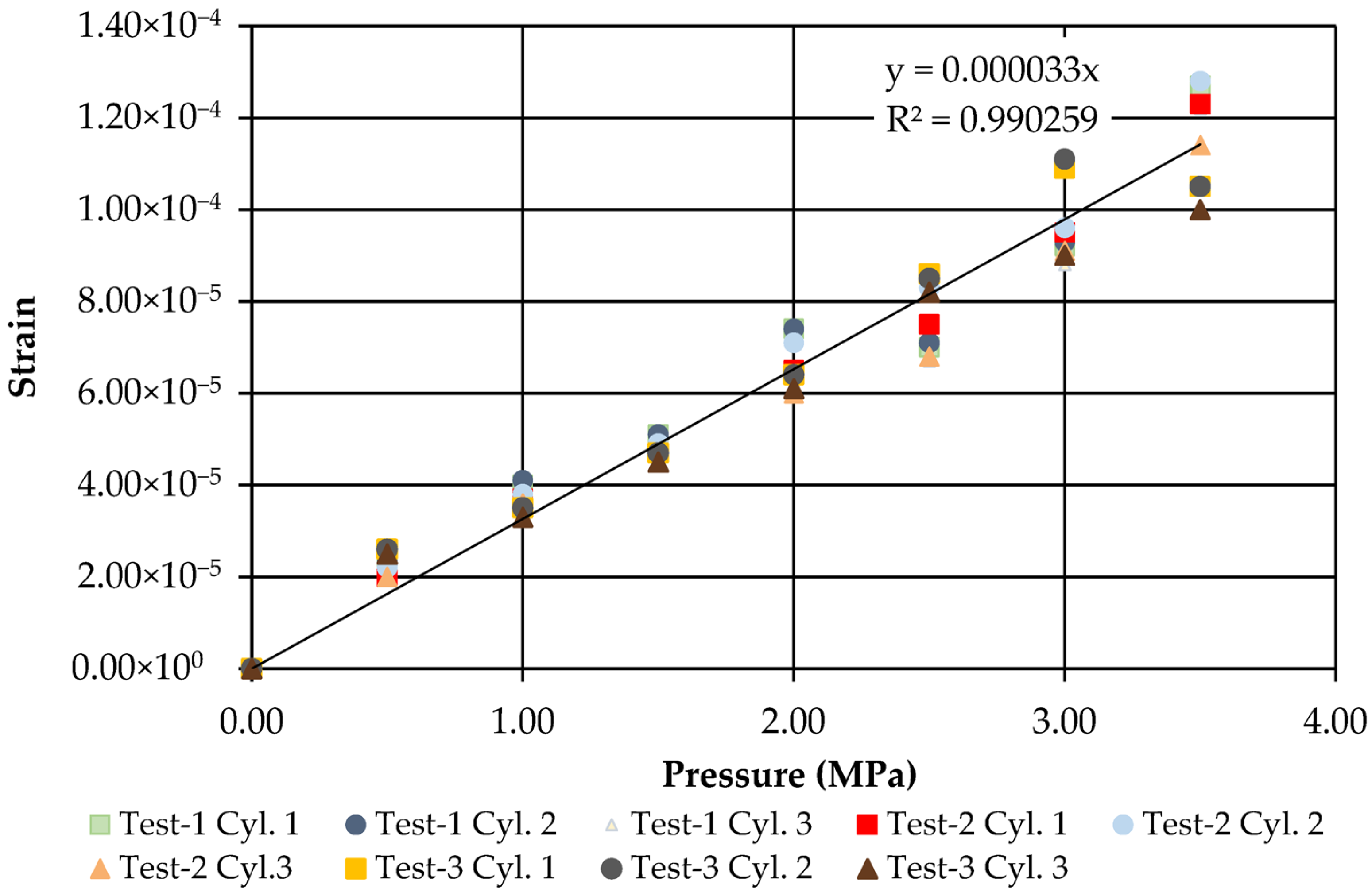
Hoop (transverse) strain measurements, shown in Figure 14, reached approximately 115.5 µε at the peak internal pressure of 3.5 MPa. A regression analysis yielded a correlation coefficient (R2 = 0.990), indicating strong consistency in the data. This validated the experimental procedure and provided reliable input for structural evaluation and FEM model validation. At a pressure of 3 MPa, the steel strain is approximately 99 µε. The strain at 3 MPa is noted here since the FEM model had an internal pressure of 3 MPa.

3.1.3. Experimental Results for Steel Cylinders and UHPC with UHPC Confinement

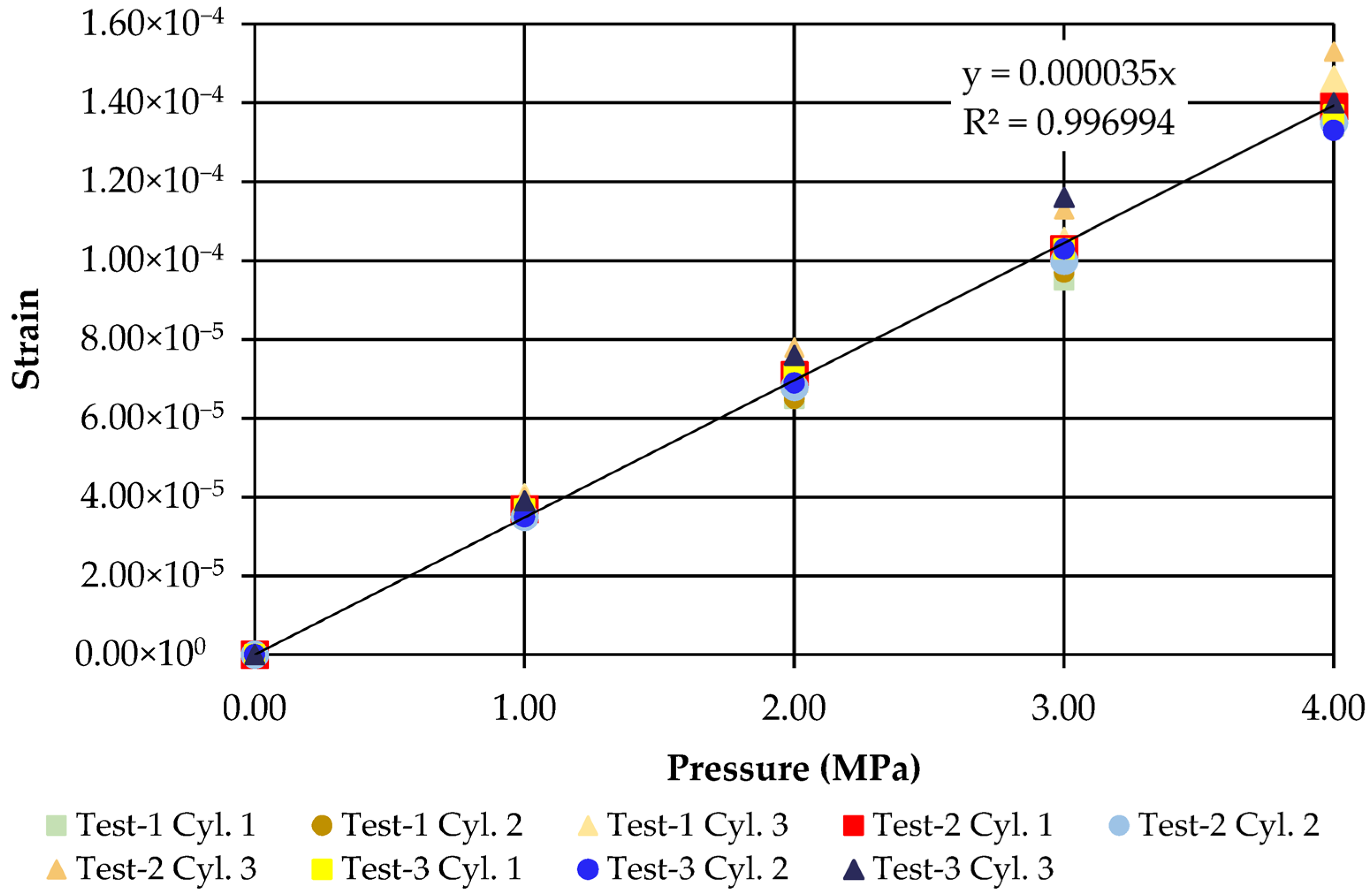
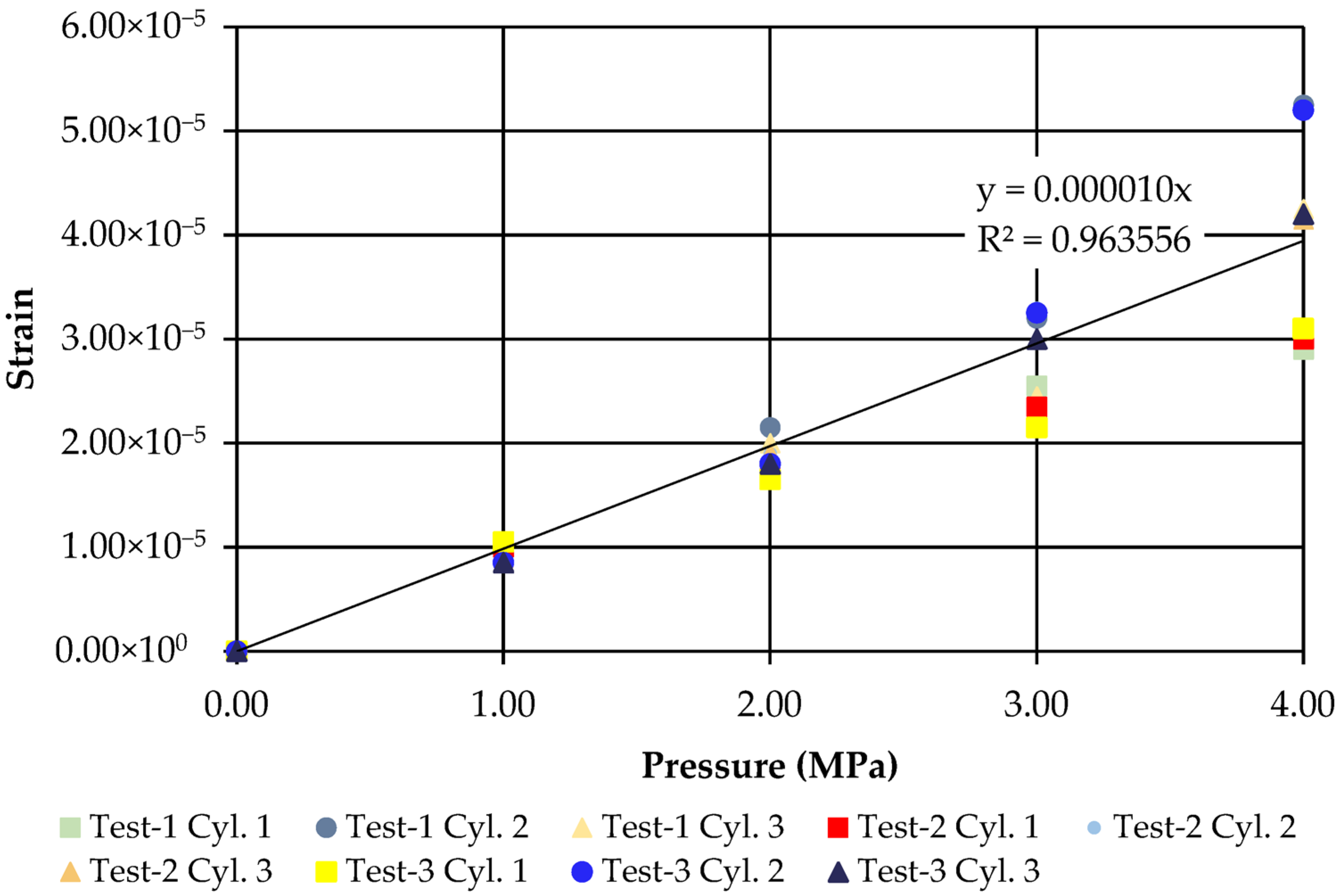
This experimental test provided detailed strain measurements under internal pressures up to 4 MPa (580 psi). In the hoop direction, the steel cylinders exhibited significantly higher strain levels, reaching approximately 122.5 µε at 3.5 MPa (508 psi), primarily due to the radial expansion caused by internal pressure, as shown in Figure 15. The hoop strain data for steel has exceptional linearity and repeatability, confirmed by a high regression coefficient (R2 = 0.997). In contrast, the UHPC demonstrated lower hoop strain levels, approximately 35 µε at the same pressure level, as shown in Figure 16. These results also exhibited strong linear behavior, with a regression coefficient of R2 = 0.964, indicating consistent deformation patterns within the concrete. For comparison with the FEM results, at a pressure of 3 MPa, the steel and UHPC have strain values of 105 µε and 30 µε, respectively. It should be noted that the increase in steel strain with the UHPC confinement seems counterintuitive. This increase is due to the unsymmetrical geometry of the tank, in which at the location of maximum strain (i.e., the location of strain gauges), the strain increases with confinement. In the numerical results section, it will be shown that the average strain in steel significantly decreases with the presence of UHPC confinement.

3.2. Numerical Modeling Results

This section presents the outcomes from various numerical modeling setups. It begins with the unconfined model—steel cylinders without any external confinement provided by UHPC—which serves as a reference point to assess the impact of different confinement conditions applied later.
To ensure reliable simulation results, material properties were carefully defined in ANSYS. For steel, standard values were used: modulus of elasticity of 200,000 MPa (290,075,476 psi), and Poisson’s ratio of 0.3, based on the default settings of the simulation software.
For UHPC, values were taken from laboratory tests. It exhibits a Poisson’s ratio of 0.22 and a Young’s modulus of 39,707 MPa (5,758,954 psi), reflecting its high stiffness and brittle nature.
Lastly, for simulations that included a rubber layer (80 A type), a significantly lower Young’s modulus of 3.4 MPa (500 psi) was used to represent its soft, flexible behavior.

3.2.1. Model Without Confinement

The first FE analysis focused on evaluating the behavior of three steel cylinders without any external confinement. An internal pressure of 3 MPa (435 psi) was applied during the simulation. The main results examined were the hoop strain (measured along the Y-direction in the defined coordinate system), which is illustrated in Figure 17.
Figure 17 shows that the average hoop strain in the steel cylinders at the instrumented locations was about 100.87 µε under 3 MPa (435 psi) internal pressure. This value was obtained from mesh nodes at the same locations as the experimental strain gauges. The result closely matches the experimental strain of around 99 µε, confirming that the FEM model accurately captured the hoop strain behavior and that the modeling assumptions were valid in the transverse direction.

3.2.2. UHPC-Confined Numerical Model

After analyzing the unconfined case, the model was modified to include UHPC confinement around the steel cylinders, simulating the experimental setup where UHPC was cast and cured for 28 days. The aim was to study how UHPC confinement affects strain in the steel and to compare FEM predictions with experimental results. The analysis also demonstrated failure behavior under confinement. Two FEM models were created:
  • Model without shrinkage gap (assuming perfect contact between UHPC and steel):
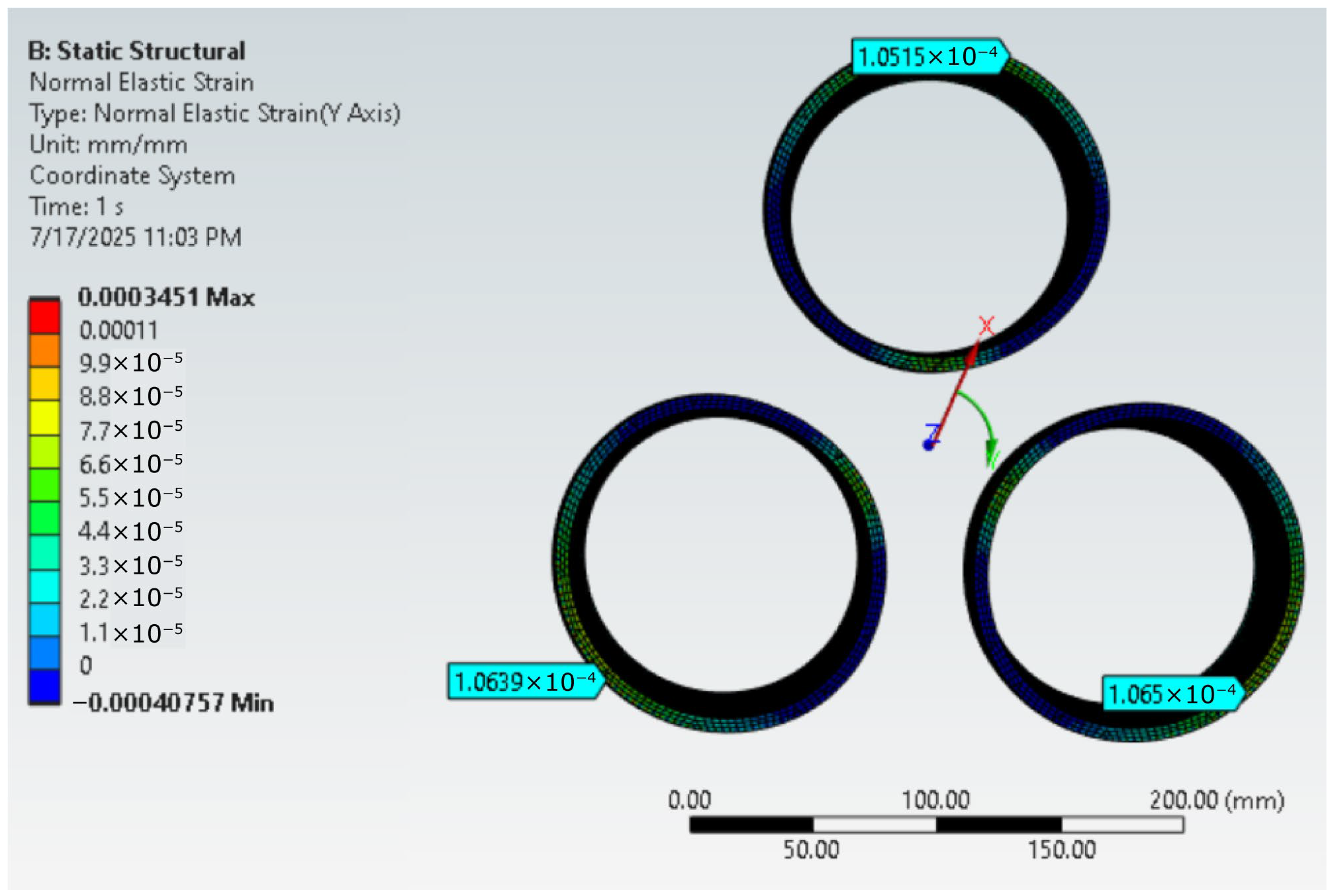
In the first UHPC-confined model, it was assumed that the steel cylinders and the surrounding UHPC were perfectly bonded, with no gaps or separation—an ideal condition commonly used in preliminary FEM analyses. The strain results for both materials in hoop (transverse) directions are shown in Figure 18 and Figure 19.
The data shown in the above figures are summarized in Table 5, which lists the hoop strain values for both the steel cylinders and the surrounding UHPC.
2.
Model with shrinkage gap (introducing a separation layer based on estimated UHPC shrinkage):
After casting, UHPC naturally undergoes shrinkage during early curing, which can cause it to pull away slightly from the steel cylinders, especially around curved surfaces. This can create a small gap or micro-separation, reducing the effectiveness of confinement and allowing higher strain in the steel during early loading stages.
In the initial FEM model, the interface was assumed to be perfectly bonded, which underestimated the steel strain compared to experimental results. To address this, a revised model included a small radial gap to simulate the real effect of shrinkage. To estimate this gap, the following actions were taken:
  • Shrinkage was first calculated using ACI 209.2R-08 [12] guidelines.
  • A practical test followed, using three UHPC cylinders to measure actual shrinkage with a vernier caliper.
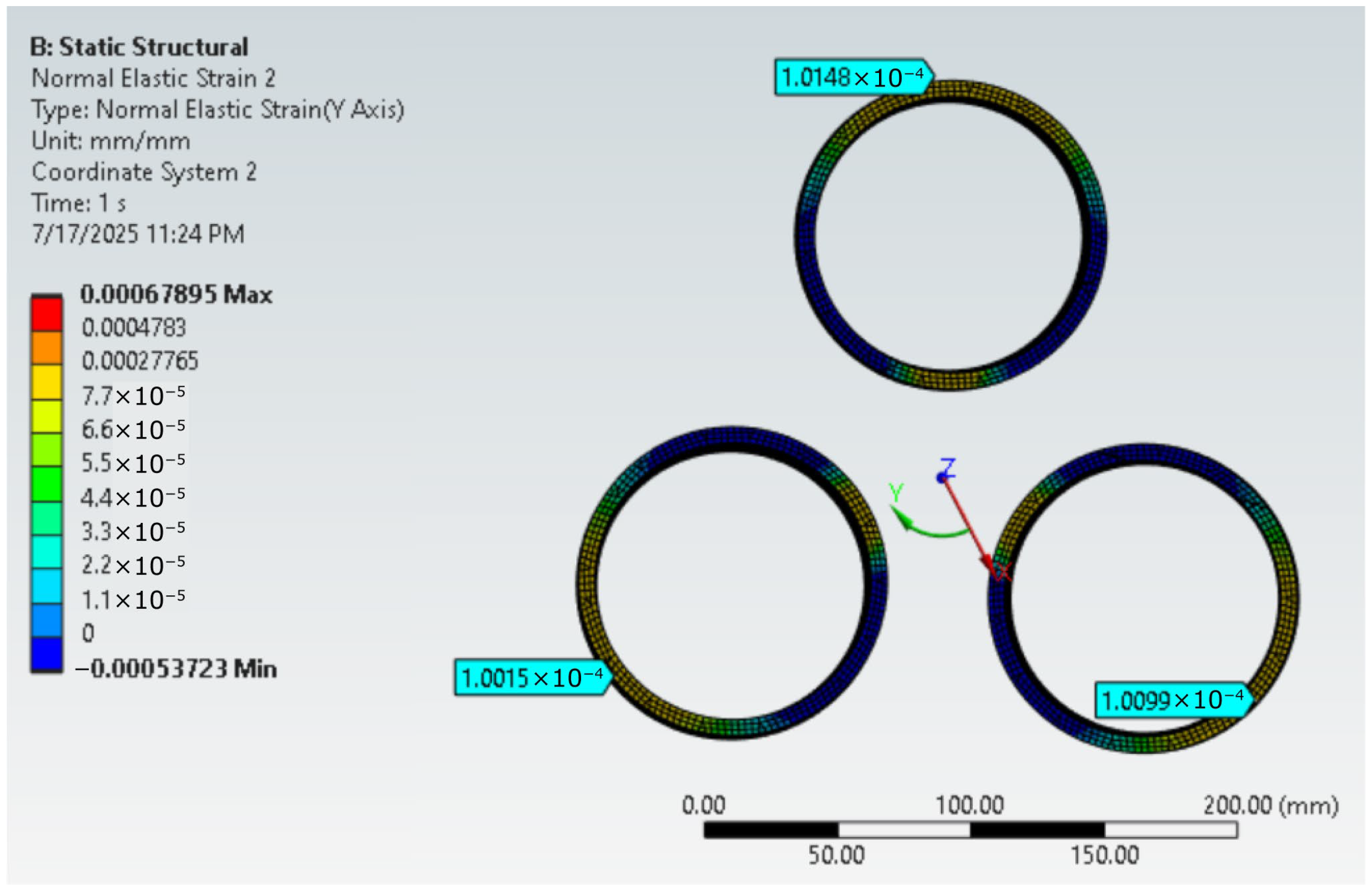
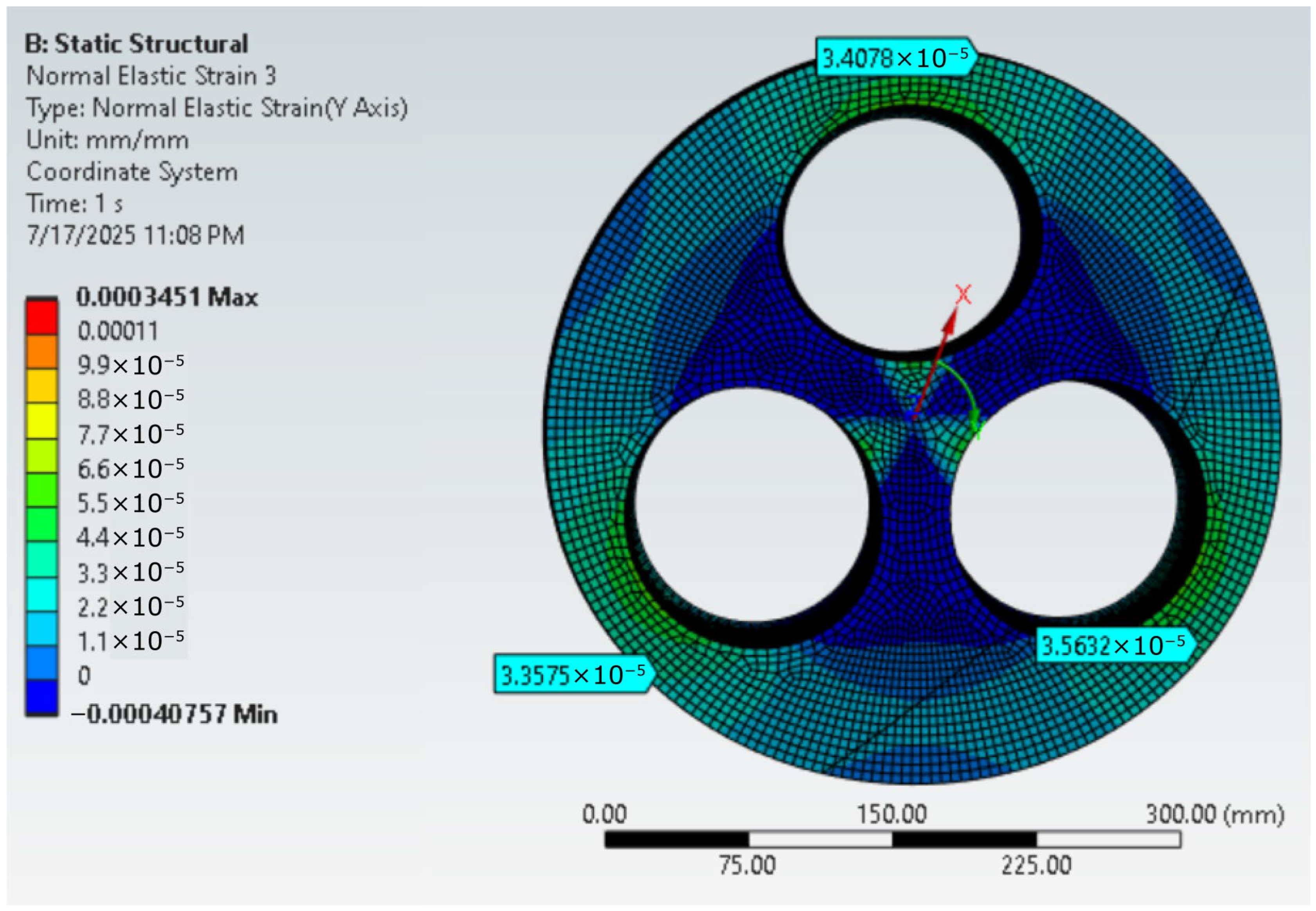
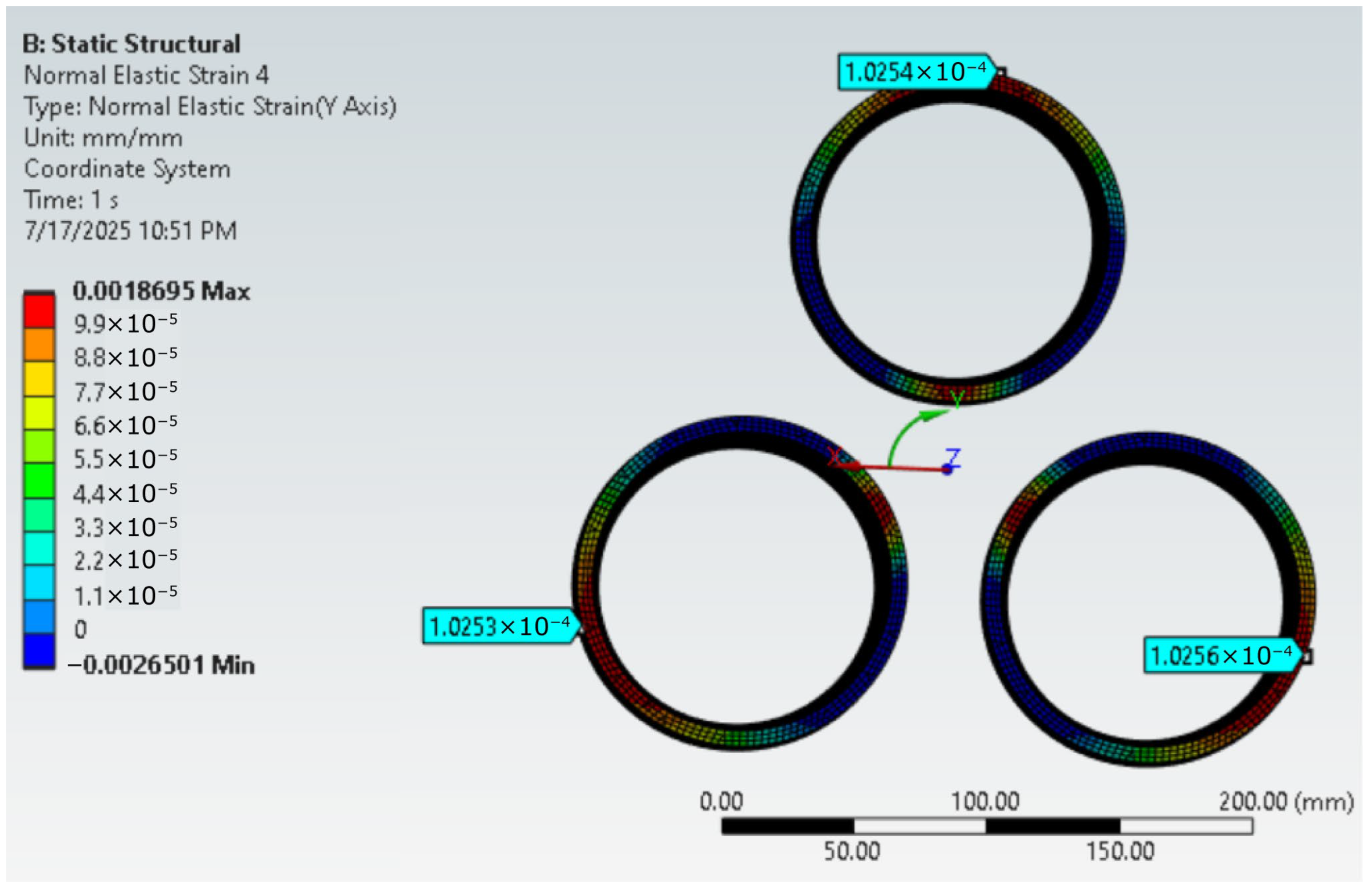
The average shrinkage translated to a radial gap of 0.038 cm (0.015 inches), modeled with a very soft material. This updated model closely matched experimental strain values, showing the importance of including shrinkage effects in simulations. Figure 20 and Figure 21 show the hoop strain distribution in the steel cylinders and the UHPC, respectively.
The data shown in the above figures are summarized in Table 6, which lists the hoop strain values for both the steel cylinders and the surrounding UHPC.

3.2.3. Model with Rubber Interface Layer

To explore another variation, a FE model was developed by adding a thin rubber layer between the steel cylinders and the surrounding UHPC. The rubber, modeled as Shore 80 A with a modulus of elasticity of 3.45 MPa (500 psi), was bonded to both materials to simulate full contact. All other model parameters, including geometry and loading, remained the same.
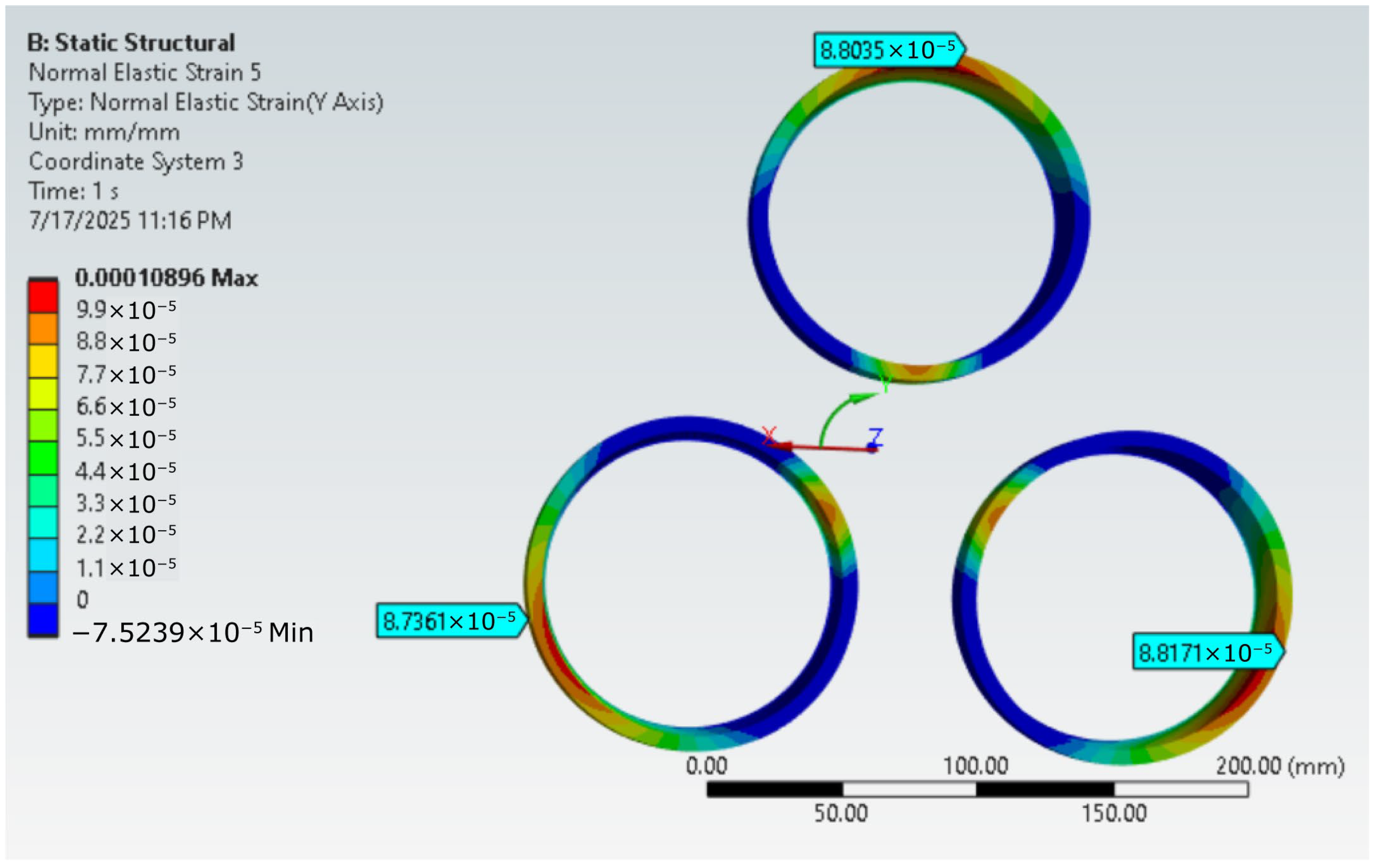
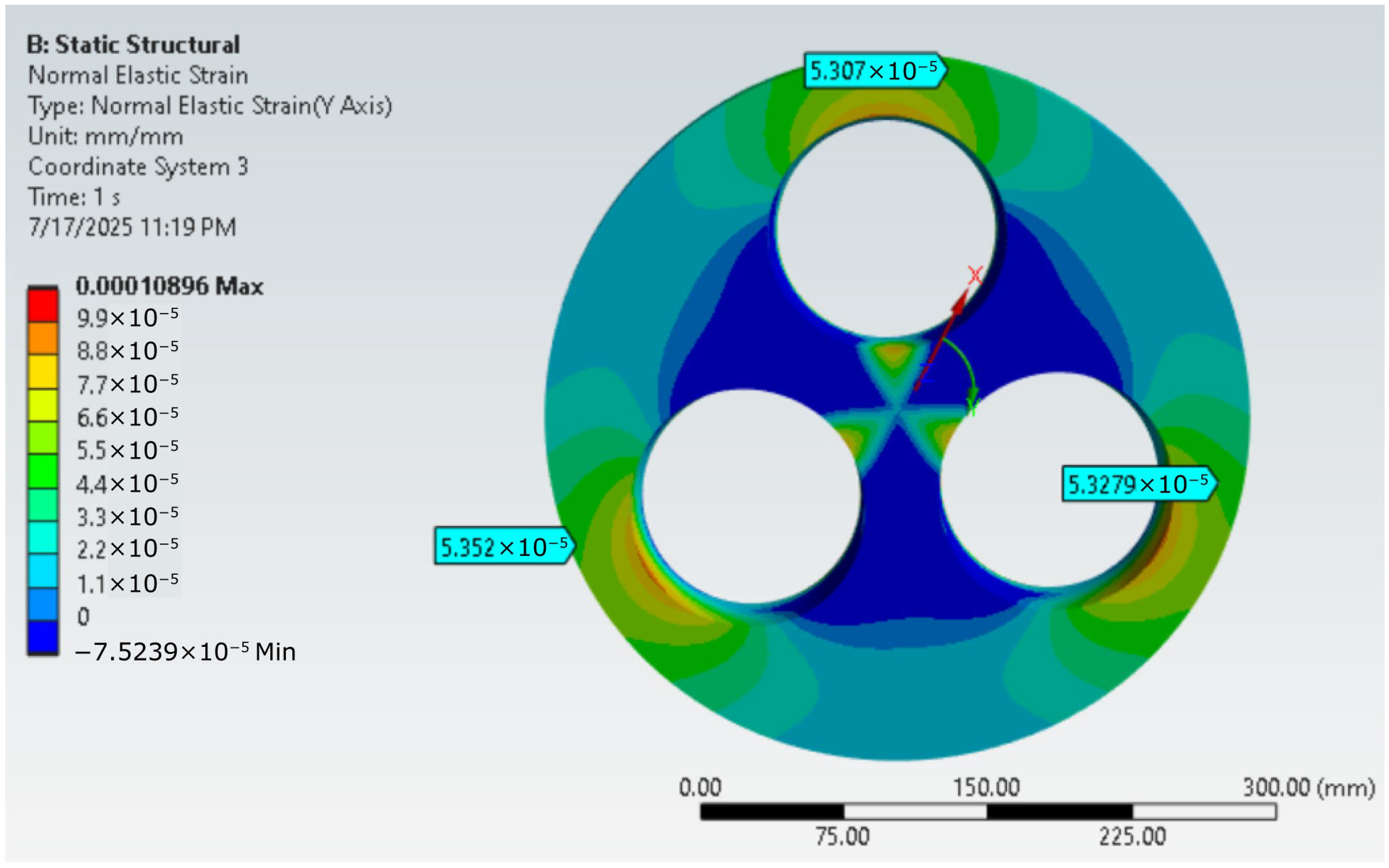
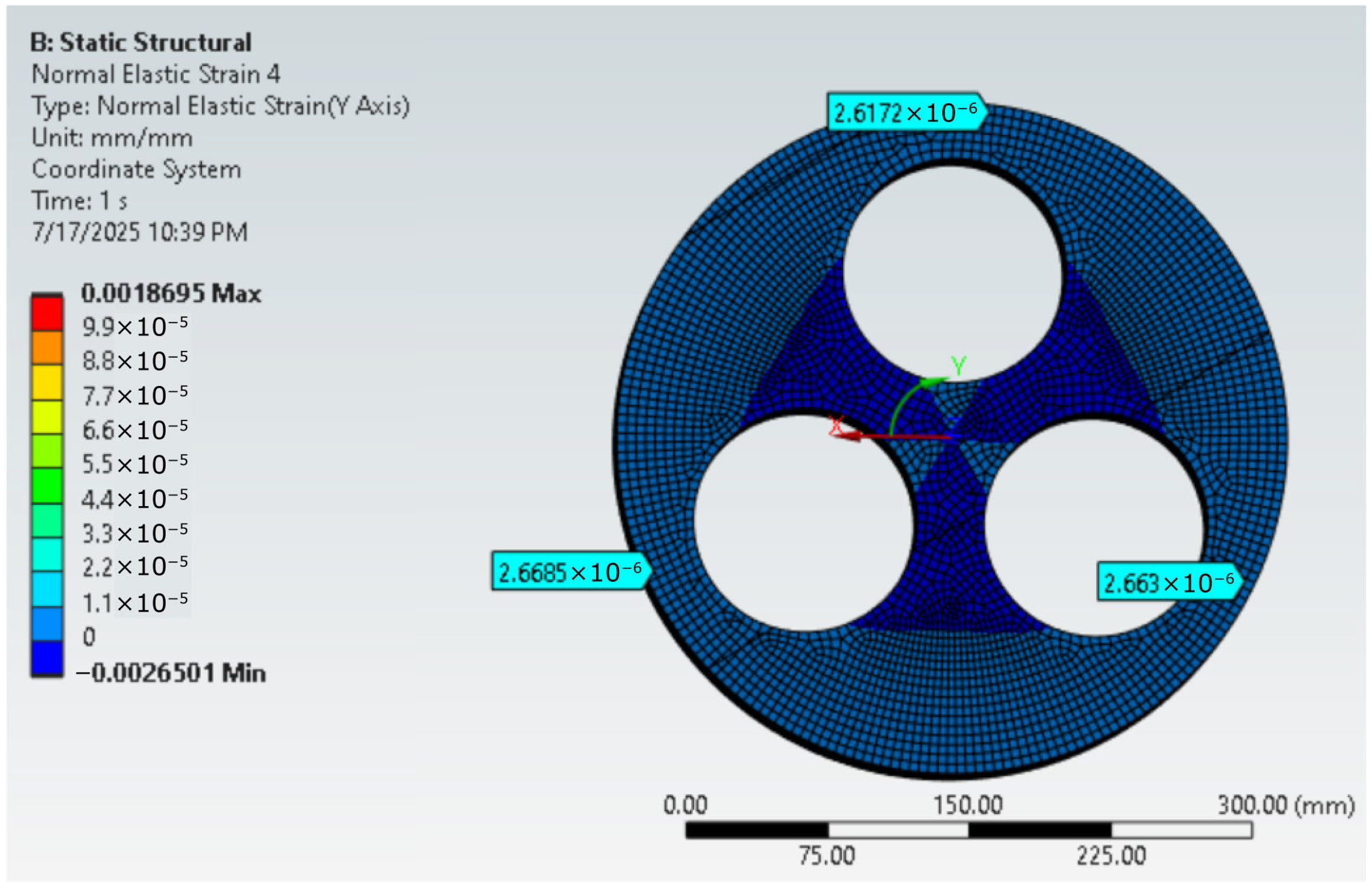
The results show a significant drop in hoop strain within the UHPC. This suggests the rubber acted as a buffer, absorbing strain and protecting the UHPC from excessive stress. However, hoop strain in the steel stayed nearly unchanged, indicating that the rubber layer had little effect on steel deformation. Figure 22 presents the strain distribution in the hoop direction in steel, Figure 23 show the strain distribution along the hoop direction in UHPC, and Table 7 summarizes the data shown in the figures.

3.3. Comparison of Experimental and Numerical Results

To evaluate the accuracy of the FEM model, experimental and numerical results were compared for both unconfined and UHPC-confined (with and without shrinkage gap) cases. This comparison highlights the reliability of the modeling assumptions and the effectiveness of UHPC as a confinement material. The analysis focused on hoop strain, which is key to assessing confinement performance. Table 8 summarizes the hoop strain values for both steel and UHPC from FEM and experimental results.

3.4. Failure Criteria Evaluation

Failure analysis focused on the mid-plane of the CAES tank model, chosen for its high stress concentration. Two scenarios were studied: one with UHPC confinement with a shrinkage gap, and another with an 80 A rubber interface. Key stress data from ANSYS—von Mises and principal stresses—were exported to Excel for detailed evaluation, helping identify critical stress points and potential failure risks under pressure loading.

3.4.1. UHPC-Confined with Shrinkage Gap—Failure Analysis

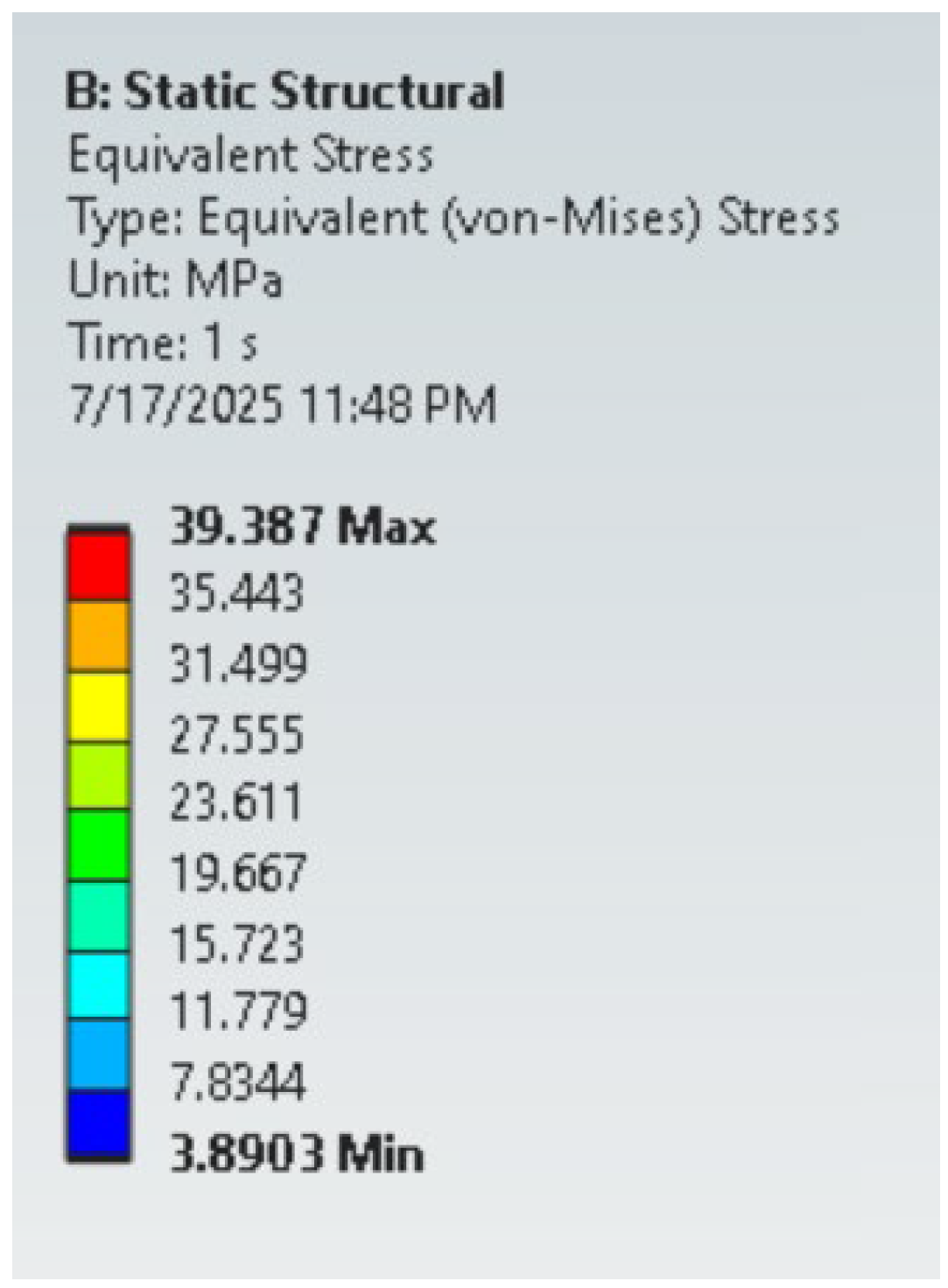
Starting with the steel cylinders, the material used has a yield strength of 344.7 MPa (50 ksi). According to the von Mises criterion, the equivalent stress must stay below this limit for safe performance. FEM analysis under 3 MPa (435 psi) internal pressure showed a maximum von Mises stress of 39.4 MPa (5712.7 psi), as shown in Figure 24, well within the safe range. Using Equation (2) for FoS calculation, the resulting factor of safety is 8.75, which confirms that the steel cylinders satisfy the required safety criteria.
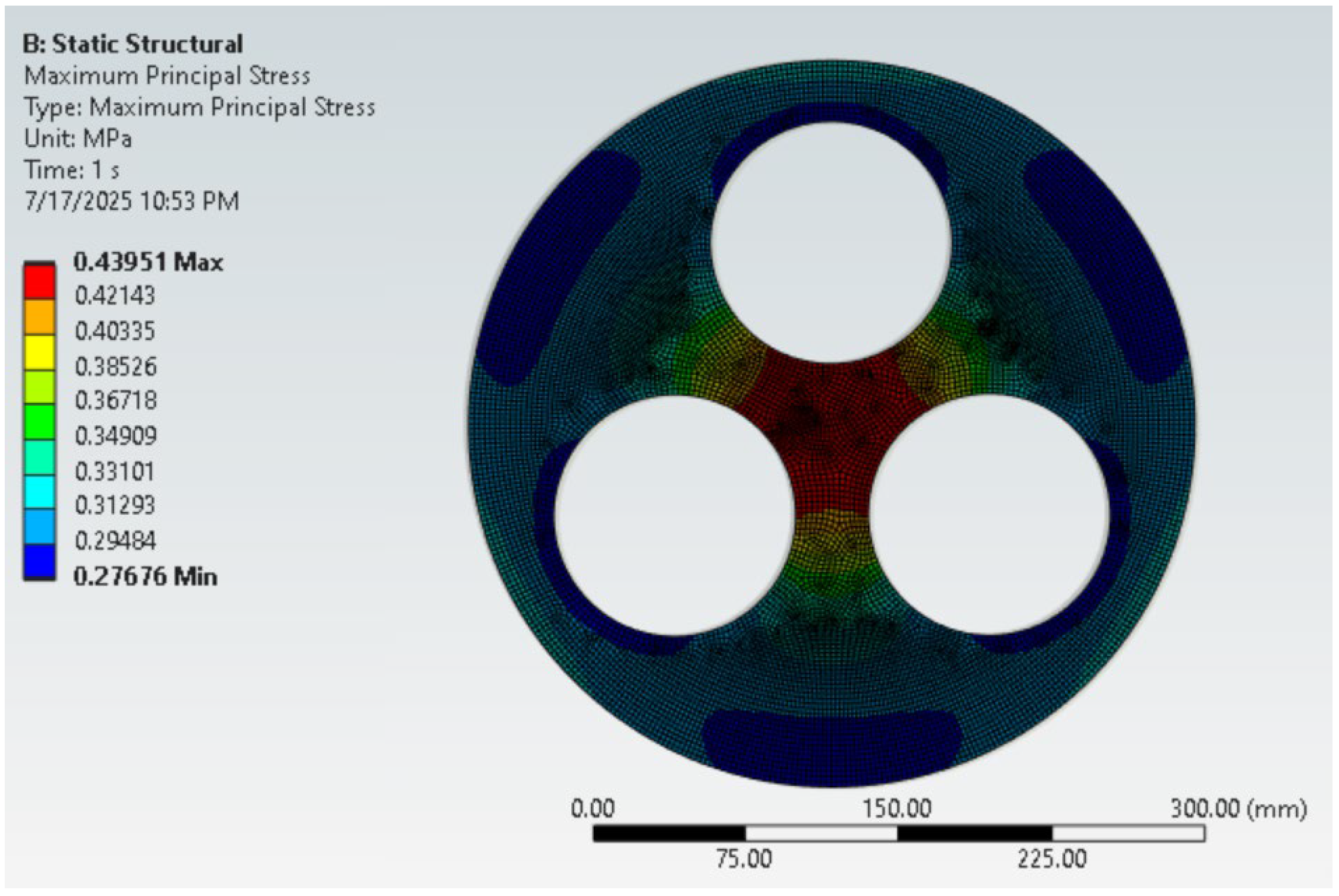
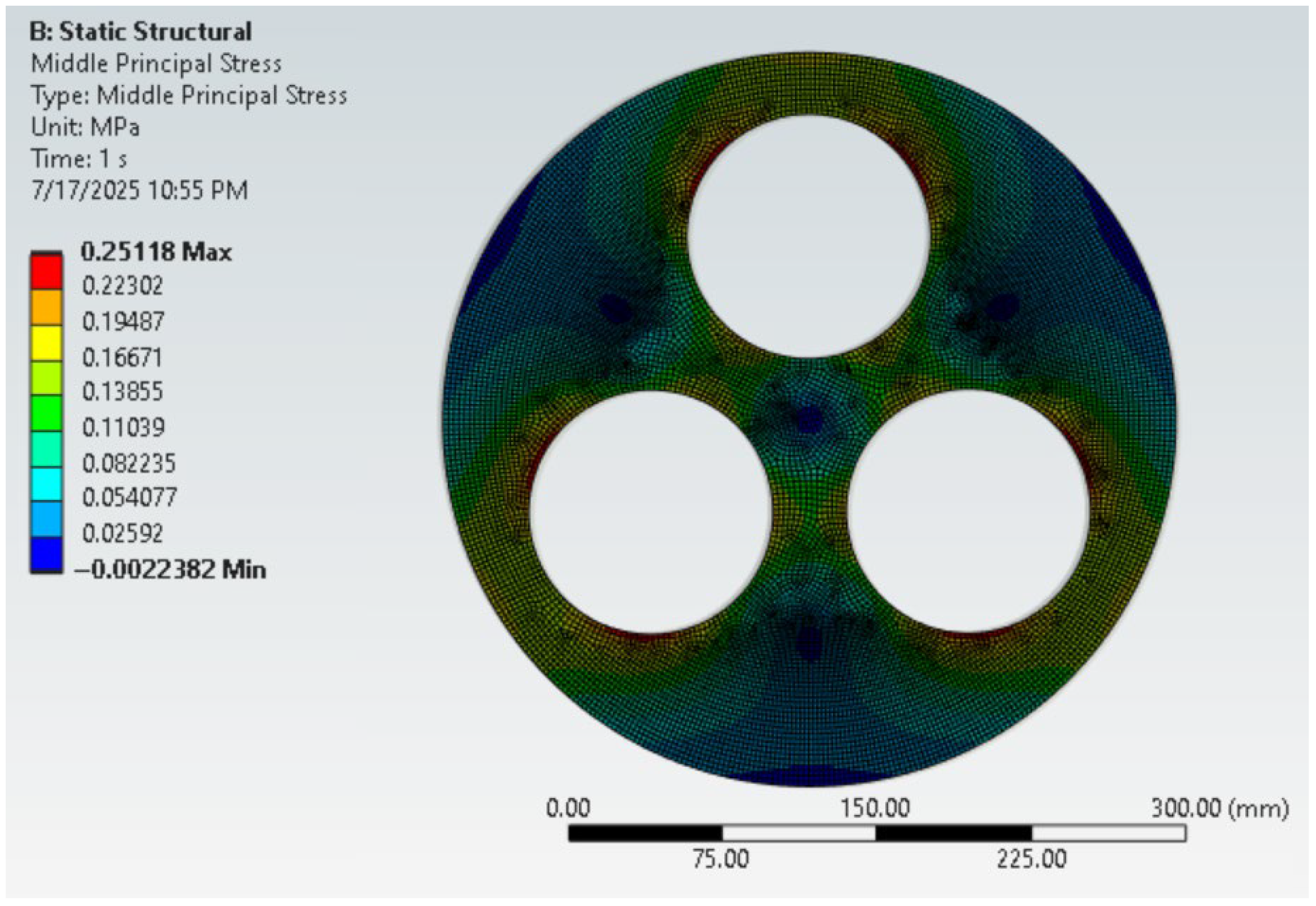
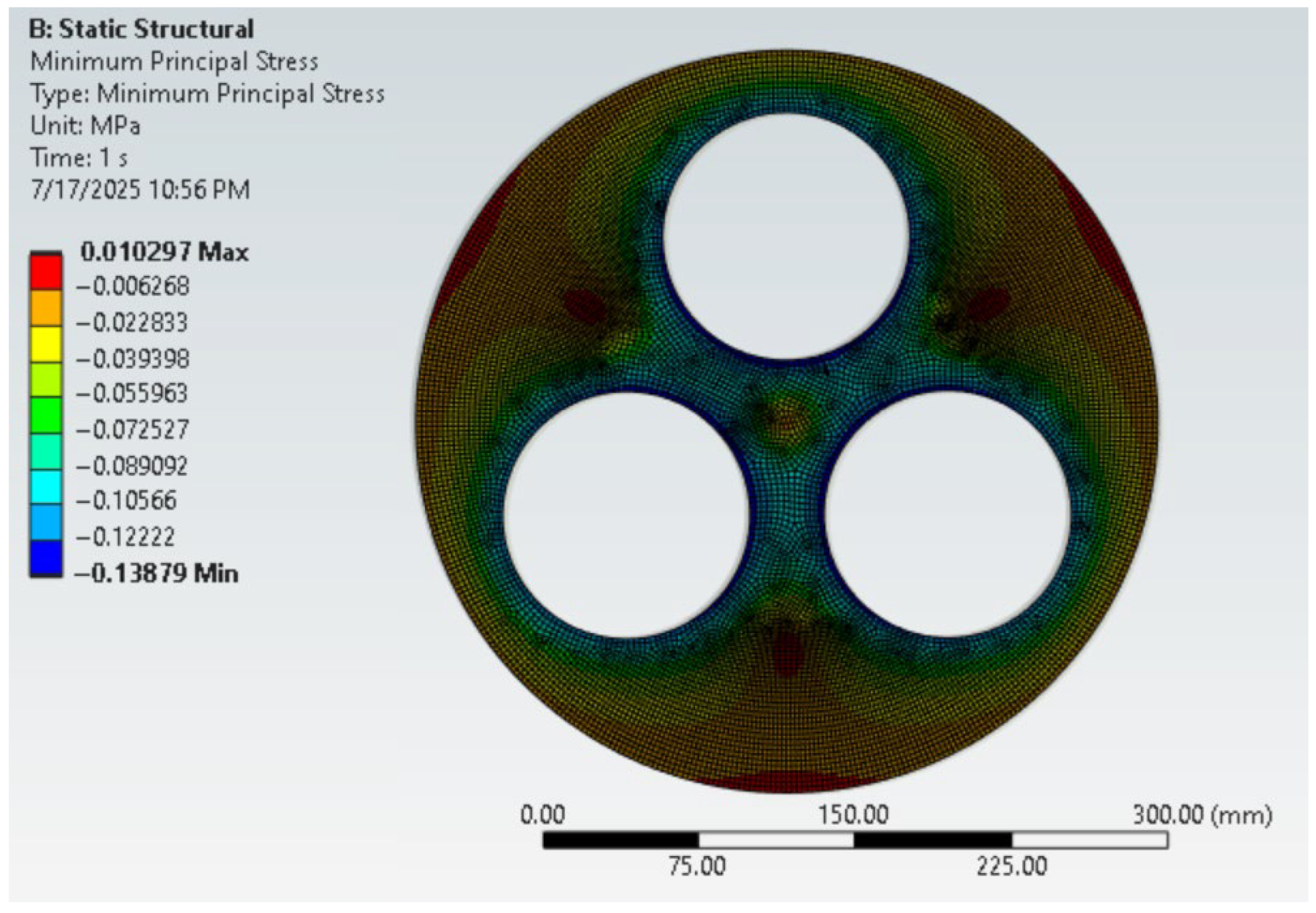
UHPC’s structural integrity under internal pressure was assessed using the Drucker–Prager criterion, which relies on principal stresses from FEM results. Figure 25, Figure 26 and Figure 27 show these stresses: maximum (Figure 25), intermediate (Figure 26), and minimum (Figure 27), helping evaluate UHPC’s safety under loading.
The principal stresses from the FE model were used to assess the Drucker–Prager criterion. Stress data were exported to Excel, where the factor of safety (FoS) was calculated for each point, as shown in Table 9. In this table, each row corresponds to the principal stress values of a specific element. Although many elements exist along the mid-plane, only three are presented here. Among them, the middle row shows the lowest FoS, as determined using Equation (9).

3.4.2. Rubber Layer—Failure Analysis

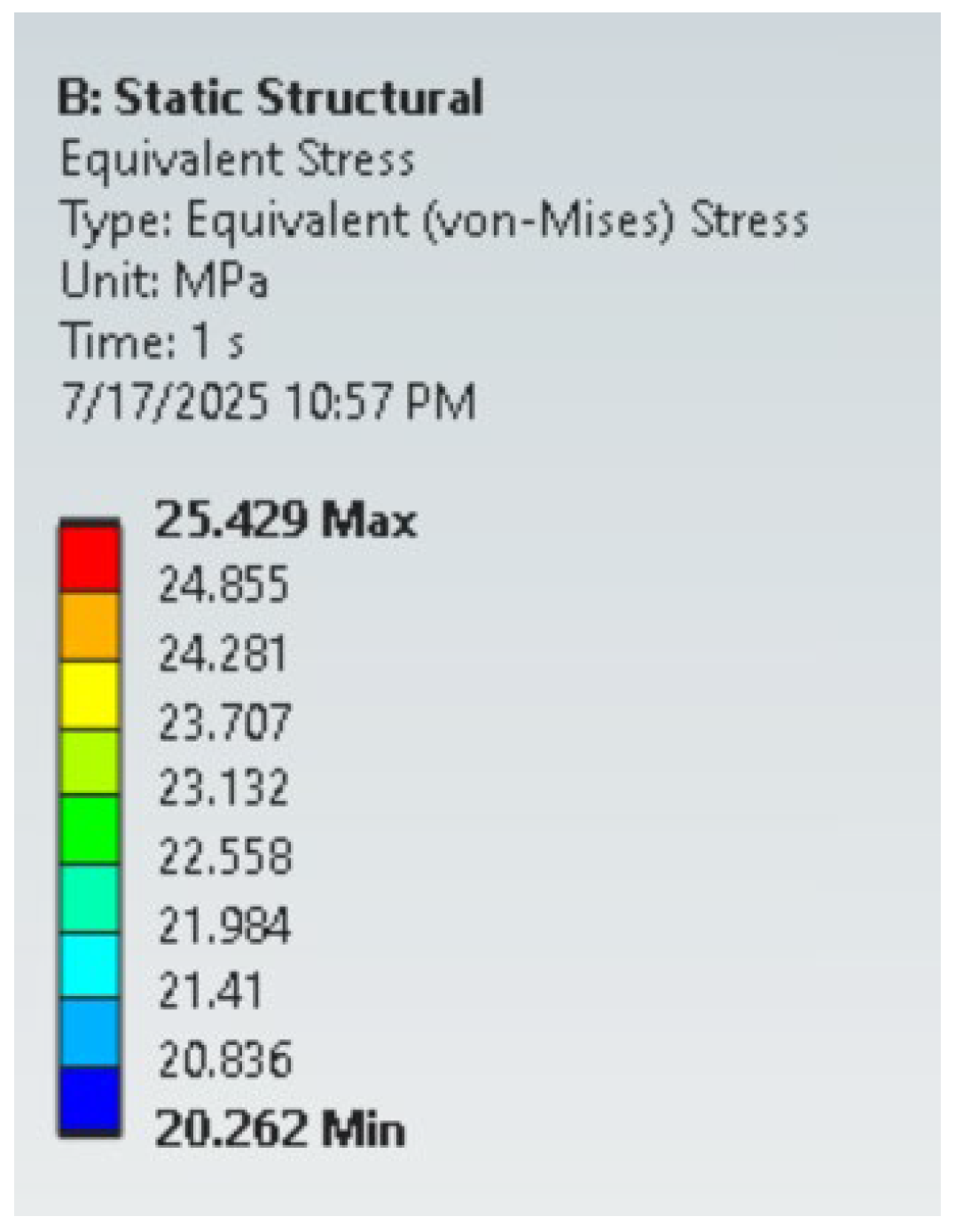
Failure analysis was also performed for the model with a rubber layer between steel and UHPC, using the same method as the shrinkage-gap model. Figure 28 shows the mid-plane von Mises stress in the steel cylinders under 3 MPa (435 psi) pressure, with a peak value of 25.4 MPa (3688.2 psi)—well below the 344.7 MPa (50 ksi) yield strength, confirming structural safety.
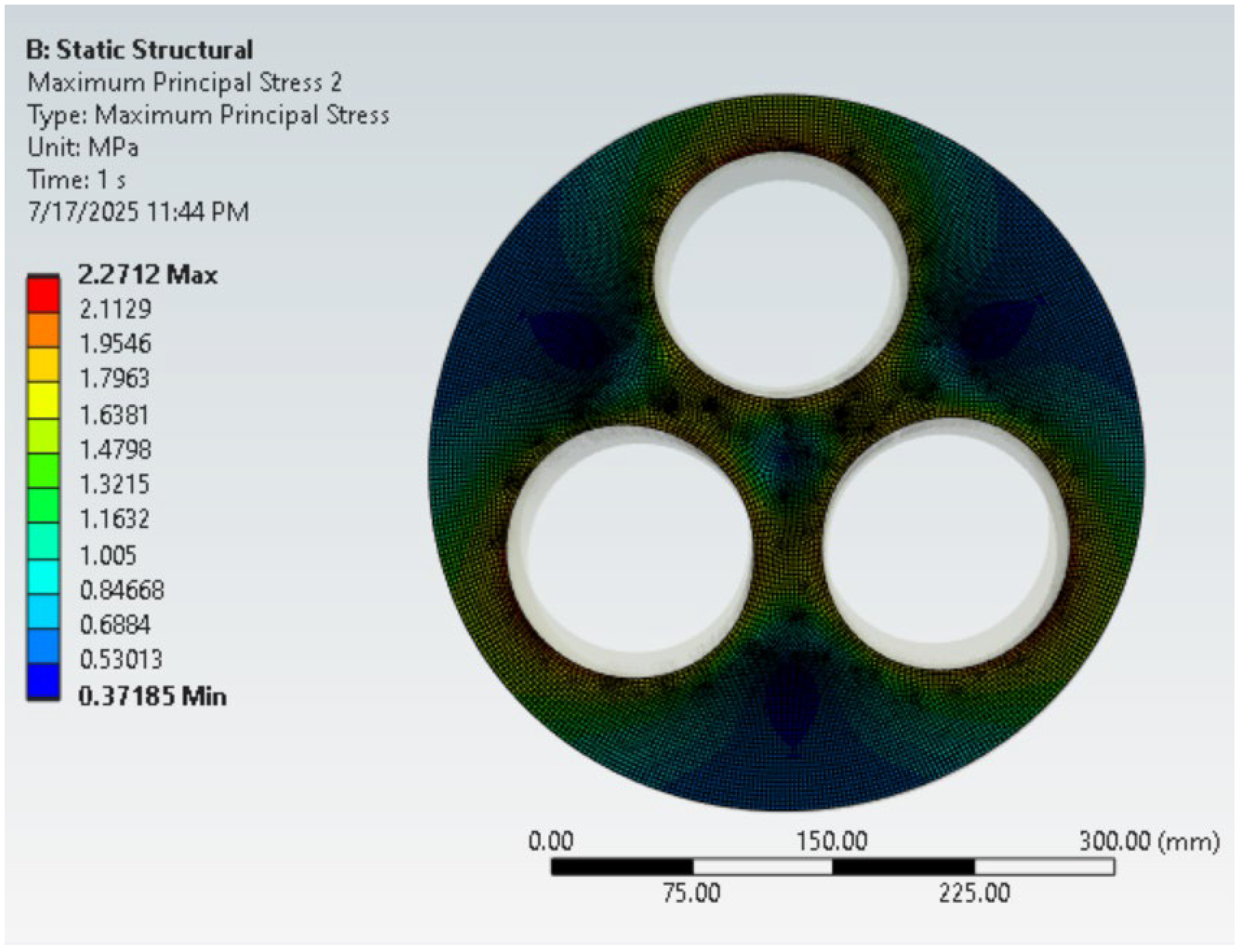
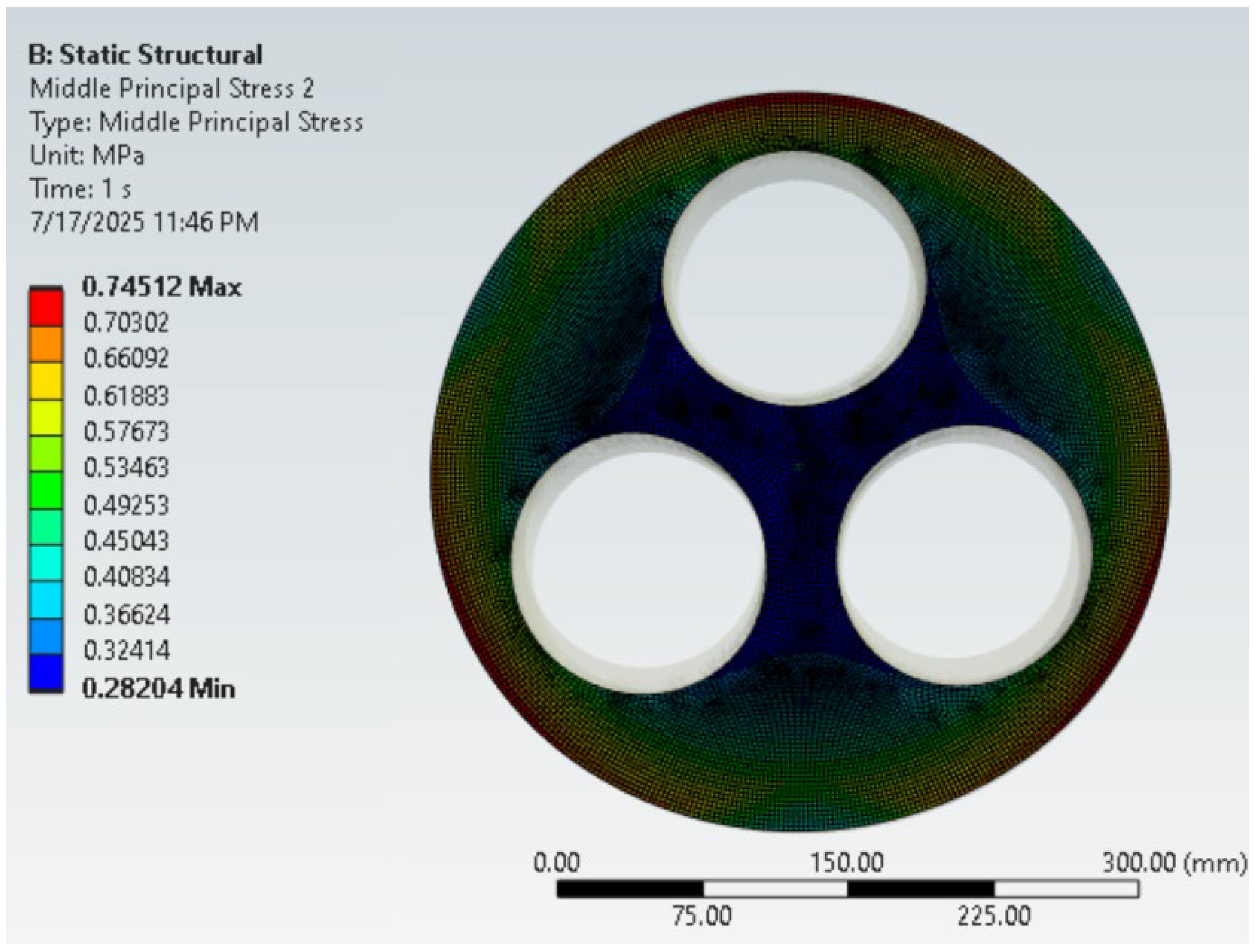
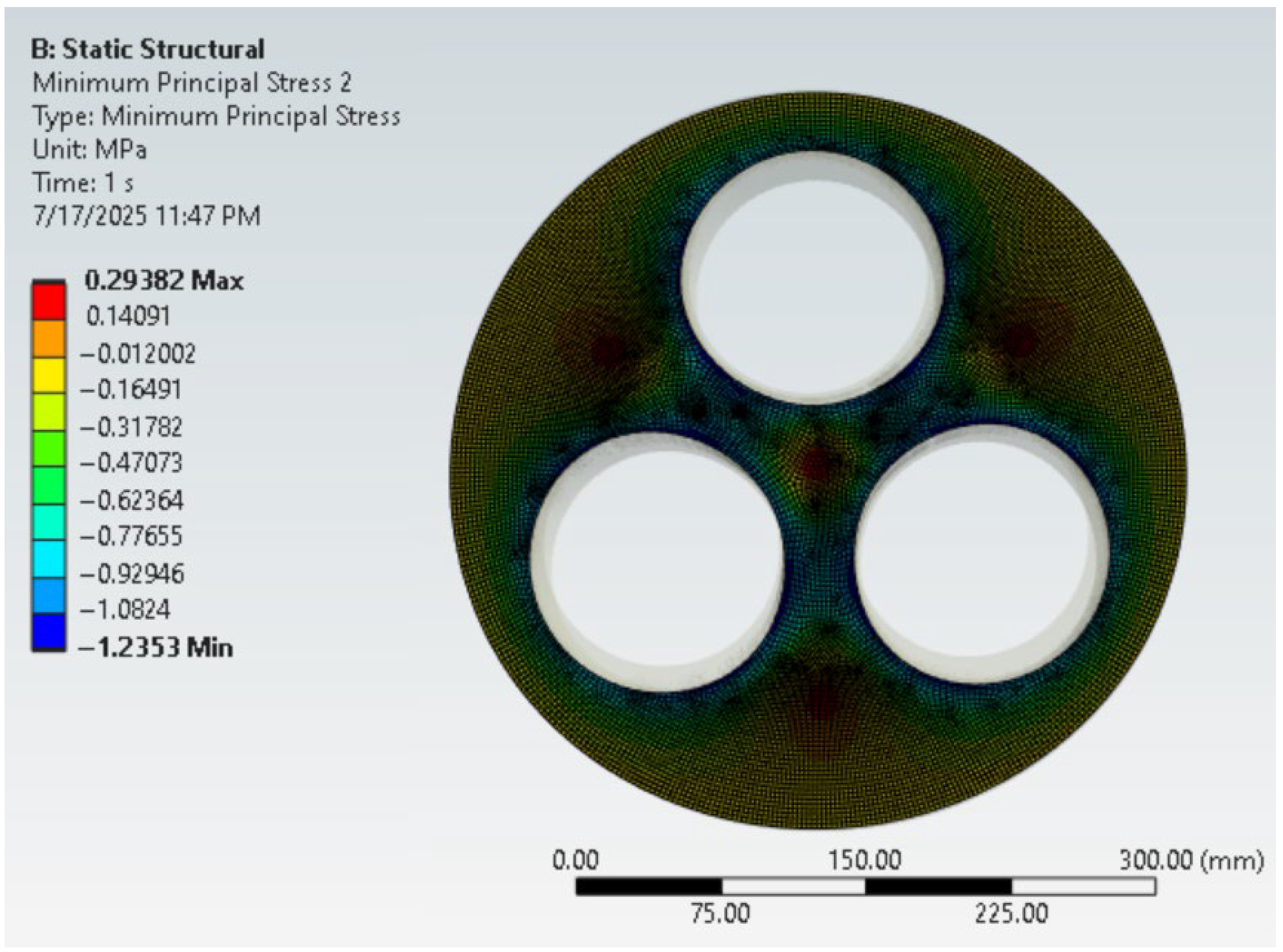
For UHPC, which exhibits brittle behavior, failure was evaluated using the Drucker–Prager criterion based on FEM-derived principal stresses. Figure 29, Figure 30 and Figure 31 display the maximum, intermediate, and minimum stress values. Critical stresses were extracted and analyzed in Excel to compute FoS using Equation (9), with the lowest FoS values identified as UHPC’s critical stress state, as shown in Table 10.

3.5. Scaling Analysis to Field-Level Pressure (20.7 MPa)

To evaluate the applicability of experimental and FEM results to industrial CAES tanks operating at pressures up to 20.7 MPa (3000 psi), a linear scaling method was used. Principal stresses from FEM at 3 MPa (435 psi) were proportionally scaled using the unitary method. This was applied to both the UHPC-confined model with a shrinkage gap and the rubber interlayer model to assess structural performance under elevated pressures. The scaled analysis considered a proprietary UHPC mix with high mechanical properties: compressive strength of 138 MPa (20,000 psi) and tensile strength of 13.8 MPa (2000 psi) [6].

3.5.1. For the Model with Shrinkage Gap (No Rubber Layer)

The von Mises stress at the critical steel stress state was linearly scaled to match an internal pressure of 20.7 MPa, yielding an equivalent stress of 271.6 MPa (39,398 psi). Since this is below the steel’s yield strength of 344.7 MPa (50,000 psi), the steel material is considered safe. The calculated factor of safety from Equation (2) is 1.27.
The maximum, middle, and minimum principal stresses for UHPC at the critical stress state were also linearly scaled, resulting in values of 15.66 MPa (2272 psi), 3.7 MPa (536.0 psi), and –6.8 MPa (−982 psi), respectively. When the Drucker–Prager yield criterion was applied to the scaled model without a rubber interlayer, using Equation (8), the stress levels were found to exceed the safe limits for UHPC. This indicates that the material would likely fail under such elevated pressure conditions.

3.5.2. For the Model with Rubber Layer

In this model, the scaled equivalent stress for steel was 175.4 MPa (25,436 psi), which remains safely below the material’s yield strength of 344.7 MPa (50,000 psi). Using Equation (2), the factor of safety (FoS) is calculated as 1.97, indicating improved structural performance due to the presence of the rubber layer.
Similarly, the principal stresses for UHPC were also scaled to a maximum of 3.0 MPa (438.1 psi), a middle value of 0.39 MPa (56.7 psi), and a minimum of –0.48 MPa (−69.2 psi). When evaluated using the Drucker–Prager yield criterion, using Equation (9), these stress levels were well within UHPC’s safe limits with a FoS of 4.44. Together, these results confirm that the rubber layer enhances the structural integrity of the system for both steel and UHPC components.
Table 11 shows the factors of safety (FoS) for steel and UHPC in two scaled models—one without a rubber interlayer and one with a rubber layer. In the model without the rubber layer, UHPC exceeded safe stress limits, indicating failure (“NG”). In contrast, the rubber-layered model stayed within safe limits for both materials, confirming that the interlayer significantly improves structural performance for high-pressure CAES applications.

4. Discussion

This section summarizes key findings from experiments and FEM, explains their implications, and evaluates the CAES tank’s structural performance under realistic conditions. It is organized to highlight major insights, modeling choices, scaling approaches, and comparisons with proprietary UHPC, leading to focused conclusions.

4.1. Experimental and Numerical Agreement

The key aim of this study was to validate FEM results using lab-scale tank tests. The models demonstrate strong agreement with experimental hoop (transverse) strain data. The difference is within 2% error for unconfined steel and approximately 1% for UHPC-confined steel. This confirms that the FEM setup accurately captured radial behavior, especially when interface gaps from shrinkage were included. Table 12 shows the percentage error of the strain values along the hoop (transverse) direction relative to computer modeling at a pressure of 3 MPa (435 psi).
The strong correlation can be attributed to several factors: (1) accurate representation of material behavior, where experimentally measured UHPC stiffness and Poisson’s ratio were directly input into the FEM model; (2) boundary conditions matching the physical test, including full constraint of the top and bottom plates; and (3) inclusion of a shrinkage-induced separation gap, which proved essential in capturing the early-age UHPC behavior observed in the lab. Initial FEM runs assuming perfect steel–UHPC bonding significantly underpredicted steel strain. Once a 0.38 mm gap was introduced, FEM results aligned closely with experiments.
Small deviations that remain between the results are primarily due to geometric irregularities in the fabricated test tank (e.g., non-perfect UHPC symmetry around the cavities), local stiffening at the strain gauge mounting locations, and slight differences in internal pressure increments during testing. Nevertheless, the combined results demonstrate that the FEM model reliably captures the mechanical response of the scaled CAES tank system and is suitable for extending the simulation to untested configurations such as the rubber interface model.

4.2. Effectiveness of UHPC Confinement

The findings confirm UHPC’s effectiveness in confining steel cylinders for CAES, with significantly lower average hoop strains than the unconfined case (i.e., 46.2 µε versus 100.9 µε), as shown in Table 12. However, due to the asymmetrical geometry, the maximum steel strain slightly increased in the confined tank.
From an operational perspective, UHPC’s ultra-low permeability directly affects CAES energy efficiency. Air leakage is a major source of energy loss in CAES; reducing leakage reduces compressor run times and associated energy consumption. Because UHPC maintains airtightness far more effectively than conventional concrete, a UHPC-confined tank can provide higher energy retention and lower operating costs over time. The presence of a rubber interface layer further enhances this performance by reducing stress concentrations and preserving the integrity of the UHPC confinement under cyclic conditions, potentially minimizing maintenance and extending system longevity.

4.3. Role of Rubber Interface Layer

The integration of UHPC, steel, and a compliant rubber interface layer introduces a novel composite system for CAES tank applications. The defining characteristic of this system lies in the rubber layer’s ability to absorb localized deformation and mitigate stress concentrations that typically develop at the steel–UHPC interface. By acting as an intermediary buffer, the rubber layer enhances the ductility of the composite response and contributes to improved strain compatibility between materials with significantly different stiffnesses. Numerical analysis with an 80 A rubber layer showed promising strain reduction in UHPC. While steel strain remained largely unaffected, the rubber may help distribute stress and improve UHPC durability.

4.4. Structural Integrity and Failure Analysis

Finite element and failure analyses evaluated the CAES tank’s structural integrity across two setups: one with direct steel–UHPC contact (without a rubber layer) and another with a rubber interlayer. For the scaled model under internal pressure of 3 MPa (435 psi), both configurations stayed within safe stress limits, but the rubber-enhanced model provides higher safety margins due to better stress distribution.
For the prototype with an internal pressure of 20.7 MPa (3000 psi), typical for industrial CAES, the model without rubber failed, with UHPC exceeding stress limits. In contrast, the rubber-layered model remained structurally sound, confirming its role in reducing stress concentrations and enhancing resilience. Overall, the rubber interlayer is essential for safe, high-pressure operation.

4.5. Cost Considerations

Beyond structural and sustainability considerations, it is important to qualitatively compare the upfront cost and operational efficiency of UHPC with conventional concrete and steel solutions for CAES applications. UHPC typically carries higher initial material and placement costs, but these upfront expenditures must be weighed against long-term benefits. Life-cycle cost analyses of UHPC show that, when designers realize UHPC’s extended service life and substantially reduced rehabilitation frequency, total life-cycle expenditures can be lower than conventional alternatives despite the higher initial cost [15]. For CAES specifically, recent thermo-mechanical and fatigue investigations indicate that UHPC linings and thin-section vessels can tolerate cyclic pressurization and thermal transients better than conventional mixes, factors that lower maintenance and operational losses over the asset lifetime and improve cost-effectiveness [16]. Future work should include a detailed cost analysis tailored specifically to CAES tank applications.

5. Conclusions and Recommendations for Future Work

This research provided several key findings and practical recommendations for the application of UHPC in CAES systems:
  • FEM models accurately predicted hoop strain when shrinkage gaps were included.
  • UHPC reduced the average hoop strain in the inner steel pipes, and adding a rubber layer further decreased the steel strains.
  • Managing early-age shrinkage is essential, as it strongly impacts structural performance and confinement.
  • The rubber interface demonstrates strong potential, and further experimental testing is needed.
  • At 3 MPa (435 psi), both steel and UHPC have safe stress levels, with better performance in the rubber-layered model.
  • At 20.7 MPa (3000 psi), the model without rubber failed due to UHPC stress limits, while the rubber-layered model remained safe, proving its importance for high-pressure CAES systems.
Recommendations for future work:
  • This paper focused on evaluating the elastic response and failure characteristics of the CAES tank under static pressure. The influence of operating temperatures and cyclic fatigue stresses was not addressed in the present analysis. It is recommended that future studies investigate the thermal and fatigue effects.
  • As noted in Section 4.5, cost analyses involving UHPC in bridges and CAES cavern linings have shown promise. A future detailed cost analysis, specifically tailored for CAES tanks, is recommended.
  • It is recommended that a parametric study be conducted in the future to examine the effects of varying UHPC thickness, UHPC properties, rubber layer properties, and internal pressure on the performance of the CAES tank.

Author Contributions

Conceptualization, A.E. and B.S.; methodology, A.E., G.N.V. and B.S.; software, A.E. and G.N.V.; validation, G.N.V., A.E. and B.S.; formal analysis, G.N.V. and A.E.; investigation, G.N.V. and A.E.; resources, A.E. and B.S.; data curation, G.N.V., A.E. and B.S.; writing—original draft preparation, G.N.V.; writing—review and editing, A.E. and B.S.; visualization, G.N.V. and A.E.; supervision, A.E. and B.S.; project administration, A.E.; funding acquisition, A.E. and B.S. All authors have read and agreed to the published version of the manuscript.

Funding

The research was funded by the Idaho State Board of Education.

Data Availability Statement

The data supporting the conclusions of this article will be made available by the authors on request.

Conflicts of Interest

The authors declare no conflict of interest.

References

  1. Nabil, I.; Mohamed Khairat Dawood, M.; Nabil, T. Review of Energy Storage Technologies for Compressed-Air Energy Storage. Am. J. Mod. Energy 2021, 7, 51–60. [Google Scholar] [CrossRef]
  2. Luo, X.; Wang, J.; Dooner, M.; Clarke, J.; Krupke, C. Overview of current development in compressed air energy storage technology. Energy Procedia 2014, 62, 603–611. [Google Scholar] [CrossRef]
  3. Chen, L.; Zheng, T.; Mei, S.; Xue, X.; Liu, B.; Lu, Q. Review and prospect of compressed air energy storage system. J. Mod. Power Syst. Clean Energy 2016, 4, 529–541. [Google Scholar] [CrossRef]
  4. Šešlija, D.D.; Milenković, I.M.; Dudić, S.P.; Šulc, J.I. Improving energy efficiency in compressed air systems—Practical experiences. Therm. Sci. 2016, 20, S355–S370. [Google Scholar] [CrossRef]
  5. Dindorf, R.; Takosoglu, J.; Wos, P. Review of Compressed Air Receiver Tanks for Improved Energy Efficiency of Various Pneumatic Systems. Energies 2023, 16, 4153. [Google Scholar] [CrossRef]
  6. Russell, H.G. Ultra-High Performance Concrete: A State-of-the-Art Report for the Bridge Community. Federal Highway Administration Report No. FHWA-HRT-13-060. Available online: https://www.fhwa.dot.gov/publications/research/infrastructure/structures/hpc/13060/ (accessed on 25 November 2025).
  7. Du, W.; Yu, F.; Qiu, L.; Guo, Y.; Wang, J.; Han, B. Effect of Steel Fibers on Tensile Properties of Ultra-High-Performance Concrete: A Review. Materials 2024, 17, 1108. [Google Scholar] [CrossRef] [PubMed]
  8. Dong, Y. Performance assessment and design of ultra-high performance concrete (UHPC) structures incorporating life-cycle cost and environmental impacts. Constr. Build. Mater. 2018, 167, 414–425. [Google Scholar] [CrossRef]
  9. Kien, T.T. Comparison of energy consumption, CO2 emissions between normal concrete and UHPC in rural bridge application. Sci. Technol. Civ. Eng. 2023, 17, 15–24. [Google Scholar] [CrossRef] [PubMed]
  10. Shokrgozar, A. Bond Strength Behavior Between Non-Proprietary UHPC and High-Strength Precast Concrete Bridge Components. Ph.D. Thesis, Idaho State University, Pocatello, ID, USA, 2023. [Google Scholar]
  11. Shokrgozar, A.; Taylor, D.; Baibordy, A.; Ebrahimpour, A.; Ibrahim, A. A Review of the Applications of Non-Proprietary Ultra High-Performance Concrete in US Highway Bridges. In Proceedings of the 2025 Intermountain Engineering, Technology and Computing (IETC), Orem, UT, USA, 9 May 2025; IEEE: Piscataway, NJ, USA, 2025; pp. 1–6. [Google Scholar] [CrossRef]
  12. ACI Committee 209. Guide for Modeling and Calculating Shrinkage and Creep in Hardened Concrete (ACI 209.2R-08); American Concrete Institute: Farmington Hills, MI, USA, 2008. [Google Scholar]
  13. Harris, H.G.; Sabnis, G.M. Structural Modeling and Experimental Techniques, 2nd ed.; CRC Press: Boca Raton, FL, USA, 1999. [Google Scholar]
  14. Boresi, A.P.; Schmidt, R.J.; Sidebottom, O.M. Advanced Mechanics of Materials, 5th ed.; John Wiley & Sons, Inc.: New York, NY, USA, 2003; pp. 113–129. [Google Scholar]
  15. Hossain, A.; Chang, C.M. Modeling life expectancy and cost effectiveness for UHPC bridge retrofitting techniques. Adv. Bridge Eng. 2024, 5, 9. [Google Scholar] [CrossRef]
  16. Liu, X.; Yang, J.; Yang, C.; Zhang, Z.; Chen, W. Numerical simulation on cavern support of compressed air energy storage (CAES) considering thermo-mechanical coupling effect. Energy 2023, 282, 128916. [Google Scholar] [CrossRef]
Figure 1. (a) Scaled tank; (b) three cavities designed for placement within the tank.
Jeta 04 00005 g001
Figure 2. Tank without confinement.
Jeta 04 00005 g002
Figure 3. UHPC-confined tank.
Jeta 04 00005 g003
Figure 4. (a) Preparing the steel cylinder surface for strain gauge attachment; (b) attaching strain gauges along the hoop and longitudinal direction.
Jeta 04 00005 g004
Figure 5. Waterproofing strain gauges.
Jeta 04 00005 g005
Figure 6. (a) Installation of two strain gauges on opposing sides of the brackets, followed by waterproofing; (b) top view of the bracket.
Jeta 04 00005 g006
Figure 7. General arrangement of the experimental setup.
Jeta 04 00005 g007
Figure 8. (a) Six cube samples; (b) three dog-bone samples.
Jeta 04 00005 g008
Figure 9. The 3D model of the scaled tank.
Jeta 04 00005 g009
Figure 10. A 3D model showing inner cylinders without confinement.
Jeta 04 00005 g010
Figure 11. Three cylindrical components embedded within UHPC, shown in a 3D model.
Jeta 04 00005 g011
Figure 12. Zoomed-in 3D view of the rubber interface-confined model highlighting the neoprene rubber layer (thin blue ring) wrapped around the inner steel cylinder.
Jeta 04 00005 g012
Figure 13. Mohr–Coulomb and Drucker–Prager yield surfaces [14].
Jeta 04 00005 g013
Figure 14. Hoop strain vs. pressure for steel cylinders without confinement.
Jeta 04 00005 g014
Figure 15. Hoop strain vs. pressure for steel cylinders with confinement.
Jeta 04 00005 g015
Figure 16. Hoop strain vs. pressure for concrete.
Jeta 04 00005 g016
Figure 17. Hoop strain distribution in cylindrical structures (no UHPC confinement).
Jeta 04 00005 g017
Figure 18. Hoop strain distribution in steel cylinders for the model without gap.
Jeta 04 00005 g018
Figure 19. Hoop strain distribution in UHPC for the model without gap.
Jeta 04 00005 g019
Figure 20. Hoop strain distribution in steel cylinders for the model with a gap of 0.38 mm (0.015 inches).
Jeta 04 00005 g020
Figure 21. Hoop strain distribution in UHPC for the model with a gap of 0.38 mm (0.015 inches).
Jeta 04 00005 g021
Figure 22. Hoop strain distribution in steel cylinders for the model with rubber interface layer.
Jeta 04 00005 g022
Figure 23. Hoop strain distribution in UHPC for the model with the rubber interface layer.
Jeta 04 00005 g023
Figure 24. Mid-plane von Mises stress in UHPC-confined steel cylinders with a shrinkage gap.
Jeta 04 00005 g024
Figure 25. Maximum UHPC principal stress (σ1) on the surface of interest.
Jeta 04 00005 g025
Figure 26. Middle UHPC principal stress (σ2) on the surface of interest.
Jeta 04 00005 g026
Figure 27. Minimum UHPC principal stress (σ3) on the surface of interest.
Jeta 04 00005 g027
Figure 28. Mid-plane von Mises stress in UHPC-confined steel cylinders with a rubber layer.
Jeta 04 00005 g028
Figure 29. Maximum principal stress (σ1) on the surface of interest.
Jeta 04 00005 g029
Figure 30. Middle principal stress (σ2) on the surface of interest.
Jeta 04 00005 g030
Figure 31. Minimum principal stress (σ3) on the surface of interest.
Jeta 04 00005 g031
Table 1. The non-proprietary UHPC mix used in the experiment.
ItemsAmount (kg/m3)
Water178.0
High Range Water Reducer38.6
Portland Cement771.3
Silica Fume145.0
Fly Ash220.1
Fine Aggregate923.7
Steel Fiber156.1
Table 2. Similitude requirements for static elastic models [13].
QuantitiesDimensionsScale Factor
Material-related properties
     Stress F L 2 S E
     Modulus of elasticity F L 2 S E
     Poisson’s ratio-1
     Strain-1
Loading
     Concentrated load, Q F S E S L 2
     Pressure or uniformly distributed surface load, q F L 2 S E
Table 3. UHPC compressive strength test results.
Sample NumberLoad (kN)Compressive Strength (MPa)
1183.9871
2210.4982
3227.2688
4185.4972
5150.7558
6205.4680
Average193.9175
Table 4. UHPC tensile test results.
Sample Number Width (cm)Height (cm)Poisson’s RatioYoung’s Modulus of Elasticity (MPa)Ultimate Tensile Load (kN)Ultimate Tensile Strength (MPa)
Sample 15.165.000.2140,011.128.453.28
0.1540,703.99
0.1539,492.48
Sample 25.285.000.2239,741.229.793.70
0.2339,640.33
0.2137,344.44
Sample 34.904.880.3039,539.0811.574.85
0.2639,113.88
0.2439,704.31
Average--0.2239,706.599.933.95
Table 5. Hoop strain (µε) from the FEM model at locations corresponding to the strain gauge positions in the experimental setup at 3 MPa (435 psi) without gap.
MaterialCylinder 1Cylinder 2Cylinder 3
Steel87.488.088.2
UHPC53.553.153.3
Table 6. Hoop strain (µε) from the FEM model, incorporating the gap, at locations corresponding to the strain gauge positions in the experimental setup at 3 MPa (435 psi) with gap.
MaterialCylinder 1Cylinder 2Cylinder 3
Steel106.4105.2106.5
UHPC33.634.135.6
Table 7. Hoop strain (µε) from the FEM model with rubber at 3 MPa (435 psi).
MaterialCylinder 1Cylinder 2Cylinder 3
Steel102.5102.5102.6
UHPC2.72.62.7
Table 8. Comparison of experimental and numerical modeling of hoop strain at 3 MPa (435 psi).
ConfigurationSourceHoop Strain in Steel
(µε)
Hoop Strain in UHPC
(µε)
Unconfined (Baseline)Experimental99-
FEM100.9-
UHPC-Confined (without Gap)Experimental10530
FEM8853
UHPC-Confined (0.38 mm Gap)Experimental10530
FEM10634
Table 9. Element principal stresses in UHPC with corresponding factor of safety based on Drucker–Prager yield criteria.
Maximum Principal Stress (MPa)Middle Principal Stress (MPa)Minimum Principal Stress (MPa) F o S   =   K α I 1 + J 2
2.170.54−0.891.65
2.270.53−0.981.58
2.200.53−0.941.62
Table 10. UHPC stress and safety factors (Drucker–Prager) for the UHPC-confined model with a rubber layer.
Maximum Principal
Stress (MPa)
Middle Principal
Stress (MPa)
Minimum Principal
Stress (MPa)
F o S   =   K α I 1 + J 2
0.440.05−0.068.86
0.440.06−0.078.83
0.440.06−0.078.84
Table 11. Summary of factor of safety (FoS) for steel and UHPC in both models under 20.7 MPa pressure.
ModelMaterial F o S v o n   M e s i s F o S D r u c k e r P r a g e r
Without Rubber LayerSteel1.27-
UHPC-NG
With Rubber LayerSteel1.97-
UHPC-4.44
Table 12. Percentage errors in strain values along the hoop direction between FE modeling and experimental data.
Max. Steel Strain Without UHPC (µε)Avg. Steel Strain Without UHPC
(µε)
Max. Strain with UHPC (µε)Avg. Strain with UHPC (µε)
SteelConcreteSteel
Computer Modeling100.9100.9106.034.446.2
Experimental99-105.030.0-
Percentage Error1.9%-0.9%12.8%-
Disclaimer/Publisher’s Note: The statements, opinions and data contained in all publications are solely those of the individual author(s) and contributor(s) and not of MDPI and/or the editor(s). MDPI and/or the editor(s) disclaim responsibility for any injury to people or property resulting from any ideas, methods, instructions or products referred to in the content.