Article

Compatibility Between Beauveria bassiana and Papain and Their Synergistic Potential in the Control of Tenebrio molitor (Coleoptera: Tenebrionidae) †

by
Amanda do Carmo Alves
1,
Ana Carolina Silva
1,
Adriane Toledo da Silva
1,
Nivia Kelly Lima Sales
1,
Ruth Celestina Condori Mamani
1,
Lisseth Bibiana Puentes Figueroa
1,
Elias Honorato Gomes
1,
Debora Castro Toledo de Souza
1,
Rosangela Cristina Marucci
2 and
Filippe Elias de Freitas Soares
1,*
1
Laboratory of Biotechnology and Applied Biochemistry, Department of Chemistry, Federal University of Lavras (UFLA), Lavras 7200-900, MG, Brazil
2
Laboratory of Biological Control of Insects, Department of Entomology, Federal University of Lavras (UFLA), Lavras 37203-202, MG, Brazil
*
Author to whom correspondence should be addressed.
Scholarship CNPq.
Agrochemicals 2026, 5(1), 2; https://doi.org/10.3390/agrochemicals5010002
Submission received: 17 November 2025 / Revised: 20 December 2025 / Accepted: 26 December 2025 / Published: 2 January 2026

Abstract

The use of proteolytic enzymes in association with entomopathogenic fungi offers a promising alternative for improving the biological control of insect pests. This study evaluated the compatibility between Beauveria bassiana and papain and the effectiveness of their combined application in controlling Tenebrio molitor. Conidial viability in the presence of papain was monitored for 48 h and showed a reduction in germination from 100% to approximately 70%, without detrimental effects on fungal performance. Papain activity remained stable up to 12 h, declining afterward, indicating biochemical compatibility. Bioassays revealed significant differences among treatments (p < 0.01). In larvae, mortality ranged from 5.18 ± 0.19% in the control to 49.62 ± 2.00% with papain, 62.24 ± 0.58% with conidia, and 89.71 ± 1.06% in the combined treatment; papain and conidia alone did not differ statistically. In pupae, mortality reached 2.20 ± 0.00% in the control, 47.38 ± 0.69% with papain, 63.69 ± 0.69% with conidia, and 85.91 ± 0.84% with the combination, with all treatments differing significantly. Fungal reisolation confirmed typical B. bassiana development. Overall, the results show that papain does not compromise fungal viability and that its combination with B. bassiana enhances entomopathogenic activity, supporting its potential for integrated pest management.

1. Introduction

Efficient management of insect pests remains one of the main challenges in modern agriculture, particularly given the growing global demand for sustainability and loss reduction. The extensive use of chemical insecticides, although effective for pest suppression, has led to limitations such as the development of resistance, environmental contamination, and risks to non-target organisms and human health [1,2]. These constraints have driven the adoption of integrated pest management strategies, in which biological control plays a central role [3,4].
Entomopathogenic fungi (EPF), such as Beauveria bassiana, are widely used in the biological control of pests in agricultural and stored-product systems. These fungi act through direct contact with the host, initiating infection via conidial adhesion to the insect cuticle, followed by germination, enzymatic and mechanical penetration, and proliferation within the hemocoel, ultimately leading to host death [5]. Beyond this contact-based mode of action, EPF are characterized by a broad host range, high virulence potential, and environmental compatibility, favoring their integration into sustainable pest management programs [6]. In addition to their pathogenic activity, EPF can interact with plants, insects, and soil, acting as endophytes, promoting plant growth, and participating in ecological interactions within agroecosystems [7,8,9]. Enzymes produced by these fungi, including chitinases, proteases, and lipases, play a key role in host infection by degrading cuticular components and supporting fungal establishment within the insect [10,11].
In parallel, plant-derived enzymes, such as cysteine proteases, have gained attention due to their insecticidal potential. Proteases extracted from Carica papaya, such as papain, are naturally involved in the plant’s defense against herbivorous insects. Papaya latex is rich in proteases and can inhibit the growth and survival of larvae of species such as Spodoptera litura, Mamestra brassicae, and Samia ricini, by acting on structural and digestive proteins [12,13,14]. Papain functions as an insecticidal agent by breaking down and degrading essential proteins in invading organisms, exerting a direct toxic effect on caterpillars and sucking insects. This natural defensive role highlights papain’s potential as a complementary tool in sustainable pest management, particularly when combined with biological agents [15].
Tenebrio molitor is an important pest of stored products, capable of infesting flour, grains, feed, and derivatives, causing both quantitative and qualitative losses [16,17]. Given the growing demand for alternatives to synthetic insecticides, evaluating combined biological and biochemical tools is essential to expand control options for this species.
In this context, the present study investigates the effects of B. bassiana conidia and papain, applied individually and in combination, on larvae and pupae of T. molitor. Understanding their efficacy contributes to the development of integrated biological and biochemical strategies for sustainable pest management. Based on the complementary modes of action of entomopathogenic fungi and plant cysteine proteases, we hypothesize that the combined application of B. bassiana and papain enhances insect mortality through a synergistic interaction without compromising fungal viability or enzymatic activity.

2. Materials and Methods

2.1. Strain Acquisition

The B. bassiana isolate IP 361 was kindly provided by the Federal University of Goiás and belongs to the Invertebrate Pathology Laboratory collection of the Institute of Tropical Pathology and Public Health (IPTSP/UFG). For the experimental assays, the fungus was cultured on commercial Potato Dextrose Agar (PDA) medium in Petri dishes, incubated at 25 ± 1 °C in the dark for 10 days.

2.2. Preparation of Solutions

For the analyses and bioassays, three experimental solutions were prepared: (i) pure papain at 10% (w/v) (Êxodo Científica Ltda., Sumaré, SP, Brazil) in sterile distilled water; (ii) B. bassiana (IP 361) conidial suspension (1 × 10⁷ conidia/mL); and (iii) a mixture of both. In all solutions, 0.01% (v/v) Tween 80 was used as a dispersing agent. The conidial suspension was previously filtered through a double layer of sterile gauze to remove mycelia and clumps, and the concentration was adjusted to 1 × 10⁷ conidia/mL using a Neubauer counting chamber. For the mixed formulation, papain was directly dissolved in the conidial suspension to reach a final concentration of 10% (w/v).

2.3. Compatibility Assessment Between Conidia and Papain

To determine whether B. bassiana IP 361 conidia remained viable after mixing with papain, the previously described solutions were incubated at 27 ± 1 °C for 0, 2, 4, 6, 12, 24, 36, and 48 h. After each incubation period, 20 µL of the conidial and mixed solutions were plated on PDA medium. Plates were incubated at 25 °C for 24 h. Subsequently, lactophenol cotton blue (LME) stain was applied directly to the plates, and conidia were counted in random microscopic fields until a total of 300 conidia per treatment was reached, using an optical microscope with a 40× objective lens. Conidia exhibiting intact morphology and visible germination were considered viable, following the criteria of Braga et al. [18]. Results were expressed as the percentage of viable conidia.
Germination (%) = (number of germinated conidia/300) × 100

2.4. Determination of Papain Residual Activity After Incubation with Conidia

To determine the residual enzymatic activity of papain, the same solutions described in the previous section were used, maintaining the same incubation time and temperature. Papain activity measured immediately after enzyme preparation (time zero) was adopted as the reference control, and all subsequent measurements were expressed relative to this initial activity. Aliquots (1 mL) of the papain and conidial solutions were centrifuged (10,000 rpm, 10 min, 4 °C) to remove conidia, and the resulting supernatant was used for the assay. Each reaction contained 450 µL of buffer, 500 µL of casein solution, and 50 µL of the sample (papain or papain + conidia mixture). Samples were incubated for 60 min at 37 °C, and the reaction was stopped by the addition of 10% (w/v) trichloroacetic acid (TCA). After centrifugation, absorbance was measured at 280 nm using a spectrophotometer. One unit of enzymatic activity (U) was defined as the amount of enzyme required to release 1 µg of tyrosine per minute under the experimental conditions described, according to the methodology adapted from Braga et al. [19].

2.5. Bioassays with Tenebrio molitor

The insects were obtained from the Department of Entomology at the Federal University of Lavras. T. molitor colonies were maintained under controlled environmental conditions (25 ± 2 °C, 60 ± 10% relative humidity, and a 12:12 h light–dark photoperiod) and reared on wheat bran, with fresh chayote or carrot provided as a moisture source. For the bioassays, larvae and pupae of standardized size and age were assigned to four treatment groups: (G1) control (distilled water + 0.01% Tween 80, v/v); (G2) B. bassiana conidial suspension (1 × 10⁷ conidia/mL + 0.01% Tween 80, v/v); (G3) papain solution (10%, w/v); and (G4) the combination of conidia and papain at the same concentrations. Larvae used were approximately in the 10th instar, measuring around 1.5 cm in length. For each application, insects were immersed in 5 mL of the respective treatment for 30 s. Each treatment consisted of three replicates of 15 insects, and the entire bioassay was repeated three times on different days. After treatment, insects were transferred to plastic containers containing wheat bran and maintained under the same conditions. Mortality was recorded daily for 14 days; however, only final cumulative mortality was used for statistical analysis. Data were analyzed by one-way ANOVA followed by Tukey’s post hoc test (p < 0.01), and corrected mortality percentages were calculated according to Ferreira et al. [20].
Mortality   % = number   of   dead   insects number   of   live   insects × 100

2.6. Evaluation of Morphological Alterations in Larvae and Pupae

Morphological alterations in T. molitor larvae and pupae resulting from the treatments were assessed at the end of the bioassays. Insects were examined under a binocular stereomicroscope (60×) for detailed documentation of possible external deformities. Characteristics such as cuticle color and integrity, presence of desiccation or structural collapse, molting failures, and visible signs of fungal colonization were recorded. Images were captured for direct comparison among treatments and used for qualitative analysis of morphological effects.

2.7. Reisolation and Morphological Characterization of Beauveria bassiana

To confirm the pathogenicity and identity of the isolate used in the bioassays, B. bassiana (IP 361) was reisolated from treated T. molitor larvae and pupae. Insects were surface-sterilized and transferred to Petri dishes containing PDA medium, then incubated at 27 °C for 7 days. After incubation, morphological characterization of the isolate was performed based on macroscopic and microscopic colony features. Visual evaluation included assessment of mycelial color, colony shape, texture, and pigmentation. Microscopic observations were conducted at 100× magnification to examine conidiogenous cells and conidia.

2.8. Statistical Analysis

Data were subjected to analysis of variance (ANOVA), and treatment means were compared using Tukey’s test at a 1% significance level, with analyses performed using BioEstat 5.0 software [21].

3. Results and Discussion

3.1. Conidial Viability

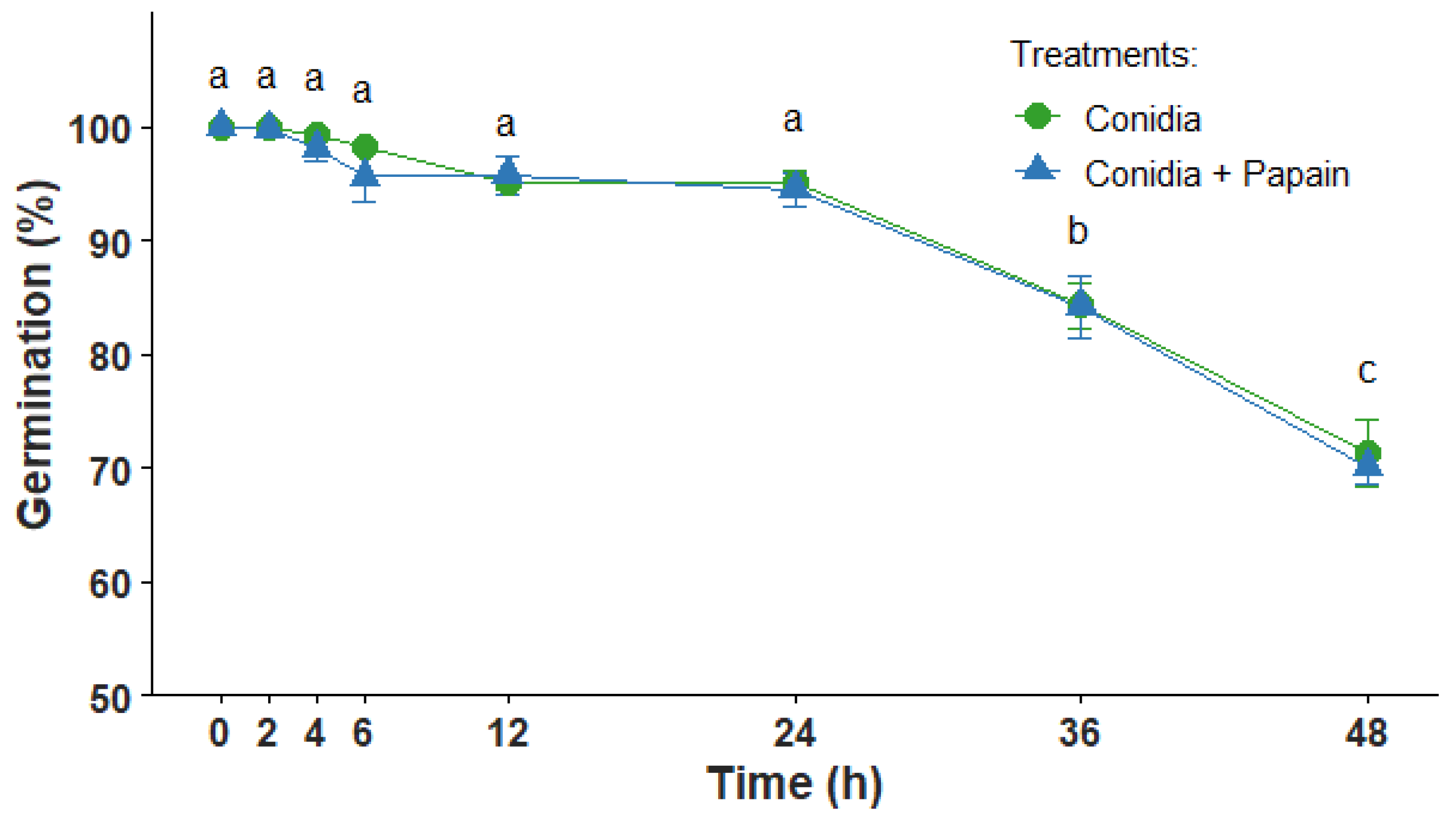
The viability of B. bassiana (IP361) conidia incubated with and without papain (10%) showed a similar pattern over time. During the first 12 h, viability remained close to 100%, with no significant difference between treatments, indicating that contact with papain did not compromise conidial integrity (Figure 1). Up to 24 h, only a slight reduction in viability was observed, still without statistical impact. After 36 h, viability decreased sharply in both groups, reaching around 70% after 48 h, an effect mainly attributed to the natural senescence of conidia over the incubation period [22,23]. The absence of differences between groups demonstrates that papain, at the concentration used, is compatible with the conidia, allowing for their combined use in biocontrol formulations without significant loss of viability.
The stability of B. bassiana conidia over time is an important factor for the success of its field application. Studies indicate that conidial viability can be maintained for extended periods when stored under appropriate conditions, such as low temperatures [24,25]. Moreover, Mascarin et al. [26] highlight that the integration of submerged and solid-state fermentation can optimize the production of viable conidia, reduce processing time, and minimize contamination risks, contributing to microorganism preservation.
Overall, our results and data from the literature reinforce the feasibility of combining B. bassiana (IP361) with papain, suggesting that this approach can be explored in integrated biological control strategies without compromising fungal efficacy.

3.2. Determination of Residual Papain Activity After Incubation with Conidia

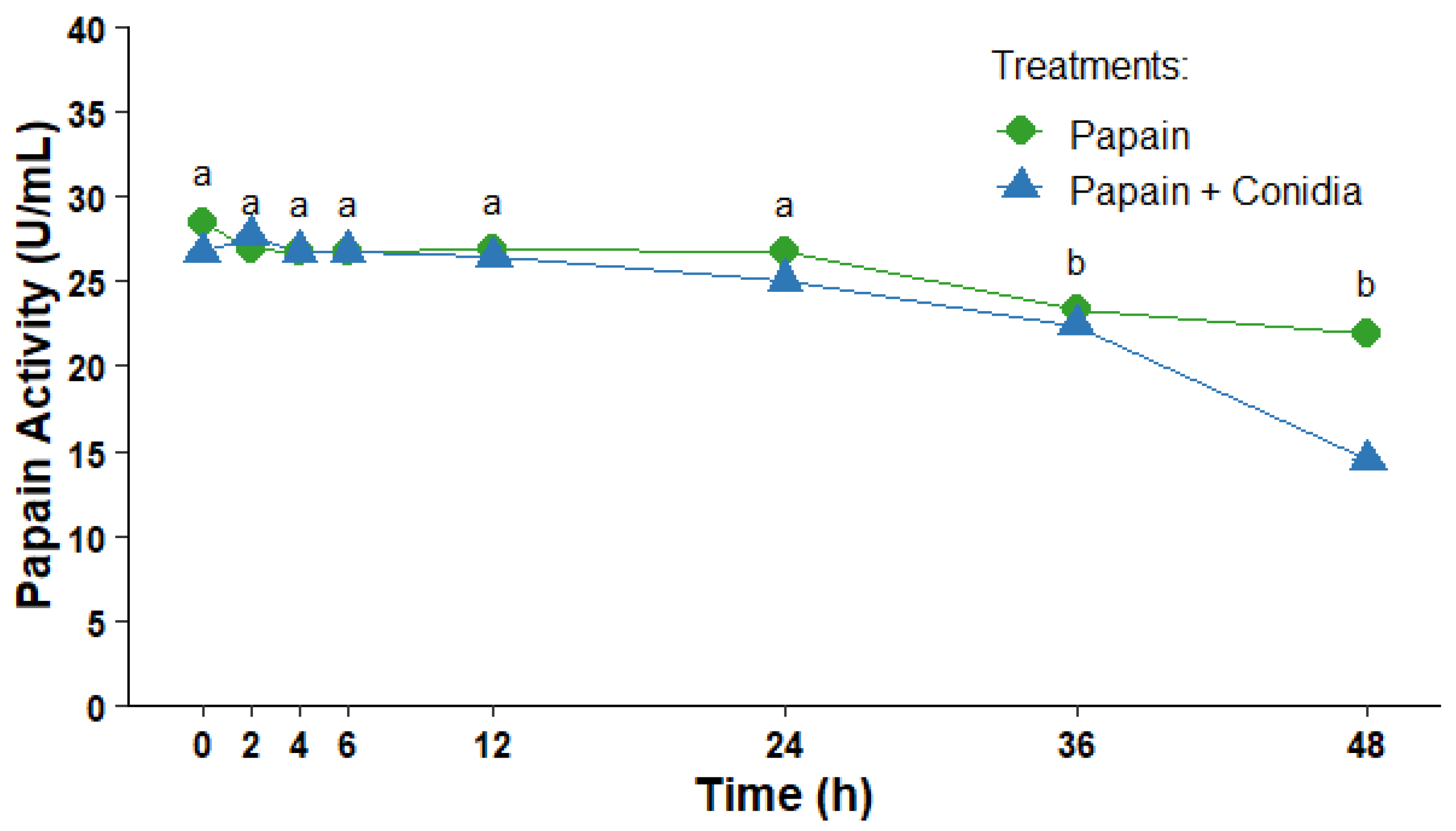
The results indicate that the proteolytic activity of papain, whether isolated or incubated with conidia, remained relatively stable after 12 h, with values close to 26–28 U/mL (Figure 2). This behavior suggests that, during this initial period, the presence of conidia does not significantly interfere with enzymatic activity.
From 36 h onward, a marked reduction in the residual activity of both treatments was observed. After 48 h, the activity of papain alone was 23.3 U/mL, while in the treatment with conidia, the activity decreased to 14.5 U/mL, indicating greater impairment of enzymatic stability in the presence of conidia. These results suggest that although papain in aqueous solution remains stable in the short term (up to 36 h), cumulative factors associated with prolonged incubation and direct interactions with biomolecules released by the conidia, as well as microenvironmental changes, promote activity loss.
The initial stability observed for the aqueous papain solution indicates that, under moderate physiological conditions, the enzyme maintains its catalytic capacity without immediate loss of function. This finding agrees with evidence showing that papain displays good resistance at neutral pH and room temperature, sustaining hydrolytic activity for consistent periods before environmental factors begin to compromise its functional structure [27,28,29]. However, over time, the enzyme may undergo a gradual reduction in activity due to chemical and structural changes caused by pH variations, oxidation, or interactions with cellular or extracellular components, factors that affect the conformational stability of the protein and reduce its catalytic efficiency.
In the context of this study, the progressive decrease in proteolytic activity after 24 h may reflect both the intrinsic susceptibility of papain and possible physicochemical interactions with B. bassiana conidia. Nevertheless, the simultaneous maintenance of conidial viability and functional enzymatic activity levels in the initial incubation stages suggests compatibility between both components. Thus, the observed stability profile supports the combined use of papain and B. bassiana conidia in formulations without immediate compromise of their essential biological properties.

3.3. Bioassays with Pupae and Larvae of Tenebrio molitor

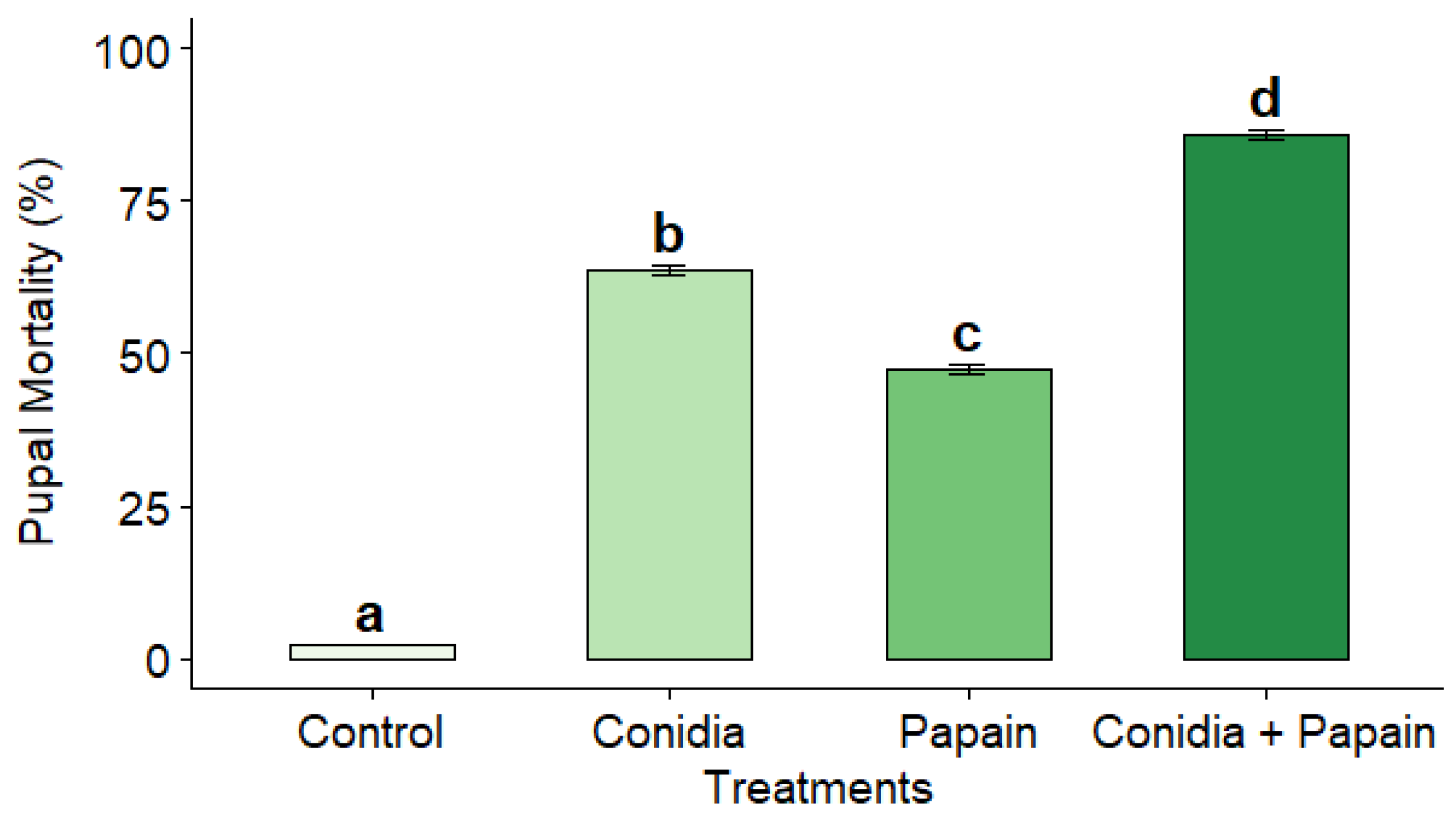
In the pupal bioassays, treatments with conidia (G2) and papain (G3) resulted in mean mortalities of 63.69 ± 0.69% and 47.38 ± 0.69%, respectively, while the combination of papain and conidia (G4) produced the highest mean mortality of 85.91 ± 0.84%. The control group (G1) showed 2.20 ± 0.00% mortality (Figure 3). All differences among treatments were statistically significant (p < 0.01).
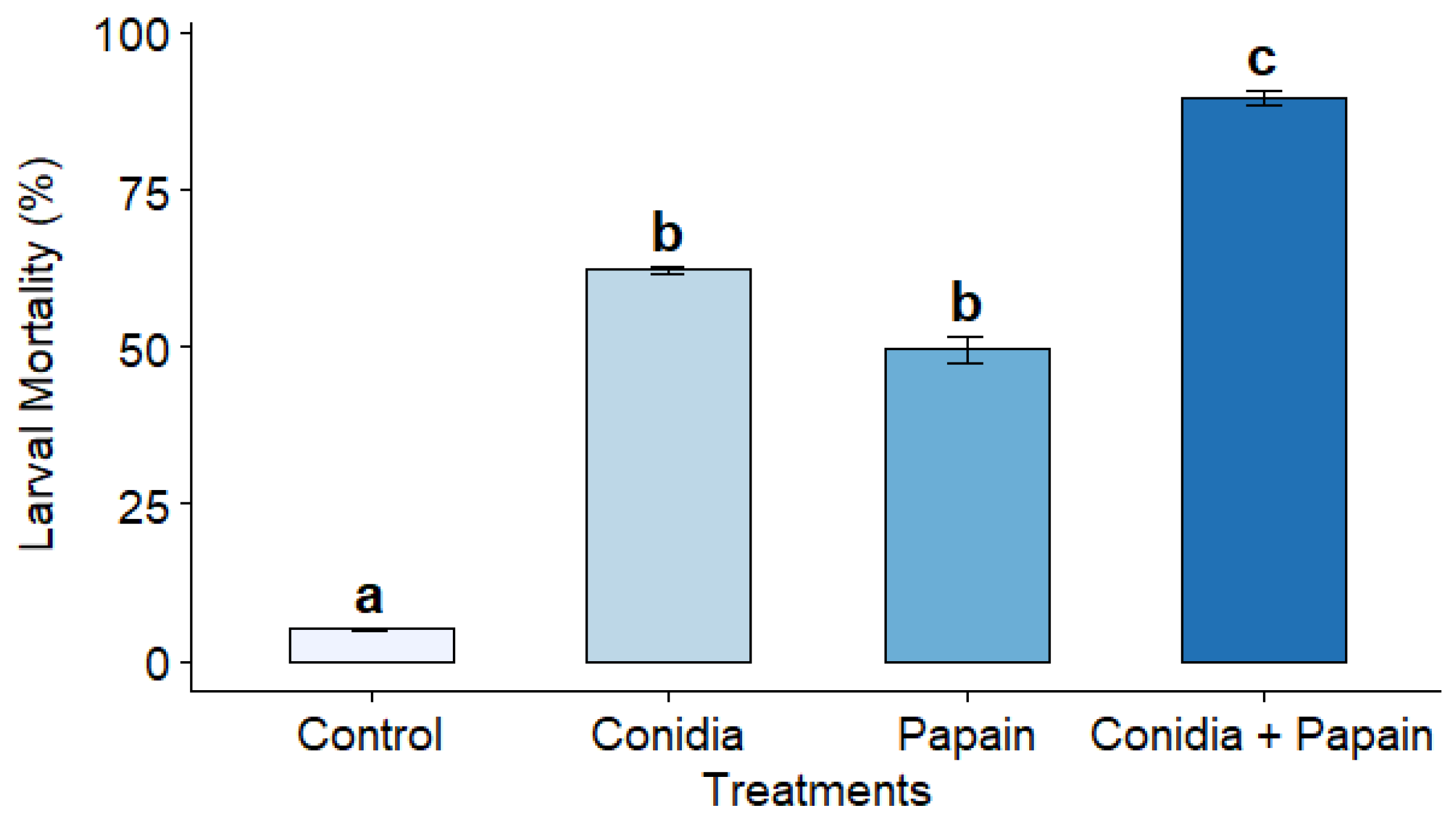
For the larvae, mean mortality ranged from 5.18 ± 0.19% in the control group (G1) to 89.71 ± 1.06% in the combined treatment (G4). Treatments with conidia alone (G2) (62.24 ± 0.58%) and with papain (G3) (49.62 ± 2.00%) did not differ statistically from each other but showed higher mortality compared to the control. As hypothesized, the combined treatment (G4) resulted in larval mortality substantially higher than that observed for individual treatments, confirming the predicted synergistic effect between enzymatic cuticle degradation and fungal infection (Figure 4).
These observations support our hypothesis that papain acts as a biochemical facilitator, weakening the insect cuticle to enhance fungal conidial penetration and infection success. The degradation of structural cuticular proteins by papain may expose chitin fibrils, reducing mechanical resistance and promoting fungal conidial penetration. This process is analogous to the activity of extracellular proteases produced by entomopathogenic fungi, which hydrolyze peptide bonds in the insect cuticle and facilitate hyphal penetration into the host. Consequently, the action of the plant protease tends to make the insect more susceptible to infection [30,31,32]. The use of a 10% (w/v) papain concentration is supported by previous studies reporting insecticidal effects of plant-derived proteases; notably, Castro et al. [13] demonstrated significant biological effects of papain on Tenebrio molitor, supporting the use of relatively high concentrations to obtain measurable responses in laboratory bioassays.
The results of Souza et al. [33] demonstrated that the combined application of Duddingtonia flagrans and its crude proteolytic extract significantly increased the efficacy of helminth control in sheep, reinforcing that the concurrent action of fungi and proteases enhances colonization efficiency and host tissue destruction. Similarly, Ferreira et al. [20] observed that the combination of enzymes with entomopathogenic fungal conidia increased the mortality of Aphis gossypii nymphs and Spodoptera frugiperda larvae compared with treatments applied individually. These findings suggest that the use of proteases can act as a biochemical facilitator, reducing structural barriers and accelerating the fungal infection process.
Therefore, the results obtained in this study reinforce the relevance of strategically combining biological agents. The observed synergy between B. bassiana and papain not only enhances control efficacy but also supports the development of integrated biotechnological formulations that may reduce the need for chemical insecticides, contribute to sustainable pest management, and expand the use of bioinputs in agriculture.

3.4. Effects on Larval and Pupal Morphology

The results demonstrated distinct and complementary effects of treatments with papain and/or B. bassiana (IP361) conidia on the larval and pupal stages, confirming our initial hypothesis. The combined treatment affected multiple developmental stages, resulting in higher mortality, morphological deformities, and impaired adult emergence, highlighting the synergistic efficacy of the tested agents.
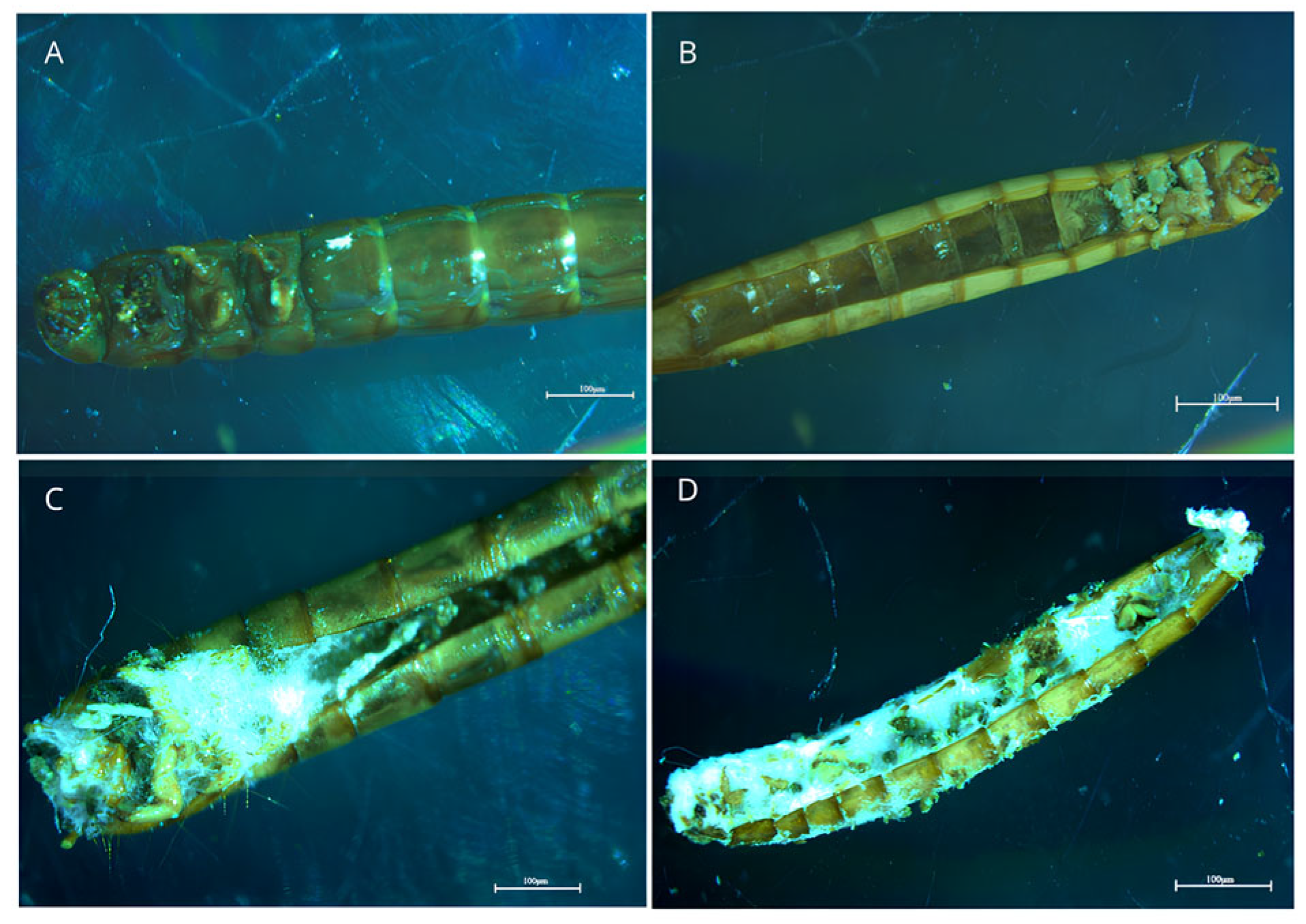
In larvae, papain treatment caused pronounced desiccation and ventral collapse, indicating potential damage to the cuticle or integument integrity and disruption of water balance. When combined with conidia, this effect was intensified, accompanied by visible external colonization by fungal hyphae. In the conidia-only treatment, the larval body was entirely covered by hyphae, indicating a successful entomopathogenic infection and high mortality. These findings suggest that the combination of papain and EPF acts complementarily, targeting both external barriers (cuticle) and internal tissues, increasing lethality compared to the use of each agent alone [12,34] (Figure 5).
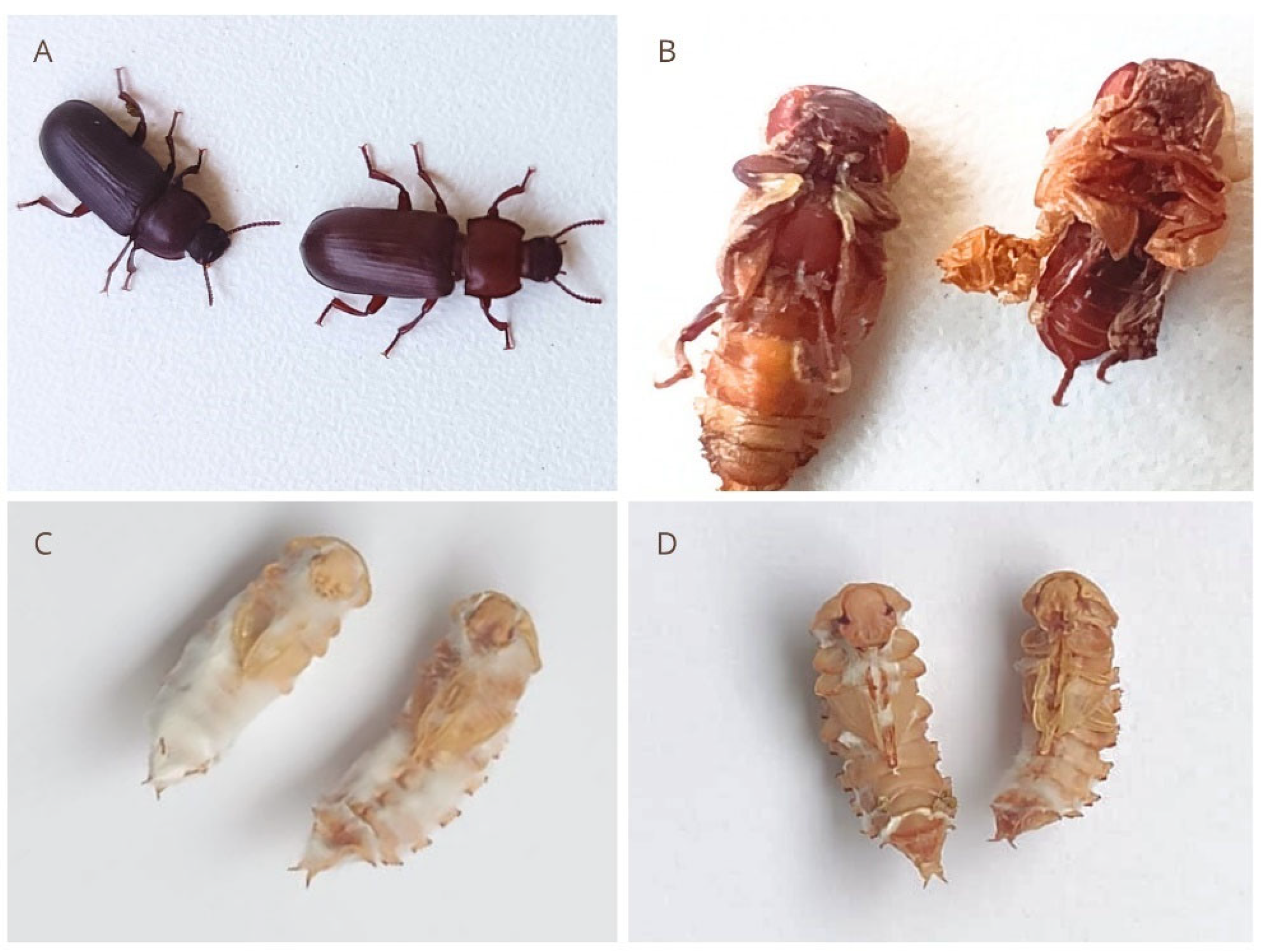
In pupal bioassays, papain affected adult emergence, with individuals showing visible body deformities (Figure 6). Pupae treated with conidia died before reaching adulthood, displaying reduced size and altered coloration. In the combined treatment, these effects were amplified, supporting the hypothesis that simultaneous enzymatic and fungal action enhances control efficacy. Maintaining pupal cuticle integrity is essential for successful metamorphosis, and enzymatic action is a key factor in fungal invasion of the host [35,36].
The observed synergistic effects likely result from the distinct yet complementary modes of action of the agents involved. Entomopathogenic fungi secrete enzymes, including proteases and chitinases, which degrade the host cuticle and enable fungal penetration and internal colonization [37]. In parallel, plant-derived cysteine proteases, such as papain, degrade structural and digestive proteins, acting as stomach toxins and disrupting insect physiological processes [12,15]. Consequently, the combined application of papain and EPF targets multiple physiological barriers simultaneously, leading to increased mortality and pronounced morphological deformities.
These findings are consistent with previous studies demonstrating the insecticidal potential of plant proteases and their synergistic interaction with entomopathogenic fungi [15]. Such combined approaches represent promising strategies for integrated pest management, as they reduce reliance on chemical insecticides while affecting multiple developmental stages of the insect host [38,39].
In addition, maintaining cuticle integrity during the pupal stage is critical for successful metamorphosis, and enzymatic degradation of this structure is a key factor facilitating fungal invasion and developmental disruption [40,41,42]. Environmental and physiological factors, including temperature, humidity, and host age, may further influence enzymatic activity and fungal virulence [43], highlighting the need for future studies to optimize application timing, concentrations, and formulations, as well as to assess potential effects on non-target organisms.
Overall, the data indicate that the combined treatment of papain and B. bassiana is more effective than individual applications, as it interferes with both larval survival and pupal development, resulting in higher mortality, morphological abnormalities, and failure of adult emergence. This integrated use of plant-derived enzymes and entomopathogenic fungi constitutes a robust and environmentally sound strategy for the biological control of T. molitor.

3.5. Morphological Analysis and Reisolation of Beauveria bassiana

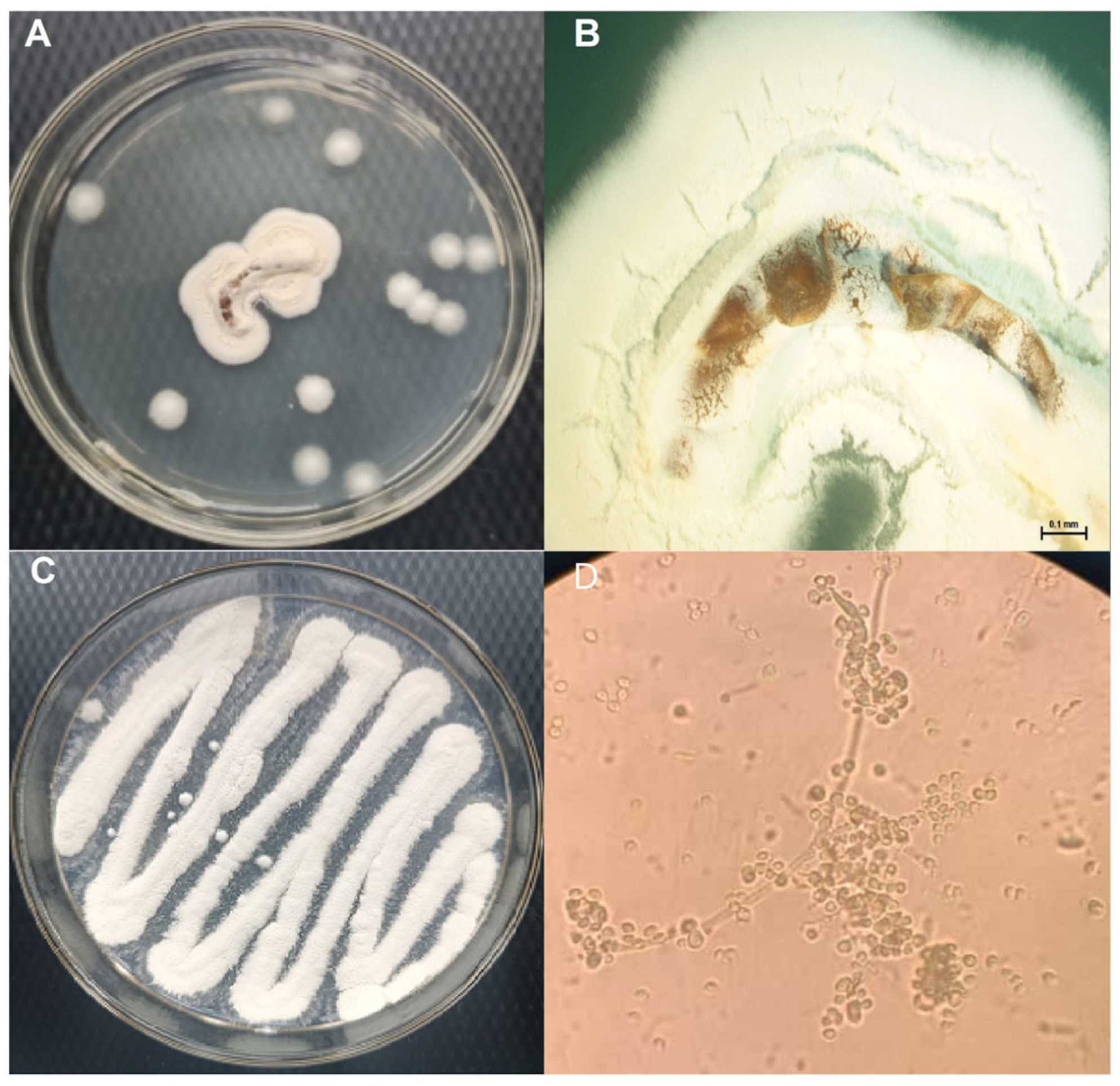
Following completion of the bioassays, the dead insects were subjected to surface disinfection and incubated in a moist chamber to verify sporulation of the entomopathogenic agent. Between 5 and 7 days after death, the appearance of dense white mycelial growth, which is characteristic of B. bassiana was observed partially or completely covering the surface of the cadavers (Figure 7).
The morphological characterization of the isolate consistently confirmed its identity as B. bassiana. On PDA plates, colonies exhibited a powdery texture and white-cream pigmentation, along with dense and uniform mycelial growth presenting the typical radial expansion pattern of the species [44]. Microscopic examination further supported these observations, revealing abundant conidia and branched conidiophores characteristic of the genus Beauveria [44,45]. These macroscopic and microscopic traits align with classical taxonomic descriptions and recent reports, reinforcing the accuracy of the isolate identification [45,46,47].
The agreement between the observed characteristics and recognized morphological descriptors of B. bassiana indicates that the fungus recovered from insects after the bioassays corresponds to the entomopathogenic agent originally inoculated. Thus, the results rule out interference from other microorganisms and confirm that the mortality observed in the treatments was directly caused by the isolate, strengthening the reliability of the assays for both isolated conidia and combined conidia–papain treatments. This confirmation of the biological integrity and causal role of the fungal isolate provides a robust basis for interpreting the experimental outcomes within the context of the application model adopted in this study.
Although T. molitor is a typical stored-product pest and is physiologically adapted to dry environments, the use of aqueous systems in the present study should be interpreted as a controlled experimental model rather than a direct simulation of storage conditions. The aqueous medium was essential to ensure uniform insect exposure, preserve enzymatic activity, and allow accurate assessment of conidial viability, enzymatic stability, and biological compatibility between papain and B. bassiana. In this context, the results should be regarded as a proof of concept demonstrating the compatibility and synergistic potential between plant-derived proteases and entomopathogenic fungi. The combination of B. bassiana and papain is envisioned as a component of integrated pest management strategies targeting insects in confined and protected environments, such as silos and warehouses, where contact-based formulations and biological agents are more feasible. In parallel, our group has been directing efforts toward the development of dry formulation strategies, aiming to adapt this approach to real storage conditions and to enable its practical application in the management of stored-product pests.

4. Conclusions

In line with our hypothesis, this study demonstrates that B. bassiana (IP361) conidia and papain are biochemically compatible and act synergistically against T. molitor. The conidia maintained high viability in the presence of papain, and the enzyme retained its activity for up to 12 h, indicating the potential for stable joint use in biological applications. The combined treatment resulted in higher larval and pupal mortality than the individual treatments, confirming the predicted benefit of combining enzymatic cuticle degradation with fungal infection.
Overall, the findings highlight the potential of integrating B. bassiana and papain as a promising strategy for sustainable pest management. The compatibility between the fungus and the enzyme supports their combined use in bioformulations, which could enhance efficacy and reduce dependence on chemical insecticides. Future research should evaluate the stability of these formulations and their persistence under field conditions.

Author Contributions

Conceptualization, A.d.C.A. and F.E.d.F.S.; methodology, A.d.C.A., A.C.S., N.K.L.S. and E.H.G.; investigation, A.d.C.A., A.C.S., N.K.L.S., R.C.C.M. and L.B.P.F.; formal analysis, A.d.C.A., D.C.T.d.S. and A.T.d.S.; data curation, A.d.C.A. and A.T.d.S.; writing—review and editing, A.d.C.A.; supervision, R.C.M. and F.E.d.F.S.; project administration, F.E.d.F.S.; funding acquisition, F.E.d.F.S. All authors have read and agreed to the published version of the manuscript.

Funding

This research received no external funding.

Institutional Review Board Statement

Not applicable.

Informed Consent Statement

Not applicable.

Data Availability Statement

All the research data can be found in the text.

Acknowledgments

The authors would like to thank CAPES (Coordenação de Aperfeiçoamento de Pessoal de Nível Superior), CNPq (Conselho Nacional de Desenvolvimento Científico e Tecnológico), and FAPEMIG (Fundação de Amparo à Pesquisa de Minas Gerais) for all the financial support throughout the research.

Conflicts of Interest

The authors declare no conflicts of interest.

References

  1. Liang, J.; Xiao, F.; Ojo, J.; Chao, W.H.; Ahmad, B.; Alam, A.; Karim, S.A. Insect resistance to insecticides: Causes, mechanisms, and exploring potential solutions. Arch. Insect Biochem. Physiol. 2025, 118, e70045. [Google Scholar] [CrossRef]
  2. Serrão, J.E.; Plata-Rueda, A.; Martínez, L.C.; Zanuncio, J.C. Side-effects of pesticides on non-target insects in agriculture: A mini-review. Sci. Nat. 2022, 109, 17. [Google Scholar] [CrossRef]
  3. Angon, P.B.; Mondal, S.; Jahan, I.; Datto, M.; Antu, U.B.; Ayshi, F.J.; Islam, M.S. Integrated pest management (IPM) in agriculture and its role in maintaining ecological balance and biodiversity. Adv. Agric. 2023, 2023, 5546373. [Google Scholar] [CrossRef]
  4. Rahman, S.M.; Ravi, G. Role of artificial intelligence in pest management. Curr. Top. Agric. Sci. 2022, 7, 64–81. [Google Scholar] [CrossRef]
  5. Liu, D.; Smagghe, G.; Liu, T.-X. Interactions between entomopathogenic fungi and insects and prospects with glycans. J. Fungi 2023, 9, 575. [Google Scholar] [CrossRef]
  6. Wang, Y.; Fan, Q.; Wang, D.; Zou, W.-Q.; Tang, D.-X.; Hongthong, P.; Yu, H. Species diversity and virulence potential of the Beauveria bassiana complex and Beauveria scarabaeidicola complex. Front. Microbiol. 2022, 13, 841604. [Google Scholar] [CrossRef] [PubMed]
  7. Quesada-Moraga, E.; González-Mas, N.; Yousef-Yousef, M.; Pérez-González, S.; Castillo, J.; Landa, B.B. Key role of environmental competence in successful use of entomopathogenic fungi in microbial pest control. J. Pest Sci. 2024, 97, 1–15. [Google Scholar] [CrossRef]
  8. Sharma, A.; Sharma, S.; Yadav, P.K. Entomopathogenic fungi and their relevance in sustainable agriculture: A review. Cogent Food Agric. 2023, 9, 2180857. [Google Scholar] [CrossRef]
  9. de Sousa, T.K.; Silva, A.T.d.; Soares, F.E.d.F. Fungi-Based Bioproducts: A Review in the Context of One Health. Pathogens 2025, 14, 463. [Google Scholar] [CrossRef] [PubMed]
  10. Vivekanandhan, P.; Swathy, K.; Sarayut, P.; Patcharin, K. Classification, biology and entomopathogenic fungi-based management. Front. Microbiol. 2024, 15, 1443651. [Google Scholar] [CrossRef]
  11. Ferreira, J.M.; de Freitas Soares, F.E. Entomopathogenic fungi hydrolytic enzymes: A new approach to biocontrol? J. Nat. Pestic. Res. 2023, 3, 100020. [Google Scholar] [CrossRef]
  12. Konno, K.; Hirayama, C.; Nakamura, M.; Tateishi, K.; Tamura, Y.; Hattori, M.; Kohno, K. Papain protects papaya trees from herbivorous insects: Role of cysteine proteases in latex. Plant J. 2004, 37, 370–378. [Google Scholar] [CrossRef]
  13. Castro, H.L.B.; Alves, J.C.S.; Gladenucci, J.; Marucci, R.C.; Soares, F.E. Nematocidal and insecticidal activity of proteases from Carica papaya and Ananas comosus. Agriculture 2023, 13, 1119. [Google Scholar] [CrossRef]
  14. Choudhary, R.; Kaushik, R.; Chawla, P.; Manna, S. Exploring the extraction and functional properties of papain. J. Sci. Food Agric. 2025, 105, 1533–1545. [Google Scholar] [CrossRef]
  15. Castro, H.L.B.; Braga, F.R.; Soares, F.E.F. Potential of plant cysteine proteases against crop pests and animal parasites. J. Nat. Pestic. Res. 2023, 6, 100049. [Google Scholar] [CrossRef]
  16. Adamaki-Sotiraki, C.; Rumbos, C.I.; Athanassiou, C.G. From a stored-product pest to a promising protein source: A U-turn of human perspective for the yellow mealworm Tenebrio molitor. J. Pest Sci. 2025, 98, 113–129. [Google Scholar] [CrossRef]
  17. Stathas, I.G.; Sakellaridis, A.C.; Papadelli, M.; Krokida, A.M.; Athanassiou, C.G. The effects of insect infestation on stored products. Foods 2023, 12, 2046. [Google Scholar] [CrossRef] [PubMed]
  18. Braga, G.U.; Flint, S.D.; Miller, C.D.; Anderson, A.J.; Roberts, D.W. Both solar UVA and UVB radiation impair conidial culturability and delay germination in the entomopathogenic fungus Metarhizium anisopliae. Photochem. Photobiol. 2001, 74, 734–739. [Google Scholar] [CrossRef] [PubMed]
  19. Braga, F.R.; Araújo, J.V.; Soares, F.E.F. Optimizing protease production from an isolate of the nematophagous fungus Duddingtonia flagrans using response surface methodology and its larvicidal activity on horse cyathostomins. J. Helminthol. 2011, 85, 164–170. [Google Scholar] [CrossRef]
  20. Ferreira, J.M.; Fernandes, É.K.K.; Kim, J.S.; Soares, F.E.F. The combination of enzymes and conidia of entomopathogenic fungi against Aphis gossypii nymphs and Spodoptera frugiperda larvae. J. Fungi 2024, 10, 292. [Google Scholar] [CrossRef]
  21. Ayres, M.; Ayres, J.R.M.; Ayres, D.L.; Santos, A.S. Aplicações Estatísticas nas Áreas Biomédicas; Mamirauá/CNPq: Brasília, Brazil; Belém, Brazil, 2003; 290p. [Google Scholar]
  22. Reyes-Haro, L.; Prince, G.; Granja-Travez, R.S.; Chandler, D. Phenotypic and genotypic characterization of fifty strains of Beauveria spp. (Ascomycota, Cordycipitaceae) fungal entomopathogens from diverse geographic origins against the diamondback moth, Plutella xylostella (Lepidoptera: Plutellidae). Pest Manag. Sci. 2024, 80, 5064–5077. [Google Scholar] [CrossRef] [PubMed]
  23. Almeida, J.C.; Albuquerque, A.C.; Lima, E.L.A. Viability of Beauveria bassiana (Bals.) Vuill. reisolated from eggs, larvae and adults of Anthonomus grandis (Boheman) (Coleoptera: Curculionidae) infected artificially. Arq. Inst. Biol. 2005, 72, 473–480. [Google Scholar] [CrossRef]
  24. Mohamed, H.F.; Mohamed, S.S.A.; Sweilem, M.A.; El-Sharkawy, R.M.; El-Khawaga, O.E.A.A. Effect of storage temperatures on the pathogenicity of Beauveria bassiana formulations against the cottonleaf worm, Spodoptera littoralis (Boisduval) (Lepidoptera). J. Basic Environ. Sci. 2023, 10, 51–66. [Google Scholar] [CrossRef]
  25. Garcia-Riaño, J.L.; Torres-Torres, L.A.; Santos-Díaz, A.M.; Grijalba-Bernal, E.P. Compatibility of B. bassiana with agrochemicals. Biocatal. Agric. Biotechnol. 2022, 39, 102275. [Google Scholar] [CrossRef]
  26. Mascarin, G.M.; Golo, P.S.; Ribeiro-Silva, C.S.; Muniz, E.R.; Franco, A.O.; Kobori, N.N.; Fernandes, É.K.K. Advances in submerged fermentation of entomopathogenic fungi. Appl. Microbiol. Biotechnol. 2024, 108, 451. [Google Scholar] [CrossRef]
  27. Channamade, C.; Raju, J.M.; Vijayaprakash, S.B.; Bora, R.; Shekhar, N.R. Promising approach on chemical stability enhancement of papain by encapsulation system: A review. J. Young Pharm. 2021, 13, 87–90. [Google Scholar] [CrossRef]
  28. Silva-Lucca, R.A.; Andrade, S.S.; Ferreira, R.S.; Sampaio, M.U.; Oliva, M.L.V. Unfolding Studies of the Cysteine Protease Baupain, a Papain-Like Enzyme from Leaves of Bauhinia forficata: Effect of pH, Guanidine Hydrochloride and Temperature. Molecules 2014, 19, 233–246. [Google Scholar] [CrossRef]
  29. Llerena-Suster, C.R.; José, C.; Collins, S.E.; Briand, L.E.; Morcelle, S.R. Investigation of the structure and proteolytic activity of papain in aqueous miscible organic media. Process Biochem. 2012, 47, 47–56. [Google Scholar] [CrossRef]
  30. Rashidi, Z.; Homaei, A.; Fernandez-Lafuente, R. Enhanced stability of papain at extreme pHs and temperatures by its immobilization on cellulose nanocrystals coated with polydopamine. Process Biochem. 2024, 146, 147–159. [Google Scholar] [CrossRef]
  31. Litwin, A.; Nowak, M.; Różalska, S. Entomopathogenic fungi: Unconventional applications. Rev. Environ. Sci. Biotechnol. 2020, 19, 23–42. [Google Scholar] [CrossRef]
  32. Wang, H.; Peng, H.; Li, W.; Cheng, P.; Gong, M. The toxins of Beauveria bassiana and strategies to improve virulence. Front. Microbiol. 2021, 12, 705343. [Google Scholar] [CrossRef]
  33. Souza, D.C.; Gomes, E.H.; Puentes, L.B.F.; Rodrigues, L.M. D. flagrans and proteolytic extract in sheep cultures. Vet. Res. Commun. 2024, 48, 3423–3427. [Google Scholar] [CrossRef]
  34. Vega, F.E.; Goettel, M.S.; Blackwell, M.; Chandler, D.; Jackson, M.A.; Keller, S.; Koike, M.; Maniania, N.K.; Monzón, A.; Ownley, B.H.; et al. Fungal entomopathogens: New insights on their ecology. Fungal Ecol. 2009, 2, 149–159. [Google Scholar] [CrossRef]
  35. Shah, P.A.; Pell, J.K. Entomopathogenic fungi as biological control agents. Appl. Microbiol. Biotechnol. 2003, 61, 413–423. [Google Scholar] [CrossRef]
  36. Goettel, M.S.; Eilenberg, J.; Glare, T.R. Entomopathogenic fungi and their role in biological control. In Manual of Techniques in Invertebrate Pathology; Lacey, L.A., Ed.; Academic Press: Cambridge, MA, USA, 2005; pp. 305–353. [Google Scholar]
  37. Zibaee, A.; Ramzi, S. Cuticle-degrading proteases of entomopathogenic fungi: From biochemistry to biological performance. Arch. Phytopathol. Plant Prot. 2018, 51, 779–794. [Google Scholar] [CrossRef]
  38. Lacey, L.A.; Grzywacz, D.; Shapiro-Ilan, D.I.; Frutos, R.; Brownbridge, M.; Goettel, M.S. Insect pathogens as biological control agents: Back to the future. J. Invertebr. Pathol. 2015, 132, 1–41. [Google Scholar] [CrossRef]
  39. Isman, M.B. Botanical insecticides, deterrents, and repellents in modern agriculture and an increasingly regulated world. Annu. Rev. Entomol. 2006, 51, 45–66. [Google Scholar] [CrossRef] [PubMed]
  40. Ortiz-Urquiza, A.; Keyhani, N.O. Immune evasion and growth within the hemocoel. In Genetics and Molecular Biology of Entomopathogenic Fungi; Elsevier Inc.: Amsterdam, The Netherlands, 2016; p. 207. [Google Scholar]
  41. Zimmermann, G. Review on safety of the entomopathogenic fungus Metarhizium anisopliae. Biocontrol Sci. Technol. 2007, 17, 879–920. [Google Scholar] [CrossRef]
  42. Gürlek, S.; Sevim, A.; Sezgin, F.M.; Sevim, E. Isolation and characterization of Beauveria and Metarhizium spp. from walnut fields and their pathogenicity against the codling moth Cydia pomonella (L.) (Lepidoptera: Tortricidae). Egypt. J. Biol. Pest Control 2018, 28, 50. [Google Scholar] [CrossRef]
  43. Leger, R.J.S.; Charnley, A.K.; Cooper, R.M. Cuticle-degrading proteases of entomopathogenic fungi. J. Invertebr. Pathol. 1986, 48, 125–134. [Google Scholar] [CrossRef]
  44. Humber, R.A.; Lacey, L.A. Identification of entomopathogenic fungi. In Manual of Techniques in Invertebrate Pathology, 2nd ed.; Academic Press: San Diego, CA, USA, 2012. [Google Scholar]
  45. Bich, G.A.; Castrillo, M.L.; Kramer, F.L.; Villalba, L.L.; Zapata, P.D. Morphological and molecular identification of entomopathogenic fungi from agricultural and forestry crops. Floresta Ambiente 2021, 28, e20180086. [Google Scholar] [CrossRef]
  46. Kirk, P.M.; Cannon, P.F.; Minter, D.W.; Stalpers, J.A. Dictionary of the Fungi, 10th ed.; CABI: Wallingford, UK, 2008. [Google Scholar]
  47. Samson, R.A.; Evans, H.C.; Latgé, J.P. Atlas of Entomopathogenic Fungi; Springer: Berlin/Heidelberg, Germany, 1988. [Google Scholar]
Figure 1. Average percentage of viable Beauveria bassiana (IP361) conidia incubated with or without papain (10%) at different incubation times. Values are expressed as mean ± standard deviation. Distinct letters indicate statistically significant differences among treatments according to Tukey’s test (p < 0.01).
Agrochemicals 05 00002 g001
Figure 2. Activity of papain (U/mL) at different incubation times: comparison between treatment with and without Beauveria bassiana (IP361) conidia. Distinct letters indicate statistically significant differences among treatments according to Tukey’s test (p < 0.01).
Agrochemicals 05 00002 g002
Figure 3. Pupal mortality (%) of Tenebrio molitor after treatments: Control, Papain, Beauveria bassiana (IP361) Conidia, and B. bassiana (IP361) Conidia + Papain. Bars represent mean ± standard deviation. Distinct letters above the bars indicate statistically significant differences among treatments according to Tukey’s test (p < 0.01).
Agrochemicals 05 00002 g003
Figure 4. Mortality (%) of Tenebrio molitor larvae after treatments: Control, Papain, Beauveria bassiana (IP361) Conidia, and B. bassiana (IP361) Conidia + Papain. Bars represent mean ± standard deviation. Distinct letters represent statistically significant differences among treatments according to Tukey’s test (p < 0.01).
Agrochemicals 05 00002 g004
Figure 5. Representative images of Tenebrio molitor larvae under different treatments. (A) Control; (B) treated with 10% papain; (C) treated with Beauveria bassiana (IP361) conidia at 107 conidia/mL; (D) combination of 10% papain and B. bassiana (IP361) conidia at 107 conidia/mL. Scale bar = 100 µm.
Agrochemicals 05 00002 g005
Figure 6. Representative images of Tenebrio under different treatments. (A) Control showing normal adults; (B) pupae treated with 10% papain, showing deformed adults during emergence; (C) pupae treated with Beauveria bassiana (IP361) conidia at 107 conidia/mL, exhibiting darkened coloration and reduced size; (D) pupae treated with the combination of 10% papain and B. bassiana (IP361) conidia at 107 conidia/mL, showing enhanced morphological deformation and fungal colonization.
Agrochemicals 05 00002 g006
Figure 7. Development and morphology of Beauveria bassiana isolated after the bioassays. (A) Dead larva on PDA medium completely covered by the dense white mycelium characteristic of the fungus; (B) Tenfold magnification showing the wooly and homogeneous aspect of the mycelial growth; (C) Subcultured colony on PDA medium exhibiting a whitish to yellowish coloration and typical morphology of the species; (D) Microscopic image (100× magnification) showing the characteristic conidiogenous cells and conidia of B. bassiana. Scale bar = 0.1 mm.
Agrochemicals 05 00002 g007
Disclaimer/Publisher’s Note: The statements, opinions and data contained in all publications are solely those of the individual author(s) and contributor(s) and not of MDPI and/or the editor(s). MDPI and/or the editor(s) disclaim responsibility for any injury to people or property resulting from any ideas, methods, instructions or products referred to in the content.