Article

Effects of Eimeria Challenge and Monensin Supplementation on Performance, Nutrient Digestibility, and Intestinal Health of Broilers


by
Pamella Pryscila de Alvarenga Bissoli Maciel de Lima
1,
José Andrew de Lira Barbosa
2,
Giulia Cancian Vieira
2,
Júlia de Castro Campos Pereira
2,
Mateus Tinelli Menegalle
2,
Huarrisson Azevedo Santos
1,
Robson Mateus Freitas Silveira
3,* and
Felipe Dilelis
2,*
1
Department of Epidemiology and Public Health, Veterinary Institute, Federal Rural University of Rio de Janeiro, Road BR 465, Km 07, Seropédica 23890-000, RJ, Brazil
2
Department of Animal Science, “Luiz de Queiroz” College of Agriculture (ESALQ), University of São Paulo, Avenue Pádua Dias, 11, Piracicaba 13418-900, SP, Brazil
3
Environment Livestock Research Group (NUPEA), “Luiz de Queiroz” Agriculture College (ESALQ), Department of Biosystems Engineering, University of São Paulo (USP), Piracicaba 13418-900, SP, Brazil
*
Authors to whom correspondence should be addressed.
Poultry 2026, 5(1), 12; https://doi.org/10.3390/poultry5010012
Submission received: 16 December 2025 / Revised: 23 January 2026 / Accepted: 28 January 2026 / Published: 3 February 2026

Abstract

This study aimed to evaluate the performance, nutrient digestibility, intestinal health, and duodenum gene expression of broilers challenged with Eimeria spp. supplemented with or without monensin sodium. A total of 144 male chicks were used, distributed in a completely randomized design with three treatments: unchallenged control (UN), challenged control (CC), and CC + 100 mg/kg of monensin sodium (MON). Six replicates of eight birds each were used. At 14 days of age, the challenged groups were inoculated with a mixture of Eimeria oocysts, 12,500 E. maxima, 62,500 E. acervulina, and 12,500 E. tenella oocysts/chick. Coccidial challenge impaired growth performance and nutrient digestibility and induced intestinal damage, as evidenced by reduced body weight gain and feed intake (p < 0.001), lower apparent digestibility coefficients (p < 0.001), and altered intestinal morphometry and ISI score in the jejunum and cecum (p < 0.001). Monensin supplementation partially alleviated these negative effects, improving performance and nutrient digestibility (p < 0.001) and delaying oocyst excretion (p = 0.006) when compared with the CC group. However, the duodenal expression of tight junction-related genes, as well as intestinal integrity and health parameters, remained impaired despite monensin supplementation. It is concluded that monensin preserves nutrient digestibility and attenuates performance loss in broilers challenged with Eimeria spp. but not reduced intestinal damage.

1. Introduction

Coccidiosis is caused by the protozoa Eimeria spp., which can infect chickens and cause disease. This leads to poor feed conversion and reduces overall performance, negatively impacting production economics, even in the absence of clinical symptoms [1]. Furthermore, the disease contributes to increased intestinal damage, immunosuppression, and poor nutrient absorption, and promotes dysbiosis [2]. Clinical signs of coccidiosis include diarrhea, loose and mucoid feces (with or without blood), stunted growth, impaired feed conversion, and increased mortality [3]. In addition to impacting performance, coccidiosis compromises nutrient absorption and causes histological alterations in the intestine, such as reduced villus height, increased crypt depth, atrophy, and inflammation, resulting in decreased absorptive surface area [4,5,6]. Histopathological damage resulting from coccidiosis can be assessed using the “I See Inside” index (ISI) [7], which quantifies the structural and functional alterations in an organ [8,9].
Recent studies have also explored changes in intestinal gene expression associated with Eimeria challenge [10,11]. Genes associated with intestinal barrier integrity, such as Zonula Occludens-A (ZO-A), Zonula Occludens-B (ZO-B), Junctional Adhesion Molecule (JAM), Occludin, and Mucin 2 (MUC2), play a key role in maintaining epithelial junctions and protecting the mucosa. Additionally, transporters such as Glucose transporter (GLUT2) and Sugar transporter 1 (SGLT1) regulate glucose and energy absorption and are often modulated under conditions of enteric stress, such as those caused by Eimeria infections. Together, these genes provide insights into the physiological responses of broiler chickens and the possible mechanisms of action of anticoccidials and alternatives to antibiotics [5,12]. Monensin sodium (MON) is the first ionophore commercially available for coccidiosis control and has been used in the industry since 1971 [13,14]. Its efficacy is demonstrated by an improved feed conversion ratio (FCR), weight gain, and reduced mortality in broiler chickens challenged with Eimeria [15,16,17]. Thus, in Eimeria challenge models, MON has been widely utilized as a reference control for evaluating alternative antimicrobial additives [18,19,20].
Different challenge protocols with Eimeria have been published in the literature, with those using multi-species Eimeria approach being the most effective for observing the effects of coccidiosis [21]. Previous studies have assessed the optimal dosage of each species for the Eimeria challenge, demonstrating that medium-to-low doses are comparable to subclinical coccidiosis infection [11]. These effects are typically demonstrated through comprehensive measurements, including performance, intestinal morphology, expression of intestinal integrity genes, intestinal permeability, and the ileal digestibility of macrominerals and energy [11,21,22].
Deepening the understanding of MON’s efficacy in a subclinical Eimeria challenge scenario yields valuable data to support the search for alternatives to conventional anticoccidials. Thus, this study aimed to investigate the performance, nutrient digestibility, expression of intestinal integrity and nutrient absorption genes, and intestinal morphometry and histopathological score of broilers challenged with a mixed Eimeria species, treated or untreated with monensin sodium.

2. Materials and Methods

The experiment was conducted at the Poultry Experimental Unit, ESALQ, University of São Paulo, Piracicaba, SP, Brazil. All procedures were previously approved by the Ethics Committee for the Use of Animals (CEUA) of ESALQ/USP under protocol number 6907010725 (approved on 9 August 2025), in accordance with Brazilian legislation and CONCEA guidelines.

2.1. Experimental Design

One hundred and forty-four one-day-old male broiler chicks of the Cobb 500 strain were acquired from a commercial hatchery (Incubatório Zanchetta, Bofete, SP, Brazil) and distributed in a randomized block design across three treatments, with six replicates of eight broilers each. The treatments were as follows: Unchallenged Control (UN), Challenged Control (CC), and CC + 100 mg/kg of monensin sodium (MON).
The broiler chickens were allocated in metabolic cages upon arrival (one day of age), where the required temperature was maintained using electrical heating elements. Each experimental cage was equipped with a stainless-steel trough feeder and trough drinker. The cages were arranged in six-tier metal batteries, with the tier (floor) considered the block in the experimental design.
At 14 days of age, the broiler chickens received a single oral dose of either 1 mL of distilled H2O (UN broilers) or 1 mL of a solution containing 62,500 sporulated oocysts of Eimeria acervulina, 12,500 sporulated oocysts of Eimeria maxima, and 12,500 sporulated oocysts of Eimeria tenella (CC and MON broilers). This dosage was selected based on previous studies that successfully induced pathogen-induced anorexia equivalent to subclinical coccidiosis [11,23]. Eimeria species were acquired from a commercial laboratory (CAPEV, Amparo, SP, Brazil).
Broilers received a diet formulated based on corn and soybean meal (Table 1) according to the requirements described in the Brazilian Tables for Poultry and Swine [24], covering a single phase (1–28 days of age). The diets were provided in mash form without the inclusion of antimicrobial growth-promoters (AGPs). Monensin sodium was included in the diet of broiler chickens in the MON treatment from the first day of age. Food and water were provided ad libitum throughout the experimental period.

2.2. Performance and Nutrient Digestibility

To evaluate broiler performance, feed intake (FI), weight gain (WG), and feed conversion ratio (FCR) were determined. Mortality was computed to correct for FCR. Broiler chickens were weighed at 7, 14, 21 (7 days post-infection, dpi), and 28 (14 dpi) days of age to determine the average weight gain. Following the challenge, the diets were weighed daily to determine the daily feed consumption. FCR was calculated as the ratio between feed intake and weight gain.
Apparent nutrient digestibility was determined using the total excreta collection method from day 18 to day 21 of age. Birds were housed in individual metabolism cages that allowed for complete and quantitative recovery of excreta, preventing contamination with feed residues or other extraneous materials. Feed intake was recorded for each experimental unit during the collection period, and all excreta voided were quantitatively collected at approximately 12 h intervals to ensure accurate mass balance. Immediately after each collection, excreta were placed in labeled plastic bags and stored at −18 °C to prevent nutrient losses and microbial degradation. After the collection period, the excreta were thawed and homogenized, and a 300 g aliquot was sent to the laboratory for chemical analyses of Dry Matter (DM), Crude Protein (CP), Gross Energy (GE), and ash.
Excreta pre-drying was performed in a forced-air oven at 55 °C for 72 h (MA035, Marconi, Piracicaba, SP, Brazil). Subsequently, both excreta and diets were ground in a Willey-type knife mill to 1 mm (MA680, Marconi, Piracicaba, SP, Brazil). The DM content was determined by drying the samples in an oven for 24 h at 105 °C (method 930.15; [25]). CP was determined using the Dumas method (method 990.03; [25]), with a correction factor of 6.25. Ash was determined by burning porcelain crucibles in a muffle furnace for 4 h after reaching 580 °C (method 942.05; [25]). GE was determined using a Parr calorimeter (Model 1381, Parr Instrument Company, Moline, IL, USA) using benzoic acid (Parr Instrument Company, Moline, IL, USA) as a standard.
Based on the analysis results of the experimental diets and the excreta from each experimental unit, the Apparent Total Tract Digestibility (ATTD) coefficients of DM, GE, ash and CP were calculated. Apparent Metabolizable Energy (AME) and Nitrogen-Corrected Apparent Metabolizable Energy (AMEn) values were also determined using the following equations:
A T T D   =   n u t r i e n t   i n t a k e   g   n u t r i e n t   e x c r e t i o n   ( g ) n u t r i e n t   i n t a k e   ( g ) × 100
A M E   ( k c a l / k g )   =   ( G E i n t a k e   ( k c a l )     G E   e x c r e t i o n   ( k c a l ) ) D M i n t a k e   ( k g )
A M E n   k c a l k g =   G E i n t a k e   k c a l   G E   e x c r e t i o n   k c a l   8.22 × N B D M i n t a k e   k g
where NB represents nitrogen balance = nitrogen intake (g) − nitrogen excretion (g).

2.3. Oocysts Counting

Approximately 40 g of excreta sample was randomly collected from metabolic cage at d 14 (0 dpi, before the challenge), 18 (4 dpi), 21 (7 dpi), and 28 (14 dpi) days of age. Each cage sample was placed in a separate airtight plastic bag, homogenized thoroughly, and refrigerated. On the same day, 5 g of homogenized samples was diluted in 50 mL of saturated sodium chloride solution. The solution was thoroughly mixed and then allowed to stand for 5 min to enable oocyst flotation. Oocyst counts were determined using McMaster chambers [26] and expressed as the number of oocysts per gram of excreta.

2.4. Histopathological Scoring and Intestinal Morphometry

At 21 days of age (7 dpi), one bird per replicate was euthanized by cervical dislocation, totaling six broiler chickens (n = 6) per treatment group. Microscopic alterations were evaluated using the “I See Inside” (ISI) methodology according to Kraieski [8]. For this purpose, samples of the duodenum, jejunum, ceca, and liver were collected and fixed in Davidson’s solution. Subsequently, the samples were dehydrated, infiltrated, and embedded in paraffin following common histological routines. Blocks were sectioned and stained with hematoxylin and eosin (H&E) plus Alcian Blue for intestinal goblet cell staining [27].
The same histological slides were used for morphometric measurements of the duodenum and jejunum. For this purpose, a trinocular light microscope (model DI-115T, Digilab, Piracicaba, SP, Brazil), coupled with a digital camera (model Newvalue, Digilab, Piracicaba, SP, Brazil), was used. Integral and well-oriented villi were selected, and from each section, 10 villi and 10 crypts were measured. The measurements were taken with the aid of ImageView® software (version 1.1), and included villus height and width, crypt depth and width, and the villus height-to-crypt depth ratio (Vh:Cd). To calculate the absorption surface area, the method of [28] was applied.

2.5. RNA Extraction

For RNA extraction, duodenal tissue samples (n = 6 per treatment group) were collected from the same broilers, who were euthanized for histomorphological analysis at 21 days of age (7 dpi). This time point was intentionally selected because it represents a critical phase of Eimeria infection, commonly associated with peak intestinal lesions and host inflammatory responses in broiler chickens. Tissue fragments were immediately preserved in 500 μL of RNAlater™ (Thermo Fisher Scientific, Carlsbad, CA, USA) and stored at −80 °C until RNA extraction. Samples were thawed slowly, washed twice with DEPC-treated water, and incubated with 500 μL of TRIzol reagent (Thermo Fisher Scientific, Carlsbad, CA, USA). Next, the microtubes were immersed in liquid nitrogen, and the duodenal tissue was mechanically lysed using an L-BEADER 6 tissue disruptor (Loccus Biotecnologia, Cotia, SP, Brazil). Samples were homogenized for three 30 s cycles, to prevent RNA degradation, using three stainless steel micro-beads. The lysed tissue was then subjected to RNA extraction using the PureLink RNA Mini Kit (Invitrogen, Thermo Fisher Scientific, Carlsbad, CA, USA), following the manufacturer’s instructions. The purity and concentration of DNA and RNA were measured using a NanoDrop™ 2000 spectrophotometer (Applied Biosystems, Thermo Fisher Scientific, Carlsbad, CA, USA).

2.6. cDNA Synthesis and Gene Expression Analysis

A total of 500 ng of RNA was subjected to reverse transcription using the High-Capacity RNA-to-cDNA Kit (Thermo Fisher Scientific, Carlsbad, CA, USA), following the manufacturer’s instructions. The reaction mixture contained 1 μL de 20× Enzyme Mix (including MuLV reverse transcriptase and RNase inhibitor), 4 μL de 2× RT Buffer Mix (including dNTPs, random octamers, and oligo dT-16), and 1 μg of total RNA (4 μL of RNA sample), in a final volume of 20 μL. Reactions were conducted in a Veriti® Thermal Cycler (Thermo Fisher Scientific, Carlsbad, CA, USA) under the following conditions: 37 °C for 60 min, followed by 95 °C for 5 min.
qPCR assays were used to evaluate the expression of molecular markers related to intestinal health and transporters in broilers (Table 2). qPCR reactions were performed in a StepOnePlus™ Real-Time PCR System (Applied Biosystems, Thermo Fisher Scientific, Carlsbad, CA, USA), in a final volume of 12 μL, containing 1× FastStart SYBR® Green Master Mix (Applied Biosystems®, Thermo Fisher Scientific, Carlsbad, CA, USA), 400 nM, and 150 ng/μL (3 μL). The thermal cycling conditions were as follows: 95 °C for 20 s, following 40 cycles of 95 °C for 3 s and 60 °C for 30 s, with a dissociation curve analysis. The threshold line was standardized to the same baseline value across all qPCR.
Relative gene expression levels in the negative control group compared to the groups CC and MON in 7 dpi were normalized using the geometric mean of the Cq values of HPRT and RPLO (Table 2). The expression stability of the reference genes HPRT and RPLO was evaluated using the geNorm algorithm [29]. Genes with M ≤ 1,0 and CV < 40% were considered sufficiently stable according to the MIQE guidelines [30]. Gene expression was calculated using the 2−(ΔΔCq) method [31].
Table 2. Primer sequences used in qPCR assays for the analysis of gene expressions of molecular markers associated with intestinal health and nutrient transport in broiler duodenal samples.
GeneSequenceReferenceAccession Number/GenBank
Hypoxanthine Phophoribosyl-TransferaseF: CCCAAACATTATGCAGACGA[32]AJ132697
R: TGTCCTGTCCATGATGAGC
Ribosomal protein lateral stalk subunit P0F: TTGTTCATCACCACAAGATT[33]NM_204987
R: CCCATTGTCTCCGGTCTTAA
Zonula Occludens-AF: CCGCAGTCGTTCACGATCT
R: GGAGAATGTCTGAATGGTCTGA
[34]XM_04689952
Zonula Occludens-BF: GCCCAGCAGATGGATTACTT
R: TGGCCACTTTTCCACTTTTC
[34]AC192784
Junctional Adhesion MoleculeF: AGACAGGAACAGGCAGTGCT
R: TCCAATCCCATTTGAGGCTA
[34]NM_001397141
OccludinF: ACGGCAAAGCCAACATCTAC
R: ATCCGCCACGTTCTTCAC
[34]NM_205128
Mucin 2F: AGGAATGGGCTGCAAGAGAC
R: GTGACATCAGGGCACACAGA
[35]XM 001234581.3
Glucose transporter 2F: GAAGGTGGAGGAGGCCAAA
R: TTTCATCGGGTCACAGTTTCC
[36]NM_207178.1
Sugar transporter 1F: TCAGGTCTACCTGTCAATCC
R: GAGAATGAAAGATCCCACAA
[37]NM_001293240.1
F: Forward; R: Reverse.

2.7. Statistical Analyses

All data were initially assessed using the Shapiro–Wilk normality test. Data for performance, nutrient digestibility, and intestinal morphometry were submitted to analysis of variance (ANOVA) using R software (version 4.5.1). A 5% probability level was adopted (p < 0.05), and when significant, group means were compared using Tukey’s test. Oocyst count data were log-transformed prior to being submitted to ANOVA. The ISI index data were analyzed using the Kruskal–Wallis test followed by Dunn’s post hoc test (p < 0.05). For gene expression data, delta Cq values were analyzed. Variables that followed a normal distribution were analyzed using ANOVA and Tukey’s test. For variables in which delta Cq values did not exhibit a normal distribution, the Kruskal–Wallis test was applied, followed by Dunn’s test.

3. Results

3.1. Body Weight Gain, Feed Intake, Feed Conversion Ratio and Body Weight

The performance parameters evaluated are presented in Table 3. For the first week of the experiment, no significant differences were observed among the treatments for body weight gain (BWG), feed intake (FI), feed conversion ratio (FCR), or body weight (BW) (p > 0.05).
At 14 days of age, broilers in the MON treatment exhibited higher BWG (526 g) compared to the CC group (474 g), while the UN group (490 g) presented an intermediate value (p < 0.001). A similar pattern was observed for BW, where the MON group showed the highest value (564 g) relative to the CC group (512 g), with the UN group being intermediate (528 g); (p = 0.024). For feed intake (FI) and feed conversion ratio (FCR), no significant difference was found among treatments during this period (p > 0.05).
For the 21-day period (7 days post-infection, or 7 dpi), BWG was superior in the UN group (1017 g) compared to the MON (866 g) and CC (767 g) groups, which also showed distinct values from each other (p < 0.001). The same pattern was observed for FI, being highest in UN (1225 g), followed by MON (1101 g) and lowest in CC (1021 g) (p < 0.001). The FCR was better in the UN group (1.205) relative to CC (1.333), while MON (1.273) presented an intermediate result (p = 0.010). For BW, the highest value was observed in UN (1073 g), followed by MON (896 g) and CC (839 g) (p < 0.001).
At 28 days of age (14 dpi), the pattern persisted for BWG, which was highest in the UN broiler chickens (1818 g), followed by MON (1590 g), while CC presented the lowest value (1484 g) (p < 0.001). CC broiler chickens (2016 g) recovered their FI in the final week, equating to broiler chickens that received MON (2102 g), but the highest consumption was observed with UN broiler chickens (2312 g). The same pattern was repeated for FCR, which was better in UN broiler chickens (1.275) than in MON (1.322) and CC (1.359; p < 0.001). Finally, body weight (BW) was significantly superior in UN (1856 g), followed by MON (1628 g), and lowest in CC (1522 g; p < 0.001). The mortality observed was recorded and presented in Table S1.
Daily feed intake post-challenge is presented in Figure 1. Up to 3 days post-infection (dpi), no differences were observed among the treatments (p > 0.05). However, on 4 dpi, a decrease in feed intake was observed in the CC treatment relative to UN and MON. On 5 dpi, a significant reduction in FI was verified in CC group followed by MON when compared to those in the UN group (p < 0.05). From 6 dpi to 11 dpi, CC and MON feed intake were equal, but lower than UN (p > 0.05). After 11 dpi, challenged broilers (MON and CC) were able to recover their feed intake, becoming statistically equal to the UN control.

3.2. Nutrient Digestibility and Metabolizable Energy

Lower coefficients of digestibility for DM, OM, MM, CP, GE, AME, and AMEn, were observed in the CC group when compared to the UN and MON groups (Table 4) (p < 0.001). No differences were found between UN and MON for any of the apparent total tract digestibility (ATTD), AME, and AMEn variables (p > 0.05).

3.3. Oocysts Shedding

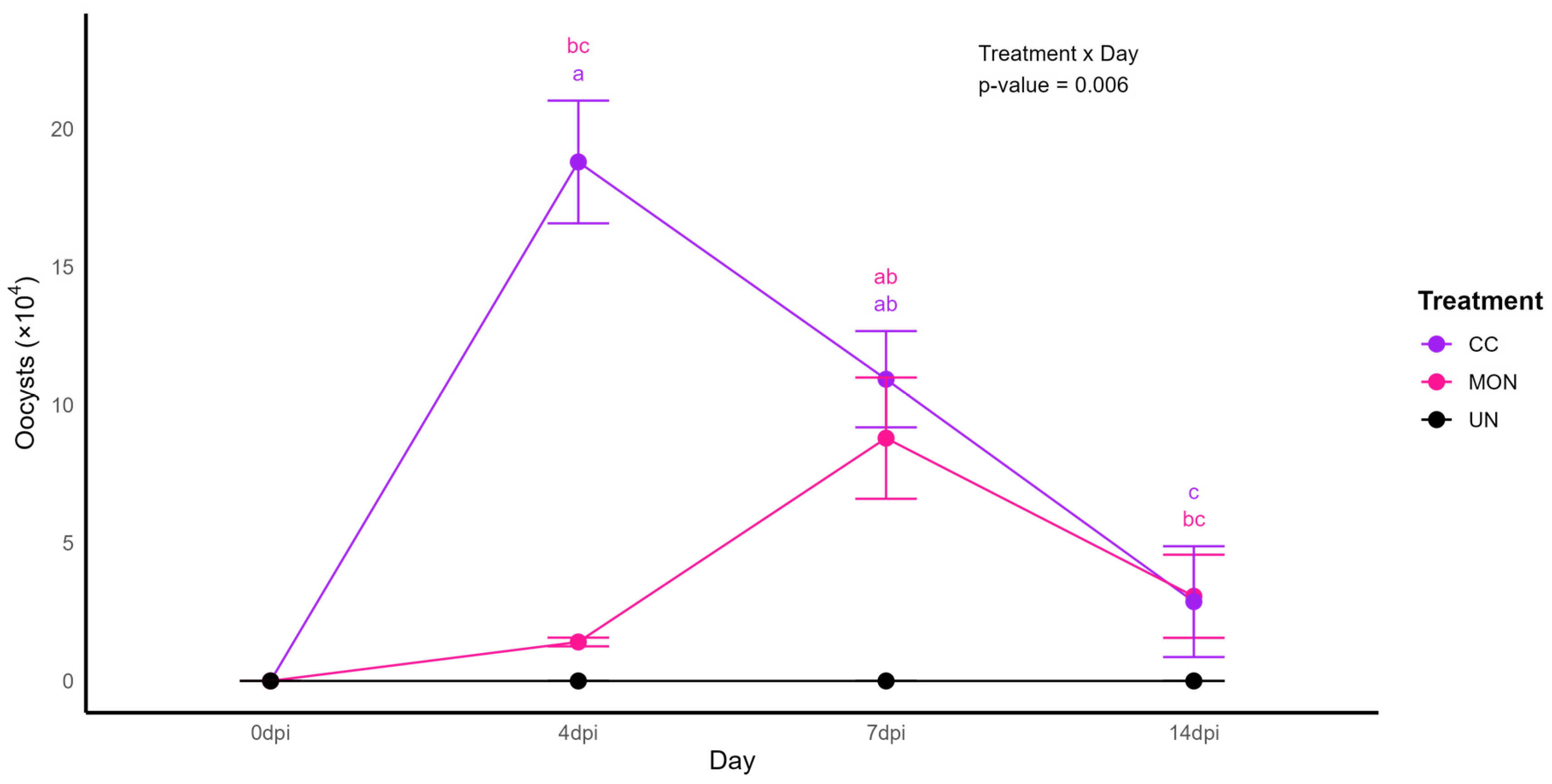
At 14 days of age (0 dpi), before the challenge, the presence of oocysts was not detected in any of the treatments (Figure 2), and counts remained at zero for the UN broiler chickens across the subsequent evaluation days. On 4 dpi, an increase in oocyst shedding was observed, with the CC treatment showing a higher mean count than the MON treatment (p = 0.006). By 7 dpi, both curves (CC and MON) reached the peak of excretion and showed similar means between them. By 14 dpi, counts were reduced in both treatments when compared to the CC peak at 4 dpi. In summary, the excretion dynamic was concentrated between 4 dpi and 7 dpi, with a subsequent decline until 14 dpi, when a recovery trend characterized by reduced counts was observed.

3.4. Intestinal Morphometry of the Duodenum and Jejunum

In the duodenum, the highest villus height values were observed in the MON group, with intermediate values in CC, and the lowest in UN. Crypt depth was greater in CC and MON compared to UN (Table 5) (p = 0.001). No differences were observed for villus width, crypt width, or the villus-to-crypt depth ratio (Vh:Cd) (p > 0.05).
In the jejunum, villus height was greatest in the UN group, lowest in CC, and intermediate in MON (p = 0.016). Crypt depth was higher in CC and MON when compared to UN (p = 0.013), which was reflected in the Vh:Cd ratio, being greater in UN compared to the other treatments (p < 0.001). There were no effects for villus width or crypt width (p > 0.05).

3.5. Intestinal Health Index (“I See Inside”)

In the duodenum, the total ISI score was highest in the MON-supplemented broiler chickens (13.28) and lowest in UN (7.35), while CC (9.97) presented intermediate values (Table 6) (p < 0.01). Lamina propria thickness was greater in the CC and MON groups, while UN presented the lowest value (p = 0.001). Epithelial thickness, enterocyte proliferation, and congestion did not vary significantly (p > 0.05). Regarding inflammatory infiltration in both the epithelium and the lamina propria, CC and MON presented higher scores relative to UN (p < 0.01). The goblet cell count was superior (p = 0.007) in UN, while CC and MON showed lower values. Oocyst presence was highest in the MON group, intermediate in the CC group, and absent in UN (p < 0.001).
In the jejunum, the total ISI score was similar between the CC (12.70) and MON (13.47) groups, with the lowest values observed in UN broilers (p < 0.01). The lamina propria was thicker in the CC and MON groups compared to UN (p < 0.001). However, the epithelial thickness was greater in UN, while CC presented the lowest value (p = 0.012). Inflammatory infiltration in the lamina propria was more intense in the CC and MON groups than in UN (p = 0.003). The UN group, in turn, exhibited a greater number of goblet cells, contrasting with the other groups (p < 0.001). The presence of oocysts was again more pronounced in MON and CC, while UN showed no occurrence.
In the ceca, the same scoring pattern as observed in the jejunum was obtained, with MON and CC broiler chickens being similar, and UN broiler chickens presenting lower values. Enterocyte proliferation was significantly higher in the MON group, while CC and UN presented similar values (p = 0.006). Inflammatory infiltration in the epithelium was more pronounced in CC and MON, contrasting with UN, which presented a very low score (p = 0.004). For inflammatory infiltration in the lamina propria, CC and MON presented higher values compared to UN (p = 0.003). Congestion showed no significant difference among the groups (p = 0.081). Oocyst presence was markedly higher in CC and MON, whereas UN showed no occurrence (p < 0.001). The total score reflected these results, being highest in CC and MON, while UN exhibited a significantly lower value (p < 0.001).

3.6. Gene Expression in Duodenum

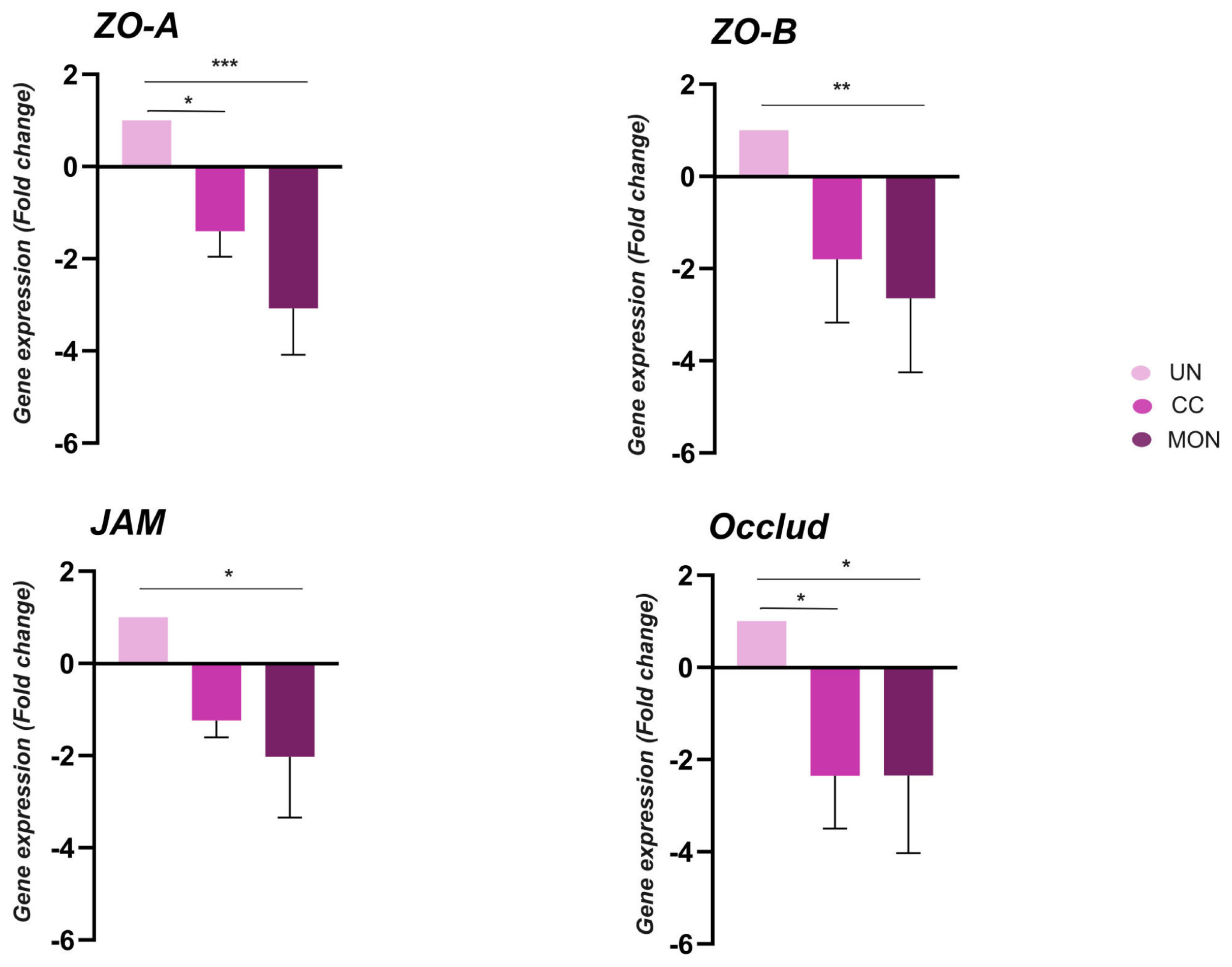
The gene ZO-A gene was 3-fold less expressed (p < 0.01) in MON group samples, and 1-fold less expressed (p = 0.02) in the CC group (Figure 3), relative to the UN group. Similarly, ZO-B was 2-fold less expressed in the MON group (p = 0.001); however, there was no significant difference between the CC and UN groups (p > 0.05). For the JAM gene, there was also no significant difference in expression in the CC group (p > 0.05) compared to the UN group, and only the MON group was 2-fold less expressed than the UN group (p = 0.05). Meanwhile, the expression of the Occludin gene was 2-fold lower for both the CC group (p = 0.02) and the MON group (p = 0.01) compared to the UN group.
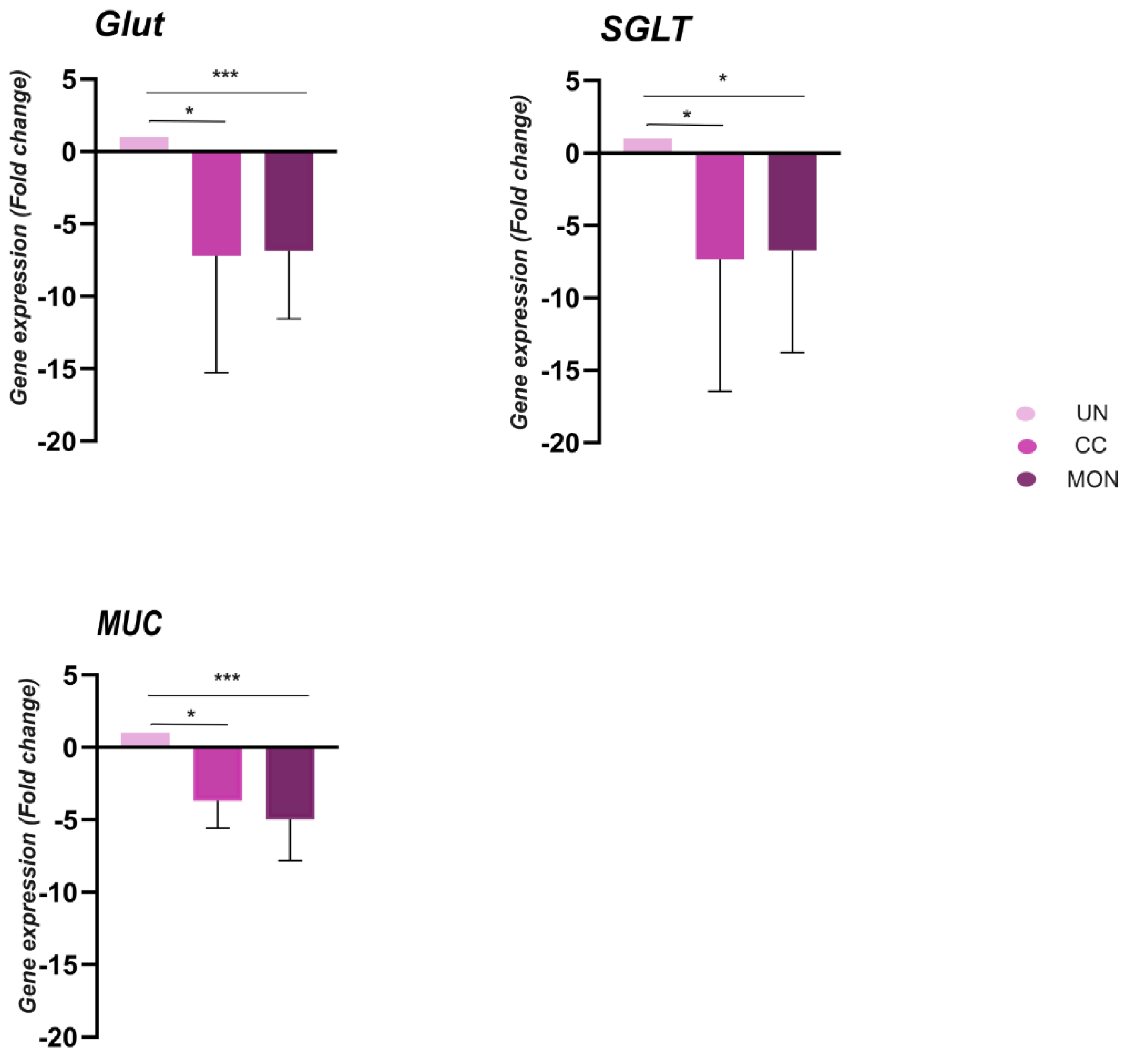
For MUC2 (Figure 4), expression in the CC group was 3-fold (p < 0.01) less expressed than the UN group. The same occurred with samples from the MON group, which were also 3-fold less expressed (p < 0.001) compared to the UN group. Regarding glucose transporters, a decrease in the expression of both genes was verified for both treatments. GLUT2 and SGLT1 presented 7-fold lower expression for the CC group (p < 0.001; p = 0.03) and 6-fold lower expression for the MON group (p = 0.003; p = 0.02), relative to the UN group.

4. Discussion

The medium-to-low doses of Eimeria spp. challenge used in this trial effectively compromised the performance of the broiler chickens, while the inclusion of 100 mg/kg of monensin sodium mitigated performance losses at 7 and 14 days post-infection (dpi). The reduced weight gain in broiler infected with Eimeria spp. is associated with decreased feed intake caused by this pathogen [21]. The cumulative and daily feed intake data support this assumption, clearly showing that MON inclusion delayed the drop in feed consumption until 6 dpi, when it finally equaled the challenged control (CC) group (Figure 1). It is noteworthy that even before the challenge, MON demonstrated its efficacy in improving the broilers’ body weight gain (BWG). It is difficult to explain why the unchallenged (UN) group had an intermediate BWG, as they should have shown the same response as the CC animals before the challenge.
Observing the post-challenge daily feed intake curve confirms that the acute effect of the infection occurred between 4 and 5 dpi, with the CC group showing the sharpest drop in consumption (5 dpi). Furthermore, the recovery of feed intake to the same levels as the UN broiler chickens only occurred from 11 dpi onward, with no compensatory feed intake observed up to 14 dpi. The same pattern was observed in an experiment in which laying hens were subjected to a mixed challenge with Eimeria spp. Feed intake in the challenged groups began to decrease from 4 days post-infection (DPI), with the most pronounced drop occurring at 7 DPI, and no recovery was observed by 15 DPI [38]. Demonstrating that this transient reduced feed intake is a classic behavior in Eimeria spp. enteric infections and has been described as part of the host response to intestinal damage and inflammation [23,39].
This feeding behavior coincides with the peak of oocyst shedding, indicating an interaction between the host response and the progression of infection. The dynamics of oocyst excretion showed a peak in shedding from 4 to 7 dpi in CC birds, which is the expected pattern for challenge models with Eimeria spp. However, the MON group showed a peak in excretion at 7 dpi and maintained counts like the CC group at 14 dpi, corroborating the lesion scores previously described. After the peak, excretion tends to decrease due to the development of immunity and self-limitation of the parasite cycle [40,41]. Previous reports indicate that ionophores control parasitic multiplication and lesion severity but do not necessarily suppress oocyst shedding completely [15,42].
The epithelial damage caused by the challenge with Eimeria spp. can be confirmed by the histopathological scores measured by the I See Inside (ISI) methodology. In this study, the UN group had the lowest total ISI score in the jejunum and ceca. It is interesting to note a lower oocyst count in the duodenum of CC broiler chickens when compared to MON broiler chickens. This may be due to the coccidiostatic effect of monensin, which delayed the peak of infection, as demonstrated by the daily feed intake, and the single-time-point evaluation (7 dpi). E. acervulina peaks 5 days post-infection [43] and is site-specific to the proximal small intestine (duodenum and upper jejunum) [44], while E. tenella is site-specific to the ceca, and E. maxima to the duodenum, jejunum, and ileum, both peaking at 7 dpi. Similarly, higher rates of oocysts in the epithelium in treatments with anticoccidials [45].
The ISI results are consistent with the findings from the intestinal morphometric analysis (villus height, crypt depth, and villus-to-crypt ratio), indicating that both methods agreed on identifying the degree of intestinal compromise in the challenged groups. Eimeria infection caused a reduction in the villus-to-crypt ratio and an increase in crypt depth, reflecting intense epithelial regeneration and loss of absorptive areas. This occurs due to the affinity of Eimeria spp. for the lateral and apical areas of the intestinal villi, so that any damage to the villi resulting from infection will be reflected in the villus-to-crypt ratio, and the increase in crypt depth due suggests an inflammatory process [7].
Consequently, the changes observed in villi and crypts may affect the expression of genes associated with tight epithelial junctions, which are essential for maintaining the intestinal epithelial barrier and defending against various pathogens [46]. The expression of genes in 7 dpi, the ZO-A and Occludin genes in CC and MON, corroborating the hypothesis of damage to the epithelial tight junctions and increased mucosal permeability, reported by Souza [22]. However, for ZO-B and JAM, no significant difference was observed between the Challenged Control (CC) and the Unchallenged (UN) groups, whereas the Monensin (MON) group showed significantly lower expression. This apparent discrepancy can be explained by the chronology of the infection. Since monensin acts by slowing down the parasitic cycle, the peak of oocyst presence and epithelial interaction in the MON group was delayed. Consequently, at the specific sampling time (7 dpi), the MON group exhibited a higher local count of oocysts in the duodenum (corroborated by ISI findings), which correlates with the acute downregulation of these tight junction genes. Conversely, the CC group, which experienced the peak of infection earlier (4–5 dpi), may have already entered the recovery phase by 7 dpi, allowing ZO-2 and JAM expression levels to return to near-basal levels [10].
In addition, the expression of the MUC-2 gene was reduced in the duodenum of challenged of in CC and MON group, which can be explained by the lower proliferation of goblet cells in the duodenum observed with ISI. The primary function of goblet cells is to secrete mucins and create a protective mucus layer. Reducing mucus in the gut compromises the bird’s primary defense barrier, increasing susceptibility to pathogen colonization, infection, and inflammation [47].
Furthermore, a decrease in the expression of glucose transporter genes (SGLT-1 and GLUT-2) was observed in all challenged groups compared to the unchallenged control. However, regarding nutrient utilization, broilers supplemented with monensin (MON) maintained AME and AMEn values similar to the unchallenged group, contrasting with the significant reduction observed in the challenged control (CC). This suggests that monensin mitigated the impact of the challenge on energy retention, even in the presence of reduced transporter gene expression. Recent studies confirm that Eimeria spp. challenge directly compromises intestinal integrity and energy metabolism, resulting in poorer feed conversion and reduced weight gain [48,49,50].
However, these morphometric, histopathological, and gene expression data do not fully align with the digestibility and performance data that were found. Monensin supplementation was able to maintain nutrient digestibility at levels like those of non-challenged broiler chickens. These impacts on digestibility help explain the mitigation of worsening body weight gain and feed conversion ratio, showing that the reduced drop in feed intake was not the only factor in monensin’s action.
Collectively, the results reinforce that Eimeria challenge compromises multiple aspects of intestinal physiology, such as morphology, gene expression, and nutrient digestibility. Although monensin does not completely eliminate the deleterious effects of the challenge on performance, it maintains nutrient digestibility. This improvement does not appear to be related to monensin’s ability to protect the intestinal epithelium from lesions caused by the protozoan, as demonstrated by histological findings and tight junction gene expression.

5. Conclusions

The deleterious effects of medium-to-low doses of mixed Eimeria challenge on performance are linked to both reduced feed intake and intestinal compromise. Monensin supplementation proved effective in mitigating these losses, not by preventing tissue injury, but by ensuring that nutrient digestibility remained unaffected. Thus, the efficacy of monensin in this model relies on its ability to sustain energy and nutrient availability, countering the metabolic costs of the infection.

Supplementary Materials

The following supporting information can be downloaded at: https://www.mdpi.com/article/10.3390/poultry5010012/s1, Table S1: Daily and total mortality (%) of broilers following Eimeria spp. challenge from 1 to 14 days post-infection (dpi).

Author Contributions

Conceptualization, P.P.d.A.B.M.d.L., J.A.d.L.B. and F.D.; methodology, P.P.d.A.B.M.d.L., J.A.d.L.B. and F.D.; formal analysis, P.P.d.A.B.M.d.L., J.A.d.L.B. and F.D.; investigation, P.P.d.A.B.M.d.L., J.A.d.L.B., G.C.V., J.d.C.C.P. and M.T.M.; data curation, P.P.d.A.B.M.d.L., J.A.d.L.B., H.A.S. and F.D.; writing—original draft preparation, P.P.d.A.B.M.d.L., J.A.d.L.B., G.C.V., J.d.C.C.P., M.T.M., H.A.S., R.M.F.S. and F.D.; writing—review and editing, P.P.d.A.B.M.d.L., J.A.d.L.B., G.C.V., J.d.C.C.P., M.T.M., H.A.S., R.M.F.S. and F.D.; su-pervision, F.D.; project administration, P.P.d.A.B.M.d.L., J.A.d.L.B. and F.D.; funding acquisition, H.A.S., R.M.F.S. and F.D. All authors have read and agreed to the published version of the manuscript.

Funding

This research received no external funding.

Institutional Review Board Statement

This study was approved by the Ethics Committee on Animal Use of Luiz de Queiroz College of Agriculture (ESALQ), University of São Paulo (USP), protocol number 6907010725 (approved on 9 August 2025), in accordance with Brazilian legislation and CONCEA guidelines.

Informed Consent Statement

Not applicable.

Data Availability Statement

The original contributions presented in this study are included in the article/Supplementary Material. Further inquiries can be directed to the corresponding authors.

Acknowledgments

The authors acknowledge the Graduate Program of Animal Science and Pastures, from Luiz de Queiroz College of Agriculture (ESALQ), University of São Paulo.

Conflicts of Interest

The authors declare no conflicts of interest. The funders had no role in the design of the study; in the collection, analyses, or interpretation of data; in the writing of the manuscript; or in the decision to publish the results.

Abbreviations

The following abbreviations are used in this manuscript:
AGPsAntimicrobial Growth-Promoters
AMEApparent Metabolizable Energy
AMEnNitrogen-Corrected Apparent Metabolizable Energy
ATTDApparent Total Tract Digestibility
BWBody Weight
BWGBody Weight Gain
CEUAEthics Committee for the Use of Animals
CPCrude Protein
DMDry Matter
dpiDays Post-Infection
FCRFeed Conversion Ratio
FIFeed Intake
GEGross Energy
H&EHematoxylin and Eosin
HPRTHypoxanthine Phophoribosyl-Transferase
ISII See Inside
JAMJunctional Adhesion Molecule
MUC2Mucin 2
NBNitrogen Balance
NENecrotic Enteritis
OCLNOccludin
OMOrganic Matter
qPCRQuantitative Polymerase Chain Reaction
SEMStandard Error of the Mean
Vh:CdVillus Height-to-Crypt Depth
WGWeight Gain
ZO-AZonula Occludens-A
ZO-BZonula Occludens-B

References

  1. Lee, K.-W.; Lillehoj, H.-S.; Jang, S.-I.; Lee, S.-H.; Bautista, D.A.; Ritter, G.D.; Lillehoj, E.P.; Siragusa, G.R. Comparison of Live Eimeria Vaccination with In-Feed Salinomycin on Growth and Immune Status in Broiler Chickens. Res. Vet. Sci. 2013, 95, 110–114. [Google Scholar] [CrossRef]
  2. Cervantes, H.M.; McDougald, L.R. Raising Broiler Chickens without Ionophore Anticoccidials. J. Appl. Poult. Res. 2023, 32, 100347. [Google Scholar] [CrossRef]
  3. Hafeez, A.; Sohail, M.; Ahmad, A.; Shah, M.; Din, S.; Khan, I.; Shuiab, M.; Nasrullah; Shahzada, W.; Iqbal, M. Selected Herbal Plants Showing Enhanced Growth Performance, Ileal Digestibility, Bone Strength and Blood Metabolites in Broilers. J. Appl. Anim. Res. 2020, 48, 448–453. [Google Scholar] [CrossRef]
  4. Nabian, S.; Arabkhazaeli, F.; Seifouri, P.; Farahani, A. Morphometric Analysis of the Intestine in Experimental Coccidiosis in Broilers Treated with Anticoccidial Drugs. Iran. J. Parasitol. 2018, 13, 493–499. [Google Scholar]
  5. Calik, A.; Omara, I.I.; White, M.B.; Li, W.; Dalloul, R.A. Effects of Dietary Direct Fed Microbial Supplementation on Performance, Intestinal Morphology and Immune Response of Broiler Chickens Challenged With Coccidiosis. Front. Vet. Sci. 2019, 6, 463. [Google Scholar] [CrossRef]
  6. Su, L.; Huang, S.; Huang, Y.; Bai, X.; Zhang, R.; Lei, Y.; Wang, X. Effects of Eimeria Challenge on Growth Performance, Intestine Integrity, and Cecal Microbial Diversity and Composition of Yellow Broilers. Poult. Sci. 2024, 103, 104470. [Google Scholar] [CrossRef]
  7. Belote, B.L.; Soares, I.; Sanches, A.W.D.; de Souza, C.; Scott-Delaunay, R.; Lahaye, L.; Kogut, M.H.; Santin, E. Applying Different Morphometric Intestinal Mucosa Methods and the Correlation with Broilers Performance under Eimeria Challenge. Poult. Sci. 2023, 102, 102849. [Google Scholar] [CrossRef]
  8. Kraieski, A.L.; Hayashi, R.M.; Sanches, A.; Almeida, G.C.; Santin, E. Effect of Aflatoxin Experimental Ingestion and Eimeira Vaccine Challenges on Intestinal Histopathology and Immune Cellular Dynamic of Broilers: Applying an Intestinal Health Index. Poult. Sci. 2017, 96, 1078–1087. [Google Scholar] [CrossRef]
  9. Belote, B.L.; Soares, I.; Tujimoto-Silva, A.; Sanches, A.W.D.; Kraieski, A.L.; Santin, E. Applying I See inside Histological Methodology to Evaluate Gut Health in Broilers Challenged with Eimeria. Vet. Parasitol. 2019, 276, 100004. [Google Scholar] [CrossRef]
  10. de Lima, P.P.d.A.B.M.; Paulino, P.G.; da Silva, N.M.; Galdino, K.C.P.; Rabello, C.A.; de Souza, F.G.; Reis, T.L.; Machado, L.d.S.; de Resende Souza, F.D.; Santos, H.A. Dose and Age-Dependent Effects of Eimeria spp. Infection on Cytokine and Intestinal Integrity Gene Expression in Broiler Chickens. Vet. Parasitol. 2025, 338, 110550. [Google Scholar] [CrossRef]
  11. Teng, P.-Y.; Yadav, S.; de Souza Castro, F.L.; Tompkins, Y.H.; Fuller, A.L.; Kim, W.K. Graded Eimeria Challenge Linearly Regulated Growth Performance, Dynamic Change of Gastrointestinal Permeability, Apparent Ileal Digestibility, Intestinal Morphology, and Tight Junctions of Broiler Chickens. Poult. Sci. 2020, 99, 4203–4216. [Google Scholar] [CrossRef]
  12. Lee, Y.; Lu, M.; Lillehoj, H.S. Coccidiosis: Recent Progress in Host Immunity and Alternatives to Antibiotic Strategies. Vaccines 2022, 10, 215. [Google Scholar] [CrossRef]
  13. Ahmad, R.; Yu, Y.-H.; Hua, K.-F.; Chen, W.-J.; Zaborski, D.; Dybus, A.; Hsiao, F.S.-H.; Cheng, Y.-H. Management and Control of Coccidiosis in Poultry—A Review. Anim. Biosci. 2023, 37, 1. [Google Scholar] [CrossRef]
  14. Ribeiro, A.M.L.; Kessler, A.M.; Penz Júnior, A.M.; Krabbe, E.L.; Brugalli, I.; Pophal, S. Evaluation of Monensin on the Performance and Carcass and Cuts Yield of Broilers. Rev. Bras. Zootec. 2000, 29, 1141–1152. [Google Scholar] [CrossRef]
  15. Shahininejad, H.; Rahimi, S.; Karimi Torshizi, M.A.; Arabkhazaeli, F.; Ayyari, M.; Behnamifar, A.; Abuali, M.; Grimes, J. Comparing the Effect of Phytobiotic, Coccidiostat, Toltrazuril, and Vaccine on the Prevention and Treatment of Coccidiosis in Broilers. Poult. Sci. 2024, 103, 103596. [Google Scholar] [CrossRef]
  16. Chapman, H.D.; Jeffers, T.K.; Williams, R.B. Forty Years of Monensin for the Control of Coccidiosis in Poultry. Poult. Sci. 2010, 89, 1788–1801. [Google Scholar] [CrossRef]
  17. Gray, S.; Ward, T.; Southern, L.; Ingram, D. Interactive Effects of Sodium Bentonite and Coccidiosis with Monensin or Salinomycin in Chicks. Poult. Sci. 1998, 77, 600–604. [Google Scholar] [CrossRef]
  18. da Silva Pires, P.G.; Torres, P.; Teixeira Soratto, T.A.; Filho, V.B.; Hauptli, L.; Wagner, G.; Haese, D.; Pozzatti, C.D.; de Oliveira Moraes, P. Comparison of Functional-Oil Blend and Anticoccidial Antibiotics Effects on Performance and Microbiota of Broiler Chickens Challenged by Coccidiosis. PLoS ONE 2022, 17, e0270350. [Google Scholar] [CrossRef]
  19. El Amine Benarbia, M.; Gaignon, P.; Manoli, C.; Chicoteau, P. Saponin-Rich Plant Premixture Supplementation Is as Efficient as Ionophore Monensin Supplementation Under Experimental Eimeria spp. Challenge in Broiler Chicken. Front. Vet. Sci. 2022, 9, 946576. [Google Scholar] [CrossRef]
  20. Wickramasuriya, S.S.; Park, I.; Lee, Y.; Richer, L.M.; Przybyszewski, C.; Gay, C.G.; van Oosterwijk, J.G.; Lillehoj, H.S. Effect of Orally Administered B. Subtilis-CNK-2 on Growth Performance, Immunity, Gut Health, and Gut Microbiome in Chickens Infected with Eimeria Acervulina and Its Potential as an Alternative to Antibiotics. Poult. Sci. 2024, 103, 104156. [Google Scholar] [CrossRef]
  21. Kipper, M.; Andretta, I.; Lehnen, C.R.; Lovatto, P.A.; Monteiro, S.G. Meta-Analysis of the Performance Variation in Broilers Experimentally Challenged by Eimeria spp. Vet. Parasitol. 2013, 196, 77–84. [Google Scholar] [CrossRef]
  22. de Souza, G.C.; Esteves, G.F.; Volpato, F.A.; Miotto, R.; Mores, M.A.Z.; Ibelli, A.M.G.; Bastos, A.P. Effects of Varying Concentrations of Eimeria Challenge on the Intestinal Integrity of Broiler Chickens. Poultry 2024, 3, 1–14. [Google Scholar] [CrossRef]
  23. Teng, P.-Y.; Choi, J.; Yadav, S.; Tompkins, Y.H.; Kim, W.K. Effects of Low-Crude Protein Diets Supplemented with Arginine, Glutamine, Threonine, and Methionine on Regulating Nutrient Absorption, Intestinal Health, and Growth Performance of Eimeria-Infected Chickens. Poult. Sci. 2021, 100, 101427. [Google Scholar] [CrossRef]
  24. Rostagno, H.S.; Albino, L.F.T.; Hannas, M.I.; Donzele, J.L.; Sakomura, N.K.; Perazzo, F.G.; Saraiva, A.; Teixeira, M.L.; Rodrigues, P.B.; de Oliveira, R.F.; et al. Tabelas Brasileiras Para Aves e Suínos—Composição de Alimentos e Exigências Nutricionais, 4th ed.; Rostagno, H.S., Ed.; UFV: Viçosa, Brazil, 2017; ISBN 978-85-8179-120-3. [Google Scholar]
  25. Association of Official Analytical Chemists. AOAC Official Methods of Analysis, 18th ed.; Association of Official Analytical Chemists: Rockville, MD, USA, 2005. [Google Scholar]
  26. Hodgson, J.N. Coccidiosis: Oocyst Counting Technique for Coccidiostat Evaluation. Exp. Parasitol. 1970, 28, 99–102. [Google Scholar] [CrossRef]
  27. Rapp, W.; Wurster, K. Alcian Blue Staining Intestinal Goblet Cell Antigen (GOA): A Marker for Gastric Signet Ring Cell and Colonic Colloidal Carcinoma. Klin. Wochenschr. 1978, 56, 1185–1187. [Google Scholar] [CrossRef]
  28. Kisielinski, K.; Willis, S.; Prescher, A.; Klosterhalfen, B.; Schumpelick, V. A Simple New Method to Calculate Small Intestine Absorptive Surface in the Rat. Clin. Exp. Med. 2002, 2, 131–135. [Google Scholar] [CrossRef]
  29. Vandesompele, J.; De Preter, K.; Pattyn, F.; Poppe, B.; Van Roy, N.; De Paepe, A.; Speleman, F. Accurate Normalization of Real-Time Quantitative RT-PCR Data by Geometric Averaging of Multiple Internal Control Genes. Genome Biol. 2002, 3, RESEARCH0034.1. [Google Scholar] [CrossRef]
  30. Bustin, S.A.; Benes, V.; Garson, J.A.; Hellemans, J.; Huggett, J.; Kubista, M.; Mueller, R.; Nolan, T.; Pfaffl, M.W.; Shipley, G.L.; et al. The MIQE Guidelines: Minimum Information for Publication of Quantitative Real-Time PCR Experiments. Clin. Chem. 2009, 55, 611–622. [Google Scholar] [CrossRef]
  31. Livak, K.J.; Schmittgen, T.D. Analysis of Relative Gene Expression Data Using Real-Time Quantitative PCR and the 2−ΔΔCT Method. Methods 2001, 25, 402–408. [Google Scholar] [CrossRef]
  32. De Boever, S.; Vangestel, C.; De Backer, P.; Croubels, S.; Sys, S.U. Identification and Validation of Housekeeping Genes as Internal Control for Gene Expression in an Intravenous LPS Inflammation Model in Chickens. Vet. Immunol. Immunopathol. 2008, 122, 312–317. [Google Scholar] [CrossRef]
  33. Batra, A.; Maier, H.J.; Fife, M.S. Selection of Reference Genes for Gene Expression Analysis by Real-Time QPCR in Avian Cells Infected with Infectious Bronchitis Virus. Avian Pathol. 2017, 46, 173–180. [Google Scholar] [CrossRef] [PubMed]
  34. Barekatain, R.; Chrystal, P.V.; Howarth, G.S.; McLaughlan, C.J.; Gilani, S.; Nattrass, G.S. Performance, Intestinal Permea-bility, and Gene Expression of Selected Tight Junction Proteins in Broiler Chickens Fed Reduced Protein Diets Supple-mented with Arginine, Glutamine, and Glycine Subjected to a Leaky Gut Model. Poult. Sci. 2019, 98, 6761–6771. [Google Scholar] [CrossRef] [PubMed]
  35. Cheng, Y.F.; Chen, Y.P.; Chen, R.; Su, Y.; Zhang, R.Q.; He, Q.F.; Wang, K.; Wen, C.; Zhou, Y.M. Dietary Mannan Oligosaccharide Ameliorates Cyclic Heat Stress-Induced Damages on Intestinal Oxidative Status and Barrier Integrity of Broilers. Poult. Sci. 2019, 98, 4767–4776. [Google Scholar] [CrossRef] [PubMed]
  36. Abdelli, N.; Ramser, A.; Greene, E.S.; Beer, L.; Tabler, T.W.; Orlowski, S.K.; Pérez, J.F.; Solà-Oriol, D.; Anthony, N.B.; Dridi, S. Effects of Cyclic Chronic Heat Stress on the Expression of Nutrient Transporters in the Jejunum of Modern Broilers and Their Ancestor Wild Jungle Fowl. Front. Physiol. 2021, 12. [Google Scholar] [CrossRef]
  37. Yin, F.; Lan, R.; Wu, Z.; Wang, Z.; Wu, H.; Li, Z.; Yu, H.; Zhao, Z.; Li, H. Yupingfeng Polysaccharides Enhances Growth Performance in Qingyuan Partridge Chicken by Up-regulating the mRNA Expression of SGLT1, GLUT2 and GLUT5. Vet. Med. Sci. 2019, 5, 451–461. [Google Scholar] [CrossRef]
  38. Sharma, M.K.; Singh, A.K.; Goo, D.; Choppa, V.S.R.; Ko, H.; Shi, H.; Kim, W.K. Graded Levels of Eimeria Infection Modulated Gut Physiology and Temporarily Ceased the Egg Production of Laying Hens at Peak Production. Poult. Sci. 2024, 103, 103229. [Google Scholar] [CrossRef]
  39. Sharma, M.K.; Liu, G.; White, D.L.; Tompkins, Y.H.; Kim, W.K. Effects of Mixed Eimeria Challenge on Performance, Body Composition, Intestinal Health, and Expression of Nutrient Transporter Genes of Hy-Line W-36 Pullets (0–6 Wks of Age). Poult. Sci. 2022, 101, 102083. [Google Scholar] [CrossRef]
  40. Matsubayashi, M.; Kinoshita, M.; Kobayashi, A.; Tsuchida, S.; Shibahara, T.; Hasegawa, M.; Nakamura, H.; Sasai, K.; Ushida, K. Parasitic Development in Intestines and Oocyst Shedding Patterns for Infection by Eimeria Uekii and Eimeria Raichoi in Japanese Rock Ptarmigans, Lagopus Muta Japonica, Protected by Cages in the Southern Japanese Alps. Int. J. Parasitol. Parasites Wildl. 2020, 12, 19–24. [Google Scholar] [CrossRef]
  41. Snyder, R.P.; Guerin, M.T.; Hargis, B.M.; Page, G.; Barta, J.R. Monitoring Coccidia in Commercial Broiler Chicken Flocks in Ontario: Comparing Oocyst Cycling Patterns in Flocks Using Anticoccidial Medications or Live Vaccination. Poult. Sci. 2021, 100, 110–118. [Google Scholar] [CrossRef]
  42. Blake, D.P.; Knox, J.; Dehaeck, B.; Huntington, B.; Rathinam, T.; Ravipati, V.; Ayoade, S.; Gilbert, W.; Adebambo, A.O.; Jatau, I.D. Re-Calculating the Cost of Coccidiosis in Chickens. Vet. Res. 2020, 51, 115. [Google Scholar] [CrossRef]
  43. Martins, R.R.; Silva, L.J.G.; Pereira, A.M.P.T.; Esteves, A.; Duarte, S.C.; Pena, A. Coccidiostats and Poultry: A Comprehensive Review and Current Legislation. Foods 2022, 11, 2738. [Google Scholar] [CrossRef]
  44. López-Osorio, S.; Chaparro-Gutiérrez, J.J.; Gómez-Osorio, L.M. Overview of Poultry Eimeria Life Cycle and Host-Parasite Interactions. Front. Vet. Sci. 2020, 7, 384. [Google Scholar] [CrossRef]
  45. de Oliveira Moraes, P.; da Silva Pires, P.G.; Benetti Filho, V.; Lima, A.L.F.; Kindlein, L.; Taschetto, D.; Favero, A.; Wagner, G. Intestinal Health of Broilers Challenged with Eimeria spp. Using Functional Oil Blends in Two Physical Forms with or without Anticoccidials. Sci. Rep. 2023, 13, 14612. [Google Scholar] [CrossRef]
  46. Mohsin, M.; Zhang, Z.; Yin, G. Effect of Probiotics on the Performance and Intestinal Health of Broiler Chickens Infected with Eimeria Tenella. Vaccines 2022, 10, 97. [Google Scholar] [CrossRef]
  47. Duangnumsawang, Y.; Zentek, J.; Goodarzi Boroojeni, F. Development and Functional Properties of Intestinal Mucus Layer in Poultry. Front. Immunol. 2021, 12, 745849. [Google Scholar] [CrossRef] [PubMed]
  48. Castro, F.L.S.; Teng, P.-Y.; Yadav, S.; Gould, R.L.; Craig, S.; Pazdro, R.; Kim, W.K. The Effects of L-Arginine Supplementation on Growth Performance and Intestinal Health of Broiler Chickens Challenged with Eimeria spp. Poult. Sci. 2020, 99, 5844–5857. [Google Scholar] [CrossRef] [PubMed]
  49. Wang, X.; Peebles, E.D.; Kiess, A.S.; Wamsley, K.G.S.; Zhai, W. Effects of Coccidial Vaccination and Dietary Antimicrobial Alternatives on the Growth Performance, Internal Organ Development, and Intestinal Morphology of Eimeria-Challenged Male Broilers. Poult. Sci. 2019, 98, 2054–2065. [Google Scholar] [CrossRef] [PubMed]
  50. Lin, Y.; Lourenco, J.M.; Olukosi, O.A. Effects of Xylanase, Protease, and Xylo-Oligosaccharides on Growth Performance, Nutrient Utilization, Short Chain Fatty Acids, and Microbiota in Eimeria-Challenged Broiler Chickens Fed High Fiber Diet. Anim. Nutr. 2023, 15, 430–442. [Google Scholar] [CrossRef]
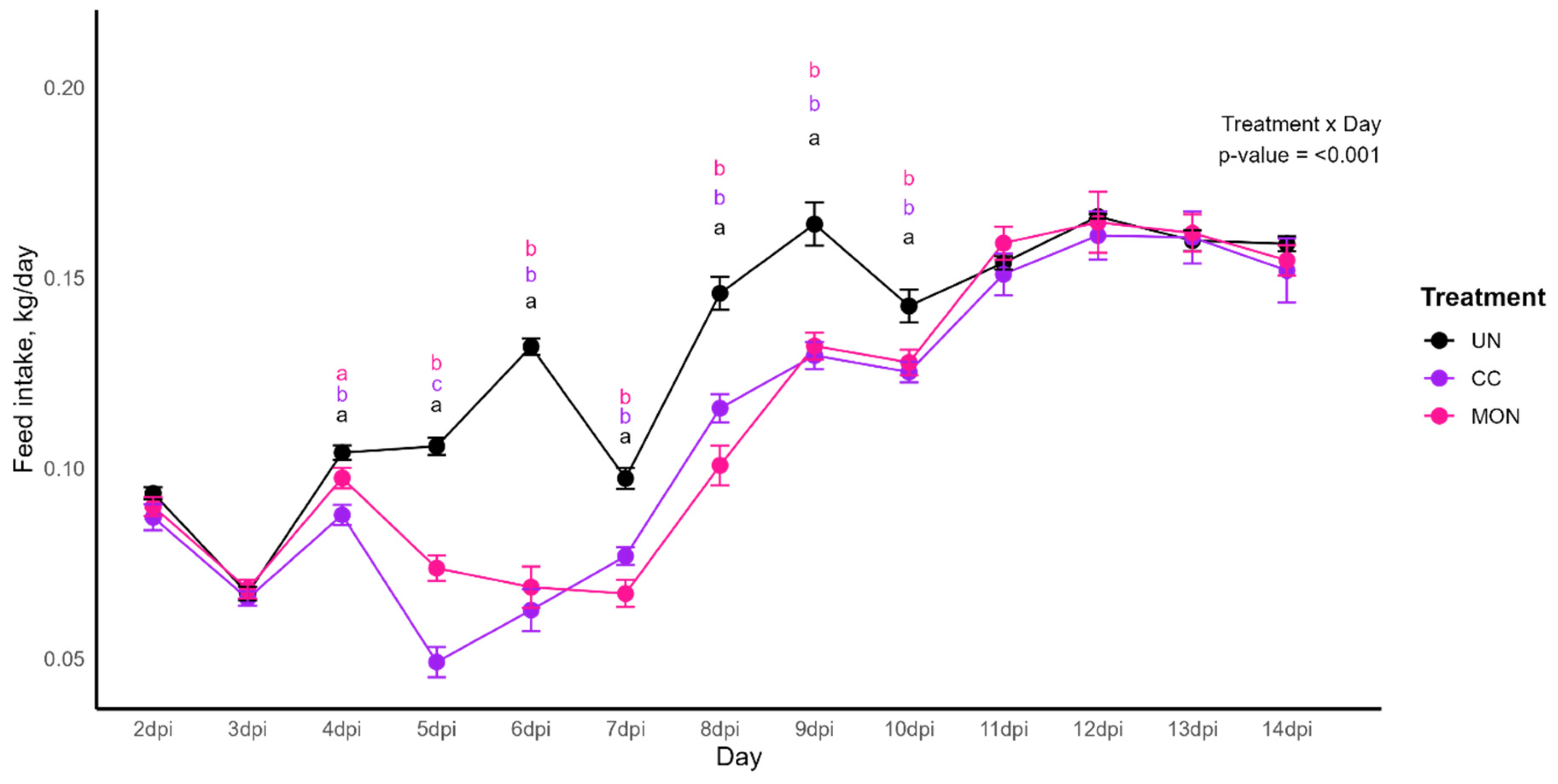
Figure 1. Daily feed intake from day 2 to day 14 post-challenge with Eimeria spp. Points within a dpi with different letters superscripts differ by Tukey test at p < 0.05, sliced treatment at each day postinfection.
Poultry 05 00012 g001
Figure 2. Graphical representation of the oocyst count of Emeria ssp. in unchallenged (UN), challenged (CC), and challenge + monensin (MON). Points with different letter superscripts differ by Tukey test at p < 0.05.
Poultry 05 00012 g002
Figure 3. Relative gene expression levels of tight junction (TJ) at 7 dpi, ZO-A, ZO-B, JAM, and Occludin in the duodenum of broiler chickens challenged with Eimeria spp. compared to the unchallenged control group. Data are presented as the mean ± standard error. Statistically significant differences between groups are indicated by asterisks (* p  <  0.05, ** p  <  0.01, *** p  <  0.001), with horizontal lines marking the comparisons.
Poultry 05 00012 g003
Figure 4. Relative gene expression levels at 7 dpi, Glut, SGLT1, and MUC in the duodenum of broiler chickens challenged with Eimeria spp. compared to the unchallenged control group. Data are presented as the mean ± standard error. Statistically significant differences between groups are indicated by asterisks (* p  <  0.05, *** p  <  0.001), with horizontal lines marking the comparisons.
Poultry 05 00012 g004
Table 1. Ingredient and analyzed chemical composition of the experimental diets.
Ingredients%
Corn57.36
Soybean meal36.91
Corn oil1.88
Dicalcium phosphate1.781
Limestone0.787
Salt0.456
DL—Methionine0.322
L—Lysine0.194
L—Threonine0.085
Choline chloride0.065
Vitamin supplement 10.120
Mineral supplement 20.050
Total, kg100.00
Calculated composition
Dry matter,%88.86
Organic matter,%85.70
Crude protein,%22.60
Metabolizable energy, kcal/kg3000
Ethereal extract,%5.25
Arginine1.287
Lysine1.217
Methionine0.615
Methionine + Cysteine0.905
Threonine0.770
Tryptophan0.239
Valine0.870
1 DSM Nutritional Products, Composition per kg of diet: Vit. A—13,500 UI; Vit. D3—3750 UI; Vit. E—30 UI; Vit. K3—3.75 mg; Vit. B1—3 mg; Vit. B2—9 mg; Vit. B6—4.5 mg; Vit. B12—22.5 μg; Nicotinic acid—52.5 mg; Pantothenic acid—27 mg; Biotin—0.15 mg; Folic acid—2.25 mg; Selenium—0.375 mg. 2 DSM Nutritional Products, Composition per kg of diet: Manganese—96 mg; Iron—60 mg; Zinc—60 mg; Copper—12 mg; Cobalt—1.2 mg; Iodine—1.2 mg.
Table 3. Performance parameter in broilers challenged with Eimeria spp.
VariablesTreatmentsSEMp-Value
UNCCMON
0 to 7 days
BWG, g1471491531.8630.616
FI, g1461501602.5470.078
FCR0.9921.0061.0470.0120.136
BW, g1851871911.8430.352
0 to 14 days
BWG, g490 ab474 b526 a8.143<0.001
FI, g6326186629.2040.123
FCR1.2911.3061.2590.0130.314
BW, g528 ab512 b564 a8.1280.024
0 to 21 days
BWG, g1017 a767 c866 b25.995<0.001
FI, g1225 a1021 c1101 b22.830<0.001
FCR1.205 a1.333 b1.273 ab0.0180.010
BW, g1073 a839 b896 b26.010<0.001
0 to 28 days
BWG, g1818 a1484 c1590 b36.237<0.001
FI, g2312 a2016 b2102 b35.957<0.001
FCR1.275 a1.359 b1.322 b0.010<0.001
BW, g1856 a1522 c1628 b36.249<0.001
UN: unchallenged; CC: Eimeria spp.-challenged at 14 days old; MON: CC + monensin (n = 6). BWG: body weight gain; FI: feed intake; FCR: feed conversion ratio; BW: body weight; SEM: standard error of the mean. Values within a row with different superscripts differ by Tukey test at p < 0.05.
Table 4. Apparent total tract nutrient digestibility (ATTD), apparent metabolizable energy (AME) and AME corrected (AMEn) in broilers (18 to 20 days old), challenged or not with Emeria ssp., with the addition of monensin.
ParametersTreatmentSEMp-Value
UMCCMON
ATTD
DM, %71.58 a62.87 b70.06 a1.093<0.001
OM, %75.97 a68.63 b74.69 a0.931<0.001
Ash, %46.11 a32.35 b43.02 a1.653<0.001
CP, %69.02 a59.85 b66.48 a1.136<0.001
GE, %77.57 a70.11 b76.44 a0.962<0.001
AME, kcal3896 a3521 b3839 a48.33<0.001
AMEn, kcal3654 a3312 b3606 a44.550.001
UN: unchallenged; CC: Eimeria-challenged at 14 days old; MON: CC + monensin (n = 6). DM: dy matter; OM: organic matter; CP: crude protein; GE: gross energy; SEM: standard error of the mean. Values within a row with different superscripts differ by Tukey test at p < 0.05.
Table 5. Intestinal morphometry of the duodenum and jejunum of broilers at 21 days of age (7 days postinfection).
ParametersTreatmentSEMp-Value
UNCCMON
Duodenum
Villus height, μm904 b1035 ab1077 a28.470.017
Villus width, μm2132052186.810.697
Crypt depth, μm111 b160 a165 a7.620.001
Crypt width, μm79.678.575.71.710.470
Vh:Cd8.256.636.590.3280.066
Absorptive surface, μm29.5411.1611.350.3680.065
Jejunum
Villus height, μm682 a522 b582 ab22.590.016
Villus width, μm1922142165.9830.261
Crypt depth, μm112 b153 a154 a6.6020.013
Crypt width, μm77.4182.8483.512.3810.587
Vh:Cd6.14 a3.45 b3.84 b0.316<0.01
Absorptive surface, μm27.72 a5.65 b6.11 b0.2790.002
UN: unchallenged; CC: Eimeria-challenged at 14 days old; MON: CC + monensin (n = 6). Vh:Cd: villus height crypt depth ratio. SEM: standard error of the mean. Values within a row with different superscripts differ by Tukey test at p < 0.05.
Table 6. I See Inside intestinal health score of the duodenum, jejunum and cecum of broilers at 21 days of age (7 days postinfection).
ParametersTreatmentSEMp-Value
UNCCMON
Duodenum
Lamina propria thickness1.22 b2.05 a1.98 a0.1210.001
Epithelial thickness1.131.021.050.0510.404
Enterocytes’ proliferation1.030.830.910.0530.056
Inflammatory cell infiltration in the epithelium0.53 b0.77 a0.79 a0.0570.009
Inflammatory cell infiltration in the lamina propria1.22 b2.10 a2.02 a0.128<0.001
Goblet cells’ proliferation1.90 a1.33 b1.12 b0.1400.007
Congestion0.330.380.400.0740.915
Presence of oocysts0.00 c1.50 b5.01 a0.609<0.001
Total7.35 b9.98 ab13.28 a0.8250.004
Jejunum
Lamina propria thickness1.23 b2.32 a2.04 a0.136<0.001
Epithelial thickness1.08 a0.88 b0.93 ab0.0290.012
Enterocytes’ proliferation0.900.840.900.0250.507
Inflammatory cell infiltration in the epithelium0.590.550.610.0540.909
Inflammatory cell infiltration in the lamina propria1.25 b2.12 a1.90 a0.1180.003
Goblet cells’ proliferation2.02 a0.35 c0.82 b0.184<0.001
Congestion0.371.120.540.1340.092
Presence of oocysts0.00 b4.53 a5.73 a0.640<0.001
Total7.43 b12.70 a13.47 a0.755<0.001
Cecum
Enterocytes’ proliferation0.43 b0.40 b0.92 a0.0720.006
Inflammatory cell infiltration in the epithelium0.03 b0.47 a0.32 a0.0560.004
Inflammatory cell infiltration in the lamina propria1.80 b2.70 a2.64 a0.1290.003
Congestion0.100.500.680.0980.081
Presence of oocysts0.00 b8.85 a6.78 a1.059<0.001
Total2.37 b12.92 a11.34 a1.273<0.001
UN: unchallenged; CC: Eimeria-challenged at 14 days old; MON: CC + monensin (n = 6). SEM: standard error of the mean. Values within a row with different superscripts differ by Dunn test at p < 0.05.
Disclaimer/Publisher’s Note: The statements, opinions and data contained in all publications are solely those of the individual author(s) and contributor(s) and not of MDPI and/or the editor(s). MDPI and/or the editor(s) disclaim responsibility for any injury to people or property resulting from any ideas, methods, instructions or products referred to in the content.