


Proceeding Paper

Polyacrylamide Enhances Irrigation Efficiency: Opportunities for Pakistan’s Horticulture Sector †
1
Department of Horticulture, MNS-University of Agriculture, Multan, Multan 60000, Pakistan
2
Department of Soil and Environmental Sciences, MNS-University of Agriculture, Multan, Multan 60000, Pakistan
3
Institute of Horticultural Sciences, University of Agriculture, Faisalabad, Faisalabad 38000, Pakistan
4
Department of Horticultural Sciences, The Islamia University of Bahawalpur, Bahawalpur 06314, Pakistan
*
Author to whom correspondence should be addressed.
Presented at the 9th International Conference on Horticulture & Expo 2025, Rawalpindi, Pakistan, 15–16 April 2025.
Biol. Life Sci. Forum 2025, 51(1), 8; https://doi.org/10.3390/blsf2025051008 (registering DOI)
Published: 26 December 2025

Abstract

Polyacrylamide (PAM), a water-soluble polymer, is revolutionizing horticulture by improving water use efficiency and soil health, particularly in Pakistan’s water-scarce regions, offering a transformative solution. It reduces irrigation frequency by 30–40%, saving up to 50% of water while boosting crop yield by 20–50%. This results in a net profit increase of 30–60%, depending on the crop and soil type. Global studies show that PAM reduces soil erosion by 90–95% in furrow irrigation systems and increases water infiltration by 15–30%. Its hydrophilic properties enhance soil water-holding capacity by up to 400% compared to untreated soil, enabling plants to thrive in arid and semi-arid regions. Economically, the adoption of PAM is cost-effective. PAM also supports sustainable agriculture by mitigating the effects of water scarcity. These characteristics are in line with the objective of Pakistan to achieve agricultural sustainability and productivity. In conclusion, polyacrylamide is a feasible solution to address the water shortage in Pakistan and soil erosion, as well as to provide a significant amount of economic and environmental gains to the horticulture industry. The wide adoption of the technology could be triggered by pilot projects, farmer training, and government subsidies, which would change the agricultural landscape in the country.

1. Introduction

Horticulture is a significant sector in the agricultural economy of Pakistan, occupying approximately 7–8 percent of the GDP and sustaining the livelihood of a large number of rural populations [1]. It covers a wide variety of crops such as fruits (mango, citrus, apple), vegetables (tomato, potato), and the floriculture sector that has a lot of growth potential considering the diverse agro-climatic conditions of Pakistan [2]. The amount of renewable water available per capita in Pakistan was 5000–5600 per year in 1947, while in 2023 it dropped to 900–930 m3 per capita/year [3,4,5,6], as it suffers because of the population growth of approximately 33 million people from 1947 to the present 240 million population in 2024 [7]. This significant reduction in the availability of water poses a serious threat to agricultural productivity, especially in water-intensive horticultural crops, which play a pivotal role in the food security of Pakistan.
Pakistan’s water storage system is mainly recharged through rainwater, and a 10% reduction in water storage is observed due to changes in the rain patterns, seasonal floods, and prolonged drought spells [8]. Nearly a 20–30% reduction in the Indus River flows is anticipated by 2050 due to melting Himalayan glaciers. This is because climate change is one of the major contributing factors [9]. Also, over the previous ten years, rainfall in dry regions is estimated to have reduced by 18% [10]. More than 90% of water is withdrawn for agricultural production that passes through the application, transportation, and seepage losses, and only 30–35% is available for the crops to use [11,12].
In addition, over-exploitation of groundwater is intensified in urban and peri-urban areas where 70% of aquifers are categorized as over-exploited in Punjab [13]. Reportedly, water tables are declining by 0.5–1 m per year in the major cities of Pakistan [7], such as Islamabad and Rawalpindi, whereby the water depth has decreased from 56 to 22.8 m in the past 20 years [14]. Compared to the northern areas of Pakistan, the southern areas are up to ten times more water-scarce [15] and are experiencing groundwater depletion at the rate of 0.30 to 0.70 m per year [16]. Notably, the population growth rate is increasing by 2.4%, which is faster than the water availability growth rate in Pakistan [17]. Higher population rate is worsening the water crisis by lowering the per capita water availability to less than 800 m3/year [18]. Because of the irrigation water deficits, a 20–40% reduction in the yield of major crops is being reported in recent studies. This has worsened the food insecurity in Pakistan, where 60% of the population is already food insecure [19].
The available amount of groundwater is severely threatened due to contamination and is becoming unfit for irrigation and drinking purposes due to increased salinity and alkalinity. Pakistan’s hydroclimatic regime is severely affected by the uneven patterns of rain, floods, and drought. The winter season (2024–2025) faced a 67% decline in rainfall compared to previous years and was the driest winter, resulting in the reduced water levels of Mangla and Tarbela dams [20]. Also, the complicated interaction among humans, the environment, and the government results in Pakistan’s water issue.
This instability compromises the ability of conventional water management systems to smooth out seasonal variability, which increases the stress on crops and rural populations. Nonetheless, Table 1 shows the real surface availability in Pakistan in the last five years in the form of million acre-feet (MAF) divided by Kharif and Rabi seasons, total water availability, and percentage change [21]. Table 2 shows that in the last five years, the population has been increasing and putting pressure on the water resources of Pakistan [22,23,24,25]. Therefore, Pakistan ranks among the leading 15 countries worldwide that have been categorized as water-stressed, which has been largely occasioned by a high rate of population growth, poor management of water, and climatic changes [3]. The increasing water shortage, land erosion, and wasteful consumption of resources present a high level of productivity and sustainability challenges [4]. Polyacrylamide (PAM), therefore, provides a useful solution to the issue in the form of a soil amendment. Although its use in the Pakistan horticulture system has not been well researched, it is widely used in other parts of the world. The article is a review of the technological feasibility and agronomic usefulness of PAM in the horticulture industry of Pakistan.

2. Soil Amendment; Polyacrylamide (PAM)

The acute water shortage in Pakistan severely constrains horticultural productivity. Amidst this backdrop, Polyacrylamide (PAM)—a high-molecular-weight synthetic hydrophilic polymer—has emerged as a potential soil amendment, also known as a soil conditioner and water retention agent. PAM primarily enhances water retention, improving soil structure. It also reduces irrigation demand and nutrient leaching by physically binding soil particles into stable aggregates [26,27]. PAM also reduces sediment levels in runoff by up to 90–99%, increasing soil porosity, thereby reducing bulk density and enhancing infiltration rates and water-holding capacity [28,29,30]. PAM also decreases erosion, a major issue in vulnerable slopes and urban horticultural sites. Previous studies also revealed the contribution of PAM characteristics in improving water retention and other soil properties [31,32,33,34] (Figure 1).
Laboratory experiments reveal that PAM forms a gel layer in the soil pores, holding substantial water and minimizing evaporation losses, thus increasing soil water content significantly [35]. PAM applications can reduce irrigation water requirements by up to 25% in sandy and loamy soils without compromising crop yield [36]. This is predominantly important for Pakistan’s arid regions. PAM’s soil-stabilizing action reduces nutrient leaching, improving fertilizer use efficiency and cutting input costs [37]. Zhang et al. reported a 15.3% improved water holding capacity at 0.04% PAM in sandy loam soil [36].
The effects of PAM on crop yield are variable. Few studies have been conducted in horticultural crops, where PAM enhanced the respiration rate of potato tubers during the sprouting phase and seedling growth when applied at 20 g/L and 30 g/L [38]. It was also observed that PAM treatments have a positive effect on photosynthesis characteristics and tuber nutritional quality [39]. For cultivating strong eggplant seedlings, Thakur et al. suggested sowing seeds in Arka vegetable special 3 g/tray + hydrogel 3 g/tray due to its significant positive impact on various plant growth parameters [40].
In one of the studies, earlier emergence was noted in coriander that not only led to higher biomass per plant, but it also increased the emergence count in spinach, leading to increased higher yield from 47 to 39% for pots that were treated with 80 kg/ha of PAM and 80 kg/ha PAM+Ca, respectively [41]. Bai et al. conducted a study on PAM application in semi-arid regions of northern Shaanxi, China, and in the arid region of Hetao irrigation district, Inner Mongolia, China, reporting an increased yield of watermelon (36.76%) and potato (24.83%) [42]. He also reported that water use efficiency was increased by 30.15% and 18.83%, in watermelon and potato, respectively, in semi-arid region. Meanwhile, the tomato yield was increased by 16.54% in the arid region and water use efficiency was increased by 25.12%. Higher increasing rates of output value, water use efficiency, and increased value per unit area were observed in watermelon and potato in semi-arid regions, whereas, tomato had a higher increased value per unit area, water use efficiency, and increasing rate of output value in the arid region.
The available water content and easily available water content were improved by the incorporation of superabsorbent PAM, mainly by increasing water retention at lower suctions (i.e., large pores) [43]. It also enhanced abiotic mechanisms like swelling, –shrinkage, crack formation, and biotic mechanisms like root activity—direct—and increment water retention—indirect—acting synergically to increase aggregate stability and water storage. Hydrogels, one of the forms of polyacrylamide, have been applied in tomato [44], lettuce [45], rain-fed peach trees [46], and ornamentals [47]. In cucumber, El-Hady and Wanas reported increased yield and water use efficiency (+31.6% and +31.7% (4.55 → 5.99 kg m−3), respectively) at 2 g acrylamide hydrogels per plant pit in sandy soil (drip irrigation) compared with control [48].
These studies underpin that PAM applications in agriculture increase soil moisture retention significantly (around 15–25%), enable reduced irrigation volumes (about 15–22%), and contribute to yield improvements commonly reported in the range between 8 and 15%, depending on the crop and environment. When applied at typical agricultural doses, PAM coats soil particles, creating cross-linked microstructures that reduce macro-pore flow, slowing water drainage and evaporation, enhancing soil aggregate stability, preventing crust formation and erosion, and increasing micro-pore volume, improving capillary water retention accessible to plant roots [49]. This physio-chemical transformation translates into a measurable reduction in soil water loss, sustaining moisture availability during dry spells, and ultimately lowering irrigation frequency and volumes needed. Such PAM properties support better crop growth in the water-scarce areas.

3. Scope of PAM Application in Horticultural Systems of Pakistan

Water shortage is seriously threatening Pakistan’s agricultural production, which is more than 90% irrigated through the water resources [3]. The irrigation efficiency, non-judicious distribution, and sedimentation in Pakistan’s Indus Basin irrigation system, which is the main source of irrigation for the major horticultural crops of Sindh and Punjab [8], are major constraints. It was reported that in 2025, due to the extensive agricultural practices and increased population, the irrigation needs will increase up to 114.64 million acre-feet (MAF) compared to 77.4 MAF in 2000–2001 [5], so there is a dire need for significant reforms to save this country from complete water shortage. PAM application saves 20% of water if implemented to 30% of Pakistan’s horticultural land (theoretically, 1.5 million hectares can be used to practice intensive irrigation of fruit and vegetables):
Water Saving = 1.5 × 106 ha × 6000 m3/ha/year (average irrigation) × 0.20 = 1.8 × 10⁹ m3 (Annual water saving)
This volume equates to nearly 1.5 MAF of water conserved annually (1 MAF ≈ 1.233 billion m3), representing a substantial relief in a system stretched with demand at over 110 MAF [5].
PAM introduction in Pakistan’s horticulture provides a marvelous opportunity. The PAM water holding property can be extensively exploited to optimize the sprinkler and drip irrigations systems to minimize the water scare regions’ demands and enhance scheduling precision [50]. PAM has a huge potential to increase the resources that are utilized in the vertical farms and greenhouses, which increased the urban horticultural productivity and resource sustainability [51]. While there is no significant evidence on the association between shelf-life increment and PAM, there are also indirect benefits in terms of increased quality and market value [52].
PAM application favors the recovery of degraded soils and less reliance on irrigation frequency, complying with delineating frameworks of global climate resilience [53]. PAM is not only involved in conserving water, but also stabilizes soil aggregates, leading to a decrease in nitrogen and phosphorus runoff by up to 25% and increases the fertilizer efficiency [54]. Also, 35–50% soil erosion is reduced by PAM application. This maintains the required soil fertility in horticultural production and promotes sustainability [55]. These kinds of synergistic advantages lower the input cost, improve the crop health and growth, and alleviate environmental degradation, which is vital in the case of the poor soils in Pakistan. In addition, the important crops of Pakistan such as citrus, mango, potato, brinjal, tomato, and cucurbits have a high occurrence in areas of water stress; hence, PAM will be effective in boosting their water productivity, as well as minimizing the irrigation frequency, as is the case in the Indus Basin.

4. Practical Considerations of PAM for Effective Integration in Pakistan

Common rates of application of PAM are between 10 and 40 kg/ha based on soil type and crop. In the soils of Pakistan, the rates of 10–15 kg/ha are considered to be effective to balance cost and profit, and the timing is adjusted to either pre-planting or early development stage to achieve the maximum benefits. It was documented that 40 kg/ha of split application on soil amendment was effective [49]. Anionic-modified PAM performs better in saline soils found in Sindh and Southern Punjab. PAM is effective when mixed with organic amendments (manure, compost), which improves soil biota and long-term soil fertility. The annual expenditure incurred when adopting PAM can be considered as high, which, however, is offset by the economic gains in terms of resource savings and an increase in yield, making it an economical soil management practice to the farmers. Its popularity as a sustainable agricultural input is increasing due to its easy application with irrigation systems and effectiveness in varying soil types. This also makes PAM an excellent investment for farm profitability. These observable economic and environmental advantages compensate for the estimated PAM application cost of PKR 6000–10,000 per hectare annually, and result in a substantial net increase in profits to farmers using it as a soil amendment [27,54].

5. Environmental Concerns and Risk Management

Concerns remain on PAM continuity and the potential build of acrylamide monomers; a potential neurotoxin and carcinogen in soils [55]. Nevertheless, anionic PAM (among other PAM types) is believed to be generally safe to human and aquatic life since it is less toxic, with residual acrylamide monomer (AMD) below 0.05% [56]. Therefore, this soil amendment is reputed to be an environmentally friendly polymer. Its accumulation in the soil over the long run, however, needs to be monitored. Its rate of degradation depends on the type of soil, microbial activity, and weather, among other factors, which impacts the rate at which acrylamide can be emitted [57,58]. Thus, localized risk assessments with respect to PAM degradation rates and possible toxicity of acrylamide monomer, and tailored formulation in Pakistan are essential before widespread application.

6. Concluding Remarks and Prospects

The horticultural water scarcity is a critical threat to Pakistan agrarian economy and food security due to its demographic, climatic, and infrastructural causes. This can be effectively countered by soil conditioners such as by PAM application that can significantly improve soil water retention (up to 20–30%) and yields (up to 5 times), reduce irrigation water (up to 20–25%), and improve the efficacy of nutrient use. Notably, PAM-assisted water savings have the potential to save more than 1.5 billion cubic meters per year, which directly leads to water security and sustainable productivity of horticultural crops in the vulnerable Pakistani agroecosystems. Integrating PAM application with on-going transformative initiatives can also leverage the agronomic potential of the horticulture industry in a sustainable and climate-resilient manner. In addition, combined studies of precision irrigation methods, e.g., drip/sprinkler irrigation with PAM as a soil amendment, needs to be thoroughly conducted on horticultural crops to enhance retention and minimize ground water loss. The development of PAM variants adapted to Pakistan’s diverse soils (sandy, alluvial, saline) and climatic zones needs consideration. Also, comprehensive studies on PAM degradation dynamic and impacts on soil microbial ecology in local contexts are required. Moreover, a cost–benefit assessment to evaluate PAM’s scalability for smallholder farmers should be carried out. And training and capacity building among farmers are also critical for safe, effective PAM usage to prevent environmental hazards and ensure economic benefits.

Author Contributions

S.A.M.B. and T.A. conceptualized the idea and supervised, R.N. and S.R. wrote the first draft of the manuscript, M.A. and F.S. mined data and proofread the draft, M.A.N., A.B., and M.T. critically reviewed and refined the manuscript. All authors have read and agreed to the published version of the manuscript.

Funding

This review article received no external funding.

Institutional Review Board Statement

Not applicable.

Informed Consent Statement

Not applicable.

Data Availability Statement

Data is provided in the article.

Conflicts of Interest

The authors declare no conflicts of interest.

Abbreviations

The following abbreviations are used in this manuscript:
PAMPolyacrylamide
MAFMillion acre-feet
BCMBillion cubic meters

References

  1. Federation of Pakistan Chambers of Commerce & Industry (FPCCI). Evaluation of Pakistan’s Horticulture Export Potential; FPCCI: Karachi, Pakistan, 2024. [Google Scholar]
  2. Pakistan Business Council (PBC). The State of Pakistan’s Agriculture. 2023. Available online: https://www.pbc.org.pk/research/the-state-of-pakistans-agriculture-2023/ (accessed on 17 August 2025).
  3. World Bank. Pakistan Water Scarcity Index Report; World Bank: Washington, DC, USA, 2024. [Google Scholar]
  4. Begum, S.; Ali, A. Water Scarcity in Pakistan: Analyzing Its Political, Social, and Economic Impacts. Indus J. Soc. Sci. 2025, 3, 431–440. [Google Scholar] [CrossRef]
  5. Pakistan Institute of Development Economics (PIDE). Water Crisis in Pakistan: Manifestation, Causes and Way Forward; PIDE: Islamabad, Pakistan, 2024. [Google Scholar]
  6. Pakistan Council of Research in Water Resources. National Water Quality Monitoring Report; PCRWR: Islamabad, Pakistan, 2023. [Google Scholar]
  7. Pakistan Bureau of Statistics. Demographic and Water Availability Data; PBS: Islamabad, Pakistan, 2024. [Google Scholar]
  8. Pakistan Agricultural Research Council (PARC). Water Use and Agricultural Productivity Challenges in Pakistan; PARC: Islamabad, Pakistan, 2023. [Google Scholar]
  9. International Centre for Integrated Mountain Development (ICIMOD). Hindu Kush Himalaya Assessment Report; ICIMOD: Kathmandu, Nepal, 2023. [Google Scholar]
  10. Pakistan Meteorological Department (PMD). National Climate Change Bulletin; Government of Pakistan: Islamabad, Pakistan, 2023.
  11. Japan International Cooperation Agency (JICA). Irrigation Water Management in Pakistan: Efficiency Assessment; JICA: Tokyo, Japan, 2024. [Google Scholar]
  12. Food and Agriculture Organization (FAO). Postharvest Losses in Pakistan’s Horticulture Sector: Report; FAO: Rome, Italy, 2023. [Google Scholar]
  13. WaterAid Pakistan. The State of Urban Water Insecurity: Annual Report 2022–2023; WaterAid Pakistan: Islamabad, Pakistan, 2023. [Google Scholar]
  14. International Water Management Institute (IWM). Pakistan’s Water Scarcity Challenges; IWM: Lahore, Pakistan, 2025. [Google Scholar]
  15. Mikosch, N.; Becker, R.; Schelter, L.; Berger, M.; Usman, M.; Finkbeiner, M. High-Resolution Water Scarcity Analysis for Cotton Cultivation Areas in Punjab, Pakistan. Ecol. Indic. 2020, 109, 105852. [Google Scholar] [CrossRef]
  16. Zakir-Hassan, G.; Punthakey, J.F.; Shabir, G.; Hassan, F.R. Assessing the Potential of Underground Storage of Flood Water: A Case Study from Southern Punjab Region in Pakistan. J. Groundw. Sci. Eng. 2024, 12, 387–396. [Google Scholar] [CrossRef]
  17. United Nations Population Fund (UNFPA). Pakistan Demographic Profile; UNFPA: Islamabad, Pakistan, 2023. [Google Scholar]
  18. World Bank. Pakistan Water Sector Capacity Building Project: Implementation Completion Report; The World Bank Group: Washington, DC, USA, 2023. [Google Scholar]
  19. World Food Programme (WFP). Pakistan Food Security Monitor; WFP: Islamabad, Pakistan, 2023. [Google Scholar]
  20. Dawn. Water Scarcity in Pakistan—A Geopolitical Ticking Time Bomb. Available online: https://www.dawn.com (accessed on 15 August 2025).
  21. Indus River System Authority (IRSA). Water Availability and Daily Data. Available online: http://pakirsa.gov.pk/DailyData.aspx (accessed on 24 August 2025).
  22. Food and Agriculture Organization (FAO). AQUASTAT Database—Water Resources and Population Data for Pakistan. Available online: https://www.fao.org/aquastat/en/countries-and-basins/country-profiles/country/PAK (accessed on 24 August 2025).
  23. World Bank. World Development Indicators Database—Pakistan Population and Water Statistics. The World Bank Group, 2021. Available online: https://data.worldbank.org/country/pakistan (accessed on 24 August 2025).
  24. Pakistan Bureau of Statistics. Population Projections 2023–2025 Report. Government of Pakistan. Available online: https://www.pbs.gov.pk/ (accessed on 24 August 2025).
  25. Ministry of Water Resources Pakistan. Annual Water Use Report 2023. Government of Pakistan. Available online: http://mowr.gov.pk/ (accessed on 24 August 2025).
  26. Agbna, G.H.; Zaidi, S.J. Hydrogel performance in boosting plant resilience to water stress—A review. Gels 2025, 11, 276. [Google Scholar] [CrossRef] [PubMed]
  27. Ma, B.; Ma, B.L.; McLaughlin, N.B.; Mi, J.; Yang, Y.; Liu, J. Exploring soil amendment strategies with polyacrylamide to improve soil health and oat productivity in a dryland farming ecosystem: One-time versus repeated annual application. Land Degrad. Dev. 2020, 31, 1176–1192. [Google Scholar] [CrossRef]
  28. Fan, Q.; Li, N.; Geng, Y.; Dong, Y.; Zhang, C. Variation in soil enzyme activity with amendments of biochar and polyacrylamide in coal gangue soils. Sci. Rep. 2025, 15, 4596. [Google Scholar] [CrossRef] [PubMed]
  29. Abdelgelil, A.A.; Omer, A.M.; Hassan, A.F.; Moustafa, A.A.; Mohy Eldin, M.S. Enhancement of sandy soil water retention using superabsorbent carboxymethyl cellulose grafted with polyacrylamide and polyacrylamidomethyl propanesulfonic acid copolymer. Sci. Rep. 2025, 15, 16604. [Google Scholar] [CrossRef]
  30. Omar, H.; Alsharaeh, E. Improving water retention in sandy soils with high-performance superabsorbents hydrogel polymer. ACS Omega 2024, 9, 23531–23541. [Google Scholar] [CrossRef]
  31. Barnes, B.D. Evaluation of Polyacrylamide (PAM) Effects on Irrigation Efficiency, Soil Conservation, and Water Quality in Midsouth Cotton Production. Master’s Thesis, Arkansas State University, Jonesboro, AR, USA, 2022. [Google Scholar]
  32. Entry, J.A.; Watrud, L.S.; Reeves, M. Polyacrylamide Removes Microorganisms and Nutrients from Agricultural Runoff. J. Environ. Qual. 2000, 29, 780–783. [Google Scholar] [CrossRef]
  33. Green, V.S.; Stott, D.E.; Amrhein, C. Use of Anionic Polyacrylamide (PAM) for Erosion Control. Soil Sci. Soc. Am. J. 1997, 61, 397–402. [Google Scholar]
  34. Lentz, R.D.; Elliott, L.F.; Sojka, R.E. Polyacrylamide for Surface Irrigation to Enhance Infiltration and Reduce Sediment and Nutrient Losses. J. Soil Water Conserv. 2001, 56, 123–131. [Google Scholar]
  35. Rahmat, A.; Lovita, N.I. Effect of polyacrylamide on soil water content as a soil conditioner. Open Soil Sci. Environ. 2022, 1, 29–34. [Google Scholar]
  36. Zhang, J.; Wang, Q.; Mu, W.; Wei, K.; Guo, Y.; Sun, Y. Experimental investigation of the different polyacrylamide dosages on soil water movement under brackish water infiltration. Polymers 2022, 14, 2495. [Google Scholar] [CrossRef] [PubMed]
  37. Kim, S.; Iyer, G.; Nadarajah, A.; Frantz, J.M.; Spongberg, A.L. Polyacrylamide hydrogel properties for horticultural applications. Int. J. Polym. Anal. Charact. 2010, 15, 307–318. [Google Scholar] [CrossRef]
  38. Yin, M.; Hu, D.; Yu, X.; Wang, Y.; Song, S.; Wang, C.; Hu, Q.; Wen, Y. Polyacrylamide regulated phytohormone balance and starch degradation to promote seed-potato sprouting and emergence. Plants 2024, 13, 2796. [Google Scholar] [CrossRef]
  39. Xu, S.; Zhang, L.; McLaughlin, N.B.; Mi, J.; Chen, Q.; Liu, J. Effect of synthetic and natural water-absorbing soil amendments on photosynthesis characteristics and tuber nutritional quality of potato in a semi-arid region. J. Sci. Food Agric. 2016, 96, 1010–1017. [Google Scholar] [CrossRef]
  40. Thakur, S.; Verma, D. Influence of “Arka Vegetable Special” and Superabsorbent Cellulose Based Hydrogel on Growth of Brinjal (Solanum melongena L.) Seedlings in Protrays. J. Food Chem. Nanotechnol. 2023, 9, S408–S414. [Google Scholar] [CrossRef]
  41. Arpano, S. Optimising Polyacrylamide (PAM) Spray Application to Mitigate the Agronomic Effects of Soil Crust. Ph.D. Thesis, Cranfield University, Cranfield, UK, 2022. [Google Scholar]
  42. Bai, G.; Zou, C.; Du, S.; Ren, Z. Effects of polyacrylamide on water use efficiency and output value of different crops in arid and semi-arid regions. Trans. Chin. Soc. Agric. Eng. 2015, 31, 101–110. [Google Scholar]
  43. Fernández, P.L.; Behrends Kraemer, F.; Sabatté, L.; Guiroy, J.; Gutierrez Boem, F. Superabsorbent polyacrylamide effects on hydrophysical soil properties and plant biomass in a sandy loam soil. Commun. Soil Sci. Plant Anal. 2022, 53, 2892–2906. [Google Scholar] [CrossRef]
  44. Iftime, M.M.; Ailiesei, G.L.; Ungureanu, E.; Marin, L. Designing chitosan based eco-friendly multifunctional soil conditioner systems with urea controlled release and water retention. Carbohydr. Polym. 2019, 223, 115040. [Google Scholar] [CrossRef]
  45. Islam, M.R.; Xue, X.; Mao, S.; Zhao, X.; Eneji, A.E.; Hu, Y. Superabsorbent polymers (SAP) enhance efficient water use and reduce soil erosion in the Loess Plateau of China. Agric. Water Manag. 2011, 98, 1297–1306. [Google Scholar]
  46. Naderi, R.; Ahmadi, S.H.; Zarebanadkouki, M.; Meunier, F. Hydrogel application to sandy soil reduces the water stress of lettuce under deficit irrigation. J. Agric. Food Chem. 2016, 64, 8381–8390. [Google Scholar]
  47. Zhang, X.; Kang, S.; Li, F.; Zhang, L. Effects of soil hydrogels on soil moisture and performance of rain-fed peach trees. Sci. Hortic. 2007, 116, 164–169. [Google Scholar]
  48. El-Hady, O.A.; Wanas, S.A. Water and Fertilizer Use Efficiency by Cucumber Grown under Stress on Sandy Soil Treated with Acrylamide Hydrogels. J. Appl. Sci. Res. 2006, 2, 1293–1297. [Google Scholar]
  49. Rattan, B.; Garg, A.; Sekharan, S.; Sahoo, L. Developing an environmental friendly approach for enhancing water retention with the amendment of water-absorbing polymer and fertilizers. Cent. Asian J. Water Res. 2023, 9, 113–129. [Google Scholar] [CrossRef]
  50. Abdulrahman, M.K.; Al-Wazzan, F.A.; Al-Jawadi, L.M. Effect of polyacrylamide and biochar on calcareous soil moisture content and maize production under drip irrigation. Plant Arch. 2020, 20, 9505–9515. [Google Scholar]
  51. Nie, C.; Yang, X.; Niazi, N.K.; Xu, X.; Wen, Y.; Rinklebe, J.; Ok, Y.S.; Xu, S.; Wang, H. Impact of sugarcane bagasse-derived biochar on heavy metal availability and microbial activity: A field study. Chemosphere 2018, 200, 274–282. [Google Scholar] [CrossRef]
  52. Venkatesan, U.; Muniyan, R. Review on the extension of shelf life for fruits and vegetables using natural preservatives. Food Sci. Biotechnol. 2024, 33, 2477–2496. [Google Scholar] [CrossRef] [PubMed]
  53. Intergovernmental Panel on Climate Change (IPCC). Climate Change and Agriculture: Challenges for Pakistan; IPCC: Geneva, Switzerland, 2023. [Google Scholar]
  54. Kebede, B.; Tsunekawa, A.; Haregeweyn, N.; Tsubo, M.; Mulualem, T.; Mamedov, A.I.; Meshesha, D.T.; Adgo, E.; Fenta, A.A.; Ebabu, K.; et al. Effect of polyacrylamide integrated with other soil amendments on runoff and soil loss: Case study from northwest Ethiopia. Int. Soil Water Conserv. Res. 2022, 10, 487–496. [Google Scholar] [CrossRef]
  55. Cheng, Y.C.; Wang, C.P.; Liu, K.Y.; Pan, S.Y. Towards sustainable management of polyacrylamide in soil-water environment: Occurrence, degradation, and risk. Sci. Total Environ. 2024, 926, 171587. [Google Scholar] [CrossRef]
  56. Sojka, R.E.; Bjorneberg, D.L.; Entry, J.A.; Lentz, R.D.; Orts, W.J. Polyacrylamide in agriculture and environmental land management. Adv. Agron. 2007, 92, 75–162. [Google Scholar]
  57. Dell’Ambrogio, G.; Wong, J.W.Y.; Ferrari, B.J.D. Ecotoxicological effects of polyacrylate, acrylic acid, polyacrylamide and acrylamide on soil and water organisms; Swiss Centre for Applied Ecotoxicology: Lausanne, Switzerland, 2019. [Google Scholar]
  58. Xiong, B.; Loss, R.D.; Shields, D.; Pawlik, T.; Hochreiter, R.; Zydney, A.L.; Kumar, M. Polyacrylamide degradation and its implications in environmental systems. npj Clean Water 2018, 1, 17. [Google Scholar] [CrossRef]
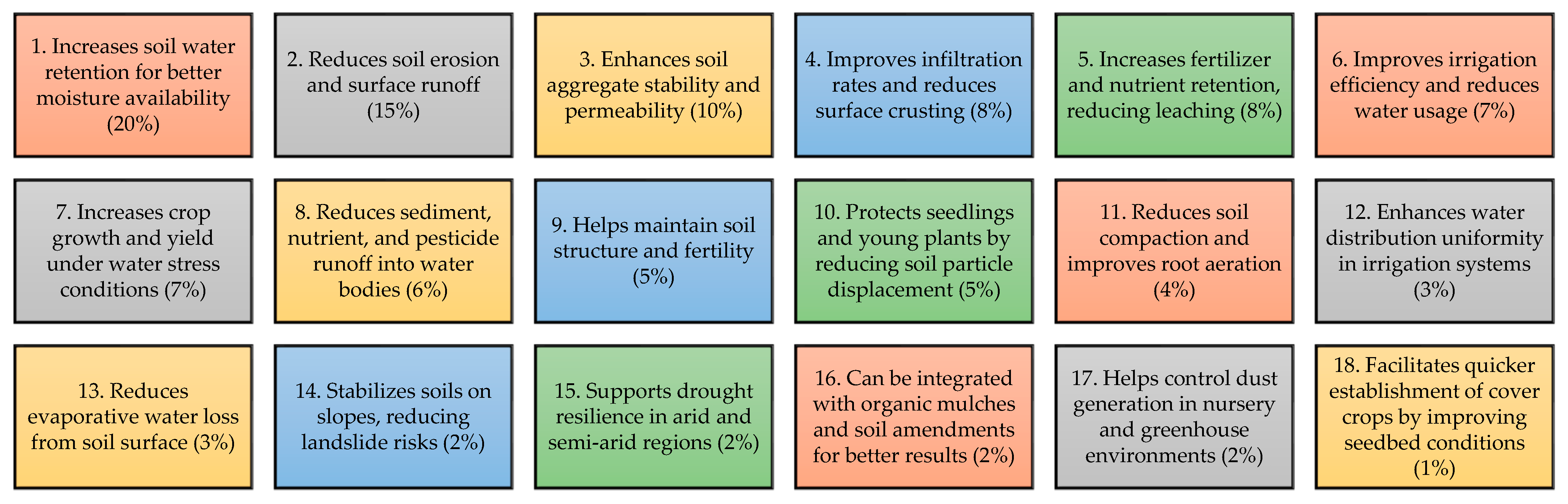
Figure 1. Percentage contribution of polyacrylamide characteristics in improving water- and soil-related traits.
Blsf 51 00008 g001
Table 1. Actual surface availability in Pakistan with total availability and percentage change (last five years).
PeriodKharif (MAF)Rabi (MAF)Total (MAF)% Change (Increase or Decrease)
Avg. System Usage67.136.4103.5
20206232.594.5−8.7
2021603090−4.8
202258.528.587−3.3
2023552782−5.7
2024502575−8.5
Table 2. Pakistan’s population growth and pressure on water resources (the last five years).
YearTotal Population (Millions)Total Renewable Water Resources (BCM)Renewable Water Resources per Capita (m3)Total Water Withdrawal (BCM)Annual Growth Rate (Population, %)Annual Growth Rate (Withdrawal, %)
2021226246.810922032.31.5
2022231246.810672062.21.5
2023236246.810452092.21.4
2024241246.810242122.11.4
2025246246.810022152.11.4
Disclaimer/Publisher’s Note: The statements, opinions and data contained in all publications are solely those of the individual author(s) and contributor(s) and not of MDPI and/or the editor(s). MDPI and/or the editor(s) disclaim responsibility for any injury to people or property resulting from any ideas, methods, instructions or products referred to in the content.



