1. Introduction
The Rössler system, introduced in [
1], represents a foundational model in chaos theory and nonlinear dynamics. It is a third-order continuous-time dynamical system defined by three parameters. For certain parameter values, the system exhibits chaotic behavior through a stretching-and-folding mechanism [
2]. Its geometric simplicity—-often visualized as a spiraling trajectory with folding—makes the Rössler attractor easier to analyze and interpret than the Lorenz attractor [
3], which is widely regarded as the first chaotic attractor reported in the literature.
Since the classic paper by Pecora and Carroll [
4], it has been well established that the choice of the coupling variable has a direct impact on the effectiveness of synchronization. In their study, the authors confirmed that two Rössler oscillators—with particular parameter values—can achieve complete synchronization (CS) in a drive–response configuration with direct substitution only when the variable
y is used to drive the subsystem
. However, not very many papers propose criteria to choose the best coupling variable; an exception to this rule seems to be [
5].
In the well-known study on phase synchronization (PS) [
6], two nonidentical Rössler oscillators are coupled via the
x variable. The authors show that larger parameter mismatches between oscillators require stronger coupling to maintain PS. The same synchronization phenomenon is investigated in Ref. [
7], where coupling was implemented exclusively using the
y variable. Although there is no clear consensus regarding whether to use
x,
y, or both for coupling, it is generally agreed that the
z variable is unsuitable for this purpose, and this is supported by numerous studies in which coupling through the variable
z is not considered [
8,
9,
10,
11,
12,
13].
Using the features related to a plane on which the main rotation of the trajectory takes place, the author of [
14] picks the variable that is least suitable for coupling when the objective is PS. Not surprisingly, variable
z is identified as the least adequate for this purpose in the case of Rössler oscillators. Since PS is often a precursor to CS, this suggests that coupling via
z is likely to be less effective than coupling via
x or
y in achieving CS. In addition, works such as [
15,
16] relate the low observability of
z to its poor synchronization performance; nevertheless, observability does not appear to completely explain the CS capacity of each variable, and it has been argued that PS and observability are not related at all [
17].
Although coupling Rössler oscillators exclusively via the variable
z is scarce in the literature, there are a few exceptions, e.g., Refs. [
18,
19]. However, in those references the aim is to investigate bifurcation sequences and not to address CS; nevertheless, PS may be observed in some specific cases [
19]. Other studies use a nonlinear term proportional to
, in addition to a linear diffusive coupling in
x or
y [
20,
21]. This indicates the difficulty in coupling it only with the variable
z. Furthermore, some studies about synchronization adopt the strategy of coupling Rössler systems through all state variables (see examples in [
22,
23]). Although this approach can simplify the analysis, it is often impractical in real-world scenarios, where not all variables can be measured or used for coupling.
Given these difficulties, it is natural to ask whether CS can still be achieved when coupling is restricted solely to the variable
z, particularly in the context of oscillator networks. Synchronization in complex networks is an important and widely investigated topic due to its relevance in many natural and technological systems, and it has attracted considerable attention in recent years [
24,
25,
26]. In particular, the study of synchronization in networks of chaotic oscillators remains an active area of research [
27,
28]. In this context, this work presents evidence that CS can be achieved by coupling only through the variable
z in networks of Rössler oscillators, depending on the choice of parameter values. Specifically, it is shown that, within a defined range of parameters, networks of Rössler oscillators can be successfully synchronized using only
z as the coupling variable, despite certain associated challenges that are also discussed in detail.
This paper is organized as follows.
Section 2 presents the theoretical background, emphasizing the key concepts necessary for the analysis in
Section 3, which focuses on the synchronization problem in networks of Rössler oscillators coupled through the
z variable.
Section 4 concludes the paper and outlines directions for future research.
2. Background
Consider a network of
N coupled identical oscillators in which the dynamics of the
ith oscillator is given by
where
for
denotes the state vector of the
ith oscillator. The function
defines the autonomous dynamics common to all oscillators, whereas
represents the coupling function describing the influence of oscillator
j on oscillator
i. The scalar
specifies the coupling strength. The element
corresponds to the
entry of the Laplacian matrix
. A directed connection from oscillator
j to
i is represented by
; in directed networks, the Laplacian matrix may be asymmetric, i.e.,
, indicating nonreciprocal coupling.
The condition for complete synchronization (CS),
, defines the synchronization manifold (SM), which is invariant. Here,
denotes the trajectory of an isolated oscillator. A standard approach to assess the stability of the SM and determine the feasibility of synchronization in a network of identical oscillators is to use the master stability equation (MSE) [
29]:
where
and
are the Jacobian matrices of
and
, respectively. This equation is obtained through a block-diagonalization procedure applied to the variational equation of the network. Let
denote the largest Lyapunov exponent, which serves as a stability measure for the MSE. The mapping
,
is referred to as the master stability function (MSF).
To assess the synchronization condition of a network with coupling strength
and Laplacian matrix
with eigenvalues
, the MSF is evaluated at
for
. A necessary condition for the stability of the SM is that
since
measures stability along the SM and does not require verification, whereas
for
correspond to transverse directions and must be negative to ensure stability.
For symmetric networks, the MSF depends only on the real argument,
, since the Laplacian matrices in this case have no eigenvalues with nonzero imaginary parts. Reference [
30] classifies the MSF according to the shape of the curve
. In particular, MSF class
corresponds to curves with two finite intersections with the zero line, i.e.,
. For this type of MSF, a stability interval exists for certain values of
only if the ratio between the largest and the smallest nonzero eigenvalues of
satisfies [
30,
31]:
where the ratio
depends on the oscillator parameters and the type of coupling used,
is determined by the network structure, indicating the pattern of oscillator connections. A wider interval
, corresponding to a larger ratio
, allows greater dispersion in the eigenvalue spectrum, which can be quantified by
. In a fully connected network, the Laplacian matrix
satisfies
, yielding minimal dispersion with
. Removing connections increases this ratio, indicating greater dispersion and decreasing the chances of satisfying the condition in Equation (
1).
3. Network of Rössler Oscillators
Consider a network of
N Rössler oscillators with linear diffusive coupling through the variable
z, such that the dynamics of the
ith oscillator is given by:
The parameter values chosen are the same as in [
1]
. Simulations were performed using a fourth-order Runge-Kutta method with a step size of
and initial conditions
. The value of
was computed by varying
and
with step sizes
. Due to the symmetry of the MSF, the results were reflected with respect to the
-axis, generating the range
.
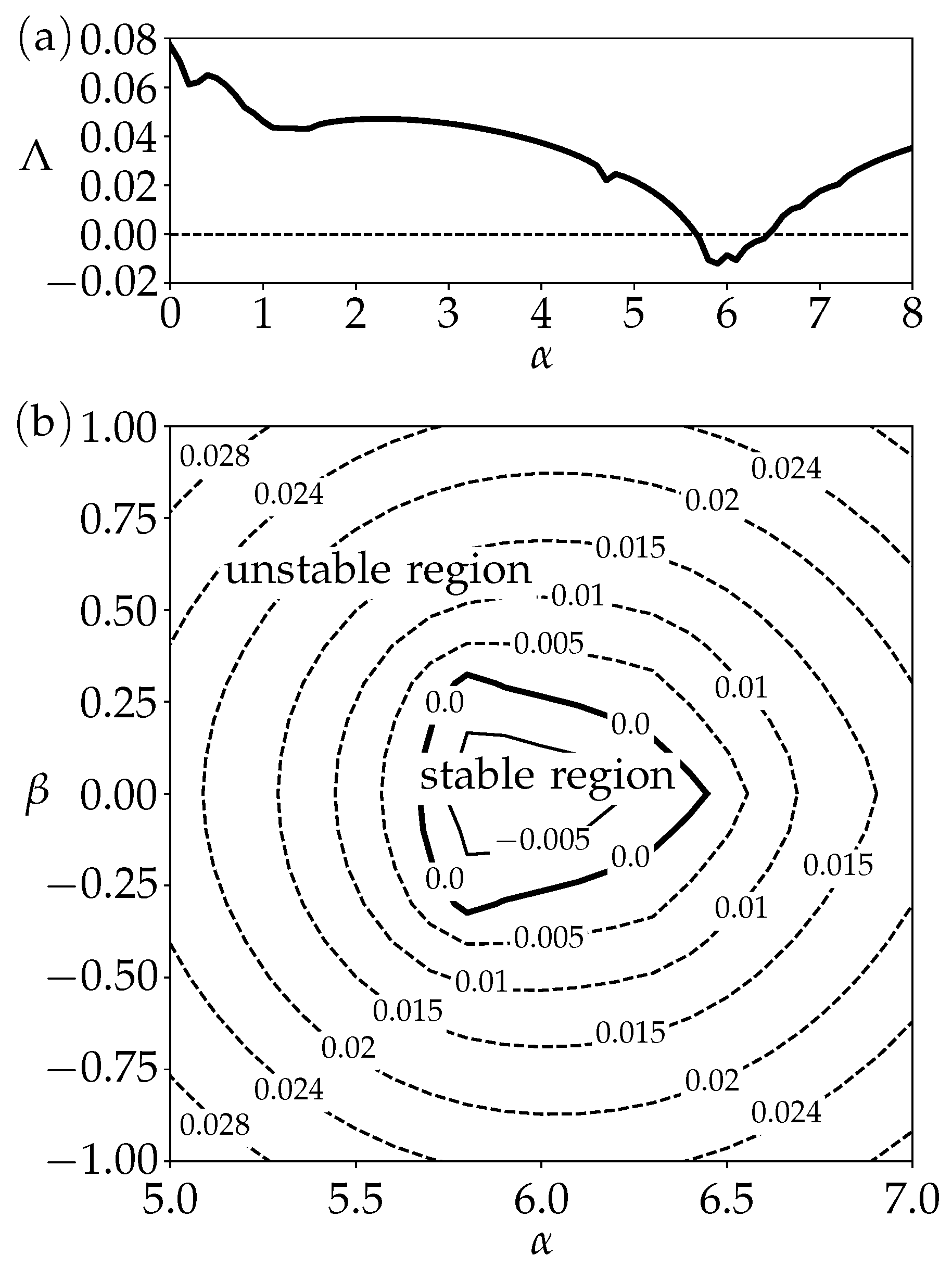
Figure 1a presents the MSF for symmetric networks, the MSF curve
with
, characterized by Laplacian matrices with purely real eigenvalues. In contrast,
Figure 1b displays selected level curves obtained by interpolation of the MSF for asymmetric networks, whose Laplacian eigenvalues can be complex. For reproducibility purposes, a simplified Python (version 3.10.0, as used in this work) algorithm used to compute the MSF values corresponding to the curve shown in
Figure 1a is provided in Ref. [
32].
According to
Figure 1, the SM is stable in a certain region when coupled through
z. The MSF shown in
Figure 1a corresponds to class
, since
becomes negative for
and returns to positive values for
, i.e., the stability region of the SM is confined to a single and limited interval of
values. Thus, for symmetric networks, the SM is stable within the interval
. Therefore, the condition (
1) for
becomes:
It should be noted that the threshold value 1.15 depends on the system parameters and on the type of coupling, and
not on the network size or topology. These will determine the critical value for
, beyond which synchronization is lost.
Coupling through the variable
x produces the same type of MSF, belonging to class
, with
and
, yielding
. In contrast, coupling through the variable
y results in a single crossing of the MSF into negative values at
, while
appears to grow unbounded, at least within the limits imposed by numerical simulations, thus classifying the MSF as class
for this case (for different MSF classes, see Ref. [
30]). This shows that the critical value for coupling through the variable
z is significantly lower than that for coupling through
x, which can even reach values around 35 [
31] with different parameter values in the system, revealing the much greater difficulty in achieving synchronization through
z coupling.
As discussed at the end of
Section 2, in a fully connected network
and the condition in Equation (
2) is always satisfied, resulting in the existence of a stable SM over a certain interval of
values for the coupling through the variable
z.
Starting from an all-to-all network, as connections are removed, the dispersion of the Laplacian eigenvalues increases. In other words, networks with fewer connections typically exhibit a higher ratio . Since remains close to one in this case, even the removal of a small number of connections, depending on the size of the network, may prevent the network from achieving synchronization when coupling through the z variable, as illustrated in the following example.
Example 1. Let E represent the number of edges and denote the total number of connections for undirected networks. The minimum number of edges required to keep the network connected, without isolated nodes, is , resulting in connections. This corresponds to topologies such as chains, stars, or other structures in which every node is reachable. For a fully connected network (all-to-all topology), the maximum number of edges is , corresponding to connections.
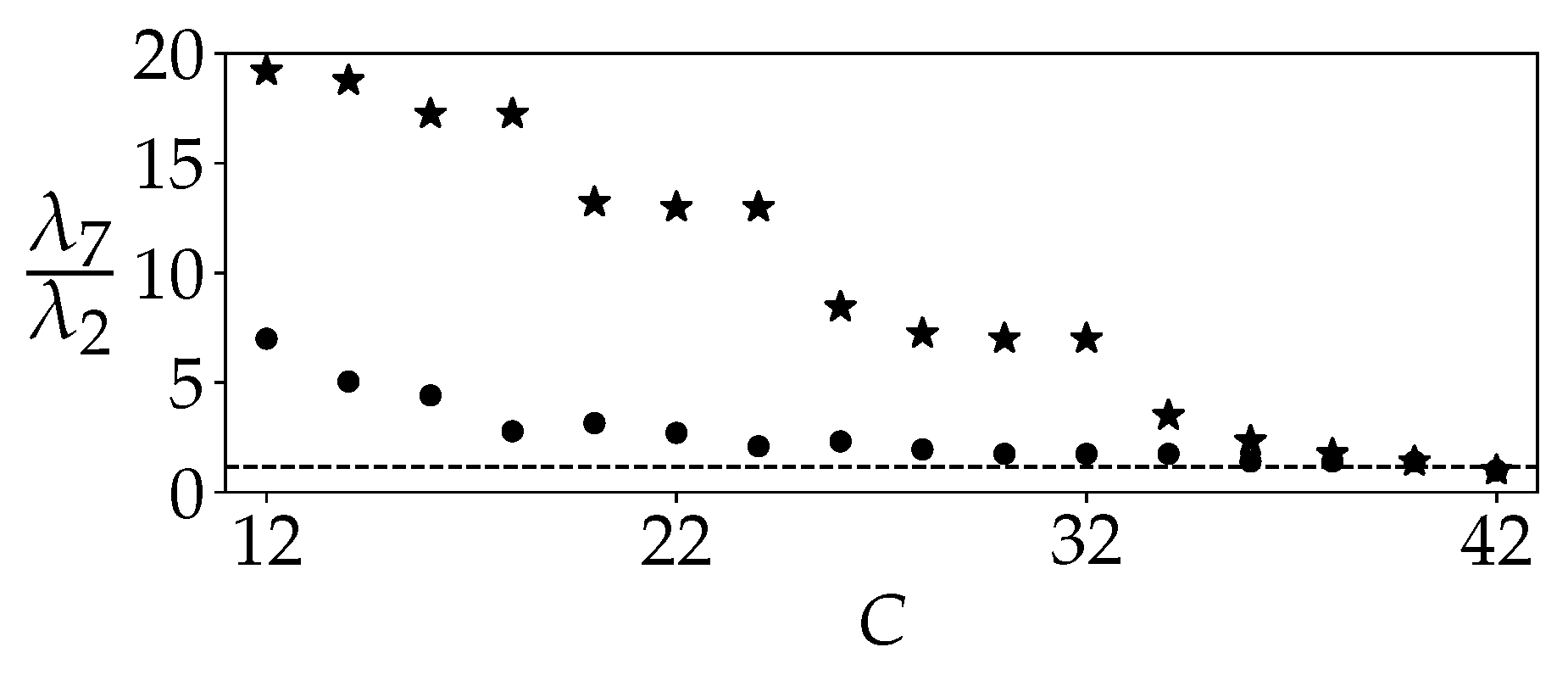
In this example, a symmetric network with seven nodes is considered, and all possible Laplacian matrices are constructed for different values of C, with a total number of connections ranging from to . For each matrix, the ratio between the largest and smallest nonzero eigenvalues () is calculated. Figure 2 presents the minimum and maximum values of this eigenvalue ratio observed across all configurations for each C. Networks containing isolated oscillators or disconnected components () were discarded. Note that the number of connections C is always even in this case to maintain symmetric Laplacian matrices, as each added bidirectional link contributes two entries to the matrix. After removing two connections (), the configuration with the smallest eigenvalue dispersion yields , which is greater than the critical ratio needed for synchronization. Therefore, in networks of seven (or fewer) oscillators coupled via the variable z, CS is only achievable when all oscillators are connected.
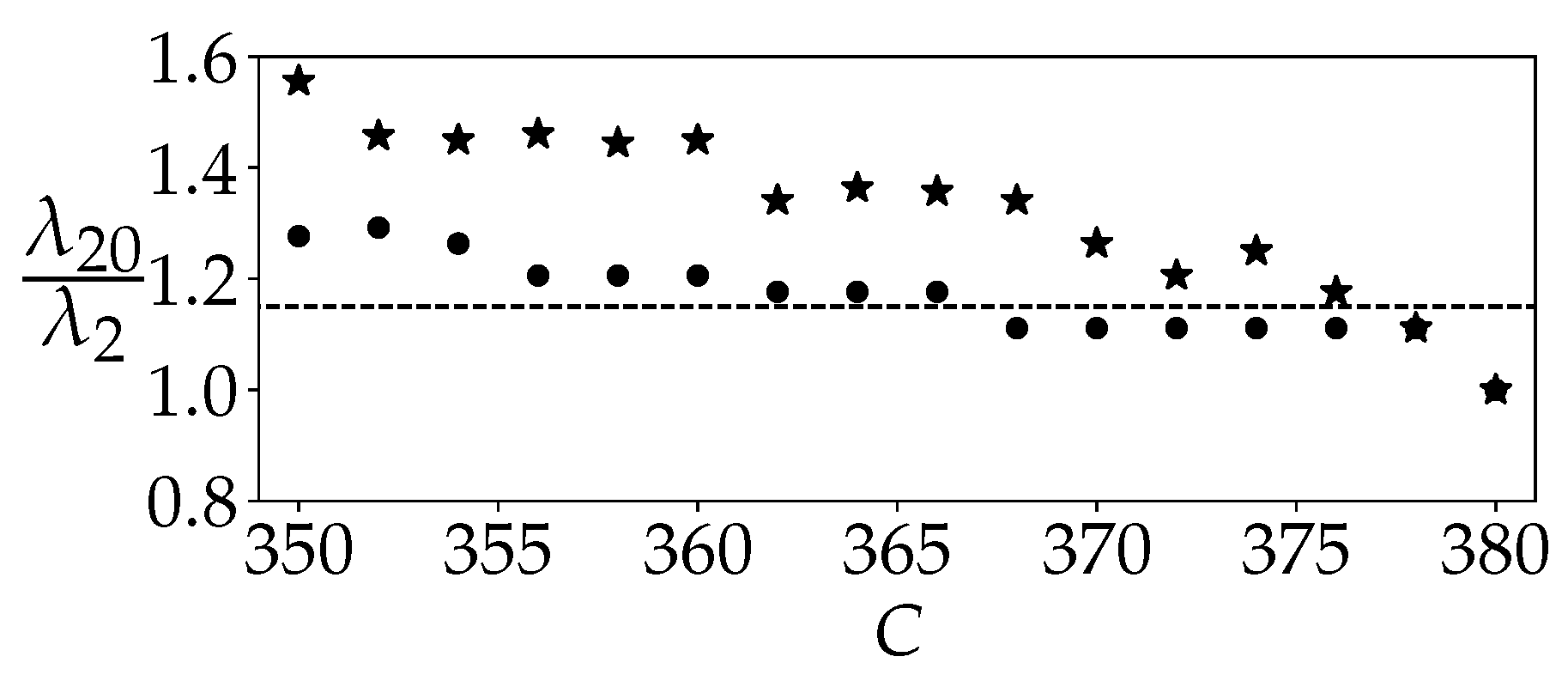
Example 2. In this example, symmetric networks with are considered. To avoid excessively long computations due to the large number of possible Laplacian matrices that can be generated when varying C, the ratio was calculated for randomly selected valid Laplacian matrices for each value of C. Figure 3 presents the results, starting from up to the fully connected network for which . The first instance in which falls below the threshold occurs at (Figure 3). In this case, only a few of the 30 networks achieve synchronization. Only for and 380
do all 30 random realizations of the Laplacian matrix have below this threshold. Removing four to twelve connections may still result in a stable SM, depending on which connections are removed. Removing 14 or more connections is likely to render the SM unstable in all cases. Example 3. In the previous example, only Laplacian matrices with size were tested for each value of C. One aim of this example is to show that the results do not depend critically on and to investigate larger networks. This example concerns symmetric matrices. As already described, a fully connected network with N nodes has connections. For each value of N in the range , the following steps are performed:
- 1.
initialize ;
- 2.
generate valid Laplacian matrices, i.e., networks, with , where the connections that are removed are chosen randomly;
- 3.
while is satisfied for at least one network, increment and return to step 2;
- 4.
;
- 5.
.
Hence, is the smallest number of connections for which at least one Laplacian matrix satisfies .
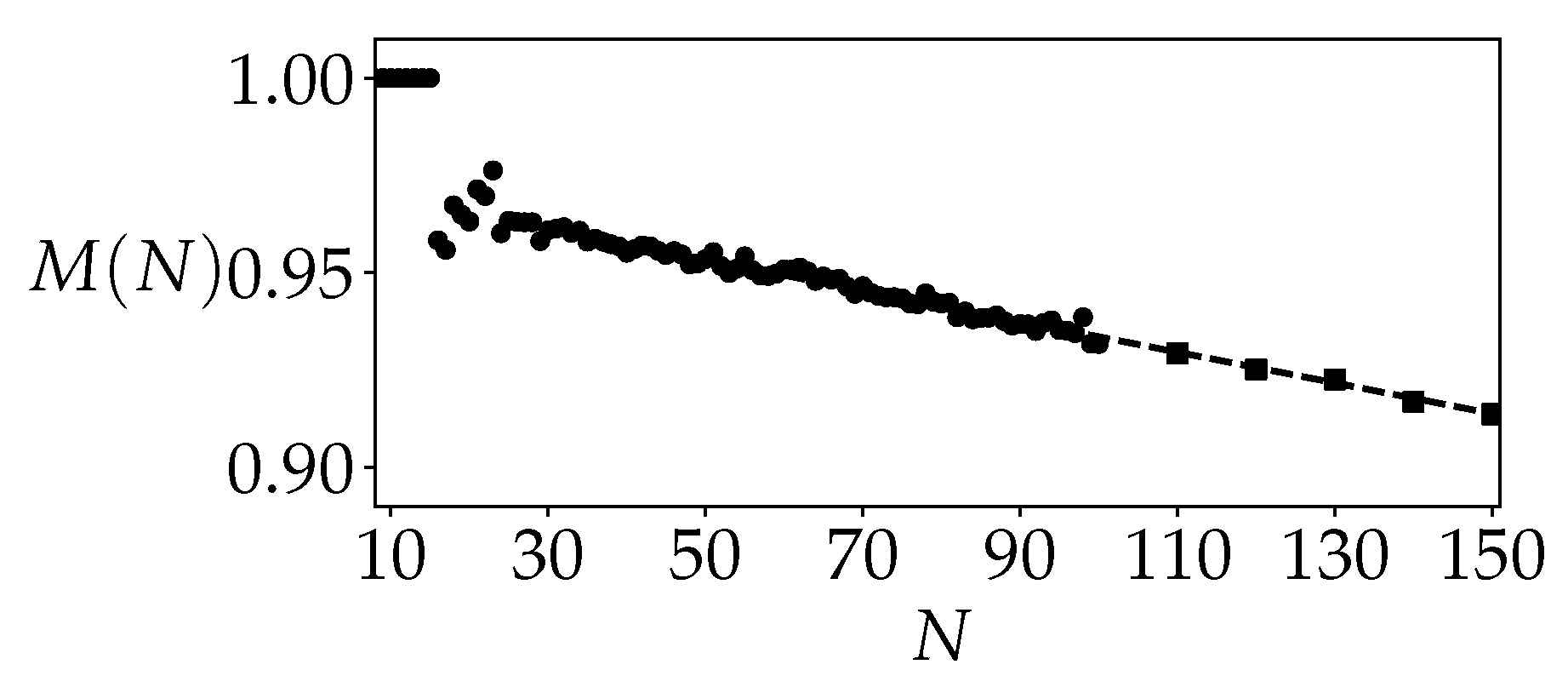
Four cases () were examined, and in each, exhibits approximately linear behavior for . Accordingly, the model was fitted to the data using the least-squares method. Table 1 and Table 2 present the estimated parameters and their standard deviations. For each case considered, and are statistically indistinguishable across values of with high confidence, confirming that the relation is unaffected by variations in within the tested domain. Figure 4 shows the data and the line estimated from matrices with . The values of for and 150
are validation data, and show good agreement with the extrapolated values predicted by . The use of to predict the proportion of connections that can be removed and still have synchronization is important because the demand for computation time increases significantly with N. These results shows that for networks with , it is possible to find networks that are not fully connected but still satisfy the condition , indicated by . As the network size increases, more connections can be removed while preserving synchronization, and this is well predicted by .
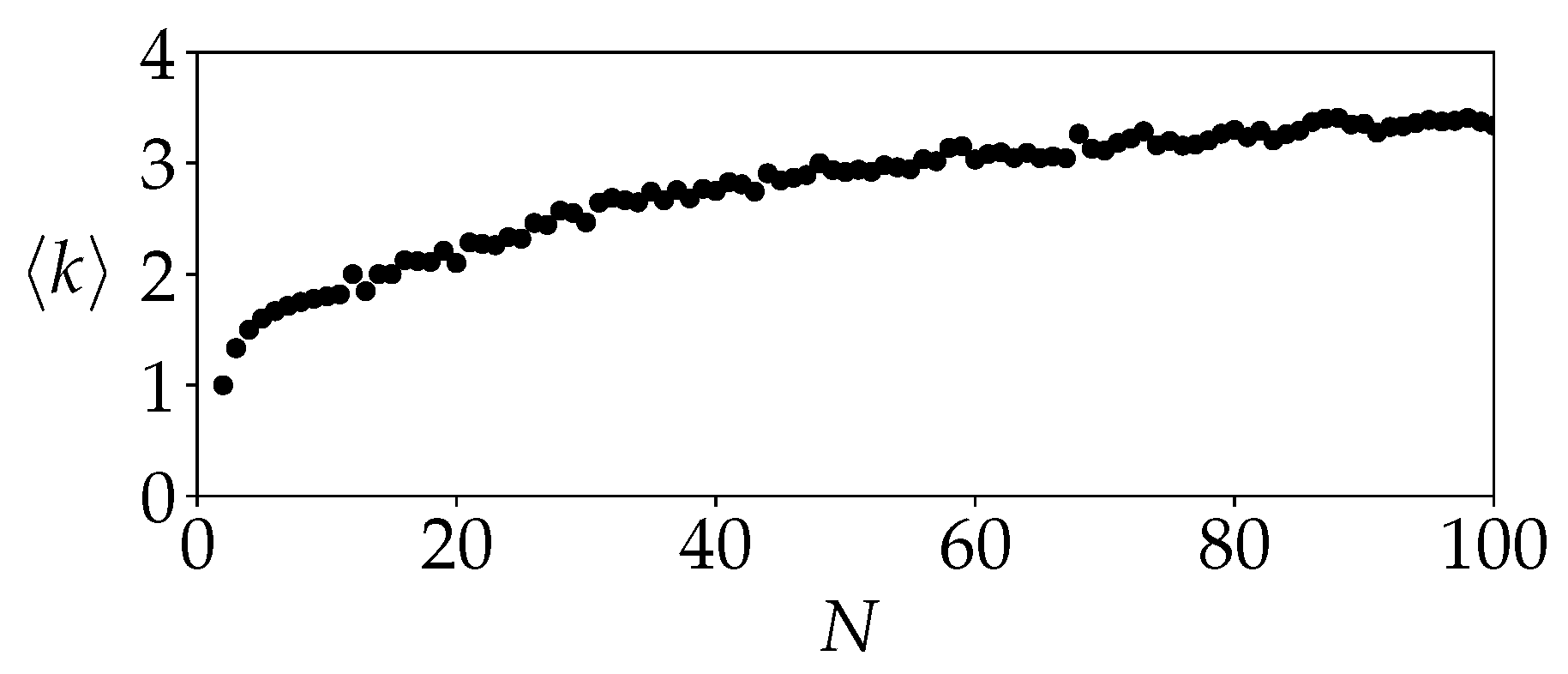
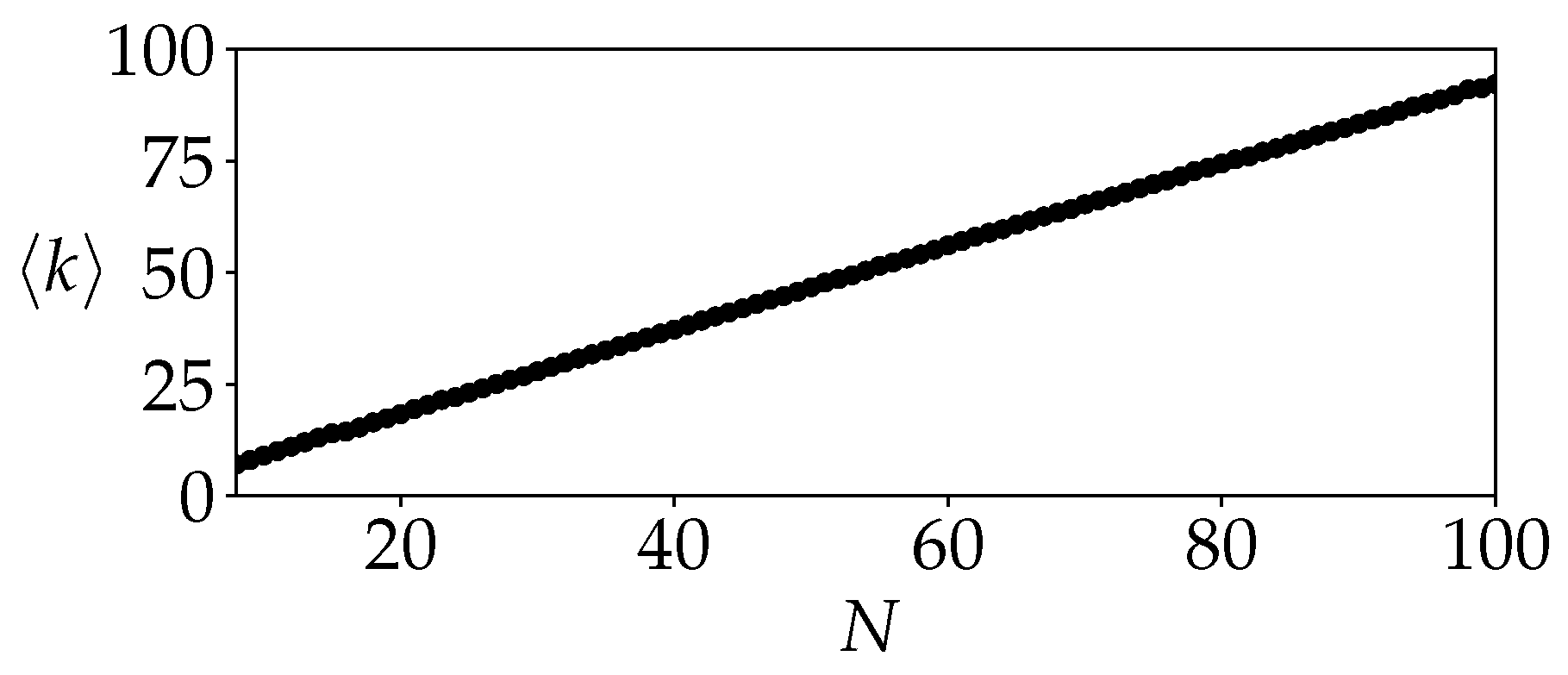
Since indicates the proportion of connections that must remain in the network to have synchronization, indicates the maximum proportion of connections that can be removed from a fully-connected network before losing synchronization. As a result, (, yieldshence, for networks with , , which means that one can remove about 5% of the connections and still satisfy . The next objective is to extend the analysis when considering the average degree of these networks, which, for a network represented by a Laplacian matrix, is computed as follows:In this example, networks with the minimum number of connections, , that satisfy are sought; then . Figure 5 shows the average degree of these networks (these are the cases for ). A least squares fit of the data in Figure 5 is:The same procedure was applied using the coupling variable x (Figure 6). Unlike the linear growth for the z variable, here the average degree seems to approach a plateau at approximately 3.3 for . Two main differences become evident: first, the values of for the x variable are less than an order of magnitude smaller than for the case of coupling through z. Second, instead of linear growth, there seems to be some saturation effect. This saturation behavior suggests that does not grow unbounded but instead remains finite as the network size increases. For coupling through y, any network can synchronize since the MSF is class . The possibility of synchronization via the variable z is now examined under different network configurations commonly addressed in the literature. Such an assessment provides insight into the extent to which structural features of a network constrain or facilitate the emergence of a stable SM.
The Barabási–Albert model for scale-free networks [33] is characterized by a power-law degree distribution, , where denotes the probability that a node has degree k, with . This distribution must satisfy:Let , where d is a constant. By substituting this expression into Equation (
4)
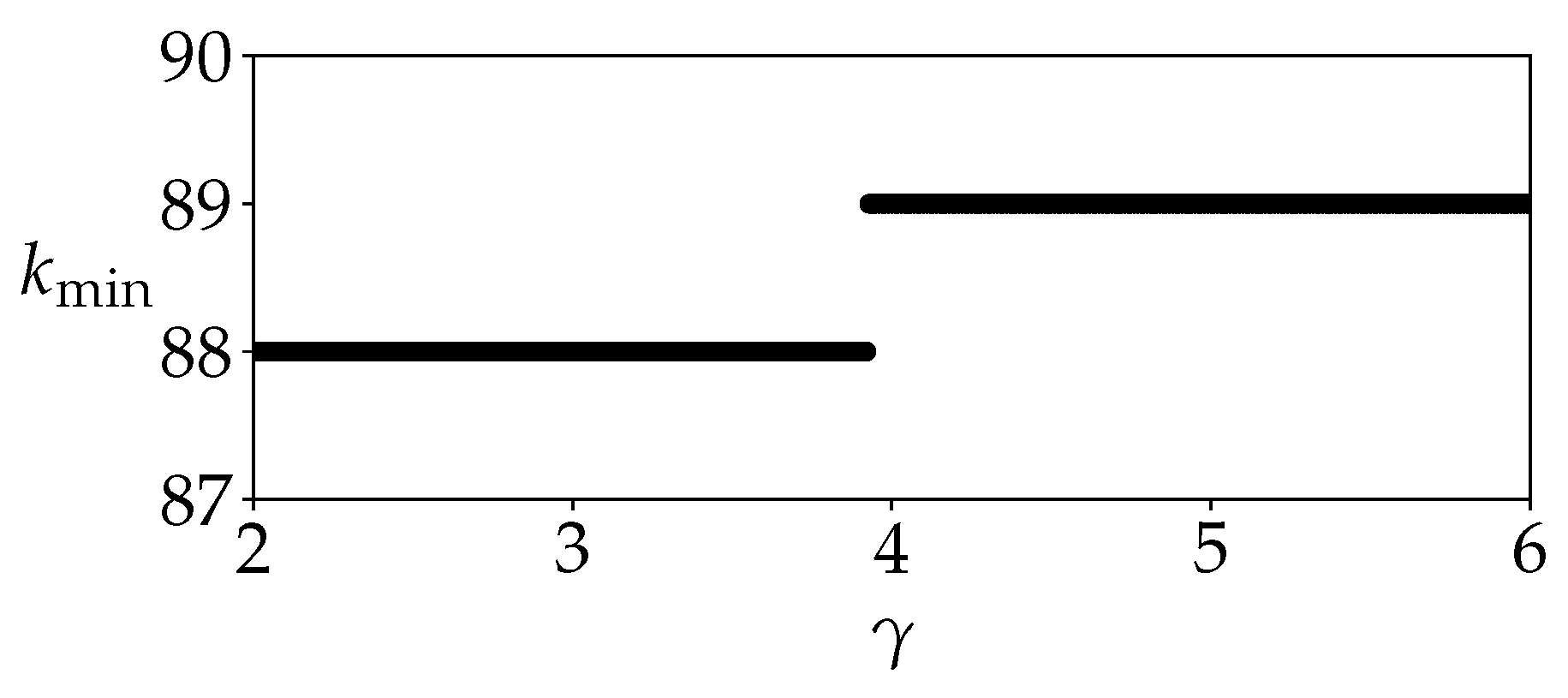
:Hence, the average degree of a scale-free network is given bywhich depends on γ and on the minimum and maximum degrees of the network, with the constraint . The case with is considered, which represents a promising scenario as probabilities extend to the maximum possible degree of a node. Parameter γ is varied within the range to determine, using the Equation (
5)
, the corresponding that ensures ; see Equation (
3)
. The results are shown in Figure 7. Figure 7 shows that increases by one unit when . For instance, for a scale-free network with γ in the considered range, the minimum degree is 88 or 89, which is unrealistically high and difficult to realize in practice. For an Erdős-Rényi random network [34], the average degree is given by , where p denotes the probability that a given edge is present. For a network with to yield , the probability would need to be approximately , representing an extremely dense network that is rarely encountered in practice. The Watts-Strogatz (WS) small-world model [35] starts with N nodes on a one-dimensional lattice, each connected to its nearest and next-nearest neighbors, and rewires each edge with probability p, introducing long-range links that reduce the average path distance. This type of network requires , which is incompatible with achieving synchronization through the variable z. In [35], networks with and were considered—an average degree that is insufficient for synchronization via the z variable, even in comparatively smaller networks such as . These observations suggest that, in general, WS networks coupled through the z variable are unlikely to achieve synchronization. Example 4. In this example, the robustness of synchronization around the SM is investigated with respect to perturbations in the state. This provides a rough numerical estimate of how far the state can be from the SM and still be attracted to that manifold. Note that MSF results are only guaranteed in the neighborhood of the SM. To this end, a network with nodes is considered, fully and diffusely coupled through the variable z. Since , the stability interval of the SM can be approximately determined to be through the MSF.
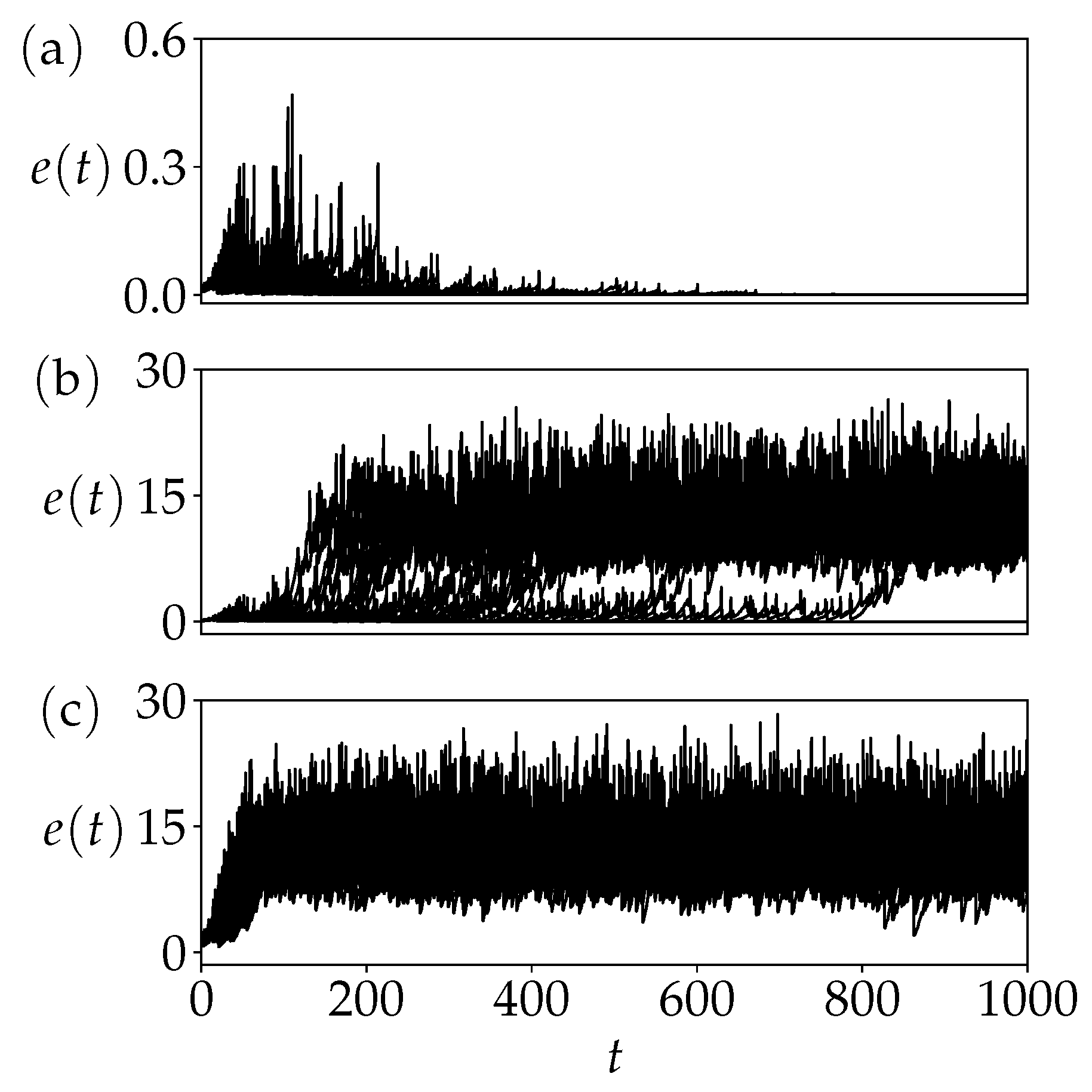
The coupling strength is fixed at , and the network is initialized with random initial conditions on the SM and a uniform random disturbance is applied to the network state according to the following cases: (i) , (ii) , and (iii) . For each case, 30 Monte Carlo simulations are performed using different realizations of , and an average pairwise synchronization error is computed. Figure 8 presents the evolution of the synchronization error in 30 Monte Carlo simulations for each of the three considered cases. As shown in Figure 8a, synchronization is achieved in all 30 simulations for the first case. The small initial disturbance leads to a gradual increase in the synchronization error, which begins at a low level, increases slowly over time, and subsequently decreases. This transient behavior indicates the ability of the network to reject perturbations and return to the SM, where all synchronization errors converge to zero at approximately 600 s, considering the 30 realizations. In the second case (Figure 8b), synchronization fails in most cases (24 out of 30). In some of these cases, the synchronization error takes longer to grow. In other words, when the state is perturbed with , the perturbed state always lies within the basin of attraction. However, when the perturbation is increased to , most perturbed states lie outside the basin of attraction, which indicates that the basin of attraction is quite narrow. In the third case (Figure 8c), none of the simulations achieve synchronization, although the SM remains locally stable for the chosen value of . The MSF provides a necessary, but not sufficient condition for CS, as the analysis is based on the linearization of perturbations around the SM. Therefore, higher values of correspond to initializing the oscillators further from the SM, increasing the likelihood of divergence and, consequently increasing the number of desynchronized cases. 3.1. Varying One of the System Parameters
The parameters
are fixed, while the third parameter is varied in the interval
.
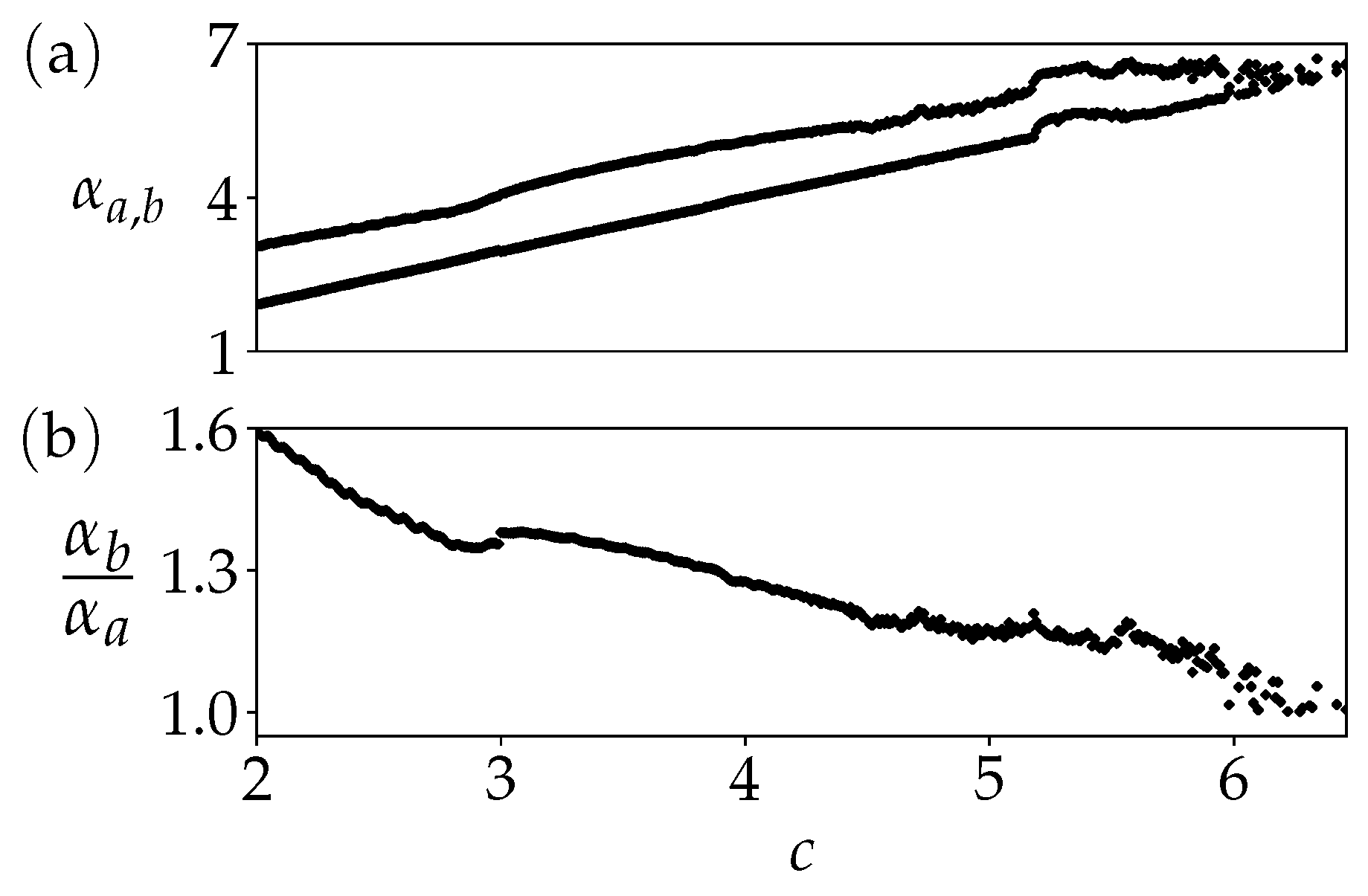
Figure 9 shows the values of
,
, and
computed from the MSF results.
As shown in
Figure 9, increasing the parameter
c leads to an increase in
, while the ratio
decreases. For
, the stability region begins to vanish in certain cases, which appears in the figure as a lack of points. For
, these regions disappear completely, indicating that synchronization of the network is no longer possible. This result implies that achieving CS becomes more difficult as
c grows: the required number of connections increases (since
decreases), and the minimum coupling strength also grows with
.
Some authors have considered
and
, computing the MSF with coupling through the variable
z [
27,
30,
36,
37]. Under these conditions, no synchronization was observed, which is consistent with the results shown in
Figure 9, where there is no stability region for larger values of
c.
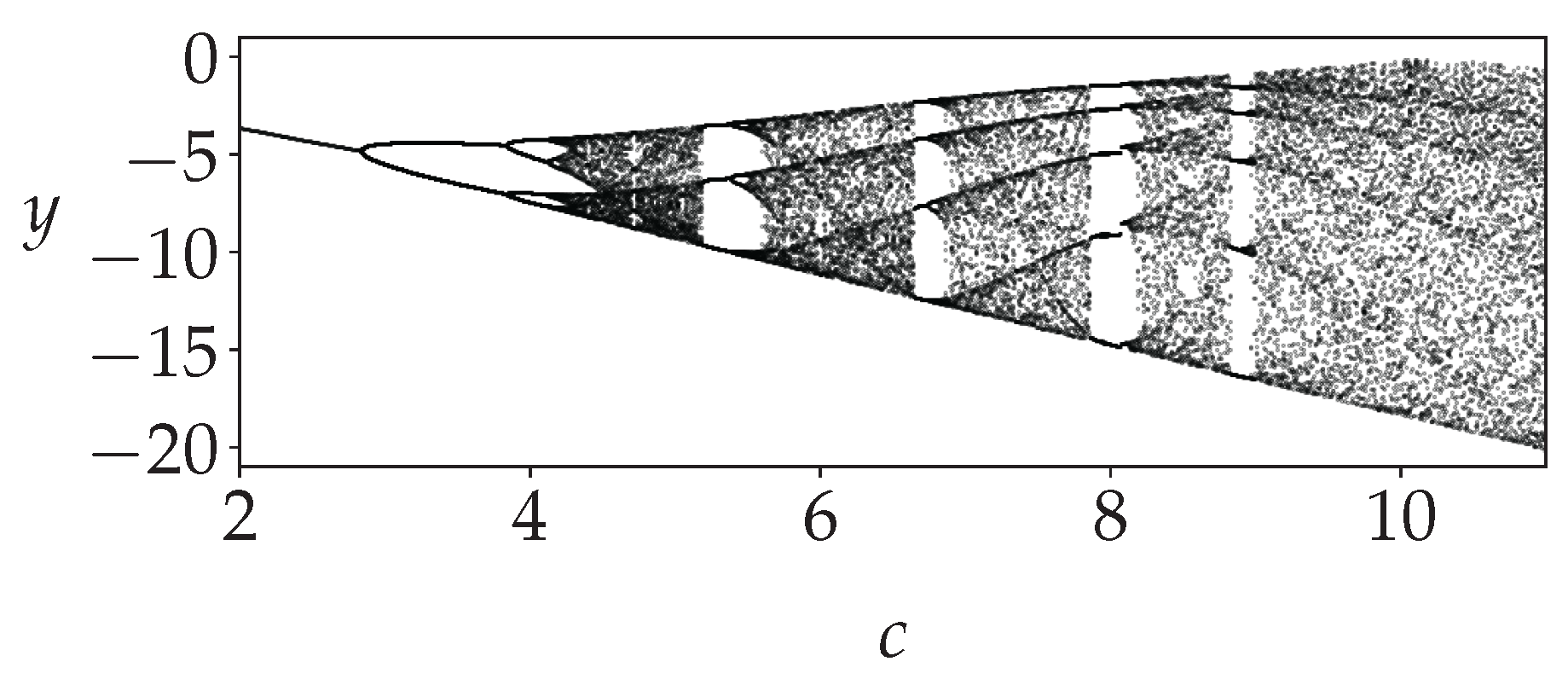
Figure 10 presents the bifurcation diagram obtained by varying parameter
c within the previously specified range. As the parameter
c increases, the system undergoes successive period doublings, eventually leading to chaotic behavior.
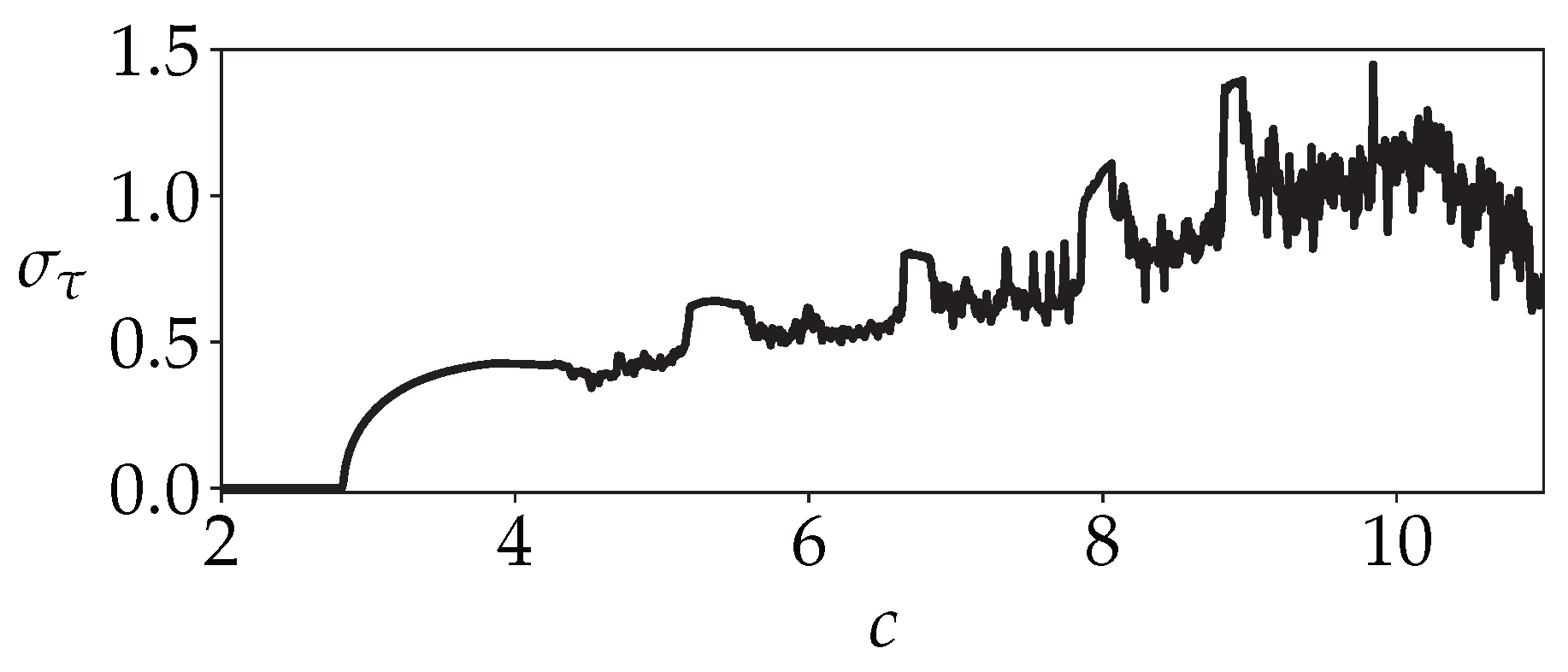
Let
denote the first-return time.
Figure 11 presents the standard deviation
for different values of
c. As
c increases, the dispersion of the first-return time—quantified by the standard deviation
—also increases. This growing dispersion reflects the emergence of multiple frequency components in the dynamics, indicating increased non-phase coherence and system complexity. Consequently, the inability of the oscillators to achieve synchronization at higher values of
c may be associated with a loss of phase coherence, as irregularity in return times hinders the alignment of their phases and consequently makes it difficult to achieve CS.
Now, parameters
a or
b are varied. First, the range
is examined with
and
.
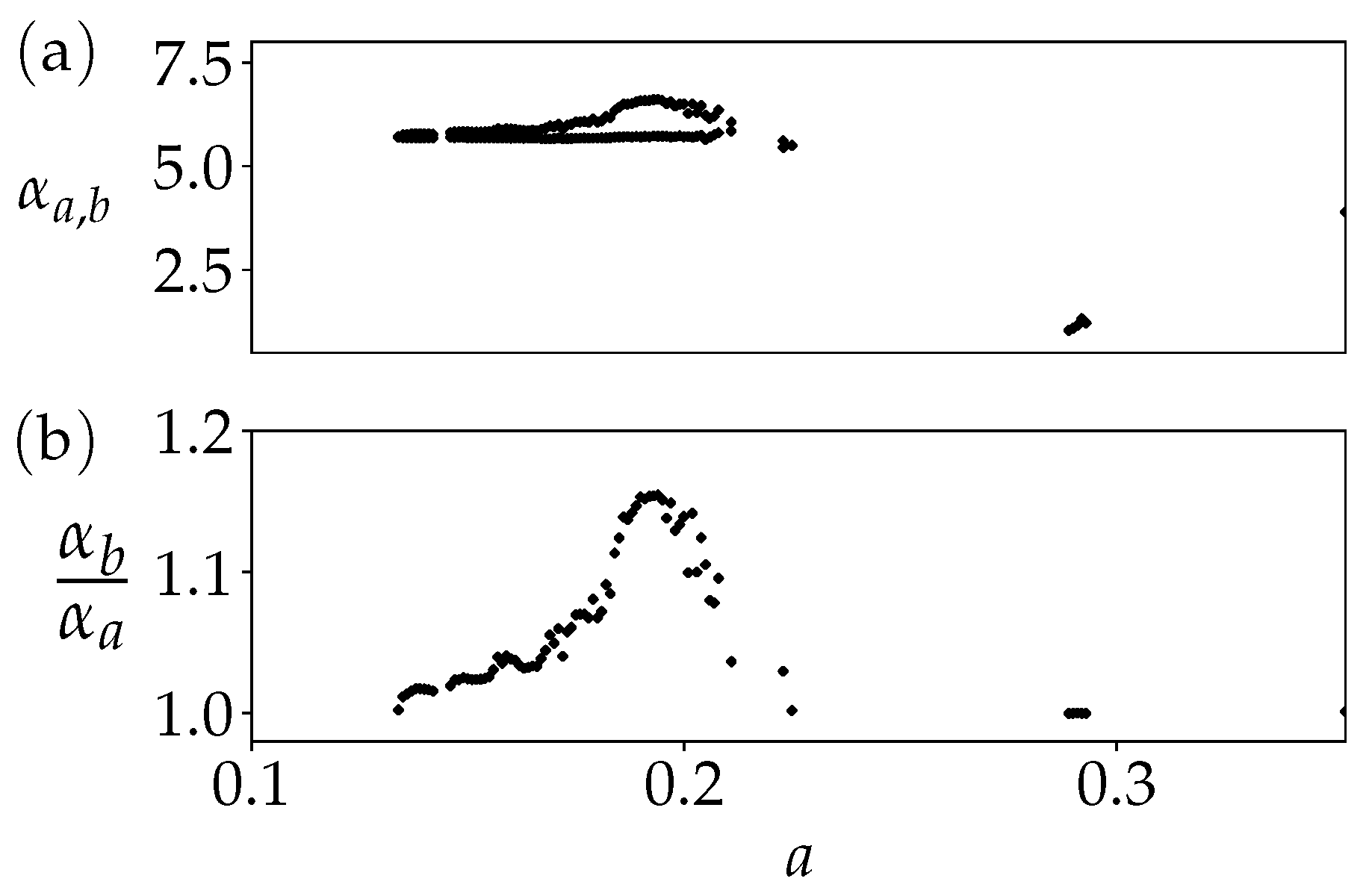
Figure 12 shows the values of
,
, and the ratio
, computed from the MSF results. It can be observed that the critical value of
is higher for
. As
a moves away from this value, synchronization becomes increasingly difficult due to the shortening of the stability interval. In many cases, synchronization through the variable
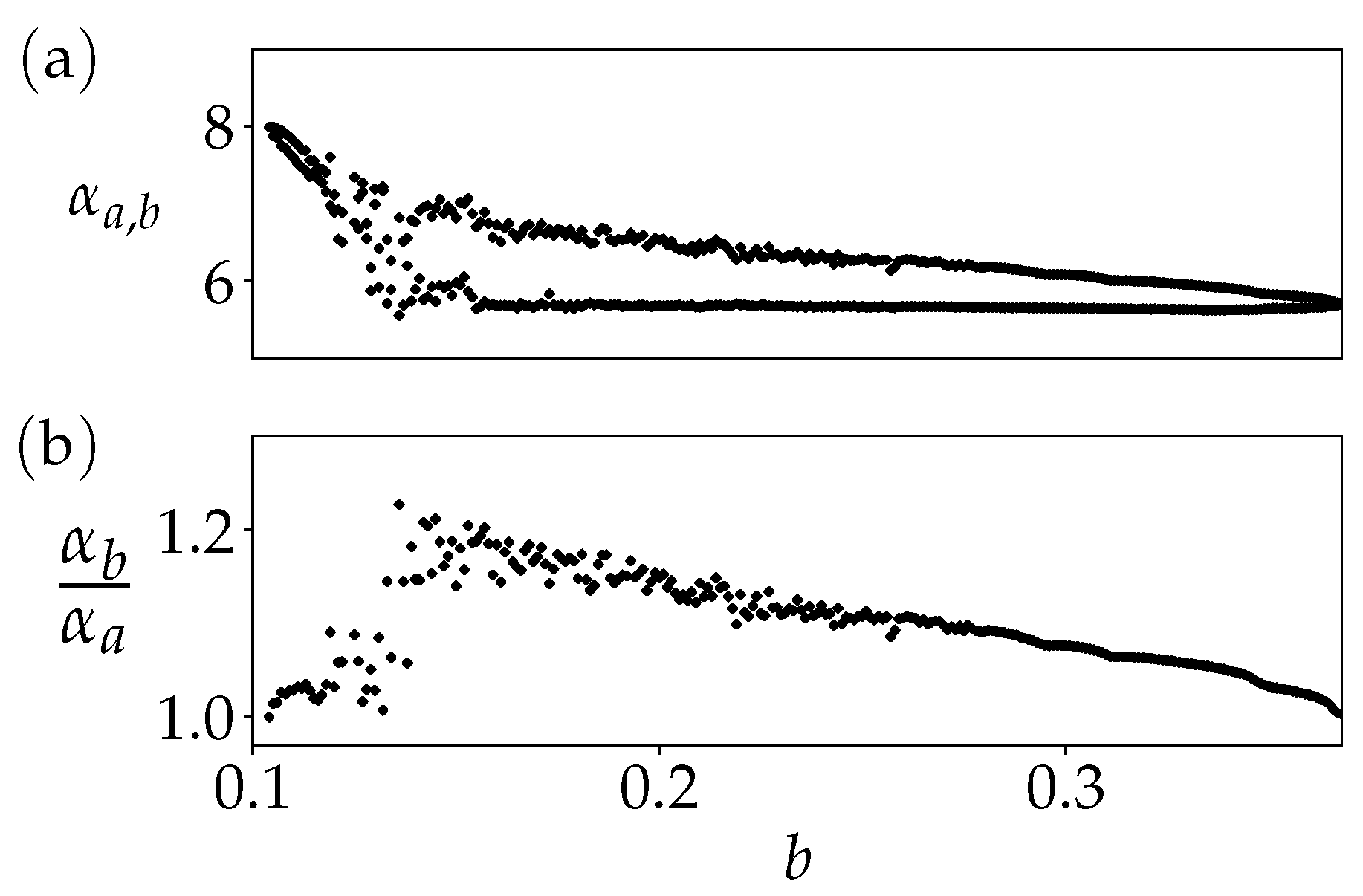
z is no longer possible.
Let
, with
and
.
Figure 13 shows that the parameter
b can vary over a relatively wide range while still preserving the stability region. In many cases, choosing values
leads to an enlargement of the stability region, which facilitates network synchronization.
Accordingly, it follows that when Rössler oscillators are coupled exclusively through the
z variable, the feasibility of synchronization is highly sensitive to the choice of parameters. A common choice is
[
38], with
a fixed at a specific value or varied over a range. In this configuration, several studies [
5,
14,
16,
39,
40] have reported that CS does not occur when oscillators are coupled through the variable
z.
3.2. Multistability Case
Sprott and Li [
41] investigated the Rössler system across a range of parameter values to identify distinct attractors arising from different initial conditions, conducting an extensive search for multistable regimes. They identified parameter intervals in which multistability occurs, including the specific case
,
, and
. For these parameters, trajectories starting from the initial conditions
and
converge to attractors called
and
, respectively. The corresponding Lyapunov spectra are
for
and
for
, indicating that both attractors are chaotic, while exhibiting slightly different dynamical properties.
When analyzing the MSF associated with these coexisting attractors, under coupling through the z-variable, a stable synchronization region was found only for attractor . This stable region is confined to the region and . In contrast, no stable region was observed for with the same coupling configuration. This result shows that synchronization through the z-variable also depends on the attractor to which the system converges. Even under identical coupling conditions, the two coexisting attractors exhibit different synchronization behaviors. This reveals a selective synchronization effect in the multistable Rössler system, where only certain attractors are able to synchronize through a given coupling variable. Therefore, synchronization is determined not only by the system equations and the coupling scheme, but also by the dynamical properties of the attractor itself.
This synchronization mechanism opens the door to selective synchronization and control strategies. Since only one of the attractors of the system is able to synchronize through the z-variable, synchronization can be selectively enabled or suppressed by guiding the system toward a desired attractor using small perturbations or appropriate choices of initial conditions. Importantly, this approach allows control over synchronization without the need to modify system parameters or coupling strength, relying instead on the multistable structure of the system.
3.3. Multiplex Networks
Results on multiplex networks have been reported in the literature. In [
42] a multiplex network with two layers of Rössler systems was simulated. Within each layer, two possibilities were investigated:
z coupling—with
—to ensure that the oscillators within the same layer remained unsynchronized (MSF class
following [
30]) and
x coupling which permits synchronization (MSF class
). Coupling between the two layers was performed using the
y variable, which enables class
synchronization. The authors remark that the scenario becomes much richer with class
synchronization. The results in this paper show that a narrow class
scenario can also be investigated by coupling oscillators within the same layer through the
z variable with parameters
. This enables the investigation of an intermediate scenario between class
and wide class
synchronization within a layer.
In a similar work [
43], the authors considered the case in which the coupling topology within each layer was not identical. In that work, one investigated scenario involved coupling both intra-layer and inter-layer interactions through the
x variable of Rössler oscillators with
, thereby permitting “wide” class
intra- and inter-synchronization. Again, using
and
z coupling, the results of this work show that it is possible to investigate the intermediate case of “narrow” class
synchronization.
3.4. Additional Comments
To the best of our knowledge, the stable region of the SM for Rössler networks with z coupling has not previously been reported for any set of parameter values. Possible reasons for this are listed below:
The success in synchronizing oscillators coupled through the x or y variables has overshadowed interest in coupling through z for which synchronization is often implicitly assumed not to be attainable.
Since the introduction of the Rössler system, various parameter sets for a, b, and c have been explored. Some studies in the literature that employ coupling exclusively through z use parameter sets for which CS is not possible.
The size of the stability region, when it exists, is usually small and therefore difficult to detect.
For many commonly investigated network topologies such as small-world and scale-free, structural constraints impose unrealistic requirements on the network density, making synchronization feasible only under conditions far from those typically studied in the literature or observed in real systems.
In many studies using the Rössler system, the focus is on networks with a relatively small number of oscillators. As argued in this work, when coupling the oscillators with the z variable, there is a significant limitation on the types of network topology that guarantee CS, in particular fully connected networks. This may have further discouraged the use of the z variable for coupling.
4. Conclusions
This paper investigated the complete synchronization of networks of Rössler oscillators coupled only through the
z variable. The use of this variable for coupling has received limited attention in the literature because it is widely thought that synchronization is not possible using only variable
z to couple the oscillators. Possible reasons for this have been discussed. Using the master stability function (MSF) framework, it is shown that for networks of identical Rössler oscillators with
and
—the parameter values used in the original work that introduced the system [
1]—a stable synchronization manifold (SM) exists. In addition, by varying the parameters
a,
b, and
c, individually, ranges of values were identified for which the SM stability is preserved.
However, in all cases the stability region of the SM is narrow, which requires the eigenvalues of the Laplacian matrix to exhibit low spectral dispersion. This condition is satisfied in all-to-all network topologies, regardless of the size of the network. In contrast, for topologies where the number of connections between oscillators is small relative to the size of the network, such as star or ring networks, no conditions were identified that ensure stability of the SM. Consequently, these findings suggest that achieving synchronization through the variable z in networks of Rössler oscillators requires a high degree of connectivity, which essentially rules out synchronization in topologies such as small-world or scale-free networks.
An expression has been developed and validated to predict the proportion of connections that should be guaranteed as a function of network size for the parameter values considered. It was also shown that, by fixing and varying the parameter c, the complexity of the system increases with c, leading to a progressive reduction of the stability region of the SM until it eventually vanishes beyond a certain threshold.
An additional complication was identified when coupling through the z variable: the MSF values that ensured the stability of the SM are close to zero. This indicates that the SM stability region is close to the boundary between stability and instability. As a consequence, if the oscillator states are strongly perturbed, synchronization is lost. For small perturbations, the network eventually returns to the synchronous state, although the transients are often long. An example of a network with 40 oscillators was presented to highlight these issues.
Despite the challenges of using the variable
z for the synchronization of the Rössler system, exploring this coupling variable may offer new insights into unconventional synchronization mechanisms and alternative control strategies in complex dynamical networks. This direction invites targeted studies of parameter mismatch, inclusion of noise and time delays, and even nonlinear coupling. Finally, this also enables the investigation of how synchronization can be improved using hypernetworks [
44,
45] with mixed-variable coupling, combining
z with
x or
y.