Previous Article in Journal
De Novo Protein Design Enables Targeting of Intractable Oncogenic Protein–Protein Interfaces
 
 
Due to scheduled maintenance work on our servers, there may be short service disruptions on this website between 11:00 and 12:00 CEST on March 28th.
Article

A Rabbit-Derived Single-Domain Antibody Fused to the Streptococcus zooepidemicus Zag Protein Engineered for SARS-CoV-2 Neutralization and Extended Half-Life


1
Center for Interdisciplinary Research in Animal Health (CIISA), Faculty of Veterinary Medicine, University of Lisbon, 1300-477 Lisbon, Portugal
2
Associate Laboratory for Animal and Veterinary Sciences (AL4AnimalS), 1300-477 Lisbon, Portugal
3
Centro de Ciências e Tecnologias Nucleares and Departamento de Engenharia e Ciências Nucleares, Instituto Superior Técnico, Universidade de Lisboa, Estrada Nacional 10, 2695-066 Bobadela, Portugal
4
Research Institute for Medicines (iMed.ULisboa), Faculty of Pharmacy, University of Lisbon, 1649-003 Lisbon, Portugal
*
Author to whom correspondence should be addressed.
Biologics 2026, 6(2), 10; https://doi.org/10.3390/biologics6020010
Submission received: 29 December 2025 / Revised: 26 February 2026 / Accepted: 10 March 2026 / Published: 26 March 2026
(This article belongs to the Section Monoclonal Antibodies)

Abstract

Background/Objectives: The continuous emergence of immune-evasive SARS-CoV-2 variants underscores the need for adaptable and accessible therapeutics that complement vaccination. Single-domain antibodies (sdAbs) offer advantages in size, stability, and production costs compared to conventional monoclonal antibodies, but their clinical utility is limited by rapid clearance. This study aimed to develop a rabbit-derived sdAb with broad SARS-CoV-2 neutralization capacity and improved pharmacokinetic properties. Methods: A rabbit-derived variable light-chain (VL) sdAb library was constructed and subjected to phage display selection to identify high-affinity binders. Candidate sdAbs were characterized for cross-variant binding and neutralization. The lead sdAb, B3, was fused to the albumin-binding domain (ABD) of the Streptococcus zooepidemicus Zag protein to enhance in vivo half-life. Expression, albumin-binding capacity, and in vitro neutralization were assessed, followed by biodistribution studies in mice. Results: The selected sdAb, B3, showed strong binding and cross-variant neutralization against multiple SARS-CoV-2 lineages, including Delta and Omicron. Fusion to ABD(Zag) preserved neutralization potency, increased expression yields ~5-fold, and enabled cross-species albumin binding. In vivo, B3-ABD(Zag) exhibited markedly extended blood retention, showing a 21.2-fold increase at 24 h post-injection (5.30 vs. 0.25% I.A./g), and reduced renal uptake by 40% compared with unmodified B3. Conclusions: Rabbit-derived VL sdAbs fused to ABD(Zag) provide a promising platform for next-generation SARS-CoV-2 biologics. The enhanced pharmacokinetic profile of B3-ABD(Zag) supports its potential as a scalable therapeutic modality and highlights the broader utility of this approach for future emerging infectious threats.

1. Introduction

Severe acute respiratory syndrome coronavirus 2 (SARS-CoV-2) was first detected in December 2019 and quickly led to a global public health emergency owing to its high transmissibility and pandemic potential [1,2,3]. Although the World Health Organization (WHO) declared the end of the global emergency phase in May 2023, SARS-CoV-2 remains endemic, with ongoing transmission and evolution. According to recent reports from the European Centre for Disease Prevention and Control (ECDC) and WHO, novel SARS-CoV-2 variants, such as LP.8.1, NB.1.8.1, and XFG, continue to emerge in several regions [4,5,6]. These variants particularly affect adults ≥ 65 years of age, immunocompromised individuals, and those with underlying comorbidities. Vaccination continues to be the main approach to reducing severe illness and death [7]. Nevertheless, given the continuous evolution of the virus, frequent updates to vaccine formulations are necessary to maintain their efficacy against emerging strains [8]. Monoclonal antibodies (mAbs) have been developed and used as additional countermeasures for both the prophylaxis and treatment of SARS-CoV-2 infection. In contrast to vaccines, mAbs confer immediate passive protection and are particularly beneficial for individuals who are unable to mount a strong immune response following vaccination [9,10,11]. Most clinically approved anti-SARS-CoV-2 mAbs target the receptor-binding domain (RBD) of the spike protein, blocking viral entry by inhibiting its interaction with the human angiotensin-converting enzyme 2 (ACE2) receptor [12,13]. However, despite their success, all clinically approved mAbs against SARS-CoV-2 are in the conventional IgG format (~150 kDa), which presents several limitations. First, the large-scale production of full-length mAbs is complex and expensive, restricting their affordability and widespread accessibility. Second, due to their large molecular size, IgG molecules mainly target exposed epitopes on the viral surface and have limitations in accessing and binding hidden epitopes. Third, the IgG format may increase the risk of antibody-dependent enhancement (ADE), in which virus–antibody complexes can paradoxically promote viral entry in susceptible cells through Fc receptor binding and exacerbate infection. Finally, the rapid emergence of RBD-mutated variants has compromised the efficacy of several clinically approved mAbs [11]. Together, these challenges underscore the urgent need for next-generation recombinant antibodies that combine efficacy, safety, affordability, and global production scalability [14]. Single-domain antibodies (sdAbs) represent a promising alternative to the conventional IgG format. Due to their small size (~15 kDa), they can access conserved and cryptic epitopes that are often inaccessible to full-length antibodies. They also exhibit high stability, are easy to engineer, and can be rapidly produced in microbial systems, enabling low-cost and large-scale production [15]. Importantly, because sdAbs lack the Fc domain of conventional IgGs, they do not trigger antibody-dependent enhancement and show minimal nonspecific uptake in tissues with high Fc receptor expression. Furthermore, their reduced molecular size and inherent stability make them well suited for non-invasive administration methods, including inhalation, which is especially beneficial for the treatment of respiratory diseases such as COVID-19 [16,17]. These features make sdAbs particularly attractive for rapid response during outbreaks. To date, the vast majority of sdAbs developed against SARS-CoV-2 have been derived from camelids, where the variable domain of heavy-chain antibodies (VHH), also known as nanobodies, serves as the functional unit [18,19,20]. While camelid VHHs have demonstrated strong potential for therapeutic use, other immune repertoires remain relatively less investigated. In particular, rabbits possess a remarkable capacity for somatic hypermutation, allowing them to produce highly diverse antibody repertoires with strong binding affinity and specificity [21,22,23]. Over the past few years, our group has explored the potential of rabbit-derived recombinant sdAbs for several therapeutic applications [24,25,26]. These studies further highlight the potential value of the rabbit immune repertoire for the development of new generations of therapeutics. Nevertheless, a major drawback of sdAbs is their small molecular size, which leads to rapid renal clearance and a short plasma half-life. Consequently, high doses and frequent administration are often required to maintain therapeutic efficacy. To address this limitation, several half-life extension strategies have been explored, including PEGylation and fusion with serum protein–binding domains [27,28]. One promising approach is the fusion of sdAbs with albumin-binding domains (ABDs). By binding to serum albumin, the sdAb–ABD complex can exploit the neonatal Fc receptor (FcRn) recycling pathway, thereby avoiding lysosomal degradation and achieving a prolonged circulatory half-life without an Fc region. In our previous study, we demonstrated that the Streptococcus zooepidemicus Zag albumin-binding domain, ABD(Zag), is an effective tool for extending the half-life of therapeutic proteins, while maintaining antigen-binding activity and favorable biodistribution profiles [29]. ABD(Zag) is a compact (~52 amino acids, ~5 kDa), structurally stable domain that binds serum albumin from multiple species, including human, mouse, and rat, enabling translational preclinical evaluation. In addition, fusion to ABD(Zag) preserves the small size and low-cost production advantages of sdAbs. Building on these findings, in the present study, we set out to explore the potential of rabbit-derived sdAbs as antiviral biologics and to improve their pharmacokinetic properties through fusion to the ABD(Zag). To pursue this objective, a rabbit was immunized with the SARS-CoV-2 RBD, an immune VL sdAb library was generated, and a promising lead candidate, B3, was isolated by phage display and fused to the Zag ABD to generate the B3-ABD(Zag) construct.

2. Materials and Methods

2.1. Rabbit Immunization and Immune Response Validation

A female New Zealand White rabbit was immunized with the receptor-binding domain (RBD) of the SARS-CoV-2 Delta variant following a standard protocol conducted by Davids Biotechnologie (Regensburg, Germany). The rabbit used in this study was bred in Germany by a licensed breeder in accordance with applicable German and EU regulations. Pre-immune serum was obtained on day 0, prior to the first immunization. Booster doses were subsequently administered on days 1, 14, 28, 42, and 56. Rabbits were euthanized by exsanguination under deep anesthesia induced with xylazine and ketamine, in accordance with European regulations for animal welfare. To confirm the induction of an RBD-specific immune response, serum samples from pre-bleed (day 0), day 35, and final bleed (day 63) were analyzed using enzyme-linked immunosorbent assay (ELISA). High-binding 96-well plates (CLS9018-100EA, Corning Inc., Corning, NY, USA) were coated with 2 µg/mL of recombinant SARS-CoV-2 RBD proteins from the Delta (B.1.617.2) and Omicron (B.1.1.529) variants (abx620012 and abx620026, Abbexa, Cambridge, UK) diluted in phosphate-buffered saline (PBS; Thermo Fisher Scientific, Waltham, MA, USA). The plates were incubated for 1 h at 37 °C, washed with PBS containing 0.1% Tween-20 (PanReac AppliChem ITW Reagents, Chicago, IL, USA), and blocked with PBS supplemented with 3% bovine serum albumin (BSA; Merck, Darmstadt, Germany) for 1 h at 37 °C. After blocking, the plates were washed and incubated with serial dilutions of rabbit serum (1/500–1/640,000) for 1 h at 25 °C. Following washes, the plates were incubated with HRP-conjugated goat anti-rabbit IgG (Jackson ImmunoResearch Laboratories, West Grove, PA, USA) diluted 1:3000 in PBS containing 1% BSA for 1 h at 25 °C. Signal detection was performed using 2,2′-azinobis (3-ethylbenzothiazoline-6-sulfonic acid) (ABTS; Merck, Germany) as a substrate, and optical density (OD) was measured at 415 nm. For each sample, OD values from the RBD-coated wells were compared with those from the BSA-coated controls to assess nonspecific binding.

2.2. Construction of Single-Domain Antibody Immune Library

In addition to blood collection, bone marrow and spleen tissues were harvested from the immunized rabbit for total RNA extraction. Complementary DNA (cDNA) was synthesized and used to construct a rabbit-derived sdAb library in the variable light chain (VL) format. VL gene fragments were amplified by PCR using cDNA as a template, Phusion DNA polymerase (Promega, Madison, WI, USA), and rabbit VL-specific primers, as previously reported [26,30,31,32]. Amplified VL products were purified, digested with SfiI (Thermo Fisher Scientific, USA), and cloned into the SfiI-digested pComb3X phagemid vector [31]. Ligation products were transformed into E. coli ER2738 electrocompetent cells (LGC Biosearch Technologies, Hoddesdon, UK) and plated on LB agar supplemented with 100 µg/mL ampicillin. Colony counts were used to determine the library size.

2.3. Phage Display Selection

E. coli ER2738 cells harboring the VL sdAb phagemid library were infected with VCSM13 helper phage and incubated overnight at 37 °C for phage rescue. For panning, high-binding 96-well plates (Corning, USA) were coated with 2 µg/well of recombinant SARS-CoV-2 RBD from the Delta variant in PBS and incubated overnight at 4 °C. The next day, the wells were washed and blocked for 1 h at 37 °C, with blocking conditions alternating between PBS supplemented with 3% BSA and a protein-free blocking buffer (Thermo Fisher Scientific, USA) in successive rounds. Freshly prepared phages diluted in PBS containing 1% BSA were added and incubated for 2 h at 37 °C. Wells were then washed with PBS containing 0.5% Tween-20, with increasing stringency across rounds (5, 10, 12, and 15 washes). Bound phages were eluted with 10 mg/mL trypsin (PanReac AppliChem ITW Reagents, USA) in PBS for 30 min at 37 °C. Eluted phages were titrated by infecting exponentially growing E. coli ER2738 cells, followed by plating serial dilutions to determine the output titers. The input titers were determined using the applied input phages. For subsequent rounds, the eluted phages were reamplified with VCSM13 helper phages and used for the next cycle of panning. Four rounds of panning were performed.

2.4. Screening of Anti-RBD sdAbs

To identify individual anti-RBD sdAb candidates, phagemid DNA from the final round of phage display was subcloned into the pT7 expression vector (Merck, Germany) using SfiI restriction sites, preserving the pelB leader sequence and C-terminal His and HA tags from the original pComb3X vector. The resulting constructs were transformed into E. coli BL21 (DE3) for protein expression. Individual colonies were picked and cultured overnight at 30 °C in Super Broth (SB) supplemented with 100 µg/mL ampicillin using the Overnight Express Autoinduction System (Merck, Germany). The following day, bacterial cells were lysed using BugBuster Master Mix (Merck, Germany) containing EDTA-free protease inhibitors (Merck, Germany). Soluble fractions of the lysates were collected by centrifugation (917× g, 10 min, 4 °C) and screened using ELISA to evaluate RBD binding, nonspecific interactions, and expression levels.
For RBD-specific binding analysis, high-binding 96-well plates (Corning, USA) were coated with 2 µg/mL recombinant SARS-CoV-2 Delta RBD (B.1.617.2; Abbexa, UK) and Omicron (B.1.1.529) variants in PBS and blocked with PBS containing 3% BSA for 1 h at 37 °C. After washing with PBS containing 0.1% Tween-20, the wells were incubated for 1 h with bacterial supernatants containing sdAbs. Bound sdAbs were detected using an anti-HA-HRP antibody (Merck, Germany), followed by the addition of ABTS substrate (Merck, Germany). Optical density (OD) was measured at 415 nm. BSA-coated wells were used as negative controls. To assess expression levels independently of antigen binding, sdAb supernatants were directly coated onto ELISA plates and detected using anti-HA-HRP. Data were analyzed using GraphPad Prism v8.0.1 (GraphPad Software, San Diego, CA, USA). Clones were considered positive if they displayed at least a twofold higher signal on RBD-coated wells compared with BSA controls and showed robust expression levels (OD > 0.5). Clones exhibiting the best binding and expression profiles were sequenced (Eurofins Genomics, Ebersberg bei München, Germany) and selected for further characterization.

2.5. Construction and Structure Prediction of the B3-ABD(Zag) Fusion

The lead candidate B3 was fused with the ABD(Zag) to extend its half-life. A synthetic gene encoding B3 in-frame with the albumin-binding domain of the Streptococcus zooepidemicus Zag protein was designed and synthesized by NZYtech (Lisbon, Portugal) and cloned into the pHTP1 expression vector. The construct included a flexible Gly-Ser linker between the B3 sdAb and Zag domain, while the C-terminal His and HA tags from the pComb3X vector were preserved to allow detection and purification. The three-dimensional structure of B3-ABD(Zag) was predicted using AlphaFold, and structural representations were generated using ChimeraX software (1.10).

2.6. Expression and Purification

The lead candidate sdAb B3 and its fusion construct B3-ABD(Zag) were expressed on a large scale in E. coli BL21 (DE3) cells. Overnight cultures were prepared from fresh colony plates of each clone and grown in SB medium supplemented with 100 µg/mL ampicillin at 37 °C and 250 rpm. The following day, 1 L of SB containing 100 µg/mL ampicillin was inoculated at a 1:30 ratio with the overnight culture and incubated at 37 °C until the exponential phase (OD600 ≈ 0.6). Protein expression was induced with 0.6 mM isopropyl β-D-1-thiogalactopyranoside (IPTG), and the cultures were incubated overnight at 30 °C.
Cells were harvested by centrifugation (15,344× g, 30 min, 4 °C) and resuspended in 25 mL binding buffer (20 mM sodium phosphate, 0.5 M NaCl, 30 mM imidazole, 5% glycerol, pH 7.4) supplemented with EDTA-free protease inhibitor cocktail (Merck, Germany). Cells were lysed by sonication, and the lysates were clarified by centrifugation (48,384× g, 30 min, 4 °C), followed by filtration through 0.22 µm syringe filters. Recombinant B3 and B3-ABD(Zag) proteins were purified using nickel affinity chromatography with HisTrap™ HP columns (Cytiva, Marlborough, MA, USA). Proteins were eluted using a linear imidazole gradient (30–500 mM) in a buffer containing 20 mM sodium phosphate, 0.5 M NaCl, and 5% glycerol (pH 7.4). The eluted fractions were desalted and concentrated in PBS using a Pierce Protein Concentrator 3 K (Thermo Fisher Scientific, USA). Protein purity and molecular weight were assessed by SDS–PAGE on 15% polyacrylamide gels under denaturing conditions.

2.7. Albumin Binding Activity by ELISA

The albumin-binding properties of purified B3-ABD(Zag) and B3 (control) were evaluated using ELISA. High-binding 96-well plates (Corning, USA) were coated with human serum albumin (HSA), rat serum albumin (RSA), or mouse serum albumin (MSA) (1 µg/well each) in PBS and incubated for 1 h at 37 °C. After washing with PBS containing 0.1% Tween-20, the wells were blocked with 5% soya milk for 1 h at 37 °C to avoid interference from albumin-binding interactions. Purified proteins were added and incubated for 1 h at 25 °C. Bound proteins were detected using an anti-HA-HRP antibody (Merck, Germany), incubated for 1 h at 25 °C. ABTS substrate (Merck, Germany) was added, and the absorbance was measured at 415 nm using a microplate reader. Data were analyzed using GraphPad Prism v8.0.1 (GraphPad Software, USA).

2.8. Surrogate Virus Neutralization Assay Test (sVNT)

The neutralizing activities of B3 and B3-ABD(Zag) were evaluated using a commercially available surrogate virus neutralization test (sVNT) (GenScript, Piscataway, NJ, USA). This assay is based on the protein–protein interaction between the SARS-CoV-2 RBD and ACE2, the host cell receptor used for viral entry. Briefly, B3 and B3-ABD(Zag) were incubated with HRP-conjugated recombinant SARS-CoV-2 RBD protein for 30 min at 37 °C. These mixtures were then transferred to a plate pre-coated with the ACE2 receptor and incubated for an additional 15 min at 37 °C. Positive and negative controls provided by the kit were included in all assays. The optical density (OD) at 450 nm was measured, and the percentage of RBD-ACE2 inhibition was calculated according to the manufacturer’s instructions. A cut-off of 30% inhibition was used to define positive neutralizing activity, as recommended by the manufacturer. This assay was performed for SARS-CoV-2 Wild-type, Delta (B.1.617.2), and Omicron (B.1.1.529) RBD variants (Z03614 and Z03730; GenScript, Piscataway, NJ, USA).
To evaluate whether B3 and B3-ABD(Zag) maintained their RBD binding and neutralizing properties under conditions mimicking the in vivo environment, the sVNT was additionally conducted in the presence of mouse albumin (MSA). Briefly, B3 and B3-ABD(Zag) were pre-incubated with MSA at a threefold molar excess relative to the antibody prior to testing against the different SARS-CoV-2 RBD variants.

2.9. SARS-CoV-2 Pseudotyped-Based Neutralization Assays

SARS-CoV-2 pseudotyped virus neutralization assays were conducted as previously described by Moutinho et al. [33,34]. In brief, HEK293T cells (CRL-1573, ATCC) were seeded at a density of 8.5 × 10⁵ cells per well in six-well plates and maintained in Dulbecco’s Modified Eagle Medium (DMEM) supplemented with 10% fetal bovine serum (FBS) and 1% penicillin-streptomycin at 37 °C with 5% CO2. Upon reaching approximately 60–80% confluence, cells were transfected with a lentiviral transfer vector encoding luciferase (117735, Addgene, Waltham, MA, USA), packaging plasmids GagPol and Rev (12251 and 12253, Addgene, USA), and plasmids encoding the spike proteins of the SARS-CoV-2 Wuhan-Hu-1 D614G, Delta B.1.617.2, and Omicron B.1.1.529 variants. After 48 h, the supernatants containing pseudotyped viral particles were harvested, and viral titers were determined using an HIV p24 ELISA kit according to the manufacturer’s instructions. For neutralization assays, HEK293T cells expressing ACE2 were seeded at 3 × 10⁴ cells/well in 96-well plates under the same conditions, with the addition of 0.5 µg/mL puromycin. The next day, SARS-CoV-2 pseudoviruses were pre-incubated for 1 h at 37 °C with serial dilutions of B3 and B3-ABD(Zag). An irrelevant sdAb clone with no binding or neutralizing activity against SARS-CoV-2 was used as a negative control. The mixtures were added to the cells at a multiplicity of infection (MOI) of 10. At 72 h post-infection, the cells were lysed, and bioluminescence was measured using the Pierce Firefly Luciferase Glow Assay Kit (16177, Thermo Fisher Scientific, MA, USA). Neutralization curves were generated by plotting log10 sdAb concentrations versus normalized luminescence response using a four-parameter non-linear regression model (GraphPad Prism version 8.0.1).

2.10. Biodistribution Studies

All animal studies were conducted following the established ethical guidelines for animal experimentation and care and were approved by the ORBEA Ethical Committee from IST-ID (Protocol IST-ID_ORBEA_002/181224). For biodistribution studies, the recombinant antibodies B3 and B3-ABD(Zag) were radiolabelled with the precursor [99mTc(CO)3(H2O)3]+ prepared in situ. The radiochemical purity of the labelled proteins was confirmed using reversed-phase high-performance liquid chromatography (RP-HPLC) and instant thin-layer chromatography on silica gel (ITLC-SG) (Agilent Technologies, Santa Clara, CA, USA). Subsequently, 99mTc(CO)3-B3 and 99mTc(CO)3-B3-ABD(Zag) were purified and concentrated using Zeba Spin Desalting columns, 7k MWCO (Thermo Fisher Scientific), and administered intravenously via the tail vein to CD-1 mice (Charles River Laboratories, Barcelona, Spain). Groups of animals (n = 3) were euthanized at 1 and 24 h following injection, and whole-body radioactivity was quantified using a dose calibrator (Carpintec CRC-15 W, Ramsey, NJ, USA). Target organs and tissue were then excised, washed, weighed, and their radioactivity levels were determined with a gamma counter (Hidex AMG, Turku, Finland). Tissue uptake was calculated as the percentage of injected activity per gram of tissue (%I.A./g). Results of biodistribution were presented as mean ± standard deviation of at least three animals per group. Statistical analysis was achieved using the GraphPad Prism version 9.2.0, and the level of significance was set for p-value < 0.05.

3. Results

3.1. Rabbit Antibody Titers Against SARS-CoV-2 RBD After Immunization

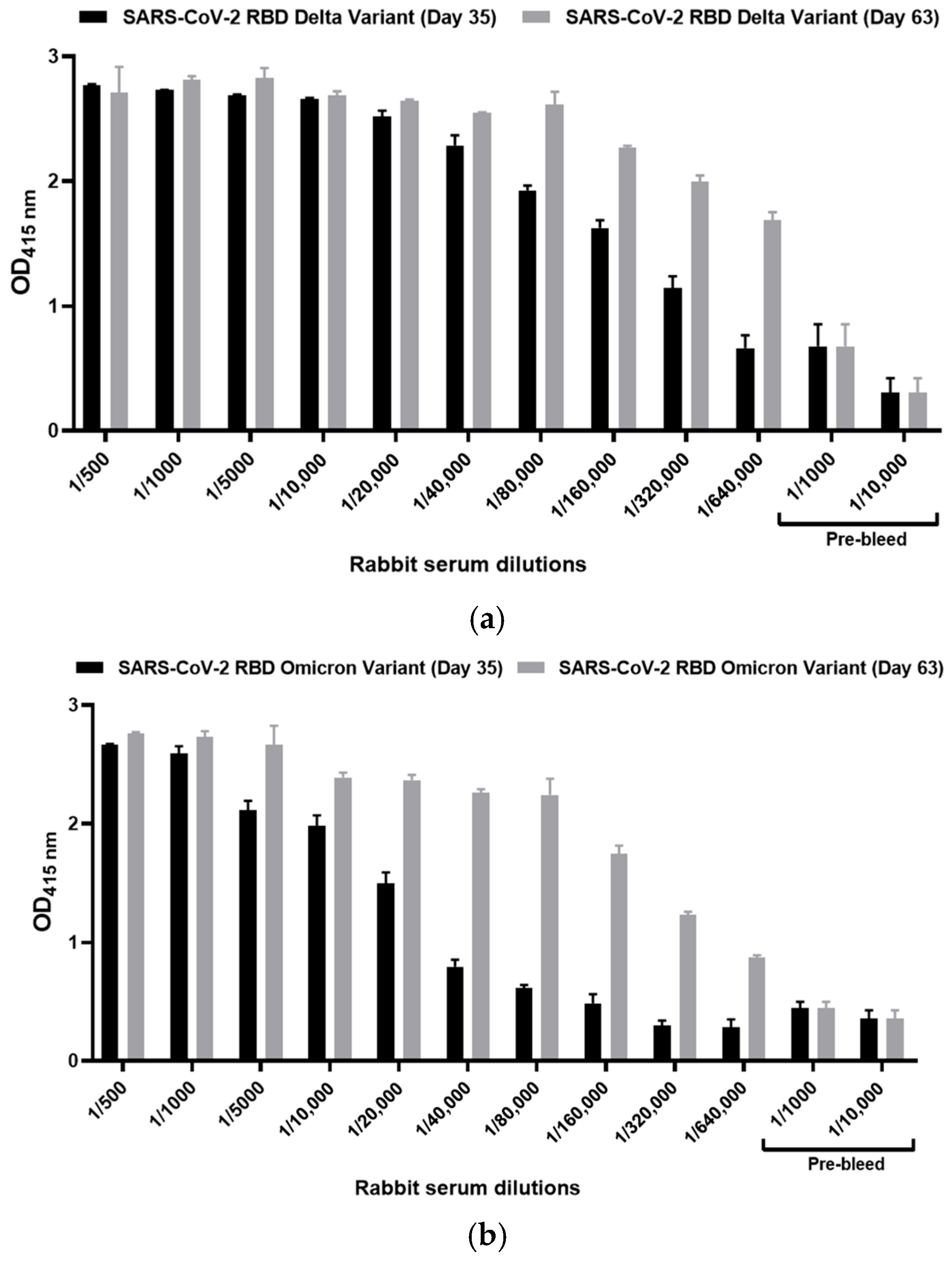
To induce a specific immune response against the SARS-CoV-2 RBD, a New Zealand White rabbit was immunized with the recombinant RBD protein from the Delta variant, which was the predominant circulating strain at the time the study was initiated. Serum samples collected on days 0, 35, and 63 were analyzed using ELISA for binding against Delta (B.1.617.2) and Omicron (B.1.1.529) RBDs. As shown in Figure 1, the pre-immune serum exhibited only background OD values, confirming the absence of specific binding. In contrast, sera from days 35 and 63 showed strong binding activity against both RBDs. By day 63, the endpoint titers reached approximately 1:640,000, indicating a robust and broadly cross-reactive antibody response. A clear increase in antibody titers between days 35 and 63 was observed for both Delta and Omicron, consistent with the maturation of the humoral response upon repeated antigen exposure. These data indicate that immunization with Delta RBD elicited a high-titer antibody response with cross-reactivity to Omicron, supporting its suitability for generating a diverse sdAb immune repertoire.

3.2. Construction of a Rabbit-Derived sdAb Immune Library and Selection by Phage Display

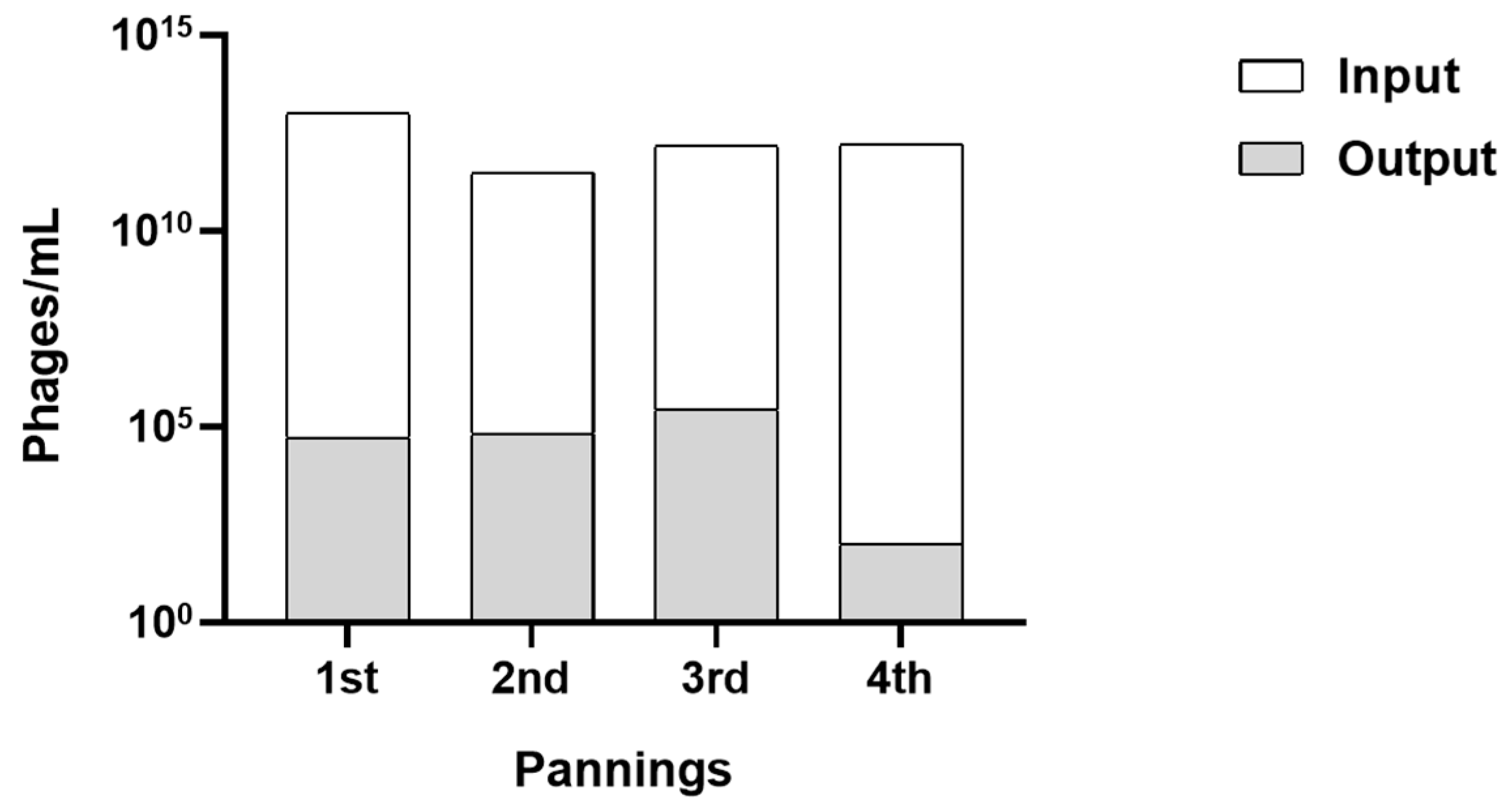
Following confirmation of a strong and cross-reactive antibody response in the immunized rabbit, an sdAb immune library representative of the antibody repertoire was constructed. Total RNA was extracted from the bone marrow and spleen of a rabbit and used for cDNA synthesis. Amplification of the variable light chain (VL) gene segments was performed by PCR using a panel of primers covering all known rabbit antibody families (K1, K2, K3, and λ). Amplification products of the expected size (~350 bp) were obtained for all the families. The PCR products were digested with SfiI and cloned into the pComb3X phagemid vector. The ligation products were transformed into E. coli ER2738 electrocompetent cells, resulting in a library of approximately 6.4 × 10⁷ transformants. To identify RBD-specific binders, four rounds of phage display were performed using the rabbit-derived VL sdAb immune library and recombinant RBD protein from the SARS-CoV-2 Delta variant as the target antigen. The selection stringency was progressively increased by increasing the number of washes (5, 10, 12, and 15). Bound phages were eluted with trypsin at the end of each round, and the blocking conditions were alternated between PBS/3% BSA and protein-free blocking buffer to reduce nonspecific enrichment. As shown in Figure 2, the input titers remained consistently high across rounds (1011–1013 phages/mL), ensuring a broad representation of the library and input phages. In contrast, output titers decreased progressively from ~105–104 phages/mL in rounds 1 to 3 to ~102 phages/mL in round 4. This reduction reflected increased stringency and suggested progressive enrichment of high-affinity binders. Clones from the final round were selected for downstream characterization.

3.3. Screening of Anti-RBD sdAb Clones

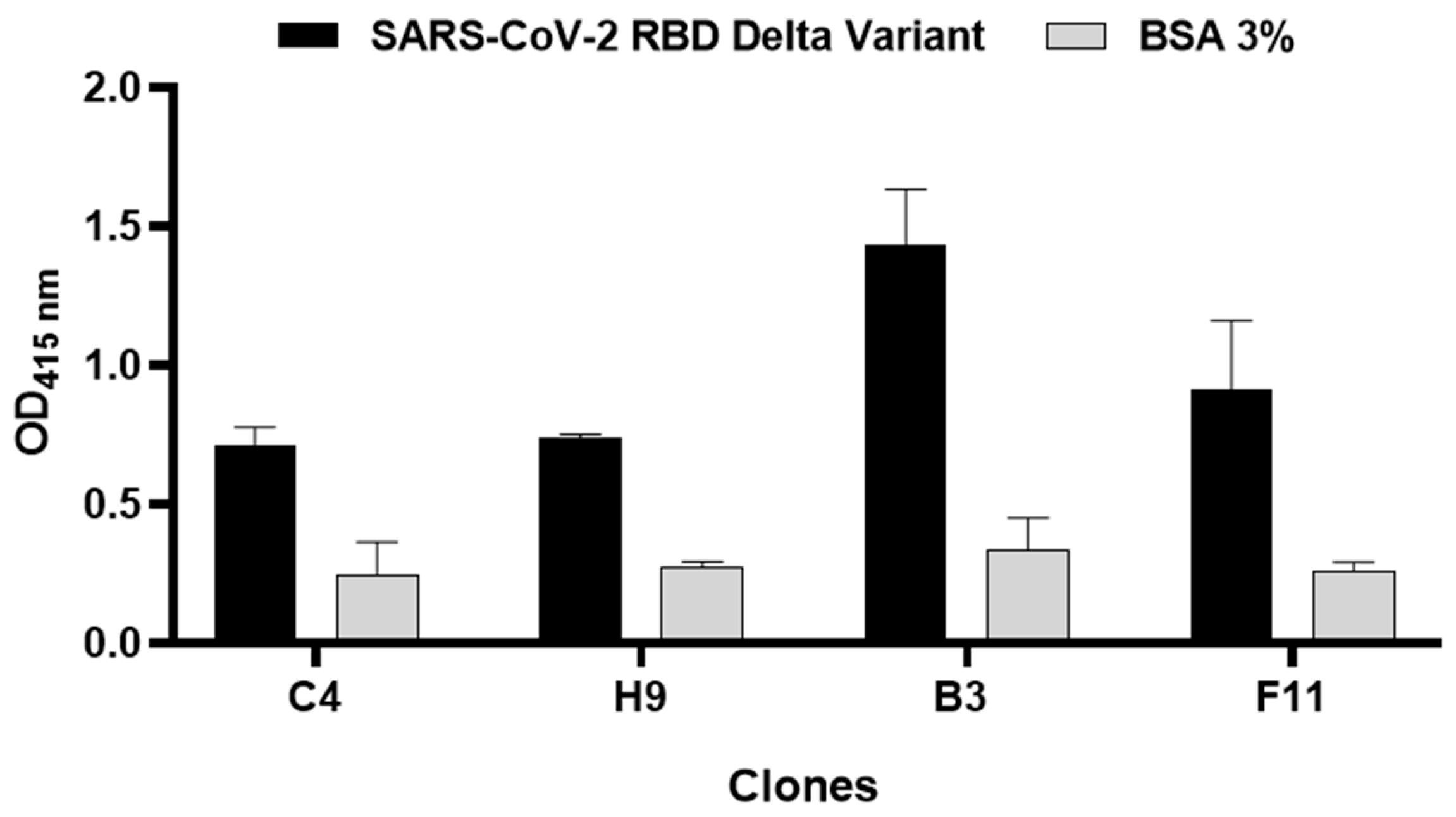
To identify the most promising anti-RBD VL sdAb candidates, phagemid DNA from the fourth round of phage display was subcloned into the pT7-PL expression vector and transformed into E. coli BL21 (DE3) cells. A total of 96 individual clones were expressed and screened to evaluate their binding activity against the SARS-CoV-2 Delta RBD and soluble expression. Binding was assessed by ELISA, in which culture supernatants containing soluble sdAbs were incubated with plates coated with Delta RBD or BSA as a negative control. From the 96 screened clones, approximately 24.5% displayed positive binding to Delta RBD, defined as at least a twofold higher ELISA signal compared to BSA. Among these, four candidates (C4, H9, B3, and F11) were identified as the strongest binders (Figure 3). Within this panel, clone B3 distinguished itself by combining a high binding signal with superior soluble expression levels. Therefore, B3 was selected as the most promising candidate for subsequent characterization.

3.4. Binding and Neutralization Properties of B3

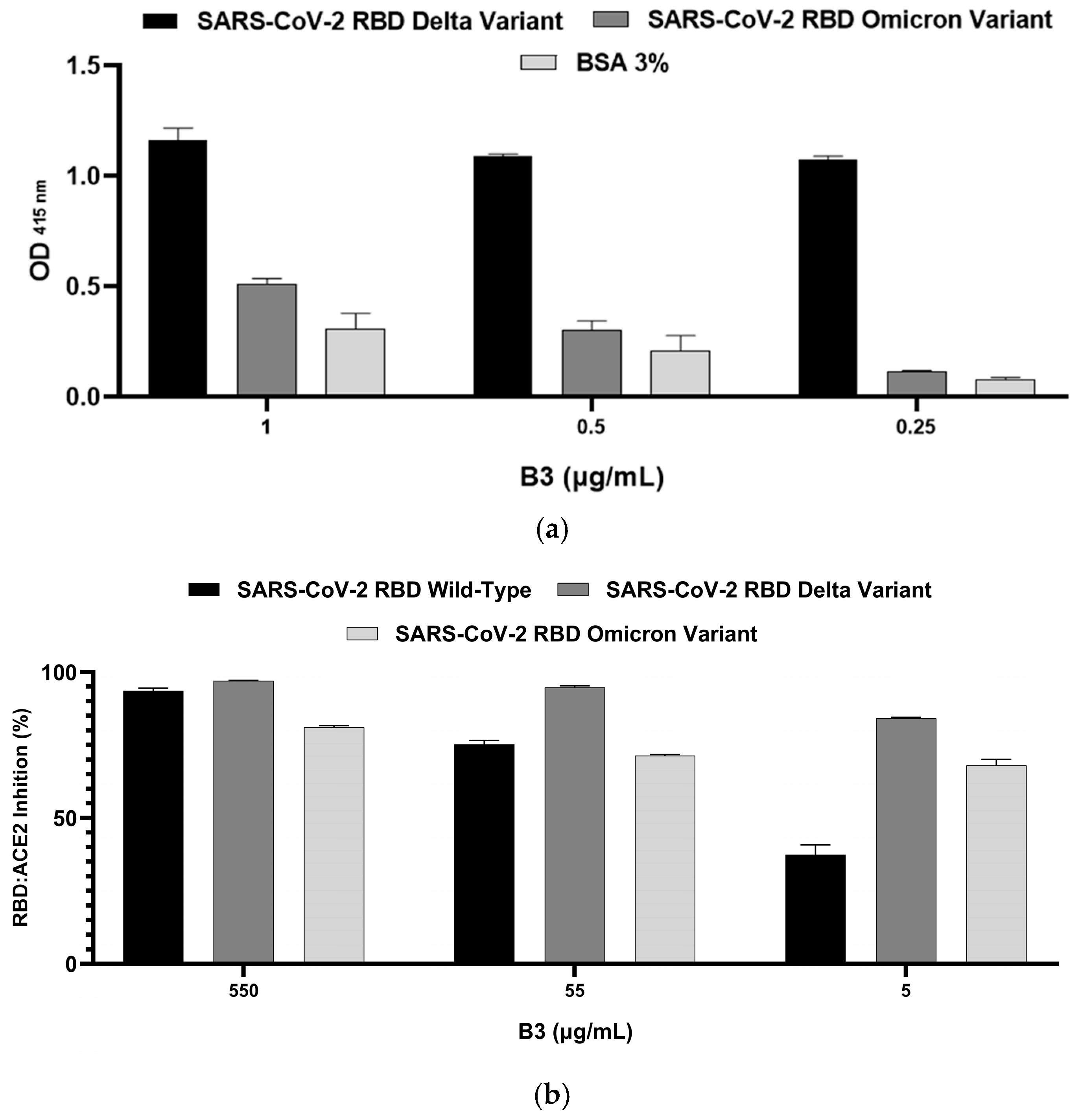
Clone B3, selected as the most promising candidate, was expressed on a larger scale in E. coli BL21 (DE3) (1 L culture) and purified as described in the Materials and Methods section, yielding approximately 4.3 ± 0.74 mg/L of soluble protein (Supplementary Figure S1). Purified B3 was first evaluated using ELISA for binding to SARS-CoV-2 RBDs from Delta and Omicron variants. As shown in Figure 4a, B3 bound specifically and in a concentration-dependent manner to SARS-CoV-2 RBDs from both Delta and Omicron variants, with consistently stronger binding observed for Delta. Minimal residual binding against BSA confirmed low nonspecific interactions. The neutralizing activity of B3 was assessed using the surrogate virus neutralization test (sVNT), which measured the inhibition of the RBD–ACE2 interaction. At the highest concentration tested (550 µg/mL), B3 nearly completely inhibited ACE2 binding to wild-type and Delta RBDs and achieved ~81% inhibition for Omicron. At intermediate concentrations (55 µg/mL), inhibition ranged from approximately 70% (Omicron) to >90% (Delta). Even at the lowest concentration tested (5 µg/mL), B3 retained measurable neutralizing activity, with ~40% inhibition for the wild-type strain, ~85% for delta and ~70% for Omicron (Figure 4b). These data indicate that B3 displays high binding specificity and broad neutralizing activity against multiple SARS-CoV-2 variants. Together, these results demonstrate that B3 combines high binding specificity with neutralization capacity.

3.5. Construction and Albumin Binding of B3-ABD(Zag)

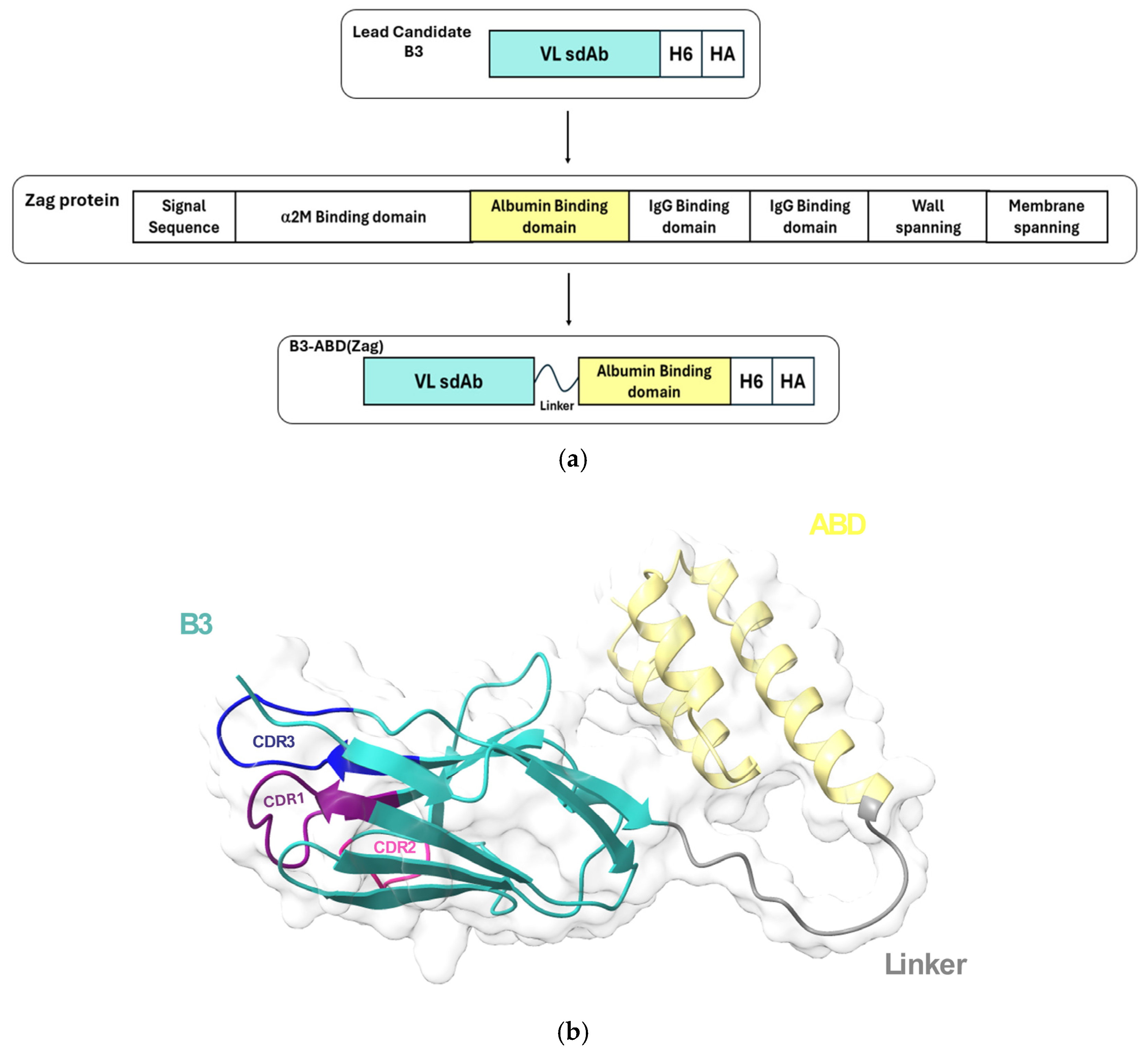
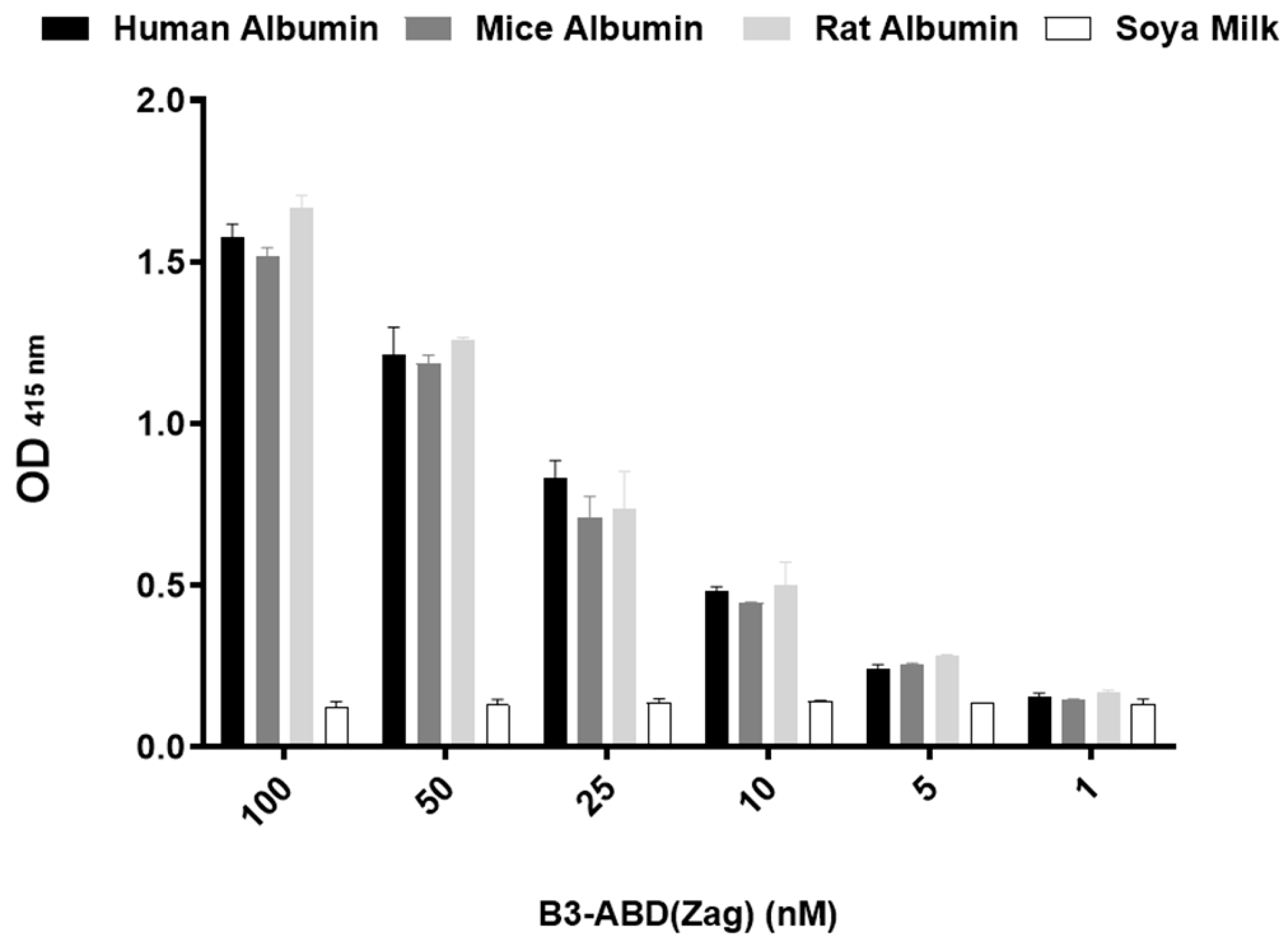
To improve the pharmacokinetic profile of B3, sdAb was fused to the albumin-binding domain (ABD) derived from Streptococcus zooepidemicus Zag protein. The construct included a flexible Gly-Ser linker to allow independent folding and functionality of both domains while retaining the C-terminal HA and His tags for detection and purification. A schematic representation of the B3-ABD(Zag) fusion construct is presented in Figure 5a. Structural predictions generated using AlphaFold indicated that the antigen-binding site of B3 and the albumin-binding surface of the ABD remained solvent-exposed, consistent with the preservation of their respective functions. The predicted model displayed high overall confidence, with a mean pLDDT score of 89.6, supporting reliable structure accuracy. In addition, the predicted TM-score (pTM~0.65) is consistent with a correctly folded overall structure, while suggesting moderate confidence in the relative orientation between the sdAb and ABD(Zag) domain, potentially reflecting interdomain flexibility (Supplementary Figure S2). The ribbon representation of the predicted 3D structure is shown in Figure 5b. The synthetic gene encoding the B3-ABD(Zag) fusion was cloned into the pHTP1 expression vector, transformed into E. coli BL21 (DE3), and expressed in soluble form. The recombinant protein was purified by affinity chromatography followed by size-exclusion chromatography (Supplementary Figure S3), yielding approximately 21.2 ± 5.4 mg/L from 1 L cultures. Notably, fusion to the ABD resulted in an approximately five-fold increase in production yield compared to the parental B3 antibody. The albumin-binding properties of the fusion construct were assessed using ELISA. B3-ABD(Zag) displayed strong and specific binding to human, rat, and mouse serum albumins (HSA, RSA, and MSA, respectively), confirming the functionality of the ABD (Figure 6). In contrast, the parental B3 antibody showed no detectable binding to any of the tested albumins, confirming that albumin recognition was exclusively mediated by the ABD fusion.

3.6. Neutralization of SARS-CoV-2 Variants by B3-ABD(Zag)

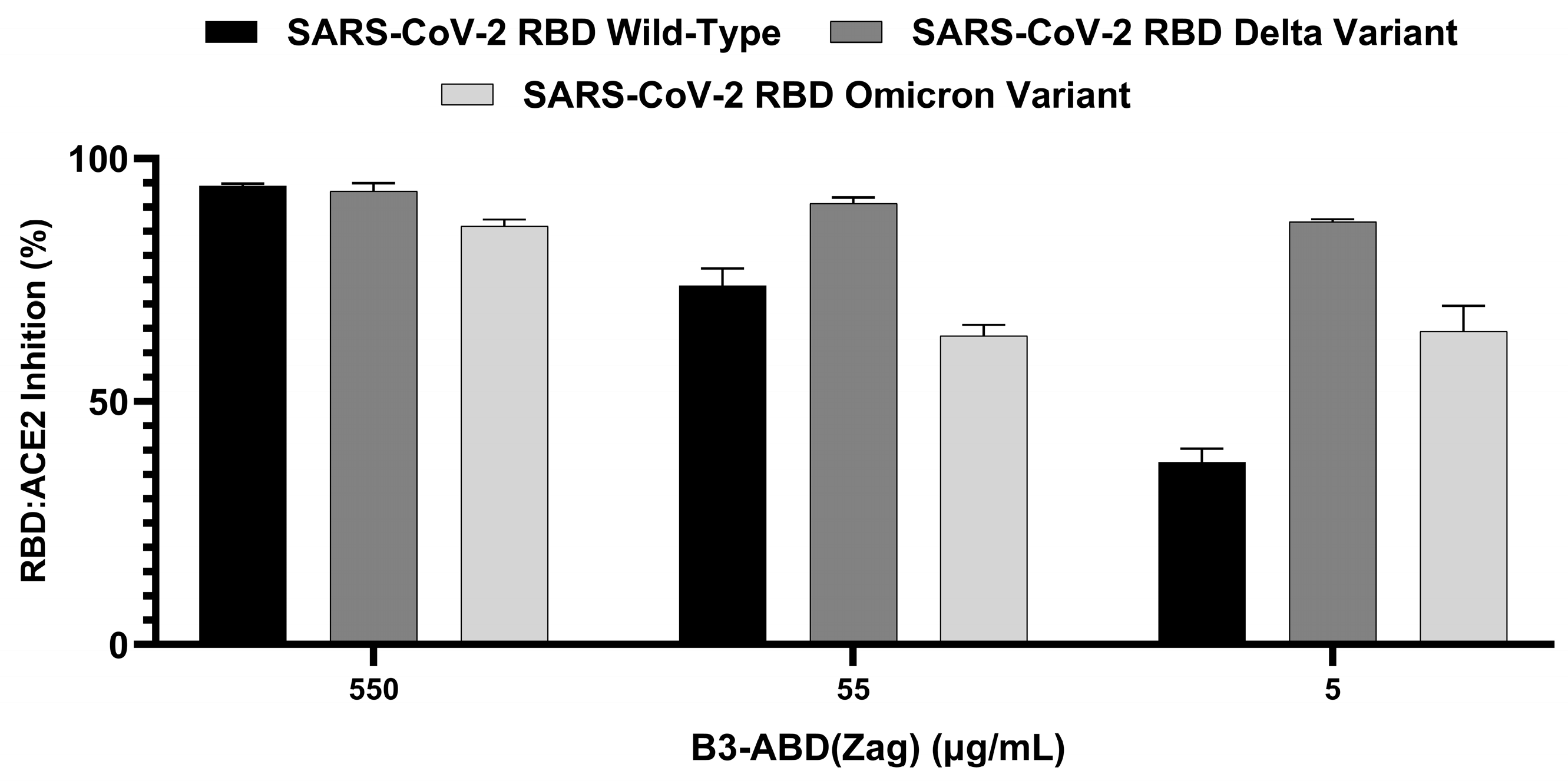
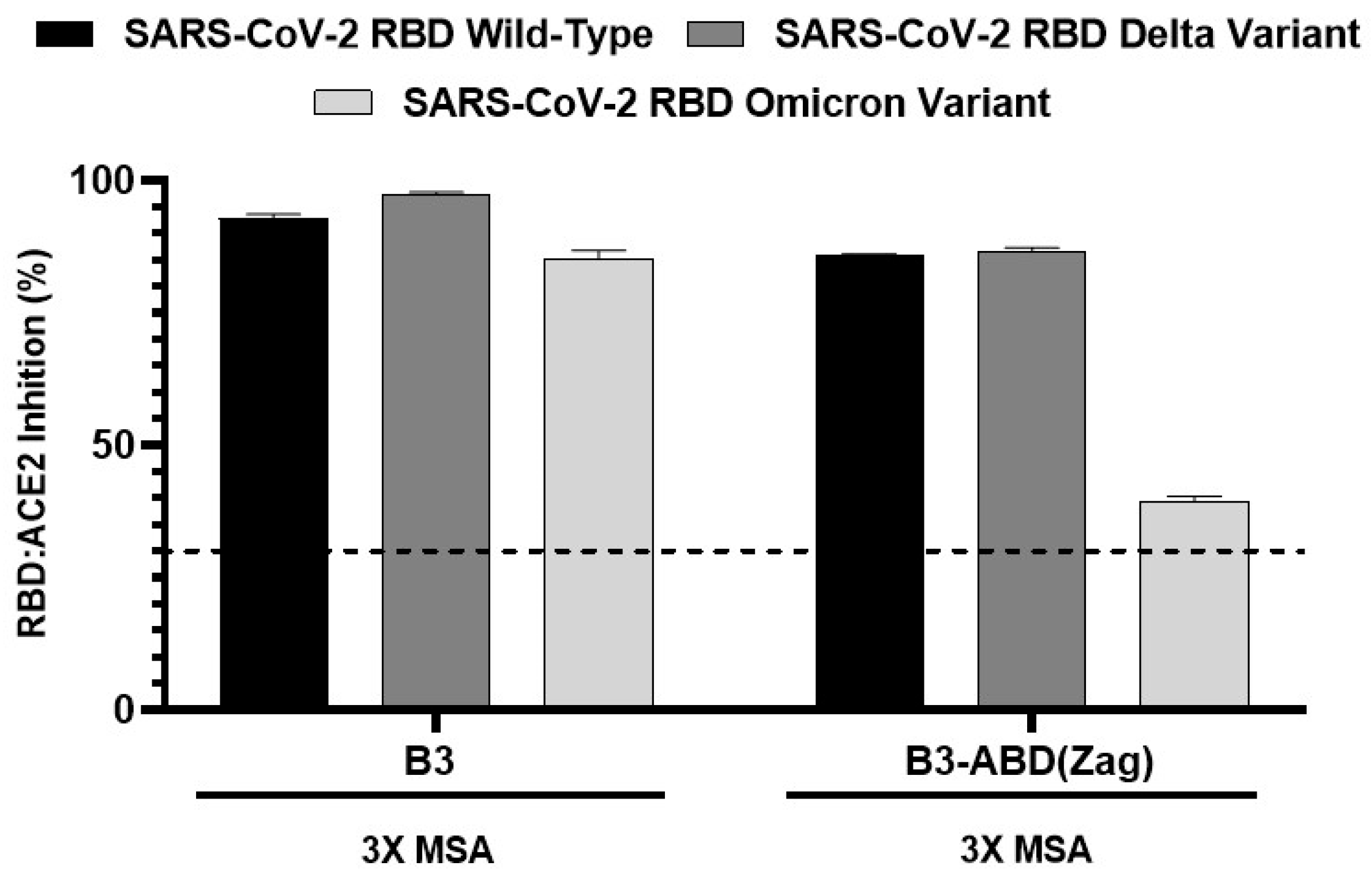
After binding analysis of B3-ABD(Zag), its neutralization properties were investigated. Neutralization was first evaluated using the surrogate virus neutralization test (sVNT), in which B3-ABD(Zag) efficiently blocked the ACE2–RBD interaction across the wild-type, Delta, and Omicron variants (Figure 7), consistent with the neutralization profile observed for B3 (Figure 4b). To confirm that B3-ABD(Zag) maintained its capacity to bind the SARS-CoV-2 RBD and neutralize viral entry in the presence of albumin, both B3 and B3-ABD(Zag) were subjected to surrogate virus neutralization tests (sVNT) following pre-incubation with mouse serum albumin. Under these conditions, B3 and B3-ABD(Zag) exhibited neutralization profiles comparable to those observed in the absence of albumin, as shown in Figure 8. B3 maintained its neutralizing activity against SARS-CoV-2 wild-type, Delta, and Omicron variants in the presence of mouse serum albumin (MSA). Similarly, B3-ABD(Zag) preserved its neutralizing capacity against the wild-type and Delta variants. Although a reduction in neutralizing potency was observed against the Omicron variant, B3-ABD(Zag) was still able to effectively neutralize this variant.
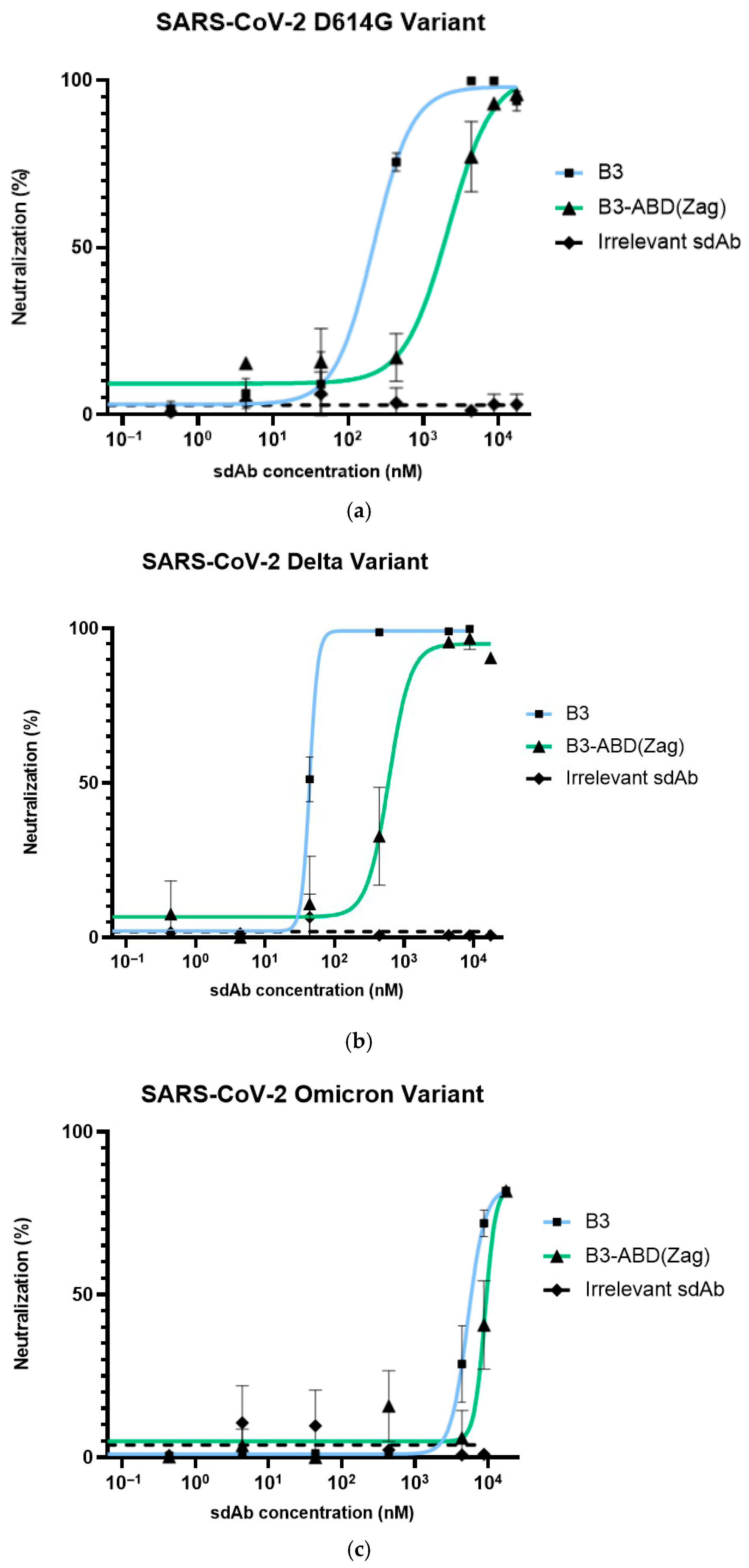
To further evaluate the neutralization properties in a cellular context, a SARS-CoV-2 pseudovirus-based neutralization assay was performed. This system employs lentiviral particles pseudotyped with the SARS-CoV-2 spike protein, providing a robust platform that closely mimics the viral entry. Pseudoviruses carrying the Wuhan-Hu-1 D614G, Delta, or Omicron spike proteins were generated in HEK293T cells and were subsequently used to infect HEK293T-ACE2 target cells. Prior to infection, the pseudoviral particles were incubated with serial dilutions of purified B3 or B3-ABD(Zag). As shown in Figure 9, both constructs effectively neutralized infection by D614G, Delta, and Omicron SARS-CoV-2 pseudoviruses. B3 exhibited IC50 values of 218.3 nM, 43.01 nM, and 5.3 µM against D614G, Delta, and Omicron, respectively. The B3-ABD(Zag) construct retained neutralizing activity across all tested variants, with IC50 values of 2.2 µM (D614G), 599.7 nM (Delta), and 9.0 µM (Omicron). These results demonstrate that fusion with the ABD(Zag) domain preserved the neutralizing capacity of B3.

3.7. Biodistribution Studies of B3 and B3-ABD(Zag)

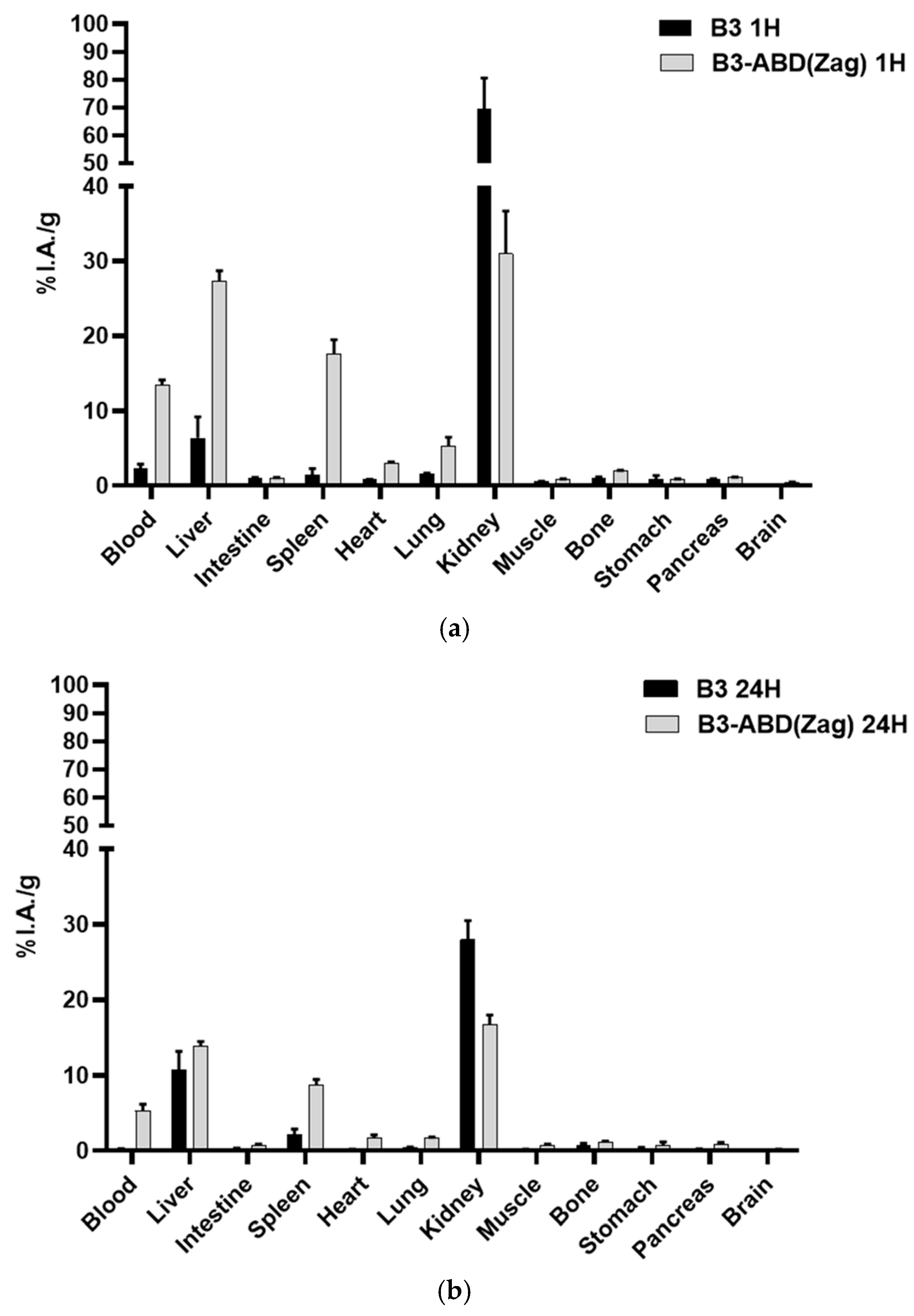
To evaluate the impact of ABD(Zag) fusion on the pharmacokinetic profile of B3, biodistribution studies were performed in CD-1 mice following intravenous administration of radiolabelled proteins (File S1). Both constructs were labelled with [99mTc(CO)3]+ and injected via the tail vein, and tissue distribution was assessed 1 h and 24 h post-injection, p.i. (Table 1; Figure 10). Radioactivity levels were expressed as the percentage of injected activity per gram of tissue (%I.A./g), and organ-to-blood ratios were calculated to determine the tissue enrichment relative to the blood. The biodistribution profile of the radiolabelled B3 showed a rapid blood clearance (2.3 ± 0.6% I.A./g at 1 h p.i.) with predominant elimination through the kidneys (69.7 ± 10.9 and 28.0 ± 2.5% I.A./g at 1 h and 24 h p.i., respectively), corresponding to kidney-to-blood ratios of approximately 30.3 and 112.0, indicating rapid kidney uptake. Moderate accumulation was observed in the liver (6.4 ± 2.8 and 10.8 ± 2.4% I.A./g at 1 h and 24 h p.i., respectively; liver-to-blood ratios ≈ 2.8 and 43.2), while most of the other tissues displayed lower uptake compared to blood (intestines, spleen, lung and bone). Very low levels were detected in the heart, muscle, pancreas, and negligible brain uptake (0.09 ± 0.03% I.A./g). In contrast, radiolabelled B3-ABD(Zag) exhibited a markedly different biodistribution profile since the uptake in most organs was significantly different, except in the stomach, pancreas and intestines at 1 h and liver, stomach and bone at 24 h. Blood retention at 1 h was 5.9-fold higher than that of B3 (13.5 ± 0.6% I.A./g) and 21.2-fold higher at 24 h after injection (5.3 ± 0.9% I.A./g), reflecting slower blood clearance and prolonged systemic circulation. Renal uptake was significantly lower than that of B3 (31.0 ± 5.7 and 16.8 ± 1.2% I.A./g at 1 h and 24 h p.i., respectively; kidney-to-blood ratios ≈ 2.3 and 3.2), whereas hepatic accumulation was markedly increased (27.4 ± 1.3 and 13.9 ± 0.6% I.A./g at 1 h and 24 h p.i., respectively; liver-to-blood ratio ≈ 2.0 and 2.6). The spleen also showed enhanced uptake (17.6 ± 1.9% I.A./g at 1 h; spleen-to-blood ratio ≈ 1.3). The increased hepatic and splenic uptake may suggest a higher involvement of reticuloendothelial cells in the clearance of 99mTc-B3-ABD(Zag) from the blood stream. However, the rapid decrease in the radioactivity in these organs at 24 h indicates a washout of ≈ 50% that does not indicate sequestration of the antibody. Additionally, the liver uptake at this time point is not significantly different for both sdAbs. Low to moderate uptake of 99mTc-B3-ABD(Zag) was detected in highly irrigated organs like the lungs (5.3 ± 1.2), heart (3.0 ± 0.2), whereas the uptake in the intestine, stomach, and pancreas remained close to or below the blood levels. Brain uptake was minimal for both constructs. The total radioactivity excretion from mice was also significantly lower than that of 99mTc-B3. At 24 h, levels of radiolabelled B3 were strongly reduced in the blood and most organs or tissues, except in the excretory organs like the liver and kidneys. This tissue distribution pattern is consistent with rapid clearance of the sdAb, whereas the radiolabelled B3-ABD(Zag) persisted in circulation at higher levels and maintained high accumulation in the liver, spleen and kidneys, consistent with its extended blood serum half-life. Taken together, these results demonstrate that fusion with ABD(Zag) increased the blood persistence time of B3, while reducing renal clearance and redirecting accumulation toward the liver and spleen.

4. Discussion

Despite the transition to an endemic phase, SARS-CoV-2 remains a significant public health concern. The continuous emergence of novel variants highlights the virus’s capacity to evade immunity, even among vaccinated individuals [35,36,37]. This is particularly concerning for populations with suboptimal vaccine responses, including the elderly, immunocompromised patients, and those with comorbidities [38,39,40]. These challenges underscore the urgent need for complementary therapeutic strategies that are effective, scalable, and adaptable to viral evolution. Throughout the pandemic, several monoclonal antibodies (mAbs) have been developed and deployed to prevent or treat SARS-CoV-2 infection. Most of these mAbs target the receptor-binding domain (RBD) of the spike protein, thereby inhibiting viral entry via ACE2 [41,42]. However, conventional IgGs (~150 kDa) are expensive to manufacture and may fail to access cryptic epitopes due to their size [43,44]. These limitations have driven interest in smaller recombinant fragments. Single-domain antibodies (sdAbs, ~15 kDa) can engage conserved or cryptic epitopes, exhibit high stability, and are produced rapidly at low cost, making them attractive for outbreak response [45]. In this study, we explored the potential of rabbit-derived sdAbs as scaffolds for next-generation therapeutics against SARS-CoV-2. Rabbit variable light (VL) domains possess high sequence diversity, enhanced stability, and longer complementarity-determining region 3 (CDR-L3) loops compared to murine or human counterparts, favoring recognition of complex or cryptic epitopes [46,47]. To leverage these advantages, we immunized a New Zealand White rabbit with the RBD of the Delta variant and constructed an immune sdAb library based on the VL repertoire. From this library, we identified B3 as a lead candidate with binding to Delta and Omicron RBDs and cross-neutralization across lineages, with IC50 values of 218.3 nM, 43.01 nM, and 5.3 µM against D614G, Delta, and Omicron, respectively. Only a limited number of studies have investigated rabbit-derived antibodies against SARS-CoV-2, and all of them have focused on conventional IgGs [22,48,49]. The neutralization potency of sdAbs is often lower compared to IgGs, as the intrinsic bivalency of IgGs naturally enhances avidity [50]. A similar reduction in potency is also observed in camelid VHHs, which share the small size and monovalency of rabbit sdAbs, although sometimes to a lesser extent. To address this limitation, numerous studies have demonstrated that multimerization can significantly enhance the efficacy of small antibody fragments. For instance, Lu et al. reported that a heterodimeric VHH construct achieved an IC50 of approximately 1.54 nM, greatly surpassing the parental monomers [51]. Another study indicated that multivalent VHH constructs can achieve over a 100-fold increase in neutralization potency compared to their monovalent counterparts, underscoring the substantial contribution of avidity effects to antiviral efficacy [52]. Structural analyses further revealed that the combination of nanobodies targeting distinct epitopes on the RBD not only enhanced neutralization but also suppressed the emergence of viral escape mutants, highlighting the advantage of biparatopic formats [53]. Building on these observations and considering the moderate neutralization potency observed for B3, we are currently pursuing lead optimization through affinity maturation and the development of bivalent constructs (B3-B3) to further enhance binding to the SARS-CoV-2 RBD and improve neutralization potency via combined intrinsic affinity gains and avidity effects.
A further limitation of sdAbs is their rapid systemic clearance due to their small size. To address this, we fused B3 with the albumin-binding domain (ABD) from Streptococcus zooepidemicus Zag protein, previously shown by us to extend the half-life of antibody fragments [29]. Importantly, B3-ABD(Zag) maintained neutralizing activity and gained albumin binding capability, with only a minor decrease in potency relative to B3. In biodistribution studies, unmodified B3 was rapidly cleared with high kidney accumulation, whereas B3-ABD(Zag) demonstrated increased blood retention, reduced renal uptake, and redistribution to the liver and spleen, consistent with an improved half-life. Several strategies have been explored to extend half-life, including Fc or albumin fusion, PEGylation, and multimerization. Fc or albumin fusions exploit FcRn-mediated recycling to prolong circulation time but increase molecular size, which can impair tissue penetration and, in the case of Fc domains, may trigger undesirable effector functions [54,55]. PEGylation can extend exposure by increasing the hydrodynamic radius but occasionally reduces binding activity and may elicit anti-PEG responses [56,57]. Multimerization, as previously emphasized, can enhance neutralization potency and improve half-life by increasing molecular weight and avidity, although it may have difficult expression, purification, and eventual stability [58,59,60]. Here, we selected ABD(Zag) fusion as the strategy to extend the protein half-life since it preserves sdAb advantages, such as small size, relevant for alternative routes like inhalation, and low-cost production in prokaryotic systems. Unlike Fc or PEG fusions, ABD is a compact, modular solution that extends half-life while maintaining favorable biophysical properties. Notably, ABD(Zag) also increased expression yields, confirmed here with a ~5-fold improvement for B3-ABD(Zag), providing a clear manufacturing advantage. Finally, the cross-species albumin binding capacity of ABD(Zag) enhances its translational relevance, allowing preclinical pharmacokinetic and efficacy studies in mouse and rat models due to its reactivity with human, mouse, and rat albumins.
While the results presented in this study are promising, advancing this candidate towards clinical applications necessitates addressing some critical challenges. The rabbit origin of B3 and the bacterial origin of ABD raise potential concerns regarding immunogenicity in humans, including the risk of anti-drug antibody (ADA) formation. Future research is required to evaluate immunogenicity and to implement appropriate mitigation strategies, including humanization of the rabbit-derived antibody scaffold and de-immunization of the bacterial ABD(Zag) domain. In addition, although this work assessed neutralization against several major SARS-CoV-2 variants, recently emerged immune-evasive strains were not included and should be evaluated in future studies to ensure broader coverage.
In summary, our results demonstrate that fusion of B3 to ABD(Zag) preserves neutralizing activity while conferring extended systemic exposure, supporting the functional integrity and translational potential of the B3-ABD(Zag) construct. Although intravenous administration resulted in relatively modest lung accumulation, a clear increase compared to the unmodified sdAb was observed, indicating that half-life extension enhances systemic availability and tissue exposure. These findings highlight both the benefits and limitations of systemic delivery and suggest that alternative administration strategies, such as inhalation-based approaches, may further optimize pulmonary targeting. While this study establishes proof-of-concept for half-life extension and preserved in vitro neutralizing activity, validation in appropriate in vivo infection models will be required to determine whether the improved pharmacokinetic profile translates into protective efficacy.

5. Conclusions

This study represents, to our knowledge, the first report of a rabbit-derived VL sdAb targeting SARS-CoV-2. We have developed a rapid and cost-effective platform that integrates the unique repertoire of rabbit sdAbs with albumin-binding domain (ABD) fusion to address pharmacokinetic limitations. The B3-ABD(Zag) construct maintained neutralization capacity while achieving an extended half-life and enhanced production yields. The engineering flexibility and stability of rabbit sdAbs facilitate advanced designs, such as bispecific constructs and alternative delivery routes, including inhalation, which is particularly pertinent for respiratory infections. Together, these results provide a scalable and versatile framework for the development of next-generation biologic therapeutics against SARS-CoV-2 and other emerging viral threats.

Supplementary Materials

The following supporting information can be downloaded at https://www.mdpi.com/article/10.3390/biologics6020010/s1. Figure S1: SDS-PAGE analysis of purified B3 protein; Figure S2: AlphaFold confidence analysis of the B3-ABD(Zag) fusion protein; Figure S3: SDS-PAGE analysis of purified B3-ABD(Zag) protein; File S1: The ARRIVE checklist.

Author Contributions

Conceptualization, F.A.-d.-S.; methodology, F.A.-d.-S., R.D.M.S., C.F., L.G. and J.D.G.C.; formal analysis, F.A.-d.-S., I.M., R.M., R.D.M.S., C.F., L.G., J.D.G.C., J.G. and L.T.; investigation, I.M., R.M., R.D.M.S., C.F. and L.G.; resources, L.G., J.D.G.C., J.G. and L.T.; data curation, I.M.; writing—original draft preparation, I.M.; writing—review and editing, F.A.-d.-S., L.T., J.G., L.G., J.D.G.C., C.F., R.D.M.S., I.M. and R.M.; visualization, I.M.; supervision, F.A.-d.-S., L.T. and J.G.; project administration, F.A.-d.-S.; funding acquisition, F.A.-d.-S. All authors have read and agreed to the published version of the manuscript.

Funding

This work was supported by Program Gilead GÉNESE (PGG/013823/2021) and the Portuguese Funding Agency, Fundação para a Ciência e Tecnologia, FCT IP (PTDC/CVT-CVT/0149/2021 and Ph.D. fellowship 2020.08209.BD (https://doi.org/10.54499/2020.08209.BD) to IM). CIISA has provided support through Project UIDB/00276/2020 and UID/276/2025, funded by the FCT and LA/P/0059/2020-AL4AnimalS.

Institutional Review Board Statement

The animal study protocol was approved by ORBEA from IST-ID (protocol code: IST-ID_ORBEA_002/181224) on 19 December 2024.

Informed Consent Statement

Not applicable.

Data Availability Statement

The original contributions presented in this study are included in the article/Supplementary Material. Further inquiries can be directed to the corresponding author.

Conflicts of Interest

The authors declare no conflicts of interest.

References

  1. Sharma, A.; Tiwari, S.; Deb, M.K.; Marty, J.L. Severe Acute Respiratory Syndrome Coronavirus-2 (SARS-CoV-2): A Global Pandemic and Treatment Strategies. Int. J. Antimicrob. Agents 2020, 56, 106054. [Google Scholar] [CrossRef]
  2. Adil, M.T.; Rahman, R.; Whitelaw, D.; Jain, V.; Al-Taan, O.; Rashid, F.; Munasinghe, A.; Jambulingam, P. SARS-CoV-2 and the Pandemic of COVID-19. Postgrad. Med. J. 2020, 97, 110–116. [Google Scholar] [CrossRef]
  3. Lai, C.-C.; Shih, T.-P.; Ko, W.-C.; Tang, H.-J.; Hsueh, P.-R. Severe Acute Respiratory Syndrome Coronavirus 2 (SARS-CoV-2) and Coronavirus Disease-2019 (COVID-19): The Epidemic and the Challenges. Int. J. Antimicrob. Agents 2020, 55, 105924. [Google Scholar] [CrossRef]
  4. Chen, L.; Kaku, Y.; Okumura, K.; Uriu, K.; Zhu, Y.; Ito, J.; Sato, K. Virological Characteristics of the SARS-CoV-2 LP.8.1 Variant. Lancet Infect. Dis. 2025, 25, e193. [Google Scholar] [CrossRef] [PubMed]
  5. Uriu, K.; Okumura, K.; Uwamino, Y.; Chen, L.; Tolentino, J.E.; Asakura, H.; Nagashima, M.; Sadamasu, K.; Yoshimura, K.; Ito, J.; et al. Virological Characteristics of the SARS-CoV-2 NB.1.8.1 Variant. Lancet Infect. Dis. 2025, 25, e443. [Google Scholar] [CrossRef] [PubMed]
  6. Guo, C.; Yu, Y.; Liu, J.; Jian, F.; Yang, S.; Song, W.; Yu, L.; Shao, F.; Cao, Y. Antigenic and Virological Characteristics of SARS-CoV-2 Variants BA.3.2, XFG, and NB.1.8.1. Lancet Infect. Dis. 2025, 25, e374–e377. [Google Scholar] [CrossRef] [PubMed]
  7. Saha, A.; Ghosh Roy, S.; Dwivedi, R.; Tripathi, P.; Kumar, K.; Nambiar, S.M.; Pathak, R. Beyond the Pandemic Era: Recent Advances and Efficacy of SARS-CoV-2 Vaccines Against Emerging Variants of Concern. Vaccines 2025, 13, 424. [Google Scholar] [CrossRef]
  8. Mykytyn, A.Z.; Fouchier, R.A.; Haagmans, B.L. Antigenic Evolution of SARS Coronavirus 2. Curr. Opin. Virol. 2023, 62, 101349. [Google Scholar] [CrossRef]
  9. Tabll, A.A.; Shahein, Y.E.; Omran, M.M.; Elnakib, M.M.; Ragheb, A.A.; Amer, K.E. A Review of Monoclonal Antibodies in COVID-19: Role in Immunotherapy, Vaccine Development and Viral Detection. Hum. Antibodies 2021, 29, 179–191. [Google Scholar] [CrossRef]
  10. Calderón-Parra, J.; Guisado-Vasco, P.; Montejano-Sánchez, R.; Estrada, V.; Cuevas-Tascón, G.; Aguareles, J.; Arribas, J.; Erro-Iribarren, M.; Calvo-Salvador, M.; Fernández-Cruz, A.; et al. Use of Monoclonal Antibodies in Immunocompromised Patients Hospitalized with Severe COVID-19: A Retrospective Multicenter Cohort. J. Clin. Med. 2023, 12, 864. [Google Scholar] [CrossRef]
  11. Cowan, J.; Amson, A.; Christofides, A.; Chagla, Z. Monoclonal Antibodies as COVID-19 Prophylaxis Therapy in Immunocompromised Patient Populations. Int. J. Infect. Dis. 2023, 134, 228–238. [Google Scholar] [CrossRef]
  12. Wang, Q.; Zhang, Y.; Wu, L.; Niu, S.; Song, C.; Zhang, Z.; Lu, G.; Qiao, C.; Hu, Y.; Yuen, K.-Y.; et al. Structural and Functional Basis of SARS-CoV-2 Entry by Using Human ACE2. Cell 2020, 181, 894–904.e9. [Google Scholar] [CrossRef] [PubMed]
  13. Focosi, D.; McConnell, S.; Casadevall, A.; Cappello, E.; Valdiserra, G.; Tuccori, M. Monoclonal Antibody Therapies against SARS-CoV-2. Lancet Infect. Dis. 2022, 22, e311–e326. [Google Scholar] [CrossRef] [PubMed]
  14. Pogue, J.M.; Lauring, A.S.; Gandhi, T.N.; Marshall, V.D.; Eschenauer, G.A.; Nagel, J.L.; Baang, J.H.; Zhou, S.; Valesano, A.L.; Petty, L.A. Monoclonal Antibodies for Early Treatment of COVID-19 in a World of Evolving SARS-CoV-2 Mutations and Variants. Open Forum Infect. Dis. 2021, 8, ofab268. [Google Scholar] [CrossRef] [PubMed]
  15. Nelson, A.L. Antibody Fragments. MAbs 2010, 2, 77–83. [Google Scholar] [CrossRef]
  16. Nambulli, S.; Xiang, Y.; Tilston-Lunel, N.L.; Rennick, L.J.; Sang, Z.; Klimstra, W.B.; Reed, D.S.; Crossland, N.A.; Shi, Y.; Duprex, W.P. Inhalable Nanobody (PiN-21) Prevents and Treats SARS-CoV-2 Infections in Syrian Hamsters at Ultra-Low Doses. Sci. Adv. 2021, 7, eabh0319. [Google Scholar] [CrossRef]
  17. Van Heeke, G.; Allosery, K.; De Brabandere, V.; De Smedt, T.; Detalle, L.; de Fougerolles, A. Nanobodies® as Inhaled Biotherapeutics for Lung Diseases. Pharmacol. Ther. 2017, 169, 47–56. [Google Scholar] [CrossRef]
  18. Yang, M.L.; Yuan, T.Z.; Chan, K.Y.; Ding, L.; Han, Z.; Franco, H.; Holliday, C.; Kannan, S.; Davidson, E.; Doranz, B.J.; et al. A VHH Single-Domain Platform Enabling Discovery and Development of Monospecific Antibodies and Modular Neutralizing Bispecifics against SARS-CoV-2 Variants. Antib. Ther. 2024, 7, 164–176. [Google Scholar] [CrossRef]
  19. Schlör, A.; Hirschberg, S.; Amor, G.B.; Meister, T.L.; Arora, P.; Pöhlmann, S.; Hoffmann, M.; Pfaender, S.; Eddin, O.K.; Kamhieh-Milz, J.; et al. SARS-CoV-2 Neutralizing Camelid Heavy-Chain-Only Antibodies as Powerful Tools for Diagnostic and Therapeutic Applications. Front. Immunol. 2022, 13, 930975. [Google Scholar] [CrossRef]
  20. Xu, J.; Xu, K.; Jung, S.; Conte, A.; Lieberman, J.; Muecksch, F.; Lorenzi, J.C.C.; Park, S.; Schmidt, F.; Wang, Z.; et al. Nanobodies from Camelid Mice and Llamas Neutralize SARS-CoV-2 Variants. Nature 2021, 595, 278–282. [Google Scholar] [CrossRef]
  21. Mage, R.G. Diversification of Rabbit VH Genes by Gene-Conversion-like and Hypermutation Mechanisms. Immunol. Rev. 1998, 162, 49–54. [Google Scholar] [CrossRef] [PubMed]
  22. Makdasi, E.; Levy, Y.; Alcalay, R.; Noy-Porat, T.; Zahavy, E.; Mechaly, A.; Epstein, E.; Peretz, E.; Cohen, H.; Bar-On, L.; et al. Neutralizing Monoclonal Anti-SARS-CoV-2 Antibodies Isolated from Immunized Rabbits Define Novel Vulnerable Spike-Protein Epitope. Viruses 2021, 13, 566. [Google Scholar] [CrossRef] [PubMed]
  23. Chen, Y.; Zhu, L.; Huang, W.; Tong, X.; Wu, H.; Tao, Y.; Tong, B.; Huang, H.; Chen, J.; Zhao, X.; et al. Potent RBD-Specific Neutralizing Rabbit Monoclonal Antibodies Recognize Emerging SARS-CoV-2 Variants Elicited by DNA Prime-Protein Boost Vaccination. Emerg. Microbes Infect. 2021, 10, 1390–1403. [Google Scholar] [CrossRef] [PubMed]
  24. André, A.S.; Dias, J.N.R.; Aguiar, S.; Nogueira, S.; Bule, P.; Carvalho, J.I.; António, J.P.M.; Cavaco, M.; Neves, V.; Oliveira, S.; et al. Rabbit Derived VL Single-Domains as Promising Scaffolds to Generate Antibody-Drug Conjugates. Sci. Rep. 2023, 13, 4837. [Google Scholar] [CrossRef]
  25. André, A.S.; Dias, J.N.R.; Moutinho, I.; Loureiro, J.; Leonardo, A.; Nogueira, S.; Marimon, R.P.; Bule, P.; Correia, J.; Malhó, R.; et al. A New Treatment for Canine B-Cell Lymphoma Based on a Recombinant Single-Domain Antibody Immunotoxin Derived from Pseudomonas Aeruginosa Exotoxin A. Front. Vet. Sci. 2025, 12, 1491934. [Google Scholar] [CrossRef]
  26. Aguiar, S.I.; Dias, J.N.R.; André, A.S.; Silva, M.L.; Martins, D.; Carrapiço, B.; Castanho, M.; Carriço, J.; Cavaco, M.; Gaspar, M.M.; et al. Highly Specific Blood-Brain Barrier Transmigrating Single-Domain Antibodies Selected by an In Vivo Phage Display Screening. Pharmaceutics 2021, 13, 1598. [Google Scholar] [CrossRef]
  27. Kontermann, R.E. Strategies for Extended Serum Half-Life of Protein Therapeutics. Curr. Opin. Biotechnol. 2011, 22, 868–876. [Google Scholar] [CrossRef]
  28. Strohl, W.R. Fusion Proteins for Half-Life Extension of Biologics as a Strategy to Make Biobetters. BioDrugs 2015, 29, 215–239. [Google Scholar] [CrossRef]
  29. Cantante, C.; Lourenço, S.; Morais, M.; Leandro, J.; Gano, L.; Silva, N.; Leandro, P.; Serrano, M.; Henriques, A.O.; Andre, A.; et al. Albumin-Binding Domain from Streptococcus zooepidemicus Protein Zag as a Novel Strategy to Improve the Half-Life of Therapeutic Proteins. J. Biotechnol. 2017, 253, 23–33. [Google Scholar] [CrossRef]
  30. Dias, J.N.R.; Almeida, A.; André, A.S.; Aguiar, S.I.; Bule, P.; Nogueira, S.; Oliveira, S.S.; Carrapiço, B.; Gil, S.; Tavares, L.; et al. Characterization of the Canine CD20 as a Therapeutic Target for Comparative Passive Immunotherapy. Sci. Rep. 2022, 12, 2678. [Google Scholar] [CrossRef]
  31. Barbas, C.F.; Kang, A.S.; Lerner, R.A.; Benkovic, S.J. Assembly of Combinatorial Antibody Libraries on Phage Surfaces: The Gene III Site. Proc. Natl. Acad. Sci. USA 1991, 88, 7978–7982. [Google Scholar] [CrossRef] [PubMed]
  32. WO2008136694A9; Engineered Rabbit Antibody Variable Domains and Uses Thereof. USPTO: Alexandria, VA, USA, 2010.
  33. Moutinho, I.; Henriques, M.; Cardoso, S.; da Penha Coutinho, T.; Penha-Gonçalves, C.; Demengeot, J.; Castanho, M.; Tavares, L.; Gil, S.; Nunes, T.; et al. SARS-CoV-2 Seroprevalence in Indoor House Cats from the Lisbon Area During the COVID-19 Pandemic, 2019–2021. Transbound. Emerg. Dis. 2024, 2024, 1543922. [Google Scholar] [CrossRef] [PubMed]
  34. Moutinho, I.; Cardoso, S.; Henriques, M.; Gonçalves, J.; Tavares, L.; Gil, S.; Nunes, T.; Aires-da-Silva, F. Seroprevalence of SARS-CoV-2 in Cats from COVID-19 Positive Households in the Lisbon Area. Front. Vet. Sci. 2025, 12, 1542397. [Google Scholar] [CrossRef] [PubMed]
  35. Case, J.B.; Jain, S.; Suthar, M.S.; Diamond, M.S. SARS-CoV-2: The Interplay Between Evolution and Host Immunity. Annu. Rev. Immunol. 2025, 43, 29–55. [Google Scholar] [CrossRef]
  36. Li, P.; Liu, Y.; Faraone, J.N.; Hsu, C.C.; Chamblee, M.; Zheng, Y.-M.; Carlin, C.; Bednash, J.S.; Horowitz, J.C.; Mallampalli, R.K.; et al. Distinct Patterns of SARS-CoV-2 BA.2.87.1 and JN.1 Variants in Immune Evasion, Antigenicity, and Cell-Cell Fusion. mBio 2024, 15, e0075124. [Google Scholar] [CrossRef]
  37. Jena, D.; Ghosh, A.; Jha, A.; Prasad, P.; Raghav, S.K. Impact of Vaccination on SARS-CoV-2 Evolution and Immune Escape Variants. Vaccine 2024, 42, 126153. [Google Scholar] [CrossRef]
  38. Rotundo, S.; Serapide, F.; Berardelli, L.; Gullì, S.P.; Mongiardi, S.; Tassone, M.T.; Trecarichi, E.M.; Russo, A. Early Combined Therapy for COVID-19 in Immunocompromised Patients: A Promising Approach against Viral Persistence and Drug Resistance. BMC Infect. Dis. 2025, 25, 616. [Google Scholar] [CrossRef]
  39. Razonable, R.R. Protecting the Vulnerable: Addressing the COVID-19 Care Needs of People with Compromised Immunity. Front. Immunol. 2024, 15, 1397040. [Google Scholar] [CrossRef]
  40. Berber, E.; Ross, T.M. Factors Predicting COVID-19 Vaccine Effectiveness and Longevity of Humoral Immune Responses. Vaccines 2024, 12, 1284. [Google Scholar] [CrossRef]
  41. Weinreich, D.M.; Sivapalasingam, S.; Norton, T.; Ali, S.; Gao, H.; Bhore, R.; Musser, B.J.; Soo, Y.; Rofail, D.; Im, J.; et al. REGN-COV2, a Neutralizing Antibody Cocktail, in Outpatients with COVID-19. N. Engl. J. Med. 2021, 384, 238–251. [Google Scholar] [CrossRef]
  42. Quiros-Roldan, E.; Amadasi, S.; Zanella, I.; Degli Antoni, M.; Storti, S.; Tiecco, G.; Castelli, F. Monoclonal Antibodies against SARS-CoV-2: Current Scenario and Future Perspectives. Pharmaceuticals 2021, 14, 1272. [Google Scholar] [CrossRef]
  43. Chen, C.; Garcia, Z.; Chen, D.; Liu, H.; Trelstad, P. Cost and Supply Considerations for Antibody Therapeutics. mAbs 2025, 17, 2451789. [Google Scholar] [CrossRef] [PubMed]
  44. Wu, Y.; Jiang, S.; Ying, T. Single-Domain Antibodies as Therapeutics against Human Viral Diseases. Front. Immunol. 2017, 8, 1802. [Google Scholar] [CrossRef] [PubMed]
  45. Swart, I.C.; Van Gelder, W.; De Haan, C.A.M.; Bosch, B.-J.; Oliveira, S. Next Generation Single-Domain Antibodies against Respiratory Zoonotic RNA Viruses. Front. Mol. Biosci. 2024, 11, 1389548. [Google Scholar] [CrossRef] [PubMed]
  46. Weber, J.; Peng, H.; Rader, C. From Rabbit Antibody Repertoires to Rabbit Monoclonal Antibodies. Exp. Mol. Med. 2017, 49, e305. [Google Scholar] [CrossRef]
  47. Kodangattil, S.; Huard, C.; Ross, C.; Li, J.; Gao, H.; Mascioni, A.; Hodawadekar, S.; Naik, S.; Min-debartolo, J.; Visintin, A.; et al. The Functional Repertoire of Rabbit Antibodies and Antibody Discovery via Next-Generation Sequencing. mAbs 2014, 6, 628–636. [Google Scholar] [CrossRef]
  48. Guo, H.; Yang, Y.; Zhao, T.; Lu, Y.; Gao, Y.; Li, T.; Xiao, H.; Chu, X.; Zheng, L.; Li, W.; et al. Mechanism of a Rabbit Monoclonal Antibody Broadly Neutralizing SARS-CoV-2 Variants. Commun. Biol. 2023, 6, 364. [Google Scholar] [CrossRef]
  49. Chu, X.; Ding, X.; Yang, Y.; Lu, Y.; Li, T.; Gao, Y.; Zheng, L.; Xiao, H.; Yang, T.; Cheng, H.; et al. Mechanism of an RBM-Targeted Rabbit Monoclonal Antibody 9H1 Neutralizing SARS-CoV-2. Biochem. Biophys. Res. Commun. 2023, 660, 43–49. [Google Scholar] [CrossRef]
  50. Callaway, H.M.; Hastie, K.M.; Schendel, S.L.; Li, H.; Yu, X.; Shek, J.; Buck, T.; Hui, S.; Bedinger, D.; Troup, C.; et al. Bivalent Intra-Spike Binding Provides Durability against Emergent Omicron Lineages: Results from a Global Consortium. Cell Rep. 2023, 42, 112014. [Google Scholar] [CrossRef]
  51. Lu, Q.; Zhang, Z.; Li, H.; Zhong, K.; Zhao, Q.; Wang, Z.; Wu, Z.; Yang, D.; Sun, S.; Yang, N.; et al. Development of Multivalent Nanobodies Blocking SARS-CoV-2 Infection by Targeting RBD of Spike Protein. J. Nanobiotechnol. 2021, 19, 33. [Google Scholar] [CrossRef]
  52. Zupancic, J.M.; Schardt, J.S.; Desai, A.A.; Makowski, E.K.; Smith, M.D.; Pornnoppadol, G.; Garcia de Mattos Barbosa, M.; Cascalho, M.; Lanigan, T.M.; Tessier, P.M. Engineered Multivalent Nanobodies Potently and Broadly Neutralize SARS-CoV-2 Variants. Adv. Ther. 2021, 4, 2100099. [Google Scholar] [CrossRef]
  53. Pymm, P.; Redmond, S.J.; Dolezal, O.; Mordant, F.; Lopez, E.; Cooney, J.P.; Davidson, K.C.; Haycroft, E.R.; Tan, C.W.; Seneviratna, R.; et al. Biparatopic Nanobodies Targeting the Receptor Binding Domain Efficiently Neutralize SARS-CoV-2. iScience 2022, 25, 105259. [Google Scholar] [CrossRef]
  54. Harmsen, M.M.; Ackerschott, B.; de Smit, H. Serum Immunoglobulin or Albumin Binding Single-Domain Antibodies That Enable Tailored Half-Life Extension of Biologics in Multiple Animal Species. Front. Immunol. 2024, 15, 1346328. [Google Scholar] [CrossRef] [PubMed]
  55. Czajkowsky, D.M.; Hu, J.; Shao, Z.; Pleass, R.J. Fc-Fusion Proteins: New Developments and Future Perspectives. EMBO Mol. Med. 2012, 4, 1015–1028. [Google Scholar] [CrossRef] [PubMed]
  56. Li, C.; Li, T.; Tian, X.; An, W.; Wang, Z.; Han, B.; Tao, H.; Wang, J.; Wang, X. Research Progress on the PEGylation of Therapeutic Proteins and Peptides (TPPs). Front. Pharmacol. 2024, 15, 1353626. [Google Scholar] [CrossRef] [PubMed]
  57. Lee, C.S.; Kulkarni, Y.; Pierre, V.; Maski, M.; Wanner, C. Adverse Impacts of PEGylated Protein Therapeutics: A Targeted Literature Review. BioDrugs 2024, 38, 795–819. [Google Scholar] [CrossRef]
  58. Al-Seragi, M.; Chen, Y.; Duong van Hoa, F. Advances in Nanobody Multimerization and Multispecificity: From in Vivo Assembly to in Vitro Production. Biochem. Soc. Trans. 2025, 53, 235–248. [Google Scholar] [CrossRef]
  59. Miller, A.; Carr, S.; Rabbitts, T.; Ali, H. Multimeric Antibodies with Increased Valency Surpassing Functional Affinity and Potency Thresholds Using Novel Formats. mAbs 2020, 12, 1752529. [Google Scholar] [CrossRef]
  60. Wade, J.; Rimbault, C.; Ali, H.; Ledsgaard, L.; Rivera-de-Torre, E.; Abou Hachem, M.; Boddum, K.; Mirza, N.; Bohn, M.-F.; Sakya, S.A.; et al. Generation of Multivalent Nanobody-Based Proteins with Improved Neutralization of Long α-Neurotoxins from Elapid Snakes. Bioconjug. Chem. 2022, 33, 1494–1504. [Google Scholar] [CrossRef]
Figure 1. Antibody titers against SARS-CoV-2 Delta and Omicron RBDs in rabbit serum. ELISA was performed using high-binding 96-well plates coated with recombinant RBD proteins from (a) Delta (B.1.617.2) and (b) Omicron (B.1.1.529) variants (200 ng/well). Serum samples collected on day 0 (pre-immune), day 35, and day 63 were serially diluted (1:100 to 1:640,000) and incubated for 1 h at 25 °C. Bound antibodies were detected with HRP-conjugated anti-rabbit IgG, developed with ABTS substrate, and absorbance was measured at 415 nm. Endpoint titers were defined as the highest dilution giving an OD value at least twice the background, a threshold used to ensure signals are reliably above non-specific background. Data represents the mean ± SD of two independent experiments.
Biologics 06 00010 g001
Figure 2. Phage titers during successive rounds of selection against SARS-CoV-2 Delta RBD. Input (white bars) and output (grey bars) phage concentrations (phages/mL) are shown for four rounds of biopanning performed with the rabbit-derived sdAb immune library against recombinant SARS-CoV-2 Delta RBD. Selection stringency was progressively increased by raising the number of washes (5, 10, 12, and 15). Bound phages were eluted with trypsin, and different blocking conditions (PBS/3% BSA or protein-free blocking buffer) were alternated between rounds to minimize non-specific enrichment. Input titers remained high (1011–1013 phages/mL) throughout, while output titers decreased progressively from ~105–104 phages/mL in rounds 1–3 to ~102 phages/mL in round 4, consistent with enrichment for high-affinity binders.
Biologics 06 00010 g002
Figure 3. Binding activity of selected sdAb clones against SARS-CoV-2 Delta RBD. Clones obtained from the fourth round of phage display were subcloned into the pT7-PL vector, expressed in E. coli BL21 (DE3), and screened by ELISA for binding to the recombinant RBD of the SARS-CoV-2 Delta variant. Four candidates (C4, H9, B3, and F11) were identified based on consistent ELISA signals above background, each showing at least a twofold higher signal compared to BSA. Among them, clone B3 displayed the highest binding activity and was selected as the lead candidate for further characterization. Data represents the mean ± SD of two independent experiments.
Biologics 06 00010 g003
Figure 4. Functional characterization of B3. Binding activity of B3 against SARS-CoV-2 Delta and Omicron RBDs: (a) Clone B3, previously selected as the lead candidate, was expressed in E. coli BL21 (DE3), purified, and tested by ELISA for binding to recombinant RBDs of the SARS-CoV-2 Delta and Omicron variants. B3 bound both RBDs in a concentration-dependent manner, with consistently stronger signals observed for the Delta variant. Minimal residual binding against BSA confirmed low non-specific interactions. (b) Inhibition of SARS-CoV-2 RBD:ACE2 interaction by B3 in surrogate virus neutralization assay (sVNT). The neutralizing potential of purified B3 was evaluated using a surrogate virus neutralization test (sVNT) based on inhibition of the RBD–ACE2 interaction. Serial dilutions of B3 were tested against RBDs from SARS-CoV-2 wild-type (Wuhan-Hu-1), Delta, and Omicron variants. Results are expressed as percentage of inhibition, with ≥30% considered positive for neutralizing activity according to the manufacturer’s guidelines. B3 showed inhibition across all variants, particularly Delta and Omicron, even at lower concentrations. Data represents the mean ± SD of two independent experiments.
Biologics 06 00010 g004
Figure 5. B3-ABD(Zag) construction and predicted three-dimensional structure (a) Schematic representation of the construction of the B3-ABD(Zag), showing the use of the lead candidate B3, a rabbit-derived VL sdAb, fused via a peptide linker (SGGGGSGGGGS) to the albumin binding domain (ABD) from Zag protein, resulting in the final construct B3-ABD(Zag). A C-terminal His-tag and HA-tag were included to facilitate purification and detection. (b) Predicted three-dimensional structure of B3-ABD(Zag). The complementary-determining regions (CDRs) of the B3 sdAb are highlighted in purple (CDR1), pink (CDR2) and blue (CDR3) and were identified based on Kabat et al. The ABD derived from Zag protein is shown in yellow, while the peptide linker is represented in gray. His and HA tags were not included in the protein structural prediction. The structure is displayed in an orientation selected to optimize visualization of the CDRs.
Biologics 06 00010 g005
Figure 6. Binding activity of B3-ABD(Zag) against human, rat and mouse serum albumin (HSA, RSA and MSA). ELISA evaluated the binding of purified B3-ABD(Zag) to HSA, RSA and MSA at serial dilutions. Plate wells were coated with albumins or soya milk (non-specificity control) and binding was detected using an anti-HA secondary antibody. B3-ABD(Zag) demonstrated specific binding to the albumins. Residual binding was detected against soya milk, indicating low non-specific interactions. Data represents the mean ± SD of two independent experiments.
Biologics 06 00010 g006
Figure 7. Inhibition of SARS-CoV-2 RBD:ACE2 interaction by B3-ABD(Zag) in surrogate virus neutralization assay (sVNT). The neutralizing potential of B3-ABD(Zag) was evaluated using a sVNT based on the inhibition of RBD-ACE2 interaction. Serial dilutions were tested against RBDs from SARS-CoV-2 Wild-type (Wuhan-Hu-1), delta and omicron variants. Results are expressed as percentage of inhibition, with ≥30% considered positive for neutralizing activity according to the manufacturer’s guidelines. B3-ABD(Zag) showed inhibition across all variants, particularly delta and omicron, even at lower concentrations. Data represents the mean ± SD of two independent experiments.
Biologics 06 00010 g007
Figure 8. Inhibition of SARS-CoV-2 RBD:ACE2 interaction by B3 and B3-ABD(Zag) in a surrogate virus neutralization assay (sVNT) after preincubation with mouse serum albumin. The neutralizing potential of B3 and B3-ABD(Zag) preincubated with mouse serum albumin (used at a threefold molar excess over the antibody) was evaluated through an sVNT assay against SARS-CoV-2 Wild-Type, Delta, and Omicron variants. Results are expressed as percentage of inhibition, with ≥30% considered positive for neutralizing activity according to the manufacturer’s guidelines. Data represents the mean ± SD of two independent experiments.
Biologics 06 00010 g008
Figure 9. Neutralization of SARS-CoV-2 pseudotyped viruses by B3 and B3-ABD(Zag). The neutralizing activity of B3 and B3-ABD(Zag) was assessed using lentiviral particles pseudotyped with the spike from SARS-CoV-2 D614G (a), delta (b) and omicron variants (c). Serial dilutions of B3 and B3-ABD(Zag) were tested, and the percentage of neutralization was calculated based on the reduction in luciferase reporter signal in ACE2-expressing cells. The dashed line represents the baseline established by the negative control, an sdAb without binding or neutralizing activity against SARS-CoV-2. Data represents the mean ± SD of two independent experiments. Curves were fitted using nonlinear regression (four-parameter logistic model). The coefficients of determination (R2) were 0.9930 (B3), 0.9691 (B3-ABD(Zag)), and ≈0.000 (irrelevant sdAb) for the D614G variant; 0.9785, 0.9623, and ≈0.000 for the Delta variant; and 0.9877, 0.9022, and ≈0.000 for the Omicron variant, respectively.
Biologics 06 00010 g009
Figure 10. Biodistribution of 99mTc-B3 and 99mTc-B3-ABD(Zag). Organ distribution of 99mTc-B3 and 99mTc-B3-ABD(Zag) in CD-1 mice (n = 3) at 1 h (a) and 24 h (b) post-injection. Mice were injected in the tail vein with radiolabeled antibodies and euthanized at the selected time points. The radioactivity in each organ was measured and expressed as %I.A./g. Data shows that 99mTc-B3-ABD(Zag) has significantly different biodistribution and elimination profiles with prolonged blood retention and lower kidney uptake than 99mTc-B3.
Biologics 06 00010 g010
Table 1. Quantification of organ-specific biodistribution expressed as % injected activity per gram of tissue (%I.A./g) for B3 and B3-ABD(Zag).
Organ99mTc-B399mTc-B3-ABD(Zag)
1 h24 h1 h24 h
Blood2.3 ± 0.60.25 ± 0.0513.5 ± 0.65.3 ± 0.9
Liver6.4 ± 2.810.8 ± 2.427.4 ± 1.313.9 ± 0.6
Intestine1.0 ± 0.10.30 ± 0.071.02 ± 0.090.8 ± 0.1
Spleen1.5 ± 0.82.2 ± 0.717.6 ± 1.98.7 ± 0.8
Heart0.86 ± 0.010.20 ± 0.043.0 ± 0.21.7 ± 0.4
Lung1.6 ± 0.10.50 ± 0.035.3 ± 1.21.80 ± 0.05
Kidney69.7 ± 10.928.0 ± 2.531.0 ± 5.716.8 ± 1.2
Muscle0.57 ± 0.070.16 ± 0.050.89 ± 0.060.8 ± 0.1
Bone1.1 ± 0.10.8 ± 0.22.00 ± 0.071.2 ± 0.1
Stomach0.9 ± 0.50.3 ± 0.20.92 ± 0.040.8 ± 0.4
Pancreas0.90 ± 0.050.24 ± 0.021.1 ± 0.10.9 ± 0.2
Brain0.09 ± 0.030.02 ± 0.000.45 ± 0.080.21 ± 0.01
Excretion (%I.A.)8.9 ± 0.966.1 ± 1.93.5 ± 0.943.3 ± 3.4
Disclaimer/Publisher’s Note: The statements, opinions and data contained in all publications are solely those of the individual author(s) and contributor(s) and not of MDPI and/or the editor(s). MDPI and/or the editor(s) disclaim responsibility for any injury to people or property resulting from any ideas, methods, instructions or products referred to in the content.