Article

Unified Amplicon-Based Whole-Genome Sequencing of Influenza, RSV, and SARS-CoV-2 from Routine Diagnostics: Performance and Clinically Relevant Variant Reporting


1
ABL Diagnostics, 13010 Marseille, France
2
CH-Toulon, 83100 Toulon, France
3
ABL SA, 2550 Luxembourg, Luxembourg
*
Author to whom correspondence should be addressed.
BioMed 2026, 6(2), 10; https://doi.org/10.3390/biomed6020010
Submission received: 22 January 2026 / Revised: 23 February 2026 / Accepted: 20 March 2026 / Published: 24 March 2026

Abstract

Background/Objectives: Influenza, RSV, and SARS-CoV-2 co-circulate and evolve under immune and therapeutic pressures, complicating decision-making for both vaccine formulation and antiviral use. Fragmented, pathogen-specific sequencing approaches limit cross-virus comparability. Methods: We applied a standardized, multiplexed, amplicon-based next-generation sequencing (NGS) workflow to 34 diagnostic specimens (Ct < 35) positive for influenza A/B, RSV-A/B, or SARS-CoV-2. Sequencing libraries were generated and run on an Illumina MiSeq platform (2 × 250 bp). Although the wet-lab workflow is standardized across pathogens, consensus generation and annotation utilized two different analysis environments: Geneious Prime for influenza and MicrobioChek for RSV and SARS-CoV-2. Quality metrics included genome breadth and depth of coverage. Results: Near-complete genomes (mean coverage ≥98%) were recovered for all samples. Influenza A(H1N1)pdm09 sequences clustered in clade 6B.1A; A(H3N2) clustered in subclade 3C.2a1b.2a.2; and influenza B belonged to the Victoria lineage V1A.3a.2. RSV sequences were assigned to Nextclade clades A.D.5.1, A.D.1.10, A.D.2.1, and A.D.3 (RSV-A) and to B.D.4.1.3 and B.D.E.1 (RSV-B), consistent with the ON1 (RSV-A) and BA (RSV-B) genotypes prevalent in recent seasons. Clinically relevant mutations included changes in the influenza HA site and neuraminidase substitutions, RSV F-protein polymorphisms, and spike protein substitutions associated with recent Omicron sublineages (L455F/S, F456L) in SARS-CoV-2. Conclusions: A unified amplicon–NGS approach yields harmonized genomic data across respiratory viruses, enabling timely detection of antigenic drift and resistance markers while supporting integrated, cross-pathogen surveillance.

1. Introduction

Respiratory viruses such as influenza, respiratory syncytial virus (RSV), and SARS-CoV-2 remain major contributors to global morbidity and mortality due to their high transmissibility and rapid genetic evolution under immune and therapeutic pressures [1,2]. Antigenic drift in influenza hemagglutinin (HA) and neuraminidase (NA), variability in the RSV F protein, and mutations in the SARS-CoV-2 spike protein exemplify mechanisms that compromise vaccine effectiveness and antiviral strategies [3,4,5]. These changes are not random; they reflect strong selective pressures from host immunity, antiviral treatments, and prophylactic interventions, driving the emergence of variants with enhanced fitness and immune evasion. Despite decades of influenza surveillance and recent global efforts to monitor SARS-CoV-2, surveillance remains fragmented and pathogen-specific. RSV, in particular, lacks a dedicated global surveillance network, which limits the ability to detect cross-pathogen trends during periods of co-circulation [6,7]. This gap is critical because the same evolutionary pressures shape all three viruses, and their simultaneous circulation amplifies the risk of unpredictable epidemic dynamics. Whole-genome sequencing (WGS) offers a transformative solution by enabling comprehensive, real-time detection of antigenic drift, resistance markers, and lineage diversification. However, implementation across multiple pathogens has been hindered by heterogeneous workflows and inconsistent data comparability [8,9]. A unified approach is urgently needed to streamline genomic surveillance and provide actionable insights for public health. Recent WHO initiatives, including the expansion of the WHO GISRS framework to encompass pathogens beyond influenza, underscore the need for harmonized sequencing approaches capable of supporting integrated surveillance systems. However, most laboratories still rely on pathogen-specific workflows, resulting in heterogeneous data structures, variable reporting formats, and inconsistent turnaround times. Establishing a unified strategy for full-genome recovery across co-circulating respiratory viruses is therefore essential to streamline analytical pipelines and ensure interoperability between institutions [10]. Against this backdrop, we sought to evaluate a single, standardized workflow applicable across influenza, RSV, and SARS-CoV-2 in a real-world diagnostic environment.
Here, we present an integrated strategy employing a standardized multiplexed amplicon-based NGS workflow (DeepChek®) v2.0 to sequence influenza, RSV, and SARS-CoV-2 from the same clinical cohort. We demonstrate its ability to generate high-quality genomes, identify clinically relevant mutations—including those associated with immune escape and antiviral resistance—and reconstruct robust phylogenies that confirm lineage assignments and evolutionary trends.
Unlike previous pathogen-specific approaches, our unified workflow enables the simultaneous genomic surveillance of major respiratory viruses, thereby reducing fragmentation and accelerating the generation of actionable insights.
Although whole-genome sequencing is not a novel technology, its implementation for multiple respiratory viruses in routine diagnostics remains inconsistent due to fragmented workflows and practical constraints. Accordingly, we evaluated a standardized amplicon-based workflow for influenza, RSV, and SARS-CoV-2 under real-world diagnostic conditions.

2. Materials and Methods

2.1. Clinical Specimens and RNA Extraction

A total of 34 respiratory virus-positive clinical specimens were analyzed, including 10 influenza, 14 RSV, and 10 SARS-CoV-2 positive samples. All specimens were single-pathogen positives (influenza, RSV, or SARS-CoV-2) based on routine diagnostics; co-infections were excluded. Sample numbering is virus-specific and does not indicate the presence of multiple pathogens within the same specimen. This study was designed as a pilot proof-of-concept evaluation of an integrated multi-pathogen sequencing workflow in routine diagnostics. The design was not intended to provide epidemiological representativeness but solely to assess the technical feasibility of a unified multi-pathogen workflow under routine diagnostic conditions.
This convenience sample was intentionally curated from routine diagnostic workflows conducted between 2023 and 2024 to evaluate the performance of the integrated NGS workflow on a representative and relevant sample set encountered in a clinical laboratory during periods of active viral circulation. All samples had Ct values < 35.
Viral positivity was determined by routine RT-qPCR using the NeuMoDx Flu A-B/RSV/SARS-CoV-2 assay (Qiagen, Germantown, MD, USA) which targets the M gene for influenza A/B, the M gene for RSV A/B, and the Nsp2 gene for SARS-CoV-2 on the NeuMoDx fully automated molecular platform. Ct values reported here correspond to the diagnostic assay used for initial screening. The targets and operating characteristics are described in the manufacturer’s Instruction for Use (IFU) for the NeuMoDx Flu A-B/RSV/SARS-CoV-2 assay (Qiagen, Germantown, MD, USA).
Viral RNA was extracted using the EZ1 Virus Mini Kit v2.0 (Qiagen, Hilden, Germany). Extraction controls were included to monitor for contamination.
Whole-genome amplification of RSV, influenza A/B, and SARS-CoV-2 was performed using the DeepChek® RUO assays (ABL Diagnostics, Luxembourg). These kits provide pre-optimized RT-PCR reaction mixes specifically designed for full-genome amplicon generation in respiratory viruses, as detailed in the manufacturer’s publicly accessible Instructions for Use. Reaction setup and cycling conditions followed the recommended protocol, and amplification products were verified by electrophoresis prior to NGS library preparation using DeepChek® reagents. Sequencing was conducted on Illumina MiSeq instrument (San Diego, CA, USA).

Ethical Considerations

Clinical specimens were obtained as part of routine respiratory virus surveillance. All samples were fully anonymized prior to analysis, and no patient-identifiable information was collected. In accordance with applicable public health regulations and institutional policies, the use of residual diagnostic material for genomic surveillance does not require individual informed consent or formal IRB approval.

2.2. Whole-Genome Amplification and Sequencing

Whole-genome amplification was performed using DeepChek® Assays (ABL Diagnostics), which utilize pathogen-specific multiplex primer pools targeting influenza A/B, RSV, and SARS-CoV-2. These assays employ a tiled, overlapping amplicon design spanning the viral genomes, enabling near-complete coverage from clinical RNA samples. The tiled-amplicon approach was selected to maximize genome completeness from routine diagnostic specimens, which frequently present with heterogeneous viral loads and varying levels of RNA integrity. By generating overlapping amplicons across the genome, this design provides redundancy in regions prone to amplification dropout and improves robustness for samples with borderline Ct values. The Illumina MiSeq 2 × 250 bp configuration was chosen because it offers an optimal balance of read length, depth, and error rate for full-genome respiratory virus sequencing in routine laboratory workflows.
Negative controls and physically separated pre- and post-amplification areas were implemented to minimize contamination and amplification bias. Libraries were prepared using the DeepChek® NGS Library Preparation Kit and sequenced on an Illumina MiSeq platform (2 × 250 bp), following manufacturer-recommended procedures.

2.3. Bioinformatic Analysis and Variant Calling

FASTQ files were processed using integrated bioinformatic pipelines. Reads were quality-filtered and primer-trimmed prior to mapping. Consensus sequences were generated using a minimum depth of 10× and a majority threshold of 50%; positions not meeting these criteria were masked as “N”. Variants were reported using a minimum allele frequency of 10% and a minimum depth of 100×.
Influenza reads were analyzed using Geneious Prime v.2025.2.2 for reference-based assembly and variant calling. RSV and SARS-CoV-2 reads were processed on the MicrobioChek® platform (ABL Diagnostics) for consensus sequence generation and variant annotation. RSV clade assignment was further performed using Nextclade v3.21.0 (RSV dataset) to ensure standardized clade reporting. Clinically relevant amino acid substitutions were screened against curated databases, including WHO/CDC and the Stanford CoV-RDB.

2.4. Phylogenetic Analysis

Multiple-sequence alignments were generated using MAFFT v7 with default settings. Maximum-likelihood trees were inferred in Geneious Prime (PhyML v3.3.20180621) under identical parameters for all four analyses (influenza HA, influenza NA, RSV whole genome, and SARS-CoV-2 whole genome): GTR+Γ(+I) model, four rate categories, optimization of topology, branch lengths, and rate parameters, and 1000 bootstrap replicates. Reference sequences were downsampled to provide contemporaneous temporal and geographic context; entries containing more than 5% ambiguous nucleotides (Ns) or incomplete metadata were excluded.

2.5. Quality Control and Performance Metrics

Comprehensive sequencing metrics were collected for each genome and are summarized in Table 1. Mean genome coverage and depth were calculated for all samples, stratified by virus type. Technical replicates confirmed run-to-run reproducibility, and negative controls showed no amplification, consistent with the absence of detectable contamination.

2.6. Data Availability

All genomic sequences generated in this study have been deposited in public repositories to ensure transparency and to facilitate downstream analyses.
Influenza and SARS-CoV-2 sequences are available in GenBank under the following accession numbers:
Influenza and SARS-CoV-2sequences (GenBank):
PX491154.1–PX491161.1 (Inf_1_H1N1), PX491162.1–PX491169.1 (Inf_2_H1N1), PX491170.1–PX491177.1 (Inf_4_H1N1), PX491178.1–PX491185.1 (Inf_6_H3N2), PX491186.1–PX491193.1 (Inf_7_H3N2), PX491194.1–PX491201.1 (Inf_9_H3N2), PX491202.1–PX491209.1 (Inf_10_H3N2), PX491226.1–PX491233.1 (Inf_19_B), PX491234.1–PX491241.1 (Inf_20_B), PX491242.1–PX491249.1 (Inf_21_B).
PX492085.1 (SC2_1), PX506116.1 (SC2_2), PX492086.1 (SC2_3), PX506117.1 (SC2_4), PX506118.1 (SC2_5), PX506119.1 (SC2_6), PX492087.1 (SC2_7), PX492088.1 (SC2_8), PX506120.1 (SC2_9), PX492089.1 (SC2_10).
RSV sequences (GISAID):
EPI_ISL_20221115 (RSVA_1), EPI_ISL_20221116 (RSVA_2), EPI_ISL_20221117 (RSVA_4), EPI_ISL_20221118 (RSVA_5), EPI_ISL_20221119 (RSVA_7), EPI_ISL_20221120 (RSVA_8), EPI_ISL_20221121 (RSVA_9), EPI_ISL_20221122 (RSVA_10), EPI_ISL_20221123 (RSVA_12), EPI_ISL_20221124 (RSVA_13), EPI_ISL_20221125 (RSVA_14), EPI_ISL_20221126 (RSVB_3), EPI_ISL_20221127 (RSVB_6), EPI_ISL_20221128 (RSVB_11).
RSV sequences are available to registered GISAID users under the listed accession IDs. Influenza and SARS-CoV-2 consensus genomes have been deposited in GenBank, as indicated above.

3. Results

3.1. Sequencing Output and Quality Metrics

A total of 34 clinical samples positive for Influenza A (H1N1 and H3N2) and Influenza B, RSV-A/RSV-B, or SARS-CoV-2 were successfully sequenced. Whole-genome recovery was achieved for all specimens, with breadth of coverage consistently above 98% and median depths exceeding thresholds for reliable consensus calling. Read-level quality indicators, including percentage of mapped reads, Q30, and coverage uniformity, were within acceptable ranges across virus groups, indicating performance adequate for downstream analyses. Virus-level summary metrics are presented in Table 1.

3.2. Phylogenetic Analysis of Influenza, RSV, and SARS-CoV-2

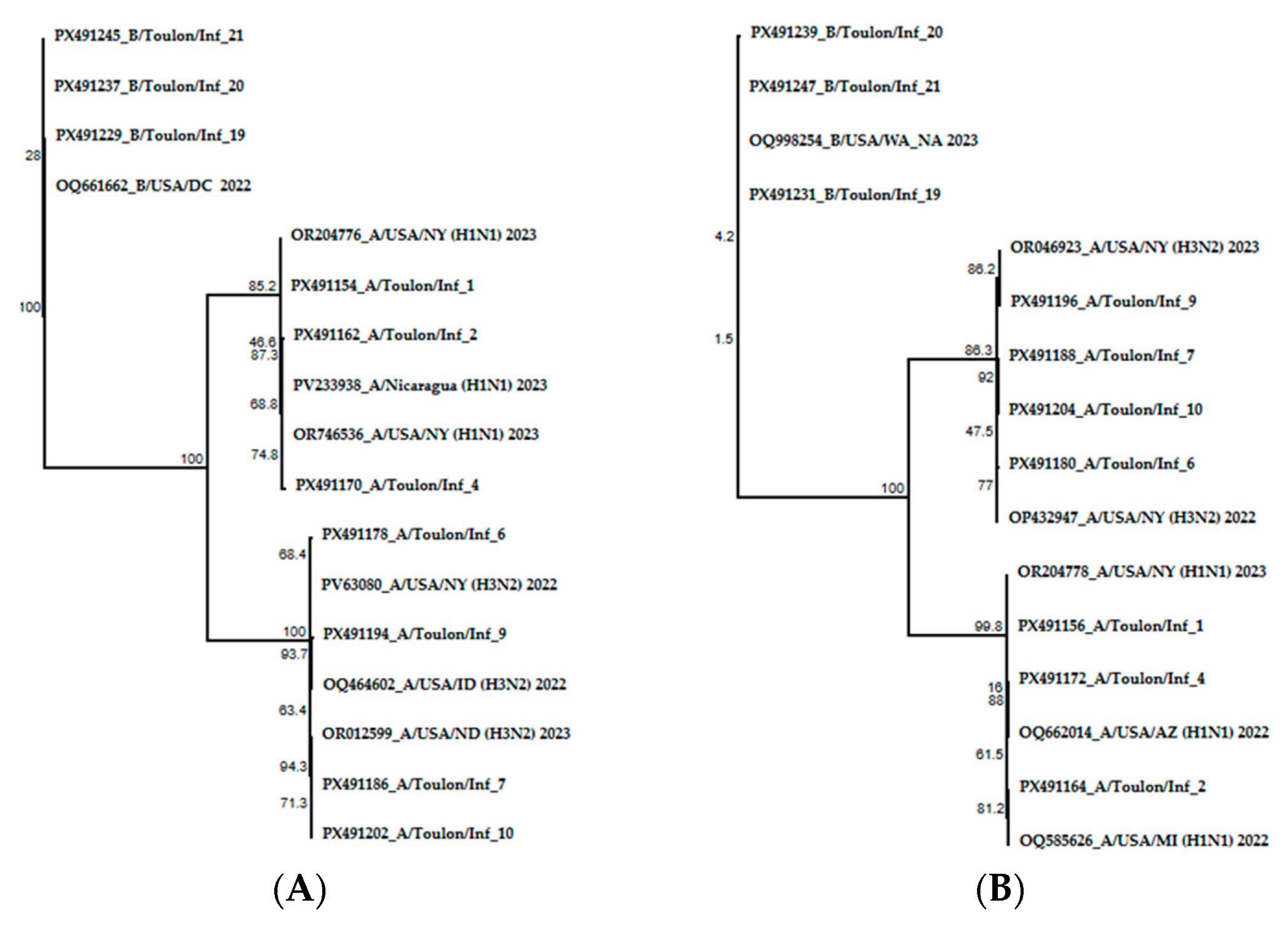
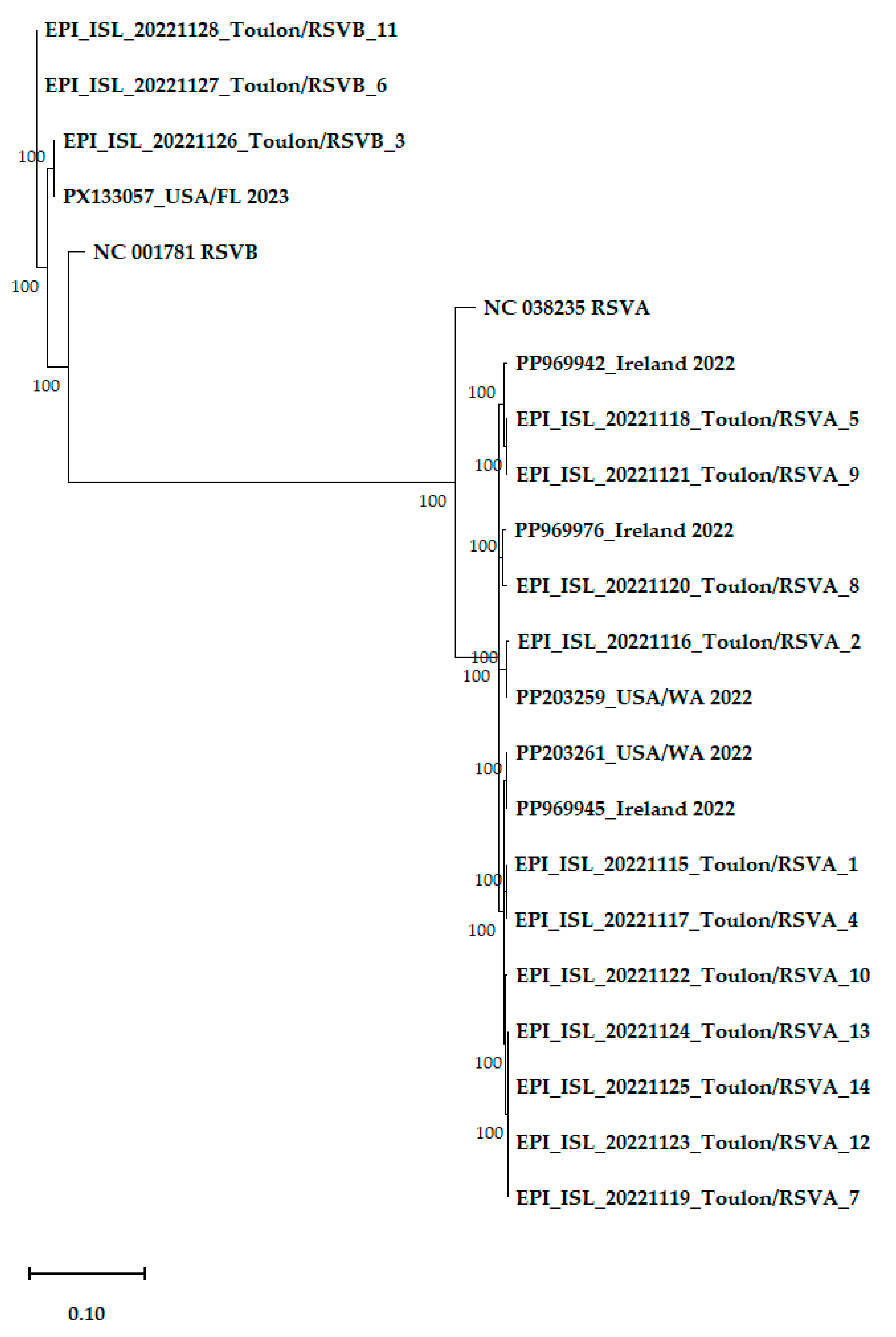
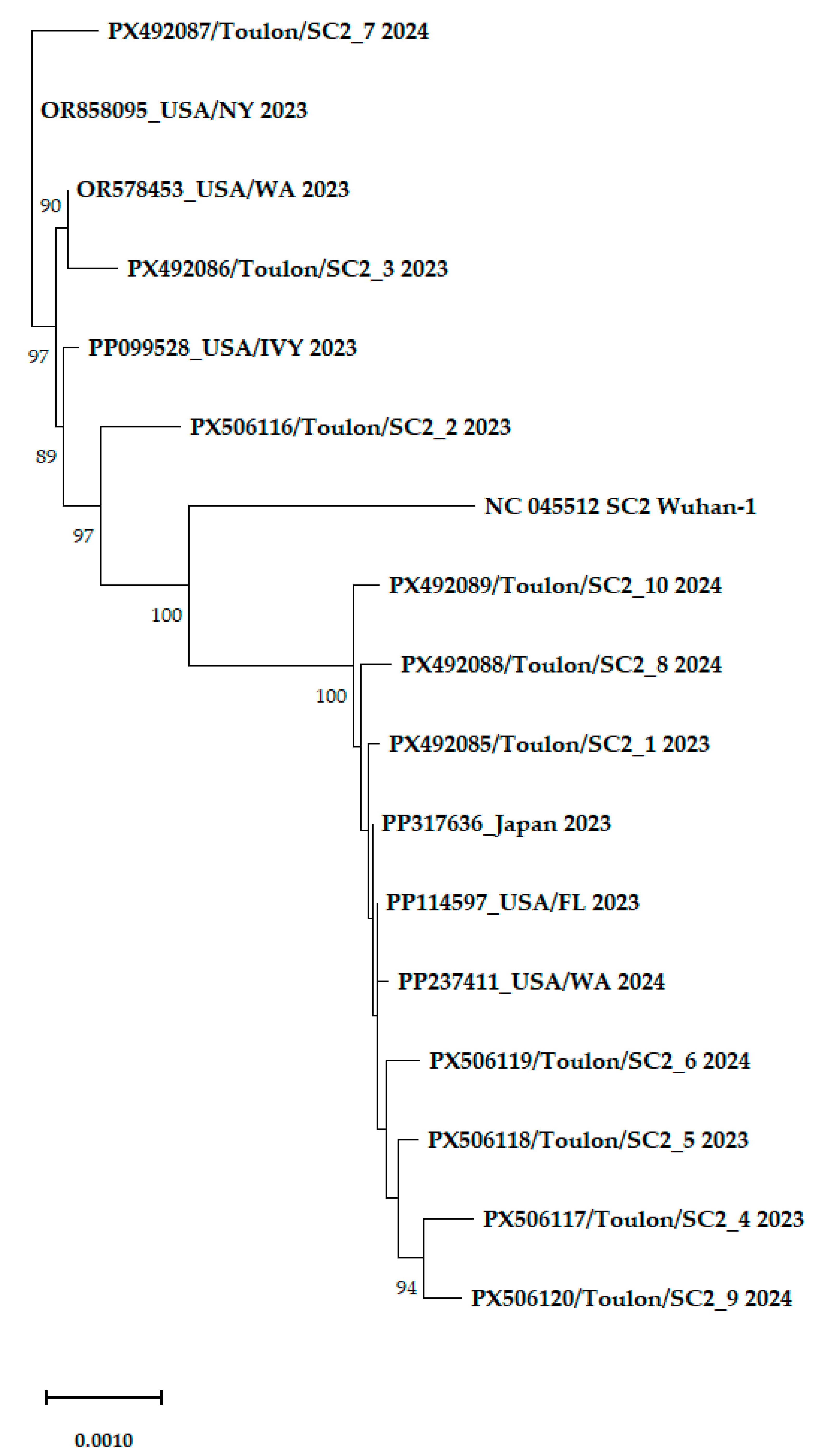
Across the phylogenetic trees, Influenza HA/NA (Figure 1), RSV whole genome (Figure 2), and SARS-CoV-2 whole genome (Figure 3)—study genomes grouped with contemporaneously circulating lineages.
For Influenza, genomes segregated into H1N1 clade 6B.1A, H3N2 subclade 3C.2a1b.2a.2, and B/Victoria lineage V1A.3a.2 (Figure 1).
For RSV, RSV-A genomes were placed in A.D.5.1 (n = 7), A.D.1.10 (n = 2), A.D.2.1 (n = 1), and A.D.3 (n = 1), while RSV-B fell within B.D.4.1.3 (n = 2) and B.D.E.1 (n = 1) (Figure 2), consistent with the ON1 (RSV-A) and BA (RSV-B) genotype frameworks.
For SARS-CoV-2, genomes formed a coherent cluster within Omicron-related lineages (Figure 3). Major internal nodes showed high bootstrap support, indicating robust lineage-level placement.

3.3. Clinically Relevant Mutations

Whole-genome analysis identified mutations with potential implications for antigenicity, antiviral resistance, and immune evasion (Table 2).
  • Influenza A/H1N1: HA substitutions A186T, Q189E, E224A, and K142R were detected in samples 1, 2, and 4, while NA V453M and M2 D21G occurred in the same specimens. Polymerase variants N321K, V100I, and I330V and NS1 changes E55K, L90I, and E125D were present in samples 1 and 2, suggesting co-occurring mutations potentially linked to replication efficiency and innate immune modulation.
  • Influenza B: HA deletions Δ162–164 and NA substitutions D197N and H273Y were consistently observed in samples 19–21, indicating lineage-associated antigenic variation with potential implications for vaccine performance.
  • Additional Influenza B HA substitutions: I117V, A127T, N129D, and P144L were detected in samples 19–21, indicating ongoing antigenic drift within the Victoria lineage and complementing the Δ162–164 deletion.
  • RSV-A: The F-protein polymorphism T122A was identified in RSVA-1, RSVA-4, and RSVA-7, confirming its recurrent detection in circulating strains.
  • SARS-CoV-2: Spike substitutions L455F/L455S and F456L, together with an ORF8 truncation (G8*), were detected in samples 3 and 7–10, consistent with features associated with altered ACE2 interaction and immune escape in recent Omicron-related lineages.

4. Discussion

This study demonstrates the feasibility and robustness of whole-genome sequencing (WGS) for the comprehensive characterization of respiratory viruses in clinical samples. Complete genome recovery was achieved across all taxa, including Influenza A (H1N1, H3N2), Influenza B, RSV-A/B, and SARS-CoV-2, confirming the suitability of the workflow for routine genomic surveillance (Table 1). High breadth of coverage (consistently >98%) and sufficient median depths, including for lower-titer specimens, underscore the potential of WGS to complement and, where appropriate, replace partial sequencing methods and to enable timely monitoring of viral evolution. Beyond technical feasibility, this evaluation illustrates how unified whole-genome sequencing can operationally support routine diagnostics by reducing reliance on pathogen-specific workflows and simplifying laboratory coordination. The ability to recover complete genomes across viruses with distinct genome organizations and replication dynamics demonstrates that a single standardized assay can accommodate the heterogeneity of clinical specimens typically encountered during periods of co-circulation. Importantly, harmonized genomic outputs facilitate direct comparisons of evolutionary patterns and resistance markers between pathogens, an advantage that is difficult to obtain with fragmented sequencing strategies. Such standardization is essential for improving data interpretation and strengthening the early-warning capacity of local surveillance programs.
Within the limits of our reference set, the phylogenetic placement of the Toulon isolates is consistent with contemporaneously circulating influenza lineages reported in surveillance data. While bootstrap support indicates the stability of major nodes in our dataset, these analyses are designed for local contextualization rather than an exhaustive representation of global diversity. Accordingly, interpretations are restricted to lineage assignments and immediate phylogenetic context within the included framework.
These findings highlight limited but measurable genetic drift among local strains, underscoring the need for ongoing molecular surveillance to detect emerging variants and inform vaccine strain selection. As a pilot proof-of-concept evaluation, the study was not intended to represent population-level prevalence but to demonstrate a unified, cross-pathogen feasibility under routine diagnostic conditions.
Our mutational analysis revealed patterns consistent with ongoing antigenic drift and antiviral resistance, underscoring the clinical importance of genomic surveillance. For Influenza A/H1N1, hemagglutinin (HA) substitutions in the Sa, Sb, and Ca antigenic sites (A186T, Q189E, E224A, K142R) have been associated in prior studies with reduced vaccine effectiveness and immune escape [11,12,13,14]. Co-occurring neuraminidase (NA) V453M and M2 D21G have been reported in the context of antigenicity and adamantane-resistance surveillance [11,15], warranting continued monitoring in combination with established resistance markers. Polymerase variants (N321K, V100I, I330V) and non-structural protein 1 (NS1) changes (E55K, L90I, E125D) detected in our samples have been reported to modulate replication dynamics and interferon antagonism [16,17], which could influence clinical phenotype but require phenotypic corroboration.
Similarly, Influenza B exhibited HA deletions (Δ162–164) and NA substitutions (D197N, H273Y), which have been implicated in vaccine escape and reduced susceptibility to neuraminidase inhibitor [18,19,20,21]. These findings align with reports of divergent evolutionary trajectories and periodic selective sweeps in influenza B, which complicate vaccine strain selection [21]. For context, the influenza B NA-H273Y substitution has been sporadically reported through neuraminidase-inhibitor susceptibility surveillance, with occurrence varying across seasons and regions; thus, our observation in this pilot cohort should be interpreted alongside contemporaneous public datasets and tracked longitudinally [17,21].
RSV-A polymorphism T122A within the fusion peptide region, observed in multiple samples, is consistent with recent observations linking F-protein variability to antibody evasion [22]. Given RSV’s seasonality and genotype turnover, sustained genomic monitoring will be important to contextualize such changes.
For SARS-CoV-2, spike mutations L455F/L455S and F456L detected in our cohort are characteristic of emerging Omicron sublineages (e.g., JN.1, KP.2) and have been associated with increased ACE2 binding affinity as well as strong immune escape [23,24,25]. The presence of an ORF8 truncation (G8*) has also been described in relation to host-response modulation in some contexts [26]. Together, these observations illustrate the ongoing diversification of SARS-CoV-2 and reinforce the value of WGS for tracking variants of clinical and public-health interest.
Beyond analytical performance, the routine implementation of multi-pathogen WGS also depends on practical considerations such as manpower, turnaround time, and per-sample costs. For a typical MiSeq run (up to 24 samples), hands-on time was approximately 4–5 h (primarily RNA extraction and library preparation) (Table S1). Sequencing required minimal operator intervention, and downstream analyses were semi-automated, requiring ≤30 min of active analyst time per run. Per-sample costs were driven mainly by library preparation and sequencing consumables and vary with batching/throughput. While the wet-lab workflow is standardized across pathogens, the dry-lab relied on two established environments (Geneious Prime for Influenza; MicrobioChek for RSV/SARS-CoV-2), reflecting validated laboratory practice rather than a single harmonized pipeline.
Scaling this unified NGS workflow to national and global networks is essential for maximizing its impact. Integration with WHO’s Global Influenza Surveillance and Response System (GISRS), which is expanding to incorporate RSV and SARS-CoV-2 activities, would enable harmonized protocols, real-time lineage tracking, and vaccine strain selection worldwide. Leveraging existing GISRS assets (sample flows, QA, reporting) could improve interoperability and cost-efficiency, transforming fragmented monitoring efforts into a cohesive global system.
Overall, our findings support the integration of WGS into routine respiratory virus surveillance programs. By enabling the simultaneous detection of antigenic drift, antiviral resistance markers, and immune escape mutations, WGS provides operationally relevant insights for updating vaccines, informing antiviral stewardship, and supporting clinical management. Future work should prioritize larger, prospectively sampled cohorts and orthogonal phenotypic assays to assess the functional impact of detected mutations and to benchmark analysis outputs across open-source pipelines.

Limitations

This study was conducted on a pilot-scale, anonymized set of diagnostic specimens. While it demonstrates the feasibility and robustness of the standardized amplicon-based workflow, broader multi-site evaluations across clinical contexts and viral loads are needed to further support generalizability. Although WGS can be more resource-intensive than partial sequencing, requiring expanded infrastructure, staff training, and higher per-run costs at low throughput, its comprehensive variant detection and standardized reporting can facilitate adoption for routine surveillance.
Additional limitations include the modest sample size, the use of convenience sampling, and the exclusion of suspected co-infections, which may limit inferences about co-circulation and within-host diversity. Finally, the workflow partially relies on proprietary analysis tools and was not cross-validated against widely used open-source pipelines, an area for future methodological work.

5. Conclusions

This pilot proof-of-concept study demonstrates that a unified amplicon-based NGS workflow can produce high-quality whole-genome data for influenza A/B, RSV-A/B, and SARS-CoV-2 from routine diagnostic clinical specimens. By coupling standardized mutation profiling with phylogenetic reconstruction, the approach yields operationally relevant outputs for monitoring antigenic drift, lineage dynamics, and resistance markers. Implementing a single standardized assay across multiple pathogens reduces process variability and enables harmonized reporting, supporting more integrated surveillance. While broader multi-site evaluation is warranted, this workflow offers a practical path to scale integrated genomic surveillance within existing networks, facilitating timely vaccine updates, early detection of emerging variants, and evidence-based antiviral stewardship critical components of preparedness against evolving respiratory threats.

Supplementary Materials

The following supporting information can be downloaded at: https://www.mdpi.com/article/10.3390/biomed6020010/s1, Table S1: Per-step elapsed time (hours) and hands-on time for the unified amplicon–NGS workflow (MiSeq 2 × 250 bp, 24 samples), with assumptions and footnotes provided.

Author Contributions

Conceptualization, R.D. and S.M.; methodology, R.D., L.C. and S.M.; software, R.D. and L.D.; validation, R.D., L.C., E.D., C.P., A.D., L.D., C.S. and S.M.; formal analysis, R.D., L.C., L.D. and S.M.; investigation, R.D., L.C. and S.M.; writing—original draft preparation, R.D.; writing—review and editing, R.D., L.C. and S.M.; visualization, R.D., L.C. and S.M.; supervision, R.D.; project administration, R.D., L.C., C.S. and S.M.; funding acquisition, ABL Diagnostics and CH-Toulon. All authors have read and agreed to the published version of the manuscript.

Funding

This study was conducted through a collaboration between CH-Toulon (routine diagnostic laboratory) and ABL Diagnostics (assay design, genomic and bioinformatic analyses). This study received no external funding. The collaboration between CH-Toulon and ABL Diagnostics was purely institutional. No grant number applies.

Institutional Review Board Statement

Ethical review and approval were waived for this study due to the exclusive use of fully anonymized residual diagnostic specimens collected as part of routine clinical testing. No identifiable patient information was accessed, and the study complied with all applicable institutional policies and public health regulations. The study was conducted in accordance with the principles of the Declaration of Helsinki.

Informed Consent Statement

Patient consent was waived due to the exclusive use of fully anonymized residual diagnostic specimens collected during routine clinical testing. No identifiable personal information was accessed or used in this study, and therefore informed consent was not required.

Data Availability Statement

All genomic data generated in this study are publicly available. Influenza and SARS-CoV-2 consensus genome sequences have been deposited in GenBank under the accession numbers listed in the Materials and Methods section. RSV sequences have been deposited in GISAID under the corresponding accession IDs provided. No other new datasets were created.

Acknowledgments

The authors would like to thank the technical staff of the CH Toulon virology laboratory for their assistance in sample processing and routine diagnostic support, as well as the ABL Diagnostics team for providing logistical and administrative support throughout the study. We also acknowledge the contributors to the GISAID and GenBank databases for maintaining open and accessible genomic repositories that facilitated comparative analyses. During manuscript preparation, the authors made limited use of M365 Copilot (Microsoft 365 Version 2603, build 19822.20044) for minor editorial adjustments. All content was subsequently reviewed and validated by the authors, who take full responsibility for the final manuscript.

Conflicts of Interest

R.D., A.D., S.M., C.S. and L.D. are affiliated with ABL Diagnostics or ABL SA. The authors declare that this affiliation did not influence the study design, data collection, analysis, or interpretation of results.

Abbreviations

The following abbreviations are used in this manuscript:
WGSWhole-genome sequencing
CtCycle threshold
HA/NAHemagglutinin/Neuraminidase
RSV-A/RSV-BRespiratory Syncytial Virus A/B
ON1/BARSV genotypes
MLMaximum likelihood

References

  1. Bajema, K.L.; Bui, D.P.; Yan, L.; Li, Y.; Rajeevan, N.; Vergun, R.; Berry, K.; Huang, Y.; Lin, H.M.; Aslan, M.; et al. Severity and Long-Term Mortality of COVID-19, Influenza, and Respiratory Syncytial Virus. JAMA Intern. Med. 2025, 185, 324–334. [Google Scholar] [CrossRef] [PubMed]
  2. Hanage, W.P.; Schaffner, W. Burden of Acute Respiratory Infections Caused by Influenza Virus, Respiratory Syncytial Virus, and SARS-CoV-2 with Consideration of Older Adults: A Narrative Review. Infect. Dis. Ther. 2025, 14, 5–37. [Google Scholar] [CrossRef] [PubMed]
  3. Cao, Y.; Yisimayi, A.; Jian, F.; Song, W.; Xiao, T.; Wang, L.; Du, S.; Wang, J.; Li, Q.; Chen, X.; et al. BA.2.12.1, BA.4 and BA.5 escape antibodies elicited by Omicron infection. Nature 2022, 608, 593–602. [Google Scholar] [CrossRef] [PubMed]
  4. Carabelli, A.M.; Peacock, T.P.; Thorne, L.G.; Harvey, W.T.; Hughes, J.; COVID-19 Genomics UK Consortium; Peacock, S.J.; Barclay, W.S.; de Silva, T.I.; Towers, G.J.; et al. SARS-CoV-2 variant biology: Immune escape, transmission and fitness. Nat. Rev. Microbiol. 2023, 21, 162–177. [Google Scholar] [CrossRef]
  5. Drysdale, S.B.; Cathie, K.; Flamein, F.; Knuf, M.; Collins, A.M.; Hill, H.C.; Kaiser, F.; Cohen, R.; Pinquier, D.; Felter, C.T.; et al. Nirsevimab for Prevention of Hospitalizations Due to RSV in Infants. N. Engl. J. Med. 2023, 389, 2425–2435. [Google Scholar] [CrossRef]
  6. Brownstein, J.S.; Rader, B.; Astley, C.M.; Tian, H. Advances in Artificial Intelligence for Infectious-Disease Surveillance. N. Engl. J. Med. 2023, 388, 1597–1607. [Google Scholar] [CrossRef]
  7. Pawar, P. Tracking RSV in low- and middle-income countries. Nature 2023, 621, S62–S63. [Google Scholar] [CrossRef]
  8. Chen, Z.; Azman, A.S.; Chen, X.; Zou, J.; Tian, Y.; Sun, R.; Xu, X.; Wu, Y.; Lu, W.; Ge, S.; et al. Global landscape of SARS-CoV-2 genomic surveillance and data sharing. Nat. Genet. 2022, 54, 499–507. [Google Scholar] [CrossRef]
  9. Goya, S.; Ruis, C.; Neher, R.A.; Meijer, A.; Aziz, A.; Hinrichs, A.S.; von Gottberg, A.; Roemer, C.; Amoako, D.G.; Acuna, D.; et al. Standardized Phylogenetic Classification of Human Respiratory Syncytial Virus below the Subgroup Level. Emerg. Infect. Dis. 2024, 30, 1631–1641. [Google Scholar] [CrossRef]
  10. WHO. Implementing the Integrated Sentinel Surveillance of Influenza and Other Respiratory Viruses of Epidemic and Pandemic Potential by the Global Influenza Surveillance and Response System. Available online: https://www.who.int/publications/i/item/9789240101432 (accessed on 8 October 2025).
  11. Bian, J.; Fung, J.; Lee, L.K.; Tam, W.Y.; Wong, L.C.H.; Wong, C.K.W.; Lau, M.Y.-X.; Jiang, B.; Tang, N.H.-L.; Ho, A.Y.-M.; et al. Genetic characterization of influenza A viruses circulating in Hong Kong, China, 2023: The first influenza epidemic after the lifting of 2.5 years of COVID-19 non-pharmaceutical interventions. Emerg. Microbes Infect. 2025, 14, 2521850. [Google Scholar] [CrossRef]
  12. Sominina, A.; Danilenko, D.; Komissarov, A.B.; Pisareva, M.; Fadeev, A.; Konovalova, N.; Eropkin, M.; Petrova, P.; Zheltukhina, A.; Musaeva, T.; et al. Assessing the Intense Influenza A(H1N1)pdm09 Epidemic and Vaccine Effectiveness in the Post-COVID Season in the Russian Federation. Viruses 2023, 15, 1780. [Google Scholar] [CrossRef] [PubMed]
  13. Song, Y.; Zhang, X.; Ji, J.; Li, L.; Zhou, Y.; Ren, G.; Lv, S.; Zhang, X.; Yan, Y.; Zhu, G. Genetic characteristics analysis of influenza A(H1N1) virus in Jiaxing, China, in the postepidemic era. BMC Infect. Dis. 2025, 25, 905. [Google Scholar] [CrossRef]
  14. Zhao, X.N.; Zhang, H.J.; Li, D.; Zhou, J.-N.; Chen, Y.Y.; Sun, Y.H.; Adeola, A.C.; Fu, X.-Q.; Shao, Y.; Zhang, M.-L. Whole-genome sequencing reveals origin and evolution of influenza A(H1N1)pdm09 viruses in Lincang, China, from 2014 to 2018. PLoS ONE 2020, 15, e0234869. [Google Scholar] [CrossRef] [PubMed]
  15. Smutko, O.; Fesenko, A.; Radchenko, L.; Onishchenko, O.; Leibenko, L.; Budzanivska, I.; Mironenko, A. Full-genome analysis of the pandemic (H1N1) 2009 influenza viruses isolated in Ukraine during 2009–2017 years. Int. J. Infect. Dis. 2019, 79, 9. [Google Scholar] [CrossRef]
  16. Nogales, A.; Martinez-Sobrido, L.; Chiem, K.; Topham, D.J.; DeDiego, M.L. Functional Evolution of the 2009 Pandemic H1N1 Influenza Virus NS1 and PA in Humans. J. Virol. 2018, 92, e01206-18. [Google Scholar] [CrossRef] [PubMed]
  17. Zolotarova, O.; Fesenko, A.; Holubka, O.; Radchenko, L.; Bortz, E.; Budzanivska, I.; Mironenko, A. Genotypic Variants of Pandemic H1N1 Influenza A Viruses Isolated from Severe Acute Respiratory Infections in Ukraine during the 2015/16 Influenza Season. Viruses 2021, 13, 2125. [Google Scholar] [CrossRef]
  18. Farrukee, R.; Zarebski, A.E.; McCaw, J.M.; Bloom, J.D.; Reading, P.C.; Hurt, A.C. Characterization of Influenza B Virus Variants with Reduced Neuraminidase Inhibitor Susceptibility. Antimicrob. Agents Chemother. 2018, 62, e01081-18. [Google Scholar] [CrossRef]
  19. Lei, N.; Wang, H.; Zhang, Y.; Zhao, J.; Zhong, Y.; Wang, Y.; Huang, L.; Ma, J.; Sun, Q.; Yang, L.; et al. Molecular evolution of influenza B virus during 2011–2017 in Chaoyang, Beijing, suggesting the free influenza vaccine policy. Sci. Rep. 2019, 9, 2432. [Google Scholar] [CrossRef]
  20. Puzelli, S.; Di Martino, A.; Facchini, M.; Fabiani, C.; Calzoletti, L.; Di Mario, G.; Palmieri, A.; Affanni, P.; Camilloni, B.; Chironna, M.; et al. Co-circulation of the two influenza B lineages during 13 consecutive influenza surveillance seasons in Italy, 2004–2017. BMC Infect. Dis. 2019, 19, 990. [Google Scholar] [CrossRef]
  21. Virk, R.K.; Jayakumar, J.; Mendenhall, I.H.; Moorthy, M.; Lam, P.; Linster, M.; Lim, J.; Lin, C.; Oon, L.L.E.; Lee, H.K.; et al. Divergent evolutionary trajectories of influenza B viruses underlie their contemporaneous epidemic activity. Proc. Natl. Acad. Sci. USA 2020, 117, 619–628. [Google Scholar] [CrossRef]
  22. Takashita, E.; Meijer, A.; Lackenby, A.; Gubareva, L.; Rebelo-de-Andrade, H.; Besselaar, T.; Fry, A.; Gregory, V.; Leang, S.-K.; Huang, W.; et al. Global update on the susceptibility of human influenza viruses to neuraminidase inhibitors, 2013–2014. Antivir. Res. 2015, 117, 27–38. [Google Scholar] [CrossRef]
  23. Yunker, M.; Fall, A.; Norton, J.M.; Abdullah, O.; Villafuerte, D.A.; Pekosz, A.; Klein, E.; Mostafa, H.H. Genomic Evolution and Surveillance of Respiratory Syncytial Virus during the 2023–2024 Season. Viruses 2024, 16, 1122. [Google Scholar] [CrossRef]
  24. Focosi, D.; Spezia, P.G.; Gueli, F.; Maggi, F. The Era of the FLips: How Spike Mutations L455F and F456L (and A475V) Are Shaping SARS-CoV-2 Evolution. Viruses 2024, 16, 3. [Google Scholar] [CrossRef]
  25. Hu, Y.; Zou, J.; Nguyen, M.D.; Chang, H.C.; Yeung, J.; Hao, H.; Shi, P.-Y.; Ren, P.; Xie, X. Comparative analysis of replication and immune evasion among SARS-CoV-2 subvariants BA.2.86, JN.1, KP.2, and KP.3. mBio 2025, 16, e03503-24. [Google Scholar] [CrossRef]
  26. Zhang, L.; Dopfer-Jablonka, A.; Cossmann, A.; Stankov, M.V.; Graichen, L.; Moldenhauer, A.-S.; Fichter, C.; Aggarwal, A.; Turville, S.G.; Behrens, G.M.N.; et al. Rapid spread of the SARS-CoV-2 JN.1 lineage is associated with increased neutralization evasion. iScience 2024, 27, 109904. [Google Scholar] [CrossRef]
Figure 1. Maximum-likelihood phylogenetic trees of influenza HA (A) and NA (B) gene sequences were constructed using PhyML with 1000 bootstrap replicates. HA sequences cluster within the H1N1 clade 6B.1A, the H3N2 subclade 3C.2a1b.2a.2, and B/Victoria lineage V1A.3a.2, while NA sequences maintain subtype concordance, with characteristic mutations highlighted (V453M in H1N1; D197N and H273Y in influenza B). Bootstrap values >80% are shown at major nodes.
Biomed 06 00010 g001
Figure 2. Maximum-likelihood phylogenetic tree based on complete RSV-A/B genome sequences, constructed using 1000 bootstrap replicates. Toulon isolates from 2023 to 2024 cluster with contemporary international sequences from Ireland and the USA. NC_001781 (RSV-B) and NC_038235 (RSV-A) included as reference sequences. Bootstrap values >80% are indicated at major nodes.
Biomed 06 00010 g002
Figure 3. Maximum-likelihood phylogenetic tree based on complete SARS-CoV-2 genome sequences, constructed using 1000 bootstrap replicates. Toulon isolates from 2023 to 2024 cluster with contemporary international sequences (USA, Japan), with Wuhan-Hu-1 (NC_045512) included as the reference. Bootstrap values >80% are indicated at major nodes.
Biomed 06 00010 g003
Table 1. NGS performance metrics by virus type. Mean genome coverage (%), sequencing depth (×), Mean % Mapped reads and Mean Q30 (%) are shown for each virus group.
Virus TypeSamplesMean
Coverage (%)
Mean
Depth (×)
Mean
% Mapped Reads
Mean
Q30 (%)
Influenza A/H1N1399.2620,58691.7393.1
Influenza A/H3N2499.812,0349093.22
Influenza B398.29380054.995.43
RSVA1110010,08286.6690
RSVB3100741188.0890.23
SARS-CoV-21099.98175586.8695.76
Table 2. Clinically relevant amino-acid substitutions detected in this cohort, with reported or suspected implications for antigenicity, antiviral susceptibility, or immune escape, based on published literature and curated databases.
VirusGeneMutationMedical Impact
A/H1N1HAA186T, Q189E, E224AAntigenic drift in Sa/Sb antigenic sites
K142RDrift in Ca antigenic region
NAV453MAltered antigenicity; framework mutation
M2D21GAdamantane resistance
PAN321K, V100I, I330VIncreased polymerase activity
NS1E55K, L90I, E125DIncreased IFN antagonism
Influenza BHAI117V, A127T, N129D, P144LAntigenic drift
Δ162–164Vaccine escape potential
NAD197N, H273YNA inhibitor reduced susceptibility
RSV-AFT122AFrequent polymorphism in the fusion peptide/p27 region
SARS-CoV-2SpikeL455F/L455SIncreased ACE2 binding affinity and reduced neutralization by monoclonal and polyclonal antibodies (immune escape)
F456LStrong immune escape
ORF8G8*Modulates lung inflammation
Disclaimer/Publisher’s Note: The statements, opinions and data contained in all publications are solely those of the individual author(s) and contributor(s) and not of MDPI and/or the editor(s). MDPI and/or the editor(s) disclaim responsibility for any injury to people or property resulting from any ideas, methods, instructions or products referred to in the content.