Review

Gender Medicine in Nephrology: From Biological Mechanisms to Clinical Inequities

1
Division of Nephrology and Dialysis, Santa Maria Annunziata Hospital, 50012 Florence, Italy
2
Andrology, Women’s Endocrinology and Gender Incongruence Unit, Careggi University Hospital, 50139 Florence, Italy
*
Author to whom correspondence should be addressed.
Kidney Dial. 2026, 6(2), 26; https://doi.org/10.3390/kidneydial6020026
Submission received: 15 January 2026 / Revised: 1 April 2026 / Accepted: 3 April 2026 / Published: 14 April 2026
(This article belongs to the Special Issue Gender Medicine in Kidney Diseases)

Abstract

Gender medicine represents a key paradigm for advancing equitable and effective healthcare by systematically integrating sex- and gender-related differences into medical research and clinical practice. Despite regulatory efforts and international guidelines, significant gaps persist in the consideration of sex and gender across medical disciplines, including nephrology. Biological factors—including genetic, hormonal, and metabolic differences—interact with social, cultural, and environmental determinants to influence chronic kidney disease (CKD) susceptibility, clinical presentation, progression, and response to therapy. Insufficient consideration of sex and gender contributes to persistent disparities in CKD progression, cardiovascular outcomes, access to kidney transplantation, adverse drug reactions, dialysis outcomes, and pregnancy-related kidney complications. This narrative review outlines the historical development of gender medicine and critically appraises its relevance and unresolved challenges in kidney disease, with a focus on sex-specific differences in selected conditions, including autosomal dominant polycystic kidney disease, glomerular diseases, acute kidney injury, and pregnancy-associated kidney disorders. Integrating sex- and gender-informed approaches into nephrology is not merely an ethical requirement but a scientific necessity to improve risk stratification, personalize therapeutic strategies, and promote truly equitable and effective kidney care.

1. Introduction

The concept of gender medicine emerged in the early 1990s when American cardiologist Bernardine Healy published a landmark editorial in the New England Journal of Medicine denouncing disparities in the treatment of women with ischemic heart disease and coining the term “Yentl syndrome,” named after the protagonist of Isaac Bashevis Singer’s short story (later adapted into a 1983 film), in which a young Jewish woman disguises herself as a man to access religious education denied to women. Healy used this metaphor to describe how women with coronary artery disease were only treated as aggressively as men when their symptoms or test results resembled those typically seen in male patients. Since then, the scientific community has increasingly recognized the need to study women in medical research beyond the reproductive system and pregnancy. Institutional recognition followed the National Institutes of Health Revitalization Act of 1993, which mandated the inclusion of women and minorities in publicly funded clinical trials [1].
The 2024 KDIGO Clinical Practice Guideline for the Evaluation and Management of Chronic Kidney Disease (CKD) explicitly acknowledges that sex (biological attributes) and gender (sociocultural factors) contribute to differences in kidney health and disease [2]. Sex-based variation in genetics, physiology, immunology, and anatomy, as well as gender factors such as identity, roles, and relations, influences CKD pathophysiology, presentation, response to therapy, complications, and outcomes [2]. Despite this recognition, significant challenges remain in translating these principles into clinical practice and research [3].
This review aims to critically examine the biological and gender-related determinants of kidney disease across the clinical spectrum, highlighting persistent inequities and identifying opportunities for meaningful integration of sex- and gender-informed approaches into nephrology practice.

2. Sex Differences in CKD Epidemiology and Progression

Globally, the prevalence of CKD is higher in women (11.8%) than in men (10.4%), although this difference may be partly explained by methodological factors in kidney function estimation [4]. Current eGFR equations, including the CKD-EPI formula, incorporate sex as a variable, with women assigned lower eGFR values for the same serum creatinine concentration. This adjustment is based on the assumption that women have lower muscle mass and thus lower creatinine generation; however, this may lead to systematic underestimation of kidney function in women with higher muscle mass and overestimation in men with lower muscle mass. Additionally, the use of fixed thresholds (eGFR < 60 mL/min/1.73 m2) to define CKD does not account for physiological differences in kidney size and nephron number between sexes, potentially inflating CKD prevalence estimates in women. Despite higher prevalence, women demonstrate slower CKD progression and lower rates of kidney failure compared with men [1,4,5,6].
A nationwide Swedish study of 35,080 patients with incident CKD stages 3b-5 demonstrated that women had lower rates of CKD progression (subhazard ratio 0.88), all-cause mortality (SHR 0.90), and cardiovascular mortality (SHR 0.83) compared with men [1]. In the Chronic Renal Insufficiency Cohort (CRIC) Study, which included 3939 adults with CKD, women had significantly lower risk of end-stage renal disease, 50% eGFR decline, progression to CKD stage 5, and death compared with men during a median follow-up of 6.9 years [5].
The biological mechanisms underlying these sex differences are multifactorial. Testosterone can increase oxidative stress, activate the renin–angiotensin system, and aggravate renal fibrosis, whereas estrogens inhibit these pathological processes in the diseased kidney [4,6,7]. Sex hormones influence kidney structural and hemodynamic differences, glomerular hyperfiltration, and key pathways involved in kidney inflammation and fibrosis [6,7]. Estrogens exert protective effects by inhibiting RAAS activity, upregulating the ACE2/Ang-(1–7) pathway, activating the GPER/Sirt1 signaling network, and enhancing antioxidant capacity [7].
However, gender constructs also play a critical role. Socioeconomic and cultural barriers, lower disease awareness and surveillance rates, and disparities in healthcare access may result in delayed initiation or lack of kidney replacement therapy among women [4]. These gender-related factors interact with biological sex differences, creating complex patterns of disease burden and clinical outcomes.
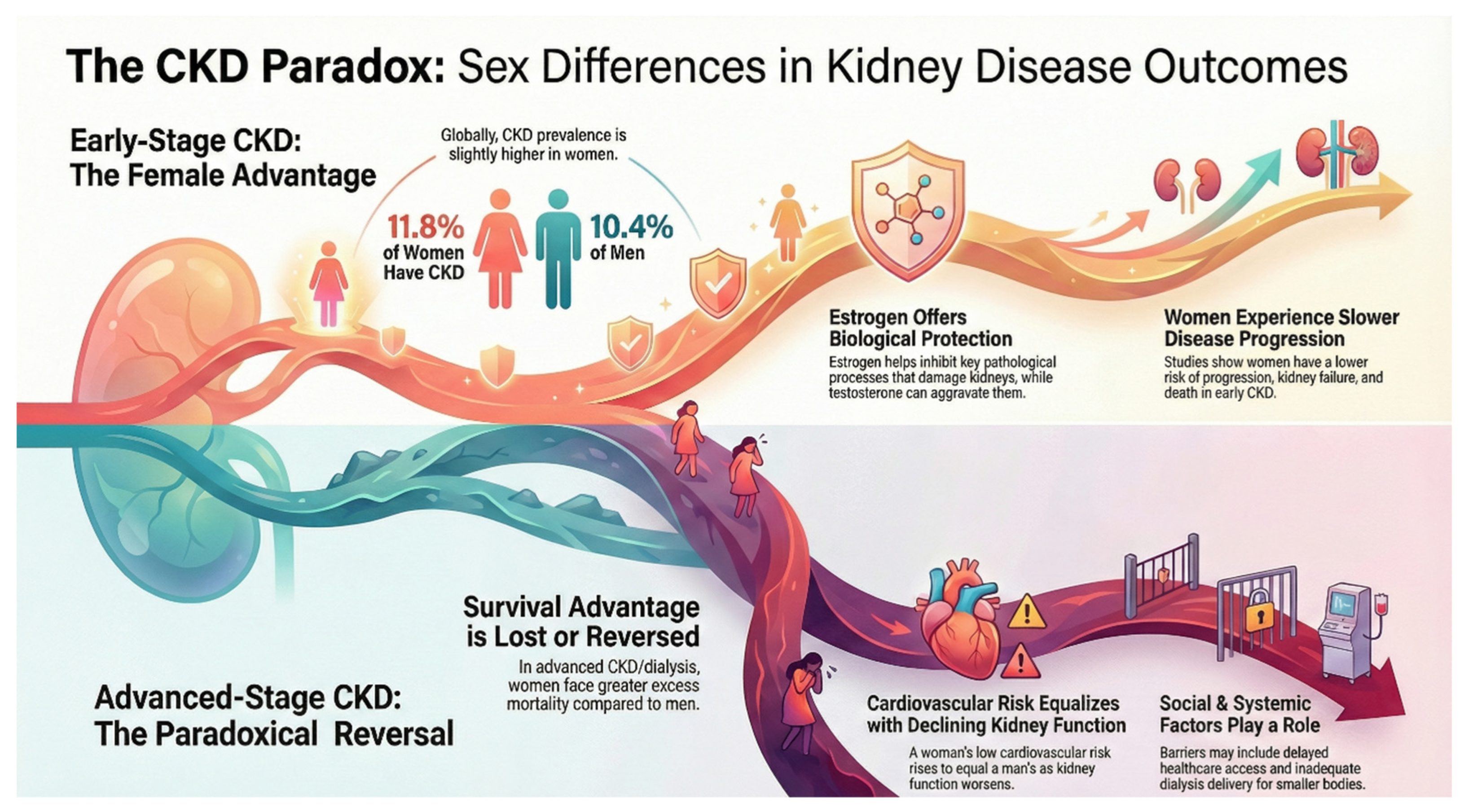
Notably, the protective profile observed in earlier stages of CKD may attenuate as kidney disease progresses, setting the stage for a paradoxical loss of the expected female survival advantage in advanced CKD (Figure 1).

3. The Mortality Paradox in Advanced CKD

Despite slower progression to kidney failure, women with advanced CKD and those receiving dialysis experience a paradoxical loss or reversal of their typical survival advantage (Figure 1). A large population-based study from Australia and New Zealand including over 82,000 patients with kidney failure demonstrated that, compared with the general population, female patients had greater excess all-cause mortality than male patients (standardized mortality ratio 11.3 vs. 6.9), with relative survival consistently lower among female patients and an average of 3.6 more years of life lost compared with male patients [8].
A recent study from Alberta, Canada, examining 7506 adults with incident stage 5 CKD, found that female individuals younger than 55 years were less likely to survive than male individuals of the same age group (5-year mortality 20.7% vs. 14.6%), whereas at ages 55 years and older, mortality was similar between sexes [9]. This disparity may reflect inadequate dialysis delivery in smaller-bodied individuals (often female), poorer overall health limiting transplant eligibility, or reduced access to kidney transplantation [9].
These findings suggest that biological, social, and systemic factors may contribute differently across healthcare systems to the loss or reversal of the typical female survival advantage in advanced CKD and dialysis [9].
Importantly, the magnitude of this mortality paradox varies across countries and healthcare systems. Data from East Asian countries suggest that the female survival advantage may be preserved in dialysis patients. A Korean nationwide cohort study found that women on dialysis maintained a significant survival advantage compared with men (HR 0.79 for all-cause mortality), attributed primarily to lower noncardiovascular and noninfectious mortality [10]. Similarly, Japanese hemodialysis patients demonstrated a persistent female survival advantage (HR 0.51 for all-cause mortality). In contrast, studies from Australia, New Zealand, Canada, and Western European countries consistently report diminished or reversed female survival advantage in dialysis populations [9,11]. These geographic variations suggest that modifiable factors related to dialysis practices, healthcare access, and cultural determinants may contribute to the mortality paradox, and warrant further investigation to identify strategies that could mitigate excess mortality among women in affected healthcare systems.

4. Cardiovascular Disease in CKD: Sex-Specific Patterns

Cardiovascular disease remains the leading cause of morbidity and mortality in patients with CKD, and sex differences in cardiovascular risk are significantly modified by the presence and severity of kidney disease [11,12,13,14,15,16] (Figure 1).
The French CKD-REIN cohort study of 3020 patients demonstrated that the lower risk of atheromatous cardiovascular disease (ACVD) observed in women compared with men was fully attenuated with kidney disease progression [13]. The adjusted hazard ratio for ACVD in women versus men was 0.42 at an eGFR of 45 mL/min/1.73 m2 but gradually increased to 1.00 at an eGFR of 16 mL/min/1.73 m2 [13]. Importantly, the risk of nonatheromatous cardiovascular disease (heart failure, hemorrhagic stroke, arrhythmias) did not differ between sexes across the eGFR range, and this category of cardiovascular disease showed a steeper association with declining eGFR than atheromatous disease [13].
A recent analysis of electronic medical records from 328,431 individuals confirmed that CKD confers a significantly greater excess risk of mortality and cardiovascular events in women compared with men [15]. The cardiovascular and survival advantage observed in women compared to men in the general population was significantly reduced in individuals with CKD, and this pattern was consistent across different levels of kidney function, age, and systolic blood pressure [15].
Blood pressure control appears to be a critical modifying factor. A pooled analysis of four Italian cohort studies demonstrated that the cardiovascular risk advantage in women progressively diminished as systolic blood pressure increased [16]. Women had lower cardiovascular risk than men when systolic blood pressure was <130 mmHg (HR 0.50) or 130–140 mmHg (HR 0.72), whereas no difference was observed when systolic blood pressure exceeded 140 mmHg (HR 0.85) [16].

5. Sex Disparities in Access to Kidney Transplantation

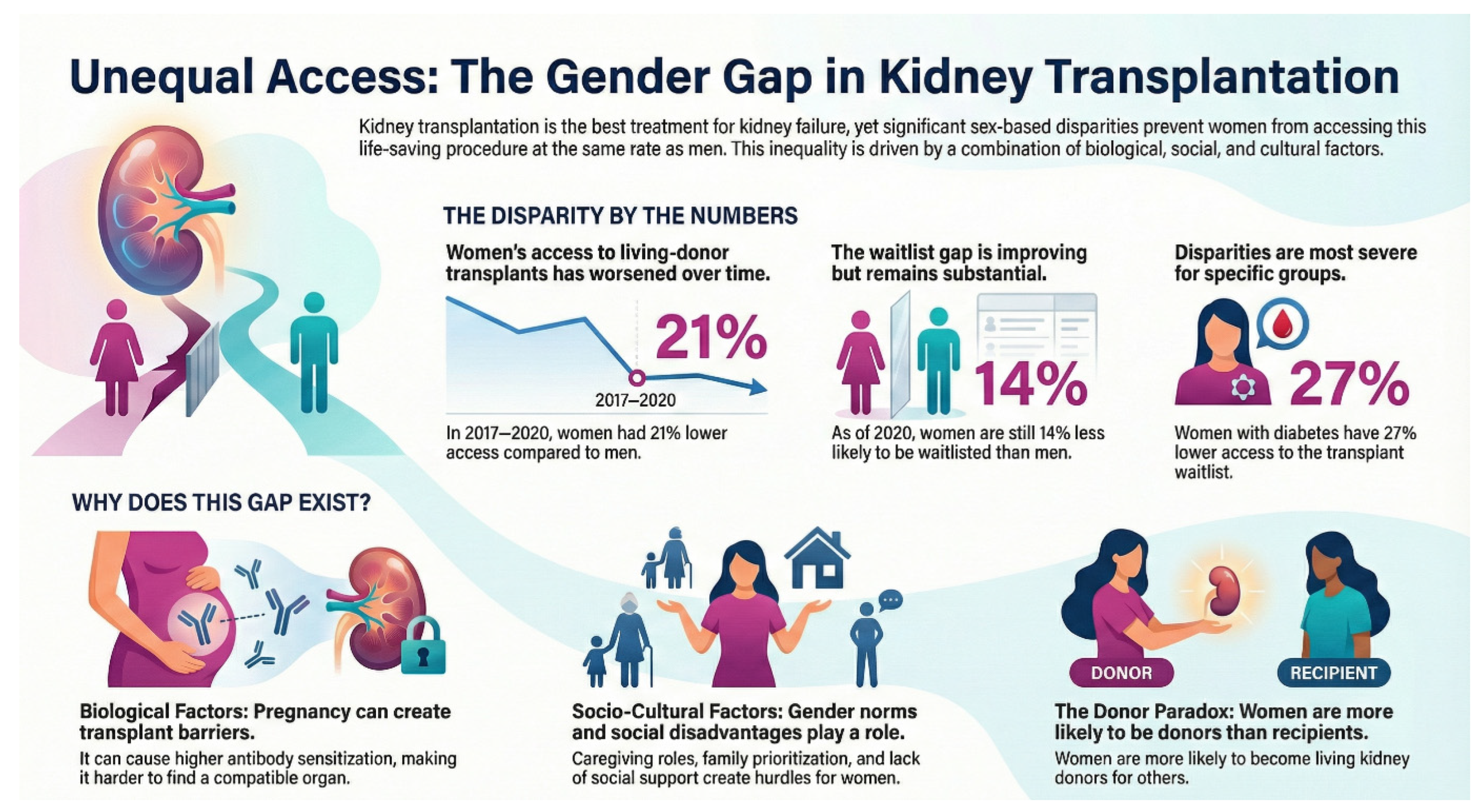
Kidney transplantation is the optimal treatment for most patients with kidney failure, improving both quality of life and life expectancy. However, significant sex disparities persist in access to kidney transplantation at multiple steps along the transplant pathway [9,17,18,19,20,21], (Figure 2).
A nationwide US cohort study of 2.3 million adults who initiated kidney replacement therapy between 1997 and 2020 demonstrated that sex inequities in waitlisting have improved over time but remain substantial [17]. During 1997–2000, the adjusted hazard ratio comparing women with men for waitlisting was 0.81; by 2017–2020, this gap had narrowed to 0.86, indicating that women remain less likely to be waitlisted than men [17]. However, sex inequities in living-donor kidney transplant (LDKT) have worsened over time, with women becoming progressively less likely to receive LDKT compared with men: the adjusted HR for women versus men was 0.89 in 1997–2000 but declined to 0.79 in 2017–2020 [17].
Sex inequities in waitlisting and LDKT were most pronounced among women with diabetes (27% and 37% lower access, respectively, compared with men with diabetes, in 2017–2020) and among older adults aged 60–79 years (24% and 34% lower access, respectively, compared with men of the same age group) [17,19]. Women with kidney failure attributed to type 2 diabetes had 27% lower access to the kidney transplant waitlist and 11% lower access to deceased-donor transplantation after waitlisting compared with men with type 2 diabetes-related kidney failure [19].
Multiple factors contribute to these disparities. Pregnancy represents a strong sensitizing event, leading to higher rates of HLA sensitization in women, which in turn prolongs wait times and reduces transplant likelihood [21]. Nephrologists perceive that gender disparities are further exacerbated by gender norms and values (caregiving as a core role, prioritization of family responsibilities over personal health), stigma and prejudice (male authority in decision-making, protection of the primary income earner), and social disadvantage and vulnerability (limited access to information and awareness, lack of social support, language barriers, and financial constraints) [18].
Consistent with gender norms emphasizing nurturing and caregiving roles, women are more likely than men to become living kidney donors. This observation has been attributed by some to gender norms emphasizing nurturing and caregiving roles, while others suggest it may reflect biological incompatibility with spouses or children related to pregnancy-induced sensitization [21].

6. Sex Differences in Pharmacokinetics and Adverse Drug Reactions

Sex differences in medication safety and efficacy in people with CKD are understudied [2,22]. Sex differences in body weight and composition as well as physiological functions may impact drug metabolism and response [2]. Because drug dosages are often universal, women are more likely to consume higher doses in relation to their body weight, and this could be associated with more adverse events [2].
Women with CKD have a higher likelihood of experiencing adverse drug reactions (ADRs) compared with men [22]. In the French CKD-REIN cohort of 3011 nephrology outpatients, during a median follow-up of 5.0 years, the incidence of first ADR was 10.8 per 100 person-years in women and 9.7 in men [22]. The likelihood of a first ADR was 17% higher in women than in men (adjusted HR 1.17), although the likelihood of serious ADRs did not differ by sex [22].
Significant differences between men and women were observed in drug prescriptions: women were more often prescribed drugs for acid-related disorders, anemia, thyroid disorders, analgesics, and psychoactive drugs, while men were more often prescribed cardiovascular drugs and oral antidiabetics [22]. The most frequent ADRs were gastrointestinal disorders in women (17%) and renal and urinary disorders in men (22%) [22].
Women are more likely to report adverse reactions to angiotensin-converting enzyme inhibitors (ACEi), which plays a role in adherence and failure to reach guideline-recommended target doses [2]. In people with heart failure with reduced ejection fraction, observational studies show improved survival in women with lower doses of renin–angiotensin–aldosterone system (RAAS)-blocking medications, whereas men benefit from higher doses, possibly related to lower RAAS activity in women compared with men [2].
These sex-specific differences in drug metabolism, prescription patterns, and adverse reactions highlight the broader influence of biological sex and gender on kidney disease, underscoring the need to examine how these factors affect the pathophysiology and outcomes of specific kidney disorders.

7. Sex Differences in Specific Kidney Diseases

7.1. Autosomal Dominant Polycystic Kidney Disease

Autosomal dominant polycystic kidney disease (ADPKD) demonstrates significant sex differences in disease progression and outcomes. Male sex is associated with more severe disease, with men reaching end-stage kidney disease at younger ages than women [23,24]. Analysis of individuals with PKD1-related ADPKD showed that the mean age at onset of ESKD was 58.1 years for males and 59.5 years for females, while in combined PKD1 and PKD2 cohorts, ages at ESKD were 58.2 years for males and 63.9 years for females [24].
Males with ADPKD have lower estimated glomerular filtration rates and larger height-adjusted total kidney volumes compared with females [24]. The rate of decline in creatinine clearance is significantly lower in females than in males (5.0 vs. 6.4 mL/min/1.73 m2/year), and ESRD is reached at a later age in female patients (55.1 vs. 50.6 years) [25]. Males with truncating PKD1 variants, onset of hypertension before age 35 years, and/or a urologic event before age 35 years are the most severely affected [24].
The protective effect in women appears to be mediated by estrogen. The physiological actions of estrogen confer a protective effect on the kidney, contributing to slowed disease progression in females [26]. Estrogen modulates signaling pathways involved in cyst growth, including cAMP, mTOR, MAPK/ERK, and PI3K/Akt [26]. At the cellular level, elevated intracellular cAMP promotes cyst enlargement by stimulating tubular epithelial cell proliferation and CFTR-driven chloride and fluid secretion into the cyst lumen. The mTOR pathway drives cyst growth by boosting proliferation, cell size, and metabolism of kidney tubule epithelial cells, while the MAPK/ERK cascade mediates mitogenic signaling downstream of cAMP-dependent protein kinase A activation. The PI3K/Akt pathway contributes to cyst expansion through hyperproliferation and DNA damage accumulation in renal epithelial cells. Estrogen appears to attenuate these pro-cystogenic pathways, providing a mechanistic basis for the slower disease progression observed in premenopausal women. Hormonal changes at menopause result in altered pathology via multiple mechanisms affecting blood pressure regulation. Estrogen promotes vasodilation by stimulating endothelial nitric oxide (NO) synthesis and inhibits the renin–angiotensin–aldosterone system (RAAS) by reducing angiotensin-converting enzyme activity, angiotensin II levels, and angiotensin II type 1 (AT1) receptor density, while enhancing the protective ACE2/Ang-(1–7) pathway. With menopause, the decline in estrogen leads to endothelial dysfunction, increased RAAS activation, enhanced sympathetic nervous system activity, greater salt sensitivity, and increased arterial stiffness—all contributing to blood pressure elevation. Estrogen-based hormonal therapy is being investigated for its efficacy in improving renal function post-menopause by restoring these protective vascular and hormonal effects [26].
These sex-specific patterns observed in ADPKD highlight the broader relevance of hormonal and biological differences in kidney disease, paving the way for examining how sex influences the pathophysiology and progression of other kidney disorders, such as glomerular diseases.

7.2. Glomerular Diseases

Sex hormones play critical and complex roles in the pathogenesis and progression of glomerular diseases, with lupus nephritis representing a paradigmatic example of sex-specific immune dysregulation [27,28,29]. SLE affects women 9–10 times more frequently than men, with disease manifestations typically emerging after puberty and persisting throughout reproductive life, strongly implicating sex hormones in disease pathogenesis [29].
Estrogen exerts dual and context-dependent effects on immunity. At high concentrations, estrogen enhances innate immunity and promotes survival of autoreactive B cells, stimulates production of autoantibodies (including anti-nuclear and anti-dsDNA antibodies), and upregulates proinflammatory genes on the X chromosome (CD40L, TLR7) [29]. Estrogen also influences type I interferon responses, CD4+ T helper cell differentiation, and Toll-like receptor pathways [29]. However, estrogen can also exert dose-dependent anti-inflammatory effects on T cells and macrophages. Conversely, androgens and progesterone have predominantly immunosuppressive and anti-inflammatory effects, which may explain the lower incidence and potentially milder disease course in males [29].
The role of estrogen receptor α (ERα) signaling in lupus nephritis is particularly complex. Studies in murine models have demonstrated that ERα is highly expressed in renal tissue, and its activation can exacerbate immune-mediated nephropathies by altering metabolic pathways, including retinol metabolism, which is essential for progression to end-stage renal failure. Absence of ERα protects female mice from developing nephritis despite the presence of immune complexes and proinflammatory cytokines. Importantly, RNA sequencing of lupus patient whole blood has revealed similar expression patterns of these same metabolic pathways, supporting the translational relevance of these murine findings [29].
Sex differences in lupus nephritis clinical presentation and outcomes remain controversial. Male patients with SLE consistently demonstrate higher rates of lupus nephritis (44% vs. 32%), later age at diagnosis, more severe organ damage, higher serum creatinine, and increased cardiovascular complications. However, recent pooled analyses of randomized controlled trials and cohort studies found no significant sex differences in disease severity at diagnosis, treatment response, or kidney outcomes, apart from lower baseline eGFR in males [30]. These discrepancies may reflect differences in study populations, healthcare access, treatment intensity, and the interaction between biological sex and gender-related factors [30].
Beyond lupus nephritis, androgens exacerbate renal inflammation and fibrosis in other glomerular diseases by activating the TGF-β/TNF-α axis and the RAAS/20-HETE pathway, whereas estrogens exert protective effects by inhibiting RAAS activity and enhancing antioxidant capacity [30]. However, there is a notable paucity of research specifically addressing sex and gender in non-lupus glomerular diseases, which may perpetuate disparities in healthcare provision and hinder the development of sex-specific therapies [30].

7.3. Acute Kidney Injury

Sex is an important biological variable in acute kidney injury (AKI), with evidence suggesting that the impact of sex on AKI varies based on etiology and that important discrepancies exist between experimental and clinical data [31,32]. Animal studies consistently demonstrate that female sex protects against the development of renal injury in experimental models of ischemic AKI [33]. However, the translation of these findings to human populations remains controversial.
Regarding AKI incidence, contrary to earlier consensus suggesting that female sex is a risk factor for hospital-acquired AKI, recent large-scale studies indicate that males have higher rates of hospital-acquired AKI [33,34,35]. A meta-analysis of 83 studies including nearly 240 million patients showed that the risk of developing hospital-associated AKI was significantly greater in men than in women (OR 1.23), with the association of male sex with AKI being strongest among patients who underwent non-cardiac surgery [31]. Analysis of the Hospital Episode Statistics database from 194 million hospital discharges demonstrated that hospitalized men were more likely to develop AKI requiring renal replacement therapy than hospitalized women (OR 2.19) [31].
Regarding post-AKI outcomes and the AKI-to-CKD transition, the evidence is more complex and potentially contradictory. Women have been consistently shown to have worse renal outcomes after AKI in several clinical studies [31,32,36]. A US Renal Data System analysis of over one million patients on incident dialysis found that women had a lower likelihood of kidney recovery than men (adjusted HR 0.86) following kidney failure due to AKI [36]. A recent experimental study has elucidated mechanisms underlying sex differences in AKI outcomes. Using C57BL/6 mice in a unilateral ischemia–reperfusion model with contralateral nephrectomy (uIRIx), a longitudinal analysis over 98 days demonstrated that male mice developed sustained renal dysfunction following ischemic AKI, characterized by persistent proteinuria, marked reduction in glomerular filtration rate, and progressive increases in urinary albumin/creatinine ratio, consistent with ongoing functional decline. Histologically, males displayed extensive tubular dilation, interstitial fibrosis, and elevated kidney injury molecule-1 (KIM-1) expression, together with persistent macrophage and T-cell infiltration indicative of unresolved inflammation [37]. In contrast, female mice exhibited partial functional recovery with improved GFR, reduced proteinuria, and attenuated structural damage, including less fibrosis and tubular injury across all timepoints [37]. Assessment of peritubular capillaries indicated more effective microvascular preservation in females, consistent with estrogen-mediated endothelial protection [37].
These apparently discordant findings between experimental models and clinical observations may reflect multiple factors, including differences in AKI etiology and severity, comorbidity burden, age-related hormonal status variations, and gender-related factors affecting access to care, treatment intensity, and follow-up. Additionally, methodological differences between controlled experimental models and heterogeneous clinical populations may contribute to these divergent results.
The 33rd Acute Disease Quality Initiative meeting evaluated available data on the role of sex and gender in AKI and identified these critical knowledge gaps [32]. Recommendations include incorporating sex and gender into research along the bench-to-bedside spectrum, analyzing sex-stratified results, evaluating the effects of sex chromosomes, hormones, and gender on outcomes, considering fluctuations of hormone levels, studying the impact of gender on access to care, and developing educational tools to inform patients, providers, and stakeholders [32].
These sex-specific differences in AKI susceptibility and recovery highlight the need to consider physiological states unique to women, including pregnancy, which can further influence kidney function and disease outcomes.

7.4. Pregnancy and Kidney Disease

People with CKD are at risk for adverse pregnancy-associated outcomes, including progression of underlying kidney disease, disease flare, pre-eclampsia, preterm delivery, and small for gestational age infant [2,38]. The severity of CKD is associated with risk of adverse pregnancy outcomes, and all women of reproductive age with known CKD should be counseled on contraception, optimal timing of pregnancy, maternal and fetal risks, and medication management [38].
Preeclampsia represents a paradigmatic example of the bidirectional relationship between pregnancy and kidney disease. Renal dysfunction in preeclampsia is defined as serum creatinine >1.1 mg/dL or a doubling of baseline creatinine, with renal blood flow and glomerular filtration rate often decreased [39,40]. The histopathologic renal changes classically described in preeclampsia consist of glomerular endotheliosis, characterized by swollen, vacuolated endothelial cells with fibrils, swollen mesangial cells, and subendothelial deposits of protein [40]. Recent evidence suggests that anti-angiogenic factors emanating from the placenta in preeclampsia contribute to glomerular endotheliosis, proteinuria, and hypertension [41].
A groundbreaking study published in 2025 revealed that estrogen-regulated renal progenitors determine pregnancy adaptation and preeclampsia susceptibility [42]. Starting from puberty, estrogen signaling in female mice supports self-renewal and differentiation of renal progenitors, increasing filtration capacity and reducing sensitivity to glomerular injury compared with males [42]. This phenomenon accelerates as female kidneys adapt to the workload of pregnancy. Deletion of estrogen receptor α in renal progenitors disrupted this adaptation, leading to preeclampsia, fetal growth restriction, and increased maternal risk of hypertension and CKD [42]. Importantly, offspring from affected mothers had fewer nephrons, resulting in early-life hypertension and greater susceptibility to kidney disease, demonstrating cross-generational effects [42]. Hypertensive disorders of pregnancy (HDPs), including pre-eclampsia, affect 8–10% and 2–4% of all pregnancies, respectively [43]. The relationship between HDP and kidney health is bidirectional: CKD increases the risk of HDP, and HDP raises the risk of future CKD [43,44]. CKD is diagnosed in up to 20% of women after preeclampsia, and the lifetime risk of kidney failure after one episode of preeclampsia is 4–8 times higher than that of the general population, increasing further with preeclampsia recurrence [43]. The KDIGO Controversies Conference on Women and Kidney Health emphasized that systematic assessment of blood pressure, proteinuria, and kidney function in all pregnancies would facilitate CKD diagnosis and detection of AKI, and follow-up programs for women who experienced pregnancy-related AKI or preeclampsia are essential [38].
While pregnancy highlights the impact of sex and hormonal influences on kidney function, these biological and clinical differences continue to affect outcomes in advanced CKD, including among patients receiving dialysis.

7.5. Sex Differences in Dialysis Outcomes

Women’s survival advantage observed in the general population is markedly diminished or reversed in patients receiving dialysis [4,10,45]. The Dialysis Outcomes and Practice Patterns Study (DOPPS), analyzing over 200,000 patients from 12 countries, demonstrated that the male-to-female mortality rate ratio in the general population varied from 1.5 to 2.6 for age groups <75 years, but in hemodialysis patients was close to one [45]. This finding suggests that factors specific to kidney failure and its treatment disproportionately affect women.
Several treatment-related disparities contribute to these outcomes. Women are less likely to receive arteriovenous fistulas, the preferred vascular access for hemodialysis, in part because of the myth that smaller vascular diameters make positioning these devices more difficult in women [4]. Interaction analyses showed that the mortality risk associated with several comorbidities and hemodialysis catheter use was lower for men (HR 1.11) than for women (HR 1.33) [45]. Additionally, dialysis overdose or administration of larger-than-needed amounts of erythropoietin-stimulating agents among women is attributed to extrapolating men’s therapeutic dosing to women [4].
Women on dialysis have higher hospitalization rates, lower reported quality of life, and greater symptom severity than respective men on dialysis [4,46]. A Korean nationwide cohort study reported an overall survival advantage for women (HR 0.79 for all-cause mortality); however, this advantage was driven exclusively by lower non-cardiovascular and non-infectious mortality. Notably, no sex difference was observed for cardiovascular or infection-related deaths—the two leading causes of mortality in dialysis patients—consistent with the attenuation of female cardiovascular protection in advanced CKD described above [10].

8. Methodological Frameworks and Future Directions

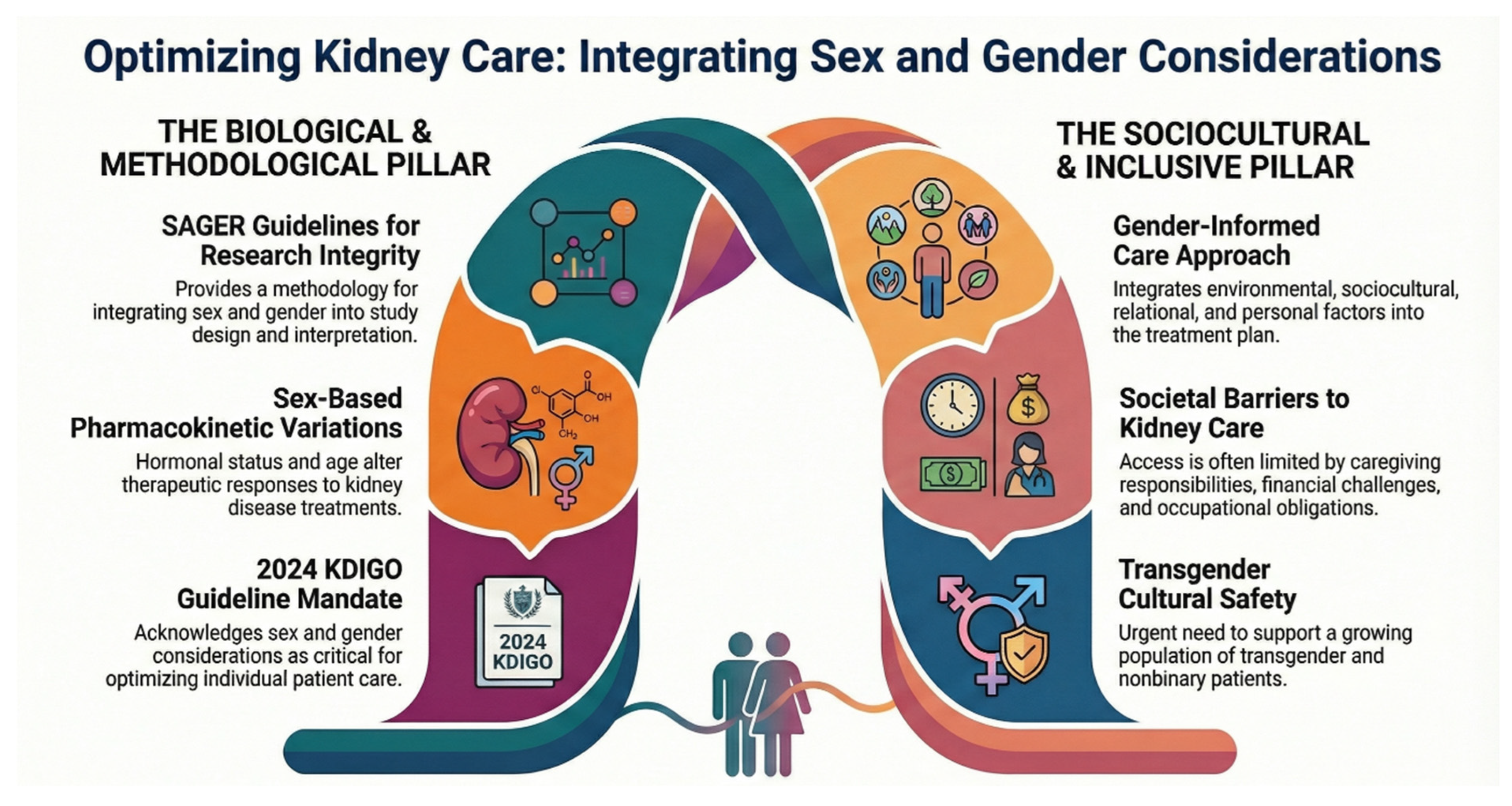
The Sex and Gender Equity in Research (SAGER) guidelines, published in 2016, represented a milestone in clinical research by providing a consistent methodology for integrating sex and gender considerations into study design, data analysis, results, and interpretation. The 2024 KDIGO Clinical Practice Guideline explicitly acknowledges that taking sex and gender considerations into account is critical to optimize the care of the individual with kidney disease [2]. The guideline emphasizes that sex-based differences in pharmacokinetics and pharmacodynamics, accentuated with increasing age and changing hormonal status, may alter the response to different therapies for the treatment of kidney disease [2] (Figure 3).
An additional challenge is the need to move beyond a purely sex-based framework toward a truly gender-informed approach that integrates environmental, sociocultural, relational, and personal factors. Access to kidney care may be limited by familial and other caregiving responsibilities, as well as financial challenges, occupational obligations, and time constraints, all of which are influenced by gender identity, roles, relations, and institutionalized gender [2]. A small but increasing proportion of the world’s population identifies as transgender, gender-diverse, or nonbinary, highlighting the urgent need to build transgender cultural safety within all aspects of kidney disease management and care [2] (Figure 3).
Recent prospective studies in individuals undergoing sex hormone therapy have provided direct evidence of hormonal effects on kidney function [47,48]. During feminizing therapy, measured GFR and kidney perfusion increased (+3.6% and +9.1%, respectively) without increased glomerular pressure, and tubular injury biomarkers decreased significantly [47]. During masculinizing therapy, measured GFR and kidney perfusion remained unchanged, but markers of tubular injury and inflammation increased [47]. Proteomic analysis revealed that many kidney-protective proteins were positively associated with estradiol and negatively associated with testosterone, including proteins involved in endothelial function, inflammation reduction, and maintaining kidney tissue structure [47].

9. Conclusions

More than three decades after regulatory agencies first recommended the inclusion of women in all phases of drug development, meaningful gender equity in clinical research has yet to be fully achieved. Despite robust evidence supporting sex- and gender-specific differences in kidney disease pathophysiology and therapeutic response, significant gaps remain in translating these principles into clinical practice. The body of evidence reviewed herein demonstrates that sex and gender influence virtually every domain of nephrology, from CKD epidemiology and progression to cardiovascular outcomes, access to transplantation, dialysis outcomes, and pregnancy-related complications.
Men experience faster CKD progression and higher rates of kidney failure, whereas women paradoxically lose their survival advantage in advanced CKD and dialysis. Sex disparities in access to kidney transplantation persist, with women facing greater barriers at multiple steps along the transplant pathway. Biological mechanisms, including the protective effects of estrogen and the deleterious effects of testosterone on kidney function, interact with gender-related factors such as caregiving responsibilities, healthcare access, and treatment preferences to create complex patterns of disease burden and outcomes.
Crucially, these insights must now be translated into concrete clinical implementation. Sex- and gender-informed approaches should be systematically incorporated into risk stratification, therapeutic selection, clinical trial design, and outcome reporting, rather than being treated as secondary or exploratory considerations. Nephrology, by virtue of its longitudinal patient relationships and its central role in managing complex, multisystem disease, is uniquely positioned—and bears a clear responsibility—to lead this paradigm shift. Embedding sex and gender as core dimensions of precision medicine is not only an ethical obligation but a scientific necessity to optimize prevention strategies, personalize treatment, and ultimately improve kidney health outcomes for all patients

Author Contributions

Conceptualization, P.D. and A.T.; Writing—Original Draft Preparation, A.T.; Writing—Review and Editing, P.D., L.V. and A.T.; Supervision, P.D. and L.V. All authors have read and agreed to the published version of the manuscript.

Funding

This research received no external funding.

Institutional Review Board Statement

Not applicable.

Informed Consent Statement

Not applicable.

Data Availability Statement

No new data were created or analyzed in this study. Data sharing is not applicable to this article.

Conflicts of Interest

The authors declare no conflicts of interest.

References

  1. Swartling, O.; Rydell, H.; Stendahl, M.; Segelmark, M.; Trolle Lagerros, Y.; Evans, M. CKD progression and mortality among men and women: A nationwide study in Sweden. Am. J. Kidney Dis. 2021, 78, 190–199.e1. [Google Scholar] [CrossRef] [PubMed]
  2. Kidney Disease: Improving Global Outcomes (KDIGO) CKD Work Group. KDIGO 2024 clinical practice guideline for the evaluation and management of chronic kidney disease. Kidney Int. 2024, 105, S117–S314. [CrossRef] [PubMed]
  3. Stevens, K.I.; Mallamaci, F.; Ortiz, A.; Bover, J.; Delanaye, P.; Torra, R.; Cozzolino, M. The forgotten sex: Gender disparities in kidney disease. Clin. Kidney J. 2023, 17, sfad102. [Google Scholar] [CrossRef] [PubMed]
  4. Mauvais-Jarvis, F.; Bairey Merz, N.; Barnes, P.J.; Brinton, R.D.; Carrero, J.-J.; DeMeo, D.L.; De Vries, G.J.; Epperson, C.N.; Govindan, R.; Klein, S.L.; et al. Sex and gender: Modifiers of health, disease, and medicine. Lancet 2020, 396, 565–582. [Google Scholar] [CrossRef]
  5. Ricardo, A.C.; Yang, W.; Sha, D.; Appel, L.J.; Chen, J.; Krousel-Wood, M.; Manoharan, A.; Steigerwalt, S.; Wright, J.; Rahman, M.; et al. Sex-related disparities in CKD progression. J. Am. Soc. Nephrol. 2019, 30, 137–146. [Google Scholar] [CrossRef]
  6. van Eeghen, S.A.; Nokoff, N.J.; Vosters, T.G.; Oosterom-Eijmael, M.J.P.; Cherney, D.Z.I.; van Valkengoed, I.G.M.; Choi, Y.J.; Pyle, L.; Bjornstad, P.; den Heijer, M.; et al. Unraveling sex differences in kidney health and CKD: A review of the effect of sex hormones. Clin. J. Am. Soc. Nephrol. 2024, 20, 301–310. [Google Scholar] [CrossRef]
  7. Li, G.; Xu, Z.; Yang, H.; Zhang, D.; Liu, B.; Song, Y.; Li, Q.; Zhang, Y.; Zhou, H.; Wang, Y. Sex-specific mechanisms in the pathogenesis and progression of chronic kidney disease. Autoimmun. Rev. 2026, 25, 103938. [Google Scholar] [CrossRef]
  8. De La Mata, N.L.; Rosales, B.; MacLeod, G.; Kelly, P.J.; Masson, P.; Morton, R.L.; Wyburn, K.; Webster, A.C. Sex differences in mortality among people with chronic kidney disease: A population-based data linkage study. BMJ 2021, 375, e068247. [Google Scholar] [CrossRef]
  9. Chan, C.; Sawhney, S.; Ahmed, S.B.; Dumanski, S.M.; Quinn, R.R.; Lam, N.N.; James, M.T.; Ravani, P.; Liu, P. Sex differences in mortality and receipt of kidney replacement therapy among adults with stage 5 chronic kidney disease. JAMA Intern. Med. 2026, 186, 89–97. [Google Scholar] [CrossRef]
  10. Jung, H.Y.; Jeon, Y.; Kim, Y.S.; Kang, S.-W.; Yang, C.W.; Kim, N.-H.; Noh, H.-W.; Jeon, S.-J.; Lim, J.-H.; Choi, J.-Y.; et al. Sex disparities in mortality among patients with kidney failure receiving dialysis. Sci. Rep. 2022, 12, 18555. [Google Scholar] [CrossRef]
  11. Balafa, O.; Fernandez-Fernandez, B.; Ortiz, A.; Dounousi, E.; Ekart, R.; Ferro, C.J.; Mark, P.B.; Valdivielso, J.M.; Del Vecchio, L.; Mallamaci, F. Sex disparities in mortality and cardiovascular outcomes in chronic kidney disease. Clin. Kidney J. 2024, 17, sfae044. [Google Scholar] [CrossRef] [PubMed]
  12. Provenzano, P.F.; Caridi, G.; Parlongo, G.; Leonardis, D.; Puntorieri, E.; Tripepi, G.; Zoccali, C.; Mallamaci, F. Are there sex differences in cardiovascular outcomes in non-dialysis CKD patients? Clin. Kidney J. 2023, 16, 2141–2146. [Google Scholar] [CrossRef] [PubMed]
  13. Faucon, A.L.; Lambert, O.; Massy, Z.A.; Drüeke, T.B.; Combe, C.; Fouque, D.; Frimat, L.; Jacquelinet, C.; Laville, M.; Liabeuf, S.; et al. Sex and the risk of atheromatous and nonatheromatous cardiovascular disease in CKD: Findings from the CKD-REIN cohort study. Am. J. Kidney Dis. 2024, 84, 546–556.e1. [Google Scholar] [CrossRef]
  14. Toth-Manikowski, S.M.; Yang, W.; Appel, L.; Chen, J.; Deo, R.; Frydrych, A.; Krousel-Wood, M.; Rahman, M.; Rosas, S.E.; Sha, D.; et al. Sex differences in cardiovascular outcomes in CKD: Findings from the CRIC study. Am. J. Kidney Dis. 2021, 78, 200–209.e1. [Google Scholar] [CrossRef]
  15. Tian, Z.; Hillebrand, U.C.; Casper, J.; Schmidt-Ott, K.M.; Melk, A.; Schmidt, B.M.W. Chronic kidney disease confers increased excess risks of mortality and cardiovascular events in women compared to men. Nephrol. Dial. Transplant. 2025. online ahead of print. [Google Scholar] [CrossRef]
  16. Borrelli, S.; Garofalo, C.; Gabbai, F.B.; Liberti, M.E.; Chiodini, P.; Simeon, V.; De Nicola, L.; Minutolo, R. Sex difference in cardiovascular risk in patients with chronic kidney disease: Pooled analysis of four cohort studies. Nephrol. Dial. Transplant. 2023, 38, 2213–2221. [Google Scholar] [CrossRef]
  17. Harding, J.L.; Hu, C.; Pastan, S.O.; Rossi, A.; Patzer, R.E. Trends in sex disparities in access to kidney transplantation: A nationwide US cohort study. Am. J. Kidney Dis. 2025, 86, 18–31.e1. [Google Scholar] [CrossRef]
  18. Natale, P.; Hecking, M.; Kurnikowski, A.; Scholes-Robertson, N.; Carrero, J.J.; Wong, G.; Strippoli, G.; Jaure, A. Perspectives of nephrologists on gender disparities in access to kidney transplantation. Clin. J. Am. Soc. Nephrol. 2023, 18, 1333–1342. [Google Scholar] [CrossRef]
  19. Ahearn, P.; Johansen, K.L.; Tan, J.C.; McCulloch, C.E.; Grimes, B.A.; Ku, E. Sex disparity in deceased-donor kidney transplant access by cause of kidney disease. Clin. J. Am. Soc. Nephrol. 2021, 16, 241–250. [Google Scholar] [CrossRef]
  20. Melk, A.; Schmidt, B.M.W.; Geyer, S.; Epping, J. Sex disparities in dialysis initiation, access to waitlist, transplantation and transplant outcome in German patients with renal disease: A population-based analysis. PLoS ONE 2020, 15, e0241556. [Google Scholar] [CrossRef] [PubMed]
  21. Katz-Greenberg, G.; Shah, S. Sex and gender differences in kidney transplantation. Semin. Nephrol. 2022, 42, 219–229. [Google Scholar] [CrossRef]
  22. Laville, S.M.; Mouheb, A.; Massy, Z.A.; Jacquelinet, C.; Laville, M.; Stengel, B.; de Pinho, N.A.; Liabeuf, S.; the CKD-REIN study collaborators; Cannet, D.; et al. Male and female drug prescription patterns and adverse drug reactions in chronic kidney disease. Nephrol. Dial. Transplant. 2025, 40, 2379–2389. [Google Scholar] [CrossRef]
  23. Torres, V.E.; Ahn, C.; Barten, T.R.M.; Brosnahan, G.; Cadnapaphornchai, M.A.; Chapman, A.B.; Gall, E.C.-L.; Drenth, J.P.; Gansevoort, R.T.; Harris, P.C.; et al. KDIGO 2025 clinical practice guideline for the evaluation, management, and treatment of autosomal dominant polycystic kidney disease: Executive summary. Kidney Int. 2025, 107, 234–254. [Google Scholar] [CrossRef]
  24. Harris, P.C.; Torres, V.E. Polycystic kidney disease, autosomal dominant. In GeneReviews®; University of Washington: Seattle, WA, USA, 1993–2026. [Google Scholar]
  25. Choukroun, G.; Itakura, Y.; Albouze, G.; Christophe, J.L.; Man, N.K.; Grünfeld, J.P.; Jungers, P. Factors influencing progression of renal failure in autosomal dominant polycystic kidney disease. J. Am. Soc. Nephrol. 1995, 6, 1634–1642. [Google Scholar] [CrossRef]
  26. Hasan, N.S.; Thomas, W. The impact of reproductive steroids on autosomal dominant polycystic kidney disease progression in women. Steroids 2026, 226, 109726. [Google Scholar] [CrossRef]
  27. Conte, C.; Antonelli, G.; Melica, M.E.; Tarocchi, M.; Romagnani, P.; Peired, A.J. Role of sex hormones in prevalent kidney diseases. Int. J. Mol. Sci. 2023, 24, 8244. [Google Scholar] [CrossRef]
  28. Valdivielso, J.M.; Jacobs-Cachá, C.; Soler, M.J. Sex hormones and their influence on chronic kidney disease. Curr. Opin. Nephrol. Hypertens. 2019, 28, 1–9. [Google Scholar] [CrossRef]
  29. Corradetti, C.; Jog, N.R.; Cesaroni, M.; Madaio, M.; Caricchio, R. Estrogen receptor α signaling exacerbates immune-mediated nephropathies through alteration of metabolic activity. J. Immunol. 2018, 200, 512–522. [Google Scholar] [CrossRef]
  30. Beckwith, H.; Lightstone, L.; McAdoo, S. Sex and gender in glomerular disease. Semin. Nephrol. 2022, 42, 185–196. [Google Scholar] [CrossRef]
  31. Dahiya, A.; Pannu, N.; Soranno, D.E. Sex as a biological variable in acute kidney injury. Curr. Opin. Crit. Care 2023, 29, 529–533. [Google Scholar] [CrossRef]
  32. Soranno, D.E.; Awdishu, L.; Bagshaw, S.M.; Basile, D.; Bell, S.; Bihorac, A.; Bonventre, J.; Brendolan, A.; Granado, R.C.-D.; Collister, D.; et al. The role of sex and gender in acute kidney injury: Consensus statements from the 33rd Acute Disease Quality Initiative. Kidney Int. 2025, 107, 606–616. [Google Scholar] [CrossRef]
  33. Neugarten, J.; Golestaneh, L. Sex differences in acute kidney injury. Semin. Nephrol. 2022, 42, 208–218. [Google Scholar] [CrossRef]
  34. Neugarten, J.; Golestaneh, L. Female sex reduces the risk of hospital-associated acute kidney injury: A meta-analysis. BMC Nephrol. 2018, 19, 314. [Google Scholar] [CrossRef]
  35. Neugarten, J.; Golestaneh, L.; Kolhe, N.V. Sex differences in acute kidney injury requiring dialysis. BMC Nephrol. 2018, 19, 131. [Google Scholar] [CrossRef]
  36. Shah, S.; Leonard, A.C.; Harrison, K.; Meganathan, K.; Christianson, A.L.; Thakar, C.V. Mortality and recovery associated with kidney failure due to acute kidney injury. Clin. J. Am. Soc. Nephrol. 2020, 15, 995–1006. [Google Scholar] [CrossRef]
  37. Zhang, T.; McArdle, Z.; Moore, B.K.; Di Muzio, A.; Denton, K.M.; Widdop, R.E.; Ricardo, S.D. Sex-dependent differences in the progression of renal injury and fibrosis following ischemic acute kidney injury. Clin. Sci. 2026, 140, 275–290. [Google Scholar] [CrossRef]
  38. Piccoli, G.B.; Ahmed, S.B.; Fakhouri, F.; Garovic, V.D.; Hladunewich, M.A.; Jesudason, S.; Prakash, J.; Webster, A.C.; Zakharova, E.; Cheung, M.; et al. Women and kidney health: Conclusions from a KDIGO controversies conference. Kidney Int. 2025, 108, 355–379. [Google Scholar] [CrossRef]
  39. Ives, C.W.; Sinkey, R.; Rajapreyar, I.; Tita, A.T.N.; Oparil, S. Preeclampsia: Pathophysiology and clinical presentations. J. Am. Coll. Cardiol. 2020, 76, 1690–1702. [Google Scholar] [CrossRef]
  40. ACOG Practice Bulletin. Gestational hypertension and preeclampsia. Obstet. Gynecol. 2020, 135, e237–e260. [Google Scholar] [CrossRef]
  41. Jeyabalan, A.; Conrad, K.P. Renal function during normal pregnancy and preeclampsia. Front. Biosci. 2007, 12, 2425–2437. [Google Scholar] [CrossRef]
  42. Conte, C.; Angelotti, M.L.; Mazzinghi, B.; Melica, M.E.; Antonelli, G.; Carangelo, G.; Landini, S.; Raglianti, V.; Ravaglia, F.; Cirillo, L.; et al. Estrogen-regulated renal progenitors determine pregnancy adaptation and preeclampsia. Science 2025, 389, 1016–1023. [Google Scholar] [CrossRef] [PubMed]
  43. Piccoli, G.B.; Torreggiani, M.; Schwotzer, N.; Cabiddu, G.; Attini, R.; Orozco, A.; Shemies, R.; Jesudason, S.; Fakhouri, F.; Garovic, V.D. Kidney health outcomes of hypertensive disorders of pregnancy. Nat. Rev. Nephrol. 2025, 21, 671–686. [Google Scholar] [CrossRef]
  44. Kattah, A. Preeclampsia and kidney disease: Deciphering cause and effect. Curr. Hypertens. Rep. 2020, 22, 91. [Google Scholar] [CrossRef]
  45. Hecking, M.; Bieber, B.A.; Ethier, J.; Kautzky-Willer, A.; Sunder-Plassmann, G.; Säemann, M.D.; Ramirez, S.P.; Gillespie, B.W.; Pisoni, R.L.; Robinson, B.M.; et al. Sex-specific differences in hemodialysis prevalence and practices and the male-to-female mortality rate: The DOPPS study. PLoS Med. 2014, 11, e1001750. [Google Scholar] [CrossRef]
  46. Chesnaye, N.C.; Carrero, J.J.; Hecking, M.; Jager, K.J. Differences in the epidemiology, management and outcomes of kidney disease in men and women. Nat. Rev. Nephrol. 2024, 20, 7–20. [Google Scholar] [CrossRef]
  47. van Eeghen, S.A.; Pyle, L.; Narongkiatikhun, P.; Choi, Y.J.; Obeid, W.; Parikh, C.R.; Vosters, T.G.; van Valkengoed, I.G.; Krebber, M.M.; Touw, D.J.; et al. Unveiling mechanisms underlying kidney function changes during sex hormone therapy. J. Clin. Investig. 2025, 135, e190850. [Google Scholar] [CrossRef] [PubMed]
  48. Collister, D.; Levin, A. The differential effects of sex hormone therapy on kidney function: Insights into biological sex differences. J. Clin. Investig. 2025, 135, e191907. [Google Scholar] [CrossRef] [PubMed]
Figure 1. The CKD Paradox: Sex Differences in Kidney Disease Outcomes—Schematic representation of sex-specific patterns across the CKD continuum. In early and moderate CKD, women show higher disease prevalence but slower progression and lower risks of kidney failure and mortality compared with men. With advancing CKD, this advantage progressively attenuates and may reverse in advanced stages and during dialysis, resulting in disproportionately higher excess mortality among women. In parallel, the cardiovascular protection typically observed in women in the general population is progressively lost with declining kidney function, particularly for atheromatous cardiovascular disease, and is further modified by blood pressure burden and healthcare-related factors.
Kidneydial 06 00026 g001
Figure 2. Unequal Access: The Gender Gap in Kidney Transplantation—Overview of sex- and gender-related disparities along the kidney transplant pathway. Compared with men, women with kidney failure have lower access to waitlisting and kidney transplantation, particularly to living-donor kidney transplantation, despite temporal improvements in waitlisting equity. These disparities are more pronounced among women with diabetes and older age and are driven by biological factors such as pregnancy-related HLA sensitization, as well as gender-related social, cultural, and systemic barriers. In contrast, women are disproportionately represented among living kidney donors, highlighting a persistent imbalance between donation and receipt of kidney transplants.
Kidneydial 06 00026 g002
Figure 3. Optimizing Kidney Care: Integrating Sex and Gender Considerations—Conceptual framework illustrating the integration of sex- and gender-informed approaches in kidney disease research and clinical practice. The SAGER guidelines and the 2024 KDIGO Clinical Practice Guideline emphasize the systematic consideration of sex-related biological differences, including age- and hormone-dependent variability in pharmacokinetics and pharmacodynamics, alongside gender-related sociocultural, environmental, and relational factors that influence access to care and treatment response. This framework also highlights the need for inclusive, gender-informed kidney care that ensures cultural safety for transgender, gender-diverse, and nonbinary individuals across the continuum of kidney disease management.
Kidneydial 06 00026 g003
Disclaimer/Publisher’s Note: The statements, opinions and data contained in all publications are solely those of the individual author(s) and contributor(s) and not of MDPI and/or the editor(s). MDPI and/or the editor(s) disclaim responsibility for any injury to people or property resulting from any ideas, methods, instructions or products referred to in the content.