
Immunohistochemical Expression of Programmed Death-Ligand 1 Associated with Human Papillomavirus-Driven High-Grade Cervical Intraepithelial Neoplasia in South African Women

 , and
, and
Simple Summary
Abstract
1. Background
2. Materials and Methods
2.1. Study Design and Sampling
2.2. Technical Procedures
3. Results
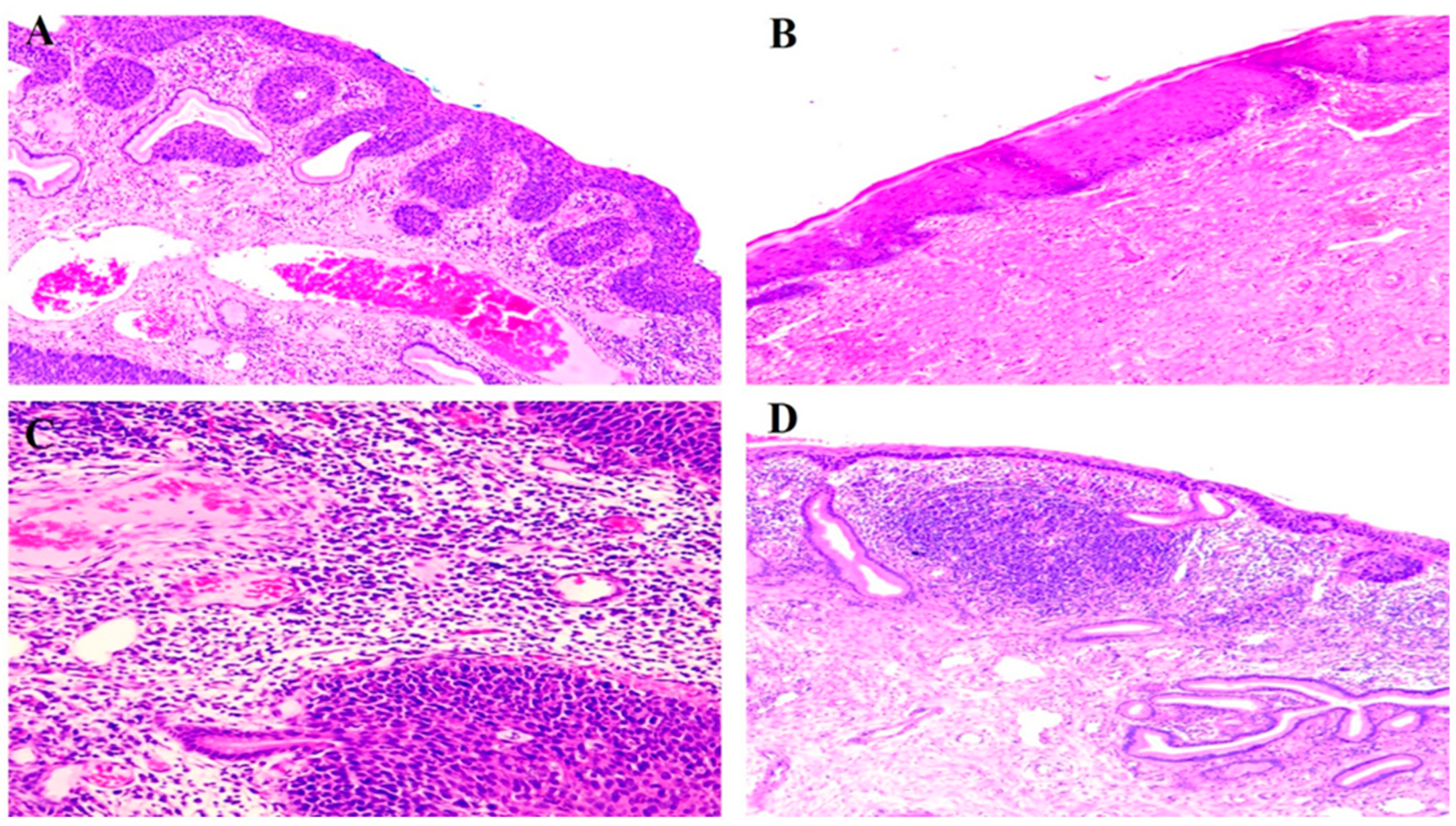
3.1. Patient Characteristics and Histomorphology
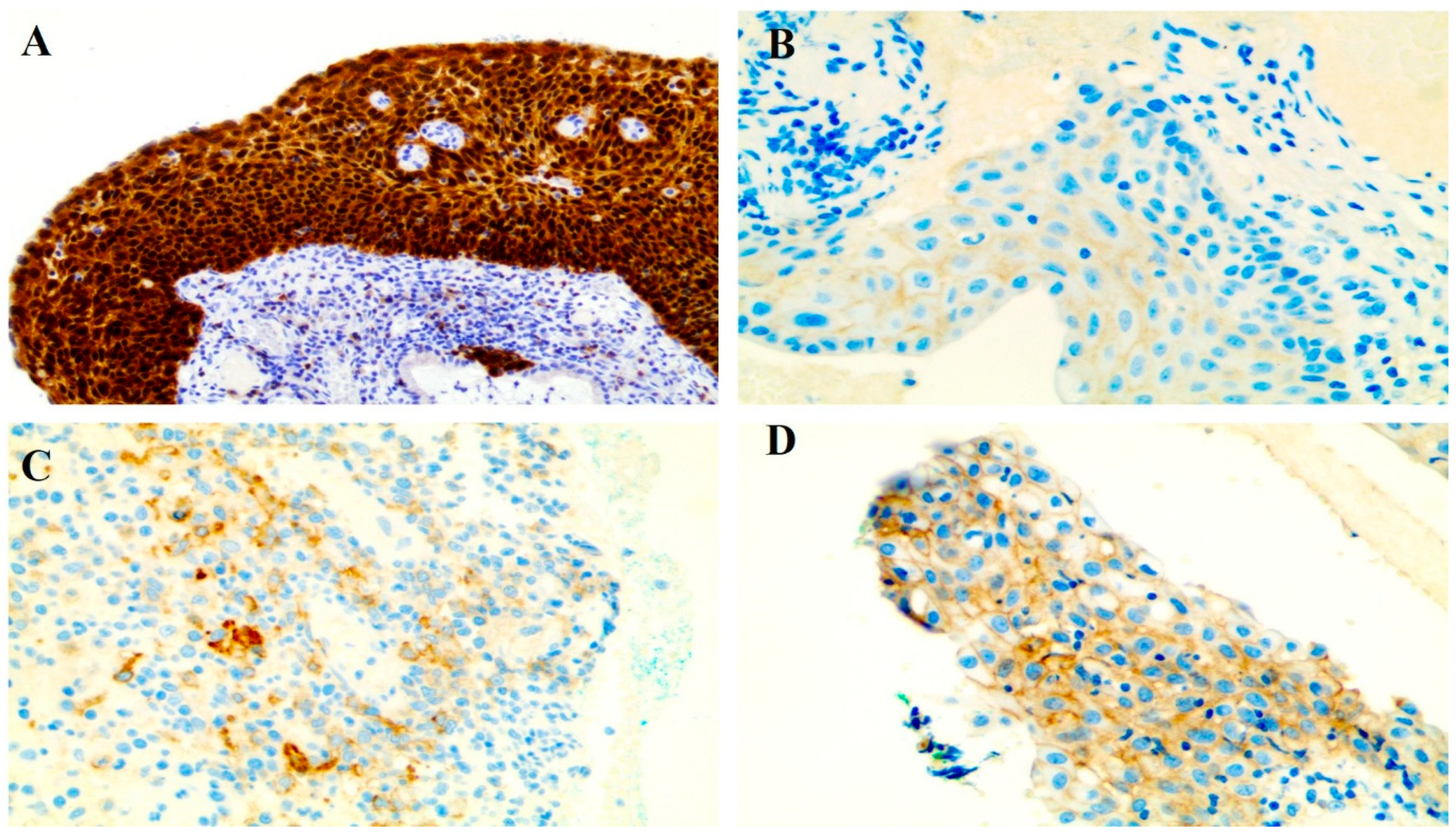
3.2. P16 Immunohistochemistry
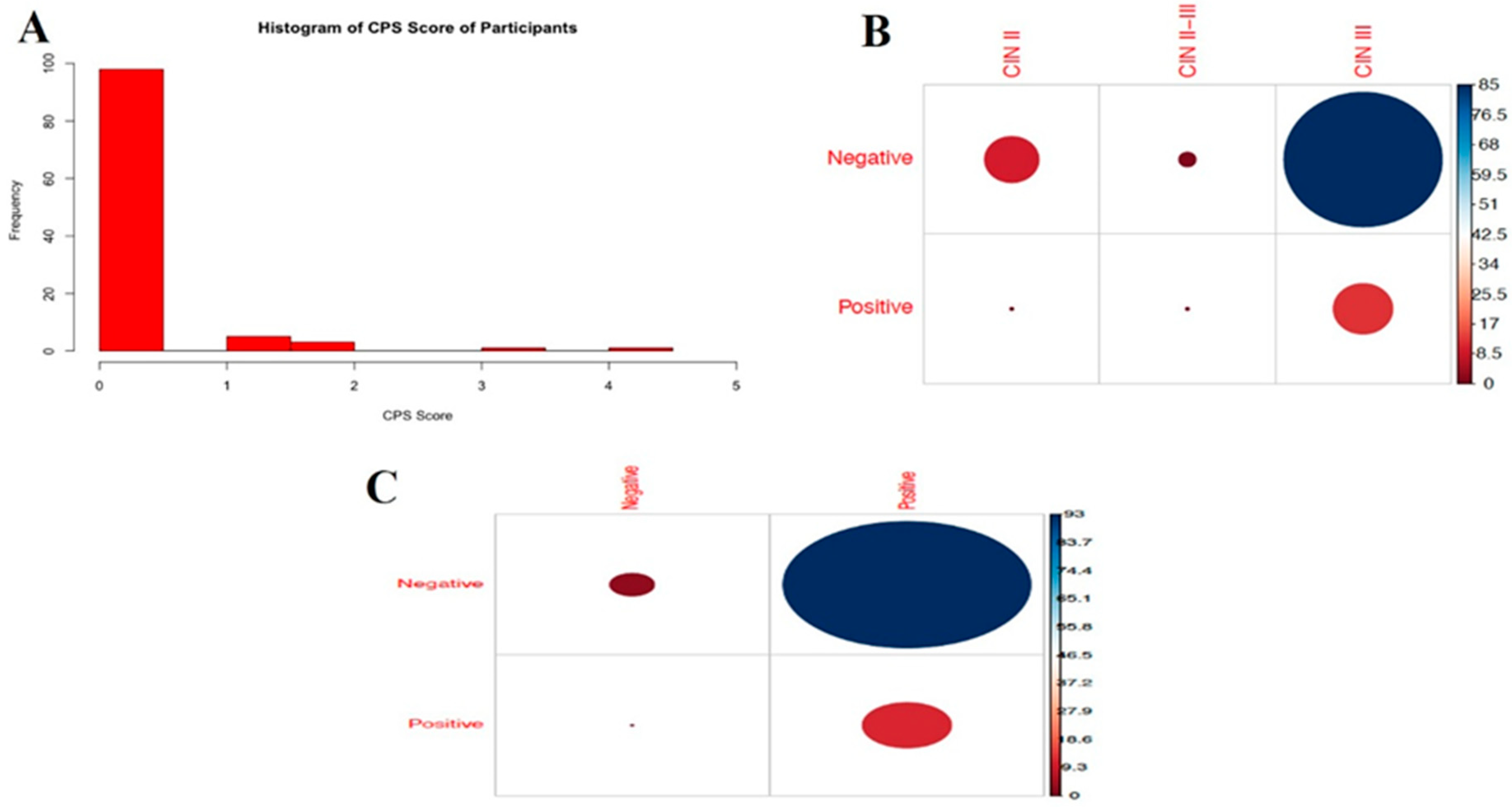
3.3. PD-L1 Immunohistochemistry
3.4. Association of PD-L1 Expression with CIN Grades and p16 Immunohistochemistry
4. Discussion
5. Conclusions
Supplementary Materials
Author Contributions
Funding
Institutional Review Board Statement
Informed Consent Statement
Data Availability Statement
Conflicts of Interest
References
- CANSA. Cervical Cancer. 2022. Available online: https://cansa.org.za/cervical-cancer/ (accessed on 31 January 2025).
- GLOBOCAN. Global Cancer Obsevatory. 2022. Available online: https://gco.iarc.who.int/media/globocan/factsheets/populations/710-south-africa-fact-sheet.pdf (accessed on 31 January 2025).
- Thomison, J.; Thomas, L.K.; Shroyer, K.R. Human papillomavirus: Molecular and cytologic/histologic aspects related to cervical intraepithelial neoplasia and carcinoma. Hum. Pathol. 2008, 39, 154–166. [Google Scholar] [CrossRef]
- Okunade, K.S. Human papillomavirus and cervical cancer. J. Obstet. Gynaecol. 2020, 40, 602–608. [Google Scholar] [CrossRef]
- Long, S.; Leeman, L. Treatment options for high-grade squamous intraepithelial lesions. Obstet. Gynecol. Clin. N. Am. 2013, 40, 291–316. [Google Scholar] [CrossRef] [PubMed]
- UNAIDS. South Africa, HIV and AIDS Estimates. 2023. Available online: https://www.unaids.org/en/regionscountries/countries/southafrica (accessed on 1 February 2025).
- Han, F.; Guo, X.-Y.; Jiang, M.-X.; Xia, N.-S.; Gu, Y.; Li, S.-W. Structural biology of the human papillomavirus. Structure 2024, 32, 1877–1892. [Google Scholar] [CrossRef]
- Stoler, M.H.; Wright, T.C.; Ferenczy, A., Jr.; Ranger-Moore, J.; Fang, Q.; Kapadia, M.; Ridder, R. Routine Use of Adjunctive p16 Immunohistochemistry Improves Diagnostic Agreement of Cervical Biopsy Interpretation: Results from the CERTAIN Study. Am. J. Surg. Pathol. 2018, 42, 1001–1009. [Google Scholar] [CrossRef]
- Senapati, R.; Senapati, N.N.; Dwibedi, B. Molecular mechanisms of HPV mediated neoplastic progression. Infect. Infect. Agent. Cancer 2016, 11, 59. [Google Scholar] [CrossRef]
- Song, D.; Li, H.; Li, H.; Dai, J. Effect of human papillomavirus infection on the immune system and its role in the course of cervical cancer. Oncol. Lett. 2015, 10, 600–606. [Google Scholar] [CrossRef]
- Patel, S.P.; Kurzrock, R. PD-L1 Expression as a Predictive Biomarker in Cancer Immunotherapy. Mol. Cancer Ther. 2015, 14, 847–856. [Google Scholar] [CrossRef]
- Herbst, R.S.; Soria, J.C.; Kowanetz, M.; Fine, G.D.; Hamid, O.; Gordon, M.S.; Sosman, J.A.; McDermott, D.F.; Powderly, J.D.; Gettinger, S.N.; et al. Predictive correlates of response to the anti-PD-L1 antibody MPDL3280A in cancer patients. Nature 2014, 515, 563–567. [Google Scholar] [CrossRef] [PubMed]
- Savic Prince, S.; Bubendorf, L. Predictive potential and need for standardization of PD-L1 immunohistochemistry. Virchows Arch. 2019, 474, 475–484. [Google Scholar] [CrossRef]
- Brito, M.J.; Sequeira, P.; Quintas, A.; Silva, I.; Silva, F.; Martins, C.; Félix, A. Programmed death-ligand 1 (PD-L1) expression in cervical intraepithelial neoplasia and cervical squamous cell carcinoma of HIV-infected and non-infected patients. Virchows Arch. 2024, 484, 507–516. [Google Scholar] [CrossRef]
- WHO Classification of Female Genital Tumors. Geburtshilfe Frauenheilkd. WHO Classification of Tumours: Female Genital Tumours, 5th ed.; International Agency for Research on Cancer: Lyon, France, 2020; Available online: https://tumourclassification.iarc.who.int/chapters/34 (accessed on 31 January 2025).
- Van Bogaert, L.J. Age at diagnosis of preinvasive and invasive cervical neoplasia in South Africa: HIV-positive versus HIV-negative women. Int. J. Gynecol. Cancer 2011, 21, 363–366. [Google Scholar] [CrossRef] [PubMed]
- Richter, K.; Becker, P.; Horton, A.; Dreyer, G. Age-specific prevalence of cervical human papillomavirus infection and cytological abnormalities in women in Gauteng Province, South Africa. S. Afr. Med. J. 2013, 103, 313–317. [Google Scholar] [CrossRef]
- Omoyeni, O.M.; Tsoka-Gwegweni, J.M. Prevalence of cervical abnormalities among rural women in KwaZulu-Natal, South Africa. Pan Afr. Med. J. 2022, 41, 110. [Google Scholar] [CrossRef]
- Martin, C.M.; O’Leary, J.J. Histology of cervical intraepithelial neoplasia and the role of biomarkers. Best. Pract. Res. Clin. Obstet. Gynaecol. 2011, 25, 605–615. [Google Scholar] [CrossRef]
- Castle, P.E.; Schiffman, M.; Wheeler, C.M.; Solomon, D. Evidence for frequent regression of cervical intraepithelial neoplasia-grade 2. Obs. Obstet. Gynecol. 2009, 113, 18–25. [Google Scholar] [CrossRef]
- Stoler, M.H. Human papillomaviruses and cervical neoplasia: A model for carcinogenesis. Int. J. Gynecol. Pathol. 2000, 19, 16–28. [Google Scholar] [CrossRef] [PubMed]
- O’Neill, C.J.; McCluggage, W.G. p16 expression in the female genital tract and its value in diagnosis. Adv. Anat. Pathol. 2006, 13, 8–15. [Google Scholar] [CrossRef] [PubMed]
- Chinn, Z.; Stoler, M.H.; Mills, A.M. PD-L1 and IDO Expr. in cervical and vulvar invasive and intraepithelial squamous neoplasias: Implications for combination immunotherapy. Histopathology 2019, 74, 256–268. [Google Scholar] [CrossRef]
- Chang, H.; Hong, J.H.; Lee, J.K.; Cho, H.W.; Ouh, Y.T.; Min, K.J.; So, K.A. Programmed death-1 (PD-1) expression in cervical intraepithelial neoplasia and its relationship with recurrence after conization. J. Gynecol. Oncol. 2018, 29, e27. [Google Scholar] [CrossRef]
- Mezache, L.; Paniccia, B.; Nyinawabera, A.; Nuovo, G.J. Enhanced expression of PD L1 in cervical intraepithelial neoplasia and cervical cancers. Mod. Pathol. 2015, 28, 1594–1602. [Google Scholar] [CrossRef] [PubMed]
- Zhang, H.; Zhang, T.; You, Z.; Zhang, Y. Positive Surgical Margin, HPV Persistence, and Expression of Both TPX2 and PD-L1 Are Associated with Persistence/Recurrence of Cervical Intraepithelial Neoplasia after Cervical Conization. PLoS ONE 2015, 10, e0142868. [Google Scholar] [CrossRef]
- Wang, Y.W.; Zhang, K.; Zhao, S.; Lv, Y.; Zhu, J.; Liu, H.; Feng, J.; Liang, W.; Ma, R.; Wang, J. HPV Status and Its Correlation with BCL2, p21, p53, Rb, and Survivin Expression in Breast Cancer in a Chinese Population. Biomed. Res. Int. 2017, 2017, 6315392. [Google Scholar] [CrossRef]
- Raghav, N.; Jaiswal, R.; Singh, N.; Pandey, A. Immunohistochemical Expression of PDL1 in Pre-Malignant and Malignant Lesions of Cervix. J. Evid. Based Med. Healthc. 2020, 7, 2349–2570. [Google Scholar] [CrossRef]
- Lebreton, C.; Le Saux, O.; Mery, B.; Bini, M.; Roméo, C.; Ray-Coquard, I. Pembrolizumab and Chemotherapy in Cervical Cancer: A New Standard of Care? Oncol. Haematol. 2022, 18, 2–8. [Google Scholar] [CrossRef]
- Silva, M.A.; Ryall, K.A.; Wilm, C.; Caldara, J.; Grote, H.J.; Patterson-Kane, J.C. PD-L1 immunostaining scoring for non-small cell lung cancer based on immunosurveillance parameters. PLoS ONE 2018, 13, e0196464. [Google Scholar] [CrossRef]
- Paver, E.C.; Cooper, W.A.; Colebatch, A.J.; Ferguson, P.M.; Hill, S.K.; Lum, T.; Shin, J.S.; O’Toole, S.; Anderson, L.; Scolyer, R.A.; et al. Programmed death ligand-1 (PD-L1) as a predictive marker for immunotherapy in solid tumours: A guide to immunohistochemistry implementation and interpretation. Pathology 2021, 53, 141–156. [Google Scholar] [CrossRef]
- Guo, H.; Ding, Q.; Gong, Y.; Gilcrease, M.Z.; Zhao, M.; Zhao, J.; Sui, D.; Wu, Y.; Chen, H.; Liu, H.; et al. Comparison of three scoring methods using the FDA-approved 22C3 immunohistochemistry assay to evaluate PD-L1 expression in breast cancer and their association with clinicopathologic factors. Breast Cancer Res. 2020, 22, 69. [Google Scholar] [CrossRef]
- Yang-Chun, F.; Zhen-Zhen, C.; Yan-Chun, H.; Xiu-Min, M. Association between PD-L1 and HPV status and the prognostic value for HPV treatment in premalignant cervical lesion patients. Medicine 2017, 96, e7270. [Google Scholar] [CrossRef] [PubMed]
- Lien, K.; Mayer, W.; Herrera, R.; Rosbe, K.; Tugizov, S.M. HIV-1 proteins gp120 and tat induce the epithelial-mesenchymal transition in oral and genital mucosal epithelial cells. PLoS ONE 2019, 14, e0226343. [Google Scholar] [CrossRef] [PubMed]
- Pavone, G.; Marino, A.; Fisicaro, V.; Motta, L.; Spata, A.; Martorana, F.; Spampinato, S.; Celesia, B.M.; Cacopardo, B.; Vigneri, P.; et al. Entangled Connections: HIV and HPV Interplay in Cervical Cancer-A Comprehensive Review. Int. J. Mol. Sci. 2024, 25, 10358. [Google Scholar] [CrossRef]
- Guan, J.; Lim, K.S.; Mekhail, T.; Chang, C.C. Programmed Death Ligand-1 (PD-L1) Expression in the Programmed Death Receptor-1 (PD-1)/PD-L1 Blockade: A Key Player Against Various Cancers. Arch. Pathol. Lab. Med. 2017, 141, 851–861. [Google Scholar] [CrossRef]
- Hewavisenti, R.V.; Arena, J.; Ahlenstiel, C.L.; Sasson, S.C. Human papillomavirus in the setting of immunodeficiency: Pathogenesis and the emergence of next-generation therapies to reduce the high associated cancer risk. Front. Immunol. 2023, 14, 1112513. [Google Scholar] [CrossRef] [PubMed]
- Bida, M.; Mosoane, B.; Phakathi, B.; Sebitloane, M.; Muallem, M.Z.; Hull, R.; Dlamini, Z. Chapter 2–Current treatment options and limitations for cervical cancer. In Strategies for Overcoming Chemotherapy Resistance in Cervical Cancer; Dlamini, Z., Ed.; Academic Press: Cambridge, MA, USA, 2024; Volume 21, pp. 17–32. [Google Scholar] [CrossRef]
- Zoodsma, M.; Nolte, I.M.; Te Meerman, G.J.; De Vries, E.G.; Van der Zee, A.G. HLA genes and other candidate genes involved in susceptibility for (pre)neoplastic cervical disease. Int. J. Oncol. 2005, 26, 769–784. [Google Scholar] [CrossRef] [PubMed]
- Chen, L.; Flies, D.B. Molecular mechanisms of T cell co-stimulation and co-inhibition. Nat. Rev. Immunol. 2013, 13, 227–242. [Google Scholar] [CrossRef] [PubMed]
- Piao, W.; Li, L.; Saxena, V.; Iyyathurai, J.; Lakhan, R.; Zhang, Y.; Lape, I.T.; Paluskievicz, C.; Hippen, K.L.; Lee, Y.; et al. PD-L1 signaling selectively regulates T cell lymphatic transendothelial migration. Nat. Commun. 2022, 13, 2176. [Google Scholar] [CrossRef]
- Chang, C.H.; Qiu, J.; O’Sullivan, D.; Buck, M.D.; Noguchi, T.; Curtis, J.D.; Chen, Q.; Gindin, M.; Gubin, M.M.; van der Windt, G.J.; et al. Metabolic Competition in the Tumor Microenvironment Is a Driver of Cancer Progression. Cell 2015, 162, 1229–1241. [Google Scholar] [CrossRef]
- Li, X.; Shao, C.; Shi, Y.; Han, W. Lessons learned from the blockade of immune checkpoints in cancer immunotherapy. J. Hematol. Oncol. 2018, 11, 31. [Google Scholar] [CrossRef]
- Blank, C.; Mackensen, A. Contribution of the PD-L1/PD-1 pathway to T-cell exhaustion: An update on implications for chronic infections and tumor evasion. Cancer Immunol. Immunother. 2007, 56, 739–745. [Google Scholar] [CrossRef]
- Zarour, H.M. Reversing T-cell dysfunction and exhaustion in cancer. Clin. Cancer Res. 2016, 22, 1856–1864. [Google Scholar] [CrossRef] [PubMed]
- Konen, J.M.; Rodriguez, B.L.; Fradette, J.J.; Gibson, L.; Davis, D.; Minelli, R.; Peoples, M.D.; Kovacs, J.; Carugo, A.; Bristow, C.; et al. Ntrk1 Promotes Resistance to PD-1 Checkpoint Blockade in Mesenchymal Kras/p53 Mutant Lung Cancer. Cancers 2019, 11, 462. [Google Scholar] [CrossRef] [PubMed]
- Wang, S.; Li, J.; Xie, J.; Liu, F.; Duan, Y.; Wu, Y.; Huang, S.; He, X.; Wang, Z.; Wu, X. Programmed death ligand 1 promotes lymph node metastasis and glucose metabolism in cervical cancer by activating integrin β4/SNAI1/SIRT3 signaling pathway. Oncogene 2018, 37, 4164–4180. [Google Scholar] [CrossRef] [PubMed]
- Karim, R.; Meyers, C.; Backendorf, C.; Ludigs, K.; Offringa, R.; van Ommen, G.J.; Melief, C.J.; van der Burg, S.H.; Boer, J.M. Human papillomavirus deregulates the response of a cellular network comprising of chemotactic and proinflammatory genes. PLoS ONE 2011, 6, e17848. [Google Scholar] [CrossRef]
- Lin, X.; Kang, K.; Chen, P.; Zeng, Z.; Li, G.; Xiong, W.; Yi, M.; Xiang, B. Regulatory mechanisms of PD-1/PD-L1 in cancers. Mol. Cancer 2024, 23, 108. [Google Scholar] [CrossRef]
- Marima, R.; Mosoane, B.; Mtshali, N.; Basera, A.; Kgatle, M.; Grech, G.; Dlamini, Z. Chapter 4—Mechanisms of chemotherapy resistance in cervical cancer. In Strategies for Overcoming Chemotherapy Resistance in Cervical Cancer; Dlamini, Z., Ed.; Academic Press: Cambridge, MA, USA, 2024; Volume 21, pp. 53–70. [Google Scholar] [CrossRef]
- Zhou, C.; Tuong, Z.K.; Frazer, I.H. Papillomavirus Immune Evasion Strategies Target the Infected Cell and the Local Immune System. Front. Oncol. 2019, 9, 682. [Google Scholar] [CrossRef]
- Satoh, S.; Boyer, E. HIV in South Africa. Lancet 2019, 394, 467. [Google Scholar] [CrossRef] [PubMed]



| Age in Years (n = 108) | |
|---|---|
| Valid | 107 |
| Missing | 1 |
| Mean | 37.36 |
| Median | 36 (33.0; 39.0) |
| Standard Deviation | 7.93 |
| Confidence Interval (95%) | 37.36 (35.86; 38.87) |
| Minimum | 22 |
| Maximum | 71 |
| Additional Pathological and/or Clinical Information | |
|---|---|
| None | 3 (2.8%) |
| Crypt involvement | 98 (90.7%) |
| Chronic cervicitis | 32 (29.6%) |
| Follicular cervicitis | 19 (17.6%) |
| Endocervical polyp | 1 (0.9%) |
| HIV | 26 (24.8%) |
| Crypt involvement with chronic cervicitis | 20 (18.5%) |
| Crypt involvement with follicular cervicitis | 14 (13.0%) |
| Crypt involvement with chronic cervicitis and HIV | 7 (6.5%) |
| Crypt involvement with follicular cervicitis and HIV | 3 (2.8%) |
| Endocervical polyp with crypt involvement with chronic cervicitis | 1 (0.9%) |
Disclaimer/Publisher’s Note: The statements, opinions and data contained in all publications are solely those of the individual author(s) and contributor(s) and not of MDPI and/or the editor(s). MDPI and/or the editor(s) disclaim responsibility for any injury to people or property resulting from any ideas, methods, instructions or products referred to in the content. |
© 2026 by the authors. Licensee MDPI, Basel, Switzerland. This article is an open access article distributed under the terms and conditions of the Creative Commons Attribution (CC BY) license.
Share and Cite
McIntyre, J.; Marima, R.; Alabi, B.; Ramkilawon, G.; Mosoane, B. Immunohistochemical Expression of Programmed Death-Ligand 1 Associated with Human Papillomavirus-Driven High-Grade Cervical Intraepithelial Neoplasia in South African Women. Onco 2026, 6, 14. https://doi.org/10.3390/onco6010014
McIntyre J, Marima R, Alabi B, Ramkilawon G, Mosoane B. Immunohistochemical Expression of Programmed Death-Ligand 1 Associated with Human Papillomavirus-Driven High-Grade Cervical Intraepithelial Neoplasia in South African Women. Onco. 2026; 6(1):14. https://doi.org/10.3390/onco6010014
Chicago/Turabian StyleMcIntyre, Jessica, Rahaba Marima, Babatunde Alabi, Gopika Ramkilawon, and Benny Mosoane. 2026. "Immunohistochemical Expression of Programmed Death-Ligand 1 Associated with Human Papillomavirus-Driven High-Grade Cervical Intraepithelial Neoplasia in South African Women" Onco 6, no. 1: 14. https://doi.org/10.3390/onco6010014
APA StyleMcIntyre, J., Marima, R., Alabi, B., Ramkilawon, G., & Mosoane, B. (2026). Immunohistochemical Expression of Programmed Death-Ligand 1 Associated with Human Papillomavirus-Driven High-Grade Cervical Intraepithelial Neoplasia in South African Women. Onco, 6(1), 14. https://doi.org/10.3390/onco6010014