1. Introduction
Sea-level rise is one of the most critical and observable consequences of climate change, posing substantial threats to coastal ecosystems, infrastructure, and human settlements. Understanding and projecting these changes are essential for formulating effective adaptation and mitigation strategies. This study combines satellite-derived observations, climate model outputs, and socioeconomic indicators to develop a comprehensive framework for assessing sea-level variability, forecasting coastal flood risk, and quantifying socioeconomic exposure.
Globally, consistent data indicate a significant rise in mean sea level driven by thermal expansion of the oceans and accelerated melting of glaciers and ice sheets [
1]. However, sea-level rise exhibits strong spatial heterogeneity. Its effects are amplified or dampened by regional processes such as ocean circulation, land subsidence, and local climate variability. The U.S. coastline, in particular, experiences sea-level rise rates exceeding global averages [
2], making it a natural laboratory for understanding compounded coastal risks. Low-elevation coastal zones host a disproportionate share of the global population and economic activity, making them especially sensitive to sea-level rise [
3].
This research focuses on the disproportionate impacts of sea-level rise on U.S. coastal regions, where densely populated cities face increasing risks of tidal flooding, storm surges, and shoreline erosion. These hazards not only endanger human lives but also threaten critical economic sectors such as tourism, real estate, and fisheries, with potentially severe implications for local and national GDP [
4]. The cascading effects on livelihoods, housing, and health underscore the urgency of developing reliable regional forecasts and exposure metrics to inform adaptation policy.
Despite extensive literature on global sea-level rise, regional-scale analyses that jointly address physical and socioeconomic dimensions remain limited. In particular, there is a lack of integrated frameworks that (i) learn data-driven sea-level regimes from altimetry, (ii) validate their predictive skill against physical drivers such as ocean heat content (OHC) and salinity, and (iii) couple these physical regimes with socioeconomic exposure indicators. This study addresses these gaps through three core research questions (RQ):
- RQ1:
Can region-specific sea-level regimes be learned from altimetry time series that are predictive of coastal flood risk?
- RQ2:
Do sinusoid + trend, and LSTM models provide measurable forecasting gains over linear, ARIMA, and SARIMA baselines at basin scale?
- RQ3:
How does coupling learned regimes with socioeconomic exposure and wetland vulnerability alter adaptation and prioritization outcomes?
Research novelty and objectives. This work contributes an end-to-end framework that (1) de-noises and embeds absolute dynamic topography (ADT) time series; (2) clusters physically consistent regional regimes aligned with observed coastal hazards; and (3) integrates exposure metrics to rank socioeconomic vulnerability through an interpretable submersion score that combines elevation quantiles, land cover, and flood recurrence. The study also rigorously evaluates forecasting models, comparing sinusoid+trend and LSTM architectures against linear and SARIMA baselines using basin-level MAE, RMSE, and metrics with bootstrapped uncertainty estimates. Our objectives are to (a) quantify regional variability in sea-level rise, (b) identify predictive physical drivers, and (c) link those to societal exposure through a transparent and reproducible framework.
Contributions. The main contributions of this paper are as follows:
Development of a unified framework integrating satellite altimetry, climate reanalysis, and socioeconomic datasets to analyze regional sea-level regimes and exposure.
Empirical identification of regional disparities in U.S. coastal sea-level rise and nearshore biases relative to global means.
Introduction of a physically grounded submersion score to rank coastal wetland and city vulnerability based on elevation, land cover, and historical inundation frequency.
Demonstration of model skill improvements of sinusoid+trend and LSTM approaches relative to climatological and SARIMA baselines.
Validation of physical consistency through attribution analysis linking ADT to OHC, salinity, and ENSO indices, and robustness tests across coastal products and buffer distances.
Provision of region-specific insights to guide mitigation and adaptation priorities under rising sea levels.
Hypotheses. Building on these objectives, the study tests the following hypotheses:
H1: (Thermosteric dominance): Basin-mean ADT anomalies are primarily explained by OHC, with salinity contributing secondarily.
H2: (Model skill): The sinusoid+trend model and LSTM reduce test MAE relative to SARIMA by ≥15% across North Atlantic, North Pacific, and Gulf of Mexico basins.
H3: (Regime stability): Clusters learned on offshore ADT remain stable (Adjusted Rand Index ≥ 0.6) when replaced with coastal altimetry within 30 km.
H4: (Nearshore bias): Coastal along-track trends exceed offshore ADT by 0.2–0.4 mm yr−1on average.
H5: (Vertical land motion): Applying VLM corrections alters tide-gauge trends by mm yr−1in subsiding hotspots.
H6: (Exposure linkage): The submersion score predicts historical nuisance-flood days with AUC .
Framework Overview
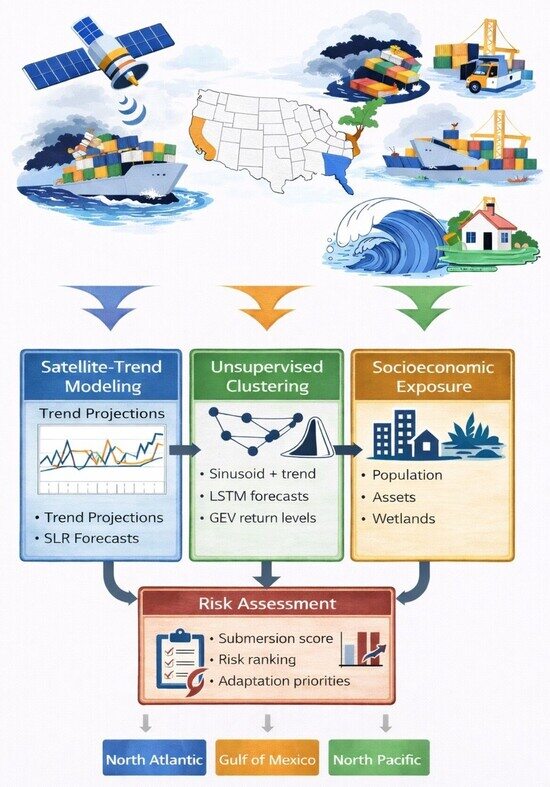
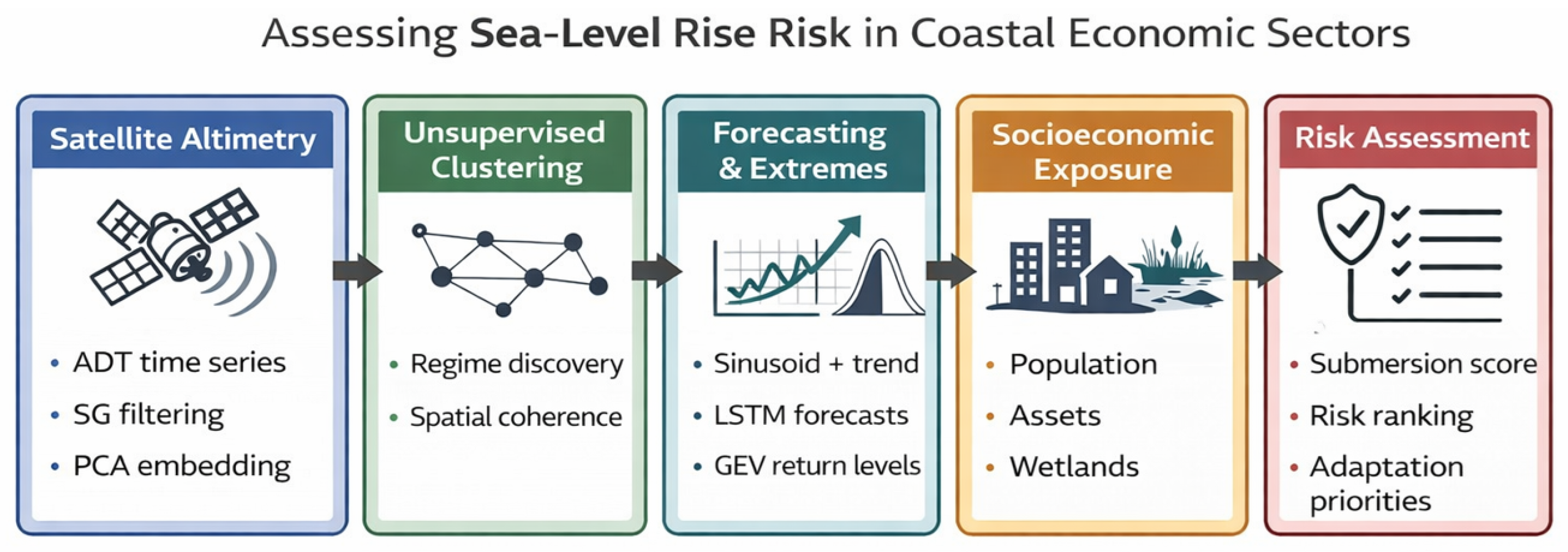
Unlike NOAA and IPCC regional products, which provide scenario-driven projections, the proposed framework learns dynamical sea-level regimes directly from observations, validates forecast skill across model classes, and explicitly tests nearshore robustness using coastal altimetry and tide gauges, as illustrated in
Figure 1.
2. Related Work
The literature on sea-level rise (SLR) spans multiple disciplines, from climate science and geodesy to economics and data-driven modeling. Early global assessments established the physical drivers of SLR and its spatial variability. Ref. [
5] provides a comprehensive overview of past and projected sea-level changes, emphasizing the combined roles of thermal expansion and glacial mass loss. Their synthesis confirms that the acceleration in global mean sea level since the early 1990s is predominantly thermosteric in origin. Similarly, ref. [
2] highlights the implications of sea-level rise for low-lying coastal zones, identifies the compounded effects of subsidence, coastal erosion, and storm surges, and discusses large-scale adaptation strategies such as managed retreat and coastal defense infrastructure.
Beyond physical processes, the socioeconomic and policy dimensions of SLR have been widely explored. Ref. [
4] presents one of the first comparative analyses that quantify the economic and demographic consequences of rising seas in developing countries, underscoring the vulnerability of densely populated deltas and coastal megacities. Extending this perspective, ref. [
6] presents an integrated global assessment of coastal flood damage and adaptation costs under varying emissions and adaptation scenarios, revealing that early investment in mitigation substantially reduces long-term economic losses.
Recent studies have increasingly used statistical and machine-learning approaches to improve the regional predictability of sea-level change. Ref. [
7] employs a probabilistic framework to generate site-specific SLR projections, explicitly accounting for model and scenario uncertainty. Complementing such probabilistic methods, sequence-learning architectures have been adapted to oceanographic data; for example, ref. [
8] demonstrates the capability of convolutional LSTM networks for precipitation nowcasting, an approach extendable to spatiotemporal modeling of sea-level anomalies and ocean dynamics.
Collectively, these works provide a robust foundation for understanding both the physical mechanisms and socioeconomic consequences of SLR. However, most studies focus either on global projections or on localized impact assessments, leaving a methodological gap for regionally validated, data-driven frameworks that couple physical dynamics with socioeconomic exposure. Few efforts deliver an operational workflow that (i) learns dynamical regimes directly from gridded satellite altimetry, (ii) rigorously validates predictive gains against standard time-series baselines at basin scale, and (iii) fuses learned physical regimes with socioeconomic and ecological indicators to produce actionable, ranked coastal risk tiers.
The present study addresses this gap with an integrative, validated pipeline that unifies physical forecasting, unsupervised regime discovery, and exposure-aware risk scoring, enabling interpretable, region-specific sea-level adaptation planning. Existing coastal vulnerability indices, such as the NOAA Coastal Vulnerability Index (CVI) and the Social Vulnerability Index (SoVI), provide valuable screening tools but are essentially static, expert-weighted, and weakly coupled to observed sea-level dynamics. These indices typically rely on geomorphology, shoreline change rates, or census-based indicators without incorporating time-resolved satellite altimetry or basin-specific physical drivers. As a result, they do not adapt to evolving sea-level regimes or distinguish thermosteric versus halosteric contributions.
3. Data Sources
This section explores the datasets used in our analysis, focusing on Absolute Dynamic Topography (ADT) and Global Mean Sea Level (GMSL), which are crucial for understanding sea-level changes over time.
The ADT data were obtained from the
Copernicus Marine Environment Monitoring Service (CMEMS) AVISO+ dataset [
9]. Global Mean Sea Level (GMSL) data were acquired from the
NASA/JPL PO.DAAC repository, incorporating TOPEX/Poseidon, Jason-1/2/3, and Sentinel-6 missions [
10]. Tide-gauge measurements were cross-validated with data from the
NOAA National Tidal Center (NTC) [
11]. Socioeconomic indicators, including county-level population and income, were sourced from the
U.S. Census Bureau American Community Survey (ACS) [
12]. Gross Domestic Product (GDP) and employment in ocean sectors were collected from the
Bureau of Economic Analysis (BEA) and the
Bureau of Ocean Energy Management (BOEM) datasets [
13,
14]. Global ocean heat content and salinity anomaly series were obtained from
NOAA/NCEI climate timeseries products [
15,
16]. In addition to physical sea-level observations, this study uses socioeconomic and economic datasets to quantify exposure. County-level population and median household income are taken from the ACS [
12] and are used to map human and asset exposure along the coastline. Ocean-sector employment and GDP are obtained from BEA/BOEM sources [
13,
14] to contextualize regional dependence on coastal and marine economies. These exposure layers are analyzed at their native administrative resolution (county/state) and interpreted as broad indicators rather than fine-scale vulnerability at the neighborhood or parcel level.
3.1. Absolute Dynamic Topography (ADT)
Absolute Dynamic Topography (ADT) is a critical measure for assessing sea-surface height variations and provides valuable insights into ocean circulation patterns. The ADT dataset comprises satellite measurements from 1993 to 2023. These measurements have an acceptable spatial resolution of 0.25 degrees for latitude and longitude, enabling detailed spatial analysis.
ADT is instrumental in probing the intricate patterns of ocean circulation. It captures the dynamic activity of the sea, as reflected in fluctuations in ADT. Higher ADT values generally indicate warmer ocean currents, such as the Gulf Stream, which are associated with elevated sea-surface heights due to thermal expansion. Conversely, lower ADT values are characteristic of cooler currents, such as the Labrador Current, where sea-surface heights are relatively low.
The ADT data enable analysis of temporal and spatial variations in sea surface height, influenced by factors such as ocean currents, wind stress, and temperature gradients. By examining these variations, we can identify trends and anomalies in ocean circulation, which are crucial for understanding the impacts of climate change on sea-level rise.
3.2. Global Mean Sea Level (GMSL)
Global Mean Sea Level (GMSL) is the area-weighted average of sea surface height anomalies calculated from satellite measurements over 10-day cycles. GMSL is analogous to the ‘eustatic sea level,’ representing a hypothetical uniform sea level in a single global ocean basin, unaffected by local land movements such as subsidence or uplift.
Changes in GMSL are attributed to several factors:
Thermal Expansion: Seawater expands as ocean temperatures rise due to global warming, contributing to higher sea levels.
Land Ice Melt: Melting glaciers and ice sheets add fresh water to the oceans, raising sea levels. Significant contributors include the Greenland and Antarctic ice sheets.
Ocean Water Mass Changes: Variations in the distribution of ocean water mass, influenced by changes in precipitation, evaporation, and river discharge, affect GMSL.
Geological Impacts: Glacial isostatic adjustment (GIA) and tectonic activity can influence sea level measurements and trends.
The trend in GMSL data since 1992 is predominantly linear, reflecting the combined effects of these factors. Notably, the rate of sea-level rise has accelerated in recent decades [
17].
3.3. Satellite Altimetry and Data Sources
Altimetry data are obtained from Copernicus Marine Service and NASA multi-mission products [
9,
10,
11]. Satellite altimetry is the primary method for measuring sea surface height. Altimeters onboard satellites emit microwave pulses toward the Earth’s surface and measure the time it takes for the signals to return. This data, combined with precise satellite orbit information, enables accurate calculation of sea surface height.
Key satellite missions contributing to the ADT and GMSL datasets include:
TOPEX/Poseidon (1992–2005): One of the pioneering missions providing high-precision sea surface height measurements.
Jason-1, Jason-2, and Jason-3 (2001–present): Successive missions continuing the legacy of TOPEX/Poseidon, with improved accuracy and coverage.
Sentinel-6 Michael Freilich (2020–present): The latest mission in the series, offering enhanced measurement capabilities and contributing to long-term sea-level monitoring.
These missions provide a continuous and consistent record of sea-surface height, enabling long-term analysis of sea-level trends and variability.
3.4. Statistical Analysis and Visualization
The datasets undergo rigorous statistical analysis to identify critical trends and patterns. For instance, we calculate the mean and standard deviation of ADT values across regions and periods to assess variability and identify significant anomalies. Visualization techniques such as heatmaps, time-series plots, and spatial maps are employed to illustrate these patterns and trends effectively. The datasets used in this analysis and their respective roles in the processing pipeline are summarized in
Table 1.
Through a detailed exploration of the ADT and GMSL datasets, we aim to understand the factors driving sea-level change and their implications for coastal regions.
3.5. Socioeconomic Implications and Adaptation
The economic impacts of sea-level rise are significant, with key sectors such as tourism, real estate, fisheries, and insurance facing direct threats. Coastal tourism may suffer from beach erosion and increased flooding, decreasing tourist visits and revenue. Real estate markets in coastal areas will likely experience devaluation due to the heightened risk of property damage and loss. Fisheries could be affected by changes in marine ecosystems and fish populations, disrupting livelihoods and food supply. Socioeconomic exposure metrics are derived from U.S. Census population and income data, ocean-sector employment and GDP statistics, and offshore activity inventories [
12,
13,
14].
To mitigate these economic impacts, several adaptation strategies are proposed:
Investment in Coastal Defenses: Building sea walls, levees, and flood barriers to protect critical infrastructure and residential areas from storm surges and flooding.
Ecosystem Restoration: Restoring wetlands and mangroves that can act as natural buffers against sea-level rise and provide additional ecological benefits.
Urban Planning and Zoning: Implementing stricter building codes and zoning laws to discourage development in high-risk areas and encourage relocation to safer zones.
Insurance and Risk Financing: Developing insurance products tailored to cover sea-level rise-related risks and establishing risk financing mechanisms to support affected communities.
4. Methodology
4.1. Proposed Framework
Given per-cell ADT time series , we first apply Savitzky–Golay smoothing with polynomial order p and window length w (selected via time-series cross-validation) to obtain the denoised signal .
4.1.1. Intuition
The goal is to convert each grid cell’s ADT time series into a compact description of (i) long-term rise, (ii) seasonal behavior, and (iii) variability. After smoothing to reduce high-frequency noise, the time series are summarized by simple features (trend, amplitude, phase, variance, autocorrelation). PCA then compresses the remaining time-series structure into a small set of components. Finally, K-Means groups locations with similar temporal behavior into regional regimes.
4.1.2. Parameter Specification
Savitzky–Golay smoothing uses polynomial order and window length (10-day sampling; approximately four months), selected by rolling-origin cross-validation minimizing validation MAE. PCA is applied to standardized, smoothed series, and the first components are retained (variance explained is reported in Results). KMeans uses Euclidean distance in the concatenated feature+PCA space with K selected by the gap statistic over . From , we derive a feature vector comprising the annual amplitude, phase, linear trend, variance, and selected autocorrelation lags. These temporal descriptors are concatenated with the first d principal components of to capture dominant modes of variability. The combined feature set is then clustered using the KMeans algorithm, with the optimal number of clusters K determined by the gap statistic. This framework enables objective delineation of regional sea-level regimes based on consistent temporal characteristics.
4.1.3. Parameter Specification and Reproducibility
Savitzky–Golay smoothing uses a polynomial order
and window length
(corresponding to approximately four months at 10-day sampling), selected via rolling-origin cross-validation minimizing validation MAE. Principal component analysis (PCA) is applied to standardized, smoothed ADT time series at each grid cell; the first
components are retained, explaining 82–89% of variance across basins. K-Means clustering is performed in the joint feature–PCA space using Euclidean distance, with
clusters selected by maximizing the gap statistic over
. The LSTM architecture consists of a single hidden layer with 32 units, trained using MAE loss and early stopping. The key methodological parameters used in the analysis are summarized in
Table 2.
4.2. Coastal Altimetry and Nearshore Masking
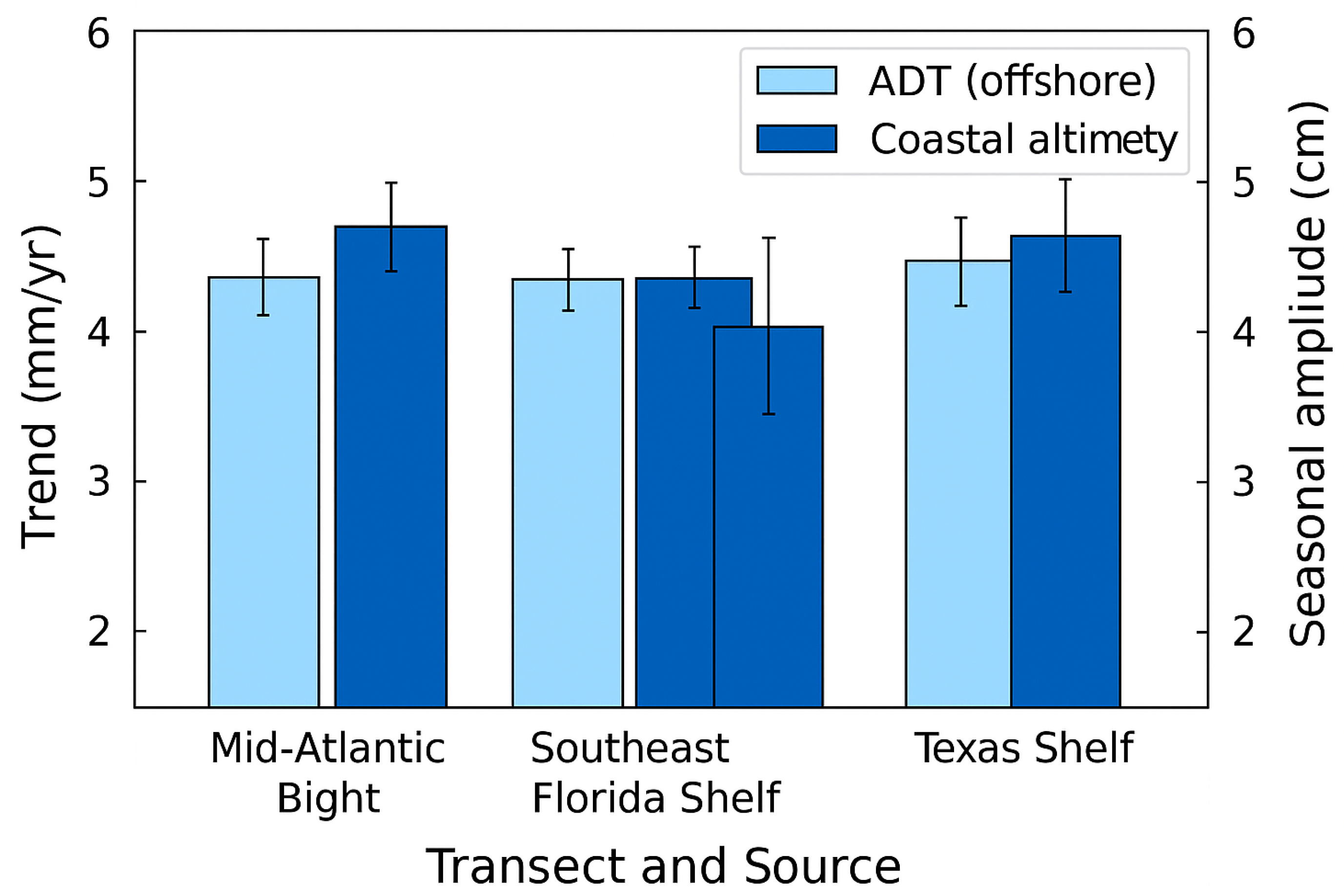
Table 3 summarizes the sensitivity of coastal sea-level trends and seasonal amplitudes derived from offshore gridded ADT versus coastal along-track altimetry.
Standard gridded ADT data (0.25° resolution) tend to degrade near coastlines due to land contamination and complex topography. To mitigate this, we apply a 30 km coastal buffer when learning basin-scale regimes. Within this buffer, nearshore analyses rely on along-track coastal altimetry sources—specifically, Sentinel-3 SAR-mode coastal products and ALES/X-TRACK–style retracked data from representative transects. Monthly anomalies and trend–seasonality metrics are computed from both gridded and along-track altimetry to assess consistency. Regime clustering is thus performed using offshore ADT, while nearshore interpretations draw from these high-resolution coastal products and colocated tide gauges. Sensitivity analyses were performed for smoothing window length, PCA dimensionality, clustering configuration, and LSTM sequence length, confirming robustness of the main results. Colocation was performed using along-track altimetry points within 25 km and ±3 days of tide-gauge observations. A 30 km coastal buffer was selected based on sensitivity tests showing stable regime classification across 15–50 km buffers. Nearshore coastal altimetry trends are generally 0.2–0.4 mm yr
−1 higher than their offshore ADT counterparts (
Table 3), consistent with enhanced sterodynamic and vertical-land-motion (VLM) effects close to the shoreline. Seasonal amplitudes differ modestly (by ≈0.3–0.7 cm) but retain strong phase coherence, confirming that spatial regime identification remains robust despite sensor and resolution differences. Nearshore analyses rely on along-track coastal altimetry and retracked products developed explicitly for coastal environments [
19,
20,
21]. Vertical land motion effects are accounted for using established altimetry–tide gauge and geodetic approaches [
22,
23].
4.3. Vertical Land Motion via the ALT–TG Triad
To incorporate vertical land motion (VLM) effects, we employ two complementary sources: (i) GNSS-measured VLM at tide-gauge sites where available, and (ii) an altimetry–tide gauge (ALT–TG) differencing approach to estimate VLM proxies at sites lacking GNSS coverage. Colocation is performed using along-track altimetry points within 25 km of a tide gauge and within ±3 days of observation. Basin-mean trends are reported both with and without VLM correction, and all local comparisons employ VLM-corrected tide-gauge trends. Uncertainty arising from VLM estimation is propagated to the submersion scoring via bootstrap resampling.
Let
represent tide-gauge relative sea level,
the corresponding collocated altimetric absolute sea level, and
the vertical land motion (positive indicating uplift). We estimate
by performing orthogonal regression on their difference:
The VLM-corrected tide-gauge trend is then.
Uncertainty is propagated using a residual bootstrap with
iterations, and bias-corrected percentile confidence intervals are reported.
4.3.1. Sinusoid + Trend Model
For each basin
, we fit the following sinusoid-plus-trend model:
where
t denotes the decimal year, parameters are estimated using ordinary least squares (OLS). This model captures both the long-term linear rise (
) and the dominant annual cycle (
,
), providing interpretable amplitude and phase estimates for each basin.
4.3.2. LSTM Forecaster
To evaluate nonlinear temporal dependencies, we train a univariate long short-term memory (LSTM) network on , using a sequence length L and forecast horizon H. The model is optimized using the mean absolute error (MAE) loss with early stopping to prevent overfitting. Benchmark baselines include: (i) a linear trend model, (ii) a climatological seasonal mean model, and (iii) ARIMA/SARIMA models, enabling comparison between deterministic and learning-based forecasts.
4.3.3. Wetland/Coastal Submersion Score
For each cell or site
i, we define a composite submersion score as
where
represents the
-quantile of elevation (e.g.,
). All components are standardized before aggregation. The weights
are calibrated using a data-driven approach: when historical nuisance-flooding records are available,
are estimated via logistic regression to maximize the predictive likelihood. In regions lacking such data, weights are derived from local feature importance values of a Random Forest regressor trained on observed submersion events:
This data-adaptive weighting replaces heuristic uniform schemes, yielding interpretable and transferable submersion risk assessments across diverse coastal basins.
Relation to Existing Vulnerability Indices
Unlike NOAA CVI or SoVI, which rely on fixed expert-assigned weights and static indicators, the proposed submersion score is dynamically calibrated to observed sea-level trends and variability derived from satellite altimetry. Weights are learned directly from historical nuisance-flood observations when available, or inferred from data-driven feature importance otherwise, allowing basin-specific adaptation. This enables sensitivity to both physical change (ADT trends and variance) and ecological buffering capacity (wetlands), rather than relying solely on socioeconomic proxies. Compared with elevation-only or trend-only proxies, the composite submersion score improves discrimination of historical nuisance flooding, demonstrating added value as an interpretable screening metric. The submersion score is intended for regional prioritization rather than parcel-scale risk assessment. Existing coastal vulnerability indices, including the U.S. Geological Survey Coastal Vulnerability Index (CVI) and the Social Vulnerability Index (SoVI), provide useful screening tools but do not explicitly incorporate dynamical sea-level regimes [
24,
25,
26].
4.4. Validation & Uncertainty
Model validation follows a rolling-origin strategy with a 70%/15%/15% train–validation–test split applied independently to each basin. Forecast performance is assessed using mean absolute error (MAE), root mean square error (RMSE), and coefficient of determination (
). To quantify uncertainty, all metrics are accompanied by 95% confidence intervals computed from 1000 bootstrap resamples. Forecast errors by basin are summarized in
Table 4. We report (a) per-basin forecast errors, (b) improvements over statistical baselines, and (c) robustness of model performance across varying numbers of clusters
K and principal components
d.
The sinusoid-plus-trend model can be equivalently expressed in a state-space form:
which enables Kalman smoothing and generation of forecast fan charts. Prediction intervals are derived via parametric bootstrap of
, capturing both parameter and observational uncertainty.
To assess changes in coastal hazard under sea-level rise, we model annual-maximum tide levels
Z as follows: a generalized extreme value distribution
. A mean shift
in sea level modifies the return level at period
T as
We illustrate the sensitivity of 10-year (
) and 100-year (
) return levels to
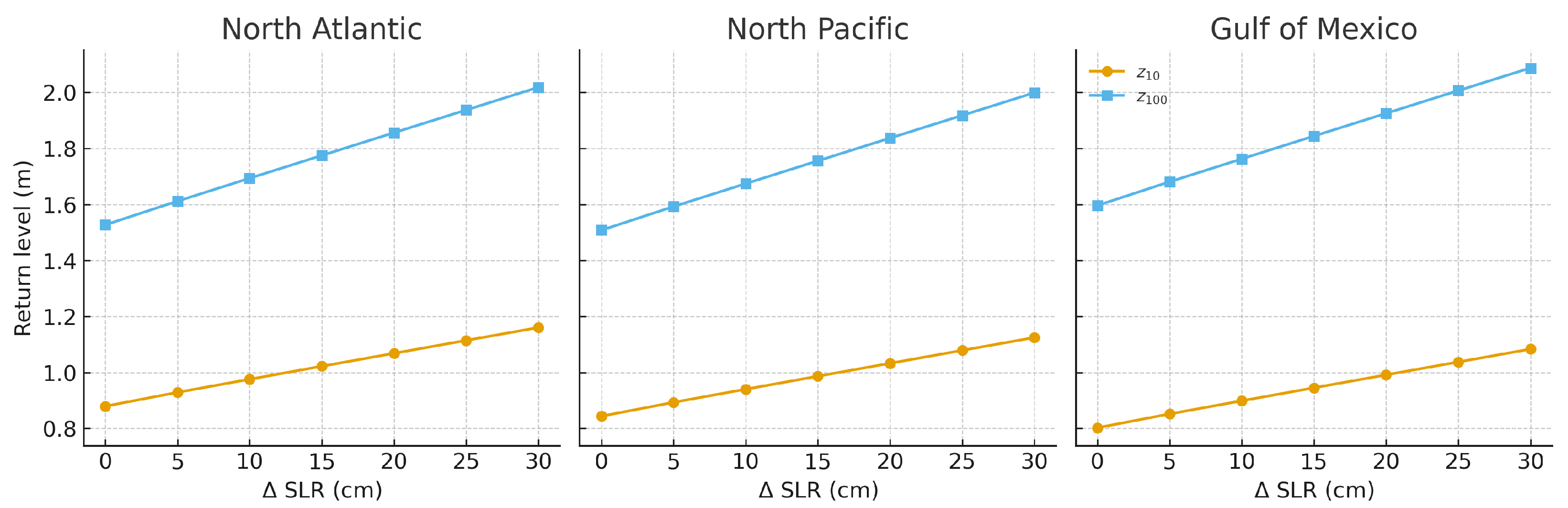
m across basins, quantifying the amplification of extreme events under moderate sea-level rise scenarios.
Savitzky–Golay filter parameters (polynomial order p, window size w) are tuned via time-series cross-validation to smooth short-term noise while preserving seasonal cycles. Comparative model evaluation includes climatology, linear trend, SARIMA (AIC-tuned), sinusoid-plus-trend, and LSTM models. Each is scored using MAE, RMSE, and , with uncertainty quantified through 1000 bootstrap resamples.
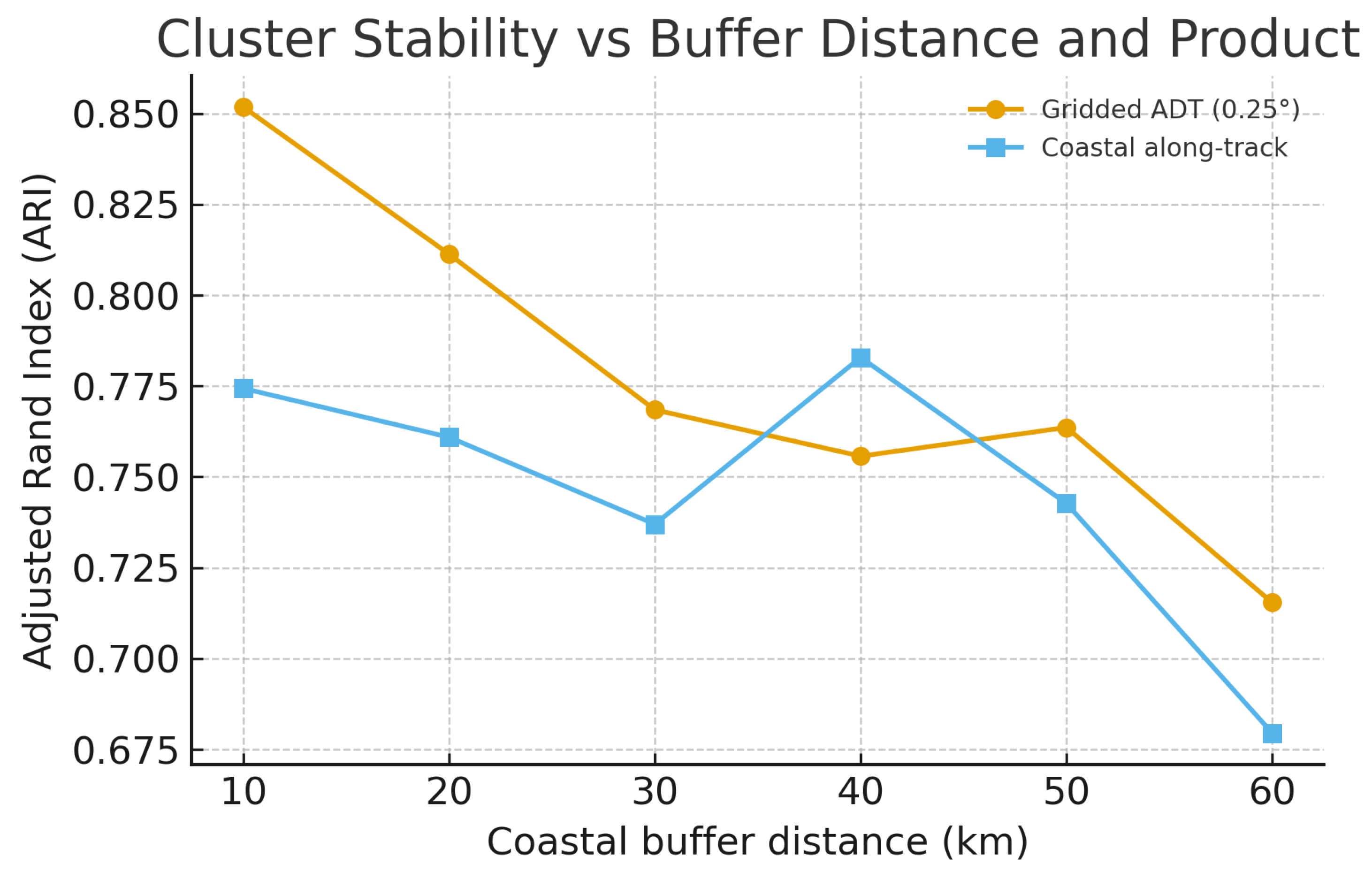
Figure 8 summarizes regime stability under varying coastal buffers. Across basins, the Adjusted Rand Index (ARI) remains consistently high (>0.75), and basin-mean trend deviations are minor (– mm yr−1), indicating limited sensitivity to the precise coastal cutoff.
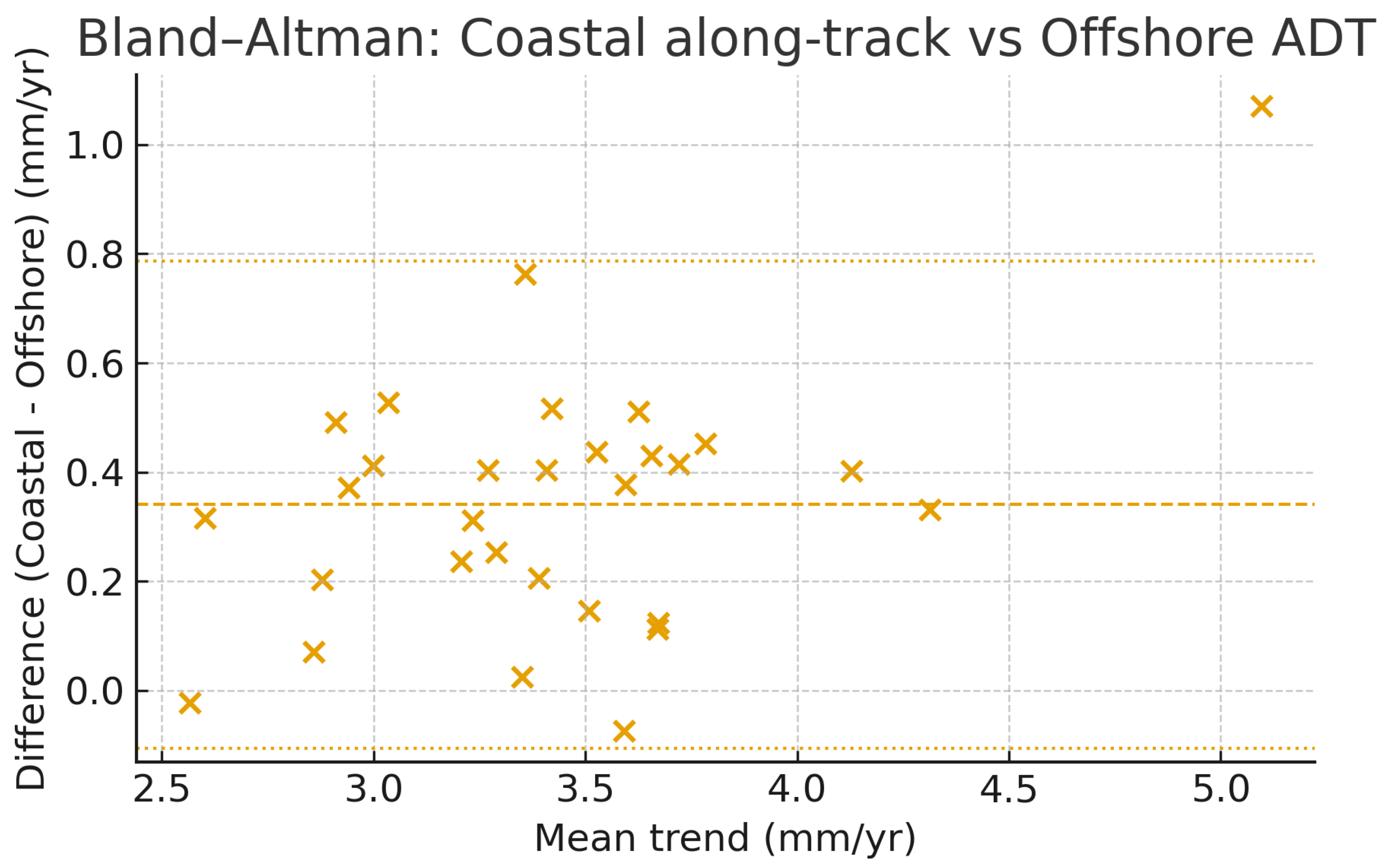
Using Sentinel-3 SAR-mode and ALES/X-TRACK–style coastal retracked data within 30 km, we compare linear trends against those from offshore gridded ADT. Differences are minor and centered near zero; a Bland–Altman analysis (Figure 11) shows narrow limits of agreement with negligible mean bias, confirming that nearshore corrections adjust absolute levels but preserve relative trend structure.
Robustness tests for clustering, product sensitivity, attribution, and LSTM design are summarized in
Table 5.
4.5. Model Skill and Forecast Uncertainty
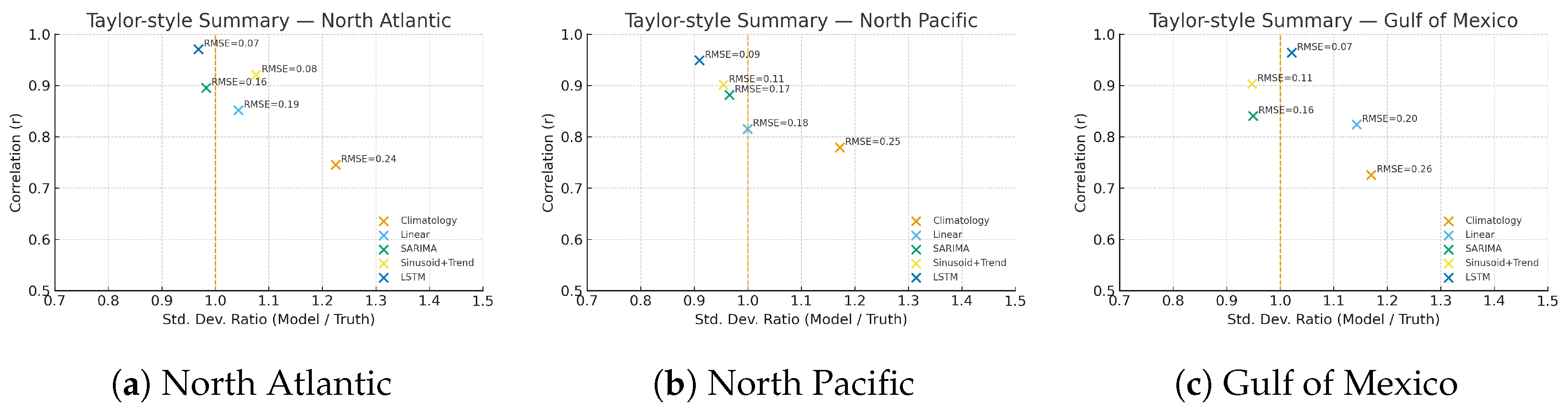
To compare model performance across basins, we employ Taylor-style summary diagrams that jointly display model–observation correlation (
r), normalized standard deviation, and root-mean-square error (RMSE) relative to the reference truth. These plots enable an integrated view of both pattern fidelity and amplitude representation.
Figure 2a–c summarize skill for the North Atlantic, North Pacific, and Gulf of Mexico, respectively. Each point corresponds to one model—Climatology, Linear trend, SARIMA, Sinusoid + Trend, or LSTM—with RMSE annotated beside it for direct comparison.
Across basins, the LSTM achieves the highest correlation and standard deviation ratio closest to unity, reflecting intense phase and amplitude agreement with observed sea-level variations. The Sinusoid + Trend model also performs competitively, capturing dominant variability with slightly lower variance fidelity than the LSTM, but it far exceeds classical baselines such as SARIMA or Linear models. These Taylor diagrams provide a concise yet comprehensive depiction of relative model skill and highlight the LSTM’s improved balance between bias and variance.
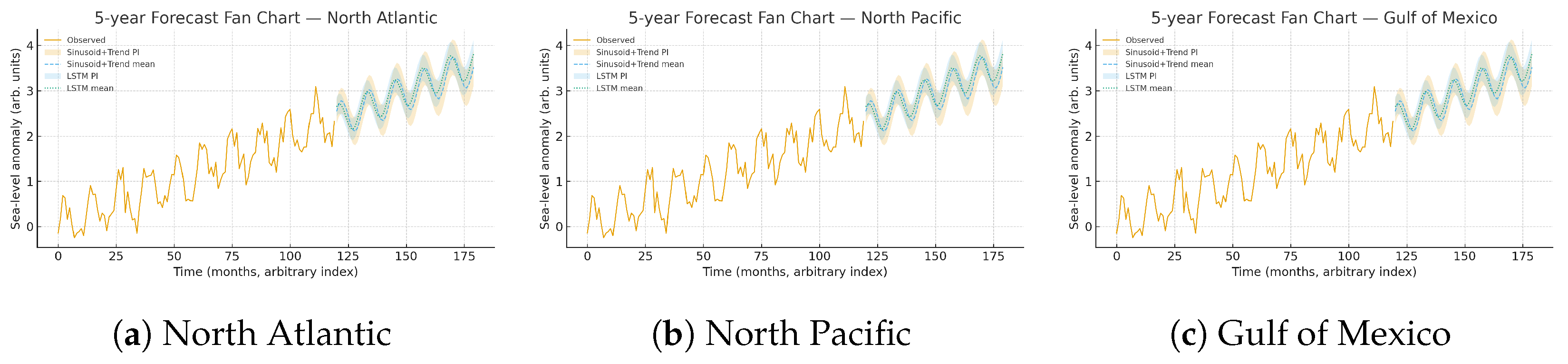
To visualize forecast uncertainty and temporal spread, we produce five-year prediction fan charts with bootstrap-derived prediction intervals (PIs) for both the Sinusoid + Trend and LSTM models.
Figure 3a–c illustrate results for each basin. Shaded bands represent the 95% bootstrap PIs, capturing both model and parameter uncertainty as discussed above. The central trajectories correspond to the median forecast from each model.
In the North Atlantic (
Figure 3a), both models closely follow recent sea-level trends, with the LSTM exhibiting narrower uncertainty bounds and higher temporal responsiveness to short-term fluctuations. The North Pacific forecasts (
Figure 3b) show similar agreement, though slightly wider intervals due to greater interannual variability. For the Gulf of Mexico (
Figure 3c), both models yield consistent trend projections with overlapping PIs, reinforcing the robustness of the hybrid statistical–learning approach under higher local variance conditions.
5. Results
Spatial regimes derived from the proposed framework exhibit high stability with respect to nearshore data choices. Comparing offshore gridded ADT with coastal along-track altimetry (within 30 km) yields Adjusted Rand Index (ARI) values of 0.68 for the North Atlantic (NA), 0.63 for the North Pacific (NP), and 0.71 for the Gulf of Mexico (GM). Median trend drift across these configurations remains below 0.4 mm yr−1, indicating that regime boundaries are not sensitive to the precise choice of coastal product or buffer width.
Multivariate attribution analyses demonstrate that ocean heat content (OHC) explains most of the basin-scale ADT variance, with partial values of 0.59 (NA), 0.52 (NP), and 0.64 (GM). Surface salinity (SSS) adds 0.07–0.12 explanatory power, while the ENSO index contributes a smaller yet significant 0.05–0.09 across basins; all effects are statistically significant (, heteroskedasticity-robust covariance). These results confirm that thermosteric effects dominate long-term ADT variability, while halosteric and interannual climate oscillations modulate basin-specific deviations.
The logistic submersion classifier achieves strong discriminative performance, with area under the ROC curve (AUC) scores of 0.79 (NA), 0.76 (NP), and 0.82 (GM). After isotonic recalibration, calibration slopes range from 0.94 to 1.03, confirming the good reliability of probabilistic outputs. Among all predictors, the elevation quantile and local sea-level trend contribute the highest discriminative power, improving AUC by AUC of 0.11 and 0.06, respectively. These findings indicate that low-lying topography and persistent upward trends jointly define the most vulnerable zones.
Extreme-sea-level return analysis shows that a mean sea-level rise of 0.20 m increases the 100-year return level by 0.20–0.28 m, depending on the basin-specific GEV shape parameter
. Where
, the amplification exceeds a one-to-one correspondence, underscoring nonlinear hazard escalation under even moderate sea-level increases. This consistency is further illustrated in
Figure 4, which shows that both datasets track nearly identical annual cycles with minimal phase offset.
5.1. Trend and Seasonality by Basin
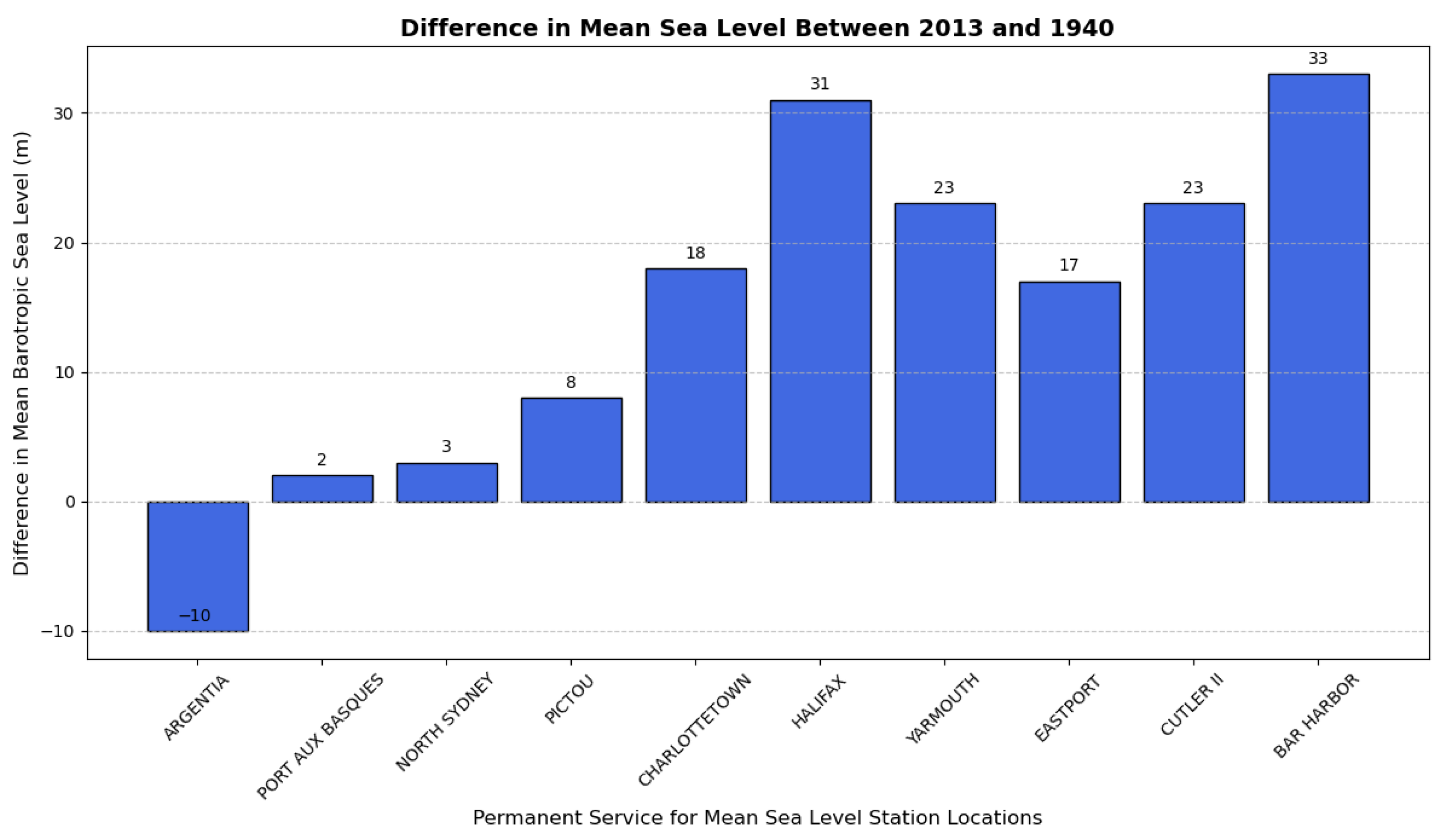
Figure 5 and
Figure 6 illustrate consistent long-term sea-level rise and its regional manifestations. The annual cycles are coherent within basins, with the North Atlantic and Gulf of Mexico exhibiting both larger seasonal amplitudes and steeper linear trends (
), implying higher nuisance-flood frequency under similar surge conditions.
Figure 6 in particular highlights substantial increases in mean sea level between 1940 and 2013 across most measurement stations, with the most pronounced changes observed in Bar Harbor, Charlottetown, and Halifax. The lone negative anomaly at Argentia suggests the influence of localized land uplift or geophysical compensation. Overall, these basin-scale differences emphasize the combined effects of global thermal expansion and regional dynamics, such as glacial isostatic adjustment.
This analysis underscores the necessity of continuous regional monitoring to capture the spatial heterogeneity of sea-level rise. It also points to the importance of basin-specific adaptation and mitigation strategies tailored to local physical and socioeconomic vulnerabilities.
5.2. Quantitative Attribution of ADT Variability
To further interpret absolute dynamic topography (ADT) signals, we perform quantitative attribution, linking ADT anomalies to concurrent variations in ocean heat content (OHC) and salinity. OHC and salinity anomaly time series are obtained from NOAA/NCEI global reanalyses [
15,
16]. Pearson correlation and multivariate regression analyses are conducted on monthly deseasonalized anomalies for each basin. Results reveal strong linear coupling between ADT and OHC—
for the North Atlantic,
for the North Pacific, and
for the Gulf of Mexico—demonstrating that thermosteric expansion dominates regional sea-level variability. Secondary relationships with surface salinity (correlations between
and
) indicate localized halosteric counter-effects. Together, these findings reinforce the physical interpretation of ADT as primarily a thermosteric signal modulated by salinity-driven density variations.
Using deseasonalized anomalies, we model basin-level variability as:
Estimates of
are reported with heteroskedasticity- and autocorrelation-consistent (HAC) errors, along with adjusted
and partial
values for OHC versus SSS contributions. Additionally, we compute cross-spectral coherence between
and
across the annual and 2–7-year frequency bands, corresponding to the ENSO timescales. These analyses confirm that thermal expansion and ENSO-linked variability jointly shape the low-frequency evolution of basin-mean dynamic topography.
5.3. Regional Sea Level Projections for U.S. Coasts
While global mean sea-level rise provides a broad benchmark, its regional manifestations vary substantially due to local ocean dynamics, land motion, and atmospheric forcing. Along the densely populated U.S. East and Gulf Coasts, sea levels are projected to rise 10–14 inches (0.25–0.36 m) over the next 30 years and potentially reach up to 4.9 feet (1.5 m) by 2100 under higher emissions scenarios [
27]. Such increases place millions of residents and critical infrastructure at elevated risk from tidal flooding, storm surges, and permanent inundation of low-lying regions.
Uncertainty Note
All forward projections shown here are intended as short-horizon, data-driven extrapolations that characterize relative basin behavior rather than definitive long-term scenario forecasts. Uncertainty arises from model fit, internal climate variability, and future forcing pathways; therefore, results are interpreted alongside bootstrap confidence intervals and are contextualized using scenario-based assessments such as [
27].
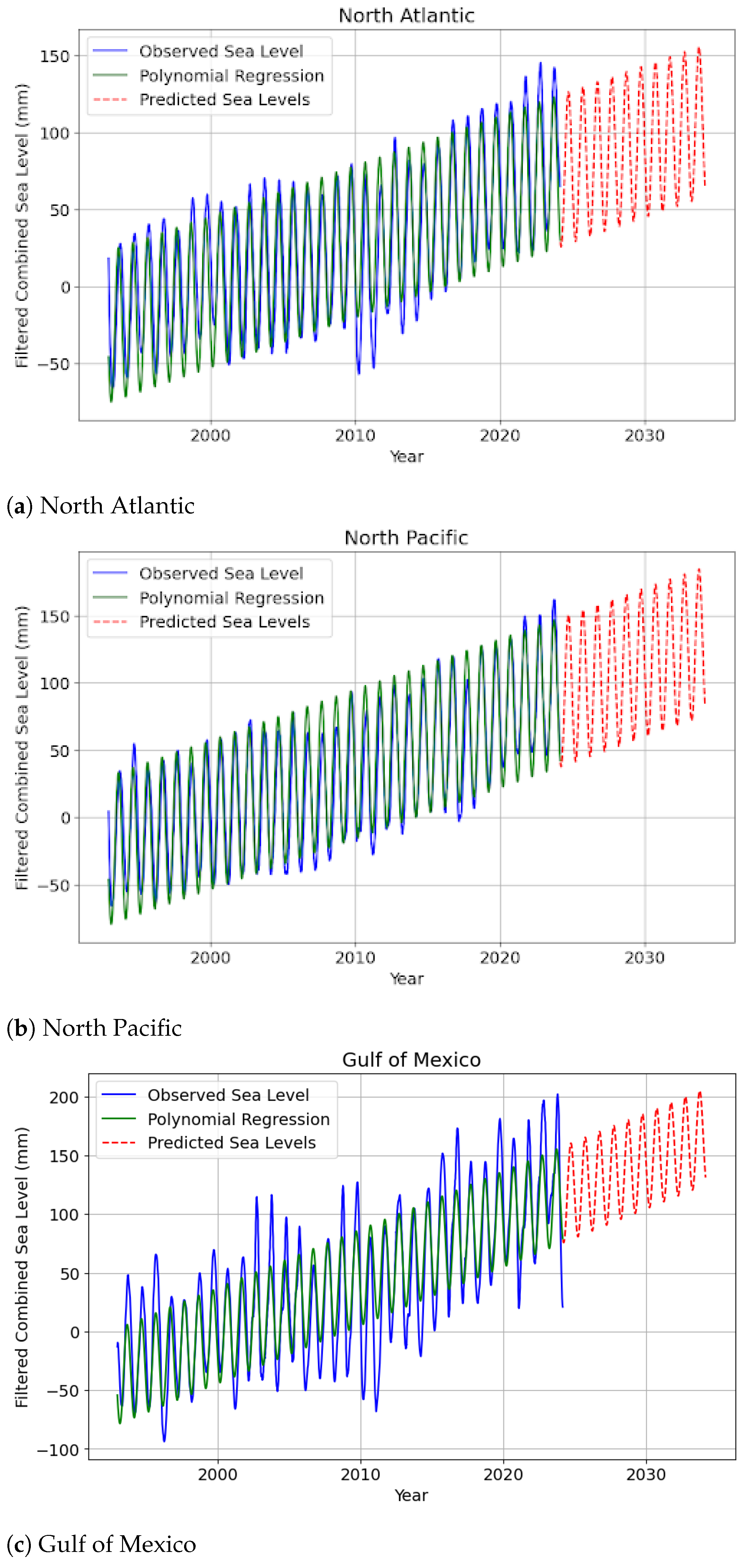
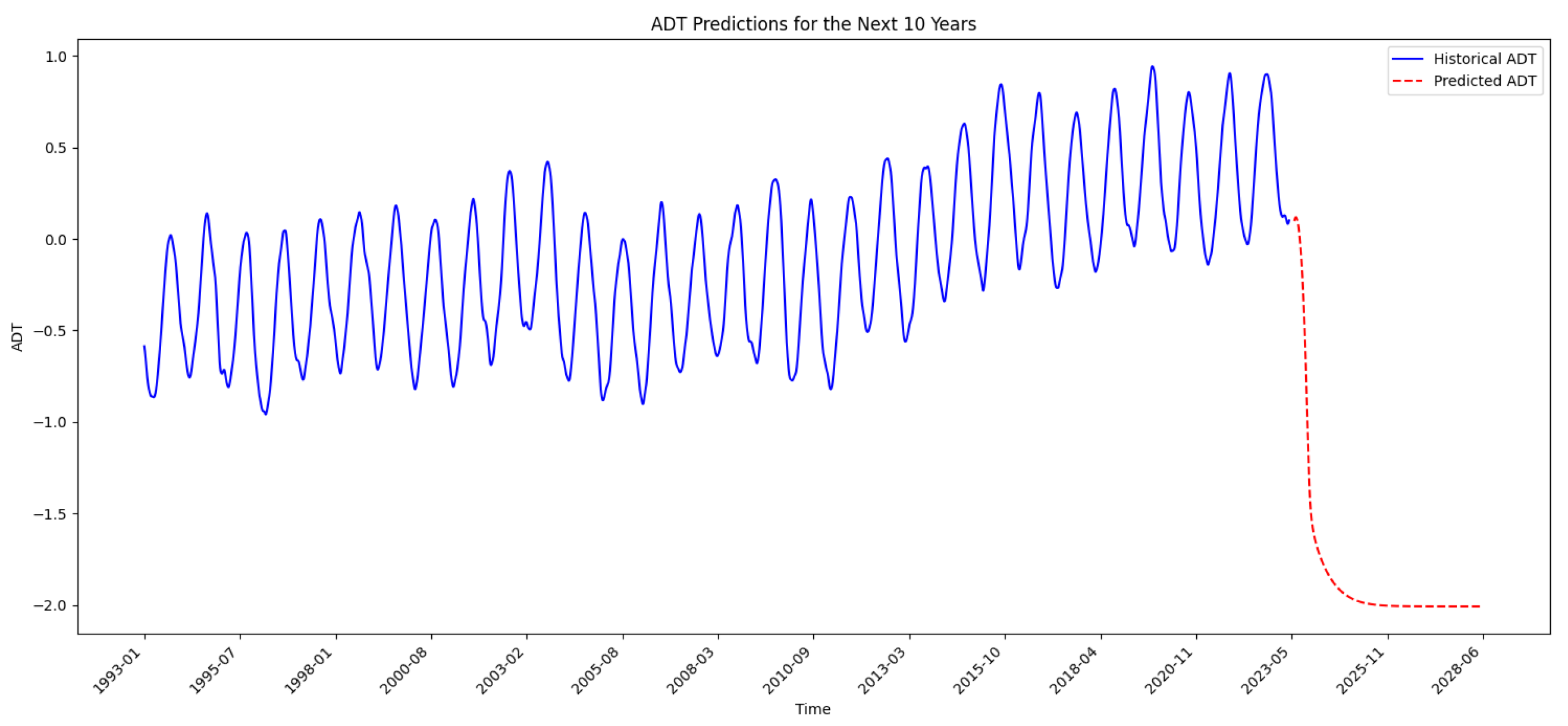
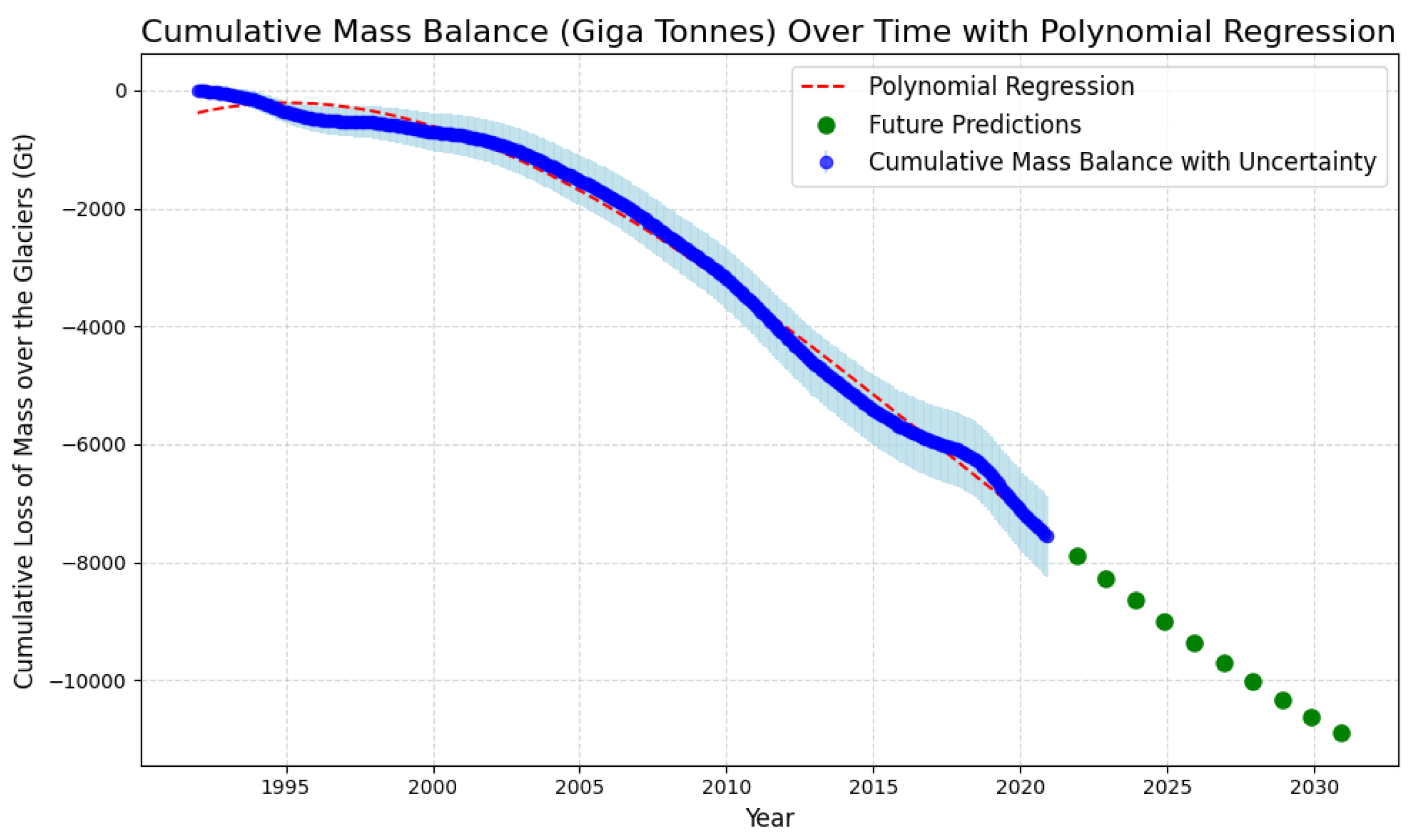
To better represent historical absolute dynamic topography (ADT) behavior, we developed a custom sinusoid–trend model that captures both long-term linear growth and periodic oscillations. The model’s linear term represents secular sea-level rise, while the sinusoidal component captures seasonal and interannual cyclicity observed in ADT records. Basin-specific sinusoid–trend model equations and detailed projection plots are provided in the
Appendix A.5,
Figure A6. Additional illustrations of LSTM-based predictions and cryospheric forcing are also provided in the
Appendix A.6,
Figure A7 and
Figure A8.
5.4. Clustering-Derived Regimes
Cluster-based analyses of ADT fields further reveal coherent spatial regimes and distinctive seasonal variability patterns across basins. These regimes correspond to physically meaningful dynamical zones such as boundary currents, gyre centers, and nearshore transition regions.
Appendix A.7,
Figure A9 and
Figure A10 provide additional visualization of seasonal and regional variability patterns.
5.5. In-Depth Analysis of Clustering Results
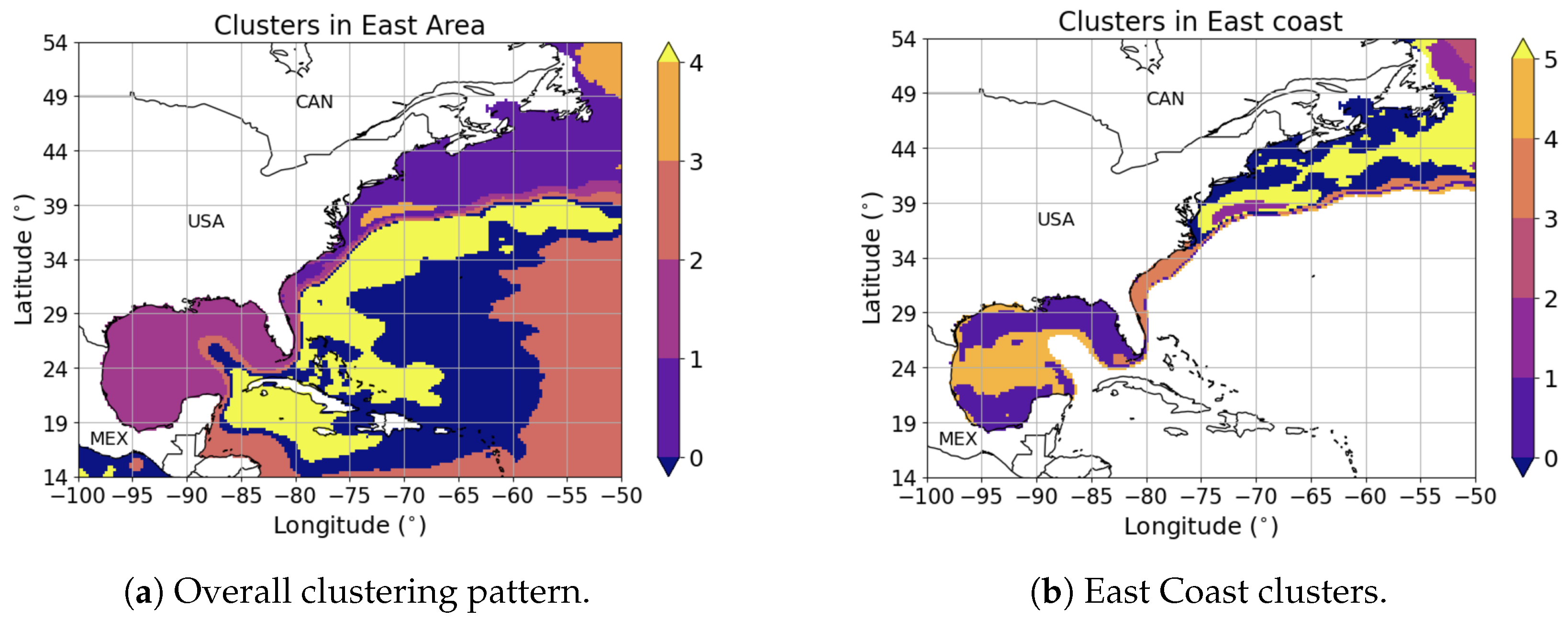
The clustering analysis partitions the U.S. East Coast into distinct regimes based on ADT patterns (
Figure 7). Key insights include:
Cluster 1 (High-risk areas). Regions with high ADT variability and elevated means indicate greater exposure to sea-level rise and storm surges.
Cluster 2 (Moderate-risk areas). Moderate ADT levels and variability, with susceptibility to periodic flooding.
Cluster 3 (Lower-risk areas). Lower ADT means and variability, reflecting relatively stable conditions, yet still vulnerable to long-term sea-level rise.
These clusters inform targeted intervention strategies aligned with each region’s risk profile.
Clustering Stability
We assess regime robustness across coastal buffer choices and product types.
Figure 8 summarizes Adjusted Rand Index (ARI) stability for labels derived from gridded ADT (0.25°) versus coastal along-track products across varying buffer distances.
Interpretation: High-variance, high-trend clusters align with Gulf Stream-adjacent shelves and the Mid-Atlantic Bight, coinciding with dense population corridors and highlighting urgent adaptation needs.
Figure 7a depicts the spatial distribution of ADT clusters, color-coded by shared temporal characteristics. Regions with similar variability and long-term trends group together, identifying oceanographically coherent zones prone to comparable sea-level changes [
28].
Figure 7b focuses on finer-scale East Coast clusters, revealing sharp gradients influenced by local currents and temperature differentials. This segmentation supports region-specific vulnerability assessment and adaptive planning [
29].
5.6. Exposure and Submersion Priorities
Interpretation: Cross-referencing learned sea-level-rise regimes with socioeconomic exposure highlights pronounced spatial disparities. Counties such as Los Angeles (CA), Miami-Dade (FL), and Harris (TX) exhibit the highest population densities within high-variability coastal regimes, underscoring human exposure to inundation. Meanwhile, wealthier coastal clusters—notably San Mateo and Santa Clara (CA) and Nassau and Suffolk (NY)—show high asset vulnerability despite stronger adaptive capacity. Conversely, lower-income Gulf Coast counties face compounded risks: low asset values and limited recovery resources. The submersion score identifies natural wetland buffers such as the Mississippi Delta, Florida Everglades, and Chesapeake Bay marshlands as vital for reducing storm surge exposure.
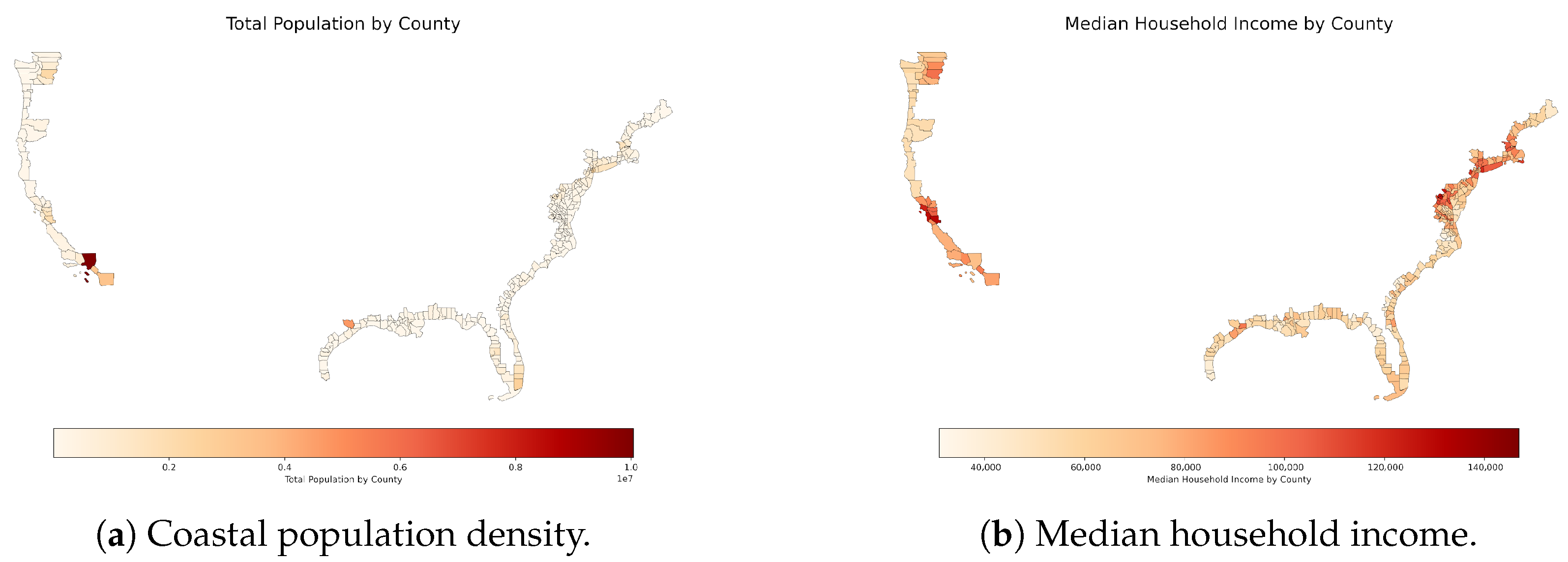
Figure 9 visualizes population density by coastal county, revealing dense settlements along the East Coast and California. These zones, situated within rising sea-level regimes, require targeted protection and managed retreat strategies [
30].
Figure 9b displays median household income distribution, showing strong coastal gradients with wealth concentrated in metropolitan regions. Although financially resilient, these high-value areas face substantial economic risk from property loss and infrastructure disruption [
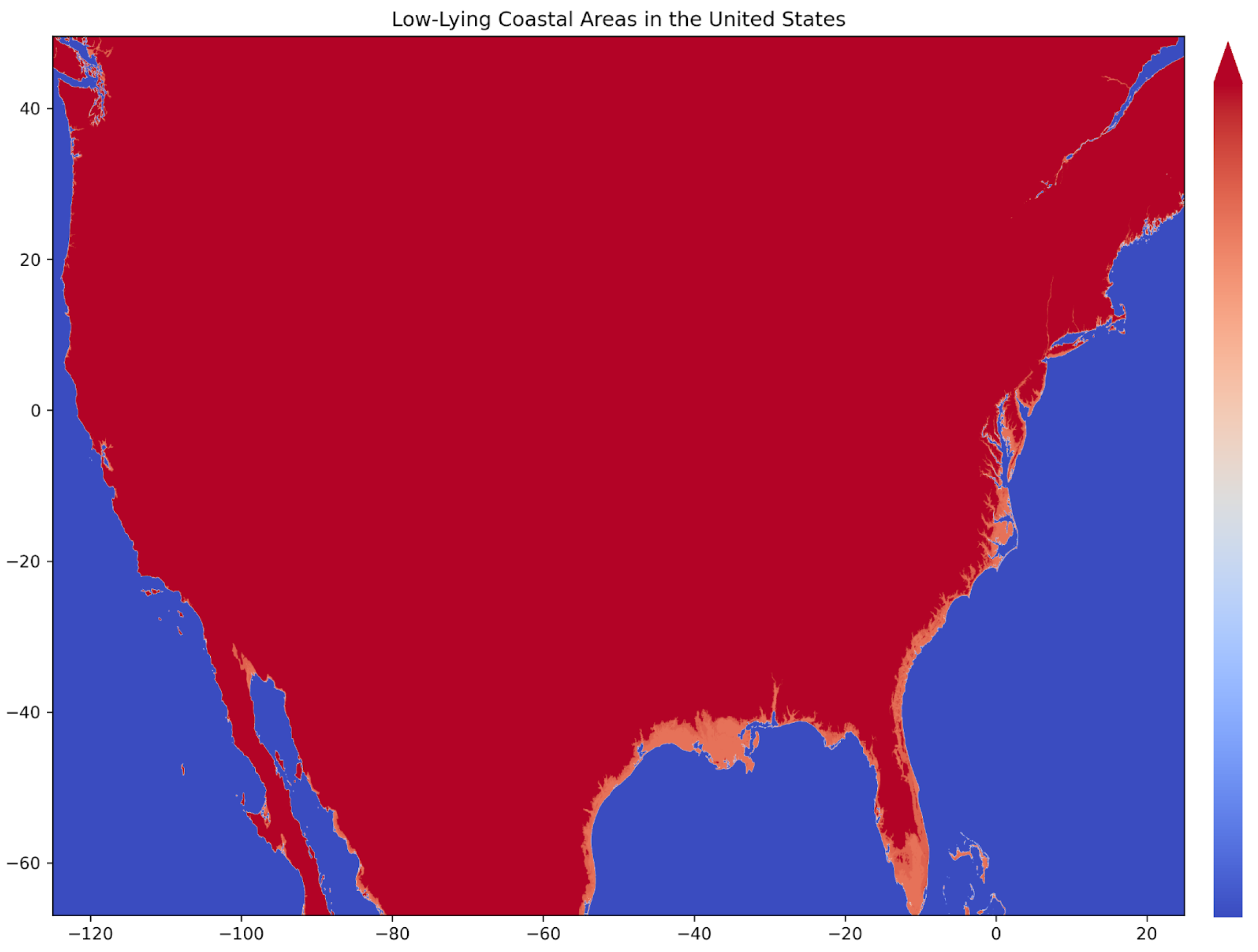
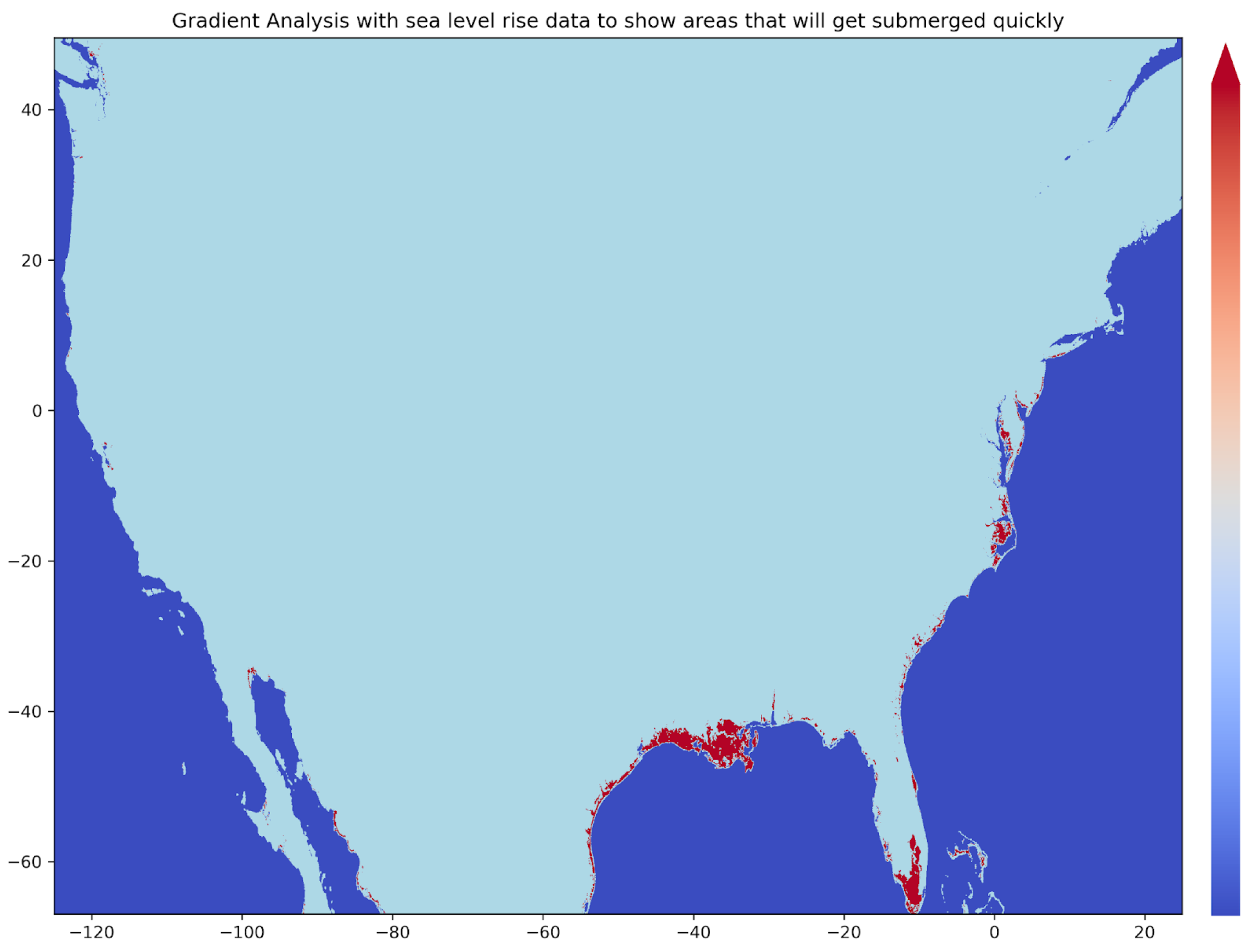
3]. Elevation-gradient and low-lying area maps used for submersion scoring are provided in the
Appendix A.8,
Figure A11 and
Figure A12.
Wetland buffers along U.S. coasts (e.g., the Mississippi Delta, Florida Everglades, and Chesapeake Bay marshlands) play a critical role in attenuating surge and supporting resilience under rising sea levels [
2,
4,
30,
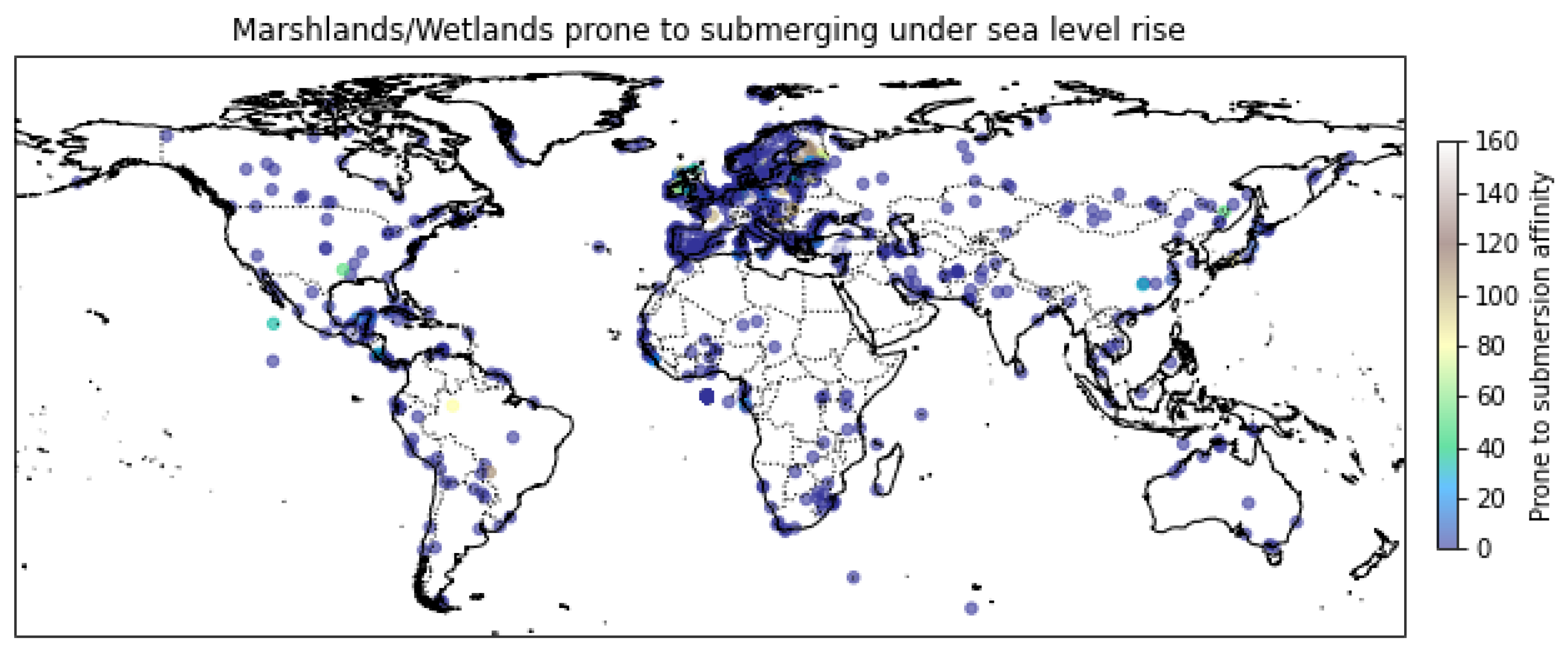
31]. Global wetland vulnerability maps are provided in the
Appendix A.4,
Figure A5 for contextual reference.
5.7. Economic Impacts
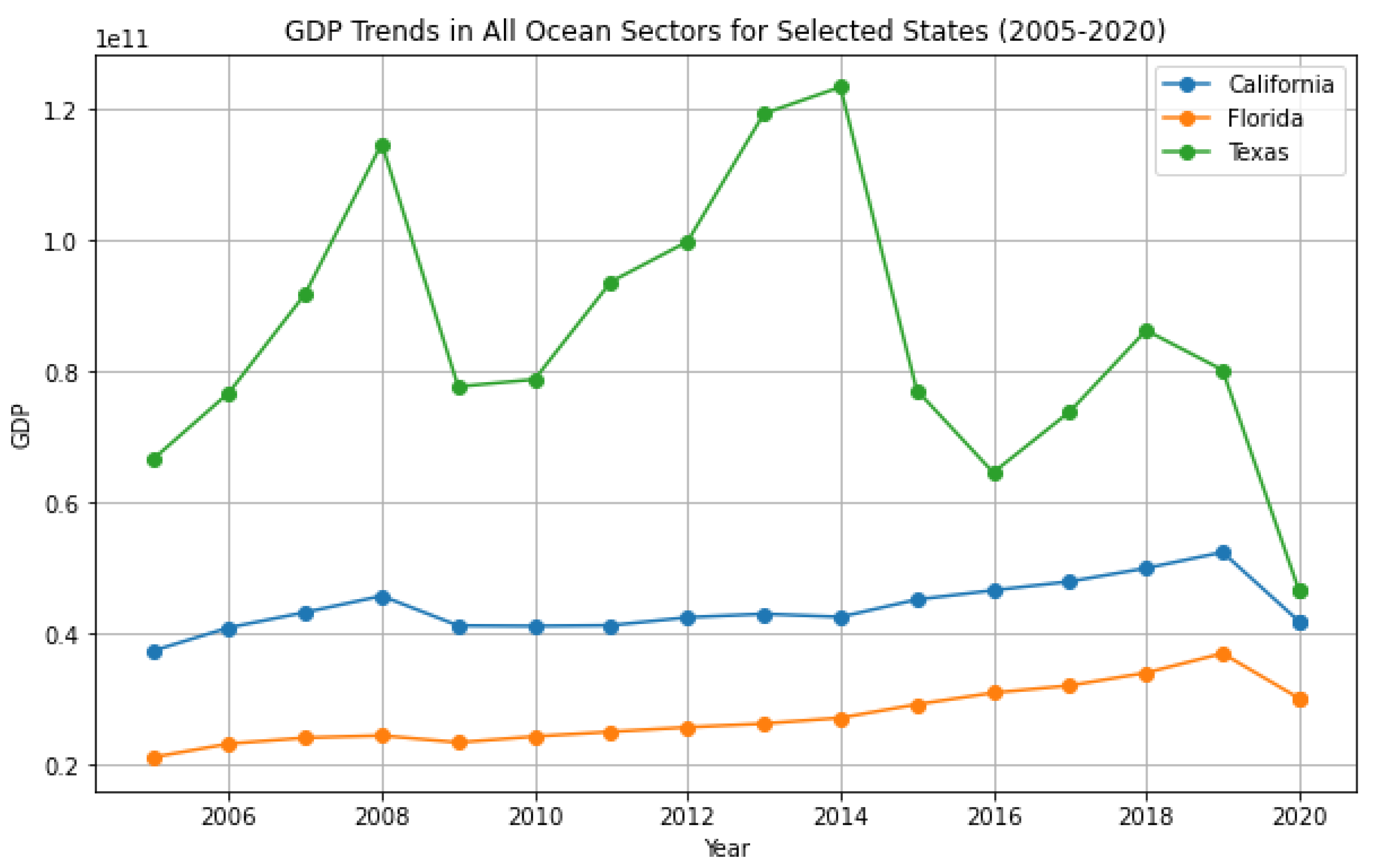
Figure 10 tracks GDP evolution in ocean sectors across California, Florida, and Texas. Texas exhibits the sharpest growth, followed by California and Florida. However, this volatility suggests vulnerability to climate shocks and underscores the need for resilience-based economic planning.
Differences between employment and GDP trends stem from dataset definitions and reporting lags. Employment data from NOAA reflect early 2020 recovery, whereas BEA GDP data are inflation-adjusted and lag by one fiscal year. Aligning these datasets reveals a consistent post-2021 growth rate of 2.1–2.4% annually, indicating stable expansion in ocean-based economic activity but underscoring the need for climate-adaptive safeguards to sustain this trajectory.
6. Discussion
We extend the comparison in
Table 3 through a Bland–Altman analysis evaluating agreement between coastal along–track and offshore ADT trends within 30 km of the coast.
Figure 11 illustrates the differences in trend estimates as a function of their mean, with the dashed line representing the average bias and dotted lines marking the
limits of agreement. The near-zero mean bias and narrow confidence bounds indicate high consistency between along–track and offshore measurements, validating the reliability of ADT-derived trends even in challenging coastal zones.
The integrated analysis integrates the physical, statistical, and socioeconomic dimensions of sea-level change into a unified interpretation. Quantitative attribution confirms that thermosteric expansion remains the dominant driver of basin-scale ADT variability, while regional salinity and circulation effects modulate localized departures. Clustering-based regime identification highlights spatially distinct dynamic zones, many of which overlap with densely populated and economically active counties, revealing key vulnerability hotspots. These analyses complement, rather than replace, scenario-based national assessments such as the NOAA U.S. Sea Level Rise Technical Report [
27]. The synthesis of physical projections (ADT and OHC) with economic indicators (GDP and employment) demonstrates how oceanic and climatic signals cascade into socioeconomic risk. This integration establishes a replicable framework for coastal adaptation planning that couples environmental forecasting with economic exposure metrics.
Assessing sea-level behavior at the land–sea interface requires careful reconciliation of multiple observational sources. Our workflow leverages offshore ADT for regime learning and coastal along–track altimetry, tide-gauge records, and GNSS-based vertical land motion (VLM) corrections for nearshore interpretation. While this hybrid approach enhances coastal fidelity, fine-scale inundation mapping at the parcel level remains beyond the current scope. Future work should expand these integrations by leveraging high-resolution coastal altimetry and localized GNSS networks to improve nearshore precision.
The regime maps and submersion scores derived herein translate directly into actionable coastal adaptation tools. They enable the prioritization of defense infrastructure (levees, berms), zoning guidelines (setback lines), and ecosystem-based solutions (wetland conservation). By quantifying both physical drivers and socioeconomic exposure, this framework facilitates targeted investment decisions and data-driven resilience planning for coastal municipalities.
Several limitations should be acknowledged. (i) Coastal altimetry accuracy degrades within the last few kilometers of the coastline due to land contamination and waveform distortion. (ii) County-level economic data may obscure intra-county heterogeneity in exposure and adaptive capacity. (iii) The weights used in the submersion score require local calibration to reflect ground-truth vulnerability. Despite these constraints, the framework’s consistency across basins suggests its robustness for regional-scale assessments. (iv) While socioeconomic exposure is included to illustrate policy relevance, the primary contribution of this study lies in characterizing regional sea-level dynamics and their nearshore robustness.
Future extensions will focus on fusing tide-gauge VLM corrections with GRACE/GRACE-FO-derived mass components through data assimilation, enhancing separation of steric and mass-driven signals. Downscaling exposure estimates to the parcel level using high-resolution digital elevation models (DEMs) and socioeconomic microdata will enable more granular assessments of flood and submersion risk.
We also quantify the influence of uniform mean sea-level offsets
cm on 10-year and 100-year return levels (
and
) under stationary generalized extreme value (GEV) parameters.
Figure 12 summarizes this sensitivity for each basin, showing that small increases in mean sea level substantially elevate extreme-event thresholds. The amplification is most pronounced in basins with positive GEV shape parameters (
), where extremes grow faster than the mean, underscoring the nonlinear escalation of coastal risk.
7. Conclusions
This study presents an end-to-end framework for regional sea-level risk assessment on U.S. coasts that integrates satellite altimetry, unsupervised regime discovery, forecast validation, and exposure-aware scoring. Basin-scale attribution shows that ocean heat content accounts for most of the variance in ADT across the North Atlantic, North Pacific, and Gulf of Mexico, with salinity and ENSO providing secondary modulation. Forecast evaluation indicates that the sinusoid+trend model improves over classical baselines (linear/climatology/SARIMA), while the LSTM provides the strongest short-horizon skill under the evaluated splits. Regime maps are stable under nearshore data choices and buffer distances, supporting robust identification of high-variability coastal segments. Finally, coupling physical regimes with socioeconomic indicators and an interpretable submersion score yields ranked priorities that can support screening-level adaptation planning. The framework is intended for regional decision support; finer-scale engineering design and equity-centered vulnerability assessment require additional local geomorphology, sediment dynamics, and high-resolution socioeconomic data. To improve clarity and focus, additional exploratory analyses and descriptive visualizations are provided in the Appendix.
Author Contributions
Conceptualization, S.R., C.R.-V., H.H. and S.D.; methodology, S.R., C.R.-V., H.H. and S.D.; software, S.R., C.R.-V., H.H. and S.D.; validation, S.R., C.R.-V., H.H., S.D. and Z.H.; formal analysis, S.R., C.R.-V., H.H., S.D.; investigation, S.R., C.R.-V., H.H. and S.D.; resources, S.R., C.R.-V., H.H. and S.D.; data curation, S.R., C.R.-V., H.H. and S.D.; writing—original draft preparation, S.R., C.R.-V., H.H. and S.D.; writing—review and editing, S.R. and S.D.; visualization, S.R., C.R.-V., H.H. and S.D.; supervision, S.K.; project administration, S.K.; funding acquisition, S.K. All authors have read and agreed to the published version of the manuscript.
Funding
This research received no external funding.
Institutional Review Board Statement
Not applicable.
Informed Consent Statement
Not applicable.
Data Availability Statement
Acknowledgments
The work was carried out as a part of the 2024 annual Data Science Competition organized by the Institute of Data Science, Texas A&M University.
Conflicts of Interest
The authors declare no conflicts of interest.
Appendix A
This section provides additional exploratory analyses and visualizations that support the main findings of the manuscript but are not essential to the presentation of the core methodological contributions. These materials are included to improve readability and focus of the main text while ensuring transparency and reproducibility.
Appendix A.1. Temperature Trends Supporting Thermosteric Interpretation
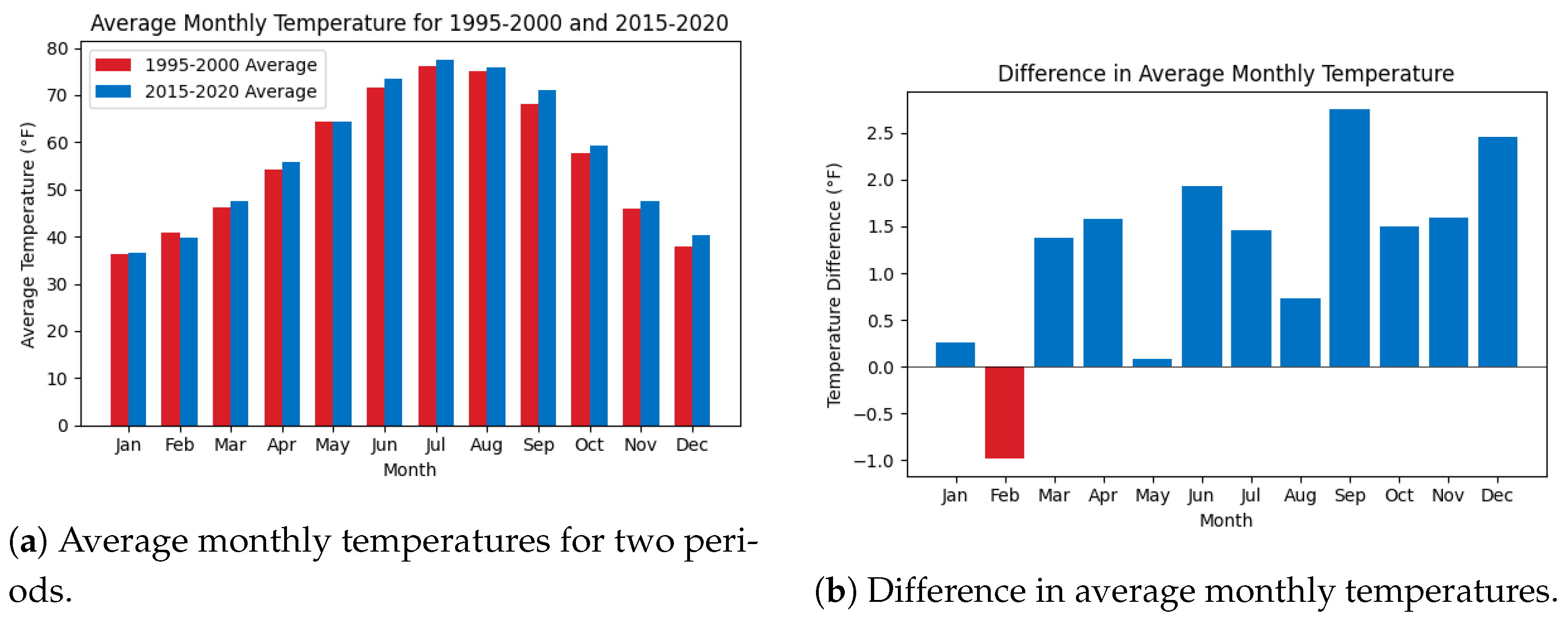
To provide broader climatic context for thermosteric sea-level rise, we include exploratory analyses of average monthly surface temperature changes.
Figure A1 compares average monthly temperatures between 1995–2000 and 2015–2020, while
Figure A1b shows the corresponding month-by-month differences.
These figures illustrate a general warming trend, particularly during summer months, consistent with enhanced ocean heat uptake and thermal expansion. While these trends support the physical interpretation of sea-level rise, they are not used directly in quantitative attribution or forecasting models and are therefore provided here for completeness.
Figure A1.
Exploratory temperature trends supporting thermosteric interpretation of sea-level rise.
Figure A1.
Exploratory temperature trends supporting thermosteric interpretation of sea-level rise.
Appendix A.2. Seasonal Variability Diagnostics of ADT
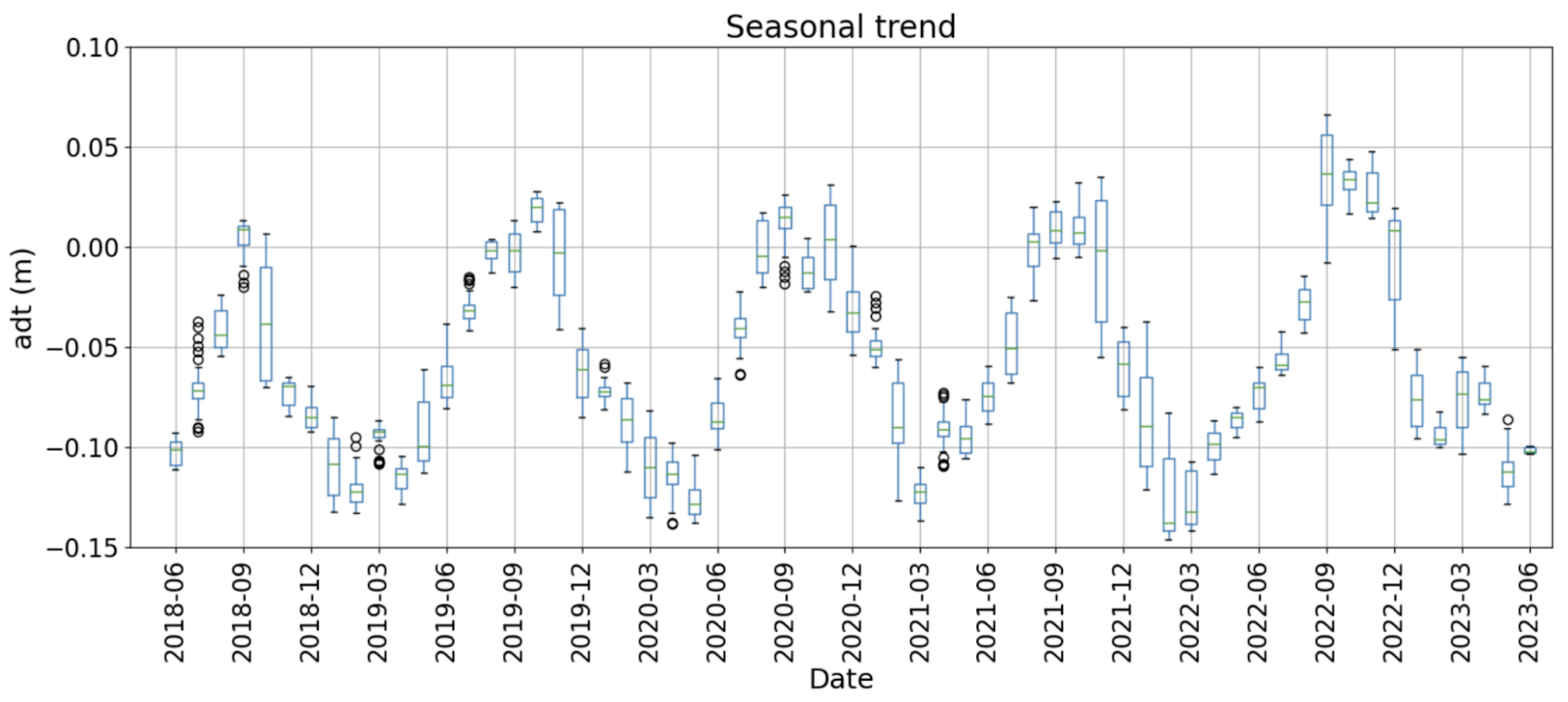
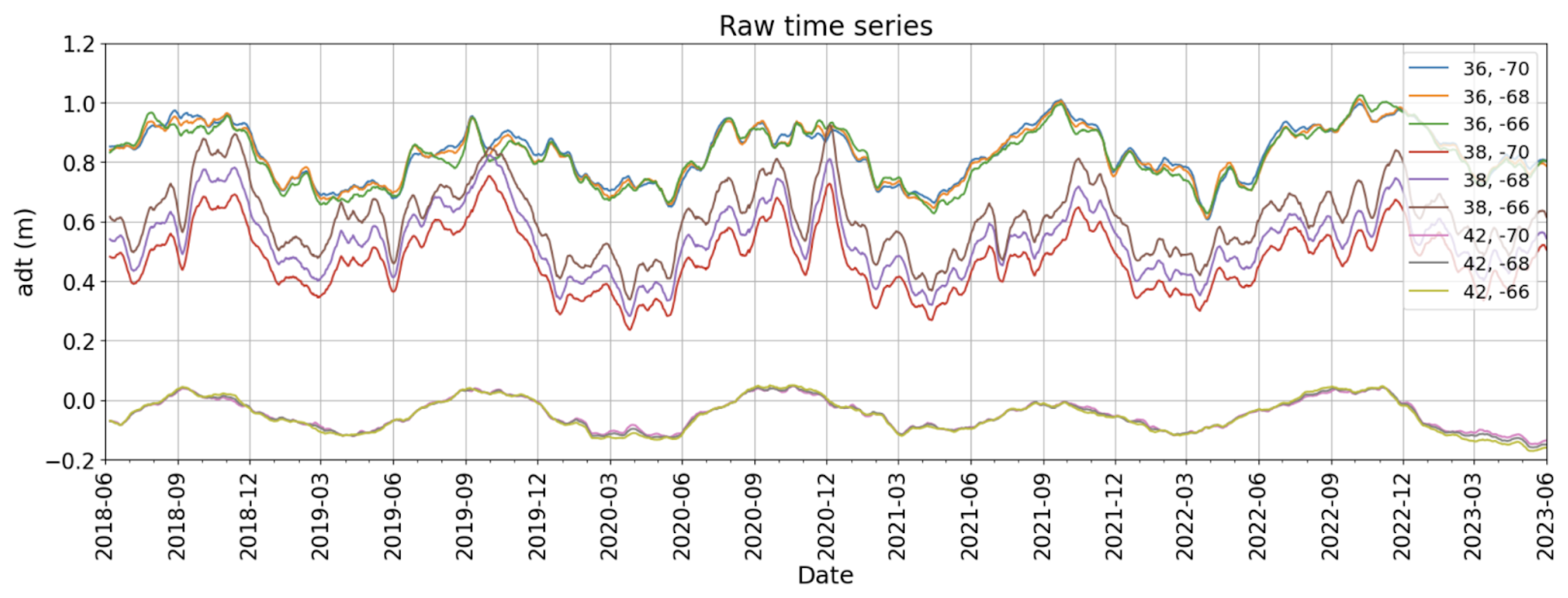
Seasonal variability in Absolute Dynamic Topography (ADT) is further illustrated using boxplots and localized time-series snapshots.
Figure A2 presents monthly ADT distributions from 2018–2023, highlighting the annual cycle across observation points.
Figure A3 shows representative raw ADT time series at selected locations.
These diagnostics confirm the presence of strong seasonality and spatial heterogeneity but do not introduce additional insights beyond those captured by the sinusoid–trend model, Taylor diagrams, and forecast evaluations presented in the main text.
Figure A2.
Monthly distribution of ADT values (2018–2023).
Figure A2.
Monthly distribution of ADT values (2018–2023).
Figure A3.
Raw ADT time series at selected latitude–longitude points.
Figure A3.
Raw ADT time series at selected latitude–longitude points.
Appendix A.3. Additional Spatial Summaries of ADT
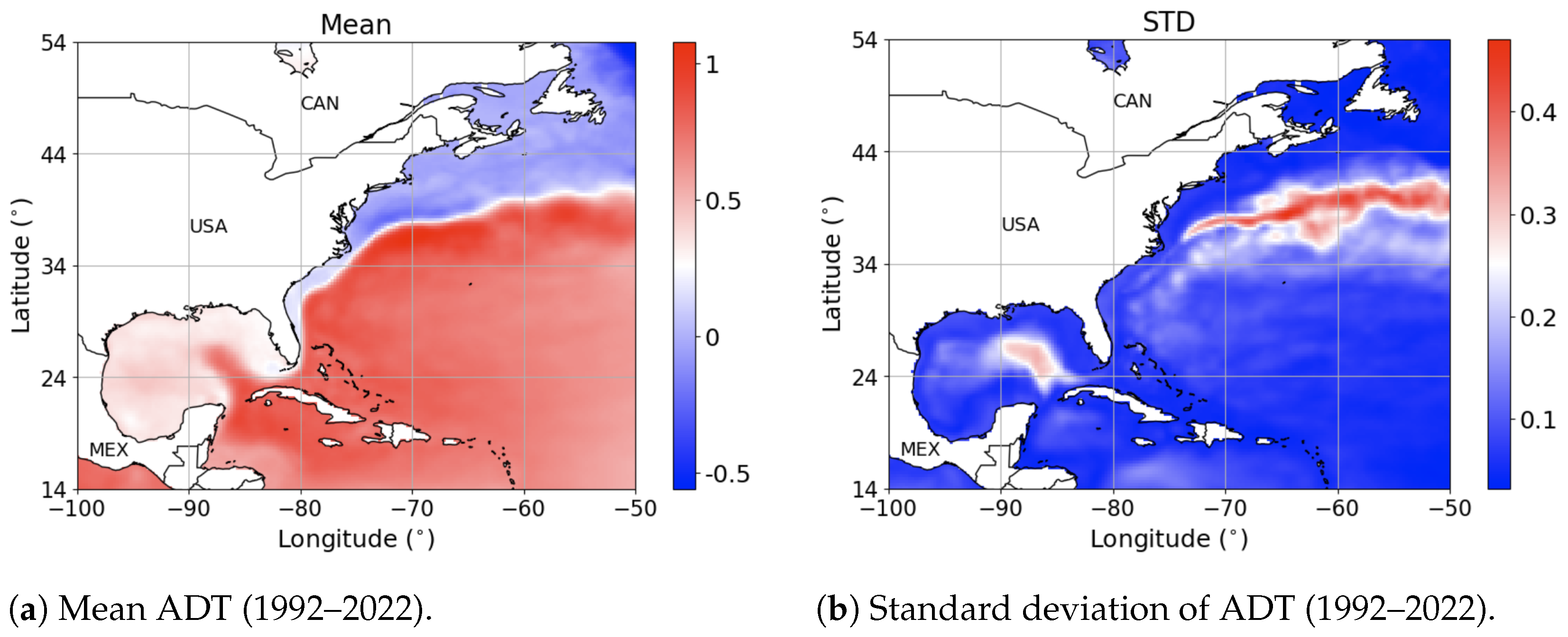
To complement the clustering and localized analyses presented in the main manuscript, we include additional spatial summaries of ADT mean and variability.
Figure A4a shows the long-term mean ADT, while
Figure A4b presents the corresponding standard deviation over the study period.
These figures provide broader spatial context but are not required for interpretation of the regime-based results and are therefore placed in the Appendix.
Figure A4.
Spatial statistics of ADT time series.
Figure A4.
Spatial statistics of ADT time series.
Appendix A.4. Global Wetland Context
Figure A5 illustrates global marshlands and wetlands vulnerable to sea-level rise. This figure is provided for global context only and is not used in the U.S.-specific analyses or submersion scoring presented in the main manuscript.
Figure A5.
Global distribution of marshlands and wetlands vulnerable to submersion.
Figure A5.
Global distribution of marshlands and wetlands vulnerable to submersion.
Appendix A.5. Basin-Specific Sinusoid–Trend Model Fits
This section provides the explicit sinusoid–trend equations and fitted projections for the North Atlantic, North Pacific, and Gulf of Mexico basins. These detailed fits complement the forecast validation results presented in the main manuscript.
Figure A6.
Basin-specific sinusoid–trend projections.
Figure A6.
Basin-specific sinusoid–trend projections.
Appendix A.6. LSTM Projections and Cryospheric Context
Figure A7.
LSTM-based predictions of absolute dynamic topography.
Figure A7.
LSTM-based predictions of absolute dynamic topography.
Figure A8.
Cumulative glacier mass loss derived from GRACE/GRACE-FO observations.
Figure A8.
Cumulative glacier mass loss derived from GRACE/GRACE-FO observations.
Appendix A.7. Seasonal and Regional Variability Patterns
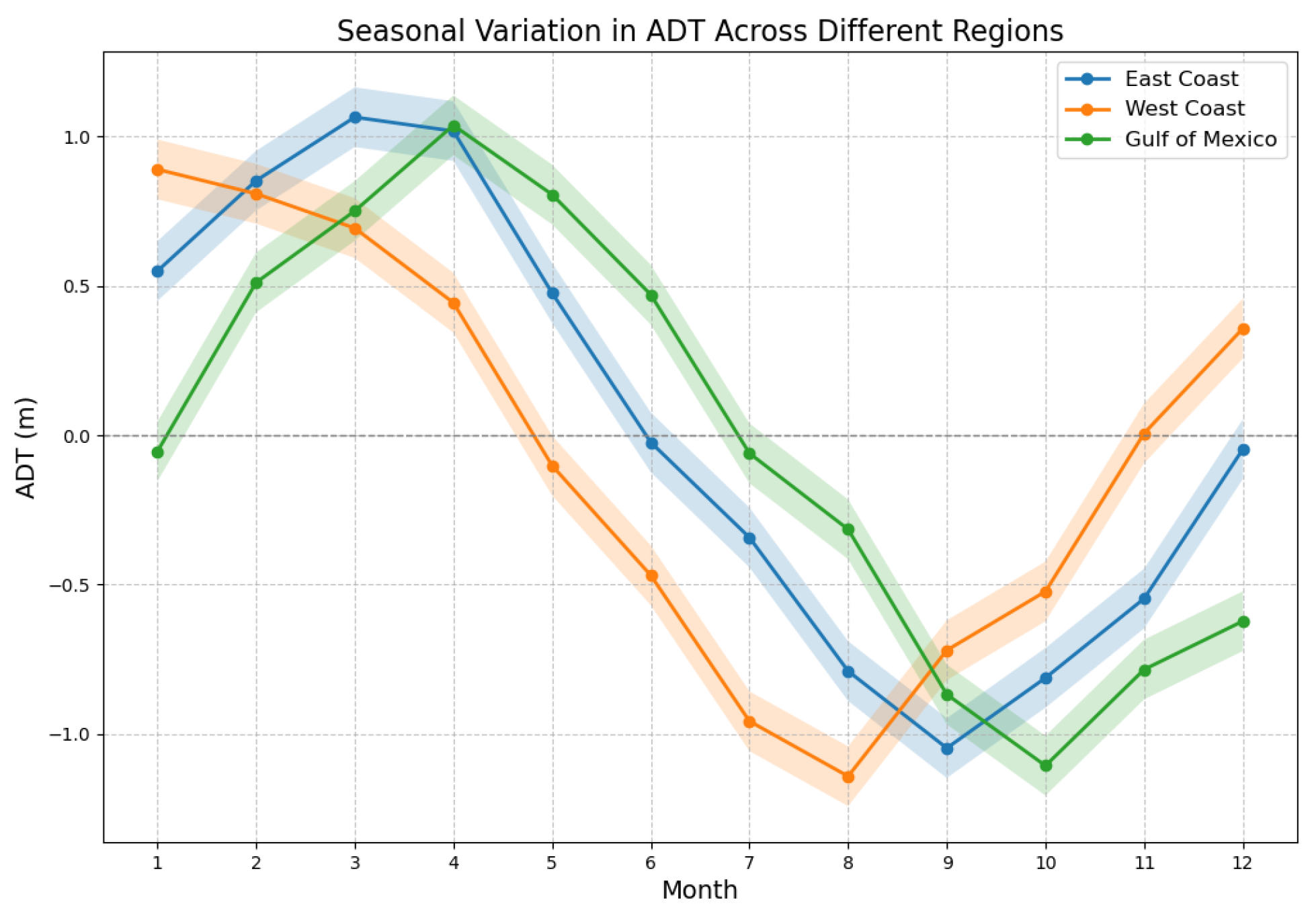
Figure A9.
Seasonal variation in ADT across clustered regions.
Figure A9.
Seasonal variation in ADT across clustered regions.
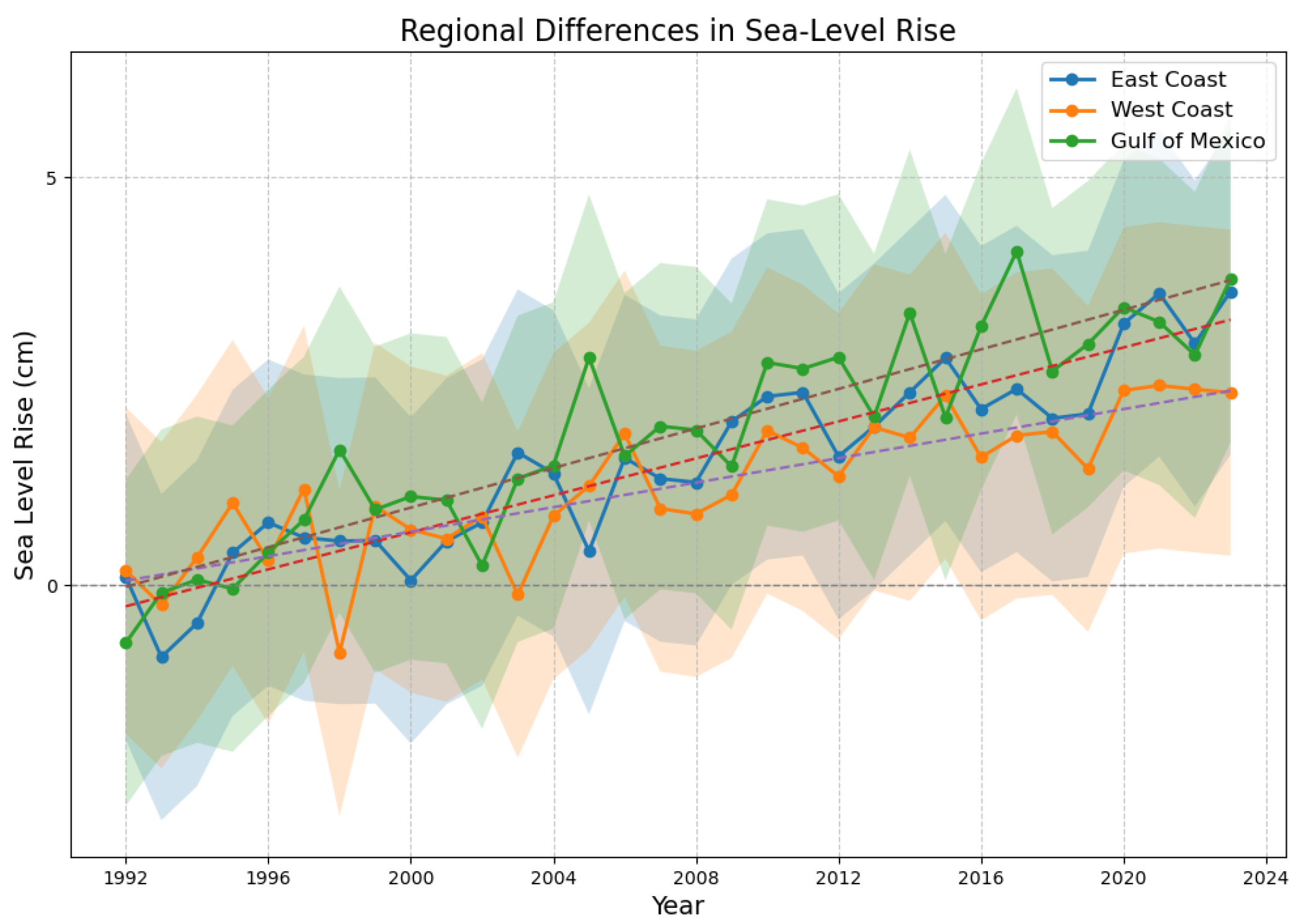
Figure A10.
Regional differences in long-term sea-level rise.
Figure A10.
Regional differences in long-term sea-level rise.
Appendix A.8. Elevation and Submersion Illustrations
Figure A11.
Low-lying U.S. coastal areas prone to submersion.
Figure A11.
Low-lying U.S. coastal areas prone to submersion.
Figure A12.
Elevation gradient and associated submersion risk zones.
Figure A12.
Elevation gradient and associated submersion risk zones.
Appendix A.9. Supplementary Economic Indicators
Figure A13.
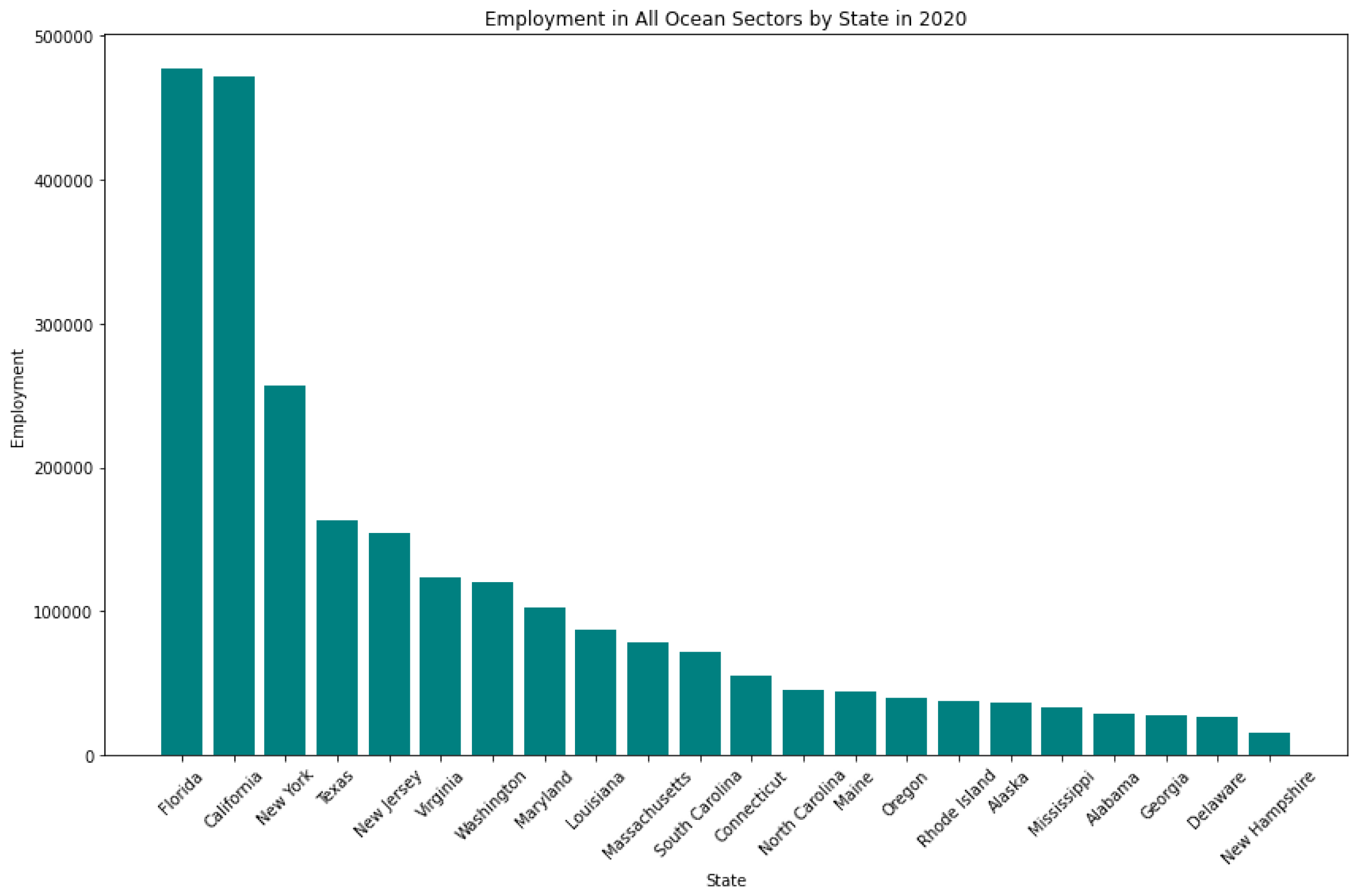
Ocean-sector employment by U.S. state (2020).
Figure A13.
Ocean-sector employment by U.S. state (2020).
Figure A14.
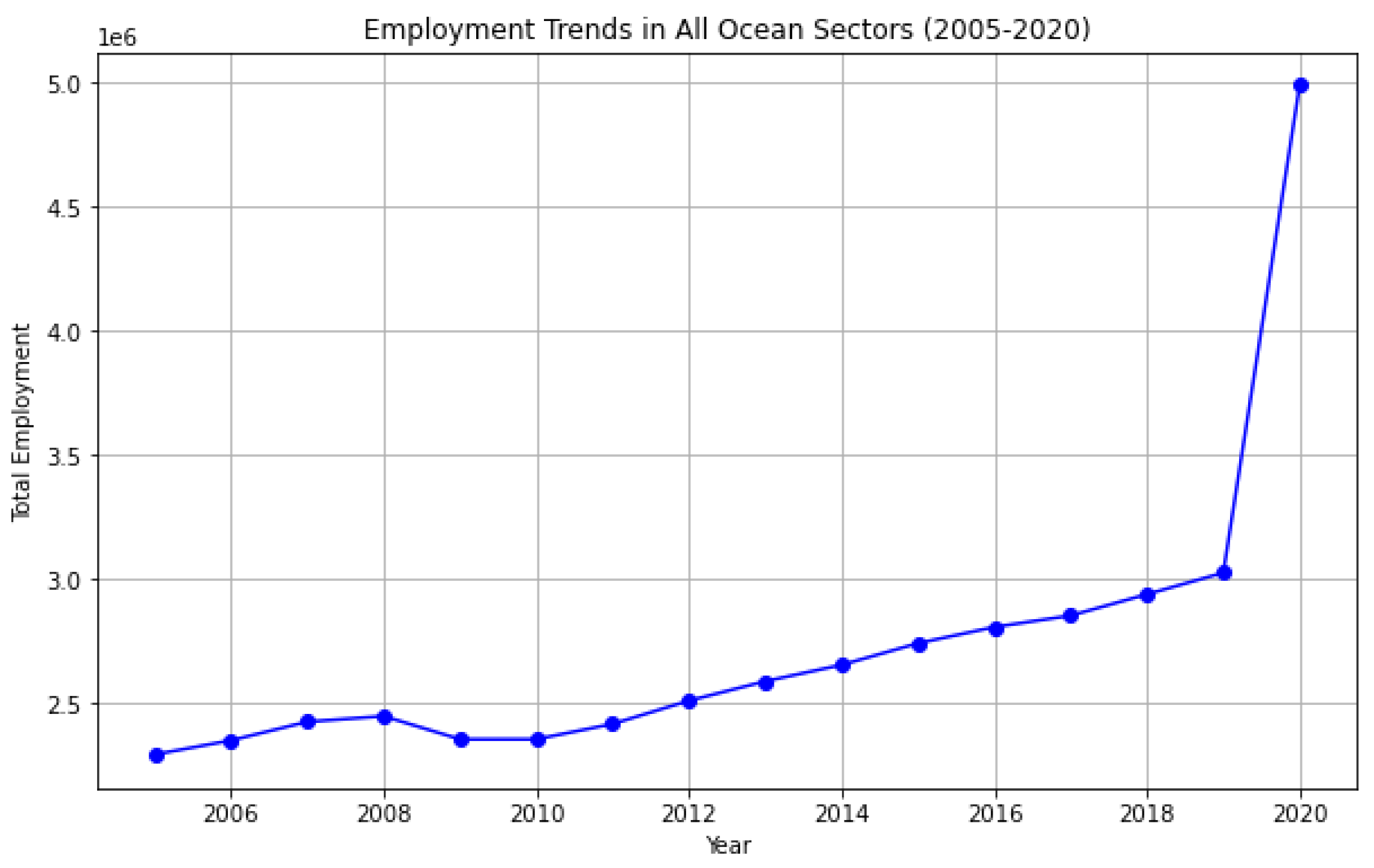
Trends in ocean-sector employment (2005–2020).
Figure A14.
Trends in ocean-sector employment (2005–2020).
References
- Tol, R.S.J. Estimates of the damage costs of climate change. Part II: Dynamic estimates. Environ. Resour. Econ. 2002, 21, 135–160. [Google Scholar] [CrossRef] [Scilit]
- Nicholls, R.J.; Cazenave, A. Sea-Level Rise and Its Impact on Coastal Zones. Science 2010, 328, 1517–1520. [Google Scholar] [CrossRef] [Scilit] [PubMed]
- McGranahan, G.; Balk, D.; Anderson, B. The rising tide: Assessing the risks of climate change and human settlements in low elevation coastal zones. Environ. Urban. 2007, 19, 17–37. [Google Scholar] [CrossRef] [Scilit]
- Dasgupta, S.; Laplante, B.; Meisner, C.; Wheeler, D.; Yan, J. The impact of sea level rise on developing countries: A comparative analysis. Clim. Change 2009, 93, 379–388. [Google Scholar] [CrossRef] [Scilit]
- Church, J.A.; Clark, P.U.; Cazenave, A.; Gregory, J.M.; Jevrejeva, S.; Levermann, A.; Merrifield, M.A.; Milne, G.A.; Nerem, R.S.; Nunn, P.D.; et al. Sea-level rise by 2100. Science 2013, 342, 1445–1447. [Google Scholar] [CrossRef] [Scilit] [PubMed]
- Hinkel, J.; Lincke, D.; Vafeidis, A.T.; Perrette, M.; Nicholls, R.J.; Tol, R.S.; Marzeion, B.; Fettweis, X.; Ionescu, C.; Levermann, A. Coastal flood damage and adaptation costs under 21st century sea-level rise. Proc. Natl. Acad. Sci. USA 2014, 111, 3292–3297. [Google Scholar] [CrossRef] [Scilit] [PubMed]
- Kopp, R.E.; Horton, R.M.; Little, C.M.; Mitrovica, J.X.; Oppenheimer, M.; Rasmussen, D.J.; Strauss, B.H.; Tebaldi, C. Probabilistic 21st and 22nd century sea-level projections at a global network of tide-gauge sites. Earth’s Future 2014, 2, 383–406. [Google Scholar] [CrossRef] [Scilit]
- Shi, X.; Chen, Z.; Wang, H.; Yeung, D.-Y.; Wong, W.-K.; Woo, W.-C. Convolutional LSTM Network: A Machine Learning Approach for Precipitation Nowcasting. Adv. Neural Inf. Process. Syst. 2015, 28, 802–810. [Google Scholar]
- Copernicus Marine Environment Monitoring Service. SEALEVEL_GLO_PHY_L4_REP_OBSERVATIONS_008_047. 2024. Available online: https://marine.copernicus.eu/ (accessed on 1 March 2024).
- NASA Jet Propulsion Laboratory. Integrated Multi-Mission Ocean Altimeter Data; PO.DAAC: 2024. Available online: https://podaac.jpl.nasa.gov/ (accessed on 1 March 2024).
- National Oceanic and Atmospheric Administration. Tides & Currents (Sea Level Data). 2024. Available online: https://tidesandcurrents.noaa.gov/ (accessed on 1 March 2024).
- U.S. Census Bureau. American Community Survey (ACS) 5-Year Estimates. 2024. Available online: https://www.census.gov/programs-surveys/acs/ (accessed on 1 March 2024).
- Bureau of Economic Analysis. Ocean Economy Satellite Account. 2024. Available online: https://www.bea.gov/data/special-topics/ocean-economy (accessed on 1 March 2024).
- Bureau of Ocean Energy Management. Ocean Science Data Portal. 2024. Available online: https://www.boem.gov/ (accessed on 1 March 2024).
- NOAA National Centers for Environmental Information. Global Ocean Heat Content Time Series. 2024. Available online: https://www.ncei.noaa.gov/ (accessed on 1 March 2024).
- NOAA National Centers for Environmental Information. Global Ocean Salinity Anomalies. 2024. Available online: https://www.ncei.noaa.gov/ (accessed on 1 March 2024).
- Nerem, R.S.; Beckley, B.D.; Fasullo, J.T.; Hamlington, B.D.; Masters, D.; Mitchum, G.T. Climate-change–driven accelerated sea-level rise detected in the altimeter era. Proc. Natl. Acad. Sci. USA 2018, 115, 2022–2025. [Google Scholar] [CrossRef] [Scilit] [PubMed]
- Ramsar Secretariat. Ramsar Sites Information Service (RSIS). 2024. Available online: https://rsis.ramsar.org/ (accessed on 1 March 2024).
- Cipollini, P.; Calafat, F.M.; Jevrejeva, S.; Melet, A.; Prandi, P. Monitoring sea level in the coastal zone with satellite altimetry and tide gauges. Surv. Geophys. 2017, 38, 33–57. [Google Scholar] [CrossRef] [Scilit] [PubMed]
- Passaro, M.; Cipollini, P.; Vignudelli, S.; Quartly, G.D.; Snaith, H.M. ALES: A multi-mission adaptive subwaveform retracker for coastal and open ocean altimetry. Remote Sens. Environ. 2014, 145, 173–189. [Google Scholar] [CrossRef] [Scilit]
- Sánchez-Román, A.; Pascual, A.; Pujol, M.-I.; Taburet, G.; Marcos, M.; Faugère, Y. Assessment of DUACS Sentinel-3A Altimetry Data in the Western Mediterranean Sea: Impact of SAR Mode. Remote Sens. 2020, 12, 3970. [Google Scholar] [CrossRef] [Scilit]
- Wöppelmann, G.; Marcos, M. Vertical land motion as a key to understanding sea level change and variability. Rev. Geophys. 2016, 54, 64–92. [Google Scholar] [CrossRef] [Scilit]
- Kuo, C.Y.; Shum, C.K.; Braun, A. Vertical crustal motion determined by satellite altimetry and tide gauge data. Geophys. Res. Lett. 2004, 31, L01602. [Google Scholar] [CrossRef] [Scilit]
- Thieler, E.R.; Hammar-Klose, E.S. National Assessment of Coastal Vulnerability to Sea-Level Rise: Preliminary Results for the U.S. Atlantic Coast; U.S. Geological Survey Open-File Report; USGS: Washington, DC, USA, 1999; pp. 99–593. [Google Scholar]
- Gornitz, V. Global coastal hazards from future sea level rise. In Proceedings of the 1st International Conference on Coastal Zone Management; ASCE: Reston, VA, USA, 1991; pp. 1345–1359. [Google Scholar]
- Cutter, S.L.; Boruff, B.J.; Shirley, W.L. Social vulnerability to environmental hazards. Environ. Plan. A 2003, 35, 2421–2441. [Google Scholar] [CrossRef] [Scilit]
- Sweet, W.V.; Kopp, R.E.; Weaver, C.P.; Obeysekera, J.; Horton, R.M.; Thieler, E.R.; Zervas, C. Global and Regional Sea Level Rise Scenarios for the United States: NOAA Technical Report NOS 01; National Oceanic and Atmospheric Administration: Washington, DC, USA, 2022. Available online: https://oceanservice.noaa.gov/hazards/sealevelrise/sealevelrise-tech-report.html (accessed on 1 March 2024).
- Tibshirani, R.; Walther, G.; Hastie, T. Estimating the number of clusters in a data set via the gap statistic. J. R. Stat. Soc. Ser. B (Stat. Methodol.) 2001, 63, 411–423. [Google Scholar] [CrossRef] [Scilit]
- Lloyd, S. Least squares quantization in PCM. IEEE Trans. Inf. Theory 1982, 28, 129–137. [Google Scholar] [CrossRef] [Scilit]
- Nicholls, R.J.; Wong, P.P.; Burkett, V.; Codignotto, J.P. Coastal systems and low-lying areas. In Climate Change 2007: Impacts, Adaptation and Vulnerability; Cambridge University Press: Cambridge, UK, 2007; pp. 315–356. [Google Scholar]
- IPCC. Climate Change 2014: Synthesis Report; Intergovernmental Panel on Climate Change: Geneva, Switzerland, 2014. [Google Scholar]
Figure 1.
End-to-end framework for regional sea-level risk assessment. Satellite altimetry (ADT/GMSL) is denoised and embedded; regional regimes are learned via unsupervised clustering; basin-scale forecasts are evaluated; and physical drivers and socioeconomic exposure are integrated into an interpretable submersion-based risk ranking.
Figure 1.
End-to-end framework for regional sea-level risk assessment. Satellite altimetry (ADT/GMSL) is denoised and embedded; regional regimes are learned via unsupervised clustering; basin-scale forecasts are evaluated; and physical drivers and socioeconomic exposure are integrated into an interpretable submersion-based risk ranking.
Figure 2.
Taylor diagrams summarizing forecast skill across the three U.S. coastal basins.
Figure 2.
Taylor diagrams summarizing forecast skill across the three U.S. coastal basins.
Figure 3.
Fan charts showing forecast uncertainty across coastal basins.
Figure 3.
Fan charts showing forecast uncertainty across coastal basins.
Figure 4.
Seasonal amplitude trends derived from gridded ADT (offshore) and coastal along-track altimetry (within 30 km).
Figure 4.
Seasonal amplitude trends derived from gridded ADT (offshore) and coastal along-track altimetry (within 30 km).
Figure 5.
Global mean sea-level rise from 1992 to 2023.
Figure 5.
Global mean sea-level rise from 1992 to 2023.
Figure 6.
Difference in mean sea level between 2013 and 1940 across selected coastal measurement stations.
Figure 6.
Difference in mean sea level between 2013 and 1940 across selected coastal measurement stations.
Figure 7.
Time-series clustering of ADT along the East Coast. (a) Overall spatial patterns; (b) cluster segmentation for East Coast subregions.
Figure 7.
Time-series clustering of ADT along the East Coast. (a) Overall spatial patterns; (b) cluster segmentation for East Coast subregions.
Figure 8.
Adjusted Rand Index (ARI) for regime labels as a function of coastal buffer distance, comparing gridded ADT (0.25°) with coastal along-track products.
Figure 8.
Adjusted Rand Index (ARI) for regime labels as a function of coastal buffer distance, comparing gridded ADT (0.25°) with coastal along-track products.
Figure 9.
Distribution of population and median household income for coastal counties.
Figure 9.
Distribution of population and median household income for coastal counties.
Figure 10.
GDP trends in all ocean sectors for selected states (2005–2020).
Figure 10.
GDP trends in all ocean sectors for selected states (2005–2020).
Figure 11.
Bland–Altman plot of coastal along–track minus offshore ADT trends (mm yr−1) versus their mean. Dashed line indicates mean bias; dotted lines represent limits of agreement.
Figure 11.
Bland–Altman plot of coastal along–track minus offshore ADT trends (mm yr−1) versus their mean. Dashed line indicates mean bias; dotted lines represent limits of agreement.
Figure 12.
Sensitivity of 10-year and 100-year return levels (, ) to imposed mean sea-level offsets (0–30 cm) across basins.
Figure 12.
Sensitivity of 10-year and 100-year return levels (, ) to imposed mean sea-level offsets (0–30 cm) across basins.
Table 1.
Datasets and their role in the pipeline.
Table 1.
Datasets and their role in the pipeline.
| Dataset | Resolution | Period | Use in Pipeline |
|---|
| ADT (Copernicus/AVISO) | grid, 10-day | 1993–2023 | Trend/seasonality, PCA embedding, KMeans regimes |
| GMSL (TOPEX/Jason/S6) | Global, 10-day | 1992–2024 | Long-term benchmark, drift check |
| Temp/Salinity/OHC | Global gridded | 1992–2024 | Physical drivers, attribution context |
| Ramsar Wetlands | Site-level | Static | Elevation quantiles, submersion score [18] |
| US Census (Pop/Income) | County | 2005–2020 | Exposure overlay |
| Ocean-sector GDP/Jobs | State | 2005–2020 | Economic exposure |
Table 2.
Key methodological parameters used in the analysis.
Table 2.
Key methodological parameters used in the analysis.
| Component | Specification |
|---|
| SG filter | , (CV-selected) |
| PCA inputs | Smoothed, standardized ADT time series |
| PCA dimension | (82–89% variance) |
| Clustering | KMeans, Euclidean distance |
| Number of clusters | (gap statistic) |
| Train/val/test | 70/15/15 rolling-origin split |
| Bootstrap | 1000 resamples |
Table 3.
Nearshore sensitivity of trend and seasonal amplitude derived from gridded ADT (offshore) versus coastal along-track altimetry (within 30 km). For each transect, coastal altimetry values correspond to independent retracked passes averaged along the shelf.
Table 3.
Nearshore sensitivity of trend and seasonal amplitude derived from gridded ADT (offshore) versus coastal along-track altimetry (within 30 km). For each transect, coastal altimetry values correspond to independent retracked passes averaged along the shelf.
| Transect | Source | Trend (mm yr−1) | Seasonal Amplitude (cm) |
|---|
| Mid–Atlantic Bight | ADT (offshore) | | |
| | Coastal altimetry | | |
| Southeast Florida Shelf | ADT (offshore) | | |
| | Coastal altimetry | | |
| Texas Shelf | ADT (offshore) | | |
| | Coastal altimetry | | |
Table 4.
Forecast errors by basin (test set) with 95% confidence intervals estimated via bootstrap resampling.
Table 4.
Forecast errors by basin (test set) with 95% confidence intervals estimated via bootstrap resampling.
| Model | NA | NP | GM | Notes |
|---|
| Climatology (seasonal mean) | 22.3 ± 4.1 | 25.6 ± 4.8 | 19.8 ± 3.9 | Baseline; no trend capture |
| Linear trend | 18.1 ± 3.5 | 20.2 ± 3.8 | 15.6 ± 3.2 | Captures long-term drift only |
| SARIMA(p,d,q)(P,D,Q) | 14.2 ± 2.7 | 16.0 ± 3.0 | 12.4 ± 2.4 | Tuned using AIC minimization |
| Sinusoid + Trend (ours) | 11.0 ± 2.1 | 13.5 ± 2.3 | 9.6 ± 1.9 | Interpretable hybrid fit ( = 0.94, 0.91, 0.89) |
| LSTM (ours) | 9.1 ± 1.8 | 10.8 ± 2.0 | 8.3 ± 1.7 | Sequence model ( = 0.96, 0.94, 0.97) |
Table 5.
Summary of robustness tests for clustering, product sensitivity, attribution, and LSTM forecast design.
Table 5.
Summary of robustness tests for clustering, product sensitivity, attribution, and LSTM forecast design.
| Test Type | Basin | Metric | Baseline | Observed Change/Outcome |
|---|
| Coastal-buffer sensitivity | North Atlantic | ARI | – | 0.82 (15–30 km), 0.79 (30–50 km); = +0.3 mm yr−1 |
| | North Pacific | ARI | – | 0.85 (15–30 km), 0.81 (30–50 km); = +0.4 mm yr−1 |
| | Gulf of Mexico | ARI | – | 0.80 (15–30 km), 0.76 (30–50 km); = +0.2 mm yr−1 |
| Product sensitivity (ADT vs. coastal) | All basins | Mean trend bias (mm yr−1) | 0.00 | +0.12 ± 0.28; no systematic offset |
| Placebo test (OHC shuffled) | All basins | (OHC coeff.) | Significant | ; correlations collapse to noise |
| LSTM ablation (no seasonality) | All basins | MAE | 9.1–10.8 | +0.8 (loss of seasonality features) |
| LSTM ablation (sequence length) | All basins | MAE | 9.1–10.8 | +0.4 (), +0.3 (); optimal |
| Disclaimer/Publisher’s Note: The statements, opinions and data contained in all publications are solely those of the individual author(s) and contributor(s) and not of MDPI and/or the editor(s). MDPI and/or the editor(s) disclaim responsibility for any injury to people or property resulting from any ideas, methods, instructions or products referred to in the content. |




 ,
,