
Precise Engineering of Lipid-Based Delivery Systems Using Microfluidics for Biomedical Applications


Abstract
1. Introduction
2. Background and History of Microfluidics
3. Effect of Physicochemical Parameters of Lipid-Based Systems on Microfluidic Processing
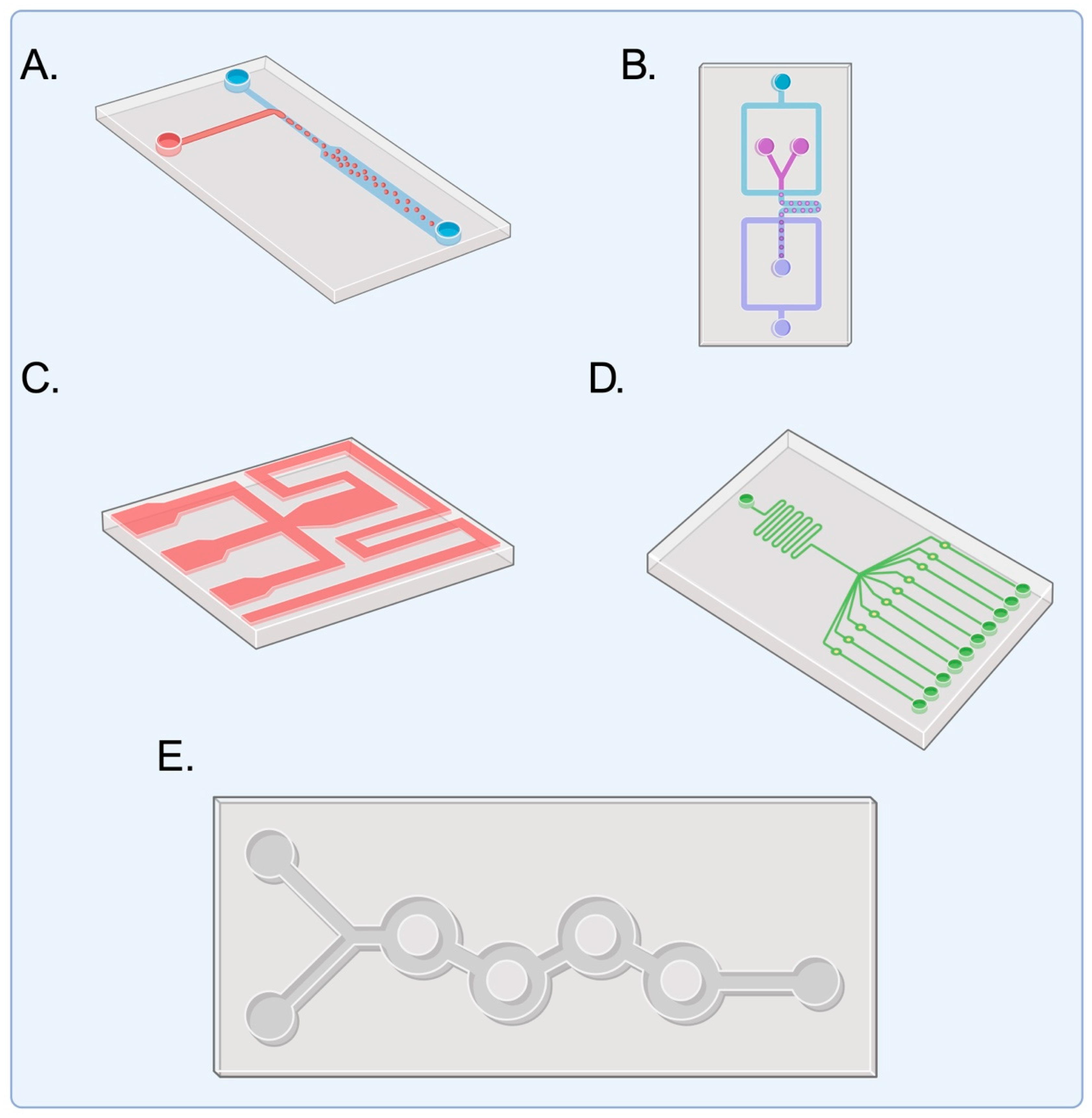
3.1. Micromixer Design
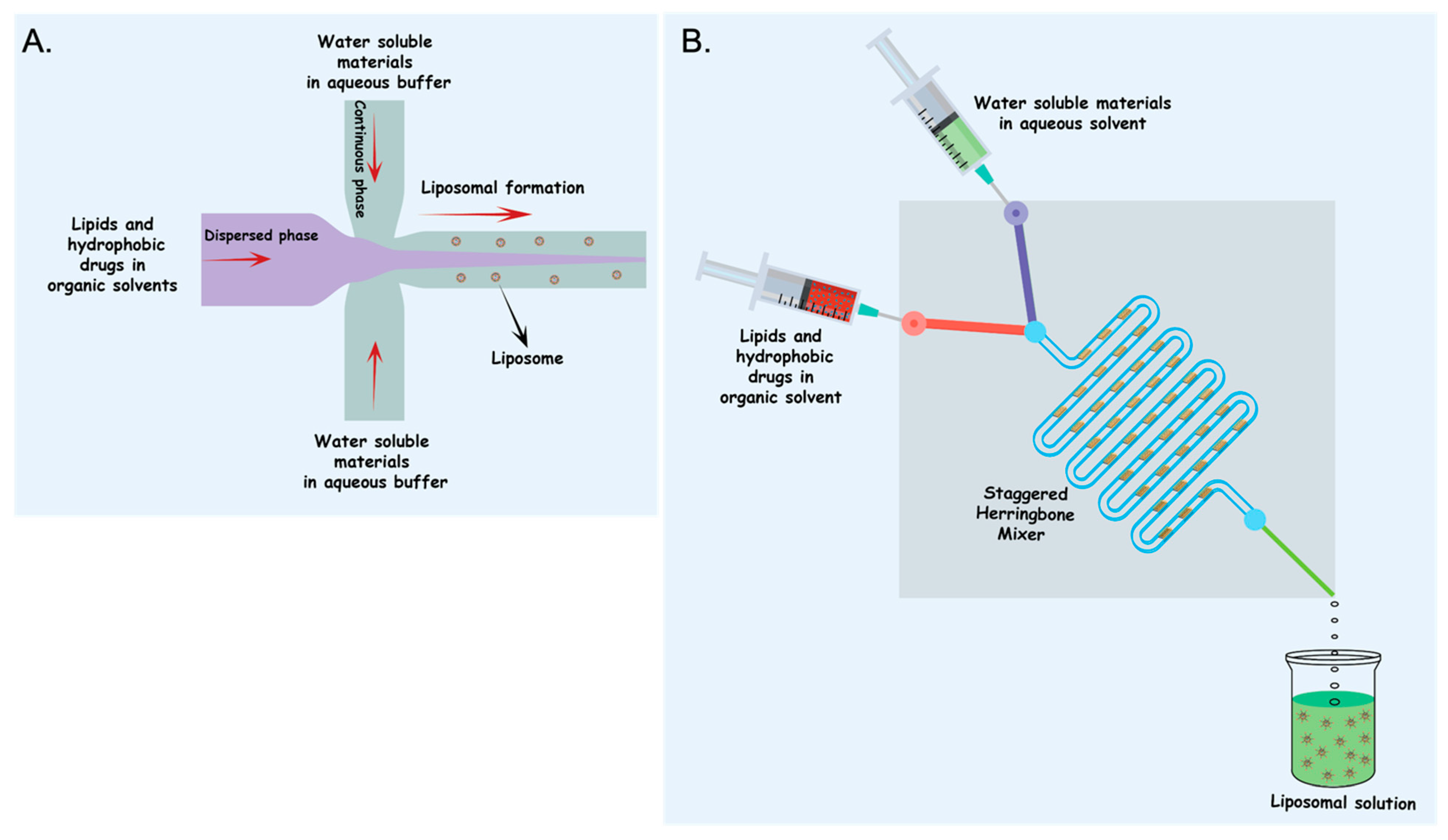
3.2. Hydrodynamic Flow Focusing (HFF)
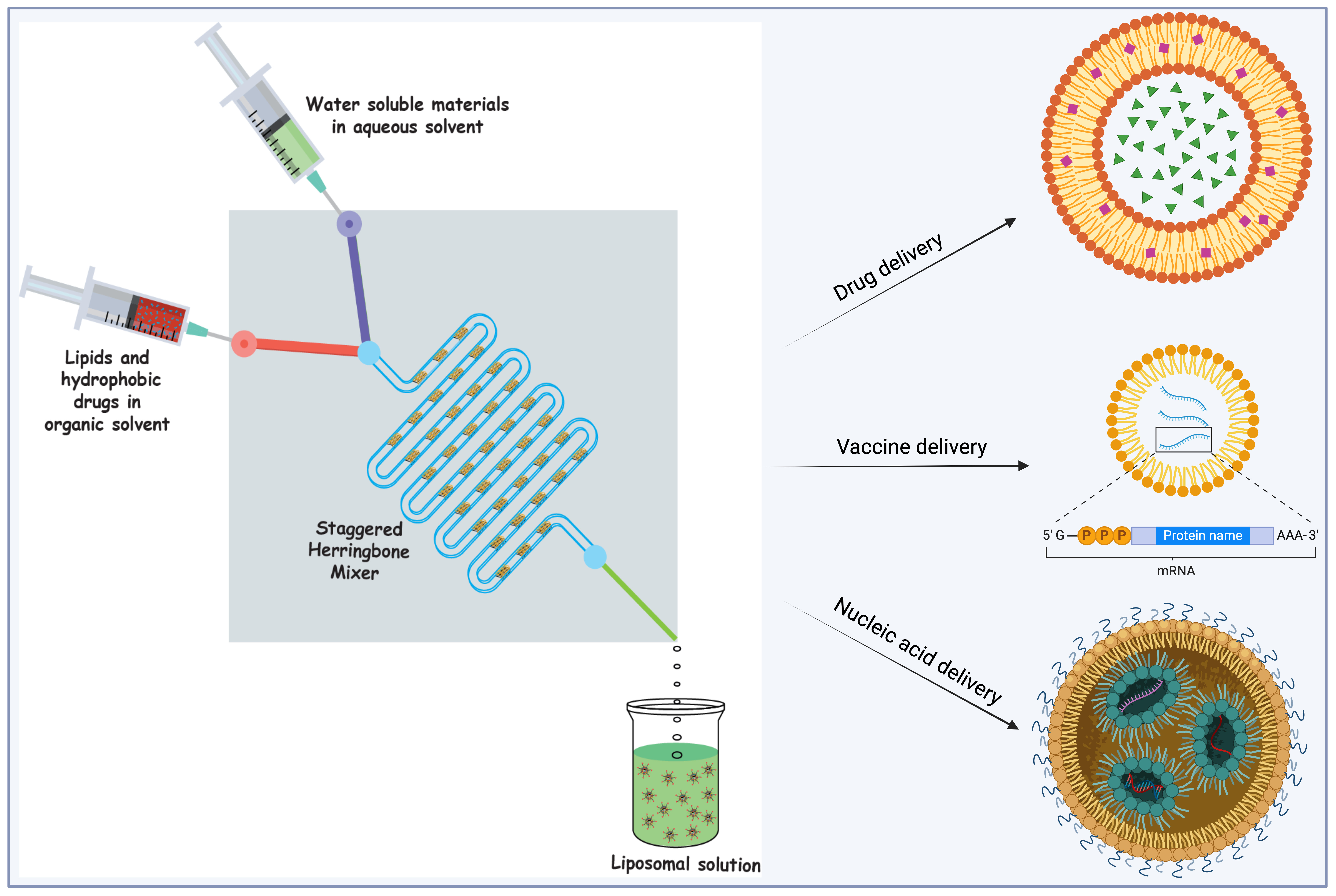
3.3. Staggered Herringbone Mixers (SHM)
3.4. Toroidal Micromixers (TMM)
3.5. Flow Rate (FR)
3.6. Aqueous: Organic Flow Rate Ratio (FRR)
3.7. Solvent Effect
3.8. Effect of Lipid Concentration
4. Scale-Up Methods by Microfluidics
5. Biomedical Applications
5.1. Drug Delivery
5.2. Vaccine Delivery
5.3. Nucleic Acid Delivery
6. Cost Considerations and Practical Limitations of Microfluidic Platforms
7. Conclusions and Future Outlook
Author Contributions
Funding
Data Availability Statement
Acknowledgments
Conflicts of Interest
References
- Rachamala, H.K. Translational Advances in Lipid Nanoparticle Drug Delivery Systems for Cancer Therapy: Current Status and Future Horizons. Pharmaceutics 2025, 17, 1315. [Google Scholar] [CrossRef]
- Rachamala, H.K.; Nakka, N.M.R.; Angom, R.S.; Bhattacharya, S.; Pal, K.; Mukhopadhyay, D. Dual Targeting of Syndecan-1 and Glucose Transporter-1 with a Novel Lipid-Based Delivery System Enhances Therapeutic Efficacy and Overcomes Chemoresistance in Pancreatic Ductal Adenocarcinoma. Gastroenterology 2025, 168, 160–163.e4. [Google Scholar] [CrossRef] [PubMed]
- Liu, X.; Sun, A.; Brodský, J.; Gablech, I.; Lednický, T.; Vopařilová, P.; Zítka, O.; Zeng, W.; Neužil, P. Microfluidics chips fabrication techniques comparison. Sci. Rep. 2024, 14, 28793. [Google Scholar] [CrossRef] [PubMed]
- Alghannam, F.; Alayed, M.; Alfihed, S.; Sakr, M.A.; Almutairi, D.; Alshamrani, N.; Al Fayez, N. Recent Progress in PDMS-Based Microfluidics Toward Integrated Organ-on-a-Chip Biosensors and Personalized Medicine. Biosensors 2025, 15, 76. [Google Scholar] [CrossRef]
- Ramos, I.; Gonçalves, M.; Gonçalves, I.M.; Carvalho, V.; Fernandes, E.; Lima, R.; Pinho, D. PDMS surface wettability modification and its applications: A systematic review. J. Mol. Liq. 2025, 434, 127978. [Google Scholar] [CrossRef]
- Lai, B.-J.; Zhu, L.-T.; Chen, Z.; Ouyang, B.; Luo, Z.-H. Review on Blood Flow Dynamics in Lab-on-a-Chip Systems: An Engineering Perspective. Chem. Bio. Eng. 2024, 1, 26–43. [Google Scholar] [CrossRef]
- Cai, S.; Jin, Y.; Lin, Y.; He, Y.; Zhang, P.; Ge, Z.; Yang, W. Micromixing within microfluidic devices: Fundamentals, design, and fabrication. Biomicrofluidics 2023, 17, 061503. [Google Scholar] [CrossRef] [PubMed]
- Mudugamuwa, A.; Roshan, U.; Hettiarachchi, S.; Cha, H.; Musharaf, H.; Kang, X.; Trinh, Q.T.; Xia, H.M.; Nguyen, N.-T.; Zhang, J. Periodic Flows in Microfluidics. Small 2024, 20, 2404685. [Google Scholar] [CrossRef]
- Sudha, A.; Rohde, M. Using dimensionless numbers to understand interfacial mass transfer for parallel flow in a microchannel. Microfluid. Nanofluid. 2025, 29, 53. [Google Scholar] [CrossRef]
- Nebuloni, F.; Deroy, C.; Cook, P.R.; Walsh, E.J. Stable diffusion gradients in microfluidic conduits bounded by fluid walls. Microsyst. Nanoeng. 2024, 10, 79. [Google Scholar] [CrossRef]
- Liu, Y.; Yang, G.; Hui, Y.; Ranaweera, S.; Zhao, C.-X. Microfluidic Nanoparticles for Drug Delivery. Small 2022, 18, 2106580. [Google Scholar] [CrossRef]
- Zhao, H.; Mills, W.; Glidle, A.; Liang, P.; Li, B.; Cooper, J.M.; Yin, H. On-demand droplet formation at a T-junction: Modelling and validation. Microsyst. Nanoeng. 2025, 11, 94. [Google Scholar] [CrossRef] [PubMed]
- Tsitouridou, A.; Parhizkar, M.; Wu, C.-Y.; Chen, T.; Tsaoulidis, D. CFD approaches in microfluidics for the development of polymeric, lipid-based and inorganic nanoparticles for drug delivery. Chem. Eng. J. Adv. 2025, 24, 100853. [Google Scholar] [CrossRef]
- Seder, I.; Zheng, T.; Zhang, J.; Rojas, C.C.; Helalat, S.H.; Téllez, R.C.; Sun, Y. A Scalable Microfluidic Platform for Nanoparticle Formulation: For Exploratory- and Industrial-Level Scales. Nano Lett. 2024, 24, 5132–5138. [Google Scholar] [CrossRef]
- Sarmah, S.; Baidya, S.; De, M. Recent Advances in Lipid Nanoparticles: Nucleic Acid Therapeutics and Targeting Strategies. Small 2025, 21, e06812. [Google Scholar] [CrossRef]
- Catenacci, L.; Rossi, R.; Sechi, F.; Buonocore, D.; Sorrenti, M.; Perteghella, S.; Peviani, M.; Bonferoni, M.C. Effect of Lipid Nanoparticle Physico-Chemical Properties and Composition on Their Interaction with the Immune System. Pharmaceutics 2024, 16, 1521. [Google Scholar] [CrossRef]
- Abdellatif, A.; Monteiro, C.; Bernades, M.; Jofre, L. Microconfined High-Pressure Transcritical Channel Flow Database: Laminar, Transitional & Turbulent Regimes. Sci. Data 2024, 11, 916. [Google Scholar] [CrossRef]
- Ranjan, P.; Rana, B.K.; Patel, J.K. Design and numerical investigations of mixing enhancement for single-layer SAR micromixer with localized offsets and slots. Chem. Eng. Process.-Process Intensif. 2025, 215, 110360. [Google Scholar] [CrossRef]
- Han, J.Y.; La Fiandra, J.N.; DeVoe, D.L. Microfluidic vortex focusing for high throughput synthesis of size-tunable liposomes. Nat. Commun. 2022, 13, 6997. [Google Scholar] [CrossRef] [PubMed]
- Lan, Z.; Chen, R.; Zou, D.; Zhao, C.X. Microfluidic Nanoparticle Separation for Precision Medicine. Adv. Sci. 2025, 12, e2411278. [Google Scholar] [CrossRef]
- Grimaldi, N.; Andrade, F.; Segovia, N.; Ferrer-Tasies, L.; Sala, S.; Veciana, J.; Ventosa, N. Lipid-based nanovesicles for nanomedicine. Chem. Soc. Rev. 2016, 45, 6520–6545. [Google Scholar] [CrossRef]
- Jahn, A.; Vreeland, W.N.; Gaitan, M.; Locascio, L.E. Controlled Vesicle Self-Assembly in Microfluidic Channels with Hydrodynamic Focusing. J. Am. Chem. Soc. 2004, 126, 2674–2675. [Google Scholar] [CrossRef]
- Jahn, A.; Vreeland, W.N.; DeVoe, D.L.; Locascio, L.E.; Gaitan, M. Microfluidic directed formation of liposomes of controlled size. Langmuir 2007, 23, 6289–6293. [Google Scholar] [CrossRef]
- Hood, R.R.; Kendall, E.L.; Junqueira, M.; Vreeland, W.N.; Quezado, Z.; Finkel, J.C.; DeVoe, D.L. Microfluidic-enabled liposomes elucidate size-dependent transdermal transport. PLoS ONE 2014, 9, e92978. [Google Scholar] [CrossRef]
- Stroock, A.D.; Dertinger, S.K.; Ajdari, A.; Mezic, I.; Stone, H.A.; Whitesides, G.M. Chaotic mixer for microchannels. Science 2002, 295, 647–651. [Google Scholar] [CrossRef] [PubMed]
- Joshi, S.; Hussain, M.T.; Roces, C.B.; Anderluzzi, G.; Kastner, E.; Salmaso, S.; Kirby, D.J.; Perrie, Y. Microfluidics based manufacture of liposomes simultaneously entrapping hydrophilic and lipophilic drugs. Int. J. Pharm. 2016, 514, 160–168. [Google Scholar] [CrossRef] [PubMed]
- Maimouni, I.; Cejas, C.M.; Cossy, J.; Tabeling, P.; Russo, M. Microfluidics Mediated Production of Foams for Biomedical Applications. Micromachines 2020, 11, 83. [Google Scholar] [CrossRef] [PubMed]
- Sercombe, L.; Veerati, T.; Moheimani, F.; Wu, S.Y.; Sood, A.K.; Hua, S. Advances and Challenges of Liposome Assisted Drug Delivery. Front. Pharmacol. 2015, 6, 286. [Google Scholar] [CrossRef]
- Webb, C.; Forbes, N.; Roces, C.B.; Anderluzzi, G.; Lou, G.; Abraham, S.; Ingalls, L.; Marshall, K.; Leaver, T.J.; Watts, J.A.; et al. Using microfluidics for scalable manufacturing of nanomedicines from bench to GMP: A case study using protein-loaded liposomes. Int. J. Pharm. 2020, 582, 119266. [Google Scholar] [CrossRef]
- Maeki, M.; Saito, T.; Sato, Y.; Yasui, T.; Kaji, N.; Ishida, A.; Tani, H.; Baba, Y.; Harashima, H.; Tokeshi, M. A strategy for synthesis of lipid nanoparticles using microfluidic devices with a mixer structure. RSC Adv. 2015, 5, 46181–46185. [Google Scholar] [CrossRef]
- Maeki, M.; Fujishima, Y.; Sato, Y.; Yasui, T.; Kaji, N.; Ishida, A.; Tani, H.; Baba, Y.; Harashima, H.; Tokeshi, M. Understanding the formation mechanism of lipid nanoparticles in microfluidic devices with chaotic micromixers. PLoS ONE 2017, 12, e0187962. [Google Scholar] [CrossRef]
- Zhigaltsev, I.V.; Belliveau, N.; Hafez, I.; Leung, A.K.; Huft, J.; Hansen, C.; Cullis, P.R. Bottom-up design and synthesis of limit size lipid nanoparticle systems with aqueous and triglyceride cores using millisecond microfluidic mixing. Langmuir 2012, 28, 3633–3640. [Google Scholar] [CrossRef] [PubMed]
- Rudyak, V.; Minakov, A. Modeling and optimization of Y-type micromixers. Micromachines 2014, 5, 886–912. [Google Scholar] [CrossRef]
- Guimarães, D.; Noro, J.; Loureiro, A.; Lager, F.; Renault, G.; Cavaco-Paulo, A.; Nogueira, E. Increased Encapsulation Efficiency of Methotrexate in Liposomes for Rheumatoid Arthritis Therapy. Biomedicines 2020, 8, 630. [Google Scholar] [CrossRef]
- McCallion, C.; Peters, A.D.; Booth, A.; Rees-Unwin, K.; Adams, J.; Rahi, R.; Pluen, A.; Hutchinson, C.V.; Webb, S.J.; Burthem, J. Dual-action CXCR4-targeting liposomes in leukemia: Function blocking and drug delivery. Blood Adv. 2019, 3, 2069–2081. [Google Scholar] [CrossRef]
- Cao, X.; Xia, C.; Li, C.; Deng, S.; Cao, J.; Yang, H.; Wang, S.; Chen, P. Organ-on-a-Chip Technology and Global Multi-Omics: Current Applications and Future Directions. MedComm 2026, 7, e70603. [Google Scholar] [CrossRef]
- Roces, C.B.; Khadke, S.; Christensen, D.; Perrie, Y. Scale-independent microfluidic production of cationic liposomal adjuvants and development of enhanced lymphatic targeting strategies. Mol. Pharm. 2019, 16, 4372–4386. [Google Scholar] [CrossRef] [PubMed]
- Kastner, E.; Verma, V.; Lowry, D.; Perrie, Y. Microfluidic-controlled manufacture of liposomes for the solubilisation of a poorly water soluble drug. Int. J. Pharm. 2015, 485, 122–130. [Google Scholar] [CrossRef]
- Zucker, D.; Marcus, D.; Barenholz, Y.; Goldblum, A. Liposome drugs’ loading efficiency: A working model based on loading conditions and drug’s physicochemical properties. J. Control. Release 2009, 139, 73–80. [Google Scholar] [CrossRef] [PubMed]
- Zizzari, A.; Bianco, M.; Carbone, L.; Perrone, E.; Amato, F.; Maruccio, G.; Rendina, F.; Arima, V. Continuous-Flow Production of Injectable Liposomes via a Microfluidic Approach. Materials 2017, 10, 1411. [Google Scholar] [CrossRef]
- Forbes, N.; Hussain, M.T.; Briuglia, M.L.; Edwards, D.P.; Horst, J.H.T.; Szita, N.; Perrie, Y. Rapid and scale-independent microfluidic manufacture of liposomes entrapping protein incorporating in-line purification and at-line size monitoring. Int. J. Pharm. 2019, 556, 68–81. [Google Scholar] [CrossRef] [PubMed]
- Zylberberg, C.; Gaskill, K.; Pasley, S.; Matosevic, S. Engineering liposomal nanoparticles for targeted gene therapy. Gene Ther. 2017, 24, 441–452. [Google Scholar] [CrossRef] [PubMed]
- Cheung, C.C.L.; Al-Jamal, W.T. Sterically stabilized liposomes production using staggered herringbone micromixer: Effect of lipid composition and PEG-lipid content. Int. J. Pharm. 2019, 566, 687–696. [Google Scholar] [CrossRef]
- Ran, R.; Wang, H.; Liu, Y.; Hui, Y.; Sun, Q.; Seth, A.; Wibowo, D.; Chen, D.; Zhao, C.X. Microfluidic self-assembly of a combinatorial library of single- and dual-ligand liposomes for in vitro and in vivo tumor targeting. Eur. J. Pharm. Biopharm. 2018, 130, 1–10. [Google Scholar] [CrossRef]
- Lou, G.; Anderluzzi, G.; Schmidt, S.T.; Woods, S.; Gallorini, S.; Brazzoli, M.; Giusti, F.; Ferlenghi, I.; Johnson, R.N.; Roberts, C.W. Delivery of self-amplifying mRNA vaccines by cationic lipid nanoparticles: The impact of cationic lipid selection. J. Control. Release 2020, 325, 370–379. [Google Scholar] [CrossRef]
- Webb, C.; Khadke, S.; Tandrup Schmidt, S.; Roces, C.B.; Forbes, N.; Berrie, G.; Perrie, Y. The impact of solvent selection: Strategies to guide the manufacturing of liposomes using microfluidics. Pharmaceutics 2019, 11, 653. [Google Scholar] [CrossRef]
- Roces, C.B.; Port, E.C.; Daskalakis, N.N.; Watts, J.A.; Aylott, J.W.; Halbert, G.W.; Perrie, Y. Rapid scale-up and production of active-loaded PEGylated liposomes. Int. J. Pharm. 2020, 586, 119566. [Google Scholar] [CrossRef]
- Malmstadt, N.; Nash, M.A.; Purnell, R.F.; Schmidt, J.J. Automated formation of lipid-bilayer membranes in a microfluidic device. Nano Lett. 2006, 6, 1961–1965. [Google Scholar] [CrossRef]
- Shi, Z.; Baumgart, T. Dynamics and instabilities of lipid bilayer membrane shapes. Adv. Colloid Interface Sci. 2014, 208, 76–88. [Google Scholar] [CrossRef]
- Javid-Naderi, M.J.; Mousavi Shaegh, S.A. Advanced microfluidic techniques for the preparation of solid lipid nanoparticles: Innovations and biomedical applications. Int. J. Pharm. X 2025, 10, 100399. [Google Scholar] [CrossRef] [PubMed]
- Mijajlovic, M.; Wright, D.; Zivkovic, V.; Bi, J.; Biggs, M. Microfluidic hydrodynamic focusing based synthesis of POPC liposomes for model biological systems. Colloids Surf. B Biointerfaces 2013, 104, 276–281. [Google Scholar] [CrossRef]
- Wagner, A.; Vorauer-Uhl, K. Liposome technology for industrial purposes. J. Drug Deliv. 2011, 2011, 591325. [Google Scholar] [CrossRef] [PubMed]
- Ma, Q.; Cao, J.; Gao, Y.; Han, S.; Liang, Y.; Zhang, T.; Wang, X.; Sun, Y. Microfluidic-mediated nano-drug delivery systems: From fundamentals to fabrication for advanced therapeutic applications. Nanoscale 2020, 12, 15512–15527. [Google Scholar] [CrossRef] [PubMed]
- Belfiore, L.; Saunders, D.N.; Ranson, M.; Thurecht, K.J.; Storm, G.; Vine, K.L. Towards clinical translation of ligand-functionalized liposomes in targeted cancer therapy: Challenges and opportunities. J. Control. Release 2018, 277, 1–13. [Google Scholar] [CrossRef] [PubMed]
- Pattni, B.S.; Chupin, V.V.; Torchilin, V.P. New developments in liposomal drug delivery. Chem. Rev. 2015, 115, 10938–10966. [Google Scholar] [CrossRef]
- Li, W.; Zhang, L.; Ge, X.; Xu, B.; Zhang, W.; Qu, L.; Choi, C.-H.; Xu, J.; Zhang, A.; Lee, H. Microfluidic fabrication of microparticles for biomedical applications. Chem. Soc. Rev. 2018, 47, 5646–5683. [Google Scholar] [CrossRef]
- Olanrewaju, A.; Beaugrand, M.; Yafia, M.; Juncker, D. Capillary microfluidics in microchannels: From microfluidic networks to capillaric circuits. Lab Chip 2018, 18, 2323–2347. [Google Scholar] [CrossRef]
- Kim, Y.; Lee Chung, B.; Ma, M.; Mulder, W.J.; Fayad, Z.A.; Farokhzad, O.C.; Langer, R. Mass production and size control of lipid–polymer hybrid nanoparticles through controlled microvortices. Nano Lett. 2012, 12, 3587–3591, Correction in Nano Lett. 2013, 13, 4997. [Google Scholar] [CrossRef]
- Toth, M.J.; Kim, T.; Kim, Y. Robust manufacturing of lipid-polymer nanoparticles through feedback control of parallelized swirling microvortices. Lab Chip 2017, 17, 2805–2813. [Google Scholar] [CrossRef]
- Yin, H.; Li, Z.; Shen, Z.; Wang, S.; Du, N.; Cheng, S.; Zhou, J.; Li, Y.; Jia, Y.; Li, Y. AI-integrated microfluidics for drug screening: From single cell to Organ-on-a-chip. Acta Pharm. Sin. B 2026, in press. [Google Scholar] [CrossRef]
- Khadke, S.; Roces, C.B.; Donaghey, R.; Giacobbo, V.; Su, Y.; Perrie, Y. Scalable solvent-free production of liposomes. J. Pharm. Pharmacol. 2020, 72, 1328–1340. [Google Scholar] [CrossRef]
- Shepherd, S.J.; Issadore, D.; Mitchell, M.J. Microfluidic formulation of nanoparticles for biomedical applications. Biomaterials 2021, 274, 120826. [Google Scholar] [CrossRef]
- Naghib, S.M.; Mohammad-Jafari, K. Microfluidics-mediated Liposomal Nanoparticles for Cancer Therapy: Recent Developments on Advanced Devices and Technologies. Curr. Top. Med. Chem. 2024, 24, 1185–1211. [Google Scholar] [CrossRef]
- Zhang, W.; Böttger, R.; Qin, Z.; Kulkarni, J.A.; Vogler, J.; Cullis, P.R.; Li, S.D. Phospholipid-Free Small Unilamellar Vesicles for Drug Targeting to Cells in the Liver. Small 2019, 15, 1901782. [Google Scholar] [CrossRef]
- Wang, N.; Wu, T.; Wang, T. Liposomes used as a vaccine adjuvant-delivery system. In Liposomes; IntechOpen: London, UK, 2017. [Google Scholar]
- Tandrup Schmidt, S.; Foged, C.; Smith Korsholm, K.; Rades, T.; Christensen, D. Liposome-based adjuvants for subunit vaccines: Formulation strategies for subunit antigens and immunostimulators. Pharmaceutics 2016, 8, 7. [Google Scholar] [CrossRef] [PubMed]
- Kis, Z.; Shattock, R.; Shah, N.; Kontoravdi, C. Emerging technologies for low-cost, rapid vaccine manufacture. Biotechnol. J. 2019, 14, 1800376. [Google Scholar] [CrossRef] [PubMed]
- Chatzikleanthous, D.; Schmidt, S.T.; Buffi, G.; Paciello, I.; Cunliffe, R.; Carboni, F.; Romano, M.R.; O’Hagan, D.T.; D’Oro, U.; Woods, S. Design of a novel vaccine nanotechnology-based delivery system comprising CpGODN-protein conjugate anchored to liposomes. J. Control. Release 2020, 323, 125–137. [Google Scholar] [CrossRef] [PubMed]
- Dimov, N.; Kastner, E.; Hussain, M.; Perrie, Y.; Szita, N. Formation and purification of tailored liposomes for drug delivery using a module-based micro continuous-flow system. Sci. Rep. 2017, 7, 12045, Correction in Sci. Rep. 2018, 8, 6762. [Google Scholar] [CrossRef]
- Ahn, J.; Ko, J.; Lee, S.; Yu, J.; Kim, Y.; Jeon, N.L. Microfluidics in nanoparticle drug delivery; From synthesis to pre-clinical screening. Adv. Drug Deliv. Rev. 2018, 128, 29–53. [Google Scholar] [CrossRef]
- Kaur, R.; Bramwell, V.W.; Kirby, D.J.; Perrie, Y. Pegylation of DDA: TDB liposomal adjuvants reduces the vaccine depot effect and alters the Th1/Th2 immune responses. J. Control. Release 2012, 158, 72–77. [Google Scholar] [CrossRef]
- De Serrano, L.O.; Burkhart, D.J. Liposomal vaccine formulations as prophylactic agents: Design considerations for modern vaccines. J. Nanobiotechnol. 2017, 15, 83. [Google Scholar] [CrossRef] [PubMed]
- Mukai, H.; Ogawa, K.; Kato, N.; Kawakami, S. Recent advances in lipid nanoparticles for delivery of nucleic acid, mRNA, and gene editing-based therapeutics. Drug Metab. Pharmacokinet. 2022, 44, 100450. [Google Scholar] [CrossRef]
- Wang, Y.-S.; Kumari, M.; Chen, G.-H.; Hong, M.-H.; Yuan, J.P.-Y.; Tsai, J.-L.; Wu, H.-C. mRNA-based vaccines and therapeutics: An in-depth survey of current and upcoming clinical applications. J. Biomed. Sci. 2023, 30, 84. [Google Scholar] [CrossRef]
- Lee, Y.; Jeong, M.; Park, J.; Jung, H.; Lee, H. Immunogenicity of lipid nanoparticles and its impact on the efficacy of mRNA vaccines and therapeutics. Exp. Mol. Med. 2023, 55, 2085–2096. [Google Scholar] [CrossRef]
- McKenzie, R.E.; Minnell, J.J.; Ganley, M.; Painter, G.F.; Draper, S.L. mRNA synthesis and encapsulation in ionizable lipid nanoparticles. Curr. Protoc. 2023, 3, e898. [Google Scholar] [CrossRef]
- Escalona-Rayo, O.; Papadopoulou, P.; Slütter, B.; Kros, A. Biological recognition and cellular trafficking of targeted RNA-lipid nanoparticles. Curr. Opin. Biotechnol. 2024, 85, 103041. [Google Scholar] [CrossRef]
- Schlich, M.; Palomba, R.; Costabile, G.; Mizrahy, S.; Pannuzzo, M.; Peer, D.; Decuzzi, P. Cytosolic delivery of nucleic acids: The case of ionizable lipid nanoparticles. Bioeng. Transl. Med. 2021, 6, e10213. [Google Scholar] [CrossRef]
- Mitchell, M.J.; Billingsley, M.M.; Haley, R.M.; Wechsler, M.E.; Peppas, N.A.; Langer, R. Engineering precision nanoparticles for drug delivery. Nat. Rev. Drug Discov. 2021, 20, 101–124. [Google Scholar] [CrossRef]
- Jia, Y.; Wang, X.; Li, L.; Li, F.; Zhang, J.; Liang, X.J. Lipid nanoparticles optimized for targeting and release of nucleic acid. Adv. Mater. 2024, 36, 2305300. [Google Scholar] [CrossRef] [PubMed]
- Robinson, E.; MacDonald, K.D.; Slaughter, K.; McKinney, M.; Patel, S.; Sun, C.; Sahay, G. Lipid nanoparticle-delivered chemically modified mRNA restores chloride secretion in cystic fibrosis. Mol. Ther. 2018, 26, 2034–2046. [Google Scholar] [CrossRef] [PubMed]
- Gote, V.; Bolla, P.K.; Kommineni, N.; Butreddy, A.; Nukala, P.K.; Palakurthi, S.S.; Khan, W. A comprehensive review of mRNA vaccines. Int. J. Mol. Sci. 2023, 24, 2700. [Google Scholar] [CrossRef]
- Kazemian, P.; Yu, S.-Y.; Thomson, S.B.; Birkenshaw, A.; Leavitt, B.R.; Ross, C.J. Lipid-nanoparticle-based delivery of CRISPR/Cas9 genome-editing components. Mol. Pharm. 2022, 19, 1669–1686. [Google Scholar] [CrossRef] [PubMed]
- Young, R.E.; Hofbauer, S.I.; Riley, R.S. Overcoming the challenge of long-term storage of mRNA-lipid nanoparticle vaccines. Mol. Ther. 2022, 30, 1792–1793. [Google Scholar] [CrossRef]
- Mehta, M.; Bui, T.A.; Yang, X.; Aksoy, Y.; Goldys, E.M.; Deng, W. Lipid-based nanoparticles for drug/gene delivery: An overview of the production techniques and difficulties encountered in their industrial development. ACS Mater. Au 2023, 3, 600–619. [Google Scholar] [CrossRef]
- Saeed, M.M.; Carthy, E.; Dunne, N.; Kinahan, D. Advances in nanoparticle synthesis assisted by microfluidics. Lab Chip 2025, 25, 3060–3093. [Google Scholar] [CrossRef]
- Liu, J.; Zhi, X.; Fang, X.; Li, W.; Zhao, W.; Liu, M.; Lai, E.; Fang, W.; Wang, J.; Zheng, Y.; et al. The Application of Microfluidic Chips in Primary Urological Cancer: Recent Advances and Future Perspectives. Smart Med. 2025, 4, e70010. [Google Scholar] [CrossRef] [PubMed]
- Tomeh, M.A.; Zhao, X. Recent Advances in Microfluidics for the Preparation of Drug and Gene Delivery Systems. Mol. Pharm. 2020, 17, 4421–4434. [Google Scholar] [CrossRef] [PubMed]
- Sharma, V.; Mottafegh, A.; Joo, J.U.; Kang, J.H.; Wang, L.; Kim, D.P. Toward microfluidic continuous-flow and intelligent downstream processing of biopharmaceuticals. Lab Chip 2024, 24, 2861–2882. [Google Scholar] [CrossRef]



| Parameter | Conditions | Effect on LNP Size | Effect on PDI | Mechanism/Explanation |
|---|---|---|---|---|
| Micromixer Type | HFF, SHM, TMM | SHM & TMM generally produce smaller and more uniform particles than HFF | SHM/TMM → lower PDI | Mixing efficiency and chaotic advection control nucleation and growth |
| Flow Rate Ratio (FRR) | Low → High aqueous: organic | Higher FRR → smaller particles | Higher FRR → lower PDI | Faster solvent dilution shortens lipid disc growth and produces uniform vesicles |
| Total Flow Rate (TFR) | Low → High | Minor effect on size (in many systems) | Usually minimal effect | Controls mixing time and production speed rather than nucleation |
| Lipid Concentration | Low → High | Higher concentration often increases size (until plateau) | Higher concentration may increase PDI | Increased lipid availability promotes vesicle growth and aggregation |
| Organic Solvent Type | Methanol vs. Ethanol vs. IPA | Methanol → smaller particles; IPA/Ethanol → larger | Variable | Solvent polarity influences lipid solubility and nanoprecipitation kinetics |
| Aqueous Buffer Composition | PBS, Tris, ionic strength | Can tune size (40–500 nm reported) | Moderate influence | Ionic strength and buffer composition affect self-assembly dynamics |
| Channel Geometry | 45° vs. 90°, 2D vs. 3D focusing | Influences size and uniformity | Can improve PDI | Controls confinement and diffusion during nanoparticle formation |
| Temperature (if mentioned) | Higher temperature | Often reduces size slightly | Improves uniformity | Enhances lipid fluidity and diffusion |
| PEG-lipid content | Low → High | May slightly reduce size | Improves PDI | Steric stabilization prevents aggregation |
| Parameter | Microfluidic Methods | Extrusion Methods | Sonication Methods |
|---|---|---|---|
| Reproducibility | Excellent batch-to-batch consistency due to controlled laminar mixing and precise flow regulation | Moderate; depends on membrane quality and manual processing | Variable; sensitive to operator technique and energy input |
| Particle Size Control | Highly tunable (typically 20–150 nm) with narrow size distribution (low PDI) | Good size control but often requires multiple extrusion cycles | Limited control; often produces heterogeneous populations |
| Encapsulation Efficiency | High; efficient and rapid nanoparticle self-assembly during controlled solvent exchange | Moderate; drug loss can occur during repeated extrusion steps | Low to moderate; possible cargo degradation due to heat and shear |
| Scalability | Easily scalable via continuous-flow and parallelized microfluidic systems | Limited scalability; batch-based and labor intensive | Poor scalability; difficult to standardize for large-scale production |
| Production Mode | Continuous, automated, and highly controllable | Batch process | Batch process |
| Reagent Consumption | Low due to microscale fluid handling | Moderate to high | Moderate |
| Processing Time | Fast and reproducible | Time-consuming (multiple passes required) | Fast but less controlled |
| Cost Consideration | Higher initial equipment cost; long-term cost efficiency with reduced waste and automation | Lower equipment cost but higher labor and variability costs | Low equipment cost but inconsistent performance |
| Thermal/Mechanical Stress on Cargo | Minimal; gentle self-assembly conditions | Low to moderate | High; risk of biomolecule degradation |
| Suitability for Clinical Translation | High; supports GMP, continuous manufacturing, and reproducibility | Moderate; widely used but limited by scalability | Limited; mainly used for small-scale laboratory preparation |
Disclaimer/Publisher’s Note: The statements, opinions and data contained in all publications are solely those of the individual author(s) and contributor(s) and not of MDPI and/or the editor(s). MDPI and/or the editor(s) disclaim responsibility for any injury to people or property resulting from any ideas, methods, instructions or products referred to in the content. |
© 2026 by the authors. Licensee MDPI, Basel, Switzerland. This article is an open access article distributed under the terms and conditions of the Creative Commons Attribution (CC BY) license.
Share and Cite
Rachamala, H.K.; Roy, S.; Marepally, S. Precise Engineering of Lipid-Based Delivery Systems Using Microfluidics for Biomedical Applications. Biophysica 2026, 6, 19. https://doi.org/10.3390/biophysica6020019
Rachamala HK, Roy S, Marepally S. Precise Engineering of Lipid-Based Delivery Systems Using Microfluidics for Biomedical Applications. Biophysica. 2026; 6(2):19. https://doi.org/10.3390/biophysica6020019
Chicago/Turabian StyleRachamala, Hari Krishnareddy, Sreya Roy, and Srujan Marepally. 2026. "Precise Engineering of Lipid-Based Delivery Systems Using Microfluidics for Biomedical Applications" Biophysica 6, no. 2: 19. https://doi.org/10.3390/biophysica6020019
APA StyleRachamala, H. K., Roy, S., & Marepally, S. (2026). Precise Engineering of Lipid-Based Delivery Systems Using Microfluidics for Biomedical Applications. Biophysica, 6(2), 19. https://doi.org/10.3390/biophysica6020019