Article

Skeletal Muscle Myofiber Development in Non-Human Primate Offspring Deprived of Estrogen in Utero


by
Phillip J. Gauronskas
1,
Terrie J. Lynch
1,
Eugene D. Albrecht
2 and
Gerald J. Pepe
1,*
1
Department of Biomedical and Translational Sciences, Eastern Virginia Medical School, Macon and Joan Brock Virginia Health Sciences, Old Dominion University, Norfolk, VA 23501, USA
2
Departments of Obstetrics/Gynecology/Reproductive Sciences and Physiology, University of Maryland School of Medicine, Baltimore, MD 21201, USA
*
Author to whom correspondence should be addressed.
Endocrines 2026, 7(1), 1; https://doi.org/10.3390/endocrines7010001
Submission received: 3 October 2025 / Revised: 3 December 2025 / Accepted: 11 December 2025 / Published: 22 December 2025
(This article belongs to the Section Female Reproductive System and Pregnancy Endocrinology)

Abstract

Introduction: We previously showed that baboon offspring born to mothers deprived of estrogen during the second half of gestation exhibited insulin resistance prior to and after the onset of puberty. Moreover, the size of skeletal muscle myofibers and the number of microvessels important for delivery of insulin/glucose to myofibers were lower in near-term fetuses deprived of estrogen during pregnancy, and myofiber capillarization remained reduced in post-pubertal offspring deprived of estrogen in utero. However, it remains to be determined whether skeletal muscle size is restored to normal in animals deprived of estrogen in utero after the onset of puberty/gonadal estrogen production. Methods: To answer this question, the current study quantified the size and number of slow and fast fibers in biopsies of vastus lateralis skeletal muscle obtained from post-pubertal female baboon offspring 9–12 years old, born to mothers who were untreated (n = 7) or treated during the second half of gestation with letrozole (n = 6; suppressed maternal and fetal estrogen by >90%) or letrozole plus estradiol benzoate (n = 3). Results: Results indicated that skeletal muscle slow and fast fiber growth in female offspring appeared to occur by hypertrophy and that respective size of fibers after the onset of puberty was similar in offspring born to mothers who were untreated or deprived of estrogen in utero. Conclusions: Postnatal myofiber hypertrophy likely reflects the impact of the pubertal surge in and continued exposure of offspring myofibers to ovarian estrogen and is restored to normal in post-pubertal female offspring deprived of estrogen in utero.

1. Introduction

Type 2 diabetes mellitus (T2DM) has become a global epidemic estimated to affect more than 463 million people worldwide [1,2]. Moreover, a significant number of individuals have prediabetes or dysglycemia, a condition that markedly increases the risk of developing T2DM. In addition, individuals with T2DM have a greater risk of developing target organ (e.g., cardiovascular, eye, kidney) damage as well as hypertension [2,3]. It is well established that insulin resistance (IR) underpins and precipitates the development of the disease spectrum of prediabetes, T2DM, micro- and macro-vascular complications, a spectrum collectively termed dysglycemia-based chronic disease (DBCD) by the American Association of Clinical Endocrinologists [4].
Although several factors compromise insulin action, including but not limited to genetics, decreased exercise, obesity, inflammation and stress, our laboratories have shown that the development of IR may also have its origin in utero [5,6,7]. Thus, using our non-human primate baboon model, we showed that male and female offspring born to mothers deprived of estrogen throughout the second half of gestation developed IR, which was sustained after the onset of puberty [5,6]. Importantly, IR was not due to an alteration in adipose or hepatic sensitivity to insulin nor to an alteration in fetal or offspring body weight but was prevented in offspring of mothers in which estrogen levels were restored during pregnancy [7]. Based on these studies and the fact that skeletal muscle (SM), due to its mass and high vascularity, accounts for more than 70% of glucose utilization in adults [8,9,10,11,12], we propose that estrogen programs in fetal SM are essential for maintaining glucose homeostasis and insulin sensitivity in adulthood [7,13].
It is well established that myogenesis, including the number of myofibers and the microvasculature that comprise skeletal muscle, is established within the fetus in utero [13]. As part of our continuing studies on the role of estrogen during pregnancy, our recent findings showed that SM vascular endothelial growth factor (VEGF) expression, as well as the number of capillaries and small arterioles, i.e., microvessels in contact with fetal SM myofibers, were reduced in baboon fetuses deprived of estrogen during gestation and restored to normal following estrogen replacement [7,14]. Although fetal SM fascicles were structurally less organized and smaller, and myofiber size was also reduced, the number of myofibers in SM of animals deprived of estrogen was similar to that in SM of animals exposed to estrogen during pregnancy [15]. Collectively, these findings indicate that estrogen in utero regulates SM microvascular development but not myofiber number, and that the decrease in fiber size presumably reflect the impact of decreased microvasculature [7,14].
In contrast to intrauterine development, the growth of SM postnatally occurs primarily by hypertrophy, which is enhanced by the gonadal hormone estrogen after the onset of puberty in females [13,16,17]. Thus, estrogen has direct effects on myocytes by increasing muscle mass in adult rodents [18,19,20] and maintains muscle mass and strength in aging females [18,21], actions mediated by estrogen receptor (ER)β [22,23,24]. Although our previous studies showed that skeletal muscle microvascularization remained low and insulin resistance was still apparent after birth in male and female offspring deprived of estrogen during gestation [14], it remains to be ascertained whether myofiber size is still compromised or restored to normal after the onset of puberty. To address this issue, in the current study, we determined the number and size of slow and fast myofibers in vastus lateralis SM obtained from pre-pubertal and post-pubertal female baboon offspring born to mothers who were untreated or treated in utero with letrozole ± estradiol (E2) benzoate to suppress/restore E2 levels.

2. Materials and Methods

Animals: The baboon (Papio anubis/cynocephalus) mothers of the offspring studied in this proposal were originally obtained from the Southwest National Primate Research Center, San Antonio, TX. All female baboons were housed individually in large primate cages in air-conditioned rooms with a daily 12 h light and 12 h dark cycle and fed standard primate chow (Teklad Primate Diet 2050; Envigo, Frederick, MD, USA) twice daily. Additionally, the animals were given fresh fruit and vitamins once daily and had ad libitum access to water. To achieve pregnancy, female baboons were paired with adult male baboons for 5 days at mid-cycle and the time of anticipated ovulation as determined by daily assessment of sex skin turgescence. Pregnancy was confirmed via ultrasound. Pregnant mothers were then either untreated or treated daily with the aromatase inhibitor letrozole (4,4-[1,2,3-triazol-1yl-methylene]bis-benzonitrate, Novartis Pharma AG, Basel, Switzerland; 115 µg/kg body weight/day, via maternal subcutaneous (sc) injection in 1.0 mL sesame oil between days 100 of gestation and term (normal term = day 184), with or without E2 benzoate (beginning at 50 µg/kg body weight/day and increasing to a maximum of 150 µg/kg body weight/day) on day 100–term). Baboon newborns were either delivered spontaneously or anesthetized with isoflurane and delivered by cesarean section on days 165–180 of gestation. Baboon newborns were housed with their mothers until weaned at 8 months of age, and then housed near their birth mothers and fed standard primate chow, fresh fruit and vitamins with ad libitum access to water. At 20–29 months/1.8–2.4 years of pre-pubertal age (i.e., juveniles; puberty occurs at 42–48 months/3.5–4 years in female and male baboons, respectively), and at 92–150 months/7.5–12.5 years of post-pubertal age (adults), offspring were weighed and single biopsies (5 mm2) of vastus lateralis were obtained for quantification of SM fiber analysis after light anesthetization with propofol/ketamine iv. Male and female offspring were studied prior to the onset of puberty, and female offspring was studied after the onset of puberty to investigate the role of ovarian estrogen independent of the effects of testicular testosterone in male offspring. The use of baboons was approved by the Institutional Animal Care and Use Committees of EVMS at Macon and Joan Brock Virginia Health Sciences at Old Dominion University and the University of Maryland, School of Medicine.
Immunohistochemistry of slow (Type I) and fast (Type II) muscle fibers: As previously described [15], paraffin-embedded sections (5 µm) of vastus lateralis were deparaffinized and treated with 0.3% hydrogen peroxide (H2O2) in methanol (MeOH) to block endogenous peroxidase activity. Rehydrated sections were heated in 1 mM EDTA buffer (8.0 pH) at 95–100 °C for 30 min, then incubated (37 °C) for 15 min with trypsin for antigen retrieval. Sections were then incubated overnight at 4 °C with human monoclonal anti-mouse antibody to slow myosin (Cat. No. M8421; clone NOQ 7.5.4D; RRID: AB 477248; Millipore Sigma, St. Louis, MO USA) diluted 1:3000 in 5% normal horse serum (NHS). After washing with Tris-buffered saline, sections were incubated with peroxidase-conjugated horse anti-mouse secondary antibody (Vector, Newark, CA USA, Cat. No. PI-2000-1) diluted 1:200 in 5% NHS, and slow (Type I) fibers were stained light gray using a Vector SG peroxidase kit (Vector). Sections were washed and then incubated with an alkaline phosphatase-conjugated rabbit monoclonal anti-mouse antibody to fast myosin (Cat. No. M4276; Clone MY-32; RRID: AB 477190; Millipore Sigma) for 60 min in the dark at room temperature, and then washed and incubated with a Vector red alkaline phosphatase kit (Vector) to stain the fast (Type II) fibers pink/red. Finally, sections were dehydrated, cleared in xylenes, and cover-slipped using Xylene-based Cytoseal XYL (Epredia, Kalamazoo, MI, USA) for subsequent microscopic analysis. Controls included the absence of slow/fast myosin expression in sections incubated without either the primary or alkaline phosphatase-conjugated secondary antibodies. Conventional fluorescence images (original magnification 100×) were obtained using an Olympus BX41 fluorescent microscope fitted with a DP70 digital camera and associated software (Olympus America, Center Valley, PA, USA), as previously described [15].
Image Analysis: Approximately 5–10 slow and 20–150 fast fibers within each of 3 randomly selected regions of vastus lateralis (area 350,000–600,000 µm2)/images, or a total of 15–30 slow fibers and 60–450 fast fibers in each animal were analyzed as previously described [15]. Briefly, individual fibers were circumscribed manually by the same investigator blinded to the experimental treatment, and the number and size (µm2) of each slow and fast fiber were determined using image analysis software (ImageJ, version 1.54f). The size and number of individual slow and fast fibers, normalized to 500,000 µm2 tissue area, the total tissue area occupied by slow and fast fibers (number of fibers × size), and percentage of tissue area comprising myofibers (total area slow + total area fast/500,000 µm2) were determined in each region analyzed and an overall mean calculated for each animal.
Statistical Analysis: Data on body weight and age of adult female offspring were analyzed using one-way analysis of variance (ANOVA), and multiple comparison of means calculations were made using Tukey–Kramer post hoc tests. Data of the number and size of slow and fast muscle fibers and the total myofiber area occupied by slow and fast fibers in post-pubertal adult female offspring were analyzed by two-way ANOVA and Tukey–Kramer post hoc tests.

3. Results

3.1. Maternal and Fetal Hormone Levels and Offspring Growth

As shown previously [5,6,7,14,15], in contrast to the progressive increase in maternal serum E2 levels from 1 to 3–4 ng/mL during the second half of gestation in untreated baboons, the administration of letrozole rapidly decreased maternal E2 to levels < 7% of those in untreated animals (p < 0.001), and E2 levels were restored to normal by co-administration of letrozole and E2. Fetal serum E2 levels in letrozole-treated animals near term were lower (p < 0.001) than in untreated animals and increased (p <0.01) but without returning to normal after treatment with letrozole plus E2, presumably due to placental metabolism of maternally administered E2. However, as shown previously [15], fetal plasma insulin and blood glucose levels, as well as placental and fetal body weights near term, were similar in both untreated baboons and those treated with letrozole ± E2 benzoate.
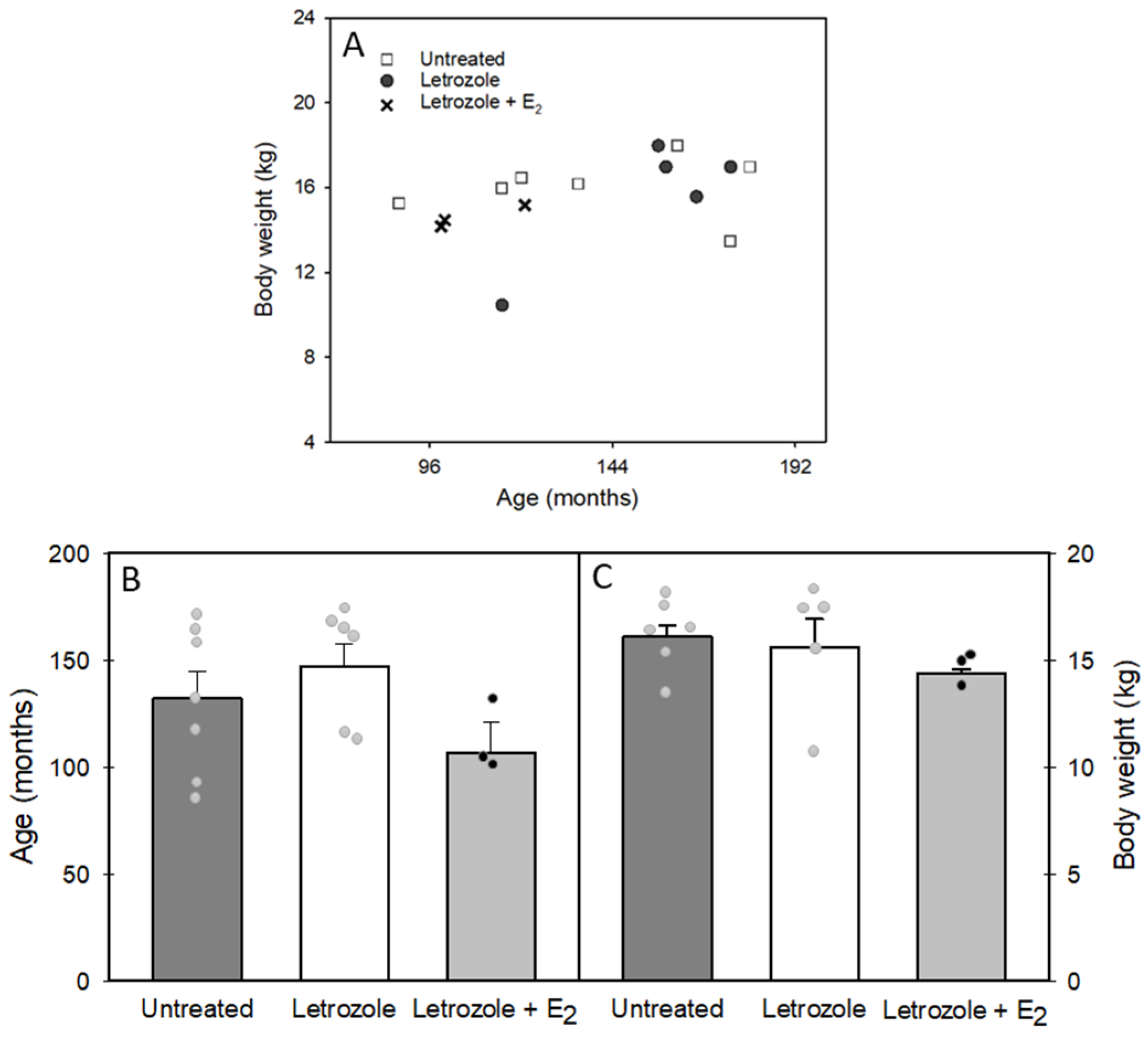
As previously shown [6,7,14,15], female offspring, whether untreated or treated in utero with letrozole or letrozole plus E2, exhibited comparable growth throughout postnatal months 12–156 (years 1–12.5) and achieved their adult body weight by 8–9 years of age (Figure 1A). Thus, as seen in Figure 1B,C, the mean ± SEM age and body weights of adult (i.e., post-pubertal) female offspring from which SM biopsies were obtained and analyzed in this study were similar (ANOVA; age p = 0.23; body weight p = 0.64) in untreated animals (135 ± 14.8 months; 16.1 ± 0.63 kg; n = 7), animals treated with letrozole (147 ± 10.8 months; 15.6 ± 1.34 kg; n = 6), and animals treated with letrozole plus E2 (107 ± 7.2 months; 14.4 ± 0.15 kg; n = 3).

3.2. Morphology of Vastus Lateralis Slow and Fast Fibers

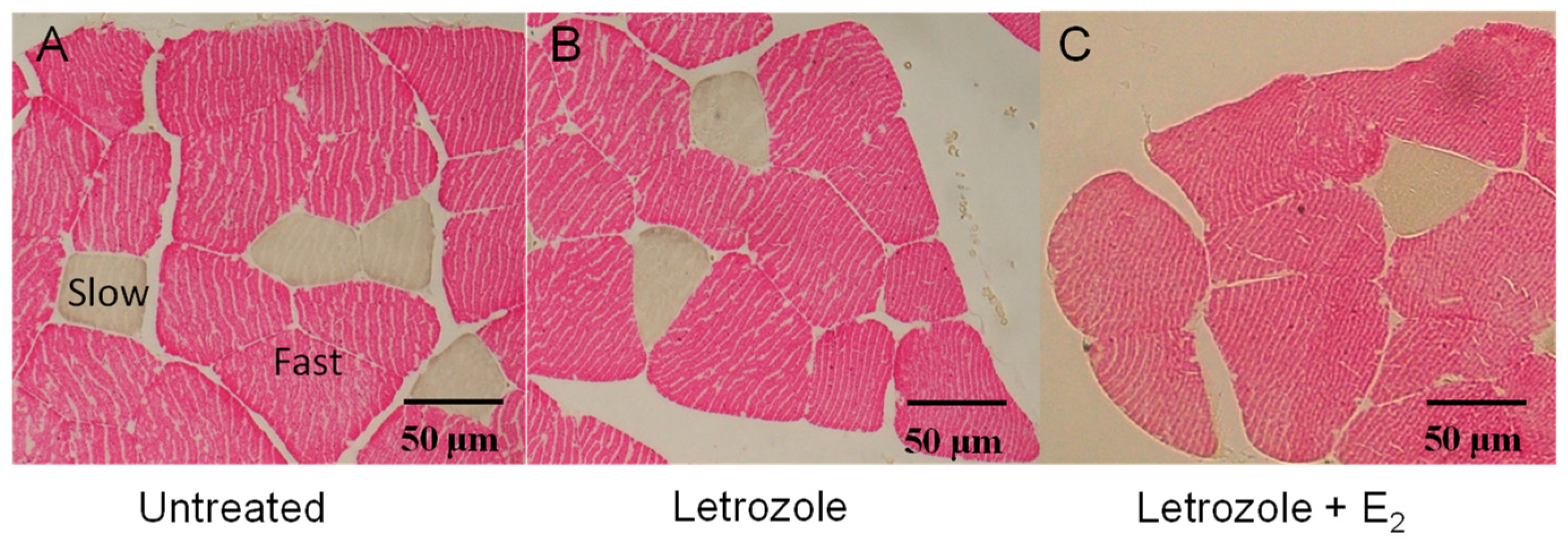
As shown in Figure 2, post-pubertal baboon offspring vastus lateralis is comprises both slow (Type I; light gray) and fast (Type II; pink/red) fibers, which appear to be tightly bundled and well organized. Moreover, there do not appear to be any morphological differences in SM of offspring born to mothers who were untreated (Figure 2A) or treated during the second half of gestation with letrozole (Figure 2B) or letrozole and E2 benzoate (Figure 2C).

3.3. Number and Size of Vastus Lateralis Slow and Fast Fibers

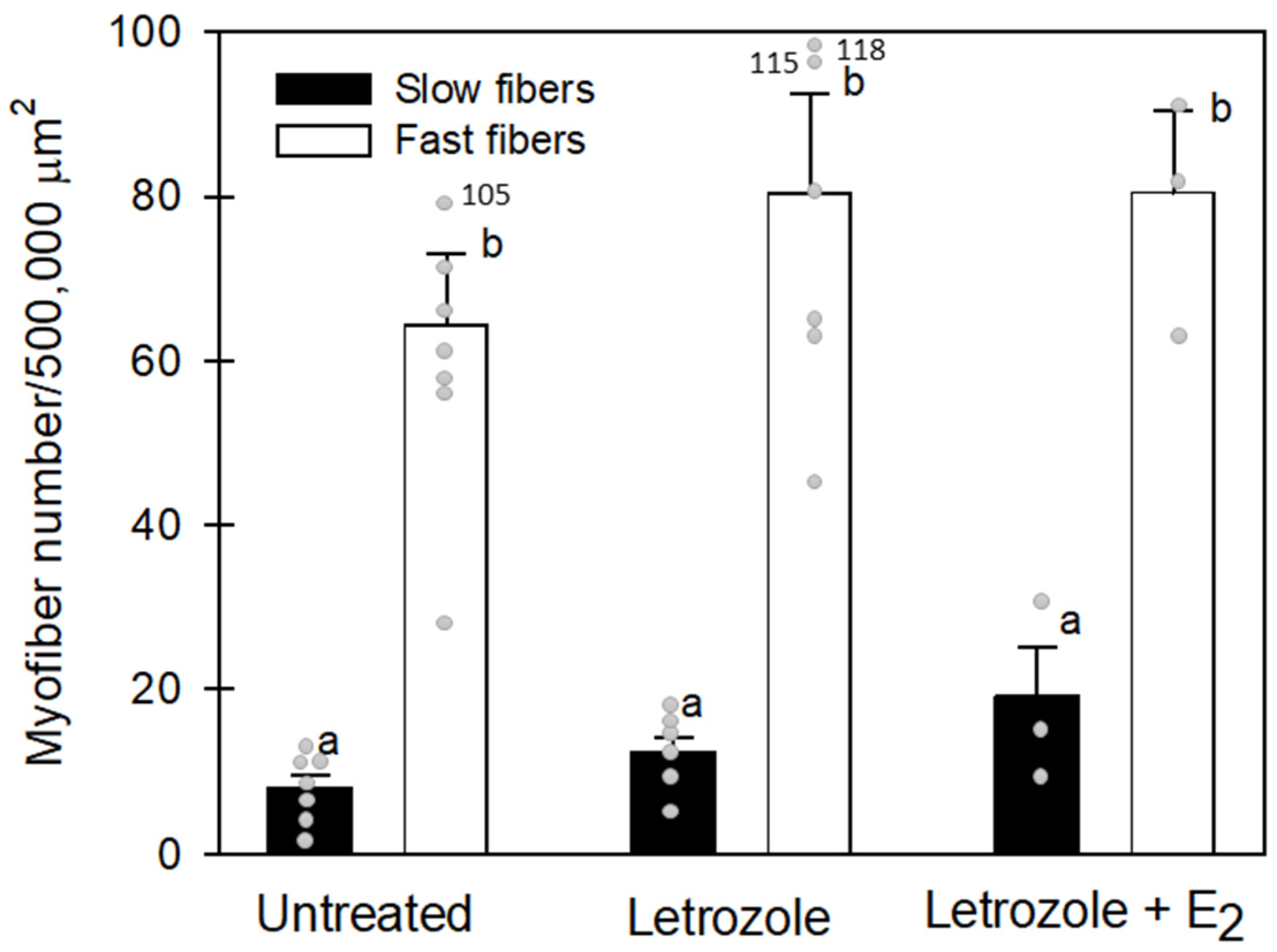
The average size of each cross-sectional area of vastus lateralis myofibers analyzed in offspring was similar in baboons who were untreated (439,561 ± 10,718 µm2), treated with letrozole (430,062 ± 87,532 µm2), or treated with letrozole + E2 (400,187 ± 32,500 µm2). For statistical comparison of data between the treatment groups, the number of myofibers per area and the area of region occupied by slow and fast myofibers were normalized to a tissue area of 500,000 µm2. As shown in Figure 3, two-way ANOVA confirmed that regardless of treatment, the number of fast fibers/500,000 µm2 vastus lateralis tissue area was 5- to 7-fold higher (p < 0.001) than the number of slow fibers in adult (i.e., 92–150-month-old) offspring. Moreover, the respective mean values for the number of slow and fast fibers were similar (two-way ANOVA; p = 0.23) in adult offspring from animals who were untreated (slow = 8.1 ± 1.6; fast = 64.3 ± 8.7), treated with letrozole (slow = 12.4 ± 1.8; fast = 80.3 ± 12.3), or treated with letrozole plus E2 (slow = 19.2 ± 6.0; fast = 80.4 ± 10.2).
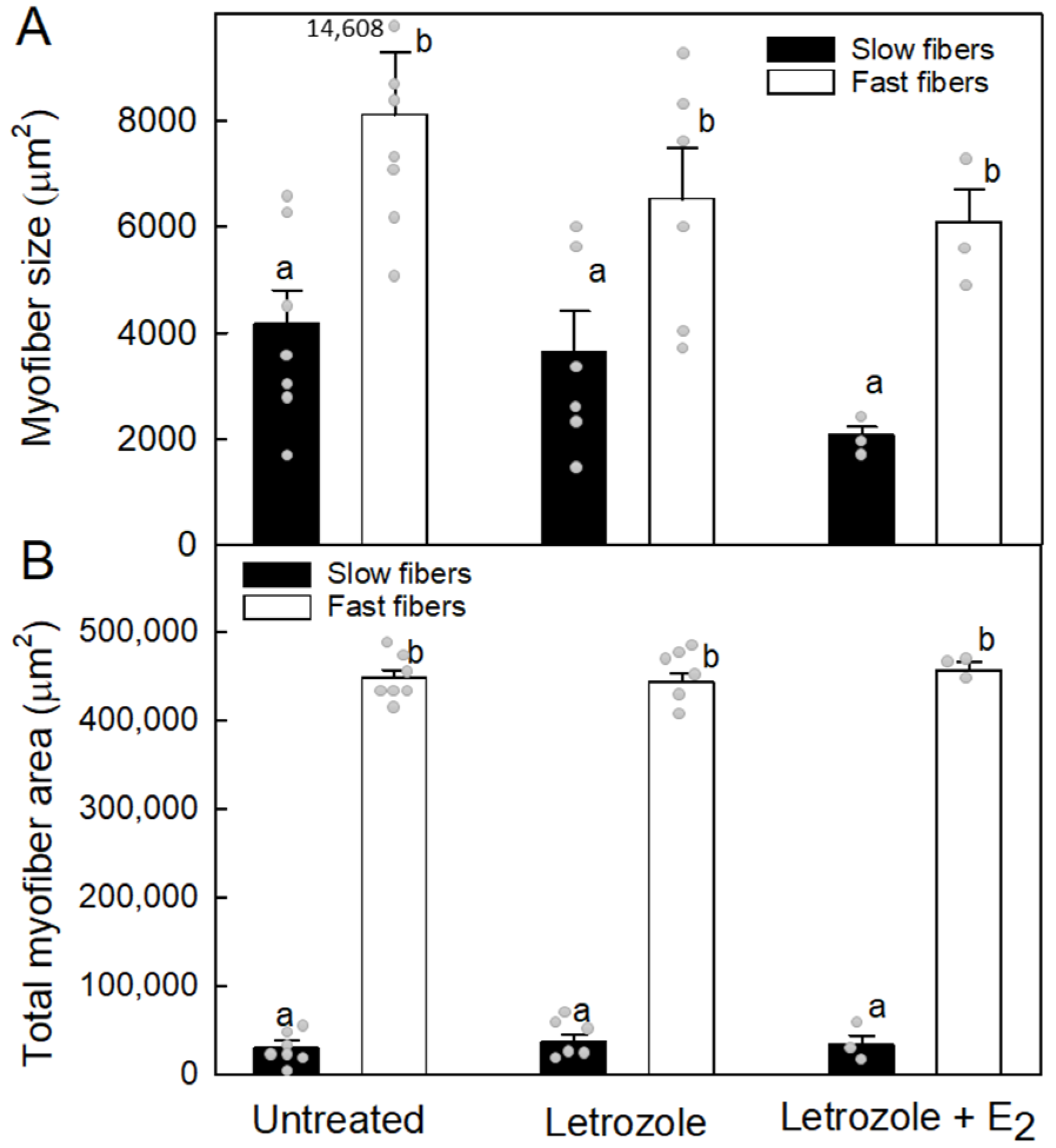
Two-way ANOVA also confirmed that regardless of treatment, the size of fast fibers was approximately 2-fold greater (p < 0.001) than the size of slow fibers in 92–150-month-old offspring (Figure 4A). Additionally, respective mean values for size (µm2) of slow and fast fibers were similar (two-way ANOVA; p = 0.15) in offspring from animals untreated (slow = 4177 ± 625 µm2; fast = 8112 ± 1173 µm2), treated with letrozole (slow = 3656 ± 758 µm2; fast = 6522 ± 960 µm2) or treated with letrozole plus E2 (slow = 2077 ± 151 µm2; fast = 6085 ± 617 µm2). Accordingly, regardless of treatment, the total vastus lateralis area (500,000 µm2) occupied by fast fibers (number × size) was >9-fold greater (two-way ANOVA; p < 0.001) than the comparable area occupied by slow fibers (Figure 4B). Moreover, respective mean values of total tissue area occupied by slow and fast fibers was similar (two-way ANOVA; p = 0.82) in offspring from mothers who were untreated (slow = 31,828 ± 7516 µm2; fast = 448,565 ± 8148 µm2), treated with letrozole (slow = 38,514 ± 6030 µm2; fast = 443,482 ± 9008 µm2), or treated with letrozole plus E2 (slow = 35,151 ± 8600 µm2; fast = 456,899 µm2). Accordingly, the percentage of tissue area of SM in adult offspring occupied by slow plus fast fibers approximated 95% and was similar in animals who were untreated (slow = 6.2 ± 3.7%; fast = 89.3% ± 4.1%), treated in utero with letrozole (slow = 7.9 ± 3.3%; fast = 89.2 ± 4.1%), or treated letrozole plus E2 (slow = 7.2 ± 3.0%; fast = 90.5 ± 2.2%).

3.4. Number and Size of Vastus Lateralis Slow and Fast Fibers in Baboon Fetuses and Pre-Pubertal and Post-Pubertal Offspring

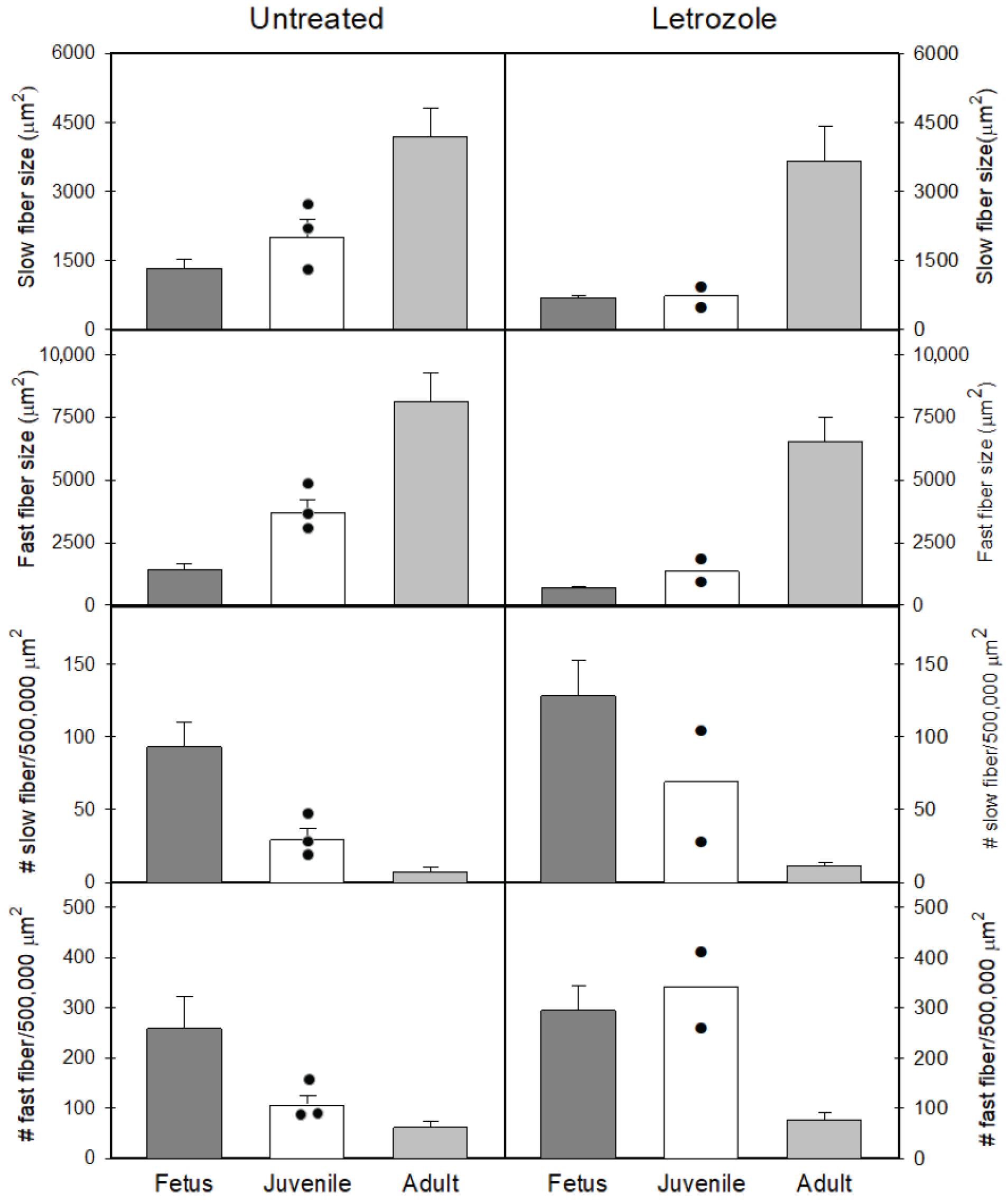
To ascertain whether myofiber development postnatally reflected hypertrophy and/or hyperplasia, and whether respective size of fast and slow fibers were still lower in pre-pubertal juveniles of letrozole-treated animals, data previously published for the number and size of slow and fast fibers in SM of fetuses delivered at term to mothers who were untreated or treated with letrozole [15] were normalized to a vastus lateralis area of 500,000 µm2 and compared to respective values in the pre-pubertal (juvenile) and adult (post-pubertal) offspring in the present study. As shown in Figure 5, it is apparent that in both untreated and letrozole-treated animals, the number of slow and fast fibers declined, whereas the size of slow and fast fibers increased with prenatal (fetal) to postnatal (adult) development of offspring. Although only a small number of juvenile offspring samples were available, regardless of treatment in vivo, the size of the fast fibers in untreated (3696 µm2 ± 536 µm2) and letrozole-treated (1084 µm2 and 1600 µm2; mean 1342 µm2) juveniles appears to be 1–2 fold greater than the respective size of slow fibers (untreated juveniles 2003 µm2 ± 398 µm2; letrozole-treated juveniles 553 µm2 and 901 µm2; mean 727 µm2). Moreover, as originally seen in the fetus, the size of fast (3696 µm2 ± 536 µm2) and slow (2003 µm2 ± 398 µm2) fibers in untreated juvenile offspring appears to be approximately 2–3-fold greater than respective values in juveniles born to letrozole-treated baboons (fast: 1342 µm2; slow: 727 µm2). In contrast, after the onset of puberty, the mean respective size of slow and fast fibers was not different in adult offspring who were untreated or treated in utero with letrozole.

4. Discussion

The results of the current study show that the size of slow and fast myofibers in vastus lateralis SM markedly increased after birth and during postnatal development in baboon offspring exposed to the normal increase in estrogen during the second half of gestation. Moreover, due to the increase in fiber growth, the number of slow and fast fibers per unit SM area decreased. These findings indicate that the growth of slow and fast skeletal muscle myofibers in female baboon offspring occurs primarily by hypertrophy, as shown in humans and other animal models [17,25,26,27,28,29]. Importantly, however, the current study also showed that SM slow and fast fiber number and size were similar in adult female baboon offspring born to mothers who were untreated or treated throughout the second half of gestation with the aromatase inhibitor letrozole, which reduced maternal and fetal estrogen levels by more than 90%. This finding was not anticipated since we have previously shown [15] that the size of slow and fast SM fibers in both female and male near-term fetuses deprived of estrogen in utero was 2-fold lower than respective values in near-term fetuses of untreated mothers (i.e., estrogen-replete). Therefore, while postnatal SM myofiber growth in female offspring deprived of estrogen in utero also resulted from hypertrophic expansion as in untreated and letrozole–estrogen-treated offspring, such expansion apparently occurred at a more accelerated rate in the letrozole-treated estrogen-suppressed animals. It is well established that postnatal growth/hypertrophy of myofibers is multifaceted and influenced by many factors, including mechanical signals acting through extracellular matrix proteins, as well as chemical messengers including insulin-like growth factor 1 (IGF1) and insulin itself via binding to the IGF1 receptor [17,28,30]. Nevertheless, although additional studies are required to elucidate the factors and mechanisms regulating postnatal SM hypertrophy in female baboon offspring, it is apparent that myofiber hypertrophy likely reflects effects of the onset of ovarian estrogen synthesis post-puberty and into adulthood. Consistent with this suggestion, despite the relatively small number of animals available for study, the size of slow and fast fibers in pre-pubertal juvenile offspring born to mothers deprived of estrogen, i.e., offspring not exposed to pubertal surge of gonadal hormones, was lower than respective values in pre-pubertal/juveniles of untreated mothers exposed to estrogen during pregnancy. The proposed postnatal role of estrogen in baboon offspring is also consistent with other studies, which have shown that estrogen increases muscle mass in adult rodents [18,19,20], and helps maintain muscle mass and strength in aging females [18,21]. Finally, the apparent enhanced rate of myofiber hypertrophy in female offspring deprived of estrogen during the second half of gestation does not appear to reflect catch-up growth, but rather a specific response of SM. Thus, body and organ weights of fetuses and offspring derived from estrogen-deprived mothers were similar to those of fetuses/offspring born to mothers who were untreated and thus exposed to estrogen during the second half of gestation [7,14,15].
Despite the restoration of myofiber size in post-pubertal offspring deprived of estrogen in utero, SM myofiber capillarization, and thus the number of small arterioles and capillaries, i.e., microvessels, as well as the number of microvessels per myofiber, which was two-fold lower in estrogen-deprived fetuses, remained two-fold lower in adulthood well after the onset of puberty and the production of estrogen [7,14]. Moreover, offspring deprived of estrogen during pregnancy exhibited insulin resistance and hypertension prior to and after the onset of puberty [5,6,7]. Collectively, these findings and the results of the current study indicate, as previously suggested [7,14], that estrogen in utero promotes systemic capillarization in the fetus and that the development of this vascular network in fetal SM underpins insulin sensitivity in adulthood. These findings highlight the apparent specificity of the action of estrogen in programming microvascular development in SM of the fetus important for insulin sensitivity/glucose homeostasis in adulthood. Additionally, SM arterioles/capillaries, also termed microvascular units, are a major insulin target site [31,32,33,34,35], and insulin acts on SM microvascular units to increase capillary perfusion, as well as its own delivery to, and therefore its action in, the muscle [36,37,38,39,40,41]. Although insulin sensitivity remains low after puberty in baboon offspring deprived of estrogen in utero, the restoration of myofiber size postnatally is, nevertheless, likely to be physiologically important, e.g., for promoting overall muscle strength, preventing muscle atrophy, and enhancing exercise-induced insulin action and glucose homeostasis in insulin-resistant individuals, e.g., prediabetics and individuals with early-onset type 2 diabetes [13,36,42,43].
The results of the current study also showed that in adult baboon SM, the number of fast fibers was 5–7-fold higher than the number of slow fibers and that the ratio of fast-slow fibers was similar in adult animals born to mothers who were untreated (i.e., estrogen-replete) or deprived of estrogen. In contrast, although the fast fiber–slow fiber composition of fetal SM was also not altered by estrogen in utero, the number of fast fibers was only 2–3-fold higher than that of slow fibers. Thus, it appears that the relative number of slow fibers decreased and that of fast fibers increased postnatally. A similar change in fiber composition has been noted in studies in humans [25,44]. The factors regulating this apparent change in composition of vastus lateralis in baboon offspring of the current study remains to be determined and may reflect motor innervation and that type 2 fibers are used for more rapid and forceful movements characteristic of non-human primates.
In summary, the current study showed that slow and fast SM fiber growth after onset of puberty in female baboons occurred by hypertrophy, and that the respective fiber sizes were similar in offspring born to mothers who were either untreated or deprived of estrogen during the second half of gestation. Moreover, as previously shown [15], because the size of slow and fast SM fibers in near-term female (and male) fetuses deprived of estrogen in utero was lower than that in near-term fetuses of untreated mothers (i.e., estrogen-replete), it appears that postnatal myofiber hypertrophy occurred at an accelerated rate in female offspring deprived of estrogen in utero. Postnatal myofiber hypertrophy likely reflects the effects of the pubertal surge in ovarian estrogen and its continued influence into adulthood. Importantly, despite the restoration of myofiber size, our previous studies showed that the reduced number of SM microvessels in adult offspring deprived of estrogen during pregnancy remained reduced after the onset of puberty, and that these offspring still exhibited insulin resistance and hypertension [7,14]. Collectively, the results of the current study and our previous studies indicate that estrogen in utero promotes systemic capillarization in the fetus and, consequently, the onset of insulin sensitivity after birth in the offspring.

Author Contributions

G.J.P. and E.D.A. conceived and designed the research; T.J.L. performed animal husbandry and prepared paraffin embedded skeletal muscle tissue samples; P.J.G. performed the experiments; P.J.G., G.J.P., and E.D.A. analyzed data; P.J.G. and G.J.P. prepared figures; G.J.P., P.J.G., and E.D.A. drafted, edited and revised the manuscript; All authors have read and agreed to the published version of the manuscript.

Funding

This work was supported by National Institutes of Health R01 DK 120513 Research Grant.

Institutional Review Board Statement

Not applicable.

Data Availability Statement

The original contributions presented in this study are included in the article. Further inquiries can be directed to the corresponding author.

Acknowledgments

The authors thank Sandra Huband for computer preparation of the manuscript, Soon Ok Kim for assistance with the juvenile immunocytochemistry studies, and Novartis Pharma (Basel, Switzerland) for generously providing the aromatase inhibitor letrozole.

Conflicts of Interest

The authors declare no conflicts of interest.

Abbreviations

The following abbreviations are used in this manuscript:
T2DMType 2 diabetes mellitus
DBCDDysglycemia-based chronic disease
IRInsulin resistance
SMSkeletal muscle
VEGFVascular endothelial growth factor
E2Estradiol
ANOVAAnalysis of variance

References

  1. Saeedi, P.; Petersohn, I.; Salpea, P.; Malanda, B.; Karuranga, S.; Unwin, N.; Colagiuri, S.; Guariguata, L.; Motala, A.A.; Ogurtsova, K.; et al. IDF Diabetes Atlas Committee. Global and regional diabetes prevalence estimates for 2019 and projections for 2030 and 2045: Results from the International Diabetes Federation Diabetes Atlas, 9th edition. Diabetes Res. Clin. Pract. 2019, 157, 107843. [Google Scholar] [CrossRef]
  2. Climie, R.E.; van Sloten, T.T.; Bruno, R.M.; Taddei, S.; Empana, J.P.; Stehouwer, C.D.A.; Sharman, J.E.; Boutouyrie, P.; Laurent, S. Macrovasculature and microvasculature at the crossroads between type 2 diabetes mellitus and hypertension. Hypertension 2019, 73, 1138–1149. [Google Scholar] [CrossRef] [PubMed]
  3. Kalra, S.; Unnikrishnan, A.G.; Baruah, M.P.; Sahay, R.; Bantwal, G. Metabolic and energy imbalance in dysglycemia-based chronic disease. Diabetes Metab. Syndr. Obes. 2021, 14, 165–184. [Google Scholar] [CrossRef] [PubMed]
  4. Mechanick, J.I.; Garber, A.J.; Grunberger, G.; Handelsman, Y.; Garvey, W.T. Dysglycemia-Based Chronic Disease: An American Association of Clinical Endocrinologists Position Statement. Endocr. Pract. 2018, 24, 995–1011. [Google Scholar] [CrossRef]
  5. Maniu, A.; Aberdeen, G.W.; Lynch, T.J.; Nadler, J.L.; Kim, S.O.; Quon, M.J.; Pepe, G.J.; Albrecht, E.D. Estrogen deprivation in primate pregnancy leads to insulin resistance in offspring. J. Endocrinol. 2016, 230, 171–183. [Google Scholar] [CrossRef] [PubMed]
  6. Pepe, G.J.; Maniu, A.; Aberdeen, G.; Lynch, T.J.; Kim, S.O.; Nadler, J.; Albrecht, E.D. Insulin resistance elicited in postpubertal primate offspring deprived of estrogen in utero. Endocrine 2016, 54, 788–797. [Google Scholar] [CrossRef]
  7. Albrecht, E.D.; Aberdeen, G.W.; Babischkin, J.S.; Prior, S.J.; Lynch, T.; Baranyk, I.A.; Pepe, G.J. Estrogen promotes microvascularization in the fetus and thus vascular function and insulin sensitivity in offspring. Endocrinology 2022, 163, bqac037. [Google Scholar] [CrossRef]
  8. Mukund, K.; Subramaniam, S. Skeletal muscle: A review of molecular structure and function, in health and disease. Wiley Interdiscip. Rev. Syst. Biol. Med. 2020, 12, e1462. [Google Scholar] [CrossRef]
  9. Latroche, C.; Gitiaux, C.; Chrétien, F.; Desguerre, I.; Mounier, R.; Chazaud, B. Skeletal Muscle Microvasculature: A Highly Dynamic Lifeline. Physiology 2015, 30, 417–427. [Google Scholar] [CrossRef] [PubMed]
  10. Glancy, B.; Hsu, L.Y.; Dao, L.; Bakalar, M.; French, S.; Chess, D.J.; Taylor, J.L.; Picard, M.; Aponte, A.; Daniels, M.P.; et al. In vivo microscopy reveals extensive embedding of capillaries within the sarcolemma of skeletal muscle fibers. Microcirculation 2014, 21, 131–147. [Google Scholar] [CrossRef]
  11. Abdul-Ghani, M.A.; DeFronzo, R.A. Pathogenesis of insulin resistance in skeletal muscle. J. Biomed. Biotechnol. 2010, 2010, 476279. [Google Scholar] [CrossRef]
  12. DeFronzo, R.A.; Gunnarsson, R.; Bjorkman, O.; Olsson, M.; Wahren, J. Effects of insulin on peripheral and splanchnic glucose metabolism in noninsulin-dependent (type II) diabetes mellitus. J. Clin. Investig. 1985, 76, 149–155. [Google Scholar] [CrossRef]
  13. Pepe, G.J.; Albrecht, E.D. Microvascular skeletal-muscle crosstalk in health and disease. Int. J. Mol. Sci. 2023, 24, 10425. [Google Scholar] [CrossRef] [PubMed]
  14. Aberdeen, G.W.; Babischkin, J.S.; Pepe, G.J.; Albrecht, E.D. Estrogen stimulates fetal vascular endothelial growth factor expression and microvascularization. J. Endocrinol. 2024, 262, e230364. [Google Scholar] [CrossRef]
  15. Kim, S.O.; Albrecht, E.D.; Pepe, G.J. Estrogen promotes fetal skeletal muscle myofiber development important for insulin sensitivity in offspring. Endocrine 2022, 78, 32–41. [Google Scholar] [CrossRef] [PubMed]
  16. Widdowson, E.M.; Crabb, D.E.; Milner, R.D. Cellular development of some human organs before birth. Arch. Dis. Child. 1972, 47, 652–655. [Google Scholar] [CrossRef]
  17. Schiaffino, S.; Reggiani, C.; Akimoto, T.; Blaauw, B. Molecular mechanisms of skeletal muscle hypertrophy. J. Neuromuscul. Dis. 2021, 8, 169–183. [Google Scholar] [CrossRef]
  18. Seko, D.; Fujita, R.; Kitajima, Y.; Nakamura, K.; Imai, Y.; Ono, Y. Estrogen receptor beta controls muscle growth and regeneration in young female mice. Stem Cell Rep. 2020, 15, 577–586. [Google Scholar] [CrossRef]
  19. Kitajima, Y.; Ono, Y. Estrogens maintain skeletal muscle and satellite cell functions. J. Endocrinol. 2016, 229, 267–275. [Google Scholar] [CrossRef] [PubMed]
  20. Kobori, M.; Yamamuro, T. Effects of gonadectomy and estrogen administration on rat skeletal muscle. Clin. Orthop. Relat. Res. 1989, 243, 306–311. [Google Scholar] [CrossRef]
  21. Diel, P. The role of the estrogen receptor in skeletal muscle mass homeostasis and regeneration. Acta Physiol. 2014, 212, 14–16. [Google Scholar] [CrossRef]
  22. Velders, M.; Schleipen, B.; Fritzemeier, K.H.; Zierau, O.; Diel, P. Selective estrogen receptor-beta activation stimulates skeletal muscle growth and regeneration. FASEB J. 2012, 26, 1909–1920. [Google Scholar] [CrossRef]
  23. Wiik, A.; Ekman, M.; Johansson, O.; Jansson, E.; Esbjörnsson, M. Expression of both oestrogen receptor alpha and beta in human skeletal muscle tissue. Histochem. Cell Biol. 2009, 131, 181–189. [Google Scholar] [CrossRef] [PubMed]
  24. Baltgalvis, K.A.; Greising, S.M.; Warren, G.L.; Lowe, D.A. Estrogen regulates estrogen receptors and antioxidant gene expression in mouse skeletal muscle. PLoS ONE 2010, 5, e10164. [Google Scholar] [CrossRef] [PubMed] [PubMed Central]
  25. Lexell, J.; Sjöström, M.; Nordlund, A.S.; Taylor, C.C. Growth and development of human muscle: A quantitative morphological study of whole vastus lateralis from childhood to adult age. Muscle Nerve 1992, 15, 404–409. [Google Scholar] [CrossRef] [PubMed]
  26. White, R.B.; Bierinx, A.S.; Gnocchi, V.F.; Zammit, P.S. Dynamics of muscle fibre growth during postnatal mouse development. BMC Dev. Biol. 2010, 10, 21. [Google Scholar] [CrossRef] [PubMed]
  27. Rowe, R.W.; Goldspink, G. Muscle fibre growth in five different muscles in both sexes of mice. J. Anat. 1969, 104, 519–530. [Google Scholar] [PubMed]
  28. Brown, L.D. Endocrine regulation of fetal skeletal muscle growth: Impact on future metabolic health. J. Endocrinol. 2014, 221, R13–R29. [Google Scholar] [CrossRef]
  29. Lexell, J.; Taylor, C.C.; Sjöström, M. What is the cause of the ageing atrophy? Total number, size and proportion of different fiber types studied in whole vastus lateralis muscle from 15- to 83-year-old men. J. Neurol. Sci. 1988, 84, 275–294. [Google Scholar] [CrossRef] [PubMed]
  30. Verbrugge, S.A.J.; Schönfelder, M.; Becker, L.; Yaghoob Nezhad, F.; Hrabě de Angelis, M.; Wackerhage, H. Genes Whose Gain or Loss-Of-Function Increases Skeletal Muscle Mass in Mice: A Systematic Literature Review. Front. Physiol. 2018, 9, 553. [Google Scholar] [CrossRef] [PubMed] [PubMed Central]
  31. Barrett, E.J.; Eggleston, E.M.; Inyard, A.C.; Wang, H.; Li, G.; Chai, W.; Liu, Z. The vascular actions of insulin control its delivery to muscle and regulate the rate-limiting step in skeletal muscle insulin action. Diabetologia 2009, 52, 752–764. [Google Scholar] [CrossRef]
  32. Barrett, E.J.; Wang, H.; Upchurch, C.T.; Liu, Z. Insulin regulates its own delivery to skeletal muscle by feed-forward actions on the vasculature. Am. J. Physiol. Endocrinol. Metab. 2011, 301, E252–E263. [Google Scholar] [CrossRef]
  33. Barrett, E.J.; Liu, Z. The endothelial cell: An “early responder” in the development of insulin resistance. Rev. Endocr. Metab. Disord. 2013, 14, 21–27. [Google Scholar] [CrossRef] [PubMed]
  34. Muniyappa, R.; Montagnani, M.; Koh, K.K.; Quon, M.J. Cardiovascular actions of insulin. Endocr. Rev. 2007, 28, 463–491. [Google Scholar] [CrossRef] [PubMed]
  35. Clark, M.G.; Wallis, M.G.; Barrett, E.J.; Vincent, M.A.; Richards, S.M.; Clerk, L.H.; Rattigan, S. Blood flow and muscle metabolism: A focus on insulin action. Am. J. Physiol. Endocrinol. Metab. 2003, 284, E241–E258. [Google Scholar] [CrossRef] [PubMed]
  36. Zheng, C.; Liu, Z. Vascular function, insulin action, and exercise: An intricate interplay. Trends Endocrinol. Metab. 2015, 26, 297–304. [Google Scholar] [CrossRef]
  37. Vincent, M.A.; Clerk, L.H.; Lindner, J.R.; Klibanov, A.L.; Clark, M.G.; Rattigan, S.; Barrett, E.J. Microvascular recruitment is an early insulin effect that regulates skeletal muscle glucose uptake in vivo. Diabetes 2004, 53, 1418–1423. [Google Scholar] [CrossRef] [PubMed]
  38. Eggleston, E.M.; Jahn, L.A.; Barrett, E.J. Hyperinsulinemia rapidly increases human muscle microvascular perfusion but fails to increase muscle insulin clearance: Evidence that a saturable process mediates muscle insulin uptake. Diabetes 2007, 56, 2958–2963. [Google Scholar] [CrossRef]
  39. Chai, W.; Wang, W.; Liu, J.; Barrett, E.J.; Carey, R.M.; Cao, W.; Liu, Z. Angiotensin II type 1 and type 2 receptors regulate basal skeletal muscle microvascular volume and glucose use. Hypertension 2010, 55, 523–530. [Google Scholar] [CrossRef]
  40. Chiu, J.D.; Richey, J.M.; Harrison, L.N.; Zuniga, E.; Kolka, C.M.; Kirkman, E.; Ellmerer, M.; Bergman, R.N. Direct administration of insulin into skeletal muscle reveals that the transport of insulin across the capillary endothelium limits the time course of insulin to activate glucose disposal. Diabetes 2008, 57, 828–835. [Google Scholar] [CrossRef]
  41. Wang, H.; Wang, A.X.; Liu, Z.; Barrett, E.J. Insulin signaling stimulates insulin transport by bovine aortic endothelial cells. Diabetes 2008, 57, 540–547. [Google Scholar] [CrossRef] [PubMed]
  42. Prior, S.J.; Blumenthal, J.B.; Katzel, L.I.; Goldberg, A.P.; Ryan, A.S. Increased skeletal muscle capillarization after aerobic exercise training and weight loss improves insulin sensitivity in adults with IGT. Diabetes Care 2014, 37, 1469–1475. [Google Scholar] [CrossRef] [PubMed]
  43. Vasconsuelo, A.; Milanesi, L.; Boland, R. 17Beta-estradiol abrogates apoptosis in murine skeletal muscle cells through estrogen receptors: Role of the phosphatidylinositol 3-kinase/Akt pathway. J. Endocrinol. 2008, 196, 385–397. [Google Scholar] [CrossRef] [PubMed]
  44. Kriketos, A.D.; Baur, L.A.; O’Connor, J.; Carey, D.; King, S.; Caterson, I.D.; Storlien, L.H. Muscle fibre type composition in infant and adult populations and relationships with obesity. Int. J. Obes. Relat. Metab. Disord. 1997, 21, 796–801. [Google Scholar] [CrossRef] [PubMed]
Figure 1. Individual (A) and mean  ±  SEM (and individual data points) age (B) and body weight (C) of post-pubertal adult female baboon offspring born to mothers untreated (n = 7) or treated during the second half of gestation with letrozole (n = 6) or letrozole plus estradiol (E2, n = 3). Body weight was not recorded for one untreated offspring and for one letrozole-treated offspring.
Endocrines 07 00001 g001
Figure 2. Immunohistochemical detection of slow (gray) and fast (pink) myofibers in representative sections of vastus lateralis skeletal muscle from adult female offspring born to mothers untreated or treated during the second half of gestation with letrozole ± estradiol (E2) as described in legend to Figure 1.
Endocrines 07 00001 g002
Figure 3. Mean  ±  SEM (and individual data points) number of slow (▬) and fast (▭) muscle fibers per 500,000 µm2 skeletal muscle area of 92–150-month-old female offspring born to mothers untreated (n = 7) or treated during the second half of gestation with letrozole (n = 6) or letrozole plus estradiol benzoate (E2; n = 3). Values with different letter superscripts indicate significant differences: p  <  0.0001, slow vs. fast fiber number; p = 0.23, effect of E2 during gestation on fiber number; two-way ANOVA and Tukey-HSD/Kramer post-test.
Endocrines 07 00001 g003
Figure 4. (A) Mean  ±  SEM size (µm2) (and individual data points) of slow (▬) and fast (▭) fibers in skeletal muscle of 92–150-month-old female baboon offspring born to mothers untreated (n = 7) or treated during the second half of gestation with letrozole (n = 6) or letrozole + estradiol benzoate (E2; n = 3). (B) Mean  ±  SEM (and individual data points) area (µm2) of myofibers occupied by slow (▬) vs. fast (▭) fibers in skeletal muscle of 92–150-month-old baboon offspring born to mothers untreated (n = 7) or treated during the second half of gestation with letrozole (n = 6) or letrozole + estradiol benzoate (E2; n = 3). Values with different letter superscripts indicate significant differences: p  <  0.0001 size of and area occupied by slow vs. fast fibers; p = 0.15 effect of E2 during gestation on size of slow and fast fibers; p = 0.82 effect of E2 during gestation on total myofiber area comprising slow/fast fibers; two-way ANOVA and Tukey-HSD/Kramer post-test.
Endocrines 07 00001 g004
Figure 5. Mean  ±  SEM slow myofiber size and number/500,000 µm2 of vastus lateralis tissue area in baboon fetuses at term: untreated (n = 6; 3 male, 3 female) or treated with letrozole (n = 5; 1 male; 4 female) (data adapted from Kim et al., 2022, [15]); pre-pubertal offspring (i.e., juvenile, <30 months of age; individual data points included) from mothers untreated (n = 3; 2 male, 1 female) or treated with letrozole (n = 2; 1 male, 1 female); and post-pubertal offspring (i.e., adult females, 92–150 months of age) born to mothers untreated (n = 7) or treated during the second half of gestation with letrozole (n = 6) (data shown in Figure 4).
Endocrines 07 00001 g005
Disclaimer/Publisher’s Note: The statements, opinions and data contained in all publications are solely those of the individual author(s) and contributor(s) and not of MDPI and/or the editor(s). MDPI and/or the editor(s) disclaim responsibility for any injury to people or property resulting from any ideas, methods, instructions or products referred to in the content.