
Study on the Mechanical Characteristics of Crack Propagation in 07MnMoVR Pressure-Bearing Steel Pipes Under Residual Stress

 ,
,
Abstract
1. Introduction
2. Materials and Methods
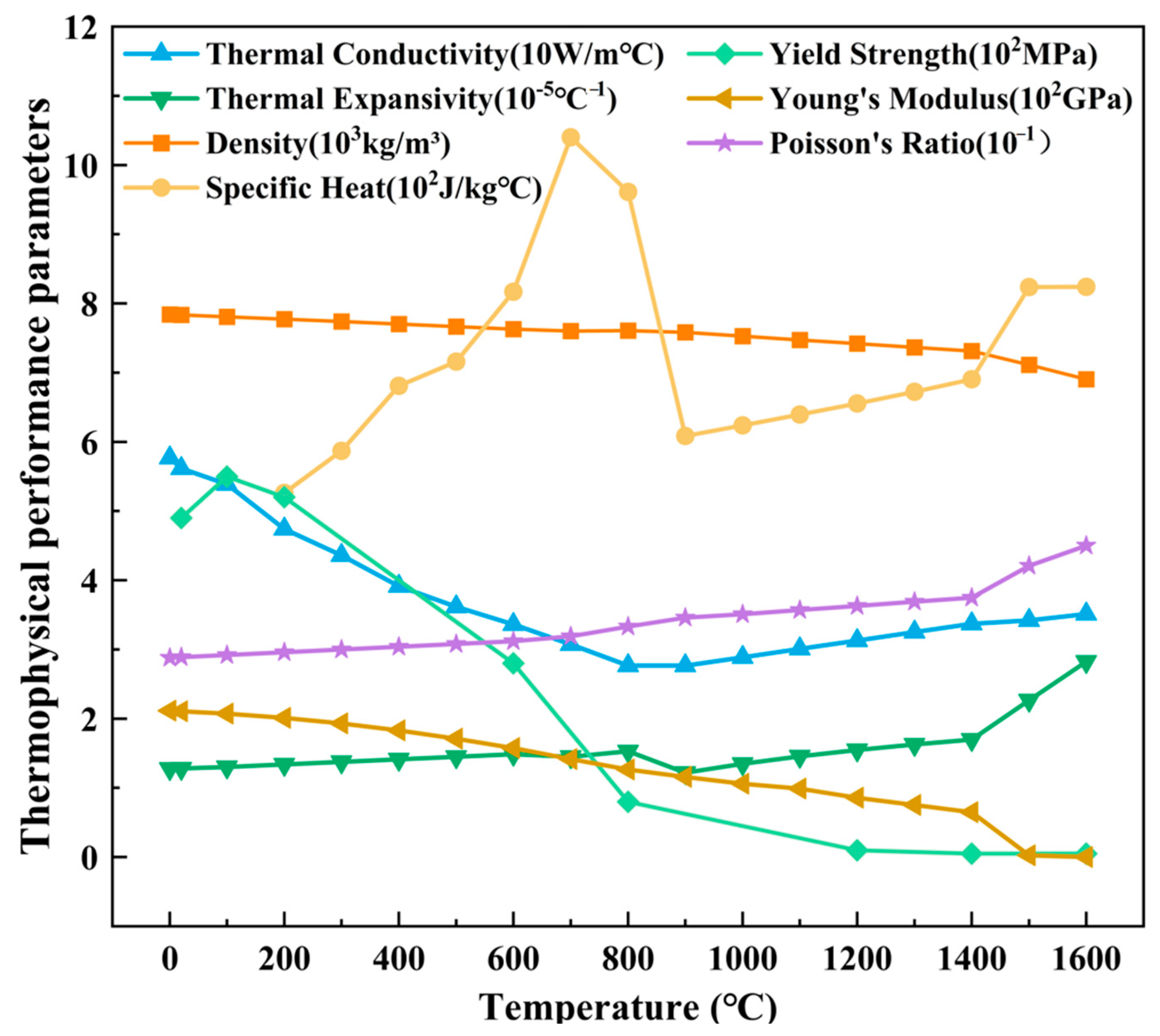
2.1. Material Properties of 07MnMoVR
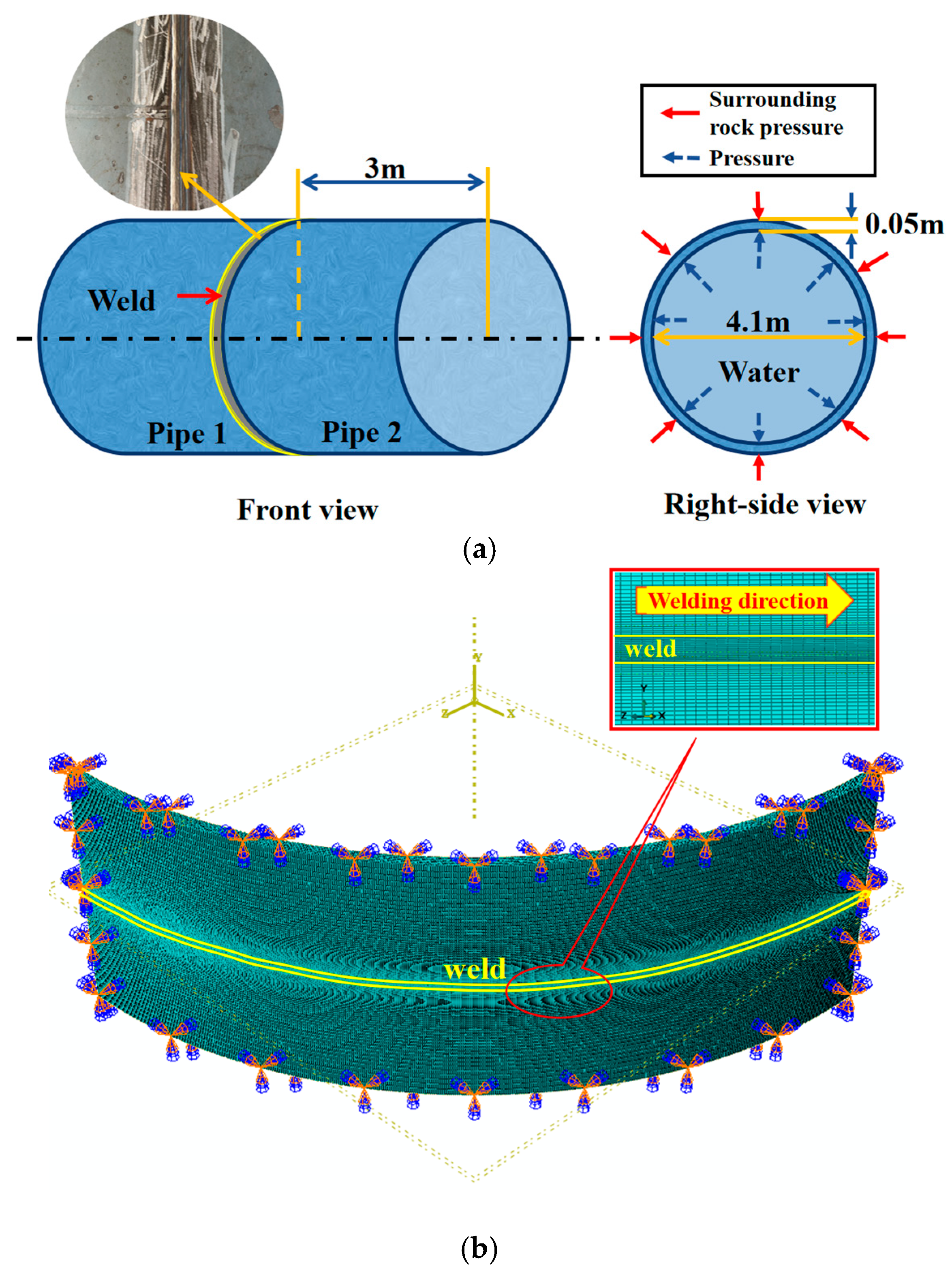
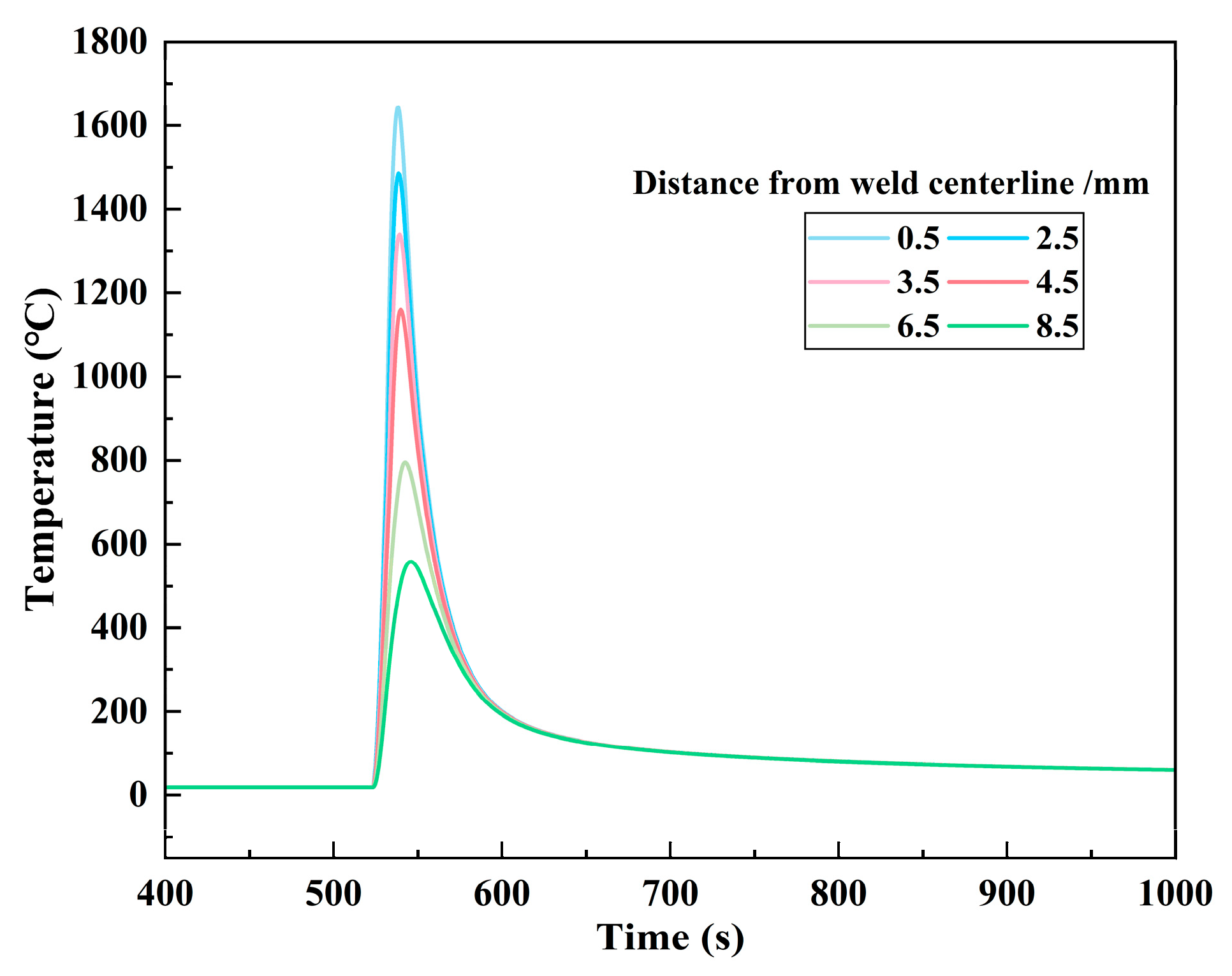
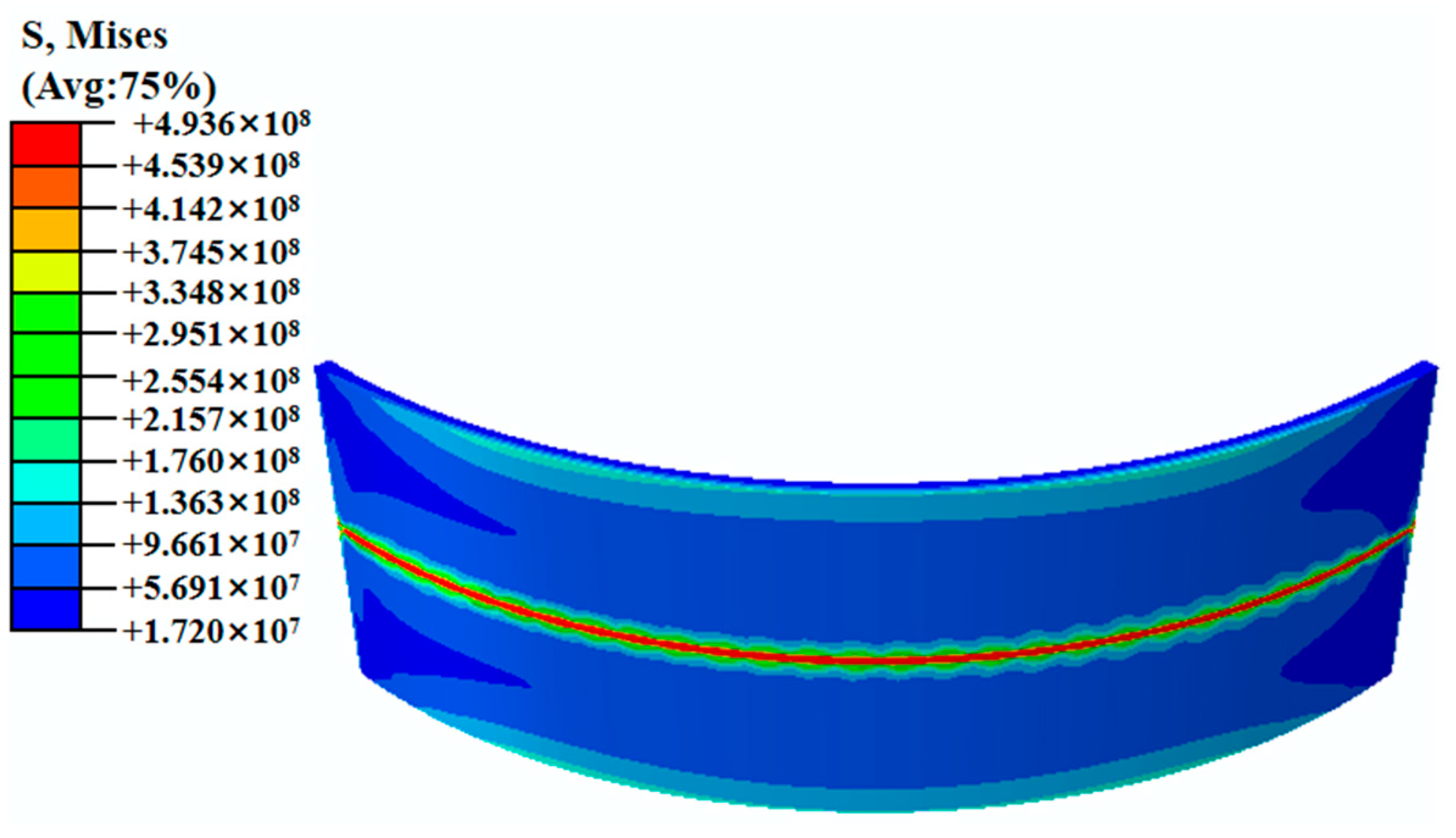
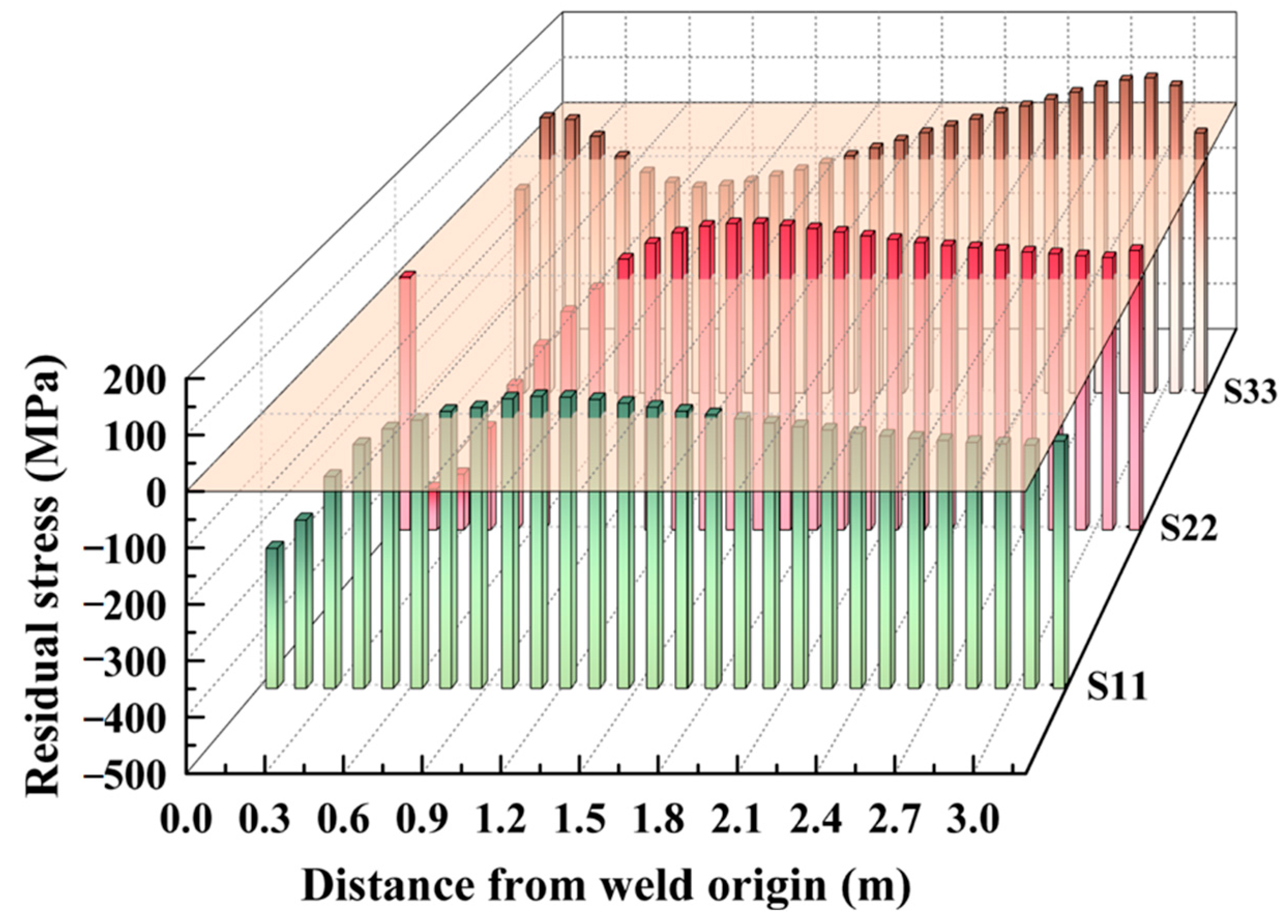
2.2. Numerical Simulation of Welding Residual Stresses
2.3. Crack Propagation Analysis Method
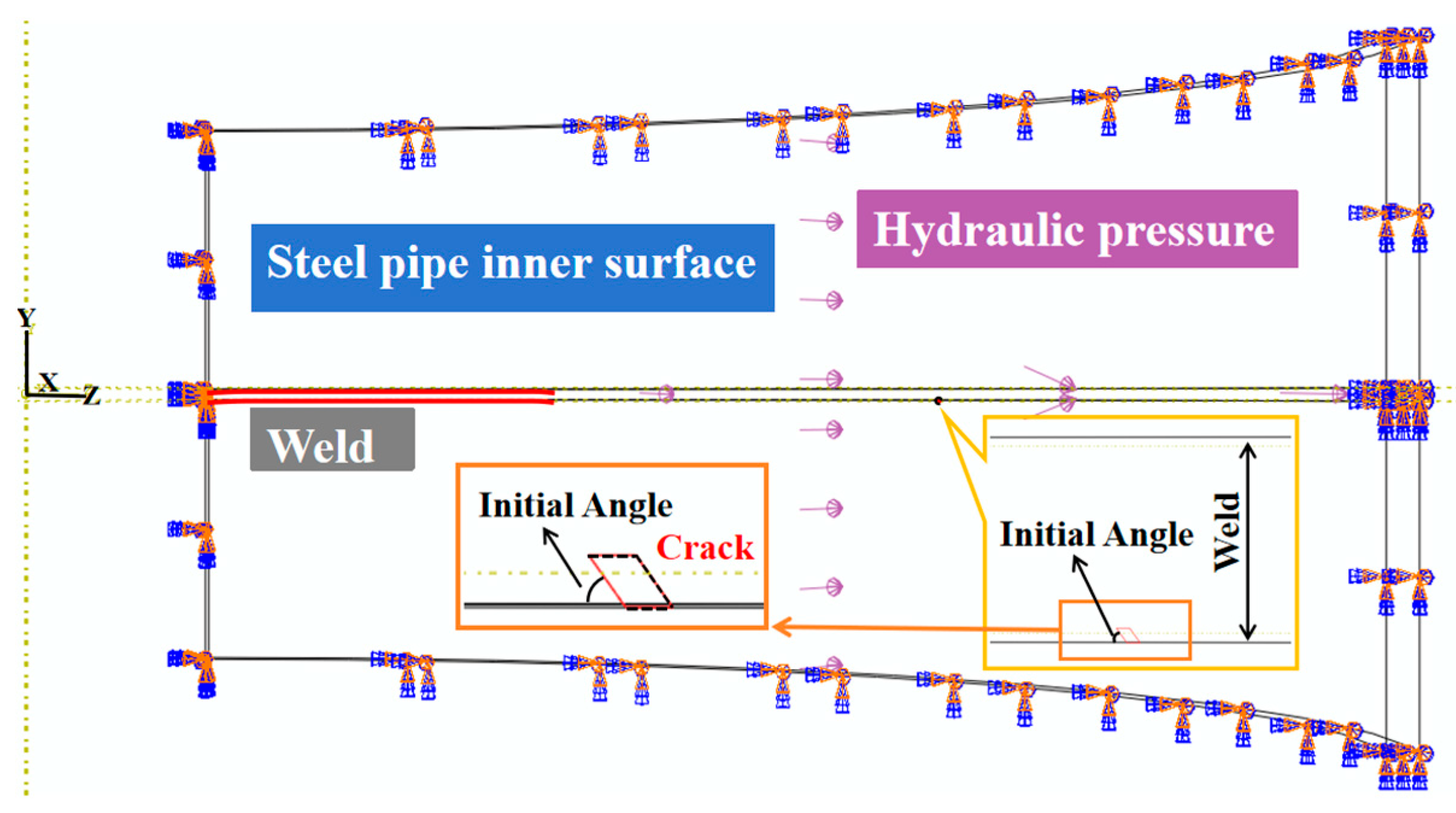
2.3.1. Defining the Initial Microcrack Orientation and Location Within the Weldment
2.3.2. Stress Intensity Factor Theory
3. Results
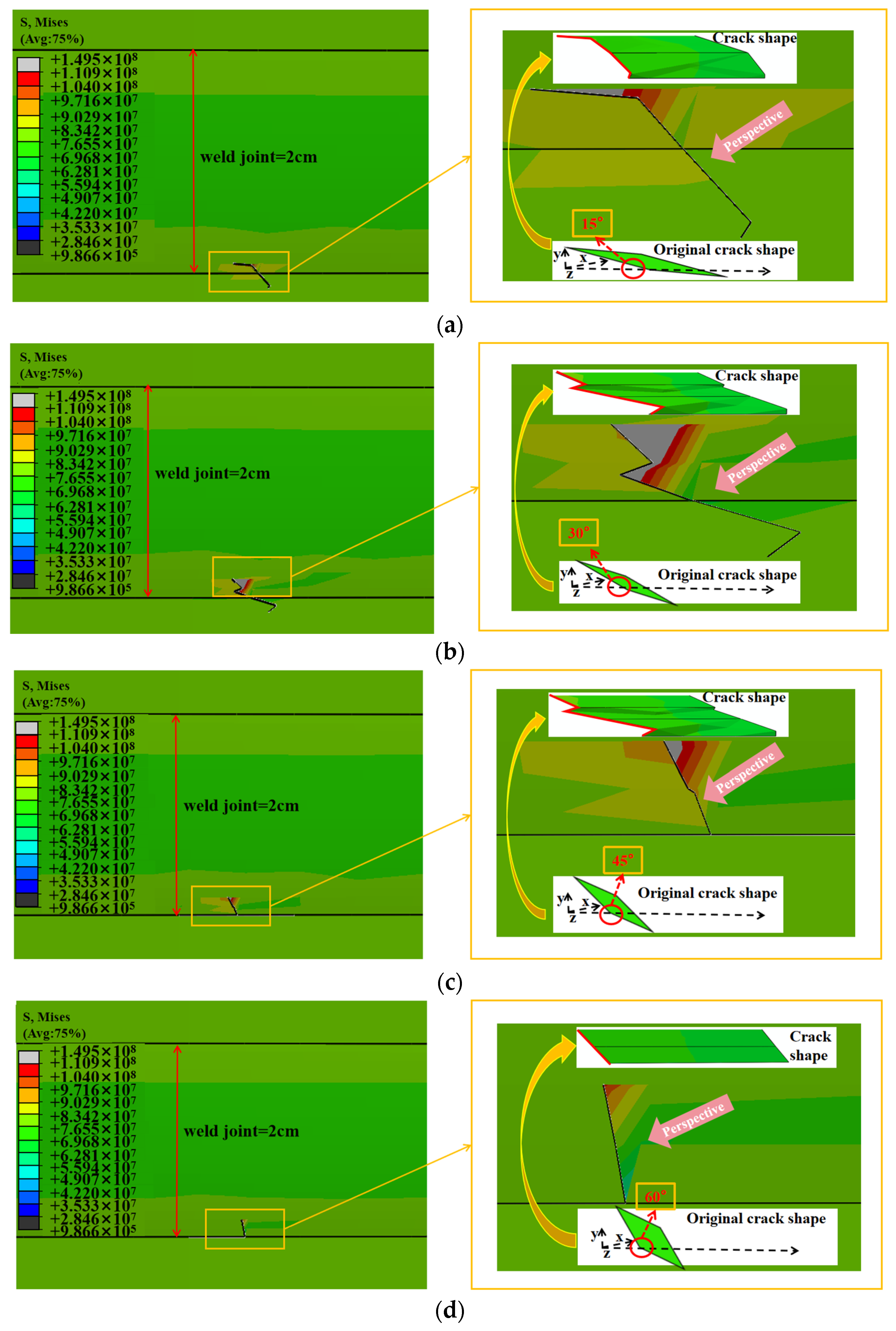
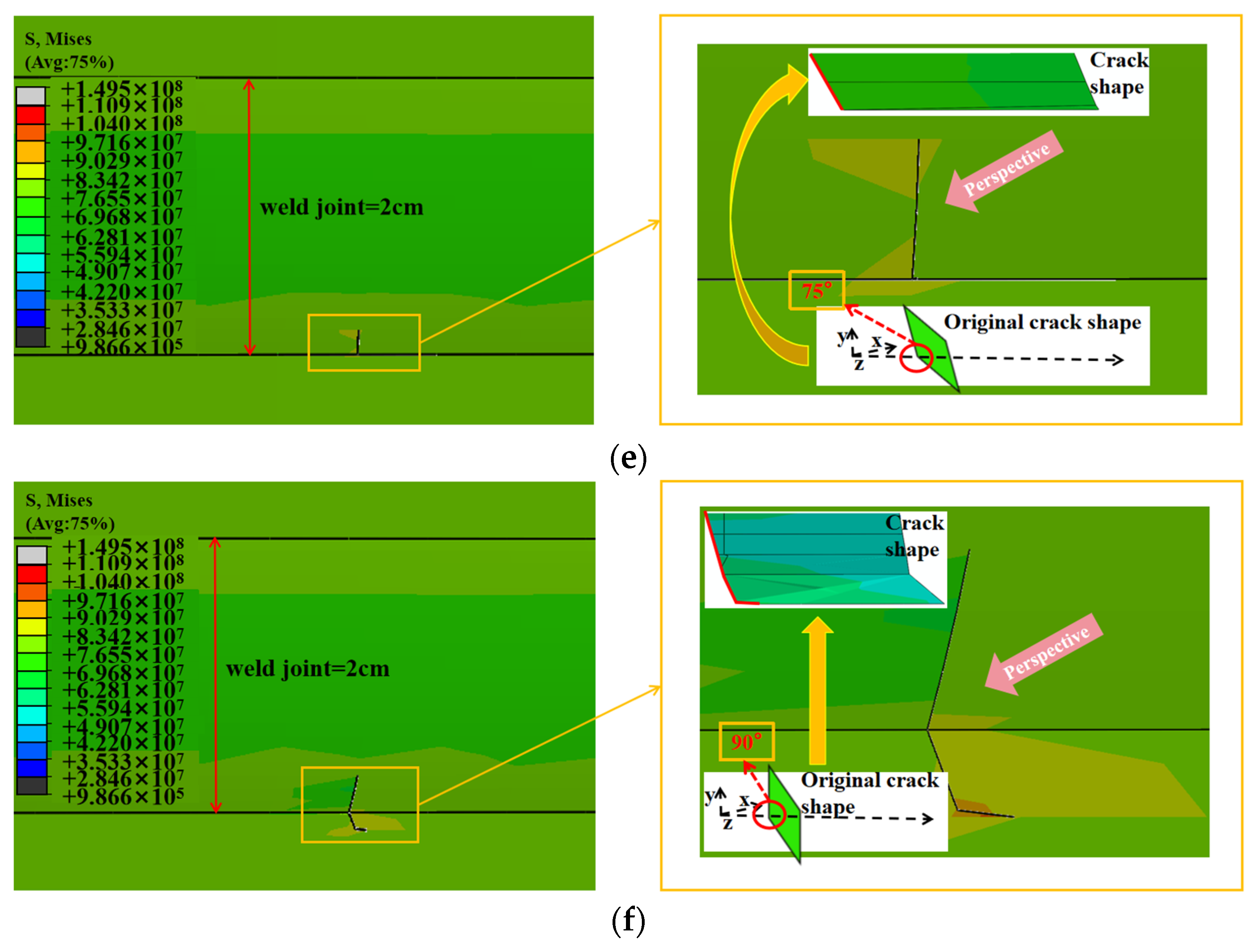
3.1. Variation in Residual Stress Field at Crack Tip During Crack Propagation Under Different Initial Crack Orientations
3.2. Variation in Residual Stress Field at Crack Tip During Crack Propagation Under Different Initial Crack Locations
4. Discussion
5. Conclusions
- (1)
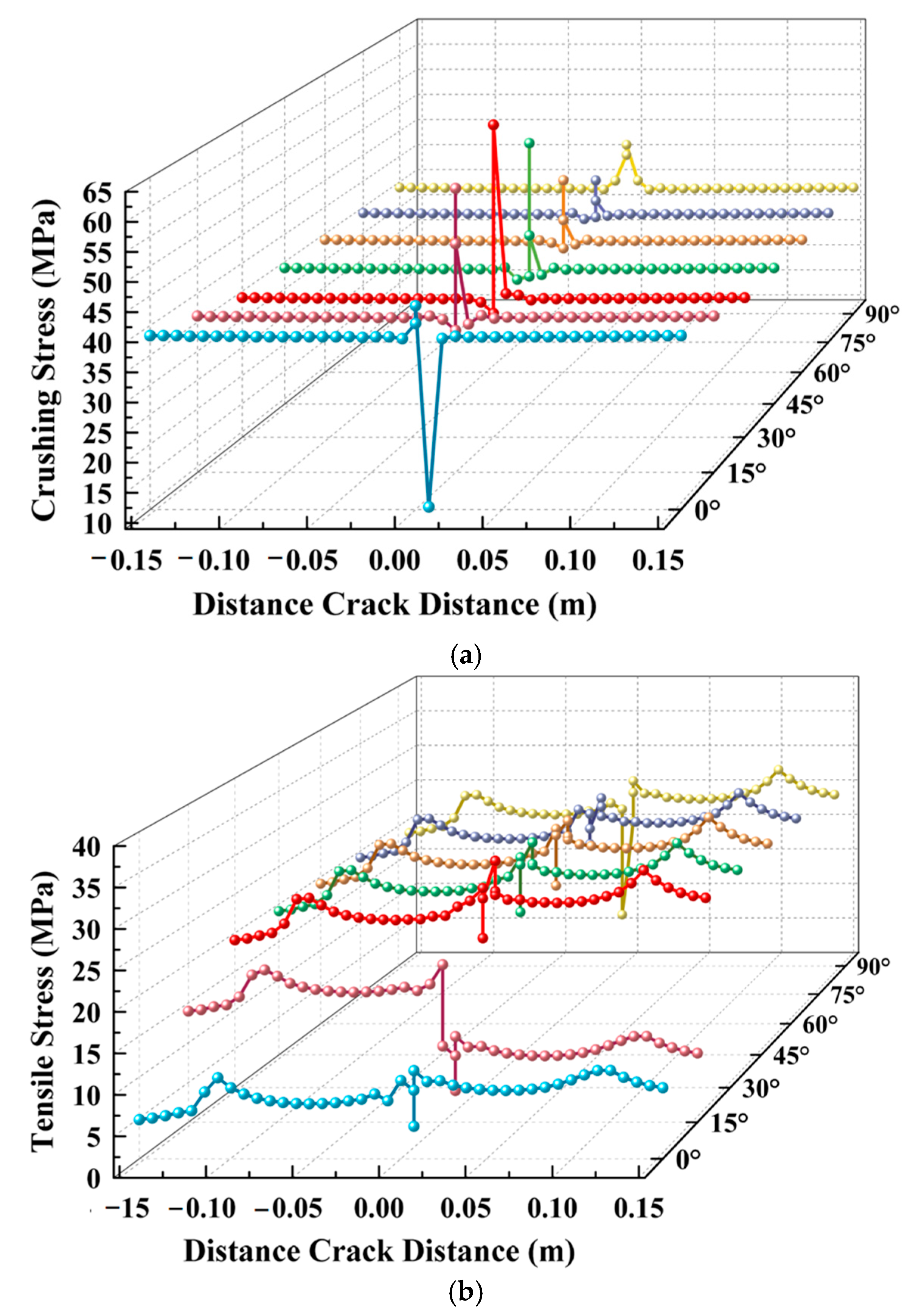
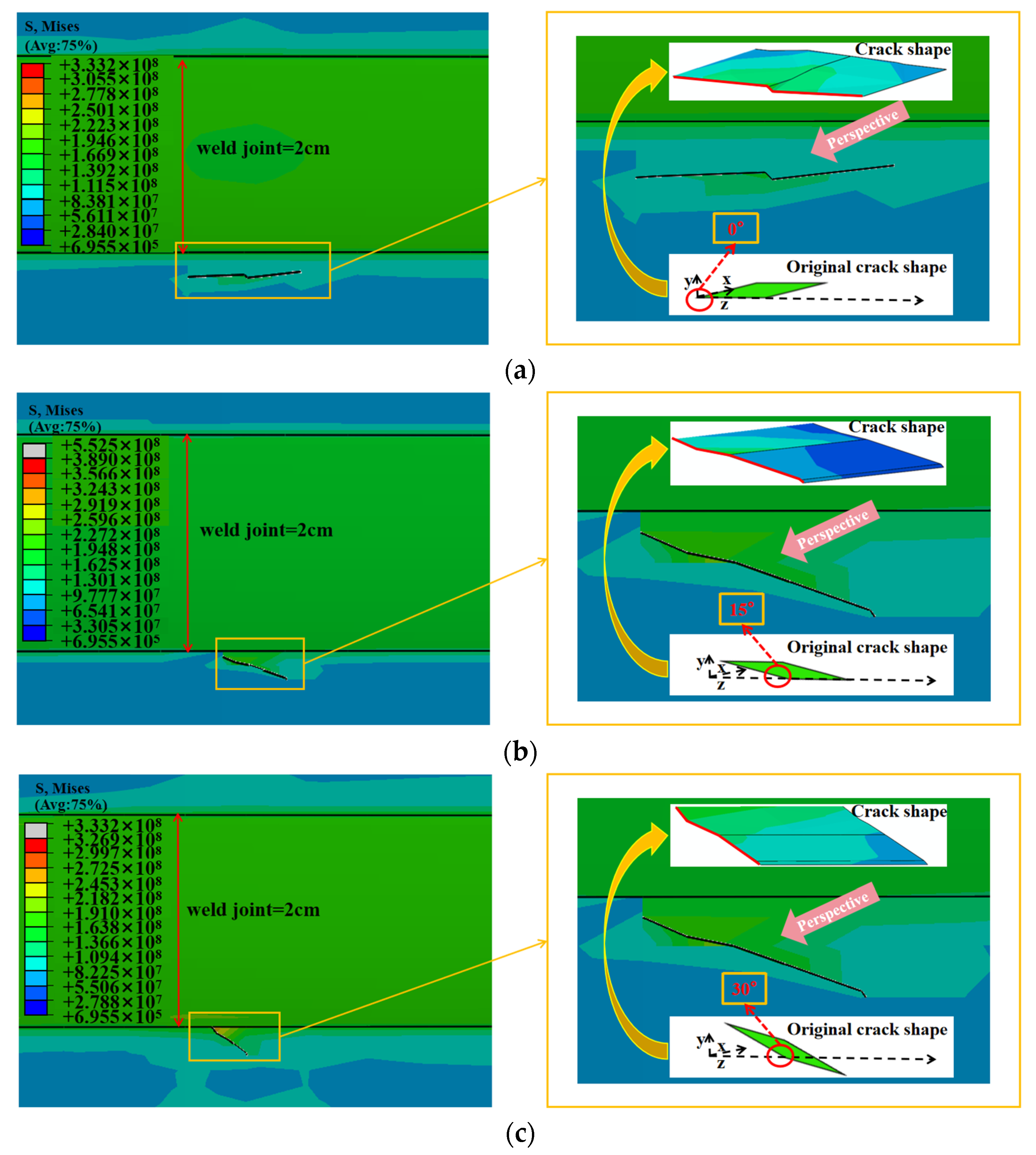
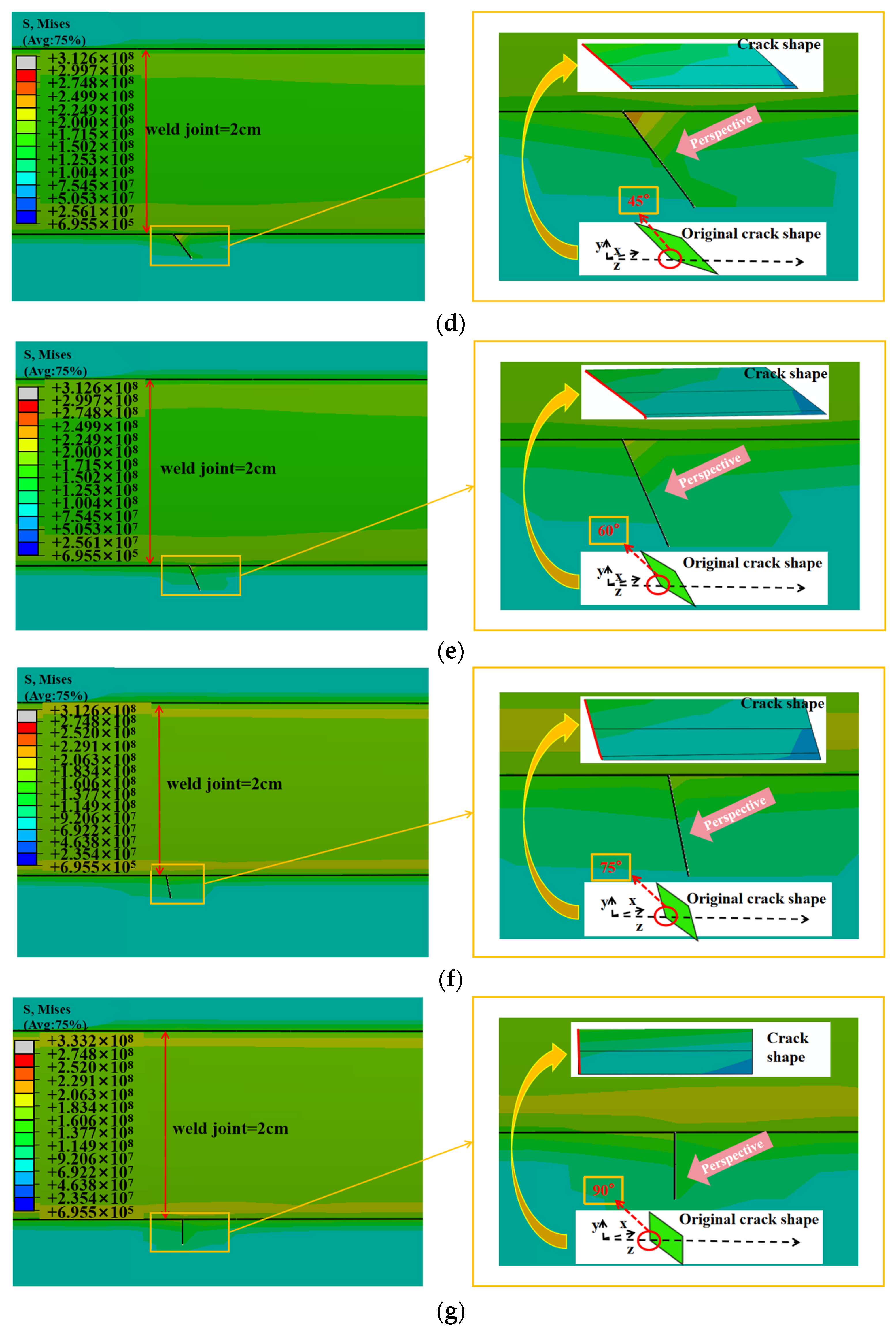
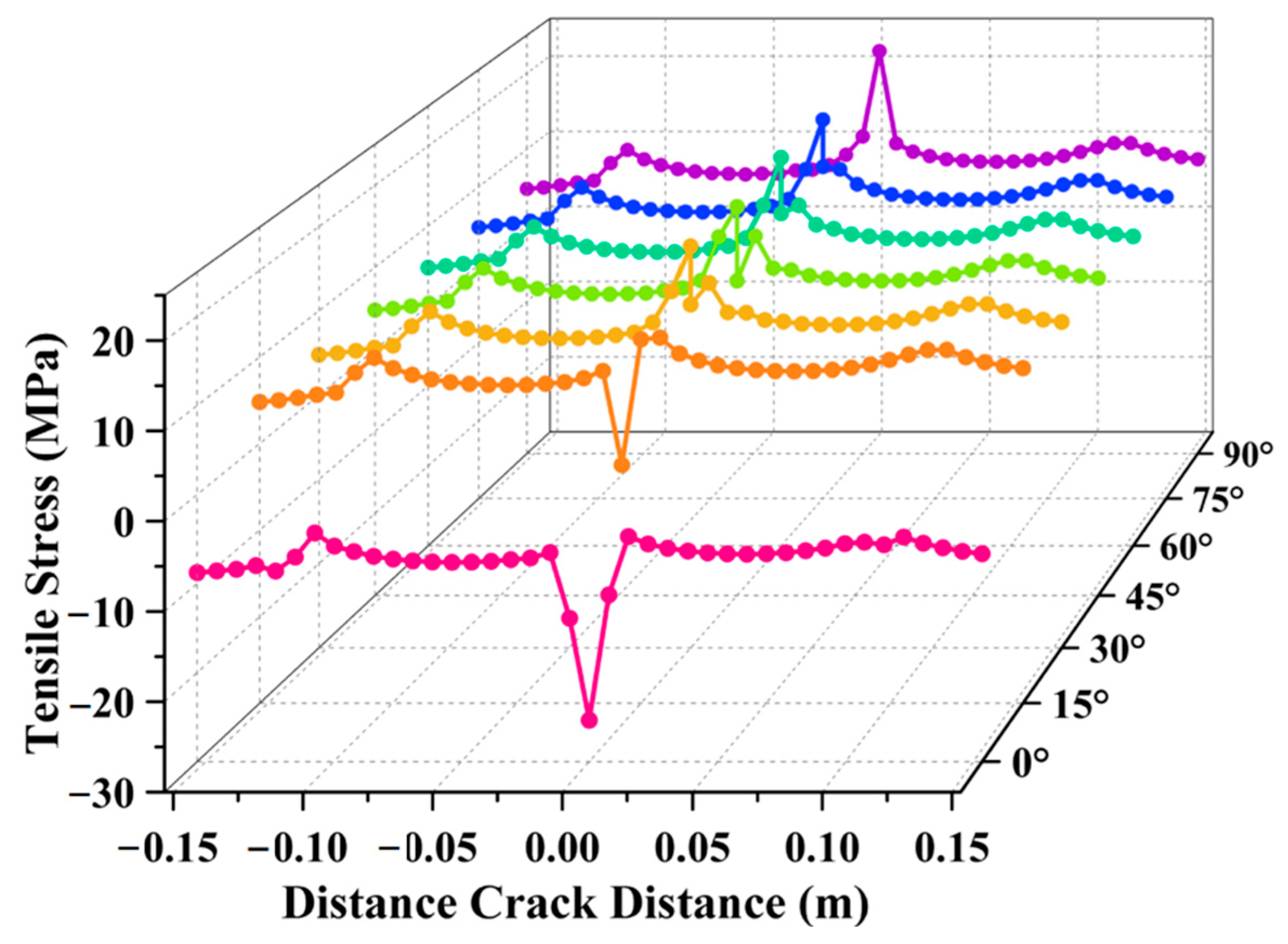
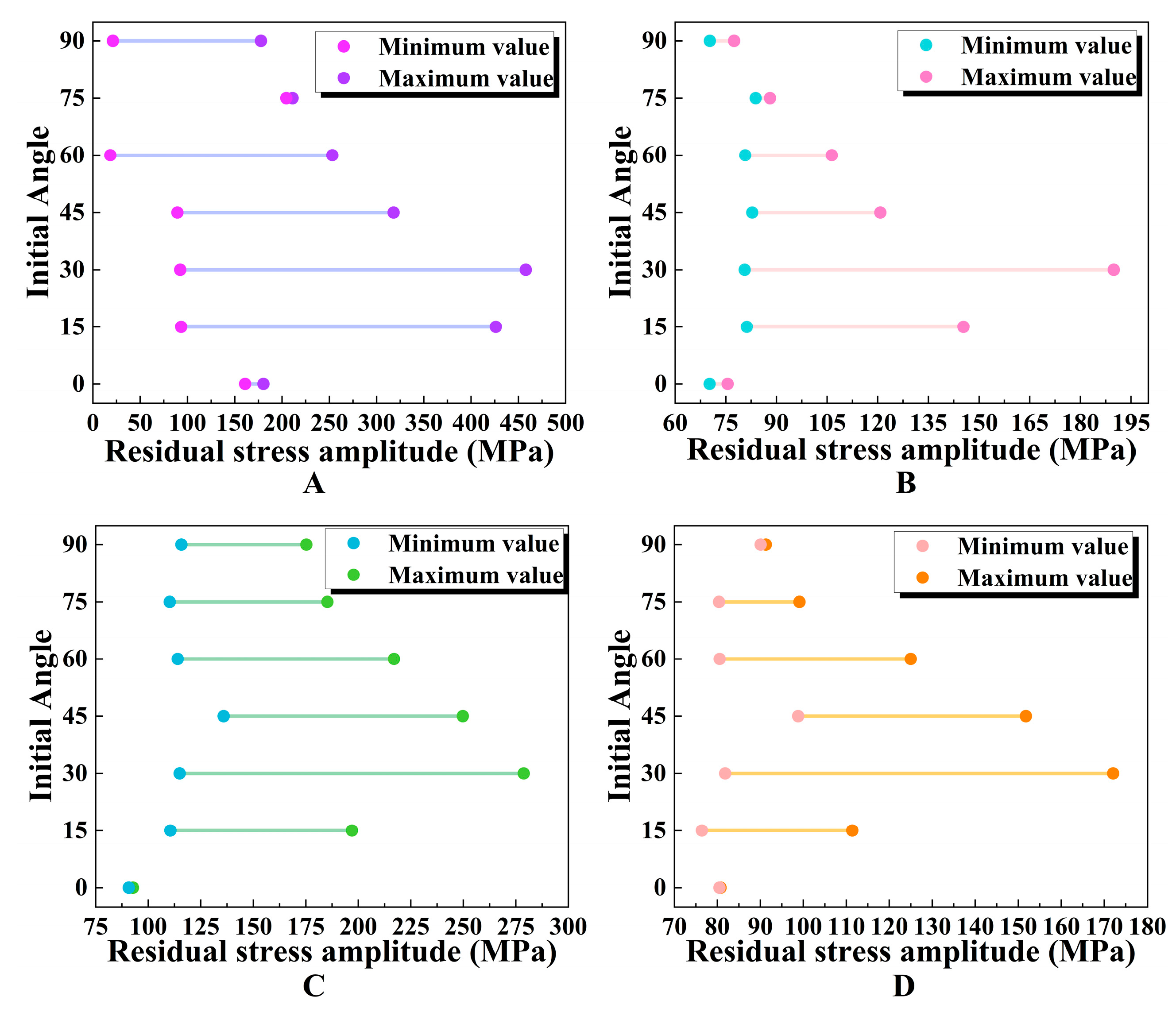
- Crack propagation is significantly influenced by angle. The initial crack angle determines the distribution of residual stress at the crack tip, which follows a pattern of “initial increase followed by decrease” as the angle increases. At an angle of 30°, the maximum residual stress in the near-tip region (at the first integration point adjacent to the crack tip) reaches 457.9 MPa, which is significantly higher than at other angles, making this orientation the most unfavorable for crack propagation.
- (2)
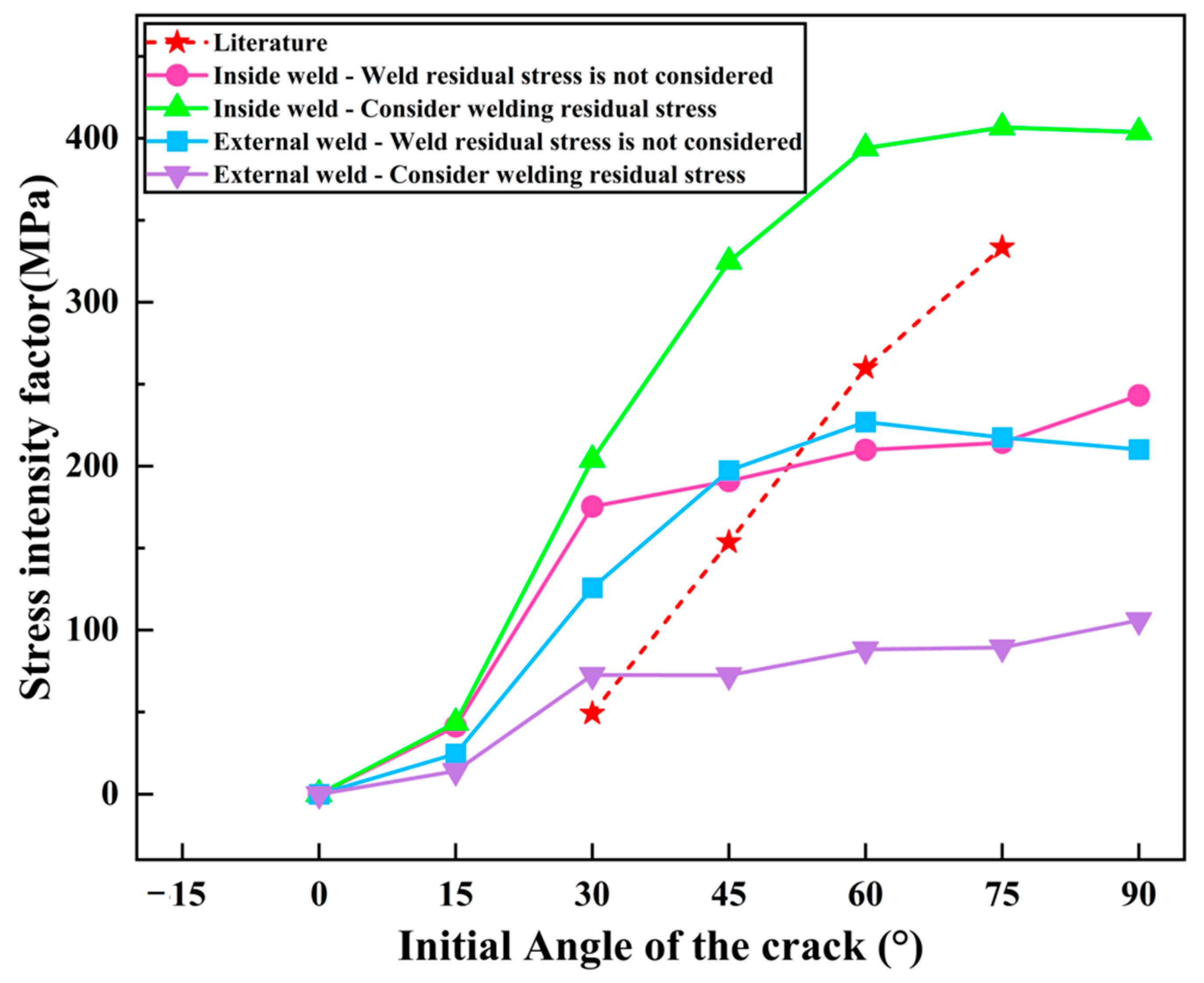
- Residual stresses significantly enhance crack propagation. After introducing the actual welding residual stress field, localized stresses at the crack tip generally increased, and stress concentration intensified. This demonstrates the promoting effect of welding residual stresses on crack propagation. Under the 30° internal weld condition in particular, the stress amplitude at the crack tip reached a maximum of 365.49 MPa, representing an average increase of approximately 30% compared to other angles.
- (3)
- When cracks are located within the weld and their angles range between 15° and 45°, this condition presents a high risk of crack propagation. Defects with crack lengths equal to or exceeding the initial microcrack size (2 mm) and crack-tip residual stress amplitudes of 365.49 MPa or greater may be classified as high-risk propagation scenarios. This indicates that the crack has entered a stable growth phase under the combined influence of internal pressure and welding residual stress, warranting prioritization in safety assessments and monitoring.
Author Contributions
Funding
Data Availability Statement
Conflicts of Interest
References
- Ragab, R.; Parker, J.; Li, M.; Liu, T.; Sun, W. Creep crack growth modelling of Grade 91 vessel weldments using a modified ductility based damage model. Eur. J. Mech. A/Solids 2022, 91, 104424. [Google Scholar] [CrossRef]
- Bahram, K.; Belhamiani, M.; Chaib, M.; Hamidou, B.; Slimane, A.; Bouchouicha, B. Fatigue life prediction and crack growth analysis of weld zones in API X60 steel using Weibull distribution and Monte Carlo simulations. Theor. Appl. Fract. Mech. 2025, 138, 104962. [Google Scholar] [CrossRef]
- Jiang, J.; Bao, W.; Yu, Y.; Wang, W.Y. Experimental study on crack propagation characteristics of welded high-strength steel Q690CFD joints. J. Constr. Steel Res. 2025, 225, 109177. [Google Scholar] [CrossRef]
- Zheng, H.; Jie, Z.; Zhang, L.; Lu, W. Fatigue crack growth and life assessment of full penetration U-rib welded joints considering residual stresses. Thin-Walled Struct. 2024, 195, 111426. [Google Scholar] [CrossRef]
- Jiao, H.; Jin, H. Finite element and experimental analysis of residual stresses in G20Mn5 welded joints considering solid-state phase transformation. Int. J. Press. Vessel. Pip. 2025, 214, 105422. [Google Scholar] [CrossRef]
- Gao, H.; Luo, G.; Zhen, X. Coupling analysis of welding residual stress redistribution and crack propagation. J. Ship Mech. 2024, 28, 1756–1767. [Google Scholar]
- Jie, Z.; Wang, K.; Liang, S. Residual stress influence on fatigue crack propagation of CFRP strengthened welded joints. J. Constr. Steel Res. 2022, 196, 107443. [Google Scholar] [CrossRef]
- Gu, Y.; Feng, Q.; Ren, S.; Kong, C.; Gu, S. Effects of welding residual stresses on fatigue crack growth behavior of butt joint. J. Railw. Sci. Eng. 2021, 18, 2752–2760. [Google Scholar]
- Guan, X.; Guo, H.; Zhao, Y.; Wang, L. Study on the initial crack characteristics of weld in U-ribbed stiffening plate considering welding residual stress. Chin. J. Comput. Mech. 2024, 42, 670–677. [Google Scholar]
- Liu, H.; Li, M.; Wen, Z.; Gong, X.F.; Yue, Z.F.; Sun, W.; Tu, S.T. The role of initial cracks on creep crack growth and fracture mode of thick-walled pressurized pipe weldments. Eng. Fract. Mech. 2024, 307, 110296. [Google Scholar] [CrossRef]
- Hu, L.; Ding, X.; Li, L.; Chen, M.T.; Zhang, Y. Fatigue behavior of CFRP-strengthened inclined welded steel plates with initial cracks. Thin-Walled Struct. 2025, 209, 112903. [Google Scholar] [CrossRef]
- Zhang, D.; Zhu, H.; Zhang, C.; Wang, J.; Guo, H. Crack initiation and propagation of defects adjacent to the X65 pipeline spiral weld under axial tensile force. Int. J. Press. Vessel. Pip. 2022, 200, 104814. [Google Scholar] [CrossRef]
- Agarwal, G.; Marzok, A.; Waisman, H. Global-local XFEM approach for the analysis of cracked thin-walled beams. Eng. Fract. Mech. 2025, 327, 111448. [Google Scholar] [CrossRef]
- Zhang, X.; Jin, H.; Yu, S.; Bi, X.; Zhou, S. Analysis of bending deflection of tunnel segment under load- and corrosion-induced cracks by improved XFEM. Eng. Fail. Anal. 2022, 140, 106576. [Google Scholar] [CrossRef]
- Li, K.; Wang, F. A combined displacement discontinuity-interaction integral method for computing stress intensity factors and T-stress. Int. J. Solids Struct. 2024, 301, 112964. [Google Scholar] [CrossRef]
- Fan, H.; Li, S.; He, C.; Zhu, X.; Colliat, J.-B.; Shao, J. A Generalized 3D-DDM for both Fracture-Type and Asymmetric Closed-Contour Problems: Modified Fully Analytical Approach and Applications. Comput. Geotech. 2024, 171, 106406. [Google Scholar] [CrossRef]
- Pakzad, R.; Wang, S.Y.; Sloan, S.W. Numerical Simulation of Hydraulic Fracturing in Low-/High-Permeability, Quasi-Brittle and Heterogeneous Rocks. Rock Mech. Rock Eng. 2018, 51, 1153–1171. [Google Scholar] [CrossRef]
- Li, Y.; Xu, L.; Huang, J.; Geng, Y. Manufacture and welding procedure for 07MnMoVR steel 4000 m3 propylene spherical tank. Electr. Weld. Mach. 2015, 9, 133–136+141. [Google Scholar]
- Dai, P.; Wang, Y.; Li, S.; Lu, S.; Feng, G.; Deng, D. FEM analysis of residual stress induced by repair welding in SUS304 stainless steel pipe butt-welded joint. J. Manuf. Process. 2020, 58, 975–983. [Google Scholar] [CrossRef]
- Zhang, X.; Wang, J.; Ma, Y.E.; Liu, D.; Gao, R.; Xu, R.; Zhao, Z.; Chen, S.; Wang, Z. Residual stress effects on short crack propagation behavior in friction stir welded 7075-T6 aluminum alloy panel under biaxial loading: An experimental and numerical study. Eng. Fract. Mech. 2024, 299, 109956. [Google Scholar] [CrossRef]
- Wang, L.; Qian, X.; Feng, L. Effect of welding residual stresses on the fatigue life assessment of welded connections. Int. J. Fatigue 2024, 189, 108570. [Google Scholar] [CrossRef]
- Zhu, J.; Khurshid, M.; Barsoum, Z. Accuracy of computational welding mechanics methods for estimation of angular distortion and residual stresses. Weld. World 2019, 63, 1391–1405. [Google Scholar] [CrossRef]
- Rui, L. The Numerical Simulation on Welding Residual Stresses of the Ethylene Spherical Tank Steel. Master’s Thesis, Tianjin University, Tianjin, China, 2006. [Google Scholar]
- Guo, Y.; Li, P. Effect of Residual Stress and Microstructure on the Fatigue Crack Growth Behavior of Aluminum Friction Stir Welded Joints. Materials 2024, 17, 385. [Google Scholar] [CrossRef]
- Zhang, Z. Crack Stress Intensity Factor and Crack Propagation of Spherical Pressure Vesse. Master’s Thesis, Lanzhou University of Technology, Lanzhou, China, 2021. [Google Scholar]



| Ingredient | C | Si | Mn | P | S | Cu | Ni | Cr | Mo | V | B | More |
|---|---|---|---|---|---|---|---|---|---|---|---|---|
| Max | - | 1.5 | 12 | - | - | - | - | - | 1.0 | 0.2 | 0.02 | Pcm ≤ 2 |
| Min | 0.9 | 4.0 | 16 | 0.2 | 0.1 | 2.5 | 4.0 | 3.0 | 3.0 | 0.6 | - |
| Case | WRS | Initial Crack Orientation | Initial Crack Location |
|---|---|---|---|
| 1 | Neglected | 0°, 15°, 30°, 45°, 60°, 75°, 90° | Weld centerline |
| 2 | Considered | Weld centerline | |
| 3 | Considered | Outside weld zone |
| Figure Number | A | B | C | D |
|---|---|---|---|---|
| Stress Amplitude (MPa) | 365.49 | 109.31 | 163.8 | 90.72 |
| Share of total (%) | 50.11 | 14.99 | 22.46 | 12.44 |
Disclaimer/Publisher’s Note: The statements, opinions and data contained in all publications are solely those of the individual author(s) and contributor(s) and not of MDPI and/or the editor(s). MDPI and/or the editor(s) disclaim responsibility for any injury to people or property resulting from any ideas, methods, instructions or products referred to in the content. |
© 2026 by the authors. Licensee MDPI, Basel, Switzerland. This article is an open access article distributed under the terms and conditions of the Creative Commons Attribution (CC BY) license.
Share and Cite
Luo, Y.; Jin, J.; Geng, K.; Zhou, L.; Qiao, Y.; An, Y.; Cui, Y.; Wang, X. Study on the Mechanical Characteristics of Crack Propagation in 07MnMoVR Pressure-Bearing Steel Pipes Under Residual Stress. Modelling 2026, 7, 9. https://doi.org/10.3390/modelling7010009
Luo Y, Jin J, Geng K, Zhou L, Qiao Y, An Y, Cui Y, Wang X. Study on the Mechanical Characteristics of Crack Propagation in 07MnMoVR Pressure-Bearing Steel Pipes Under Residual Stress. Modelling. 2026; 7(1):9. https://doi.org/10.3390/modelling7010009
Chicago/Turabian StyleLuo, Yajie, Jin Jin, Kaiqiang Geng, Lei Zhou, Yu Qiao, Yifan An, Yajie Cui, and Xiaodong Wang. 2026. "Study on the Mechanical Characteristics of Crack Propagation in 07MnMoVR Pressure-Bearing Steel Pipes Under Residual Stress" Modelling 7, no. 1: 9. https://doi.org/10.3390/modelling7010009
APA StyleLuo, Y., Jin, J., Geng, K., Zhou, L., Qiao, Y., An, Y., Cui, Y., & Wang, X. (2026). Study on the Mechanical Characteristics of Crack Propagation in 07MnMoVR Pressure-Bearing Steel Pipes Under Residual Stress. Modelling, 7(1), 9. https://doi.org/10.3390/modelling7010009