1. Introduction
The transportation sector remains a major source of greenhouse gas emissions, and the widespread adoption of electric vehicles (EVs) is a critical element of the sustainability transition in this sector. Transportation accounts for approximately 23% of global energy-related CO
2 emissions [
1], making decarbonization through electrification essential for meeting net-zero targets. In this context, EVs offer a pathway to reduce emissions, but their success depends on public acceptance amid varying socio-political landscapes, such as the European Union’s stringent CO
2 fleet regulations versus China’s emphasis on technological subsidies and new energy vehicle credits. To successfully manage this shift, policymakers, businesses, and other stakeholders must understand public opinion and perception as they navigate its opportunities and challenges. The primary objective of this study is to present a methodological framework that leverages publicly available data and state-of-the-art natural language processing (NLP) techniques to capture and interpret public perceptions. This data-driven approach demonstrates how large-scale social media data can be transformed into structured insights, providing a valuable tool for market research and decision support for governments, companies, and other stakeholders.
To illustrate this approach and address cross-cultural differences in EV perceptions, this study poses the following research question: How do public sentiments and thematic priorities in social media discourse on electric mobility differ between Germany and China, and what do these differences imply for culturally tailored policy design? The framework involves filtering multilingual social media data by language and keywords, applying sentiment analysis and zero-shot thematic classification using large language models (LLMs), and conducting cross-analysis to highlight patterns in themes like infrastructure readiness and environmental impact.
The study applies NLP methods and large language models (LLMs) to public discourse on EVs in two cultural, economic, and policy contexts: China and Germany. The analysis identifies sentiments (positive, negative, neutral) and classifies discussions into key themes such as infrastructure readiness, environmental impact, policy and regulation, technological progress, consumer adoption, and cost and affordability. This comparative case study demonstrates the potential of NLP-based frameworks to reveal patterns in public opinion that are valuable for evidence-based policymaking, business strategy, and long-term planning in the context of sustainable mobility.
1.1. Electrification and NLP
Electrification in mobility has been a trend for some time now. The rapid improvements in technology and concerns regarding climate change have been the major factors in this movement. In particular, the Net Zero agenda has been an effective motivation during this process. Transportation and mobility have great importance in this matter. A vital part of the larger endeavor to attain net-zero greenhouse gas emissions is the global shift toward sustainable mobility. With electrification emerging as a key strategy for decarbonizing the sector, transportation has drawn increasing attention as a major contributor to global carbon emissions. Therefore, it is likely that governments will continue their electrification efforts.
The growth in sales of electric cars in recent years [
2] suggests that China and Europe are two big players in this transition. Furthermore, electrification in logistics and various electrified micromobility modes of transport are reshaping the global transportation landscape, driven by concerns about climate change, energy sustainability, and technological innovation. China and Germany are two important participants in the electrification process. However, the electrification of mobility is not only a technological transition but also a societal one. Since societal resistance can stagnate progress, public engagement and acceptance are essential to the success of this transition.
Many studies have been conducted with different methods to understand public opinion, and there is one common approach that has been widely used in order to achieve this goal, which is surveys. For instance, a survey has revealed barriers like cost, range anxiety, and infrastructure concerns in EV adoption in the United States [
3]. Survey-based studies are essential when it comes to understanding the reasoning, liking, aversion, or general opinion of the public. However, these studies have some limitations, such as sample size, homogeneity of the sample, and number of responses, especially in a unique topic such as electrification in mobility, which is still considered to be new in some countries. Therefore, a more comprehensive approach is required to analyze the issue, where people can honestly express their ideas and feelings, and where the sample and the results can be generalized. Social media is the perfect area for this purpose. The number of users or amount of content on any topic is enormous, homogeneity is preserved, and often, opinions that are shared publicly are genuine.
To be able to make such an analysis by using social media or online content as the data source, AI use is essential, NLP in particular. In the quickly changing world of today, developing strategic plans and adjusting to ever-evolving trends must be a continuous process of continuous monitoring, testing, assessment, implementation, and learning [
4]. Sentiment analysis (or opinion mining) and text-classification practices are capable of catching the continued processes of this evolving environment since these practices are performed by deep learning models. All areas of artificial intelligence, including text classification, have been impacted by the development of deep learning models. These techniques have become popular because they can model intricate features without requiring manual engineering, which eliminates some of the need for domain expertise [
5].
1.2. Background on Natural Language Processing
As technology has been developing day by day, it has been rapidly changing the lives of people. The improvements and new use cases of AI models have broadened their potential. As of now, AI models are widely used for incredible applications such as predictive operations, statistics, modern medicine, and even image or video generation since they are able to provide precise results in a short period of time. The idea of Artificial Intelligence is not new. Among his many significant scientific contributions, mathematician Alan Turing was the first to question whether machines are capable of thinking in 1950 and to propose the well-known Turing test, also known as the imitation game [
6].
NLP is one of the use cases where various AI models have been trained and have shown promising results. Thanks to the very nature of these models, which learn continuously, they become more and more capable of communicating with people. Natural language processing is a branch of computer science, computational linguistics, and artificial intelligence that studies how computers and natural human languages interact [
7]. In essence, it makes it possible for machines to meaningfully and practically process, interpret, and produce human language. NLP has become a crucial tool for trying to gather insights from massive amounts of text, as the volume of textual data generated every day keeps increasing.
There are a couple of traditional NLP tasks or concepts, including, but not limited to, tokenization, lemmatization, Part-of-Speech (POS) tagging, and named entity recognition (NER), which NLP specializes in and improves upon. The traditional NLP models were mostly practiced on these kinds of tasks. For example, first put forth in the text retrieval domain problem for text document analysis, the bag-of-words (BoW) methodology was later modified for use in computer vision applications [
8]. Although BoW is simple to use and helpful for tasks like text classification, semantic information is lost because it disregards the contextual relationships between words.
The BoW model is expanded upon by Term Frequency–Inverse Document Frequency (TF-IDF), which weights words according to their significance. A word’s importance goes up in direct proportion to how many times it occurs in the document, but it falls in direct proportion to how frequently it occurs in the textual data [
8]. But like BoW, TF-IDF is unable to record syntax or word order.
Latent Semantic Analysis (LSA) reveals latent structures within the textual data by lowering the dimensionality of the BoW or TF-IDF representations. LSA captures hidden relationships that are not immediately obvious by grouping related words and documents into a lower-dimensional semantic space. However, LSA has a syntactic blindness issue, meaning it disregards sentence structure. When sentences contain words that are semantically similar but have different meanings, LSA is unable to discern between them [
9].
CNNs were initially created for image processing, but they have since been modified for text classification applications. Without considering the word order, they employ convolutional layers to identify local features in text, like phrases or patterns. Convolution is the most important feature of a CNN; it is the process of combining two other functions to create a third function [
9]. For tasks where local context is sufficient, CNNs are effective and efficient; however, they struggle to capture the overall semantic meaning, especially in longer texts.
Recurrent neural networks are appropriate for tasks like language modeling, text generation, and machine translation because they introduce the idea of memory to handle sequential data. In recurrent neural networks, the current step receives the output from the preceding step as an input. When it comes to word prediction, the inputs and outputs of other neural nets are not interdependent. The word that comes before it must be known to us beforehand [
10]. RNNs have trouble capturing long-term dependencies because of the vanishing gradient problem, even though they can handle variable-length sequences.
Although the cornerstone for text processing has been established by traditional NLP models, their shortcomings, such as an inability to handle context, capture long-term dependencies, and scale to large datasets, have prompted the development of more sophisticated methods. Considering all these traditional NLP models and their different approaches, each model has one or more significant limitations. Thus, researchers and NLP enthusiasts have been developing more advanced models, which are widely used today. The introduction of transformers plays a huge role in this shift, which will be presented in detail later on. With the development of pre-trained models, NLP has been improved significantly in terms of performance, flexibility, and adaptability. Furthermore, new models are considerably better at handling multilingual data.
A new era in natural language processing is marked by models that can comprehend and produce human language with high accuracy, thanks to the shift from conventional models to techniques like transformers. This shift is being driven by the need for models that are more context-aware, scalable, and capable of handling the vast and complex volumes of data present in contemporary NLP applications. The impact of this change is demonstrated by notable performance gains on a range of NLP tasks, opening the door for further developments in the area.
1.3. Literature Review
As artificial intelligence has become more popular, it has gained the attention of many academics around the world. Various studies have been conducted regarding this intriguing technology, and even more use cases have been presented where one or more AI-based tools are used. On the other hand, the use of these tools in sentiment analysis in mobility and transportation is rather new and still open to further studies, especially through social media.
Jena [
11] conducted a study that attempted to identify Indian consumers’ attitudes, feelings, and thoughts regarding electric vehicles. This study’s primary goal was to use Deep Learning techniques to extract opinions that would be useful to manufacturers, marketers, and prospective customers in order to decide which features to improve and which to advertise. The sentiment analysis of EV sentiment was conducted using a big data platform, given the nature of social media data. The results of the study highlighted a couple of points that were found to be barriers for consumers regarding the use of EVs.
Wandelt et al. [
12] reviewed more than 130 papers regarding how LLMs can be integrated into intelligent transportation. They categorized the papers into five categories based on their primary contributions, such as traffic, tourism, safety, autonomous driving, and others. In their findings, it was anticipated that the presence of LLMs will grow significantly in non-critical domains, especially in information retrieval and human–machine interaction applications. For instance, LLMs are probably going to be crucial to the tourism industry’s use of virtual travel assistants and customized chatbots. Furthermore, LLMs have the ability to extract structured patterns and rules from sizable, unstructured datasets in traffic operations and management, providing insightful information for improving transportation systems.
A study carried out by Fontes et al. [
13] fills in the gaps in conventional transportation planning techniques by putting forward a deep learning framework for analyzing urban mobility using Twitter data. Three modules are integrated into the framework: preprocessing, data collection, and NLP-driven analytics (using VADER for sentiment analysis, BERT for text classification with scalable travel-related dictionaries). The model showed strong performance in tests conducted in London, Melbourne, and New York, with an average precision of 0.80 for text classification and 0.77 for sentiment analysis. The framework provides actionable insights for resource management and policy evaluation by processing informal, georeferenced tweets in almost-real-time, allowing for high-resolution identification of traffic events and public sentiment. This method overcomes the shortcomings of fragmented or context-specific approaches identified in previous studies and demonstrates the potential of social media as a dynamic, scalable data source for mobility intelligence.
Bakalos et al. [
14] examined public sentiment toward autonomous vehicles by analyzing Twitter and Reddit posts through a BERT-based machine learning framework. The results revealed predominantly positive perceptions; however, the main issues causing negative sentiments were fear of mixed autonomous/human traffic environments, employment displacement, liability issues, and technophobia (e.g., cybersecurity risks). The study emphasizes how useful social media mining is for gathering broad, varied public opinions and providing policymakers with information to overcome adoption obstacles. It is recommended that future research make use of the framework’s flexibility for multilingual and multi-class analyses in order to improve granularity and demographic correlation while abiding by privacy laws.
Furthermore, Metastasio et al. [
15] employ lexicometric analysis and examine Facebook and TikTok posts from 2022 to 2023 to investigate social representations of sustainable mobility. The results demonstrate social media’s growing significance as a gauge of mobility culture trends, supporting the relevance of S. Moscovici’s theory of social representations in this field. This demonstrates how social media analysis can be used to comprehend public opinion and new narratives during mobility transitions, offering theoretical and applied insights for further study.
Serna et al. [
16] offer a unique method for evaluating environmentally friendly transportation by employing deep learning techniques for sentiment analysis. In order to improve a large pretrained language model, XLM-RoBERTa, for sentiment classification, the authors use user-generated content from websites such as TripAdvisor to generate a manually annotated corpus of reviews pertaining to transportation. SentiWordNet is used in the study to compare the performance of this deep learning model with a conventional lexicon-based approach. It shows that the Transformer-based model performs noticeably better than the lexicon-based method, particularly when handling noisy data. The results imply that highly accurate sentiment analysis models can be produced by fine-tuning pretrained language models with a small amount of annotated data, providing policymakers with important information about how the public views sustainable transportation. By connecting sustainability analysis with advanced NLP techniques, this work advances the field and offers a solid foundation for further transportation and urban planning research.
The reviewed literature highlights the important NLP methods that are applied in this study and presents the increasing role of NLP and AI in analyzing public opinion as well as the evolving use cases of LLMs in mobility and transportation. Although NLP techniques have demonstrated effectiveness in sentiment analysis and thematic classification, there are still issues with handling regional differences, processing multilingual data, and maintaining model transparency. A comparative analysis of public opinion regarding electrification in mobility across various regions is lacking in current research, despite notable advancements. Furthermore, while sentiment analysis and thematic classification have been studied in the past, little research has used NLP to compare public discourse in a systematic way across linguistic contexts.
2. Methodology
The methodology begins with finding a suitable dataset to work on and preparing that dataset for an NLP-based analysis. The dataset should be comprehensive enough to be able to generalize the results. In the end, the aim is to understand the opinion of the public of a nation. One important point that was considered for this study is making sure that the dataset is legal to use and that there are no ethical issues. Since the subject dataset consists of social media posts, it might be copyright-sensitive. However, the dataset used in this study is presented as suitable and open source, as announced by the owner of the dataset in a statement presented in the
Appendix A of this paper. The dataset is accessible through Hugging Face, and it is released under the MIT License [
17]. The MIT License is one of the most popular and lenient open-source licenses there is. It was initially developed by the Massachusetts Institute of Technology and permits the low-restriction use, modification, distribution, and even commercialization of software, datasets, and other intellectual property.
Firstly, the SQL console that is integrated into Hugging Face was used to check the integrity of the dataset, in terms of the date range, total number of entries, and number of entries in German and Chinese. Then, all the data preparation and analysis were carried out on Google Colab Pro version, due to the technical limitations of the free version, such as limited RAM, GPU availability, and disk space. Since the study is highly hardware-demanding, the use of Colab Pro was essential to be able to perform sentiment analysis and classification. The language used for the coding is the Python programming language, and several libraries are used in this study, such as Pandas, Torch, Transformers, Matplotlib, and Seaborn.
As the next step, suitable models were selected to carry out the analysis. Therefore, transformer-based AI models were chosen to perform sentiment analysis and thematic classification, allowing for an in-depth comparative study of public perception in both countries. The use of transformers is particularly advantageous due to their ability to process rich-in-context textual data and handle multilingual inputs effectively.
In the analysis step, to systematically assess public opinion regarding electrification in mobility across two nations with differences, a comparative framework is established. This study uses AI to categorize the data into major themes like infrastructure readiness, environmental impact, policy and regulation, technological progress, customer acceptance, and cost and affordability, which were selected based on both sector knowledge and recent research by McKinsey [
18] that highlights some factors shaping EV adoption. The study also analyzes sentiment polarity (positive, negative, and neutral) and attempts to identify the commonalities and differences in public opinion regarding electric mobility by organizing the analysis around these predetermined categories. Finally, the extracted insights are visualized by graphs and tables to facilitate interpretation, highlighting key differences and similarities between the two nations.
2.1. Dataset and Data Preparation
The effectiveness of an NLP study heavily relies on the quality and relevance of the dataset used. The main dataset used in this study was retrieved from Hugging Face and created by Exorde Labs, a startup founded in 2021 in Lyon, France, with the primary goal of building a distributed network to analyze publicly available internet data [
19]. The dataset consists of social media posts from platforms such as Reddit, X (formerly Twitter), and YouTube. It spans the period from 14 November to 11 December 2024, and includes multilingual data across 122 languages. The total number of entries is 269,403,210. The number of entries in German (de) is 4,618,554, and in Chinese (zh) is 1,589,674.
To access the dataset, an access token was created on Hugging Face. The dataset was loaded using the ‘load_dataset’ function from the ‘datasets’ library with ‘streaming = True’ to process data incrementally and avoid memory overload. The content was first filtered by language (“language = ‘de’’’ for German and “language = ‘zh’’ for Chinese) to work on separate subsets. The filtering summary and the sample sizes are shown in
Table 1.
A further filtering step was applied using predefined keywords related to electric mobility to focus the analysis on relevant discourse. The keywords were split into general e-mobility terms only (e-truck terms were initially included but removed due to insufficient data: 0 in German, 4 in Chinese). The final keyword list is shown in
Table 2.
No random sampling was applied. The final datasets include all posts matching both language and keyword criteria within the observation window. This resulted in 7822 German posts and 1123 Chinese posts. The four-week time window (14 November–11 December 2024) was determined by the dataset’s availability and captured a period of public discourse.
The aim after the filtering operation was to end up with two sub-datasets for both Germany and China, one to analyze the public opinion on general e-mobility in both countries, and one for understanding the perception of the public regarding the e-trucks. However, after the dataset was filtered by the keywords, out of 4,618,554 posts in German, there was no row, therefore no data for e-trucks. On the other hand, out of 1,589,674 posts in Chinese, 4 rows were gathered about e-trucks. Since there was not enough data to be analyzed on the topic of e-trucks, the study was only carried out for the general e-mobility concept. Upon completion of the data preparation operation, the datasets were set to be used for the sentiment analysis, classification, and cross-analysis in the further steps.
2.2. Transformers
NLP has evolved significantly in recent years, with transformer models revolutionizing the field by offering state-of-the-art performance in various language tasks. Unlike traditional approaches, transformers leverage self-attention mechanisms to process text efficiently. Their ability to handle complex linguistic structures and multilingual text makes them particularly well suited to analyzing social media datasets. A number of important factors have contributed to transformers’ success in NLP. They can be effectively scaled to large amounts of data because, first of all, they are highly parallelizable. Secondly, they are well-suited to NLP tasks where the input text’s length can vary greatly because they can handle variable-length input sequences. Furthermore, transformers’ efficiency in capturing long-range dependencies, scalability, and versatility have propelled them to the top of the leaderboard rankings for most NLP tasks [
20].
The model architecture of transformers is auto-regressive at every stage, using the previously produced symbols as extra input to create the subsequent one [
21]. Due to their auto-regressive behavior, the first transformer models were considered to be unidirectional, such as GPT and GPT-2 from OpenAI. Later, the approach was improved, and Bidirectional Encoder Representations from Transformers (BERT) was introduced by Google. This model provides a better context extractor for reasoning tasks by fusing the left and right context of a sentence, resulting in a bidirectional representation [
22].
Despite their advantages, transformers come with high computational costs, which can be a major constraint in practical applications. To manage these computational demands efficiently, Google Colab Pro was used, providing access to high-performance GPUs that significantly improved processing speed and model execution. This allowed the smoother handling of large datasets without the need for extensive local hardware.
Another key limitation is model size and sequence length constraints. Most transformer models, including BERT, impose a maximum sequence length of 512 tokens, which means any text exceeding this length is truncated. In this study, no additional text-splitting was applied, meaning that longer posts were automatically cut off beyond the token limit.
To be able to use the transformers in this study, they first needed to be installed on the Google Colab notebooks created for both the Germany and China datasets. A line of code using the pip command, which is the standard package installer for Python, was written to install a library called transformers, which is a powerful and popular open-source library developed by Hugging Face.
As the next step, two key components from the Hugging Face transformers library were imported: AutoTokenizer and AutoModelForSequenceClassification. The purpose of AutoTokenizer is to prepare text data for input into a transformer model since the transformer models do not directly understand raw text; therefore, they require numerical representations of words and sentences. On the other hand, the AutoModelForSquenceClassification class provides a convenient way to load and use pre-trained transformer models fine-tuned for NLP tasks such as sentiment analysis.
In summary, transformers were selected for this study due to their ability to handle long texts, capture contextual meaning, process multiple languages, and operate efficiently at scale. While computational costs and model limitations were considered, the use of pre-trained models and cloud-based resources helped address these challenges, making transformers the optimal choice for sentiment analysis and zero-shot classification in this research.
2.3. Sentiment Analysis
In the context of examining textual data from a variety of sources, such as social media, news articles, and online forums, sentiment analysis has emerged as a popular natural language processing method for determining public opinion in recent years. Sentiment analysis helps with the identification of trends, public opinion, and emotional responses to particular subjects by classifying text into segments such as positive, negative, and neutral, or scaling these as numbers. Sentiment analysis is essential to this study to assess how Chinese and German societies view the electrification of mobility.
In this study, sentiment analysis was set up and performed on text data from Germany and China datasets separately, using a pre-trained model from Hugging Face, accessed through the transformer library, which is called “tabularisai/multilingual-sentiment-analysis”. The base model of this multilingual model is Distilbert, which contains 12 heads, 6 layers, and 768 dimensions, for a total of 134M parameters (as opposed to 177M for mBERT-base). This model is twice as fast as mBERT-base on average [
23]. Tabularisai/multilingual-sentiment-analysis supports 22 languages, including German and Chinese. Therefore, the same model was used during the sentiment analysis for both contents.
To successfully make a sentiment analysis, the coding objective was to process textual data, analyze sentiment, and return a sentiment score ranging between very negative and very positive. Therefore, a dictionary called sentiment_map was created to map the numerical outputs (ranging from 0 to 4) produced by the model to readable sentiment labels such as “Very Negative”, “Negative”, “Neutral”, “Positive”, and “Very Positive”, as instructed in the model description section on Hugging Face.
The first step involved importing the necessary libraries. The transformer library provided AutoTokenizer and AutoModelForSequenceClassification, which facilitated text tokenization and sentiment classification using a transformer model. Additionally, the PyTorch library (torch) was imported, which enabled tensor operations and model inference.
Then, a prediction function was defined to process input texts in manageable batches, thereby optimizing memory usage and processing time. The sentiment prediction function was applied to the datasets. The predicted sentiment for each text was determined by selecting the label with the highest probability, and these predictions were then mapped to their corresponding sentiment labels. All predictions were collected into a list that was returned once the entire dataset had been processed.
This implementation was particularly useful for large-scale sentiment analysis of social media and online discussions, as it allowed for the efficient processing of multilingual data. Additionally, the approach was scalable, as it supported batch processing, enabling the analysis of millions of text entries with high computational efficiency.
To visualize the distribution of the sentiment scores, a function was then defined to generate a bar plot representing the frequency of different sentiment categories in the dataset. Additionally, the sentiment distribution was also presented as a pie chart to see the share of each sentiment group for better understanding.
With these insights in place, the study will move forward into the next phase of analysis, where the focus will shift towards thematic categorizations and cross-analysis to be able to make successful comparisons.
2.4. Zero-Shot Classification
Similarly to topic labeling or sentiment analysis, text classification is crucial for both economics and research. In a variety of fields, such as market research, automated content moderation, and customer feedback analysis, it aids people to glean insightful information from textual data and make well-informed decisions [
24]. To train supervised models, conventional text classification techniques in natural language processing usually need major, labeled datasets. Nevertheless, obtaining labeled data can be expensive, time-consuming, and domain-specific. Zero-shot classification overcomes this issue by allowing models to classify text into preset categories without requiring prior training on labeled examples. Instead, these models rely on pre-trained language representations and can make predictions based on textual descriptions of the target categories. Zero-shot classification seeks to classify data without explicit examples of particular classes during training. This provides a way around the drawbacks of text classification using data-intensive deep learning models [
25].
In this study, zero-shot classification was applied to categorize social media discussions related to Germany and China into key thematic areas, including Infrastructure Readiness, Environmental Impact, Policy and Regulation, Technological Advancement, Consumer Adoption, and Cost and Affordability. The classification results provided deeper insights into the dominant narratives and concerns surrounding electric mobility in each country.
To start the classification operation, first, the necessary libraries were imported, such as Pandas, Matplotlib, Torch, Transformers, and the Pipeline module. Then, the filtered and sentiment scores added datasets for Germany and China were loaded onto the Colab notebook. To carry out the classification in the datasets, two different models were used. For the German dataset, the morit/german_xlm_xnli model [
26] was selected. This model is specifically pre-trained for zero-shot classification and German language understanding, and natural language inference. Likewise, the morit/chinese_xlm_xnli model [
27] was selected for the China dataset, which has the same capabilities as the previous model; however, it was specialized in the Chinese language. Then the categories were defined for both languages, as shown in
Table 3.
The function “classify_theme” was defined to take a single argument, text, which represented the input that needed classification. At the core of the function, the classification process was carried out using the classifier object, which had been previously defined as a zero-shot classification pipeline. This classifier analyzed the input text and attempted to assign it to one of the predefined themes. The function called the classifier, with the candidate_labels parameter set to categories, instructed the model to consider the predefined themes as possible labels for classification. If the classification was successful, the function extracted the most probable theme from the result and returned it. Then, the function was applied to the “original_text” column of the datasets and stored the classification results in a new column called “theme”.
Once the classification was completed, a bar plot was created for each dataset to visualize the distribution of different themes within. The process began with the creation of a translation dictionary named theme_translation, which served as a lookup table, mapping each German and Chinese theme to its corresponding English equivalent. This dictionary ensured that all thematic labels were consistently translated before further analysis.
Following the translation, a function calculated the frequency of each unique theme, then generated a bar chart to display these counts, and finally annotated the bars for better readability. The code computed the distribution of themes, created a bar plot to represent the data visually, annotated the bars for clarity, and applied formatting adjustments to ensure the plot was easy to interpret. With the successful visualization of the theme distribution, the analysis gained a clearer understanding of the most frequently occurring themes in the datasets.
2.5. Cross Analysis
With the sentiment analysis and theme classification completed for both Germany and China, the next phase of the study involved conducting a cross-analysis to compare public discussions on electrification in mobility between the two regions. This step was essential for identifying similarities, differences, and underlying patterns in how people perceive and discuss mobility electrification in these two distinct contexts.
After loading the datasets onto the same Colab notebook, which now has the sentiment scores and theme columns for both German and Chinese contents, the first step was to identify the sentiments in each theme for the countries separately. The process began by grouping the datasets based on themes and sentiment scores. The groupby() function was applied to calculate the frequency of each theme–sentiment combination within the dataset.
Once the data was grouped, the unstack() function was used to restructure the grouped data into a tabular format. In this format, themes were represented as rows, sentiment labels as columns, and the cell values indicated the number of occurrences. After structuring the data, the sentiment columns were reordered using reindex() to follow a predefined order: very negative, negative, neutral, positive, and very positive.
In the next step, to be able to make a comparison side by side, a code was used to create a stacked bar chart that compared the distribution of sentiments across different themes for Germany and China. Two new DataFrames were created, one for Germany and one for China, by selecting only the theme and sentiment columns from the original datasets. A new column labeled ‘Country’ was then added to each DataFrame, assigning the value ‘Germany’ to the German data and ‘China’ to the Chinese data. These separate DataFrames were subsequently combined into a single DataFrame called df_combined using the pd.concat() function, with the index reset to ensure a continuous sequence of rows.
Once the data was prepared, the next step involved aggregating the data to capture the frequency of sentiment occurrences within each theme for both countries. The data was grouped by theme, country, and sentiment scores using the groupby() function, and the size of each group was calculated.
Additionally, a sorted list of unique themes was extracted from the combined DataFrame, which was later used to label the x-axis of the bar chart. The code then iterated over each theme and plotted two sets of stacked bars, one for Germany and one for China, representing the sentiment distribution. For each theme, the individual sentiment counts were plotted as stacked segments on the bar, with the bottom parameter ensuring that the segments were correctly accumulated.
However, since the number of items for the German and Chinese datasets is different, it was hard to visualize the comparison. Therefore, instead of using absolute values, a new plot was created by using a pivot table, calculating the percentage distribution of sentiments within each theme–country pair. This ensured that themes with varying numbers of posts remain comparable, eliminating biases caused by differences in data volume between Germany and China.
3. Results
The results of these analyses are presented in this section. Firstly, an overview of sentiment distribution across both countries is presented. Secondly, thematic trends are examined to determine which topics dominate discussions in each country. Finally, a comparative assessment of these findings is provided to contextualize the differences and similarities observed in the discourse.
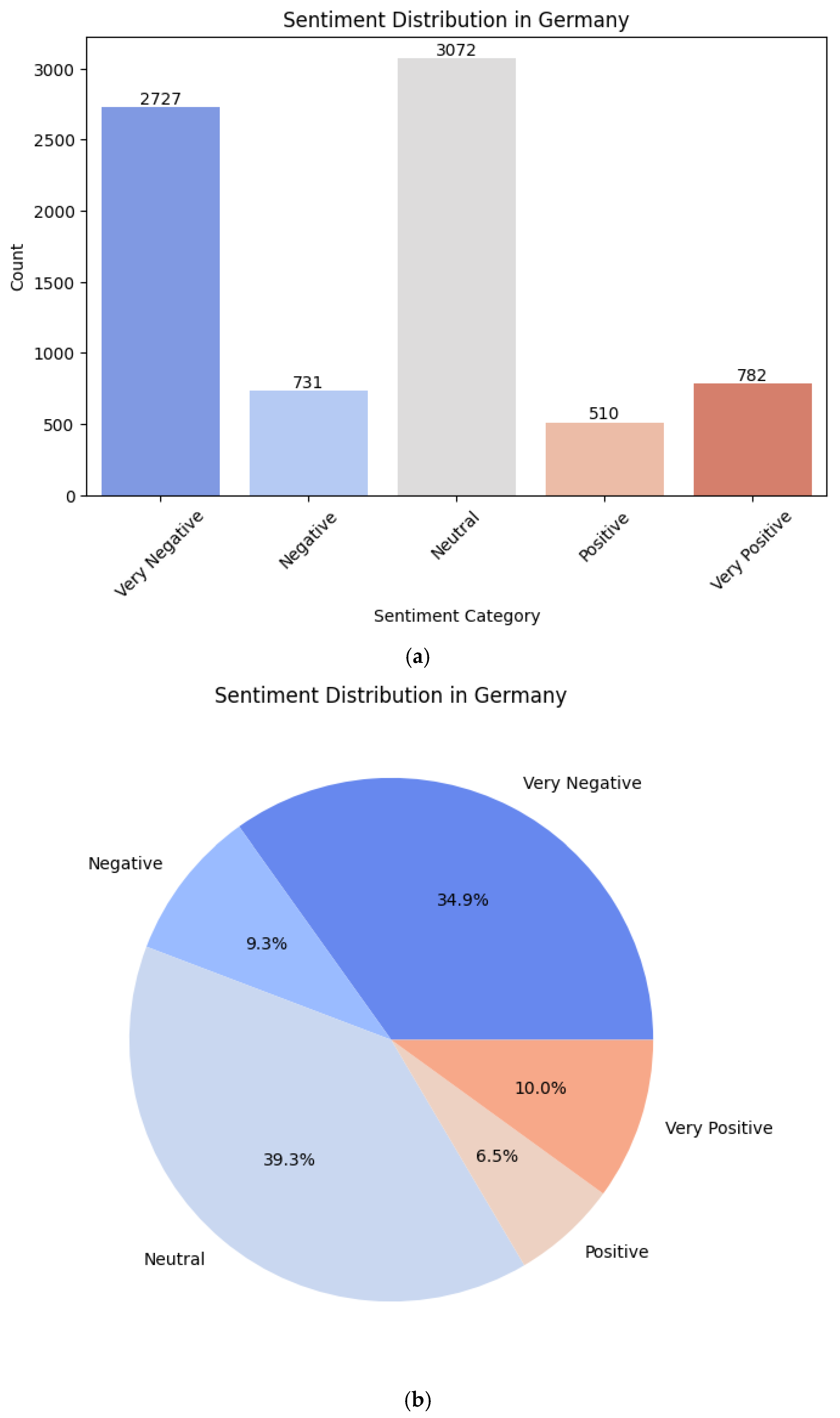
Figure 1 shows the sentiment score distribution in Germany. As seen in the results, only a small fraction of the total content is positive or very positive, 6.5% and 10.0%, respectively. The sentiment mostly shows itself as being neutral and very negative in German social media content, 39.3% and 34.9% to be specific.
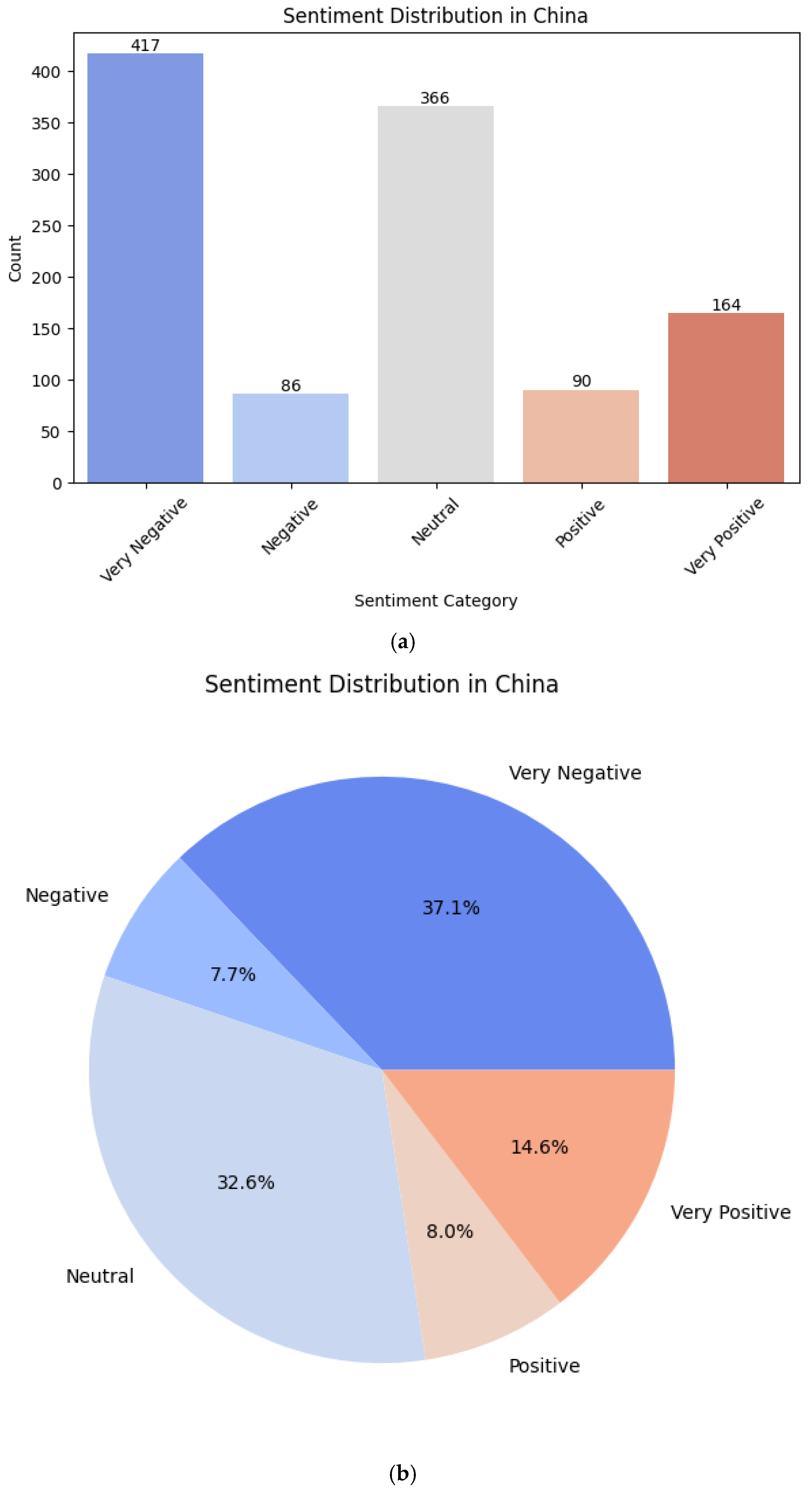
Figure 2 shows the sentiment score distribution in China. Like the German sentiment distribution, the sentiment is mostly neutral or very negative for the China dataset as well, 32.6% and 37.1% of total content, respectively. In total, 14.6% of the total posts are identified as very positive and 8.0% as positive.
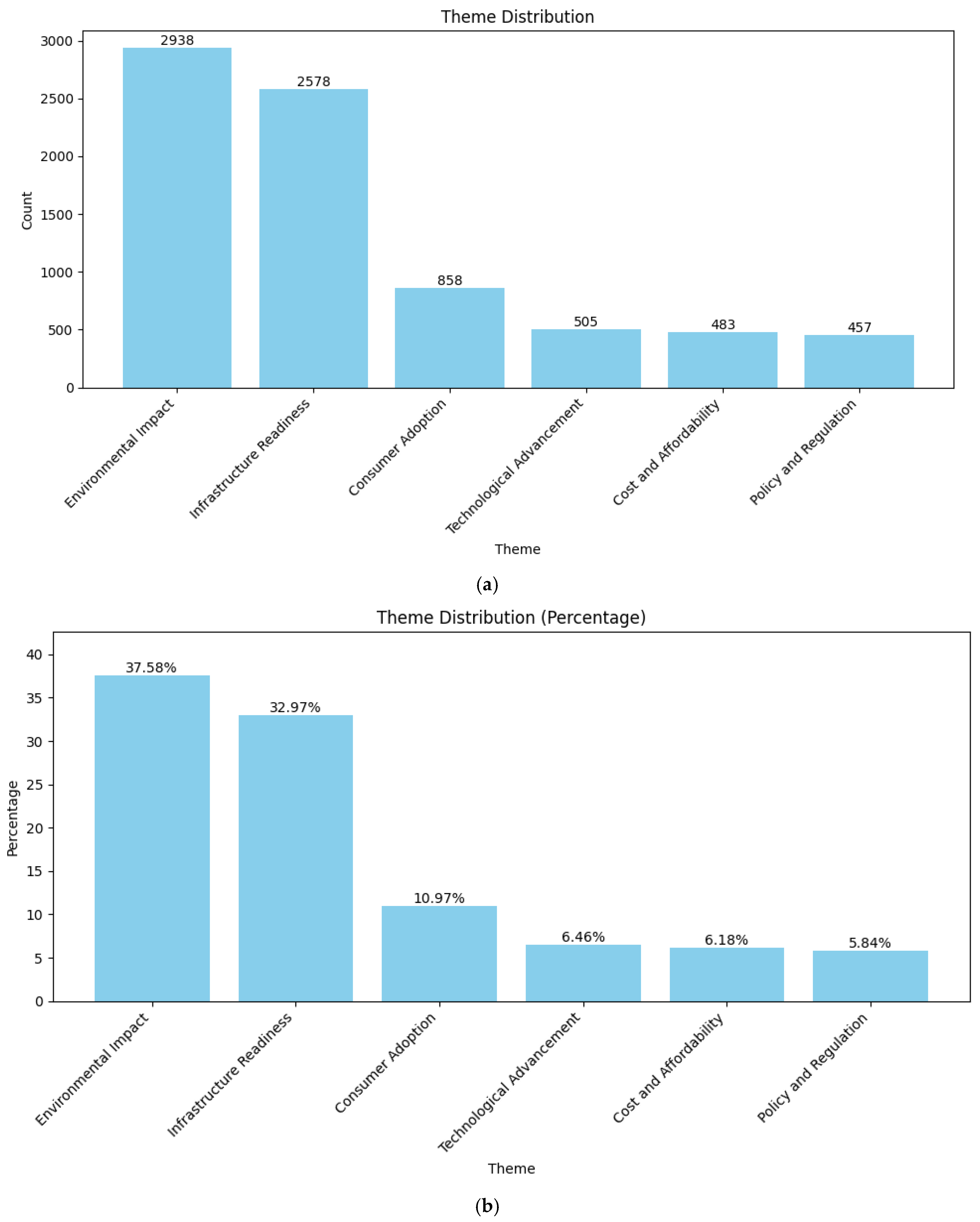
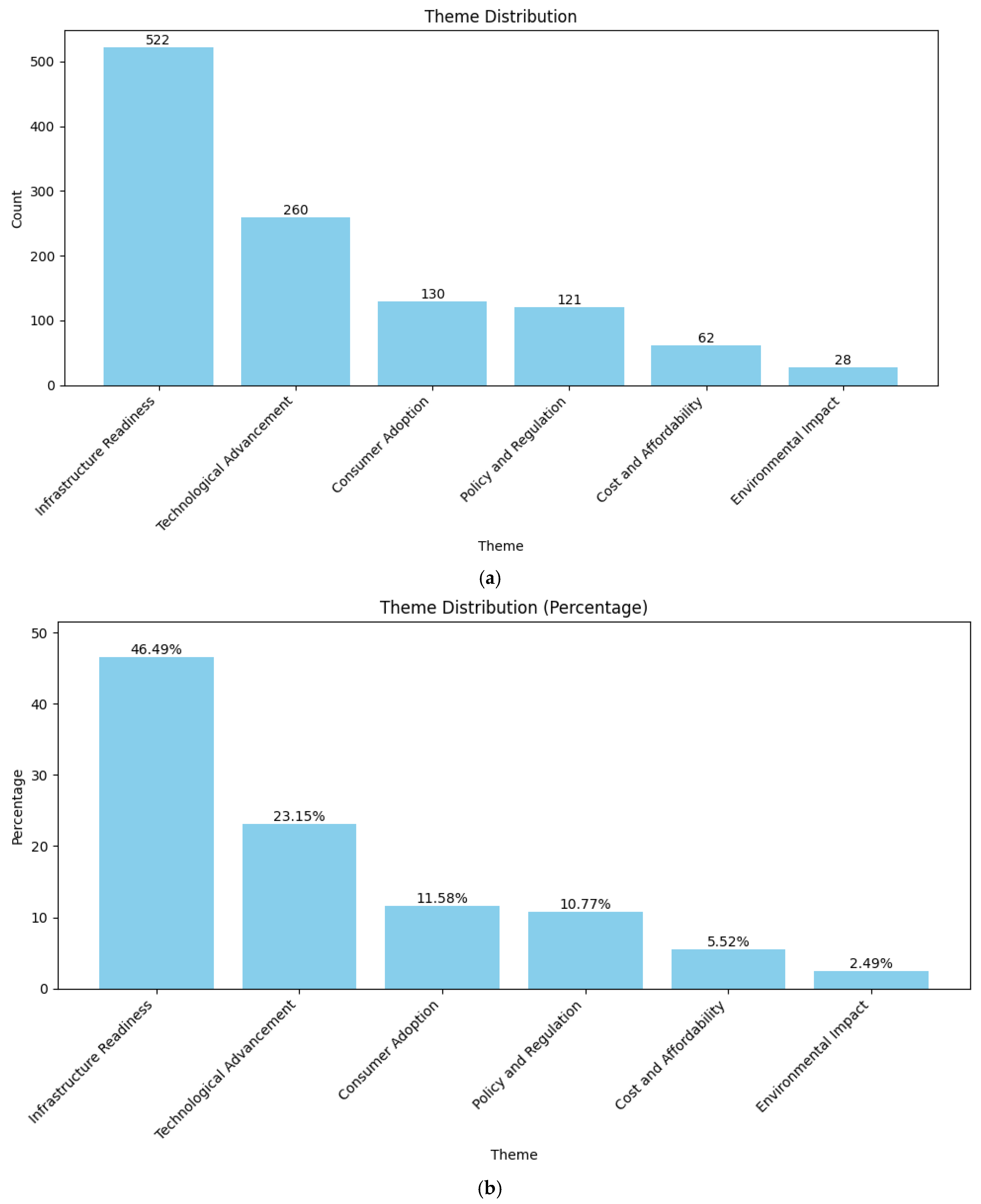
The results of categorization (zero-shot classification) for the German and Chinese datasets are shown in
Figure 3 and
Figure 4.
As the results show, in the German dataset, environmental impact (37.58%) and infrastructure readiness (32.97%) are two major themes. The consumer adoption (10.97%) topic follows these themes, and the remaining themes, such as technological advancement (6.46%), cost and affordability (6.18%), and policy and regulation (5.84%), have almost the same relevancy level. This may suggest that e-mobility developments come with environmental concerns and that the main pain point is infrastructure readiness.
On the other hand, the environmental impact category is almost non-existent for the China dataset, comprising only 2.49% of the contents. The infrastructure readiness category is the most dominant theme (46.48%), and it is followed by the technological advancement theme (23.15%). Consumer adoption (11.58%) and policy and regulation (10.77%) comprise almost the same amount, and the cost and affordability theme (5.52%) is notably low. This may suggest that Chinese society sees e-mobility initiatives as a fascinating technological advancement movement and that their concern lies mostly in the infrastructure readiness, as the environmental impact appears to have low relevance.
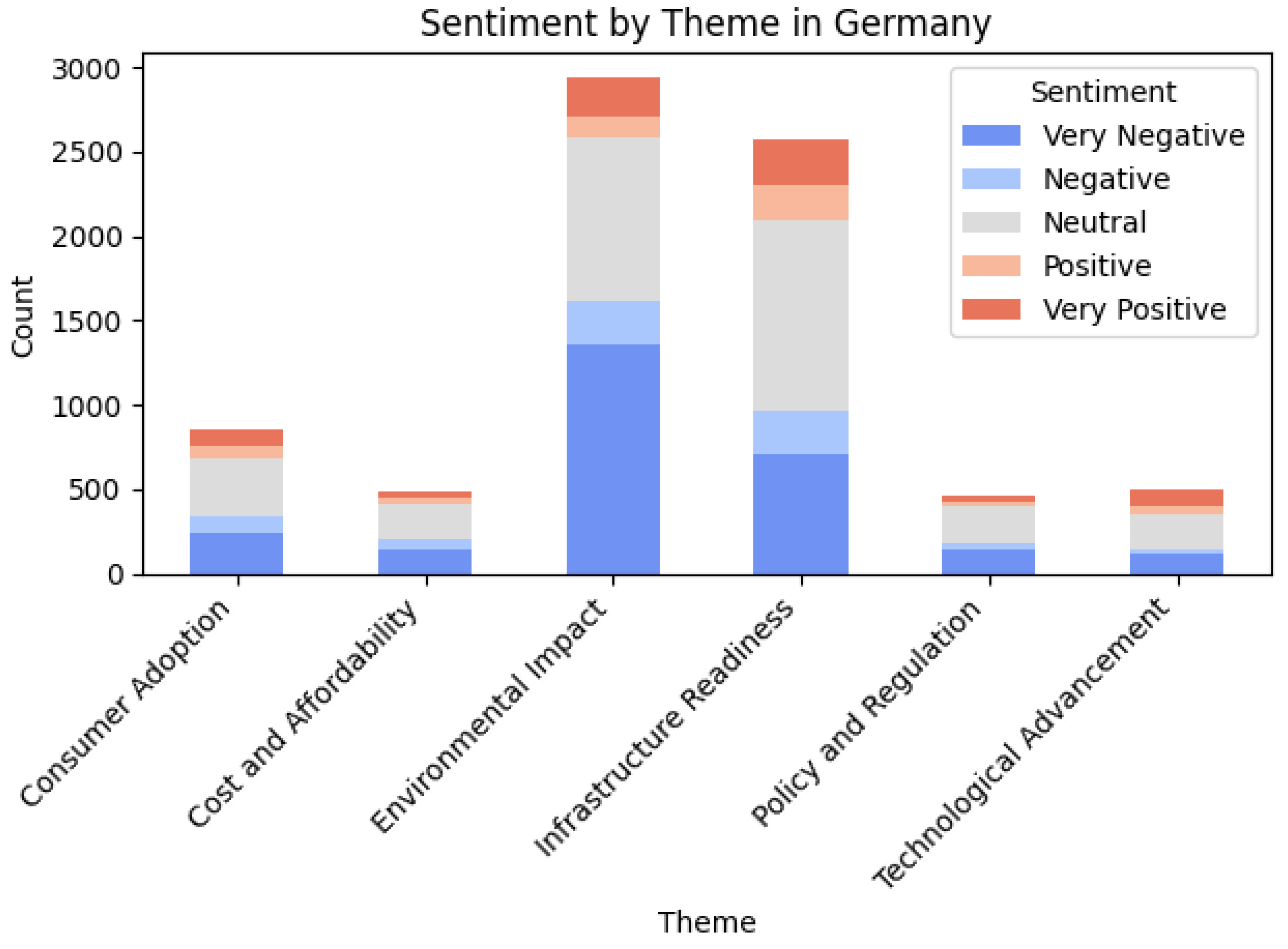
Now that the results for sentiment analysis and zero-shot classification have been presented, the outcomes of the cross-analysis for Germany are presented in
Figure 5 and
Table 4.
The sentiment distribution of themes in the Germany dataset reveals a strong polarization, particularly regarding environmental impact and infrastructure readiness. Discussions about environmental impact are overwhelmingly negative, with a high number of very negative mentions, suggesting significant concerns about the real sustainability of electric mobility. Similarly, infrastructure readiness is met with widespread criticism, though there is a relatively higher portion of positive mentions, indicating some optimism about future developments. Consumer adoption and cost and affordability are also predominantly viewed through a negative lens, with affordability concerns receiving very few positive mentions, reinforcing the perception that cost remains a major barrier to adoption. Policy and regulation are largely met with neutral or negative sentiment, suggesting a degree of dissatisfaction with government actions in this space. In contrast, technological advancement has a more balanced sentiment distribution and a notable share of positive mentions, indicating there is confidence in the progress of electric vehicle technology. Yet still, it is one of the least mentioned themes in the dataset.
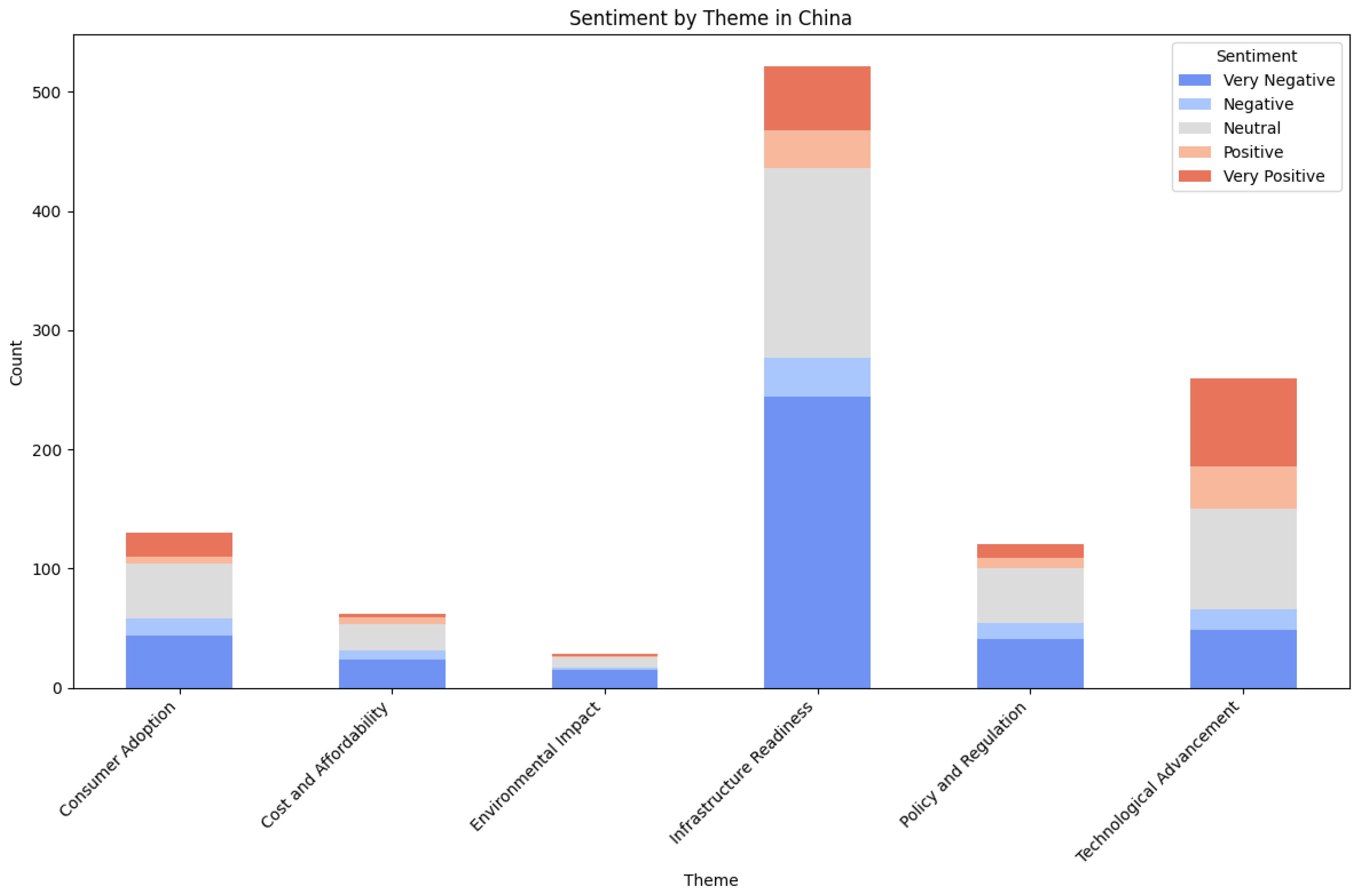
The results of the cross-analysis for China are shown in
Figure 6 and
Table 5.
The sentiment distribution of themes in the China dataset presents a different picture compared to Germany. Infrastructure readiness stands out as the most discussed theme, with a significant number of very negative mentions, indicating concerns about the adequacy of charging networks and related infrastructure. However, it also has a notable share of positive sentiment, suggesting a recognition of ongoing improvements. Technological advancement is the most positively perceived theme, with a high proportion of positive and very positive mentions, reflecting strong confidence in China’s progress in electric vehicle technology. Consumer adoption and cost and affordability lean toward neutral and very negative sentiment, implying that while challenges exist, they may not be perceived as major barriers. Similar distribution can be found in the policy and regulation theme, suggesting that while some policies are met with approval, there is also skepticism about their implementation. Environmental impact, in contrast to Germany, is the least contentious theme, with very few mentions overall and relatively negative sentiment distribution, which may indicate lower public concern, though at the same time highlighting the fact that the public does discuss the environmental challenges posed by electric mobility.
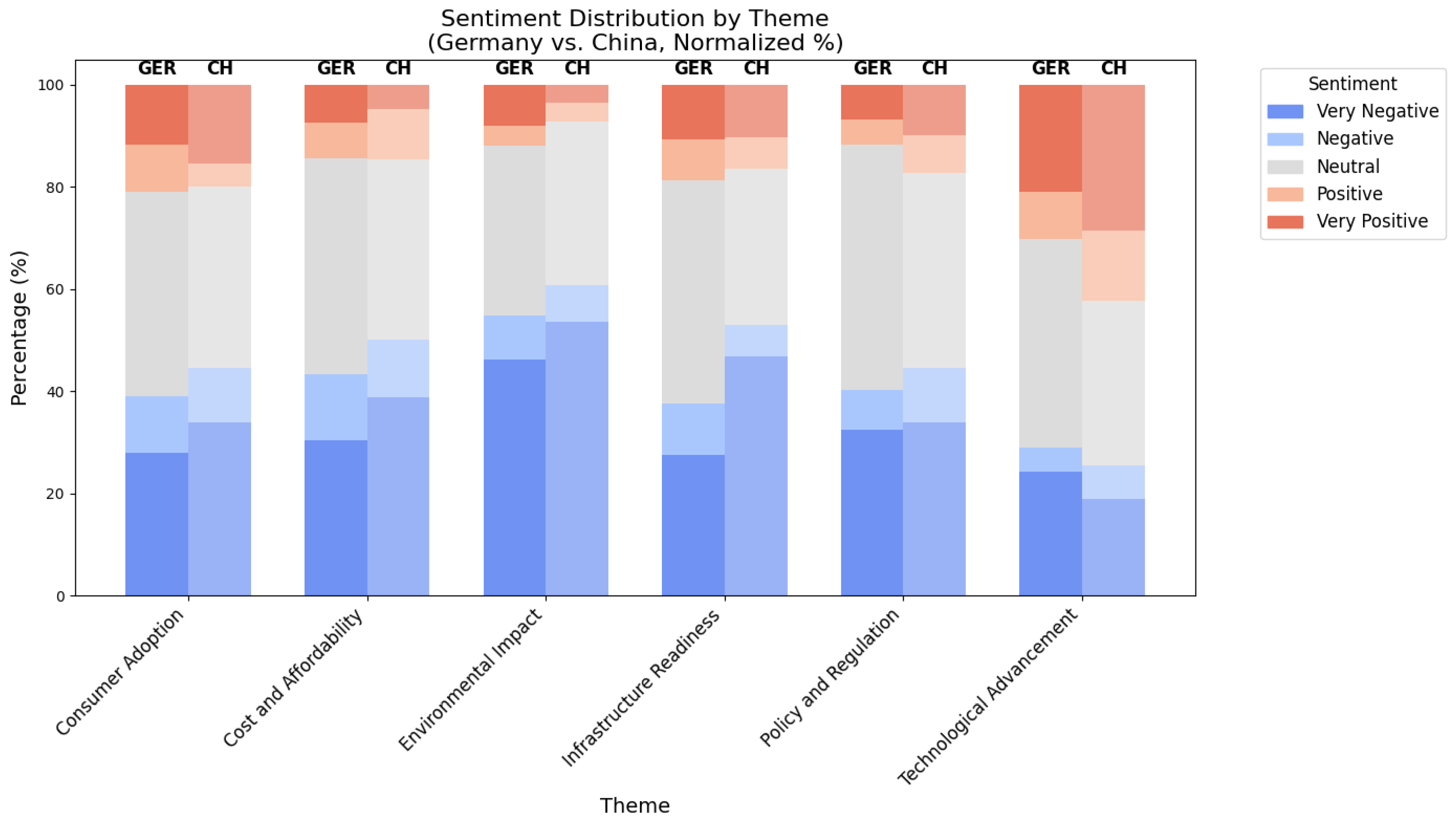
The visualization shown in
Figure 7 presents the percentages of the distribution to eliminate the possible misinterpretations caused by the number of items in both datasets. For the consumer adoption theme, the results seem similar, and the reason for this might be that the pain points of electrification in mobility are more global, rather than cultural- or area-specific. The cost and affordability theme shows similarities between the two countries, with a slight difference in negative sentiments. In the environmental impact theme, the sentiment is mostly negative in the China dataset, with similar results in the Germany dataset; however, the percentage of positive sentiments seems lower in the China dataset. More interestingly, although China is known for its well-developed e-mobility infrastructure, the German dataset shows a more neutral side in the sentiments, and a negative perception is more common in the Chinese dataset. The policy and regulation theme shows a similar result in both countries, with neutral sentiments having a higher proportion in the German dataset. For the technological advancement theme, both datasets show considerably higher positive sentiment compared to other categories’ distributions.
When analyzing the sentiment distribution in
Figure 7, it is crucial to consider the relative importance of each theme within the overall dataset. While some themes may exhibit strong negative sentiment, their actual impact on public discourse depends on how frequently they are discussed. For instance, in China, the environmental impact theme has a high portion of negative sentiment. However, since it represents only a small percentage of the total discussions (2.49%), its influence on the broader conversation is limited. In contrast, in Germany, environmental concerns are not only predominantly negative but also a significant topic of discussion (37.58%).
Another pattern emerges in the infrastructure readiness theme. In China, this theme accounts for a substantial proportion of discussions (46.48%) and is strongly negative. This suggests that infrastructure challenges are a major barrier to electrification and a widely recognized issue among the public. In Germany, infrastructure is also a frequently discussed topic (32.97%), but has a more balanced sentiment distribution. While concerns exist, they are not as overwhelmingly negative as in China, suggesting that the German public may see the infrastructure issues as challenges rather than major obstacles.
The technological advancement theme further illustrates the differences in discourse between the two countries. In China, this theme is both widely discussed (23.15%) and highly polarized, with strong positive opinions. However, in Germany, it is discussed considerably less (6.46%), and the sentiment is more neutral, indicating that the topic is either less controversial or not a major point of public debate.
Another striking difference between the countries is the tendency toward neutrality. In Germany, a significant proportion of discussions across most of the themes fall into the neutral category, indicating that people are more reserved in expressing either strong approval or disapproval regarding electrification-related topics. On the other hand, in China, the public perception appears more polarized, manifesting as either strong support or strong opposition. This suggests that electrification is a more emotionally charged topic in China, whereas in Germany, the discussion tends to be more measured and analytical.
4. Discussions
The findings of this study align with the existing literature on mobility electrification, further reinforcing key trends observed in both Germany and China. One of the fundamental drivers behind China’s strong push toward electrification is its recognition by Chinese policymakers and firms. Chinese companies and policymakers saw the shift in technology from internal combustion engine cars to electric vehicles as a chance to catch up to and surpass the world’s top automotive and related industries, which, up until now, had been more competitive and technologically advanced than China’s sector [
28]. Rather than competing within the well-established traditional automotive market, China has leveraged this transition to position itself as a leader in EV technology, battery innovation, and large-scale infrastructure development. This strategic approach explains why public discussions in China place significant emphasis on technological advancements, reflecting confidence in the nation’s ability to lead in the global electrification race. Upon checking the content of some of the posts, public perception highlights China’s progress in clean energy policies, government subsidies, and large-scale production. However, there are some concerns about overproduction, economic sustainability, and government intervention in market dynamics, which highlight an awareness among the public of potential economic challenges regarding EV growth.
In contrast, European consumers, including those in Germany, tend to approach EV adoption with more practical concerns, particularly regarding affordability and charging infrastructure. European consumers need well-positioned charging stations and a fair car price to help them make a purchase [
29]. This aligns with the sentiment analysis results of this study, where infrastructure readiness emerged as a dominant theme in German discussions. Public concern about whether the current charging network can support widespread EV adoption, inconsistent charging speeds, and range anxiety play a significant role in shaping consumer sentiment. Additionally, environmental concerns remain an important topic as there is ongoing debate over the true sustainability of EVs. Addressing these concerns through improved charging infrastructure and open communication on the environmental benefits of electrification could positively influence public perception in Germany.
From an industry perspective, the role of dealerships and manufacturers in shaping consumer perceptions is crucial. Dealerships ought to emphasize the EVs’ technological innovations and advancements. This covers not only the vehicle’s battery life and driving range but also intelligent features, connectivity, and autonomous driving capabilities, all of which are selling points for EVs [
30]. This aligns with the study’s findings, where discussions in China often emphasized technological optimism, while in Germany, concerns about practical usability were more prevalent. Companies operating in both markets can tailor their strategies accordingly; in China, marketing efforts could focus on the advancements in EVs, whereas in Germany, reassurance regarding infrastructure improvements and environmental impacts might be more effective in encouraging adoption.
Overall, the results of this study reinforce the idea that public sentiments towards electrification are shaped by a combination of policy direction, infrastructure development, and consumer expectations. While China’s approach has fostered optimism and confidence in technological progress, Germany’s public discourse remains more skeptical, driven by concerns about practicality and long-term effects. However, it is important to consider that negative sentiment alone does not necessarily indicate a major concern; it must be evaluated in the context of how frequently the theme is discussed. Additionally, neutral sentiment is higher in Germany, reflecting more measured, fact-based discussions, while in China, the topic of electrification evokes stronger emotional reactions, leading to more positive and negative opinions. These insights can help guide policymakers and industry leaders in crafting targeted strategies that address the specific concerns of each market, ultimately facilitating a smoother transition toward sustainable mobility.
4.1. Limitations
Despite its valuable insights, this study has several limitations that should be acknowledged. One of the primary constraints is the broad and general nature of the dataset. While social media provides a rich and dynamic source of public discourse, it does not always capture a fully representative sample of society. Social media users tend to be younger, more tech-savvy, and more engaged in online discussions, which may lead to an overrepresentation of certain demographic groups while underrepresenting others, such as older generations or individuals less active on digital platforms. Furthermore, different social media platforms attract distinct user bases, which may introduce platform-specific biases. For example, discussions on X and Reddit may emphasize certain narratives, whereas perspectives from professional forums, news comment sections, or government consultation platforms might provide a different outlook on electrification in mobility.
Another limitation can be seen in the lack of geo-tagged data in the dataset. Since the dataset does not contain specific geographical information, country-specific content was extracted solely based on language filtering. This approach assumed that posts in German primarily reflect opinions from Germany and posts in Chinese correspond to public opinion in China, but this is not always accurate. As a result, the study may inadvertently include discussions from different cultural and regulatory contexts, which could introduce noise into the analysis.
Moreover, the NLP models used in this study were not specifically trained on the topic of electrification in mobility, which may have impacted the accuracy of sentiment analysis and zero-shot classification. While transformer-based models were employed to carry out the analyses, these models were pre-trained on general-purpose language corpora rather than mobility-related discourse. As a result, the subtleties of technical discussions, policy debates, and consumer sentiments related to electrification in mobility may not have been fully captured.
Additionally, computational constraints posed a significant challenge in conducting the analysis. While the study was carried out on Google Colab, even the Pro version had limitations in terms of GPU, CPU, RAM, and compute unit availability. Processing large-scale social media data and running transformer-based models required significant computational power, and certain tasks had to be downsampled or optimized to fit within the available resources. A high-performance computing setup or an offline analysis using dedicated hardware would have substantially improved processing efficiency, allowing for deeper and more computationally intensive analysis.
Despite these constraints, this study demonstrates the feasibility of using NLP and LLMs to analyze and compare public opinion on electrification in mobility across two countries. By acknowledging these limitations, future research can build upon these findings to create more targeted, accurate, and computationally efficient analyses.
4.2. Further Research
This study provides a foundation for analyzing public perception on electrification in mobility using NLP techniques, but further research in several areas could improve both the accuracy and depth of analysis. One major limitation was the reliance on social media data, which, while valuable, may not fully capture the diversity of public sentiment. Future studies could integrate additional sources such as government reports and survey data to provide a more comprehensive view of public opinion.
Another key area for improvement is geographical precision. Since the dataset lacked geo-tags, country-specific analysis was conducted based on language filtering, which assumes that content in a language pertains to the country. Future research could utilize geo-tagged datasets or alternative techniques, such as metadata extraction, to improve the accuracy of country-specific analysis.
Moreover, future research could enhance accuracy by fine-tuning models on domain-specific datasets, such as discussions on electric vehicles, mobility policies, and sustainability topics. Advanced NLP techniques could also be explored to provide deeper insights into how public discourse on electrification evolves over time.