Article

Impact of Gel Brine on Proteolytic, Microbiological, Textural Properties of Raw Milk Cheese †

by
Gamze Güneş
and
Çağım Akbulut Çakır
*
Department of Food Engineering, Engineering Faculty, Harran University, 63000 Şanlıurfa, Turkey
*
Author to whom correspondence should be addressed.
This article is part of the Master’s thesis of Gamze Güneş.
Dairy 2026, 7(1), 4; https://doi.org/10.3390/dairy7010004 (registering DOI)
Submission received: 27 October 2025 / Revised: 23 December 2025 / Accepted: 24 December 2025 / Published: 29 December 2025
(This article belongs to the Section Milk Processing)

Abstract

Using raw milk in cheesemaking poses several risks and often requires higher salt levels. Gel brine is a promising brining method to reduce salt and to prevent excessive softening, yet it was not employed to raw milk cheese before. In this study, the impact of ripening in gel brine—prepared by adding selected thickeners (gelatin and carrageenan) to a 12% salt brine—on the composition, proteolysis, texture, and microbiological properties of raw milk cheese was examined over 120 days. The aim was to assess the potential of gel brine to shorten the ripening time of raw milk cheese at a relatively low salt concentration while maintaining acceptable quality parameters. Response surface methodology was used to determine the optimum ripening time and thickener concentrations required to achieve target microbial counts, proteolysis, and moisture levels. The addition of stabilizers did not significantly influence the overall composition of the cheese, except for salt in dry matter. Stabilizers also limited the increase in trichloroacetic acid-soluble nitrogen (TCA-SN) during storage and led to a marked reduction in Escherichia coli counts. Texture profile analysis results were significantly affected (p < 0.05). The optimum conditions were estimated as 0.9% carrageenan, 0.8% gelatin, and 35 days of ripening.

1. Introduction

Raw milk has been used in cheesemaking for centuries. Artisan and farmstead raw milk cheese producers still operate in many countries around the world. Artisan cheesemakers often prefer to use raw milk because its native microbiota and enzymes contribute to the development of characteristic aromas and textures [1]. These producers tend to avoid pasteurization, as it disrupts the natural microbiota and alters the original taste and flavor of the cheese. However, raw milk cheeses pose microbiological safety risks, as they may be contaminated with pathogens and typically have a high microbial load [1]. Many countries have established regulations for raw milk cheese. In the United States, the FDA requires raw milk cheeses to be aged for at least 60 days before consumption [2]. In Turkey, it is prohibited to sell raw milk cheese before it has ripened for a minimum of four months [3]. Apart from food safety concerns, additional health risks are associated with brined raw milk cheeses in Turkey, due to the excessive amounts of salt added during storage to prevent spoilage. High sodium intake from dietary salt has been linked to elevated blood pressure and related health concerns, including hypertension and cardiovascular diseases [4]. Furthermore, excessive salt consumption has been shown to adversely affect the kidneys, heart, and aorta, and may also contribute to the development of osteoporosis [5].
Salt is traditionally used as a preservative in cheese, where it helps to control bacterial growth and enzyme activity while contributing to the desired texture and flavor [6]. In Turkey, white cheese is typically stored in brine containing 12–16% salt. Salt not only preserves the cheese but also enhances its hardness and flavor [7,8]. When the salt concentration is reduced, the cheese tends to soften and may even dissolve into the brine. This occurs because some minerals responsible for firmness dissolve into the brine, causing water to migrate into the cheese and increase its moisture content. Salt contributes to both the safety and quality of cheese. Although salt alone is not sufficient to inhibit all pathogenic microorganisms, it works in combination with other factors to suppress their growth—an aspect that is particularly important in raw milk cheeses. Shiga toxin–producing E. coli O157:H7 can grow at salt-in-moisture levels up to 8.5%, indicating moderate salt tolerance. Salt is also important for suppressing propionic acid fermentation in raw milk cheeses like Gruyère. For this reason, certain raw milk varieties (such as Gruyère, Appenzeller, Parmigiano Reggiano, and Sbrinz) are produced with relatively high salt levels to reduce the likelihood of unwanted propionic acid activity [9]. Estrada et al. reported brine concentrations of 16–22% for raw sheep milk cheese [10]. Traditional raw milk Urfa cheese is ripened in a dense brine solution containing 20–23% salt (w/v) to ensure microbiological safety [11]. Hayaloğlu et al. noted brine concentrations of up to 25% salt, and salt-in-dry-matter contents as high as 56%, in their review of Turkish cheese varieties ripened in brine [12]. Many local producers of raw milk cheese typically prepare brine with high salt concentrations (>16%) to limit unwanted microbial growth due to the use of raw milk. However, this often results in excessively salty cheese. In this study, we maintained the brine salt content at a lower level (12%) and evaluated the impact of adding stabilizers (the thickening agents gelatin and carrageenan) into the brine on certain microbiological, proteolytic, textural properties, and the composition of raw milk brine-ripened cheese. Gel brine can be defined as a brine with added thickening agents resulting in a more gel-like viscous solution. Thickening agents can reduce the transfer of water from brine to cheese by trapping the water. This could also reduce the ratio of salt diffusing into cheese. In the traditional brining procedure, sodium and chlorine ions transfer from brine to cheese, while the moisture diffuses out of the cheese matrix as a result of osmotic pressure differences [13]. However, if the salt is reduced, moisture transfers from the brine to the cheese, causing unwanted softening. At this point gel brine could stabilize the system and prevent the water transfer from brine to cheese. Both gelatin and carrageenan can form thermoreversible gels and can substantially increase brine viscosity or create a weak gel, depending on their concentrations. This, in turn, alters the mass-transfer conditions at the cheese–brine interface, which can indirectly influence texture development, microbial counts, and proteolysis in the cheese. Reduced free water in the brine can also limit microbial survival. A few studies have investigated the use of gel brine for white cheese, as summarized below. Cankurt used stabilizers (guar gum, carrageenan, xanthan gum, and gelatin) in brine for white cheese in an effort to reduce salt content [14]. They observed lower microbiological counts, increased hardness, and reduced moisture content in samples stored in brines containing thickening agents. Çavuş examined the use of thickening agents in brine to reduce the salt content of white cheese [15]. The study found that control samples brined at 2% salt without stabilizers dissolved and could not survive to day 60, whereas gel-brined cheeses containing 3% gelatin or 2% carrageenan remained structurally intact after 90 days at the same salt level. He also noted that these thickening agents did not migrate into the cheese. Ozbek and Guzeler examined the effects of brining with stabilizers (carrageenan, guar gum, and sodium caseinate) on the quality parameters of soft white cheese [16]. They reported increases in dry matter, protein content, and hardness, along with decreases in the salt content and ripening index. In a follow-up study, Özbek and Güzeler analyzed the aroma profile of white cheese and found that carrageenan and guar gum were more effective than sodium caseinate in preserving flavor [17]. Thickening agents have a wide range of applications in the food industry, where they improve water-holding capacity, reduce moisture loss, alter freezing points, and modify texture [18]. However, their application in cheesemaking is limited due to several factors. The incorporation of stabilizers into cheese milk or their application as a coating typically requires intensive labor and large quantities of stabilizers. Moreover, their use as an ingredient in cheese is not permitted in Turkey. On the other hand, stabilizers can be added to brine without leaving residues in the final product. To date, no studies have examined the use of thickening agents in the brine of raw milk cheeses. In the present study, we investigated the potential of gel brine to shorten the ripening period of raw milk brined cheeses and identified the optimum storage time, gelatin and carrageenan concentrations required to achieve target microbial counts, proteolysis level, and moisture content selected as key safety and quality parameters [19]. We also evaluated the combined use of gelatin and carrageenan in brine to determine whether they exhibit any synergistic effects, which has not been previously studied.

2. Materials and Methods

2.1. Cheesemaking

The types and concentrations of stabilizers were determined through preliminary experiments using various levels of previously recommended thickening agents [15]. Gelatin (250 Bloom, Benosen LTD ŞTİ, İstanbul, Turkey) and carrageenan (Tito refined carrageenan, Smart Kimya Tic. Ltd., İzmir, Turkey) were selected at concentrations of 0%, 1%, and 2% for gelatin, and 0%, 0.5%, and 1% for carrageenan. Since we also wanted to evaluate the combined use of the carrageenan and gelatin, the number of the samples were optimized using a central composite design. The central composite design was created using the Response Surface Methodology (RSM); 20 cheesemaking trials were designed (Supplemental Material Table S1) to assess three different levels of carrageenan, gelatin, and storage times (Day 1, Day 45, and Day 120). Independent variables and levels used in the response surface design are given in Table 1. Raw sheep milk was heated to 30 °C; microbial rennet (Tito, Smart Kimya Tic. Ltd., İzmir, Turkey) was added to coagulate the milk within 30 min. After cutting the curd, draining and pressing cheese samples were portioned (300 g) and immersed into the prepared brine solutions. Brine solutions containing 12% salt were prepared by incorporating predetermined amounts of gelatin and carrageenan, followed by heat treatment at 85 °C for 10 min. The solutions were transferred into glass jars; after cooling to room temperature, cheese samples were immersed at a 1:1 cheese-to-brine ratio. The samples were kept at room temperature (20 °C) overnight and then stored at 4 °C in the brine for the duration of the storage period.

2.2. Compositional Analysis

pH was measured with a pH-meter (Ohaus ST3100-F, Nänikon, Switzerland) after diluting the samples with distilled water 1:1. Moisture content was determined gravimetrically by drying 3 to 5 g of cheese in the oven [20]. Fat was measured by Gerber method using milk butyrometers [21] and salt content was determined using Mohr titration method [22]. The total nitrogen (TN) content was analyzed using the Micro Kjeldahl system; protein contents were calculated by multiplying the nitrogen amounts with a factor of 6.38.

2.3. Proteolytic Properties

Water-soluble nitrogen (WSN) was determined as follows: cheese samples were dissolved in a 0.5 M trisodium citrate solution, the pH was adjusted to 4.40 with HCl, and casein was precipitated and filtered. The filtrate was then analyzed using the Micro Kjeldahl system. Trichloroacetic acid (TCA)-soluble nitrogen, which indicates non-protein nitrogen (NPN), was determined by treating the samples with 60% TCA, following the method of Gripon et al. [23]. The ripening index was calculated as the ratio of WSN to TN.

2.4. Microbiological Analysis

Under aseptic conditions, 10 g of cheese sample was weighed into a stomacher bag and 90 mL of 0.1% sterile peptone water was added and homogenized with a stomacher (Stomacher Lab Blender 400, Seward Ltd., West Sussex, UK). Serial dilutions of the homogenate were prepared. Inoculations were performed using the following media and incubation conditions: Plate Count agar medium (PCA, Merck, İstanbul, Turkey) was used to determine total mesophilic aerobic bacteria (48 h, 30 °C); De Man Rogosa and Sharpe agar (MRS, Merck) under anaerobic conditions for lactic acid bacteria (3 days, 30 °C); Violet Red Bile Agar (VRBA, Merck) was used for coliform group bacteria (18–24 h, 37 °C). The E. coli count was determined using a two-layer agar method. Tryptic Soy Agar (TSA, Merck) was used as the first layer; once this layer had solidified, the Petri dishes were overlaid with VRBA as the second layer. The plates were then incubated at 44 ± 1 °C for 24 h [24]. Potato Dextrose Agar (PDA, Merck) adjusted to a pH of 3.5 was also made according to the method established by Harrigan to determine the total number of yeasts and molds (5–7 days, 25 °C) [24]. All analyses were performed in triplicate; the results were expressed as log cfu/g.

2.5. Texture Profile Analysis

Texture analysis was performed using a Texture Analyzer TA-XT2 with a 5 kg load cell (Stable Micro Systems, Godalming, Surrey, UK) using the method applied by Akbulut et al. [25]. Cheese was cut into cylindrical samples (Diameter:15.5 mm, Height:16.5 mm) and stored overnight at 4 °C before compression. Analysis was performed on 6 to 7 test samples from each cheese. Texture Profile Analysis (TPA) was conducted by compressing the samples to 60% of their original height at a test speed of 0.8 mm/s. Hardness, fracturability, adhesiveness, cohesiveness, springiness, gumminess, and chewiness were calculated as described by Bourne [26].

2.6. Statistical Analysis

The impact of gelatin concentration, carrageenan concentration and storage time on the composition, microbial counts, proteolysis and texture parameters was analyzed using response surface methodology with a central composite design (α = 1.4) as presented in Table 1. Data analysis was performed by Minitab 16 Statistical Software (Minitab Inc., State College, PA, USA). A total of 20 cheesemaking trials were conducted for data analysis. The full polynomial model (Equation (1)) was used to determine the relationship between 3 independent variables on the measured dependent variables (composition, proteolytic, textural and microbiological properties):
Y =   b 0 + i = 1 3 b i X i + i = 1 3 b i i X i 2 + i = 1 3 j = i + 1 3 b i j X i X j
where Y is the response variable, b0 is a model intercept, and Xi and Xj are the factor levels for storage time, gelatin and carrageenan concentrations with bi, bii and bij indicating linear, quadratic and interaction terms. To show the effect of independent variables on responses, three-dimensional surface plots were generated for significant response variables.
Response optimization was conducted to determine the optimum levels of carrageenan concentration, gelatin concentration, and storage time. The optimization settings were configured to minimize coliform and E. coli counts (targeting zero), to maximize the dry matter content and to keep the ripening index at a moderate level targeting 15%. The goal of the optimization was to achieve the desired level of proteolysis and maintain the desired solid matter while keeping the coliform and E. coli counts at acceptable levels.

3. Results and Discussion

3.1. Cheese Composition

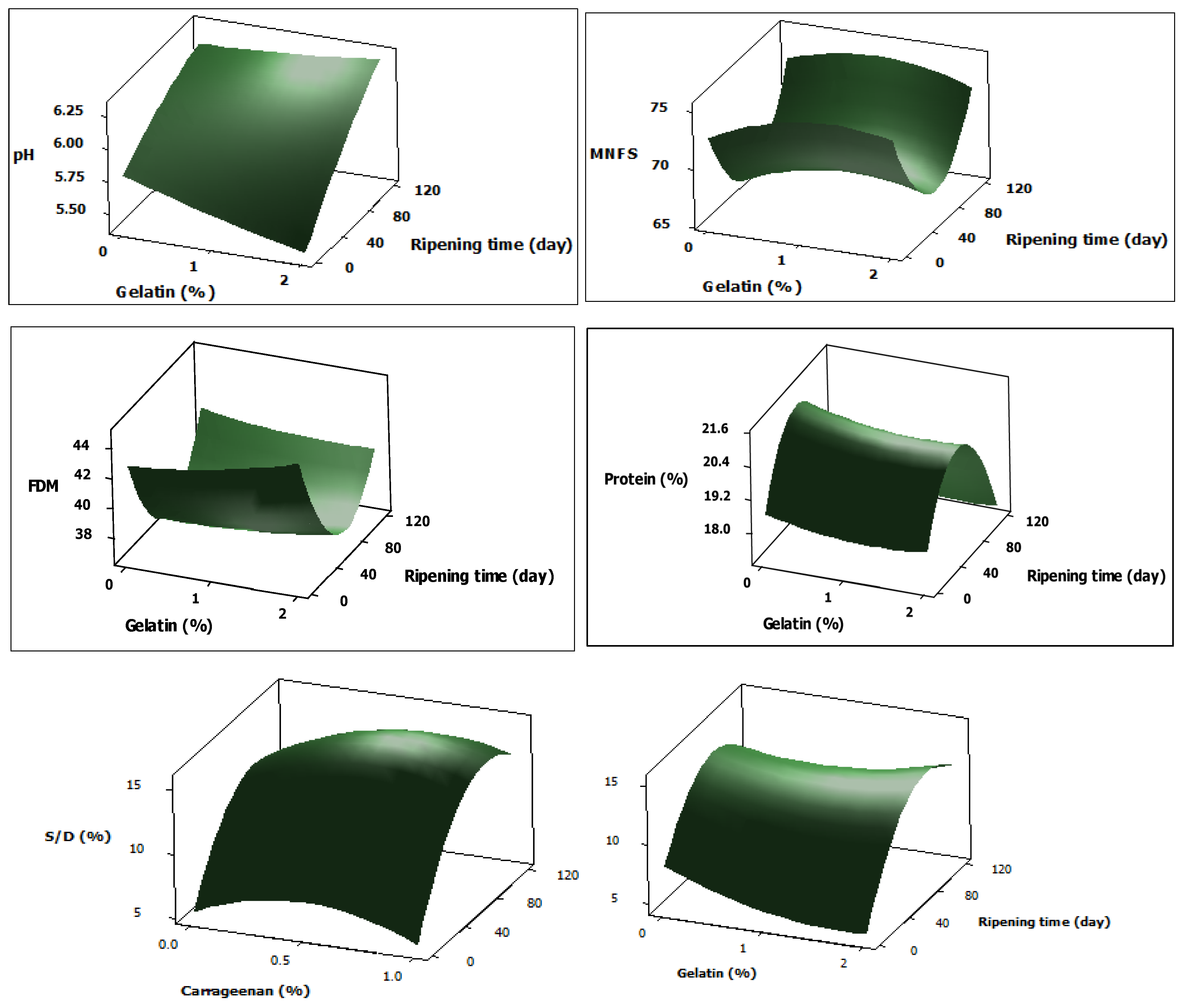
The significance of independent variables (X1: storage time, X2: carrageenan concentration, X3: gelatin concentration) on cheese pH and composition, as indicated by F-ratio and associated p-values, are given in Table 2. All compositional parameters were significantly influenced by storage time. Response surface plots of pH, moisture in non-fat solids (MNFS), fat in dry matter (FDM), protein and S/D, are given in Figure 1.
Stabilizers added to the brine did not influence the pH, MNFS, FDM and protein content significantly. Therefore, surface plots of the pH, MNFS, FDM and protein given in Figure 1 are selected to present the impact of ripening, and the remaining plots showing the pH, MNFS, FDM and protein as affected by carrageenan concentrations are given in the Supplementary Material Figure S1. Ozbek and Guzeler studied the impact of the brine with sodium caseinate, carrageenan and guar gum on white cheese and they did not observe any difference between pH and fat content caused by stabilizers [16]. Protein contents were also mostly similar. They reported an increase of approximately 1% in dry matter of the cheese samples after storing 15 days in stabilizer-added brine. Cankurt has also observed an increase in dry matter with the addition of stabilizers to the brine [14]. Stabilizers could prevent the transfer of the moisture from brine to cheese during storage, keeping the dry matter of the cheese high [16]. Ozbek and Guzeler also reported an increase in dry matter at the first stage of the ripening due to diffusion of salt from brine to the cheese; they then detected a decrease, which they attributed to proteolysis [16].
Carrageenan concentration influenced the S/D content quadratically; the interaction effect of the storage time and gelatin on S/D was also significant. The S/D content of cheese samples was higher at 0.5% carrageenan concentration, as compared to 0 and 1%. Salt diffusion could be rapid at 0% carrageenan, as there is no hindrance for the movement of the salt molecules; however, that could dehydrate the surface of the cheese, as water will also diffuse out fast, making the further salt intake difficult through the dehydrated and tightened cheese surface. The intermediate carrageenan level (0.5%) may have slowed water diffusion out of the cheese just enough to prevent surface dehydration, thereby enabling greater salt uptake. On the other hand, at the higher carrageenan concentration, the gel brine might have become too viscous to allow for salt transfer. Carrageenan is a sulfated polysaccharide, containing negatively charged –OSO3 groups that can interact with positively charged anions (Na+, Ca+, K+) in the brine [27]. This ion binding could prevent the transfer of the Na+ ions from brine to cheese, especially at higher carrageenan concentrations. Gelatin reduced the S/D content of the cheese samples on the first day of storage; however we observed higher S/D content with higher gelatin concentration towards the end of the storage period. Ozbek and Guzeler observed a decrease in SD content of cheese samples kept in a much lower level of carrageenan (0.05%) added to the brine as well as all other stabilizers; they attributed this to a decrease in salt diffusion from brine to cheese due to thickening of the brine with added stabilizers [16]. The higher moisture levels in their cheese, combined with the considerably lower stabilizer concentrations employed in their study, may have contributed to the observed differences between their results and ours. Cankurt did not observe a decrease in the salt content of the cheese samples with any of the stabilizers, except for the first day of the storage [14]. In fact, their S/D results for carrageenan- and gelatin-added samples were higher than the control on the 30th day of storage. These findings are mostly consistent with our results, likely due to similar stabilizer concentrations and similar cheese moisture levels in both studies.

3.2. Proteolytic Activity

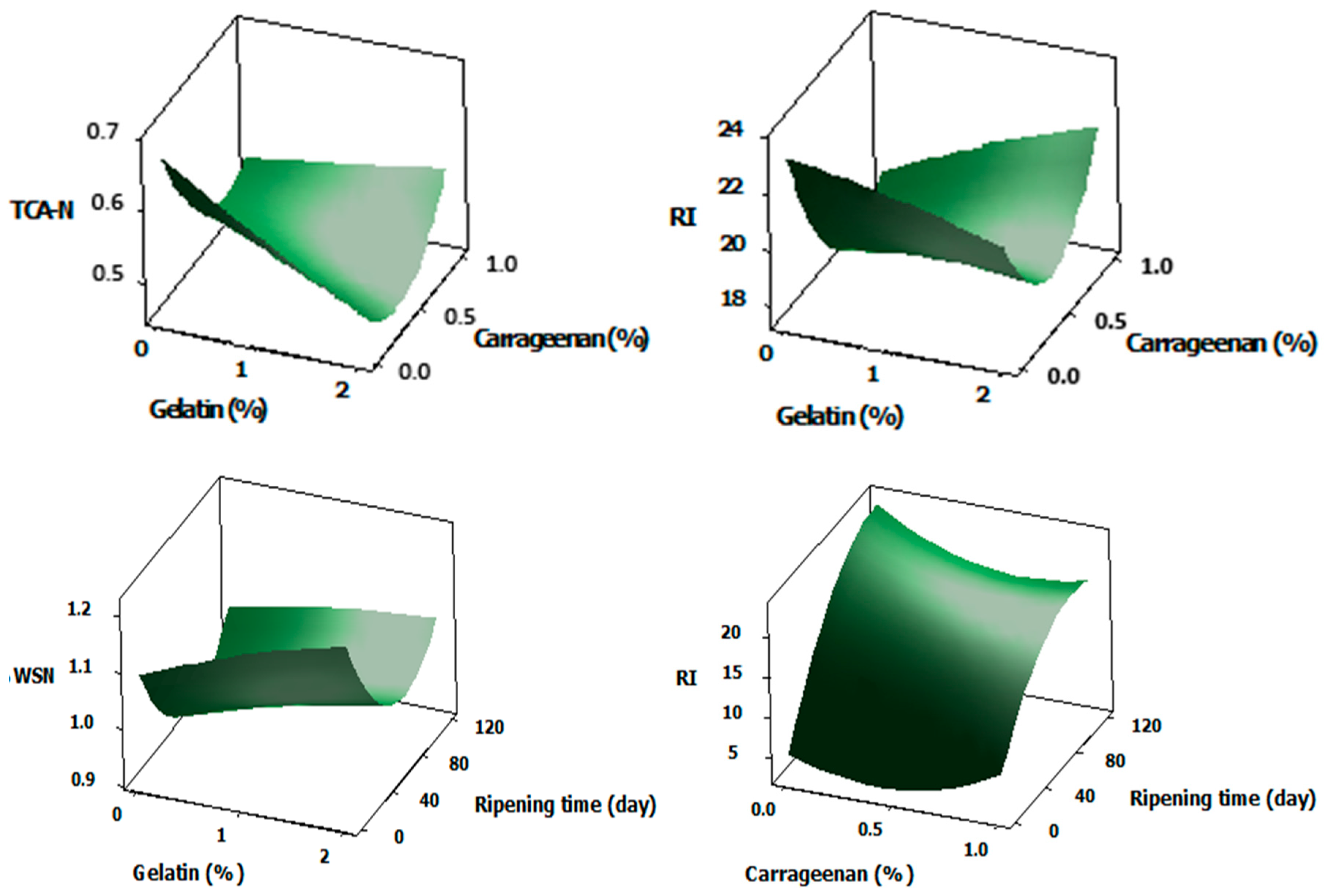
The significance of independent variables (X1: storage time, X2: carrageenan concentration, X3: gelatin concentration) on WSN, TCA-N and RI in the final models are given in Table 2. While carrageenan and gelatin did not affect WSN content, TCA-N and RI were significantly influenced by especially the interaction effects of storage time, and carrageenan and gelatin concentrations. Response surface plots of independent variables that significantly influenced TCA-N, WSN and RI are given in Figure 2. The rest of the surface plots are presented in Supplementary Materials Figure S2. The TCA-N amount appeared to decrease with increasing gelatin concentrations. Carrageenan reduced TCA-N accumulation at the 0.5% level; however, it appeared to have no significant effect on proteolysis at the 1% concentration. This may be attributed to the higher S/D ratios observed at 0.5% carrageenan, as increased salt levels are known to limit proteolysis [13]. Ozbek and Guzeler [16] reported that adding 0.05% carrageenan to the brine slowed proteolysis during the first 30 days of storage; however, by day 60, the degree of ripening was similar to that of the control. Carrageenan has been reported to form a semi-permeable film, depending on its density and the extent of surface gel formation [28]. Stabilizers added to the brine can influence the proteolysis of the cheese through their impact on diffusion of the moisture and salt to cheese. They can lead to higher levels of proteolysis if they impede the salt transfer to the cheese. Lower internal NaCl concentrations can accelerate proteolysis, as high salt levels typically inhibit the activity of proteolytic enzymes [29]. If a dense gel-like brine forms with the addition of the stabilizers, brine could also act as a barrier preventing the diffusion of enzymes and microbial metabolites and that would reduce proteolysis.
TCA-N content increased significantly during storage; however, the increase in WSN content was subtle and only the quadratic effect of the ripening on WSN was significant (Table 2). Previous studies on the use of stabilizers in the brine of pasteurized white cheese reported increasing WSN levels during ripening [14,16]. Pasteurization inactivates native enzymes and most of the microbial populations in milk, leaving the starter culture and residual coagulant as the main sources of proteolytic activity, leading to the slow and more linear proteolysis of the cheese, with WSN and TCA-N increasing at similar rates [29]. In the case of raw milk cheese, high microbial and exogenous proteinase activity can degrade WSN into TCA-N and free amino acids, causing no further accumulation of WSN and even a decrease in WSN if intermediate peptides are depleted, while TCA-N increases continuously [30,31,32]

3.3. Microbiological Results

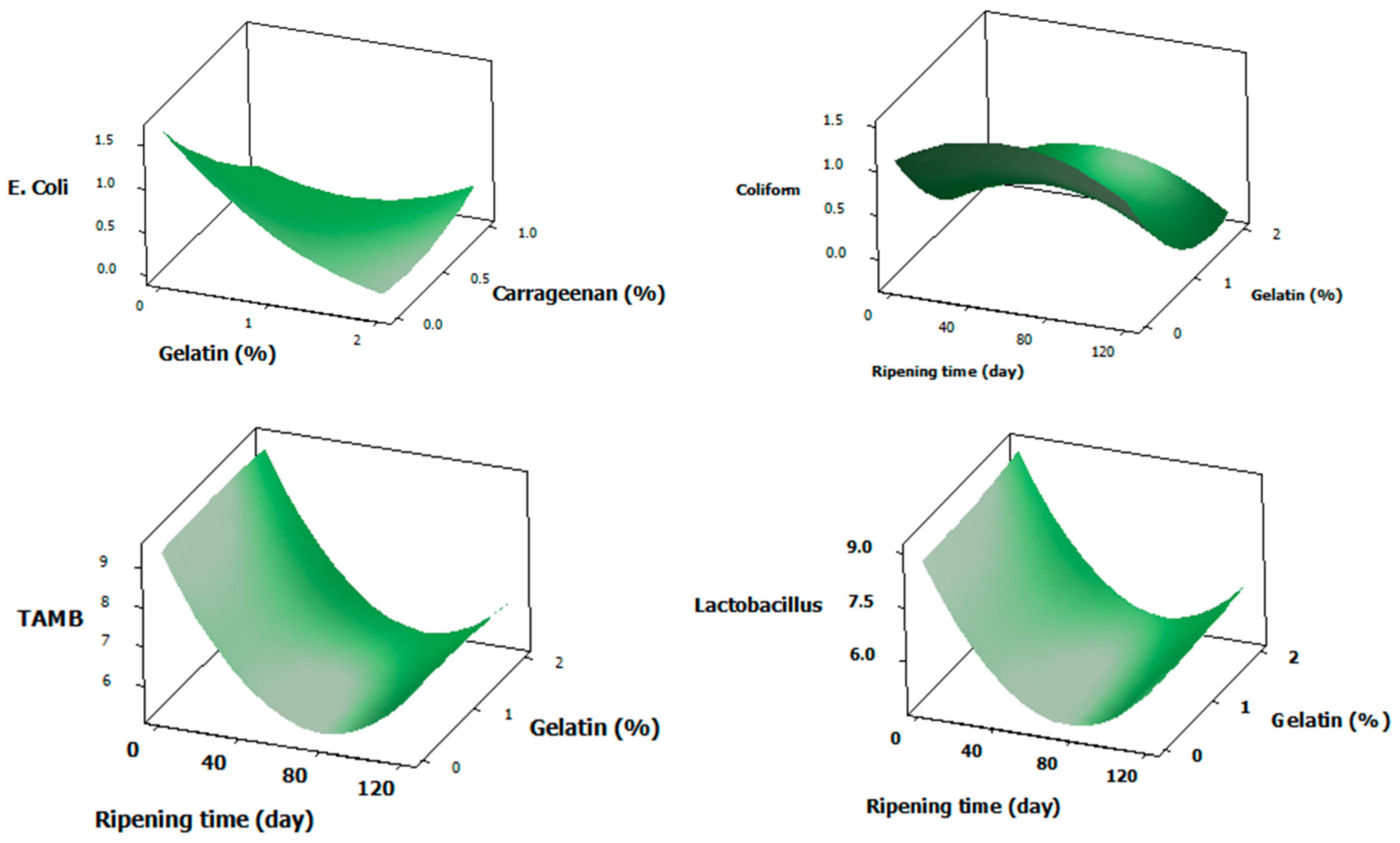
The significance of independent variables (X1: storage time, X2: carrageenan concentration, X3: gelatin concentration) on microbiological counts are given in Table 2. E. coli counts were significantly reduced by gelatin and carrageenan; their interaction effect was also significant (p < 0.05). Response surface plots of microbial counts are given in Figure 3 and are mostly based on significant figures. The rest of the surface plots can be found in Supplementary Materials Figure S3. Lactobacillus, TMAB and coliform counts were not affected significantly by stabilizers (p > 0.05). TAMB and Lactobacillus were significantly influenced and reduced by ripening, but stabilizers did not have an impact on them. Cankurt reported that stabilizers in the brine did not influence the starter culture [14]. Lactobacillus can adapt to acidic and low water activity conditions; they usually thrive deeper in the cheese curd and form microcolonies surrounded by protein and fat networks [33], whereas E. coli resides mostly at the surface and is more exposed to brine conditions and much less tolerant to low water activity [34]. Adding stabilizers to the brine probably created a harsher environment that E. coli could not survive. On the other hand, the counts of Lactobacillus and TMAB, which largely consist of LAB and related groups, were not affected by the stabilizers. We did not detect any yeast and mold in any of the cheese samples.

3.4. Texture Profile Analysis Results

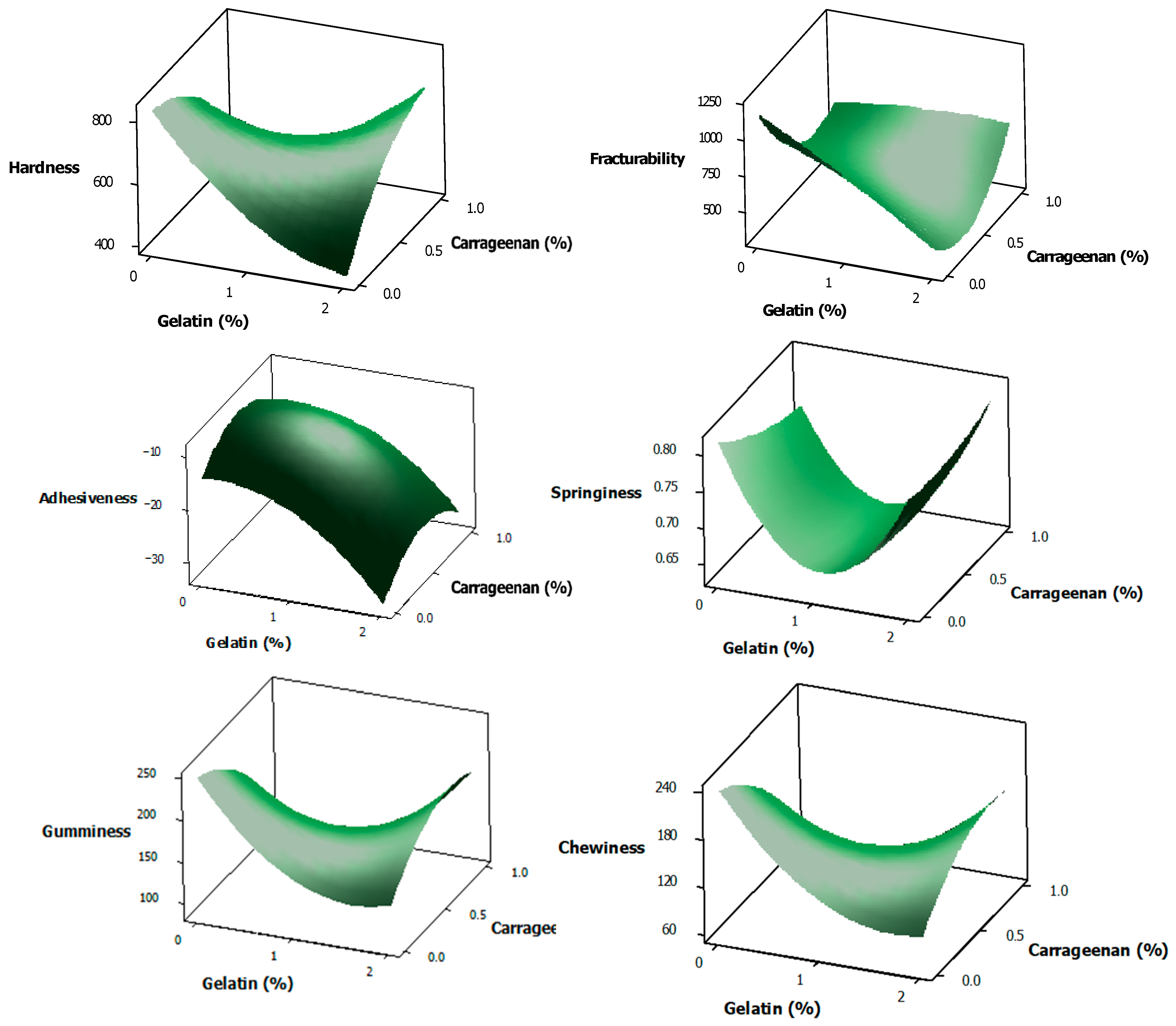
Response surface plots of TPA results, as affected by gelatin and carrageenan concentrations, are given in Figure 4. Other surface plots are given in Supplementary Materials Figure S4. Storage time influenced all texture parameters. A decrease was observed in hardness, fracturability, chewiness and gumminess, with storage. Gelatin reduced the adhesiveness and fracturability significantly (p < 0.05). The quadratic effect of gelatin on springiness and chewiness was significant, suggesting a non-linear influence of gelatin concentration. The interaction effect of storage time, gelatin, and carrageenan was significant on hardness, fracturability, gumminess, and chewiness. Carrageenan reduced the chewiness significantly when used without gelatin; however, combined use increased the chewiness (p < 0.05). Hardness and gumminess levels also tended to increase with the combined use of gelatin and carrageenan. Gelatin and carrageenan are known to form mixed gels with a higher gel strength than those produced by either polymer alone, primarily due to associative electrostatic interactions and hydrogen bonding between the two biopolymers [35]. This stronger gel network may immobilize the water and free ions and limit the moisture redistribution to a greater extent, reducing proteolysis-induced softening over storage. Previous studies reported an increase in hardness and a decrease in adhesiveness and springiness with the use of stabilizers in brine [7,8]. The higher hardness and reduced adhesiveness of stabilizer-added cheese samples were associated with the lower level of proteolysis and moisture. The significance of independent variables (X1: storage time, X2: carrageenan concentration, X3: gelatin concentration) on TPA results, as indicated by F-ratio (associated p-values in parentheses) in the final models, are given in Table 3.

3.5. Optimization

The goal of the optimization was to determine optimum gelatin and carrageenan levels and storage times that achieved the desired level of proteolysis and maintained the desired solid matter while keeping the coliform and E. coli counts at acceptable levels. Therefore, optimization settings were configured to minimize coliform and E. coli counts (targeting 0), to maximize the dry matter content and to keep the ripening index at a moderate level targeting 15%. The optimal carrageenan, gelatin and storage time were estimated as 0.9%, 0.8% and day 35, respectively, with a composite desirability of 0.89. Predicted E. coli and coliform counts, ripening index and solid matter levels were 0.05, 0.37, 15%, and 42%, respectively, for optimal conditions.

4. Conclusions

The use of stabilizers in cheese brine represents a promising approach for raw milk cheese to keep salt at moderate levels while maintaining desirable quality. Our aim was to determine the optimal storage time and stabilizer levels for achieving the target microbial counts, proteolysis and moisture levels using response surface methodology. The optimum conditions were estimated as 0.9% carrageenan, 0.8% gelatin, and 35 days of storage for 12% brine salt level. A pronounced reduction in E. coli counts of stabilizer-added cheese samples was observed within the first 45 days, while other microbial groups remained unaffected. Stabilizers also slowed down the proteolysis during storage, preventing unwanted softening. The combined use of gelatin and carrageenan showed a synergic effect in keeping the hardness levels higher and reducing adhesiveness.

Supplementary Materials

The following supporting information can be downloaded at: https://www.mdpi.com/article/10.3390/dairy7010004/s1, Table S1: Independent variables and levels used in the response surface design for each cheese sample, Figure S1: Response surface plots of pH, MNFS (%), FDM (%), protein (%) and S/D (%) as affected by ripening period, carrageenan and gelatin concentrations. MNFS: Moisture in nonfat substances, FDM: Fat in dry matter, S/D: Salt in dry matter., Figure S2: Response surface plots of TCA-N (%), WSN (%) and RI (%) as affected by ripening period, carrageenan and gelatin concentrations. TCA-N: Trichloroacetic acid soluble nitrogen (%), RI: Ripening index (%), WSN: Water soluble nitrogen, Figure S3: Response surface plots of E. coli, coliform, TAMB and Lactobacillus counts (log cfu/g) as affected by ripening period, carrageenan and gelatin concentrations., Figure S4: Response surface plots of TPA results as affected by ripening period, carrageenan and gelatin concentrations.

Author Contributions

Project administration, Conceptualization, Investigation, Methodology, Resources, Formal analysis, Data curation, Validation, Writing Original Draft—review and editing: Ç.A.Ç. Formal analysis, Investigation, Data curation, Writing: G.G. All authors have read and agreed to the published version of the manuscript.

Funding

This research was funded by Harran University Research Fund (Grant no.: 21185) for Graduate Studies and by Scientific and Technological Research Council of Turkey (TUBITAK) (Grant no.: 1002B-122O681).

Institutional Review Board Statement

Not applicable.

Informed Consent Statement

Not applicable.

Data Availability Statement

The raw data supporting the conclusions of this article will be made available by the authors on request.

Conflicts of Interest

The authors declare no conflicts of interest.

References

  1. Beuvier, E.; Buchin, S. Raw Milk Cheeses. In Cheese: Chemistry, Physics and Microbiology; Academic Press: Cambridge, MA, USA, 2004; Volume 1, pp. 319–345. [Google Scholar] [CrossRef]
  2. Code of Federal Regulations, Food and Drug Administration, HHS Pt. 133 Tittle 21 Cheeses and Related Cheese Products, 2012. Available online: https://www.ecfr.gov/current/title-21/chapter-I/subchapter-B/part-133 (accessed on 23 December 2025).
  3. Turkish Food Codex, “Cheese Bulletin”, Bulletin no: 2015/6, Official Gazette no: 29261; Ankara, Turkey, 2015.
  4. Cook, N.R.; Cutler, J.A.; Obarzanek, E.; Buring, J.E.; Rexrode, K.M.; Kumanyika, S.K.; Appel, J.; Whelton, P.K. Longterm effects of Dietary Sodium Reduction on Cardiovascular Disease Outcomes: Observationa Follow Up of The Trials of Hypertension Prevention (TOHP). Brit. Med. J. 2007, 334, 885–888. [Google Scholar] [CrossRef] [PubMed]
  5. He, F.J.; MacGregor, G.A. A comprehensive review on salt and health and current experience of worldwide salt reduction programmes. J. Hum. Hypertens. 2009, 23, 363–384. [Google Scholar] [CrossRef] [PubMed]
  6. Guinee, T.P.; Fox, P.F. Salt in Cheese: Physical, Chemical and Biological Aspects. In Cheese: Chemistry Physics and Microbiology; Elsevier Academic Press: London, UK, 2004; pp. 207–259. [Google Scholar] [CrossRef]
  7. Güler, Z.; Uraz, T. Relationships between proteolytic and lipolytic activity and sensory properties (taste–odour) of traditional Turkish white cheese. Int. J. Dairy Technol. 2004, 57, 237–242. [Google Scholar] [CrossRef]
  8. Prasad, N.; Alvarez, V.B. Effect of Salt and Chymosin on the Physico-Chemical Properties of Feta Cheese During Ripening. J. Dairy Sci. 1999, 82, 1061–1067. [Google Scholar] [CrossRef]
  9. Bisig, W. The Importance of Salt in the Manufacturing and Ripening of Cheese; IDF: Schaerbeek, Belgium, 2017. [Google Scholar]
  10. Estrada, O.; Ariño, A.; Juan, T. Salt Distribution in Raw Sheep Milk Cheese during Ripening and the Effect on Proteolysis and Lipolysis. Foods 2019, 8, 100. [Google Scholar] [CrossRef]
  11. Ozer, H.B.; Uraz, G.; Beyzi-Yilmaz, E.; Atasoy, A.F. The effects of brine concentration and scalding on survival of some pathogens in urfa cheese: A traditional white-brined turkish cheese. Int. J. Food Sci. Technol. 2004, 39, 727–735. [Google Scholar] [CrossRef]
  12. Hayaloglu, A.A.; Ozer, B.H.; Fox, P.F. Cheeses of Turkey: 2. Varieties ripened under brine. Dairy Sci. Technol. 2008, 88, 225–244. [Google Scholar] [CrossRef]
  13. Guinee, T.P. Salting and the role of salt in cheese. Int. J. Dairy Technol. 2004, 57, 99–109. [Google Scholar] [CrossRef]
  14. Cankurt, H. The effects of adding different stabilizers in brine on the physicochemical, sensory, microbiological and textural properties of white cheese. Foods 2019, 8, 133. [Google Scholar] [CrossRef]
  15. Çavuş, M. Peynir Tuzlamada Yeni Bir Yöntem: Jel Salamura Tekniği. Master’s Thesis, Fen Bilimleri Enstitüsü, Kayseri, Turkey, 2020. [Google Scholar]
  16. Ozbek, C.; Guzeler, N. Effects of stabilisers in brine on soft white cheese quality parameters. Int. Dairy J. 2022, 134, 105446. [Google Scholar] [CrossRef]
  17. Özbek, Ç.; Güzeler, N. Implications of stabilizers used in brine of soft white cheese on the aroma profile of cheeses. Gıda 2023, 48, 1199–1215. [Google Scholar] [CrossRef]
  18. Gao, Y.; Liu, R.; Liang, H. Food Hydrocolloids: Structure, Properties, and Applications. Foods 2024, 13, 1077. [Google Scholar] [CrossRef] [PubMed]
  19. Güneş, G. Jel Salamura Tekniğiyle Urfa Peynirinde Tuzun Azaltılması. Master’s Thesis, Harran University, Şanlıurfa, Turkey, 2023. [Google Scholar]
  20. IDF. Cheese and Processed Cheese—Determination of the Total Solids Content; International Dairy Federation: Brussels, Belgium, 1982. [Google Scholar]
  21. ISO 19662|IDF 238; Milk—Determination of Fat Content—Acido-Butyrometric (Gerber Method). International Organization for Standardization: Geneva, Switzerland; International Dairy Federation: Brussels, Belgium, 2018.
  22. ISO 1738; Butter—Determination of Salt Content. International Organization for Standardization: Geneva, Switzerland, 2004.
  23. Gripon, J.C.; Desmazeaud, M.J.; Le Bars, D.; Bergere, J.L. Etude du rôle des micro-organismes et des enzymes au cours de la maturation des fromages. II.—Influence de la présure commerciale. Lait 1975, 55, 502–516. [Google Scholar] [CrossRef]
  24. Harrigan, W.F. Laboratory Methods in Food Microbiology; Academic Press: Cambridge, MA, USA, 1998. [Google Scholar]
  25. Akbulut, Ç.; Govindasamy-Lucey, S.; Lucey, J.A.; Jaeggi, J.J.; Johnson, M.E. Impact of grating size on the texture and melting properties of reformed non-fat cheese. Milchwissenschaft 2011, 66, 169–172. [Google Scholar]
  26. Bourne, M.C. Texture profile analysis. Food Technol. 1978, 32, 62–66. [Google Scholar]
  27. Piculell, L. Gelling carrageenans. In Food Polysaccharides and Their Applications; Stephan, A.M., Ed.; Marcel Dekker: New York, NY, USA, 1995; pp. 205–244. [Google Scholar]
  28. Dhilipkumar, T.; Sadeq, A.M.; Karuppusamy, P.; Karthik, V.S.; Murali, A.P.; Darem, A.A.; Selvakumar, K.; Giri, J. Exploring recent advances in carrageenan-based films for sustainable food packaging applications. Eur. Food Res. Technol. 2025, 251, 3151–3173. [Google Scholar] [CrossRef]
  29. Fox, P.F. Fundamentals of Cheese Science; Aspen Publishing: Burlington, MA, USA, 2000. [Google Scholar]
  30. Upadhyay, V.K.; McSweeney, P.L.H.; Magboul, A.A.A.; Fox, P.F. Proteolysis in Cheese during Ripening. In Cheese: Chemistry, Physics and Microbiology; Academic Press: Cambridge, MA, USA, 2004; pp. 391–433. [Google Scholar] [CrossRef]
  31. McSweeney, P.L.H. Biochemistry of cheese ripening. Int. J. Dairy Technol. 2004, 57, 127–144. [Google Scholar] [CrossRef]
  32. Singh, T.K.; Drake, M.A.; Cadwallader, K.R. Flavor of Cheddar Cheese: A Chemical and Sensory Perspective. Compr. Rev. Food Sci. Food Saf. 2003, 2, 166–189. [Google Scholar] [CrossRef]
  33. Papadimitriou, K.; Alegría, Á.; Bron, P.A.; De Angelis, M.; Gobbetti, M.; Kleerebezem, M.; Lemos, J.A.; Linares, D.M.; Ross, P.; Stanton, C.; et al. Stress Physiology of Lactic Acid Bacteria. Microbiol. Mol. Biol. Rev. 2016, 80, 837–890. [Google Scholar] [CrossRef]
  34. Nagata, S.; Sasaki, H.; Oshima, A.; Takeda, S.; Hashimoto, Y.; Ishida, A. Effect of Proline and K+ on the Stimulation of Cellular Activities in Escherichia coli K-12 under High Salinity. Biosci. Biotechnol. Biochem. 2005, 69, 740–746. [Google Scholar] [CrossRef]
  35. Derkach, S.R.; Voron’ko, N.G.; Kuchina, Y.A.; Kolotova, D.S.; Gordeeva, A.M.; Faizullin, D.A.; Gusev, Y.A.; Zuev, Y.F.; Makshakova, O.N. Molecular structure and properties of κ-carrageenan-gelatin gels. Carbohydr. Polym. 2018, 197, 66–74. [Google Scholar] [CrossRef] [PubMed]
Figure 1. Response surface plots of pH, MNFS (%), FDM (%), protein (%) and S/D (%). MNFS: Moisture in nonfat substances, FDM: Fat in dry matter, S/D: Salt in dry matter.
Dairy 07 00004 g001
Figure 2. Response surface plots of TCA-N (%), WSN (%) and RI (%). TCA-N: Trichloroacetic acid-soluble nitrogen (%), RI: Ripening index (%), WSN: Water-soluble nitrogen.
Dairy 07 00004 g002
Figure 3. Response surface plots of E. coli, coliform, TAMB and Lactobacillus counts (log cfu/g).
Dairy 07 00004 g003
Figure 4. Response surface plots of TPA results as affected by gelatin and carrageenan concentrations.
Dairy 07 00004 g004
Table 1. Independent variables and levels used in the response surface design.
Independent Variables SymbolLevel
CodeUnit−10+1
Ripening timeX1days145120
Carrageenan concentrationX2%00.51
Gelatin concentrationX3%012
Table 2. The significance of independent variables (X1: ripening time, X2: carrageenan concentration, X3: gelatin concentration) on cheese pH, acidity, composition, proteolysis and microbial counts (log cfu/g) as indicated by F-ratio (associated p-values in parentheses) in the final models.
pHMNFS (%)FDM (%)Protein (%)S/D (%)WSNTCA-NRI (%)Lactobacillus TAMB Coliform E. coli
Linear 12.43
(0.001) *
7.33
(0.007) *
4.48
(0.031) *
0.47
(0.709)
47.35
(0.000) *
2.42
(0.127)
61.72
(0.000) *
92.05
(0.000) *
36.43
(0.000) *
20.72
(0.000) *
1.31
(0.424)
6.62
(0.010) *
X122.24
(0.001) *
9.26
(0.012) *
7.88
(0.019) *
0.15
(0.704)
86.47
(0.000) *
4.48
(0.060)
114.76
(0.000) *
181.91
(0.000) *
89.50
(0.000) *
49.68 (0.000) *0.28
(0.609)
2.74
(0.129)
X20.44
(0.524)
2.40
(0.153)
0.16
(0.697)
0.09
(0.773)
3.32
(0.098)
1.21
(0.298)
3.40
(0.095)
1.61
(0.233)
0.63
(0.447)
0.32
(0.586)
0.18
(0.684)
12.77
(0.005) *
X33.77
(0.081)
0.19
(0.676)
0.83
(0.384)
1.35
(0.272)
2.25
(0.164)
4.51
(0.060)
1.48
(0.252)
4.55
(0.059)
1.02
(0.337)
0.01
(0.910)
2.84
(0.123)
14.65
(0.003) *
Square0.14
(0.936)
26.90
(0.000) *
7.55
(0.006) *
17.62
(0.000) *
16.89
(0.000) *
6.57
(0.010) *
21.61
(0.000) *
11.95
(0.001) *
28.45
(0.000) *
12.67
(0.001) *
1.02
(0.424)
2.64
(0.107)
X120.24
(0.637)
76.26
(0.000) *
22.21
(0.001) *
52.64
(0.000) *
38.91
(0.000) *
12.46
(0.005) *
60.26
(0.000) *
25.51
(0.000) *
82.35
(0.000) *
37.49
(0.000) *
1.26
(0.287)
1.72
(0.219)
X220.05
(0.823)
1.72
(0.219)
0.13
(0.728)
0.10
(0.758)
8.55
(0.015) *
4.38
(0.063)
6.58
(0.028) *
11.26
(0.007) *
0.01
(0.918)
0.01
(0.941)
0.40
(0.543)
0.62
(0.451)
X320.06
(0.810)
4.49
(0.060)
0.09
(0.769)
0.77
(0.401)
2.83
(0.123)
0.08
(0.782)
0.01
(0.911)
0.04
(0.847)
0.18
(0.681)
0.04
(0.842)
1.96
(0.192)
3.19
(0.104)
Interaction3.50
(0.058)
1.88
(0.197)
1.59
(0.253)
2.25
(0.144)
3.01
(0.081)
0.53
(0.671)
4.68
(0.027) *
3.25
(0.068)
0.35
(0.787)
0.01
(0.998)
0.50
(0.689)
6.98
(0.008) *
X1X21.97
(0.191)
3.15
(0.106)
0.13
(0.728)
1.54
(0.243)
2.65
(0.135)
0.26
(0.622)
7.03
(0.024) *
7.16
(0.023) *
0.01
(0.920)
0.00
(0.956)
0.01
(0.907)
0.87
(0.374)
X1X34.06
(0.072)
1.45
(0.257)
1.08
(0.322)
0.25
(0.627)
8.11
(0.017) *
0.64
(0.443)
7.70
(0.020) *
1.71
(0.221)
0.00
(0.945)
0.02
(0.901)
0.03
(0.857)
1.22
(0.296)
X2X30.33
(0.577)
0.53
(0.485)
1.92
(0.195)
3.07
(0.110)
0.11
(0.749)
0.00
(0.947)
9.26
(0.012) *
5.30
(0.044) *
0.88
(0.371)
0.03
(0.866)
1.41
(0.262)
20.05
(0.001) *
R285.11%91.13%79.00%86.00%95.67%78.84%95.67%96.74%95.55%91.31%50.37%83.39%
Lack of fit4.40
(0.125)
2.09
(0.293)
1.35
(0.439)
1.85
(0.331)
0.87
(0.606)
0.38
(0.869)
1.82
(0.336)
38.10
(0.006) *
3.21
(0.183)
0.49
(0.801)
**
X1, X2 and X3: The main effect of storage time, carrageenan concentration, and gelatin concentration; X12, X22 and X32: The quadratic effect of storage time, carrageenan concentration and gelatin concentration; X1X2, X1X3, X2X3: The interaction effect of storage time and carrageenan concentration, the interaction effect of storage time and gelatin concentration, the interaction effect of carrageenan concentration and gelatin concentration, respectively. MNFS: Moisture in nonfat solids, FDM: Fat in dry matter, S/D: Salt in dry matter, WSN: Water-soluble nitrogen, TCA-N: Trichloroacetic acid-soluble nitrogen, RI: Ripening index. * p is significant at p ≤ 0.05.
Table 3. The significance of independent variables (X1: ripening time, X2: carrageenan concentration, X3: gelatin concentration) on TPA results as indicated by F-ratio (associated p-values in parentheses) in the final models.
HardnessFracturabilityAdhesivenessSpringinessGumminessChewiness
Linear 282.51
(0.000) *
40.82
(0.000) *
13.71
(0.001) *
13.66
(0.001)
72.20
(0.000) *
204.97
(0.000) *
X1626.13
(0.000) *
78.11
(0.000) *
13.15
(0.005) *
28.40
(0.000) *
144.67
(0.000) *
408.11
(0.000) *
X20.00
(0.992)
0.41
(0.534)
0.02
(0.896)
0.21
(0.658)
1.88
(0.201)
5.54
(0.040) *
X32.34
(0.157)
5.64
(0.039) *
16.71
(0.002) *
0.03
(0.872)
0.17
(0.688)
1.26
(0.287)
Square35.59
(0.000) *
3.44
(0.060)
3.38
(0.063)
4.84
(0.025) *
9.15
(0.003) *
32.51
(0.000) *
X12101.31
(0.000) *
4.50
(0.060)
1.54
(0.242)
0.19
(0.672)
22.77
(0.001) *
83.16
(0.000) *
X221.60
(0.235)
3.88
(0.077)
2.26
(0.163)
0.06
(0.814)
1.01
(0.338)
2.46
(0.148)
X322.76
(0.128)
0.05
(0.824)
2.45
(0.149)
10.07
(0.010) *
3.38
(0.096)
9.70
(0.011) *
Interaction9.60
(0.003) *
4.65
(0.028) *
1.00
(0.434)
0.46
(0.716)
5.03
(0.022) *
15.58
(0.000) *
X1X26.33
(0.031) *
2.79
(0.126)
0.33
(0.579)
0.02
(0.901)
0.51
(0.490)
1.98
(0.190)
X1X35.75
(0.037) *
0.64
(0.442) *
1.48
(0.251)
0.72
(0.415)
9.34
(0.012) *
24.11
(0.001) *
X2X327.77
(0.000) *
7.21
(0.023) *
0.12
(0.733)
0.60
(0.456)
9.84
(0.011) *
35.92
(0.000) *
R299.18%94.37%84.29%87.92%97.00%98.94%
Lack of fit6.41
(0.077)
7.14
(0.067)
3.84
(0.148)
1.31
(0.451)
2.95
(0.202)
4.82
(0.112)
X1, X2 and X3: The main effect of storage time, carrageenan concentration, and gelatin concentration; X12, X22 and X32: The quadratic effect of storage time, carrageenan concentration, and gelatin concentration; X1X2, X1X3, X2X3: The interaction effect of storage time and carrageenan concentration, the interaction effect of storage time and gelatin concentration, the interaction effect of carrageenan concentration and gelatin concentration, respectively. * p is significant at p ≤ 0.05.
Disclaimer/Publisher’s Note: The statements, opinions and data contained in all publications are solely those of the individual author(s) and contributor(s) and not of MDPI and/or the editor(s). MDPI and/or the editor(s) disclaim responsibility for any injury to people or property resulting from any ideas, methods, instructions or products referred to in the content.