1. Introduction
The proliferation of personal handheld devices has triggered the upsurge in the manufacturing of software for any and every possible personal utility. Mobile applications are software applications that can be executed (run) on a mobile platform (i.e., a handheld commercial off-the-shelf computing platform, with or without wireless connectivity) [
1].
A notable characteristic of modern mobile applications is their capacity to be context-aware [
2]. This is a significant advancement over traditional software, which typically operates in a static environment. Context-awareness refers to an application’s ability to perceive and respond to changes in its surroundings. This is achieved by utilizing various sensors and data sources on a mobile device, such as the Global Positioning System (GPS), accelerometer, gyroscope, microphone, and camera [
2]. Hence, an increasing number of software providers are engaged in developing types of self-adaptive software that leverage their capacity to be configurable with minimum human intervention to gain a competitive advantage.
An adaptive mobile system/application is a software application that can be executed (run) on a mobile platform and has the capacity to adapt itself and its operational context. A mobile device, such as a mobile phone, can be considered an ecosystem of different mobile applications. These applications may have different purposes, developers, interaction mechanisms with the users, security requirements, sensors they need to access, etc. Similarly, a mobile device and its surrounding context can be a running platform for a diverse set of adaptive mobile applications with different adaptation goals, dimensions, and mechanisms. However, as mobile devices increasingly host multiple context-aware applications simultaneously, the independent adaptation strategies of individual apps can lead to resource conflicts and a suboptimal system-wide performance, motivating the need for cooperative adaptation mechanisms. This setup gives the opportunity for different adaptive mobile applications (AMAs) to coordinate and cooperate in their adaptation mechanisms. Cooperative adaptation is the capability of adaptive systems to coordinate their adaptation mechanisms and effects by affording context interference management, knowledge sharing, and complementary adaptation.
Even though there are numerous works that deal with adaptive systems in the context of mobile applications and a number of systematic literature reviews (SLRs) that have been published on the topic [
3,
4,
5], there is a dearth of published literature that incorporates the cooperativeness dimension to characterize adaptive mobile applications. This review aims to identify, evaluate, and synthesize reported knowledge about approaches to building adaptive mobile applications by focusing on cooperative adaptation. This can contribute to accurately identifying the basic requirement of cooperative adaptive mobile applications.
This article is organized as follows:
Section 2 introduces and elaborates on the concept of cooperative adaptation.
Section 3 delineates the systematic methodology employed in conducting this review. The findings and associated discussions derived from the review are presented in
Section 4.
Section 5 addresses identified threats to validity and outlines corresponding mitigation strategies. Related works pertinent to this systematic literature review are examined in
Section 6. Finally,
Section 7 provides conclusions and proposes recommendations for future research.
2. Background
Self-adaptive software modifies its own behavior in response to changes in its operating environment. The operating environment can be an end-user input, external hardware devices, and sensors or program instrumentation [
6]. Context-awareness and the ability to adapt autonomously has informed many mobile applications. In essence, AMAs strive to provide the best possible experience by dynamically changing to the user’s environment and device attributes.
Mobile applications are made up of binary executable files that are downloaded and stored locally on the user’s device [
7]. The applications are distributed through app stores or mobile device vendors. Developers must write the source code (in a human-readable format) and produce extra materials, such pictures, audio clips, and different OS-specific declarations, in order to produce native application files. The source code is compiled (and occasionally linked) using tools supplied by the OS vendor to produce an executable in binary form that can be packed with the other resources and prepared for distribution [
7]. A user initiates the installation process for a number N of apps and launches the apps according to the user’s desired usage settings.
We can define AMAs by adopting the definition put forward by the authors in [
8]. Adaptive mobile applications modify their own behavior in response to changes in their operating environment that includes a user profile, end-user input, hardware, and sensors residing both on the host mobile device and external system. Self-adaptation can occur in any component of a mobile system, such as the application itself, the backend, or a smart object, and it can be employed at various stages of the computing system’s technology stack, including the hardware, platform, and business logic levels [
4].
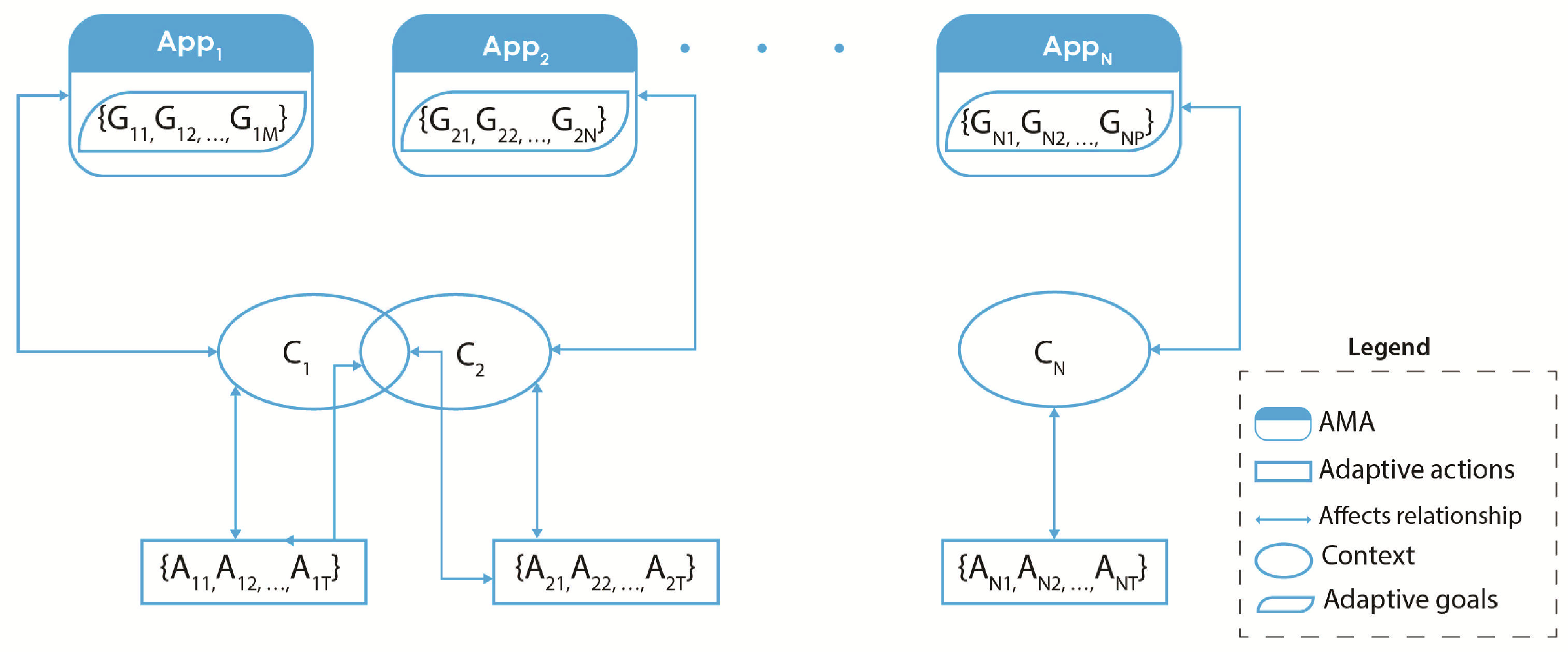
AMAs that are deployed on the same operating platform systems can occupy the same logical, physical, or computational space. This is illustrated in
Figure 1. An adaptive software application designed by developers has a functionality that provides value to the user, a set of adaptation goals that set the agenda for adaptive actions, a unique knowledge base that facilitates adaptation, a scope of observed context, and clearly defined adaptive actions.
In the context of an ecosystem of AMAs there can be N number of AMAs (App1, App2, …, AppN) deployed on the same device or a dedicated platform and catering usually to a single user. App1 can have a set of M adaptive goals G11, G12, …, G1M. Adaptive goals can include enhancing usability or optimizing energy. The adaptive application should observe a scoped context space C1 that is required to fulfill the adaptive goals. For example, a mobile application that aims to sustain energy conservation should observe the battery levels of the mobile device and the current profile of the user (such as the distance from a charging station). This information is organized and stored in a unique knowledge base accessible to App1. An inference engine that is core to the adaptivity of the mobile applications uses the inputs from the knowledge base and applies a possible number of T adaptive actions A11, A12, …, A1T based on adaptivity rules defined in the design stage of the mobile application development. It should also be noted that the adaptive rules can be dynamic and learned during the runtime phase of the application. The adaptive actions affect the behavior of the application that is itself in the domain of C1. A simple example could be after observing the battery of the mobile device reaching critical levels, App1 switching to a less energy-intensive profile. The profile could load a less graphically elaborate user interface or dim the light of the mobile device so that the battery can run longer. This aforementioned scenario is true for other apps, i.e., App2, App3, …, AppN.
The above setup provides an opportunity for cooperative mobile adaptation. App
1 and App
2 can share selective information from their knowledge bases K
1 and K
2, respectively. Revisiting the above example detailed by
Figure 1, we can observe that there is a potential for context overlap. App
1 and App
2 observe an intersection of context space. They can also affect the delineated context space. If App
2 also requires monitoring ambient light levels, it may query K
1 of App
1 rather than accessing the mobile device’s light sensor, thereby potentially reducing energy consumption. The dimming of light action proposed by App
1 can also make App
2 less visible to the user. Hence, App
1 can enact adaptations that are optimal considering the user’s use of App
2 rather than only being dictated by its own adaptation goal.
Cooperation in adaptive mobile systems involves mobile applications assisting each other in fulfilling their adaptive goals. Three facets of cooperation include context interference management, collaborative learning and knowledge sharing, and complementary adaptation. Context interference management aims to mitigate the negative effects of context changes from one application’s actions on another. It also involves identifying and capturing knowledge about common adaptation concerns to maintain and enhance the shared knowledge base. Complementary adaptation involves proactive contributions from one application to the overall system’s adaptation goals.
3. Materials and Methods
The SLR of self-adaptive mobile applications proposed in this paper was carried out using the method described by Kitchenham [
9], which specifies guidelines for conducting SLRs in the software engineering field to guide researchers in the evaluation and interpretation of all available research publications concerning their research questions and objectives. This method suggests three key stages for the systematic review process. The review begins with planning; the goal of this step is to create a search technique for the review. The second step focuses on the review’s execution, which involves carrying out the search procedure outlined in the previous phase. The third phase concludes with the review report, which presents all of the results from the preceding phases.
3.1. SLR Research Questions
The research questions for this SLR are systematically derived through a three-stage iterative process in accordance with the goal–question–metric paradigm based on the recommendations to systematically formulate research questions in [
10].
In the first stage, we identified the overarching research goals through a gap analysis using 15 seminal papers in the area of self-adaptive mobile applications. The analysis of the existing systematic literature reviews indicated that no comprehensive SLR addresses cooperative adaptation in mobile environments.
The main goal of this SLR is as follows:
“To understand the current state of adaptive mobile applications and identify dimensions relevant to cooperative adaptation.”
The main goal was decomposed into four specific sub-goals (G):
G1: To take stock of the current status and issues concerning the development of AMAs.
G2: To identify dimensions of adaptability for AMAs. The dimensions are examined according to their impact on cooperative adaptation.
G3: To identify the characteristics of AMAs that are related to cooperative adaptation.
G4: To propose a classification framework based on dimensions relevant to cooperative adaptation.
Following the guidelines in [
10], we derived the research questions using a structured taxonomy. This resulted in identifying the following overarching research questions (Qs):
Q1: What is the state of the art in AMAs? (Maps to G1).
Q2: What are the dimensions of adaptability for AMAs that are related to cooperative adaptation? (Maps to G2 and G3).
We decomposed Q1 and Q2 into answerable components using the SLR methodology [
10] that recommends breaking up generalized questions to specific sub-questions. Moreover, the publication questions are used to assess the research field’s maturity and trends.
For the purpose of the SLR the more immediate research questions (RQs) are as follows:
RQ1: What kind of approaches are presented in relation to AMAs? (Derived from Q1, addresses G1).
RQ2: What are the goals of adaptation? (Derived from Q1 and Q2, addresses G2).
RQ3: Which stages of the software development process are supported by the works? (Derived from Q1, addresses G1 and G4).
RQ4: What is the level of coordinated or cooperative adaptation considered? (Derived from Q2, addresses G3).
RQ5: What proportion of approaches are connected to specific mobile application platforms? (Derived from Q1, addresses G1).
RQ6: What aspects of the dimensions of adaptation put forward by the study can be applied to cooperative adaptation? (Derived from Q2, addresses G2 and G4). This is the synthesis question that maps the adaptation dimension to cooperation potential.
The publication questions (PQs) are as follows:
PQ1: What are the main publication venues? (Derived from Q1, addresses G1).
PQ2: How has the quantity of papers evolved across time? (Derived from Q1, addresses G1).
3.2. Search Strategy
A methodological search strategy is beneficial in warranting the completeness of relevant article identification in an SLR. Completeness is a critical issue in SLRs in the software engineering domain, as recommended in [
10]. A comprehensive search strategy was implemented to ensure the thorough coverage of the relevant literature, incorporating three complementary approaches: (1) automated database searches, (2) manual journal and conference proceedings searches, (3) backward snowballing of reference lists. This resulted in a set of candidate studies.
3.2.1. Automated Search
We employed a keyword search for the following online databases: Google Scholar, IEEEXplore, ACM Digital Library, ScienceDirect, Arxiv, and IET Digital Library, based on the evidence put forward in [
9,
10].
The search string formulation followed the basic concepts outlined in the research questions. We adhered to the following steps in composing the search strings:
- (i)
Identify important terms or concepts used in the RQs.
- (ii)
Identify terms used in the sample set of papers referring to self-adapting systems, autonomous systems, mobile systems, etc.
- (iii)
Identify synonyms, abbreviations, and alternative spellings of terms found in i and ii.
- (iv)
Define the search string by joining the synonym terms with the logical operator OR and the set of key terms with AND.
We constructed the final search string after iterations and analyses of findings on a pilot sample. It should be noted that we applied a generic search string to capture as much of the relevant literature as possible. Since the defined data sources include search engines, the strings will be entered sequentially with the combinations of them and adapted to each search engine for the specific database as appropriate. The generic search strings used for the six databases, last run on 24 April 2025, are given below:
- (1).
Google: (“Adaptive” OR “Autonomous” OR “Self-adaptive” OR “Self-organizing” OR “Self-optimizing”) AND (Mobile OR Android OR ios) AND (“System” OR “Systems” OR “Application” OR “Applications” OR “app” OR “apps”).
- (2).
IEEEXplore: (“Adaptive” OR “Autonomous” OR “Self-adaptive” OR “Self-organiz*” OR “Self-optimi*”) AND (Mobile OR Android OR ios) AND (“System*” OR “Applicat*” OR “app*”)
- (3).
ACM Digital Library: (“Adaptive” OR “Autonomous” OR “Self-adaptive” OR “Self-organizing” OR “Self-optimizing”) AND (Mobile OR Android OR ios) AND (“System” OR “Systems” OR “Application” OR “Applications” OR “app” OR “apps”).
- (4).
ScienceDirect: (Adaptiv* OR Autonomous OR “Self-adaptiv*” OR “Self-organizing” OR “Self-optimizing”) AND (Mobile OR Android OR iOS) AND (System* OR Application* OR app*).
- (5).
Arxiv: “Adaptive”|“Autonomous”|“Self-adaptive”|“Self-organizing”|“Self-optimizing”) + (Mobile|Android|ios) + (“System”|“Systems”|“Application”|“Applications”|“app”|“apps”).
- (6).
IET Digital Library: (“Adaptive” OR “Autonomous” OR “Self-adaptive” OR “Self-organizing” OR “Self-optimizing”) AND (Mobile OR Android OR ios) AND (“System” OR “Systems” OR “Application” OR “Applications” OR “app” OR “apps”).
3.2.2. Manual Search
An additional manual search was conducted for outlets specializing in the publication of studies related to self-adapting (autonomous) systems and mobile systems. The pilot phase of the literature review identified the Journal of Complex Adaptive Systems (JCAS) and the International Symposium on Software Engineering for Adaptive and Self-Managing Systems (SEAMS) and the International Conference of Software Engineering (ICSE) as potential outlets for the publication of relevant articles. This enabled the researchers to review papers that have similar dimensions to AMAs (e.g., the Internet of Things (IoT), Cyber–Physical systems (CPS)) but are not explicitly stated as such.
3.3. Study Selection
The selection of relevant studies for this SLR was conducted through a four-stage screening process. The authors of this paper made selections according to the title (first stage), abstract (second stage), conclusion (third stage), and full text (fourth stage). The need to consider the conclusion section of an article is guided by [
9], who observed that many papers in the SE field are characterized by crudely written abstracts and recommended additionally looking at the conclusion section. A paper was selected if it satisfied one or more of the inclusion criteria and it was rejected if it satisfied one or more of the exclusion criteria.
Table 1 details the inclusion and exclusion criteria. The inclusion and exclusion criteria were systematically derived from the research questions. The identified criteria were validated by two external systematic review experts on 10 selected papers, achieving 94% agreement. We designed the inclusion criteria to be inclusive rather than restrictive to ensure comprehensive coverage.
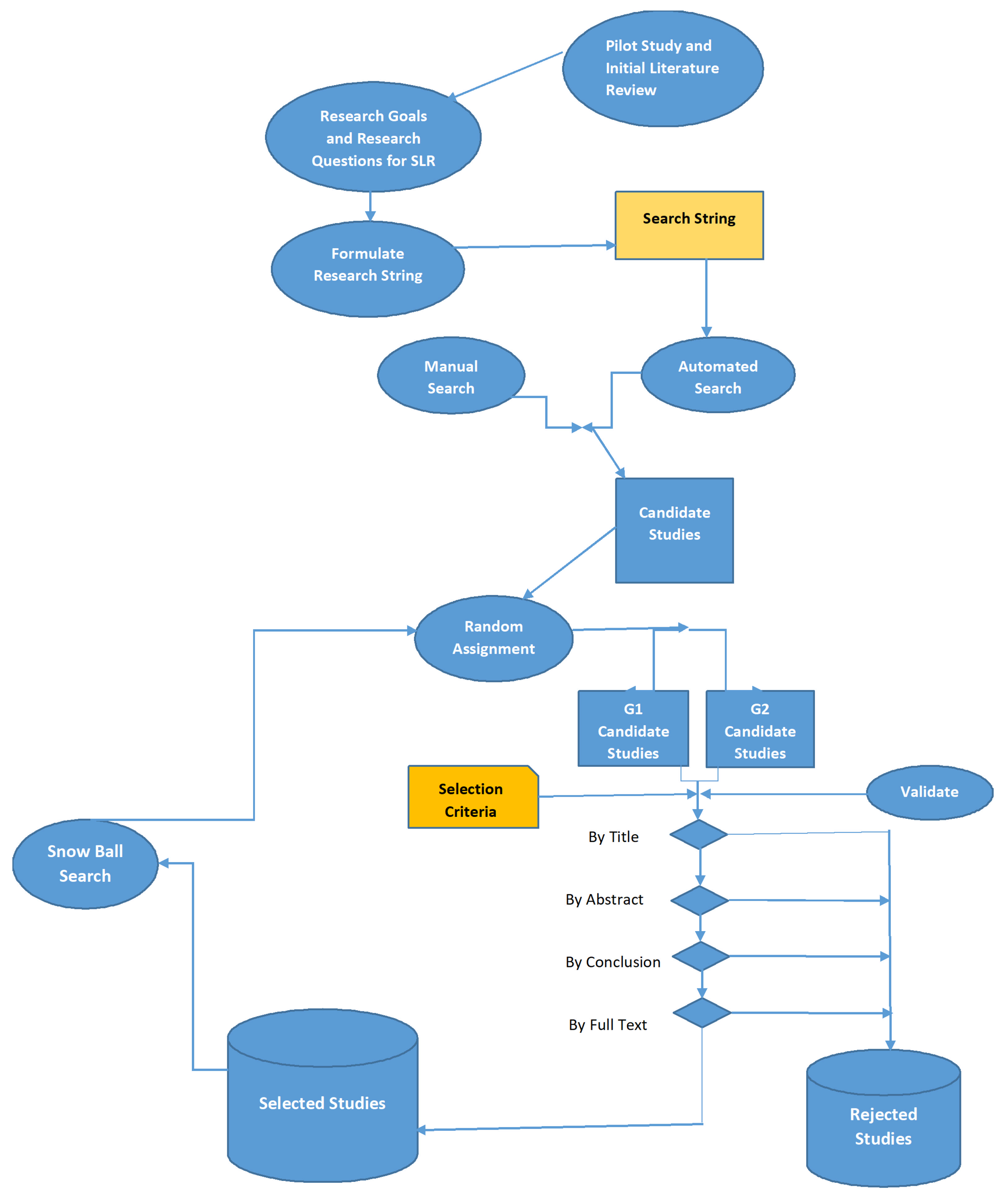
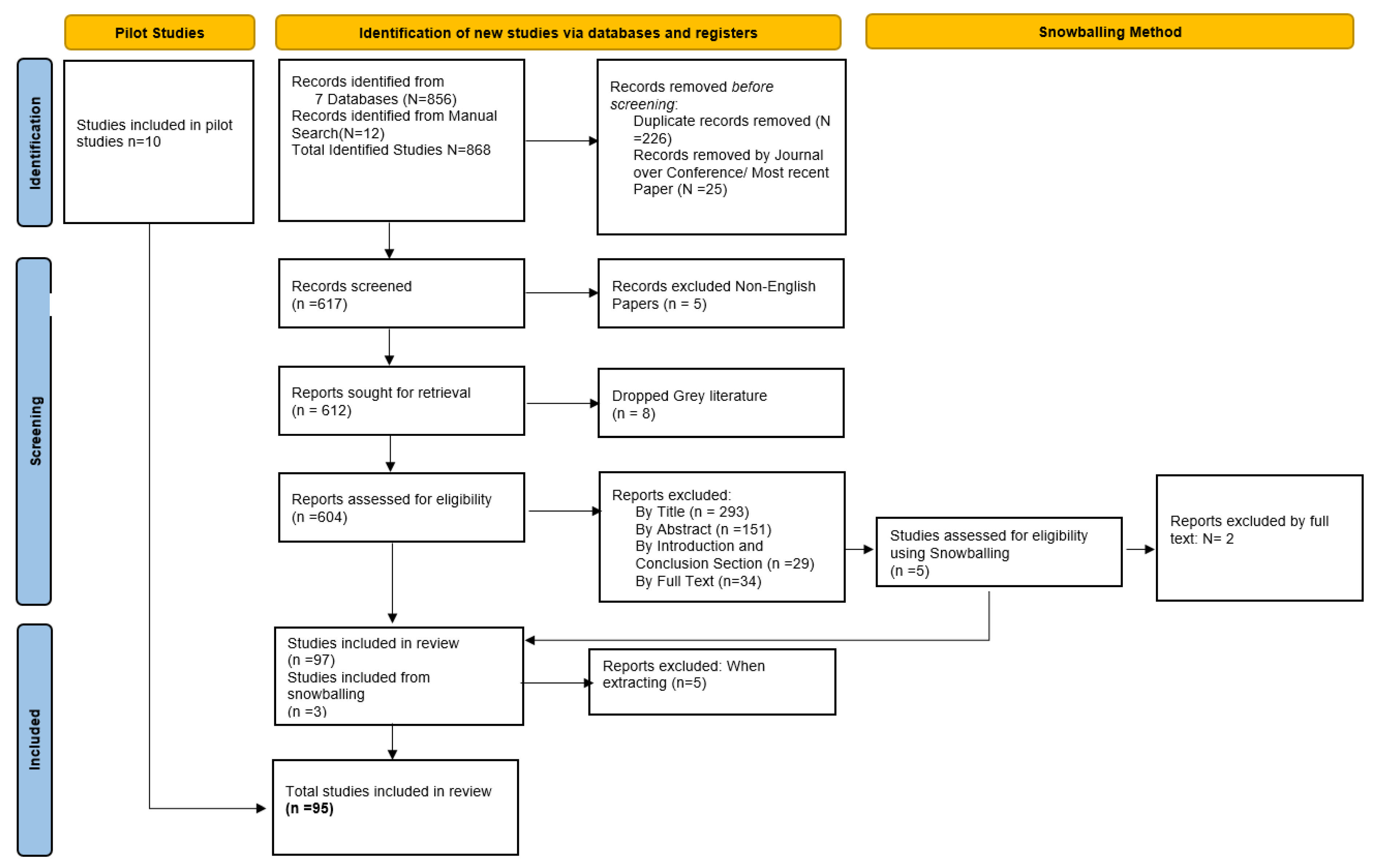
The initial search across 6 databases yielded 856 potentially relevant studies. The manual search also provided 12 additional papers. After removing 226 duplicates, 642 records remained. The prioritization of journal articles over conference proceedings and the selection of the most recent publications discussing the same study resulted in the exclusion of 25 studies. Further screening involved the removal of 5 non-English papers, 8 theses and dissertations, keynote speeches, and poster papers. Title screening led to the exclusion of 293 studies, leaving 311 records for abstract review.
Abstract screening resulted in the exclusion of an additional 151 studies based on their irrelevance to the research question. The subsequent review of introductions and conclusions further reduced the pool by 29 studies. Finally, a full text review of the remaining 131 articles led to the exclusion of 34 studies that did not meet the inclusion criteria. We considered an additional 5 studies as a result of forward and backward snowballing and selected 3 studies that were relevant to our research goals. This resulted in 100 papers being used for data extraction. During the data extraction phase, we dropped 5 studies because they were either low-quality papers or did not treat adaptation adequately. Most of the dropped papers considered adaptation at the business or logical level, as in the case of [
11], where the adaptation was set on fixed rules of learner’s profiles rather than continuous context monitoring and runtime modification. The selection process ultimately resulted in the final selection of 95 studies that were included in the systematic review. The reasons for exclusion at each stage are visually represented in the PRISMA flow diagram given in
Figure A1 in
Appendix A.2. The candidate studies from the screening stage were randomly assigned to two teams of researchers with two members each. Each individual in the group independently applied the selection process following the selection criteria delineated in
Table 1. An agreement level of Fleiss’ Kappa statistic Kappa = 0.92 validated the study selection process [
12].
Figure 2 illustrates the search and selection protocol used in the SLR.
3.4. Data Extraction and Synthesis
A systematic data extraction procedure was employed to retrieve relevant information from the included papers, ensuring alignment with the research questions of this systematic review. The pilot analysis of selected papers provided insight into the relevant data to be extracted from each paper. The data extraction process is guided by the format delineated in
Table A1 in
Appendix A.1. An external reviewer validated the linkage between the research questions and the data extraction format.
Two researchers extracted data from the selected papers, with a third researcher mediating in case of significant discrepancies. Data extraction is an iterative process, with new dimensions emerging with each iteration and discussion. The final extracted data was consolidated for synthesis.
The extracted data was combined and evaluated to provide answers to the research questions introduced in
Section 3.1. A thematic and narrative analysis is used to identify the trends, approaches, and gaps in the subject of developing AMAs. Emerging concepts are organized to determine the modeling dimensions of cooperative AMAs. A quantitative descriptive analysis is also provided as needed to illustrate proportions and trends.
6. Related Works
We considered works concerning the systematic review of AMAs. Numerous SLR studies have been conducted on SASs; however, only a limited number focus specifically on AMA systems.
A recent study examined 90 studies dealing with context-aware recommender systems from 2014 to 2024 that are commonly applied to mobile applications. The authors observed a wide practice of the mischaracterization or incomplete characterization of context in the selected studies. They also provided a taxonomy of context-aware recommendation approaches [
116]. Another comprehensive review analyzed the salient characteristics of context-aware mobile applications by leveraging a smart city infrastructure [
117]. Through the systematic analysis of 27 pertinent research articles, this work delineated the current research landscape concerning context-aware applications in urban smart environments. The review identified key application domains—including urban mobility, healthcare, energy efficiency, public safety, and citizen engagement—as particularly receptive to context-aware functionalities within smart city frameworks. Notably, the authors observed a discernible gap in the current literature regarding the incorporation of contemporary artificial intelligence trends.
A systematic mapping study (SMS) surveyed machine learning methods in developing mobile applications, reviewing 71 articles to document different ML techniques that enabled adaptivity in mobile applications [
118]. Artificial neural networks (ANNs) and rules-based classifiers (RBCs) emerged as the most widely used ML techniques in the selected works. The researchers highlighted the need for more robust AI models optimized for mobile environments and recommended explicit rationale in selecting specific ML techniques for given problems.
An extensive systematic literature review spanning 30 years (1990–2020) analyzed 293 papers across different fields of SASs, ranging from the IoT and web services to mobile systems [
5]. Ten papers within this corpus addressed self-adaptive mobile systems specifically. The study provided a comprehensive review of self-adaptive systems, analyzing their characteristics, categories, and application domains. Regarding AMAs, the authors noted that research on self-adaptive mobile apps places a strong focus on computing performance and energy efficiency, while standardized frameworks for AMA implementation remain notably lacking.
A recent study with a similar thematic focus that explicitly focused on self-adaptation in smart phone applications is presented in [
3]. The authors reviewed 31 studies from 2015 to 2020, providing a systematic analysis of current approaches to developing AMAs. They documented different self-adaptation techniques for mobile applications, namely resource management strategies, context-aware adaptation, machine learning methods, and edge/cloud-based solutions. They also examined the principal impediments encountered in the development of AMAs. The researchers anticipate a novel integration of federated learning for privacy-conscious adaptation based on the given SLR.
Another systematic review that is similar to our SLR covered 44 primary studies from 2006 to 2018, with the goal of enhancing knowledge regarding AMA evolution [
4]. The authors provided a customized classification framework for understanding self-adaptation in mobile applications by incorporating quality requirement attributes for the goal dimension and source attributes for the source dimension. The study advocates for more holistic adaptation frameworks, practical implementations, and deployments complemented by case study applications.
The systematic reviews by Grua et al. [
4] and Ali et al. [
3] reveal complementary methodological approaches and temporal focuses. The 2018 review provides an SLR based on clear protocol adhering to strict standards [
4], focusing on foundational work that incorporates earlier studies from 2006 to 2018. In contrast, the 2021 review concentrates on recent advances, covering machine learning-driven approaches from 2015 to 2020 [
3]. Moreover, the earlier work posits a multidimensional classification framework tailored for AMAs [
4], while the more recent contribution offers a qualitative review focused on techniques and emerging approaches for developing AMAs [
3].
This study distinguishes itself from existing systematic reviews through four primary contributions. First, while prior reviews have focused on context-aware mobile applications and recommendation systems [
116,
117], our work addresses holistic self-adaptation that encompasses adaptation mechanisms, architectural patterns, goal management, and coordination strategies beyond context-awareness alone. Second, unlike domain-specific reviews such as those examining smart city applications [
117], we provide a comprehensive cross-domain analysis spanning education, health, gaming, and generic applications, enabling the identification of both domain-specific and domain-agnostic adaptation patterns. Third, our temporal coverage from 2010 to 2025 bridges the gap between reviews focusing on foundational work from 2006 to 2018 [
4] and those examining recent advances from 2015 to 2020 [
3], providing am integrated historical perspective and evolutionary analysis of AMA development.
Most significantly, a critical distinction between our systematic review and all prior work lies in our explicit focus on the cooperative dimension of adaptive mobile applications. Existing reviews—whether examining context-awareness [
116,
117], machine learning techniques [
118], architectural evolution [
4], or contemporary adaptation strategies [
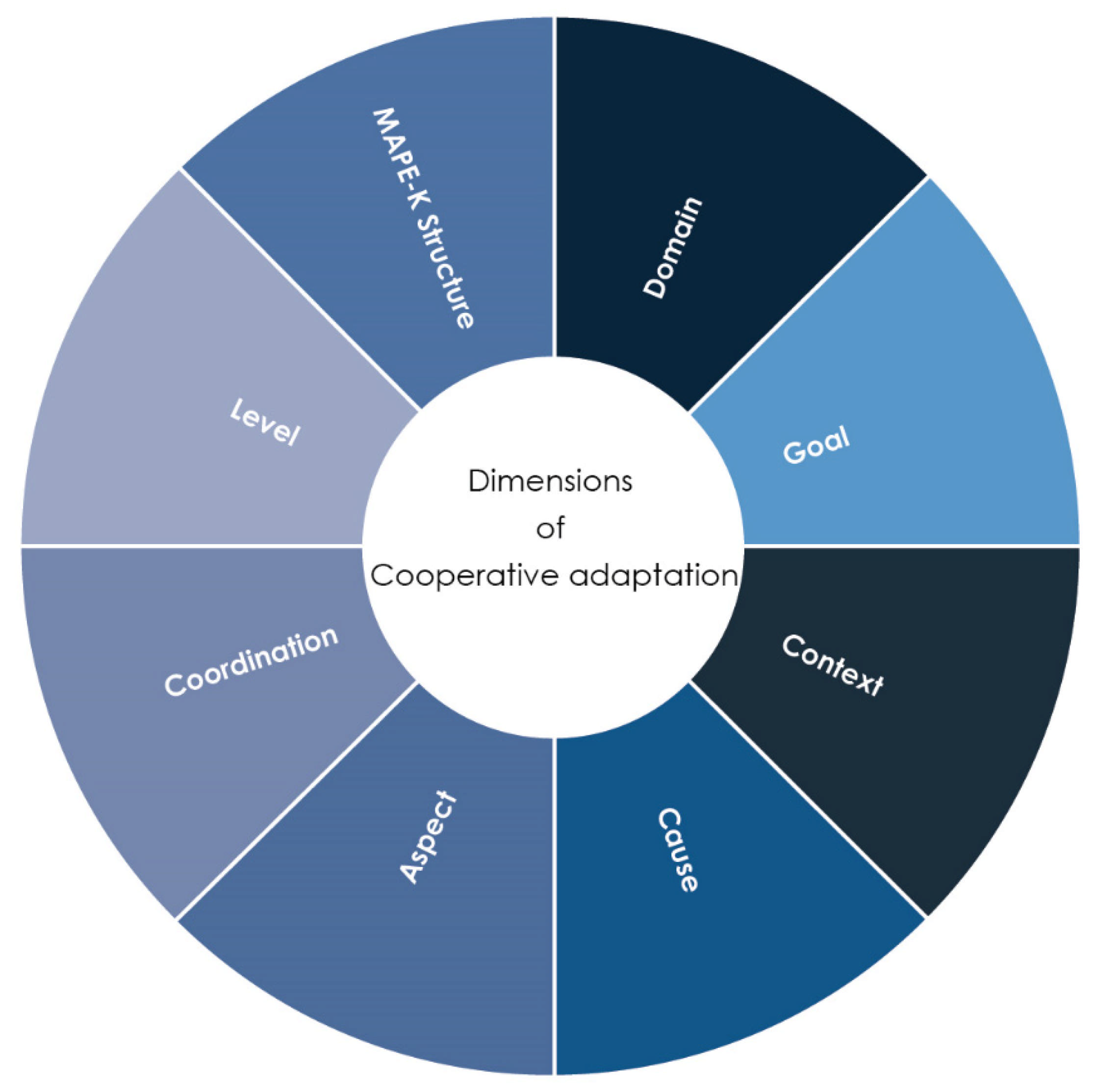
3]—implicitly assume independent, single-application adaptation where each AMA optimizes its behavior in isolation. None of these reviews systematically investigate inter-app interference and conflict handling mechanisms (e.g., how to resolve situations where one app’s aggressive battery conservation threatens another’s emergency functionality), global goal negotiation among co-resident applications (e.g., coordinating energy optimization across multiple AMAs rather than competing individual strategies), context sharing protocols and associated privacy implications, or coordination mechanisms for complementary adaptation. Our review addresses this fundamental gap by identifying eight dimensions of cooperative adaptation (MAPE-K structure, domain, goals, context, triggers, aspects, coordination, and cooperation levels) and proposing a classification framework to guide future research in designing AMAs that cooperate rather than conflict within shared mobile ecosystems. This cooperation-centric perspective is entirely absent from existing systematic reviews and represents the primary theoretical contribution of our work.
7. Conclusions and Recommendations
This systematic review provides both an empirical characterization and theoretical advancement in the field of adaptive mobile applications. Through the analysis of 95 studies spanning 2010–2025, we characterize the current state of adaptive mobile applications across eight research questions addressing approaches, goals, platforms, lifecycle support, and cooperation mechanisms. More significantly, we advance the theory by proposing a dimensional framework for cooperative adaptation comprising eight interdependent dimensions (MAPE-K structure, domain, goals, context, triggers, aspects, coordination, and cooperation levels) and a cooperation level taxonomy that extends existing adaptation models to address the multi-application ecosystem reality of modern mobile devices. This framework addresses a critical gap in the existing literature: while prior systematic reviews examine individual adaptive systems [
3,
4,
116,
117,
118], none systematically investigate how multiple AMAs detect conflicts, negotiate goals, share contexts, or coordinate adaptive behaviors within shared mobile environments. Our cooperation-centric perspective establishes the conceptual foundation for designing AMAs that cooperate rather than conflict, representing a paradigm shift from individual-centric to ecosystem-centric adaptation research.
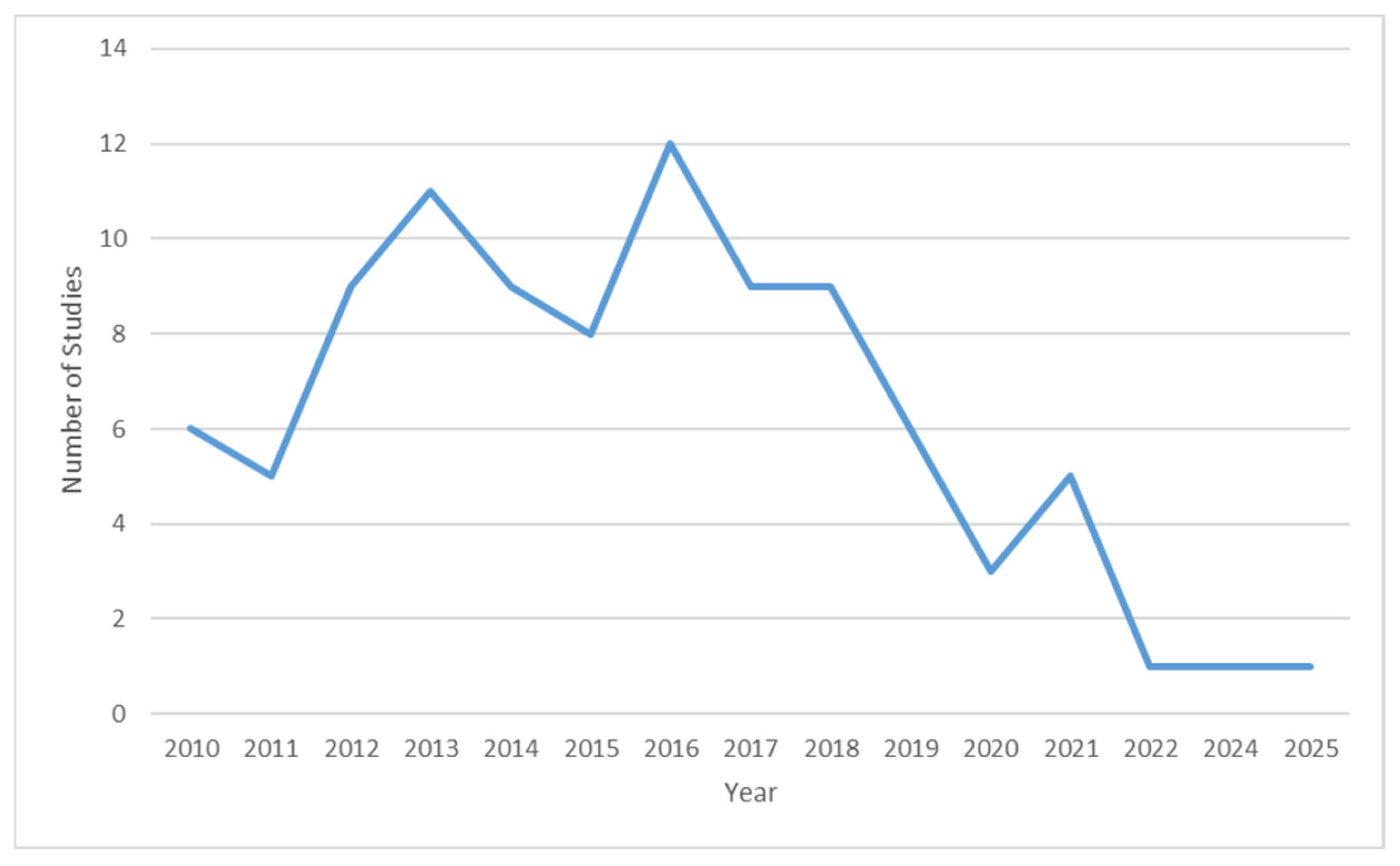
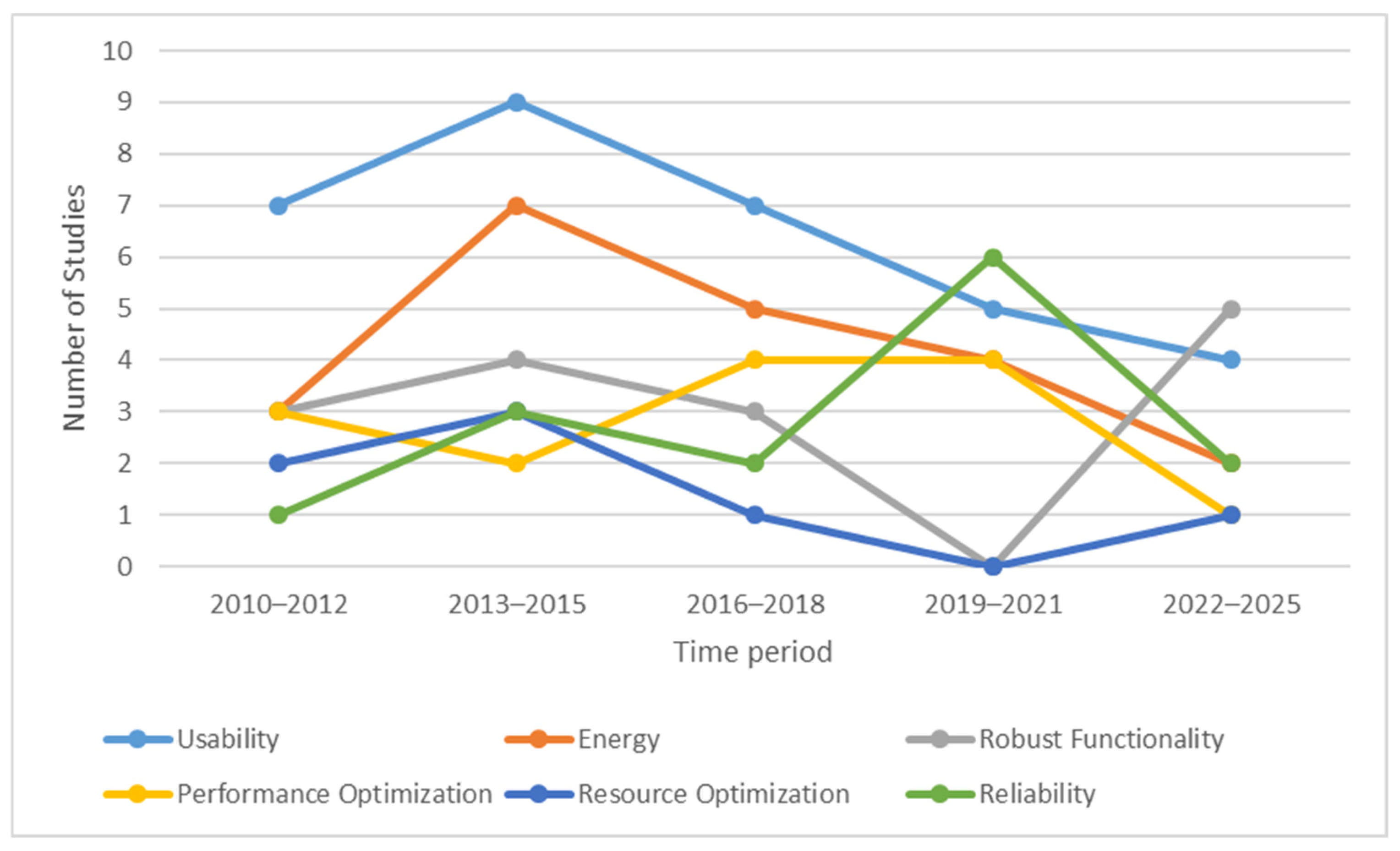
The analysis of publication trends in the selected studies reveals a consistent upward trajectory in scholarly output between 2010 and 2018 and a decline in recent years. More recently, research has increasingly concentrated on adaptations that enhance the robustness and functionality of mobile applications. The field currently lacks a central, authoritative publication venue specifically dedicated to AMAs. This is further underscored by the limited number of relevant contributions within seemingly pertinent venues, such as SEAMS. The majority of evaluations provided for the reviewed studies are based on experiments. Studies that attempt to validate an approach to self-adaptation in mobile environment by providing case studies of developed applications are scarce.
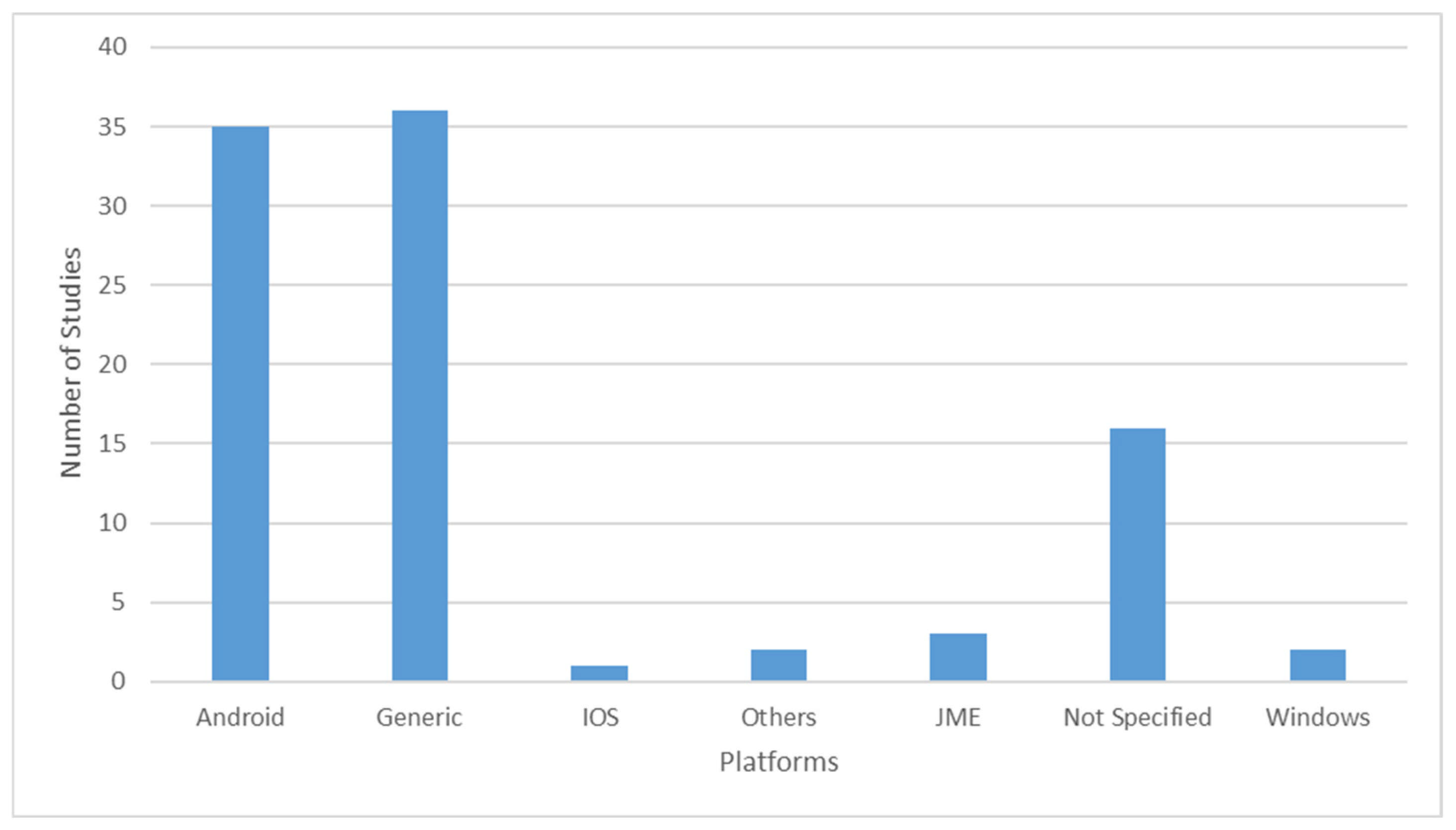
The Android platform represents the most considered platform within the reviewed literature, constituting 36.8% of the analyzed papers. Architectural solutions and framework-based approaches constitute the dominant methodologies proposed by the included studies. Furthermore, the design and runtime phases of software development receive the most extensive support across the selected works. However, a discernible gap exists in the comprehensive treatment of solutions spanning the entirety of the development lifecycle.
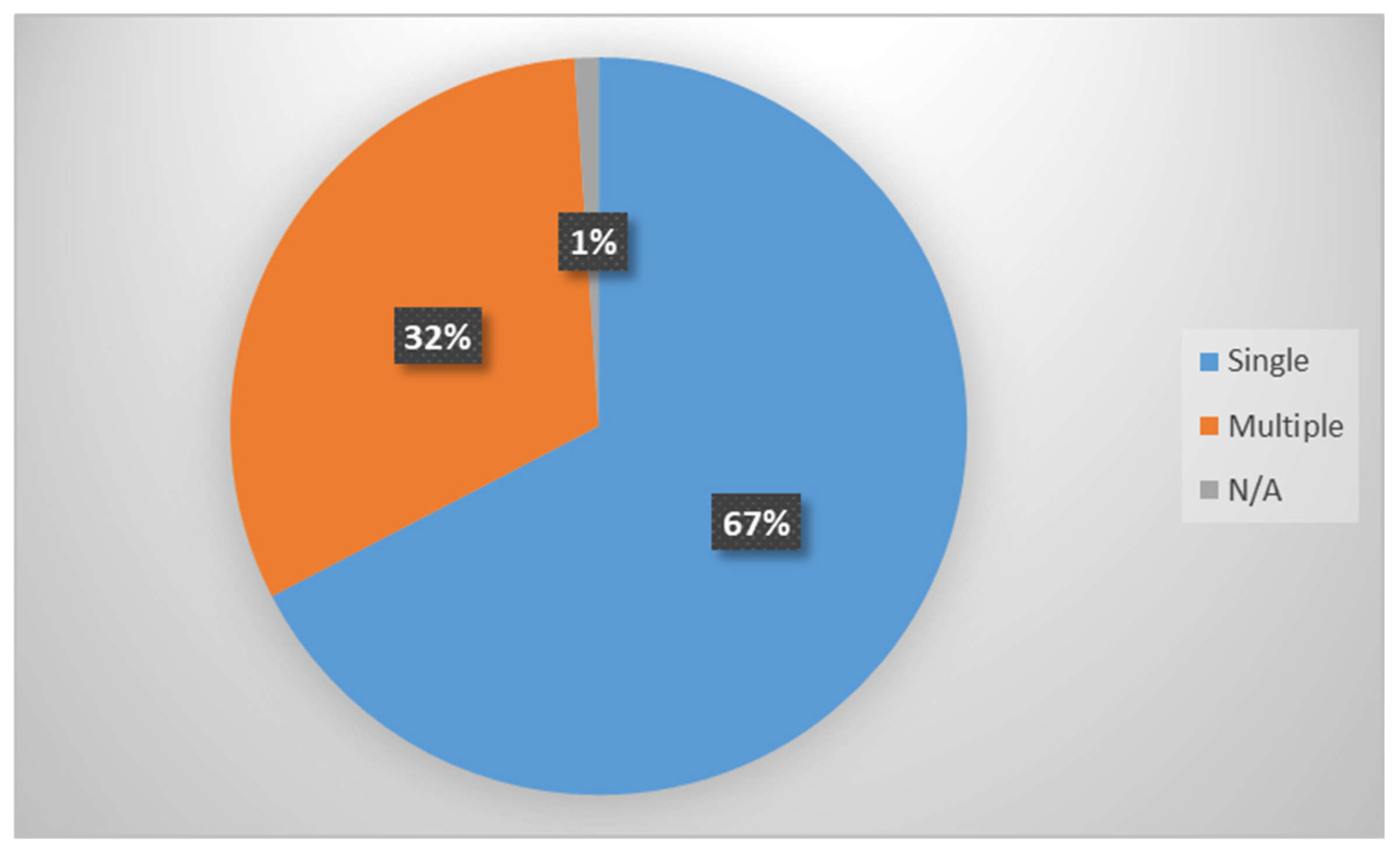
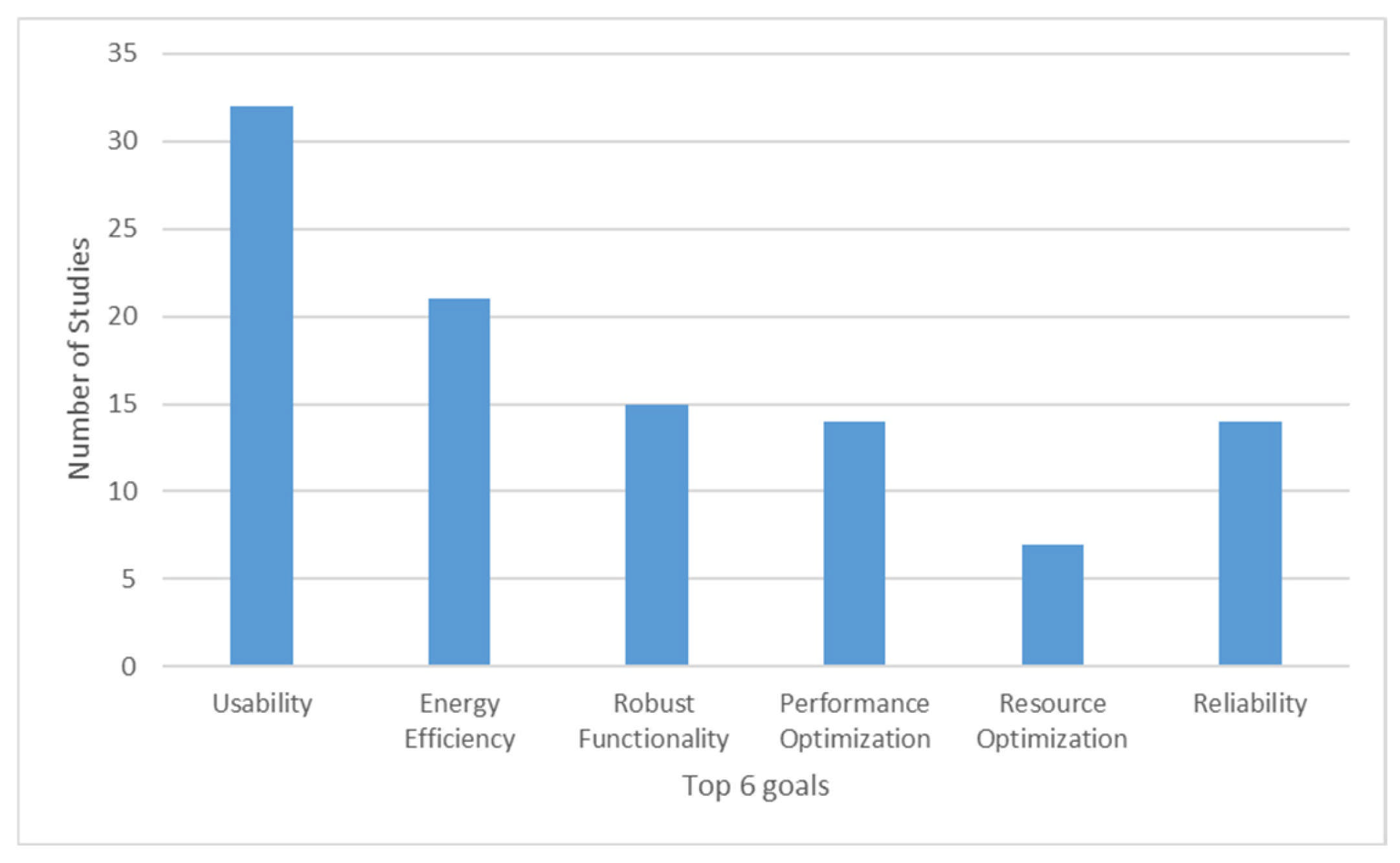
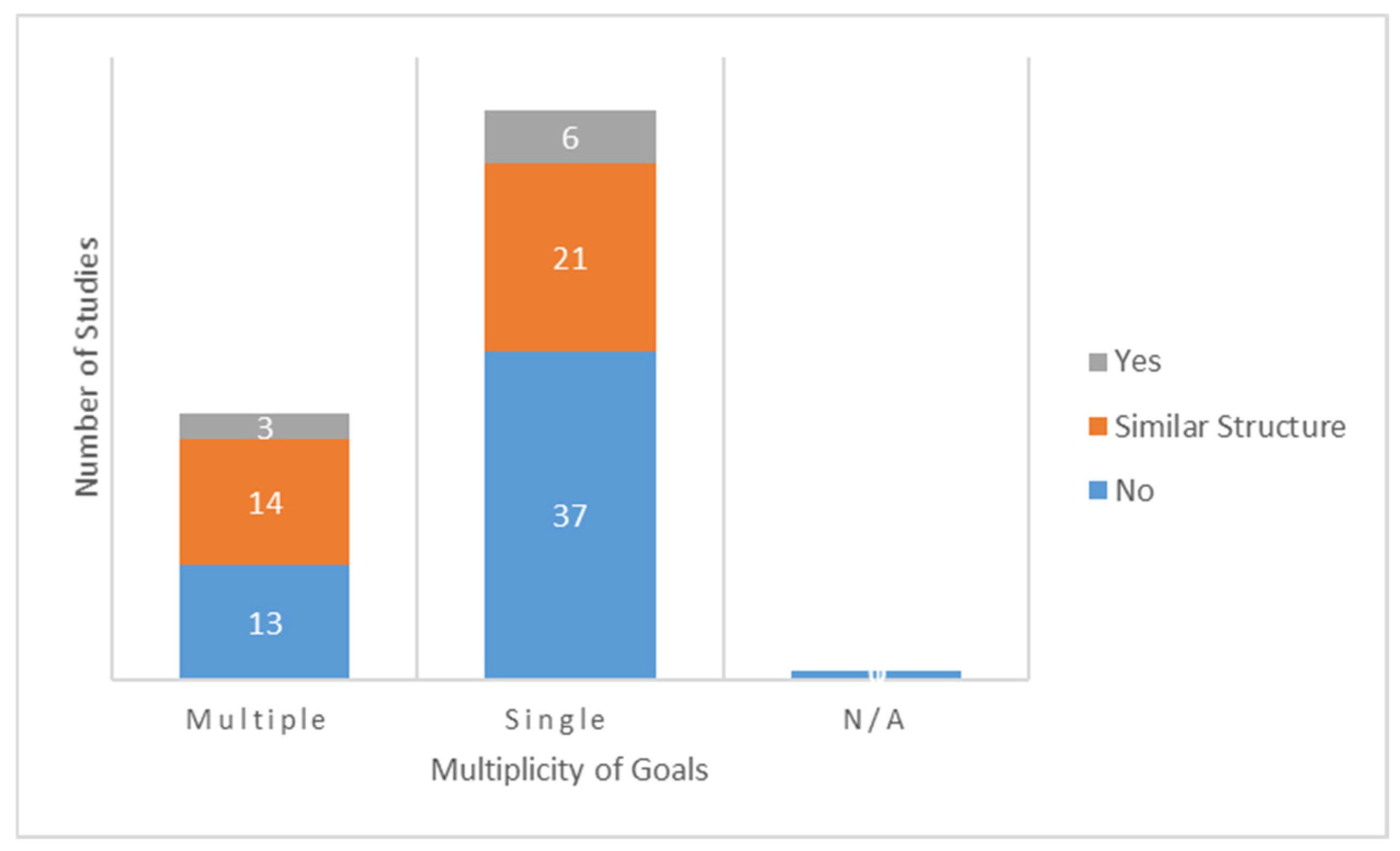
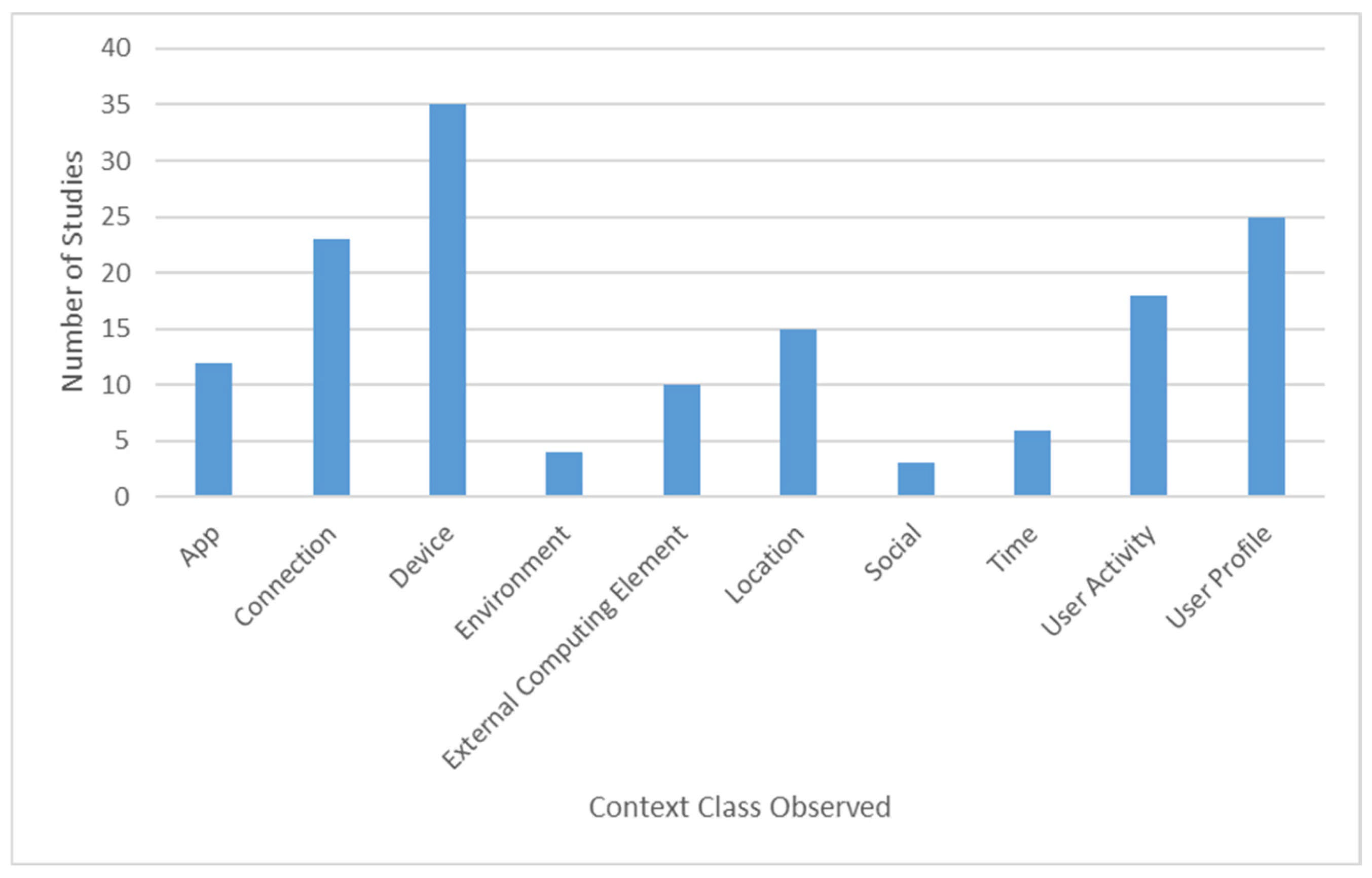
The analysis of the studies indicates a heterogeneity within adaptation objectives, with “Usability,” “Energy Efficiency,” and “Robust Functionality” receiving prominent attention. While the majority of the analyzed studies (over 66%) concentrated on singular adaptation goals, a notable trend towards addressing multi-objective adaptation scenarios is evident. Sixty percent of the analyzed studies were domain-inert; among domain-specific works, education was most frequent, followed by health and gaming. “Connection” and “device” represent the most frequently considered contextual factors. “User activity” and “user profile” emerge as prominent research foci across multiple domains, notably including education and health. Furthermore, a discernible trend towards the investigation of multiple concurrent contextual variables is evident in more recent scholarly contributions. “Structure” is the most preeminent aspect in the works relating to AMAs, underscoring the focus on architectural adaptability. “Content” and “UI” are the subsequent most frequently addressed aspects. Notably, “content” and “UI” exhibit the highest co-occurrence within the analyzed studies.
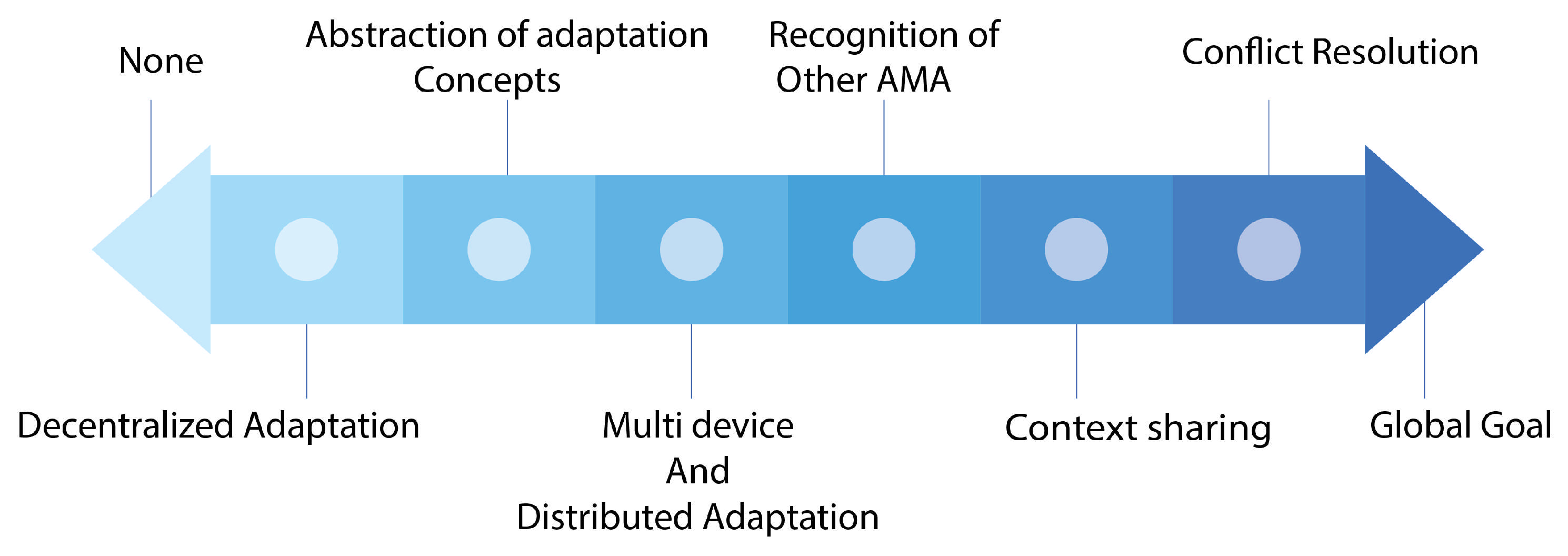
This study identified a spectrum of cooperative adaptation strategies, categorized along a continuum of increasing cooperative complexity. This spectrum ranges from a state of “none,” indicating no cooperative adaptation, to “decentralized adaptation,” followed by the “abstraction of adaptation concepts.” Subsequent levels include “multi-device and distributed adaptation,” “recognition of other adaptive applications,” “context sharing and management,” and “conflict resolution,” culminating in “global goal,” representing the highest level of cooperative integration.
The analysis of concerns within selected studies reveals several key dimensions characterizing cooperative adaptation in AMAs. These include the structure of the MAPE-K loop and its influence on modularity and flexibility. They also encompass the role of the application domain in shaping adaptation goals and enabling cross-domain synergies. Further dimensions highlight the multifaceted nature of goals, including their explicitness, temporality, priority, dynamism, scope, granularity, and interdependencies. Critical aspects of context management are evident, encompassing sharing strategies, consolidation, sensing responsibilities, awareness depth, granularity, cooperative state, and relevance determination. The analysis identifies various causes initiating cooperative adaptation, such as other applications’ actions and predictability. It further covers the mechanisms governing adaptation, including autonomy levels, MAPE-K phase involvement, temporal considerations, learning capabilities, contextual impact, failure handling, and overhead. Coordination strategies employed are also key, emphasizing communication modalities, data protocols, security considerations, information sharing characteristics, decision-making distribution, effectiveness mechanisms, awareness levels, and scalability/dynamicity. Finally, the level of cooperation is addressed, specifically focusing on context information sharing, conflict resolution, and complementary adaptation.
This systematic review recognizes a number of methodological limitations that may affect the interpretation of its findings. Although the search strategy was comprehensive, encompassing seven academic databases, it was restricted to English-language publications and excluded gray literature. This approach may have overlooked relevant industry implementations and research contributions. Furthermore, the heterogeneity in the conceptualization and implementation of adaptive mobile applications across studies, coupled with the frequent implicit rather than explicit documentation of MAPE-K structures, necessitated significant interpretive judgment during data extraction. Future research focusing on a specific cooperative dimension within a curated selection of studies exhibiting such characteristics could yield deeper insights into the phenomenon.
Based on the preceding analysis, the following recommendations are proposed to advance the field of AMAs:
More focused research on the phenomenon of adaptation in the mobile domain, thereby invigorating research in the area.
A specialized authoritative publication venue for works on AMAs that fosters research in the field.
Future research should have a greater emphasis on investigating adaptation strategies addressing multiple goals.
Ensure practical relevance through case studies of AMAs that are tailored to specific domains.
Investigate comprehensively the phenomena of cooperative adaptation in the case of mobile applications by addressing the dimensions and factors put forward in this SLR.
A comprehensive investigation into cooperative adaptation, considering the dimensions and influencing factors identified in this SLR, is needed to understand how multiple adaptive components interact within mobile ecosystems.
Investigate cooperative dimensions of adaptations in other deeply connected fields like the IoT.
In the next phase of our research, we will use the inputs from this SLR to formulate the requirements for developing cooperative AMAs. In tandem with this endeavor we will attempt to refine the dimensions of cooperative adaptations given in this SLR in a more detailed manner. That will hopefully drive an architecture for cooperative AMAs.