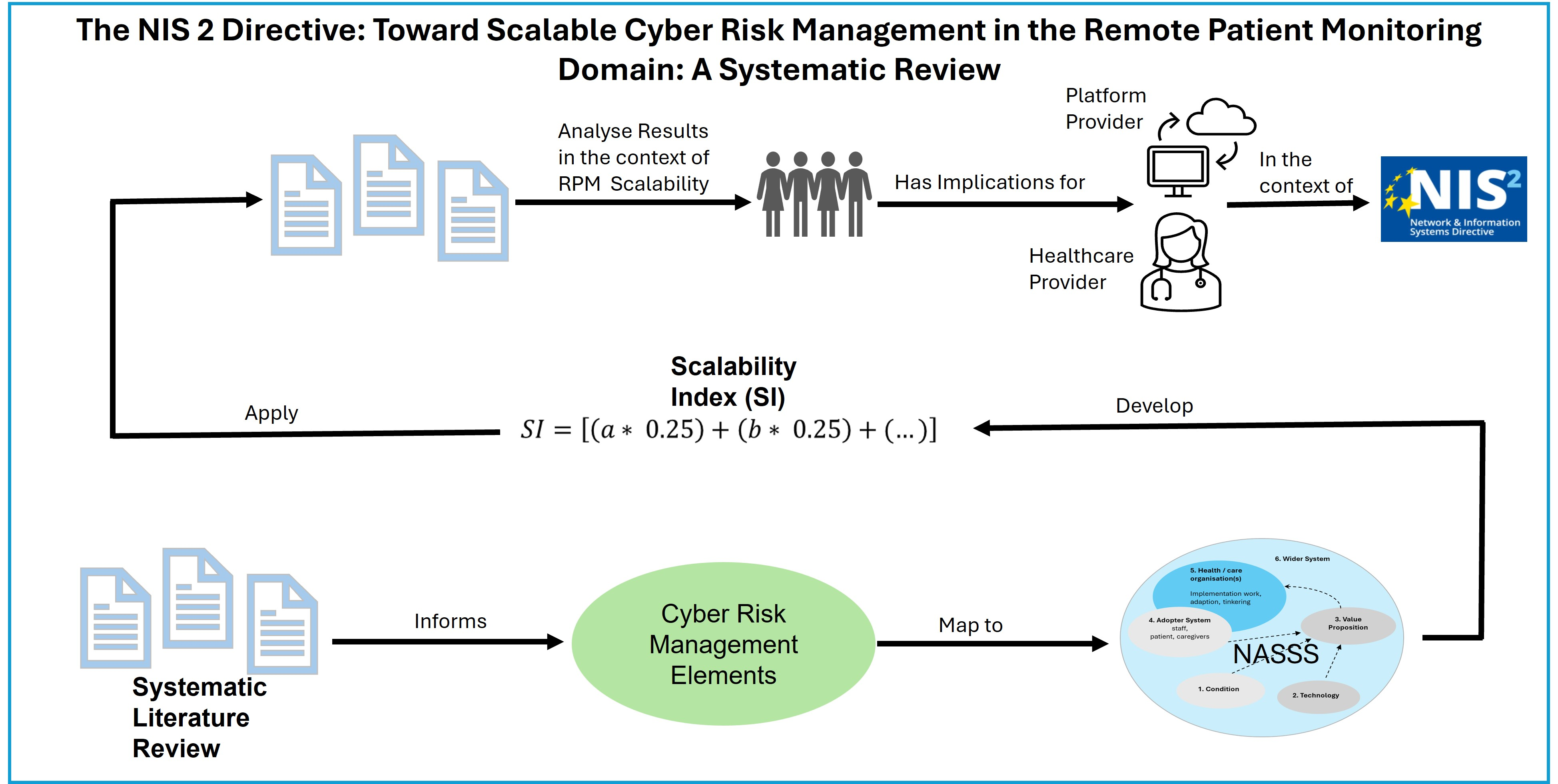


The Network and Information Systems 2 Directive: Toward Scalable Cyber Risk Management in the Remote Patient Monitoring Domain: A Systematic Review


Abstract
1. Introduction
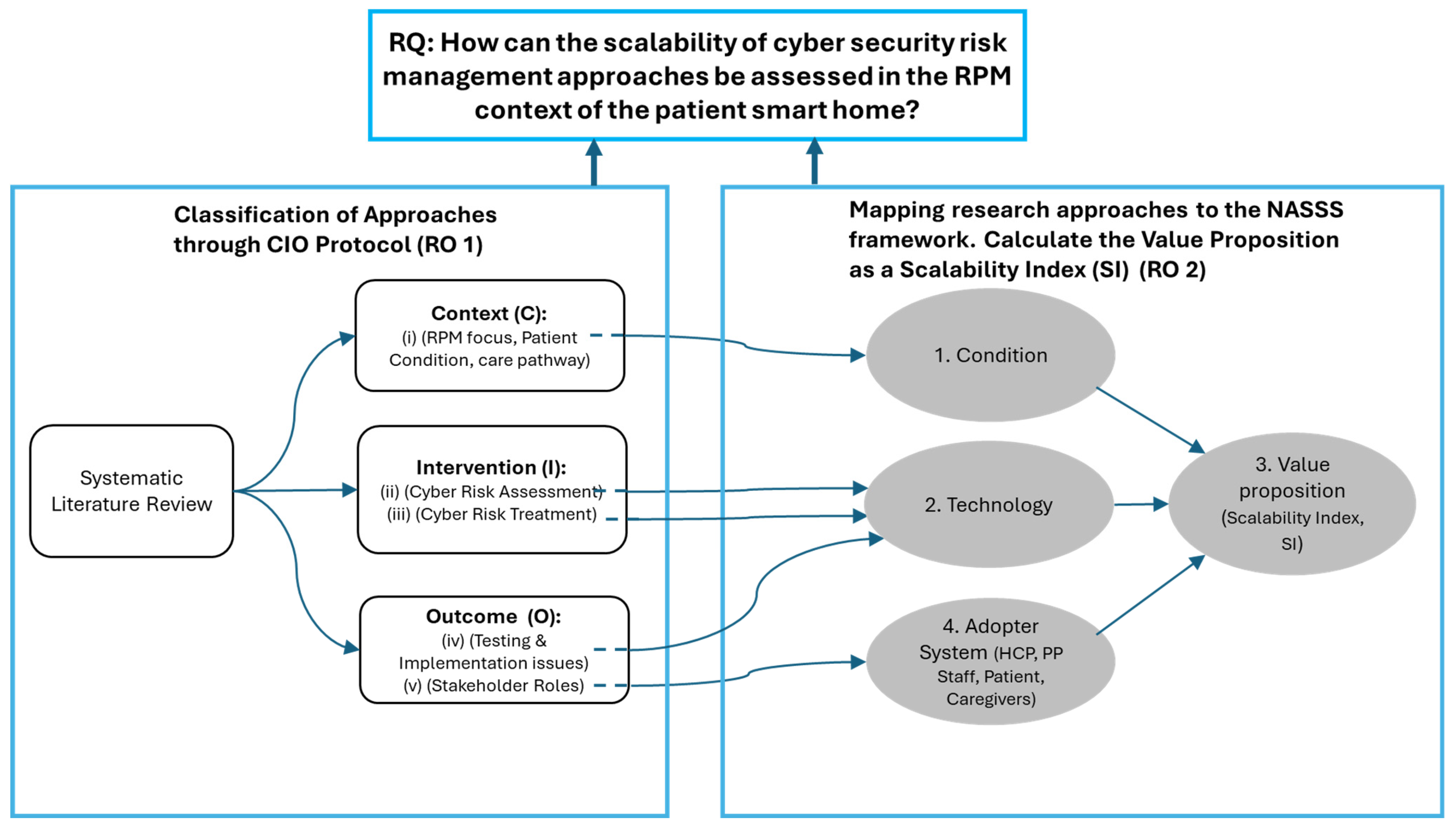
- How can the scalability of cyber security risk management approaches be assessed in the RPM context of the patient smart home?
- (RO1) Identify those elements of cyber risk management approaches to RPM which would support its scalability in the smart home context.
- (RO2) Develop a Scalability Index (SI) by which practitioners and researchers could assess the potential scalability of a cyber risk management approach in the RPM smart home context.
2. Background and Context
2.1. Smart Healthcare and Scalability
2.2. Healthcare Cyber-Attacks
2.3. The Patient Smart Home Context
2.4. Pilot Study
2.5. NIS 2 Cyber Security Regulation
2.6. The NASSS Framework—Application to Cyber Risk Management
2.7. Research Contributions
- Identifies the elements within current cyber risk management approaches which would contribute to the scalability of those approaches.
- Develops a Scalability Index (SI) to enable comparison of cyber risk management approaches.
3. Materials and Methods
3.1. The PRISMA Methodology
3.1.1. Search Strategy
3.1.2. Eligibility Criteria
3.1.3. Quality and Risk of Bias (RoB)
- Appropriateness of the study design to the research question;
- Justification of the data analysis methods used;
- Does the strength of the evidence support the conclusions drawn;
- Could the results be generalised to other situations.
3.1.4. The PRISMA Workflow
3.2. Data Extraction and Coding
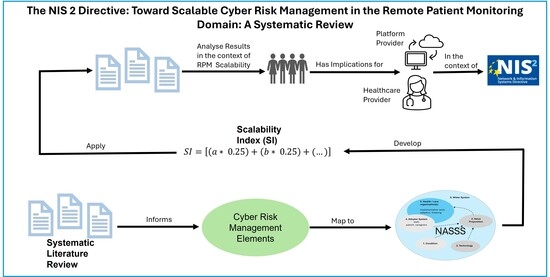
3.3. Research Methodology Overview
4. Results
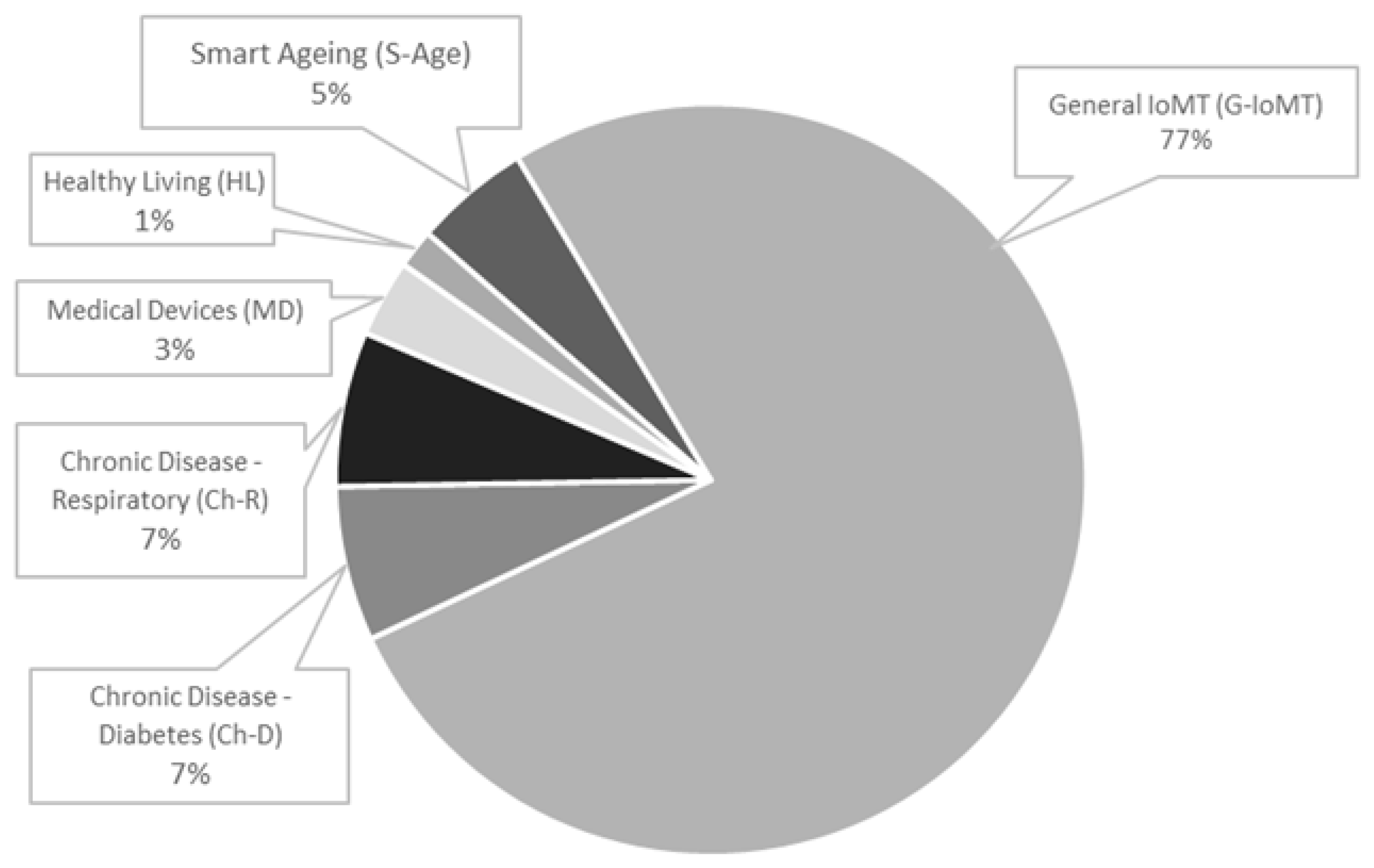
4.1. Context Analysis (C)
4.1.1. General IoMT (G-IoMT)
4.1.2. Chronic Respiratory Context (Ch-R)
4.1.3. Chronic Diabetes Context (Ch-D)
4.1.4. Medical Device Context (MD)
4.1.5. Smart Ageing Context (S-Age)
4.1.6. Healthy Living (HL)
4.1.7. Contexts—Summary
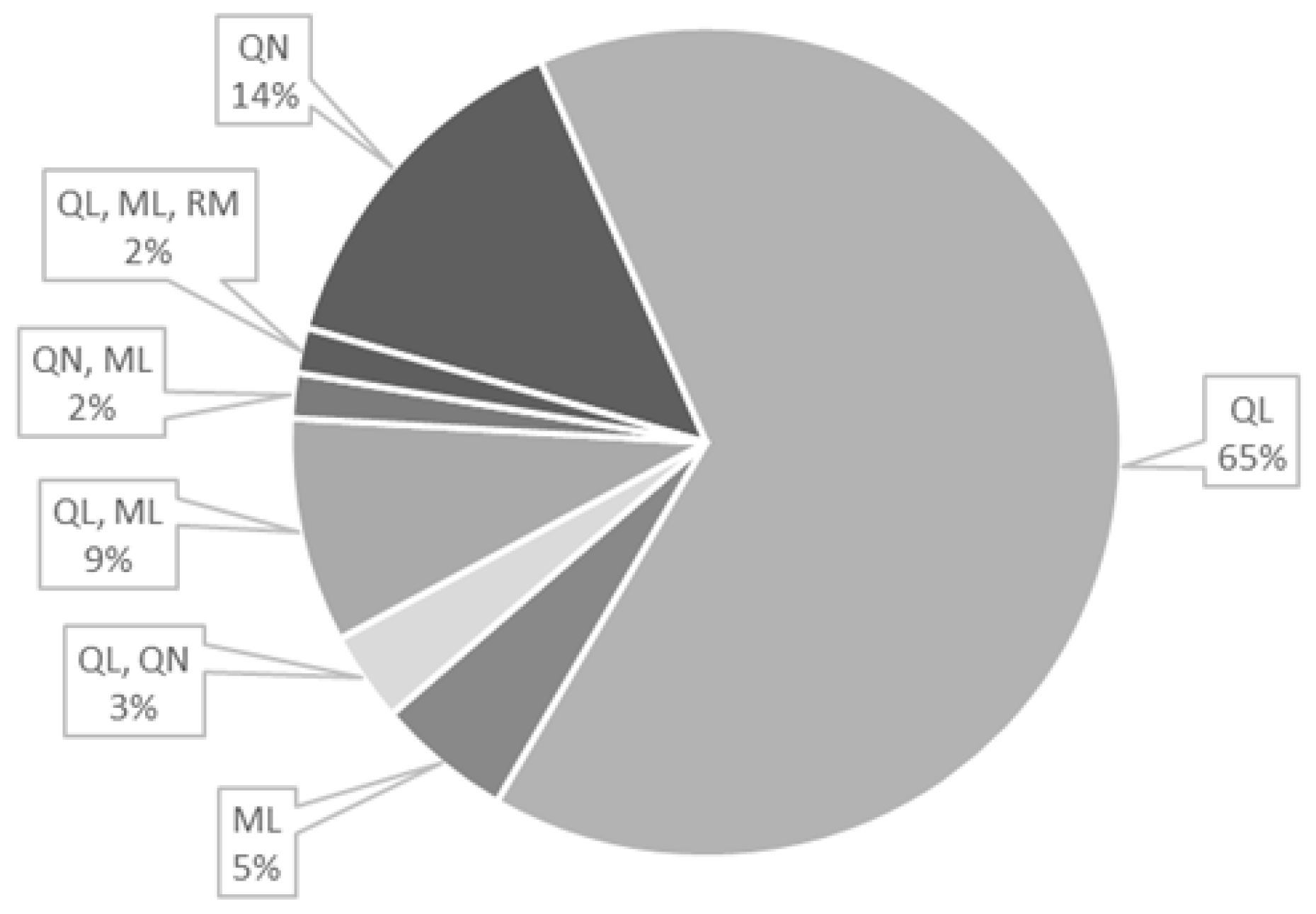
4.2. Risk Management Intervention (I)
4.2.1. Risk Assessment Approaches
4.2.2. Risk Mitigation Approaches
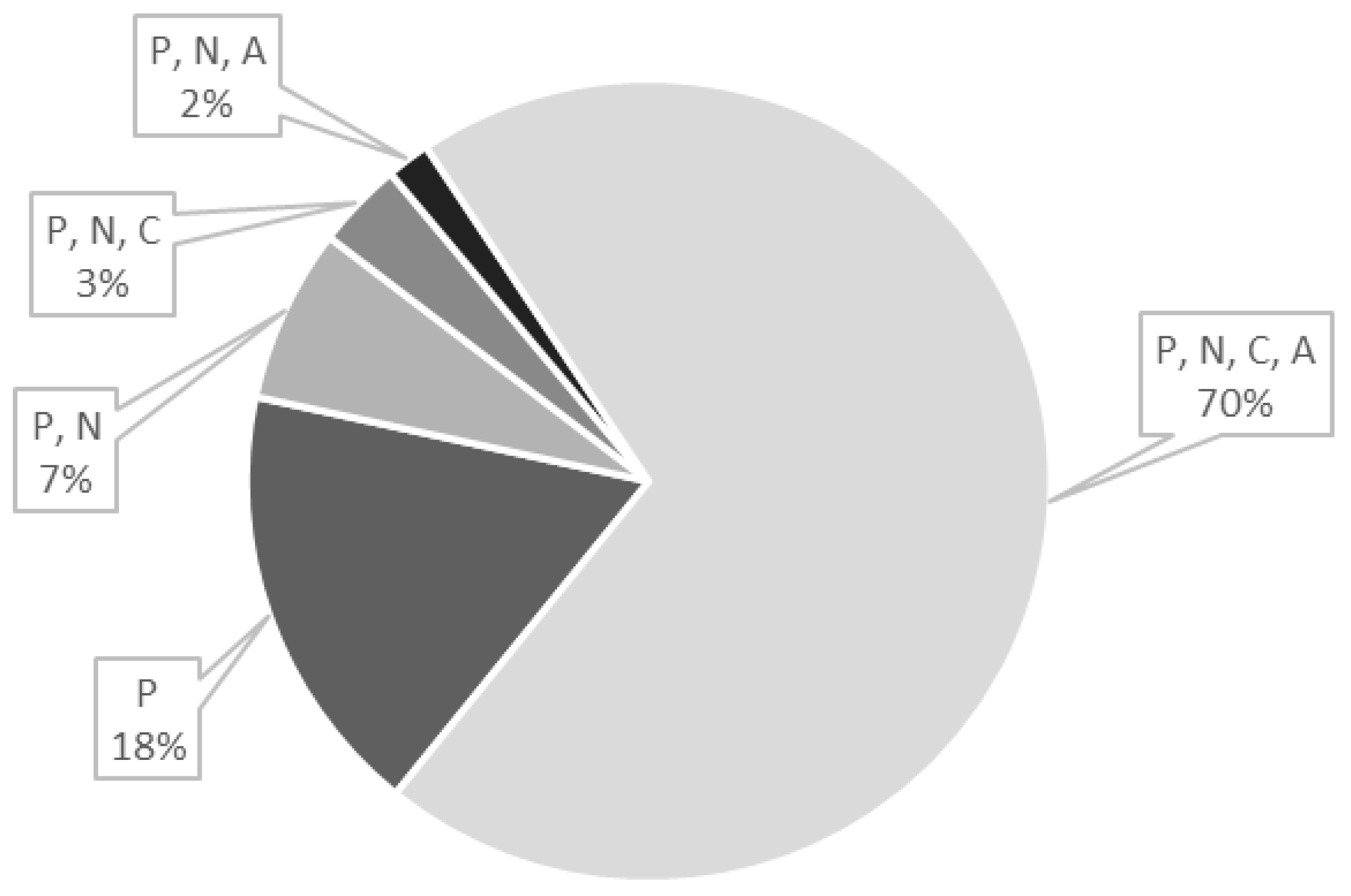
4.2.3. IoMT Architecture Layers Where Cyber Risk Is Studied
4.3. Outcome (O)
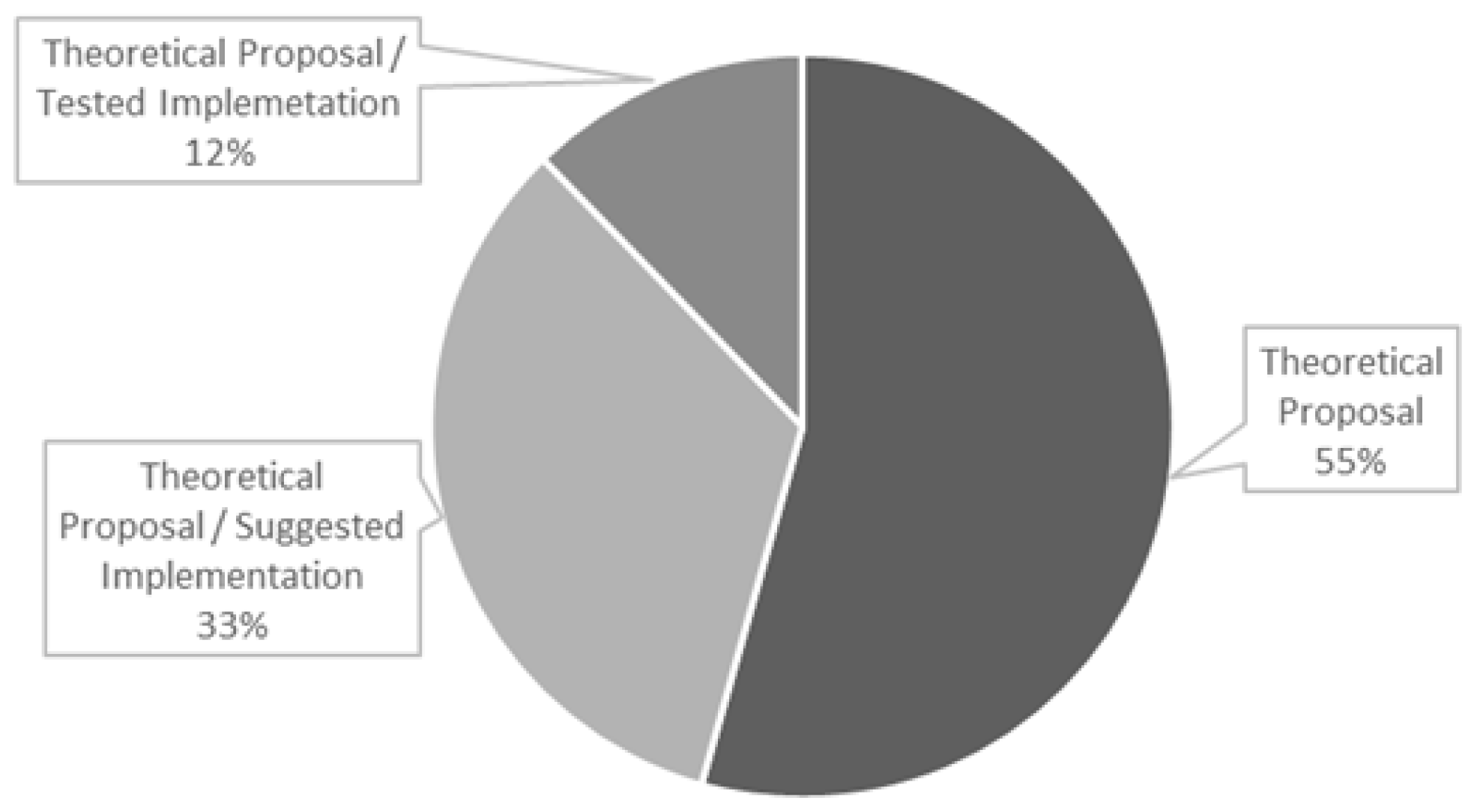
4.3.1. Testing of Research Proposals
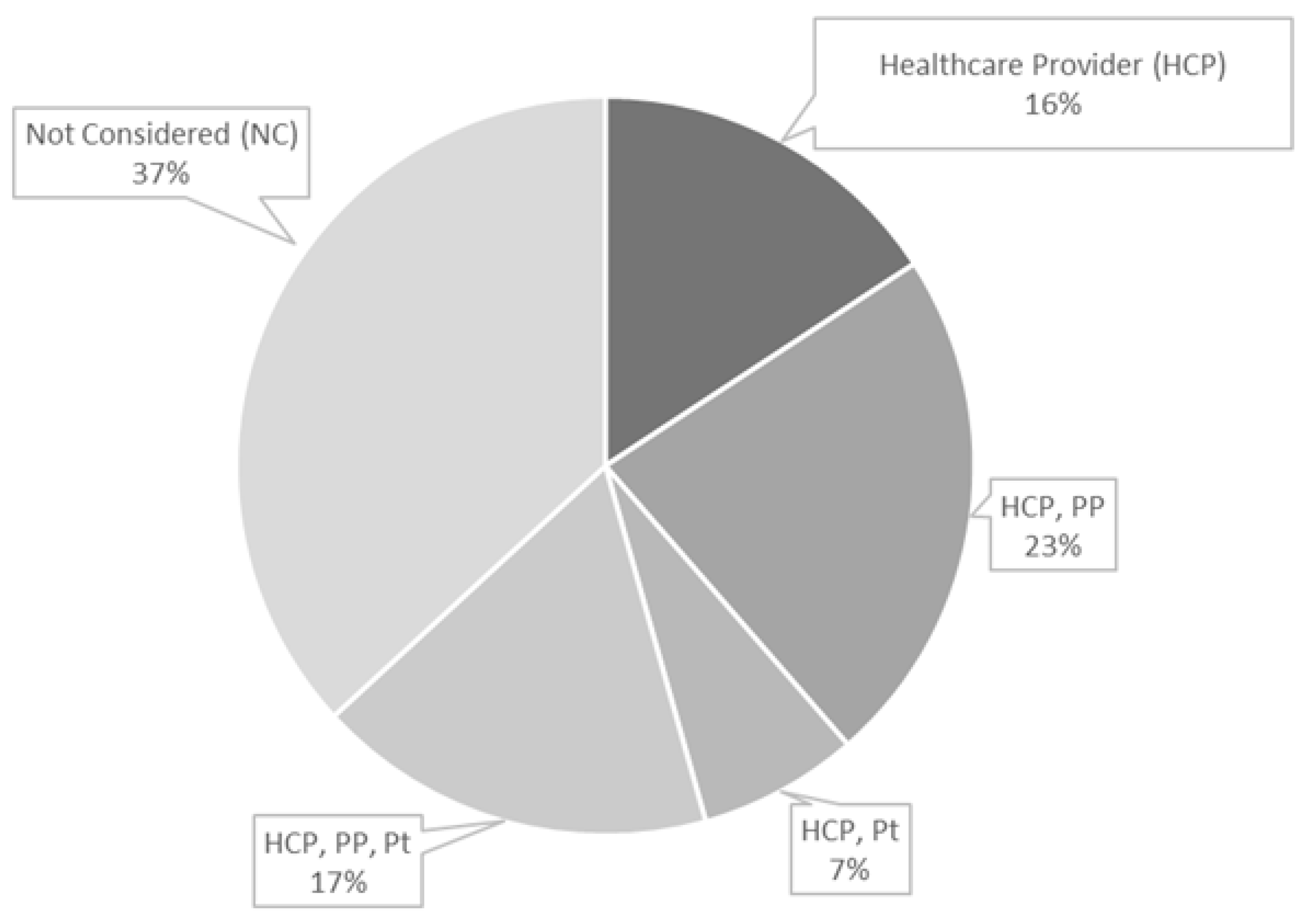
4.3.2. Stakeholder Roles and Responsibilities
4.4. Summary of Cyber Risk Management Approaches
4.5. Quantifying the Value Proposition; Scalability Index (SI)
- (a)
- Assess the scope of the cyber risk scenario to determine whether the proposed solution aligned with a particular healthcare condition, COPD, diabetes, COVID-19, etc., aligning an approach to a condition/care pathway would reduce the diversity of components involved, making the approach to risk assessment more scalable.
- (b)
- Assess whether stakeholder (HCP, PP, and Pt) roles and responsibilities in relation to cyber risk management are considered as part of the solution.
- (c)
- Assess whether solutions are included elements of AI/ML in the risk assessment approach (elements of AI in the solution would reduce/remove the need for human intervention and hence improve scalability).
- (d)
- Assess whether solutions are included elements of AI/ML in risk mitigations. This would also lend itself to automation and improve scalability.
- (e)
- Assess whether solutions were tested in real or simulated RPM scenarios, yielding results around the dependability of the risk management approach.
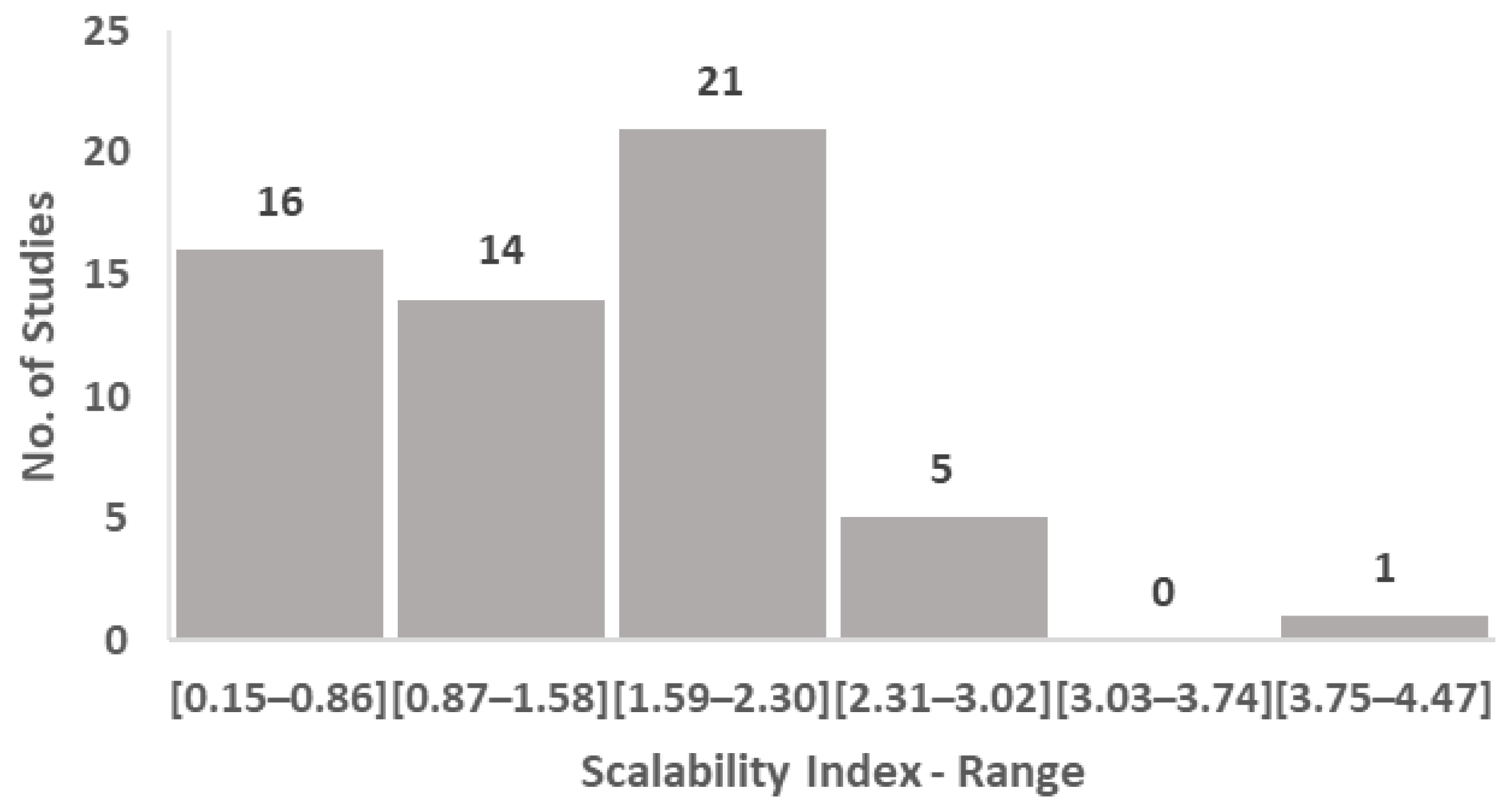
4.5.1. Scalability Index: Results
5. Discussion
5.1. Justification for the Methodology
5.2. Mapping RO1 Elements to NASSS
5.3. Other Models of Scalability
5.4. The Scalability Index (SI)
5.5. Using the Scalability Index (SI)
5.6. Limitations
5.7. Future Research
6. Conclusions
Supplementary Materials
Author Contributions
Funding
Data Availability Statement
Conflicts of Interest
Abbreviations
| AES | Advanced Encryption Standard |
| AI | Artificial Intelligence |
| ANASTACIA | Advanced Networked Agents for Security and Trust Assessment in CPS/IOT Architectures |
| CAPEC | Common Attack Pattern Enumeration and Classification |
| Ch-D | Chronic Diabetes |
| Ch-R | Chronic Respiratory Condition |
| COPD | Chronic Obstructive Pulmonary Disease |
| CRAM | Cyber Risk Assessment and Mitigation |
| CSCL | Computer Supported Collaborative Learning |
| CSF | Cyber Security Framework |
| CUREX | Secure and Private Health Data Exchange |
| CVE | Common Vulnerabilities and Exposures |
| DREAD | Damage, Reproducibility, Exploitability, Affected users, Discoverability |
| ENISA | European Union Agency for Cybersecurity |
| ETSI | European Telecommunications Standards Institute |
| EU | European Union |
| EV | Expected Value |
| GDPR | General Data Protection Regulation |
| G-IoMT | General IoMT |
| GPS | Global Positioning System |
| HCP | Healthcare Provider |
| HL | Healthy Living |
| HSE | Health Services Executive |
| ICT | Information and Communications Technology |
| IEC | International Electro-Technical Commission |
| IoMT | Internet of Medical Things |
| IoT | Internet of Things |
| ISMS | Information Security Management System |
| ISO | International Organisation for Standardisation |
| MDPI | Multidisciplinary Digital Publishing Institute |
| MDR | Medical Device Regulation |
| MFA | Multi Factor Authentication |
| MITRE ATT&CK | MITRE Corporation—Adversarial Tactics, Techniques, and Common Knowledge—Framework |
| ML | Machine Learning |
| NASSS | Non-adoption, Abandonment, Scale-up, Spread and Sustainability |
| NASSS | Non-adoption, Abandonment, Scale-up, Spread and Sustainability framework |
| NFV | Network Function Virtualisation |
| NHS | National Health Service (UK) |
| NIS 2 | EU Network and Information Security directive, 2nd Iteration |
| NIST | National Institute for Standards and Technology |
| NVD | National Vulnerability Database |
| PII | Personally Identifiable Information |
| PP | Platform Provider |
| PRISMA | Preferred Reporting Items for Systematic Reviews and Meta-Analysis |
| Pt | Patient |
| RM | Regulatory Mechanism |
| RoB | Reduction of Bias |
| RPM | Remote Patient Monitoring |
| S-Age | Smart Ageing |
| SDN | Software Defined Networking |
| SI | Scalability Index |
| SLR | Systematic Literature Review |
| SM | Security Mechanism |
| STRIDE | Spoofing, Tampering, Repudiation, Information disclosure, Denial of Service, Elevation of Privilege |
| TMA | Threat Modelling and Analysis |
| WBAN | Wireless Body Area Network |
References
- NHS England. Science in Healthcare: Delivering the NHS Long Term Plan. NHS England and NHS Improvement. 2020. Available online: https://www.england.nhs.uk/wp-content/uploads/2020/03/science-in-healthcare-delivering-the-nhs-long-term-plan.pdf (accessed on 24 January 2023).
- NHS England. Supporting Care with Remote Monitoring. NHS England/Transformation Directorate. 2024. Available online: https://transform.england.nhs.uk/covid-19-response/technology-nhs/supporting-the-innovation-collaboratives-to-expand-their-remote-monitoring-plans/ (accessed on 11 February 2025).
- Arbabi, M.S.; Lal, C.; Veeraragavan, N.; Marijan, D.; Nygard, J.F.; Vitenberg, R. A Survey on Blockchain for Healthcare: Challenges, Benefits, and Future Directions. IEEE Commun. Surv. Tutor. 2023, 25, 386–424. [Google Scholar] [CrossRef]
- Kandasamy, K.; Srinivas, S.; Achuthan, K.; Rangan, P. IoT cyber risk: A holistic analysis of cyber risk assessment frameworks, risk vectors, and risk ranking process. EURASIP J. Inf. Secur. 2020, 2020, 8. [Google Scholar] [CrossRef]
- ENISA. Enisa Threat Landscape 2023; Report; European Union Agency for Cybersecurity: Athens, Greece, 2023. [Google Scholar] [CrossRef]
- Thomasian, N.M.; Adashi, E.Y. Cybersecurity in the Internet of Medical Things. Health Policy Technol. 2021, 10, 100549. [Google Scholar] [CrossRef]
- Popoola, O.; Rodrigues, M.; Marchang, J.; Shenfield, A.; Ikpehai, A.; Popoola, J. A critical literature review of security and privacy in smart home healthcare schemes adopting IoT & blockchain: Problems, challenges and solutions. Blockchain Res. Appl. 2024, 5, 100178. [Google Scholar] [CrossRef]
- Statista. Smart Home Outlook Europe. 2025. Available online: https://www.statista.com/outlook/cmo/smart-home/Europe (accessed on 23 September 2025).
- European Union. Directive (EU) 2022/2555. 2022. Available online: https://eur-lex.europa.eu/eli/dir/2022/2555 (accessed on 12 March 2025).
- Gov.uk. Cyber Security and Resilience Bill. 2024. Available online: https://www.gov.uk/government/collections/cyber-security-and-resilience-bill (accessed on 13 March 2025).
- Clark, A.; Zonouz, S. Cyber-Physical Resilience: Definition and Assessment Metric. IEEE Trans. Smart Grid 2019, 10, 1671–1684. [Google Scholar] [CrossRef]
- AlHidaifi, S.M.; Asghar, M.R.; Ansari, I.S. Towards a Cyber Resilience Quantification Framework (CRQF) for IT infrastructure. Comput. Netw. 2024, 247, 110446. [Google Scholar] [CrossRef]
- Segovia-Ferreira, M.; Rubio-Hernan, J.; Cavalli, A.; Garcia-Alfaro, J. A Survey on Cyber-Resilience Approaches for Cyber-Physical Systems. ACM Comput. Surv. 2024, 56, 202. [Google Scholar] [CrossRef]
- Scala, N.M.; Reilly, A.C.; Goethals, P.L.; Cukier, M. Risk and the Five Hard Problems of Cybersecurity. Risk Anal. 2019, 30, 2119–2126. [Google Scholar] [CrossRef]
- Shanmugam, B.; Azam, S. Risk Assessment of Heterogeneous IoMT Devices: A Review. Technologies 2023, 11, 31. [Google Scholar] [CrossRef]
- Nuguri, S.S.; Karthik, K.; Pusapati, V.; Kambhampati, A.; Bhamidipati, S.C.; Calyam, A.; Alarcon, M.L.; Calyam, P. Zeus: IoT-based Healthcare Data Management Security Framework for Remote Patient Monitoring. In Proceedings of the 2024 Workshop on Cybersecurity in Healthcare 2024 (HealthSec ’24), Salt Lake City, UT, USA, 14–18 October 2024; pp. 93–100. [Google Scholar] [CrossRef]
- National Institute for Standards and Technology. Framework for Improving Critical Infrastructure Cybersecurity, (v1.1), (NIST CSF). 2018. Available online: https://nvlpubs.nist.gov/nistpubs/CSWP/NIST.CSWP.04162018.pdf (accessed on 8 December 2025).
- ISO/IEC 27001:2022; Information Security, Cybersecurity and Privacy Protection—Information Security Management Systems—Requirements. ISO (the International Organization for Standardization) and IEC (the International Electrotechnical Commission): Geneva, Switzerland; CEN-CENELEC Management Centre: Brussels, Belgium, 2023. Available online: https://www.iso.org/obp/ui#iso:std:iso-iec:27001:ed-3:v1:en (accessed on 8 December 2025).
- Venkatesh, V.; Morris, M.G.; Davis, G.B.; Davis, F.D. User acceptance of information technology: Toward a unified view. MIS Q. 2003, 27, 425–478. [Google Scholar] [CrossRef]
- Greenhalgh, T.; Wherton, J.; Papoutsi, C.; Lynch, J.; Hughes, G.; A’Court, C.; Hinder, S.; Fahy, N.; Procter, R.; Shaw, S. Beyond Adoption: A New Framework for Theorizing and Evaluating Nonadoption, Abandonment, and Challenges to the Scale-Up, Spread, and Sustainability of Health and Care Technologies. J. Med. Internet Res. 2017, 19, e367. [Google Scholar] [CrossRef]
- Khatiwada, P.; Fauzi, M.A.; Yang, B.; Yeng, P.; Lin, J.C.; Sun, L. Threats and Risk on Using Digital Technologies for Remote Health Care Process. In Proceedings of the 8th International Conference on Sustainable Information Engineering and Technology 2023 (SIET ‘23), Badung, Indonesia, 24–25 October 2023; pp. 506–522. [Google Scholar] [CrossRef]
- Affia, A.A.; Finch, H.; Jung, W.; Samori, I.A.; Potter, L.; Palmer, X.L. IoT Health Devices: Exploring Security Risks in the Connected Landscape. IoT 2023, 4, 150–182. [Google Scholar] [CrossRef]
- Messinis, S.; Temenos, N.; Protonotarios, N.E.; Rallis, I.; Kalogeras, D.; Doulamis, N. Enhancing Internet of Medical Things security with artificial intelligence: A comprehensive review. Comput. Biol. Med. 2024, 170, 108036. [Google Scholar] [CrossRef] [PubMed]
- Ksibi, S.; Jaidi, F.; Bouhoula, A. Cyber-risk management within IOMT: A context-aware agent-based framework for a reliable e-health system. In Proceedings of the 23rd International Conference on Information Integration and Web Intelligence 2021 (iiWAS2021), Linz, Austria, 29 November–1 December 2021; pp. 547–552. [Google Scholar] [CrossRef]
- Alegría, B.; Wong, L.; Bedriñiana, D. Model for Implementing a IoMT Architecture with ISO/IEC 27001 Security Controls for Remote Patient Monitoring. In Proceedings of the 32nd Conference of Open Innovations Association (FRUCT), Tampere, Finland, 9–11 November 2022; pp. 38–48. [Google Scholar] [CrossRef]
- Talal, M.; Zaidan, A.A.; Zaidan, B.B.; Albahri, A.S.; Alamoodi, A.H. Smart Home-based IoT for Realtime and Secure Remote Health Monitoring of Triage and Priority System using Body Sensors: Multi-driven Systematic Review. J. Med. Syst. 2019, 43, 42. [Google Scholar] [CrossRef] [PubMed]
- Sovacool, B.K.; Furszyfer Del Rio, D.D. Smart home technologies in Europe: A critical review of concepts, benefits, risks and policies. Renew. Sustain. Energy Rev. 2020, 120, 1–20. [Google Scholar] [CrossRef]
- Mbunge, E.; Muchemwa, B.; Jiyane, S.; Batani, J. Sensors and healthcare 5.0: Transformative shift in virtual care through emerging digital health technologies. Glob. Health J. 2021, 5, 169–177. [Google Scholar] [CrossRef]
- Tarikere, S.; Donner, I.; Woods, D. Diagnosing a healthcare cybersecurity crisis: The impact of IoMT advancements and 5G. Bus. Horiz. 2021, 64, 799–807. [Google Scholar] [CrossRef]
- Rasool, R.U.; Ahmad, H.F.; Rafique, W.; Qayyum, A.; Qadir, J. Security and privacy of internet of medical things: A contemporary review in the age of surveillance, botnets, and adversarial ML. J. Netw. Comput. Appl. 2022, 201, 103332. [Google Scholar] [CrossRef]
- Alsubaei, F.; Abuhussein, A.; Shiva, S. Ontology-Based Security Recommendation for the Internet of Medical Things. IEEE Access 2019, 7, 48948–48960. [Google Scholar] [CrossRef]
- Hatzivasilis, G.; Soultatos, O.; Ioannidis, S.; Demetriou, G. Review of Security and Privacy for the Internet of Medical Things (IoMT). In Proceedings of the 15th International Conference on Distributed Computing in Sensor Systems (DCOSS), IEEE Computer Society, Santorini Island, Greece, 29–31 May 2019; pp. 457–464. [Google Scholar] [CrossRef]
- Bernard, R.; Bowsher, G.; Sullivan, R. Cyber security and the unexplored threat to global health: A call for global norms. Glob. Secur. Health Sci. Policy 2020, 5, 134–141. [Google Scholar] [CrossRef]
- US Dept. of Homeland Security. Cybersecurity & Infrastructure Security Agency. 12 May 2017. Available online: https://www.cisa.gov/uscert/ncas/alerts/TA17-132A (accessed on 9 May 2022).
- PricewaterhouseCoopers. Conti cyber attack on the HSE: Independent Post Incident Review—Executive Summary and Learnings for other organisations, HSE. 2021. Available online: https://cyberireland.ie/wp-content/uploads/2022/02/conti-cyber-attack-on-the-hse-full-report.pdf (accessed on 8 December 2025).
- Ashok, K.; Gopikrishnan, S. Statistical Analysis of Remote Health Monitoring Based IoT Security Models & Deployments from a Pragmatic Perspective. IEEE Access 2023, 11, 2621–2651. [Google Scholar] [CrossRef]
- Claverie, T.; Esteves, J.; Kasmi, C. Smart TVs: Security of DVB-T. In Proceedings of the Symposium on Information and Communications Security, Rennes, France, 13–15 June 2018; pp. 13–15. Available online: https://www.researchgate.net/profile/Chaouki-Kasmi/publication/325846812_Smart_TVs_Security_of_DVB-T/links/5b28c90845851509895d02af/Smart-TVs-Security-of-DVB-T.pdf (accessed on 31 March 2023).
- Wan, F.; Xu, K.; Xue, G.; Wang, F. IoTArgos: A Multi-Layer Security Monitoring System for Internet-of-Things in Smart Homes. In Proceedings of the IEEE INFOCOM 2020—IEEE Conference on Computer Communications, Toronto, ON, Canada, 4 August 2020; pp. 847–883. [Google Scholar] [CrossRef]
- Turner, S.; Pattnaik, N.; Nurse, J.R.C.; Li, S. “You Just Assume It Is In There, I Guess”: Understanding UK Families’ Application and Knowledge of Smart Home Cyber Security. In Proceedings of the ACM on Human-Computer Interaction, CSCW2, New York, NY, USA, 12 November 2022; Volume 6, p. 269. [Google Scholar] [CrossRef]
- Ellison, J. National Cyber Security Centre—Blog Page. 24 July 2024. Available online: https://www.ncsc.gov.uk/blog-post/legislation-help-counter-cyber-threat-cni (accessed on 12 September 2024).
- Hellstrand Tang, U.; Smith, F.; Karilampi, U.L.; Gremyr, A. Exploring the Role of Complexity in Health Care Technology Bottom-Up Innovations: Multiple-Case Study Using the Nonadoption, Abandonment, Scale-Up, Spread, and Sustainability Complexity Assessment Tool. JMIR Hum. Factors 2024, 11, e50889. [Google Scholar] [CrossRef] [PubMed]
- Hailu, R.; Sousa, J.; Tang, M.; Mehrotra, A.; Uscher-Pines, L. Challenges and facilitators in implementing remote patient monitoring programs in primary care. J. Gen. Intern. Med. 2024, 39, 2471–2477. [Google Scholar] [CrossRef] [PubMed]
- Hamann, P.; Knitza, J.; Kuhn, S.; Knevel, R. Recommendation to implementation of remote patient monitoring in rheumatology: Lessons learned and barriers to take. RMD Open 2023, 9, e003363. [Google Scholar] [CrossRef]
- James, H.M.; Papoutsi, C.; Wherton, J.; Greenhalgh, T.; Shaw, S.E. Spread, scale-up, and sustainability of video consulting in health care: Systematic review and synthesis guided by the NASSS framework. J. Med. Internet Res. 2021, 23, e23775. [Google Scholar] [CrossRef]
- Page, M.J.; McKenzie, J.E.; Bossuyt, P.M.; Boutron, I.; Hoffmann, T.C.; Mulrow, C.D.; Shamseer, L.; Tetzlaff, J.M.; Akl, E.A.; Chou, R.; et al. PRISMA 2020 explanation and elaboration: Updated guidance and exemplars for reporting systematic reviews. BMJ 2021, 372, 160. [Google Scholar] [CrossRef]
- Chung, S.; Moon, S.; Kim, J.; Kim, J.; Lim, S.; Chi, S. Comparing natural language processing (NLP) applications in construction and computer science using preferred reporting items for systematic reviews (PRISMA). Autom. Constr. 2023, 154, 105020. [Google Scholar] [CrossRef]
- Sokouti, M.; Sokouti, B. A PRISMA-compliant systematic review and analysis on color image encryption using DNA properties. Comput. Sci. Rev. 2018, 29, 14–20. [Google Scholar] [CrossRef]
- Zafar, R.O.; Rybarczyk, Y.; Borg, J. A Systematic Review of Digital Twin Technology for Home Care. ACM Trans. Comput. Healthc. 2024, 5, 20. [Google Scholar] [CrossRef]
- Kitchenham, B.; Brereton, P. A systematic review of systematic review process research in software engineering. Inf. Softw. Technol. 2013, 55, 2049–2075. [Google Scholar] [CrossRef]
- Sale, J.E.; Brazil, K. A Strategy to Identify Critical Appraisal Criteria for Primary Mixed-Method Studies. Qual. Quant. 2004, 38, 351–365. [Google Scholar] [CrossRef]
- McHugh, M.L. Interrater reliability: The kappa statistic. Biochem. Medica 2012, 22, 276–282. [Google Scholar] [CrossRef]
- Denyer, D.; Tranfield, D.; van Aken, J.E. Developing Design Propositions through Research Synthesis. Organ. Stud. 2008, 29, 393–413. [Google Scholar] [CrossRef]
- vom Brocke, J.; Hevner, A.; Maedche, A. Introduction to Design Science Research. In Design Science Research, Cases; Springer: Cham, Switzerland, 2020; pp. 1–13. [Google Scholar] [CrossRef]
- Malamas, V.; Chantzis, F.; Dasaklis, T.K.; Stergiopoulos, G.; Kotzanikolaou, P.; Douligeris, C. Risk Assessment Methodologies for the Internet of Medical Things: A Survey and Comparative Appraisal. IEEE Access 2021, 9, 40049–40075. [Google Scholar] [CrossRef]
- Moonsamy, A.; Ahmed, M. Developing a Comprehensive Risk Management Framework for E-Health Care Delivery. In Health Information Science, Proceedings of the International Conference on Health Information Science, Melbourne, Australia, 23–24 October 2023; Li, Y., Huang, Z., Sharma, M., Chen, L., Zhou, R., Eds.; Springer: Singapore, 2023. [Google Scholar] [CrossRef]
- Burke, G.; Saxena, N. Cyber risks prediction and analysis in medical emergency equipment for situational awareness. Sensors 2021, 21, 5325. [Google Scholar] [CrossRef] [PubMed]
- Loupos, K.; Niavis, H.; Michalopoulos, F.; Misiakoulis, G.; Skarmeta, A.; Garcia, J.; Palomares, A.; Song, H.; Dautov, R.; Vavilis, S.; et al. An inclusive lifecycle approach for IoT devices trust and identity management. In Proceedings of the 18th International Conference on Availability, Reliability and Security (ARES ’23), Benevento, Italy, 29 August–1 September 2023; pp. 1–6. [Google Scholar] [CrossRef]
- Witti, M.; Konstantas, D. A Secure and Privacy-preserving Internet of Things Framework for Smart City. In Proceedings of the 6th International Conference on Information Technology: IoT and Smart City (ICIT ‘18), Hong Kong, China, 29–31 December 2018; pp. 145–150. [Google Scholar] [CrossRef]
- European Parliament. Medical Device Regulation. 2017. Available online: https://eur-lex.europa.eu/legal-content/EN/TXT/PDF/?uri=CELEX:32017R0745 (accessed on 30 March 2025).
- Kim, D.W.; Choi, J.Y.; Han, K.H. Medical Device Safety Management Using Cybersecurity Risk Analysis. IEEE Access 2020, 8, 115370–115382. [Google Scholar] [CrossRef]
- Rao, A.; Carreon, N.; Lysecky, R.; Rozenblit, J. Probabilistic threat detection for risk management in cyber-physical medical systems. IEEE Softw. 2018, 35, 38–43. [Google Scholar] [CrossRef]
- Ianculescu, M.; Coardos, D.; Bica, O.; Vevera, V. Security and privacy risks for remote healthcare monitoring systems. In Proceedings of the 2020 International Conference on e-Health and Bioengineering (EHB), Iasi, Romania, 29–30 October 2020; pp. 1–4. [Google Scholar] [CrossRef]
- Tseng, T.W.; Wu, C.T.; Lai, F. Threat Analysis for Wearable Health Devices and Environment Monitoring Internet of Things Integration System. IEEE Access 2019, 7, 144983–144994. [Google Scholar] [CrossRef]
- Sadhu, P.K.; Yanambaka, V.P.; Abdelgawad, A.; Yelamarthi, K. Prospect of internet of medical things: A review on security requirements and solutions. Sensors 2022, 22, 5517. [Google Scholar] [CrossRef]
- von Solms, B.; du Toit, J. Guidelines for Cybersecurity Governance in the Internet of Medical Things. In Intelligent Computing, Proceedings of the Science and Information Conference (SAI 2023), London, UK, 13–14 July 2023; Springer: Cham, Switzerland, 2023; Volume 711, pp. 1139–1148. [Google Scholar] [CrossRef]
- Paganelli, A.I.; Velmovitsky, P.E.; Miranda, P.; Branco, A.; Alencar, P.; Cowan, D.; Endler, M.; Morita, P.P. A conceptual IoT-based early-warning architecture for remote monitoring of COVID-19 patients in wards and at home. Internet Things 2022, 18, 100399. [Google Scholar] [CrossRef]
- Lee, I. Cybersecurity: Risk management framework and investment cost analysis. Bus. Horiz. 2021, 64, 659–671. [Google Scholar] [CrossRef]
- NIST SP 1800–30; Securing Telehealth Remote Patient Monitoring Ecosystem. National Institute for Standards and Technology (NIST): McLean, VA, USA, 2020. Available online: https://www.nccoe.nist.gov/healthcare/securing-telehealth-remote-patient-monitoring-ecosystem (accessed on 10 January 2023).
- Lopatina, K.; Dokuchaev, V.A.; Maklachkova, V.V. Data Risks Identification in Healthcare Sensor Networks. In Proceedings of the 2021 International Conference on Engineering Management of Communication and Technology 2021(EMCTECH), Vienna, Austria, 20–22 October 2021; pp. 1–7. [Google Scholar] [CrossRef]
- Khan, M.F.; Abaoud, M. Blockchain-Integrated Security for Real-Time Patient Monitoring in the Internet of Medical Things Using Federated Learning. IEEE Access 2023, 11, 117826–117850. [Google Scholar] [CrossRef]
- Kavianpour, S.; Shanmugam, B.; Zolait, A.; Razaq, A. A Framework to Detect Cyber-attacks against Networked Medical Devices (Internet of Medical Things): An Attack-Surface-Reduction by Design Approach. Int. J. Comput. Digit. Syst. 2022, 11, 1289–1298. [Google Scholar] [CrossRef] [PubMed][Green Version]
- Khatun, M.A.; Memon, S.F.; Eising, C.; Dhirani, L.L. Machine Learning for Healthcare-IoT Security: A Review and Risk Mitigation. IEEE Access 2023, 11, 145869–145896. [Google Scholar] [CrossRef]
- Karunarathne, S.M.; Saxena, N.; Khan, M.K. Security and privacy in IoT smart healthcare. IEEE Internet Comput. 2021, 25, 37–48. [Google Scholar] [CrossRef]
- Sharma, A.; Kaur, S.; Singh, M. A comprehensive review on blockchain and Internet of Things in healthcare. Trans. Emerg. Telecommun. Technol. 2021, 32, e4333. [Google Scholar] [CrossRef]
- Nasiri, S.; Sadoughi, F.; Tadayon, M.H.; Dehnad, A. Security requirements of internet of things-based healthcare system: A survey study. Acta Inform. Medica 2019, 27, 253–258. [Google Scholar] [CrossRef]
- Ali, K.A.; Alyounis, S. CyberSecurity in Healthcare Industry. In Proceedings of the 2021 International Conference on Information Technology 2021 (ICIT), Amman, Jordan, 14–15 July 2021; pp. 695–701. [Google Scholar] [CrossRef]
- Strielkina, A.; Illiashenko, O.; Zhydenko, M.; Uzun, D. Cybersecurity of healthcare IoT-based systems: Regulation and case-oriented assessment. In Proceedings of the IEEE 9th International Conference on Dependable Systems, Services and Technologies 2018 (DESSERT), Kyiv, Ukraine, 24–27 May 2018; pp. 67–73. [Google Scholar] [CrossRef]
- Spanakis, E.G.; Bonomi, B.; Sfakianakis, S.; Santucci, G.; Lenti, S.; Sorella, M.; Tanasache, F.D.; Palleschi, A.; Ciccotelli, C.; Magalini, S.; et al. Cyber-attacks and threats for healthcare—A multi-layer thread analysis. In Proceedings of the 42nd Annual International Conference of the IEEE Engineering in Medicine Biology Society (EMBC), Montreal, QC, Canada, 20–24 July 2020. [Google Scholar] [CrossRef]
- George-Bogdan, M.; Meşniţă, G. Healthcare under siege: The need to improve cybersecurity in the near future. In Proceedings of the E-Health and Bioengineering Conference 2022 (EHB), Iasi, Romania, 17–18 November 2022; pp. 1–4. [Google Scholar] [CrossRef]
- Pirbhulal, S.; Abie, H.; Shukla, A. Towards a Novel Framework for Reinforcing Cybersecurity using Digital Twins in IoT-based Healthcare Applications. In Proceedings of the IEEE 95th Vehicular Technology Conference 2022 (VTC2022-Spring), Helsinki, Finland, 19–22 June 2022; pp. 1–5. [Google Scholar] [CrossRef]
- Sulis, E.; Cordero, A.; Donetti, S.; Ferrero, P.; Violato, A. A Framework for Project Risk Assessment in Telehealth. In Proceedings of the IEEE/ACM Conference on Connected Health: Applications, Systems and Engineering Technologies 2021 (CHASE), Washington, DC, USA, 16–17 December 2021; pp. 216–221. [Google Scholar] [CrossRef]
- Waqdan, M.; Louafi, H.; Mouhoub, M. An IoT Security Risk Assessment Framework for Healthcare Environment. In Proceedings of the International Symposium on Networks, Computers and Communications 2023 (ISNCC), Doha, Qatar, 23–26 October 2023; pp. 1–8. [Google Scholar] [CrossRef]
- Nakamura, E.T.; Ribeiro, S.L. SenStick: A Privacy, Security, Safety, Resilience and Reliability Focused Risk Assessment Methodology for IIoT Systems Steps to Build and Use Secure IIoT Systems. In Proceedings of the Global Internet of Things Summit 2018 (GIoTS), Bilbao, Spain, 4–7 June 2018; pp. 1–6. [Google Scholar] [CrossRef]
- Diaz-Honrubia, A.J.; Gonzales, A.R.; Zamorano, J.M.; Jiménez, J.R.; Gonzalez-Granadillo, G.; Diaz, R. An Overview of the CUREX Platform. In Proceedings of the IEEE 32nd International Symposium on Computer-Based Medical Systems 2019 (CBMS), Cordoba, Spain, 5–7 June 2019; pp. 162–167. [Google Scholar] [CrossRef]
- Skierka, I.M. The governance of safety and security risks in connected healthcare. In Proceedings of the Living in the Internet of Things: Cybersecurity of the IoT 2018, London, UK, 28–29 March 2018; pp. 1–12. [Google Scholar] [CrossRef]
- Caballero, M.; Kavallieros, D.; Spyros, A.; Tavernarakisv, A.; Tziouvaras, A.; Bonacina, S.; Chandrarmouli, K.; Coroiu, M.; Chen, L.; Xydias, D.; et al. ICT in Healthcare: The role of IoT and the SECANT solution. In Proceedings of the 2022 IEEE International Conference on Cyber Security and Resilience 2022 (CSR), Rhodes, Greece, 27–29 July 2022; pp. 104–111. [Google Scholar] [CrossRef]
- Jaigirdar, F.T.; Rudolph, C.; Bain, C. Risk and Compliance in IoT- Health Data Propagation: A Security-Aware Provenance based Approach. In Proceedings of the 2021 IEEE International Conference on Digital Health 2021 (ICDH), Chicago, IL, USA, 5–10 September 2021; pp. 27–37. [Google Scholar] [CrossRef]
- Ahmed Alhaj, T.; Abdulla, S.M.; Iderss, M.A.; Ali, A.A.; Elhaj, F.A.; Remli, M.A.; Gabralla, L.A. A Survey: To Govern, Protect, and Detect Security Principles on Internet of Medical Things (IoMT). IEEE Access 2022, 10, 124777–124791. [Google Scholar] [CrossRef]
- Kioskli, K.; Fotis, T.; Mouratidis, H. The landscape of cybersecurity vulnerabilities and challenges in healthcare: Security standards and paradigm shift recommendations. In Proceedings of the ARES 2021: The 16th International Conference on Availability, Reliability and Security, Vienna, Austria, 17–20 August 2021; pp. 1–9. [Google Scholar] [CrossRef]
- Rathee, G.; Maheswar, R.; Sehar, S.; Bavirisetti, D.P. Towards reliable IoT communication and robust security: Investigating trusted schemes in the internet of medical things using blockchain. Sci. Rep. 2023, 13, 20671. [Google Scholar] [CrossRef]
- Aijaz, M.; Nazir, M.; Mohammad, M.N. Threat Modeling and Assessment Methods in the Healthcare-IT System: A Critical Review and Systematic Evaluation. SN Comput. Sci. 2023, 4, 714. [Google Scholar] [CrossRef]
- Al Barghuthi, N.B.; Said, H.E.; Badi, S.M.; Girija, S. Security Risk Assessment of Blockchain-Based Patient Health Record Systems. In Information Systems, Proceedings of the European, Mediterranean, and Middle Eastern Conference on Information Systems EMCIS 2022, Virtual, 21–22 December 2022; Lecture Notes in Business Information Processing; Papadaki, M., Rupino da Cunha, P., Themistocleous, M., Christodoulou, K., Eds.; Springer: Cham, Switzerland, 2022; Volume 464. [Google Scholar] [CrossRef]
- Ondiege, B.; Clarke, M.; Mapp, G. Exploring a new security framework for remote patient monitoring devices. Computers 2017, 6, 11. [Google Scholar] [CrossRef]
- Deebak, B.D.; Hwang, S.O. Federated learning-based lightweight two-factor authentication framework with privacy preservation for mobile sink in the social IOMT. Electronics 2023, 12, 1250. [Google Scholar] [CrossRef]
- Majeed, A.; Lee, S. Towards Privacy Paradigm Shift Due to the Pandemic: A Brief Perspective. Inventions 2022, 7, 24. [Google Scholar] [CrossRef]
- Mansouri, S.; Raggad, B.G. Evidential modeling for telemedicine continual security. Int. J. Comput. Sci. Netw. 2017, 6, 560–564. [Google Scholar]
- Mahadik, S.S.; Pawar, P.P.; Muthalagu, R.; Prasad, N.R.; Hawkins, S.-K.; Stripelis, D. Digital Privacy in Healthcare: State-of-the-Art and Future Vision. IEEE Access 2024, 12, 84273–84291. [Google Scholar] [CrossRef]
- Szczepaniuk, H.; Szczepaniuk, E.K. Cryptographic evidence-based cyber-security for smart healthcare systems. Inf. Sci. 2023, 649, 119633. [Google Scholar] [CrossRef]
- von Hippel, P.T. Mean, Median, and Skew: Correcting a Textbook Rule. J. Stat. Educ. 2005, 13, 1–13. [Google Scholar] [CrossRef]
- Crisan, E.L.; Covaliu, B.F.; Chis, D.M. A Systematic Literature Review of Quality Management Initiatives in Dental Clinics. Int. J. Environ. Res. Public Health 2021, 18, 11084. [Google Scholar] [CrossRef]
- Rogers, E.M. Diffusion of Innovations, 5th ed.; Simon and Schuster: New York, NY, USA, 2003. [Google Scholar]
- Davis, F.D. Perceived usefulness, perceived ease of use, and user acceptance of information technology. MIS Q. 1989, 13, 319–340. [Google Scholar] [CrossRef]
- Venkatesh, V.; Davis, F.D. A theoretical extension of the technology acceptance model: Four longitudinal field studies. Manag. Sci. 2000, 46, 186–204. [Google Scholar] [CrossRef]
- Kechagioglou, P. What we know from existing Theories of Innovation. In Healthcare Innovation Success: Learning from Organisational Experience; Springer Nature: Cham, Switzerland, 2023; pp. 10–22. [Google Scholar] [CrossRef]
- Zacharioudakis, E.; Kakoulli, E. A scalable cybersecurity model for shared SOCs in SMEs. In Proceedings of the International Conference on Innovations in Computing Research 2025, London, UK, 24–26 August 2025; pp. 257–269. [Google Scholar] [CrossRef]
- Page, M.J.; McKenzie, J.E.; Bossuyt, P.M.; Boutron, I.; Hoffmann, T.C.; Mulrow, C.D.; Shamseer, L.; Tetzlaff, J.M.; Akl, E.A.; Brennan, S.E.; et al. The PRISMA 2020 statement: An updated guideline for reporting systematic reviews. BMJ 2021, 372, n71. [Google Scholar] [CrossRef]



| Database | No. of Papers Identified Through Search String |
|---|---|
| Google Scholar | 1840 |
| IEEE | 731 |
| Web of Science | 6 |
| ACM Digital Library | 72 |
| ScienceDirect | 21 |
| Springer | 9 |
| Scopus | 110 |
| MDPI | 18 |
| ENISA | 2 |
| Total | 2809 |
| RPM Context (C) | Intervention (I) | Outcome (O) | ||
|---|---|---|---|---|
| (i) Scenario/Patient Condition | (ii) Qualitative or Quantitative Risk Assessment | (iii) Risk Treatment or/Mitigation Technique | (iv) Tested (simulation, practical implementation) | (v) Stakeholders (HCP, PP, Pt) identified |
| Context (C) | Code | Intervention (I) | Code | Outcome (O) | Code |
|---|---|---|---|---|---|
| General IoMT context—includes hospital, and Smart home | G-IoMT | Qualitative Risk Assessment | QL | Tested Proposal | TS |
| Chronic Condition—Diabetes | Ch-D | Quantitative Risk Assessment | QN | Theoretical Proposal | TP |
| Chronic Condition—Respiratory | Ch-R | Security Mitigation (i.e., encryption) | SM | Theoretical Implementation | TI |
| Medical Device Specific | MD | Regulatory Mitigation (i.e., Standard/Control) | RM | HCP Role | HCP |
| Healthy Living | HL | Machine Learning Intervention | ML | PP Role | PP |
| Deep Learning | DL | Patient Role | Pt | ||
| Blockchain | BC | ||||
| Software Defined Networking | SDN | ||||
| No Mitigation Proposed | NM | ||||
| Perception | P | ||||
| Network | N | ||||
| Cloud | C | ||||
| Application | A |
| Study | Research Objective/s | Context | Challenges and Limitations |
|---|---|---|---|
| [24] | Define a cyber risk framework to improve trust and security in eHealth delivery | G-IoMT | Difficulty in accessing the data acquisition area in the patient home |
| [55] | Extend current cyber security risk approaches to include ethics, legal, and patient safety through AI | G-IoMT | This theoretical approach did not suggest how or which AI techniques would be incorporated into current risk models |
| [30] | Identify security and privacy challenges for IoMT device types: wearable, implantable, ingestible, stationary Identify the mitigations required for the IoMT infrastructure to counter these attacks | G-IoMT | Did not address cyber resilience at a granular level from the point of view of the healthcare provider |
| [64] | Present an overview of the IoMT ecosystem, challenges, standards and security mechanisms | G-IoMT | Risk management addressed through various ISO standards—. No implementation guidelines provided |
| [65] | Provide practical guidance for HCPs Executive and Boards of Governors around IoMT cyber security Highlight aspects of IoMT cyber security governance which are additional to traditional cyber governance requirements | G-IoMT | Pointers to IoMT risk management are provided, but no clear implementation plan |
| [56] | Investigates what cyber security considerations are implemented in a remote ventilator used in chronic respiratory condition | Ch-R | In a simulated environment, the STRIDE model for qualitative risk assessment is presented. Difficulty in implementing this model in a large RPM context |
| [66] | Develop architecture that addresses scalability, interoperability, network dynamics, context discovery, reliability, and privacy in the context of remote health monitoring of COVID-19 patients in hospitals and at home | Ch-R | Conceptual architecture proposed which mitigates cyber risk through data encryption, secure comms channels, and a privacy consent platform based on Blockchain. Difficult to implement in resource-constrained IoMT environment |
| [57] | The EU funded Eratosthenes project aims to develop a Trust and Identity Management Framework for IoT/IoMT devices. This framework will be distributed, automated, auditable, and privacy-respectful, effectively managing the lifecycle of IoT devices | Ch-R | Although the proposed framework purports to support the EU NIS directive, device authentication and privacy components are PUF and Blockchain-based, requiring manufacturing redesign |
| [58] | Develop a framework to ensure citizens’ security and privacy in the smart city environment | Ch-D | Framework developed based on Service Level Agreement (SLA) for healthcare service. Does not consider that low-level SLA may incur high risk |
| [36] | Develop a ranking of various IoT models across security, performance, QOS, scalability, and computational delay | Ch-D | The researchers do not fully justify the use of “Low”, “Med”, “High”, and “Very High” rank attributes to their evaluation of approx. 60 security frameworks |
| [60] | Extend the Fennigkoh and Smith model for Medical Equipment Management Programmes (MEMP) to include cyber security threats to medical devices | MD | Different HCPs use different classifications for medical devices (fixed assets or consumables), which impact the overall risk calculation based on Attack Occurrence Probability (AOP) and Attack Success Probability (ASP). |
| [61] | Develop a system for run-time cyber threat detection, adaptive risk-based assessment, and automated mitigation response in medical device deployment | MD | The risk assessment and management unit needs to be designed into each monitoring device and be unique to each device making it difficult for HCP to scale |
| [62] | Develop a smart-ageing Remote Healthcare Management System (RHMS) architecture for ambient assisted living (AAL) which considers cyber security and privacy risks | S-Age | Although a list of countermeasures is specified at each layer of the proposed architecture, there are gaps in how the risk is assessed at each layer and how the mitigations would be implemented. |
| [7] | Develop a blockchain Proof-of-Authority (PoA) consensus mechanism and smart contracts to ensure the transparency of the data collection process in remote monitoring devices | S-Age | Track activity and medication usage by an elderly patient. PoA consensus is less compute-intensive than Proof of Work (PoW) or Proof of Stake (PoS), hence more suitable for constrained environments. However, the use of a Primary Node in PoA could lead to security breaches if node is compromised |
| [63] | Develop a strategy to achieve information security verification and risk assessment for an IoT-based personal health information system | HL | Healthy living context presented through both health-related data collected through wearables and air quality data through ambient sensors. A complex qualitative risk assessment approach followed (DFD, STRIDE, DREAD) for a very specific case. Difficult to scale to the wider RPM context |
| Mitigation Approach | No. of Studies |
|---|---|
| Security Mechanism (SM) | 8 |
| Regulatory Mechanism (RM) | 12 |
| Blockchain (BC) | 6 |
| Machine Learning (ML) | 2 |
| No Mitigation (NM) | 8 |
| BC, SDN | 1 |
| SM, RM | 8 |
| ML, RM | 2 |
| RM, BC | 1 |
| SM, BC | 2 |
| ML, SDN | 1 |
| SM, ML, BC | 3 |
| SM, RM, ML, BC | 3 |
| Scalability Element | Scoring Metric | Weighting | NASSS Element | |
|---|---|---|---|---|
| (a) Patient context | Value | Description | 0.25 | Condition |
| 0 | No Context Considered | |||
| 5 | Specific Context Identified | |||
| (b) Stakeholders’ considerations | 0 | None Considered | 0.25 | Adopter System |
| 1 | One Stakeholder | |||
| 3 | Two Stakeholders | |||
| 5 | Three Stakeholders | |||
| (c) Risk Assessment with AI/ML | 0 | AI/ML not considered | 0.15 | Technology |
| 3 | AI/ML Considered across 1 or 2 Layers | |||
| 5 | AI/ML Considered across 3 or more Layers | |||
| (d) Risk Mitigation with AI/ML | 0 | No Mitigation | 0.15 | Technology |
| 1 | Security/BC/SDN | |||
| 2 | Regulatory Approach | |||
| 2 | AI/ML Supported | |||
| (e) Proposal tested | 0 | Not Tested | 0.2 | Technology |
| 2 | Hypothetically Tested | |||
| 5 | Tested in a Live or Simulated Environment | |||
| Study Ref. | Context (a) | Stakeholders Considered (b) | Risk Assessment (c) | Risk Mitigation (d) | Implementation/Testing (e) | Scalability Index (SI) |
|---|---|---|---|---|---|---|
| [24] | 0 | 1 | 0 | 0 | 2 | 0.65 |
| [68] | 5 | 5 | 0 | 2 | 5 | 3.8 |
| [55] | 0 | 0 | 5 | 2 | 0 | 1.05 |
| [36] | 5 | 0 | 5 | 1 | 0 | 2.15 |
| [4] | 0 | 0 | 0 | 2 | 2 | 0.7 |
| [15] | 0 | 0 | 0 | 2 | 2 | 0.7 |
| [25] | 0 | 3 | 0 | 2 | 5 | 2.05 |
| [21] | 0 | 5 | 0 | 1 | 2 | 1.8 |
| [26] | 0 | 0 | 0 | 1 | 0 | 0.15 |
| [69] | 0 | 5 | 0 | 2 | 2 | 1.95 |
| [30] | 0 | 0 | 0 | 1 | 0 | 0.15 |
| [29] | 0 | 5 | 0 | 3 | 0 | 1.7 |
| [64] | 0 | 3 | 3 | 5 | 0 | 1.95 |
| [70] | 0 | 1 | 0 | 3 | 2 | 1.1 |
| [71] | 0 | 5 | 5 | 4 | 2 | 3.0 |
| [65] | 0 | 3 | 0 | 3 | 0 | 1.2 |
| [66] | 5 | 3 | 0 | 1 | 0 | 2.15 |
| [72] | 0 | 0 | 5 | 3 | 0 | 1.2 |
| [56] | 5 | 1 | 0 | 2 | 5 | 2.8 |
| [67] | 0 | 1 | 0 | 3 | 0 | 0.7 |
| [22] | 0 | 3 | 0 | 3 | 0 | 1.2 |
| [73] | 0 | 5 | 0 | 5 | 0 | 2.0 |
| [74] | 0 | 0 | 0 | 1 | 0 | 0.15 |
| [75] | 0 | 3 | 0 | 1 | 0 | 0.9 |
| [76] | 0 | 1 | 0 | 5 | 0 | 1.0 |
| [77] | 5 | 3 | 0 | 2 | 2 | 2.7 |
| [78] | 0 | 1 | 0 | 3 | 0 | 0.7 |
| [62] | 5 | 0 | 0 | 1 | 2 | 1.8 |
| [60] | 5 | 0 | 0 | 0 | 2 | 1.65 |
| [79] | 0 | 1 | 0 | 2 | 0 | 0.55 |
| [54] | 0 | 1 | 0 | 3 | 0 | 0.7 |
| [80] | 0 | 3 | 5 | 2 | 0 | 1.8 |
| [81] | 0 | 5 | 0 | 4 | 0 | 1.85 |
| [82] | 0 | 0 | 0 | 0 | 5 | 1.0 |
| [83] | 0 | 3 | 0 | 3 | 2 | 1.6 |
| [31] | 0 | 0 | 0 | 0 | 2 | 0.4 |
| [63] | 5 | 0 | 0 | 0 | 2 | 1.65 |
| [84] | 0 | 5 | 5 | 1 | 2 | 2.55 |
| [85] | 0 | 3 | 0 | 2 | 0 | 1.05 |
| [86] | 0 | 5 | 5 | 0 | 0 | 2.0 |
| [87] | 0 | 0 | 0 | 3 | 2 | 0.85 |
| [88] | 0 | 0 | 0 | 1 | 0 | 0.15 |
| [7] | 5 | 0 | 0 | 1 | 2 | 1.8 |
| [89] | 0 | 5 | 0 | 2 | 0 | 1.55 |
| [57] | 5 | 3 | 0 | 1 | 0 | 2.15 |
| [58] | 5 | 0 | 0 | 1 | 2 | 1.8 |
| [90] | 0 | 0 | 0 | 1 | 2 | 0.55 |
| [91] | 0 | 3 | 5 | 0 | 0 | 1.5 |
| [92] | 0 | 1 | 0 | 1 | 0 | 0.4 |
| [93] | 5 | 3 | 0 | 1 | 0 | 2.15 |
| [94] | 0 | 0 | 3 | 1 | 5 | 1.6 |
| [95] | 0 | 3 | 0 | 3 | 0 | 1.2 |
| [6] | 0 | 3 | 0 | 3 | 0 | 1.2 |
| [96] | 0 | 0 | 0 | 0 | 2 | 0.4 |
| [61] | 5 | 0 | 0 | 2 | 5 | 2.55 |
| [97] | 0 | 5 | 0 | 2 | 3 | 2.15 |
| [98] | 0 | 3 | 0 | 3 | 0 | 1.2 |
Disclaimer/Publisher’s Note: The statements, opinions and data contained in all publications are solely those of the individual author(s) and contributor(s) and not of MDPI and/or the editor(s). MDPI and/or the editor(s) disclaim responsibility for any injury to people or property resulting from any ideas, methods, instructions or products referred to in the content. |
© 2026 by the authors. Licensee MDPI, Basel, Switzerland. This article is an open access article distributed under the terms and conditions of the Creative Commons Attribution (CC BY) license.
Share and Cite
Mulhern, B.; Balakrishna, C.; Collie, J. The Network and Information Systems 2 Directive: Toward Scalable Cyber Risk Management in the Remote Patient Monitoring Domain: A Systematic Review. IoT 2026, 7, 14. https://doi.org/10.3390/iot7010014
Mulhern B, Balakrishna C, Collie J. The Network and Information Systems 2 Directive: Toward Scalable Cyber Risk Management in the Remote Patient Monitoring Domain: A Systematic Review. IoT. 2026; 7(1):14. https://doi.org/10.3390/iot7010014
Chicago/Turabian StyleMulhern, Brian, Chitra Balakrishna, and Jan Collie. 2026. "The Network and Information Systems 2 Directive: Toward Scalable Cyber Risk Management in the Remote Patient Monitoring Domain: A Systematic Review" IoT 7, no. 1: 14. https://doi.org/10.3390/iot7010014
APA StyleMulhern, B., Balakrishna, C., & Collie, J. (2026). The Network and Information Systems 2 Directive: Toward Scalable Cyber Risk Management in the Remote Patient Monitoring Domain: A Systematic Review. IoT, 7(1), 14. https://doi.org/10.3390/iot7010014