Case Report

Inflammatory Fibroid Gastric Polyps (Vanek’s Tumor): Two Case Reports Highlighting Epidemiological Patterns and Telocyte-Driven Neoplastic Pathogenesis and Diagnosis


by
Roberto Venuto
1,2,*,
Caterina Elisabetta Rizzo
3,
Francesco Loddo
4,
Giovanni Genovese
4,
Maria Teresa Martorana
5,
Cristina Genovese
4 and
Francesco Fedele
4
1
Department of Chemical, Biological, Pharmaceutical and Environmental Sciences, University of Messina, 98166 Messina, Italy
2
Department of Prevention, Local Health Authority of Messina, 98123 Messina, Italy
3
Department of Prevention, Local Health Authority of Catania, 95124 Catania, Italy
4
Department of Biomedical and Dental Sciences and Morphofunctional Imaging, University of Messina, 98123 Messina, Italy
5
Department of Human Pathology of the Adult and Evolutive Age “Gaetano Barresi”, University of Messina, 98125 Messina, Italy
*
Author to whom correspondence should be addressed.
Reports 2026, 9(1), 2; https://doi.org/10.3390/reports9010002 (registering DOI)

Submission received: 19 November 2025 / Revised: 14 December 2025 / Accepted: 17 December 2025 / Published: 19 December 2025

Abstract

Background and Clinical Significance: Inflammatory fibroid polyp (IFP), also known as Vanek’s tumor, is a rare, benign mesenchymal lesion of the gastrointestinal (GI) tract that frequently mimics neoplastic conditions due to its submucosal location and radiologic appearance. Although most commonly found in the gastric antrum, IFPs may occur throughout the GI tract and present with a range of symptoms, from incidental findings to obstruction or bleeding, depending on size and location. Case Presentation: This article presents two distinct cases of gastric IFP managed at the University Hospital of Messina: one endoscopically resected polyp in a 70-year-old man and one surgically excised infiltrative lesion in a 64-year-old woman with high-grade obstruction. Histological analysis in both cases confirmed the diagnosis of IFP, demonstrating spindle cell proliferation with eosinophilic infiltrates and a characteristic perivascular “onion-skin” pattern. Immunohistochemical staining showed strong CD34 positivity and absence of CD117 and DOG1, aiding in differentiation from gastrointestinal stromal tumors (GISTs). Conclusions: Recent evidence suggests a neoplastic origin for IFPs, supported by the presence of PDGFRA mutations and telocyte involvement, prompting a reevaluation of their pathogenesis. These cases underscore the diagnostic challenges posed by IFPs and highlight the importance of histological and immunohistochemical analysis in guiding appropriate treatment. While endoscopic resection is preferred for localized lesions, surgical intervention remains necessary in complex or obstructive cases. Understanding IFPs’ molecular profile and cellular origin may refine future diagnostic and therapeutic approaches.

1. Introduction and Clinical Significance

Inflammatory fibroid polyp (IFP), also known as Vanek’s tumor, is a rare, benign, mesenchymal lesion of the gastrointestinal (GI) tract. First described by Vanek in 1949 as a “gastric submucosal granuloma with eosinophilic infiltration” [1], IFPs are now recognized as distinct pathological entities, often mistaken for neoplastic processes due to their mass-forming nature and submucosal growth pattern [2].
Epidemiologically, IFPs account for less than 1% of all gastric polyps and a small fraction of all GI tract lesions [3]. They can occur at any age but are most frequently diagnosed in adults between the fifth and seventh decades of life, with a slight female predominance [4]. The stomach is the most common site of occurrence, particularly the antrum, followed by the small intestine (notably the ileum), colon, and, rarely, the esophagus. Lesions in the small bowel are more likely to cause obstructive symptoms, such as intussusception [5], while gastric lesions are usually larger and may present with nonspecific upper gastrointestinal symptoms or be found incidentally during endoscopy or laparotomy [6].
Despite their benign nature, the clinical presentation of IFPs is variable and highly dependent on their size and location. Small lesions are often asymptomatic, while larger polyps may cause abdominal pain, gastrointestinal bleeding, anemia, or bowel obstruction [7]. Because of their submucosal location and radiologic appearance, IFPs are often mistaken preoperatively for more aggressive lesions such as gastrointestinal stromal tumors (GISTs), leading to diagnostic uncertainty [8].
Histologically, IFPs are characterized by a proliferation of bland spindle or stellate stromal cells arranged around blood vessels in a concentric, onion-skin pattern, accompanied by a mixed inflammatory infiltrate rich in eosinophils. Immunohistochemistry typically demonstrates strong CD34 positivity and negative staining for CD117 (c-KIT), DOG1, S-100, and desmin, distinguishing them from other GI mesenchymal tumors [9].
In recent years, growing molecular evidence has challenged the long-held belief that IFPs are purely reactive lesions. Several studies have identified activating PDGFRA mutations in a substantial proportion of cases, supporting a neoplastic origin and suggesting a pathogenetic pathway that partially overlaps with that of GISTs [10]. Moreover, emerging research on telocytes—specialized stromal cells that co-express CD34 and PDGFR—has highlighted their potential role as the true cells of origin of IFPs [11]. These findings have intensified the debate regarding the neoplastic versus reactive nature of IFPs and underscore the importance of integrating molecular and cellular insights into their characterization.
In this article, we describe two clinically and anatomically distinct cases of inflammatory fibroid polyps reported in the University Hospital “G. Martino” of Messina, emphasizing the diagnostic process, therapeutic intervention, and histopathological features. Both cases were identified through a retrospective review of all submucosal gastric lesions evaluated at our institution over a five-year period. During this interval, only two cases fulfilled the histological, immunohistochemical, and molecular diagnostic criteria for inflammatory fibroid polyp, underscoring the exceptional rarity of this entity in routine clinical practice. The selected cases represent the full clinical spectrum observed, ranging from an incidentally detected, polypoid lesion amenable to endoscopic resection to a large, infiltrative mass requiring surgical management.
No statistical analyses were conducted given the descriptive nature and limited sample size of this case-based study.

2. Case Presentations

2.1. Case Report 1

A 70-year-old male patient was found to have sideropenic anemia and leukothrombocytosis during routine hematochemical testing. This prompted further investigations, including a bone marrow biopsy, which revealed a well-cellular hematopoietic marrow with no definitive morphological signs of myeloproliferative neoplasia. Peripheral blood flow cytometry did not reveal significant abnormalities, and a JAK2 mutation test was negative. The patient also underwent esophagogastroduodenoscopy (EGD).
The patient’s medical history included type 2 diabetes, ischemic heart disease, coronary angioplasty with drug-eluting stent placement in the circumflex artery, chronic hemispheric hemorrhage on the left side, bipolar disorder, dyslipidemia, hepatic steatosis, and chronic obstructive pulmonary disease (COPD).
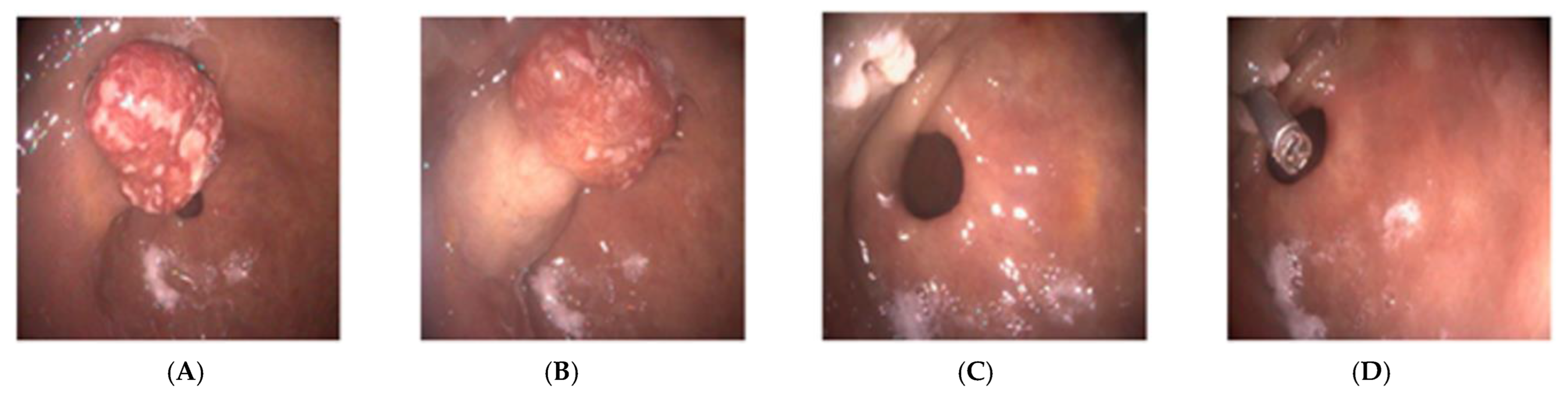
EGD revealed a nodular-appearing gastric wall, warranting biopsy for histological evaluation and Helicobacter pylori testing. Additionally, a polypoid, pedunculated lesion approximately 3 cm in diameter was observed in the pre-pyloric antrum, surrounded by hyperemic mucosa. Biopsy of the gastric body showed no neoplastic changes, and H. pylori was not detected.
Endoscopic ultrasound (EUS) characterized the lesion as a homogenous, hypoechoic mass within the second and third sonographic layers. The lesion was removed en bloc using endoscopic mucosal resection (EMR) with the “inject-and-cut” technique, including endoscopic hemostasis via epinephrine (1:20,000 in normal saline). No immediate post-procedural complications occurred, and an endoclip was placed at the polyp base to ensure hemostasis. Follow-up endoscopy showed no signs of local recurrence.
Endoscopic images included: a 3.3 × 3 × 2 cm multi-lobed, mushroom-shaped polypoid lesion (Figure 1).
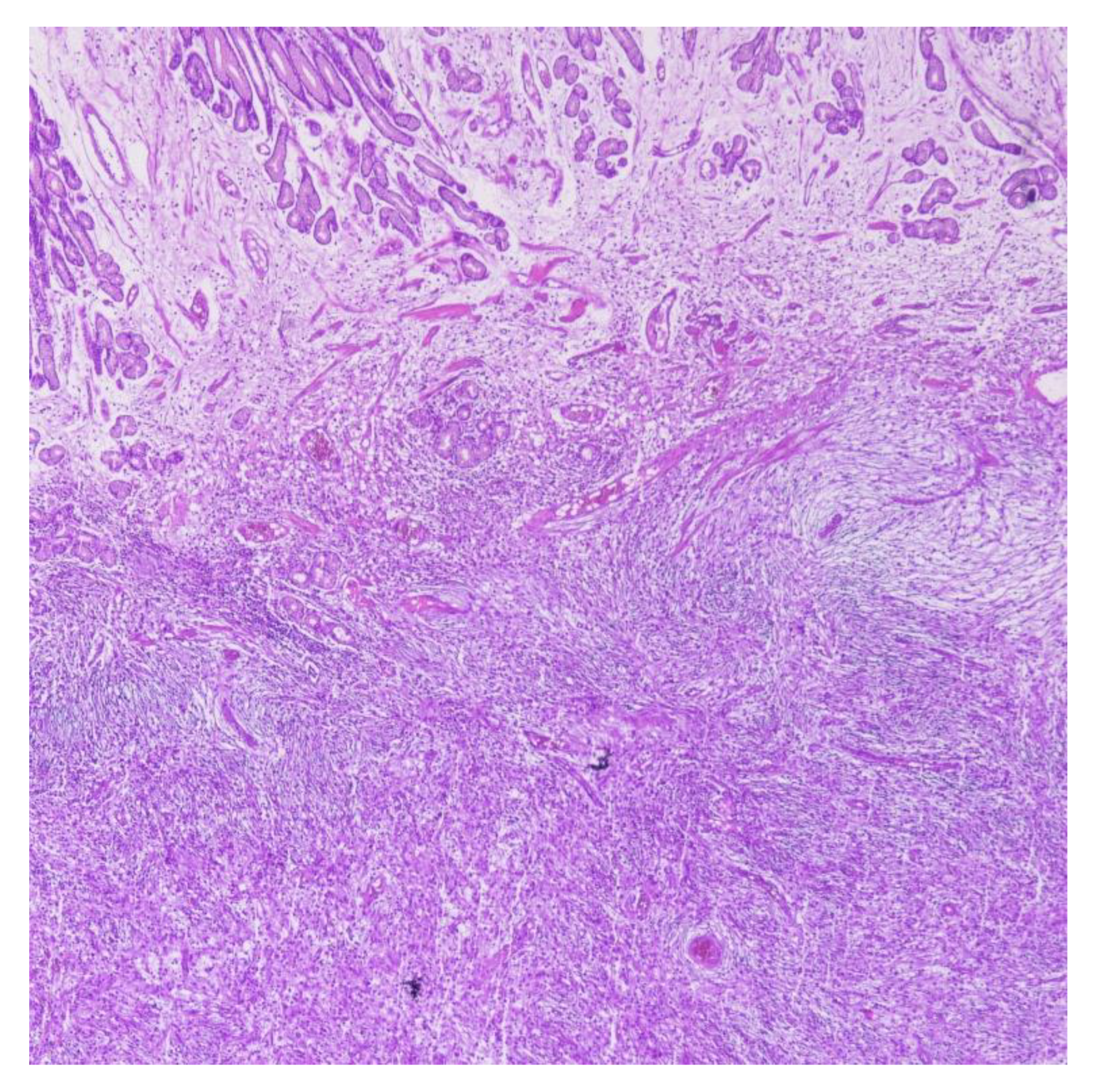
Microscopic examination revealed a partially ulcerated polypoid lesion with submucosal growth, composed of spindle-shaped, dendritic, fibroblast–myofibroblast, and epithelioid mesenchymal stromal cells. These exhibited finely granular chromatin, small nucleoli, scant cytoplasm, rare mitoses, and a concentric, “onion-bulb” growth pattern around small and medium-sized vessels. The stroma was myxoid and inflamed, with significant lymphocytic and eosinophilic infiltrate, edema, and collagenization (Figure 2).
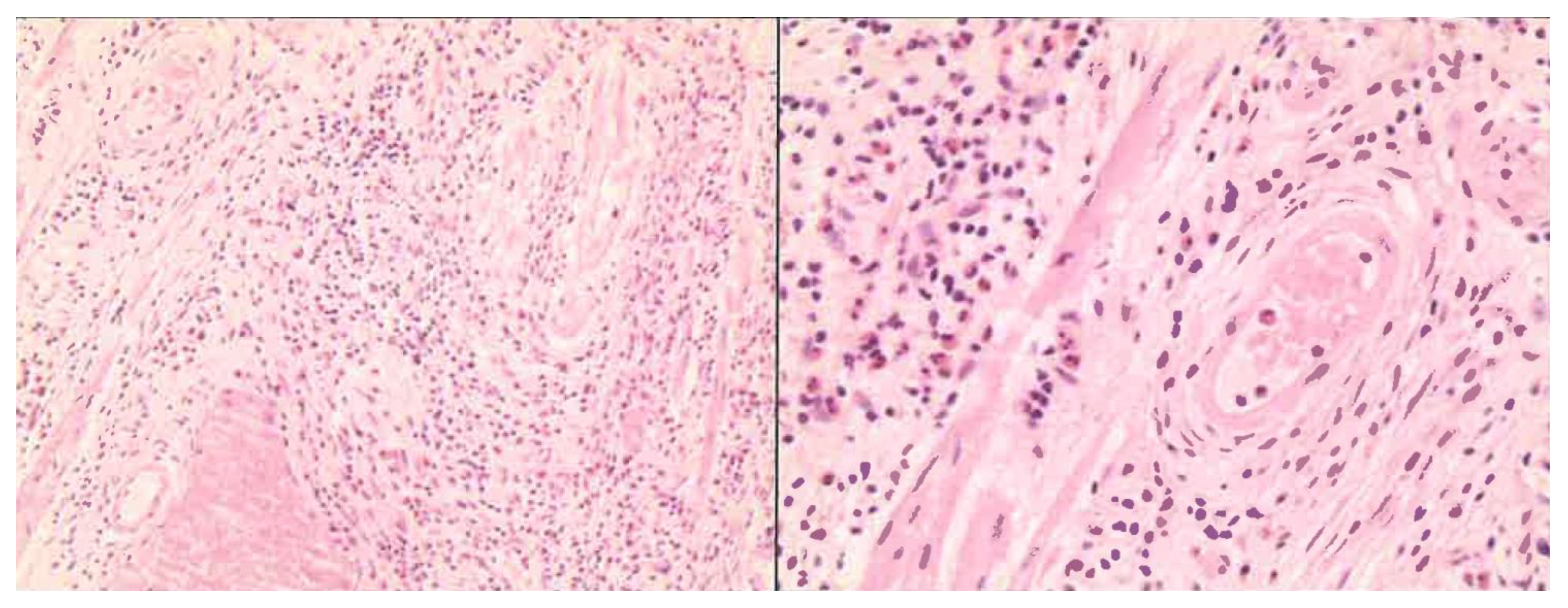
Immunohistochemistry showed strong positivity for Vimentin, CD34, and smooth muscle actin, with negative results for S-100, CD117 (c-Kit) (Figure 3). The proliferation index was low, as indicated by MIB-1 (Ki-67) staining.
Overall, the histological, immunohistochemical, and molecular findings support a diagnosis of benign inflammatory fibroid polyp (Vanek’s tumor) [12].

2.2. Case Report 2

We report the case of a 64-year-old woman who presented with recurrent episodes of abdominal colicky pain localized to the epigastric and right hypochondriac regions, typically worsening immediately after meals. The pain was temporarily relieved with analgesic and antispasmodic medications.
Her medical history was notable for arterial hypertension and severe obesity (BMI 46.8 kg/m2). Laboratory tests revealed microcytic anemia (Hb 12.1 g/dL), normal lactate dehydrogenase (LDH) levels, mild hypergammaglobulinemia, and newly diagnosed diabetes mellitus with an HbA1c of 9.3%.
Tumor markers were within normal limits. Upper endoscopy (OGDS) showed deformation of the antro-pyloric region, suggestive of extrinsic compression, without mucosal lesions, with the impossibility of performing an endoscopic biopsy. Abdominal CT scan revealed a multiloculated mass measuring 7 × 5 cm between the body and antrum of the stomach along the greater curvature, primarily on the anterior wall. The lesion appeared to infiltrate the gastric wall, causing significant luminal narrowing. It exhibited peripheral enhancement, internal hypodensity indicative of cystic or necrotic degeneration, and developed mainly along the serosal surface. Enlarged omental lymph nodes (up to 14 mm) and severe hepatic steatosis were also noted.
Differential diagnoses included GIST or lymphoma, though other neoplasms could not be excluded.
During hospitalization, the patient developed a high-grade intestinal obstruction. An attempt at endoscopic ultrasonography (EUS) failed due to the inability to distend the deformed antro-pyloric region and visualize gastric wall layers.
Given the acute presentation, the patient underwent exploratory laparoscopy with intraoperative biopsy of perigastric tissue in the antral region. A subtotal gastrectomy with lymphadenectomy, Roux-en-Y reconstruction, and total omentectomy was performed.
Frozen section analysis revealed lymphoid tissue infiltrating adjacent adipose tissue in both the perigastric area and the falciform ligament.
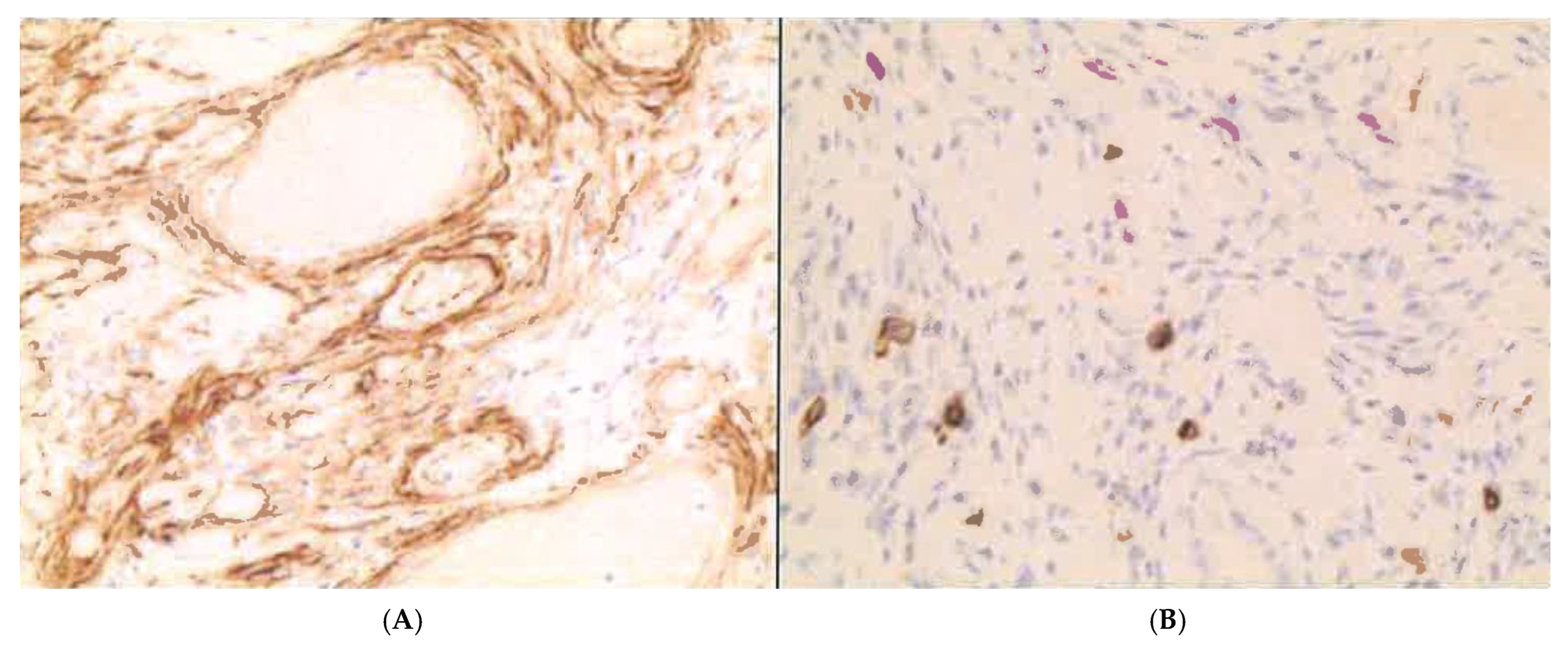
Final histological examination confirmed chronic inflammatory infiltration of the falciform ligament, gastric wall, and greater omentum. A 2.5 × 7 cm antral tumor was identified in the anterior gastric wall, displaying mononuclear, spindle-shaped cells arranged in whorls with diffuse eosinophilic infiltration, determining polypoid intramural protrusion, consistent with an inflammatory fibroid polyp (IFP), with GIST considered in the differential diagnosis (Figure 4).
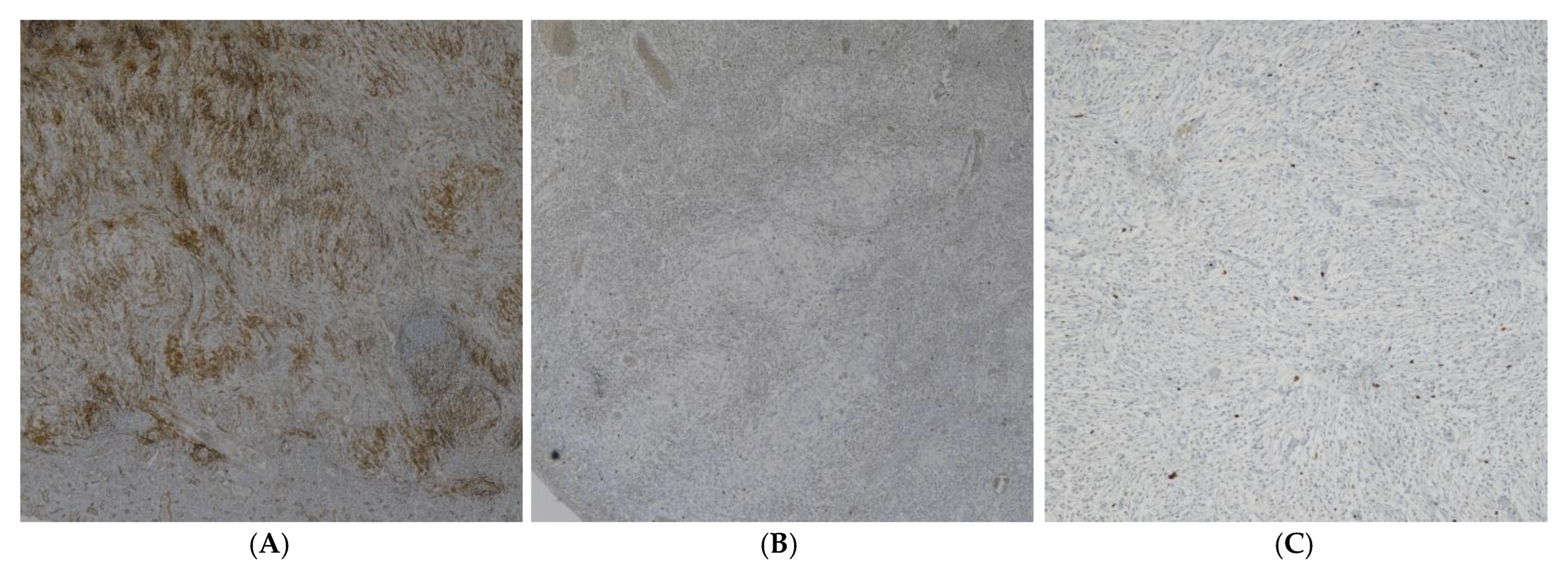
Immunohistochemistry showed strong positivity for CD34 and negativity for CK AE1/AE3, Desmin, AML, S-100, and CD20 (Figure 5). These findings confirmed the diagnosis of Vanek’s tumor.
The patient was discharged two weeks postoperatively without symptoms [11]. At 14-month follow-up, abdominal CT showed postoperative changes consistent with partial gastrectomy. No free fluid was present in the abdominal or pelvic cavities. Importantly, there was no evidence of recurrence of the inflammatory fibroid polyp (Vanek’s tumor), confirming the success of surgical treatment [13].

3. Discussion

Numerous terms have been proposed to describe IFP, including eosinophilic granuloma, granuloblastoma, gastric fibroma with eosinophilic infiltration, granuloma with eosinophils, hemangiopericytoma, inflammatory fibroid tumor, and inflammatory pseudotumor [14,15]. The wide variety of these names highlights the difficulty to understand the precise mechanisms behind IFP development and the different theories about its origin [16].
Historically, IFP was considered to be a reactive inflammatory condition. It was believed that IFP could be linked to factors such as Helicobacter pylori infection [17,18] or type A gastritis. It has been suggested that local infections (in fact, some reported IFP cases are associated with microorganisms such as Cytomegalovirus [19] and Actinomyces israelii [20]), allergic reactions, autoimmune responses, or an exaggerated host response to an unidentified trigger may all contribute to the development of IFP [21]. Some researchers suggest that IFP might result from chronic irritation and inflammation or from an exaggerated bodily response to intestinal trauma, or even as a localized form of eosinophilic gastroenteritis, given its prominent eosinophilic infiltration. The common occurrence of these lesions in the stomach, where strong contractions and coarse food may cause local irritation, supports a traumatic origin.
Additionally, a few cases have been reported linking IFP with Crohn’s disease [22].
Due to the unclear cause of IFP, the possibility that this typically benign tumor may have malignant potential remains a topic of ongoing debate. Instances of familial occurrence or the simultaneous development of IFP and other gastrointestinal cancers indicate that some malignant potential might exist, though it is rare [23].
From an immunohistochemical perspective, IFPs are characterized by spindle-shaped cells that test positive for CD34, PDGFRA, and vimentin, but negative for CD117, DOG1, and S100 [24].
The differential diagnosis of IFPs includes various spindle cell lesions with inflammatory infiltrates. Their consistent expression of cyclin D1 and fascin suggests possible dendritic cell differentiation, but the hallmark is CD34 positivity in small lesions, which may decrease as they enlarge. This, along with molecular features, can raise concern for GISTs; however, IFPs differ morphologically and lack CD117 (c-Kit) expression [25].
Larger IFPs may mimic sarcomas, but their bland cytology and inflammatory background argue against malignancy. They may also resemble nodular fasciitis, which is CD34-negative and strongly actin-positive [26]. Solitary fibrous tumors share CD34 expression but are rare in the GI tract and lack inflammation. Notably, up to 8% of IFPs occur alongside adenomas or carcinomas [23].
To aid diagnostic clarity, Table 1 summarizes the main differential diagnoses of gastric spindle cell and mesenchymal tumors, highlighting histological and immunohistochemical features that distinguish IFPs from other entities.
In 55–74% of IFP cases the presence of oncogenic PDGFRA mutations, affecting specifically exons 12, 14 and 18, is observed, as in other stromal tumors (GIST), suggesting that these lesions may arise due to the activation of PDGFRA [27].
Building on this evidence, recent molecular studies have clarified the distribution and implications of these mutations. Exon 12 mutations—often deletions or deletion–insertions—are more common in small-intestinal IFPs, whereas gastric lesions frequently harbor exon 14 or exon 18 mutations, including the characteristic D842V substitution. Importantly, these same PDGFRA alterations are found in up to 40% of GISTs, highlighting a shared molecular pathway despite the clearly benign behavior of IFPs. Unlike PDGFRA-mutant GISTs, which typically exhibit epithelioid cytology, IFPs maintain a spindle-cell phenotype, underscoring their distinct histopathological identity.
The link between PDGFRA activity and eosinophilic inflammation adds another dimension to IFP pathogenesis. Although the FIP1L1–PDGFRA fusion—well established in idiopathic hypereosinophilic syndrome—has not been identified in IFPs, it illustrates how PDGFRA dysregulation can drive marked eosinophilic proliferation. Additionally, PDGFRA rearrangements have been increasingly described in myeloid neoplasms with eosinophilia, further supporting a mechanistic relationship between this signaling pathway and the eosinophil-rich stroma characteristic of IFPs. More recently, exon 15 BRAF mutations have been reported in PDGFRA-wild-type IFPs, expanding the spectrum of known molecular alterations and reinforcing the notion that these lesions represent true benign neoplasms rather than reactive proliferations [10].
Recently, some Authors identified the spindle cells displayed by this lesion in telocytes (TCs) [28]: they are mesenchymal, stromal cells, formerly known as interstitial Cajal-like cells, expressed in a variety of tissues and organs, morphologically characterized by a nucleated body with long and thin prolongations, called telopodes [29,30].
In the gastrointestinal tract, telocytes uniquely co-express CD34 and PDGFR while lacking c-Kit expression, unlike in other organs. These distinct features allow for their reliable differentiation from interstitial cells of Cajal, particularly through PDGFR-based immunohistochemistry [31].
Beyond immunophenotypic similarity, telocytes are now considered central to IFP pathogenesis. Their extensive intercellular communication network, regulatory role in stromal architecture, and demonstrated ability to respond to PDGFRA-driven signaling provide a mechanistic framework in which telocytes may undergo PDGFRA-mediated neoplastic transformation. This dual involvement of telocytes and PDGFRA mutations helps reconcile the paradox of IFPs: a lesion that behaves clinically as a benign process yet exhibits clear molecular features of neoplasia. Telocytes’ intrinsic stromal regulatory functions may also explain the characteristic onion-skin arrangement and eosinophil-rich microenvironment, reflecting an aberrant—yet self-limited—stromal remodeling response.
These cells form an intricate communication network among various stromal and epithelial cell types [32]; furthermore, they should be the androgen receptor-positive cells found on the peripheral part of onion skin-like formations and corresponding with Ki67-positive cell distribution, described by some authors, suggesting a hormonal influence in the development of this tumor. Additionally, the development of Vanek’s tumor exhibits similarities to the progression of androgen-sensitive prostate cancer, which is influenced by PDGF [33].
Ricci et al. proposed an additional term for defining this lesion, “telocytoma”, as it clearly synthetizes the origin cell (telocyte) and the neoplastic pathogenesis [34].
Although traditionally classified as a benign reactive lesion, evolving molecular and immunophenotypic data increasingly support a neoplastic origin for IFPs. This has important clinical implications for diagnosis, management, and surveillance. The detection of activating mutations in the PDGFRA gene, found in a significant proportion of IFPs, argues against a purely reactive etiology and instead aligns them closer to other neoplastic stromal lesions such as GISTs, though with a distinctly benign biological behavior [35]. The clinical variability between the two cases presented in this report underscores the diverse manifestations of IFPs. Case 1, involving a pedunculated lesion in the gastric antrum, was managed successfully through minimally invasive endoscopic mucosal resection, consistent with the typical treatment of small, localized IFPs. In contrast, Case 2 involved a larger, infiltrative mass mimicking a malignant neoplasm and causing high-grade obstruction, ultimately necessitating surgical resection. This demonstrates the importance of including IFP in the differential diagnosis of submucosal or infiltrative GI masses, particularly when imaging suggests potential malignancy.
While IFPs rarely recur following complete resection, their preoperative misidentification as GISTs or other neoplastic lesions often leads to overtreatment. Accurate diagnosis therefore depends heavily on histopathological assessment, particularly the identification of hallmark concentric perivascular fibrosis and eosinophil-rich inflammatory stroma. Immunohistochemical staining remains a critical diagnostic adjunct; IFPs show diffuse CD34 positivity and lack staining for CD117 and DOG1, which helps distinguish them from GISTs. Importantly, while CD34 is not exclusive to IFPs, its combination with the lesion’s architectural and inflammatory features is diagnostic in the appropriate clinical context.
The association of IFPs with other inflammatory or immune-mediated conditions, as well as the presence of telocytes as a putative origin cell, opens new research avenues. Telocytes are increasingly recognized as critical regulators of local tissue architecture and intercellular signaling, and their proposed role in IFP pathogenesis, especially in tumors harboring PDGFRA mutations, may explain the neoplastic but non-aggressive behavior of these lesions [29]. Furthermore, the possible hormonal influence, indicated by androgen receptor expression in some cases, merits deeper investigation, especially given reports of sex-related incidence patterns and similarities with hormone-sensitive tumors such as prostate cancer.
From a clinical management perspective, awareness of PDGFRA-driven pathogenesis may help refine therapeutic decision-making, especially in large or infiltrative lesions where malignancy is suspected preoperatively. Although targeted therapies are not indicated for IFPs, molecular confirmation of PDGFRA mutations may reinforce conservative management following complete resection and reduce the need for aggressive surgical approaches. Moreover, the emerging recognition of telocytes as the putative cells of origin provides a biological explanation for the unique stromal organization and eosinophil-rich microenvironment of IFPs, bridging the gap between their neoplastic nature and indolent clinical behavior.
These molecular insights may also guide future diagnostic protocols, encouraging the integration of molecular testing in selected cases and supporting a more personalized, evidence-based approach to the management of gastrointestinal mesenchymal lesions.
In recent years, artificial intelligence (AI) has emerged as a powerful tool in gastrointestinal endoscopy, radiology, and histopathology, with significant implications for the diagnosis of gastric subepithelial lesions. Machine learning and deep learning algorithms have demonstrated high accuracy in detecting and characterizing gastric lesions during gastroscopy, particularly when integrated with narrow-band imaging (NBI) and magnification endoscopy. These technologies may be especially valuable in differentiating inflammatory fibroid polyps from other mesenchymal tumors such as gastrointestinal stromal tumors, which often present with overlapping endoscopic and radiologic features.
AI-assisted image analysis can enhance real-time lesion recognition, margin delineation, and risk stratification during endoscopy, potentially improving early detection and guiding decisions regarding endoscopic versus surgical management. Furthermore, AI-based histopathological analysis may support pathologists by identifying subtle architectural patterns—such as the characteristic perivascular onion-skin arrangement—and immunophenotypic signatures associated with IFPs. Radiological applications of AI may also contribute to more accurate assessment of lesion depth, growth pattern, and infiltrative behavior, reducing diagnostic uncertainty in complex cases.
As AI technologies continue to evolve, their integration into clinical workflows could enable more precise, personalized diagnostic pathways for patients with rare gastric lesions such as IFPs, ultimately reducing overtreatment and improving clinical outcomes [36,37,38].
Future research should focus on expanding molecular profiling of IFPs in larger multicenter cohorts to better define genotype–phenotype correlations and to clarify whether specific PDGFRA or BRAF mutations are associated with lesion size, anatomical location, or clinical presentation. Further investigation into telocyte biology may also elucidate the mechanisms underlying stromal remodeling, eosinophil recruitment, and the self-limited growth of these tumors. Additionally, prospective studies evaluating the role of AI-assisted endoscopy and digital pathology in the diagnosis of rare subepithelial lesions could help standardize diagnostic algorithms and reduce interobserver variability.
From a therapeutic perspective, endoscopic resection remains the preferred treatment for accessible, well-circumscribed IFPs. According to Dias et al., endoscopic submucosal dissection (ESD) appears to be a safe and effective technique for removing gastric inflammatory fibroid polyps that manifest as large subepithelial lesions, provided it is conducted by skilled endoscopists following a thorough evaluation with endoscopic ultrasound, also for polyps of more than 20 mm in size [4].
Surgical resection is reserved for acute presentations, larger lesions, those with obstructive complications, or those in which malignancy cannot be excluded preoperatively. Long-term prognosis is excellent, with extremely rare reports of recurrence or malignant transformation. However, continued reporting of atypical presentations and larger case series will be necessary to more effectively define the complete spectrum of this lesion’s clinical behavior.

4. Conclusions

Inflammatory fibroid polyps are rare benign gastric lesions that often pose significant diagnostic challenges due to their clinical and radiologic resemblance to malignant tumors. Recent molecular discoveries, particularly the identification of activating PDGFRA mutations and the proposed telocyte origin, support their classification as true benign neoplasms rather than reactive lesions.
Accurate diagnosis relies on the integration of histological architecture, immunohistochemical profiling, and molecular data, which together allow for appropriate therapeutic planning and help avoid unnecessary aggressive interventions. Endoscopic resection remains the treatment of choice for localized lesions, while surgery is reserved for complex or obstructive cases. Continued investigation into molecular mechanisms and emerging diagnostic technologies, including artificial intelligence, may further refine personalized management strategies for this rare entity.
Finally, broader public-health practices—such as promoting awareness of gastrointestinal warning signs and encouraging timely medical consultation—may also help reduce delays in diagnosis and improve overall outcomes [39,40].

Author Contributions

Conceptualization, R.V. and F.F.; methodology, R.V. and F.F.; software, R.V. and M.T.M.; validation, F.F.; formal analysis, R.V. and F.F.; investigation, R.V., C.E.R., M.T.M. and F.F.; resources, F.L., G.G. and C.G.; data curation, R.V. and F.F.; writing—original draft preparation, R.V.; writing—review and editing, R.V. and F.F.; visualization, R.V. and F.F.; supervision, F.F.; project administration, F.F. All authors have read and agreed to the published version of the manuscript.

Funding

This research received no external funding.

Institutional Review Board Statement

Ethical review and approval of this study were not required by the Ethics Committee of AOU “G. Martino” because case reports are not considered research. The patient’s information has been de-identified.

Informed Consent Statement

Written informed consent for publication of the clinical information and accompanying images was obtained from the patients.

Data Availability Statement

The original data presented in the study are included in the article, further inquiries can be directed to the corresponding author.

Conflicts of Interest

The authors declare no conflict of interest.

References

  1. Vanek, J. Gastric submucosal granuloma with eosinophilic infiltration. Am. J. Pathol. 1949, 25, 397–411. [Google Scholar]
  2. Nagao, S.; Tsuji, Y.; Sakaguchi, Y.; Ushiku, T.; Koike, K. Inflammatory fibroid polyp mimicking an early gastric cancer. Gastrointest. Endosc. 2020, 92, 217–218. [Google Scholar] [CrossRef] [PubMed]
  3. Carmack, S.W.; Genta, R.M.; Schuler, C.M.; Saboorian, M.H. The current spectrum of gastric polyps: A 1-year national study of over 120,000 patients. Am. J. Gastroenterol. 2009, 104, 1524–1532. [Google Scholar] [CrossRef] [PubMed]
  4. Dias, E.; Marques, M.; Santos-Antunes, J.; Baldaque-Silva, F.; Moutinho-Ribeiro, P.; Macedo, G. The role of endoscopic submucosal dissection in the management of gastric inflammatory fibroid polyps: A single-center experience. Rev. Esp. Enferm. Dig. 2022, 114, 592–598. [Google Scholar] [CrossRef] [PubMed]
  5. Nonose, R.; Valenciano, J.S.; da Silva, C.M.; de Souza, C.A.; Martinez, C.A. Ileal Intussusception Caused by Vanek’s Tumor: A Case Report. Case Rep. Gastroenterol. 2011, 5, 110–116. [Google Scholar] [CrossRef] [PubMed] [PubMed Central]
  6. Paikos, D.; Moschos, J.; Tzilves, D.; Koulaouzidis, A.; Kouklakis, G.; Patakiouta, F.; Kontodimou, K.; Tarpagos, A.; Katsos, I. Inflammatory fibroid polyp or Vanek’s tumour. Dig. Surg. 2007, 24, 231–233. [Google Scholar] [CrossRef] [PubMed]
  7. Zhang, C.; Cui, M.; Xing, J.; Shi, Y.; Su, X. Massive gastrointestinal bleeding caused by a giant gastric inflammatory fibroid polyp: A case report. Int. J. Surg. Case Rep. 2014, 5, 571–573. [Google Scholar] [CrossRef] [PubMed] [PubMed Central]
  8. Silva, M.; Albuquerque, A.; Cardoso, H.; Costa, J.; Macedo, G. Gastric inflammatory fibroid polyp mimicking a gastrointestinal stromal tumour. Rev. Esp. Enferm. Dig. 2016, 108, 497–498. [Google Scholar] [PubMed]
  9. Çomut, E.; Arman Karakaya, Y.; Çelik, M.; Çallı Demirkan, N. Histopathologic features of inflammatory fibroid polyps and risk of cancer development: A case series. Pamukkale Med. J. 2023, 16, 476–485. [Google Scholar] [CrossRef]
  10. Maccagno, A.; Sander, B.; Dintner, S.; Harloff, M.; Fuzesi, L.; Märkl, B. Inflammatory fibroid polyp: A series of 29 cases and a systematic review of the literature. Hum. Pathol. Rep. 2023, 32, 300703. [Google Scholar] [CrossRef]
  11. Ardeleanu, C.; Bussolati, G. Telocytes are the common cell of origin of both PEComas and GISTs: An evidence-supported hypothesis. J. Cell. Mol. Med. 2011, 15, 2569–2574. [Google Scholar] [CrossRef] [PubMed] [PubMed Central]
  12. Buda, C.; Garipoli, C.; Penna, G.; D’Aquino, A.; Galletti, C.; Facciolà, A.; Fedele, F. Endoscopic mucosal resection of a large inflammatory fibroid polyp (Vanek’s tumor): A case report. Acta Biomed. 2021, 92, e2021062. [Google Scholar] [CrossRef] [PubMed] [PubMed Central]
  13. Fleres, F.; Mazzeo, C.; Ieni, A.; Rossitto, M.; Cucinotta, E. Gastric inflammatory fibroid polyp tumor with acute intestinal obstruction-Vanek’s tumor can mimick a giant gastrointestinal stromal tumor or a gastric lymphoma. J. Vis. Surg. 2018, 4, 54. [Google Scholar] [CrossRef] [PubMed] [PubMed Central]
  14. Johnstone, J.M.; Morson, B.C. Inflammatory fibroid polyp of the gastrointestinal tract. Histopathology 1978, 2, 349–361. [Google Scholar] [CrossRef] [PubMed]
  15. Nunes, M.A. Granuloma (granuloblastoma) gástrico submucoso com eosinófilos [Gastric submucosal granuloma (granuloblastoma) with eosinophilic infiltration]. Gaz. Med. Port. 1950, 3, 751–759. [Google Scholar] [PubMed]
  16. Garmpis, N.; Damaskos, C.; Garmpi, A.; Georgakopoulou, V.E.; Sakellariou, S.; Liakea, A.; Schizas, D.; Diamantis, E.; Farmaki, P.; Voutyritsa, E.; et al. Inflammatory Fibroid Polyp of the Gastrointestinal Tract: A Systematic Review for a Benign Tumor. In Vivo 2021, 35, 81–93. [Google Scholar] [CrossRef] [PubMed] [PubMed Central]
  17. Nishiyama, Y.; Koyama, S.; Andoh, A.; Kishi, Y.; Yoshikawa, K.; Ishizuka, I.; Yokono, T.; Fujiyama, Y. Gastric inflammatory fibroid polyp treated with Helicobacter pylori eradication therapy. Intern. Med. 2003, 42, 263–267. [Google Scholar] [CrossRef] [PubMed]
  18. Hirasaki, S.; Matsubara, M.; Ikeda, F.; Taniguchi, H.; Suzuki, S. Gastric inflammatory fibroid polyp treated with Helicobacter pylori eradication therapy. Intern. Med. 2007, 46, 855–858. [Google Scholar] [CrossRef] [PubMed]
  19. Agaimy, A.; Mudter, J.; Märkl, B.; Chetty, R. Cytomegalovirus infection presenting as isolated inflammatory polyps of the gastrointestinal tract. Pathology 2011, 43, 440–446. [Google Scholar] [CrossRef] [PubMed]
  20. Liu, T.C.; Lin, M.T.; Montgomery, E.A.; Singhi, A.D. Inflammatory fibroid polyps of the gastrointestinal tract: Spectrum of clinical, morphologic, and immunohistochemistry features. Am. J. Surg. Pathol. 2013, 37, 586–592. [Google Scholar] [CrossRef] [PubMed]
  21. Ozolek, J.A.; Sasatomi, E.; Swalsky, P.A.; Rao, U.; Krasinskas, A.; Finkelstein, S.D. Inflammatory fibroid polyps of the gastrointestinal tract: Clinical, pathologic, and molecular characteristics. Appl. Immunohistochem. Mol. Morphol. 2004, 12, 59–66. [Google Scholar] [CrossRef] [PubMed]
  22. Theodoropoulos, G.E.; Linardoutsos, D.; Tsamis, D.; Stamopoulos, P.; Giannopoulos, D.; Zagouri, F.; Michalopoulos, N.V. Gastrointestinal stromal tumor causing small bowel intussusception in a patient with Crohn’s disease. World J. Gastroenterol. 2009, 15, 5224–5227. [Google Scholar] [CrossRef] [PubMed] [PubMed Central]
  23. Mucientes, P.; Mucientes, F.; Klaassen, R. Inflammatory fibroid polyp associated with early gastric carcinoma: A case report. Ann Diagn Pathol. 2012, 16, 148–151. [Google Scholar] [CrossRef] [PubMed]
  24. Kim, M.K.; Higgins, J.; Cho, E.Y.; Ko, Y.H.; Oh, Y.L. Expression of CD34, bcl-2, and kit in inflammatory fibroid polyps of the gastrointestinal tract. Appl Immunohistochem Mol Morphol. 2000, 8, 147–153. [Google Scholar] [CrossRef] [PubMed]
  25. Kolodziejczyk, P.; Yao, T.; Tsuneyoshi, M. Inflammatory fibroid polyp of the stomach. A special reference to an immunohistochemical profile of 42 cases. Am. J. Surg. Pathol. 1993, 17, 1159–1168. [Google Scholar] [CrossRef] [PubMed]
  26. Montgomery, E.A.; Meis, J.M. Nodular fasciitis: Its morphologic spectrum and immunohistochemical profile. Am. J. Surg. Pathol. 1991, 15, 942–948. [Google Scholar] [CrossRef] [PubMed]
  27. Schildhaus, H.U.; Cavlar, T.; Binot, E.; Büttner, R.; Wardelmann, E.; Merkelbach-Bruse, S. Inflammatory fibroid polyps harbour mutations in the platelet-derived growth factor receptor alpha (PDGFRA) gene. J. Pathol. 2008, 216, 176–182. [Google Scholar] [CrossRef]
  28. Ricci, R.; Giustiniani, M.C.; Gessi, M.; Lanza, P.; Castri, F.; Biondi, A.; Persiani, R.; Vecchio, F.M.; Risio, M. Telocytes are the physiological counterpart of inflammatory fibroid polyps and PDGFRA-mutant GISTs. J. Cell Mol. Med. 2018, 22, 4856–4862. [Google Scholar] [CrossRef] [PubMed] [PubMed Central]
  29. Zhang, Y.; Tian, H. Telocytes and inflammation: A review. Medicine 2023, 102, e35983. [Google Scholar] [CrossRef] [PubMed] [PubMed Central]
  30. Zhang, J.; Xu, Y. Tumor-associated telocytes. Chin. Med. J. 2024, 137, 490–492. [Google Scholar] [CrossRef] [PubMed] [PubMed Central]
  31. Vannucchi, M.G. Telocytes and Macrophages in the Gut: From Morphology to Function, Do the Two Cell Types Interact with Each Other? Which Helps Which? Int. J. Mol. Sci. 2022, 23, 8435. [Google Scholar] [CrossRef]
  32. Sanches, B.D.A.; Teófilo, F.B.S.; Brunet, M.Y.; Villapun, V.M.; Man, K.; Rocha, L.C.; Neto, J.P.; Matsumoto, M.R.; Maldarine, J.S.; Ciena, A.P.; et al. Telocytes: Current methods of research, challenges and future perspectives. Cell Tissue Res. 2024, 396, 141–155. [Google Scholar] [CrossRef] [PubMed]
  33. Jukic, Z.; Ferencic, Z.; Radulovic, P.; Mijic, A.; Fucic, A. Estrogen and androgen receptors in inflammatory fibroid polyp (Vanek’s tumor): Case report. Anticancer Res. 2014, 34, 7203–7206. [Google Scholar] [PubMed]
  34. Langlois, M.J.; Servant, R.; Reyes Nicolás, V.; Jones, C.; Roy, S.; Paquet, M.; Perreault, N. Loss of PTEN Signaling in Foxl1+ Mesenchymal Telocytes Initiates Spontaneous Colonic Neoplasia in Mice. Cell. Mol. Gastroenterol. Hepatol. 2019, 8, 530–533.e5. [Google Scholar] [CrossRef]
  35. Daum, O.; Hatlova, J.; Mandys, V.; Grossmann, P.; Mukensnabl, P.; Benes, Z.; Michal, M. Comparison of morphological, immunohistochemical, and molecular genetic features of inflammatory fibroid polyps (Vanek’s tumors). Virchows Arch. 2010, 456, 491–497. [Google Scholar] [CrossRef] [PubMed]
  36. Palomba, G.; Fernicola, A.; Corte, M.D.; Capuano, M.; De Palma, G.D.; Aprea, G. Artificial intelligence in screening and diagnosis of surgical diseases: A narrative review. AIMS Public Health 2024, 11, 557–576. [Google Scholar] [CrossRef] [PubMed] [PubMed Central]
  37. Hong, K.; Lei, C.; Kan, X.; Ouyang, Y.; Mei, Y.; Guo, Y.; Wang, B.; Zhang, D.; Li, J.; Li, R.; et al. Artificial intelligence for early gastric cancer boundary recognition in NBI and nF-NBI endoscopic images. Scand. J. Gastroenterol. 2025, 60, 624–634. [Google Scholar] [CrossRef] [PubMed]
  38. El Asmar, N.; Baydoun, M.; Mrad, J.; Barada, K. Role of artificial intelligence in the detection and characterization of gastrointestinal premalignant and early malignant lesions. World J. Gastroenterol. 2025, 31, 111160. [Google Scholar] [CrossRef] [PubMed]
  39. Venuto, R.; Rizzo, C.E.; Lo Giudice, D.; Fries, W.; Ceccio, C.; Fedele, F.; Squeri, R.; Genovese, C. Vaccination Coverage in Adult Patients with Inflammatory Bowel Disease: Impact of a Tailored Vaccination Pathway Including COVID-19 and Herpes Zoster in a University Hospital Vaccination Center. Vaccines 2025, 13, 961. [Google Scholar] [CrossRef] [PubMed]
  40. Rizzo, C.E.; Venuto, R.; Tripodi, P.; Bartucciotto, L.; Ventura Spagnolo, E.; Nirta, A.; Genovese, G.; La Spina, I.; Sortino, S.; Nicita, A.; et al. From Guidelines to Action: Tackling Risk Factors for Surgical Site Infections. Antibiotics 2025, 14, 40. [Google Scholar] [CrossRef]
Figure 1. Endoscopic examination of the lesion (A) mushroom-shaped polypoid lesion; (B) epinephrine injections; (C) polyp base post-resection; (D) endoclip placement.
Reports 09 00002 g001
Figure 2. Microscopy evaluation of the lesion (left: 10×; right: 40×).
Reports 09 00002 g002
Figure 3. Immunoreactivity for CD34 (A) (20×) and CD117 (c-kit) (B) (40×).
Reports 09 00002 g003
Figure 4. Microscopy evaluation of the lesion (4×).
Reports 09 00002 g004
Figure 5. Immunoreactivity (10×) for CD34 (A), CD117 (c-kit) (B) and MIB-1 (C).
Reports 09 00002 g005
Table 1. Differential diagnosis of gastric tumors with key distinguishing characteristics.
Lesion/Tumor TypeHistological FeaturesImmunohistochemistry ProfileClinical Notes/
Distinguishing Points
Inflammatory Fibroid Polyp (IFP/Vanek’s tumor)Bland spindle/stellate cells in onion-skin perivascular pattern; eosinophil-rich stromaCD34+, PDGFRA+; CD117–, DOG1–, S100–, Desmin–Benign, submucosal; may mimic GIST; may rarely cause obstruction or bleeding; PDGFRA mutations common
Gastrointestinal stromal tumor (GIST)Spindle or epithelioid cells; variable cellularityCD117 (c-KIT)+, DOG1+, often CD34+; PDGFRA mutations in subsetMalignant potential; requires risk stratification (size, mitotic index); responds to tyrosine kinase inhibitors
Leiomyoma/leiomyosarcomaFascicles of spindle cells with cigar-shaped nucleiSMA+, Desmin+, Caldesmon+; CD117–, DOG1–, CD34–Leiomyoma benign; leiomyosarcoma malignant; smooth muscle origin
SchwannomaSpindle cells with palisading nuclei; peripheral lymphoid cuffS100+, GFAP+; CD34–, CD117–, DOG1–Benign, slow growing; neural crest origin; rare in stomach
Solitary fibrous tumorPattern-less architecture; collagen bands; staghorn vesselsCD34+, STAT6 nuclear+; CD117–, DOG1–Rare in GI tract; usually benign but can recur; occasional malignant behavior
Nodular fasciitisMyxoid stroma; tissue culture-like spindle cells; rapid growthSMA+, Actin+; CD34–, CD117–Reactive lesion; self-limited; may be misdiagnosed as sarcoma
Inflammatory myofibroblastic tumor (IMT)Myofibroblastic spindle cells with inflammatory infiltrateALK+, SMA+, Desmin+; CD34 variableIntermediate biologic potential; may recur; rare metastasis; uncommon in stomach
Lymphoma (gastric involvement)Diffuse sheets of atypical lymphoid cellsCD20+ (B-cell), CD3+ (T-cell) depending on subtypeMalignant; systemic disease; may mimic submucosal mass; B-cell most common (DLBCL, MALT)
Disclaimer/Publisher’s Note: The statements, opinions and data contained in all publications are solely those of the individual author(s) and contributor(s) and not of MDPI and/or the editor(s). MDPI and/or the editor(s) disclaim responsibility for any injury to people or property resulting from any ideas, methods, instructions or products referred to in the content.