
Article

Bioarchaeological Indicators for Human–Environmental Interactions in Late Iron Age Settlements (4th–3rd Centuries BC) from Central Dobruja (Romania)

by
Margareta-Simina Stanc
1,*,
Petre-Ionuț Colțeanu
2,3,
Mihaela Danu
1,
Eliza-Ioana Crețu
1,
Mariana Popovici
4,
Patrizia-Nancy Bejenaru
1 and
Luminița Bejenaru
1,4
1
Faculty of Biology, Alexandru Ioan Cuza University of Iași, 700505 Iași, Romania
2
National History and Archaeology Museum of Constanța, 900745 Constanța, Romania
3
History, Philosophy and Theology Faculty, “Dunărea de Jos” University of Galați, 800018 Galați, Romania
4
“Olga Necrasov” Center of Anthropological and Biomedical Research, Romanian Academy-Iași Branch, 700481 Iași, Romania
*
Author to whom correspondence should be addressed.
Quaternary 2026, 9(1), 3; https://doi.org/10.3390/quat9010003 (registering DOI)
Submission received: 30 September 2025 / Revised: 16 December 2025 / Accepted: 22 December 2025 / Published: 1 January 2026

Abstract

The Lower Danube region represents a long-standing zone of interaction between indigenous communities, mobile pastoral populations, and Mediterranean colonial networks. During the Late Iron Age, such contexts have frequently been interpreted through culture-historical frameworks that emphasise socio-economic differentiation among coexisting populations. This study examines whether communities traditionally described in culturally or economically differentiated terms can instead be understood as functionally diverse social entities responding to shared environmental conditions. Three Late Iron Age (4th–3rd centuries BC) settlements from Central Dobruja (Romania), Medgidia Hellenistic 1, 2, and 3, were investigated using an integrated bioarchaeological approach combining archaeozoological and phytolith analyses. The sites are situated along a major communication corridor linking the Danube with the western Black Sea coast, colonised by the Greeks at that time. Faunal assemblages are dominated by domestic mammals, particularly cattle, caprine, and horses, indicating a pastoral economy structured around livestock management, secondary product exploitation, and varying degrees of mobility. Phytolith assemblages reveal a strong cereal signal alongside evidence for grassland exploitation, woody resource use, and wetland vegetation, reflecting mixed agro-pastoral practices embedded within a heterogeneous landscape. Taken together, the results suggest that Getae and Scythian-associated populations did not represent temporally or hierarchically differentiated socio-economic stages, but rather coexisting communities characterised by complementary subsistence practices, shaped by mobility, seasonality, and regional connectivity. This study highlights the value of bioarchaeological evidence for refining interpretations of cultural interaction and adaptive strategies in Late Iron Age Europe.

1. Introduction

The Lower Danube region represents a long-standing area of contact and cultural exchange between Mediterranean, North Pontic, and Danubian-Pontic worlds. Archaeological evidence reflects a complex mixture of cultural, social, and economic practices shaped by sustained interaction among indigenous communities, mobile pastoral populations, and external influences. In the western Pontic zone, Greek colonisation facilitated the early incorporation of Mediterranean material culture and economic practices into local contexts traditionally associated with the Getae. In adjacent regions, populations linked to the North Pontic sphere became increasingly visible, adopting and adapting new technologies and economic strategies within this interconnected landscape [1].
From an archaeological and historical perspective, this situation has often been interpreted through frameworks that emphasise cultural or socio-economic differentiation among coexisting populations. Such interpretations have sometimes implied that contemporaneous communities occupied different positions along a notional developmental sequence. However, this perspective raises important questions regarding whether the observed differences reflect chronological or technological disparities, or whether they instead indicate functional diversity in subsistence practices, mobility patterns, and land use strategies within the same socio-ecological system [1].
In this study, references to socio-economic differentiation are not understood in hierarchical or evolutionary terms. Rather, they denote variability in economic organisation and resource use, such as the contrast between more sedentary mixed farming strategies and seasonally mobile pastoral practices. From a bioarchaeological standpoint, these patterns are best interpreted as adaptive responses to environmental conditions, landscape structure, and social interaction, rather than as stages along a linear trajectory of development.
The present analysis is based on bioarchaeological material recovered from archaeological excavations at three Late Iron Age (4th–3rd centuries B.C.) settlements at Medgidia, in Central Dobruja. Given the scarcity of integrated bioarchaeological studies in this region, these sites provide an important opportunity to investigate subsistence strategies, human—environment interactions, and forms of coexistence within a key interaction zone of Late Iron Age Europe.
The primary aim of this study is to investigate how different human groups occupying the same landscape during the Late Iron Age organised their subsistence practices and engaged with local environments. Specifically, it examines: (1) patterns of animal and plant resource exploitation across the Medgidia settlements and their implications for land use and seasonality; (2) whether bioarchaeological evidence supports interpretations of socio-economic differentiation between Getae and Scythian groups, or instead points to complementary adaptive strategies; and (3) how the integration of archaeozoological and phytolith data informs broader discussions of mobility, pastoralism, and mixed economies in Iron Age Europe.
By addressing these issues, the study contributes to wider debates on human adaptation, resilience, and intergroup interaction in frontier zones during the Late Iron Age.
This is the first interdisciplinary study for the Late Iron Age in Central Dobruja and represents a rich and original source of information, not only on the history of palaeoeconomy but also on biodiversity, palaeoenvironment changes and their interaction with human societies, and the coexistence of relations between different ethnic communities (Getae and Scythian) during the Late Iron Age in Dobruja.
Moreover, the interdisciplinary study of the Medgidia settlements is particularly interesting considering their positioning in the Dobruja area, halfway between the Black Sea coast (the area of influence of the West-Pontic Greek colonies) and the Danube bank, at the western end of the Carasu Valley (a navigable river in antiquity) and located on the edge of an ancient road [2]. Research has also highlighted, even if we are discussing seasonal settlements, the existence of incipient forms of organisation of the inhabited space. Another unique aspect of the research is the reliable attestation, for the first time, starting with the 4th century B.C., of the presence of a North Pontic (Scythian) population in the Central Dobruja area. The elements of Scythian material culture (ceramics and dwellings), discovered because of research, complete the picture of the bordering area of Greek influence, with tombs or objects of North Pontic origin being discovered over time, without being able to be contextualised [3].
The Geto-Dacians population belonged to the North-Thracian branch of the Thracian tribes living east of the North Balkan Peninsula (for which separation took place at the beginning of the Iron Age). The Geto-Dacian name refers to all the North-Thracian tribes from the Carpatho-Danubian region. The names Getae and Dacians were used by Greek and Latin writers to differentiate the tribes of the Lower Danube (Getae) from those living in the centre and west of the Carpatho-Danubian area (Dacians). The Geto-Dacian settlements were economic, political, military, and ritual establishments. They represent proto-urban agglomerations like Celtic oppidum, but the Geto-Dacian settlement was called dava [4].
The Romanian La Tène is divided into three general phases: the ancient phase (c. 450–300 B.C.), the middle phase (c. 300–200 B.C.), and the late phase (c. 200 B.C.–106 A.D.). The Scythian tribes were an ancient Eastern Iranic equestrian nomadic people who migrated during the 9th to 8th centuries BC from Central Asia to the Pontic Steppe in modern-day Ukraine and Southern Russia, where they remained until the 3rd century B.C. [4]. Until this moment, there were a few archaeozoological studies on settlements located in northern Dobruja and dated to the Early Iron Age, more precisely Babadag culture (10th–9th centuries B.C.), such as Babadag [5,6], Garvăn-Mlăjitul Florilor, Jijila-Cetăţuie [7], Enisala-Palanca [8], Niculițel-Cornet [9], and Beidaud [10]. For the Early Iron Age, there are only two studies on settlements located in South Dobruja: Rasova-Malul Roșu [11] and Satu Nou-Valea lui Voicu [12]. The above-mentioned archaeozoological studies have addressed questions related to the exploitation of animal resources (identifying animals and strategies in mammals’ exploitation, and the proportion of wild versus domestic fauna), but even for the Early Iron Age, there do not exist interdisciplinary studies (which integrate archaeobotanical, archaeozoological and archaeological data).
For the Late Iron Age, one must notice the lack of archaeozoological studies on the entire area of Dobruja. For the rest of the modern territory of Romania, there are many studies on local/indigenous Geto-Dacian settlements (named dava): in the southern region (Muntenia)—Piscul Crăsani [13,14], Gura Vitioarei [15], Zimnicea [16], Cîrlomănești [13,17], Grădiștea [18,19], Căscioarele [20], Vlădiceasca [21,22], Cătunu [23], Gruiu Dării [24,25], Radovanu [13], and Peretu, Popești [23]; in the southern region (Oltenia)—Mărgăritești [23]; and in the eastern region (Moldova)—Cotu-Copălău [26], Brad [27], Dobrovăț-La Livadă [28], Stâncești [29], Lozna, Lunca Ciurei, Bîtca Doamnei, Florești [23], and Răcătău [30].
On the actual territory of the Republic of Moldavia, there are settlements well investigated, at Saharna Mare-Dealul Mănăstirii [31], Horodiște-La Șanț, and Gogâlniceni-Cetățuie [32].
For the Iron Age in Central and Eastern Europe, there are numerous local archaeozoological studies and synthesis studies [33]. The Iron Age in Britain [34,35,36,37], France [38,39,40], Spain [41], and Germany [42] was a transformative period for material culture, settlement patterns, technology, and trade networks, creating the conditions that attracted the attention of the Romans. For the Hungarian area, the studies of Bartosiewicz & Gál [43] are noteworthy.
Phytoliths, the microscopic silica bodies formed within plants, provide crucial evidence for reconstructing past human–environment interactions, preserving traces of both local vegetation and plant use. At Medgidia Hellenistic, their study offers new insights into how communities of the 4th–3rd centuries B.C. engaged with their surroundings, complementing the better-documented archaeozoological record for Romania. While animal remains shed light on dietary choices and husbandry practices, phytoliths reveal the overlooked role of plants in subsistence and landscape management, thereby broadening our understanding of adaptation strategies in Dobrogea during this period. Particularly suitable for identifying agricultural practices, cereal processing, and plant-based diets, phytoliths are produced abundantly by grasses, with the Poaceae family yielding morphologically distinctive forms. Archaeobotanical research for the Iron Age in Dobrogea is still lacking, with available studies limited to the Neolithic and the Roman–Byzantine periods (4th–6th centuries A.D.) at the Ibida [44] and Murighiol [45] settlements. This scarcity of archaeobotanical data is even more acute than that of archaeozoological studies on the region [46].
Bioarchaeological studies, giving information on animal resources for food, husbandry strategies or consumption practices, can contribute to the knowledge of the common elements of Late Iron Age in Dobruja, but also of the geographic and cultural diversifications by regions.

2. Study Area and Archaeological Context

2.1. Study Area

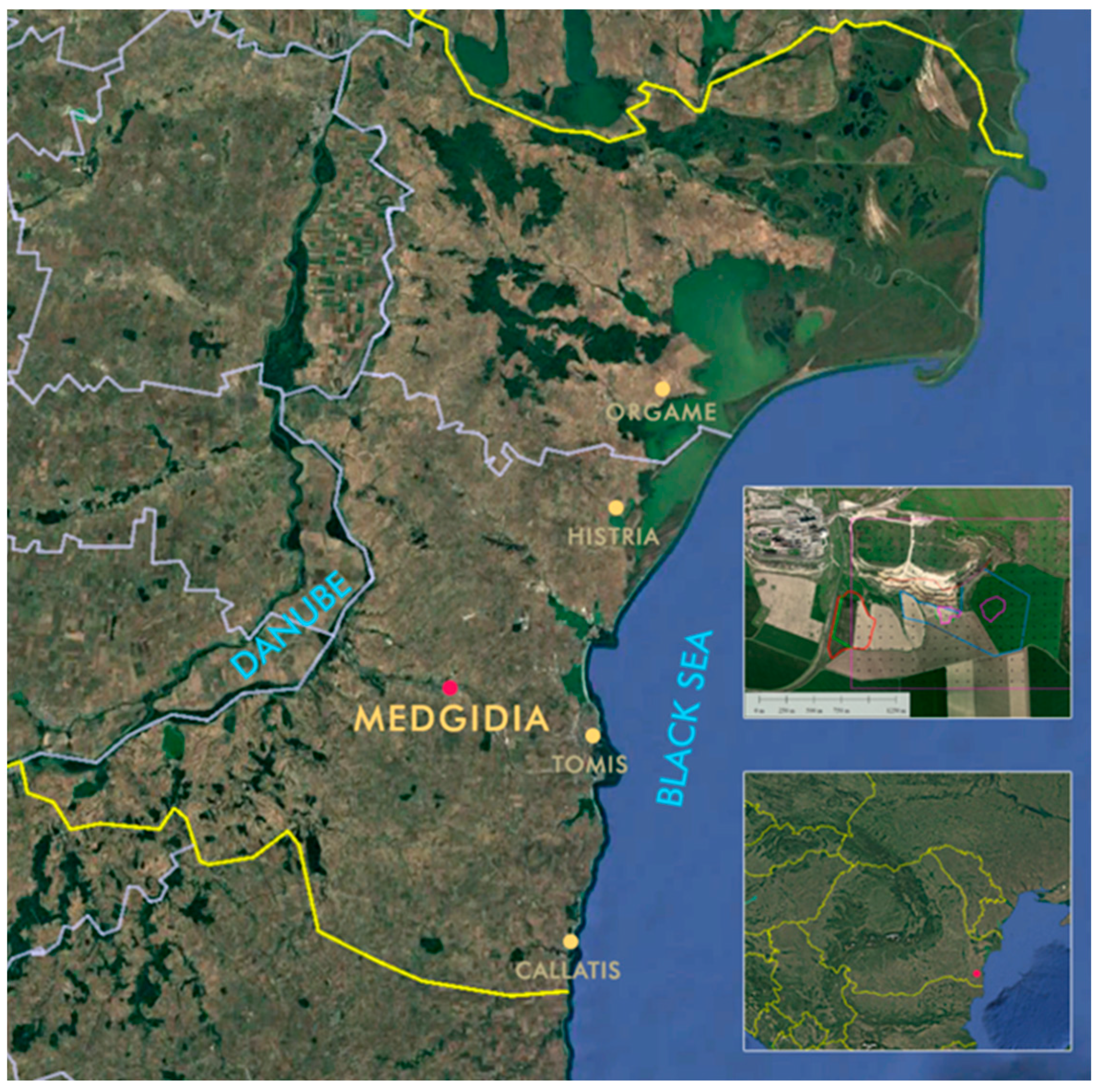
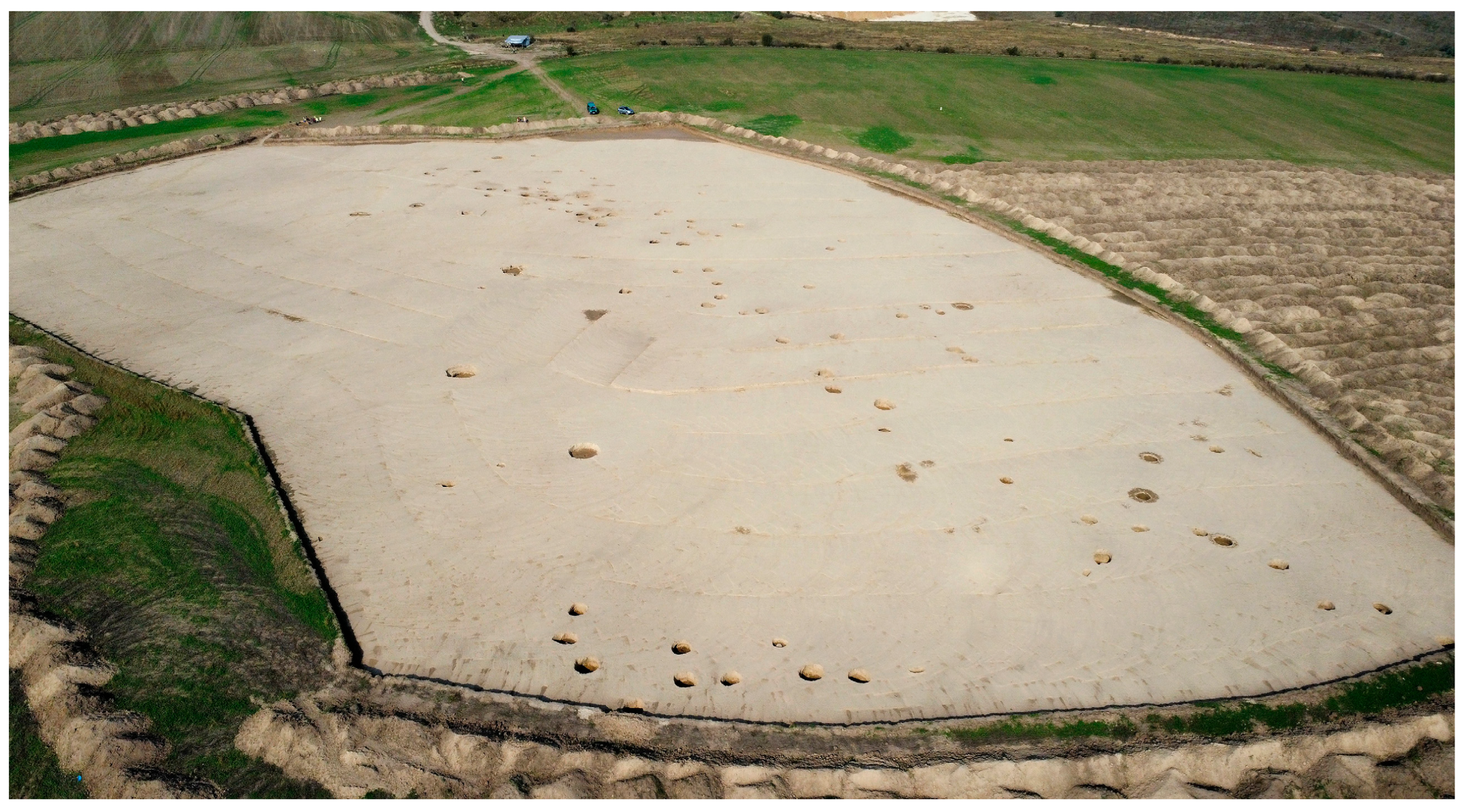
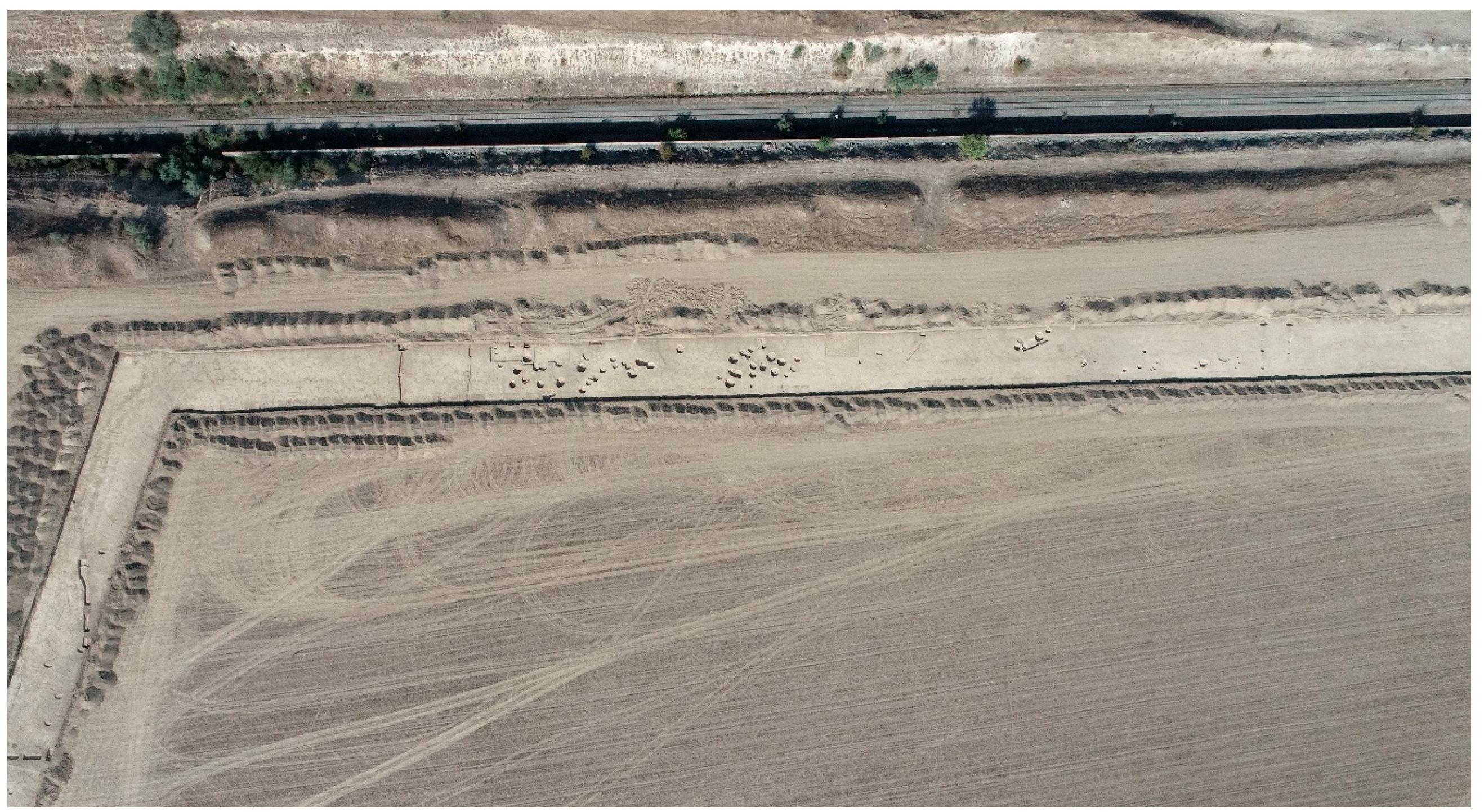
The archaeological research took place on an area of nearly 6.5 ha out of the 12 ha with archaeological potential (identified following a field assessment). The sites, conventionally named Medgidia Hellenistic 1, 2, and 3, date from the beginning of the Late Iron Age (early 4th–end of 3rd century B.C.), a period known as the Hellenistic period in specialised literature, for the Dobruja area [1] (Figure 1).
It is important to mention the limited number of studies on the Getae settlements in Dobrogea during the Second Iron Age. Even though numerous settlements are mentioned in the specialised literature, they have not benefited from archaeological research, with a few exceptions—and those are not exhaustive (Vadu Vacilor, Valea lui Voicu, Tariverde, Vișina, Cogealac, and Rasova-Malu Roșu), or have been reduced to a simple collection of archaeological material from the surface of the site [3,47]. Thus, the importance of archaeological research carried out in the Medgidia Hellenistic sites increases, if we compare it with the lack of extensive research on indigenous settlements outside the hinterland of the West Pontic Greek fortresses. In a published study for the area around the current city of Medgidia, no less than 25 sites, settlements, and necropolises were discovered and recorded, an impressive number considering the small area (approximately 50 square km) [2].

2.2. Archaeological Context

Over 600 archaeological complexes and contexts have been identified following the research in the Medgidia Hellenistic sites, most of them being household or food supply pits; the sites also highlight the discovery of several ceramic kilns, dwellings, and various types of structures.
The sites at Medgidia are open settlements and unfortified, and the time occupation was seasonal. For the types of dwellings, we mention two categories, both deep-dwelling types—some with a combustion installation, others without. Those without a combustion installation have analogues in the northern Pontic area of the Black Sea.
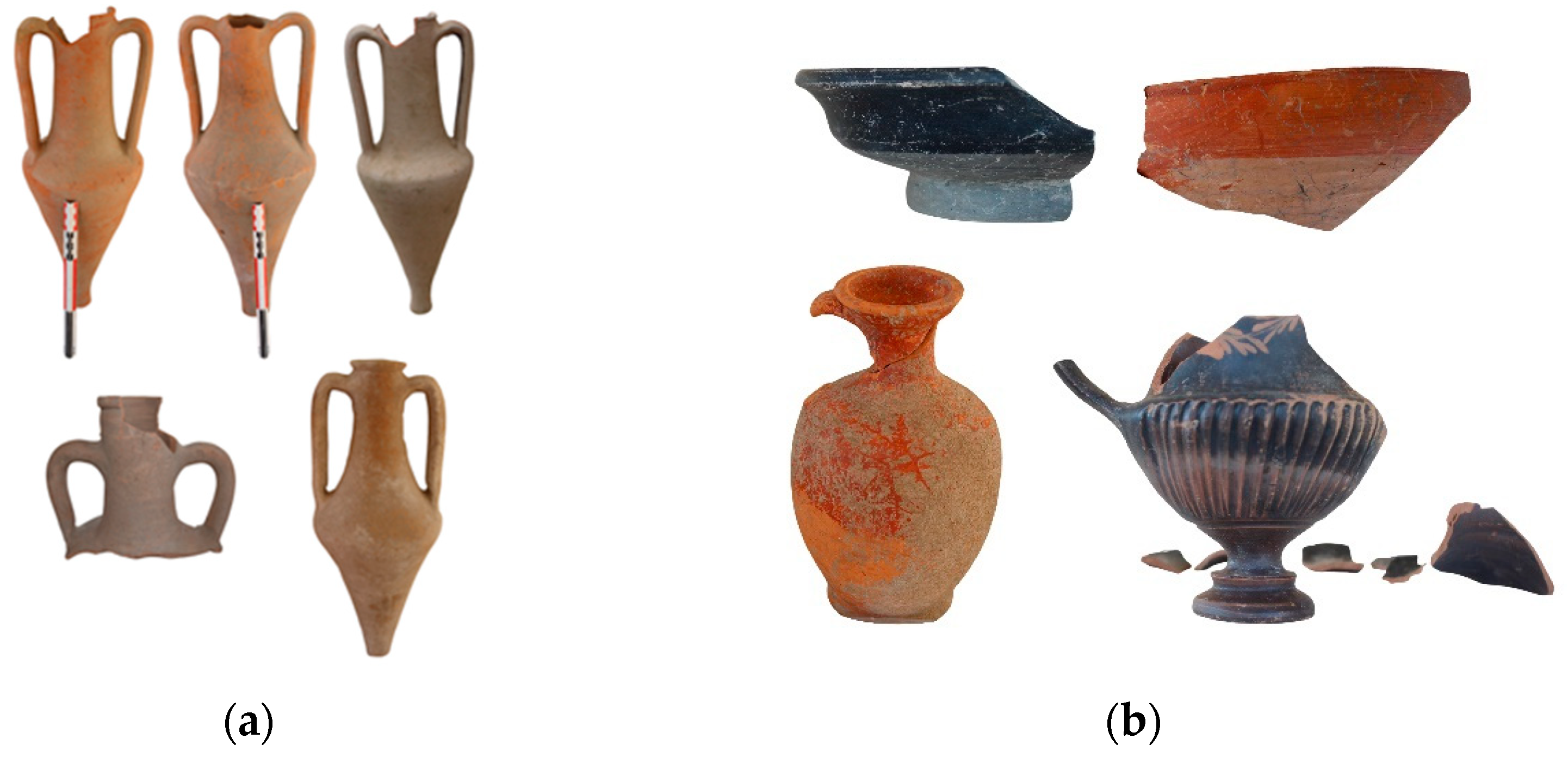
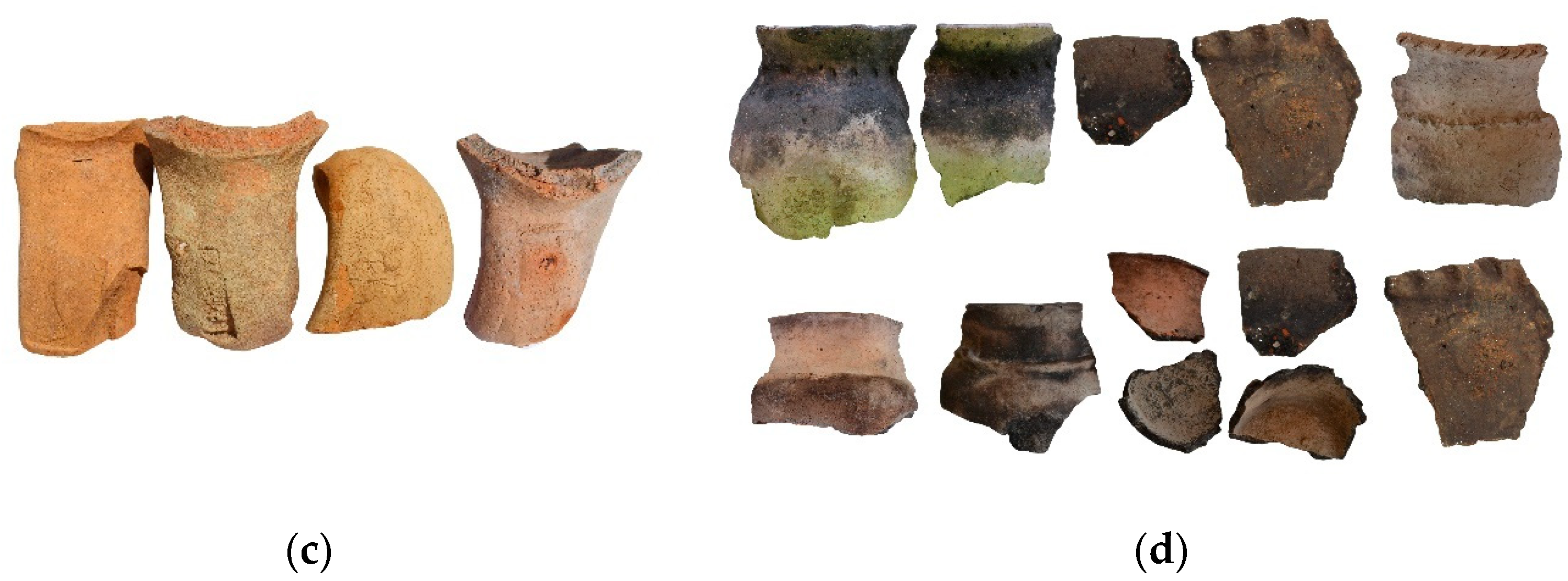
Regarding the archaeological material that was discovered, we mention hand-made and wheel-made ceramics. Within the hand-made ceramics, there are mainly forms specific to the North Pontic area [48], but also Getae ceramic forms (Figure 2). The amphora imports represent discoveries of exceptional value in order to establish the chronology of the sites (through the amphora stamps), and at the same time, provide additional information regarding the development of trade relations (exchanges between the Getae, Scythian and Greek populations) and Greek imports in the south of the Danube region and for the entire territory of the Romanian littoral, in the 4th–3rd centuries B.C. [49].
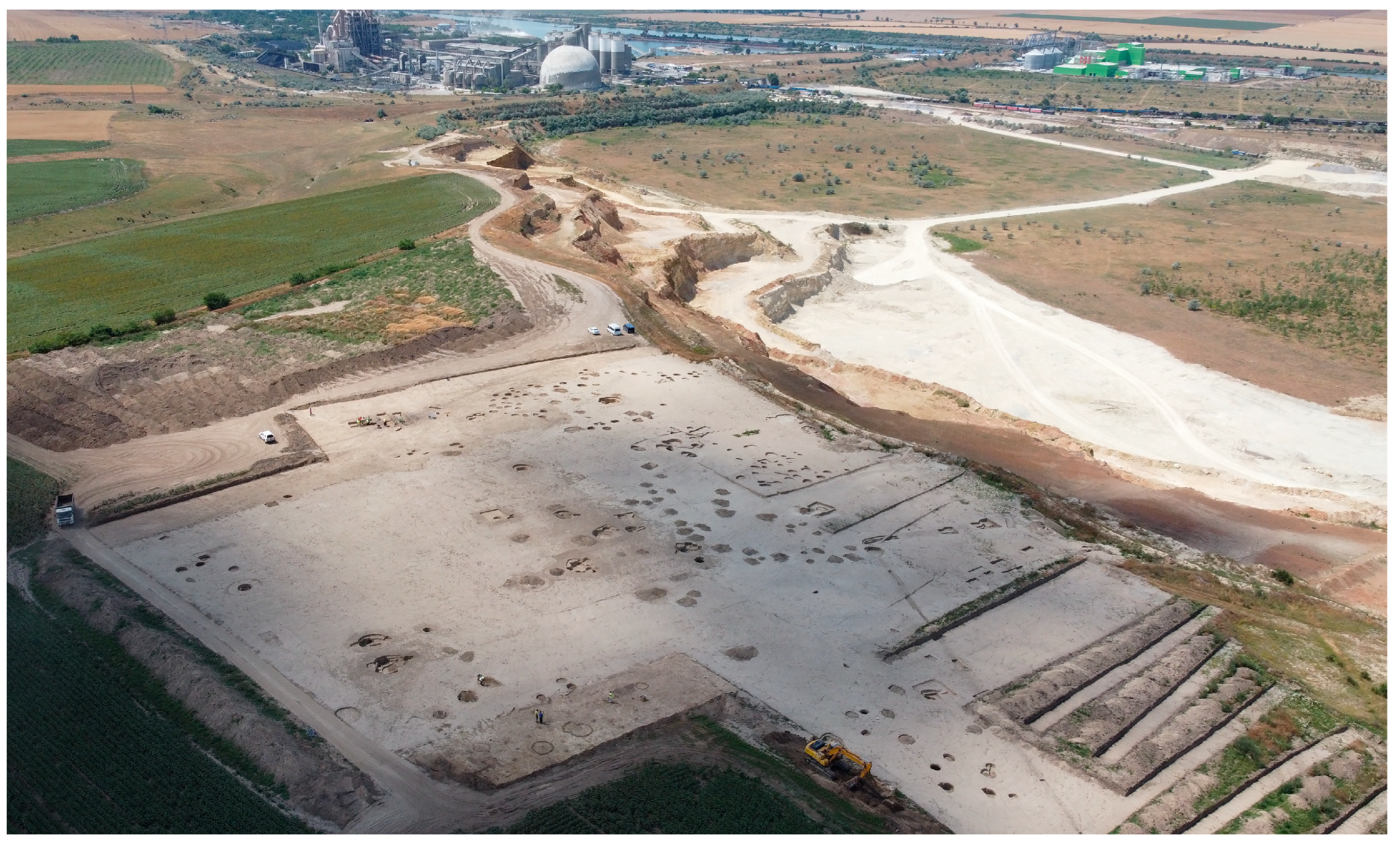
Medgidia Hellenistic 1 settlement. In the research carried out in 2022–2023, for the project “Exploitation Quarry Expansion of the Romcim Cement Factory Medgidia”, the researched area was 24,454 square metres; 366 archaeological features were researched, of which we mention hut dwellings (25), fire installations (21), household pits (140), supply pits (100), pits with deposition (5), inhumation tomb (1), clay loan pits (4), etc. (Figure 3).
The archaeological research brought to light a rich ceramic material of all kinds, from Getic and Scythian hand-made pottery to luxury black-glazed Greek vessels, grey pottery and a rich batch of Greek amphorae. Among the amphoric material, the majority on the site, a special place is occupied by the amphoric stamps (67), coming from 6 Greek producing centres, both Mediterranean (Thasos, Cnidos, Rhodes), and from Pontic ones (Heraclea, Sinope, Chersones). Most of the stamps belong to the Sinopean amphoric production (34), which represents 60% of the total of the lot. The batch of stamps falls into the first half of the 4th century till the mid-3rd century B.C. [50].
Medgidia Hellenistic 2 settlement. The archaeological research was carried out in 2024, for the same project as Medgidia Hellenistic 1, and covered an area of 24,510 square metres. A total of 134 archaeological complexes were identified, including the following: 4 hut dwellings, 44 household pits, 43 supply pits, 25 pillar pits, 4 fire installations, 5 pits with deposition, 3 inhumation tombs, etc. (Figure 4).
Noteworthy is the presence of numerous fragments of hand-made ceramics, both of the North-Pontic type (most of the fragments) and Getae type; also, we notice the presence of Greek luxury or table ceramics. Numerous amphorae were also identified, both the amphoric packaging from the Mediterranean Greek centres and the Pontic centres; the batch of stamps dates between mid-4th century–end of the 3rd century B.C.
Medgidia Hellenistic 3 settlement. During the archaeological diggings carried out in 2023, for the project “Relocation of the Natural Gas Transmission Pipeline”, an area of 9325 square metres was researched. Following the research, 126 archaeological complexes were identified and documented, among them being the following: 2 hut dwellings, 60 household pits, 12 supply pits, 9 pillar pits, 6 fire installations, 1 combustion plant service pit, 1 inhumation tomb, etc. (Figure 5).
A rich ceramic material was discovered, especially vessels, fragments of amphorae and complete amphorae, and luxury vessels, with black and brown glaze, and also rudimentary local pottery. Among the multitude of amphorae and their fragments, which constitute approximately 85% of the total ceramic artefacts, we mention both the amphoric packaging from the Mediterranean Greek centres (Thasos, Chios, Mende, Corinth, Rhodes, and Cos), as well as Pontic centres (Sinope, Heracleea Pontica, Chersones, and Murighiol-type). The batch of stamps dates between the first half of the 4th and mid-3rd centuries BC. An important category of ceramic artefacts is represented by fragments of Getae and Scythian vessels [49].

3. Materials and Methods

Archaeozoology. The archaeozoological samples consists of hand-retrieved faunal remains collected during the archaeological excavation carried out in 2022–2024. We assume that the lack of sediment sieving could cause the small fragments to be lost, causing the undervaluation of small specimens (especially fish and birds, but even mammals). The recovered animal remains were grouped into three types of context, including animal ritual offerings (in inhumation tombs) and animal deposition (in ritual deposition pits), but the majority is household/kitchen waste (Table 1). Their relative dating (for the 4th–3rd centuries B.C.) was conducted in accordance with the archaeological artefacts discovered in those contexts.
The archaeozoological samples were analysed according to standard procedure [51]. First, the faunal remains were anatomically and taxonomically identified using the reference osteological collection of the Faculty of Biology at Alexandru Ioan Cuza University of Iași and atlases of comparative animal anatomy [52,53], followed by data recording and analysis using Microsoft Excel. Also, taphonomic evaluation was performed. The three faunal samples are described in terms of their frequency based on the number of identified specimens (NISP) and the minimum number of individuals (MNI) [54].
Another type of evaluations, for mammal remains, consisted of the age-at-death estimation, sex estimation, and osteometry [55]. Methods of age-at-death assessment were based on tooth eruption and wear, with it being well known that mammals develop one set of deciduous and permanent teeth before reaching adulthood [53,56,57,58]. Sex ratio within cattle is an expression of their management strategy and it is, therefore, useful to complement ageing data to understand husbandry practices [51,55]. There is a distinction between sexual and physical maturity (evaluated on teeth wear stages and tooth eruption); we considered the age of sexual maturity to which, if the duration of the gestation and lactation period for each species is added, we arrived at an immature/mature separation age of 2–2.5 years for cattle, and 18 months for caprine [55].
Measurements from post-cranial bones were taken according to the A. von den Driesch guide [59], and the selected measurements were employed to separate domestic and wild forms (i.e., Sus domesticus/Sus scrofa), to separate the sheep from goats (by metapodials), and to estimate the sex for Bos taurus and the withers height for two mammal species (Bos taurus and Equus caballus). Specific coefficients were used to calculate the withers height, as follows: the coefficients of Fock [60] for Bos taurus and those of Kiesewalter [61] for Equus caballus. In order to distinguish between Ovis and Capra, guides and different criteria for mandibles and metacarpals were used [62,63,64,65].
The animal skeletal remains analysed in this paper represented just the category of household waste and presented a high degree of fragmentation, with many anthropic activity marks (butchering, processing, and burning) and marks left by animals (gnawing traces by dogs) [66,67].
In order to determine statistically significant differences in the faunal composition among the three archaeological sites of Medgidia Hellenistic, a chi-square test of independence was conducted [68,69,70]. The analysis was based on the absolute frequencies of the Minimum Number of Individuals (MNI) estimated for each taxon, thereby facilitating the comparison of species distribution across archaeological sites. This approach tests the null hypothesis that no significant association exists between taxonomic classification and archaeological context. A contingency table was constructed, with taxonomic categories (i.e., domestic and wild species) as one variable and archaeological site (Medgidia Hellenistic 1, 2, and 3) as the other.
To assess the robustness of the results, the associated p-value was also estimated using a Monte Carlo simulation [71]. Monte Carlo simulation is used to generate numerous random samples from different population assemblages, helping assess when trends in relative abundance and correlations with sample size are likely to be accurately detected.
Furthermore, the strength of the association between the analysed variables was assessed using both Cramér’s V and the Contingency Coefficient [72,73]. Cramér’s V, an extension of the correlation coefficient, is suitable for contingency tables of any size and provides a standardised measure of the relationship between categorical variables, making it particularly useful for interpreting quantitative distributions in archaeozoological contexts. The Contingency Coefficient, although influenced by the size of the table, also allows for the evaluation of associations between nominal variables, offering a complementary perspective. The combined use of both indicators enables a more robust and nuanced interpretation of variable relationships, contributing to a more comprehensive understanding of the structure and dynamics of the analysed faunal assemblage.
In addition, Correspondence Analysis (CA) was employed to examine the faunal distribution across the three Medgidia Hellenistic sites and to facilitate the identification of site-specific patterns based on the identified animal taxa [74]. The correspondence analysis was conducted using the frequency data of the minimum number of individuals (MNI) for each taxon, allowing for a deeper exploration of the relationships between animal taxa and the archaeological context. A contingency table was created, correlating taxonomic categories with the archaeological sites (Medgidia Hellenistic 1, 2, and 3). This approach provided a visual representation of the associations between different faunal groups and their respective sites, enhancing the understanding of resource management practices.
Statistical analyses were conducted using the PAST 2.08b software package [75].
Archaeobotany. The archaeobotanical study is based only on phytoliths analyses, not pollen. In this study, sixteen sediment samples were collected from different archaeological contexts: five from Medgidia Hellenistic 1—Med. 1(1–5), six from Medgidia Hellenistic 2—Med. 2(1–6), and five from Medgidia 3 Hellenistic—Med. 3(1–5). These originated from household pits containing domestic and kitchen waste. Approximately 3 g of sediment from each sample was processed using a chemical protocol adapted from Lentfer & Boyd [76], involving hydrochloric acid (35%), potassium hydroxide (10%), sodium polytungstate (density = 2.35), and hydrogen peroxide (30%).
For microscopic analysis, one drop of the final preparation was mounted per slide with immersion oil as the observation medium. Phytolith nomenclature followed the International Code for Phytolith Nomenclature 2.0 [77]. Observations were performed with a transmission optical microscope at 400× magnification.
Phytolith preservation in the Medgidia Hellenistic samples was generally very good, with more than 250 phytoliths recorded per sample. Only two samples from Medgidia Hellenistic 1 (Med. 1(1) and Med. 1(4) samples) showed poor preservation and were therefore excluded from the percentage analysis.
The multidisciplinary investigation used in this study allowed gaining insight into the relationship between the environment and its inhabitants, and to investigate economic and social change, and the relations between the local population and other different human populations that lived in the area.

4. Results and Discussion

Archaeozoology. The archaeozoological analysis considers only the household waste (recovered from the waste pits) contained in the three faunal assemblages. The study of the household waste reflects the practice of mollusc harvesting, fishing, and animal husbandry.
The three assemblages are not uniform in terms of the number of remains, with the most consistent being that from Medgidia Hellenistic 2 (1740 household waste), followed by Medgidia Hellenistic 1 (1304 household waste), and the lowest being that from Medgidia Hellenistic 3 (701 household waste) (Table 2).
The remains of molluscs, fish, and birds are less represented in the samples; they do not exceed 2% each in the assemblages where they appear, with these being more common in the Medgidia Hellenistic 1 settlement.
The molluscs were present only in the Medgidia Hellenistic 1 sample, and are represented by one shell of Unio sp.
The fish remains represent 1.76% in Medgidia Hellenistic 1, only 0.52% in the Medgidia Hellenistic 2 sample, and 0.14% in Medgidia Hellenistic 3 (Table 2). Most of the fish bones (22) are from unidentified species of Teleostei; only 11 bones from the total of 33 fish remains were identified: 6 from common carp (Cyprinus carpio), 3 from pike (Esox lucius), and 2 from sander (Sander lucioperca). All three species are fishable in freshwater (like Danube or the river nearby the settlements) and are present nowadays in the area.
Bird remains were identified at Medgidia Hellenistic 1 (17 remains, representing 1.30%) and Medgidia Hellenistic 2 (3 fragments, 0.17%). Bird remains are not numerous; there are only 20, of which 9 come from chicken (Gallus domesticus), 10 are not identified as species, and one piece in our quantification represents the skeleton of a large bird (42 bones were discovered in anatomical connexion and come from a mature individual of the white-tailed eagle—Haliaeetus albicilla, recovered from a waste pit at Medgidia Hellenistic 1).
As we stated, the remains of fish and birds should be considered undervalued, since the sediments of the Medgidia Hellenistic sites have not been sieved.
The mammal remains exceed 99% of the entire assemblages at Medgidia Hellenistic 2 and 3, while at Medgidia Hellenistic 1, they are 96.8%.
The chi-square test (χ2 = 43.42; p < 0.05) validates the descriptive observations by demonstrating statistically significant differences among the three analysed assemblages in faunal composition. This variability instead reflects differential preservation conditions that disproportionately affected more fragile taxonomic groups (e.g., birds, fish, or molluscs).
Taphonomic marks. The study of butchery represents an important topic because of its major contribution to distinguishing aspects of human–animal interactions. The faunal remains coming from Medgidia Hellenistic sites exhibit all characteristics of household waste. From the total remains, those with butchery marks represent 19% at Medgidia Hellenistic 1 and Medgidia Hellenistic 3, arriving at 28% at Medgidia Hellenistic 2; burned marks represent around 5% at Medgidia Hellenistic 1 and Medgidia Hellenistic 3, but represent 11% at Medgidia Hellenistic 2; gnawing marks (rarer than the other categories of marks) appear on around 3% at Medgidia Hellenistic 1, and 0.8% at Medgidia Hellenistic 2 and Medgidia Hellenistic 3 (Table 3). The notion “burn marks” includes all stages of burning that can be observed on bones, including calcined ones (which probably resulted from the fact that the bones were thrown into a fire). We have considered only the anthropological modifications and carnivorous alteration (gnawing marks), not biochemical alterations. In two complexes (two household pits at Medgidia Hellenistic 1 site) associated with a dwelling, numerous bones were found, anatomically connected, from several animals that probably died or were hunted and then discarded: a mature white-tailed eagle, two dogs (immature individuals), and two immature hare individuals; these bones exhibit no anthropic marks. The criterion used to assess the immaturity of the dogs and hares was the developmental state of the postcranial bones (the epiphysis not fused with the diaphysis).
The chi-square test revealed statistically significant differences in the distribution of taphonomic marks (i.e., butchery, burn, and gnawing marks) across the three faunal samples analysed (χ2 = 237.96, df = 6, p < 0.0001). Given the presence of low expected frequencies in certain contingency table cells, a Monte Carlo simulation was applied to obtain a more robust p-value estimate. The result of this simulation (p = 0.0001) supports the validity of the conclusions regarding real differences in the distribution of taphonomic marks. However, the Cramér’s V coefficient, which measures the strength of association between variables, has a relatively low value (0.1497). This indicates that, although the observed differences are statistically significant, the effect size is weak. This may reflect natural variability or the combined influence of multiple factors affecting the distribution of taphonomic marks. The variations in the frequency of butchery marks may suggest differences in carcass processing techniques or the across the three sites. The higher proportions of burn marks in the Medgidia Hellenistic 2 sample may indicate distinct culinary practices or taphonomic conditions favourable to the preservation of such traces.
Regarding gnawing marks, their greater frequency in Medgidia Hellenistic 1 could reflect more frequent access by carnivores, either domestic or wild, to faunal remains. This could be associated with different waste management. Nevertheless, these differences appear moderate in intensity and are likely influenced by a complex interplay of cultural and natural factors.
In Celtic La Tène settlements in the Northern Alpine Foreland (present-day southern Germany), subsistence strategies relied almost entirely on livestock farming, with hunting playing no economic role, as evidenced by the low proportions of game in Oppida Civilisation archaeofaunas, where the percentage of non-domesticated animals is typically around or below 1% [42]. Also, for Central and eastern Europe during the Iron Age, the subsistence economy was based on animal husbandry [33].
In our quantification, there appears a third mention of remains, those of Sus sp.; even if they are not very numerous, they are fragments coming from young individuals, and due to the age, they could not be attributed for certain to Sus domesticus (pig) or Sus scrofa (wild boar).
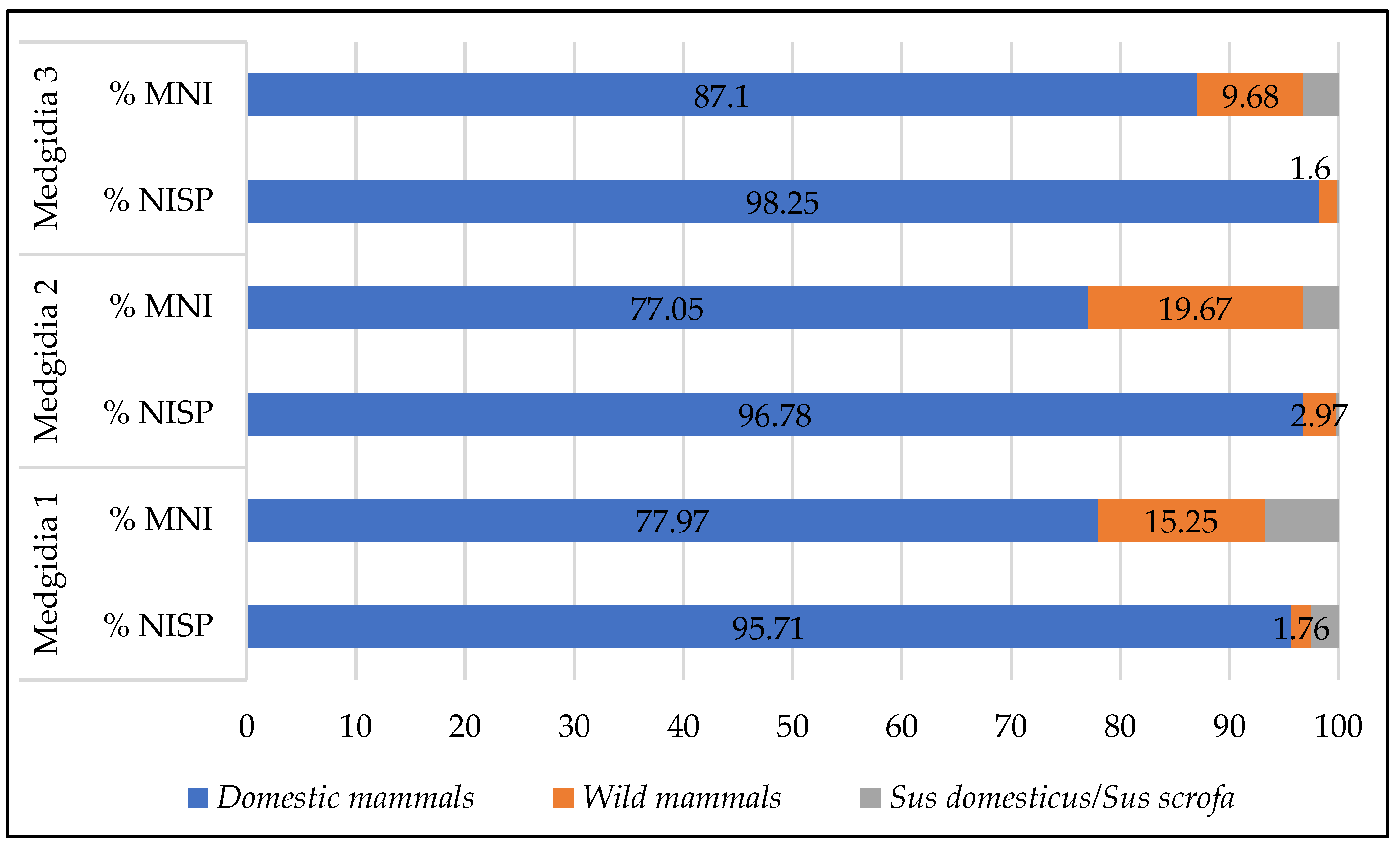
Domestic mammals dominate the assemblages, and no intersite variations can be observed between the proportions of domestic and wild species. The frequency of domestic species remains (% NISP) exceeds 95% in all the assemblages: 95.7% at Medgidia Hellenistic 1, 96.7% at Medgidia Hellenistic 2, and 98.2% at Medgidia Hellenistic 3. The wild species group represents only 1.76% at the Medgidia Hellenistic 1 settlement, 2.97% at Medgidia Hellenistic 2, and 1.60% at Medgidia Hellenistic 3 (Figure 6). Archaeozoological results show low proportions of game, indicating that livestock farming remained the mainstay of subsistence in the area during the 4th–3rd B.C.
Our analysis focuses on cattle, caprine, and horse farming, but the discussion about pig raising is a special one. All three assemblages are characterised by a high proportion of cattle (Bos taurus) and small ruminants (Ovis aries and Capra hircus): 84.87% at Medgidia Hellenistic 1, 90.04% at Medgidia Hellenistic 2, and 92.25% at Medgidia Hellenistic 3, indicating that the animal husbandry was based on these categories. Also, these species dominate all three assemblages by reference to the minimal number of estimated individuals (% MNI): 54.24% at the Medgidia Hellenistic 1 settlement, 60.66% at Medgidia Hellenistic 2, and 61.29% at Medgidia Hellenistic 3. Cattle are prevalent over caprine in all samples, being the preferred species (Table 4). For Bos taurus and Ovis aries/Capra hircus, the anatomical elements used to estimate the MNI are the mandibles. The teeth on the mandibles were also used to estimate the dental age-at-death.
Moreover, since ancient times, cattle breeding has been noted as an important occupation of these populations. Herodotus tells us about the Getae; in addition to the fact that they lived north of the Danube, their main occupations were cattle breeding and agriculture [78]. Regarding the nomadic Scythians, Herodotus also tells us that their main concern was animal husbandry [78].
The third species in order of importance is the horse (Equus caballus), which proportions are 6.89% at Medgidia Hellenistic 1 settlement, 5.26% at Medgidia Hellenistic 2, respectively at Medgidia Hellenistic 3 (Table 4). The horse was an important species for the Getae, as well as for the Scythes, and was perhaps a species that was given special care. For most horse individuals, the age-at-death is at mature stages (14 estimated individuals, of 18 in the three sample); only four individuals were sacrificed at immature ages (one each at Medgidia Hellenistic 1 and 2, and two at Medgidia Hellenistic 3). In addition to its utilitarian function (traction and riding), the species was also consumed as food (hypophagy), as evidenced by its bone fragments with traces of cutting and burning. From the total horse remains, 13 were identified with burn marks (especially bones from autopodium), 47 with butchery marks (mainly on bons from the stylopodium, zeugopodium, and pelvis), and 4 with gnawing marks.
The horse was an important species for transport and trade, but was an important animal utilised for ritual deposition (and so is related to afterlife beliefs); at Medgidia, in one inhumation grave, only horse bones were identified (as a simple offering), and in another, one of the four species (cattle, caprine, horse, and red deer) was used as an offering. The importance of cattle and horses for the Scythians is highlighted by the same Herodotus, who recalls that they have neither fortresses nor fortified walls, but all carry their houses with them and are mounted archers, living not from ploughing, but from raising cattle [78].
Pig (Sus domesticus) remains are very rare (only six) at Medgidia Hellenistic, not exceeding 0.4% in any of the three samples. Four remains were identified at Medgidia Hellenistic 1, and one each at Medgidia Hellenistic 2 and Medgidia Hellenistic 3, based on which three adult individuals (sacrificed at over 2 years old) were estimated (Table 4). Some metrical data for Sus domesticus (from mature individuals only) are as follows: breadth of the distal end of the tibia = 36 mm, greatest length of the processus articularis of the scapula = 30 mm, length of the acetabulum of the pelvis = 37.5 mm, length of the M3 tooth from the mandible = 27.5 mm. The situation is also confirmed by Herodotus, who tells us that the Scythians were also recognised for sacrificing cattle and horses, and that they never used pigs and would not even raise them in their country [78]. The identified pig remains are most likely related to the local population (Getae), with whom the Scythian population came into contact and coexisted seasonally. Pig remains exist in all Getae settlements, but the frequency of this species in all of them is lower compared to domestic cattle and caprine [23]. By comparison, in the Geto-Dacian settlements in southern Romania, the share of pigs can reach 25–27% of the total number of mammals (in Cârlomănești, Radovanu, Piscul Crăsani) [13].
In the 3 samples, 35 remains of Sus sp. were also identified. They could not be attributed for certain to Sus domesticus or Sus scrofa, because they come from young individuals, based on them being estimated as 7 immature individuals (Table 4).
The Scythian population was probably the majority and used these locations for a limited period (late autumn–early spring), periodically, because they carried out transhumance; these locations were probably used together with the local populations (Getae), with exchanges between the two types of communities. Archaeozoological evidence supports the archaeological evidence, documented in these sites by the presence of Scythian, Getic, and Greek artefacts in the same contexts.
Domestic cattle were also the main species for the indigenous Geto-Dacian populations, both for the communities in Medgidia and more distant areas. For settlements in the east (Moldova region) and south (Muntenia region) of the current territory of Romania, the conclusions of the synthesis studies carried out by Haimovici [23], Baciu & Bălășescu [15], and Tarcan & Bejenaru [79] are that among the Geto-Dacians, the main occupation was animal husbandry, with the animal economy being based mainly on domestic cattle, followed by the caprine and then pigs. There are two exceptions in two settlements; the first place in weight can also be occupied by sheep-goats (at Cârlomănești) or pigs (Gruiu Dării) [15].
Another domestic species identified, but without importance in the food economy of the settlements in Medgidia Hellenistic, is the dog (Canis familiaris) (Table 4). Dog remains are in all three, although they are not very numerous, with most being in Medgidia Hellenistic 1. Dogs were used for hunting, companionship, to tend flocks, and to guard dwellings.
In Geto-Dacian settlements in present-day southern Romania, in addition to the domestic species from Medgidia, the donkey was also identified at Cârlomănești [17] and Zimnicea [23].
So, cattle were the most frequent species in the studied settlements, similar to the general situation in Central and Eastern Europe during the Iron Age [33]. In the Iron Age settlements in Northeastern Hungary (Salgótarján, Jászfelsőszentgyörgy, and Balassagyarmat), cattle and caprine are dominant, with the data suggesting the “Scythian”, mobile pastoral patterning in the exploitation of domestic ungulates [43]. The samples from Jászfelsőszentgyörgy, a partially excavated settlement of the Scythian period, reveal the animal-keeping activities of a fairly mobile population, with large numbers of cattle, horses, caprine, and a few pigs [33].
During the Iron Age in Britain, cattle and caprine are the dominant taxa and the pig is the least frequent of the three domesticates. Cattle percentages are generally dominant during the Early Iron Age and Middle Iron Age, with a definite shift towards caprine during the Late Iron Age [34,35,36].
The economy of the Celtic peoples of the Late Iron Age in Western Iberia was based on livestock and, to a lesser extent, on cereal farming with different varieties of wheat and barley; within the domestic fauna, bovids were the most abundant taxon [41]. As well, the north-eastern Iberian communities, during the Iron Age, relied on crop cultivation and animal husbandry for their subsistence; animal husbandry was mainly focused on caprine, with sheep being prominent due to their suitability to the Mediterranean climate, and environment [80].
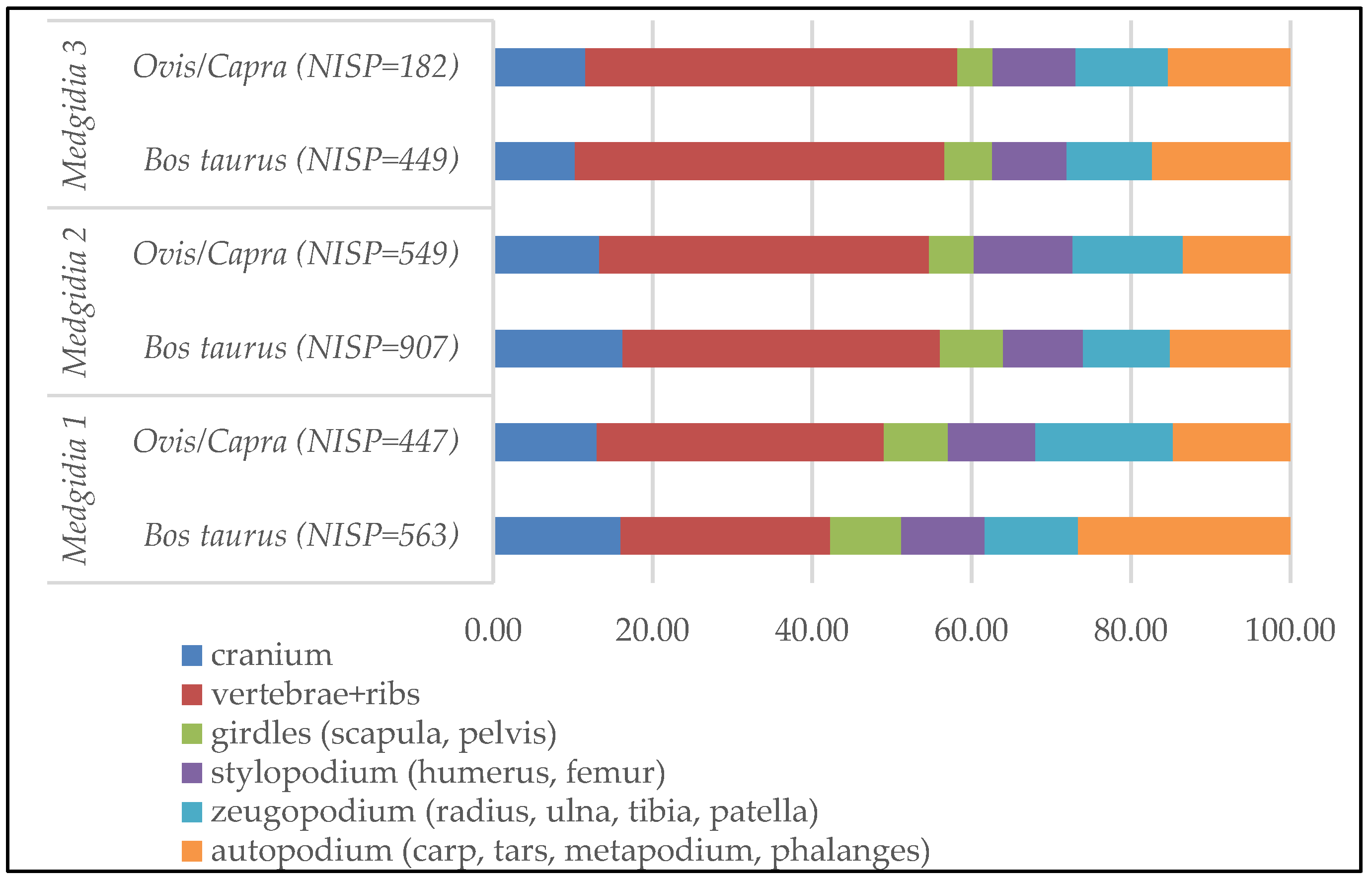
Remains distribution by skeletal regions. For cattle and caprine, the species with the highest frequencies at the Medgidia settlements, the remains distribution was determined by evaluating the skeletal regions. The distributions indicate that these animals were probably kept, slaughtered, and processed within the inhabited settlement centres. This is indicated by the fact that all body parts are represented in the assemblages. At Medgidia Hellenistic settlements, cattle were preferred for consumption; the share of remains within the assemblages is 47.31% at Medgidia Hellenistic 1 and increases for the other assemblages, with 56.09% at Medgidia Hellenistic 2 and 65.64% at Medgidia Hellenistic 3 (Table 4). Cattle remains belonging to the axial skeleton (cranium, vertebrae, and ribs) represent 42.27% at Medgidia Hellenistic 1, 56.01% at Medgidia Hellenistic 2, and 56.57% at Medgidia Hellenistic 3; the appendicular skeleton (stylopodium, zeugopodium, and autopodium) represents 57.73% at Medgidia Hellenistic 1, 43.99% at Medgidia Hellenistic 2, and 44.76% at Medgidia Hellenistic 3 (Figure 7).
The share of caprine remains reaches 37.56% at Medgidia Hellenistic 1, with a slow decrease for Medgidia Hellenistic 2 (33.95%) and Medgidia Hellenistic 3 (26.61%). Both sheep and goat species were identified based on some bones, but for quantification, we put together the bones of the two species. The fragments attributed to the axial skeleton represents 48.99% at Medgidia Hellenistic 1, 54.64% at Medgidia Hellenistic 2, and 58.24% at Medgidia Hellenistic 3, while the appendicular skeleton is 51.01% at Medgidia Hellenistic 1, 45.36% at Medgidia Hellenistic 2, and 41.76% at Medgidia Hellenistic 3 (Figure 7).
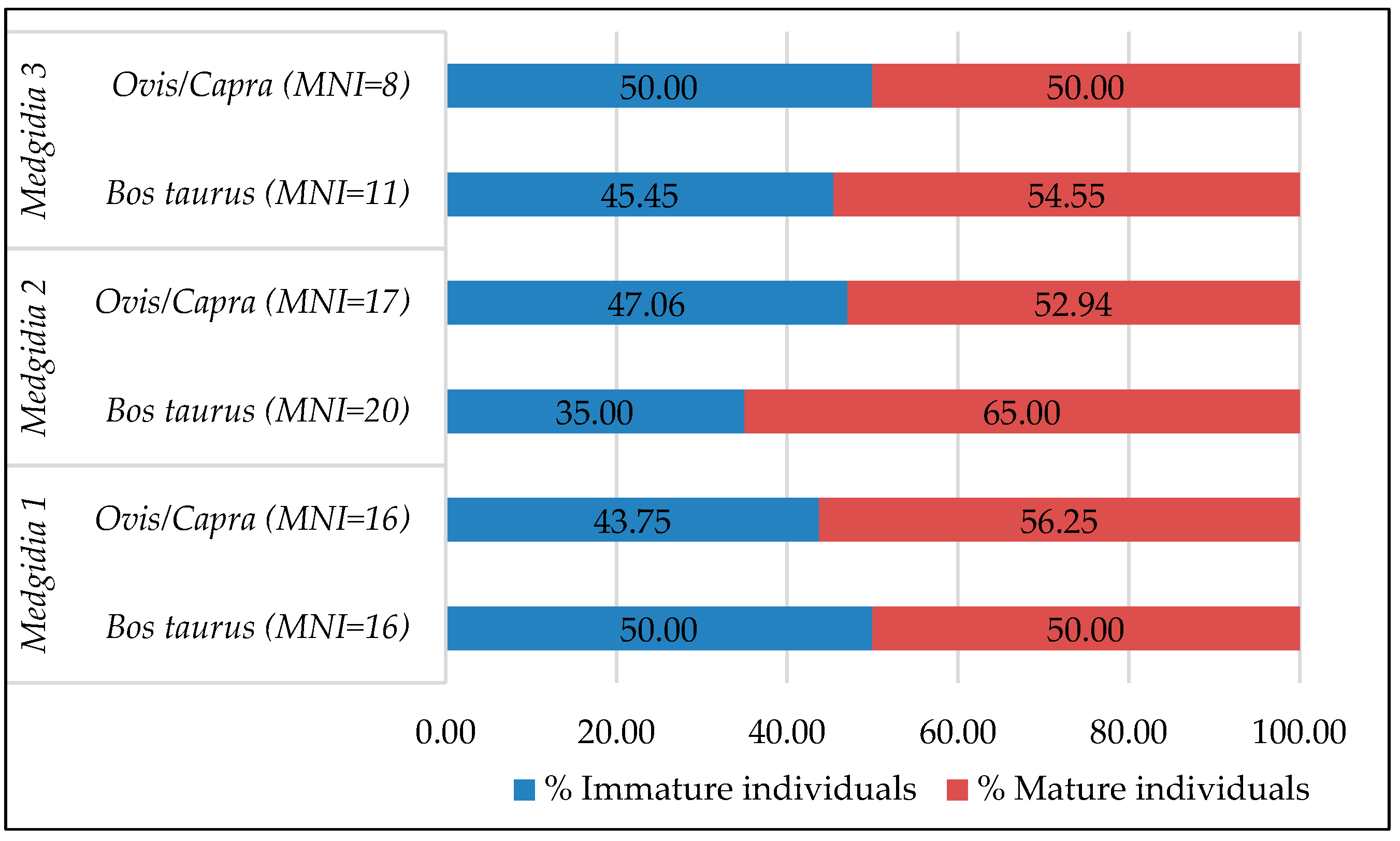
Age-at-death estimation. The ratio between immature and mature estimated individuals of Bos taurus and Ovis aries/Capra hircus in the assemblages indicates near equality of the two groups (Figure 8). This is confirmed by the distribution of individuals by age category (Table 5). One portion of the cattle and caprine individuals were sacrificed for their meat and skin, but other individuals were kept and exploited for their secondary products (milk), traction force, and reproduction. The immature animals sacrificed were probably surplus males or injured ones.
In the immature caprine category, a preponderance of the 6–12-month category is observed (Table 5), probably from caprine being slaughtered before the unfavourable season, keeping only the animals that could provide food over the winter. The utilitarian importance of adult cattle and horses among the Scythians is highlighted by Herodotus, who describes their lifestyle as follows: the nomadic Scythians lived in covered carts with four or six wheels, divided into two or three small compartments and pulled by two or three pairs of hornless oxen. Women and children lived more in these carts, while the men accompanied them on horseback [78].
Sex estimation was conducted only for cattle, based on the morphometric characteristics of the metapodial bones. The data indicate a population mostly composed of females, as is frequent in human-managed herds; the variation ranges of the metapodial indices for the cattle sexes (i.e., female, male, and castrated) evidenced eight females and two castrated individuals (Table 6). This data must be correlated with the classes of dental age-at-death estimation, with the strategy probably being to sacrifice the young males (for the necessary meat and skin) and keep the females for many years, as they are more profitable for secondary products (dairy products) and field labour.
A similar sex ratio was observed for the Geto-Dacian settlements in the eastern and southern areas [23], highlighting the high frequency of female cattle and the low number of castrated and male cattle. Mature cattle were used mainly for milk production and field labour. Horses were probably also used for carrying loads (due to the shortage of castrated Bos taurus) [23].
The withers heights for Bos taurus indicate small-size individuals, of primitive type, with low productivity rates; this parameter range between 100 and 118 cm, calculated for eight female individuals, with the mean of 106.9 cm. For castrated individuals, it was possible to calculate two withers heights, each of which was 119 cm (Table 6).
For the 10 withers heights calculated at Medgidia Hellenistic (Table 6), the average value is 109.4 cm, a slightly lower value compared to those for the Geto-Dacian settlements in the east and south of the current territory of Romania. Most average values for the height at the withers are in the range of 110–115 cm: lower values are found at Bâtca Doamnei, Florești, Zimnicea, Brad, and Răcătău, and higher values are found at Lozna, Popești, Piscul Crăsani, Mărgăritești (Table 7).
For the La Tène period, according to Tarcan & Bejenaru [79], the mean value for the entire of Romania is 112.5 cm, and in its regions, the mean values are 113.1 cm in Moldova, and 112.8 in Muntenia.
The average withers height for Europe in general is 111 cm, ranging between 98.5 cm and 139 cm [81].
The cattle from the La Tène settlements in France are very small [40,82]. Duval & Clavel [82] concluded that the small size of the animals must have been a particular advantage, particularly in limiting the constraints of breeding and processing—collecting and storing winter food, setting up suitable structures, preparing and preserving meat. They observed a decrease in size between the 6–4th centuries B.C. The situation changed during the Late La Tène and Roman periods and underwent rapid and spectacular transformations. Although the cattle are still small and slender (in the 4th–3rd centuries B.C.), their growth begins at this time and marks the emergence of new economic models in Europe [82].
The withers height for Equus caballus was estimated for five specimens from Medgidia, with the average value being 131.8 cm (the variability limits are between 124.1 cm and 138.4 cm) (Table 6).
In other more distant Geto-Dacian settlements, the horse’s withers waist was recorded (Table 7). The average withers height value obtained for Romania is 134.7 cm, with a minimum of 125 at Piscul Crăsani and a maximum of 144.8 cm at Brad [79].
Regarding the Iron Age horses of Central and Eastern Europe, Bökönyi [33] explains that they constituted two well definable groups that coexisted; one is the Oriental horse group (in the eastern part of Central Europe and Eastern Europe), which “included Scythian and Russian horses of South Russia, Scythian horses of Hungary, Hallstatt horses of Slovenia, Thracian horses of Bulgaria and Early Iron Age horses of Romania”; the other is the Occidental horse group, which “comprised horses of the Hallstatt period in Austria and Germany, as well as the Celtic horses of Germany and Switzerland”. For the eastern group, the withers height (based on the length of the metacarpals) has a mean of 136.15 cm (variation between 121.1 and 149.4 cm), and for the western group, the average is 126.07 cm (variation between 109.9 and 149.4 cm); based on the metatarsals, the eastern group’s withers height is 120.4–151.9 (the average value is 137.12 cm), and for the western group, the withers height is 112.5–153.5 cm (average 126.69 cm) [33].
The mean of the withers height for Europe during the Iron Age is 127.9 cm, ranging between 121 cm and 132.9 cm [83]. Bökönyi [33] notes that the Hellenistic kingdom and Rome imported tall horses from the Scythians to improve their military power.
Hunting has a very small importance for the settlements under study. The largest diversity of identified wild species (red deer, roe deer, wild boar, hare, wolf, and fox) is at Medgidia Hellenistic 2 (six species), while at Medgidia Hellenistic 1, four species were identified (wolf and fox are missing compared to Medgidia Hellenistic 2); at Medgidia Hellenistic 3, only two species were identified: red deer and hare (Table 4). Red deer and hare were identified in all three settlements.
Considering the ecological affinities, the wild mammal species were grouped into forest species (i.e., red deer and wild boar), forest edge/open space species (i.e., roe deer and hare), and eurytopic species (i.e., fox and wolf). The frequencies of red deer, like the number of remains, indicate the prevalence of forest species, and could indicate that there was a large forest not far from the settlements, in which game such as red deer and wild boar could easily be found.
In Geto-Dacian settlements in the south and east of present-day Romania, other wild mammals have been identified, which can complete the list for this historical period: Bos primigenius (aurochs), Meles meles (badger), Ursus arctos (brown bear), Martes martes (pine marten), Sciurus vulgaris (red squirrel), Castor fiber (beaver), and Felis silvestris (wildcat) [13,15,17].
In general, hunting was of very little importance for Iron Age communities; Bökönyi [33] explains that “Among the agricultural tribes of the steppe the role of hunting must have been very slight…Among the Scythian tribes, only distinguished personages participated in hunting activities, chiefly for the sake of sport. In the economy of the towns of the northern coastal region of the Black Sea, hunting played a completely insignificant role; in general, the occurrence of wild animals was below 5 per cent”.
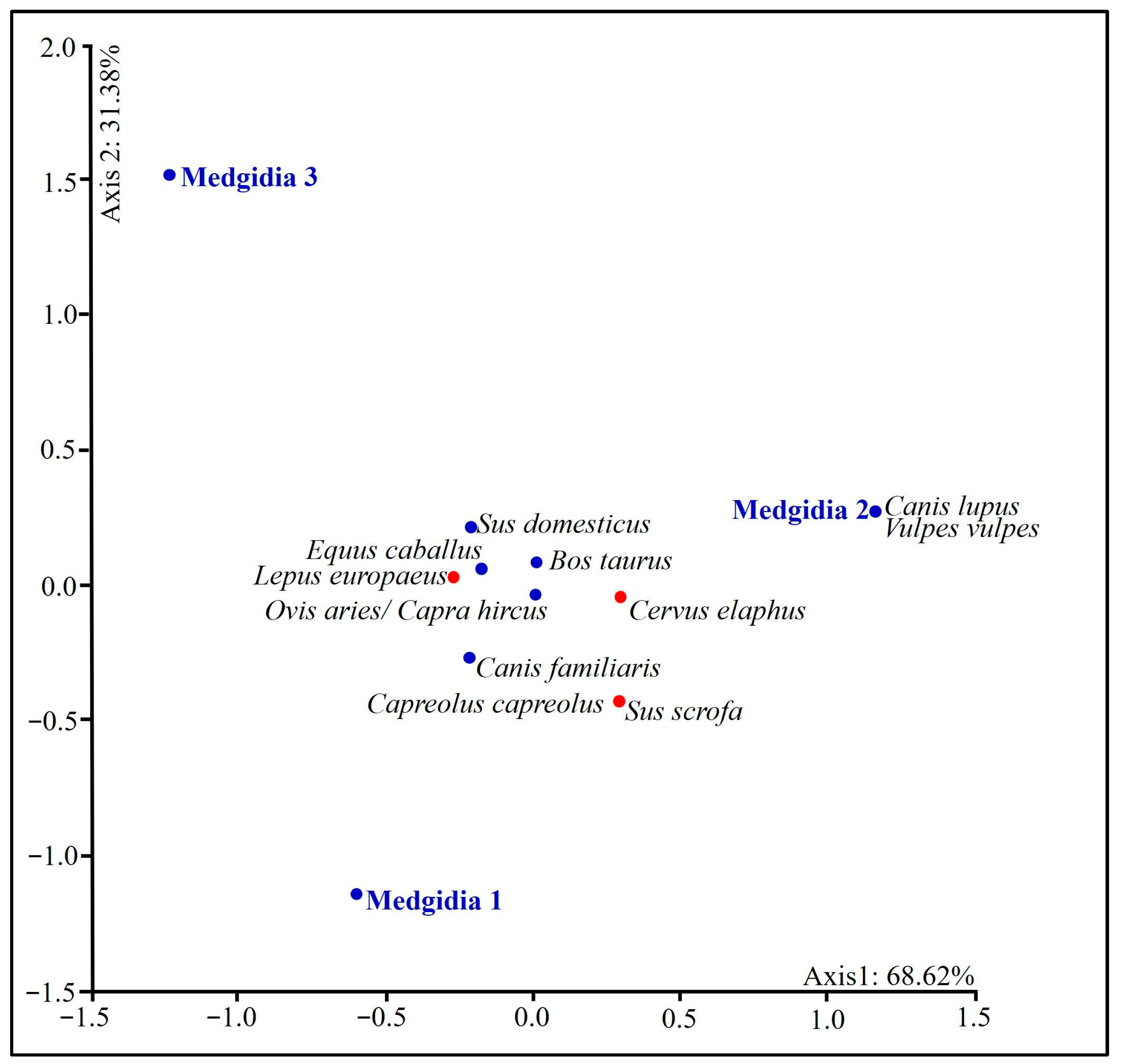
Correspondence Analysis (CA) revealed that the first two axes explain the entire variance within the dataset (Axis 1 = 68.62%, Axis 2 = 31.38%), indicating that the distribution of mammal species across the three sites (Medgidia Hellenistic 1, 2, and 3) is structured and can be interpreted within a two-dimensional space (Figure 9). The CA results suggest that Medgidia Hellenistic 1 and Medgidia Hellenistic 3 would be slightly more associated with domestic species (Bos taurus and Ovis aries/Capra hircus), and Medgidia Hellenistic 2 with wild species, particularly Cervus elaphus and Capreolus capreolus. However, the chi-square test applied to the distribution of taxa across the three sites (χ2 = 9.5805, p = 0.98973, df = 22) did not identify any statistically significant differences. These results are further supported by the Monte Carlo simulation (p = 0.999). Likewise, the measures of association strength (Cramer’s V = 0.182 and Contingency Coefficient C = 0.24) indicate a very weak association.
Therefore, it can be concluded that, despite the visual structuring of faunal distribution as revealed by CA, there is no statistically significant association between taxa and site. The distribution of MNI appears generally balanced, reflecting relative homogeneity between the three sites.
Archaeobotany.
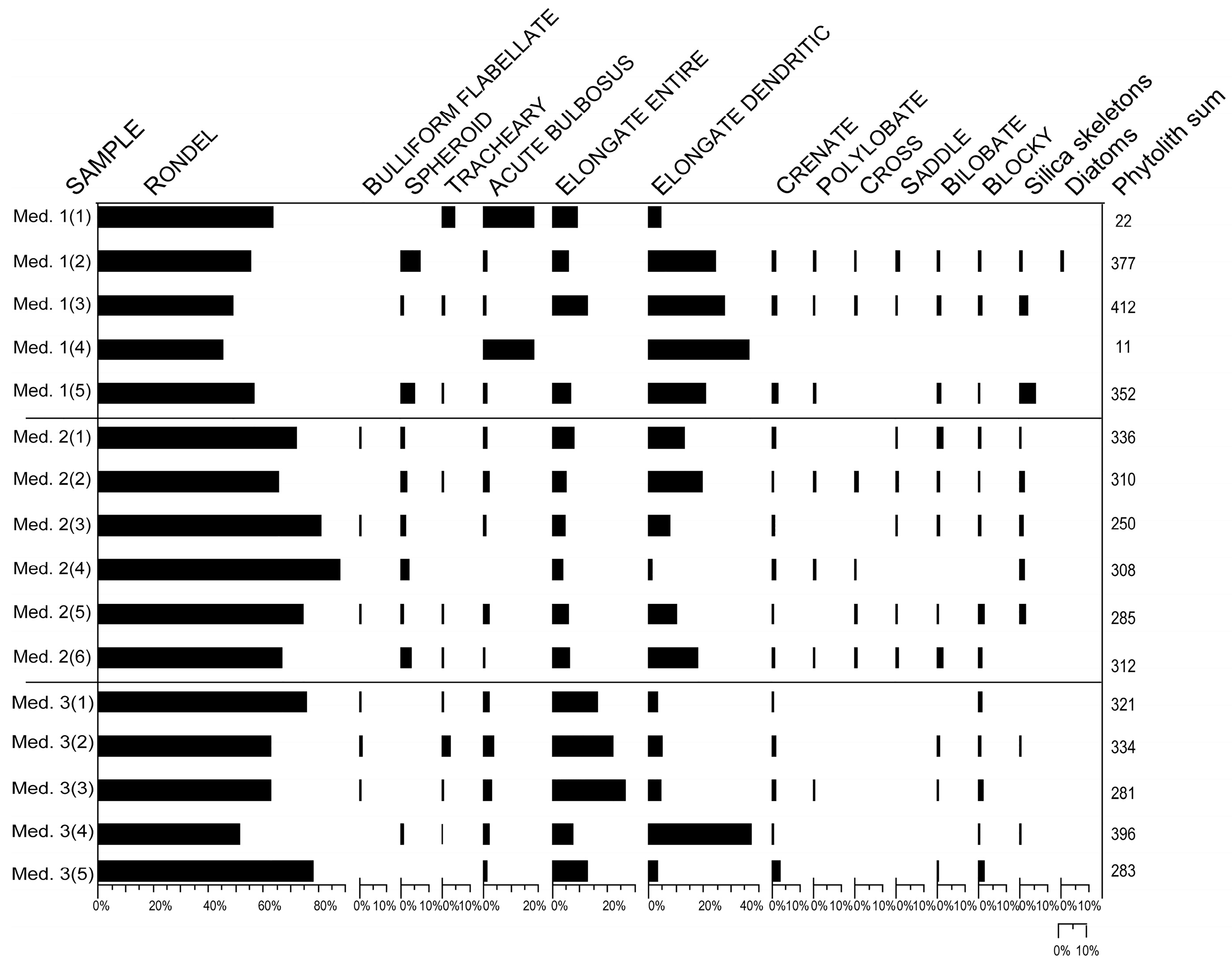
Phytolith spectra. From the 16 samples collected from the archaeological context filling, a variety of phytolith morphotypes were identified, including Rondel, Bilobate, Cross, Saddle, Crenate, Polylobate, Bulliform flabellate, Elongate entire, Elongate dendritic, Acute bulbosus, Blocky, Spheroid, and Tracheary (Figure 10). Silica skeletons were also present, along with occasional diatoms. The phytolith assemblages from the Medgidia Hellenistic sites (Figure 10) are dominated by forms characteristic of the Poaceae family, indicating the presence of several of its subfamilies.
Across all analysed samples, Rondel phytoliths constitute the dominant class, with values ranging from 51.26% to 87.99%. Within temperate environments, Rondel morphotypes are generally indicative of the Pooideae subfamily [84,85], which includes many temperate-adapted grasses. Their dominance suggests a prevalence of Pooideae taxa in the local vegetation and in the plant material incorporated into the archaeological deposits.
Bulliform flabellate phytoliths, derived from epidermal cells of Poaceae and Cyperaceae leaves [77], were identified in Medgidia 2 and Medgidia 3, though only in modest proportions (<1%).
Phytoliths typically associated with woody dicotyledonous plants were attested in all samples. The Spheroid morphotype, attributed to this group [86,87], reached values of up to 6.90%. Given the generally low phytolith production of dicots, these proportions are noteworthy.
Tracheary phytoliths were identified in 10 samples, reaching up to 2.69%. These morphotypes are taxonomically non-specific, as they may be produced by monocotyledons, dicotyledons, and conifers [88,89].
Acute bulbosus phytoliths were recorded in all Medgidia samples, except for one from Medgidia Hellenistic 2. Originating from vegetative tissues, they are widely produced by grasses and reached proportions of up to 3.89%. While frequently used as diagnostic markers of the Poaceae family [90,91], they have also been documented in Cyperaceae [92] and, more rarely, in certain dicotyledons [93,94].
Elongate entire morphotypes reached up to 26.33%, being identified in all samples except one from Medgidia Hellenistic 1, where phytoliths were insufficiently represented. These forms, produced in stems and leaves, reflect the contribution of non-reproductive tissues to the assemblages.
Elongate dendritic phytoliths, derived from grass inflorescences [95], were also well represented, reaching up to 37.37% in one sample from Medgidia Hellenistic 3. As established indicators of cereal cultivation and processing [96], their presence is complemented by the identification of silica (up to 5.40%) in the Late Iron Age samples from Medgidia Hellenistic, further confirming cereal exploitation.
Crenate phytoliths, diagnostic of Pooideae and temperate grasses, were identified in 14 samples, with values up to 2.83%, showing a consistent presence across the assemblages.
Polylobate phytoliths, recorded in modest proportions across all three sites, confirm the presence of Panicoideae grasses. The Cross morphotype, also attributed to this subfamily, was identified in Medgidia Hellenistic 1 and Medgidia Hellenistic 2, strengthening the taxonomic signal.
Bilobate phytoliths, primarily produced by Panicoideae, were recorded across all three Medgidia sites, although in low proportions (<2%).
Saddle phytoliths, typically indicative of Chloridoideae but also present in other subfamilies [77], were recorded sporadically in Medgidia Hellenistic 1 and Medgidia Hellenistic 2.
Blocky phytoliths, which may derive from monocots, dicots, and conifers [77,93], were observed across all three Medgidia Hellenistic sites, although their proportions are modest.
Vegetation Structure and Cultural Practices. The phytolith spectra from the three Medgidia sites are highly homogeneous. They are dominated by Rondel morphotypes, diagnostic of Pooideae and indicative of temperate C3 grasses. Along with the consistent occurrence of Crenate forms, this points to the stable and continuous contribution of Pooideae taxa to the vegetation and to the plant resources incorporated into the archaeological record. Panicoideae are represented by Bilobate, Polylobate, and Cross morphotypes, while Saddle morphotypes suggest an additional, though modest, input from Chloridoideae. Even if present in lower proportions, these C4 indicators demonstrate the coexistence of warm-season grasses with temperate taxa, reflecting a mixed grassland environment and ecological diversity available to the communities.
Phytoliths derived from non-reproductive tissues, such as Elongate entire and Acute bulbosus, are consistently represented across the assemblages. Their abundance may reflect both natural vegetation inputs and anthropogenic practices, including the use of grasses as fodder, bedding, or fuel, comparable to patterns observed in other Late Iron Age contexts where grasses fulfilled multiple functions beyond subsistence.
The most striking evidence, however, relates to cereals. Elongate dendritic morphotypes, together with silica skeletons, provide robust proof for cereal cultivation and processing. High values were recorded consistently across all three Medgidia sites, reflecting widespread activities such as harvesting, threshing, and storage. Variation in percentages, with some lower values, may be explained by differences in the use of space within the settlements, where certain areas were more directly involved in cereal processing. This indicates that cereal exploitation was a shared and pervasive practice across the sites.
Woody dicotyledonous inputs are evidenced by the consistent presence of Spheroid phytoliths. Although dicots generally produce fewer phytoliths, the values observed at Medgidia Hellenistic settlements are noteworthy and likely reflect the sustained use of shrubs and trees, particularly for fuel or construction. Additional non-specific morphotypes, such as Blocky and Tracheary forms, further enrich the assemblages and may also reflect contributions from Cyperaceae growing in wetland settings, consistent with the environmental context of the Carasu Valley.
Taken together, the Medgidia Hellenistic phytolith record highlights the close interplay between local vegetation and human practices. Pooideae dominance reflects the ecological foundation of temperate grasslands, while Panicoideae and Chloridoideae indicate contributions from warm-season taxa. Cereals stand out as the clearest signal, underscoring their centrality to Late Iron Age subsistence, while woody dicots and wetland plants point to the exploitation of multiple ecological niches. Considered alongside archaeozoological evidence, these results suggest a mixed farming economy in which cereals, livestock, and wood resources were closely integrated into the daily life of the communities.
Human—environment interactions and functional diversity
The bioarchaeological evidence from Medgidia challenges culture—historical interpretations that frame Getae and Scythian groups as occupying different evolutionary or developmental stages. Instead, the dominance of domestic livestock, the emphasis on cattle and horses, and the low contribution of hunting suggest a shared pastoral foundation, albeit practiced with different degrees of mobility and seasonal intensity.
Phytolith data complement this picture by documenting sustained cereal use and grassland exploitation, indicating that even groups traditionally described as nomadic engaged with cultivated landscapes. This supports broader Late Iron Age research demonstrating that pastoral mobility and agriculture were not mutually exclusive, but often integrated within flexible economic systems.
From a broader Quaternary perspective, the Medgidia Hellenistic case study illustrates how human populations responded to environmental constraints not by converging towards a single economic model, but by maintaining adaptive diversity within shared landscapes. Such diversity may have enhanced resilience by allowing communities to buffer climatic variability, resource fluctuation, and socio-political change.
Comparable patterns have been documented across Iron Age Europe, where mixed agro-pastoral economies, seasonal mobility, and regional exchange networks structured human–environment interactions. The Medgidia Hellenistic settlements thus contribute new data from a poorly documented region, extending these discussions into the western Pontic inland.
In this sense, the simultaneous presence of communities with different material traditions at Medgidia Hellenistic does not represent asynchronous “development” but rather coexisting adaptive strategies shaped by mobility, land use, and social connectivity. Bioarchaeological data, by directly recording subsistence practices, are uniquely suited to addressing this issue, as they bypass normative assumptions embedded in material culture typologies.
The integration of archaeozoological and phytolith evidence demonstrates that environmental engagement, rather than cultural affiliation alone, structured daily life in Central Dobruja during the Late Iron Age. This finding has implications beyond the regional scale, contributing to international debates on cultural interaction, resilience, and human adaptation during the Late Quaternary.

5. Conclusions

The Late Iron Age subsistence strategies in the investigated area relied almost entirely on livestock farming. Hunting and fishing were rather unimportant, as evidenced by the low proportions of game and fish remains. We assume that the importance of fishing is difficult to estimate, considering the sampling methods of the studied material.
The faunal samples consist of skeletal remains, almost all attributed to mammals, and few to molluscs, fish, and birds. Domestic mammals dominate, and in all three settlements, cattle are the most important species, followed by caprine. These species are followed by the horse, important for traction and riding.
Another identified domestic species is the dog. The identified wild mammals are the red deer, roe deer, wild boar, hare, wolf, and fox; these species are indicators for two biotopes exploited by communities, the forest and the edge, respectively.
The exploitation strategy applied to cattle and caprine targeted obtaining both primary products (meat and skin), but also dairy products, wool, and field labour, as is revealed by the analysis of animal selection by age-at-death and sex.
The archaeozoological data support the idea of a seasonal habitation in the three sites by North-Pontic (Scythian) and autochthonous (Getae) populations, with the economy of the two populations being based mainly on the raising of cattle and caprine. Pigs were raised only by the Getic population, and have a very low frequency, compared to the Geto-Dacian settlements in Muntenia and Moldova. The idea that the three settlements could actually be three residential nuclei of the same settlement in which habitation was seasonal during the 4th–3rd centuries BC cannot be ruled out either, with the Scythian population sharing the settlement space with the local Getae population (which was less numerous compared to the Scythian one) during the periods between the migrations made by the Scythians. Archaeological evidence (on the one hand, hand-crafted ceramics of Getic and Scythian origin, and on the other hand, Greek ceramics—luxury wheel-made vessels, and amphorae for transporting wine and oil) also supports this hypothesis, with artefacts found in these settlements attesting to the presence of the Getae and Scythian populations, both of whom had commercial relations with the Greeks who lived on the shores of the Black Sea.
The statistical analysis of the animal remains highlights statistically homogeneous subsistence practices, reflecting adaptations within a common ecological context. The combined presence of domestic and wild species, along with evidence of spatial organisation within the settlements, suggests seasonal occupations with flexible economies, characteristic of a cultural contact zone influenced by both Getae and Scythian cultural practices. Moreover, although differences were identified in taphonomic patterns, the overall distribution of estimated individuals (MNI) remains balanced across the three assemblages.
Plant cultivation was the basic activity of the Getae population, with this activity providing the necessities for people and animals.
Phytolith analysis confirms and complements the archaeozoological evidence, indicating a coherent mixed agro-pastoral economy across all three Medgidia Hellenistic settlements. The spectra are homogeneous, with clear signals of cereal cultivation and the use of grasses not only for food but also for fodder and bedding, practices that correlate with the dominance of cattle and caprine in the faunal record. The uniformity of phytolith results between sites suggests that plant exploitation strategies were consistent, mirroring the stability observed in animal husbandry practices. Taken together, the interdisciplinary evidence highlights resilient and well-integrated subsistence strategies, based on the balanced exploitation of crops, livestock, and local vegetation resources, within a cultural setting shaped by Getae, Scythian, and Greek interactions.
Within the investigated archaeological contexts, archaeological materials (ceramic materials) typical for both groups (Getae and Scythians) were identified. Their common presence shows us that the two groups used the site space in a common way, without any demarcations between them, but the Scythians probably only used it seasonally. Both populations processed cereals, with this being a household activity, but a difference is found, however, in the different palaeoeconomy types. The local group (Getae) has sedentary characteristics, so cereal cultivation was the main source of subsistence, while the other group (Scythians) is characterised by elements of pastoral economy, so is focused on the exploitation of animal resources.

Author Contributions

Conceptualization, M.-S.S.; methodology, M.-S.S. and M.D.; software, M.D., E.-I.C. and M.P.; validation, M.-S.S., P.-I.C. and L.B.; formal analysis, E.-I.C. and P.-N.B.; investigation, M.-S.S., M.D. and M.P.; resources, M.-S.S. and P.-I.C.; data curation, L.B.; writing—M.-S.S. and M.D.; writing—review and editing, M.-S.S. and M.D.; visualisation, P.-I.C. and L.B.; supervision, L.B.; project administration, M.-S.S.; funding acquisition, P.-I.C. All authors have read and agreed to the published version of the manuscript.

Funding

This research received no external funding.

Data Availability Statement

The original contributions presented in this study are included in the article. Further inquiries can be directed to the corresponding author.

Conflicts of Interest

The authors declare no conflicts of interest.

References

  1. Pipidi, D.M.; Berciu, D. Geți și Greci la Dunărea de Jos Din Cele Mai Vechi Timpuri Până la Cucerirea Romană; Academiei Republicii Populare Române: București, România, 1965. [Google Scholar]
  2. Talmațchi, G.M.; Colțeanu, P. Aspecte privind descoperirile arheologice și monetare din zona orașului Medgidia specifice epocii preromane (secolele V-I a.Chr.). Mousaios 2024, 27, 113–137. [Google Scholar]
  3. Irimia, M. Noi mărturii arheologice privind a doua epocă a fierului în Dobrogea. Pontica 1991, 24, 97–121. [Google Scholar]
  4. Crișan, I.H. Civilizația Geto-Dacilor, I; Editura Meridiane: București, România, 1993. [Google Scholar]
  5. Haimovici, S. Studiul materialului arheozoologic din aşezarea hallstattiană de la Babadag. Peuce Ser. Nouă 2008, 6, 149–164. [Google Scholar]
  6. Stanc, S.; Ailincăi, S.-C. Studiul Preliminar Asupra unui eşantion Faunistic Provenit din Situl de la Babadag (Cultura Babadag)/Preliminary Study of a Faunal Sample from Babadag Site (Babadag Culture). In Din Preistoria Dunării de Jos. 50 de Ani de la începutul Cercetărilor Arheologice la Babadag (1962–2012); Ailincăi, S.-C., Țârlea, A., Micu, C., Eds.; Editura Istros: Brăila, România, 2013; pp. 503–510. [Google Scholar]
  7. Creţu, E.-I.; Stanc, S.-M.; Ailincăi, S.-C.; Bejenaru, L. Animal Exploitation in Babadag Culture. Archaeozoological Data for the Sites of Garvăn-Mlăjitul Florilor and Jijila-Cetățuie (Tulcea County, Romania). Pontica 2024, 57, 311–324. [Google Scholar]
  8. Stanc, S.-M.; Malaxa, D.I.; Ailincăi, S.-C. Analiza resturilor faunistice provenite din aşezarea din prima epocă a fierului de la Enisala-Palanca (comuna Sarichioi, judeţul Tulcea, sud-estul României). Tyragetia 2019, 13, 243–251. [Google Scholar]
  9. Stanc, S.-M.; Radu, V.; Luca, M. A faunal assemblage from the Iron-Age site of Niculițel (Babadag culture): Archaeozoologic and archaeogenetic data. Stud. Antiq. et Archaeol. 2014, 20, 133–151. [Google Scholar]
  10. Haimovici, S.; Chirilă, L. Studiul unor resturi faunistice descoperite în cetatea datată în Hallstatt-ul târziu de la Beidaud (jud. Tulcea). Peuce Ser. Nouă 2004, 2, 303–310. [Google Scholar]
  11. Vasilescu, R.; Haimovici, S. Studiul preliminar al materialului faunistic din așezarea hallstattiană de la Rasova (Malul Roșu). Pontica 1976, 9, 29–36. [Google Scholar]
  12. Bălășescu, A.; Radu, V.; Constantinescu, M.; Ailincăi, S.-C. Animal exploitation in Babadag culture. Satu Nou-Valea lui Voicu site (Oltina, Constanța County). DACIA Rev. D’archeologie et D’histoire Ancienne 2015, 59, 227–240. [Google Scholar]
  13. Udrescu, M. Consideraţii arheozoologice privind creşterea animalelor şi vânătoarea la geto-dacii din Câmpia Română. Cult. Civilizaţie Dunărea Jos 1985, 1, 61–66. [Google Scholar]
  14. Stanc, S.-M.; Cabat, A.; Malaxa, D.; Sîrbu, V.; Bejenaru, L. Evaluarea arheozoologică a resurselor animale utilizate în Cetatea geto-dacică de la Piscul Crăsani (jud. Ialomița), secole II-I î.Hr. Istros 2018, 24, 201–217. [Google Scholar]
  15. Baciu, D.; Bălășescu, A. Fauna geto-dacică de la Gura Vitioarei (jud. Prahova). Mousaios 2022, 25, 179–208. [Google Scholar]
  16. Haimovici, S. Date privind resturile de animale descoperite în aşezarea getică de la Zimnicea. An. Șt. Univ. Iaşi. Ser. II Biol. 1972, 18, 191–204. [Google Scholar]
  17. El Susi, G. Resurse animale exploatate în dava geto-dacică de la Cârlomănești, comuna Vernești, judeţul Buzău. Banatica 2020, 30, 73–115. [Google Scholar]
  18. Udrescu, M. Așezarea geto-dacică de la Grădiștea (jud. Brăila); date zooarheologice. Istros 1992, 6, 47–50. [Google Scholar]
  19. Tarcan-Hrişcu, C.; Bejenaru, L.; Udrescu, M. Date arheozoologice privind aşezarea geto-dacică de la Grădiştea (jud. Brăila). Arheol. Mold. 1996, 19, 299–305. [Google Scholar]
  20. Hrișcu, C.; Bejenaru, L.; Udrescu, M. Materialul osteologic din așezările getodacice (sec. IV-I î.e.n.) din zona Căscioarele-Greaca-Prundu. Date zooarheologice. In Așezări din Zona Căscioarele-Greaca-Prundu. Mileniile I î.Hr.—I d. Hr.; Sîrbu, V., Ed.; Editura Istros: Brăila, România, 1996; pp. 134–138. [Google Scholar]
  21. Ionescu, E. Date cu privire la materialul faunistic din așezarea geto-dacă de la Vlădiceasca, jud. Ilfov. Cercet. Arheol. 1976, 2, 135–153. [Google Scholar]
  22. Udrescu, M. Materialul osteologic din așezarea geto-dacă de la Vlădiceasca (Valea Argovei); date zooarheologice. Cult. și Civilizație la Dunărea de Jos 1989, 7, 83–88. [Google Scholar]
  23. Haimovici, S. Creşterea animalelor la geto-dacii (sec IV î.e.n.—sec. I e.n.) din Moldova şi Muntenia. Traco-Dacica 1987, 8, 144–153. [Google Scholar]
  24. Bălășescu, A. Materialul paleofaunistic (III). In Pietroasele-Gruiu Dării, Incinta Dacică Fortificată (I); Dupoi, V., Sârbu, V., Eds.; Biblioteca Mousaios, Monografii Arheologice I: Buzău, România, 2001; pp. 51–61. [Google Scholar]
  25. Stan, A.; Bălășescu, A. Studiul arheozoologic al faunei de la Gruiu Dării (campaniile arheologice 2003–2005). In Incinta Dacică Fortificată Pietroasa Mică—Gruiu Dării (II); Sîrbu, V., Matei, S., Dupoi, V., Eds.; Biblioteca Mousaios, Monografii Arheologice: Buzău, România, 2006; Volume 2, pp. 109–117. [Google Scholar]
  26. Haimovici, S. Studiul arheozoologic al resturilor faunistice de la Cotu-Copălău. In Așezarea Getică Fortificată de la Cotu-Copălău; Șovan, O., Ignat, M., Eds.; Editura Cetatea de Scaun: Târgoviște, România, 2005; pp. 63–72. [Google Scholar]
  27. Marian, E.; Haimovici, S. Date arheozoologice privind creșterea animalelor în așezarea geto-dacă de la Brad (jud. Bacău). Arheol. Mold. 2009, 32, 335–345. [Google Scholar]
  28. Malaxa, D.; Berzovan, A. Identification of animal resources from the Dobrovăț-La Livadă Late Iron Age settlement (4th-3rd centuries BC). J. Anc. Hist. Archaeol. 2023, 10, 24–31. [Google Scholar] [CrossRef]
  29. Haimovici, S. Studiul Resturilor Faunistice Descoperite în Cetăţile Traco-Getice de la Stânceşti—Botoşani (Sec. VI-III î.e.n.) şi Importanţa lor pentru Cunoaşterea Vieţii Locuitorilor din Această Aşezare. In Din Trecutul Judeţului Botoşani; Muzeul Județean Botoșani: Botoșani, România, 1974; pp. 55–62. [Google Scholar]
  30. Haimovici, S. Materialul faunistic de la Răcătău. Carpica 1989, 20, 309–311. [Google Scholar]
  31. Zanoci, A.; Rafailă-Stanc, S.-M.; Nagacerovschi, T.; Sochircă, V. Cercetări interdisciplinare la situl din epoca fierului Saharna Mare/“Dealul Mănăstirii” (Interdisciplinary researches at the Iron Age Site of Saharna Mare/“Dealul Mănăstirii”). In Cercetări Interdisciplinare în Siturile de Epoca Fierului din Spațiul Tiso-Nistrean (Interdisciplinary Research in Iron Age Sites from the Tisa-Dnister Area); Zanoci, A., Băț, M., Ailincăi, S.-C., Țârlea, A., Eds.; Editura Mega: Cluj-Napoca, România, 2018; pp. 45–65. [Google Scholar]
  32. Stanc, S.; Cristea, A. Cap. 4. Analize arheozoologice. In Un Mileniu de Civilizație. Epoca Fierului în Bazinul Nistrului de Mijloc; Zanoci, A., Băț, M., Eds.; Editura Bons: Chișinău, Moldova, 2023; pp. 401–411. [Google Scholar]
  33. Bökönyi, S. History of Domestic Animals in Central and Eastern Europe; Academiai Kiado: Budapest, Hungary, 1974. [Google Scholar]
  34. Bormetti, M. Animal Husbandry in the British Later Iron Age: Investigating Economic and Social Change Through Zooarchaeology. Ph.D. Thesis, Department of Archaeology, Faculty of Arts and Humanities, University of Sheffield, Sheffield, UK, 2023. [Google Scholar]
  35. Albarella, U. A Review of the Animal Bone Evidence from Central England; Research Report Series 61; Historic England: Portsmouth, UK, 2019; Available online: https://historicengland.org.uk/research/results/reports/61-2019 (accessed on 21 September 2025).
  36. Bormetti, M.; Albarella, U. Continuity and change in animal husbandry during the Later Iron Age of Britain. Int. J. Osteoarchaeol. 2024, 34, e3351. [Google Scholar] [CrossRef]
  37. Albarella, U.; Johnstone, C.; Vickers, K. The development of animal husbandry from the Late Iron Age to the end of the Roman period: A case study from South-East Britain. J. Archaeol. Sci. 2008, 35, 1828–1848. [Google Scholar] [CrossRef]
  38. Méniel, P. Contribution à l’histoire de l’élevage en Picardie. Du néolithique à la fin de l’Âge du Fer. Rev. Archéologique de Picardie 1984, 3, 1–56. [Google Scholar] [CrossRef]
  39. Méniel, P. Aspects régionaux de l’élevage en Gaule septentrionale au second Âge du Fer. In Habitats, Mobiliers et Groupes Régionaux à l’âge du fer; Plouin, S., Peter Jud, P., Eds.; ARTEHIS Éditions: Dijon, France, 2003. [Google Scholar] [CrossRef]
  40. Duval, C.; Lepetz, S.; Horard-Herbin, M.-P. Diversité des cheptels et diversification des morphotypes bovins dans le tiers nord-ouest des Gaules entre la fin de l’âge du Fer et la période romaine. Gallia—Archéologie La Fr. Antiq. 2012, 69, 79–114. [Google Scholar]
  41. Estaca-Gómez, V.; Rodríguez-Hernández, J.; Gómez-Hernández, R.; Yravedra Sainz de los Terreros, J.; Ruiz-Zapatero, G.; Álvarez-Sanchís, J.R. Zooarchaeology of the Iron Age in Western Iberia: New insights from the Celtic oppidum of Ulaca. Archaeol. Anthropol. Sci. 2022, 14, 168. [Google Scholar] [CrossRef]
  42. Trixl, S.; Horvath, J. Animal Husbandry, Cultural Change, and Economic Networks: An Archaeozoological Perspective on the Transformation of Iron Age Oppida Societies. Int. J. Osteoarchaeol. 2025, 35, e3391. [Google Scholar] [CrossRef]
  43. Bartosiewicz, L.; Gál, E. Living On The Frontier: “Scythian” And “Celtic” Animal Exploitation In Iron Age Northeastern Hungary. In Anthropological Approaches to Zooarchaeology: Colonialism, Complexity and Animal Transformations; Campana, D., Crabtree, P., de France, S., Lev-Tov, J., Choyke, A., Eds.; Oxbow Books: Oxford, UK, 2010; pp. 113–125. [Google Scholar]
  44. Pîrnău, R.-G.; Stanc, S.M.; Roșca, B.; Bejenaru, L.; Danu, M. A multidisciplinary approach to human–environmental interactions at the Roman-Byzantine Ibida Fortress (Dobrogea, South-Eastern Romania). Environ. Archaeol. 2022, 1–15. [Google Scholar] [CrossRef]
  45. Stanc, M.S.; Bejenaru, L.; Nuțu, G.; Mototolea, A.C.; Danu, M. Palaeoeconomy and Palaeoenvironment of Halmyris-A Roman Settlement in Southeast Romania: Archaeozoological and Phytolith Evidences. Diversity 2023, 15, 373. [Google Scholar] [CrossRef]
  46. Danu, M.; Carozza, J.-M.; Messager, E. Les sédiments comme révélateurs des activités anthropiques dans le delta du Danube—Phytolithes. In Au-Delà de la Nature: Le Bas Danube et Son Delta Durant les Huit Derniers Millénaires; Carozza, L., Micu, C., Eds.; Editura Mega: Cluj-Napoca, România, 2022. [Google Scholar]
  47. Irimia, M. Date noi privind așezarile getice din Dobrogea în a doua epocă a fierului. Pontica 1980, 13, 66–118. [Google Scholar]
  48. Moscalu, E. Ceramica Traco-Getică; Muzeul Național de Istorie: București, România, 1983. [Google Scholar]
  49. Mateevici, N.; Colțeanu, P. Ștampile de amfore grecești de la Medgidia Elenistic 3 (jud. Constanța, România). Rev. Arheol. 2024, 20, 36–43. [Google Scholar]
  50. Mateevici, N.; Colțeanu, P. A New Lot of Greek Amphoric Stamps from Medgidia Elenistic 1 site, Constanța County. Stud. Antiq. et Archaeol. 2023, 29, 21–45. [Google Scholar] [CrossRef]
  51. Reitz, E.J.; Wing, E.S. Zooarchaeology (Cambridge Manuals in Archaeology), 2nd ed.; Cambridge University Press: Cambridge, UK, 2008. [Google Scholar]
  52. Gheție, V.; Paștea, E.; Riga, I. Atlas de Anatomie Comparată; Agro-Silvică de Stat: București, România, 1954; Volume I. [Google Scholar]
  53. Schmid, E. Atlas of Animal Bones. For Prehistorians, Archaeologists and Quaternary Geologists; Elsevier: Amsterdam, The Netherlands; London, UK, 1972. [Google Scholar]
  54. Lyman, R.L. Quantitative Paleozoology. In Cambridge Manuals in Archaeology; Cambridge University Press: Cambridge, UK, 2008. [Google Scholar]
  55. Udrescu, M.; Bejenaru, L.; Hriscu, C. Introducere în Arheozoologie; Editura Corson: Iași, România, 1999. [Google Scholar]
  56. Grant, A. The Use of Tooth Wear as a Guide to the Age of Domestic Ungulates; Wilson, B., Grigson, C., Payne, S., Eds.; Ageing and Sexing Animal Bones from Archaeological Sites (BARBrSer 109): Oxford, UK, 1982; pp. 91–108. [Google Scholar]
  57. Payne, S. Kill-off Patterns in Sheep and Goats: The Mandibles from A¸svan Kale. Anatol. Stud. 1973, 23, 281–303. [Google Scholar] [CrossRef]
  58. Payne, S. Morphological distinction between the mandibular teeth of young sheep, Ovis and goats, Capra. J. Archaeol. Sci. 1985, 12, 139–147. [Google Scholar] [CrossRef]
  59. von den Driesch, A. A guide to the measurement of animal bones from archaeological sites. In Peabody Museum Bulletin 1; Harvard University Press: Cambridge, MA, USA, 1976; pp. 1–137. [Google Scholar]
  60. Fock, J. Metrische Untersuchungen an Metapodien Einiger Europäischer Rinderrassen. Ph.D. Thesis, Ludwig Maximilians Universität, München, Germany, 1966. [Google Scholar]
  61. Kiesewalter, L. Skelettmessungen am Pferde als Beitrag zur Theoretischen Grundlage der Beurteilungslehre des Pferdes. Ph.D. Thesis, Leipzig University, Leipzig, Germany, 1888. [Google Scholar]
  62. Boessneck, J.; Müller, H.; Teichert, M. Osteologische Unterscheidungsmerkmale Zwischen Schaf (Ovis aries Linné) und Ziege (Capra hircus Linné). Kühn-Arch.: Berlin, Germany, 1964; Volume 78, pp. 1–129. [Google Scholar]
  63. Zeder, M.A.; Pilaar, S.E. Assessing the Reliability of Criteria Used to Identify Mandibles and Mandibular Teeth in Sheep, Ovis, and Goats, Capra. J. Archaeol. Sci. 2010, 37, 225–242. [Google Scholar] [CrossRef]
  64. Payne, S. A Metrical Distinction between Sheep and Goat Metacarpals. In The Domestication and Exploitation of Plants and Animals; Routledge: Oxfordshire, UK, 2008. [Google Scholar]
  65. Prummel, W.; Frisch, H.-J. A Guide for the Distinction of Species, Sex and Body Side in Bones of Sheep and Goat. J. Archaeol. Sci. 1986, 13, 567–577. [Google Scholar] [CrossRef]
  66. Lyman, R.L. Vertebrate Taphonomy; Cambridge University Press: Cambridge, UK, 1994. [Google Scholar]
  67. Stiner, M.; Kuhn, S.; Weiner, S.; Bar-Yosef, O. Differential burning, recrystallization, and fragmentation of archaeological bone. J. Archaeol. Sci. 1995, 22, 223–237. [Google Scholar] [CrossRef]
  68. Jones, E.L.; Straus, L.G.; Marín-Arroyo, A.B.; Morales, M.R.G. Structuring domestic space in the Lower Magdalenian: An analysis of the fauna from Level 115 of El Mirón Cave, Cantabria. Antiquity 2023, 97, 280–294. [Google Scholar] [CrossRef]
  69. Sandrine, G. Faunal remains associated with Late Saladoid and Post-Saladoid occupations at Anse à la Gourde, Guadeloupe, French West-Indies: Preliminary results. Archaeo-Fauna 2001, 10, 71–98. [Google Scholar]
  70. Shi, Y.; Gu, V.W.; Farke, A.A. Taphonomic bias in collections of horse phalanges from the Barstow Formation (Miocene). PaleoBios 2021, 38, 1–12. [Google Scholar] [CrossRef]
  71. Cannon, M.D. Archaeofaunal relative abundance, sample size, and statistical methods. J. Archaeol. Sci. 2008, 28, 185–195. [Google Scholar] [CrossRef]
  72. Hughes, C.; Yim, A.D.; Juarez, C.; Servello, J.; Thomas, R.; Passalacqua, N.; Soler, A. Investigating identification disparities in forensic anthropology casework. PLoS ONE 2023, 18, e0290302. [Google Scholar] [CrossRef]
  73. Urasaki, W.; Nakagawa, T.; Momozaki, T.; Tomizawa, S. Generalized Cramér’s coefficient via f-divergence for contingency tables. Adv. Data Anal. Classif. 2024, 18, 893–910. [Google Scholar] [CrossRef]
  74. Van Derwarker, A.M. Correspondence analysis and principal components analysis as methods for integrating archaeological plant and animal remains. In Integrating Zooarchaeology and Paleoethnobotany: A Consideration of Issues, Methods, and Cases; VanDerwarker, A.M., Peres, T.M., Eds.; Springer: New York, NY, USA, 2010; pp. 75–95. [Google Scholar]
  75. Hammer, Ø.; Harper, D.A. Past: Paleontological statistics software package for educaton and data anlysis. Palaeontol. Electron. 2001, 4, 1–9. [Google Scholar]
  76. Lentfer, C.J.; Boyd, W.E. A comparison of three methods for the extraction of phytoliths from sediments. J. Archaeol. Sci. 1998, 25, 1159–1183. [Google Scholar] [CrossRef]
  77. International Committee on Phytolith Taxonomy (ICPT). International code for phytolith nomenclature (ICPN) 2.0. Ann. Bot. 2019, 124, 189–199. [Google Scholar] [CrossRef]
  78. Herodot. Cartea 4. Melpomene. In Herodot. Istorii în Două Volume; Piatkowsky, A.; Vanț-Ștef, F., Translators; Editura Științifică: București, România, 1961. [Google Scholar]
  79. Tarcan, C.; Bejenaru, L. The importance of domestic mammals during the La Tène Period in Romania. Arheofauna 2001, 10, 7–23. [Google Scholar] [CrossRef]
  80. Messana, C.; Tornero, C.; Colominas, L. Beyond the herd: Investigating livestock feeding strategies in the Iron Age Iberian Peninsula (3rd c. BC) through a multi-isotope analysis. Archaeol. Anthr. Sci. 2025, 17, 6. [Google Scholar] [CrossRef] [PubMed]
  81. Audouin-Rouzeau, F. La taille du boeuf domestique en Europe de l’Antiquité aux temps modernes. In Fiches D’osteologie Pour L’archeologie, Serie B: Mammiferes, 2; APDCA, Juan-les-Pines: Paris, France, 1991; pp. 3–40. [Google Scholar]
  82. Duval, C.; Clavel, B. Bœufs gaulois et bœufs français: Morphologies animales et dynamiques économiques au cours de La Tène et des périodes historiques. Gallia. Archéologie Des. Gaules 2018, 75, 141–171. [Google Scholar] [CrossRef]
  83. Audouin-Rouzeau, F. La Taille du Cheval en Europe de l’Antiquité aux Temps Modernes. In Fiches D’Osteologie Pour l’Archeologie, Serie B: Mammiferes; APDCA, Juan-les-Pines: Paris, France, 1994; pp. 16–28. [Google Scholar]
  84. Delhon, C.; Binder, D.; Verdin, P.; Mazuy, A. Phytoliths as a seasonality indicator? The example of the Neolithic site of Pendimoun, south-eastern France. Veget. Hist. Archaeobot. 2020, 29, 229–240. [Google Scholar] [CrossRef]
  85. Piperno, D.R.; Pearsall, D.M. The Silica Bodies of Tropical American Grasses: Morphology, Taxonomy, and Implications for Grass Systematics and Fossil Phytolith Identification; Smithsonian Institution Press: Washington, DC, USA, 1998; Volume 85, pp. 1–52. [Google Scholar]
  86. Albert, R.M.; Lavi, O.; Estroff, L.; Weiner, S.; Tsatskin, A.; Ronen, A.; Lev-Yadun, S. Mode of occupation of Tabun Cave, Mt Carmel, Israel during the Mousterian period: A study of the sediments and phytoliths. J. Archaeol. Sci. 1999, 26, 1249–1260. [Google Scholar] [CrossRef]
  87. Runge, F. The opal phytolith inventory of soils in Central Africa: Quantities, shapes, classification and spectra. Rev. Palaeobot. Palynol. 1999, 107, 23–53. [Google Scholar] [CrossRef]
  88. Carnelli, A.L.; Theurillat, J.-P.; Madella, M. Phytolith types and type-frequencies in subalpine–alpine plant species of the European Alps. Rev. Palaeobot. Palynol. 2004, 129, 39–65. [Google Scholar] [CrossRef]
  89. Novello, A.; Barboni, D.; Berti-Equille, L.; Mazur, J.-C.; Poilecot, P.; Vignaud, P. Phytolith signal of aquatic plants and soils in Chad, Central Africa. Rev. Palaeobot. Palynol. 2012, 178, 43–58. [Google Scholar] [CrossRef]
  90. Alexandre, A.; Meunier, J.D.; Lézine, A.M.; Vincens, A.; Schwartz, D. Phytoliths: Indicators of grassland dynamics during the late Holocene in intertropical Africa. Palaeogeogr. Palaeoclimatol. Palaeoecol. 1997, 136, 213–229. [Google Scholar] [CrossRef]
  91. Barboni, D.; Bremond, L.; Bonnefille, R. Comparative studies of modern phytolith assemblages from inter-tropical Africa. Palaeogeogr. Palaeoclimatol. Palaeoecol. 2007, 246, 454–470. [Google Scholar] [CrossRef]
  92. Piperno, D.R. The Application of Phytolith Analysis to the Reconstruction of Plant Subsistence and Environments in Prehistoric Panama. Ph.D. Thesis, Temple University, Philadelphia, PA, USA, 1983. [Google Scholar]
  93. Strömberg, C.A.E. The Origin and Spread of Grass-Dominated Ecosystems during the Tertiary of North America and How It Relates to the Evolution of Hypsodonty in Equids. Ph.D. Thesis, University of California, Berkeley, CA, USA, 2003. [Google Scholar]
  94. Piperno, D.R. Phytolith Analysis: An Archaeological and Geological Perspective; Academic Press: San Diego, CA, USA, 1988. [Google Scholar]
  95. Ball, T.B.; Gardner, J.S.; Anderson, N. An approach to identifying inflorescence phytoliths from selected species of wheat and barley. In Phytoliths: Applications in Earth Sciences and Human History; Meunier, J.D., Colin, F., Eds.; A. A. Balkema: Abingdon, UK, 2001; pp. 289–302. [Google Scholar]
  96. Novello, A.; Barboni, D. Grass inflorescence phytoliths of useful species and wild cereals from sub-Saharan Africa. J. Archaeol. Sci. 2015, 59, 10–22. [Google Scholar] [CrossRef]
Figure 1. Map of Dobruja indicating the location of the Medgidia settlements (red dot).
Quaternary 09 00003 g001
Figure 2. Greek and local ceramics discovered in Hellenistic sites at Medgidia (photo by archaeologist Colțeanu P.): (a) Greek amphoras; (b) Greek wheel-made pottery; (c) Amphora stamps; and (d) hand-made pottery.
Quaternary 09 00003 g002aQuaternary 09 00003 g002b
Figure 3. Drone view of Medgidia Hellenistic 1 archaeological site (photo by archaeologist Colțeanu P.).
Quaternary 09 00003 g003
Figure 4. Drone view of Medgidia Hellenistic 2 archaeological site (photo by archaeologist Colțeanu P.).
Quaternary 09 00003 g004
Figure 5. Drone view of Medgidia Hellenistic 3 archaeological site (photo by archaeologist Colțeanu P.).
Quaternary 09 00003 g005
Figure 6. Proportions of domestic and wild species in the total identified mammal remains (NISP = number of identified specimens; MNI = minimum number of individuals).
Quaternary 09 00003 g006
Figure 7. Skeletal profiles for Bos taurus and Ovis aries/Capra hircus (NISP = number of identified specimens).
Quaternary 09 00003 g007
Figure 8. Mortality profiles for Bos taurus and Ovis aries/Capra hircus in the assemblages (based on dental age-at-death estimation) (MNI = minimum number of individuals).
Quaternary 09 00003 g008
Figure 9. Correspondence analysis of mammal species distribution in the Medgidia Hellenistic assemblages.
Quaternary 09 00003 g009
Figure 10. The phytolith diagram from the Medgidia Hellenistic settlements.
Quaternary 09 00003 g010
Table 1. Categories of archaeological context with animal and human remains (Cx. = archaeological complex, NISP = number of identified animal specimens).
Type of Archaeological ContextMedgidia Hellenistic 1 SiteMedgidia Hellenistic 2 SiteMedgidia Hellenistic 3 Site
Household pits (with household/kitchen waste)Cx.18, Cx.23, Cx.28, Cx.28B, Cx.28C, Cx.28G, Cx.28K, Cx.40, Cx.52, Cx.52A, Cx.53, Cx.55, Cx.55A, Cx.87, Cx.88, Cx.89, Cx.89A, Cx.89B, Cx.90, Cx.107, Cx.108, Cx.116, Cx.120, Cx.121, Cx.122, Cx.124, Cx.125, Cx.126, Cx.127, Cx.128, Cx.129, Cx.130, Cx.131, Cx.132, Cx.133, Cx.145, Cx.150, Cx.151, Cx.152, Cx.153, Cx.153A, Cx.155, Cx.156, Cx.157, Cx.158, Cx.160, Cx.162, Cx.162A, Cx.167, Cx.176, Cx.180, Cx.181A, Cx.184, Cx.185, Cx.185A, Cx.186, Cx.190, Cx.191, Cx.194, Cx.195, Cx.198, Cx.200, Cx.202, Cx.207, Cx.211, Cx.212, Cx.214, Cx.215, Cx.219, Cx.224, Cx.225, Cx.227, Cx.228, Cx.230, Cx.232, Cx.234, Cx.236, Cx.239, Cx.245, Cx.247, Cx.248, Cx.260
NISP = 1304
Cx.1, Cx.2, Cx.3, Cx.5, Cx.7, Cx.8, Cx.9, Cx.10, Cx.11, Cx.12, Cx.17, Cx.18, Cx.19, Cx.21, Cx.23, Cx.24, Cx.25, Cx.26, Cx.28, Cx.29, Cx.30, Cx.34, Cx.35, Cx.36, Cx.37, Cx.43, Cx.44, Cx.45, Cx.47, Cx.48, Cx.49, Cx.50, Cx.51, Cx.53, Cx.54, Cx.55, Cx.56, Cx.57, Cx.58, Cx.59A, Cx.61, Cx.64, Cx.65, Cx.66, Cx.67, Cx.68, Cx.69, Cx.71, Cx.72, Cx.73, Cx.77, Cx.78, Cx.79, Cx.80, Cx.85, Cx.89, Cx.91, Cx.92, Cx.93, Cx.94, Cx.95, Cx.96, Cx.98, Cx.101, Cx.102, Cx.103
NISP = 1740
Cx.1, Cx.1A, Cx.1D, Cx.1I, Cx.4, Cx.7, Cx.11, Cx.12, Cx.15, Cx.29, Cx.30, Cx.32, Cx.40, Cx.44, Cx.52, Cx.53, Cx.54, Cx.55, Cx.60, Cx.62, Cx.67, Cx.69, Cx.70, Cx.78, Cx.82
NISP = 701
Deposition pits (with ritual animal deposition) Cx.108—NISP = 9
Cx.210—NISP = 57
Cx.52D—NISP = 9
Cx.58—NISP = 70
Cx.85—NISP = 8
Cx.38—NISP = 259
Cx.59—NISP = 243
Cx.97—NISP = 23
-
Inhumation tombs (with animal offerings)Cx.154—NISP = 23Cx.22—NISP = 25
Cx.14—NISP = 24
-
Inhumation tombs (without animal offerings)-Cx.15Cx.100
Table 2. Distribution of animal remains (only complexes with household waste) by taxonomic groups (NISP = number of identified specimens) in the assemblages.
SampleMedgidia
Hellenistic 1
Medgidia
Hellenistic 2
Medgidia
Hellenistic 3
Taxonomic groupNISP%NISP%NISP%
Mollusca (Molluscs)10.08----
Pisces (Fish)231.7690.5210.14
Aves (Birds)171.3030.17--
Mammalia (Mammals)126396.86172899.3170099.86
Total13041001740100701100
Table 3. Quantification of different taphonomic marks identified on the animal remains (household waste) (NISP-number of identified specimens) in the studied assemblages.
SampleMedgidia
Hellenistic 1
Medgidia
Hellenistic 2
Medgidia
Hellenistic 3
Taphonomy evidenceNISP%NISP%NISP%
Butchery marks25219.3349528.4513619.40
Burn marks715.4419110.98385.42
Gnawing marks392.99140.8060.86
Total sample1304-1740-701-
Table 4. Quantification of mammal remains in the assemblages (complexes with household waste) (NISP-number of identified specimens; MNI-minimum number of individuals).
TaxonMedgidia Hellenistic 1Medgidia Hellenistic 2Medgidia Hellenistic 3
NISP%MNI%NISP%MNI%NISP%MNI%
Bos taurus (cattle)56347.311627.1290756.092032.7944965.641135.48
Ovis aries/Capra hircus (sheep/goat)446 + 1 *37.561627.1254933.951727.8718226.61825.81
Sus domesticus (pig)40.3411.6910.0611.6410.1513.23
Equus caballus (horse)826.89711.86855.2669.84365.26516.13
Canis familiaris (dog)40 + 3 **3.61610.16231.4234.9240.5826.45
Total domestic mammals113995.714677.97156596.784777.0567298.252787.1
Cervus elaphus (red deer)80.6735.08281.7358.210.1513.23
Capreolus capreolus (roe deer)40.3423.3970.4323.28----
Sus scrofa (wild boar)30.2511.6920.1211.64----
Lepus europaeus (hare)4 + 2 ***0.535.0870.4323.28101.4526.45
Canis lupus (wolf)----20.1211.64----
Vulpes vulpes (fox)----20.1211.64----
Total wild mammals211.76915.25482.971219.67111.639.68
Sus sp.29 + 1 ****2.5246.7840.2523.2810.1513.23
Total identified mammals11901005910016171006110068410031100
Unidentified mammals73---111---16---
Total mammals1263---1728---700---
* 36 remains in anatomical connexion, considered one fragment in NISP quantification and one individual in MNI quantification; ** 18 + 17 + 51 remains in anatomical connexion—three dog individuals; *** 53 remains in anatomical connexion—two immature hare individuals; **** 14 remains in anatomical connexion—one immature individual of Sus domesticus/Sus scrofa.
Table 5. Dental age-at-death estimation for Bos taurus and Ovis aries/Capra hircus individuals (MNI- minimum number of individuals).
SpeciesCategory
Immature/Mature
AgeMedgidia 1
MNI
Medgidia 2
MNI
Medgidia 3
MNI
Bos taurus (cattle)Immature
(under 2.5 years old)
4–6 months111
6–12 months300
12–18 months121
18–24 months222
2–2.5 years121
Total875
Mature
(over 2.5 years old)
2.5 years221
2.5–4 years455
4–6 years240
6–7 years020
Total8136
Ovis aries/Capra hircus (caprine)Immature
(under 2 years old)
3–6 months011
6–12 months442
1–1.5 years211
1.5–2 years120
Total784
Mature
(over 2 years old)
2 years220
2–3 years563
3–4 years211
Total994
Table 6. Withers height and sex estimations based on osteometric data (in mm) for Bos taurus and withers height based on osteometric data (in mm) for Equus caballus at Medgidia Hellenistic (GL = greatest length; Ll = lateral length).
SiteSpeciesAnatomical ElementGL (mm)SexWithers Height
[60]
Ll
(mm)
Withers Height
[61]
Medgidia Hellenistic 1Bos
taurus
metacarpal198female1188
metacarpal171female1026
metatarsal190female1016.5
metatarsal187female1000.4
metatarsal218.5castrate1190.8
Equus
caballus
metatarsal 3 2491327.2
metatarsal 3 2551359.1
radius 2951280.3
radius 3191384.4
Medgidia Hellenistic 2Bos
taurus
metacarpal168female1008
metatarsal220castrate1199
Equus
caballus
metatarsal 3 2331241.9
Medgidia Hellenistic 3Bos
taurus
metacarpal191female1146
metacarpal167female1002
metatarsal218female1166.3
Table 7. Withers height (cm) estimates for Bos taurus and Equus caballus in Geto-Dacians settlements (dave) from Moldova and Muntenia settlements (N = number of estimated withers heights).
Species Bos taurusEquus caballus
SettlementNLimits of Variation (cm)Mean (cm)NLimits of Variation (cm)Mean (cm)
Lozna [23]4111.4–124.4115.3---
Lunca Ciurei [23]1-121.71-140.7
Bîtca Doamnei [23]1-110---
Brad [23]38103.4–126.0111.622126.3–144.8133.8
Florești [23]1-110---
Răcătău [30]1-1101-133
Cîrlomănești [13] 6103.5–125.1113.9---
Radovanu [13] 28104.1–124.6113.63128.2–132.7130.9
Popești [23]17104.6–125.7115.88130.8–138.0135.0
Piscul Crăsani [13] 20103.2–130.1114.712125.0–137.0132.6
Zimnicea [16]2298.6–122.4110.211128.2–141.7132.8
Mărgăritești [23] 3109.8–117.1114.62136.5–139.1137.8
Căscioarele [20] 3105.6–121112.1 ---
Grădiștea [18,19] 4103.4–124110.12130.1–139.7134.9
Vlădiceasca 1 [22]6107.0–130.4116.72134.9–139.9137.4
Vlădiceasca 2 [21] 2101.4–108.4104.92138.3–140.2139.2
Cătunu [23] ---2130.3–140.3135.3
Disclaimer/Publisher’s Note: The statements, opinions and data contained in all publications are solely those of the individual author(s) and contributor(s) and not of MDPI and/or the editor(s). MDPI and/or the editor(s) disclaim responsibility for any injury to people or property resulting from any ideas, methods, instructions or products referred to in the content.