
Article

The Method for Storing a Seabed Photo Map of the During Surveys Conducted by an Autonomous Underwater Vehicle

1
St. Petersburg School of Shipbuilding and Ocean Technology, Guangdong Ocean University, Zhanjiang 524088, China
2
Department of Computer Science and Control in Technical Systems, Sevastopol State University, Sevastopol 299053, Russia
3
Laboratory of Intelligent Information Systems for Marine Robots, M.D. Ageev Institute of Marine Technology Problems of Far Eastern Branch of the Russian Academy of Sciences, Vladivostok 690091, Russia
4
Department of Automation and Robotics, Far Eastern Federal University, Vladivostok 690090, Russia
*
Author to whom correspondence should be addressed.
Drones 2025, 9(2), 114; https://doi.org/10.3390/drones9020114
Submission received: 28 October 2024 / Revised: 26 January 2025 / Accepted: 27 January 2025 / Published: 4 February 2025
(This article belongs to the Special Issue Advances in Autonomous Underwater Drones)

Abstract

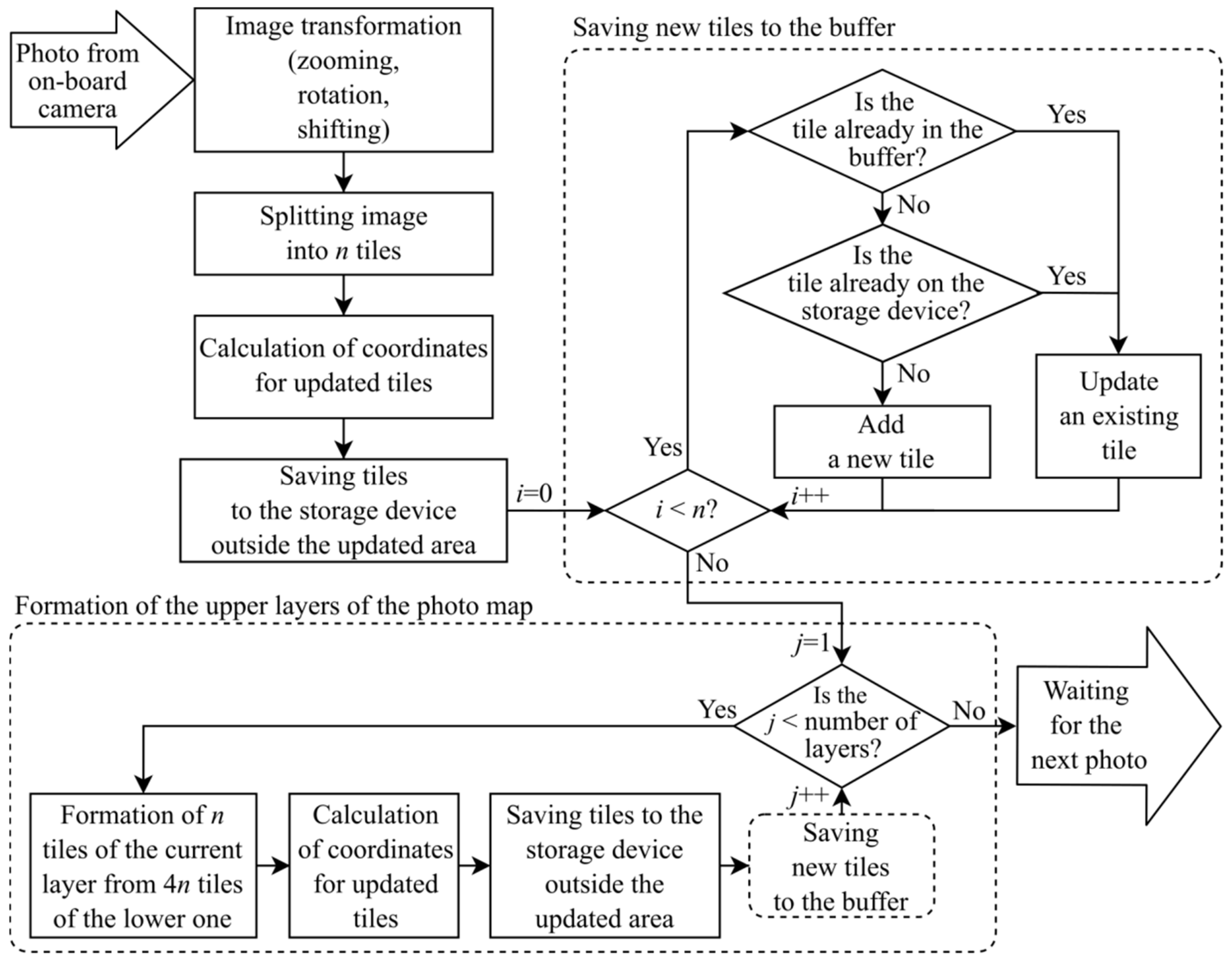
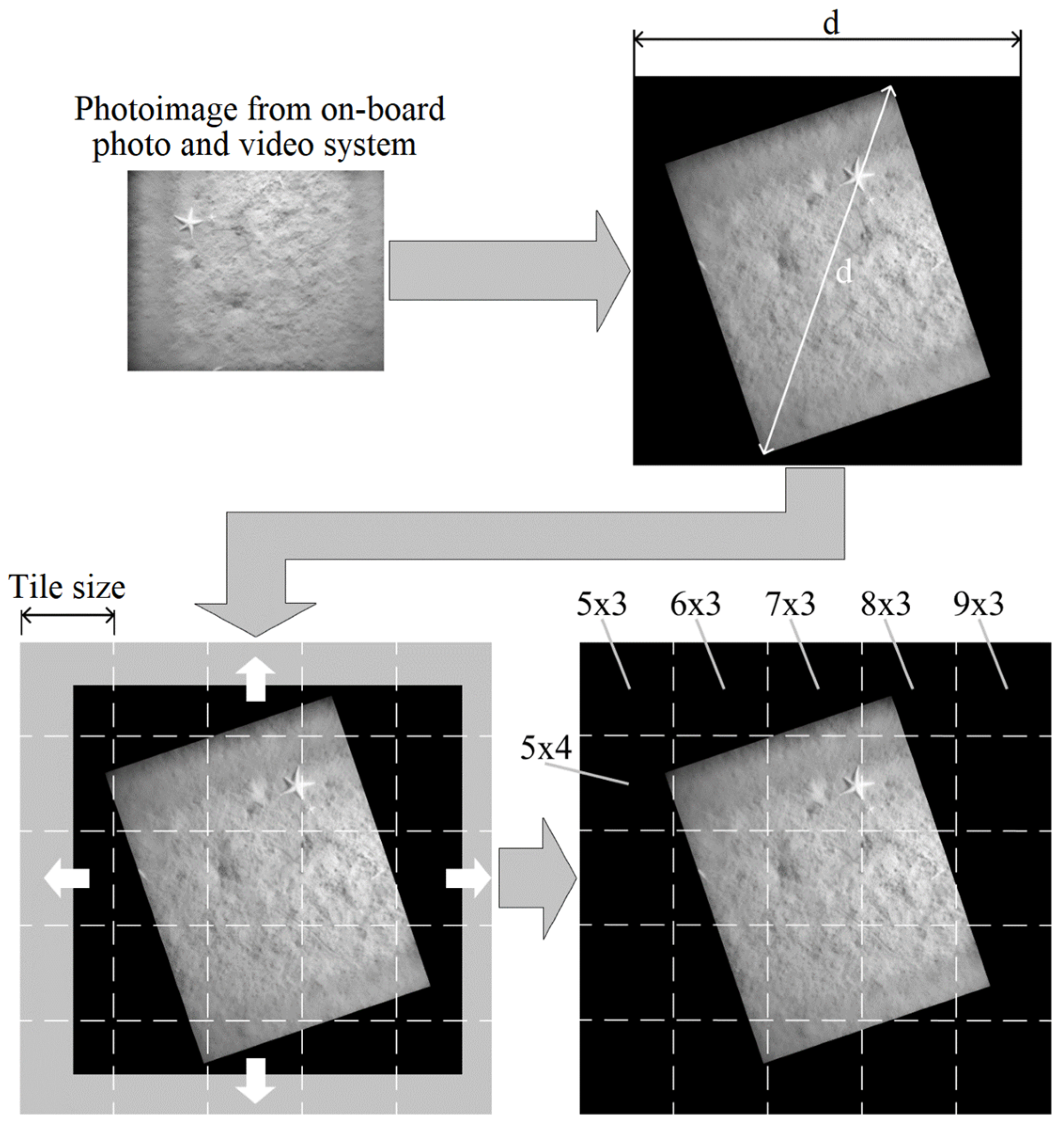
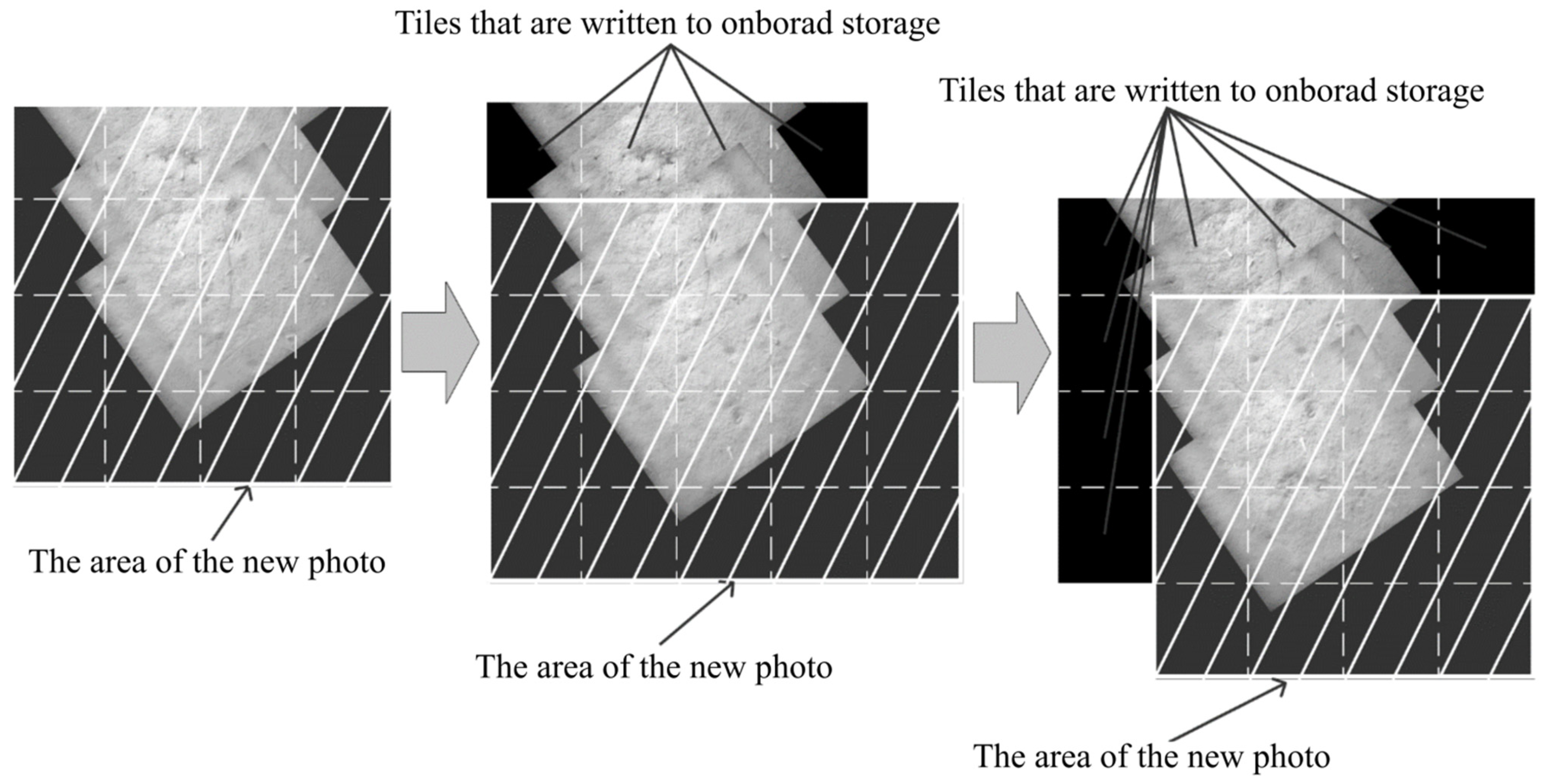
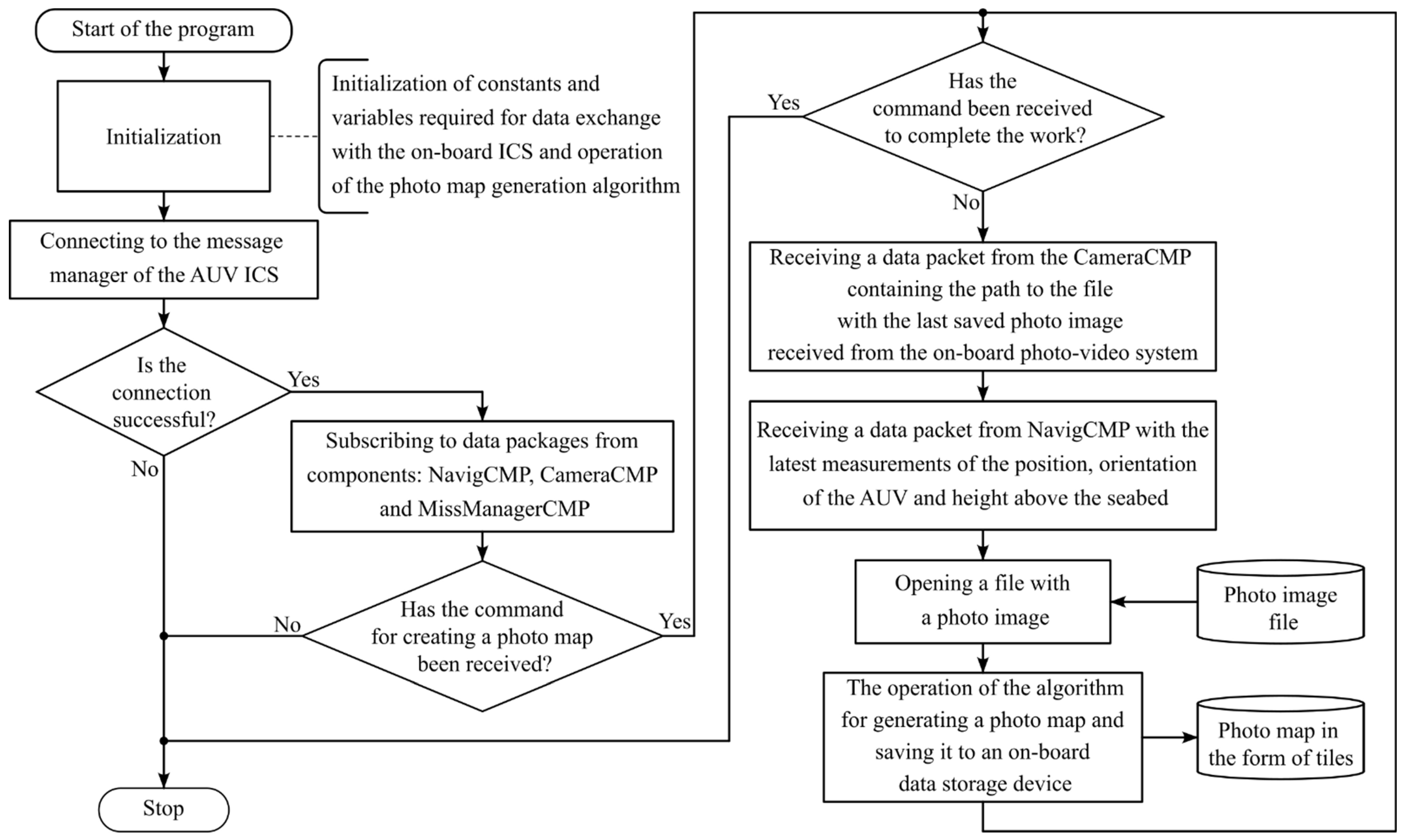
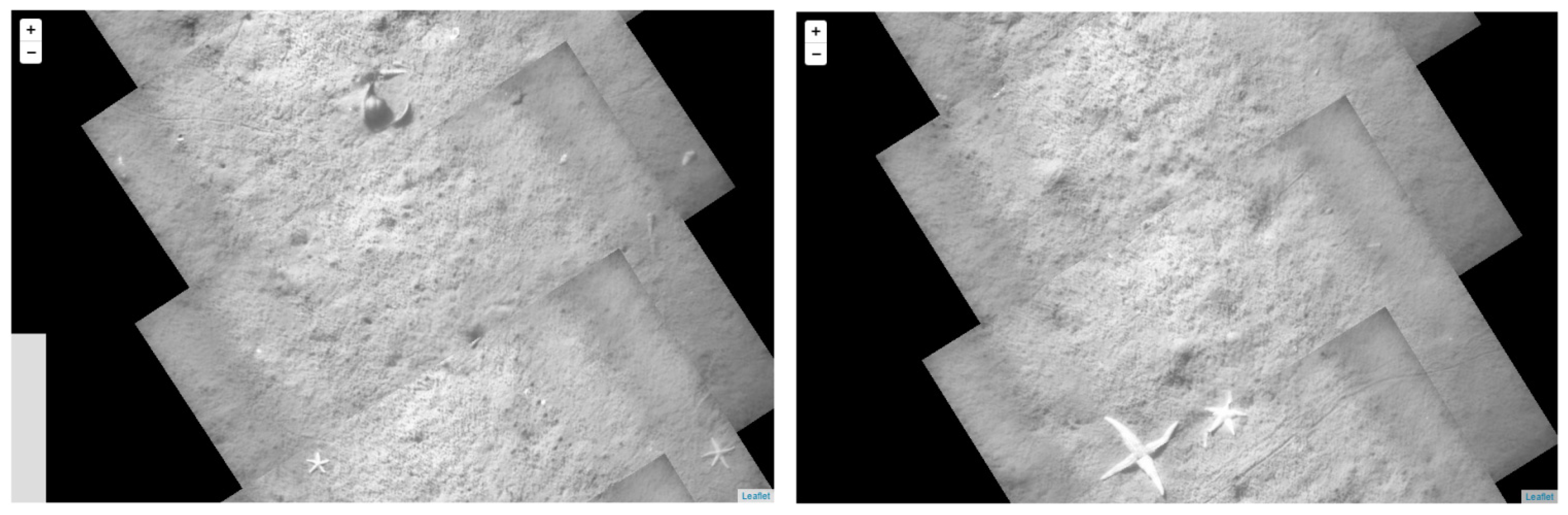
The paper introduces a novel method for creating a photographic map of the seabed using images captured by the on-board photo and video systems of autonomous underwater vehicles (AUVs) during various missions, while incorporating navigation parameters. Additionally, it presents a new approach for storing this photo map on the on-board device in a mosaic format (tiles), which significantly accelerates operational visual inspection by enabling the automatic search and recognition of underwater objects that may exceed the coverage area of a single photograph. This capability is achieved by organizing the photo map into layers with varying zoom levels. Semi-natural experiments were conducted with data from actual missions using the real underwater vehicle demonstrate the high efficiency of the proposed method and algorithm. Unlike existing methods that form photo maps after the underwater vehicle has taken pictures of the bottom using special high-performance computers, the developed method forms a photo map directly during the movement of the vehicle, using only the computing power of the on-board computer. In addition, in the event of accidents, when it is necessary to detect objects of interest on the seabed as quickly as possible, it is necessary to provide a quick visual inspection of the generated photo map. For this purpose, we have developed an algorithm for saving a photo map in the form of a mosaic, which is widely used in interactive geographic maps, such as Google Maps. This algorithm differs from existing methods in that it selectively saves data to the on-board storage device to reduce the number of read and write operations, thus ensuring the timely operation of the entire process of creating a photo map at a given frequency of photography. After the generated map has been stored as a mosaic and a high-speed connection with the vehicle has appeared, the operator can immediately view the entire generated map using a regular web browser.
Keywords: autonomous underwater vehicle; photo map; tile; on-board photo and video system; navigation data; photo image processing autonomous underwater vehicle; photo map; tile; on-board photo and video system; navigation data; photo image processing